← Post Reports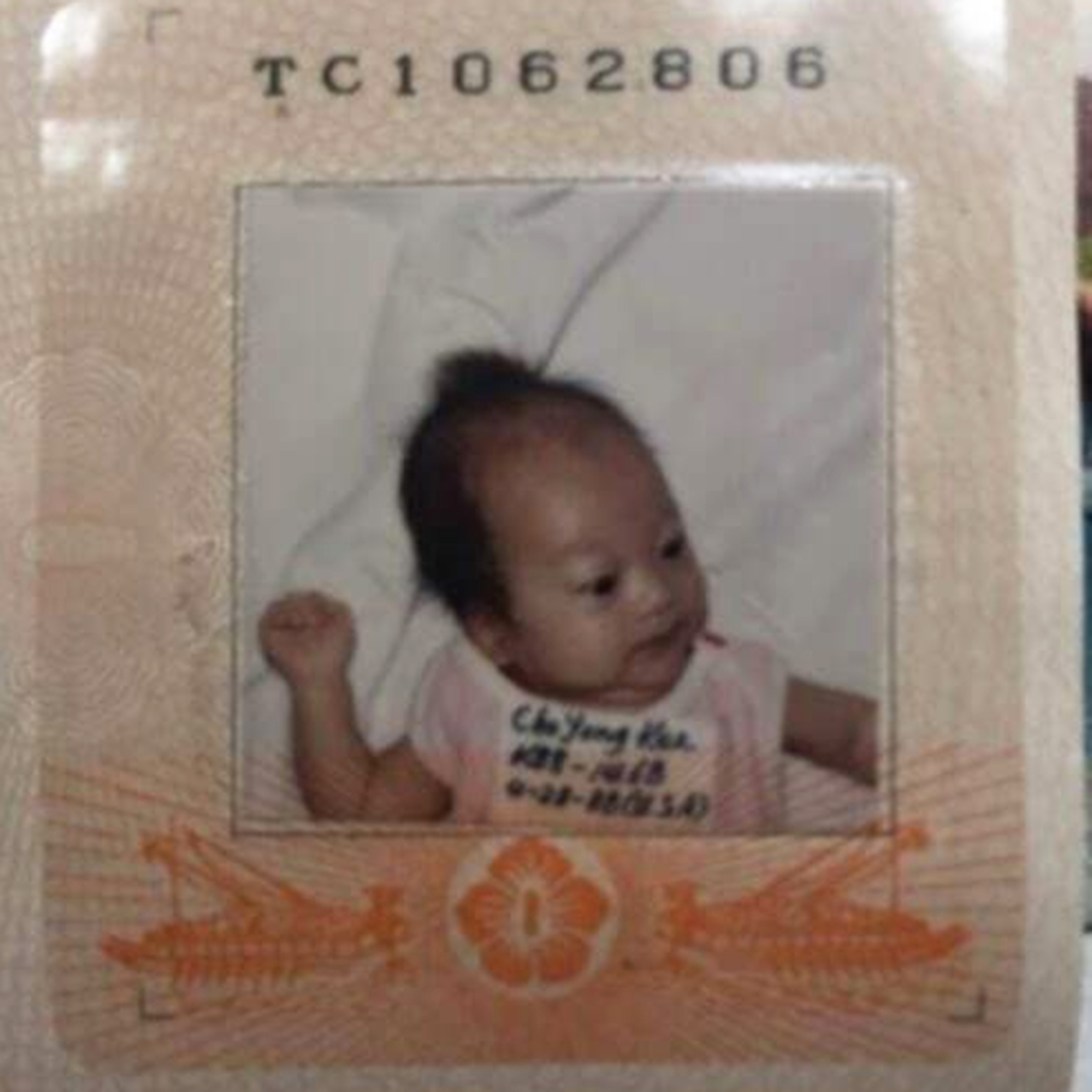
Post Reports
Was he given up for adoption? Or was he taken?
00:25:21
In South Korea, the findings of a government inquiry confirmed what many adoptees had suspected for decades: Babies were sent abroad for profit, often with falsified backstories. In Michigan, a man is questioning his origin story.
Loading summary
Transcript61 lines
- [00:03]
Elahay Izadi
Aaron Gregorczyk thought he knew his origin story. He was born in South Korea in 1988 and then his mother gave him up for adoption.
- [00:12]
Aaron Gregorczyk
The original story that I read on my paperwork, that I was abandoned by a 19 year old, you know, mother, teenage mother, teenage pregnancy, just abandoned me at the hospital, couldn't afford to take care of me. And that's the story I had accepted.
- [00:25]
Elahay Izadi
But in March, something happened that changed everything he thought he knew about himself. A South Korean Investigative commission report revealed that the country had been complicit in a decades long crime. Charity organizations had falsified records, stolen children and given them up for adoption overseas, all for profit. This was all over the news. The story of three South Korean Australians whose lives were rocked by one of the biggest adoption scandals in history.
- [01:01]
Kelly Kasulis Cho
Many adoptees are now working together to uncover what really happened in their past.
- [01:08]
Aaron Gregorczyk
My friend Amanda sent me one of the news articles and I was reading it and I was like, jaw open. I had absolutely no idea about any of this.
- [01:19]
Elahay Izadi
Aaron thought maybe he wasn't abandoned by his birth mother after all. Maybe he had been stolen from her. From the newsroom of the Washington Post, this is Post Reports. I'm Elahay izadi. It's Monday, July 21st. The South Korean government announced this weekend that it was ending private adoptions for good. A newly restructured system will be run by the government instead of. But there are thousands of Korean adoptees around the world. People who were adopted under the old system still trying to piece together where they came from. Today I talk with reporter Kelly Kasulis Cho, who joins me from Seoul. She shares her reporting on adoption fraud in South Korea and one man's quest to find his biological family. Hi, Kelly, thanks for joining me today.
- [02:23]
Kelly Kasulis Cho
Thanks for having me.
- [02:25]
Elahay Izadi
So, Kelly, I want to learn more about Aaron. For most of his life. What was his understanding of how he came to be adopted by his birth parents?
- [02:34]
Kelly Kasulis Cho
Well, Aaron is 37 now. He lives in Bay City, Michigan and he grew up with two Polish American parents, a sister that is also a Korean adoptee, and a brother who is the biological son of his parents. Growing up, he told me when he was young he knew he was adopted, but he really didn't know much about the backstory. And around the time that he was a teenager, his mother sort of let it slip that he was abandoned. And that's when he got a lot of his paperwork, which he started to sift through around his early 20s. And he had discovered that according to his papers, his birth mother was a 19 year old unmarried woman in South Korea. And she essentially relinquished him at the hospital just south of Seoul in a city called Anyang a day after he was born.
- [03:28]
Elahay Izadi
And what about his adoptive parents? Why did they want to adopt and what was their understanding at the time about their adoption process?
- [03:39]
Kelly Kasulis Cho
I spoke with Aaron's dad, Dave, and he told me that, you know, Aaron was their first son and his wife. Aaron's adoptive mother was having a lot of health problems. She had been through something like six surgeries trying to conceive and carry a child. And it wasn't working out. And so someone at their church introduced them to a Christian organization that kind of acted as a middleman between them and the adoption agency that they worked with. They felt like it was a very smooth professional process. Aaron's dad had said, you know, it being a Christian organization, he put so much trust into them and the whole process seemed quite like a well oiled machine. They applied to adopt Aaron and when they picked him up from the airport, he was escorted by two or three young women. They thought that he was in really good hands and they never really questioned it since until they heard from him about the revelations of this investigation that has come out of South Korea.
- [04:41]
Elahay Izadi
I want to get to that in a moment, but before that, I'm just curious what Aaron's childhood was like, what was life like growing up for him?
- [04:50]
Kelly Kasulis Cho
He mentioned, you know, he didn't have a bad childhood. He grew up in what was kind of perceived as a normal American family. He grew up in a predominantly white community, which is a story you hear from a lot of South Korean adoptees. And that can be quite a disorienting experience. He was a very creative child. He liked to draw. He eventually went on to study graphic design briefly before dropping out of College during the 2008 financial crisis because he was worried about incurring a lot of student debt and getting a degree that might not turn into a job. And he told me that he trained to be an EMT and he was making just above minimum wage. And that job really affected him. He saw a lot of things that most of us don't see. And he ended up being diagnosed with post Traumatic stress disorder. It really affected his life, his sleep, his health. He started to develop substance abuse issues, including with alcohol. And one day he quit his job because he had completed this very difficult training. And the promotion he was offered was just a couple dollars above minimum wage. And that really set him off. He couldn't figure out how to make a living doing this really important Work. And he started to turn to selling drugs, which is something that he very much regrets now.
- [06:11]
Aaron Gregorczyk
By 2019, all of my sources of income were entirely illegal. I was essentially a career criminal.
- [06:19]
Kelly Kasulis Cho
He got in trouble with the law, he spent a few stints in jail, and he really lost his way for quite some time.
- [06:25]
Elahay Izadi
What happened to him next?
- [06:27]
Kelly Kasulis Cho
In 2019, he found out that he was expecting a child.
- [06:31]
Aaron Gregorczyk
You know, I kind of panicked for.
- [06:33]
Kelly Kasulis Cho
A couple months, and he really turned his life around. He said he got sober. He started focusing on being a father.
- [06:40]
Aaron Gregorczyk
Like, I've done a lot of really bad things in life just before, you know, because I couldn't handle myself, because I couldn't handle what was going on around me. But it's like, you know, it's my only chance to actually make that right and actually be the person for my child that I never had.
- [06:59]
Kelly Kasulis Cho
Growing up. He got an apprenticeship in roofing, and that has become his career since. And so he's really been able to turn his life around and find a stable source of living and to enjoy life as a sober man.
- [07:14]
Elahay Izadi
I want to now understand a little bit more about Korean adoptees. How many children born in South Korea were adopted by people living in other countries?
- [07:24]
Kelly Kasulis Cho
So estimates suggest that more than 200,000 South Korean children were adopted internationally since the Korean War halted in an armistice agreement in 1953. And my understanding is that's the most children out of any other country that had an international adoption system. China is often cited as another country that had a lot of international adoptions, but its numbers don't even rival South Korea's, quite frankly.
- [07:49]
Elahay Izadi
And why were there so many adoptions internationally from South Korea?
- [07:54]
Kelly Kasulis Cho
What we essentially saw was Korea in post war poverty, didn't necessarily have a robust child welfare system to take care of the poor. And then there were a lot of other social pressures as well that made people in hard situations, maybe easily coerced or feel like they were not equipped to take care of children or that their children would not live a good life in South Korea. And so after the war, there were certainly a lot of Christian organizations and NGOs that flooded south Korea and tried to spread religion and work on child welfare projects. But particularly in the 1970s, when the Vietnam War happened, a lot of that aid and that attention dried up. And so what you saw is a lot of private agencies, many of which were affiliated with Christian churches, acting as the child welfare system, and the South Korean government sort of tacitly agreeing with that or allowing it to happen.
- [08:59]
Elahay Izadi
But then I know from Your reporting. There's been this movement in recent years to push the South Korean government to investigate what happened with adoptions in the country. How did that start?
- [09:10]
Kelly Kasulis Cho
You know, when I arrived to Korea in 2016, I certainly knew about some of the issues around South Korea's adoption history and its adoption system. I mean, just meeting adoptees left and right, you hear stories about what has been going on. But this was kind of a grassroots movement of activists spreading the word. And in the last couple of years, those activists were really able to convince the South Korean government to take a proper look at this. And what we've seen is earlier this year, in March, this group called the Truth and Reconciliation Commission, which is a government commissioned, independent investigative body, they put out some initial results of a nearly three year investigation. And what that investigation essentially says is that the South Korean government allowed some of these private adoption agencies to commit widespread human rights abuses against children and and their birth families.
- [10:14]
Elahay Izadi
What did this commission uncover in coming to that conclusion?
- [10:18]
Kelly Kasulis Cho
The commission was only able to make a ruling that human rights abuses occurred in a few dozen cases. But largely that's because there isn't a lot of information or records that could be recovered for these investigations. But what they essentially found was there were numerous cases of children's names being falsified or for instance, swapped with the name of a child that passed away. So their records and their origin story was falsified, and then they were adopted abroad. They found that in some cases children were taken without their birth parents consent. I've heard stories of parents who were lied to and said that their child had died shortly after the birth mother delivered the baby. And it turns out that that baby actually adopted abroad. And we've also seen numerous cases of children essentially being sent to families that were not vetted at all. So we're talking about, you know, in some cases, literally stolen babies, in some cases, severe coercion to get people to relinquish their children, people who are not the birth parents themselves, relinquishing children to adoption agencies, fake names made up, origin stories, swapped identities. And none of this really complies with sort of the international conventions that have been established that are supposed to protect these children who are adopted abroad.
- [11:54]
Elahay Izadi
What you're describing here, Kelly, is really shocking. And it leaves me wondering, why was this happening? So did the commission try to answer that question? Did they see whether these organizations had any financial incentive to do this?
- [12:15]
Kelly Kasulis Cho
Absolutely. So because these adoptions were run by private organizations, these organizations could essentially charge whatever they want as forced donations or adoption Fees. And so the South Korean commission that looked into this actually called it a profit driven industry that was designed to meet demand. And so there were actually foreign agencies that were sending quotas or almost like order lists saying that they want a certain number of children in the next month. And these adoption agencies would essentially scramble to fill them.
- [12:53]
Elahay Izadi
Wow. So all of this is happening in South Korea, this investigation, digging into these cases, as difficult as it is to, given the little amount of information available. And then I'm thinking about Aaron. You know, he's in the States and as we heard earlier, he wasn't aware of any of this. So tell me about how he became aware.
- [13:18]
Kelly Kasulis Cho
One of his friends sent him an article in March when this was first covered, the results of this investigation. And he was simply shocked. I found him in a Facebook group he had made a post trying to find information about. It was a group for South Korean adoptees. And many of them were sharing really sad stories and reactions to the results of this report, which is they're questioning their entire past. They don't know where they can even acquire their documents or if the documents they have are complete. For Aaron specifically, it really was an ungrounding experience. He had just gotten sober a couple of years ago. He was just turning his life around. He had told me that things were starting to look good. He was happy, already gotten over what he called his first existential crisis, which is discovering as a young man, a teenager, that he was abandoned at a hospital. And now he was sort of thrown into this world where he has to reconfront whether that story is even true.
- [14:22]
Elahay Izadi
Well, let's take a pause here. And after the break, we'll follow Aaron's quest to find out more about his origins. We'll be right back.
- [14:43]
Martin Cady
The Washington Post is known for pulling back the curtain on what's really going on in politics, policy and power. Now we're expanding that mission, introducing Washington Post Intelligence, a new venture to help business executives, policy innovators and thought leaders navigate the unpredictability of business and politics. I'm Martin Cady, the general manager of Washington Post intelligence. As a 20 year editor and reporter on politics and policy in Washington, I know how important it is to have the right tools to make critical decisions for your business. WP Intelligence gives you that with its new executive briefing service. Our briefings and analysis are hosted by star analysts like Josh Rogan and Jason Dean, who have decades of experience on global economics, geopolitics, AI and technology. So if you're an executive policy leader, government or legislative Staffer, head over to wpintelligence.com to learn more about this new premium service. Even better, one of our experts will walk you through a demo. Again, that's wpintelligence.com there's information and then there's WP intelligence.
- [15:44]
Elahay Izadi
Kelly, once Aaron learned that there was this investigation going on about adoption in South Korea and that it concluded that human rights abuses did occur in South Korea during the time he was adopted, what did Aaron do next?
- [16:01]
Kelly Kasulis Cho
He started looking through the adoption papers that his mother had saved for him, and he started comparing notes with people that he found online. And he really became suspicious because he found that his file looked nearly identical to some other people that he had met in this Facebook group for Korean adoptees.
- [16:22]
Aaron Gregorczyk
And it's almost, nearly a copy paste. Like there's maybe a few things change here and there, like ages of the mother, you know, a few words of the narrative, but almost verbatim copy paste. Over the course of, you know, years.
- [16:37]
Kelly Kasulis Cho
Many fields were left blank. It was kind of a classic story of a 19 year old woman relinquishing her child at a hospital shortly after he was born, with virtually no other information about her.
- [16:50]
Aaron Gregorczyk
My assigned Korean name was translated to quick prosperity, which literally means fast money.
- [16:58]
Kelly Kasulis Cho
And so he really started to become.
- [16:59]
Aaron Gregorczyk
Suspicious and then you really stop to think about it and like, you know, how many babies do they really think get abandoned at birth from the hospital? Like how, you know, like how often do you really think that happens?
- [17:13]
Elahay Izadi
So does he come to a conclusion at that point about what happened with him? Like, where was his head at at that moment?
- [17:22]
Kelly Kasulis Cho
In the beginning, it seemed like he really had become convinced that there was foul play or that something wasn't right about the origin story that he was told. I mean, particularly the year that he was born, 1988. You know, all of the years throughout South Korean's adoption industry were certainly problematic, but the late 1980s, when South Korea was really struggling to become a democracy and was under military rule, that time is kind of with these bad practices. And so in the beginning, he started to think that maybe there is a birth mother out there that didn't want to let him go, and he started to let himself imagine reuniting with that person.
- [18:05]
Elahay Izadi
Did he tell his adoptive parents, the parents who raised him, about this revelation?
- [18:12]
Kelly Kasulis Cho
He told them about the initial results of that South Korean government commission investigation, but he did not tell them necessarily that he was looking into his past or that he was reaching out to the adoption agency that he came from asking for more information about himself. And up until our story was published in the Washington Post, my understanding is he did not tell them that he was looking into that.
- [18:41]
Elahay Izadi
Wow. Well, I'm just thinking about Aaron and others like him and whether the South Korean government, who's actively investigating this, whether they're doing anything for people like Erin.
- [18:57]
Kelly Kasulis Cho
So the South Korean government has decided that it's going to order these adoption agencies to start transferring their records to a singular government office that will then deal with adoptees cases and their files from there. When I speak to activists in the adoptee community, there's kind of a mixed message about whether or not this is a positive development. On one hand, certainly it means that all adoptees will be part of a more standardized system. And even though it's a government body, you could argue that there may be a more neutral party than some of the adoption agencies that may have partaken in some shady practices. And so they might be more willing to cooperate with getting adoptees their records. On the other hand, there's been a lot of concern people will be bogged down in further bureaucracy, that some of the files may get lost or destroyed in the transfer. It's really hard to know how this is going to play out. There are two parties in the South Korean government that have certainly expressed interest in commissioning a new investigative body or a new truth and reconciliation commission to look into the remaining cases that were submitted, as well as further cases. So we're talking about a possibility in which more adoptees are able to submit their stories and ask an investigative body to look at it. And kind of for activists, the idea here is if someone has a case in which it was ruled that they were victims of human rights abuses, that opens up a pathway for some kind of legal recourse or some kind of consequence for the parties that were involved in these tragic stories.
- [20:39]
Elahay Izadi
And then I'm wondering about Aaron. I mean, you mentioned him reaching out to his adoption agency. How did that go for him?
- [20:47]
Kelly Kasulis Cho
It's been hard for him. He reached out to the adoption agency that his adoptive parents worked with in the past, and, you know, they were very responsive at first, and they actually, on their own volition, told him that they were going to reach out to his birth mother, that they had already called her and that she had been waiting for him for a very long time and was hoping to speak with him. And so this was a big moment for Aaron. And the adoption agency asked him actually to write his birth mother a letter introducing himself.
- [21:23]
Aaron Gregorczyk
It took me probably about a week to write the Introductory letter, because I think for like six and a half days it said that, hello, my name is Aaron for six and a half days. Because, you know, I just, every time I went to type something, I was like, what the hell do I even, like, do I even say?
- [21:42]
Kelly Kasulis Cho
And he really thought this letter through. He showed it to friends and he wrote this really touching introduction where he talked about himself, his daughter, his family in Michigan and his family members in Tennessee. And then from there, he hasn't really heard anything from his birth mother since. He contacted the adoption agency multiple times. They were very slow to respond. Eventually the person that he was dealing with there apologized and said that they somehow missed his messages or they were having some kind of. And they said that they called his birth mother back and she did not respond. So he's still waiting for some kind of answer, some kind of response.
- [22:25]
Elahay Izadi
What did Aaron want to find out from her?
- [22:27]
Kelly Kasulis Cho
I think he wanted to know what happened and whether the story in his file was true. Was she a 19 year old woman who felt like he would have a better life if she relinquished him for adoption? Did she feel like she was not able to provide for him? He had always said that if that were the case, he would understand. He really approached this story with very little judgment or condemnation of his purported birth mother. But he wanted answers. And, you know, he's asked for her contact information. He's asked for his contact information be forwarded and he hasn't received, for instance, her phone number or her address. As far as he knows, his birth mother has his contact information, hasn't reached out, hasn't responded to his letter. As the weeks go by, I think his tone has changed a little bit. I think he understands that he may never hear from her and he's trying to kind of reckon with that and that he may not get the answers that he wanted.
- [23:38]
Aaron Gregorczyk
Maybe my paperwork was exactly. Maybe it happened exactly that way. Maybe it didn't. You know, I'll never, I'll never. The only way to really know that is if I were to talk to my birth mother to find out exactly what it was that happened. You know, like, was she lied to? Was I, you know, essentially stolen by the agency or did she actually just give me up when she was 19? You know, I don't know, Kelly.
- [24:00]
Elahay Izadi
And you're reporting on not just Aaron's stories, but so many other people's stories who are grappling with this. What are you left with?
- [24:09]
Kelly Kasulis Cho
Well, this story and talking to numerous adoptees throughout this reporting process has really left me with this feeling of, you know, sadness for these people, for their birth families, for their adoptive families who are now questioning whether or not the organizations they were dealing with were acting legitimately. But it also has made me really confront this idea that we have a right to know our true or original identity, our origin story, kind of the lore of our biological family members. This is a fundamental concept that I've come across talking to activists and advocates in the adoptee community. Whether or not they're able to find their birth parents or their biological family members in South Korea, they simply want to know what happened to them. And that's something that they should be legally entitled to. And it just hasn't been the case. Even people who have come to terms with the backstory, however tragic it might have been, are now wondering if any of that is even true.
- [25:25]
Elahay Izadi
Kelly, thank you so much for sharing your reporting with us. I really appreciate it.
- [25:28]
Kelly Kasulis Cho
Thanks for having me.
- [25:43]
Elahay Izadi
Kelly Kasulas Cho is a reporter for the Post based in Seoul. That's it for Post Reports. Thanks for listening. Today's episode was produced by Tadeo Ruiz Sandoval and Laura Benshoff. It was edited by Maggie Penman. It was mixed by Rennie Stranovsky and Sam Baer. I'm Elahei Izadi. We'll be back tomorrow with more stories from the Washington Post.
- [26:24]
Sally Jenkins
I'm Sally Jenkins and I'm a sports columnist and feature writer for the Washington Post. My job entails pulling the curtain on really big sports events at what is going on in locker rooms, what's going on in the stadium tunnel, most importantly, what's going on in the minds of the athletes that I cover. I think that we have an instinct that sports are really important in some primal way. We pay a lot of money for them, we build really big stadiums for them. And I think that athletics really gets us in touch with aspiration and teach something very, very important about accountability, about self determination. And so my job is to really make those links explicit for readers and users. Subscriptions support this work and the people behind it. Find out more@c subscribe.washingtonpost.com I'm Sally Jenkins and I'm one of the people behind the Post.