← Post Reports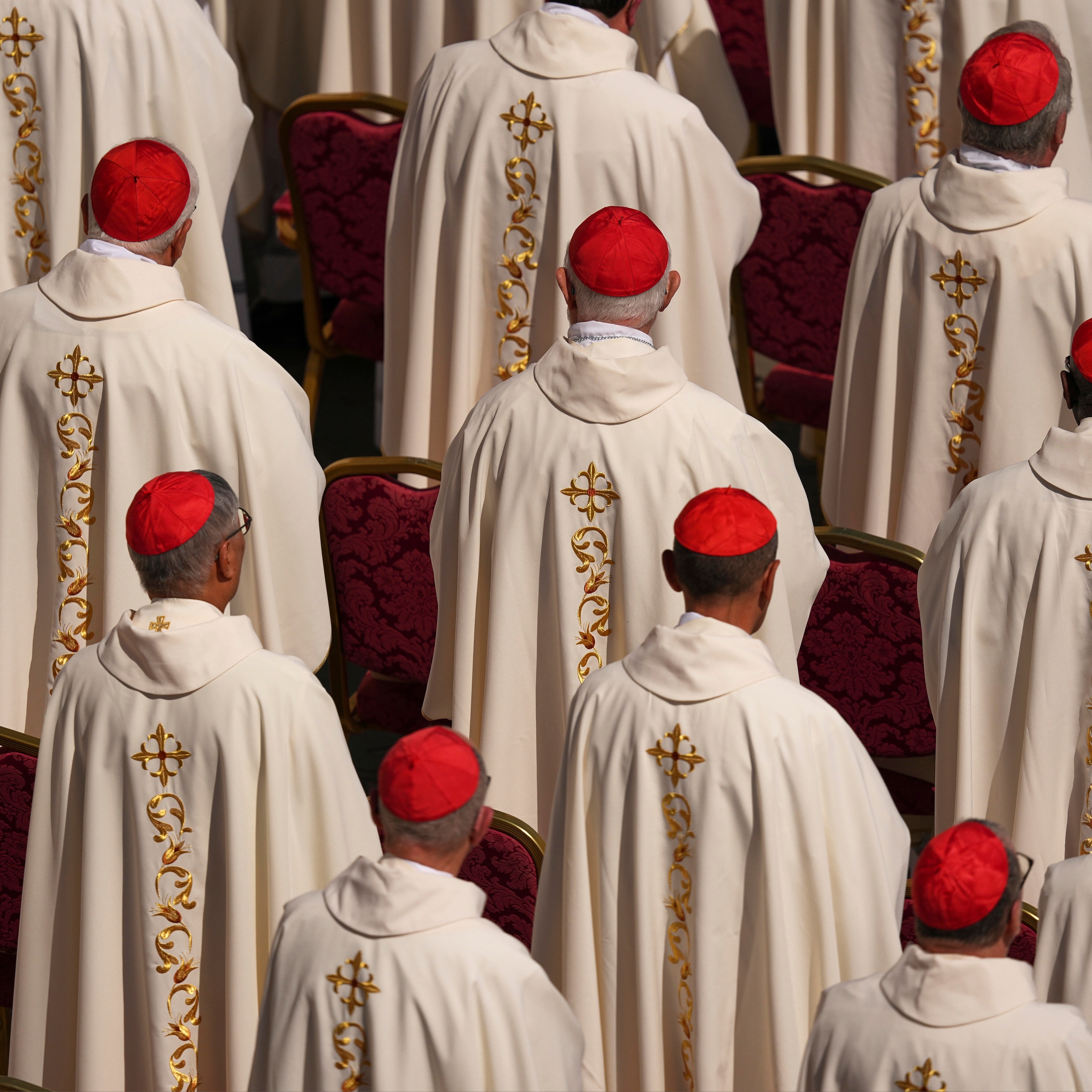
Post Reports
What ‘Conclave’ gets right about choosing the next pope
00:24:06
Cardinals will gather on Wednesday for the highly secretive process of choosing a new pope, following the death of Pope Francis in late April.
Loading summary
Transcript57 lines
- [00:02]
Colby Ichowitz
When Pope Francis died last month, I immediately thought back to earlier this year when my husband and I watched the movie Conclave on our couch and felt like we became experts in the process of selecting a new pope. And it turns out we aren't alone.
- [00:17]
Shane O'Neill
Oh, I mean, everyone is rewatching Conclave, or at least everyone in my nerdy circle of friends.
- [00:22]
Colby Ichowitz
Shane O'Neill is a style reporter for the Post. He recently wrote about the movie Conclave versus the real life Conclave.
- [00:29]
Shane O'Neill
Everything you'd want in a juicy episodic story is kind of packed into the movie Conclave and to some extent, the actual conclave. To some extent.
- [00:43]
Colby Ichowitz
From the newsroom of the Washington Post, this is Post Reports. I'm Colby IKOWICZ. It's Tuesday, May 6th. Today, before the real conclave begins Wednesday, I talk with Shane about what the movie version got right and wrong about the process, why it has struck such a chord with viewers, and what it says about religious and political power. Hi, Shane. Thanks for being here.
- [01:10]
Shane O'Neill
It is such a pleasure.
- [01:11]
Colby Ichowitz
So, Shane, we're gonna talk about Conclave, both the movie and what's about to happen tomorrow at the Vatican. But for those who haven't seen the movie or they haven't seen it in a while, let's briefly talk about what it was about.
- [01:23]
Shane O'Neill
So the 2024 movie Conclave is a fictional movie starring Ralph Fiennes, and he plays a who is presiding over the conclave, which is the process at the Vatican by which they select a new pope. At the beginning of conclave, the pope has died. So the movie begins with the people closest to the Pope gathering around as he's pronounced dead.
- [01:48]
Ray
What happened? Do you know?
- [01:50]
Shane O'Neill
No, they say a heart attack, but there had been warnings. And this sets off the process of finding the next pope, where you call together a bunch of cardinals from all over the world.
- [02:02]
Ray
Well, I mean, as I say, this is a pretty fair vision of hell. Well, don't be blasphemous, Ray. Hell arrives tomorrow when we bring in.
- [02:09]
Shane O'Neill
The cardinal and they vote on who the next pope should be from the pool of themselves. So they're voting for and against each other. And they continue voting and praying for days until one candidate has a two thirds majority and becomes the next pope. And among those cardinals who are in the running, you sort of have stand ins for different ideologies within the Catholic Church. You have one cardinal played by Stanley Tucci, who represents sort of a reformer and a more liberal approach to Catholicism. Tell them I stand for respecting other faiths, for tolerating other views within our own church and tell them that I believe women should play more of a role in the Curia. You have another cardinal who represents someone who wants to go back to the Latin Mass, someone who really wants to go to the conservative brass tacks of Catholicism. And you also have this dark horse who shows up uninvited and basically unannounced in the movie, who is not well known by the other cardinals present. And they don't know much about his history or much about what his future will be.
- [03:19]
Colby Ichowitz
He's the archbishop of Kabul.
- [03:21]
Ray
Archbishop of where?
- [03:23]
Shane O'Neill
Kabul. But he's Mexican. And the movie is about the machinations that happen during this conclave when they are cut off from the rest of the world. The cardinals don't have access to TV or movies or radio. There are jammers that are preventing them from accessing the Internet, and they are not allowed to read newspapers or communicate at all outside of the locked walls of the Vatican, where they are deciding the next pope. That is for the movie Conclave, and that is the fictional space for the real conclave, which will begin on May 7th to decide who our next pope will be now that Pope Francis has died.
- [04:02]
Colby Ichowitz
So I feel like one of the reasons why the movie, like, got so much attention is because the conclave process is really quite secretive. So what information were the writers and directors using to base this movie off of?
- [04:16]
Shane O'Neill
Well, one of the things that I learned in reporting on this process is that the process of the conclave itself is very secretive until it's over. Participants, these cardinals, they kind of get loose lipped, and they kind of talk about who was in the running and how it all went. And once the pope has been decided, information moves a little more freely. So a lot of this is based on people who had talked to cardinals who had been there. And then, you know, there's just a massive amount of Catholic scholarship about this. You can kind of go as deeply and as widely and infinitely with Catholicism as you want. There's so much to cover.
- [04:51]
Colby Ichowitz
And Conclave, the movie, it was based off of a book, right?
- [04:54]
Shane O'Neill
Yeah. The movie is based on a book of the same name by Robert Harris. It's also called Conclave. I spoke to him for this story. He said that the movie Conclave was the most accurate adaptation of his work. He said he had eight other books that were turned into movies. And he said this was the most accurate adaptation of my work, including two adaptations I wrote myself. He also stressed that he tried to make his book as realistic as possible, but it's still A novel. It's still. It's. It's a work of fiction, and they don't get every single thing right.
- [05:26]
Ray
But there's a lot of research. I think I read accounts of pretty well every conclave that we know anything about. I read everything. I read all, obviously, the Vatican's, the rules of the Constitution, which they put forward. And then I just did the things that as an. As an old journalist, the one would do. I went to the Vatican. They showed me things. I talked to a cardinal. I talked to prominent lay Catholics. I read the Gospels. You know, I tried to steep myself as best I could in the. In the whole thing.
- [06:01]
Colby Ichowitz
Shane, did he tell you, like, what was it that drew him to this topic?
- [06:07]
Shane O'Neill
I'm not sure I asked him that. For one thing, I think that might betray sort of my own biases here. I mean, like, I was. I was raised Catholic. I'm not devout by any means, but I think that for those of us who were raised Catholic, I mean, something like this is just a really important and fascinating moment for Catholicism. But then also I would just throw in there that, like, it's kind of a dream for a narrative. It's like the stakes are high. There's a really clear beginning, middle, and end. And you have, like, a whole bunch of really interesting characters. It's a fascinating structure for a narrative.
- [06:42]
Colby Ichowitz
And Shane, obviously, we're not gonna give any spoilers away for people that haven't seen the movie, but the characters themselves, kind of the dramas that they're going through are fictional. But based on your discussions with Rob and your own reporting, how accurate is the depiction of the process of how the actual conclave works? Can you kind of tell us what the movie got right and got maybe got wrong?
- [07:06]
Shane O'Neill
So something that kind of shocked me was that basically everyone I spoke to for this story said that they got the voting process, like, fully accurate. People said, like, oh, they nailed it. And the voting process is very specific and very arcane. It involves each cardinal writing their vote on a paper ballot, walking up one by one, giving an oath in Latin, depositing that paper into an urn. And once all the votes are accounted for each ballot, each paper ballot is threaded with a needle onto a single garland. They tie that garland, they tie that thread up into a knot and burn it. And if they have not selected a pope, so if they have not gotten a two thirds majority, that is what is required to vote in a new Pope. They add a chemical that makes the smoke black so that the public sees, nope, we voted. But there's no new pope. And then once they have decided on a new pope, they add a chemical that makes the smoke white, which indicates to the public that a new pope has been elected. All of that was depicted really, really faithfully in the movie Conclave and all.
- [08:10]
Colby Ichowitz
The kind of inner drama, not, you know, the specific plot of the movie, but just the way the kind of wheeling and dealing that happened behind the scenes in the movie, the way that people are kind of lobbying or trading for votes. Is that really how it works?
- [08:26]
Shane O'Neill
Yes and no. One person that I spoke to said that the jockeying that you're seeing might be realistic, but that that would likely happen before the Conclave starts. Before the Conclave starts, there's something called a general congregation, and that's when cardinals are hanging out more informally and oftentimes just meeting each other for the first time. So I'm told that a lot of that jockeying and a lot of the politicking that makes up the whole movie, it does happen. But it usually will be happening in the weeks before the Conclave, that by the time you get to the Conclave itself, they're usually further along in the process. But several people I talked to also said that it was a little bit overblown. So, first of all, it's expressly forbidden to campaign. So while there is politics and, you know, like any sort of important job like this, people are sort of angling and, you know, maneuvering. It has to be really discreet. The other issue is that it's a spiritual practice. One person said that a lot of people imagine that the Conclave is sort of like Capitol Hill, and that there is, like, a political machination to this. But this is also a spiritual process. There's a lot of prayer, and they go to Mass every day. And, you know, these are cardinals. These are guys who take Catholicism very seriously. And if there is political angling, it doesn't happen in real time at the Conclave. It happens more usually before the Conclave, apparently.
- [09:47]
Colby Ichowitz
And what I remember from the movie is that there was a real sense of, like, you know, ideology splits between the various cardinals that were potentially up for becoming Pope. You know, this idea that some were liberal or some are conservative, is that how they're viewed within the Conclave?
- [10:05]
Shane O'Neill
So it's kind of hard to say how it's being read within the Conclave itself, as in literally what the cardinals think of each other. And if the cardinals are thinking in these terms, it's certainly the way that the press, especially the Italian press, which is long been fascinated with all things Vatican and all things, you know, Pope related, that's certainly the way that it plays out in the press. And it's happening to some extent on this particular conclave. So, again, this is all to some extent, conjecture because things can change and no one is really going to be certain until the Pope is elected. In this particular conclave, two of the frontrunners are Cardinal Pietro Parolin. He is the Secretary of State of Vatican City, who is known for having a poker face. He's known for kind of like keeping his cards close to his chest. And he is. Is being described by some people as the sort of business as usual Pope. Like, he's kind of the guy who will just kind of keep the engines running and the wheels turning and isn't trying to shake things up very much. Another front runner is Cardinal Luis Antonio Tagle from the Philippines. And he, in my estimation, sort of seems like the closest that we might come to a liberal reformer, quote, unquote. One person I spoke to, Dr. Daniel A. Rober, Chair of Catholic Studies at Sacred Heart University in Fairfield, Connecticut, he thought that Cardinal Tagle was the closest to a natural successor to Francis in style and substance, as one will find in this conclave. But I would also say that among the more conservative wing of Catholics, neither of these cardinals are particularly popular. One of the more conservative candidates the Post has reported on is Fridolin Ambongo Busungu from the Democratic Republic of Congo. He's among those mentioned as a possibility for the first black pope, and he represents Africa's rapidly expanding Catholic community. He's also among the cardinals who oppose same sex couples. So, yes, you do have these different cardinals representing different factions, and we're seeing that play out this time around.
- [12:04]
Colby Ichowitz
And what else can you tell me about what maybe for people that are gonna go watch the movie again or watch it for the first time to try to understand what's gonna happen at the conclave this week, what they should take with a grain of salt and what is like, oh, that's actually probably what's gonna be going on behind the scenes.
- [12:25]
Shane O'Neill
One thing that the movie seems to get right just sort of generally is this aphorism that gets thrown around a lot about conclaves, which is the Pope walks in, a cardinal leaves. Which is to say that if you're the front runner, when you walk in, if you're the favored candidate, you are, you're gonna leave not being the Pope. So that's something you should expect is that there's a bit of an art to this. And there's a. There's an idea of modesty to this, and there's a lot of decorum and there is some, like, internal, you know, culture that. That informs how this is all going. One small element, but something that I thought was really interesting. The movie has a really striking visual grammar of the cardinals are these, you know, esteemed men from around the world. And then they are exclusively being waited on by nuns, by women in habits who are serving them food and cleaning up after them and doing their dishes. Now, that is maybe true in a sort of like, metaphorical sen. If you're talking about, like a comment on the position of women in the Catholic Church. But in a literal sense, it's not just nuns. There's laity who are working there. There are non Catholics there. And also, not for nothing, cardinals tend to be an older lot. They are also allowed to bring in nurses sometimes or assistants if they need help, you know, getting around or, you know, with their. Their basic daily tasks. So that image of, like, the men presiding and the women serving, you know, metaphorically, narratively true, but not literally accurate to how the Conclave operates.
- [13:54]
Colby Ichowitz
After the break, why some experts say the rise of authoritarianism will be on the minds of cardinals at tomorrow's Conclave. We'll be right back.
- [14:12]
Tom Sytsima
My name is Tom Sytsima, and I am the food critic for the Washington Post. I think a lot of great restaurant meals are like great books, films, or concerts. You don't necessarily need them to live, but don't they make life more worth living? I see myself as sort of a reader advocate, going in there, spending the Post money, coming back and giving you the green light, yield sign or a stop sign. I like to be seen as sort of the best friend who happens to eat out a lot more than they do. I eat in about 10 restaurants a week, and I like creating memories for people and helping them create memories, whether those are first date, a 50th anniversary, grandma's 90th birthday, if you have special needs, whether they're dietary or otherwise. When you subscribe to the Washington Post, you support this kind of journalism. Learn more at subscribe.washingtonpost.com I'm Tom Sytsima, and I'm one of the people behind the Post.
- [15:13]
Christina Quinn
You don't know me yet, but I bet we have something in common. We all wish we were better functioning humans. Maybe figure out how to sleep better, have more meaningful relationships, cook more that search for practical knowledge. It's my job at the Washington Post. I host a podcast called Try this every episode is like an audio class, and we learn together. I'm Christina Quinn.
- [15:37]
Shane O'Neill
Now.
- [15:37]
Christina Quinn
You know me. Check out. Try this wherever you're listening.
- [15:44]
Colby Ichowitz
So, Shane, the movie was extremely well received when it came out last fall. It was nominated for Academy Awards, and then it had this resurgence after Pope Francis died on April 21. Can you tell me a little bit about kind of what their reaction to the movie has been in the last several weeks?
- [16:01]
Shane O'Neill
The movie Conclave has been available to watch via Video on Demand services since last fall. But it wasn't until April 22, the day after Pope Francis died, that Prime Video started streaming. Conclave Prime Video is the streaming video service owned by Amazon, and Amazon was founded by Jeff Bezos, who owns the Washington Post. They made the canny decision the day after the death of Pope Francis to put it on streaming. So the statistic that I read via the wrap was that viewership of the movie had increased 3200%.
- [16:36]
Colby Ichowitz
Wow.
- [16:37]
Shane O'Neill
The week after Francis death compared to the week before. So more people are watching this at home than they ever were before. There's sustained interest in, like, the palace intrigue of the Vatican. There's, you know, the Young Pope, the Jude Law show, and the Two Popes, which is another movie that's on Netflix that also got a huge bump after the death of Pope Francis. But this is, you know, the highest profile and the freshest. So, you know, it's on a lot of people's minds. I don't mean to be crass, but, like, the timing is really good for this movie.
- [17:06]
Colby Ichowitz
Yeah. I mean, what do you think it is about the Pope that makes him such a interesting figure that you mentioned? Other Hollywood treatments that make people so intrigued to understand kind of the backgrounds and the behind the scenes of what it is to be a Pope and becoming a pope?
- [17:28]
Shane O'Neill
Well, as a style reporter, I mean, there's just a lot of pageantry there. Like, the Catholic ceremony has a lot of, you know, robes and jewelry and, you know, a lot of gold and white and red. So just from an aesthetic point of view, there's a lot of visual interest. That might sound a little facile, but I think that's part of it, that there is a lot of, like, there's a lot of visual interest in the papacy and in Catholicism in general. I'll also say, you know, I was raised Catholic, but if you are not raised Catholic, if you just go to a Catholic Mass, it's a very confusing thing. Even now that, you know, it's been in English since the 60s. Since the Vatican II. But even in English, it all feels kind of arcane and a little bit mysterious. So I think there's always just sort of an element of mystery and curiosity about what the heck is going on in a Catholic ceremony. And there's no higher authority in the Catholic Church than the Pope. And then just sort of on a very basic level, the Pope has big authority, much more so in places besides the United States. The Catholic Church is growing much more quickly in the global south and in other countries, and especially in a lot of those places, what he says and how he approaches theology can have really big implications worldwide. And then there's also just the fact that what this person says is really important. I believe in the movie they refer to the Pope as being the most famous person on the planet. I think that that's arguably true. So there's a lot of celebrity, just straight up celebrity, and there's also just a lot of power and a lot of sway and a lot of influence that the Pope has. So I think it's a heady combination of all of those things. And it all happens. You know, if you lock anything up, if you put anything behind closed doors, people are going to be excited and curious about it.
- [19:15]
Colby Ichowitz
And, Shane, this is a little bit tangential, but speaking of power and ego, I wanted to get your thoughts on the photo that President Trump posted over the weekend of himself as the Pope. Is he gonna be our dark horse in the election of the Pope this week?
- [19:35]
Shane O'Neill
Well, Donald Trump cannot be pope. To be a pope, you have to be Catholic and male. You have to have been baptized in the Catholic Church. I think Trump was baptized in the Presbyterian Church or another Protestant church. That doesn't transfer. Also, just for centuries, they've only selected popes among cardinals. So, no, Donald Trump is not going to be the next pop. As far as the impact of that image, I mean, nothing should surprise us with Donald Trump. You know, it's. It's a really, really unusual move by a world leader, especially the President of the United States. But, you know, Trump operates outside of all sorts of norms. And I think for. For someone who loves the idea of power and adoration and tradition and ritual, especially from an outsider's point of view, I can understand why the role of the Pope would appeal to someone like Trump, where those are things that are really interesting to him. As far as how offensive that is to a lot of Catholics or just, you know, how counter to Trump's policies, a lot of Catholic ideology and Catholic policies are. I mean, it's very Ironic. And there's tons of irony in the Trump administration all the time.
- [20:47]
Colby Ichowitz
Yeah. It makes me wonder if it's like a topic of conversation when the cardinals are just kind of chit chatting this week.
- [20:53]
Shane O'Neill
Well, I will say, from what Dr. Rober told me, the rise of authoritarianism is something that is going to be talked about a lot among this conclave, that especially among European cardinals. Now, granted, there are fewer European cardinals than traditionally. Sometimes there have been in the past, but especially for European cardinals who are very impacted by Trump's policies and the rise of authoritarianism in Western countries, that's something that is gonna be discussed at the conclave, according to Dr. Robert.
- [21:21]
Colby Ichowitz
That's so interesting, especially how the United States factors into that conversation.
- [21:26]
Shane O'Neill
And also there's a lot of money poured into the sort of soft power campaigns of the papacy. There are a bunch of very wealthy, very conservative American groups that put a lot of money into putting dossiers together on these various papal candidates. One of them is the Better Church Governance Group's Red Hat Report, which has assembled dossiers on the various potential candidates for Pope. And in the past, they've been very critical of Cardinal Pietro Perelin, who we know to be a frontrunner in this conclave. Wow.
- [21:57]
Colby Ichowitz
So they do like oppositional research the way you would in like a presidential campaign, it sounds like. And then who are they distributing these dossiers to? To the cardinals.
- [22:05]
Shane O'Neill
You know, it does sound an awful lot like the dark money that you see, the so called dark money that you see in politics. And that's one of these sort of paradoxes is that people were stressing to me, you know, it's not a political intervention, it's not a political decision. But there are parallels between you, the way that politics operate in America and the way that we see this happen as far as who they're distributing to, it's mostly the press. But it also isn't super clear how much impact that ultimately has on a conclave.
- [22:32]
Colby Ichowitz
Right.
- [22:33]
Shane O'Neill
It just is clear that there is money and effort being poured into it stateside, and it's not super clear how much that will penetrate the actual decision making at the Vatican.
- [22:42]
Colby Ichowitz
What do you think, Shane, the movie was trying to say about political and I guess religious power right now?
- [22:53]
Shane O'Neill
That's a really good question. I think what makes conclave a really good movie is that the answer isn't super cut and dry. I mean, you can argue that there are heroes and villains and there's certainly, you know, victors and losers, but the final takeaway from the movie is not necessarily cut and dry in terms of ideology. I think what I took away from Conclave when I watched it was that the Vatican functions like lots of other powerful institutions, which is to say that it is informed by politics and it's informed by personal relationships, that there are people who take their mandates very seriously, there are people who maybe have more ego involved, but that the movie Conclave really depicted it sort of like any other institution, that it's made up of human beings. And that can be for better or for worse.
- [23:42]
Colby Ichowitz
Shane, thank you so much for joining us. Really appreciate it.
- [23:44]
Shane O'Neill
It is such a pleasure. Thanks for having me.
- [23:53]
Colby Ichowitz
Shane O'Neill is a style reporter for the Post and writer of the Style Memo newsletter. That's it for Post Reports. Thanks for listening. Today's episode was produced by Rennie Swaranovsky with help from Ariel Plotnick and Peter Bresnan. It was mixed by Sam Baer and edited by Lucy Perkins. Thanks to Carla Spartos. I'm Colby Ichowitz. We'll be back tomorrow with more stories from the Washington Post.
- [24:38]
Hannah Jewell
There's an efficient way to get caught up on a lot of news. It's called the seven from the the Washington Post. It's a newsletter and podcast. Whether you're reading or hit play, you get seven stories you need to know and you can consume it all in just a few minutes. The 7 is out every weekday morning by 7:00am Eastern. I'm Hannah Jewell. I'm one of the writers and I host the show Find the seven Podcast. Wherever you're listening. The newsletter link is waiting for you in the show notes.