← Post Reports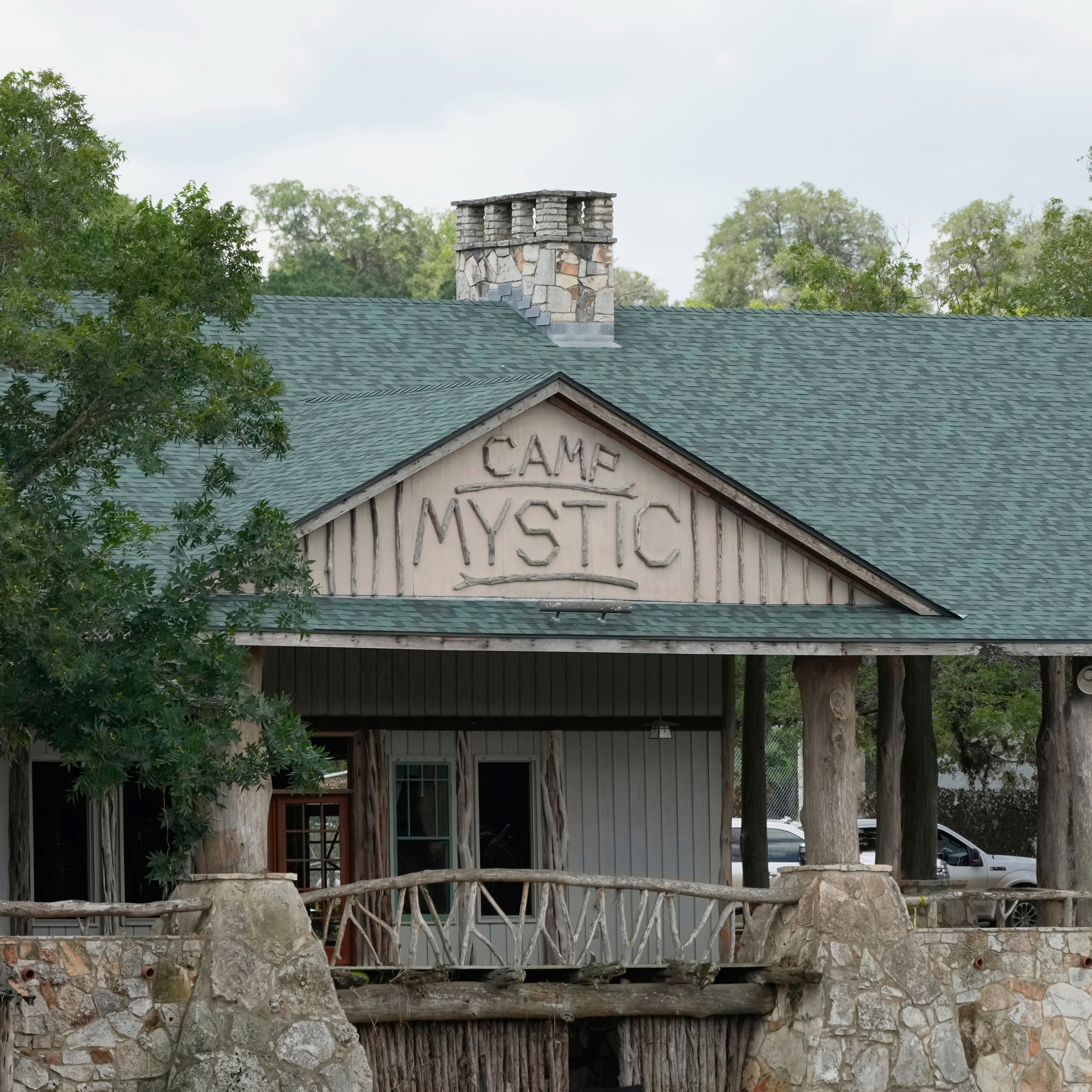
Post Reports
What happened at Camp Mystic
00:20:35
A Washington Post investigation found that many of the things that made Camp Mystic special also heightened its risk during a catastrophic flash flood on July 4.
Loading summary
Transcript52 lines
- [00:02]
Colby Ekowitz
On July 4, at 1:14am Camp Mystic Executive director Dick Eastland got a severe flood warning on his phone. He rallied his family members who lived and worked at the camp, including his son, Richard Eastland Jr. Richard spoke to my colleague Aralise Hernandez on July 5th.
- [00:21]
Richard Eastland Jr.
I think we're in a watch, but we do get watches a lot in this area and we have floods, but this, I don't know how else to explain it. It was tremendous and it was fast. We've never had water this high ever. This feels like a 1 in 500 year flood, maybe more.
- [00:49]
Colby Ekowitz
Richard said they started working to evacuate campers, but the water was rising quickly. By the time they started to reach some of the cabins around 2:30am it was impossible to get all the girls.
- [01:00]
Richard Eastland Jr.
To safety in the darkness of night. You know, rain coming down, just chaos. I'm just.
- [01:09]
Annie Gallen
I'm.
- [01:11]
Richard Eastland Jr.
I just can't believe. I don't know. I don't know.
- [01:18]
Colby Ekowitz
27 campers and staff have been confirmed dead. Richard's dad, Dick, died trying to save some of the youngest campers. My colleague Annie Gallen has been reporting on what went wrong.
- [01:31]
Annie Gallen
Camp mystic was really important to generations of women, mostly from Texas, but around the south. It was this beautiful little, very isolated place. One of the things that was important was that the kids don't have any screens, so the children didn't have cell phones. The staff seemed to be communicating mostly by walkie talkie. So a lot of the things that had made it special for, like, decade contributed to the tragedy that befell the camp on July 4th.
- [02:01]
Colby Ekowitz
From the newsroom of the Washington Post, this is Post Reports. I'm Colby ekowitz. It's Thursday, July 17th. Today I talk to Annie about the Post's exclusive reporting on what happened at Camp Mystic. Annie, hi. Thanks so much for joining us.
- [02:30]
Annie Gallen
Thank you for having me.
- [02:31]
Colby Ekowitz
You've been looking into this camp in Texas, Camp Mystic. We spoke a bit about it on the show last week. But what is important to know about where it's located?
- [02:43]
Annie Gallen
Well, it's located on the confluence of multiple water bodies, the main ones being the south fork of the Guadalupe river and Cypress Creek, which are there in the sort of isolated area where the camp was in a flood zone, many of its buildings were in a flood zone. And a lot of the reporting that's come out since then has sort of been discussing why were these cabins allowed to be in flood zones. Why were these little girls sleeping so close to the river that could rise at any minute? The camp was put onto a fema flood hazard map in 2011. But they repeatedly asked for dispensations over time as they expanded the camp. So they had gotten dispensations for a number of their buildings that sat in the flood zone, according to fema. So there's going to be a lot of investigation that goes forth about sort of how this all came to be, why were they given these waivers, et cetera.
- [03:31]
Colby Ekowitz
Annie, before we get into that, I mean, how long has Camp mystic been around? Like, what is its significance to the community there?
- [03:39]
Annie Gallen
It was founded in the 1920s in Hunt, Texas, and the same family has owned it since 1939. You know, it's basically this camp that was well beloved. It was attended by generations of Texas women, the children of affluence, the children of leaders. And they canoed, they hiked, they rode horseback. It was also a Christian based camp, so they had Bible study sometimes. It had a very special place in the hearts of a lot of Texans.
- [04:09]
Colby Ekowitz
For a lot of these families, going to Camp mystic was kind of like a rite of passage, right? Like your mom went and your grandmother went and you just knew you were going to go to Camp mystic too.
- [04:19]
Annie Gallen
Yeah, exactly. I mean, as you said, generations of families, mothers and daughters and grandmothers went to Camp mystic sometimes. People waited on the waiting list for years to get their kids in. And we actually talked to one of the counselors about it, a 20 year old named Anita Baker.
- [04:34]
Anita Baker
Before I was even a camper, I knew camp songs and like most of my friends, we were signed up like the day you were born. That's kind of the inside joke between everyone is that once your mom finds out she's having a girl and then when you're born, you get signed up to go.
- [04:54]
Annie Gallen
So it was just a very, very important fixture in the lives of Texans and their summers.
- [04:59]
Colby Ekowitz
So, Annie, I want to go to the night of July 3rd, and that's when this rainstorm begins. When did people at the camp begin to realize that they could be in serious danger from this rain?
- [05:12]
Annie Gallen
So the Eastland family, as I said, you know, has owned the camp since the 30s. And the director of the camp was named Dick east and his wife Tweety. They were well beloved within the camp system. He was the executive director, he taught fishing. She handed out special hugs, and they had four kids. So one of them passed away. But the three remaining sons all worked within the camp system. The one we interviewed was named Richard Jr. He was a dining hall supervisor for the camp, and we heard from him at the start of this episode. So we discussed with him sort of what happened, what was the timeline of events at the camp that night? So the family got the warning from the national weather service at 1:14am on their phones. According to the family spokesman, there were a number of the family, as I said, are involved in camp activities. Did they sleep or live near the camp? Dick Eastland, the executive director, got on the walkie talkies. He rallied everyone to come. And they began, as the spokesman told us, to assess the situation. They decided that they were going to start with evacuating the furthest out cabins because there was a line of cabins by the river. But then as time went on, as these precious met, as minutes went on, they began noticing that there was a confluence of water, a swirling eddy around two cabin structures where the littlest girls were sleeping not very far from the river. And one of the staffers told us that it looked like a toilet bowl flushing. That was what was the swirling eddy effect. One was called Bubble Inn and one they called Twins 1 and 2 because it was basically two parts together. And so eventually, Edward Eastland, who is another one of the sons, who is the camp director now, ran towards the twins 1 and 2. And the water was so bad that he ended up having to swim to the cabin and try to rescue the girls. They later found him in a tree, clinging to the tree with about 10 or 12 girls around him. So then Dick Eastland noticed that the Bubble Inn was really struggling, it was in danger. So he ran there as well. And at one point he radioed to say, I need help. And that was the last time they heard from him.
- [07:24]
Colby Ekowitz
So the director of the camp, he goes to this Bubble Inn and we're talking about girls that are, what, eight years old are sleeping in this cabin.
- [07:32]
Annie Gallen
Mm.
- [07:33]
Colby Ekowitz
And he goes there to try to save them and obviously was unsuccessful.
- [07:38]
Annie Gallen
Yeah, we don't know exactly how that went on, but we also spoke to a camp counselor. So the camp did have many college age counselors, and they were trained in emergency procedures, but not all of them had water rescue training. And some of the parents have questioned about whether or not they didn't have enough emergency training. Now, but in any case, this counselor was next door and she was trying to rescue her own campers, but she could hear the screams of the girls in the Bubble Inn next door screaming for help.
- [08:09]
Colby Ekowitz
Annie, what have you learned about why they delayed the evacuation by an hour? Like, they got the notice, but they didn't start evacuating the cabins for that length of time.
- [08:21]
Annie Gallen
So there are about 18 camps along that river in that area. And many have been there for a long time. One of them was able to. They call it Mo Ranch. It's a Presbyterian camp. They got this in about 114, and they were able to get all their campers out. It's a lot smaller camp. Then there was a boys camp nearby that didn't start until 4:40am to evacuate its camper. So there was a wide range of reactions. And to be clear, the National Weather Service doesn't order evacuations that would have come from the local authorities. But when we spoke to Richard Eastland Jr. He was explaining to us that, you know, they've been down there for generations. They'd never seen flooding like this.
- [09:02]
Richard Eastland Jr.
The largest flood I've ever seen has just hit our waterfront area, like maybe to the very bottom of our dining hall. And we heard the 39 flood. It went up to maybe to where, like the floor of the dining in this. It was maybe 8 or 10ft higher than in 1939. And quickly, like every minute was like another foot.
- [09:32]
Annie Gallen
They were basing their reaction on past experience, but they said they had no way to estimate, you know, the devastation that was going to come because the water rose so high to historic levels so quickly.
- [09:44]
Colby Ekowitz
Annie, what do we know about why the flooding spread so quickly and got so intense that it hit these historic levels?
- [09:52]
Annie Gallen
Basically, the meteorologists have said that there were some extraordinary weather conditions that led to this. Initially, the atmosphere sent plumes of moisture from the Gulf of Mexico into the state, which is, of course, an area that we know is called Flash Flood Alley. It's the worst in the country. And then the storm stalled over this area and it eventually dumped catastrophic levels of rain into that area in just a few short hours. And as I said, it sits on the confluence of the south fork of the Guadalupe river and this thing called Cypress Creek. Now, it was put into this high risk flood zone onto a map in 2011, and it had asked for some exemptions as time went on. So basically, when the two waterways collided, the collective force of the collision created a squirrel and the river kind of pushed backward from against itself and uphill towards these cabins. This area, as we said, the Eastland family had had several different scrapes with floods over time, and the camp was just well used to the water rising from time to time. But the camp had this sort of mystical relationship with the river. You know, they were baptized there, they had fireworks over the river, they had canoe races in the river. You know, that sort of relationship contributed to camp life, was really masking a very dangerous location, a dangerous situation. Experts have told us it was only a matter of time before there was severe flooding there.
- [11:28]
Colby Ekowitz
So the water begins to rise, these evacuations start. How much direction are the counselors and the staff receiving about what to do?
- [11:37]
Annie Gallen
Well, we spoke to many counselors and some parents of girls who had survived, and it seems like it was really quite a chaotic situation. The counselors got conflicting advice on what to do, and the water was rising so fast. One of them said to us that she was hunkered down with the girls in her cabin, the one who was next to the bubble inn. And somebody ran by, and she yelled out the window, what are we doing? Should we evacuate? And they said, stay in your cabin. And so she and the other teenage counselors in that particular cabin decided on their own, when the water basically breached the door, that they had to get out of there. And so they took the little girls, again, one by one, across this chasm to higher ground. They scaled this hill. I mean, these little girls were in. It was dark. They were crying. They had their pajamas. They didn't have their shoes on. You know, they're scrambling up this rocky hill. And they eventually reached the top of this hill where the famous camp mystic sign could be seen for miles around. And it was obviously dark because of the storm.
- [12:37]
Colby Ekowitz
And do we know how much communication there was between the camp and the authorities or even the parents of the campers?
- [12:44]
Annie Gallen
Well, one of the major things that we're waiting to see is how did they. Or when did they contact 911? It may be some time before those 911 tapes are released. But we did speak to the local fire chief, and he said he did not recall hearing from them. The parents whose children survived were not notified about what happened to their girls officially by the camp until 11:28 on the morning of July 4th. So it's many hours after the worst flooding had occurred.
- [13:09]
Richard Eastland Jr.
So.
- [13:10]
Annie Gallen
So these parents are all over the state of Texas in the south, seeing these horrific reports, and they're terrified. And so they started calling the Kerr county sheriff's office, you know, hysterical, basically, like, wanting some information. And one of them told us that well into the morning that they didn't know what was going on out there, which, of course, contributed to their state of panic. And it also raises questions about how to what lengths and at what time did they notify authorities.
- [13:35]
Colby Ekowitz
Right. When did the camp itself notify?
- [13:39]
Annie Gallen
And so the other thing we also know, because we have some mom group text threads, is that Edward's wife, Mary Liz, who's a co director of the camp now, had been asking moms from the alumni group to see if they knew anyone that had helicopters or military equipment to come to the camp to help with the rescues.
- [14:04]
Colby Ekowitz
After the break, we talk about the toll of this disaster and how it could be prevented from happening again. We'll be right back.
- [14:23]
Jason Rezaian
My name is Jason Rezaian and I am the director of Press Freedom Initiatives here at the Washington post. Back in 2014, when I was the Tehran bureau chief for the Washington Post, my wife and I were arrested from our home. I was held for 544 days. Almost a year and a half from the very first moment after my arrest. The Post was involved in trying to secure my release. Every day journalists defend our democracy by holding power to account. My job is now to stand up for the rights of journalists in the United States and around the world, and especially those journalists who've had their voices silenced. I know what it is to lose a day or 544 of them of my life for the work that I do, and I don't want anybody else to suffer that fate. When you subscribe to the Washington Post, you support this kind of work. Learn more@washingtonpost.com subscribe I'm Jason Rezaian and I'm one of the people behind the Post.
- [15:36]
Colby Ekowitz
Annie, it's gut wrenching to think about the toll of the floods on just this one camp. The 27 campers and counselors that they've died. Most of them were young girls. But based on what you've said, this area, it was primed for a high risk flooding event like this. Why weren't more precautions taken beforehand?
- [15:58]
Annie Gallen
There's a larger picture about what did the authorities in the area do and not do. There was a cell phone deficit in the area around Hunt, which is the city closest to the camp. Sometimes it was just a dead zone. So people have been saying for years we need a siren system down along the river. And they actually did have one years ago. But the company that was OPER shut down and they sort of went back to the quote, unquote old fashioned way of spotting the river on their own. They started talking seriously about like putting sirens down there around 2015, 2016. But it was going to be very expensive. And at one point they did apply for a FEMA grant and it was denied. And now the county officials have said the reason why we don't have them is because folks decided it was too expensive. But that may all change now after this disaster. So, you know, there's a Lot of questions about why there was not a better warning. I think alerts only go so far. Richard Eastland, you know, talked about how, like, they were in a watch at the time. You know, all day long they were in a watch. They had heard that the floods could be terrible, but they had had many, many times before they had lived with high waters. Sometimes when the water was up around the walkway, they would canoe supplies over to this place called senior hill, which is where the older girls stayed. And one time they even sent it over on a zipline. So they had lived with this for years, and it had been manageable until the 4th of July.
- [17:23]
Colby Ekowitz
Was there a time when Kerr county could have put out maybe more severe weather warnings but didn't like, have they said why they didn't alert people in those critical hours?
- [17:36]
Annie Gallen
Yeah, there's a post reporting that showed that, you know, they did have the system in place to send out what would have been like an amber alert about the flood. Why they didn't do that, we don't know. Because they haven't responded to our questions about why did you not send this amber style alert out that you could have done? Because the technology was there. And then two days later, when the waters rose again, they did send one of those out. So, you know, there's still a lot to be learned about why they didn't. And, you know, the parents were very angry about the fact that across the board, the authorities seem to downplay the risk in many cases. I mean, in Texas, the judge is kind of like a county manager or county head of the county commission. I mean, they call them judges there. So the judge of Kerr county on the 4th of July was basically saying, we have floods all the time. What's the big deal? You know, and in the meantime, these poor little girls and other people that were just down there camping or enjoying the fourth holiday had been swept away. So he basically said, there's no way we could have known. But in fact, they could have known because there were a lot of weather service and other warnings that they probably did not heed.
- [18:44]
Colby Ekowitz
What now, in the aftermath of this tragedy, are people saying could be done in the future to make sure that something like this never happens again?
- [18:54]
Annie Gallen
Well, I think that every camp is probably going to look and see. What does our emergency plan look like? Is it robust? Do the teen counselors know what to do if something happens like a flood situation? Are they all trained in water rescue? Because like at Kent mystic, not all of them were trained in water rescue. How can we communicate with emergency Authorities, if the electricity's out and we don't have a working cell phone, what kind of sirens could we afford to put in that would assist? And the next. I mean, I think they're already talking about, can we put sirens in? And I know that there's local people who have already put together a petition asking for. So there's a lot of things, a lot more precautions that folks think that they could take to prevent this from happening again.
- [19:41]
Colby Ekowitz
And, Annie, I know you said you've spoken to some of the families from Camp Mystic. What's going on at the camp now, and what is the next few weeks gonna look like for them as they try to kind of rebuild from this?
- [19:54]
Annie Gallen
The support and love for this camp is pervasive in Texas. So I think that the people who went to the camp whose children survived or passed away are still loyal in many ways to the camp, but they don't want to see it falter. So the funerals are ongoing, the memorial services, the prayer services, the grieving is ongoing. The owners of the camp met for the first time on Sunday. And so we're still waiting to hear what came out of that meeting, what additional information that the family feels comfortable sharing. They've only just got the electricity turned back on. Apparently. That's one of the few things they said this week. So now I think they can sort of begin, I guess, begin their own response. And they've already started, you know, cleaning up, et cetera, but we're just waiting for more details.
- [20:44]
Colby Ekowitz
Well, Annie, thank you so much. Thank you for your reporting on this and for coming on to share this with us.
- [20:49]
Annie Gallen
Thank you for having me.
- [20:54]
Colby Ekowitz
Annie Gowen is a correspondent for the Post. Our colleagues have been collecting stories from loved ones about the Camp mystic victims. They shared their memories of the girls, remembering what made them laugh, what they loved to do, and what made them so special. We'll include a link in our show notes. That's it for Post reports. Thanks for listening. Today's show was produced by Savvy Robinson. It was mixed with by Sam Baer. It was edited by Maggie Penman, Lisa Gartner and Gina Harkins. Nicole Dunka and Ara Lise Hernandez contributed reporting. I'm Colby Ekowitz. We'll be back tomorrow with more stories from the Washington Post.
- [21:53]
Unnamed Washington Post Announcer
Think about why you listen to podcasts. It's like having a friend who makes you think or can help you wind down, right? Well, the Washington Post has a lot of people you can turn to at any hour. You can read the most important and interesting stories. We can help you cook something delicious, give you advice on a tricky friendship. Rave about a movie or book that you shouldn't miss. When you become a Washington Post subscriber, you have a companion for whatever part of your day needs it most. Get it all for just $4 every four weeks. That's for an entire year. After that, it's just $12 every four weeks. Cancel anytime. Go to washingtonpost.com subscribe. That's washingtonpost.com subscribe.