← Post Reports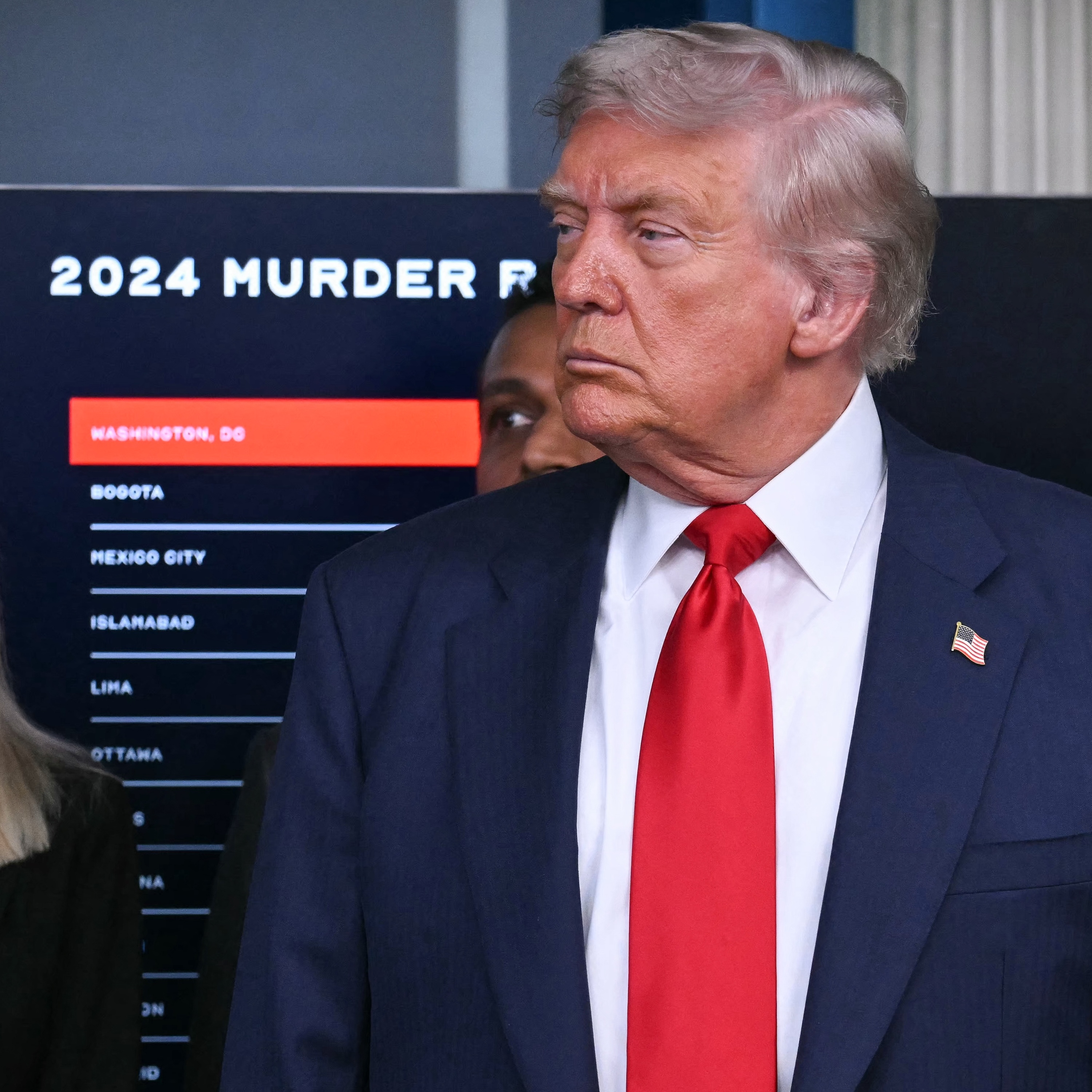
Post Reports
What Trump’s D.C. police takeover means
00:19:41
What President Trump’s police takeover of Washington, D.C., means for the nation’s capital – and the country.
Loading summary
Transcript56 lines
- [00:00]
Colby Ekowitz
Mama. Papa.
- [00:01]
Marcus Williams
Mi cuerpo.
- [00:02]
Olivia George
Crece.
- [00:02]
Colby Ekowitz
Ah, un ridmo.
- [00:03]
Olivia George
Alarmante. Il arro PA que me comprenora me. Quebec.
- [00:17]
Colby Ekowitz
President Donald Trump is deploying troops to take over the nation's capital.
- [00:21]
Donald Trump
I'm announcing a historic action to rescue our nation's capital from crime, bloodshed, bedlam and, and squalor and worse. This is Liberation Day in D.C. and we're going to take our capital back.
- [00:38]
Colby Ekowitz
In a Monday press conference, Trump said he was sending the National Guard to patrol the streets of dc. He said these troops would fight crime and clear out the city's homeless population.
- [00:48]
Donald Trump
Our capital city has been overtaken by violent gangs and bloodthirsty criminals, roving mobs of wild youth, drugged out maniacs and homeless people. And we're not going to let it happen anymore. We're not going to take it.
- [01:06]
Colby Ekowitz
This is an unprecedented move to militarize Washington, something Trump says is necessary because of the city's crime rates. But critics say Trump is wrong. Here's DC's mayor, Muriel Bowser on MSNBC on Sunday. We are not experiencing a crime spike and city residents are already protesting. Free dc.
- [01:28]
Olivia George
Free dc.
- [01:30]
Colby Ekowitz
Free dc. This is not about crime. This is about control. This is not about public safety. This is about power. From the newsroom of the Washington Post, this is Post Reports. I'm Colby IKOWICZ. It's Monday, August 11th. Today we talk about Trump's aggressive move to seize power in Washington, dc. Most people think of it as the seat of the federal government, but it's also home to about 700,000 people, myself included. We'll talk with local reporter Olivia George about what Trump's takeover is going to look like here. We'll get into why the President is doing it and what this could mean for other cities across the U.S. olivia, thanks so much for joining us on a very busy news day.
- [02:34]
Olivia George
Thank you for having me.
- [02:37]
Colby Ekowitz
So Trump is going to be putting D.C. under federal control and, and he's deploying the National Guard into the city. What does that actually look like? Does this mean we're going to have the military occupying the streets of the city?
- [02:51]
Olivia George
So we saw the President this morning announce that he wants to see 800 National Guardsmen come to the nation's capital, which he has a long history of describing as dirty and dangerous. And he's really pitched himself kind of continually as someone who can turn things around. We also saw him this morning announce that he is going to place the D.C. police Department under direct federal control. What that's going to look like on the ground is obviously going to be something that our colleagues and I are paying close attention to over the following days and weeks. But we did see the president repeatedly stress that DC Is somewhere not just where DC Residents live, but somewhere that families from all across the country pour into into. And that has made us think that there is going to be a concerted effort for beefed up presence of federal law enforcement in the kind of tourist core around the National Mall where we already saw federal law enforcement agents over the weekend and surrounding areas.
- [04:00]
Colby Ekowitz
So he deploys the national guard in D.C. what can the National Guard actually do?
- [04:05]
Olivia George
Good question. And the specifics of that I think is going to be a clear target for my colleagues and I in the coming days. It's interesting and I think really important to note that the D.C. national Guard is the only National Guard unit that reports only indirectly to the president. During the first Trump administration, we saw him call in the National Guard as racial justice protests were Sweeping not only D.C. but the rest of the country. This time around, we've already seen the administration mobilizing FBI agents in recent days who are working overnight shifts to help local law enforcement prevent carjackings and violent crime. The Secrets Service and the U.S. secret Service Uniform Division have also launched special patrols in Washington, according to a White House official. And Trump has repeatedly said that he wants the beefed up presence of federal law enforcement to counter what he says is spiking violent crime in the District. Of course, we've also spent a lot of time looking at the data and those statements don't exactly match to what is happening on the ground.
- [05:14]
Colby Ekowitz
Yeah, and I want to get into that definitely, Olivia, but. So federal agents were out last night in D.C. they were patrolling. Were they making arrests? What were they doing?
- [05:25]
Olivia George
So the administration has pointed to kind of a couple instances, whether that's seizing of illegal firearms and arrests. Honestly, nothing that at least yet seems that out of the ordinary to what D.C. police officers are doing day in, day out. I think it is be worth noting that we had a story that broke late last night where a Metro Transit police officer fired his weapon at someone. And Metro acknowledged that that happened while the officer was taking part in a federal task force operation. I bring that up because it speaks to broader concerns that we have been hearing from local leaders about the potential consequences of just having this surge in law enforcement presence, especially those who have not been explicitly trained and don't have a lot of experience in the streets in the way that D.C. police Department officials are doing day in, day out.
- [06:27]
Colby Ekowitz
And Olivia, you mentioned that DC's local police force that Trump wants to put it under federal control. What does that mean? What would it mean for the D.C. local police to now be under federal control?
- [06:38]
Olivia George
So let's go back to the 1970s and consider the Home Rule act, the decades old law that gave D.C. residents the ability to vote for their own mayor and council member. Really, this seminal turning point that gave local residents some semblance of political autonomy. Tucked into the Home Rule act, there's a provision that allows for, quote, the emergency control of police through a temporary federal takeover. The law is fairly broadly written, and all the President has to do is determine that, quote, special conditions of an emergency nature exist. Of course, we saw President Trump do that this morning with his claims of crime being off the charts in DC. So Trump can use the DC Police for up to 48 hours or for up to 30 days if he sends a special message to the leaders of certain congressional committees. If he wants to maintain authority over the D.C. police force for longer than that, he needs authorization through Congress. And in my conversations with local residents and leaders, many have spoken about, you know, how the President assuming control of the DC police force and sending the National Guard onto city streets is really this kind of long held fear that many were worried about. You know, they've kind of clung to the city's limited self governance and in some instances have carefully sought to avoid inflaming the President with policy choices or adversarial rhetoric. For many, today's actions, they say, highlights the necessity for D.C. statehood because.
- [08:20]
Colby Ekowitz
Right. Statehood has been such a major issue for DC. DC has been fighting to be the 51st state, but because it's not a state, Trump can now do this. I guess the bigger question is why is he saying that D.C. is in a state of emergency?
- [08:39]
Olivia George
That's exactly what we saw the President announce this morning. And Trump's orders this morning come after a week of escalated threats ignited by a brutal beating of a former Doge employee in an attempted carjacking in Northwest D.C. earlier this month.
- [08:56]
Donald Trump
Somebody from Doge was very badly hurt last night. You saw that. A young man who was beat up by a bunch of thugs in dc. And either they're going to straighten their act out in terms of government and in terms of protection, or we're going to have to federalize and run it the way it's supposed to be run.
- [09:13]
Olivia George
We had the President take to social media to share an image of that former Doge staffer, bloodied and beaten and sitting on the street without a shirt on. And in the social media post accompanying that quite graphic photo, Trump really sharpened his attack and threats on DC's right to limited self governance. And we've seen during the first and second Trump administration repeated comments from the President about crime in dc. Earlier this year he launched a task force, the so called Make DC Safe and Beautiful Task Force, you know, as kind of this vehicle for him to address some of the issues that he said were pervasive in the city.
- [09:56]
Colby Ekowitz
And so Olivia, I know you said that they'll be reporting to come on what the National Guard can actually do, but like I'm wondering if they came across a carjacking, like what happened to the former Doge employee, could they have done anything about that? Could they have made an arrest or intervened?
- [10:11]
Olivia George
So the National Guard is a reserve force that is typically called on by the President or in other states, governors to respond to domestic emergencies or participate in overseas combat and civilian missions, not to assist in routine crime fighting. This question of the National Guard's involvement in that routine crime fighting in D.C. is one that is currently being tested by this announcement that came from the President this morning. I think it's also worth noting because FBI agents have also been called into this effort to beef up the presence of federal law enforcement in D.C. that those FBI agents generally do not have the authority to make routine traffic stops. But we're hearing from our sources that those agents that have been deployed, their role will include supporting other agencies during traffic stops that do have the training and authority over those kinds of routine crime fighting efforts.
- [11:10]
Colby Ekowitz
So is having like federal agents and military guards, men and women, armed, patrolling the streets of dc, is it more of an intimidation factor in terms of like it might scare people away from committing crime?
- [11:27]
Olivia George
I think we have seen him use that kind of language himself. You know, he took to Truth Social yesterday to say something like there will be no Mr. Nice Guy. I think it's also worth noting that D.C. in many ways appears to represent beyond the District itself, this kind of emblem of what the administration views are wrong with various liberal policies when it comes to crime and how cities should respond to people experiencing harm, homelessness. And then of course, because of the very unique situation that D.C. finds itself in not being a state, it's almost low hanging fruit, if you will. It's a place that is more vulnerable than others to federal intrusion and overreach because local leaders have so few options when it comes to staving off various interventions from the federal government and heightened federal involvement in local day to day issues.
- [12:29]
Colby Ekowitz
Olivia, I'm glad you brought up the homelessness issue because in addition to reducing crime, he also has said that he wants to remove all homeless encampments. Where does he plan to put all the people without homes?
- [12:44]
Olivia George
So we saw yesterday in his Truth Social post, I think he used the language like far from the Capitol, you will be sent far from the Capitol. He did also explicitly state that his administration would find places for people that were being displaced if that materializes. And where exactly those beds are is yet to be seen. I've been speaking with homeless advocates throughout the weekend who are increasingly worried about what this means for people in D.C. that are experiencing homelessness. I was talking to someone yesterday who really staunchly criticized this move and said that the money that's being spent on deploying federal law enforcement really ought to be being spent on expanding shelter and wraparound services. As part of the task force that Trump launched earlier this year, the National Park Service has been stepping up their encampment sweeps long before today's announcement. And let's not forget that much of the parkland in D.C. well beyond the National Mall, is already within the purview of the federal government. And so that's why, even before today's announcement, we've seen a ramp up in efforts to displace and move people experiencing homelessness from those spaces.
- [14:12]
Colby Ekowitz
We're going to pause here, and after the break we'll talk about the reality of crime in D.C. and how residents are responding to Trump's takeover. We'll be right back.
- [14:33]
Marcus Williams
As summer comes to an end, I'm all about refreshing my wardrobe with staple pieces for the season ahead. And nobody nails it like Quince does with luxe essentials that feel effortless and look polished, perfect for layering and mixing. Think chic cashmere and cotton sweaters Starting at just $40, washable silk tops and classic denim pants. Timeless styles you'll keep coming back to. And the best part? Everything with Quints is half the cost of similar brands. By working directly with top artisans and cutting out the middlemen, Quince gives you luxury without the markup. Quince only works with factories that use safe, ethical, responsible manufacturing practices and premium fabrics and finishes. Elevate your fall wardrobe essentials with quince. Go to quince.com reports for free shipping on your order and 365 day returns. That's Q U I N C E.com reports to get free shipping and 365 day returns. Quints.com reports.
- [15:34]
Martin Cady
The Washington Post is known for pulling back the curtain on what's really going on in politics, policy and power. Now we're expanding that mission, introducing Washington Post Intelligence, a new venture to help business executives, policy innovators and thought leaders navigate the unpredictability of business and politics. I'm Martin Katie, the general manager of Washington Post intelligence. As a 20 year editor and reporter on politics and policy in Washington, I know how important it is to have the right tools to make critical decisions for your business. WP Intelligence gives you that with its new executive Briefing service. Our briefings and analysis are hosted by star analysts like Josh Rogan and Jason Dean, who have decades of experience on global economics, geopolitics, AI and technology. So if you're an executive, policy leader, government or legislative staffer, head over to wpintelligence.com to learn more about this new premium service. Even better, one of our experts will walk you through a demo. Again, that's wpintelligence.com there's information and then there's WP intelligence.
- [16:35]
Colby Ekowitz
You know, Olivia, we live here, we know that crime happens here. But I want to put it into perspective. Just how big of a problem is.
- [16:44]
Olivia George
Crime in D.C. so violent crime in D.C. has been on the decline since 2023. That year, we saw a generational spike in killings that rendered the nation's capital one of America's deadliest cities. Communities were, of course, plunged into grief, and it also ignited a local political crisis that escalated to the halls of Congress. Local leaders have been quick to recognize that any violent crime is too much, but that this year and last year, we've seen sustained improvements year to date. According to D.C. police data, violent crime is down by double digits 26% the last time I checked. Homicides are also down and that decreases, part of a nationwide drop over the past two years. The D.C. mayor has also refuted the image that Trump has been painting of her city, pointing to those recent drops in crime, but also emphasizing ways in which she hopes local leaders and those in the federal government could work together towards shared priorities.
- [17:55]
Colby Ekowitz
It is true that we had a terrible spike in crime in 2023, but this is not 2023. This is 2025. And we've done that by working with the community, working with the police, working with our prosecutors, and in fact, working with the federal government.
- [18:13]
Olivia George
We've seen her and other local leaders repeatedly point to judicial vacancies in the city and also a demand for more prosecutors.
- [18:22]
Colby Ekowitz
How are D.C. residents reacting to all of this?
- [18:26]
Olivia George
In the conversations that I've been having with residents so far, I've been hearing a lot of fear A lot of frustration and anger. People have been describing this action by President Trump as hypocritical. They view it as a waste of financial resources. They're worried about the increased presence of armed officers in D.C. streets and wondering what, if anything, that will do to improve the quality of life of residents here. Dc, dc, dc. We also saw hundreds gather at a protest that happened at the same time as Trump held his news conference, making these announcements where people were chanting things like, you know, hands off dc, Free dc and criticizing what they view as a really dangerous and unnecessary overreach by the Trump administration. Growing up in DC, specifically Ward 8, it was hard.
- [19:30]
Colby Ekowitz
And I do want some, and I.
- [19:32]
Olivia George
Do want my community to be free of violence.
- [19:35]
Colby Ekowitz
But simply locking people up is not the answer.
- [19:38]
Olivia George
This is Marcus Williams, who grew up in D.C. and was among those who gathered.
- [19:43]
Colby Ekowitz
And those people they had gathered near the White House, right?
- [19:45]
Olivia George
That's correct.
- [19:46]
Colby Ekowitz
To protest.
- [19:46]
Olivia George
I've also heard from a couple, many of whom have described themselves as lifelong Democrats, who have for a while now felt frustrated by local leaders and while they were not advocating for a federal takeover of the local police force, are in some ways hopeful that this might yield some more concerted action to tackle what they say are outbursts of violence in the city.
- [20:15]
Colby Ekowitz
You know, you talked earlier about how DCs kind of low hanging fruit because it's vulnerable to this. It's not a traditional city or state in the way that it's run. But he has also said that he wanted to go or could go further than just dc. We'll remember that he did this in LA when there were some massive protests there against immigration raids. And then he also talked today about potentially doing something similar in Chicago, where there's also what he very bad levels of crime.
- [20:46]
Donald Trump
We have other cities also that are bad, very bad. You look at Chicago, how bad it is. You look at Los Angeles, how bad it is.
- [20:55]
Colby Ekowitz
So D.C. feels a little bit like a testing ground.
- [20:58]
Olivia George
I think a lot of people are feeling similarly. I mean, the D.C. mayor yesterday on television, and I'm paraphrasing here, said something along the lines of, if Trump wants to see federal officers marching down the street of an American city, he can do that here.
- [21:18]
Colby Ekowitz
Well, Olivia, thank you so much for coming on. Really appreciate it.
- [21:21]
Olivia George
Thank you for having me.
- [21:25]
Colby Ekowitz
Olivia George covers the D.C. area for the Post. That's it for Post Reports. Thanks for listening. Today's show was produced by Sabi Robinson with help from Rennie Srinofsky and Laura Benshoff. It was edited by Rena Flores, and it was mixed by Sam Baer. Thank you to local editor John Ramsey. I'm Colby Ekowitz. We'll be back tomorrow with more stories from the Washington Post.
- [21:58]
Martin Cady
The Washington Post is known for pulling back the curtain on what's really going on in politics, policy and power. Now we're expanding that mission, introducing Washington Post Intelligence, a new venture to help business executives, policy innovators and thought leaders navigate the unpredictability of business and politics. I'm Martin Cady, the general manager of Washington Post intelligence. As a 20 year editor and reporter on politics and policy in Washington, I know how important it is to have the right tools to make critical decisions for your business. WP Intelligence gives you that with its new executive briefing service. Our briefings and analysis are hosted by star analysts like Josh Rogan and Jason Dean, who have decades of experience on global economics, geopolitics, AI and technology. So if you're an executive policy leader, government or legislative staffer, head over to wpintelligence.com to learn more about this new premium service. Even better, one of our experts will walk you through a demo. Again, that's wpintelligence.com there's information and then there's WP intelligence.