← Post Reports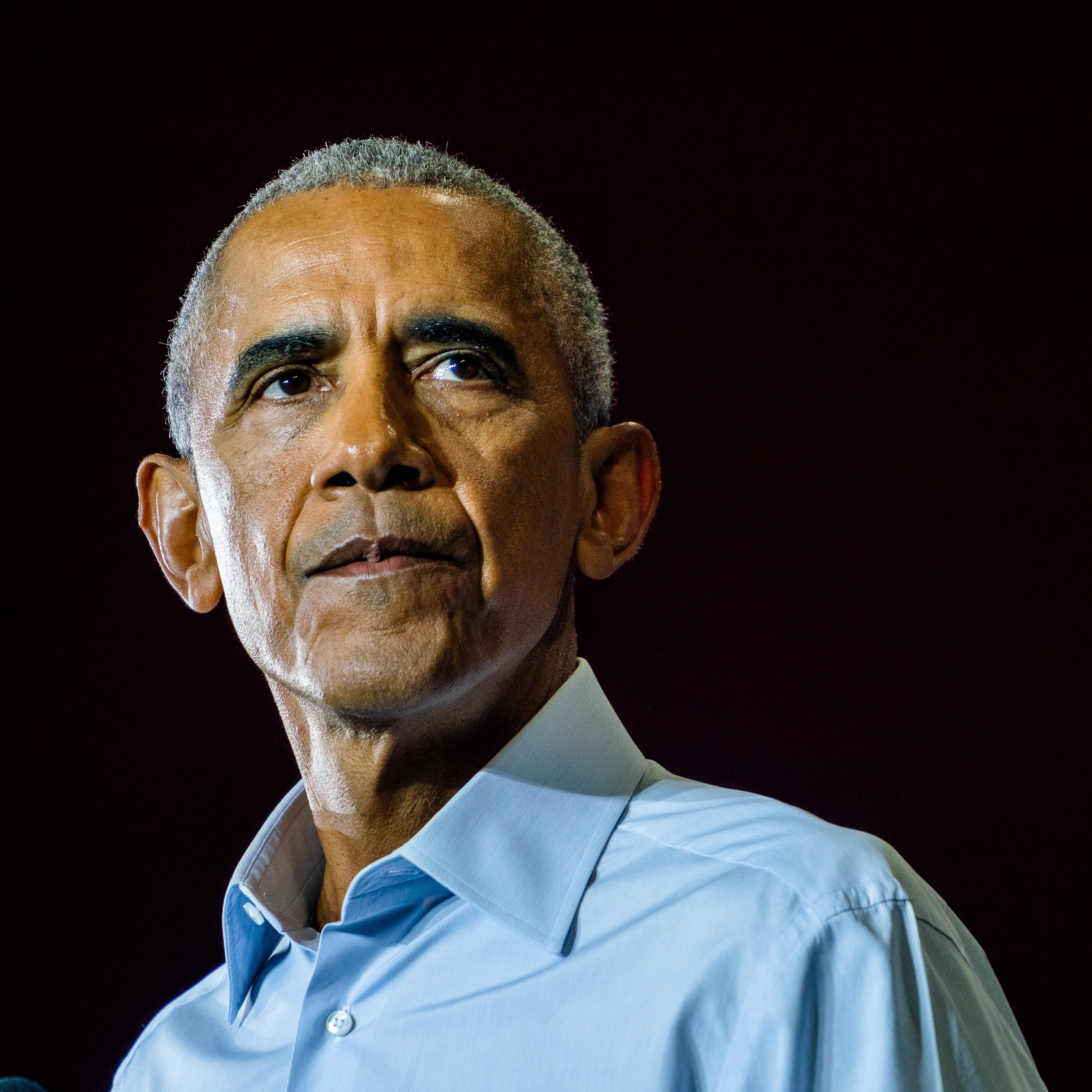
Post Reports
What’s Obama been up to?
00:20:13
Why Democrats are looking to a former president to weather the Trump storm.
Loading summary
Transcript48 lines
- [00:03]
A
Where is former President Barack Obama? That's the question on many Democrats minds. The country is at a crossroads, and their party is clamoring for a leader. Since Obama left office in 2017, he's been choosy about when to get off the sidelines. He's refrained from commenting on President Trump's every move. But recently, Obama has found it harder to stay silent. From the newsroom of the Washington Post, this is Post Reports. I'm colbyakowicz. It's Monday, October 27th. Today politics reporter Yasmin Abu Talib explains why former President Barack Obama has decided to speak out now and how his voice is still the most powerful in the Democratic Party. Yasmeen, thanks so much for joining me.
- [01:00]
B
Thanks for having me.
- [01:01]
A
So, Yasmine, how has President Obama engaged with politics since leaving office? Like, what's his strategy?
- [01:07]
B
It's been pretty similar to how he thought about it in Trump's first term, where his advisors say his ultimate goal is to build a Democratic Party that can survive without him. So his primary focus has always been to elevate new leaders, to counsel people behind the scenes who are sensitive, seeking office, maybe considering a presidential run, but even people running for local races, you know, the House, Senate, whatever it may be. But he's always said that he would speak up when he felt a line was crossed. And in Trump's first term, you know, Trump was his immediate successor. So I think he was much more careful. He wanted to do what outgoing presidents typically do, which is to not comment too much on their successors. It's been different during Trump's second term. You know, Trump this time is not his immediate successor. And his advisors say he's been much more alarmed Trump's second term than his first term. So when he says he'll speak up whenever a line is crossed, I think he feels that has happened much more frequently in Trump's second term. And the Democrats are rudderless right now. They're adrift. They haven't mounted a very effective response to Trump. And I think Obama has seen that. I think he's been very worried that during this term compared to the first term, the Democrats have not been as united and as forceful in countering Trump, and that even just voters and Americans are not protesting and pushing back with the same ferocity that they did in the first term.
- [02:34]
A
So have there been moments when Obama has spoken out?
- [02:37]
B
So there have been a couple, I think key moments where Obama's been quite forceful in speaking out. And I think there are Democrats who say, why isn't he doing that more often. You know, he's the only Democrat right now who, when he speaks, speaks, it sort of carries the response for the entire party for the day, whereas there are lots of emerging leaders in the Democratic Party. But when they do speak up, it doesn't carry the same authority and magnitude as when Obama does. He spoke a few days after Charlie Kirk was assassinated. He had a previous event scheduled, but then obviously, everyone was waiting to see what he was going to say about political violence.
- [03:16]
C
The premise of our, of our democratic system is that we have to be able to disagree and have sometimes really contentious debates without resort to violence.
- [03:31]
B
He spoke up when HHS put out its guidance saying that pregnant women should no longer take Tylenol.
- [03:37]
A
He did.
- [03:37]
B
He did, yeah. Those were some of his most forceful comments about how dangerous this was, how worrying this was, how this was basically a war of misinformation at this point. And then he's been quite outspoken about the redistricting battle that's now happening in red and blue states.
- [04:00]
A
Yasmeen, I think we should take a pause here and remind people what this whole redistricting fight is about. Because redistricting, it's something that happens every 10 years when the census is taken and states redraw their congressional maps and their state legislative maps based on how their population has changed. What has been the redistricting fight this year?
- [04:23]
B
It's one of the least sexy political issues, which is.
- [04:25]
A
I disagree. I think redistricting is very sexy.
- [04:28]
B
Okay, fair enough, fair enough. This year it is. So basically, when the census comes out every 10 years, these maps are redrawn in congressional districts. In theory, they're supposed to be nonpartisan. That is absolutely not how it's played out. But what Trump did was launch this unprecedented mid decade push to redraw the map. So it started in the summer when he openly called on the Texas governor Greg Abbott to redraw the Texas map to pick up five safer Republican seats to protect the House majority.
- [05:00]
D
No, no, I just a very simple redrawing. We pick up five seats, but we have a couple of other states where we'll pick up sea sauce.
- [05:08]
B
This was Trump openly calling on the governor to redraw the map. Not for any real policy reason, but.
- [05:14]
A
He or population reason. Or it was really just partisan.
- [05:18]
B
Exactly. There's no new census. There's. There's no reason to draw the map at this point. And he later said, I'm entitled to those five seats and I won Texas.
- [05:27]
D
I got the highest vote in the history of Texas, as you probably know, and we are entitled to five more seats.
- [05:34]
B
Trump's whole point is, let's make sure we're gonna win the majority no matter what. And so it started in Texas, like you said. They did pass the new map, but we've seen efforts launch in North Carolina, Indiana, Ohio, Missouri. We don't know how all these are gonna shake out yet, but there are potentially several more seats at stake. So this really alarmed Obama. Obama's actually been focused on redistricting since he left office. He's been focused on nonpartisan redistricting. So in 2017, when he leaves office, his former Attorney General, Eric Holder founds this group called the National Democratic Redistricting Committee, or ndrc. And Obama backs this group. And so Obama does a lot of work that we don't pay a ton of attention to because it's not as interesting when it's not so partisan, since he's left office, trying to draw what they say are fairer maps, nonpartisan maps, so that Obama, either party, has a fair shot at winning control of the House based on whose policies are more popular. So when this fight pops up in Texas and they're deciding what to do, they said, you know, if we don't fight back against this, we're not gonna have a democracy to protect at the end of this.
- [06:44]
A
Right. Okay, so Obama's been really interested in redistricting for a long time, but how does he get involved in this redistricting fight that started over the summer?
- [06:54]
B
So the first thing that happens is he connects with Eric Holder. The two of them have this phone call just a few days after all of this Texas stuff starts, and they say, you know, they've both been sort of conflicted over the last several days over what should Democrats do, and that they basically come to the conclusion that Democrats can't just have a rhetorical response to this that's gonna get them nowhere. They keep coming back to this plan from the California governor, Gavin Newsom. He had floated that if Texas redrew its map, California could redraw its map to pick up five Democratic seats or five more safely Democratic se. This is making Democrats really squeamish, you know, cuz they're like, we were supposed to be the party of good governance, right? If we go on this path, we're never gonna get off of it. But Obama and Holder decide, you know what, we're gonna endorse this plan. And so Holder comes out first and endorses it, and they decide that Obama's gonna wait a couple weeks before he supports it. And I think there's a couple important things to note. The reason that they support Newsom's plan is they find it pretty measured given the just the stakes of what's happening. Newsom's plan would not be the California legislature permanently redrawing the map. Newsom says this is gonna be a temporary measure and we're gonna put it before voters. So this is gonna come up on a special ballot next week on November 4th, and we're gonna let the voters decide if they wanna do this. And I note all that because this is key to getting Obama and Holder on board. I don't know that they would have supported the California legislature uniformly changing the map, but this they think is a responsible response to what's happening in Texas.
- [08:33]
A
That's so interesting. I don't think I realized that, Yasmine. So that so. And people might have heard seen references to Prop 50. That's what this ballot initiative is in California. So basically when California voters are going to decide, do we want to redraw our maps for the next two elections until there's another census in order to counter what Republicans are doing in Texas and also around the country?
- [08:59]
B
That's exactly it.
- [09:00]
A
Like you said, Yasmine, this is. This has put Democrats in a tough spot because Obama, Holder, other Democrats have long been on the side of getting rid of partisan gerrymandering, making the map drawing more fair, handing it over to nonpartisan map drawers. So what does Obama's support look like? What does he start doing behind the scenes to kind of get people on board?
- [09:25]
B
It was so interesting when I learned just how involved he was. So Holder puts out a statement on July 30th supporting it. Then over the next couple weeks, Obama talks to key architects of the issue. He talks to the former House Speaker Nancy Pelosi, who is from California and played an enormous role in helping Newsom get this across the finish line and getting support among Democratic California lawmakers. Messaging this publicly, raising money for it. And he also has a more than one hour phone call with Newsom where they talk about how do they line up support, how do they message this publicly. And Newsom and Pelosi think Obama will have unmatched impact in the public. Messaging and getting Democrats and also the broader public on board with what they want to do. And so Obama tells them, listen, I plan to support this. I'm going to throw my weight behind it, but I'm waiting for the right moment. They're doing this on an, on a kind of crazy timeline. I think this all happened in less than a month between proposing this plan and then getting it through the legislature so it can be put on the ballot in time for November 4th. And then Obama on August 19th, does publicly endorse Newsom's plan at a fundraiser for the Holder group. And there he says, I would rather not have gerrymandering. I would rather have fair maps. But given what's happening, I think Governor Newsom's plan is a responsible path forward. And it's so striking because pretty much overnight, you see the entire Democratic Party line up behind this. And less than a week later, the California legislature passes this.
- [11:03]
A
So what has happened since then? What's happened since Obama got involved since then?
- [11:09]
B
The major thing that Obama has done is he filmed an ad for Prop 50, which Newsom's aides say is the most helpful thing he could have potentially done. So he films this ad, he sends it to Newsom's team a couple weeks ago. They edit it, add the music, and now this ad is airing all over California.
- [11:28]
C
California, the whole nation is counting on you. Democracy is on ballot November 4th. Republicans want to steal enough seats in Congress to rig the next election and wield unchecked power for two more years. With Prop 50, you can stop Republicans.
- [11:42]
B
In their tracks, even though other Democrats have filmed ads and stepped into this fight. I heard from someone who's been working closely on this that Obama's ad accounts for pretty much all of the traffic.
- [11:54]
A
You know, Yasmine, what I find so fascinating about this story is that, you know, Obama and Holder, they started this organization expressly with the intent to stop dairymandering. But now we have Obama advocating for gerrymandering. I mean, did you get a sense from people in his inner circle that he was conflicted at all about this?
- [12:17]
B
What surprised me in the reporting is I think there is a sense among a lot of Democrats that Obama had to be cajoled off the sidelines. They had to get him to buy in. Someone had to convince him, and that actually wasn't the case. He did not need to be sort of convinced or someone needed to lay out the arguments. Him and Holder both saw democracy at stake and decided they just can't let this go unanswered. That is way riskier to them than doing this countermeasure.
- [12:51]
A
After the break, why it's so unusual to see Obama actively working against the current president. We'll be right back.
- [13:10]
E
We all have tons of decisions we juggle every day at work and in our businesses. Even us here at the Post Scripts show artwork, recording schedules, it can get overwhelming. And that's especially true if you're starting a small business. It can be pretty intimidating wearing so many hats and learning everything on the fly. So finding the right tools and partners that not only help you out, but also simplify everything can be such a game changer for millions of businesses. That tool is Shopify. Shopify helps you in so many ways, from building a beautiful online store using their hundreds of templates to helpful AI tools that write product descriptions, page headlines, and even enhance your product photography to help you easily create email and social media campaigns to target your customer wherever they may be. That's why millions of brands like Allbirds and Skims use Shopify to grow their businesses every day. Turn your big business idea into With Shopify on your side, sign up for your $1 per month trial and start selling today at shopify.com reports go to shopify.com reports shopify.com reports to first responders Every second counts Firefighters, paramedics, law enforcement officers and 911 operators need to communicate instantly. And that's why FirstNet exists. FirstNet is the only network built with and for first responders. It's a unique public private partnership with the FirstNet authority making sure America's first responders always have priority access, whether in the heart of a big city, a rural county or a remote territory. During natural disasters, major storms or large scale events, first responders know they can count on FirstNet to keep them connected, even when other networks are congested or unavailable. FirstNet is more than a network. It's a commitment to first responders, a promise that America's public safety always comes first. FirstNet built with AT&T. Learn more@firstnet.com Public Safety first.
- [15:16]
A
So Yasmeen, is Obama frustrated with the Democratic Party? Did he get involved here because he thinks they're not doing enough?
- [15:24]
B
I think he's pretty concerned that they're not pushing back with the same forcefulness that they did in Trump's first term. We're almost a year into Trump's second term. Until this government shutdown, Democrats really have not been united in their messaging. They've been a little bit all over the map. And do they push back against some of the immigration measures? Do they push back against tariffs? And they might all oppose tariffs, but they haven't found a really cogent message that explains to voters why this is a bad thing. And what I've heard from a lot of Democrats is Trump's popularity is not very high right now, and there's still A lot of Democrats who are a little bit meek and a little bit afraid to take him on, I think the last election really shattered Democrats confidence that it made them much more hesitant this time around.
- [16:14]
A
The last president in the.
- [16:15]
B
Oh, I'm sorry. Yes. The last presidential election in 2024, because they lost the White House and Congress. They lost every swing state. I think that really shattered their confidence where they have been much more hesitant to push back against Trump this time, even on things they obviously oppose because they're like, we don't want to be out of step with the voters. And, you know, on things like immigration, on crime, on the economy, they don't have very strong counter proposals yet. They don't have a winning message, basically, on immigration, on crime, on some of these issues, culture issues, some of these things that have dogged them for many years now, they don't really know what to offer instead, and they're afraid of just pushing back with no other message because I think they feel like they lost the country in a lot of ways.
- [17:00]
A
Is it unusual that Obama got this involved behind the scenes to get other Democrats supporting this redistricting plan?
- [17:09]
B
The way Obama has inserted himself in the redistricting issue has no modern precedent in terms of former presidents. Former presidents can play a role when their parties are. Are struggling like the Democrats are right now, where they give speeches. They are sort of a de facto leader until a new one emerges, whether from a primary or something else. But for a former president to wade so specifically into a policy fight, to be strategizing about something that's so rawly partisan, you know, behind the scenes really has. I talked to presidential historians. They said there's no modern precedent for this for someone like Obama, who has been out of office for several years, to be getting, you know, nitty gritty in the specifics of how to take on this redistricting fight.
- [17:55]
A
Yasmine, I feel like for the last several years, there has been this, like, where is Obama Question, like, why isn't Obama doing more? He's in Hollywood with his production company. I saw that he was just on, like, a super yacht with Steven Spielberg. He seems to be enjoying his post presidency. But are there leaders in the party that have been waiting and hoping that he would do this or. Or do they feel like your time has come and passed, like, we don't need you?
- [18:24]
B
I did not hear much of the latter sentiment. What I heard overwhelmingly was, I wish he would do this more. I wish he would speak up more. And I think the counter from his team, from his aides is if he speaks up so much, one, it dilutes the power of his voice. So on the redistricting example, let's say Obama spoke up about every sort of thing Trump did. Their argument is when he did speak up against redistricting, it wouldn't have carried the same weight that it did where the way it was described to us by a couple of people was that Obama gave Democrats a permission structure to support this. Once Obama said, no, I support Newsom's plan, then every other Democrat felt like they had cover to do so. And so I think Obama is quite worried about diluting the power of his voice. When he weighs in, he wants it to mean something and to matter. And I think he doesn't want to drown out new voices in the party. I think he feels like if he's speaking up all the time, it might help Democrats in the short term because they have a someone to turn to who sort of gives the official Democratic response. But then he doesn't make room for other people to find their, their place in the party for new leaders to emerge. I mean, he's been out of office almost nine years. I think he and his team feel like he can't keep being the de facto leader. Someone else needs to emerge. And one of the criticisms that emerged is that when Obama left office, he did not leave the party in the best possible shape. Democrats saw huge losses in state houses and governorships while he was in office. And there's been some criticism that he didn't do a good enough job while he was president, building up the party so it could survive without him. So I think, you know, there is a sense that Obama now can help build up the party in a way he did not do while he was in office.
- [20:15]
A
From your reporting, obviously, the midterms are next year, the midterms being incredibly consequential. That's what this whole redistricting conversation is about. Do you get the sense that we will be seeing more of a fight coming from President Obama, that he does feel that what Trump is doing in this country, he can't sit back and be quiet any longer?
- [20:38]
B
I think that's right, Colby. And I think he times a lot of his statements and his actions for when people can take action. So you see him being more outspoken right now because there are off year elections next week. He filmed ads for Prop 50, the California measure. He wants to make sure people turn out for that. He's going to campaign this week with Abigail Spanberger and Mikey Sherrill, the Democratic gubernatorial candidates in Virginia and New Jersey. So he often will step up his political activity and his rhetoric right ahead of elections because he want people to be able to do something like he doesn't want to speak into a void and then sort of nothing happens or there's nothing to do. So I think he will probably continue to speak up, but I would expect that you would see him out there much more closer to the midterms, where he really wants to encourage people to turn out in all these different races across the country.
- [21:34]
A
Yasmine, thank you so much for coming on the show.
- [21:36]
B
Thank you.
- [21:38]
A
Yasmeen Abutalem is a politics reporter for the Post. That's it for Post Reports. Thanks for listening. Today's show was produced by Rennie Siernoski with help from Sabi Robinson. It was mixed by Sean Carter and edited by Ariel Plotnick. Thanks to editors Sean Sullivan and Noah Bierman. If you love the show, help other people discover it by leaving a rating on Spotify or a rating and review on Apple Podcasts. I'm Cole Biekowitz. We'll be back tomorrow with more stories from the Washington Post.
- [22:17]
F
You listen because you know the power of good journalism and the Washington Post is there for you 24 7. When you become a Washington Post subscriber, you get excited, exclusive reporting you can't find anywhere else. You also get sharp advice columns, delicious recipes, TV and music reviews, and so much more. Right now, you can get all of that for just $4 every four weeks. That's for an entire year. After that, it's just $12 every four weeks. And you can cancel anytime. Add to your knowledge and discover all the Post has to offer. Go to washingtonpost. Com subscribe. That's washingtonpost. Com Subscribe.