← Post Reports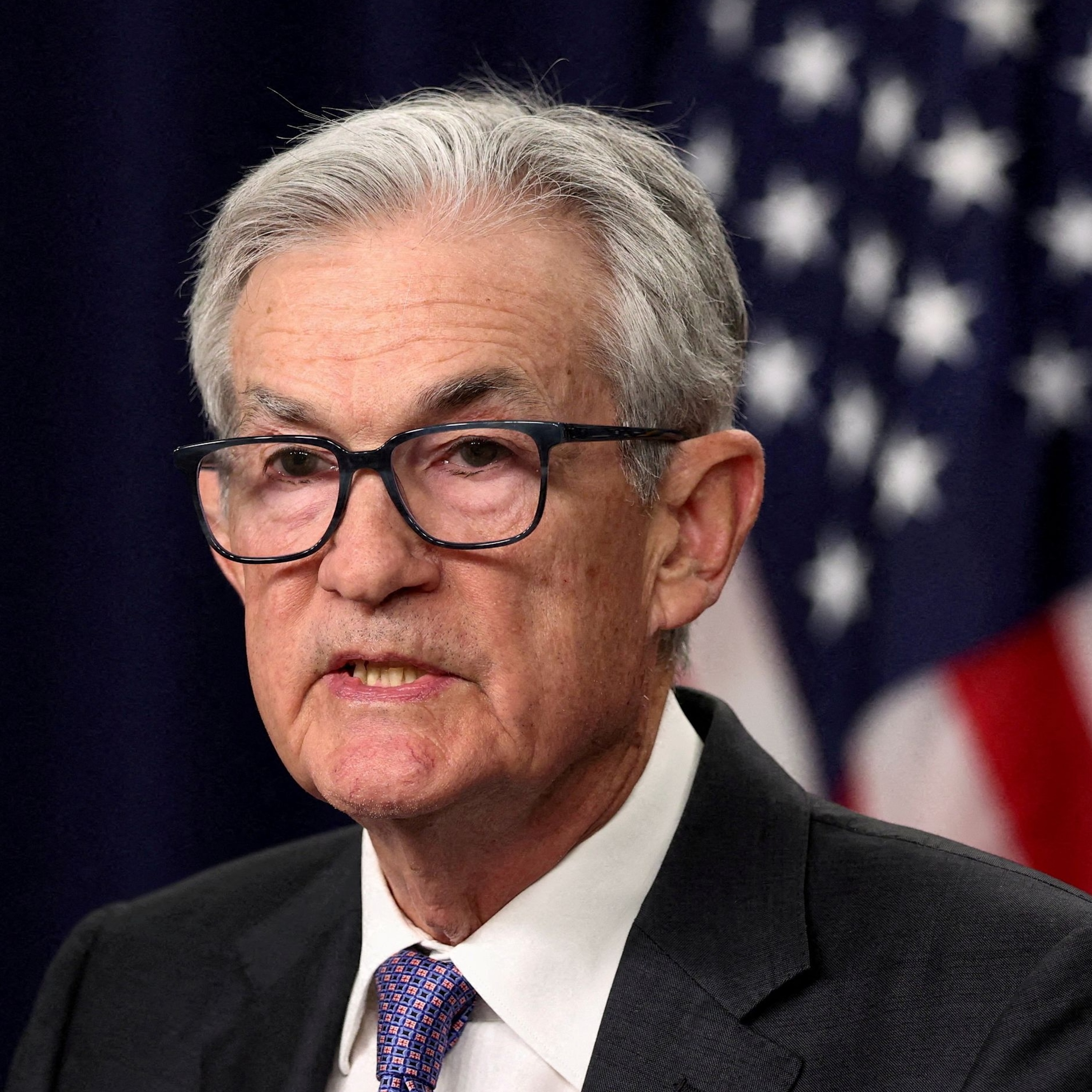
Post Reports
Why Fed Chair Jerome Powell isn't backing down
00:26:26
President Donald Trump has long disliked Federal Reserve Board Chair Jerome H. Powell. Now, the Justice Department has launched a criminal inquiry into Powell. We look at his probe and what it could mean for trust in America’s central bank.
Loading summary
Transcript100 lines
- [00:03]
A
For months, President Donald Trump has been complaining about one man in particular, Federal Reserve Chair Jerome Powell. Trump has called him names, said he should be fired, and just keeps pressuring him to lower interest rates.
- [00:22]
B
So we have a stupid person. Frankly, at the Fed. He probably won't. I think he does a terrible job. He's costing us a lot of money. Too late. I call him too late, pal, because he's always too late. We're thinking about bringing a suit against Powell for incompetence. He's a knucklehead.
- [00:36]
A
And then this weekend, we found out the Justice Department has launched a criminal probe into Powell. This might sound familiar. An official Trump doesn't like now getting investigated by the doj. But the ripple effects of this showdown could extend far beyond Washington and hit our pocketbooks. It could affect mortgage rates, car payments, and how much things cost for you and me. From the newsroom of the Washington Post, this is Post Reports. I'm Elahe izadi. It's Wednesday, January 14th. Today, how the relationship between Trump and Powell fell apart and whether trust in America's central bank has now been undermined forever. Hey, Andrew, thanks for joining me in the studio today.
- [01:29]
C
You're welcome. Thanks so much for having me.
- [01:31]
A
Again, there has been so much going on with the Fed. I kind of think of you as the Fed whisperer. And I want to talk to you about, like, what is happening with this agency. But before we get to all of that, on Sunday, the Federal Reserve itself published this video clip from the Fed Chair, Jerome Powell. Sometimes we call him Jay Powell, and I want to place some of it here. So let's just listen to some of the things that Powell said in that video.
- [01:56]
D
On Friday, the Department of justice served the Federal Reserve with grand jury subpoenas threatening a criminal indictment. The threat of criminal charges is a consequence of the Federal Reserve setting interest rates based on our best assessment of what will serve the public, rather than following the preferences of the President. Public service sometimes requires standing firm in the face of threats. I will continue to do the job the Senate confirmed me to do with integrity and a commitment to serving the American people.
- [02:28]
A
So, Andrew, where were you when this video came out? Where were you when you first watched it?
- [02:33]
C
I was upstairs in my office at home. And I was surprised. I have actually been following the Fed for years, and I've been covering monetary policy at the Post since the fall of 24. And Powell has never once really engaged in the broadsides or the attacks from the president. And so to hear this was kind of Shocking. A. There was a criminal investigation of some kind that he apparently was the target of.
- [02:59]
A
Like, this is how we're finding out from this video.
- [03:01]
C
Yeah, yeah. And he was reacting. He was saying that this is all about undercutting our independence and attacking us for not setting interest rates the way the President wants.
- [03:12]
A
It sounds like what you're saying is this is not in character for what you've expected of Powell thus far. Like, what kind of Fed chair is he? Like, can you tell me a little bit more about who he is?
- [03:22]
C
So he's not an economist. He sort of broke this string of consecutive economists who were tapped to be Fed chair. He's a lawyer by training. When I was watching that video, to be honest, like, he looked like this, like, angry grandpa kind of, right? Yeah, totally. He has this sort of every man Persona. I mean, he's very straightforward. In these press conferences that he does about every six weeks, he takes press questions at the end of every policy meeting where they set interest rates. You know, he's been asked probably once every meeting by the press, you know, something about Trump.
- [03:55]
A
And just a quick follow up. President Elect Trump has been critical of your performance. Any concern about his influence on the Fed's independence.
- [04:04]
D
I'm not going to. I'm not going to get into any of the political things here today, but thank you.
- [04:10]
C
He says, I don't have anything for you today on that. I mean, there was one time last year, I think it was my first FOMC meeting. The FOMC is the Federal Open Market Committee. It's the policy committee that sets interest rates. Trump had been reelected, and there was some reporting that they were thinking about trying to fire Fed officials from their leadership positions, trying to demote them or fire them. And he got asked about that by Victoria Guido at Politico.
- [04:36]
A
Some of the President's elect's advisors have.
- [04:39]
C
Suggested that you should resign. If he asked you to leave, would you go?
- [04:44]
D
No.
- [04:46]
C
Can you follow up on.
- [04:48]
A
Do you think that legally you're not required to leave?
- [04:51]
C
No, it was just very flat.
- [04:54]
A
Yeah.
- [04:54]
C
And then I followed up to that question, it kind of went. It was my only viral thing from covering the Fed. Do you believe the president has the power to fire or demote you? And has the Fed determined the legality of a president demoting at will any of the other governors with leadership positions.
- [05:11]
D
Not permitted under the law?
- [05:13]
C
And the guy next to me kind of moved and I couldn't hear him, and I said, what? Not what?
- [05:17]
D
Not permitted under the law?
- [05:20]
C
Like, very. You know, I Don't know how you.
- [05:22]
E
Forceful.
- [05:22]
C
Very forceful. Very forceful. I mean, he had not engaged since then. Throughout the last year, Trump has repeatedly attacked him. Trump has called for lower rates. Trump has threatened to fire Powell. Trump has tried to fire another sitting Fed governor. Trump has installed a sitting economic advisor on the Fed board. Throughout all of that, Powell did not push back publicly.
- [05:44]
A
So this is sort of the most dramatic pushback that we're seeing from Powell.
- [05:49]
C
Absolutely. And I think it had more rhetorical power because he had been effectively publicly silent for so long that to see him go out swinging like that I think was very forceful.
- [05:59]
A
So I do want to get further into this feud. Maybe it's one sided feud between Trump and Powell. But before we go any further, I do think it is helpful at this point to just stop for a mom moment, do a little bit of Federal Reserve 101. For those of us who might not be thinking about the Fed every day, like you, in the most basic terms, Andrew, what is the Fed's job?
- [06:20]
C
So the fed basically has two mandates. Congress established the fed about 112 years ago and their mandates are for stable prices. They've interpreted that to mean inflation doesn't around 2%, not above 2% and full employment. Basically their job is to ensure that there are plentiful jobs and that price level is relatively stable. There's very little inflation.
- [06:42]
A
So then they set monetary policy to meet those objectives.
- [06:45]
C
Yeah, they set interest rates. They're really short term interest rates. But they trickle through the economy and they influence what we pay for mortgages, car loans or other types of borrowing.
- [06:55]
A
One other question I have about the Fed, people often talk about the Federal Reserve as needing to act independently. Is that set in law? When we say the Fed's independence, where is the origin of that?
- [07:07]
C
Yeah, it's sort of a mixture of law and sort of practice over the decades. And recent presidents haven't really wanted to mess with it basically since the Clinton administration until Trump. You didn't really see presidents attacking the Fed before that. You did. Nixon sort of famously pressured the Fed chair at the time for lower rates before the 1972 election. It's sort of a cautionary tale within Fed world because the chairman at the time kind of gave in to the President. He thought the president was a good friend of his and it kind of fueled the inflation that you had for the next decade. And it took very painful steps from subsequent Fed chairman, from Paul Volcker to kind of bring down inflation. That's sort of the cautionary tale where you if You're a Fed chairman now. You want to be independent. You don't want to be susceptible from pressure from the president. In the modern economy. The if the markets think that the Fed is going to be responsive to short term political pressures from the president or other politicians, they're going to expect inflation to be a little higher, and that means they're going to demand higher yields. So it makes everything more expensive, basically, for everyday people if the markets don't have confidence in the Fed's ability to tackle inflation.
- [08:26]
A
So now I want to go back to what Powell said in that video. Basically accusing the President of using the vast power of the government, the doj, of trying to pressure him to make a financial decision around interest rates. What has Trump said about that accusation?
- [08:44]
C
Yeah, Trump has denied any knowledge about these subpoenas or this investigation very flatly. The White House has also sort of reiterated those points that they knew nothing about this investigation or the subpoenas. But a couple weeks ago at Mar a Lago, he said he was considering suing or some kind of legal action against Jay Powell.
- [09:02]
B
The guy's just incompetent. I mean, there's nothing you can do about it. He's just a very incompetent man. But we're going to probably bring a lawsuit against him. Thank you all very much. I appreciate it.
- [09:12]
A
Putting this conversation to the side of what is the motivation here behind this investigation? Just on its face, I want to talk about what the DOJ subpoenas are about. So if we were to talk about what this investigation is about on its face, where does the origin of that begin?
- [09:29]
C
So in theory, it begins with this office renovations that the Fed began. Really they started planning for before the pandemic, but they got underway in recent years. There was some reporting about the cost overruns.
- [09:42]
A
Like it was just this project spending was getting out of control. Is that.
- [09:46]
C
Yeah. Like, if anyone who sort of renovated their kitchen or their home during the pandemic, you can kind of relate. The Fed started this massive project and they hit a bunch of cost overruns. Some of it was driven by inflation that we all experienced during the pandemic. The cost of building materials went up. This was also just a very difficult project. A lot of stuff is underground. And so it was more expensive. And so it just kind of kept getting more expensive. So the two buildings in question went from, I think, $1.9 billion to about $2.5 billion.
- [10:20]
A
So how did this spiral then into an investigation?
- [10:23]
C
I think it's a bit of an open question about that. We don't know everything yet. What we've sort of been able to piece together is you had this kind of come to a head in the summer, in June and July, he testified before Congress. And, you know, he does this twice a year. And he was asked about these renovations. Top garden terraces. The page 127 and 129 were where we found the ornate water features and final plans. The new elevators that dropped board members off at the VIP dining suite was page 37 of the final plans, the white marble. I would welcome your staff coming in to walk my staff through what is happening there.
- [11:03]
D
Can I just quickly say some of those are just flatly misleading the idea of elevators. You know, it's the same elevator. It's been there since the building was built. So that's a mischaracterization. And some of those are no longer in the plans. That's.
- [11:17]
C
And there were some Republicans who said he wasn't truthful in the testimony. And so it kind of built up and it became this kind of thing. Like, can you believe these costs? There's gotta be some fraud here because it's so expensive. What else could possibly explain it? And it culminated with a very awkward meeting where Trump actually came to the Fed. He was the first sitting president to visit the Fed in 20 years. And he visited the construction site, and there's pictures of him in a hard hat.
- [11:45]
A
There's, like, video, right? Like, they're both wearing hard hats.
- [11:47]
C
It was on live tv. Television.
- [11:49]
B
So we're going to take a look. We're going to see what's happening.
- [11:52]
C
And Trump's, you know, saying, oh, it's like $3 billion.
- [11:55]
B
One billion went up a little bit or a lot.
- [11:58]
C
And Powell is correcting him live on tv.
- [12:03]
B
Yeah, it just came out.
- [12:06]
D
I haven't heard that from anybody.
- [12:07]
C
The Fed, it's actually only 2.5 billion.
- [12:11]
D
You just, you just added in the third building, is what that is. That's a third building.
- [12:15]
B
It's a building that's being built.
- [12:17]
D
No, it's been.
- [12:18]
C
It was built five years ago, and it actually, like, I think it could have been kind of a dumpster fire for the Fed. But Trump was kind of very polite and he said, you know, I, you know, he even said, I like Jay, and he's a good man, and this project shouldn't have happened, but now that it's happened, it needs to be finished, you know, that kind of thing.
- [12:35]
B
Because it looks like it's got a long way to go.
- [12:38]
C
Mr. President, are there things the chairman can save you today that would make me back off some of the earlier criticisms.
- [12:44]
B
Well, I'd love him to lower interest rates. Other than that, what can I tell you?
- [12:54]
C
I thought it was over. The White House kind of moved on. They were focused not so much on the building project or Powell's testimony, but they moved on to this other issue of mortgage fraud, where someone in the president's administration accused another Fed governor, Lisa Cook, of mortgage fraud, and the president used that as an excuse to try to fire her. And that's still pending.
- [13:15]
A
But now, since then, now you have this subpoena directed at Powell, and it's connected to this construction project and accusations of fraud and that he misled Congress and others in testimony about it.
- [13:27]
C
Yeah. So out of nowhere this weekend, we learned that there's a criminal investigation, basically when Powell releases this video saying this is all a pretext and they're really just trying to undercut our independence. This isn't about office renovations. This is about Fed independence.
- [13:43]
A
I also like there's this aspect of the office renovation storyline, to me, that is especially fascinating given all of the controversy around Trump's own office renovations. That is the East Wing construction project. And, I mean, it's almost like he's taken a special interest in construction projects around official Washington.
- [14:04]
C
I think that's one of the reasons why we thought this went away, because it was almost like too on the nose for the White House to be bullying the Fed over office renovations when they've got this massive project. The thing about the Fed is they're all kind of rule followers. I think they've been fairly transparent about disclosing the project, disclosing the cost. They went through a couple regional or local review boards to approve the architecture and the planning. They went through that process. I don't think initially the White House was going to do that for the East Wing. I think they are doing that now.
- [14:34]
A
Well, I mean, they tore the building down before any of that happened.
- [14:38]
C
So, yes, they tore the building down and nobody knew what was happening. I think that caused a lot of people to think maybe they weren't going to be as focused on the Fed and the renovations.
- [14:49]
A
We've touched on it a little bit so far. This sort of history between Trump and Powell and their dynamic and relationship, and specifically this pressure campaign from Trump on Powell to lower interest rates. So how would you describe that relationship between the two of them? And the history of this pressure campaign.
- [15:07]
C
Soured, I would say. So Powell was Trump's nominee to run the Fed during his first term in 2017. Trump nominated him. He was a Republican on the board. And that relationship, I think initially was very good. And then it soured quickly over interest rate policy decisions. So for a lot of Trump's second term, he was attacking Powell, publicly berating him. Trump threatened to fire Powell. There was a period, I think, in April where markets thought briefly he might actually try to do it. And then we reported that a couple of his advisors, Howard Lutnick and Scott Besant, kind of reigned him in. The argument at the time is the argument now. The juice is not worth a squeeze. It's very disruptive to the financial markets potentially. And no president wants to see borrowing costs rise sharply. Short term borrowing costs are controlled by the Fed, it's true. But longer term costs, like what it costs for the US Government to borrow, those are determined by the market. If the market thinks the Fed isn't independent because you've just fired the Fed chairman on kind of made up charges, that's bad for the president.
- [16:13]
A
And I guess aside from the questions around why the Fed needs to operate independently, what has been the Fed's position on lowering interest rates? Why not lower interest rates at this moment?
- [16:26]
C
Yeah, that's a great question. They actually have lowered interest rates, just not as fast as the President wanted. He said he wanted interest rates to be 1%. That would mean going from 4 or 5% down to 1 immediately. And you don't really slash rates that quickly outside of an emergency. The Fed had slowly increased rates to tackle inflation. Inflation was at a 40 year high during the pandemic in 22. And so they jacked up rates to kind of bring it down. And then right before the 2024 election, there were some concerns about the labor market before the election. So they started cutting a little bit. And then they paused. Trump came into office and they paused. They said, we want to take stock of all the policies. And it takes them until the summer to start slowly incrementally lowering rates.
- [17:11]
A
So it's like this dance that they're trying to do right now where it's if they lower rates and they lower them too quickly or beyond what the economy can handle, it could make inflation worse.
- [17:21]
C
Yeah, that's the concern. So what they're assessing is Trump has come into office with all sorts of regulatory, immigration and trade policies. Right. And they're worried, particularly about trade. You know, what are the tariffs going to do to the economy? It's not clear. The administration is saying there's no inflation. Inflation's gone. We fixed it basically from the get go. But it takes a while for the tariffs to kind of trickle through the economy. Some of them were announced and they were taken away, or they were reintroduced and halved, or they were imposed but delayed. All of that had an effect on prices and the Fed wanted to take a beat to see if inflation picked up if it was one time. Some people were worried, though, the way they were implementing the tariffs. It was like the metaphor that Powell used was, you're driving in the fog and so are you going to stop the car and get out? Maybe not, but you might slow down. And that's kind of what they did.
- [18:24]
A
After the break. Why even some Republicans are pushing back against this investigation into Powell. We'll be right back.
- [18:40]
E
Every January, we all make our list of New Year's resolutions. For some, it may be to work out more or for others to eat healthier. For some it may be to finally start that small business idea you've had but just haven't pulled the trigger on yet. Well, there really is no better time than now if you have that idea. Ride the momentum of New Year motivation and turn your idea into something real. Whatever it is, though, the most powerful move to make it all happen in 2026 is to start your business with Shopify. Shopify gives you everything you need to sell online and in person. Setup is fast with Shopify's built in AI tool that writes product descriptions and headlines and help you edit product photos. Marketing is built in too. Create email and social media campaigns that reach customers wherever they scroll. As you grow, Shopify grows with you. Handle more orders, expand to new markets and do it all from the same dashboard. In 2026, stop waiting and start selling with Shopify. Sign up for your $1 per month trial and start selling today at shopify.com reports. Go to shopify.com reports. That's shopify.com reports. Hear your first this new year with Shopify by your side. I love starting the new year with a wardrobe refresh. If you're like me, then Quince has you covered with luxe essentials that feel effortless and look polished. They're perfect for layering, mixing and building a wardrobe that lasts. Their versatile style makes it easy to reach for them day after day. Quince has all the staples covered from soft Mongolian cashmere sweaters that feel like designer pieces without the markup to 100% silk tops and skirts for easy dressing to perfectly cut denim for everyday wear. Their wardrobe essentials are crafted to last season after season. And like everything from Quince, each piece is made with premium materials and ethical trusted factories then priced far below what other luxury brands charge. I've told you about how much I love my cashmere sweater before, but let me also tell you about the leather jacket I have from Quince. It doesn't just look great at a great price, which would be enough, honestly. It also holds up better than any other leather jacket I've ever had. I all while still being super quality, not the cheap stuff. Refresh your wardrobe with Quince. Don't wait. Go to Quince.com reports for free shipping on your order and 365 day returns now available in Canada too. That's Quince.com reports to get free shipping and 365 day returns, Quince.com reports.
- [21:07]
A
There's this other element of this, Andrew, that stands out to me, which is it's not exactly surprising that Trump is turning on people he once supported or even seeing the DOJ launching investigations into people that Trump has perceived as enemies or has blatantly called for investigations into. That's not necessarily new. But when we're just talking about the implications of this showdown between the Fed chair, like the Fed chair could be prosecuted by the doj, like what are the implications for the economy, for the rest of us, of this showdown?
- [21:47]
C
The implications are that we end up with a Fed that's not independent and that causes the markets to react poorly. The stock market goes down, the value of the dollar goes down, inflation goes up, it costs more to borrow. The government needs to pay investors more because they're worried about inflation never being fully vanquished. There was a mini freak out in the markets Monday morning, but it subsided pretty quickly. I think the investors saw some of the responses, especially from Senate Republicans, and they thought this may not go that far.
- [22:19]
A
Let's talk about the response from lawmakers. How would you describe how Congress has digested this showdown?
- [22:26]
C
That was also a surprise for me, to be totally candid. I've been following this for a while now. And Trump will do something kind of surprising, attacking the Fed or try to fire a Fed governor. And we've sort of heard behind the scenes that some Republicans didn't really like it, but they didn't really object publicly. They just kind of went with it. And that is not what you saw this week. You saw a number of Republicans say either come to Powell's defense and say, I've known Jay Powell for a long time, I don't think he did anything criminal here, or you saw even more stronger reaction from some people. Senator Thom Tillis, he's A Republican from North Carolina who's on the Banking Committee that oversees the Fed, and he said he's not gonna support another Fed nominee until this is cleared up.
- [23:15]
A
Could he stop any nominee because he's on the Banking Committee?
- [23:18]
C
He has a lot of leverage. Yeah. Because of the partisan split in the committee. It's much harder for them to get a nominee out if they lose just one Republican.
- [23:27]
A
So Powell's term as the Fed chair is set to expire in just a few months in May. Who is likely to replace him? And do you expect that person to have a similar dynamic with Trump?
- [23:38]
C
So the most likely candidates, the people who are seen as the front runners, are Two Kevins are the most likely candidates.
- [23:44]
A
Two Kevins. That sounds like a nice movie to me.
- [23:48]
C
Your next Fed chairman is probably going to be Kevin. So there's Kevin Warship, who is a former Fed governor. He has a rapport with the President. He's wanted to be chair for a while and was sort of a runner up the last time when Trump picked Powell. The other Cabinet is Kevin Hassett, who is sort of this longtime Trump economic adviser. I think he's the longest serving economic adviser to Trump outside of maybe Peter Navarro, his trade advisor. And he sort of figured out the magic formula to kind of stay within Trump's good graces. There aren't that many people who stick around with him for a while. Hassett was in both terms. And so he sort of was a conventional Republican economist. He also was a Fed staffer. He was seen until this week as the front runner.
- [24:36]
A
And so then if either of these Kevins end up confirmed, I guess one of the concerns would be would they sort of do Trump's bidding if what Powell is alleging is really what's taking place, which is the President bullying him, doing what he wants?
- [24:53]
C
Yeah, I mean, that's the question, right? We've been closely following this sweepstakes and the concerns that people have are that Hassett, he's done a 180 on so many positions. He's done a 180 on trade, on immigration, on climate. He took climate change seriously. And last year at a dinner, he was sort of making fun of windmills the same way Trump does in front of a room full of economists. And a lot of them that I talked to were kind of surprised. He has changed his so many position to align with Trump. That has raised questions with several Fed watchers. Is this guy going to actually act independently or is he just going to do what Trump wants? Anybody who he picks, even if it isn't Ken Manhasset is going to face this question because Trump has been so aggressive in arguing for lower rates and saying that he knows better than the Fed and being litigious about it.
- [25:46]
A
That's interesting. It's almost like it's now, no matter who steps into the role, what has happened thus far has created this aura of whatever this person does. Have they been pressured? Are they responding to the pressure? Because there is so much pressure?
- [26:02]
C
Yeah. I mean, I think if you talk to analysts, Fed watchers, people who are there now or were former Fed people, they would agree with that. I think the other way to see it, though, and I think this is important, is that the Fed chair is the face of the Fed, but he's just one vote technically on the committee that sets interest rates. There are a total of 19 people who participate in the meeting, and there's 12 who vote at any given meeting. I mean, you typically have people who respect the chairman. They'll kind of follow his lead. And these are generally pragmatic people. And so the Fed isn't just whoever replaces Jay Powell. It's this sprawling system, and whoever replaces Jay will face skepticism. Are they truly independent? That actually could make it harder for them to be accommodative to lower rates. Because if the market thinks you're not serious about tackling inflation and you lower rates, rates may go up. If you lower short term rates but the market doesn't think you're credible, they may demand a higher premium because they think inflation longer term is going to go up.
- [27:02]
A
And so what's next for Powell? Like we said, his term is up in May. Is he going to stick around?
- [27:07]
C
That's a big question. I think the people that we talked to this week kind of think that it's a much higher chance that he does stick around now.
- [27:15]
A
Like on the board, like he can stay on the board.
- [27:17]
C
Yeah. So he actually has two terms. He has a term as chairman, he has a board term. The board term doesn't expire until two years from now. Basically, he won't be chairman after May, probably, but he can decide. Look like the President's attacking, trying to undermine the independence of the Fed. I'd rather go spend time with my grandkids, but I also value Fed independence. So I'm not going to leave and I'm going to deprive the White House of this crucial seat that they need if they want to change the Fed. If he leaves, they arguably have. It's a seat that could go to someone who's more aligned with the president on policy, and he could deprive them of that.
- [27:59]
A
Well, Andrew, thank you so much for taking time to explain all this.
- [28:02]
C
Yeah, you're welcome. Thanks so much for having me.
- [28:05]
A
Andrew Ackerman covers banking for the Post. That's it for Post Reports. Thanks for listening. Today's show was produced by Emma Talkoff. It was mixed by Shawn Carter and edited by Ariel Plotnick. If you're looking for the latest updates on the big news of the day, check out our morning News briefing. The Seven. We bring you the seven stories you need to know about every weekday morning by 7am and you can listen to it wherever you listen to podcasts. I'm Elahe Izadi. We'll be back tomorrow with more stories from the Washington Post.