← Post Reports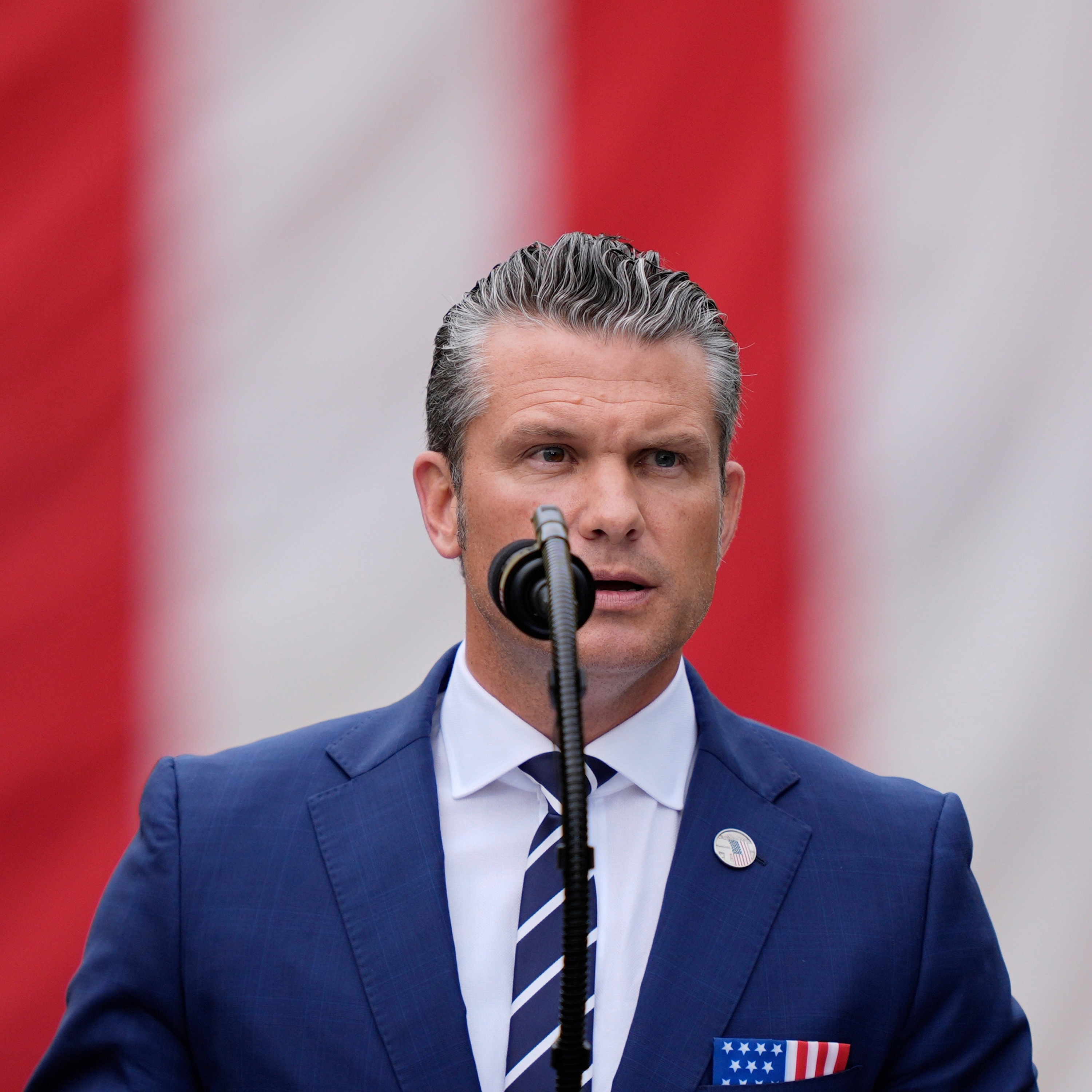
Post Reports
Why Hegseth ordering generals to meet is so unusual
00:20:26
Defense Secretary Pete Hegseth has ordered hundreds of U.S. military generals from around the globe to gather in Virginia on Tuesday. Here’s what we know.
Loading summary
Transcript65 lines
- [00:03]
Colby Ikowitz
A big unusual meeting is happening tomorrow. Defense Secretary Pete Hegseth called hundreds of top military brass from all over the world to come in person to Quantico. That's a Marine Corps base in Virginia. Initially, when the order went out last week, Hegseth provided almost no information about why he was calling this meeting. Dan Lamoth, who covers the US Military and the Pentagon for the Post, says that alarmed some military officials because it.
- [00:35]
Dan Lamoth
Seems like such a significant event, costly, time consuming, and just kind of out of the box unusual.
- [00:44]
Colby Ikowitz
Dan and others here did more reporting, and it turns out the meeting is a chance for Hegseth to give a speech. He plans to talk about how the US Military needs to have a, quote, warrior ethos.
- [00:56]
Dan Lamoth
The idea is to get back to the basics, focus on lethality being lethal, basically being the big stick that the American government has when it needs it.
- [01:06]
Colby Ikowitz
And then over the weekend, Dan and his colleagues covered a new development. President Trump announced that he was going to come address the generals, too. From the newsroom of the Washington Post, this is Post Reports. I'm Colby ekowicz. It's Monday, September 29th. Today, what we know about this big meeting between the president, his defense secretary, and top US Military officials. We discuss how this fits with Trump's desire to be seen as leading the military directly. Dan, hello. Thanks for joining me. Of course, the world first learned about tomorrow's mysterious meeting from your exclusive reporting here at the Post. How did you and our colleagues covering the Pentagon uncover this?
- [01:57]
Dan Lamoth
Yeah, this is a story that, as it came together, I kept kind of pinching myself that this was really happening.
- [02:05]
Colby Ikowitz
Yeah.
- [02:06]
Dan Lamoth
So Ellen Nakashima, one of my colleagues on the national security team at the Post, received a tip last Wednesday that this meeting was coming together, that it was pulling people from all over the globe, and that there was an actual order transmitted for this. And it was specifically there will be this meeting at Quantico on Tuesday. And it applies to anyone with the rank of BRIGadier General and up who is in a command position. That's a huge group of people. And we all kind of cast out to numerous sources, and I would say within an hour on Wednesday night. And it came together kind of late Wednesday night. We had like eight or nine different people, some of which we trust deeply, that we've talked to for years, that were all basically saying, yeah, that's a thing.
- [02:53]
Colby Ikowitz
And was this Pete Hegseth's idea? Do we know where this came from?
- [02:58]
Dan Lamoth
Yes, the idea is that this is very much the secretary's idea. He wants to talk eyeball to eyeball with his generals, as one person put.
- [03:06]
Colby Ikowitz
It to me, Generals from all over.
- [03:07]
Dan Lamoth
The world, US Generals and admirals from all over the world, people stationed in Japan and Europe and the Middle East. Like, there are people flying in thousands of miles for tomorrow's meeting.
- [03:18]
Colby Ikowitz
And is it true that he wants to call them all together because he wants to give this speech, this speech about warrior ethos?
- [03:26]
Dan Lamoth
Yeah. So there are still gaps in our understanding here. One of the concerns that a lot of military officials and defense officials shared with us is in a year where you have fired the chairman of the Joint Chiefs, the top admiral in the Navy, and a variety of other senior military officials who. What's going on here? We don't get called in all the way back to D.C. for a meeting like this unless there's something significant happening. So there was a lot of fear. There's kind of a culture of fear in the Pentagon in a lot of ways now. And they all kind of wondered. And, you know, that was part of the discussion of, like, yeah, that's a thing. And what are you hearing? You know, like, sources actually asking us what else we've heard. We had that kind of thing feel to it. So after the initial publication of this story on Thursday, there was very little coming out of the Pentagon for really, the rest of that day. And then on Friday, we were finally able to put together that the plan for the speech, at least as conceived so far, was talk on cracking down on military standards, which can be an array of things. Physical fitness, marksmanship, you know, operational planning. All of these things kind of coming together. And that actually confused a lot of the officials we're talking to even more. Because it's an extraordinary kind of meeting.
- [04:49]
Colby Ikowitz
Well, yeah.
- [04:49]
Dan Lamoth
For it to end up being a pep talk of sorts.
- [04:52]
Colby Ikowitz
Yeah. And they couldn't do that, like, by zoom or an email.
- [04:55]
Dan Lamoth
The military has very secure video teleconferencing capabilities. They commonly refer to them as VTCs. People get on VTCs to discuss classified operations all the time.
- [05:06]
Colby Ikowitz
Right, Right.
- [05:06]
Dan Lamoth
I would imagine so. Yeah. It was kind of surprised that this coming together, which is making a lot of people wonder why they need to come all the way back to be basically in a room getting lectured to.
- [05:18]
Colby Ikowitz
I'm really interested in the logistics of this meeting and how that's gonna all go down. But you talked about these firings that have been happening at the Department of Defense. So what has been going on in. And it's not even the Department of Defense anymore. Right. It's the Department of War. What's been going on within the Pentagon since Hegseth took over.
- [05:35]
Dan Lamoth
Yeah. So within days of the Trump administration landing in January, we've seen a series of senior military officials fired, both in the Defense Department and then also the Coast Guard, which is under Homeland Security. They fired a commandant of the Coast Guard. They fired the chief of naval operations. They fired the chairman of the Joint Chiefs. They have asked the top admiral in the Air Force to retire. And subtext was you probably should retire or he probably would have been fired as well. And then there's a whole bunch of like two and three star generals and admirals who also have been shown the door. So it's created a lot of apprehension. There's a lot of people walking on eggshells and then there's a lot of there's often very little reason provided for.
- [06:23]
Colby Ikowitz
Why people are fired. Why are you firing top leadership of the military?
- [06:27]
Dan Lamoth
In a lot of cases, the reporting we've got would suggest that they are combing through previous comments, some of which are two, three or years old. People who openly and forcefully advocated for diversity, as for instance, are among those who have been targeted, people who have talked about the value of having women in senior roles, of having minorities in senior roles. Those are among the people who have been targeted. And I think that kind of wraps into this idea of getting back to being lethal. They see anything that is not a discussion of weapons being tough, looking tough, deterring adversaries, anything that doesn't fit in that box as problematic. And as a result, people, including people who have done pretty extraordinary things in their career, have been shelled in the door.
- [07:19]
Colby Ikowitz
So, Dan, let's get back to this meeting. The logistics of this meeting, getting generals from all over the world to Virginia, which is not that far from D.C. where we're sitting now. I mean, taking them away from their posts to come here. Like, what have you heard about the process of getting them here?
- [07:34]
Dan Lamoth
So mostly for operational security reasons, people are pretty vague about how they travel back. Typically, it wouldn't surprise me to see some of these generals and admirals hopping on military aircraft, traveling on, quote, unquote, middle air. They would refer to it as. And on these planes, some of which are going to be like little Gulf Stream jets, some of which are probably hopping in the back of a cargo plane. They often come with a staff, they often come with a communication suite that keeps them kind of connected while they're traveling, but you're still talking, depending on where you're coming from. Basically a day in the air, give.
- [08:09]
Colby Ikowitz
Or take and how many people are we talking about? How many people are coming to Quantico tomorrow?
- [08:13]
Dan Lamoth
This went out to all generals and admirals from the rank of brigadier general and up. So there's one, two, three and four star generals, one star and up. Generals who are in command positions. So it's not all the generals, but you're still talking hundreds likely. And there's a process where you can request exceptions, and that goes to very senior level generals and admirals to approve those exceptions. They're probably going to be rare, but safely, I mean, they're filling an auditorium and that auditorium holds hundreds of people.
- [08:44]
Colby Ikowitz
Yeah, and then you said hundreds of people coming, plus many of them bringing staff.
- [08:48]
Dan Lamoth
Yeah. The actual order actually even said come with your senior enlisted advisor. So you're talking a command sergeant major or something like that, some sort of senior enlisted advisor that routinely travels as a pair. With that given general.
- [09:03]
Colby Ikowitz
I mean, Dan, are you going to be there? Are any of our colleagues going to this meeting?
- [09:06]
Dan Lamoth
So we've requested access. There's a discussion and a request process, but I don't know where that's going to land, particularly once President Trump also acknowledged that he too is joining. Now you're talking multiple press corps involved. So we're waiting to see how many reporters, which reporters, who's approved, whether it's a pooled event. And I mean, here we are less than 24 hours out and I'm not sure yet.
- [09:32]
Colby Ikowitz
And Dan, I heard that this event, it's gonna be live streamed for the public. Is that true?
- [09:37]
Dan Lamoth
That's right. They're putting it up on the Defense Department's website, probably other spots. So, you know, like the initial cloak and dagger nature of this has given way to all of this will be put up. And you kind of wonder about the showbiz aspects to that. Right. If no one's willing to acknowledge easily a week ago that this meeting is happening and now here we are and the whole thing is basically a major TV production. It's a significant shift.
- [10:07]
Colby Ikowitz
I mean, Dan, the thing that I'm struck by is that these generals have important jobs to do right back where they're based. I mean, what does it mean for national security? Global security that they've all been pulled to come here and that the world knows now that our military leadership will be absent all over the world in.
- [10:29]
Dan Lamoth
Terms of who these people are? I mean, some of these generals and admirals are in command of thousands or tens of thousands of people. These are people with major responsibilities that oversee entire regions. In some cases, if you're the, for the sake of argument, the commander of European Command. You oversee a continent worth of operations. These are major, major jobs.
- [10:52]
Colby Ikowitz
Right. I mean, I know Quantico is an incredibly secure location, and you're going to have the president there and you're going to have the secretary there. So I'm sure security is going to be just insane. But is it security safe to have all of our generals and the President of the United States together at the same time in the same place?
- [11:10]
Dan Lamoth
That's a concern we've heard raised. I do think putting the president in a big auditorium indoors on an installation that's already secure, pretty safe.
- [11:22]
Colby Ikowitz
Right?
- [11:23]
Dan Lamoth
And I suppose it's most, not all of our generals, but it's close. It's hundreds of. But this is, you know, it's an installation that spans many miles. And like, no doubt, Secret Service, the military itself, all of those people will be very much watching for all of the likely threats.
- [11:50]
Colby Ikowitz
After the break. What Trump's presence at the meeting tells us about his relationship to the military. We'll be right back. So, Dan, as we've mentioned, President Trump has now said he's going to attend this meeting and he's going to give a speech. What do we know about his involvement in this meeting?
- [12:24]
Dan Lamoth
Yeah, so the first thing that caught my ear was on Thursday, after the Post initially scooped the news of this meeting, President Trump was asked about it in the Oval Office in response to questions from reporters. First said, basically, I don't see what the big deal is.
- [12:42]
Pete Hegseth
Well, I know. I love it. I mean, I think it's great. Let him be friendly. Let him be friendly with the generals and admirals from all over the world. Why? Is there something. No, but is there something wrong with it?
- [12:52]
Dan Lamoth
He kind of made it sound like he wasn't clear on what exactly the meeting was. So, again, that made it, to me sound like this wasn't necessarily shared widely across the government, at least in detail. And then he said words to the effect of, I'll go if they want me.
- [13:08]
Pete Hegseth
Well, I'll be there if they want me. But why is that such a big deal? I mean, he's. The fact that we're getting along with the generals and admirals from all. Remember, I'm the President of peace. It's good to get along. It's good. You act like this is a bad thing.
- [13:22]
Dan Lamoth
And at that point I was like, this is gonna be a presidential event. It's a matter of time. Because as soon as he says that, you would assume people at the Pentagon, particularly in the administration are gonna say, of course we want you, sir, please come. So at that point, the event, already big and unusual, gets that much bigger.
- [13:40]
Colby Ikowitz
Do we have a sense at all what the President's going to talk about?
- [13:43]
Dan Lamoth
Over the weekend, he was asked about this in a couple interviews. NBC News and Reuters come to mind and basically said that he wants to thank the generals, that he wants to talk about all of the good things that the US Military is doing. So at that point, I kind of wonder if it goes down the usual rabbit hole of the President talking about rebuilding the military and how we're tougher now than we used to be, and words to those effects, which, again, we've heard that before. Do you need to call Everybody back to D.C. to do it?
- [14:14]
Colby Ikowitz
I mean, unrelated to what Trump's doing with the military, we also saw over the weekend that he called for the Pentagon to send troops into war ravage. And I'm gonna put that in quote, because that's what he said. Portland, Oregon. So he's calling all these generals. We're talking about having a military that's focused on lethality. And now he's sending troops into another American city. What happened there?
- [14:40]
Dan Lamoth
I think that's another example in the video and the audio not matching because you see that war ravaged. We're going to use full force if necessary, was another phrase that he offered up there. And then within the span of 24 hours, the post got its hand on a memo sent by the Defense Secretary to the Oregon National Guard saying that they were going to activate 200 members of the National Guard. That's not exactly what you would send to a war. So I feel like how the military is messaged here by the administration, I think they value the optics of people in uniforms in places they're not usually to look tough, to be able to show some symbolism that they are cracking down on law and order issues. And the idea that, I mean, they have long fixated on Portland.
- [15:30]
Colby Ikowitz
Yeah. Why Portland?
- [15:32]
Dan Lamoth
I think a lot of this goes back to the aftermath of the killing of George Floyd, where you had protests pop up in numerous places. Portland did have some of the most significant protests in that event. They've continued to have on and off other kinds of protests in the last five years. And it's, you know, the sanctuary city aspects. There's just a lot of things that people around President Trump are focused on there. And in our earlier reporting about the military potentially going to Chicago and some of these other major cities, I mean, it was Portland, it's Boston, it's a lot of places that have Democratic governors and liberal bases, basically.
- [16:10]
Colby Ikowitz
So what is he sending these troops to Portland to do exactly?
- [16:14]
Dan Lamoth
The deployment in Portland and Los Angeles and I think likely other cities to come, seem to be focused on protecting law enforcement personnel, federal law enforcement personnel, ICE being the most obvious one. There is a carve out within law where in certain circumstances you can call in the Guard to protect federal property and federal buildings. So in Los Angeles, as for instance, we did see National Guard kind of postured around the federal courthouse. But those are supposed to be rare, and certain circumstances must be met in law for that to occur. And that remains contested whether that was the case.
- [16:51]
Colby Ikowitz
You know, Dan, I'm thinking about, you know, this meeting tomorrow and kind of what we're going to hear. And then you talk about Trump's order to send troops to Portland. What are the optics of this moment for the military in America?
- [17:06]
Dan Lamoth
So this would be referred to as a civil military affairs discussion. The military is supposed to have civilian control. President Trump especially loves to assert that civilian control over the military. This is the civilian run military, therefore they should do what I want.
- [17:22]
Colby Ikowitz
Yeah.
- [17:22]
Dan Lamoth
Is basically, I think, the viewpoint that sometimes collides with best practices, long established norms, and the law depending on the issue. So the generals and admirals are often stuck between a rock and a hard place over what can we do, how can we meet presidential intent while still following the law. And I think those discussions are going to come up over and over again, not only with things like these domestic deployments, but also things like the strikes we've seen on drug boats in the Caribbean.
- [17:55]
Colby Ikowitz
You know, also some people have flagged this meeting as being potentially concerning for its optics. There was that interesting X exchange last week. A retired senior officer, a lieutenant general, he tweeted that German generals were called to a surprise assembly in Berlin in 1935 and they were required to swear a personal oath to Hitler. And Hegseth actually responded to that tweet. What did he say?
- [18:21]
Dan Lamoth
Cool story. General, what do you make of that? I read it as Hegseth sort of dismissing the general's concerns, basically kind of trying to bat it away, basically make fun of it. And I think that's sort of the broader discussion here. There are people who have devoted their entire careers to US Military affairs, civilians and people in uniform alike who do have concerns over the direction things are going.
- [18:51]
Colby Ikowitz
Yeah.
- [18:51]
Dan Lamoth
And there are a number of ways you could handle that. You could say, hey, business as usual is not working. We're going to do this. Here's why and kind of try and to some degree build consensus. They've kind of leaned into the other idea, which is this is us. We won. We're in control. We're going to do it our way. And, you know, there are a lot of people in uniform now. I mean, I'm having discussions with, you know, longtime friends and sources who are having to navigate whether they want to continue their careers or retire. And, you know, we're just in that moment now.
- [19:26]
Colby Ikowitz
Well, Dan, thank you so much. We look forward to reading all your reporting on this meeting tomorrow. I know you and our colleagues will be covering it closely.
- [19:33]
Dan Lamoth
Yeah. This is going to be a big team effort.
- [19:35]
Colby Ikowitz
Thanks for coming on. Dan Lamoth covers the military and the Pentagon for the Post. That's it for Post Reports. Thanks for listening. If you're looking for the latest updates on the big news of the day, check out our morning news briefing. THE seven. We bring you the seven stories you need to know about every Weekday morning by 7am you can listen to it wherever you listen to podcasts. Today's show was produced by Rennie Sveranovsky with help from Laura Benshoff. It was mixed by Shawn Carter and edited by Ariel Plotnick. Thanks to editor Ben Pawker. I'm Colby Ikowitz. We'll be back tomorrow with more stories from the Washington Post.