← Post Reports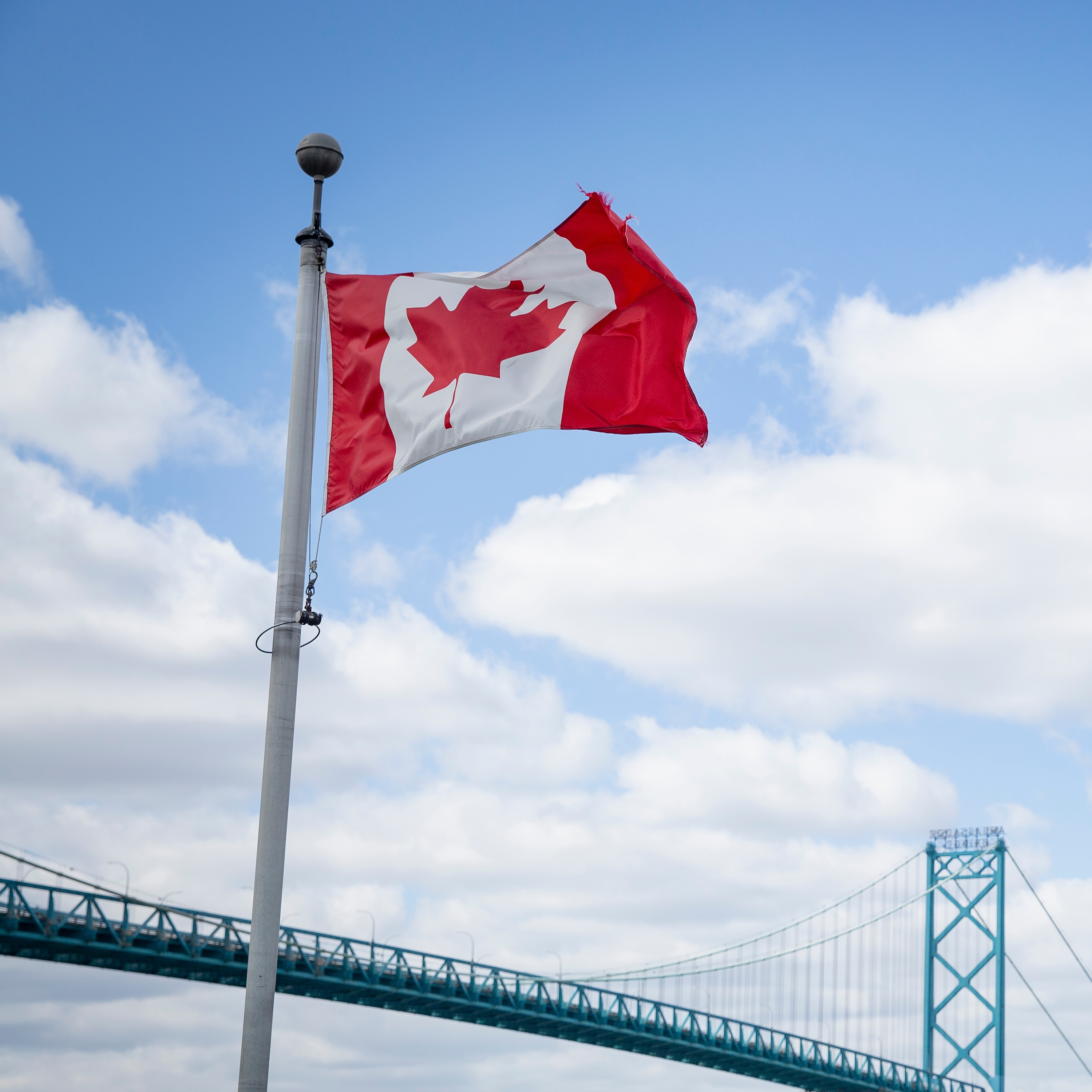
Post Reports
Why is Trump so obsessed with Canada?
00:21:30
With talk of a 51st state, a mystery: Why is Trump so obsessed with Canada? Martine Powers is back to share her reporting on Trump’s perplexing fixation on Canadian annexation.
Loading summary
Transcript66 lines
- [00:03]
Colby Ekowitz
In the past few weeks, Trump has been talking a lot about Canada. He wants to make it the 51st state. He brought this up in an interview with Laura Ingraham last week.
- [00:15]
Kevin O'Leary
And here's my problem with Canada. Canada was meant to be the 51st.
- [00:20]
Colby Ekowitz
State as well as in the Oval Office, like this moment a couple weeks ago.
- [00:24]
Kevin O'Leary
And to be honest with you, Canada only works as a state. It doesn't. We don't need anything they have as a state. It would be one of the states anyway. This would be the most incredible country visually.
- [00:36]
Colby Ekowitz
I like to imagine Canada as Regina George in that meme from Mean Girls, asking Trump, why are you so obsessed with me? Here at the Post, we've got a team of reporters who've been trying to figure this out, including our very own Martine Powers.
- [00:55]
Martine Powers
We're not hearing this from any other politician or Republican politician in America, Right? Like, this is not part of the MAGA platform. This is not a thing that Trump voters say that they want. No one is talking about this except for President Trump.
- [01:13]
Colby Ekowitz
That's right, everyone. Martine is back, but today she's sitting across from me in the guest seat bringing us her reporting on Trump's obsession with Canada. We're so excited to have you.
- [01:24]
Martine Powers
This is so weird.
- [01:29]
Colby Ekowitz
From the newsroom of the Washington Post, this is Post Reports. I'm Colby ekowitz. It's Monday, March 24th. Today I talk with Martine about how Trump became so fixated on Canada. So do we know exactly when Trump's interest in Canada began?
- [01:50]
Martine Powers
Yeah, that's a really good question. And I think that's something that was the first step in our reporting is trying to trace. Like, okay, when has Trump brought this up before, either in public or in private? So there were members of the administration from Trump's first term who said, I'd never heard Trump refer to Canada as the 51st state. We did not talk about this at all. Our colleague Amanda Coletta, who covers Canada for the Post, she, she reached out to Canadian officials to get their sense on this. And I think one tea leave that she pointed out was that Gerald Butts, who used to be part of Prime Minister Justin Trudeau's staff, he had said that Trump apparently used this term of 51st state, quote, a lot, and that it, that it came up in the past, but that it was said in a more joking way. Our understanding is that Trump brought this up in this dinner that he had. This dinner was in, in early December with Prime Minister Trudeau, who flew down to Florida to have dinner with the president and congratulate him and talk about, like, how Canada and the US can work together during Trump's second term. And our understanding is that Trump at that point called Canada the 51st state and referred to Trudeau as Governor Trudeau, which was seen as an insult. But even the Canadians after that were like, this was just Trump joking. And then the rhetoric started to pick up from there. And you saw again and again, both on truth, Social, or in interviews, that Trump was giving, you know, through December into January and then into the actual start of his presidency, him continuing to say this.
- [03:29]
Kevin O'Leary
If you look at a map, they drew an artificial line right through it between Canada and the U.S. just a straight artificial line. Somebody did it a long time ago, many, many decades ago, and makes no sense.
- [03:44]
Martine Powers
And he talks about it in a pretty serious way.
- [03:48]
Kevin O'Leary
Keeping O Canada, the national anthem. I love it. I think it's great. Keep it. But it'll be, for this day, one of our greatest states.
- [03:57]
Martine Powers
I think what has also evolved in how Trump is talking about Canada as the 51st state is that he's giving more reasons for it. Like, he's kind of explaining, okay, here's how it would work, that they would be able to improve their military defenses if they were part of the U.S. and Canadians would actually pay less taxes, but this would be good for the American economy, too.
- [04:18]
Kevin O'Leary
Why should we subsidize another country for $200 billion? It cost us $200 billion a year.
- [04:24]
Martine Powers
And so that's all the kind of language that I think Canadians have really been pretty alarmed to hear that he's really thought this through in some ways.
- [04:39]
Colby Ekowitz
Yeah. Do we have a sense, Martin, is there, like, policy people working on this?
- [04:44]
Martine Powers
Not to our understanding. And other Republican lawmakers say they haven't heard anything about this being a serious thing. They also don't think that it's a good idea. It doesn't make sense even electorally for Trump or the Republican Party, because introducing a whole new state, that is the demographics that Canada is like, would be bad for Republicans that people sort of compared it to. Just like if you had another California in the US it would lean Democrat.
- [05:14]
Colby Ekowitz
Canada tends to be more progressive generally.
- [05:17]
Martine Powers
I mean, there are plenty of Canadian conservatives and some Canadians who like Trump. But writ large, like, this would be an electoral loss for Republicans because it would be a more progressive, quote, unquote, state coming in. And, you know, the Republicans would lose, would lose, potentially lose their majority in the Senate or certainly in the House. And, like, it just. It doesn't make Sense. For a lot of reasons.
- [05:41]
Colby Ekowitz
Yeah. The politics makes no sense. So, Martine, why is Trump so into this idea?
- [05:47]
Martine Powers
One of the first things that we did was I reached out to the White House to kind of get their official take on what is the origin of this idea, who inspired President Trump here? And they were adamant that this is an idea that Trump came up with on his own. In their words, this is an original idea from President Trump himself. They said essentially that he is interested in promoting Americans best interests and also think that this would be good for Canadians in a bunch of different ways. And that's why he's been so adamant about this idea, because making Canada the 51st state is actually a good idea, and that's why he wants to do it. But we tried to kind of push deeper than that and to see if there were pieces of evidence or kind of things from the past that would suggest that maybe there were other influences in Trump's mind that has gotten him on this track to want to talk about this all the time.
- [06:39]
Colby Ekowitz
Okay, so what are some of the leading theories into why Trump is talking about this?
- [06:44]
Martine Powers
So there are a lot of theories for that, and let me just kind of tick through some of them. Obviously, Manifest Destiny is a theme so far of the second Trump presidency. He's expressed interest in taking over Greenland and taking control of the Panama Canal.
- [07:01]
Kevin O'Leary
My administration will be reclaiming the Panama Canal, and we've already started doing it.
- [07:10]
Martine Powers
And so there's a thought that this is part of this kind of ethos of the new Trump presidency, that territorial expansion is important and that taking on Canada's land and Canada's minerals would be good for the U.S. other theories that I've heard raised, One is about Justin Trudeau and President Trump's relationship with Trudeau.
- [07:32]
Colby Ekowitz
The former Prime Minister of Canada.
- [07:33]
Martine Powers
Yes, exactly. Yeah. And there is a very clear impression that they don't particularly like each other that much. I think that was clear during Trump's first term. We didn't get into this in the story, but it's been raised so much on social media and even in emails to me, that I feel like it's worth addressing here is that people pointed this, this photo that was taken in 2019 where Melania Trump is greeting Justin Trudeau at a public event. But when Justin Trudeau air kissed Melania.
- [08:04]
Kevin O'Leary
That innocent moment became MelaniAlovesTrudeau. It was even turned into a movie poster.
- [08:11]
Martine Powers
This just in. A story of forbidden love on the world stage. People have made a lot of fun of this photo online over the years, and that there's a suggestion that. That this is Trump wanting revenge for the embarrassment of that. Again, I just want to say that the White House has said that the relationship between Trump and Trudeau has nothing to do with his 51st state idea. Then there's this idea of, like previous real estate deals that Trump has done. There used to be a Trump International Hotel in both Toronto and also in Vancouver. Both of those closed down, essentially, or at least what people have said is that. That because their business wasn't doing well, because the Trump brand became so toxic in Canada that people didn't want to stay there. The Trump name in Toronto, you have to realize where we pride ourselves on multiculturalism here in the city and in Canada. And so when you have a candidate who last year was making disparaging remarks that made a pretty big deal here in Toronto, we had protests. And so there's a sense that, like, his big real estate dreams in Canada didn't pan out, and that, you know, maybe this is an opportunity to kind of reclaim some of that again, something that the White House said emphatically is not true. And then there is this question of people who might be around Trump who have this idea or are raising this idea. There's Peter Navarro, who's a senior trade advisor to Trump. There have been reports published by other outlets suggesting that maybe he's the guy who is both pushing the tariffs, but also pushing this 51st state idea. There's a guy, Kevin O'Leary. Kevin O'Leary is a Canadian businessman, multi, multi millionaire, who is featured on Shark tank.
- [09:57]
Colby Ekowitz
Calls himself Mr. Wonderful.
- [09:59]
Kevin O'Leary
Yes, there's a lot of sports stars and sports owners and yada, yada, yada, but there's only one Mr. Wonderful.
- [10:07]
Martine Powers
He is a pretty public proponent of trying to get Canada and the U.S. to work more closely together. He has gone on podcasts and on social media to talk about how we should have the same currency, that there are all these opportunities to, like, come combine our immigration systems.
- [10:23]
Kevin O'Leary
If you figured out a way to put these two countries together, it would be the most powerful country on Earth, the most powerful military on earth, the most powerful in resources, and no adversary anywhere would mess with it.
- [10:37]
Martine Powers
That's the prize in talking to him. He said that he had a brief conversation with Trump at Mar a Lago in early January where he talked about, you know, his kind of dual connections to the US And Canada, that there are other Canadians who also have strong ties to the U.S. i don't know.
- [10:52]
Kevin O'Leary
If it was something I said that got him thinking about that.
- [10:55]
Martine Powers
And there's a question of, like, maybe that is what inspired Trump to think more about this and say, oh, there would be opportunities here if we connected the US And Canada in a. In a new and different way. But we don't know. I mean, those are all just theories.
- [11:12]
Colby Ekowitz
Martine, just to be super clear here, what would it actually look like to annex Canada? Like, is he actually suggesting the US Would invade Canada?
- [11:21]
Martine Powers
There's no indication of the process here. And I think that's why Americans are inclined to continue seeing this as a joke, because we do not have troops currently mobilized on the northern border. Like, it's really absurd to imagine how that would work. And I don't think Canadians think that they are, in fact, going to be invaded militarily. But what we've started to hear from Canadian officials is that they think that part of this trade war is an attempt to weaken Canada economically to the point that Canadians are so desperate for some economic relief that they're willing to consider more seriously. You know, our. Our economy is so in the dumps. Maybe the only way to fix this is to. Is to maybe think about partnering with the US More and maybe being part of the country.
- [12:13]
Colby Ekowitz
So we. We've heard his arguments. He thinks that, you know, if you incorporate Canada into the U.S. you would reduce Canadians taxes. They've got higher taxes than they do in the America. They could enhance their border security, improve their military, because we have such a strong military. Like, do you have a sense from anyone? Like, is all of that true? Like, would Canadians lives be so much better if they were, in fact, Americans?
- [12:36]
Martine Powers
I think there are a lot of questions about whether any of that is true. And certainly Canadians and Canadian officials would say that none of that is true, that they like being their own country, that it is not advantageous to them to think about, you know, becoming Americans. I think one thing that I want to highlight in particular is that Trump has talked a lot about the trade deficit with Canada, and he keeps using this number, $200 billion. So we have this $200 billion trade deficit with Canada, basically meaning that we are importing from Canada much more than we are exporting to them. And as my colleague Amanda Coletta has pointed out in all her cover, what's been going on in Canada, that this is absolutely not true, that the trade deficit is more like a third of that, and that in reality, our trade deficits are much more significant with China, with Germany, with Mexico, with Japan. But none of those are countries that are getting attacked in the same way. By Trump in the way that Canada is. And so I think that there is a lot to question about how Trump is framing both what justifies this trade war and what would be, in his words, good for Canadians and good for Americans if the US And Canada were to combine.
- [14:04]
Colby Ekowitz
After the break, we talk about how Trump's allies are handling this and why Trump's calls to make Canada a state could impact the Canadian election next month. We'll be right back.
- [14:24]
Advertisement Speaker
Are you looking to take control of your health? Well, one way to do that is to check out Goodrx and stop overpaying for your prescription medications. With Goodrx, you can find huge savings on your prescriptions for everything from GLP1 medications to remedies for your allergies and so much more. GoodRx is free and easy to use. Just search for any prescription on the GoodRx website or app, get your coupon and show it to the pharmacist. In some cases, you can save up to 80% at pharmacies near you. Best of all, GoodRx works whether you have insurance or not. And even if you have insurance, GoodRx could beat your co pay price. You've heard me say this a few times now, but I've been suggesting Goodrx to my friends. They raved at the savings and how easy it was to find discounts for their prescriptions. Next time you need a prescription, you should check out Goodrx too. For simple, smart savings on your everyday prescriptions, go to goodrx.com reports that's goodrx.com reports.
- [15:27]
Think about why you listen to podcasts. It's like having a friend who makes you think or can help you wind down right? Well, the Washington Post has a lot of people you can turn to at any hour. You can read the most important and interesting stories. We can help you cook something delicious, give you advice on a tricky friendship. Rave about a movie or book that you shouldn't miss. When you become a Washington Post subscriber, you have a companion for whatever part of your day needs it most. Get it all for just $4 every four weeks. That's for an entire year. After that, it's just $12 every four weeks. Cancel anytime. Go to washingtonpost.com subscribe that's washingtonpost.com subscribe.
- [16:13]
Colby Ekowitz
Martine We've talked about the fact that Trump kind of makes these erratic declarations. You know, sometimes he says things and his advisors or his cabinet have no idea he's about to say them. We talked a little bit about some of the people that maybe support this idea. Do you have a greater sense of, like, where his allies in the administration stand?
- [16:33]
Martine Powers
We haven't talked to anyone who is publicly supporting this idea. As I mentioned earlier, you know, Republicans on the Hill say, like, this doesn't really make sense for us. You have former members of his administration who say, like, this seems like more of just a negotiating tactic and not a thing that really makes sense, seriously, for the U.S. i thought it was notable that Peter Hoekstra, who is the nominee for U.S. ambassador to Canada, during his confirmation hearings in the Senate last week, he was asked about Trump's comments and basically asked by a Democratic senator, where do you stand on this 51st state idea? Would you agree that Canada is a sovereign state and should not be even jokingly referred to as the 51st state?
- [17:24]
Kevin O'Leary
Thank you. The Canada is a sovereign state. Yes. How. How the president and the relationship between the former prime minister in Canada, the characteristics and nature of that relationship. I. I don't know.
- [17:41]
Martine Powers
And you could just see him kind of struggling with the awkwardness of this moment. Yeah.
- [17:46]
Colby Ekowitz
Trying to balance it.
- [17:47]
Martine Powers
Yeah. Yeah, exactly. So I think that is sort of emblematic for how a lot of people around Trump are dealing with this, not wanting to publicly undermine what the president is saying. And to be clear, you know, Caroline Levitt, his press secretary, like, they have been adamant that this is serious.
- [18:05]
Colby Ekowitz
So the president has made it clear that he believes Canadians would be better served economically, militarily if they were to become the 51st state of the United States of America.
- [18:16]
Martine Powers
They repeat this as a serious idea, but in terms of other people around Trump, you're getting the impression that there's a little bit more of a. We don't want to say that this is a bad idea, but we're also just as confused as everyone else about why he's doing this.
- [18:28]
Colby Ekowitz
Martine, I know Canadians have a big election coming up. How is this all playing out? How are Trump's comments playing out politically? Is it coming up in that election?
- [18:38]
Martine Powers
Well, I think it's really fascinating because liberals in Canada, and of course, that's the party that Justin Trudeau belongs to, that they were expected to lose this election by a lot. But this has actually been really empowering for the Liberal Party. I mean, you heard that the new leader of the Liberal Party, Mark Carney, talking about, like, we are taking a stand here. We will never become Americans.
- [19:00]
Kevin O'Leary
Donald Trump. Donald Trump, he's attacking Canadian families, workers.
- [19:07]
Martine Powers
And businesses, and we cannot let him succeed.
- [19:12]
Kevin O'Leary
The Americans want our resources, our water, our land. Canada never, ever will be part of America in any way, shape, or form.
- [19:26]
Martine Powers
And so this has been really good for them. You can see the Liberals are going up in the polls in part because they feel, because there's appearance that they're being attacked by Trump. And at the same time, you have the Conservative Party, which is led by Pierre Poiev. They are saying, look, this is a time where you need a tough leader to go toe to toe with President Trump. And like, we are the Conservatives. We are the tough guys, and that's why you need us in. In leadership.
- [19:53]
Kevin O'Leary
I will insist the president recognize the independence and sovereignty of Canada. I will insist that he stop tariffing our nation. And at the same time, I will strengthen our country so that we can be capable of standing our own two feet and standing up to the Americans where and when necessary. That's what it means when I say, let's put Canada first for a change.
- [20:21]
Martine Powers
So it's kind of been become like a big part of the rallying cry for both the political parties in Canada.
- [20:27]
Colby Ekowitz
Canadians and Americans have always had a warm relationship. How are Canadians feeling about all of this now that suddenly they're being attacked by the President of the United States?
- [20:40]
Martine Powers
The Canadians I've spoken to, I mean, they're clear that they see this as specifically coming from President Trump and not from the American people. But I will say, I think that they have been frustrated by how slow, in their words, Americans have been to pick up on how serious a thing this is for them. Canadians see this as deeply, deeply disrespectful, potentially scary. And it's also been a really interesting unifying force in Canada. I mean, I think, at least from the folks who I've talked to, that they say, you know, Canadians are not known for being the most publicly patriotic, that they don't have a culture of, like, flying their flag everywhere the way that we do here in the US but that you're seeing more, more Canadian flags going up, and that even when it comes to going to the grocery store, that grocery stores are now labeling more clearly this is a product from America. And that you see people kind of standing there, look, you know, reading the labels on their products, making sure, like, this thing is either from Canada or it's definitely not from the US because otherwise they won't be buying it. And that. That is really taking hold in Canada in a way that, for the folks that I talk to, they describe as, like, a generational change, that they feel like there is a profound trust that has been broken with the relationship with the US and that like even regular Canadians who aren't involved in politics are feeling it and that it's going to take a while for our nations to recover if they do.
- [22:17]
Colby Ekowitz
Martine, thank you so much for coming back.
- [22:19]
Martine Powers
Thank you for having me. This is such a pleasure.
- [22:28]
Colby Ekowitz
Martine Powers is currently reporting on the White House for the Post. Another piece of news we're following this week, second Lady Usha Vance's trip to Greenland. The trip comes amid Trump's calls to acquire the island one way or another, prompting Greenland's leader to criticize the visit as an aggressive trip. We'll share a link to our coverage in our show notes. That's it for Post reports. Thanks for listening. Today's show was produced by Ariel Plotnick with help from Emma Talkoff. It was mixed by Sean Carter and edited by Maggie Penman. Thanks also to Nick Bowman. I'm Colby Ekowitz. We'll be back tomorrow with more stories from the Washington Post.
- [23:20]
Advertisement Speaker
Think about why you listen to podcasts. It's like having a friend who makes you think or can help you wind down right? Well, the Washington Post has a lot of people you can turn to at any hour. You can read the most important and interesting stories. We can help you cook something delicious, give you advice on a tricky friendship. Rave about a movie or book that you shouldn't miss. When you become a Washington Post subscriber, you have a companion for whatever part of your day needs it most. Get it all for just $4 every four weeks. That's for an entire year. After that, it's just $12 every four weeks. Cancel anytime. Go to washingtonpost.com subscribe. That's washingtonpost.com subscribe.