← Post Reports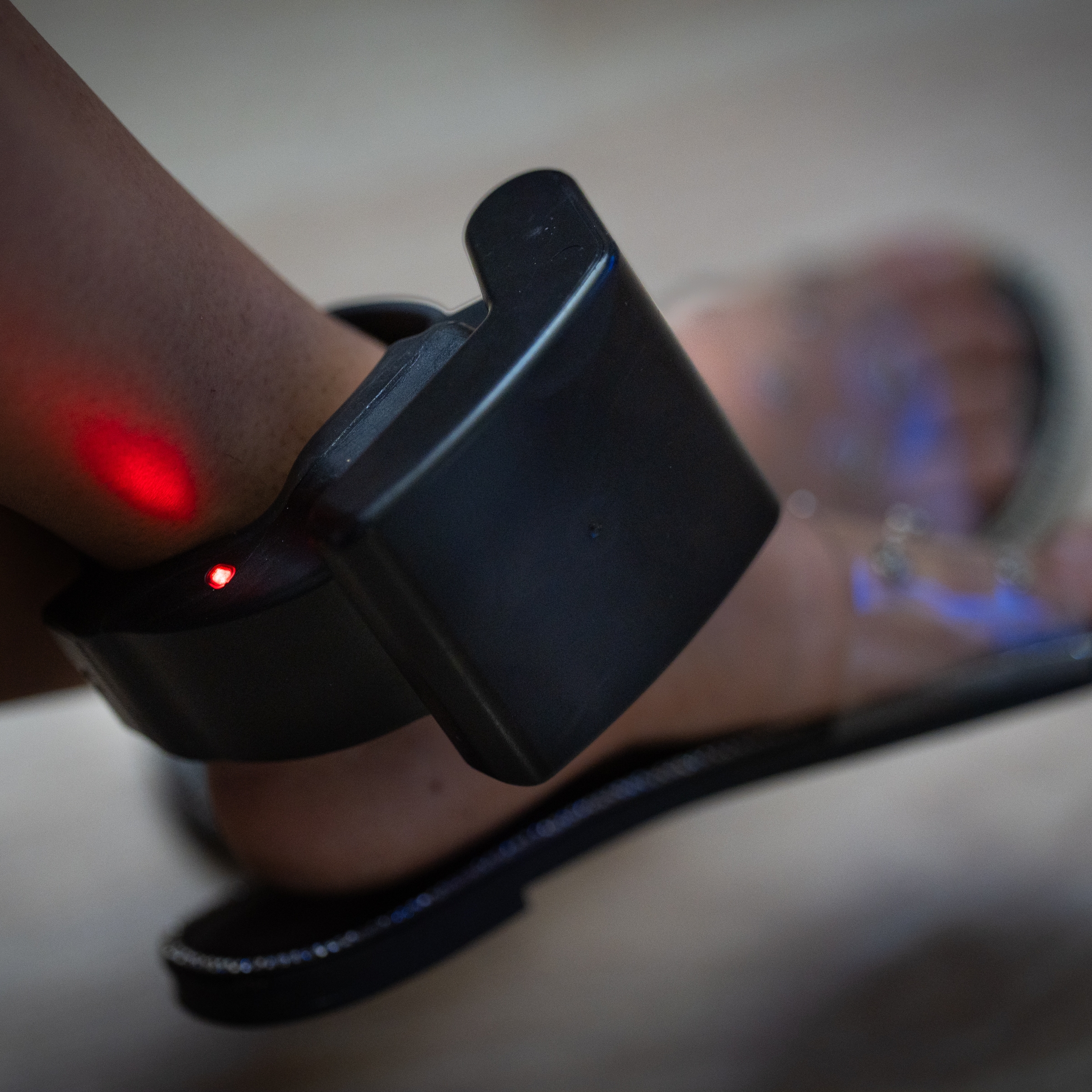
Post Reports
Why more immigrants are being tracked with ankle monitors – and who profits
00:25:15
ICE is expanding a controversial surveillance program. Today, our reporter shares how he learned about it, and what The Post uncovered about the company that stands to profit.
Loading summary
Transcript49 lines
- [00:03]
Elahe Izadi
Paola Diaz is a mother of two. She's 29 years old and from Honduras. And last month, she was told to report to an ICE contractor's office in Virginia. That's Immigration and Customs Enforcement. She didn't know what to expect. She said, they don't tell you why you have to go. She said, the majority of people tell you that maybe you shouldn't show up because they could deport you or something. Up until this point, Paula thought she'd been doing everything right. She left Honduras in 2021 to escape an abusive husband. She said he was on drugs, alcohol, and all of that. Last time we saw each other, he tried to kill my boy and me. So Paola fled to the United States. She crossed the border and filed an asylum claim. And as she's waited, she's gone to all of her court appointments. She's done mandatory mobile check ins. Anything the government asked her to do, she did. So that's why when she was called into this Virginia office, she felt like she had to go.
- [01:34]
Doug McMillan
So she was in this office with about 50 other people who were all in a similar position to her. They didn't really know why they were there.
- [01:43]
Elahe Izadi
That's Doug McMillan, a corporate accountability reporter for the Post. He and her colleague Sylvia Foster. Frau spoke with Paola last month about her experience. And we should say we're calling Paola by her middle name because she's afraid of government retribution.
- [01:58]
Doug McMillan
Eventually, they called her back and they told her that she had to get outfitted with an ankle monitor, which would track her every movement and also limit her geographical location to Virginia, Maryland, and D.C. and basically every time they told her that she left those areas, that her device would send a ping to her case manager, who would then call her and, you know, warn her she was violating the terms of her release, or they could potentially escalate the matter to ice.
- [02:34]
Elahe Izadi
Paola said she was surprised by this new level of surveillance, an ankle monitor.
- [02:40]
Doug McMillan
Most of the time, people who follow the rules tend to get less and less invasive tracking to where the point where she was only required at that point to check in physically and personal once a year. And so she thought that she was on the right track. And so her biggest confusion around this was why they suddenly were putting this ankle monitor on her and why they suddenly needed to track her more invasively.
- [03:09]
Elahe Izadi
Paola is one of tens of thousands of immigrants now facing more government surveillance. It's part of a new policy from ICE that Doug and his colleagues just uncovered to shackle way more immigrants with gps Ankle monitors than ever before. From the newsroom of the Washington Post, this is Post Reports. I'm Elahe izadi. It's Wednesday, July 30th. Today, Doug takes us inside ICE's controversial surveillance program and the company that stands to profit. Hi, Doug. Thanks for joining me in the studio today.
- [03:55]
Doug McMillan
Thanks for having me.
- [03:57]
Elahe Izadi
Before we get further into this new policy from ice, which you and your colleagues have uncovered and reported on and brought to light for the first time in the public, I wanna learn a little bit more about Paola. By this point, she's now been wearing this ankle monitor for about a month. So what has this been like for her?
- [04:15]
Doug McMillan
So my colleague Sylvia Foster Frau interviewed her in Spanish and she told her that this immediately had a negative impact on her life. Her kids and her family and her friends immediately wanted to know what this device was. Her six year old son questioned, what is this thing? And she kind of brushed it off and told him, it's not a big deal, don't worry about it. She said it's too complicated to explain for him to understand. But she knew that having this device on her was a really big deal because it would give the government not only a control over her life and surveillance into her everyday movements, but would also give the government the ability to quickly find her if and when they decided to deport her. So it's suddenly this kind of ominous thing strapped to her leg that served as a constant reminder of the fact that she could be deported at any minute. Palette also told us that it's just not a comfortable thing to have strapped to your ankle. It's heavy, it's bulky. She has to wear it all the time. Even in the show, she said it made her foot swell. And then there's also this stigma about it. She works at McDonald's and she's getting looks from her colleagues and looks from her customers. At McDonald's, she's tried to hide this device. She says that it changed her sense of fashion. She now has to buy more pants and more large kind of bulky pants that cover this thing.
- [06:05]
Elahe Izadi
Because I think the subtext here is there's sort of a connotation of if you're wearing this, then somehow you've been found guilty of a crime or something. Something.
- [06:14]
Doug McMillan
Right. Which is not the case. And I think that the people who wear these, who are not convicted of any crimes, who are just waiting out their immigration cases to be processed, feel that they're being unfairly stigmatized and unfairly labeled as criminals. And that is definitely the experience Paola has had just in the first few weeks of having to wear this out in the world and having to wear it to her job at McDonald's and even having to wear it at home with her kids.
- [06:47]
Elahe Izadi
So as I mentioned, there's this new policy from ICE and how immigrants are tracked, but just more broadly speaking, what, what is the status quo? Like how who is ICE tracking and how are they doing this?
- [07:00]
Doug McMillan
So There are nearly 8 million people who are waiting at their cases to be resolved who are not detained. And among those, a very small portion, about 180,000 are in a program called Alternatives to Detention. There's not a whole lot of transparency into who gets placed into this program and why. ICE tells us that they choose the people who may have criminal histories, people who may have some kind of an illness or a health issue that may prevent them from going into detention, or they may have some other reason they can't be in detention. But in the view of the government, they should be. And they have put these people in this monitoring program called Alternatives to Detention. Within that group, there's a small portion, currently about 24,000 people who are on the ankle monitors. And basically ICE has decided that all the people in the Alternatives to Detention Program will be put on an ankle monitor. Previously, only a small portion, only about 10 or 13% of the people in this program were on the actual physical tracking device. The rest of them were just checking into a mobile app which communicates their location and takes a quick selfie and verifies that it's them with facial recognition. So now potentially all 183,000 of these people are going to have to come into a field office and have one of these shackles with GPS tracking technology on it put on their ankle or on their wrist and have their location monitored all the time.
- [08:40]
Elahe Izadi
How did you and your colleagues find out about this? Because there wasn't like a public announcement about it.
- [08:45]
Doug McMillan
So we have heard. We've been covering what's happening with immigration enforcement in this country for the past several months, and we've heard from many immigration attorneys who are starting to see this play out with some of their clients that they're being called into the office on unexpectedly and being moved to this technology, seemingly with no explanation, because it tends to be in the past that when people were consistently coming in for their check ins and appearing in court on time, that they would be moved to less and less invasive forms of tracking. And so the feedback we were getting from our sources is that that's not happening anymore. That suddenly people are actually being moved towards more and more restrictive forms of tracking. And so we kind of started digging into that a little bit and eventually we got a hold of a Memo that, that ICE sent out to much of its staff on June 9th saying that basically we need to bring all the people who are in this program into offices and put ankle monitors on them. The one exception they listed was pregnant women who for whatever reason they're not going to put ankle monitors on pregnant women. They're just going to put some kind of a wrist borne technology that also has GPS tracking.
- [09:55]
Elahe Izadi
Why is ICE implementing this policy now?
- [09:59]
Doug McMillan
That's a good question. I don't have an answer to that. What they tell us, I interviewed an ICE spokeswoman who said that this technology is an enforcement tool. And they said gone are the days of the catch and release policy where they're saying that under President Biden and Obama that the government would essentially detain people at the border who cross illegally at the border and then release them into the country and then lose track of them, is what the administration is saying. And that they're saying that the Trump administration is trying to change that.
- [10:34]
Elahe Izadi
Are there many people who kind of go off the radar that don't show up for hearings that are unaccounted for?
- [10:40]
Doug McMillan
The vast majority of people in that position keep all of their court appearances and all of their check ins. There was a study that from 2008 to 2018, a research group found, using federal data, they found that something like 84% of immigrants who are working their cases kept every single one of their court appearances. And if you talk to advocates for immigrants, they say that they have a strong incentive to keep regular and to appear at all the court appearances and to do all their check ins because they want to have their case processed. They want to be on a path towards citizenship. And they know that by, you know, missing these things or by absconding or not working their case, then they are at greater risk of being deported.
- [11:26]
Elahe Izadi
How do these ankle monitors actually work? I mean, I imagine they're GPS power. There's a way to track where you are. But like, what is it actually like to wear one? What happens?
- [11:36]
Doug McMillan
So your movements are showing up on a screen. The device will ping a computer in a field office somewhere. You usually within a short distance from your home, there's a field office where somebody who's your case manager is reviewing your movements. And basically that person is looking for a few things. They'll get an alert if an immigrant they're tracking goes out of their geographical boundary. The boundary could be a few mile radius. I've heard of somebody who has a five mile radius who gets to decide that. This is all ICE officers make this decision. Yeah. Okay, so it could be a 5 mile radius, or it could be a state, or it could be a few different states. The device will send an alert to a case manager if that person leaves their geographical radius, they will get an alert. If the device is tampered with, there's any evidence that maybe the person's trying to cut it off. And they'll get an alert if the device's battery runs out or if it's running low. And in all of these cases, the case manager will sometimes reach out and directly call that person and have a conversation. And if the case manager is not satisfied with, you know, this person is in compliance or not, they can always escalate the matter to somebody at ICE who could potentially, you know, make a decision that could harm this person's case.
- [12:58]
Elahe Izadi
What's the battery life on these? You mentioned the battery can run out.
- [13:02]
Doug McMillan
So talking to people who have worn these devices and people who have served as case managers say that the batteries are a huge pain point with this. They tend to give people a backup battery, so they can always be charging it. And you're kind of always playing this game of changing the battery in time before one runs out. The website for the company that runs this program on the behalf of the government, called BI, their website says that the device's battery lasts 60 hours. But many of the people I've talked to say that it does not last that long. And they have found themselves changing the battery multiple times a day. And that can often be inconvenient, and it can often lead to situations where they're having to interact with their case manager when they're trying to get to work on time or they're trying to put their kid to bed. So these interactions that you're having because a technology is not working properly or you have to kind of maintain this technology all the time really do intrude on someone's life. And this is not just a. It's not just a surveillance or a privacy issue. This is really just kind of a burden of daily living that you're putting on these people.
- [14:18]
Elahe Izadi
Well, let's take a pause there. And then after the break, Doug is going to talk about the private companies that stand to benefit from this new policy. We'll be right back. Doug, you are a corporate accountability reporter, so I know you are someone who's always Thinking about how businesses are intersecting with all facets of life. And in this case, are there particular companies that will get a lot of business from the government due to the expansion of ankle monitors?
- [15:03]
Doug McMillan
Yeah, there's one company.
- [15:05]
Elahe Izadi
Just one?
- [15:06]
Doug McMillan
Yeah, there's one company that's a monopoly over the entire federal government's immigrant tracking program. It's called BI Inc. It's based in Boulder, Colorado, and it's owned by a much larger conglomerate called the Geo Group, which we've been writing about a lot, because the Geo Group is one of the main detention contractors that you're seeing in the news a lot lately. They run a lot of these big private prisons, essentially, that they're putting immigrant detainees in. And Geo Group also has an air carrier for deportation flights. They have vans and other ground transportation to move immigrants around the country. And about 14 years ago, when they wanted to expand their business more, they got into immigrant tracking. They acquired this company, BI in Colorado, and they have since owned the only government contract around alternatives to detention. So they run this business completely, and that involves actually manufacturing the devices. They have a factory in Boulder that manufactures these devices, but also they have kind of an army of these case managers and field offices all over the country. And we don't know exactly how many there are, though I think there are hundreds of these case managers, and each one of them can manage up to 200 or 300 immigrants at a time. So one of the complaints immigrants have is that the case managers don't actually have a lot of time to help them when they have a question or a request that needs help, because these people's time is stretched so thin.
- [16:40]
Elahe Izadi
But these people aren't government employees, but they're managing immigration.
- [16:44]
Doug McMillan
So. Yeah, So a lot of the work of managing the ins and outs of tracking these, it's all kind of outsourced to this company. And a lot of trust is placed in this company. And these employees they hire, a lot of them are young people, new college graduates, who are given a training and a handbook and given authority over. Let's watch over these people's lives.
- [17:09]
Elahe Izadi
How much does this company stand to make?
- [17:13]
Doug McMillan
So they have a contract currently that's worth about $250 million a year, but the contract is dependent on the number of people in it.
- [17:24]
Elahe Izadi
I see. So if there's, like, more people, they make more money.
- [17:26]
Doug McMillan
Yeah. So they get an analyst estimated for us that they get about $3.70 per person per day who is being monitored. Now, that's across any form of monitoring that's ankle Monitor or just app check ins. So we don't actually know how much more or how the economics will change if and when they increase the number of people on ankle mon by, you know, tens of thousands or hundreds of thousands of people more. But it's likely that this program is going to grow and that those numbers are going to grow, likely by hundreds of millions of dollars.
- [18:01]
Elahe Izadi
So, Doug, as you were digging into Geo Group and its subsidiary, BI Inc. Corporate accountability reporter, anything unusual or noteworthy that stood out to you about these companies?
- [18:16]
Doug McMillan
Yeah. So GeoGroup has a very close relationship with ICE. ICE is its largest customer and Geo Group is ICE's largest contractor. So there's a very close kind of symbiotic relationship and there's a lot of personnel that move between these two organizations. There's been a lot of former ICE officials who go to Geo Group and there's been some former Geo Group executives or consultants who go take jobs in the Trump administration. So we're seeing kind of a lot of movement between these organizations and sources tell us, and former ICE officials who have seen this kind of relationship between these groups pointed out to us that that can actually influence how ICE is making decisions and how to spend taxpayer money. And so, you know, a lot of the contracts that have been awarded this year have not all gone to Geo Group, but many of the big kind of prime contracts have. They have awarded tens of millions of dollars for to expand a giant ICE detention facility down in Georgia. They have given out a large new contract for the Geo Group's air carrier subsidiary. And so there's just a lot of money flowing in the direction of Geo Group right now. And a lot of people questioning whether that might be partly due to the fact that people at ICE are very close and have close relationships. People at this company, I think there's.
- [19:40]
Elahe Izadi
One name in particular that I've heard come out as sort of people being concerned whether there's a potential conflict of interest. And that is Tom Homan. That's Trump's border czar. Is he connected to this company?
- [19:53]
Doug McMillan
Yeah. So he reveals in his ethics disclosure that he consulted for Geo Group within the past couple years. And not only that, but he consulted for the actual division of Geo Group that runs the immigrant tracking program.
- [20:06]
Elahe Izadi
Oh, wow. Which is what we're talking about right now.
- [20:08]
Doug McMillan
Yeah.
- [20:09]
Elahe Izadi
Have you asked Geo Group or BI Inc. Or Tom Homan about this, about potential conflicts of interest?
- [20:15]
Doug McMillan
Yeah. So Tom Homan's spokesperson, a spokesperson for the White House, has told us that Homan recuses himself from all discussions of Government contracts.
- [20:27]
Elahe Izadi
Wow. Well, stepping back and just thinking again about monitoring people with GPS powered ankle monitors right now, we've seen, as you've alluded to, the Trump administration, move to detain more and more immigrants than previous administrations. And people showing up for appointments, being detained really in ways that are very surprising to them. And so when we're talking about these ankle monitors, in some ways, isn't this maybe on the one hand a less expensive approach than building more detention centers and giving more money to these companies to build and house people in these detention centers and also less disruptive to those people's lives to wear an ankle monitor versus being put in a detention center?
- [21:15]
Doug McMillan
Yeah. And in fact, one of the things we've heard that ICE officials, when they are bringing these people into the office and putting the ankle monitor in front of them and explaining that they have to wear it, they're giving them an option. They're telling them, you can either wear the hardware or you can go to a detention center. And so for most people, obviously, that's not going to be a real decision. They're going to take the ankle monitor over living in a detention center. There definitely is an argument that this is more humane. You're not disrupting people's lives in the same way. You're not disrupting entire communities. Like we've seen with the raids around the country and the use of detention that we've seen ramping up significantly, I think that the administration probably looks just this as a numbers game. And right now they've increased the number of people in detention from about 40,000 to about 60,000. They're hoping to eventually get enough space in detention centers to have at least 100,000 people in those facilities. But they can't have hundreds of thousands of people in detention. It's just too expensive. And there aren't enough detention centers. This is just one more tool in their arsenal, I think, to have control over the greatest number of people that they're targeting for deportation. And I think probably they're looking at it as this is sort of the electronic monitoring and the detention centers are in a way sort of a staging ground for the deportation. And that the more they can get these people into their purview in these different ways, the quicker they could eventually get these people out of the country as soon as they get their cases resolved.
- [23:02]
Elahe Izadi
What do you think this expansion of using GPS ankle monitors tells us about the expansion of government surveillance under this administration using this technology and paying money for it to expand government surveillance?
- [23:19]
Doug McMillan
Yeah, not only that, but a government surveillance entrusted to this third party company that has minimal oversight. I mean, you're entrusting not just kind of a government employee to watch somebody's movements and track their lives. You're entrusting this other company that most Americans probably have never heard of. So what is the kind of oversight of that? And what are the laws and rules and guardrails that will prevent that from being abused?
- [23:53]
Elahe Izadi
Well, Doug, thank you so much for sharing and also reporting this. It's really fascinating.
- [23:59]
Doug McMillan
Thanks for having me.
- [24:03]
Elahe Izadi
Doug McMillan is a corporate accountability reporter for the Post. That's it for Post Reports. Thanks for listening. If you value this kind of exclusive reporting, please subscribe to the Washington Post. And now is a great time to sign up. There's a special deal happening for a few more days for a premium subscription. The cool thing is that a premium subscription now comes with three extra logins so you can share your subscription with family and friends. Check out the link in our Show Notes for details or go to washingtonpost.com subscribe that's washingtonpost.com subscribe. Today's show was produced by Renny Stranovsky. It was edited by Maggie Penman and mixed by Sean Carter. Thanks to Sylvia Foster, Frau Tadeo Ruiz, Sandoval Sabi Robinson and Christine R. Mario. I'm Elahe Izadi. We'll be back tomorrow with more stories from the Washington Post.