← Post Reports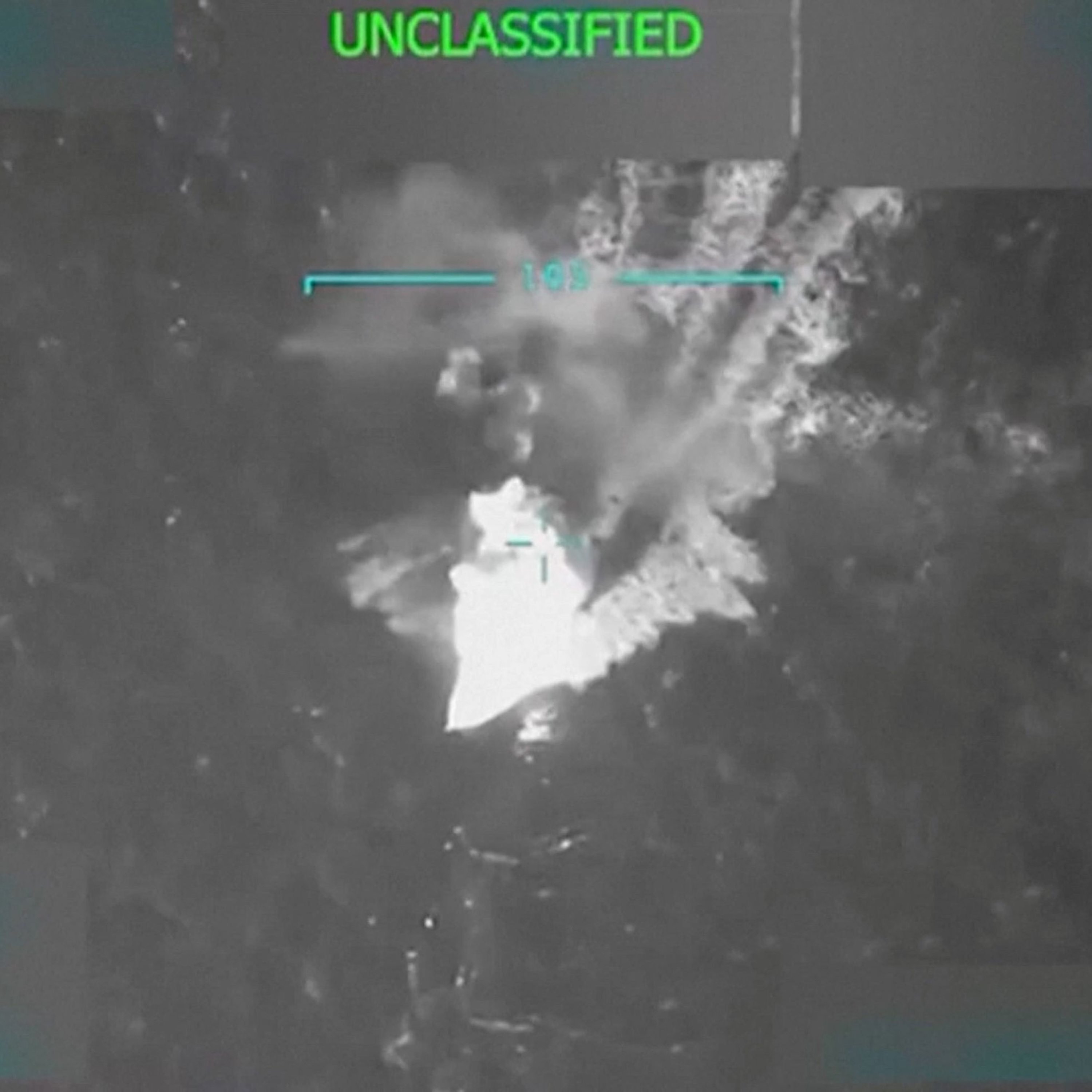
Post Reports
Why the U.S. military is striking boats from Venezuela
00:22:46
Nearly two weeks after a deadly U.S. strike on a boat in the Caribbean, questions loom over Trump’s new war on terror and drugs. This afternoon, Trump announced another strike on a boat from Venezuela.
Loading summary
Transcript81 lines
- [00:00]
A
With Progressive, it's easy to reach customer.
- [00:02]
B
Service with our app, website, chat, or by phone.
- [00:04]
A
Because when getting help is hard, it's.
- [00:06]
B
Not help at all.
- [00:08]
C
A little help, a little hope over here.
- [00:10]
B
Thank you for calling bench press assistance.
- [00:12]
C
What?
- [00:13]
B
Due to excessive gym volume, all available spotters are currently lifting heavy weights off the chests of other bench pressers. Seriously? Please continue to hold and we will remove the barbell from your chest in the order in which your cry for help was received. Getting assistance should be easy with Progressive. It is.
- [00:28]
A
Progressive Casualty Insurance Company and affiliates. In early September, President Donald Trump posted a grainy black and white video to his social media. There's no audio at the very top. In all caps are the words unclassified. The video shows a small boat riding out in the open ocean. You can see people on board. The video then switches to a wide shot taken from above the boat. Suddenly, the boat goes up in flames. According to the Trump administration, this boat was on its way from Venezuela to the United States, allegedly transporting illegal drugs for a criminal gang called Trende Aragua. The US could have stopped the boat and taken the alleged smugglers into custody. Instead, it chose to blow up the boat. And the White house says all 11 people on board were killed.
- [01:21]
C
We just, over the last few minutes, literally shot out a boat, a drug carrying boat. A lot of drugs in that boat.
- [01:31]
A
Here's President Trump speaking about the incident shortly after it happened.
- [01:35]
C
We have a lot of drugs pouring into our country coming in for a long time. And we just these came out of Venezuela and coming out very heavily from Venezuela.
- [01:44]
B
The president considers the people on that boat narco terrorists and considers the organization delivering those drugs a terrorist organization. And he's kind of changing the paradigm on how the US Reacts to this drug trade.
- [01:58]
A
Tara Kopp covers the military and national security for the Post. She has been spending the last few weeks trying to understand what happened during this strike against a Venezuelan boat and why.
- [02:09]
B
So it's still really unclear exactly what authorities and powers he used. You know, what was the legal justification? What are the legal authorities under this?
- [02:19]
A
Despite the fact that so much remains unclear about this attack, and despite the fact that Congress is now asking questions about the legality of the strike, Secretary of State Marco Rubio has said that more attacks like this could be coming.
- [02:32]
C
It'll happen again. Maybe it's happening right now, I don't know. But the point is the President of the United States is going to wage war on narco terrorist organizations.
- [02:42]
A
Just minutes before we wrapped up this episode this afternoon, Trump posted Another grainy video to his social media of a boat being blown up. In his post, Trump claimed that the boat was carrying, quote, narco terrorists and illegal drugs from Venezuela and that they had killed three people. From the newsroom of the Washington Post, this is Post Reports. I'm Colby Ekowitz. It's Monday. Senior September 15th. Today, have we entered a new era for the war on terror? I speak with TARA about the U.S. targeting Venezuela. Now, we spoke before news of the second attack, so our conversation only covers that first strike. We talk about whether it was even legal and how Donald Trump is making it a military priority to go after drug cartels.
- [03:32]
B
I mean, we've been calling it a war on drugs for decades, but he actually considers this a war.
- [03:44]
A
Hi, Tara. Thanks so much for coming on.
- [03:46]
B
Thanks for having me.
- [03:47]
A
So, Tara, how unprecedented was this? How has the administration justified, you know, unilaterally killing these 11 people?
- [03:56]
B
It's wholly unprecedented. We have seen Navy and Coast Guard ships seize drugs before and detain smugglers and destroy the boats. We have not seen to date a military strike against one of these boats.
- [04:12]
A
I mean, when I heard about it, I thought, can we do this? Can the United States do this? Are there powers that justify our military killing these people?
- [04:23]
B
That's a question Congress is still asking. It's a question that members of the press are still asking, and we haven't gotten a clear cut answer from the administration.
- [04:33]
A
So what do they say?
- [04:35]
B
These cartels are now identified as terrorist organizations, foreign terrorist organizations. It's something the President did in his very first day in office, in his second term that opened the door to the possibility that they could be targeted like other terrorist groups have over the last two decades under the Authorization for the Use of Military Force. That is something that presidents have used to conduct drone strikes. Obama actually was one of the first presidents to really openly show that the US Was using this authorization to go after terrorist groups around the world, not just in Afghanistan, not just in Iraq. And now we're seeing that there's a possibility. It came into play here in the Western Hemisphere. However, in the days since the strikes, as everyone has pressed for additional details, you've seen the president release a letter that he sent to Senator Chuck Grassley talking about his responsibilities as Commander in Chief under Article 2 of the Constitution to defend the country. And that seems to invoke that he is using his presidential powers to say that this strike was necessary and justified.
- [05:39]
A
So his argument then is that the people on the boat were going to cause harm to the United States. And so that he was justified in taking that boat out.
- [05:47]
B
That's correct.
- [05:48]
A
But has the Trump administration provided proof that the people on the boat actually were part of the cartel? Like, do we know anything about the 11 individuals on board?
- [05:57]
B
We know so little about the individuals who are on board, and we don't actually even know if there were actually 11, because we just have this very grainy video that shows an explosion.
- [06:07]
A
Where does the 11 number come from? Is that from the White House?
- [06:09]
B
From the White House and from the administration. We see this strike on the boat. We don't know if it was a manned or unmanned aircraft that struck the boat. We don't know if it was a drone launching a missile or a helicopter launching a missile. The president was sending basically a warning shot to the cartels. The boat didn't have to be blown up in that manner in this very fiery explosion. It could have been sunk. Those members could have been arrested. So this is very much just a sign to the cartels.
- [06:40]
A
Yeah, it's so interesting to me because the White House Trump puts out this grainy video of the US Military blowing up this boat. You see the explosion in the video, but then are not providing any information beyond what we're able to see with our own eyes. The types of details that you're describing, we just don't know. I mean, that seems unprecedented.
- [07:02]
B
And our own reporting and others has started to pull back some layers that Congress isn't getting answers either. US have been asking the Pentagon, under what specific authority? Can you give us anything else? Because we're used to, over the years as these drone strikes have occurred. For example, when we go after terrorist groups in the Sahel and US, Africom will put out a statement and say that this was the target, and they will name the senior leader killed. And they'll usually say it was a drone strike or some type. They'll describe it a little bit. They won't maybe say what type of drone. But we haven't even gotten that. Those are the bare minimums that we haven't gotten in this strike.
- [07:41]
A
I mean, this isn't the first time we've even heard about Trende Agua. This group has been a fixation of Trump's throughout his whole first year back in office. What do we know about this organization?
- [07:51]
B
This group, depending on who you ask, is not quite the giant cartel in the room compared to others. And our own reporting here at the Post has exposed that. The intelligence community assesses that Venezuela's leader, Nicolas Maduro, doesn't have a direct tie to trend agua and that he's not directing their action. So it's nebulous at best why these 11 individuals were targeted that day.
- [08:22]
A
And so what does that mean to put the terrorist definition on drug cartels? What does that allow the US to do?
- [08:30]
B
It provided them greater cover and greater authority to go after these individuals as if they were going after a member of Al Qaeda or ISIS without warning strike, without warning targets of opportunity. But that doesn't necessarily mean that they can or should. And what sort of international laws apply. And even getting down into how the military operates, there are very specific rules of engagement that the military has to follow, and we have had very little disclosure on whether those were followed.
- [09:05]
A
Is there anything in the international code that says, no, you can't do that, you've broken some kind of law here?
- [09:11]
B
The icc, the International Criminal Court could possibly step in. But we don't recognize the icc.
- [09:18]
A
The United States doesn't.
- [09:19]
B
Correct. And let's flip it. Let's say that China came over and they found a boat to be a threat to their national interests and blew it up without notification or authorization. What would we be expecting to hear from Congress right now and from the White House? Probably uproar. And yet this has just been done unilaterally with very little explanation and just the promise that more is going to happen.
- [09:47]
A
Yeah, Tara, the point about, like, how America would respond if this happened to us. This was a Venezuelan boat. So how has Venezuela responded to this attack?
- [09:58]
B
So Venezuela's leader, Nicolas Maduro, has used this to try and gin up sympathy from his populace and has called tens of thousands of reservists to basically be ready for an invasion, suggesting that this is a precursor to the US Actually coming in and maybe trying to oust him or attack cartels in Venezuela directly. I would say that his fears probably aren't unfounded. President Trump actually talked about and asked his leaders in his first term in 2018 about options for using the military to oust Maduro. And as we've seen, a lot of his second term has been unfinished business from his first term. So it's possible that the president is thinking, how could this be expanded to get Maduro out of office?
- [10:48]
A
Yeah. Are people in Venezuela like Maduro, are they seeing this as an act of war? Is this a declaration of war from the United States?
- [10:55]
B
Well, Maduro certainly is, if he's seeing it that way.
- [10:58]
A
And what has the response been in the U.S. you mentioned that Congress has been asking a lot of questions and not getting a lot of answers.
- [11:04]
B
I think what you're seeing is a growing amount of concern in Congress about the lack of consultation, the lack of explanation and where Congress's powers, because Congress has the power to declare wars. And this isn't the first time that Congress has been irritated at a president that has taken action without consulting them. I think that we need more time to pass to see if there really can be direct ties made to terrorism. It also depends on how the definition of terrorism has been expanded or is being expanded because I don't think we've traditionally thought of drug smugglers as terrorists, but it's definitely seen as a threat. And there's no question that overdoses in the US have been a significant problem. Is that terrorism, though?
- [12:03]
A
I mean, to that end, we saw Vice President J.D. vance. He reacted to some online criticism of the attack. There was a anti Trump podcaster who called what they did a war crime. And so what Vance said, and just a warning, he used a curse word here. He wrote I don't give a shit what you call it. And then we saw Rand Paul, who is largely anti war, kind of tore into Vance and has continued to tear into him over what Vance said there. So let's take a listen to what Paul said on Fox News.
- [12:31]
C
Think about it this way. This is how people don't quite get this. Let's say there's a house in your neighborhood and they're all selling fentanyl and thousands of people are died and you're just so mad. Do you go over there and just kill them or burn them? No. You go to a judge and you get a warrant and you do that.
- [12:49]
A
What do you make of that criticism?
- [12:51]
B
I think that it's notable that there aren't more Republicans joining his voice right now. But conversely, you have also not seen the US Military take any additional action like this. There was another boat seizure and boat destruction. The Coast Guard took the lead because the Coast Guard has the law enforcement capabilities and did it in a much more traditional way where there's still a video of a fiery boat explosion, except they had arrested the alleged smugglers. There were seven of them. Got them off the boat and then blew up the boat.
- [13:27]
A
Yeah. Which. That had a bunch of drugs on it.
- [13:29]
B
Yes. It raises a lot of questions. And I think that even though the administration has pledged that there's going to be more of these strikes to come, and we've heard chatter that potential drone strikes against cartels within Mexico is an option or potential drone strikes within Venezuela is an option, who knows how much credibility there is to that chatter. But these are all things that the administration has been considering a broad array of options, but you're not seeing it.
- [14:02]
A
After the break, why the Department of Defense is becoming the Department of War, and how Donald Trump is reshaping the military more broadly to achieve his goals. We'll be right back.
- [14:21]
D
Fall is in full swing, which means it's the perfect time to refresh your wardrobe with pieces that feel as good as they look. Luckily, Quince makes it easy to look polished, stay warm and save big without compromising on quality. Quince has all the elevated essentials for fall think 100% Mongolian cashmere starting at $50, washable silk tops and skirts and perfectly tailored denim, all at prices that feel too good to be true. I've tried the cashmere and I can tell you nothing has ever felt so soft. And lately I've been eyeing their wool coats. They look designer but cost a fraction of the price and the quality just as good, if not better. Because Quint's partners directly with ethical top tier factories. They cut out the middlemen so they can deliver luxury quality P at half the price of similar brands. Keep it classic and cozy this fall with long lasting staples from Quince, go to quints.com reports for free shipping on your order and 365 day returns. That's quinc.com reports to get free shipping and 365 day returns. Quints.com reports to first responders every second counts. Firefighters, paramedics, police officers and 911 operators need to communicate instantly, and that's why FirstNet exists. Born out of the lessons of 911 and authorized by Congress, FirstNet is the only network built with and for first responders. It's a unique public private partnership between the FirstNet Authority and AT&T, making sure America's first responders always have priority access, whether in the heart of a big city, a rural county or a remote territory. During natural disasters, major storms or large scale events, first responders know they can count on FirstNet to keep them connected, even when other networks are congested or unavailable. FirstNet is more than a network. It's a commitment to first responders, a promise that America's public safety always comes first. FirstNet built with AT&T. Learn more@firstnet.com PublicSafetyFirstNet.
- [16:29]
A
So Tara, we've been talking about this strike that happened just earlier this month and it's interesting because just shortly after that, Trump also went and renamed the department that oversees the military. Can you explain what is going on.
- [16:42]
B
With this change, through an executive order, he rebranded the Pentagon as the Department of War instead of the Department of Defense, a name that it has held since 1949. This is something where he's possibly going to come to odds with Congress because Congress has the authority to name it the Department of Defense. He sidestepped the issue a little bit by saying, this is kind of an honorific. This will be a secondary title. But almost immediately, the Secretary of Defense, now Secretary of War, was taking plaques off of his office and putting up new nameplates on the walls and replacing the seals on the walls. They're traditionally blue seals that say Department of Defense, and now they're wooden seals that say Department of War. In a way, that's kind of window dressing, but it's also messaging to the force that they're on different footing now. Yeah, that's kind of the window dressing for some of the things you've seen the president do with the military and test what the limits he can do with the military with these domestic deployments, with sending troops to the border, with now taking action in our own hemisphere, having the military take a direct strike against cartels in our own hemisphere. These aren't things that we've seen previously, is the idea.
- [17:57]
A
I mean, when you hear like, defense, you think you're defending yourself, but when I hear war, you kind of think of offense. Right. Like, is this now the Trump administration saying, like, we're going to be proactively taking offensive measures to protect America, whether that is blowing up a boat or sending troops to the border or sending the National Guard into cities like D.C.
- [18:21]
B
The interesting thing about this is that preemptive strike is not a new concept for the military. And that was done under the Department of Defense under presidents way before Trump Department of War. However, this administration and Secretary Hegseth and the President seem convinced that changing the name will put the service members that are in the department on a more clear footing on what their mission is.
- [18:50]
A
How so?
- [18:51]
B
Instead of defending against array of threats which they have cobbled together for anything from climate change, which is now being stripped from a lot of the manuals, the Department of Defense is not defending against climate change or any of these kind of broader national security issues that the Defense Department has looked at as security threats, because if you have extreme climate in a country that's already destabilized, that almost guarantees that eventually the US Will think it needs to intervene and may send either troops or some other types of resources, because climate change can lead to conflict.
- [19:33]
A
But they're saying that's not.
- [19:34]
B
That's not the mission.
- [19:35]
A
That's not the mission anymore.
- [19:38]
B
We definitely have seen reporting and talked to our sources about the upcoming national defense strategy, which kind of lays out how the military will posture itself. And for a decade or more, the military has been trying to be postured towards meeting the rising threat of China. And it seems like there's going to be a much greater emphasis on defense of the homeland, which the Trump administration has been broadcasting pretty much since day one. Not only American first, but Golden Dome and Border Security and now, you know, patrolling the Caribbean. So whether that means that resources will be kind of recalibrated and pulled back to more of a defense of the homeland posture, we'll wait and see.
- [20:30]
A
Well, also, we recently saw Defense Secretary Pete Hegseth go to Puerto Rico, and it was a surprise visit, as I understand it. What was he doing there? And what does that trip reveal about how the Trump administration is going to be prioritizing defense in the Caribbean?
- [20:47]
B
Well, Puerto Rico basically is the closest area of operations for us, where there's Navy facilities, there's Air National Guard facilities, there's an army training facility. So if you're looking to surge in the Caribbean and be within striking distance of Venezuela, Puerto Rico is not a bad choice. It's also a US territory, and we're sending more F35s there. So we'll just see if there's going to be a buildup there.
- [21:15]
A
What did Hesa say while he was down there?
- [21:17]
B
He and the governor of Puerto Rico both reiterated that Puerto Rico is now the front line in the drug war. So if you look at it that way, and you consider the southern border the front line of immigration prevention, you might expect a similar buildup in Puerto.
- [21:35]
A
Rico to stop the drugs from coming in by sea?
- [21:39]
B
Yes.
- [21:40]
A
I mean, is it possible that we're going to start to see. You said there was this interception of this other boat by the Coast Guard, but are we going to see more attacks on boats suspected of bringing drugs to America? Like what we saw with the Venezuelan boat, where we just blow up a boat filled with people because we think they might be bringing us drugs?
- [22:02]
B
What I thought was surprising was just how bluntly both the vice president and the Secretary of State were and the secretary of Defense. And yes, this is gonna keep happening. This is what we're gonna do. And whether that was considered just a warning or signaling to see if that has an effect or if we're going to actually see more strikes. And since then, you've seen the Coast Guard kind of return to normal order of business. So it might be that these legal questions that are getting raised might have a chilling effect on these strikes for now.
- [22:37]
A
You know, Tara, it's not lost on me that last week was the anniversary of the 911 terrorist attacks on the US and it strikes me that a lot of the rhetoric the Trump administration is using to justify the attack on this Venezuelan boat is very reminiscent of the rhetoric used to justify strikes after 9 11. So how are you making sense of this moment in light of that history?
- [23:03]
B
I was here in the city on September 11th. I was a reporter. I watched the Pentagon burn from across the Tidal Basin. I very quickly, with other colleagues, ended up being in Iraq. And those attacks and the subsequent 20 years have defined my career and others. As we've seen this war on terror expand expanded continents, we've seen the Pentagon try to get out of the Middle east, and it's almost impossible for US Forces to leave the Middle East. So the idea that there's now another theater where potential war operations or military strikes against terrorist organizations are now authorized and may become more frequent can be unsettling in a way because you did see the president say, you know, he's going to campaign on getting out of wars, but that doesn't seem to be the direction his administration is moving in.
- [24:04]
A
Well, Tara, thank you so much for coming on and explaining all this. I really appreciate it.
- [24:07]
B
Thank you for having me.
- [24:14]
A
Tara. Cop covers the military and national security for the Post. That's it for Post Reports. Thanks for listening. This journalism, Tara's reporting and insights, that's what you support when you become a Washington Post subscriber. It's a great time to subscribe. You can still get our core subscription for $20 for an entire year. This is billed as a single $20 payment for the first year, then renews at $120 per year thereafter. And you can cancel anytime. Go to washingtonpost.com subscribe. That's washingtonpost.com subscribe there's also a link to subscribe in our show Notes. Today's show was produced by Ilana Gordon. It was mixed by Shawn Carter and edited by Peter Bresnan. Thanks to National Security editor Andy D. Grand Prix. I'm Cole Biejkowicz. We'll be back tomorrow with more stories from the Washington Post.
- [25:24]
E
Think about why you listen to podcasts. It's like having a friend who makes you think or can help you wind down right? Well, the Washington Post has a lot of people you can turn to at any hour. You can read the most important and interesting stories we can help you cook something delicious. Give you advice on a tricky friendship. Rave about a movie or book that you shouldn't miss. When you become a Washington Post subscriber, you have a companion for whatever part of your day needs it most. Get it all for just $4 every four weeks. That's for an entire year. After that, it's just $12 every four weeks. Cancel anytime. Go to washingtonpost.com subscribe that's washingtonpost.com subscribe.