← Post Reports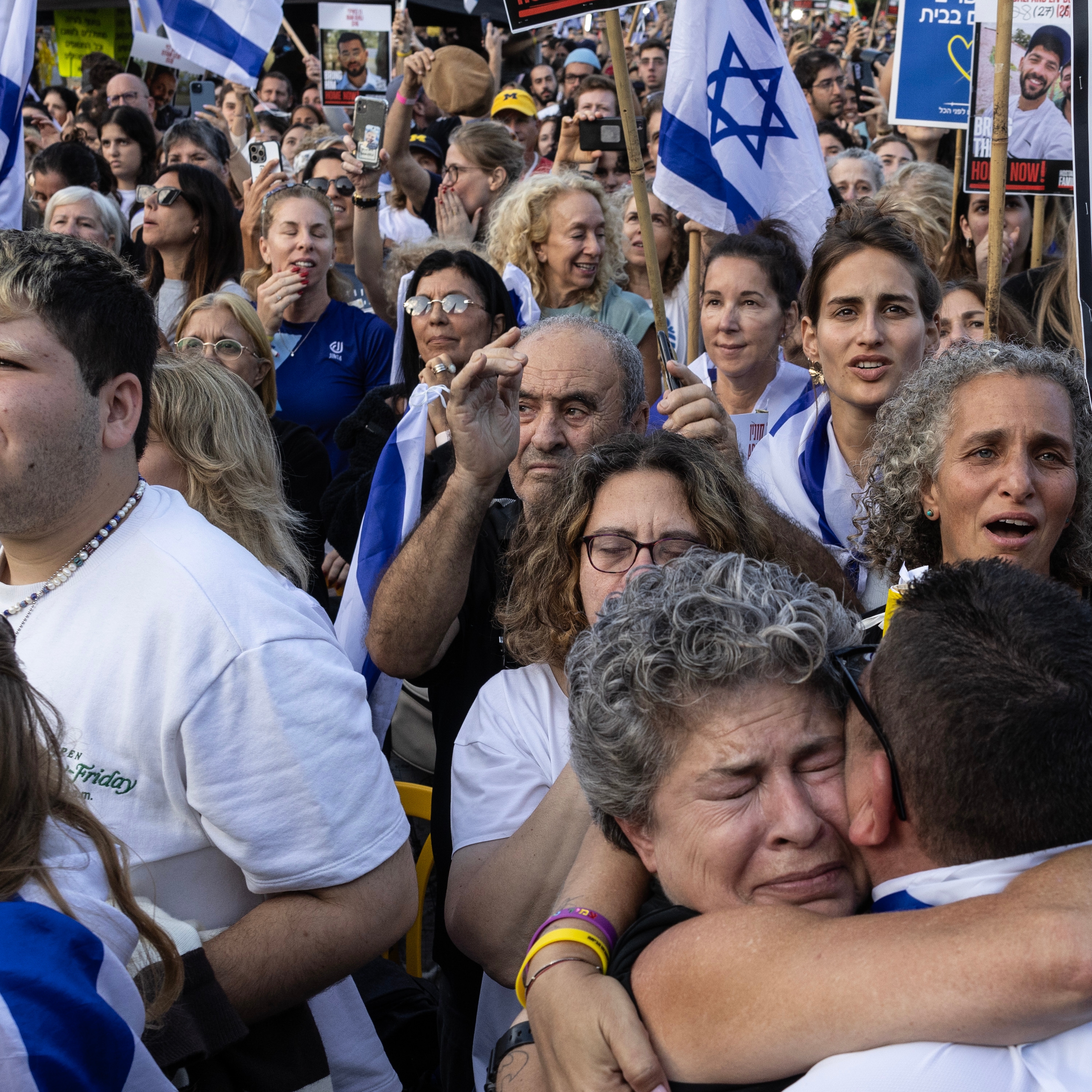
Post Reports
Will peace in Gaza hold?
00:19:27
The first phase of a U.S.-brokered ceasefire deal between Israel and Hamas has gone into effect, offering a glimmer of hope after two years of war.
Loading summary
Transcript35 lines
- [00:03]
A
The two year war between Israel and Hamas is one step closer to ending today.
- [00:09]
B
After so many years of unceasing war and endless danger, today the skies are calm, the guns are silent, the sirens are still, and the sun rises on a holy land that is finally at peace. A land and a region that will live, God willing, in peace for all eternity. So I woke up early morning and went to the hostage square in Tel Aviv.
- [00:47]
A
Laor Siroca is a freelance reporter based in Tel Aviv who covers Israel and the war in Gaza for the Post. The Hostages Square is a public plaza that has become a gathering point for protests and rallies in the wake of the October 7 attacks in 2023.
- [01:02]
B
For the past two years, this square has been filled mostly with sorrow and tears. And today it was completely different. There were like tens of thousands of Israelis there. You could see people smiling and, and also crying, but from joy celebrating the return of the living hostages to Israel.
- [01:28]
A
On Monday, all 20 living Israeli hostages were released and returned to Israel. At one point, a helicopter that appeared to be carrying some of the hostages flew over the square. L' Hor spoke with several people in the square. One of them was Aviva Siegel. She was one of the people taken hostage on October 7. She spent 51 days in captivity in Gaza before being released in a previous ceasefire deal.
- [01:57]
C
For the last two years, it's been really, really a tough time knowing what they're going through as a hostage. I'm exploding with joy. It's just one of the better days that I've had in my life to see the families getting back together and coming home, coming home. It's just the best. The best.
- [02:20]
A
Meanwhile, Israel began to release some of the nearly 2,000 Palestinian prisoners and detainees it held. They were met by cheering crowds welcoming them back. From the newsroom of the Washington Post, this is Post Reports. I'm Colby ekowicz. It's Monday, October 13th. Today I talk with Post Middle east reporter Abby Cheeseman about the ceasefire, how it played out, and what happens next. Abby, hi. Thanks so much for joining us.
- [02:59]
C
Hi, thank you for having me.
- [03:00]
A
So, Abby, the hostages were released from Gaza the this morning. What were some of the scenes from those reunions?
- [03:09]
C
Yeah, so we saw the release of all 20 living hostages from Gaza today in two separate batches. But overnight, when we knew that we were nearing the deadline and we knew that they were going to be released this morning, the crowds absolutely filled Hostages Square in Tel Aviv, which has been the site throughout the last two years of war, where everyone has gathered to really protest that the Government do everything possible to bring the hostages home as soon as they can. And after two entire years of this incredibly grueling war for everyone on both sides of it. So we saw as well that there should be the release of the deceased hostages today. And so this is also this very poignant moment that not only are the living hostages reunited with their families, but also the families of those people who died in captivity are finally able to give them a proper burial.
- [04:03]
A
Do we know how many people that is?
- [04:06]
C
So there should be 28 bodies that are brought back from Gaza. And so this is already one of the sticking points that we're seeing is that from the negotiations in Sharm El Sheikh last week, Hamas has said that this 72 hour deadline that they are supposed to comply to of the release of all of the hostages, living and deceased, which expired today, which is why we've seen all of the living ones released, is that they have said for a while now that it will be extremely difficult for them to find the 28 bodies within that timeframe because they say the extent of destruction in Gaza and also where the Israeli military were positioned until just a couple of days ago has made that very difficult for them to find a number of these bodies. And so at the moment they're saying that four will be released today, which is far less than the 28 that people are really hoping would be returned today.
- [05:04]
A
So, Abby, what is your understanding of what comes next for the hostages that are back in Israel now who have lived for two years in captivity and are now being reunited with their families?
- [05:16]
C
Yeah, so obviously it's an extremely emotional return for so many of these people and their families. The immediate steps were that they were taken for medical examinations just to check that everyone is, if anyone needs further medical support. And alongside that will come, you know, a lot of emotional support so that they can re enter society after two years in captivity. And so I think much like with the hostage releases that we've seen before, it's a very slow process to allow people to readjust to being back at home.
- [05:53]
A
And part of the deal, Abby, also included the release of Palestinian detainees that Israel was holding. What was the reaction in Gaza to that and who were among the Palestinians that were brought home?
- [06:06]
C
So there were 250 Palestinian prisoners who were serving life sentences that had been released. And there were also more than 1,700 detainees from Gaza. And so these are people who have been swept up by the Israeli military Inside Gaza since October 7, 2023 when the war began. And so they have been held for various amounts of. Over the past two years, some of them for the entire time without any trial or charge. And so they have now also been released. So there was much like, on the Israeli side, an absolutely huge sense of relief that people were being reunited with their families finally after such a long time in detention. But at the same time, there's also this grief that comes with it. So many people are seeing the enormous destruction of Gaza for the first time. We've seen reports of people coming out of detention today to discover that their entire families have been killed and that they're actually the only person remaining. But, you know, overall, there is just this huge sense of relief that people are being reunited. And I think that it just kind of overwhelms everything that we've seen today on both sides of the civilian population of this conflict.
- [07:24]
A
You know, Abby, this war, it's gone on for two years now, and yet the ceasefire, the hostage release, that all unfolded, like, very quickly over just the last couple of weeks. We talked about it on the show last week. But can you just briefly remind us, like, how did this peace deal come together?
- [07:43]
C
Yeah, it came together incredibly quickly at the last minute. And so many of the officials that we've spoken to who were near the mediation, and also analysts who are close to all sides of this deal, they said that there were multiple compounding factors that allowed this to happen very quickly. And this was in part that after the Israeli assassination attempt on Hamas leaders in Qatar, that there was this new sense that Trump had leverage over Netanyahu when the assassination attempt on a very key ally failed, and that he had this ability to push forward to get a ceasefire deal in a way that he possibly didn't have before. And so there is that combined with many analysts said that Trump wanted it done in time for the Nobel Peace Prizes with his desire to achieve one of those. And so there were multiple confounding factors here. And it's also, we reached a moment where the situation in Gaza had become so terrible that Israel really was becoming more and more of a pariah in the international community. We were seeing many key European, European allies take harder and harder stances. And so there were just a lot of moments that came together that it seems allowed the mediators, and particularly Trump, to push harder than they had before. But again, we also have this overwhelming sense that many of the larger issues that will allow this permanent peace that Trump was talking about today to actually come into play, so much of this still hasn't been negotiated. This is very much a ceasefire. And A hostage for prisoner exchange that has been agreed and has been signed. And while many people are on board with the wider peace plan to bring a permanent end to this war, the details of that are so much more difficult to figure out. And we haven't really got any public knowledge yet of when that is going to be fully negotiated and how they're going to overcome those final steps while the ceasefire is still fragilely holding.
- [09:53]
A
Yeah, it all feels so precarious. And also, you know, now that Gaza has, you know, that the remaining Israeli hostages have been released from Gaza, does Hamas have much of a bargaining or any leverage left in these talks when they talk about, you know, the. What comes next?
- [10:14]
C
Well, this was the major thing for them when they were going through the negotiations in Sharm El Sheikh, particularly at the very last minute, was that handing over the remaining hostages, they were giving away all of their last bits of diplomatic leverage that they have here. And so the one thing that Hamas officials kept saying that they wanted was a guarantee from the President of the United States and from other mediators that Israel would not restart this war once the living hostages have been released. You know, that they won't view this as an opportunity to go in and destroy what is left of Hamas. How they managed to push this forward with so little leverage anymore is really going to remain to be seen.
- [10:56]
A
Is there anything else in this phase? One part of the deal that needs.
- [11:01]
C
To still happen, the only other part that really exists and is one of the most fundamental parts for Gaza, is allowing a huge influx of aid into the territory. And so we had. The UN said yesterday that it was the first day that they'd managed to see real progress in terms of scaling up, up, and that they very much hoped that they'd be able to continue at this force of surging in this huge amounts of aid that is needed. And it's really impossible to overstate how much needs to go in to be able to alleviate the enormous amount of suffering that is happening in Gaza. So they've brought in hundreds more trucks than they were able to before, and they also managed to get cooking gas in for the first time. And so there's so many things that still need to come in at scale, particularly food. It's a starving population and the world's leading body on food security has declared a famine in parts of Gaza. The water systems are largely destroyed, the sanitation networks are destroyed. There is so much that needs to come in in terms of water, food, medicine, shelter, as the winter is about to hit. And so we're waiting to see how this plays out. But that's the main thing that Gazans are really hoping to see in the coming days.
- [12:29]
A
After the break Trump's role in brokering the ceasefire and where negotiations may go from here. We'll be right back.
- [12:50]
D
If you're like me, Fall always feels like a reset. Between after school activities, busier routines and shorter days, finding time to cook is pretty much impossible. That's why I love Factor. Their chef prepared diet friendly meals make it easy to get everything done while still enjoying something comforting and delicious, no matter how hectic life gets. Factor offers a wide selection of weekly meal options including premium seafood like salmon and shrimp at no extra cost. They've also added new Asian inspired meals. Ample choices with better Nutrition is why 97% of customers say Factor helped them live a healthier life. I've been with Factor for a few weeks now and so far I've had garlic butter and mushroom chicken thighs, pomodoro herb salmon, ooh and chimichurri shredded pork. All amazing. Eat smart@factormeals.com post 50 off and use code post 50 off to get 50% off your first box plus free breakfast for one year. That's code post 50 off@factormeals.com for 50% off your first box plus Free breakfast for one year. Get delicious ready to eat meals delivered with Factor offer only valid for new Factor customers with code and qualifying auto renewing subscription purchase. As the weather's starting to cool, it's time for layers that last and Quince is my go to for quality essentials that feel cozy, look refined and won't blow below your budget. Quince really does have what you need for the $50 Mongolian cashmere premium denim that fits like a dream and luxe outerwear you'll wear year after year. I've had my eyes on their wool coats for a while now and they look designer level but cost a fraction of the price. Because Quint's partners directly with top tier ethical factories and cuts out the middlemen, they deliver luxury quality prices at half the price of similar brands. It's the kind of wardrobe upgrade that feels smart, stylish and effortless. Trust me, I know from firsthand experience. The cashmere sweater I have is literally my number one whether I'm going out or staying home. Find your fall staples at Quint's. Go to quince.com reports for free shipping on your order and 365 day returns now available in Canada too. That's qU-N-E.com reports to get free shipping and 365 day returns, quince.com reports.
- [15:07]
A
So, Abby, you mentioned, obviously, President Trump's tremendous role in holding this peace deal together. And he actually arrived in Israel this morning and he spoke to the Parliament there. What did he say?
- [15:22]
C
So he gave. He arrived at the Israeli Parliament and was greeted with absolute enormous applause and celebration by Israeli lawmakers that continued. They gave opening speeches between the Israeli speaker of Parliament and Prime Minister Benjamin Netanyahu. Mr. President, you are committed to this peace. I am committed to this peace. And together, Mr. President, we will achieve this peace. They gave very lengthy speeches that really praise Trump for what they have achieved today, for bringing the hostages home. And they very much presented a very strong united front. And then Trump spoke, and it was very much in the same vein as Netanyahu did, that this was an absolute win that Israel has won and that the US has brokered, kind of. He described it as the dawn of a new Middle east where there is peace now across the region.
- [16:26]
B
It's the start of a grand concord and lasting harmony for Israel and all the nations of what will soon be a truly magnificent region. I believe that so strongly. This is the historic dawn of a new Middle East.
- [16:43]
A
You know, you mentioned that, that President Trump arrived to Israel to much celebration. I saw that there was the COVID of the Jerusalem Post has a big picture of him saying God bless the peacemaker. So he's been getting a lot of praise in Israel for his role in brokering this deal. I mean, does he deserve the credit for ending this war?
- [17:07]
C
I think there's gonna be a long running question over why this happened now and everyone who had any kind of power, regardless of whether that is Trump or whether it's Biden or whether it's Netanyahu or whether it's the wider international community on why this deal when it looks so similar to deals that were put on the table a long, long time ago as to why this war had to go on for so long. And so I think, you know, this is going to be the question that's overhanging Israel. It's going to be the question that is overhanging Gaza. Would more hostages have been saved if this pressure had been applied sooner? And, you know, would possibly tens of thousands of Palestinians have been killed in Gaza if this pressure had been applied sooner? And so while I very much think he is going to be applauded by everyone for stopping putting a stop to this war, we do have to grapple with that wider question of could it have happened sooner? Why didn't it happen sooner? And also, is it actually going to create sustained peace? This isn't the first ceasefire that we've seen in Gaza. We've been here twice before. We were here earlier this year where there was, you know, there was a ceasefire in January, and it was a similar vein in that there wasn't a long term peace plan hammered out. Then there was a phase by phase, hostage for prisoner release and ceasefire that was agreed upon, that broke down, you know, by March. And then the war came back with even more ferocity than it had been before. This war has branched out into so many different places. There's a lot more work to do in the Middle east before we can start claiming with any reality that this is the beginning of a new dawn.
- [18:59]
A
You know, Abby, there's all of these unanswered questions about how this ceasefire and the peace plan, how it's gonna continue to unfold, whether it will stick. So what are the next steps and what are you gonna be paying attention to as you watch this go forward over the days and weeks?
- [19:19]
C
I mean, the most immediate first step that we're going to have to grapple with is Hamas ability to find the bodies of these remaining deceased hostages. And so one of our most immediate questions is what this is going to look like and how that will be possible. Because so much of this immediate part of the deal feels like it depends on whether Hamas can bring out these remaining hostages. And so then once that is, hopefully they find the bodies, and then they have to go for identification inside Israel to make sure that it's the correct remains that have been brought back that will kind of successfully wrap up the first phase of the deal. And so we need to look at when these negotiations are going to happen. We really aren't hearing much in terms of what they will look like and when they will happen and how quickly we're turning to this. But there are so many huge questions here in terms of how Gaza will be rebuilt, who will govern Gaza? Will there be international forces in Gaza? Is this a temporary measure in terms of allowing international forces in, or will that be completely off the table? How will security look? What will Hamas's presence look like? And so how this plays out with what the future of Gaza will look like, and the differences between what Israel wants the future of Gaza to look like, what Palestinians want the future of Gaza to look like, and what the Arab states who are mediating alongside the US can find a middle ground on how that will look like? It all very much remains to be seen.
- [20:59]
A
Abby. Thank you so much for coming on.
- [21:01]
C
Thank you for having me.
- [21:08]
A
Abby Cheeseman covers the Middle east for the Post and is based in Beirut. Laor Soroka is a freelance reporter based in Tel Aviv. Today's show was produced by Thomas Liu, with assistants from Rennie Svirnovsky and Emma Tolkoff. It was mixed by Sean Carter and edited by Ted Muldoon. Special thanks to editor Benjamin Soloway. I'm Colby Ikowicz. We'll be back tomorrow with more stories from the Washington Post.
- [21:44]
E
Think about why you listen to podcasts. It's like having a friend who makes you think or can help you wind down right? Well, the Washington Post has a lot of people you can turn to at any hour. You can read the most important and interesting stories. We can help you cook something delicious, give you advice on a tricky friendship. Rave about a movie or book that you shouldn't miss. When you become a Washington Post subscriber, you have a companion for whatever part of your day needs it most. Get it all for just $4 every four weeks. That's for an entire year. After that, it's just $12 every four weeks. Cancel anytime. Go to washingtonpost.com subscribe. That's washingtonpost.com subscribe.