← Post Reports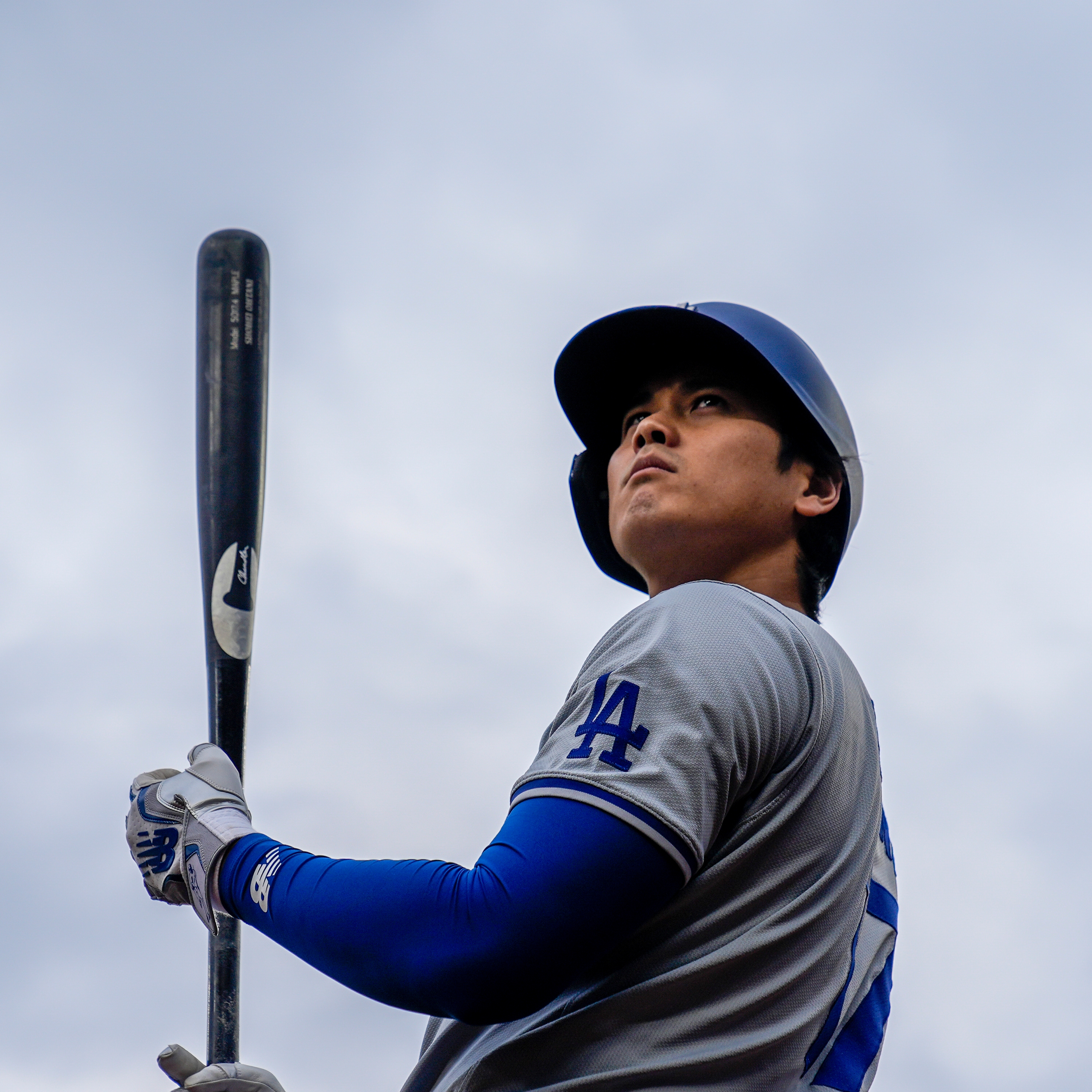
Post Reports
Will the Dodgers break baseball? And other Opening Day questions.
00:22:45
Baseball is back – and so are the sport’s existential questions, both on and off the field.
Loading summary
Transcript37 lines
- [00:03]
Ava Wallace
It is opening day for most major league baseball teams. But the team everyone is talking about, the Los Angeles Dodgers, has already played their first game down and 01 bounces.
- [00:14]
Unknown Sports Commentator
One left side backhand Rojas, long throw to finish the job. The Dodgers sweep the cubs to open 2025 in Tokyo.
- [00:25]
Ava Wallace
They were already a super team last year, building their team around Shohei Otani, you may have heard of him. And they won the world and then spent the off season hoovering up a bunch of other elite players.
- [00:36]
Chelsea Janes
They signed the best starting pitcher available, Blake Snell. They signed the best young Japanese pitcher maybe ever. They've signed a bunch of outfielders who are lesser known but still would be the headliner on most other teams. So they are stockpiling talent pretty much all over the roster in ways that no one else can, does, or even really tries to do.
- [00:58]
Ava Wallace
This is my colleague Chelsea Janes. She covers baseball for the Post and I spoke to her while she was sitting in a hot car outside of a stadium at spring training. And my first question for Chelsea was, are the Dodgers going to break baseball? And as they keep pouring money into their roster, can any other teams in Major League baseball even keep up?
- [01:15]
Chelsea Janes
Every few decades, there is a fear that some team is breaking baseball. When I was younger, it was the Yankees.
- [01:22]
Unknown Sports Commentator
The New York Yankees have once again reached the summit of the sports world. They've won their third straight championship, fourth in the last five years and 26th all time the most successful team in the history of professional sports. Starting the new millennium, the New York Yankees are once again world champions.
- [01:46]
Chelsea Janes
They were outspending everyone. No one could keep up. And that team won three consecutive World Series, really did sort of dominate the sport and it survived them. No one's won back to back championships since then, including the Dodgers, so it's hard to argue they've broken anything. I think in fact, having that super villain, having the team that everyone wants to beat and wants to hate generates a lot of interest. And so I'll say for now that if, if anything, they're helping. But if, if they start dominating and no one else can really compete when it matters, then it'll be a different conversation. But as of now, that's not something we've seen in Queen.
- [02:25]
Ava Wallace
From the newsroom of the Washington Post, this is Post Reports. I'm your guest host, Ava Wallace. It's Thursday, March 27th, and today we're talking about the super team Dodgers and why they're bringing about so many existential questions. In a sport that always seems to have existential Questions? Baseball is one of the sports that I've. One of the few sports that I've never liked covered intensely. I've, like, been to ballparks to cover things, but I love going to games. Tracking a. A team or tracking narratives through the season is really difficult, except for last year when it was pretty much just Dodgers, Dodgers, Dodgers. From the moment they debuted overseas and you were over there watching Shohei Ohtani, they've kind of been the team everybody's talking about. And of course, they're coming off a World Series win last year. What made them so dominant during last year's regular season? And is it going to be more of the same this year?
- [03:22]
Chelsea Janes
You know, I think it probably will be. I think the thing that makes them dominant is not actually that they have all these frontline players. People have heard of, you know, Ohtani, Freddie Freeman, who's probably a Hall of Famer, Mookie Betts, who's probably a Hall of Famer. You know, they have an elite starting lineup, but they have so much depth. I mean, they're probably 10th best pitcher, would be the third best pitcher on a lot of other teams, starting rotations, their bullpen. Every year, you know, they've got relievers, you know, down in the minor leagues who are better than some teams have, you know, in the majors, they just are able to bring in so much talent. And, you know, part of surviving a baseball season is just knowing that people are going to get hurt. You don't get through it with your stars healthy. It doesn't happen. And so the advantage that they have, you know, every regular season and every post season is that they have more talent.
- [04:10]
Ava Wallace
How are they just able to have waves and waves of talent and kind of survive players getting injured and going down for whole seasons, and Ohtani can't even pit, you know, how can they just have a seemingly endless supply?
- [04:24]
Chelsea Janes
Well, it's twofold. I mean, one, they've got a crazy amount of money. They signed a massive, massive cable deal the likes of which I don't think any other team in the majors could imagine. Even the New York teams, I don't think are in the same realm. It's in the billions, not millions, and so that helps. They've got a really rich ownership group that wants to pour money into the team and has seen pouring money into the team results in, you know, getting money back. They've won so much. They're. They're a marketer's dream. Shohei Ohtani brings in tens of millions, if not hundreds of millions of AD deals by himself in Japan. So they've just got a ton of money, number one. And number two, they, they've invested it not only in, like, players, but in an infrastructure that helps baseball players get better. They've got so many coaches and cameras and computers and so much data, so that even guys who you, you might wonder, why didn't this guy go somewhere else where he could play every day and be a starter when he chose to go to the Dodgers where there's not necessarily room for him right away? Well, he went there because they think they can make him better. So when his chance does come, he's a better player. And they're able to entice people to come to lesser roles with them than they would with other teams, which I think makes everyone else kind of feel like it's impossible to keep up, because if they can get guys to come and not start, then what chance does anyone else have?
- [05:44]
Ava Wallace
Okay, but that being said, it's really, really hard to win back to back World Series. It hasn't happened in 25 years. Why is that so difficult? If they have all these guys kind of waiting in the wings and they have this incredible group of frontline starters, I mean, do you expect them to do it this year?
- [06:01]
Chelsea Janes
You know, I think that the kind of running question is if you had to bet and you shouldn't, and the Dodgers know that better than anyone, but they would you take the Dodgers or would you take one of the 29 other teams to win the World Series this year? And most often people take the field because there are so many injuries in the course of a baseball season that even the Dodgers last year, when they were in the playoffs and their season was on the line against the San Diego Padres in the first round, they had run out of starting pitchers because everyone was injured and had to throw only relievers. They used like 10 different people to just survive. And they did and they kept winning. But even they, you know, couldn't get everyone there healthy. And just the way of the sport right now. Starting pitchers just, they blow out, their elbows blow out. They don't get through the year healthy. You can't plan for them to do it. So, you know, I think even the Dodgers, who have again, more depth than anybody, are kind of subject to the whims of everyone's health. And, you know, if three of those guys go down, they suddenly don't look as good. So it's, it's very easy for these, these things to change quickly. And I think that's one of the main Reasons that you haven't seen anybody repeat. Because just winning the World Series requires an extra month of pitching from all your best pitchers. So then the next year, they're a little bit more fragile and so on and so on and. And. And us that, you know, you can't. You can't go back to back.
- [07:17]
Ava Wallace
So does that speak to kind of what's happening with pitchers these days? Because, of course, as you mentioned, the Yankees repeated in the late 90s, early 2000s. But this moment feels really different. As you mentioned, it feels like pitchers are breaking down earlier and faster and more often. Do I kind of have that right?
- [07:35]
Chelsea Janes
Yeah, it's really ramped up, I would say in the last five to 10 years, I think everyone started looking at data more. And unsurprisingly, Data said, if you throw harder, it will be harder for people to hit your pitches. So everyone said throw harder. So instead of maybe emphasizing a guy who throws not as hard, but still gets people out, all the teams are saying, no, we'll take a chance on drafting this guy that throws really hard and try to get him to throw as hard as possible and see where that gets us. What happens is every single person is trying to throw as hard as they possibly can on every single pitch, which was not always the case. There's so much data now that a front office that's deciding whether to keep this guy on the roster or keep that guy is looking at who throws harder every pitch. So the guys have to play along with it. And the elbow ligaments don't withstand it. It's a huge problem. I'm not sure anyone really knows what to do. It's really hard to tell people not to throw as hard or not to value this velocity that leads to so much success. So I think among the many existential crises Major League Baseball is facing at any given moment, how to keep people healthy is a big one. And it also really does influence the way these seasons play out, because the difference between, you know, a team winning a championship and not getting there at all is often whether their top pitchers are healthy.
- [08:58]
Ava Wallace
And so the Dodgers are kind of responding to that potential problem or trying to get over that problem even arising by throwing a lot of money at it, gobbling all these pitchers that you mentioned earlier. And the result is, and I want to quote a really great story that you wrote about a potential salary cap coming to mlb, which, unlike, you know, the NBA or the NHL, there is no salary cap. Teams pay a tax penalty if they go over a certain number. And you said this year, the Dodgers projected tax bill not so, just not even what they're paying their roster, but their tax bill is about 142 million, and that is bigger than 10 other teams payrolls. That's. That's a lot of money. What's the response by Major League Baseball been to this kind of rampant spending? Are other teams even trying to keep pace with them?
- [09:47]
Chelsea Janes
They really aren't, and they really can't. At least they say they can't. The New York Mets, who are owned by a hedge fund billionaire who was until recently the craziest spender ever, really won't even get close to that in future years. He's even said, I can't afford to be that. I can't afford to do that. It's a huge problem. I think there's two parts to it. One, you know, owners in markets like Cincinnati, they just don't have that, that kind of resources available. There's no way that they're going to be able to pay, you know, 700 million to one player or, you know, 142 million in tax bills, let alone in bills at all. It's just impossible. And, you know, fortunately, baseball is a sport where that often doesn't matter that much. You know, traditionally, there's always been a lot of worrying about whether there needs to be a salary cap. And then every year a different team win. And, and every year it's. It's not the team you thought was the super team. And, you know, so the parody of the game and just the randomness of the sport sort of cancels out some of the damage that that can do. But I think, you know, these numbers are getting big enough where Major League Baseball is really going to have to look at it and where their owners are going to get mad enough and say, look, we can't let them run rampant. We got to figure out how to do this. The problem is that Major League Baseball's union is, is one of the most respected unions of all unions, you know, sports or not. And over the years, their big claim to fame, their big sticking point is we have never let the owners impose a salary cap on us. So they're not going to start now. You know, why would they do that when their guys are getting 700 million, which is more than, you know, people in any professional sports league in America are getting. So when the collective bargaining agreement that governs the relationship between the players and the owners expires after the 2026 season, there is a lot of fear already that there will be, you know, A loc out, a strike, some kind of huge disagreement that results from the fact that the owners say, hey, we want to control spending. This is out of control. The Dodgers can't do this every year. And the players are going to say, we don't want you to control spending. We want to keep getting paid. We're not going to play. If you're going to try to do that, I don't know if it'll get to that point, but you can see why it would. What the Dodgers are doing is just so out of the realm of possibility for half or more than half of the other teams in baseball.
- [12:08]
Ava Wallace
After the break, we're going to talk a little bit more about the collective bargaining agreement that Chelsea mentioned, plus how the business of baseball might be changing. We'll be right back.
- [12:29]
Michelle Singletary
My name is Michelle Singletary, and I'm the personal finance columnist for the Washington Post. When I was growing up, I was raised by my grandmother, who was such a masterful money manager, and I watched her handle her money and talk to me about it. And I like to think that I'm the reader's big mama. There's so much information about your money out there, a lot of it wrong or inappropriate. But when you pay for a subscription to the Post, you're paying for a skilled journalist who has had years of experience, who I hope that you can trust. Your subscription helps pay for my salary. It helps pay for the illustrators, the copy editors, all the people who are involved in putting together the material that you read that could help inform your life. I'm Michelle Singletary, and I'm one of the people behind the Post.
- [13:32]
Ava Wallace
So, Chelsea, I want to back up here a little bit. You mentioned MLB's collective bargaining agreement. Tell me a little bit about what that is. And you mentioned the players union also. That is something just in other sports that, like you said, kind of all other players in all other leagues look to baseball and say, like, well, we can't do the things that they do. Why is their union so strong?
- [13:54]
Chelsea Janes
It's a really good question. I think part of it is it had really strong leadership when it first formed, you know, in the 60s and 70s, there was a guy, Marvin Miller, who really just showed Major League Baseball players that they didn't have to take the owner's, you know, flak, for lack of a better term. And, and that if they stood up, that their labor was really valuable and that they couldn't do anything without them. And I think the players have really taken that to heart over the years and Passed those lessons down. They've had a tough few collective bargaining agreements, I think by any measure. But all the while these, these agreements expire every five years. Everyone's kind of been looking to this next one coming up as one that's going to, going to require some, some tough love on both sides. I think part of that is because the, the television money isn't there anymore. All these big cable deals that allowed these teams to spend all this money, they're gone because no one has cable anymore. So what does that look like? You know, there's just all these uncertainties about the new market that are this, this next agreement be kind of important. And a big part of that is not only how the players get paid as a share of all the revenue coming into Major League Baseball, but what owners get. What when one team like the Dodgers is making so much and others are making so little.
- [15:08]
Ava Wallace
It's so funny you mentioned the strength of the union. I feel like as a, as a sports reporter who's covered other leagues, like those are baseball's union is the union that other players in these other leagues are always saying, like, oh, we could never do that. We don't have this. You know, what are we, MLB players? No, and I, I feel like it' speaks to the essential role that baseball for so long played in American culture. Like, these were the players who could just say, like, no, we're going to do what we want. We don't have to listen to the owners. And by that same token, I feel like the essential nature of baseball is why it's always going through existential crises. We're always trying to save the game or make sure we keep the purity of the game or something like that.
- [15:46]
Chelsea Janes
Yeah, it definitely has sort of appointed itself as a barometer of the health of everything American at times. And I think there's also just so much downtime in baseball that people who watch it, people who think about it, people who play it, are sort of just constantly thinking about it. You know, there's like this nostalgia to it that that means people are really reluctant to change, but are also always annoyed by it. Somehow. It either takes too long or, or the guys are too soft now, or the season's too long, or it's not long enough, or the playoffs don't actually reward the team that's best for all the reasons we talked about, or, you know, the playoffs are too long, they're too short, whatever. It's. There's always something that isn't right. And I don't know if never Perfect. You know, that's the funny part. It's just such an angsty sport, and I think for many reasons, that has allowed it to adapt. They're still in the process of trying to adapt to the realities of the world now, but it does seem like there's always an existential crisis. And I think part of that is too much downtime, and part of that is, frankly, that there is. It's adapted through a lot of change and shortening attention spans and is trying to survive this. This new streaming era that it's in.
- [16:56]
Ava Wallace
Another great story you wrote out of spring training. Robo umps. Tell me about the Robo umps. As a tennis fan and reporter, I'm very used to this, but I feel like this is a huge thing in baseball and gonna require a lot of flexibility. From people like Max Scherzer.
- [17:12]
Chelsea Janes
Yes. From people who don't want to give it.
- [17:15]
Ava Wallace
Right.
- [17:16]
Chelsea Janes
So for a long time, I mean, I think one of the things that we've seen in all sports, especially in baseball, is that as there has been more data, there's sort of less room for human error. And baseball, because it is officiated by people calling every pitch a ball or a strike, is just subject to so much human error. And I think, you know, if you're a player and you're thinking about that, you're thinking, well, why? Why are we still doing this? We know where the pitch was. We can see it on a million cameras. You know, let's. Let's use that. I think Major League Baseball has been thinking about how to use technology in balls and strikes for years. They tried it out in this league called the Atlantic League, where they experiment. It's kind of a minor league. It's kind of an independent league where old guys go when their careers are done. And they did it without umpires. They just did Robo ump. Strike zone. All balls and strikes called by the machine. And there was some. There were some issues with it, but one of the big ones they heard from people was that they wanted someone to yell at. They wanted someone that they could turn around and say, no, that's. That's not right. Or, you gave that guy that pitch. You know, give me this one. Or, you know. And it's just removed an aspect of the game that I think players maybe valued a little more than they thought. So Major League Baseball said, okay, we can't do. We can't do all balls and strikes yet. That's not a good place to start. That change is way too drastic. What we'll do instead is use the technology to get important calls right, which they had already done on replay like so many other sports with outs, home runs, things like that. Okay, now we'll do it with balls and strikes. And the way we'll do it is we'll give each team a couple of challenges. A game in which the player, pitcher, catcher, whoever's involved in the at bat can say, I want to challenge that call. If you're right, if it was the opposite of what the umpire called, then you keep your challenge. If not, you lose it. And I think the way they're experimenting in spring training, each team gets two challenges, and they have to come from the people on the field. So that not only gives you a chance to let players say, okay, that call was too important. I have to know if that was right. Which they believe will funnel the use of replay to the pitches that matter most, but it also kind of creates this fascinating psychological dynamic between, you know, teams who know that one guy's whinier. You know, the Dodgers have this guy, Max Munsey, who they told don't, you can't use this. You're too whiny, like you're gonna get emotional. Don't use this. And so it sets up kind of this fun other aspect to a game that has so many of those little psychological battles every second that I think it'll land really well with people. But they're testing that in spring training. I think if all goes well year and they get good feedback from the major leaguers on what they saw in spring training, they'll probably try to put it in play next year in, in the majors. If not, it'll be the year after. But I think that's where they'll start. I don't know if they'll finish with entirely robo umps, but this is the system they've settled on for now, and it's a fun one. I think it adds rather than subtracts, and that's what they're looking to do.
- [20:04]
Ava Wallace
Okay, let's talk on field. Which teams present the biggest challenges to the Dodgers this season? Who's standing in their way?
- [20:11]
Chelsea Janes
Well, I think the biggest problem baseball has is it's the teams that are in the cities that make the most money, right? The Yankees, the Mets, the Philadelphia Phillies, I think are deep enough. And you know, another free spending team, the Atlanta Braves, are really good. Any of those teams could probably beat them in what baseball people call, you know, a short series. When you get to get, you know, maybe they wouldn't outlast them over 162, but in the playoffs they could. So I think, you know, both New York teams, the Phillies, the San Diego Padres are really good, but there's a, there's plenty, there's plenty of teams that would be considered favorites in sort of any other ERA and now are somehow underdogs because the Dodgers are just that good.
- [20:52]
Ava Wallace
Okay, Chelsea, is there anything else that we need to know? Maybe non Dodgers related, maybe Dodgers related that we didn't cover. But what, what else is buzzing?
- [21:00]
Chelsea Janes
You know, not much. I think the biggest thing is, is a lot of teams are reconfiguring, honestly their, their TV setup. So baseball has been plagued for years by this, these blackouts where you'd buy the Major League Baseball TV package, but the only games you couldn't watch were the ones in your market. You had to pay for whatever cable system ran those games. And finally, because so many of these cable deals have fallen apart because no one has cable anymore, pretty much every team or close to it's going to have an in market streaming thing that you can buy. And I think that's going to make a lot of people's lives easier. It's amazing how hard baseball made it for fans of teams to watch their own team. And that's finally getting better. So that to me is a really big deal and something that I think is going to make everything run more smoothly this year.
- [21:43]
Ava Wallace
Yeah. Wow. As a long suffering watcher of the Washington Nationals, that sounds like a dream. Sounds really good to me. But Chelsea, thank you so, so much for explaining baseball to us today. I hope you are able to get out of your car soon and, and into some proper air conditioning.
- [22:01]
Chelsea Janes
Yeah, yeah, it's, I mean, overrated. It'll tough me out.
- [22:05]
Ava Wallace
Spoken like a true baseball reporter. Thank you so much, Chelsea.
- [22:09]
Chelsea Janes
Thanks for having me.
- [22:14]
Ava Wallace
Chelsea Janes covers baseball for the Post. That's it for Post reports. Thanks for listening. Today's show was produced by Lucas Trevor. It was mixed by Shawn Carter and it was edited by Maggie Penman. Clips provided courtesy of Major League Baseball. I'm Ava Wallace. We'll be back tomorrow with more stories from the Washington Post.