← Post Reports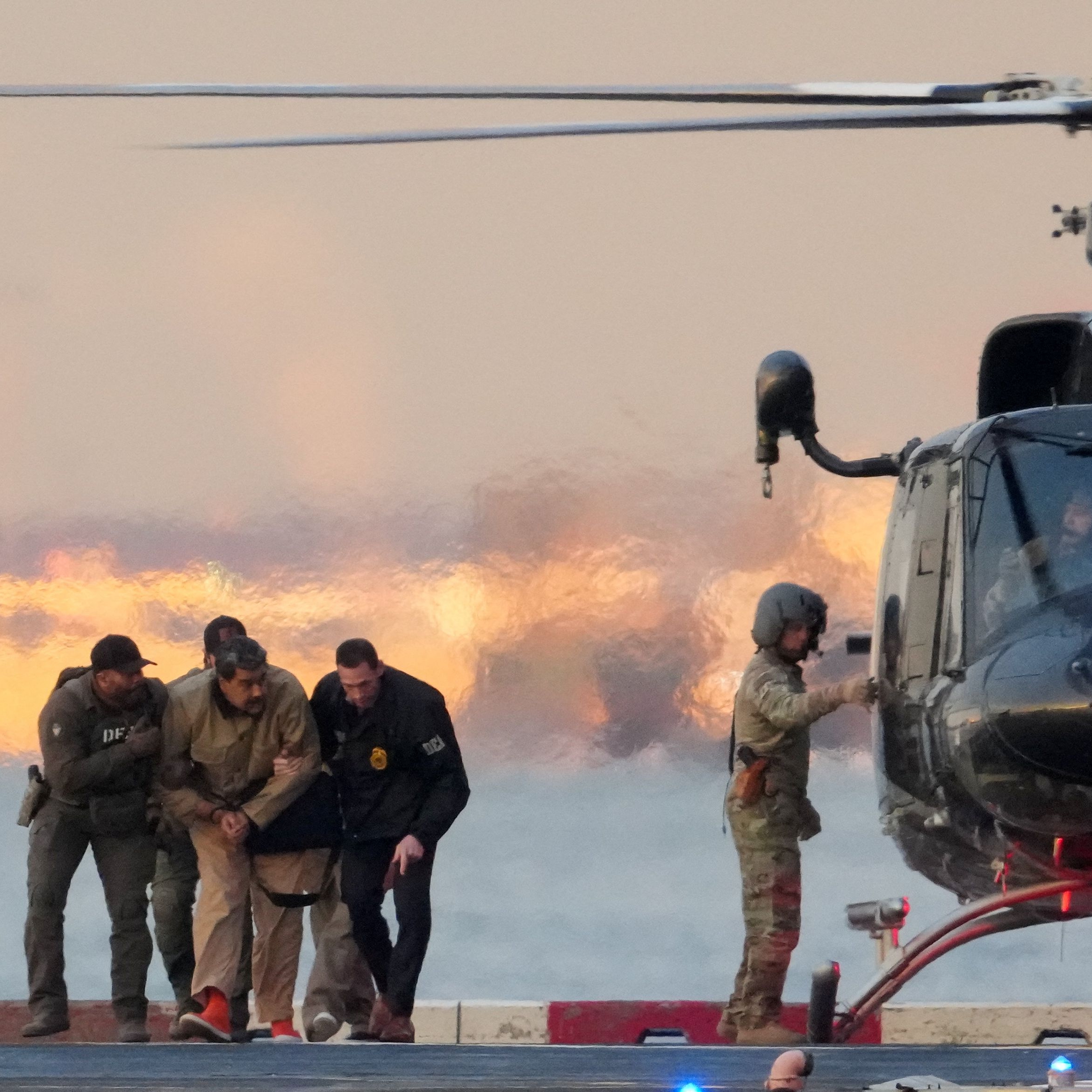
Post Reports
With Maduro gone, what's Venezuela's future?
00:31:12
After Nicolás Maduro’s capture, Venezuela’s future – and Washington’s role in it.
Loading summary
Transcript51 lines
- [00:03]
A
Just after noon today, the former president of Venezuela appeared in U.S. district Court in Lower Manhattan. He had shackles around his ankles. He was wearing headphones to translate the proceedings. Nicolas Maduro and his wife, Celia Flores, were there to hear the formal reading of the charges against them, charges that they profited from trafficking drugs to the United States. Through an interpreter, Maduro and his wife both pleaded not guilty. They declined to request being released on bail for now. And Maduro took the opportunity in front of the judge to speak publicly about his capture in Venezuela on Saturday. He called himself kidnapped. I am innocent, he said. I am not guilty. I am a decent man. Here in the US The Trump administration is facing intense criticism over Maduro's capture. There are questions about why Congress was never notified about the operation and whether the arrest was even legal. And in Venezuela, Maduro's capture has brought up complicated feelings. He did have loyal followers, people who believed that he stood up to US Imperialism. But he also left a legacy of repression, violence and political imprisonment for the.
- [01:24]
B
Majority of the people who voted against him in the many elections and those millions who fled and openly talk about him and what he means to them abroad. I think Maduro's legacy is going to be a very dark one.
- [01:46]
A
My colleague, Ana Vanessa Herrero is based in Venezuela, and she was in Caracas as the news spread that Maduro had been arrested and taken to the U.S.
- [01:56]
B
I saw people, families hugging and crying. I remember one of the people that I saw said, wait, it's just the beginning. It's just, we need to wait. It's just the beginning.
- [02:14]
A
As Anna walked through the streets and talked to people, she recalled overhearing a conversation that someone was having on their phone.
- [02:22]
B
And they were. I assumed the other person was also crying, but they were crying together and they were. It's over. They were saying, it's over. I can't believe it's over. Finally, it's over. So it wasn't like a joyful, you know, explosion. It was more like a shock and a moment of relief and finally letting it out, whatever they were feeling.
- [02:50]
A
From the newsroom of the Washington Post, this is Post Reports. I'm Martine powers. It's Monday, January 5th. Here's a recap of what we know happened in Venezuela on Saturday. Very early that morning, a team of highly trained Delta Force troops arrived in Caracas by helicopter. They descended into the compound where Maduro and his wife were sleeping. The couple scrambled out of bed to get to a safe room behind steel doors, but they weren't fast enough to barricade themselves before they were seized by US Troops. No Americans were killed in the operation, though at least 40 people were killed by US forces during the attack on the compound and the surrounding airstrikes in the capital. Now, as Maduro's legal future hangs in the balance, we want to step back and understand how this huge moment is playing out inside Venezuela. We'll hear more from our colleague Ana later in the show. But first we called up White House reporter Michael Birnbaum. He's going to explain the political ramifications of President Trump's decision to arrest Maduro and whether this power vacuum will help or hurt regular Venezuelans. Michael, hello. Thank you for being here.
- [04:07]
C
Hi, Martine. Thank you so much for having me.
- [04:09]
A
Happy New Year.
- [04:10]
C
Happy New Year.
- [04:11]
A
So, Michael, with Maduro now out in New York under arrest, who is in charge of Venezuela right now?
- [04:20]
C
So the person who was Maduro's vice president, Delsey Rodriguez, who has been a Maduro loyalist, but also seen as more willing to negotiate with Washington and potentially be a somewhat Washington friendly partner. She is now the president, and so she's in charge of the country.
- [04:41]
A
And what does it mean that she is more willing to negotiate with Washington? Like, what are the signals of what she's willing to offer up or ways that she's willing to kind of acquiesce to what Trump wants here?
- [04:54]
C
So we're getting some conflicting messages. I mean, on Saturday, as Trump and Secretary of State Marco Rubio and his top aides were announcing the raid and the capture of Maduro, they said that Rodriguez had already been sworn in as the president and, and that Rubio had had a few good conversations with her.
- [05:14]
D
She had a long conversation with Marco, and she said, we'll do whatever you need. I think she was quite gracious, but she really doesn't have a choice.
- [05:25]
C
And they expected and hoped that she was going to do what they wanted in terms of getting US Oil interests back into Venezuela's oil fields and a bunch of other things. Rodriguez herself has been saying that Maduro was illegally arrested, that this was an invasion of Venezuela, and that he is the rightful president of Venezuela. And at the same time, yesterday she came out with a statement that seemed somewhat more conciliatory. This is someone who is a technocrat. She has been for years very much a Maduro loyalist, but at the same time has been involved in running the economy. The Venezuelan economy is not great. But even some Americans who have been quite anti Maduro have some grudging respect for her ability to have kept the economy going as well, as it has been given the crush of sanctions against Venezuela and the Venezuelan leadership.
- [06:32]
A
And what has Trump said about whether he sees Vice President Rodriguez as who he envisioned as at least the nominal head of state of the country going forward?
- [06:43]
C
Well, this is part of a broader and fascinating element of what's going on here. There is the acting President Del C. Rodriguez, but there is this whole alternative, and that is Maria Corina Machado, who won last year's Nobel Peace Prize and her party won the the 2024 elections in Venezuela. Although Maduro claimed victory in that election, it gets a little complicated. Machado has been living in hiding and seems now currently to be outside the country. But she was barred from running in that election. There was a stand in candidate, Edmundo Gonzalez, who was the actual person who ran the 2024 election. But he was seen really as a proxy for Machado herself. She's been very interested in being the alternative leader of Venezuela. She's taken some very pro US Stances. She's promised that the US Oil industry could have easy access. And she's also generally been actually quite pro Trump in her rhetoric. And at the same time, Trump on Saturday was very dismissive of her. He said she was a very nice woman, but that she lacks the support and respect of the Venezuelan people to actually lead the country. So that is not the person whom Trump is looking toward at this point. And so, you know, he's not talking about a democratic restoration or a democratic correction to what's been going on in Venezuela. As far as we can tell. If you sort of piece together the elements of what US Leadership is saying, their hope is for Rodriguez, Maduro's deputy, to continue running the country for some indefinite period of time, but fundamentally to keep Maduro's regime in place. They just want her to listen to US Direction, and they seem to expect that she's going to do that. They're also threatening that if she doesn't do that, there will be more military consequences. They could intervene again, there could be US Boots on the ground again. But they're not talking about restoring the democratic will of the Venezuelan people. They're just talking about finding Venezuelan leaders who will be open to what the US Wants them to do.
- [09:20]
A
This I find really fascinating and I'm hoping you can explain, like, why is that you have this figure in Maria Corina Machado, who's this, like, darling of the international community. There's been a lot of international pressure over the last year or so to get Maduro to step down, for her party to be in place. So why isn't Trump, like, invested in carrying that out? Why do they just want to keep Maduro's party in place rather than going with this opposition?
- [09:51]
C
Well, if you look at the national security strategy, which is this kind of highly formal document that was put out in December by the White House, that kind of encapsulates to the extent that there's a ruling philosophy of Trump's foreign policy, it's in there. There's very little mention of democracy and upholding democratic principles. It's a departure from past practice of U.S. presidents of both parties. He's just not focused on that. He's much more interested in obtaining U.S. leverage, advancing U.S. interests with whatever foreign partner, whether they're democratic or not democratic. The other potential element here is that it would be a lot more complicated to do full regime change. I mean, having Maduro's deputy as the new president isn't really changing the regime. It's keeping the regime in place. And so if you're going in, you're essentially, you know, raiding and extracting the current leader of Venezuela, and then you're putting in someone who is not of the current government but is an opposition figure, you end up with questions. What is the loyalty of the military? What is the loyalty of other elements of the Venezuelan government? What's even the loyalty of the Venezuelan people? It's much messier and potentially runs the risk that the United States could get pulled more deeply into something that could look like a civil war, it could look like a more like a failed state. So it, in some ways is cleaner from kind of passionless US Perspective, just to have a more pliant person, even if she's not been elected by the Venezuelan people.
- [11:51]
A
But. But this is where it feels like we're getting some mixed messages. As you say, it seems like the US Is not interested in regime change or trying to, like, institute real democracy in Venezuela. And yet we're hearing Trump saying that, that the US Is going to, quote, run Venezuela in the short term and that there are some suggestions that, like, the U.S. officials will be in control. What does that look like? Who. What are we hearing about how invol US Is going to be in Venezuela going forward? And who is going to be that point person who's, I don't know, now running the country?
- [12:29]
C
Well, Martine, you are looking for what I think is a coherent set of plans that I'm not sure really exists. But, you know, I will say there were a lot of people who were surprised. I was surprised to hear President Trump talking about running Venezuela, as he did on Saturday.
- [12:49]
D
We don't want to be involved with having somebody else get in. And we have the same situation that we had for the last long period of years. So we are going to run the country until such time as we can do a safe, proper, and judicious transition.
- [13:07]
C
A reporter asked him, what about boots on the ground?
- [13:11]
D
Well, you know, they always say boots on the ground. Oh, so we're not afraid of boots on the ground if we have to have we had boots on the ground last night.
- [13:17]
C
But in reality, what seems to be shaking out is that they're not talking about a direct occupation power, which is something that the United States has done. It did in Iraq in 2003 after deposing Iraq's leader, Saddam Hussein. There was basically an occupation force and an occupation government that was run by Americans. That's not the vision here. It seems as though the United States is hoping to avoid significant US Military presence if possible. What they mean by running the country is kind of dictating terms to the existing Venezuelan government and that President Rodriguez and, you know, their hope is that she will do as they say, their hope is that fundamentally she will open Venezuelan oil fields to U.S. oil companies. That seems to be a big, big focus on the part of the Trump administration, and they're going to try that. And if she doesn't go along with it, then they'll come up with a different plan. But that's what seems to be meant by running Venezuela.
- [14:31]
A
Michael, I'm glad you brought up oil, because it does seem like a significant part of the motivation or thinking here has to do with Venezuelan oil reserves. So you said that the US Is planning to put pressure on President Rodriguez to Venezuelan oil fields to US Companies. What does that mean? Or what will that look like? I mean, next month, are we going to start getting gas in our gas stations that came from Venezuela that up until now has been off limits to us.
- [15:05]
C
So that's not going to happen next month. I mean, so Venezuela has one of the biggest oil reserves in the world. It has tremendous oil wealth and resources. But Maduro and his predecessor, Hugo Chavez, who was in power since 1999, you know, they have progressively taken over the Venezuelan oil industry. They pushed out US Oil companies, all but Chevron. And over time, the Venezuelan oil industry has been very badly mismanaged. So their oil production is just a fraction of what it could be. So it's true, you know, there could be a tremendous amount of oil coming out of Venezuela at the same time. This is a long term project. You know, this is something that's going to take years to get the oil fields back up and running, to put in place new infrastructure to renovate it, to revive the oil refineries that are equipped to deal with the Venezuelan crude oil, which is quite heavy, sludgy. It's kind of complicated to refine it to a point where it's usable. This is a very long term project. Trump is talking about what sounds to me like what's in his head is a shorter term effort. This is not going to happen while Trump is president.
- [16:33]
A
All right, we'll take a pause there. Then after the break, we'll hear more of the reactions to Maduro's arrest, both in Venezuela and and here in the US we'll be right back.
- [16:54]
E
Are you thinking of starting the year with a wardrobe refresh? If so, Quince has you covered with luxe essentials that feel effortless and look polished. They're perfect for layering, mixing and building a wardrobe that lasts. Their versatile styles make it easy to reach for them day after day. Quint's has all the staples covered from soft Mongolian cashmere sweaters that feel like designer pieces without the markup, to 100% silk tops and skirts for easy dressing up to perfectly cut denim for everyday wear. Their wardrobe essentials are crafted to last season after season. And like everything from Quins, each piece is made with premium materials in ethical, trusted factories, then priced far below what other luxury brands charge. You know by now how much I love my cashmere sweater. And also that I was planning to give it as a gift to all my friends for the holidays. Well, for the first time in I don't know how long, I got rave reviews for my gifts this year, all thanks to Quinn's. The words they all kept repeating, so soft. Refresh your wardrobe with Quinn's. Don't wait. Go to quinze.com reports for free shipping on your order and 365 day returns. Now available in Canada too. That's Q U I N-E.com reports to get free shipping and 365 day returns. Quince.com reports.
- [18:10]
F
Think about why you listen to podcasts. It's like having a friend who makes you think or can help you wind down right? Well, the Washington Post has a lot of people you can turn to at any hour. You can read the most important and interesting stories. We can help you cook something delicious, give you advice on a tricky friendship. Rave about a movie or book that you shouldn't miss when you become a Washington Post subscriber. Do you have a companion for whatever part of your day needs it most? Get it all for just $4 every four weeks. That's for an entire year. After that, it's just $12 every four weeks. Cancel anytime. Go to washingtonpost.com subscribe. That's washingtonpost.com subscribe.
- [18:56]
A
So, Michael, before we jump back into our conversation, I want to play some tape from our colleague Anne Caracas, Anna Vanessa Herrera. She has been talking to people who were affected by the airstrikes on the Capitol and who had some pretty serious questions about whether the US Government is going to take responsibility for what happened to them. So let's listen to a little bit of what she had to say.
- [19:21]
B
What we're seeing is neighbors and the owners of those places sweeping away whatever the bombs left behind. It is incredible because we're not seeing, for example, the military helping the civilians in this mass devastation. I visited one of the houses today, and the house was absolutely destroyed. I mean, it's still standing, but no windows, no doors. And the owner was there sleeping. And she survived. She said it was a miracle. And she said, I think she was asking the government of the United States to help her rebuild the house. She said it was up to that government because they dropped the bombs and that she needed the help. And she was asking for help. And she needed to now rebuild an entire house without any money because who is ready to rebuild their house after a bombing of the US to take a president, to take Nicolas Maduro away and capture him? So no one is ready for that.
- [20:27]
A
So from what we just heard, this is clearly a very tense time for Venezuelans who are wondering what is going to happen to them. You know, obviously there's some hope about Maduro being out of power, but also fears about what happens if the US doesn't help them. And I do think that this is a moment where it bears emphasizing how tough things have been in Venezuela for such a long time. I mean, the situation in Venezuela is so critical. There's severe food insecurity, lack of health care, a humanitarian cris. I mean, as Anna had said earlier in this episode, millions of people have fled the country. So I guess, Michael, from your vantage point, what are you seeing about whether people think that Maduro's arrest and ouster as leader of this country is going to be a good or bad thing for the Venezuelan people?
- [21:25]
C
Well, so as you said, this is a really complicated moment. Maduro has not run the Venezuelan economy well. He has governed with intense repression. He seems to have lost the 2024 election. You know, there are a lot of people inside Venezuela and outside Venezuela who are happy for him no longer to be Venezuela's leader. This is a country, as we were talking about, that has a lot of resources. It not that long ago, within living memory, it was relatively wealthy, middle class country. And at the same time, there is a kind of shocked response and a lot of opposition to how Maduro was ousted. From the perspective of, I think, a lot of Venezuelan citizens and a lot of international leaders, it's a pretty dangerous precedent to just have one country go in in the middle of the night, essentially kidnap the leader of a country and extract them and stick them in a jail in another country. And that's a pretty messy precedent. It's hard to draw the line. Next time the United States says Russia, please don't invade Ukraine and try to depose the president there, or China, don't take over Taiwan.
- [22:57]
A
Like, what ground does the US have to stand on now?
- [23:00]
C
Yeah, you know, it's going to be kind of tricky because those countries are going to be able to say, well, look at what you just did in Venezuela. So despite, I think a lot of people feeling as though Maduro was not a good actor or good for the people of Venezuela, there's also unhappiness and concern with what just happened.
- [23:23]
A
I want to talk more about that reaction here in the US to what Trump did, both Maduro's arrest and also this question of whether, whether or not it was legal, what precedent it sets. What has the Trump administration's response been to these criticisms that, okay, you know, maybe there might be agreement that Maduro had problems, but that this wasn't the way to deal with that problem.
- [23:47]
C
There have been a couple of justifications from the Trump administration. I mean, a big criticism inside the United States, inside Washington, from congressional Democrats in particular, has been that Trump made no notification, sought no permission from Congress for what the Democrats say was an act of war. Hakeem Jeffries, who is the Democratic leader in the House of representatives, told NBC's Meet the Press, this was a military action involving Delta Force, involving the army, apparently involving thousands of troops, involving at least 150 military aircraft, perhaps involving dozens of ships off the coast of Venezuela and South America. So, of course, this was the military action. And pursuant to the Constitution, only Congress has the power to declare war, to authorize acts that take place in this regard. The Trump administration is saying, well, look, this wasn't an act of war. This is a police action. We're enforcing our laws. You know, he was breaking drug laws, he was doing other things. And fundamentally, you know, we're gonna put him on trial or stuck him in jail. This is just law enforcement. You know, also, they're just kind of saying, everything's gonna work out in the end. We're gonna be fine. This is gonna be good for the United States and U.S. interests. This has been a bad actor. You know, they say that he's been involved in drug trafficking into the United States. In reality, the flow of drugs from Venezuela, while significant, mostly goes to Europe. They also say from an immigration perspective, this is a country that a lot of people have been fleeing Venezuela to the United States. This is going to be a way to stop that flow and potentially return Venezuelan asylees in the United States back to Venezuela. You know, there's a ticker list of explanations why, you know, they say this was justified and also why it's going to be good for the United States and therefore, you know, just deal with it.
- [26:00]
A
I've also found it pretty fascinating to see some of the reactions from voters from regular Americans and specifically from people who support Trump and who voted for Trump in terms of how they are seeing this moment. We heard from our colleague David Ovalle, who's in South Florida right now, and he talked to members of the Venezuelan American community there, many of whom were really excited about this. One example is this woman he spoke with, Leomar Nunez. This very, very exciting, excited, incredible, incredible.
- [26:41]
C
What did you think when you heard the news?
- [26:47]
A
Only I once said, thank you, Trump. Thank you. And yet also, this is a president who campaigned on the idea of America first, that other countries problems are not our problems, and that we need to be more focused on what's happening within this country. And this latest action seems to be out of step with America first. So what is your sense of kind of how Americans are seeing this and specifically how Republicans are seeing this moment?
- [27:17]
C
There are pretty mixed reactions among Trump's base. You know, I think it's generally favorable. I think we're going to. A lot is going to depend on how things go in the coming days, weeks and months. It is extraordinary. I mean, Trump is. This is a president who campaigned, who came to power in 2016 in part because of a really strong message about anti interventionism. He was extremely opposed to the war in Iraq. He criticized former President George W. Bush for that war. And he was running against Hillary Clinton, who as a senator from New York, supported the war in Iraq in 2003 before eventually flipping on it. And this has been core to his identity for a long time. At the same time, his supporters say, look, this is something that is not a full blown war. It's not a full blown invasion. Trump has talked certainly pulling back American military commitments from around the world, especially from Europe. And at the same time, he has also shown himself very willing to engage in kind of big, one time dramatic military actions. So, you know, over the summer, In June of 2025, he launched major strikes against the Iranian nuclear program. Back in 2020, he struck against a very prominent Iranian general. There have been kind of big one time strikes around the world that, you know, he kind of likes the boom, get in, get out drama flare. And so if that is what this is, then he could probably get away with it with his base. But at the same time, someone like Marjorie Taylor Greene, who is in the process of retiring from Congress, but has been a very strong Trump backer until she broke with him late last year, she was on the Sunday shows yesterday, she was on Meet the Press, criticizing him intensely, saying, this is not what Trump's been. Voters thought they were getting when they voted for him in 2024. They wanted America first, the 50 states of America, not South America.
- [29:44]
A
This is the same Washington playbook that we are so sick and tired of that doesn't serve the American people, but actually serves the big corporations, the banks and the oil executives. And so my pushback here is on the Trump administration that campaigned on Make America Great Again, that we thought was putting America first. I want to see domestic policy be the priority.
- [30:10]
C
She was saying this is an action that's going to benefit US Oil companies, but not ordinary Americans, and that this is really a problem.
- [30:19]
A
So, Michael, what is next in all of this? And how soon are we going to get that picture of whether this really is that, as you said, boom, get in, get out, like kind of quick military action, or this is the start of a more extended and expansive US Involvement in Venezuela.
- [30:38]
C
I think that we're going to have a better sense in the coming weeks of what the acting President, Del C. Rodriguez, does, whether the United States government pushes for new elections in Venezuela. You know how willing Rodriguez is to go along with what the Americans are asking her to do. The streets of Caracas seem actually kind of relatively stable for now. But, you know, history has shown anytime you go and you depose a leader of a country, it unleashes so many unpredictable consequences. And, you know, I remember back to when Libyan leader Muammar Gaddafi was deposed in 2011. You think back to Saddam Hussein in Iraq in 2003, these are leaders who are extremely repressive, whom the international community does not particularly like. And in the short term, a lot of people were happy to see those leaders go. And the subsequent history of Libya has been catastrophic for Libyans. It's essentially devolved into a long term civil war. Iraq has been a very unhappy history. And, you know, Venezuela is not necessarily going to be the same way. This is a smaller scale action and, you know, we're not in a war yet. But things can be really unpredictable and the United States could well get sucked into something that President Trump did not anticipate and did not want when he raided Maduro's compound over the weekend and took him to New York.
- [32:27]
A
Michael, thank you so much for talking with me.
- [32:29]
C
Thanks for having me, Martine.
- [32:33]
A
Michael Birnbaum is a White House reporter for the Post. That's it for Post Reports. Thanks for listening. Today's show was produced by Emma Talkoff with help from Rennie Srinavski and Rena Flores. It was edited by Ariel Plotnick and mixed by Sean Carter. Thanks also to Anna Ashbrenner. If you love Post reports, please help other people discover it by leaving a rating on Spotify or a rating and review on Apple Podcasts. It helps other people find and enjoy this show. I'm Martine Powers. We'll be back tomorrow with more stories from the Washington Post.
- [33:16]
F
Think about why you listen to podcasts. It's like having a friend who makes you think or can help you wind down right? Well, the Washington Post has a lot of people you can turn to at any hour. You can read the most important and interesting stories. We can help you cook something delicious, give you advice on a tricky friendship. Rave about a movie or book that you shouldn't miss. When you become a Washington Post subscriber, you have a companion for whatever part of your day needs it most. Get it all for just $4 every four weeks. That's for an entire year. After that, it's just $12 every four weeks. Cancel anytime. Go to washingtonpost.com subscribe that's washingtonpost.com subscribe.