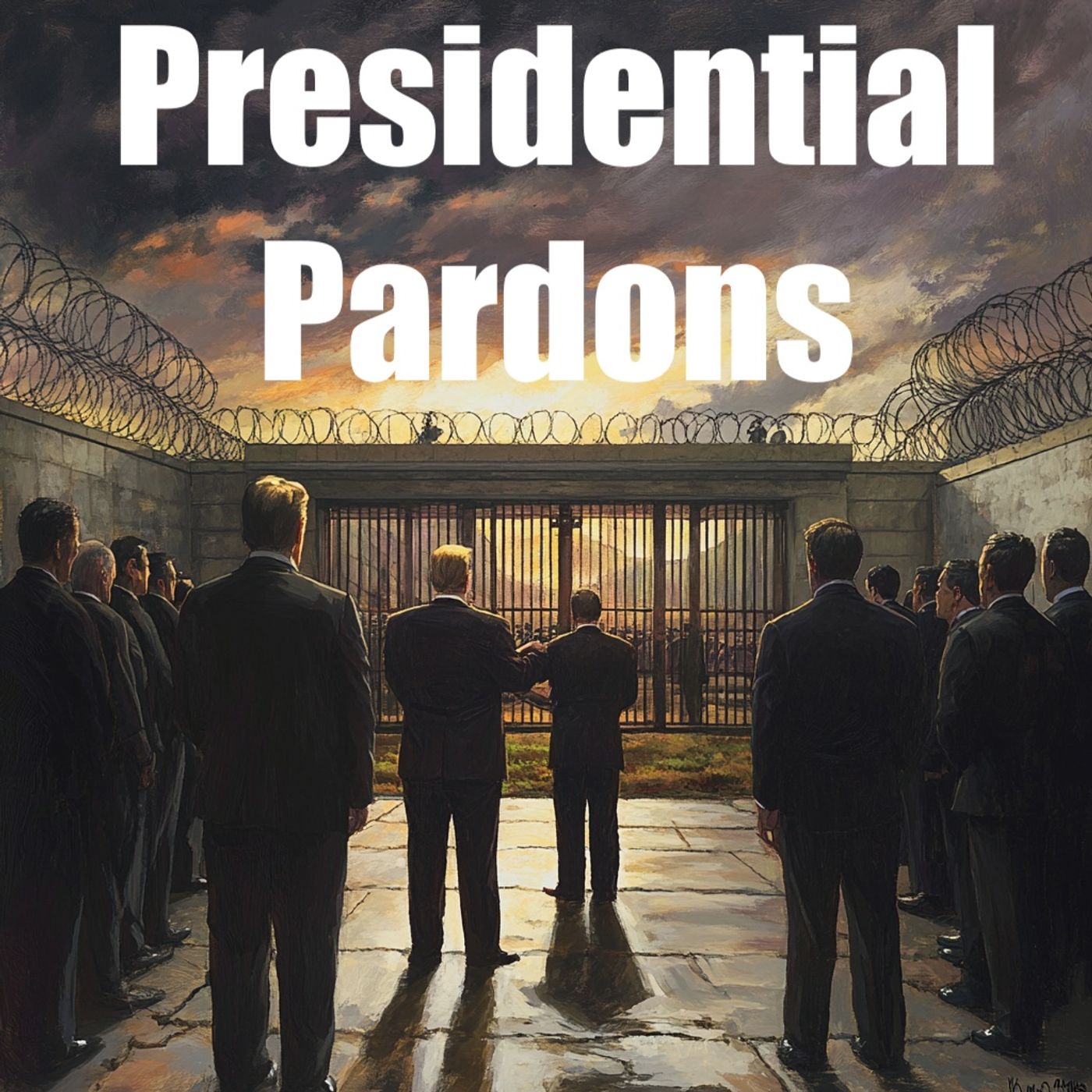
Presidential Pardons
Dec 2, 2024·00:19:02·Tap to summarize
The presidential pardon is one of the most extraordinary powers granted to a head of state. In the United States, it is an exclusive authority bestowed upon the president, enshrined in the Constitution under Article II, Section 2. This power allows the president to offer clemency for federal crimes, a mechanism intended to temper justice with mercy and provide a pathway for forgiveness or reconciliation in the legal system. However, its application has not been without controversy. Over the course of American history, this singular privilege has been used to promote healing during national crises, correct perceived judicial overreach, and, in some instances, raise profound ethical and political concerns. The pardon power traces its roots to English common law, where monarchs exercised clemency as an expression of divine right. In drafting the Constitution, the framers adapted this practice, granting the president a limited version of this authority. Alexander Hamilton, in Federalist No. 74, argued for its inclusion, asserting that “in seasons of insurrection or rebellion, there are often critical moments when a well-timed offer of pardon…may restore the tranquility of the commonwealth.” Hamilton envisioned the pardon as a practical tool for governance, capable of resolving crises and mitigating the harshness of law in exceptional circumstances. From its first use by George Washington to quell the Whiskey Rebellion to Joe Biden’s recent pardon of his son Hunter Biden in 2024, this power has shaped the course of American politics and legal precedent. Presidents have used clemency to address complex issues, such as postwar reconciliation, political dissent, and systemic injustices. Yet, with great power comes great scrutiny. Decisions to pardon have frequently sparked heated debates, raising questions about fairness, accountability, and the potential for abuse. Perhaps the most compelling aspect of the presidential pardon is its duality. On one hand, it serves as an instrument of compassion, offering individuals a chance for redemption. On the other, it is a stark reminder of the concentration of power in the executive branch, capable of overriding the judiciary and unsettling the balance of democracy. Controversial pardons, such as Gerald Ford’s clemency for Richard Nixon after Watergate or Donald Trump’s pardons for political allies, illustrate the profound implications of this power when wielded in divisive contexts. The history of the presidential pardon is a story of both idealism and pragmatism, of justice tempered by mercy, and of power exercised in ways that reflect the character of those who hold it. This series will explore the evolution of this unique authority, tracing its origins, its most pivotal moments, and its ongoing significance in American governance. The narrative culminates with the unprecedented pardon of Hunter Biden, offering a timely lens through which to examine the enduring questions surrounding clemency: When is it justified? Who decides? And what does it reveal about the nature of leadership and justice? The origins of the presidential pardon power lie in the English tradition of royal clemency, a prerogative of the monarchy dating back centuries. In England, kings and queens exercised the right to pardon subjects for crimes against the crown, often as a demonstration of their divine authority or as a tool for maintaining social order. This power was central to the idea that the sovereign could temper justice with mercy, balancing the rigidity of the law with the humanity of the ruler. The framers of the U.S. Constitution drew heavily from this tradition but adapted it to fit the emerging republic’s values and structure. During the Constitutional Convention in 1787, the pardon power was a subject of considerable debate. Proponents, like Alexander Hamilton, argued that clemency was essential for a functional and compassionate justice system. In Federalist No. 74, Hamilton contended that the power to pardon must reside in a single executive to ensure swift and decisive action. He pointed to times of rebellion or insurrection when offering clemency could prevent further unrest, restore order, and bring about reconciliation. Hamilton envisioned the pardon as a tool for exceptional circumstances, a failsafe against overly punitive applications of the law. Opponents of the pardon power raised concerns about its potential for abuse. Delegates like George Mason warned that an unscrupulous president might use clemency to protect cronies or cover up wrongdoing, undermining the justice system and eroding public trust. Mason’s fears were grounded in historical abuses by English monarchs, who had occasionally used pardons to reward loyalty or escape accountability. Despite these concerns, the framers ultimately adopted a broad pardon power, believing that the benefits of clemency outweighed the risks. The first presidential pardon was issued by George Washington in 1795 to participants in the Whiskey Rebellion, a tax revolt in western Pennsylvania. Washington’s decision to pardon the insurgents was both strategic and symbolic. By offering clemency, he aimed to demonstrate the federal government’s strength while also showing compassion toward citizens who had been misled. This act set an important precedent: the pardon could serve as a tool for national healing, particularly during periods of domestic strife. John Adams followed Washington’s lead with his own controversial pardons under the Alien and Sedition Acts. These laws, which criminalized criticism of the government, were seen by many as an infringement on free speech. Adams’s clemency for individuals convicted under these acts highlighted the intersection of pardons with political dissent and underscored the power’s potential to be used in highly charged contexts. The early uses of the pardon power established its flexibility and far-reaching implications. Presidents could wield clemency to address not only individual cases of injustice but also broader societal issues. However, these actions also revealed the inherent tension between mercy and justice, a theme that would recur throughout American history. The pardon power, as the framers intended, was an extraordinary tool—one that could bring about reconciliation and temper the rigidity of the law, but also one that required careful stewardship to avoid abuse. As the nation grew and faced new challenges, the role of the pardon evolved, reflecting the changing priorities and values of its leaders. From its origins in debates about sovereignty and governance to its first applications in a fledgling democracy, the pardon power became a defining feature of the American presidency—a symbol of both its potential and its pitfalls. The 19th century was a transformative period for the United States, marked by dramatic expansions of territory, internal conflicts, and the eventual tearing apart of the nation during the Civil War. Throughout this turbulent time, the presidential pardon became a powerful tool for addressing the challenges of governance, promoting reconciliation, and influencing the nation’s evolving identity. Presidents of this era used clemency to foster unity, mitigate the harshness of law, and attempt to heal the scars of rebellion and war. One of the most significant uses of the pardon in the 19th century came during the Civil War and its aftermath. Abraham Lincoln, known for his capacity for compassion, wielded the pardon power with a sense of moral and political responsibility. Lincoln believed that forgiveness was essential for national healing and was especially committed to sparing lives where he saw room for redemption. During the war, he pardoned numerous deserters from the Union Army, recognizing that many were young, frightened, and ill-prepared for the horrors of combat. These pardons served not only as acts of mercy but also as strategic decisions aimed at maintaining morale and avoiding further losses. Lincoln’s use of clemency extended to one of the most controversial episodes of his presidency: the U.S.-Dakota War of 1862. Following the conflict in Minnesota, military courts sentenced 303 Dakota men to death for alleged crimes against settlers. Faced with intense pressure from local leaders and citizens demanding retribution, Lincoln personally reviewed the cases, ultimately commuting the sentences of all but 38. While his decision did not entirely appease public outrage, it demonstrated his belief in the importance of fairness and measured judgment, even in the face of widespread hostility. After Lincoln’s assassination in 1865, his successor, Andrew Johnson, employed the pardon power on a far broader and more contentious scale. Johnson’s clemency extended to thousands of former Confederate officials, military leaders, and wealthy landowners, restoring their political and civil rights. These sweeping amnesties were part of Johnson’s lenient approach to Reconstruction, which sought to reintegrate the Southern states into the Union with minimal penalties. However, Johnson’s actions drew sharp criticism from Radical Republicans in Congress, who viewed his pardons as undermining efforts to secure justice and equality for freed African Americans. Johnson’s mass pardons became a flashpoint in the struggle over Reconstruction policy. By granting clemency to individuals who had been instrumental in the Confederacy, Johnson enabled many to reclaim positions of power in Southern society, effectively restoring the pre-war racial and economic hierarchy. Critics argued that this use of the pardon power betrayed the sacrifices made during the Civil War and jeopardized the progress toward civil rights and equality. Johnson’s actions underscored the potential for clemency to conflict with broader societal goals, a tension that would resurface throughout American history. Beyond the Civil War, the 19th century saw other notable uses of the pardon. Ulysses S. Grant issued clemency