Loading summary
Transcript60 lines
- [00:00]
Nick Franklin
The expectation of SaaS companies that people are going to expect more value, more functionality for less money.
- [00:06]
Esben
This new era where businesses still do product led growth, but they expect kind of to see the value more instantly and maybe to see much more value very fast. Right.
- [00:17]
Nick Franklin
It's definitely been the most disruptive three years in SaaS history because I've been working SaaS here 17 years. Right? This three years has been crazy, but it's also now, I think, the most exciting time.
- [00:28]
Podcast Host
How are you thinking about building most magnets to really thrive in this AI era?
- [00:32]
Nick Franklin
The best thing you can do is make your customers happy consistently, year after year. We have customers that have been paying us for 11 years. They're obviously doing that for a reason, continuously, without a single break, paying monthly. So they could have canceled anytime over the past 11 years. What we're going to do is just make sure that we embrace AI to go faster as a business ourselves. And we're also going to incorporate AI in a big way into the product.
- [01:01]
Podcast Host
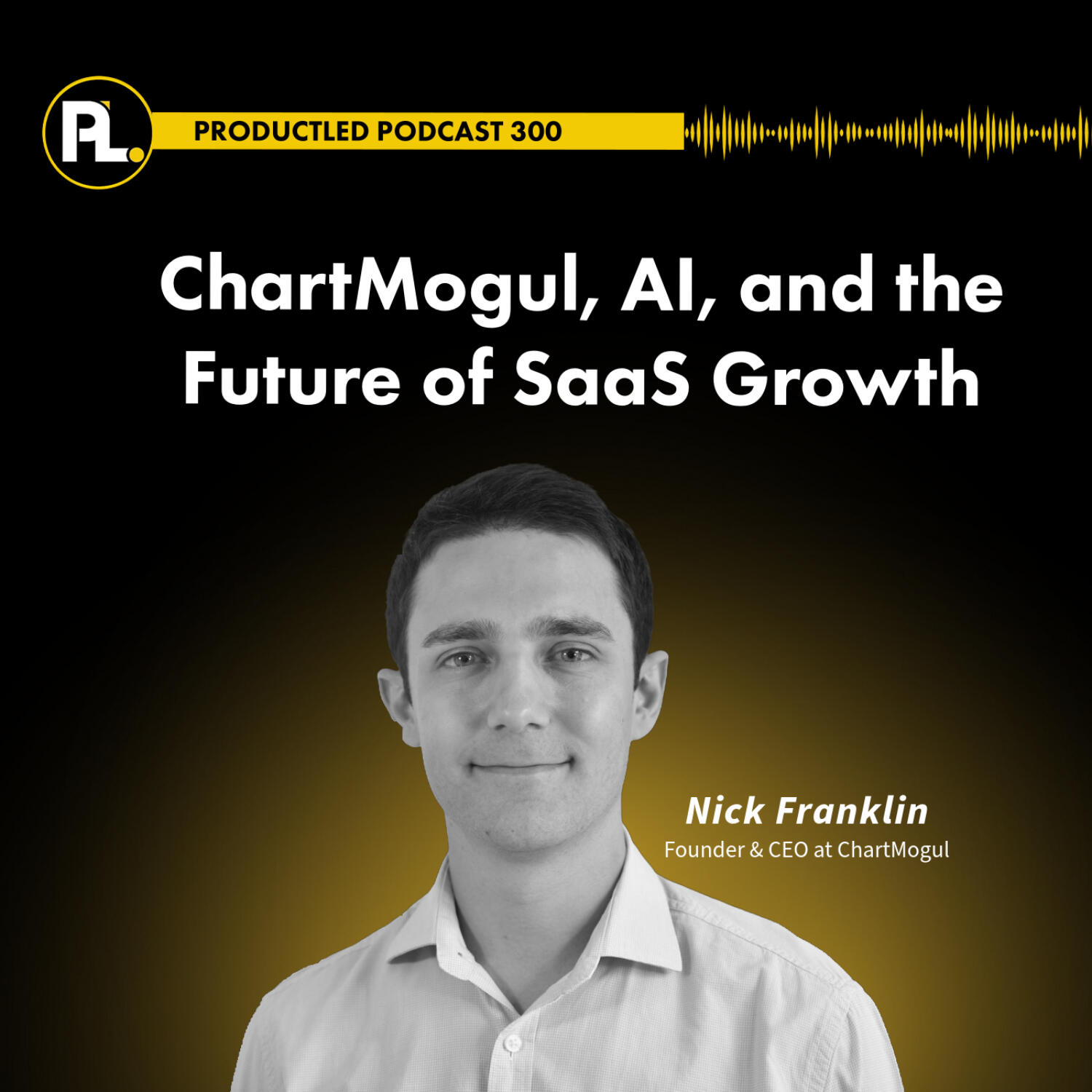
Welcome to the Product Led podcast with me. I have my co host, Esben, who's the entrepreneur in residence at Product Led and who has been the co founder at User Flow and Cobalt as well. And today's guest here is Nick Franklin, who is the founder and CEO of Chart Mogul. And so if you're looking for a subscription analytics platform, they are one of the best. They're trusted by 3,000 plus SaaS companies that use them to really just understand what the heck is going on in their business. So, so is great. And they have a fantastic product growth motion and a completely remote first team as well. And so what's interesting, and Esmen put this here in the notes too, is you have probably some of the best data on just what's going on in the SaaS space as well. But you don't seem to share much about how to actually grow these SaaS companies. So it's going to be really fun to just dive into this, that perspective too on this podcast, just hear like, what is your perspective on this? So you can really look under the hood. Okay, like across all those 3,000 plus SaaS companies, what is going on? What do you recommend doing and what are some of those common trends you're seeing as well? So Nick, it's fantastic to have you on the podcast. Thanks for coming on.
- [02:10]
Nick Franklin
Thank you so much. Yeah, excited to be here. Thanks for inviting me. And yeah, excited to get into some of these, some of these harder topics.
- [02:18]
Podcast Host
Yeah, definitely. And so I guess for the first one across like the 3,000 plus SaaS companies you have that are using Chartmogul, like what are the most common trends that you're seeing across maybe the last like six to 12 months that are maybe one interesting concerning like what, what do you typically see these days?
- [02:39]
Nick Franklin
Well, among our customer, like among our business, like I guess the big trend over the last 12 months has been like, you know, AI companies like to buy SaaS, right? So a lot of AI companies are getting started and they're buying SaaS products and surprisingly like we, we, we have limited support for usage based analytics. Today we're actually working on much more comprehensive support for like usage based analytics. But so the core of our, of our product is really around the SaaS metric, subscription analytics. You know these AI companies generally are, you know, sticking to standard subscription based pricing models. So that kind of surprised me. I thought we would have to really, you know, add usage based billing or like really advanced support for it just to have a chance of winning these AI companies. But I would say like one out of three or more, maybe like 40% of all new customers we've acquired over the last 12 months have been AI startups who really just are offering flat rate subscriptions or something similar to that, maybe with some overage component. So that's kind of interesting for us terms of trends general. I mean obviously the last few months it's, it's, it's all been about AI. So that's obviously the elephant in the room with SaaS. I don't know, I, I think SaaS has obviously been hit by the last three years by, it's been the hardest three years I think in SaaS history. Right. So I joined Zendesk in, in 2009, another Danish, awesome Danish company. And you know, it was really like you didn't need to be that, like I worked on the, on the, on the commercial side and in sales you didn't need to be that good at sales to like sales. It's almost sold itself. So you know, people were moving from on prem to sort of SaaS software and then I think, you know, it started to mature and mature and then it kind of went hyperbolic during COVID whenever anyone left over who hadn't bought, you know, migrated to SaaS suddenly needed to. Right. Because everyone had to work from home and so you know, all the companies that hadn't yet embraced it suddenly had to start buying it. And then Covid ended and then the, the, you know, the zero interest rate policy changed. Right, the interest rates and that. You know, I didn't obviously know about this, but that has a profound impact on the, the fortunes of SaaS companies and the amount of VC money going to SaaS companies. So that started right, like what, early 2013, like three years ago. And so we said that and that, you know, SaaS was recovering pretty well. And now we've got a lot of people saying that SAS is dead. I don't believe it. I don't think that's, that's the case. I think SAS is actually going to, well, the ones that take advantage of AI are going to do fantastic out of this. But you know, so it's, it's definitely been the most disruptive three years in SaaS history because I've been working SaaS here 17 years, right? So almost 17 years now. And this three years has been crazy. But it's also now, I think the most exciting time because, you know, with the increases in productivity, like for me I'm a, I'm a product guy, right. I like to design. Zendesk was like a five year, you know, excursion away from product, product design, away from doing product work. So when I got back to my startup I just deep in the, and, and for me the excitement comes from, you know, thinking or thinking, thinking through product problems, designing great products, product solutions to product problems. And so it's, it's always a frustration how long it takes and how little resources you have as a startup to like, you know, build and, and realize every idea or everything you have, you know, so you have to, you know, be super, super focused. And I think it's, it's so exciting now with you know, Claude Code Codex that, you know, it really accelerates the rate of innovation. And so I, I think it's a really, it's a, it's an amazing time to be a product, product focused founder in many ways. So I don't know that was, that was a lot of word salad.
- [06:27]
Podcast Host
No, no, but I mean it's definitely the reality. SaaS is getting disrupted in a lot of ways if you have a very traditional kind of approach to how you go through it. I know even some of the SaaS apps I'm using where you know, it's different industry versus like some of the ones where like in the development space they're just like going blazing fast. It's a crazy fast time to value. And then I'm using the product, I'm like, oh man, like this thing has like a million clicks to get to value and it's work. And the biggest difference I see from like PLG 1.0 to PLG 2.0 is like PLG 1.0. It used to be okay for users to do all the work and your tool to just be there. And it's like you take it like going to a restaurant. You get to the restaurant, they're like, great, welcome. Here's the kitchen, here's the tools you need. Good luck, make spaghetti for yourself or whatever you want. And then it's like what people want though is feel you 2.0, which is like, okay, I will do the majority of the work. You get to the restaurant, you get the meal pretty quick. And so it's just the expectations, I think are changing really quick. And if you're not adopting that, if you're not making your product like insanely easy to use, and then it's like, well, you know what, it's been a good run. And I think that part of PLG 1.0, it's slowly dying and. But it's like 2.0, it's, it's really
- [07:49]
Nick Franklin
accelerating, I think, I think AI, I mean, a lot of, a lot of the trends were already in place for basically like I remember saying to the team last year, before I think the AI coding reached the kind of was a huge tipping point in the industry, but before that, I remember saying the team last year, like, the expectation is now of SaaS companies that people are going to expect more value, more functionality, full, less money. Like that's the expectation, you know, as of, as of a year or two ago. And I think a lot of, a lot of SaaS companies, they had moved in, us included to becoming more than just like point solution or single feature products and started to become platforms, right? So like in the early days SaaS, it was just like so many products, so many apps for every single type of thing. And then it was like, actually what are the really high value use cases? And they started to become platforms. So we did the same thing. We launched a CRM like three years ago. We're still heavily investing into that. And a lot of, a lot of companies start to do that where they become like more and more platforms. Right. Stripe may be the ultimate example where it's, it's got so many things but, you know, HubSpot, et cetera, right? So that was already happening, which also kind of, you know, SaaS companies becoming platforms also by definition will eat other SaaS companies that are not right. And so there was a lot of like gravity into sort of ecosystems and then, then AI just dramatically accelerated that. People expecting tons of value for little, like low Low, Less money, right? Like less, less cost. So the, the, the writing's on the wall and the pressure's on. Like I think everybody who's working in SaaS, they should, if they're not, they're, they're in trouble. But it seems to be working, you know, as hard as they ever had. It's almost like the year when you, the first two, three years when I started chom, I was like crazy, crazy, you know, working until sort of 2, 3am waking up, working again, all that. So I think a lot of people are going back to this now because they're just like so a. That it's kind of exciting. You can just, you can kind of realize your vision much quicker. But it's also like there's a fear of being left behind, right? There's a fear of being out out innovated and out competed. I'm sure at some point we'll reach a, you know, maybe a healthier balance again. But for now, yeah, it's, it's, it's kind of exciting. It's the best of times. And also the, there's also, you know, I think the existential dread is, is, is just lit, lit a huge fire under a lot of SaaS people where they're just like, we have to up our game 10x to stay in the, to stay on the field, right? To stay in the game. So. And that's a help, that's a good thing.
- [10:12]
Esben
So Nick, how are you upping your game? Because you, you've been a winning SaaS solution for many years now and, and kind of staying, I think one of your modes, or you can say, is that you've been very focused on one ICP, which is SaaS or B2B SaaS to both your customer success and your assess yourself. How do you go about it? Because you, you said of course you're going multi product. I would love to dive deeper into that, of course, but what else are you doing to keep competing in this new AI era?
- [10:42]
Nick Franklin
A lot of things. So it's like yeah, multi product. The decision for that was made about four years ago or more and then we launched something three years ago. So we've been in that CRM market now for a while. But this is like a long term, long term game where you know, if you are a B2B subscription business, a B2B SaaS business, then you know, we're building the best CRM in the world for those type of businesses with the SaaS metrics and subscription analytics all built in. And there's loads of cool things you can do by having both in the same system, right? You can actually see how much MRR came out of that. You know, you see all the, all the emails and the cool logs and the notes and the opportunity history, deal history and then the MRR history as well. And like if they churn, did they upgrade? So there's loads of really interesting and cool things you can do with data that you know, just isn't possible if these are segment like different systems, right. You just don't have the context of what happens after the sale in the same way that chartmogul does if you're running a traditional CRM. So we think we can do some really interesting things in CRM and we're working on that hard. In terms of what we're doing with AI, of course there's a ton of things right internally you obviously have to embrace that and get your team leveraging it, right? It, be it the engineers, the product people, the marketing people, the salespeople, everyone needs to leverage AI. Everyone needs to be really good at AI and then they need to be able to decide, you know, on any given task where does it make sense to use it and, or not, right. And then there's a whole bunch of work around sort of automating certain things with AI, right? Like everybody's doing things like code review and things like that, right? With, with AI almost automatically, right. And you know, you open a pr, Claude comes in and starts from before, things like that. So there's all sorts of things internally. It's not particularly unique or interesting to chop, you know, thing about Chop mobile because every SaaS company is doing this. Us, we, we have, I guess over the last three years we, we launched a couple of two or three small things that AI related features like an enrichment feature. But now we're working on much more comprehensive like long term sort of platform strategy to make Chart Mogul. I don't, I don't want to throw around with like AI natal nonsense but it's, you know, it's more like, you know, what is. This is obviously a very powerful technology and there is loads of ways it can benefit Chart Mogul both on the analytics and data side and on the, on the CRM side. So we're working on a large sort of foundational part there and we already have internal, multiple internal POCs that we're refining and we'll be going live with this stuff later this year for making Charmogul more, more powerful because AI, I think, you know, one of the Interesting things that I think there's obviously like this, I'm sure you've seen this, the people talking about how, you know, everything's going to move up to the model that you know, people will type in to Claude or to OpenAI and to GPT, like give me some insights about my subscribers. Why is churn so high this, this quarter, this kind of thing and then. And that I think that's actually great for us because you're going to need really solid subscription analytics. And we're, we're working on really solid mcp. We have mcp, but we're, we're building like a sort of super jacked version I guess of RMCP with charmogul. We built like a ton of analytics functionality, right? A ton of it. Like a really complex stack and I feel like our users on a day to day basis just scratch the surface. Like it's quite cosmetic. They might go in and check something that might. You, you're a customer, has been for many years, so you might know, you go in and check something, you know, you might filter your metrics a little bit, but you only really do a deep analysis using all the features of charm. When it's really a high stakes decision, right? You want to change your, you want to do a pricing change, right? You want to change up your pricing. Maybe that's happens like once every couple of years or you know, you, you want to maybe you know, get rid of one of your plans or you want to enter some new market, some big high stakes decision, then it's worth kind of using all the tools of charm, using all the filters, all the segmentation tools, configuring everything, maybe downloading exports, loading it into Excel, you know, like doing extra stuff on top of, you know, merging it in with other data. So to actually get at a lot of the value we built, it's quite, you know, it's often takes a few steps, right. And so it's only worth it if you're doing, if it's a really high stakes decision. And I think with these models eventually they're maybe not perfect at it yet, but I think they will kind of help unlock the value that we've created because you'll just be able to, it's. It's a much better user experience in planning is why is my churn increasing? Like why is this new product or this new plan not performing as well as I would like, et cetera.
- [15:22]
Podcast Host
But just playing devil's advocate here too. Let's say like all the sources that you have on Like Terminal coast website, like Stripe Paddle, all those ones and some of the other pieces as well, let's say, okay, everybody eventually launches their own mcp. What's stopping somebody from just being like, okay, we have connected all of the mcps, all of the data infrastructure. Now we just prompt and ask whatever questions we have and find out what's going on in our business. And then they're like, actually, I want a daily briefing of what's going on in the business. And then I also want a weekly monthly overview of like, give me the whole swot on the business. I want to know what's going on here. And it's a little bit more adaptable. So do you feel like, with what's like where the, the world's head of thei and everything else like that, do you feel like having a, you know, tool like you have right now for subscription analytics is getting more like powerful and useful, or is it potentially becoming something where it's like, actually that is like a little bit more of a vulnerable position. We are in a market. What's your stance on that?
- [16:25]
Nick Franklin
If you ask ChatGPT or Claude Desktop, you know, why is my churn increased? Right? We can't control a hundred percent like what it's going to do, right? But let's just imagine it has NCP access to multiple products and it has direct access to the data warehouse, right? So then it's our competition in a way to basically provide less effort, better answers for less effort. And I think we can do that. Chart Mogul isn't just like, it does a whole bunch of things, right? It aggregates data from multiple billing systems into a kind of clean, normalized data layer. You actually build a data cleaning layer on top of it because no one has perfect data in their billing system. So you need a layer to clean it, right? You need to clean it and audit it. And then on top of that, we calculate a whole bunch of subscription metrics. And we also have a whole bunch of configuration about the right way to do that and the right way to think about that. And so there's a whole bunch of like, you know, we've been doing this for like 12 years, right? So we, there's a lot of sort of knowledge around the domain baked into the product. And then there's, you know, just to get to the, all these metrics and everything like that. And then, and on top of that there's a whole like segmentation and filtering, hundreds of filters. And each one has a lot of nuance around, you know, what's the best way to filter plans. And what about how to solve for, you know, currency fluctuation and how to solve for tons of different use cases, multi component subscription. Just like it's a complicated domain. And then on top of all of that we are building pretty advanced NCP with like hundreds of tools, right? That kind of describe, you know, depending on the type of question being asked, how would you use the available functionality, filters, APIs, et cetera. Available. I mean our, our thing is, you know, we think that it will just be a. You'll get a much better answer about your subscription business if you have CLAUDE or GPT connected to Chart Mogul via our MCP than you will if you just connect it to a data warehouse where you've pushed all your, you know, all your billing data or whatever. So that, that, that. But we'll see, I mean that, you know, we'll see that's what we're building on. That's what we're building towards is. And that will be our competition. Of course, you know, that will be our competition and we, we can, we have ability to push any data, any data layer out of chartmogul into the data warehouse. So you know, if using Snowflake or whatever we, we, you can push out the, the normalized aggregated layer, you can push out the data clean layer, you could pull out, push out the metrics before they've been filtered. So you know, you could also say, well maybe Claude takes that slice but doesn't use the full stack. If we do our jobs right, it'll just use the full stack and it'll go via our MCP and our tooling on top of our functionality. So I think that will produce the better results. But it's really hard often to know how intelligent these things are gonna get, how quickly. Right? It's, it's hard to know. So it's hard to always. But that, that's what we're, we're, we're aiming towards. And so yeah, who knows? I think the paranoid survive, right? So that's a very good. I mean we've obviously had that question asked of course, course. Like something that we ask.
- [19:29]
Podcast Host
Not trying to make you paranoid, Nick.
- [19:33]
Nick Franklin
We've been asking ourselves this for a while and building a strategy to stay relevant and you know, at the end of the day the customers will decide, right? Like if, if we're not adding value for the amount of money we charge. Doesn't make sense. Like, but we have a strong belief that we'll continue to add value in AI world. But you know, the customers will decide with their, with their, with, with their wallets. Right. So, but I, I think, I think we'll keep winning.
- [19:58]
Esben
I think maybe to take a more positive angle towards your business in, in this new world or maybe how it's been for many years is one of the big reasons why for instance I as a SaaS business, when I was a customer or I know many other SaaS businesses choose chart mobile or other analytics solutions was the kind of smart defaults, right? Like you just plug in, let's say Stripe and then it shows the graphs I need, I don't need to customize all sorts of things and I know that the graphs that I'm looking at is also the same graphs that any other SaaS business is looking at using Chartmogul. So I think there's also going to be a debate and that's maybe part of this whole is SaaS that is how personalized can things actually be if we're still living in a world where we're comparing to other businesses and so on? I think there's a balance one needs to keep there where you cannot go all personal. It's the same kind of discussion. Should I just wipe code my own CRM? Right? If everybody does that, you end up with like hyper personalized CRMs but nobody can compare the data in a good way and so on, right? So I think there's something there.
- [21:11]
Nick Franklin
If you hire a new employee, nobody knows how to use your software because they've never seen it before, right? There's also a downside of vibe coding, right? It's like they have to learn every piece of software. But yeah, I mean I, I, I, I don't think there's a huge threat from internal vibe coding to SaaS industry. Actually for me, like when I, when I realized you, how, how incredible vibe coding is, you know, my reaction was like let's use this to accelerate our own roadmap, right? Like we should be building faster now our own product. I didn't think for even a split second oh I should go and replace like Slack or Notion or, or Linear or whatever, all these, these great products. I didn't think that even for a second. It doesn't make so, so keep going
- [21:58]
Podcast Host
on, on this because there was this quote from Dharmesh. It was just about like, because people were saying the same thing about the CRM. They're like, yeah, people just gonna five code HubSpot. And his quote about this was like, you know what the best founders do is they put the calories of like what they're focusing on, on their own product and they're not wasting a bunch of calories like vibe code and slack vibe coding, like all these things to save like what, 2,000 bucks a month and then you gotta spend more time to just maintain all of that stuff. And so yeah, I didn't want to cut you off, but I was just like, I think that calorie analogy is like what are you going to put your 24 hours towards?
- [22:38]
Nick Franklin
I think there are real threats, I mean there are real things with AI to be careful. One is like what you mentioned is. And in certain categories it can really just disrupt the whole, the whole business, right? Because you know, if you were, if you were doing, you know, translation, right? And you, you were doing translation some kind of, some kind of old fashioned way. Although I think translation has been, we'll say you were doing translation with people, right? You know, you had a marketplace or even software, but it wasn't using some old version. I don't know. It's like there are certain categories still haven't.
- [23:12]
Esben
Nick, Nick. I live in Spain and I use a lot of people for translation still. So that market still exists.
- [23:21]
Nick Franklin
What I mean there are certain categories where it kind of, it kind of can disrupt the whole methodology, right? Of doing it, right. And I think there are, you know, with, with CRM it's not going to change the fact that you want to keep customer records in a, in a database and information about customers. There isn't some way that the ll, you know, whereas with things like some computer graphics things are like, you know, there are just whole new ways you can approach the product problem, right? Thanks to large, these large language models, right? Just completely new ways you can approach the product problem. Enrichment is one of them. Like we, we have our enrichment product. It used to be that you'd have all these scrapers and all this stuff and now it's like a whole new way. So anyway, and, and, and then I, I think there's definitely going to be more competition, right? So if, if you're charging a really high price, what's to stop a sort of really ambitious nimble team building from, with AI from the ground up and coming in and creating a competitor at a lower price that's also threat. So I think there's a whole bunch of threats to incumbent SaaS. We're obviously sort of one of them. I don't like. It's so weird to say that I'm an incumbent because I don't. We're just like, we're a Startup. But yeah, you're right, we've been doing it for a while so. But yeah, yeah.
- [24:39]
Podcast Host
And what are the moats you're looking to build to really defend the position and really position Charmogle to really win over the next decade? What are some of those big moats you're, you're looking to go through? And I'll, I'll share one interesting perspective too. So Grant Lee, the CEO of Gamma, he recently posted about there's moats and then there's magnets. And he's like the, some of the fastest growing AI companies, they worry a lot less about moats. And just like you know this mythical thing you're going to hopefully defend from other companies going through it. Like there's actually very few like real most you can builds that like over time will get better and better like you. Not everybody has network effects which will like like a social media platform which over time it just gets stronger and stronger. But a magnet, it's something that it's like really, it just pulls people in. It's like, oh my goodness, like look at this like AI presentation. I just graded in like 60 seconds is. It's pretty good. And so there's. The thinking behind is like yeah, you should have like some magnets to definitely pull people towards you, but you should also try and build some, you know, hard to copy modes for your business that will really position you in a way. Like I know for instance, just thinking about your business too at chartmocal, like you have a ton of data, so that data is something that some new entrant couldn't really just copy or download all your data. But if you don't use it then it's like hey look, compared to the other AI companies, you're growing like 10% slower. Like okay, but is that useful? Like how could we make it more useful? Insightful. And then eventually that becomes something that's really, really hard to copy. So how are you thinking about like building modes, magnets to really thrive in this AI era?
- [26:28]
Nick Franklin
You're right. It's tough to build modes I think in a network effects. I mean you're, you're right in the, you know, we have a few thousand customers, right. So we have our benchmarking features in the product where you can compare to other companies, the whole, the whole network of Chart Mogul or just companies that are similar size to you or a similar type of maybe similar average revenue per customer to your, your business. And you kind of see, you know, how do you compare? Right? And so that's some sort of, you know, it's hard to replicate because you have to acquire a few thousand businesses before you have enough that you can do those kind of features. Right. We have a content sort of strategy and a marketing strategy that we call the Bloomberg of SaaS. Right where we do a lot of like data analysis and we hire, we work with like industry experts, we bring in analysts in residence and things like this to help work with our data and try to create really like the best data backed content in the, in the SaaS industry about the state of the industry and what's working, what's not working. So that's kind of one area where Moat May. It's hard to replicate, right? It's, it, it takes time. A lot of, I think it takes a lot of even you know, our product is not a simple, I mean I think when I started I thought I would love to create, you know, simple UI on top of a day because it's kind of elegant. You know like Trailer is a very elegant product. You just, it's a kanban, you know, whatever's in there you put in there yourself, right. Our product is not like that. There's like a lot going on behind the scenes and there's a lot of expertise in the company that going into kind of getting the value from people's data. I think it's, it's hard to kind of replicate that. And yeah, other mod I'm not sure, I mean I don't have a perfect answer this hard on the great moats. I mean I think the best thing you can do is make your customers happy consistently year after year. We have customers that have been paying us for 11 years that they're obviously doing that for a reason, you know, continuously without a single break, paying monthly. So they could have canceled any time over the past 11 years. So that what we're going to do is just make sure that we embrace AI to go faster as a business ourselves and we're also going to incorporate AI in a big way into the product so as it starts to mature and get really good at doing data analysis. It's not that good at data analysis but it's going to get better. Good on text, right? So you know we, we have a CRM too. We've built internal POCs where you can, you can just type in to a prompt why did we lose the deal with XYZ customer? And it's fantastic at that. Like it'll break it down. It'll read through all the emails, all the call logs, all the Notes. It's great at crunching text, having it crunch a lot of numerical data and, and, and derive inset insights from like dispersed. You know the, the perfect solution will be, you know you have Chord, you plug in chart, mobile MCP, plug in like mixpanel, MCP and your data warehouse for anything that isn't covered by the product usage and the revenue metrics and CRM and you can ask any question about your business and you know it will be able to deliver extremely. But it's not actually there yet. But that's, that's where I feel like things are going and we're going to be positioned to deliver an amazing experience for when pretty soon for that. So I, I think I, I don't know if I have a great answer to them. I, I think one, there's so many things you do, right? Like you know we have like system integrator partners, right? If you're in the US and you know you're running a business with two or 300 employees and you're using like you know, QuickBooks and you know, and you're using maybe PayPal and maybe Stripe and you might have an app and you need to integrate all together. You might need some custom engineering. You know we have like local system integrator partner. So I think building up that also that partnership network is a great moat as well because I like product LED and it's great if it's a, if it's a startup that just uses Stripe we can deliver a perfect product led. Just, just sign up and connect Stripe experience. The reality for a lot of businesses is that they, they do need some additional like work from a, from a system integrators, you know, local partner they can trust to help them make sense of their data and get them fully onboarded in the channel because that's also a moat, right? Like having the. Not many SaaS companies especially in PLG invest in that. So I think that's something we'll continue to invest in. I think obviously the big companies like HubSpot are pretty heavily invested in local partners mainly just be custom and just build the best freaking product out in the, in the market.
- [30:58]
Esben
Yeah, I love that part Nick. Just build the best product for your customers and, and make them happy. It's definitely something that.
- [31:06]
Nick Franklin
It's like you can overthink it, right? Like just keep it really simple, build amazing product and then keep making it better every day. Charge a reasonable price for it, provide great customer service. If they email you or they message you on the chat, just reply Right away, help them out and keep making the product better and try and have fun. Like we do some event series and stuff. I don't just invite our customers to come, come and meet us, have dinner or whatever. We do these kind of things.
- [31:32]
Esben
It's some of those things that never change. Right. When building businesses is you, you, you keep your customers happy, you build the best product possible. And it's kind of the same thing that goes for the AI companies. But definitely some things are changing. Right. I think you spoke a bit to it with usage based pricing is definitely coming. Right. Right now maybe the SaaS companies, the way they're doing it is kind of like they do it in tiers instead. So you kind of not see it as usage based pricing because you just see them going up in tiers. I know we did that at User Flow, so it looked like a subscription, but it was actually usage based. And that, that was partially because Stripe didn't support it at that point in time. But now, now Stripe, for instance, I think they bought a company that, that does that specifically and yeah, and they
- [32:17]
Nick Franklin
have, they have their own native, they actually have two, two native solutions to usage based billing and they acquired a company as well.
- [32:23]
Esben
Yeah, totally. So I think one of your modes over the years have been that one, you know, SaaS and you have this very focused ICP on SaaS businesses. Right. And, and yes, the best ICP for You is a SaaS business that uses Stripe. That can easily come in product led growth, you know, connect and get instant value, which is something I think analytics solutions tend to have a hard time doing. Right. If you look at like solutions like Mixpanel Amplitude, if you go with them, it's always a bit of a setup to get started. Right.
- [32:55]
Nick Franklin
Those companies are bigger businesses than us, so something's working.
- [33:00]
Esben
Yeah, for sure, I understand. But in that specific market, the SaaS market, I think you have something special. But one thing that I think is interesting to look at is, and I know Wes does a whole course on this like called Warp Week, which is about now in this new era where businesses still do product led growth but they expect kind of to see the value more instantly and maybe to see much more value very fast. Right. So is there something that you're changing with that regard? Because that comes down to new customers rather than the existing ones and keeping them happy. Right. Like how do you wow the new customers with chat mogul in this new world?
- [33:39]
Nick Franklin
Yeah, it's, it's true. I mean when we first started, Stripe didn't have any internal metrics or analytics. So we launched like with like Stripe, braintree, Recurley, a few different products. None of them, you couldn't get an MRR number out of any of them. And so you signed up for charmogul back in 2014, 2015 and it's just like, oh, wow. I just know so much about my business that I just didn't have a clue on yesterday. Right now those products do have some internal metrics. So the, our ability to create a wow factor like intrinsically was reduced a few years ago. So we've been working on this for several years now. How do we, how do we do that? I think there's a number of other, other things we've done around. You know, you can get all the benchmarking without doing anything. You don't have to load in any data because you can see other people's bench benchmarks. Right? You don't have to have your own data yet. As soon as you load in your own data, you can also do like forecasting and projection, really in a really nice user experience. With some of the AI stuff we're building, I think we're going to bring back some pretty cool wow factor into the product as well. So that's going to be exciting. I think with the combination of like the CRM and the analytics, being able to like add notes and send like seeing all the, all the conversations you've had with the customer right next to the MRR history and billing history is really cool. Like that's kind of a wow factor. But yeah, I don't know if we have any. Just like, you know, instantly, like a lot of products, it's like these days you don't even sign up, right? Like with chat GPT, you don't even sign up. It's just like, just go to the website, you start, you start prompting and you start getting that immediate value and then eventually you create an account when you want to save the histories or get some extra credits or whatever, whatever they give you and create an account. Right? So I don't think we have that yet. I don't think we're going to get there because we're very B2B and our focus is, you know, we do have a free, a free product for startups. If you're under 10k. Mr. It's completely free. But you know, the vast majority of our revenue is coming from companies with kind of 50 employees plus who have a few million, you know, 5, 10 million in annual revenue and maybe they have multiple products and you know, we we're the only product that actually solves subscription analytics for these type of businesses. The only alternative, our only competitor actually for doing this is diy, like with the data science team. Right? That's the only competitor we have if you are a SaaS business at scale. So we've been focusing our energy there and making charmogul compelling so that as companies scale, they don't necessarily need want to rebuild analytics inside of their data stack. It's complimentary. You know, you can have your internal data team. We have one too. And you can have chart mogul. We've been focusing there versus focusing on, okay, how do we give, you know, that instant value? It's because that's. That's always been there from the start, right? You sign up and you get that instant value. I think the harder part for us has been scaling with our customers. That's been tougher. Right. Once they hit $50 million arrangement, you know, we have a few customers who are over a hundred million ARR, but they're the exception and we want to be able to scale more smoothly. So I guess we have a different
- [36:35]
Podcast Host
issue, but I think there's still ways of approaching that. Like one of our students in War Break, they run Delicious data, which is fun name, but it's like for bakery analytics. And so they basically will connect with your erp and right now it's still sales led. Like they'll connect it on the back end. So by the time they get the email, like, hey, great, like you can log into your account and the customer themselves, they don't have to do the integration, which is actually quite cool because they just partner with the ERPs. But then what's great is they just like the onboarding is one question, like, what do you want to know about your business? What's your goal? And boom, you get the report. Exactly. Of like, this is the part in your bakery business that you need to pay attention to. These are the three things that you need to really fix in your business. And I do think, like going back to what Esme was kind of mentioned, just about like how the market's changed. And also what you mentioned, Nick, about like, okay, yeah, now stripe. And a lot of these tools, they do have reports. So it's like that basic mrr, you know, visualization that's commoditized. And we have to like realize that even if you just have that in your free plan, it's. It's not that special. It's not like hot stuff anymore. So it's like, okay, it's still needed to go through that. But as you think about evolving and this is more just like what I would kind of recommend you to kind of munch on here too is the data layer of just getting the subscription analytics in the next like couple years like that's going to be even more commoditized is more common. But what is going to be a lot harder to go through is when you have all this noise, it's finding the signal. What are the things that I need to pay attention to. I might have all my MCPs connected but you know when I look at Charmogul it's based on all the data, what other people are doing and it's recommending hey these things are really concerning like you your churn spike like 10% last month from these customer segment we have a hunch like you should either one look at it. But like here's what we've been seeing is like some things that might be driving that and it's guiding people a little bit more of like we might be wrong but, but you should really pay attention here and if you want to grow your business because that's probably why you're looking at your metrics in the first place. To grow.
- [38:50]
Nick Franklin
Yeah. I mean on two points. One is you're completely right. Like with the AI stuff it's, it's a hundred percent the expectation it has been raised.
- [38:58]
Podcast Host
Right.
- [38:59]
Nick Franklin
People don't expect to have to come up, come to their own conclusions by trawling through charts, right. They, they want to be able to express what they're trying to figure out. How do I grow my. What's working, what's not working in my business, right? Like what's going well, what's going badly. Where should I focus my attention? Sometimes it doesn't actually make sense to focus your attention on the things that's going badly. Maybe you should just cut that right. You know, just, just stop trying to sell into that market or stop trying to sell it but just focus on that. You know, or sometimes it does make sense to, to you know, focus on the thing that isn't working because there's a huge amount of leverage you can get if you could fix that, right. If you could fix churn among that, that type of customer or whatever. And people are going to expect much more of that because AI basically enables that which is amazing because we've been talking about wanting to do that for, for a long time and, and so AI is, is going to be awesome. It's going to be able to sort of deliver on the, you know, the promise of going beyond, you know, I think you can get a lot of insights just by looking at Tom Ogle. But you know, we'll be able to go much, much further, much, much deeper because AI, we're working on that. The point you make about subscription analytics will be commoditized in two years. I don't agree with that. There's a huge amount of nuance. I'm often surprised that our competitors haven't built a lot of things like you cannot get accurate subscription metrics in any product except for chartmogul Passed unless you have a very simple business. Right. So if you make any mistake in your billing system, you need a, you need a, you need a tooling to be able to clean and fix the data. If you have somebody go from Stripe to go to go to QuickBooks, okay, what do you do with that? It's the same customer they didn't churn. You merge the customer record and you connect. You stitch the subscriptions together across billing systems so you have a smooth MRI line across customers. You can do that in chat Mogul act, scale automatically. You could migrate your entire customer base off of PayPal onto Stripe. And we can, we can bulk merge, bulk connect, stitch the subscriptions, clean the data, have perfect accuracy at scale. Even if you're multi product, multi. Nobody else is even close, like anywhere close to be able to do this. So I, I'll be very impressed if in the next two years they do it. I just, I'll be extremely impressed because they haven't been doing it for the last 10 years.
- [41:18]
Podcast Host
I know that's, that's super good. And I think I was more so just the like very basic stuff from one tool, but the total cleaning of all that data and all that stuff, putting everything together. Absolutely. That's not that part.
- [41:30]
Nick Franklin
It gets really specific. How do you deal with multiple currencies? How do you deal with multiple, how do you deal with. Okay, let's say you're selling an add on to a subscription and that add on is shared across different base plans. So you have a silver plan and a gold plan and it can share the add on.
- [41:45]
Podcast Host
Right.
- [41:45]
Nick Franklin
So you filter by and you want to know how much revenue make from your silver plan plan. So what you want to do is filter by your silver plan plus the add on. But then it's going to start sucking in revenue from the gold plan. So you need to be able to isolate the filter to say, you know, just the add on when it's associated with that base plan and not when the same add on is associated with. So this is just one filter out of hundreds. Like there's just like a lot of nuance to this, to this domain. And yeah, sure, AI may maybe magically can abstract a lot of that away and figure out the AI will be able to figure it out and that'll be awesome. But at every layer there's just a lot of richness in the platform that I think will be. Take some time to replicate and we'll get, we're going to use that time to become very AI native.
- [42:27]
Esben
A lot of this comes back to you being hyper focused on again, a single ICP and knowing that ICP inside out and what they want.
- [42:35]
Nick Franklin
Right.
- [42:36]
Esben
Because if I go to Stripe dashboards, you know, they're not, they don't fit my SaaS kind of expectations. So. So you. But, but when I go to chat mobile, they do. Right. So one thing that's going to be the big question for this new era is can you keep focusing on that is a P, or are you just focusing on that isp or do you plan on expanding it? How do you think about.
- [42:56]
Nick Franklin
It's a great question, you know, because you know, when you see all this like SaaS is dead, you know, on, on LinkedIn, you're like, oh, well, that's not. We're a SaaS and we sell to other SaaS businesses. I think 70% of our company customers or SaaS businesses, about 30% are other digital subscription businesses, media streaming businesses, things like that. We have a whole lot of, a whole bunch of them. So maybe we're in trouble because the SaaS industry's in trouble. I haven't seen that yet. But you know, we sell to digital, any kind of digital subscription business. It's a better fit product if you're B2B than if you're B2C. But we can scale to B2C like we have, I think up to about 10 million subscribe paid subscribers. The platform performs beyond that, not sure. So, you know, we couldn't, we couldn't handle Netflix, but we could handle pretty substantial subscription business with millions of subscribers in a single, in a similar account. Um, anyway, are we gonna go broader? Yeah, I mean someone, someone internally was bringing this up today, hey, maybe, you know, like we should look at going after other domains and I think there's no harm in that. I think anything that's a B2B digital subscription product that's will be a great fit for that. And there are other types of things that aren't really SaaS that are that right. Like if you're, you know, if you're paying for, you know, there's lots of things paying for sound effects, you know, libraries or paying for access to legal databases or something like that, like professional databases this or professional memberships of fitness apps. So and also we have mobile, so mobile subscriptions, pretty healthy. Which is not really SaaS, it's more complicated consumer. But yeah, we have a lot of customers like trainerize and other types of fitness apps and meditation apps, things like that. So there are other domains. You're right. The last few years we've been hyper focused on SaaS. So we kind of like we actually started trying to be subscription and like including SaaS but all subscription. The last few years I guess I kind of made the decision that it's better to be really good at serving one type of customer than just okay serving those type of customers. So we really heavily focused on that and yeah, we'll see. We have not made any decision to start aggressively going after non. But you know, any type of digital subscription service is fair game and potentially a good fit.
- [45:06]
Podcast Host
Right?
- [45:06]
Nick Franklin
There's a difference between like there's recurring, so recurring revenue, monthly recurring revenue and reoccurring revenue.
- [45:12]
Podcast Host
Right.
- [45:13]
Nick Franklin
So like Starbucks, Amazon, it's like reoccurring revenue.
- [45:17]
Podcast Host
Right.
- [45:17]
Nick Franklin
The customer, they still calculate lifetime value. They still have a lot of information about the customer and their spending habits and kind of helping. So you know, we've always thought should we go beyond recurring into reoccurring and recurring. And there are some charts and functionality about that. Our focus is mostly on. So there are some of our customers are subscription but they also have some transactional style business line going on as well. So we built a bunch of functionality to help those guys out and so we've often thought maybe we should expand that so that it's a strong offering. Even if you don't sell any subscriptions, there's a strong offering for the reoccurring transaction for businesses? I don't think so. I think our focus right now is in the usage and metered billing stuff. So we're going to be going hard there. I don't think there's going to be any drop in people wanting to buy digital services over the Internet and subscription seems to be the biggest, most popular one, especially for B2B because predictable pricing so totally.
- [46:17]
Podcast Host
And then last question as we wrap up here too, but you've been at this for over 10 years now, Nick. And so what like really keeps you motivated at this stage when a lot of Founders, like, they would have just like exited at this stage. But what keeps you going?
- [46:31]
Nick Franklin
I really like the product. I love the people we work with. Some of the people that we work with have been with us for 10 or 11 years with 59 people, with almost 60 people. And we've been working together for years and years and we have a great product and we're going to make it even greater. And great customers. Some of those have been with us for 10 or 11 years. So. And then. Yeah, why haven't we done an exit? That's I guess kind of an interesting question. We, you know, we don't get offer, like we don't get serious offers every day. We've had a few serious offers over the years, didn't take them in the end. And yeah, no regrets, I guess. Like, I like the business that we built. It gives me kind of meaning in my life and it's, you know, I don't know if having a big, a huge like payday followed by unemployment would be, which probably, you know, one, two years later and whatever happens would be, you know, what I want to do. I mean, I, we'll see. I mean, it's hard to know, you know, like no one's ever given us some ridiculous offer we can't refuse. It's nice to build something that lasts, that could outlive you, that people recognize as a great brand, a great business. Having a bunch of money, I don't know if it made me happy, you know, just having a, having a huge payday and it's not like I'm living an uncomfortable life now. So it's like, okay, because you designed
- [47:46]
Podcast Host
your life for, it's like you can enjoy it, you can travel at the same time. And I imagine you got a good
- [47:50]
Nick Franklin
lifestyle, you know, to keep your so occupied. You got to have a creative outlet. So I'm sure I could find a new one. I think, you know, if, you know, I, sure I could find another one. But it's like for now I'm, I'm happy and I don't see it. I don't see that changing totally.
- [48:07]
Podcast Host
Well, if people want to learn more about like what you're up to and everything else, I know there's charmobile.com they can definitely check that out. Ed, you're, you're on LinkedIn as well. Nick Franklin. Is there any other places you want people to kind of reach out or catch up with you?
- [48:20]
Nick Franklin
It's all good. Yeah, I'm on, I'm on Twitter. X Nick Franklin, LinkedIn. Nick Franklin I use LinkedIn more than X these days. Honestly. Yeah. And chartmogul.com yeah. Thank you so much guys for the flex. Thanks for coming out.
- [48:35]
Podcast Host
You've been great.
- [48:36]
Nick Franklin
Nick.
- [48:40]
Podcast Host
And to wrap things up, thank you everybody for listening to this version of the product podcast. Make sure to rate review this on wherever you listen to podcasts whether it's Apple, Google, you name it, Spotify. I'm going to read every single one of those reviews and that's how I know how to improve this. Also if you want to stay in contact with being and learn what is going on in the world of PLG and every single week get the best actionable deep dives on product led growth. Make sure to head on over to product led.com forward/newsletter I am personally writing each of these deep dives every single week and you're going to get a ton of it so make sure to head on over there to product led.com forward slash newsletter.