← ProductLed Podcast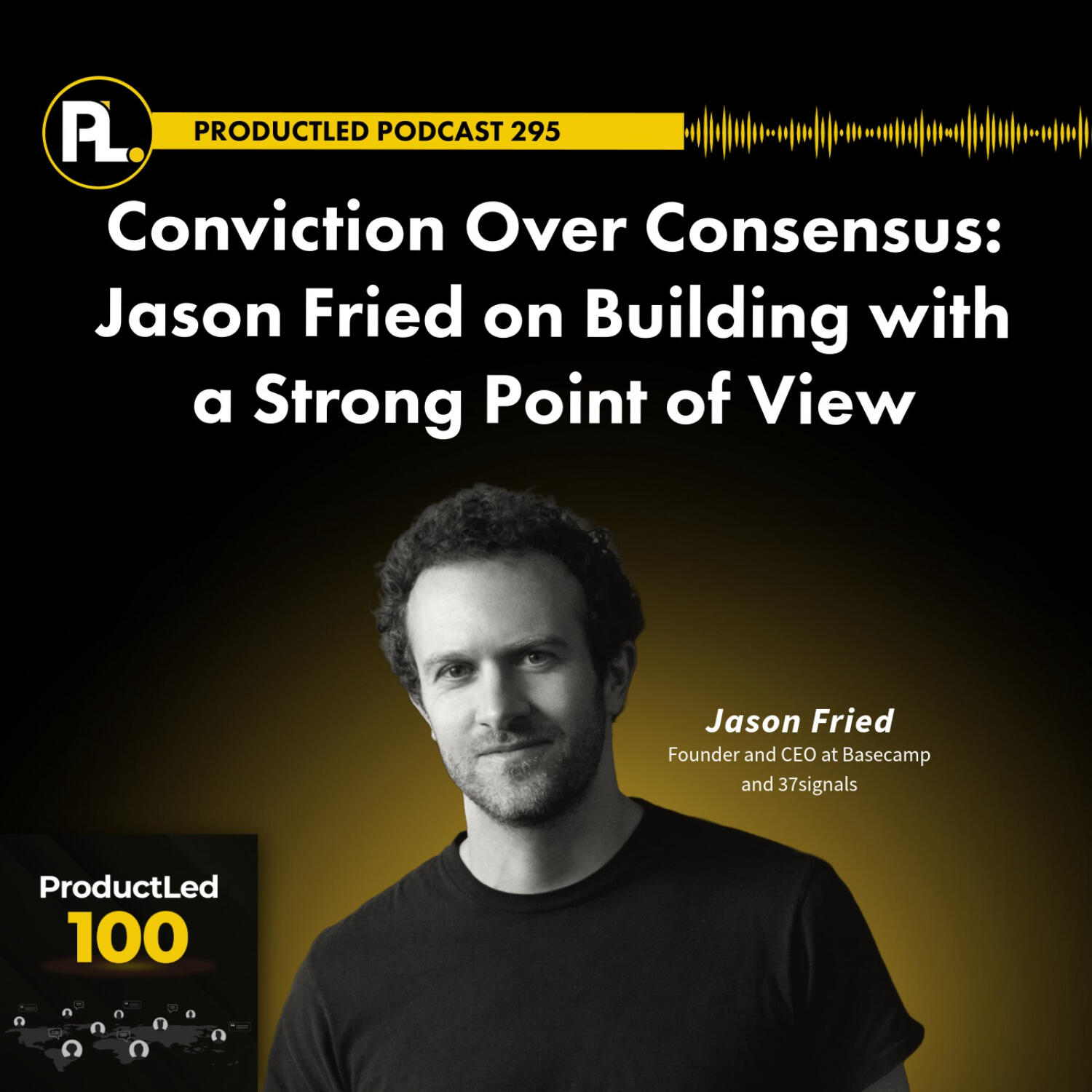
ProductLed Podcast
Conviction Over Consensus — Jason Fried On Building With A Strong Point Of View
00:41:12
Loading summary
Transcript75 lines
- [00:00]
Jason Fried
I'm just completely against asking anybody what they think about something before it exists. Or you can ask, but the answer should have no impact on what you've set out to build.
- [00:11]
Wes Bush
I think Jason gets pissed off by something that like fuels your kind of like energy for creating new products.
- [00:17]
Jason Fried
I mean, I like to build angry to some degree. I want to let the product speak for itself. At the end of the day it has to. Products have to speak for themselves. They have to be good enough to earn their keep and ultimately for people to tell other people about them. Shipping is the easiest part of anything. The hardest thing to do is to maintain a product over time, maintain interest, maintain feature improvement, maintain security, maintain all the stuff. My job is really to introduce risk and to do new things. That's like the job of the founder. This is a very healthy way to be in business for 25 years and be profitable every year. Hello everyone.
- [00:57]
Espen
Welcome to another episode of the product led podcast. I'm Espen, entrepreneur in residence here at Productled and the co founder of userflow and Cobalt. In this episode, my co host Wes Bush speaks with one of my SaaS heroes, Jason Fried. Jason is the co founder of 37signals that have built products like Basecamp and Hey.com. in the episode, Wes and Jason dives into having a sticky point of view. Because in everything Jason and his co founder David do, they basically have very strong opinions and sticky point of views. One of my favorite ones is about how you should build a business. For 25 years they've been counter to the grow at all costs from Silicon Valley and instead focused on building a profitable business with few employees and where the product is the main driver for growth. This is a super exciting episode and I'm sure you're going to learn a lot from it. So let's dive into it. Enjoy.
- [01:53]
Wes Bush
So I'm curious like on your end too, like why are you all of a sudden. It seems like at least from my end, like way more social on social media, all those other kind of sites and stuff you got like something you're brewing. So tell us more about that.
- [02:06]
Jason Fried
We're making a lot of stuff right now and I am bored when I'm not making things. When I'm making things, I'm really engaged and excited. So I'm just kind of probably like excited in all bunch of different directions. In one of those directions happens probably to be pointed at public talking about the things we're doing. I'm excited about the work and some of the ideas we have. So I think it's it's just sort of a symptom of being more engaged. And I think when I'm. I mean, there's. There's two versions. There's like the engaged version where I'm social about it, and there's also the very heads down, which is. Which is usually like, as I get close to launching something, I'm pretty heads down. I typically will not come up for air. You know, just like, be very focused. So it depends. But I'm enjoying it. I don't know. It seems like a fun place to be. People are curious what we're doing.
- [02:47]
Wes Bush
One of the most things at least I always have admired about you is the sense of like, challenging just like the status quo, different things. Like, there's so many things when it comes to like, even like how you build basecamp, like your pricing of like, man, there's easily like 50 million in a recurring revenue potential if you had a different pricing skew or something like that too. There's like with hey.com taking a fight against, you know, Gmail and all those things. So I've. I've already noticed, like, every one of your companies has that like, specific challenger kind of like, we're going up against the bad guys kind of deal, which I. I really think is amazing. I think, like, having that point of view is fantastic. I'm curious, were you always like that, like, growing up as a kid or like, how did that kind of come to be?
- [03:30]
Jason Fried
I think some of this is part of it is situation we're in. We're a relatively small company. We have about 70 people. And a lot of the companies we're, you know, in the same industry with have thousands and thousands of people and whatever. So we, we are the underdog and. And we build things for underdogs. We build things company. So I've always liked that position. Where does it come from? I'm sure there's something personal in it somewhere. Probably. Like, I'm. I'm 5 foot 7, so I'm not a tall guy. And I. And I love basketball and I used to play basketball a lot, and I was really pretty good. And I. I could jump and touch the rim. Like, people are like, what, you're five, seven, but you can do that? Like, so I always had this, like, people look at you, especially with basketball, and go, you're shorter. You're not gonna be good or something. So I think I've always had this little bit of a chip on my shoulder around that perhaps, and maybe that's just sort of solidified And. And I take it elsewhere. I. I have always used that as fuel, though. So for me, it's exciting to be under what the expectations are. I'm trying to figure out what the word is. I'm totally stumped on the word right now.
- [04:25]
Wes Bush
Reception or something. Like.
- [04:27]
Jason Fried
Yeah. When people just assume you can't do something. I can't believe I can't think of the word right now. But when people think you can't do something or you can't pull something off or you're not good enough or whatever, it just fuels me. There was a time when I was doing web design, when I was kind of coming up in this industry early on, and I'd submitted my work for an award. This, like, at the time there was this famous award. It was run by this guy named David C. Eagle. And if you, like, got an award from him, you were like, big time. And I submitted my stuff and he's like, he's kind of a prick. He's just like, hey, stick your day job. You suck, basically. I love that. I mean, some people, I think it intimidates them. I love that. I love being told I can't do something or I'm not good at something or whatever. And it. So I don't know. There's a lot of fuel in that. And I think a lot of people are fueled by that, especially entrepreneurs, especially small companies, and that's. We make products for. And so I think that we share that in common with our customers.
- [05:15]
Wes Bush
Yeah. How's that kind of benefited the companies you built, just having that, like, perspective, point of view on the market?
- [05:21]
Jason Fried
I think it resonates with a lot of people. I think a lot of people see themselves that way. I mean, if you think about. Pretty much everyone sees themselves that way. Very, very, very, very few people feel like they're totally not only at the top of their game, or they might feel like they're at the top of the game, but they don't feel recognized as being at the top of their game. They see other people getting recognition that they think they deserve. And so I think this is a very common thing and I think it's a good thing to connect with as long as you believe it too. Like, I. It's not fake. We really believe, first of all, we're small, all things considered, yet we fight in the big leagues. We've had a lot of influence in our industry, even though we're small. We've been doing this for a long time. We haven't taken money intentionally. We push back against all that kind of stuff. And so it's fun to punch and to push and to poke the more established players or the bigger players or the ones who think that you couldn't do something because you're, you know, a lifestyle business or, you know, all the pejoratives people throw at smaller companies. I, I love it. I, I want more of that.
- [06:19]
Wes Bush
How have you used that though, to like fuel what you create? Because, like, where I'm thinking, like from what I see from what you post and everything else like that, I'm like, I think Jason gets pissed off by something, forms a point of view like software. All those big companies, they're ripping you off and like, hey, here's what we're going to do about it. That, like, feels your kind of like energy for creating new products. I'm curious, like, is that actually what happens behind the scenes or is there something else that goes on?
- [06:43]
Jason Fried
I mean, I like to build angry to some degree. I mean, not really. I'm not like angry, but I like to build with this, with, with sort of a. It's. Let me put you this way. I like to not only make a great product, but I'd like to surprise. And I think the, the surprise is, wow, that small crew of people put that thing out there. Like when we put out. Hey, which is not an email client. There's plenty of email clients that sit on top of Gmail, right? We, we built the whole damn stack. Like we built the whole damn. It's an email service from scratch. It's, it's. Oh, you get your own email address@hey.com. it's the whole damn thing. And this is an incredibly hard thing to do. There are not many of these. Literally there's like five or six real full stack email services that exist. Maybe a few more, but not many, all things considered, because it's really hard. There are 10 times as many clients that sit on top of other people's services, right? And to do it as a small company is exciting to me. I love to prove that we can do these things and also we can, we can, we can do them better than others. It's motivation, it's inspiration. It's a reason to exist. It's a reason to put something new out in the world versus just building something everyone else has already built before. That doesn't interest me. I want to make new things and put new things out in the world in new ways. And as long as we still have ideas for that, I think we'll keep doing this. You know, if one day we run out of those ideas or we just find ourselves making me too products like everyone else's products or something like that, it's kind of the, the, the flame is out, I think. And then we would, we would move on for sure.
- [08:12]
Wes Bush
How do you decide? Like, hey, this is the bone we want to pick. Like, this one's really juicy. Like for the email client. Exact. Like, for instance, for. Hey, yeah, we don't really.
- [08:20]
Jason Fried
I mean, it's not like there's a long list of things that we decided. It's like we just have an itch, we're annoyed by something and we, we go and make it. So we're like about to begin working on two more products. They both kind of will exist because, like, we're not happy with what exists and we have a very different take on it and can't believe how complicated the alternatives are. And, like, I don't understand why they are. And so it's not like, yeah, it's not like there's a long list or a backlog of, like, future ideas or something. It's just something comes and grabs you and you go, we should, we should do that. And we explore for a little bit and sometimes it doesn't go anywhere and that's fine too. But if we feel like we're onto something, it's a really good feeling. It feels like something's pulling you through and pulling you along and that's a good spirit to follow.
- [09:04]
Wes Bush
Can you walk us through kind of how you shortlisted those two, like, potential new projects?
- [09:11]
Jason Fried
I can't tell you what they are yet. I can just tell you that, first of all, we build things that we need. So we don't build anything that we imagine other people needing. Granted, we know other people will need it if we need it. We're not unusual. There's lots of companies like us. So if we need it, we're customer number one. We're pretty sure there'll be plenty of other people, but if we're not customer number one on it, we're not going to build it, almost certainly. So these two things are things that we want. We're sort of extracting some ideas from other things we built. In a sense, like, we've seen our behavior around a few different products and we're like, this should be a separate thing and not part of that, let's say, or the way we're doing this in this thing is fine, but it really needs to be something else and we don't want to build that other thing into this other thing. So it really should be a separate thing that's as specific as I can get. But these are things that we. We want to see exist in the world that we're going to use, and we're going to be customer number one for both of them.
- [10:05]
Wes Bush
Okay, so you're already a customer number one. You have.
- [10:07]
Jason Fried
That have to be. I'm not building something to. I'm not. Can imagine someone else's needs.
- [10:14]
Wes Bush
Did you get angry about both of these ones? Did you get angry about both of these ones? You're like, why does this not exist? No, no.
- [10:23]
Jason Fried
Well, one of them, a little bit based on, like, a thing I'm part of. I'm just kind of shocked that this doesn't exist. Or there are versions of this that exist, but they're just terrible. And the other one actually was just happened by accident, actually. A bunch of us were hanging out at a meetup we had recently, and someone threw out like a kind of a. What seemed on. On the surface a ridiculous idea. And I'm like, oh, wait a second. That's a great idea. That's not ridiculous. I mean, it was ridiculous because the way it was, it. It sounds ridiculous. And one day when we launch this, I'll explain to everybody. But, but. But something got in my head. I'm like, wait a second. That's actually really. That's really clever. That's a really thoughtful, clever. Okay, maybe we should do that. And then that night, I thought more about it and I'm like, yeah, we should. We should do that. That's. That was. That's too good of an idea. And oftentimes the kind of. The weird ideas are the ones that I really appeal to me, it's too good of an idea to just. Let's sit there. That was. That was a good one. So we're gonna do that. So that wasn't an angry thing. That was more like, holy shit. That's a. That's clever. That's funny. That's actually kind of funny and like. But actually really good. It's funny and good and weird and people are gonna be surprised by it, but in a good way. I like this so.
- [11:34]
Wes Bush
Well, you're definitely keeping the surprise up with the illusion of. I can't tell you those two products. I like it. So then how do you go through and say, okay, we're going to like, shortlist this. Go through and validate this? Like, do you validate it first?
- [11:47]
Jason Fried
No. Validation. I don't believe in validation. I don't think you can validate anything other than putting it out on the market and then you find out for real everything else is a simulation and not interested in that. How do we just, I choose, I just say like, we're gonna do this product or we're gonna do this product and, and then, you know, a variety of people contribute to it after that. But ultimately my job here is to pick, make, place the bets on new
- [12:15]
Wes Bush
ideas and I think for products too like that, I can see how that would make sense. But then for your point of view and perspective on some of those things, like some of your posts regarding, like, hey, like, are you paying this amount on like server costs? All that stuff that drive you crazy, like, why is it like this, is that not a form of validation when it comes to like, hey, do other people resonate with this perspective, this point of view that could potentially be a product in itself?
- [12:40]
Jason Fried
No, it's not validation. It's, it's, it's resonance. I'm not deciding to do something because I'm testing it in the market. Validation is like, I, I don't know. So let me find out. I, I, I've already found out in my head I'm, or doing it. And then it's just like drumming up the interest in the, and the, and, and getting people to think about things in a different way and to connect with them in that way. But we're already doing this sort of thing by the time I'm talking about it.
- [13:03]
Wes Bush
So you like kind of see it resonates. Good.
- [13:06]
Jason Fried
Yeah, yeah. I, I'm just completely against asking anybody what they think about something before it exists. I, I mean, you can, or you can ask, but the, the answer should have no impact on what you've set out to build. Is my feeling you need to live in, you need to swim in that problem so much that you already know it. Like you're building it because you know it intimately and you're going to put something out there in the market that you think is your best swing at it and then you can see what people think and that's the true validation. Does the market believe in it or not? Are people willing to pay for it or not? Are they willing to pay this price for it or not? Until then, you can't ask someone, are you willing to pay 50 bucks for this because it doesn't cost them anything to say yes. Can't ask things like that. You can't ask any yes or no question if it doesn't cost anything to say yes.
- [13:55]
Wes Bush
It's a classic mom test, right? Love that book for that question. And then when it comes to, like, all the different companies, curious, from maybe beginning to end, how do you form that, like, opinionated point of view? Because I think out of all the companies you built, they all have their own unique point of view that really makes it stand out. When I think of, like, other competitors against, like, Basecamp, it's like, okay, let's look at, like, ClickUp or Monday.com, all these different companies. It's like, what's unique? Like, you can think of the product differentiators, but the point of view is like, I don't know. It's Vanilla Venture scale. Yay. But what is that point of view? And I think that is something you are fantastic at building. So curious to hear if there's a process or just things you think. Think about when you go through that whole process.
- [14:44]
Jason Fried
I'd say there's an invisible process and that, like, there's not a formalized process. I don't sit down to think, what is the angle here on this thing? Or, what point of view should we take? Because it's more like, what do we believe? And can we just say that out loud? You know? But it's, again, not like there's never this moment. What do we believe? Let me make a list of 15 things and figure out what we believe. Let's pick three of the.
- [15:08]
Wes Bush
No, no, but you have that with 37 signals. Like that. Is that not what you believe? Like, those kind of principles, and that's kind of there, and the companies all encompass those.
- [15:17]
Jason Fried
Yeah, it's more of an art project when it comes to 37signals. I mean, the 37 things. Like, we had an original 37 things, and now we've got new 37 things. There's no process. It's writing a bunch of stuff down. And, like, you know, I think we got about 37 good ones. Like, it's not. It's not like, let's write a hundred and then whittle them down and have four meetings over it. It's just like, you do it until you've got it. It's. It's a very organic, realistic, natural process. You do it until you've got it. And if you don't know when you got it, then. Then you're in trouble. You gotta have a sense of like, yeah, that's it. That's. That's the thing. You know, it's like a furniture maker makes a table, and, like, technically it's a table once it, like, you know, has. Let's Call it a base or legs in a surface, but they're like, no, no, it's not ready yet. I need to sand this some more. I need to smooth this out. I want these edges to be radiused. Like it doesn't actually improve the functionality of the table necessarily. You could say it could at the margins, but they're not, it's not there yet. But at some point they take a step back from the object and they go, yeah, it's done. How do they know it's done? There's no objective criteria really. I mean you could probably backfill and go, well, you know, if, if the surface is this smooth and I've gotten to this grit, whatever, but it's still like, well, how many, how many passes are you, are you doing? It's like it's a, it's a subjective feeling and that's, that's the kind of thing that, that we're, we're after here versus like trying to go through a steady, repeatable process.
- [16:44]
Wes Bush
Yeah. So if you were to coach SaaS founder, like, hey, here's how to do this. Like your current company is commoditized, AS is most SaaS companies, to stand out. Let's say this is their only play. Like they can't differentiate based on product features because they're just up against venture backed companies. But like this is their, their thing. They have to differentiate on their point of view and those beliefs. How do you kind of guide them through that?
- [17:10]
Jason Fried
I, I, I don't, I don't do this for other people. So it's, it's hard for me to imagine exactly how to do it other than the way I know how to. I think though that you've got to be willing to, first of all, you have to have a point of view. Some people just simply don't actually, they don't actually have a point of view. They just do what they think they're supposed to do. So you can, you can't manufacture one because points of view cannot be false. Then you're just doing something else's point of view. So you've got to have one, you've got to be able to identify it at some level and you've got to be willing to say it and to stand by it and stand behind it and to speak about it and to write about it in a way that other people can understand where you're coming from and connect with them with it. But I don't know, my concern about process around that is that people end up faking it. They Think that if they go through a process and they end up with something in the end, then it worked because they went through the process that someone else went through to get somewhere. In the end they just got somewhere, but they didn't get to the right place. So I think you gotta be a bit careful. I think, I think in general people are too. Business is too rigid. It's too list based and process based and, and it's too prescriptive. I don't think really good businesses are that way. I think they're a lot more organic and they kind of figure out as they go and they have a feel for what it is that they're doing. And there's a lot less objectivity and it's more subjectivity. And their subjectivity happens to be like good people like it. It's like music. I mean there's formulaic music of course too. And you can write pop songs in a certain way, but it's not that easy, clearly, because there aren't that many mega hits. There's something else there too.
- [18:50]
Wes Bush
And I wonder if it's like based on your experience too. Like the conviction behind that point of view. Like, hey, truly, like I struggle with this. This is like huge. Like who, who pays that? Who uses sas, like, or something like that. And then just the commitment behind it. Like it's not just a. This week. This is my, my thing. And then you're sticking to that for some time. I'm curious if you agree with those two pieces.
- [19:16]
Jason Fried
I mean, you could change your mind. Like, so it's not. Sticking to, it isn't necessary, you know, in the long term if your point of view changes. But I think you've got to stick in the short term. You've got to, you've got to. Well, you've got to believe what you say. And, and it has to be solid. It can't be a veneer. If you tap on it, it should sound like solid wood. Know if you could tap on it versus like a hollow door. I think people can see the hollow doors and they, they can, they can. When they interact with the hollow door, they, they can feel that this is too light. This is something missing on the inside here. This feels flimsy. You know, that's just how I think about it. I think about it as like a solid piece of wood instead of a, you know, hollow door. And. But you know, the shape of the door can change all that stuff. But it's still gotta be solid.
- [19:57]
Wes Bush
It's gotta be real and stand out to an argument for sure. And then how did the books kind of connect to what you do in the business? Because, like, that is partly point of view and everything else, but how does that connect to all the other SaaS products?
- [20:10]
Jason Fried
You have the books. Let's just take rework. It doesn't have to be crazy at work, remote and Shapeup. Shape up is actually more of a process oriented book, which it's a little bit different than, like, rework. And it doesn't have to be crazy work and getting real. These are basically actually Shape up fits in this too. There are cookbooks. I've always been inspired by chefs who write cookbooks, and their cookbooks include their recipes. And if you think, like, what is a chef? Well, a chef's someone who makes food, and their recipes are pretty important to them, I would imagine. So you think they'd hold them close to their chest and not give them away, but they do. They write cookbooks and they say, here's the recipe. Here's how you make this dish. Now, ultimately, the dish is more than the ingredients. It's how long you cook it. It could be the temperature of the pan. There's a million different variables as well. And that's sort of what makes one chef's food different from another, is even if everyone's following the same recipe, but they're not afraid to give away the recipe because they know there's more to it than that. And so for us, these books are our recipes. Like, this is how we make decisions. This is how we think about things. These are not like. And if you read them, they're not process oriented. Shape up is a little bit more process oriented, but the rest of them are. They're ideas. They're not telling you exactly what to do. These are like things that we do and how we look at the world and how we look at things and with things we believe. And from that evolves a way of doing things. And you should find your own way of doing things. But these are our way of doing things. Just like you should find your own way to cook a dish. You can, of course, follow along. Exactly. But add some love to the dish, some way, somehow doctor it up a little bit, play with a little bit to make it your own. I think that's what we're. That's what the books are really about. But how do they play into other sa? I mean, they don't sell the products, they don't talk about the products. Really Shape up may be a little bit different than that. The process is really, really based on, you can use anything, but Basecamp's a really the right tool for ShapeUp in a lot of ways, but you can use other things. The books are really about the, The. The bigger picture, the vision, the company, who makes the things. And if you can, like, get behind and get into the. The company itself, you might want to check out the products. I mean, there's not direct sale. We're not direct sales here. It's like, if you like this stuff, you might like that stuff. You know, if you like where these ideas are coming from, you might like the final resting place for those ideas are the products themselves, because that's where they're. They're basically enact. So you can see what those ideas look like solidified by. By trying the products.
- [22:31]
Wes Bush
Okay, so it's not like direct kind of impact or anything like that. It's just like, hey, if you buy into our belief for the company, then you'll probably like this stuff too, kind of deal.
- [22:39]
Jason Fried
Yeah. It's like, you might just be curious, like, I like how these guys think. What do they. Do they make these things? Maybe I should check out those things because maybe the way they think that I like, is manifests itself in the product itself. I mean, we don't track sales, so I don't know, like, how many people buy Basecamp because they read Rework? I mean, there's some certainly. Yeah, it's hard to track, and I don't think you can actually track it because Whatever. But certainly I hear from people all the time who are like, hey, I didn't know who you guys were. I read your book. Very interesting. I checked out your stuff. Love it. So there is that and the other way around too. People, like, use the stuff and they. They find out and they go dig deeper and they find out, oh, they've written some books. I should check the books out. So it's kind of a give and take.
- [23:17]
Wes Bush
Interesting. Yeah. So I was curious about the. The overall impact on that one.
- [23:20]
Jason Fried
It's unknown. I mean, as is everything that we do. We don't track really anything. I. I don't know what, you know, our posts do on Twitter. I've been writing on Twitter for, I don't know, 10 years, 12 years, whatever it is. Like, I don't know. I don't think these things are really attributable, to be honest. I think people are, you know, they absorb a bunch of different things in a bunch of different ways. And it's just like, to just track the last mile. Like, they came from Twitter, so Therefore, that tweet really made a difference. Well, I mean, how do you know? They may have heard 15 other things before that, and their friend may have told them something, and the tweet perhaps happened to be the last straw. But if it didn't happen where they've come to see us anyway, they might have, you know, so who really knows?
- [24:00]
Wes Bush
Yeah, that's fine. Do it for the books side of
- [24:02]
Jason Fried
things, because we like to share. I want to share this stuff. I believe that our point of view should be out there. I really do not like the primary point of view of our industry, which is go raise a bunch of money. Go get as big as you can. Grow, grow, grow at all costs. I think it's unhealthy and a bad approach for almost every company. Certainly some make it. Most do not. And I think there should be an alternative point of view. And the best way we know how to get that out there is through our products and our books and our company history. And being in business for 25 years and showing that you can survive this way and you can thrive this way, and you can stick around for a long time and you can be profitable and you can share all the things you do and. And you can open source a bunch of stuff, too, and you can invent frameworks and give those away to launch other companies and not ask for anything in return. Like, you can do all these things and build something. I mean, Are we worth $10 billion? No, we're not worth $10 billion. I don't care. Could care less. What does it mean? Doesn't mean anything. So someone might go, you guys just aren't, you know, you're too small or whatever, fine, whatever. Don't care. But this is a very healthy way to be in business for 25 years and be profitable every year. And I think it's important people hear the story and know how we got here.
- [25:12]
Wes Bush
Yeah, and it's a great outcome, too. I think that's the alternative side of.
- [25:18]
Jason Fried
It's also fun to write books and fun to share ideas and get them out of our heads. You know, it's fun. It's fun to see a book in a book bookstore. It's fun to hear people reading the book. We put our email addresses at the back of every book. So I hear from tens of thousands of readers. I mean, Rework has sold over a million copies now. And so I'm just hear from people. And all over the world, a lot of people are picking up in India right now. So somehow, I don't know how it got so popular over there, but hear from people in India, it's just. It's awesome. It's awesome to hear. So it's very rewarding.
- [25:46]
Wes Bush
Awesome. And almost all your companies, the ones I've checked out, are all like, they have a free kind of like product led motion where you can sign up for curious, like, what has been the main kind of decision around that? Like, why have you kind of been pro kind of product led, even the early days, before it was even called, like, yeah, that's plg.
- [26:03]
Jason Fried
I don't know any other way to do it. I want to let the product speak for itself. At the end of the day, it has to. Products have to speak for themselves. They have to be good enough to earn their keep and ultimately for people to tell other people about them. So if you're a product company, which is what we are, that's what we do. Our products have to be better than everything else that we do. I mean, there are some companies that can outmarket everyone else and if their product isn't that good, they can still somehow find a way to make it all work. It seems incredibly hard and unsatisfying to me. I'd much rather build incredible products that, I mean, that we're proud of. Not everyone likes them, of course, but enough people do. And those who do really, really, really like them and really, really understand and really, really see the advantage. And then they tell other people and it spreads that way. So your product is really like your best, you know, your best employee, your best salesperson, your best customer service. It's the best thing you have. It's all you really ultimately have at the end. That's what you put out there and what people judge you by. So I wouldn't know any other way to do it. I wouldn't find it interesting, frankly, to do it in other way.
- [27:05]
Wes Bush
You don't want to have a big sales team?
- [27:07]
Jason Fried
No, we don't have any salespeople. Although, I mean, like, should we? Maybe we should. I don't know. We don't. Haven't really ever tried that. We had one person for a while in like biz, dev, whatever, but it's just not. I like the product to be the salesperson.
- [27:20]
Wes Bush
Okay, what's been your biggest challenge on that front? Like growing all these product led companies?
- [27:25]
Jason Fried
Well, they've not all been hugely successful. Some are much better than others. We've made a lot of products over the years. We made a dozen different things, essentially, depending on how you count. And Basecamp is our biggest winner. We had something called Highrise, which we still have for existing customers, but we don't sell anymore. It's our CRM tool. That was a major, major product. And hey, now is.
- [27:46]
Wes Bush
Is.
- [27:47]
Jason Fried
Is growing. You know, it's new. It's only a few years in, so, like, we're early on it, but it's, It's. It's doing well. Campfire is, you know, very small, which is the new thing we launched under the once umbrella. But a lot of things we built didn't go anywhere. So this is not like, an easy thing to do. You know, it's really hits business in a lot of ways. And, you know, to do that, you gotta. You gotta place a lot more bets, you know, so we're gonna keep making new things and keep nurturing the things we have and keep improving the things we have. So challenges are just, like, you spend a lot of time on some things that just never go anywhere. But I don't see any of these things as mistakes or failures. I just. I don't look at things that way. It's just like, we tried that. Some things work better than other things. That's how I see almost everything versus, like, we really failed. Let's feel bad about ourselves. Like, we wasted all this time and we should be. Let's make sure we don't do that again. Like, we did that. We moved on, can't get it back. Let's keep going. That's kind of how I like to look forward.
- [28:42]
Wes Bush
When would you recommend for, like, other entrepreneurs who are listening to this, for them to consider, like, hey, you know what? This first product was great. Let's build a portfolio. Because I think a lot of entrepreneurs are like, oh, this sounds like the best idea since sliced bread. Yes, many products. Yes, much profit on all of them. But in reality, it is, like you mentioned, a hits business. So when do you think it makes sense and when does it not make sense to build that portfolio?
- [29:06]
Jason Fried
There's a couple of ways. If you find something that works, I would nurture that for a while versus jumping on to the next thing. Although we did that, we did jump onto the next thing pretty quickly. We launched Basecamp in 2004 and 2005. We launched something called Backpack, which people probably don't know about because it didn't really work out in the end, commercially at least, is a neat product. But wasn't right Then did Campfire. Then did High Rise. So we did four products in four years very quickly. But the big hit that stayed out of that, that came out of that was Basecamp and then High Rise was the second biggest hit. So put a lot of time into four things to work. Then we took a long pause. We didn't really do a lot of new products for a while and focused primarily on Basecamp and did that for a while and then felt the itch to do hay and we did some job boards and some of the things along the way in the middle. I don't think there's a formula here again, so my answer is you gotta focus on what it feels like. So if you have something that's gaining some traction, you might wanna make sure that it establishes real traction and not just gains a little bit and then falls off. I think one of the things people forget is that shipping is the easiest part of anything. People think it's the hardest part, like getting that first version out. It's the easiest thing to do. The hardest thing to do is to maintain a product over time, maintain interest, maintain feature improvement, maintain security, maintain all the stuff. So if you just keep jumping off to the next thing all the time, you might find that you've kind of let some things die on the vine and that that actually had opportunities. So you just gotta really pay attention and know when it's right. Try something else. And also maybe when you try something else, maybe don't take your eye off the initial ball, figure out a way to maybe do something else sort of on the side or build the team up a tiny bit. I don't really know. It sort of depends. We've done it in all different ways ourselves. So I, I, I would say, though, if something doesn't work initially, you might want to get onto the next thing pretty quickly versus like pouring a lot of energy into making, trying to make something work that clearly didn't just, it didn't gain traction early. You can pour a lot of time and money and then run out of everything, run out of steam very fast, and you don't have any, any Runway or anything else to, to do something new.
- [31:10]
Wes Bush
So, yeah. If you were to do it differently, what would you do? Like, there's the jetpack.
- [31:15]
Jason Fried
I wouldn't do it differently. I wouldn't. No, I don't think you can. I don't think you can. You can't do it. We would have done, did it a thousand times in a row. The same, we would have done the same thing at the same time because everything was lined up a certain way. It was, and we just did it. So I'm very happy with how things turned out.
- [31:30]
Wes Bush
What were the Biggest lessons across that. Because you've been doing this. Like, this is coming up 25 years, right?
- [31:35]
Jason Fried
Yeah, 25. Don't dwell on things that don't work out very well. We used to do not a lot, but occasionally we do, like these postmortems where we'd review things that didn't work as well. And, you know, I just don't find any value in it. Actually. I think that most of the learning you're going to have is from moving forward and doing more things, not looking back and trying to figure out what went wrong. I think oftentimes you don't have any idea what went wrong. It could be a bunch of things that you never considered. It could have been timing, it could have been pricing, it could have been both. It could have been look and feel. It could have been competitor, it could have been how you said something. Who knows what it is? And even if you were able to capture the nine things, the amount of work and effort it takes to try to derive lessons from that versus, like, let's just make something else. Keep learning, keep learning, keep learning. I, My, my general feeling is to follow evolution. Like, evolution does not look back. Like, things are. Things evolve, and the things that do well keep doing well until they don't do well, and then something else does well. Like, it's not looking back. Why didn't that wing work? It doesn't even consider what didn't work. It just keeps moving on. I think that's the best lesson, actually, because every time we've spent time looking backwards, it just hasn't led us anywhere.
- [32:47]
Wes Bush
Yeah, they definitely do that. If it's spending a lot of time thinking backwards, it's like, well, it's going to create an organization of fear.
- [32:52]
Jason Fried
The companies do, though, they spend a lot of time, like, overanalyzing everything and then assuming they've come up with the answer, it's just the answer they found. It doesn't mean it's the answer. Like, it depends what you're looking at, what you're including in the search. I mean, that's the. That's the thing. And so I just say, like, something didn't work. I don't know. We don't really know. We have some ideas maybe, but I don't know. Let's just make something else and let's see if we can make something else work.
- [33:18]
Wes Bush
Curious. Like, what is your overall end game? Like, you got a portfolio of like, okay, we'll sell some of these and then whatever exit. I know, like, there's. Yeah, just Stay with it for as long as you can kind of thing. But I'm sure you got something in your mind as far as, like, what does that end game look like?
- [33:34]
Jason Fried
I don't have something in my mind. I mean, objectively, like, companies don't last forever. They either go out of business or they merge or they sell or they go public. There's like a few outcomes. There's only like a few. The go out of business can be. They can intentionally go out of business. Like, they can shut down because they're someone's done. Or they could go out of business because they, they aren't good business anymore, they lose in a market or whatever happens. Right? There's a few outcomes. So, like, there's no, like, real discovery there. All I'm focused on right now is like, continuing to make great stuff. And there'll come a point, of course, at some point where, like, I don't want to do that anymore, or David doesn't want to do that anymore, or we all don't want to do that anymore, or the market's changed or whatever, and it just feels like it's the right time to move forward on. But we're not aiming to do that. That's not like we're not in this to get out. We're in this to stay in until we realize that maybe it's. It's time. You know, I've always admired athletes, although I, I'm sure athletes don't like this, but like, athletes have a, have a useful life. Like, you're not really playing football when you're 40. You know, some, maybe one person, right. Football careers are short. You're at your best in your 20s. Basketball is the same way. Some people in the early 30s. Very few players make it to mid-30s and late 30s and be at the top of their game. There's, you know, LeBron is one of the few exceptions. Even Jordan came down at the end of his career. You know, like, it's hard, but there's this understanding that, like, you're done. Like, you're just done, your body's done. It's just, it's the young person's thing at that point. Right. Businesses don't really have that, which is interesting in a sense. I mean, they do if the market tells them so. But sometimes you can be doing well for a long time and sort of just writing for a long time, because you can. So there's gotta be something else. It's gotta be enjoyable, challenging, interesting, intellectually challenging. When all that runs out, then we'll figure out what the end game is.
- [35:21]
Wes Bush
Yeah. How do you keep that, like constant engagement, curiosity regarding those things.
- [35:28]
Jason Fried
It's not constant, so I'll tell you, it flows. I mean, there's, there's months where I'm like, why am I doing this? And there's months I'm like, I wouldn't. I'd rather not. There's nothing else I'd rather be doing, you know, like, I'm pumped, excited right now. I'm very excited. I've got a lot of things on my mind, a lot of products I'd like to do. As I mentioned, we're going to work on a few more. About to release another one shortly here. Top secret. About to launch another one, another once product shortly here. It's not a matter of staying. I think that's the other thing that's important to communicate is that no natural state really, probably where anyone's always excited about something. If things do come and go like the seasons, I think ambition is a season. Like, there's moments when you're really into it and moments when you're not. And. And right now we're into it. And some people aren't internally, some people aren't. Some people don't like us making new things internally because it's hard. It's like, we gotta start over. We gotta make a new thing from scratch. Whatever. All these other things we're working on totally understand that point of view. So everyone's just different, you know, and you gotta pull a company along. But it's my job to, you know, my job is really to introduce risk and to do new things. That's like the job of the founder. And as long as I have new ideas, we'll keep going. It's not about maintaining, it's just making sure that the new wave, it's going to come and there's no way to make sure. It just, it just comes or doesn't.
- [36:41]
Wes Bush
Yeah, I love that. The job of the entrepreneur is to introduce the risk. That's smart.
- [36:46]
Jason Fried
Introduce risk. That's. That's the only job of a founder. Brian from Coinbase, I think said this originally. I think that's maybe where I heard this, but I really liked it, which is like the job of the founders to inject risk. The. It's the only person in an entire organization whose job it is to inject risk. Everyone else's job, essentially is to manage risk to make sure the company doesn't go under, make sure the company doesn't go out of business, make sure there's nothing reckless spending or whatever like everyone else is trying to manage the thing. And it's important if a founder's still in a business because not every business has one. But if there is one, they've got to inject risk, they've got to bring uncertainty and surprise to the game because no one else is going to do that. It doesn't fit anyone's job description to take massive risks. Like that's a great way to lose your job. I mean you could also keep a job if you really nail it. The founder has a unique position in that they can keep their job if a few things go wrong, a lot of other people can't. It's just the nature of these things, you know. So that's why I think I take it seriously, to push us to do new things and to try new stuff.
- [37:49]
Wes Bush
Yeah, I think that's also why a lot of entrepreneurs find themselves getting fired from their job.
- [37:53]
Jason Fried
Yeah, I mean, yeah, I think part of that is, you know, setting themselves up to be fired. So like if you take a bunch of money and you have a board and you serve at the pleasure of the board, you're now not really an entrepreneur anymore. You're, I mean you are, but not really in that you're working for someone else. You've got, you know, if your board's eight people, you've got an eight person, you got an eight headed boss, basically who you're working for, who can tell you to leave. So we've been independent so we can do our own thing and for better or for worse.
- [38:21]
Wes Bush
So last question here is, I know Tim Ferriss has a version of this which is like, hey, if you could put a whiteboard or like a billboard on the most popular, like, I don't know, highway ever, what would you put on it? Curious for you, like if you were to design this billboard, what would you put on it? For every B2B SaaS founder out there, what would you kind of say to them as like a number one kind of piece of advice?
- [38:46]
Jason Fried
Trust your gut. And that's, that's, that's it. I think ultimately the honest answer is every decision is a gut based decision. And I think that people, what people are afraid because it can't be justified in a sense. And so we've kind of fallen into this justification business culture where everything has to be data supported or there's evidence based or whatever. That's science. Like science should be evidence based, you know, but business is not science, it's more art. Follow your gut. Do what you think is right. That's why you're an entrepreneur. That's why you put yourself on the line to do these things. Because at some point, like, if it's all data driven, if it's whatever, then ask a computer to make the decisions because they're gonna. If it's just that they can take all the inputs and make the logical output. But it's not that. There's something else here. Just like a chef. Again, getting back to the chef example. Like, two people can follow the same recipe and the dishes come out differently. There's something else there. There's a feeling of this should go on a little bit longer. I need to develop this crust a little bit more. I know the temperature, a little higher temperature is going to lead to a slightly different caramelization flavor. Like, there's all these subtleties, nuances that someone knows this is going to make a good dish. I think that's what entrepreneurs need to do.
- [39:54]
Wes Bush
I love that. And that goes right in tandem with take risks, then trust your gut. So where can people find out more about you?
- [40:00]
Jason Fried
I'm on Twitter at Jason Freed. F R I E D. I'm also on LinkedIn, another newsletter world. Hey, that's h u y.com Jason and we also have a podcast, the Rework podcast. So you can check us out there, find us wherever you get podcasts and
- [40:16]
Wes Bush
well, thanks so much for coming on, Jason. This was a blast. And to wrap things up, thank you everybody for listening to this version of the product podcast. Make sure to rate review this on wherever you listen to podcasts, whether it's Apple, Google, you name it, Spotify, I'm going to read every single one of those reviews and that's how I know how to improve this. Also, if you want to stay in contact with me and learn what is going on in the world of plg and every single week get the best actionable deep dives on product led growth. Make sure to head on over to product led.com forward slash newsletter. I am personally writing each of these deep dives every single week and you're going to get a ton of it. So make sure to head on over there to product led.com forward slash newsletter.