Loading summary
Transcript73 lines
- [00:00]
Tibo
I made this huge mistake. I think it was in 2015, I spent two years on a product, failed. And so I was like, I just lost two years of my life. When we got back together with my previous co founder, there was this absolute rule that we was like never ever again we would work for multiple years on a product that would not be validated. We wanted to be validation driven above everything else. Week after week we were shipping new products. Some of them were getting something like 200 USD, 300 in monthly revenue. But Tweet Hunter, when we launched the 11th product, it was very different.
- [00:49]
Ben
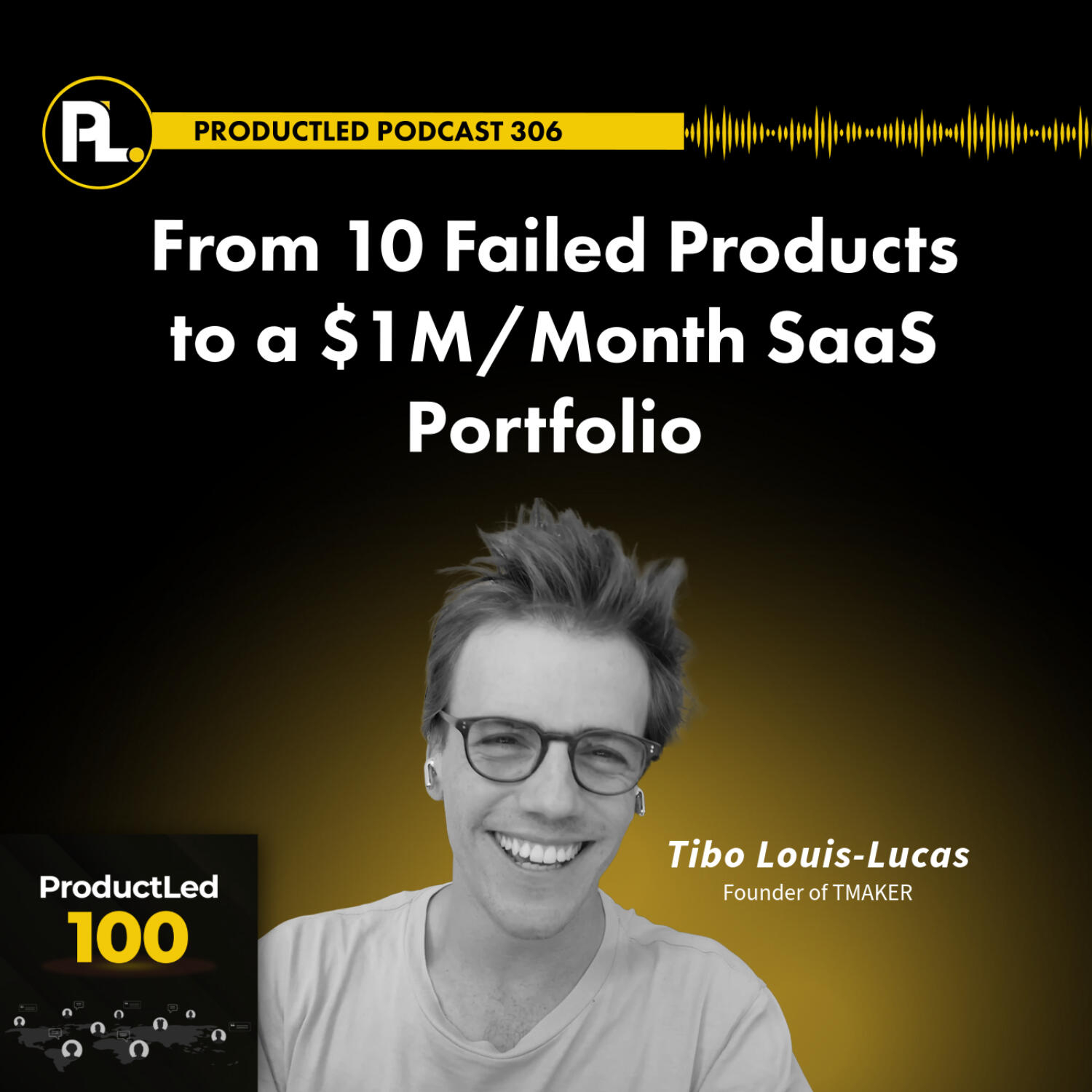
Hello everybody. Welcome to the product led podcast. With me, I have Esben, who is our entrepreneur in residence of Productled and has been the co founder of userflow as well as Cobalt and. And our guest Today has built 10 products in total. I'm sure it's more by now, but the first 10 hours he was super honest, they went completely nowhere. Then on attempt number 11, he created Tweet Hunter, scaled it to over 300k a month in revenue and sold it alongside Taplio for 8 million. And he's a French indie hacker serial maker. And Tibo has grown audiences from zero to just building in public for all these apps as well. And one thing that we're going to dig into as well, which is going to be super fun, is he's now building a portfolio of these SaaS businesses entirely solo. So a lot of people think, you know, I know we had Vincent Young on the podcast as well earlier. He's building also a portfolio on this with one person, which is just crazy. So I am super excited to dig into this TiVo and just learn more about what you're up to and learn from you on this month. So thanks so much for, for coming on the podcast.
- [01:58]
Esben
Thank you.
- [01:58]
Tibo
Honestly, I think it has been like the best intro I've ever heard about me. So thank you for. Thank you so much for that.
- [02:06]
Ben
All right, this is gonna be fun. So when you. I think this was from 2021, you started the challenge of like build one product a day challenge, right? How did that go? Was that kind of the. Your first foray into like, I guess you would call it indie hacking or just building products in general.
- [02:22]
Tibo
It actually came from like a. I made this huge mistake. I think it was in 2015, like, I spent two years on the product. It failed. And so I was like, I just lost two years of my life and I killed it again. Like in 2017. I did exactly the same. I spent two years on another idea that was not validated. And again, I lost two years of my life. And so when we got back together with my previous co founder and just trying to bootstrap and to create new products, there was this absolute rule that we was, was like never ever again we would work for multiple years on a product that would not be validated. And so that, that was the start of this process that we wanted to be validation driven above everything else. And to be sure, absolutely sure, to be working on something that is actually worth being, Being worked up.
- [03:17]
Ben
Totally.
- [03:18]
Tibo
Yeah.
- [03:18]
Ben
We had Patrick Thompson, who is the founder of Clarify AI, and both him and Esben, they, they have this like fun, weird belief of like, hey, when you're starting a new company, like pick Red Oceans because they are validated when you're harvesting demand, you're not creating a new net, new thing that's never been done before. That's not to say it's like that's the only way to validate something. It's like, oh yeah, it's a CRM. Let's launch another CRM. Because that's also not necessarily a good idea always. But I'm curious, how did you approach that?
- [03:49]
Tibo
It's insane. I agree so much. I think this is, this is so beautifully said. Like I think the, the Blue Ocean book and it made an entire generation of people who wanted to go Blue ocean and create the next Facebook. And this is exactly what I wanted to do in 2015 when I went out of school. I just wanted to be the next Facebook. And I like, I. There was, there's this guy like Mark Lu on X. He experienced exactly the same, like just after school, he wanted to create the next Facebook. And it like, it's, there's this so many other ways to make a living right now and where you can just sustain your growth as an individual. I found this other route and I'm so happy that I did.
- [04:36]
Ben
I think like you mentioned, the first six years was kind of banging your head along the like, let's call it the Blue Ocean strategy of like, okay, let's create these like new markets and everything else. And then now you've kind of found this new path of like, okay, let's validate things, let's do stuff that we have a higher likelihood of actually generating a lot more value pretty quickly because you're not creating like a net new kind of category in some ways. So I'm curious, when you approach validation nowadays, what does that look like to the average founder? Because there's some founders here where they're like, I'm creating this blue ocean and like, you know, going down this big path that nobody's paying me for. And that's going to be a bit of a rude awakening when like you said, you wake up two years later and you're like, how many years have I quote unquote wasted or spent learning, paying high tuition on this whole validation process. So what would you say is like your little masterclass on like, here's how to validate your startup idea. Because you've done this many, many times and you got a ton of experience in this.
- [05:38]
Tibo
It's mostly revenue driven. I think the number one mistake that most people do is thinking that having some usage of your product, having some free users is validation. And I fell exactly into this trap. Like I built this game to teach kids how to learn about programming and I think at one point we got like 15k monthly users. It, it felt huge, but the number of paying user was like almost, almost zero. So it feels like you can boost your ego by having just users. But in the end, what matters the most is revenue and if you are willing to pay for the value that you are providing. And this is, this is the, the number one shift that I did in, in 2021 when we started this, like the core idea was to ship one new product every week until something stick. And so week after week we were shipping new products. And by the way, at that time it was the very, very early days of AI, so shipping products was very hard, but it was super intense period of time. We're just shipping product after products. Some of them were getting something like 200 USD 300 in monthly revenue. But Tweet Hunter, when we launch it, I think it was the 11th product. It was very different, like from the very first two weeks. I think it reached 1k in monthly recurring revenue. And so it felt very different. Like people were willing to pay just for the promise of what it was doing. And so that really felt like validation because it was revenue driven.
- [07:24]
Esben
I think that's super. Is a great takeaway. I think for many B2B companies that are looking to do product led growth is a common pitfall that you think product led growth is about doing a freemium. They just launched the freemium and they never think about monetization and thereby they never get like true validation of whether this is actually something people want to pay for. I've seen that multiple times. People think money is just going to appear somewhere in the future, but it's a very common pitfall within PLG that you, you launch A freemium. And, and then just hope it will generate revenue in the future. But you should really have a very clear kind of. This is the pricing. The freemium should show the initial value or free trial or whatever you want to do, and then the next step is monetization. And that should be very clear. Early on with userflow, for instance, we, we, we had a really cool product that people would try, but we launched pricing right away. Right. And I think that's super important that you have a way for users to upgrade to a paid model.
- [08:30]
Tibo
Yeah. It's also a very hard trap because if you have 95% free users and just 5% of paid users, the feedback that you're going to hear the most is feedback from the free users. And so it's very hard as a founder to just weight the feedback of the paid user way higher. In every single one of my app right now, like outrank of or revit, we only have paid users. And so I know that all the feedback that I'm having are from the people that are paying. And so it, it's, I think it, it makes the implementation way, way easier because they are coming from way higher quality people.
- [09:15]
Esben
True. One, one thing. So you say revenue is the validation. Right. But that's, that's really just the result of the validation, I guess. Let's take tweedhunter, right. What really made Tweet Hunter different because you were, that was kind of competitive. Right. I assumed there were other solutions in that market, but what was the kind of differentiated approach that you had that made people want to pay for it? For instance, with user flow, we created a new paradigm for building. Right. Like what was it that kind of triggered people to wanting to buy Tweet Hunter?
- [09:47]
Tibo
So the social media scheduler market was quite saturated. You had a buffer hootsuite later, like so many other schedules, but like pretty much all of them were focused on enterprise customers and they were doing this thing where they were trying above everything else to support every single social platforms. The idea was that you have a brand and you want to publish on Facebook, on Instagram, on Twitter, on LinkedIn at the same time. And because of that, the depth of supporting a social media was very light. Like if you, you cannot, you couldn't take advantage of all the features from his social media. What changed in 2020 and 2021 is that the, the market was turning into way more like creator focused. It. It was the early beginning of the creator economy. And what we did is we, we just integrated one social media, Twitter. But we went Full depth on this one. Like, we were supporting all the features of Twitter and we built some automation and integration that was only possible because we were doing that. And so we were able to target not companies, but individuals. There were many, many things that we were not doing, like supporting all the other social media platforms. But for Twitter, we were the absolute best. And if you are an individual, you, you can mostly afford to be on one social media if you really want to perform. And Tweet was the absolute, like the obvious choice as a tool to go for.
- [11:34]
Ben
Yeah. And then it sounds like you then saw that success with Tweet Hunter and then you built out Taplier with the same kind of mindset of like, okay, we want a dedicated tool for LinkedIn. Then was that kind of how it works? You're like, hey, how, what other things or ways could we replicate this? Because it's like same formula now apply to LinkedIn and going deep on that platform.
- [11:58]
Tibo
Yeah. So there was this, this question about like, should we integrate LinkedIn into tweethunter? And by the way, maybe changed the name because like Tweed Hunter was like not very compatible with LinkedIn. But we really decided to go to create another product for two reasons. The first reason is like being able to go into that, that depth supporting the platform itself. It's, it's so hard to, to go into that depth by supporting multiple channels. And the second reason is that distribution wise, we did something that was quite crazy on Twitter. We, we gave away 25% of the product to a Twitter influencer who would be like the, the head of distribution and who would manage all the distribution for the product. And because he was that much incentivized into promoting the product and because his audience was Twitter only like Twitter based, it was much better for us to create a new product and to replicate this strategy and partner with this time a LinkedIn influencer. And this worked pretty well, by the way.
- [13:04]
Ben
Do you mind? Can. So there's like the equity side of like, okay, they get like 25% of the company, which is super generous. Because I, I do see there's a lot of creators, they don't have that like natural upside in that kind of business. Like they're not creating a scalable asset like a SaaS company or something like that too. So super incentivized for that, I'm sure. But then on, was it usually just for Tweet Hunter and then happily, was it like just one person that you kind of did that with or did you kind of diversify a little bit Be like, hey, in case this doesn't work, let's have maybe like two or three or something like that. I'm curious how you thought about that for the distribution side, because one thing I will just like double click on for everybody is like, yes, once you get validation, the next thing is, of course, distribution. Like, how can you get this in front of as many people as possible that are the right fit people? Because if they're listening to your story and they're like, oh, yeah, I just got to validate something and then takes off like wildfire. Yeah, like that. If it's really, really unique, maybe. But like, we're talking about like the 0.01% of companies and the vast majority definitely do need a lot more distribution firepower. So curious how you approach that.
- [14:15]
Tibo
We actually did beat both. It was because, like, we. So we are really not afraid about giving away equity because we wanted to create like the biggest cake as possible. By the way, it was not exactly equity. It was more like distribution share and, and with. With an incentive on. On exits. So it. It was actually like a distribution contract saying you would get 25% of the profit every month and you would get 25% of an exit if it ever happens. So it was. It was almost like equity, but it was at the scope of the product, not the company. So what happened here is that we. We move forward with this influencer, this Twitter influencer, because he was super motivated and at the same time, he was promoting the exact methodology that we were pushing with Twitter. So the. The alignment was really perfect, the audience alignment was perfect. But at the same time, we did something different where we. We created this group of. I think it went up to 17 people. 17 people, which each of them own 0.1% of Twitter. And we called that group the creative investors. It was a group of very inferent people on. On Twitter, which we like, we. We gave a punch point percent of the product. And. And this was super successful because every single time we had a product update, we had something to say on Twitter. We were pretty sure that this group of people would just push us, retweet our content and just share the words. It was super hard to do because this happened at the very early days of the product. But we made it very easy for them to say yes. We had this contract saying, you basically have no obligation to promote the product. If you do this is awesome. But you would still have the product share if you don't ever do it. And of course, three, four or five people didn't never promised the product, never issued our contents, but out of the group, 80% of them did. And so it was a super successful experiment.
- [16:52]
Ben
Interesting. That's super good. I know we had David, the founder of Submagic, and they. They did something similar, but it wasn't with equity. They just had like a WhatsApp group for affiliates and they crushed it. That's how they got their first million. ARR is just a really good TikTok influencer campaign where, like every single day. They're all in the WhatsApp group this year. And, like, this is today's prize for whoever generates the most signups and everything else like that. It was quite interesting. So I like that approach with the. How you kind of switch it up with that. But was there anything else you did to incentivize them to maybe share it a bit more or do anything? Because I think it's super rare. You'll find something where it's like, hey, yeah, here's the percentage. No strings attached on that end. But it definitely sounds like your hit rate was good. Like, you got like 80% plus people that were able to share it and do that regularly. But yeah, anything else you did to kind of structure that.
- [17:46]
Tibo
In a way, we were like, I think those people are really used to be treated as affiliates and so to be into communities and like receiving product updates, but they were really not used to being treated as investors. And this is exactly what we did. Like, we were. We're doing financial investor updates that we were sending to them with key details every month. And they, like, they were really interested in this. Like, they really. It was very different for them. This reworked.
- [18:22]
Ben
All right, I like it. And so if we were to break down your. If there's three or five steps, we'll. We'll find out soon. But I'm trying to map out your playbook for building your. Your portfolio. So, like, step one, of course, you got to validate the. The great ideas, finds, like the winners and kill the losers. And then step two, it's, okay, great. You gotta find some great distribution, ideally, find the people that are super aligned with your approach, approach what you're doing, and then, yeah, basically make them partners at the end of the day. Now what would you say is like, that third step? Is it like exit or. Because I, I don't know, like, what stage do you kind of decide? Like, okay, is it like if the company's at a million or is it just the offer you get at some point? Or what is that kind of next stage in Your ladder as far as like building your companies and then eventually exiting? Or is there some companies where you're like, I just don't even care if this thing exits. It's just a good cash flow project. And you have some companies like that and some are obviously, if they grow a lot faster, maybe it's more inclined to exit on those ones.
- [19:29]
Tibo
I guess the next step was supposed to be the exits and it happened with Twitter and W. But it's really something that I didn't enjoy. It feels super weird to say that okay, this guy got a bunch of money and he do not really like it. It feels super weird. But it's true. The churn was so high, the stakes were so high, the platform dependency was so high that there was no way we would be able to exit without a pretty long transition period and a pretty high earnout. And so this deal was made with, with us having to stay two years in business and with with like 75% of the acquisition money being earnout based, meaning that we had to reach these super high revenue milestones to unlock all the acquisition money. And, and it's, it's crazy because you're supposed to. To feed a super weed when you sell. But at the same time in, in our case the pressure went up because we went from a positive sentiment at every new revenue to something a little bit different where if we do not reach this milestones, it would become a negative sentiment like we were, we were, we would be losing something instead of just earning something more. So it's, it's really something like I, I didn't really enjoy this time. And so now my, my kind of new rule is to never said ever again.
- [21:09]
Esben
I think, I think that's super interesting. I got acquired as well. Right. But I think one thing I speak with many founders about is the alternative is also just to reduce earnout. Period. Right. Like, but that you can only negotiate that if you have a really good, good case for that. Right. And I think that it's just a part of, I think also it's not even about the acquiring company. Sometimes it is, of course, but it's also about your founder as a person and you don't really fit in to being an employee. I think in many cases, at least that's how I see the world and I know many other founders see the world. It's really hard to go from being the founder of something to being an employee of the same product or, or a bigger product. So that's also, I think something you can say never sell Again, but you could also say if you sell, maybe just think a bit about that earn out period because it can be tough for some farmers.
- [22:14]
Tibo
Yeah, totally. In our case, I don't know if you remember, but this time in 2022, it was the early beginning of Elon Musk taking over on Twitter. It was, it was such a shitty period. And that was by the way, part of why we sold. But it was very chaotic period. At the same time our LinkedIn product was not compliant with LinkedIn and so LinkedIn was, was starting to just kill some of the LinkedIn based product because of how we were using the internal API and how that was forbidden. And so all these together completely impossible to any buyer to, to buy us without any strong conditions.
- [22:56]
Ben
And one thing I was reading this book, it's kind of fun mindset, but it was, what you highlighted is it's the gap versus the gain. So it's written by like John Hardy and it was, it's kind of fun where it's like a lot of times if you catch yourself always thinking about the gap, like, oh, like you mentioned those milestones, like if we don't hit this, like we don't get to the next one, then you're always in that mindset of the gap and it always feels like you're never, it's not enough versus the like micro gains of when you're in that situation, like you bootstrap the company. It's, you know, hey look, we, we made another, you know, it could be very small. Like let's say we added 10,000 monthly recurring revenue or in a recurring revenue, whatever. That milestone that matters to you is like, wow, that's, that's great. Look at what we gained. Like the energy is completely different than if you're like no, we have to hit 10k Mr. And like ah, we just got nine. Like oh yeah, it changes the energy. So I'm, I'm happy you kind of mentioned that because I think it's easy for any founder to just kind of like focus a bit more on that gap, especially if they're very goal oriented versus hey look, this thing's growing. This is awesome. And so for your third kind of point of like now your mindset's like, okay, never sell, just keep growing, buy, hold long term. Well not, not even buy, but build and hold for the long term. What other things are you doing to kind of build your. I think you had the goal of like building eventually like a hundred million dollar bootstrap portfolio because there's a bit of A different mindset there. Like to, to be able to do that. Is it still to be solo or is there like eventually hiring more people? Like, I'm curious how you're thinking about building that style of portfolio.
- [24:38]
Tibo
I really like the idea of, of building the indie hacker stack. You know, like having having a stack of software that would work together pretty well in order to just help a specific kind of person to, to like run every single part of their business. And, and so there was this, this debate that I was having with a friend where he was telling me that it, it was, it. It's much easier to pick an industry, pick like a space like video editing and to build everything related to like video editing. And I really disagree. Like I really don't have this approach. My way is more like picking a target like indie hackers or like solo founders, a very small team and build everything that they would need to run their business. And I find it's way, way more interesting to, to try to learn much more about a specific person, their mindsets, like their, their current pains, and just do everything they need. And so this is what I'm doing right now. At least I'm just trying.
- [25:48]
Esben
I, I think it's super interesting. And you, you basically you. I think you've acquired some companies to get started. Is that, is that correct?
- [25:55]
Tibo
The funny thing is like, so I, I'm running a five projects right now. Like I'm, I'm public about five products. I have a few, a few others that are in like stealth mode. But what's, what's really fun is like my best performing product and my worst performing product are both product that I acquired. So I'm really not settled on the debate between like buy versus build because I had a completely different experience.
- [26:22]
Esben
Yeah, I think the other interesting thing is you're running five products. Many would say that in this new era we should consolidate. And it seems like you're sort of consolidating by saying I focus on this one Persona. But then you still have five different brands. Right. So it's not like you're building one solution that can do everything. And it's kind of the same mindset that you had with Tweet Hunter and Taplio that you, when you launched Tablio is because now we're going to focus on LinkedIn, so we need to build a new brand. Like have you ever thought about just consolidating all those five into to one product? And why are you not doing that?
- [26:59]
Tibo
Yeah, it's a very good question. Like it's it's something that's hard to do for me because it's not like I own every single one of those products. The obvious brand that I would need to build a. Around them would be around me and I'm, I'm not fully comfortable doing that yet. I don't know. That's, that's definitely something that I, I'm thinking about. Um, the, the, the situation is a little bit different in my case compared to many, many creators that are doing this portfolio systems because in every single one of my product I work with a different co founder. And so it's hard for me to do something that would be in my benefits but and not in theirs. So I need to be. I need to be sure that everything that I do is okay with the person that I'm working with. And that's, that's something that needs some attention.
- [27:52]
Esben
Makes sense. And how have you then decided on those? Besides from the Persona match have. How have you decided on those five? What, why. Why those five? And not something completely different.
- [28:04]
Tibo
It's really like it's, it's something that is opportunity based. I was not looking at having five products. It's just that I started with one. I got this acquisition opportunity and so it happened. There was this, this is like, this is. This happened with Outrank. Outrank is one of my best product right now. And so I just saw this guy building this product. I found the product both amazing but with many, many product gaps. And so we talked a lot, I shared tons of feedbacks. So it was obvious that I was being able to help on this product. And so we, we ended up partnering up on this product and now we are, we are equal on this product. And I'm, I'm part of. I'm. I'm.
- [28:52]
Esben
I'm.
- [28:52]
Tibo
I'm able to provide a lot of value in the distribution side. And so there is no master plan behind this. It's just reactions to opportunities and is
- [29:05]
Esben
one of the criteria that it needs to be product led? I mean this is the product led podcast. I have to ask. Of course all those five are highly product led businesses, right? So is that just. You would never buy or build something that wasn't a product led.
- [29:20]
Tibo
So it's funny because you say it so clearly, but in my mind there's no other model than the product product led strategy. You know, it's. It. It almost feels like a scam if the product's growth is not product led because it means that the product is not good enough. So the growth would be led by the product, you know. Yeah.
- [29:47]
Ben
I think Jason from basecamp had something said. He was like, I don't know any other way. Like, this is just what I do.
- [29:54]
Tibo
Yeah. That for me, the, the alternative would be to just physically go to places or just call cold calling people and just trying to convince them and just onboard them manually. Yeah, I really don't know about.
- [30:09]
Ben
Definitely. So what would you say is like your founder archetype? Because, like, you're definitely. You mentioned it a couple times. You're like, you're very good at like identifying. Like, hey, there's this opportunity here. You're very quick to move on it and validate it pretty quickly. So in the book Good to Great, uh, Jim Collins has like, you know, there's the fox and the hedgehog, and the hedgehog, like, will focus on one thing. Like, you're talking about the. The video person who went like super deep on the video stack of like everything you gotta do for video and that's. That's a hedgehog. Like, they just go deep and like, you can't touch them on like that one deep thing. But then a fox is different. Like, a fox can go around, finds different ideas, move pretty quickly, way faster than obviously a hedgehog or a turtle or anything like that. But would you kind of identify as like, hey, this is more of the archetype that you are building of like, okay, somebody that can move pretty quickly, identify the opportunities faster than anybody else, and then just capitalize, build a business around it, or is there something else there? As far as like, this is you. This is like your version of being an entrepreneur and how you thrive best.
- [31:17]
Tibo
So I think I had like 10 seconds to think about that, but. So I would do my best, but I think I would be like an oil, like with the. The oil with big eyes. And I'm. I'm pretty good at like, I guess monitoring what's happening and seeing people reacting on. On Twitter about like some events, some trends, and being able to like, quickly jump on something. And then I just, I really like, I'm. I'm being hated at home for this, but I'm. I'm really able to like, spend hours working on the new idea when I really passionate about it and to make it, make it live very fast. I think most people are afraid about rejection when they're working on something because, like, they put so much love and so much energy into a product. I think those last five years I was able to build this shelf around me where I'm completely comfortable shipping some shitty things and Pretty comfortable people do not liking what I'm shipping. And there was this guy like Peter Lovelse on X sharing that he has a 5 to 10 percentage of like 5 to 10% success rates when he's creating new products. And it's, it's highly likely then I'm having the same like people need to ship more to being able to understand more what people are truly interested in. And so this is my strategy right now. Like ship, ship it out, work on many different products to understand what's happening and to be able to build with products.
- [32:58]
Ben
I was going to say is there anything that helped you overcome that? Like some people call it like imposter syndrome where it's like hey, like I'm not okay to ship things. And that's actually goes back to the very first thing you mentioned where it's like you had that first product or first few products where you spent like a couple years not validating. You're in this like desert of no revenue. It sucks. And then you kind of look back at the bearded like oh man, I w wasted so much time. Although now you can take those learnings and still learn from it. But is there anything that you found helpful as far as like accepting that rejection? Accepting the hit rate is like 5 to 10% and going from there.
- [33:36]
Tibo
So I think, I think like five years ago if someone would have told me your product sucks, it would have really hurt. Like really it's something that I would be super pissed off. But having spent like five years on Twitter and posting every day you hear some so crazy things like people DMing you and telling you how you are a huge retard with all your content being shit AI sloppy like you hear so many trashy things then the quite random your product sucks is much easier to hear I guess. But what I've learned more about Pradesh right now is that what matters the most is not the public announcement. It's really not the launch. It's more about like having a real conversation with people when they're trying your product. And so I've shifted a lot in the five in the last five years from going announcements to announcement to announcement about new products to something that is more DM based where I'm spending a lot of time over DMs talking with people, trying to onboard them and trying to just collect feedback to create feedback and hearing about the pain, asking about the value, asking about the workflow, asking about, about how they are doing the things that they are doing. I find this way, way more insightful when People are trying my product and when I'm able to have this conversation with them. And so every single one of my new product right now, it's going more in stealth mode with people actually using it compared to before.
- [35:38]
Ben
Now a lot of founders will always say you got to talk to customers, you got to talk to customers, always get on the phone with them, like Zoom, whatever it is. But you're doing all that just through DMs for the most part, Yeah.
- [35:51]
Tibo
I think this code we are having right now is the only code I'm having this week. I guess so I have like this no call policy. I'm very strict about it. If, if I need, like if I want to keep some of my time to spend time with my wife and with my kids, I'm. I really have to stick to it because if I start doing calls, like I would have no, no time available to just code or spell with my family. Like for sure.
- [36:17]
Esben
I love it. It sounds like me. A couple of years ago when doing user flow, we, we even stopped doing. We had a possibility to do a demo, but we always then pushed back on them doing the trial instead because we didn't want to have calls on our calendar. But I think what I'm also hearing from this and what I've seen many other product led founders have success with is being super close to support. Really like being close with your customers through chat support or whatever. So you learn from what they're saying and what challenges they're having so you can iterate faster and build a better product. Which is one of the most important things as a product business is really being able to iterate fast and solve not only the bigger feature gaps, but also UX issues and stuff like that, which I think is important, but just shifting gears a bit or maybe not completely. You mentioned AI yourself and you say you are this kind of owl who is like monitoring new stuff happening. Right. And you kind of did the small products even before it became cool with AI. But how has the AI changed your life now? What does AI mean for you now?
- [37:28]
Tibo
I think the biggest impact is that before I had this huge backlog of ideas, I was not able to find time to implement that. And now it's the complete opposite. The backlog is empty and I'm struggling to feed the backlogs with new stuff. I don't know what to build anymore because every time something pops there, it's just being built almost instantly. I just have to be the QA in the loop. Like it's true. Like I Don't code anymore. I just check what the AI is doing and just correct stuff and that's it. It's insane. Is it the same for you guys?
- [38:06]
Esben
Yeah. So I'm not coding, but it sounds. I'm trying to wipe code here and there, but I'm not coding. But it's super. I agree. So would you say like 100% of your coding today is AI assisted or is it.
- [38:20]
Tibo
It's definitely 100%. What I find more complicated when, when you have an established product like, like Revit. Revit is doing AI video editing. It's. It's super tricky to find the right balance because you can build almost everything and so your products can become huge, like crowded with features. Like you have this feature creep behavior that can just kicks in and it never ends. And so it's hard to find the right balance by just building the right things, but not too much.
- [38:55]
Esben
You know, I read on blogs and interviews with you that you kind of had a stack that you always stick with when you're coding. So has that changed now when AI is doing a, a big part of the job?
- [39:07]
Tibo
No, because I really think that you, it, it. It's probably not a good differentiator. Like the stack you are using, you can build pretty much everything with any stack. I might be wrong for deep tech stuff, but with what I'm using, it's. I guess it's pretty okay to use any stack. And so I'm just running. I'm just doing everything with the stack I'm the most comfortable with. And that's.
- [39:34]
Ben
It makes sense for your like average week. What does that, that look like as far as like, where do you invest most of your time? You mentioned, like, you're spending a lot of time just in DMS for like I'm imagining is that more of like the new products just hey, getting feedback as much as you can. Is that mostly you are reaching to them or just inbound support queries or curious just how do you manage your time? Because like I love the no meeting policy. Having that like focus for deep work. I find that same thing having even just one meeting on like a calendar. It's like, it's amazing how much like energy that could potentially take from the overall day. And not just the energy, but the focus of like, okay, well I can't do that because I gotta call in 30 minutes or something like that. You can't go deep sometimes. So yeah. Any other like opinionated takes on what you found to be successful as a product founder on your end, it's it's
- [40:26]
Tibo
a great question because I, it's hard to, it was super hard to answer for me, but I think I start to see how I work right now. And so to manage those five businesses, I have many dashboards. Like I have my AS dashboard, I have my product dashboard and they are on my computer. It's very easy for me to visit them. And so what I would do every morning is visit them in a random order. And it's, it's important that it's random because I have like maybe 15 dashboard to check. But I know that I would not be able to check the 15 dashboard because something in the middle will stop me and I will see a spike or I will see something that is not performing or I will see a viral tweet or there's, there's something that resonated something in the start and I see it with the number of likes and so this I would just stop and it will give me an id and it's probably what is going to keep me busy in the next two hours because I would just dig the rabbit hole and implement something or create a new campaign or create a new email that I will run or create a new free product that I would use as a gig in a, in a tweet to promote something. When I wake up, I do not exactly know what I'm going to do during the day. This is why I'm going to check the dashboard and something will grab my attention and it, I'm going to spend the whole morning building something new. That's, that's pretty much every single one
- [41:58]
Ben
of my day right away. Oh, what's going on? And interesting. So I love that you got like five main dashboards up to 15. But so for each of those dashboards, for each business, what does that look like? And so if there's 15, I'm imagining there's three for every business or how's that kind of breakdown?
- [42:18]
Tibo
And it's not that much. It's about checking the stripes, checking the post hog or amplitude dashboard. It's checking my post synchro is post synchro and Super X. They are some of my products, but they're also products that I'm using to post on social media. And so I'm going to check the performance of my content. It's going to, it's going to give me some insight about what's interesting about, about me, about what I do and what, what resonates to my audience. I'm going to check the performance of my last Newsletter. I'm going to check the performance of my ads. Every, every single thing that I could check. I will do it until something grabs my attention. Yes.
- [43:08]
Ben
And are all those reports built out with like cloud cowork or something that pulls it from all the places or just custom dashboards integrations that you've kind of found helpful or things like Chart Mogul or something like that?
- [43:20]
Tibo
That's a very good question. So I used to spend a lot of time on the cloud cowork and codecs. And so I'm moving away from them to. So There is this SaaS that this guy is building. It's Mission Control HQ. So I found it's basically open claw with a nice wrapper to make it able to monitor everything more beautifully. But I find it very hard to run systems on cowork and codecs. It's. It's easy when you have an issue. It's easy to run your issue and get an answer. It's very easy to like process information, analyze something. But it's, it's hard to schedule something that is supposed to happen every day or every week. And to connect the dots between all the integration, I spent a lot of time on Mission Control and so Open Cloak configuring every single thing that I'm doing. And just, just to give you an idea, like today I built on Mission Control this system where it would watch all the commits from the last seven days on Revit. It will try to grasp every new improvements and updates that we, we shipped on Revit. And it would package a N to send to the affiliates about what's new in Revit so they could promote Revit more. And this is not something that I want to do once. It's something that I want not to. I don't want to run prompt. I want to run the systems and I want this to run automatically every week. And so it's being set up and it's, it will run every week from, from now on. I, I love that.
- [45:04]
Esben
I love that too. I think one, you're so it sounds like you're using AI to become much more efficient operationally. Of course you're still doing a lot of manual kind of oversight. But you also mentioned that you are still doing a lot of content and one thing that's happening in the world right now is AI. Content is all over the place. Right. And as somebody who's like yourself is using thought, leadership and content as one of your primary distribution channels, like how do you think about that? Like, how do you keep authenticity in A world where there's so much content being generated by AI.
- [45:40]
Tibo
Honestly, I don't think I have a good answer to that because it's so scary what's happening right now. I don't know if you guys saw that on Twitter, but that was this guy tweeting about the number of apps being used in the last 10 years, it's slightly down, there's slightly less app being used, but at the same time the number of apps being published on the stores, it's skyrocketing. Like it's hundred times what it was a few years before. And so. And that's going to be the case for every single thing that social media contents, videos on YouTube, there is an equal number of people watching content, but it's going to be like thousand times more content. And so I have no idea, like, except from what you said, keeping authenticity, doing the thing, like showing your face more, maybe doing a podcast like you guys are doing. I don't know anything better from that maybe, except selling to agent, but at the same time, I doubt agents are gonna buy many, many things. I have no idea if this is gonna be a big industry or not. So I don't know.
- [46:49]
Ben
Yes. Still a bit of the wild west on that one.
- [46:53]
Tibo
Yeah, it's insane.
- [46:55]
Ben
Yes. Now to kind of zoom out here, obviously there's building like a big portfolio, tons of revenue, all that stuff too. But what would you say is like your big purpose throughout all this? Is it just, you know, being the owl, finding the opportunities, having fun, making products, or is there something bigger, like purpose wise as far as like what drives you, motivates you when you know things are tough and you're like, why am I doing five products or 10 products eventually? And there's a lot on your plate because once you get past the ceremony, you're like, okay, is it revenue that's driving you anymore or. No, just the game. What, what is kind of the big things that keep you motivated and. Yeah, curious to hear that on your ends.
- [47:36]
Tibo
It's very hard to answer because I have the, the goals that I thought I would ever dream of reaching. I have already reached them. Like we recently we crossed a million per month in payouts, which feels completely insane across the five products. So it's, it's hard to share a revenue milestone that would just not be the completely ra. So of, of course I would, I would love to like five times that or ten times that. I'm working towards this. But at the same time, what, like my, my current focus right now is to to like, build the systems that would make me able to go from five products to something bigger. Like it's right now I'm like, I'm operational in those five products. Like, I'm, I'm. Every day I'm working on those five products, I need to change the scale of the systems and to go from something that requires me being involved into every single one of those products to something that works better, better systems that work on those five products. I love the idea of using AI in a beautiful way to run this entire portfolio, but it's really hard to wire correctly. And so it needs a lot of attention and focus. And this is what I'm doing right now, definitely.
- [49:01]
Ben
And what would be as we wrap up here too, you're like one big piece of advice to any product founder. You've had some awesome takes already, which is like, you know, keep your calendar clean, don't do much. You can do DMs, it doesn't always have to be calls as well to keep that calendar clear. And there's a lot of other great pieces of advice, like how to validate with revenue as early as possible. Just keep doing that. But if you were to kind of summarize or insert a new take here as far as like, hey, if you were to give one piece of advice for every product LED founder that you met, what would that be?
- [49:37]
Tibo
So I'm usually very alone here at home working and I've just spent a month in Vietnam working with like 15 other founders in a, in a house, all building their own projects. And so what I, what I saw there and in, in, in cafe is, is more about like people, people running prompts to build new stuff and why the AI is doing the stuff. It's very often that they just take their phone and just scroll TikTok or scroll Instagram. And so the time that you are saving while AI is doing the thing, I think it should be spent different. It should be spent talking more to people like DMing more people, understanding the core needs of the people instead of going into the distraction, which is easy. It's a very hard thing to do because I find myself doing the same with X. I run the prompt and I'm going to check my Twitter. But it's something that you need to take to take back the control of your time and just talk more to customer.
- [50:45]
Ben
I guess that's hard to do because those sites are rigged for dopamine. So it's like, hey, do you want to do the hard painful thing or do you want to do the easy thing. And yeah, that doesn't necessarily get you that much farther in life. So was there anything that you found helpful to like, kind of re rig that for yourself to be like, hey, I know this isn't as fun, but while they are on TikTok, while they're waiting for their prompts to get finished, I'm here dming actual users and learning along the way kind of thing.
- [51:18]
Tibo
What's helping me is feeling the guilt. You know, just, just feeling very guilty about using any, any distraction. That's it.
- [51:28]
Ben
Nice. That's awesome. Well, thanks so much for coming on. This has been a blast. I learned a ton. I got a lot of notes and yeah, this is great.
- [51:37]
Tibo
Thank you.
- [51:38]
Esben
Thank you.
- [51:39]
Tibo
That was amazing. Thank you very much for having me here
- [51:43]
Ben
and to wrap things up, thank you everybody for listening to this version of the product LED podcast. Make sure to rate review this on wherever you listen to podcasts, whether it's Apple, Google, you name it, Spotify. I'm going to read every single one of those views and that's how I know how to improve this. Also, if you want to stay in contact with being and learn what is going on in the world of PLG and every single week get the best actionable deep dives on product led growth. Make sure to head on over to product led.com forward slash newsletter. I am personally writing each of these deep dives every single week and you're going to get a ton out of it. So make sure to head on over there to product led.com com newsletter.