Loading summary
Transcript53 lines
- [00:00]
Yasser
A democracy is not good for a startup. You need like, someone to make the decisions. Everyone on the team needs to trust that person and that person's vision.
- [00:08]
Esben
You were very quick not only to use it, but also to launch a product where others maybe found it more risky.
- [00:15]
Yasser
Most startups fail because of a co founder breakup, so I think that's like the biggest risk is getting the wrong co founder. No, co founder is much, much better than an average or below average program. As we scaled, I feel like we're doing a lot of things wrong, but we're still growing and I think I can see clearly how we can get from here to 100 million ARR.
- [00:39]
Host
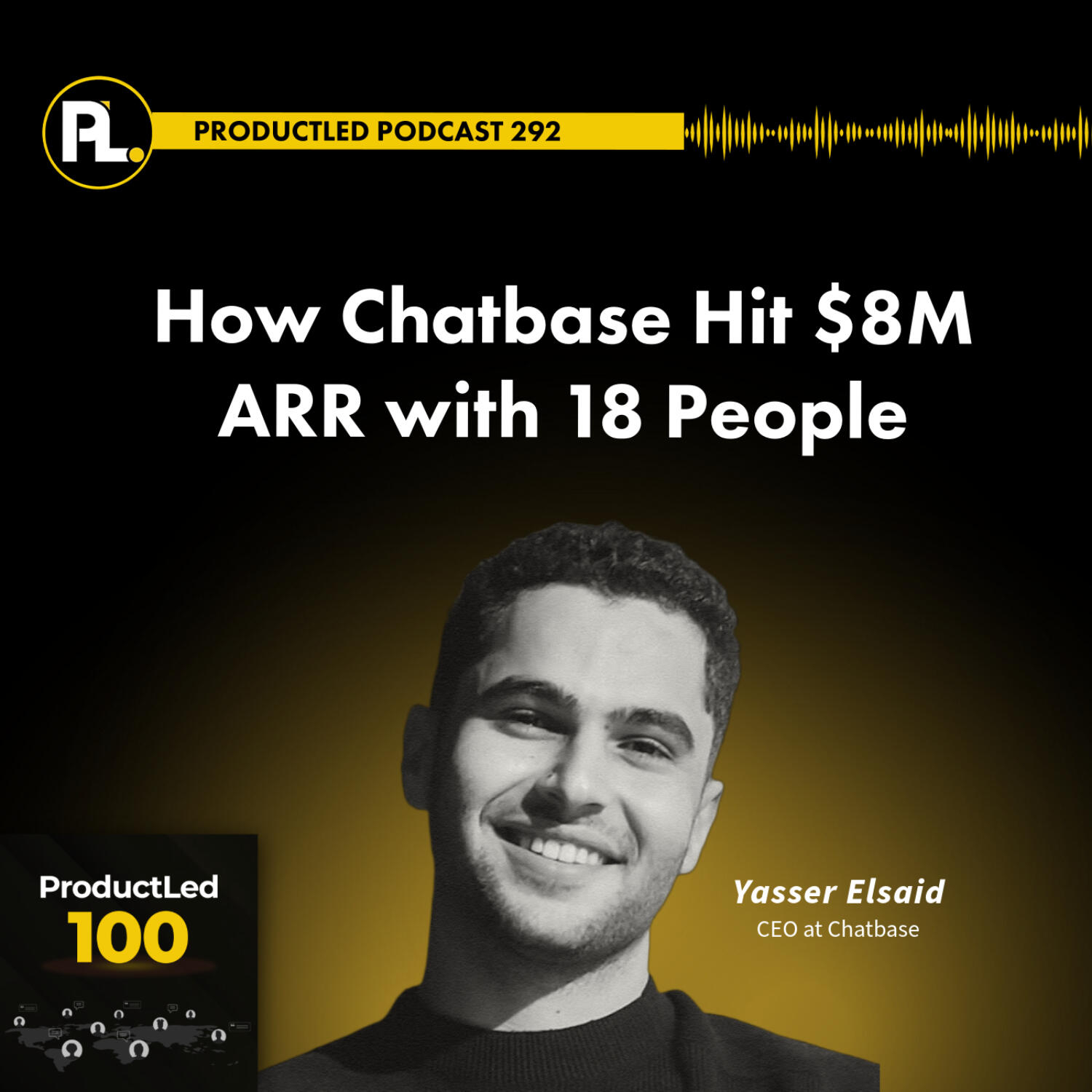
All right, everybody, welcome to the Productbed podcast. This is going to be a fantastic episode where we have Yasser, who has scaled Chatbase from 0 to 8 million ARR in just two and a half years with 18 people. And so he has done this bootstrapped and it's super product led. So I'm super excited to share with you everything that Yasser has been up to to get to this point. And with me I have my co host Esben, who is our entrepreneur in residence at Product Led. And he was the co founder of User Flow, which bootstrapped to almost 5 million in AR with just 3 people and pure product led growth. So, Yasser, welcome to the product led podcast. Excited to have you here.
- [01:15]
Yasser
Thank you for having me. Super excited.
- [01:17]
Host
Awesome. So Esme, do you want to kick it off with the first question? You're kind of like jumping in on this of like, hey, hey. Why did, like, how did Yasser seize the day around us? Because it's such an interesting product and opportunity.
- [01:28]
Esben
Yeah. So Yasser might not know this, but I'm very familiar with him and his launch of the product. Because Userflow, we also launched an AI assistant around the same time. So it was a bit different. It was more an in app widget, but very similar. And I think what was interesting to see and what I'm interested in learning more about was how did you even get started? Because you kind of seized the day when GPT 3.5 launched. You kind of, you were right there and launched the product. And this, I believe, was your first startup. Very interested in hearing a bit more about how did all this get started.
- [02:04]
Yasser
Yeah, so it's very interesting. I was in my last semester of university here in Canada and I saw like in the OpenAI subreddit and in the OpenAI Discord, I was just like doing like, just like some random side projects on the side Just to like see if the make money online thing is true or not or they're lying to us. But I was like, I have other projects. Some of them like, made like very little money. But I knew like, like actually like you can build a startup online. That's, that's the thing. And then like, I just like, like it was very early. Like this was GPT3, like DaVinci 003 model. Like it's very early, but people were starting to talk about AI more. So I just, I felt the need to do something with AI. So I just hung out in like the OpenAI subreddit Discord, like watched a few like technical videos and then I saw this concept called rag, which was not called drag back then, but it's now it's called drag. I think back then it didn't have a name and I think it just like clicked. Like imagine this technology, which wasn't like very powerful. It was powerful to anyone that first saw it. But compared to what we have now, it's like Nothing. But imagine GPT3. But the first idea was just like books talking to books. Because I was like, I didn't know I can do B2B. My idea was in the beginning B2C. So I was just like playing around with building an MVP for that. And then ChatGPT launched. The Internet didn't break until like maybe a few weeks after their initial launch. So I had some time to build, but the Internet did break when I already had like a product that like people can use. And I just like saw the wave and I just decided to ride it. So I just like started building in public and talking about. Everyone is now like talking about ChatGPT. But imagine ChatGPT for your content, for your book, talking to your books, talking to your like business documents, talking to basically like just uploading a book and talking to it. This was like the first version of Chatbase and this is how I made my first 9.99amonth from the first customer.
- [04:16]
Host
Nice. And how soon after was that from the timing piece? So like OpenAI had 3.5 and then they launched the public version. And then how long after was it like, hey, rehab, Chatbase.
- [04:28]
Yasser
So I wasn't using the 3.5 public version. So I was using the DaVinci model, which was before the chat models were a thing. So actually like, I technically launched twice because I launched when ChatGPT, like the product was launched. So I just like started talking about Chatbase then, but also I think a few months after they launched the API the ChatGPT API, which is similar to like the DaVinci Model API, but it was like a chat interface instead of completion. I just like, you know, like gaslit everyone to make them think. I built a new product on the new API, but it was the same product, just like changed out the API so people thought I made a product in like a day after the API was launched. And that's also like gave a lot of virality to the first tweet talking about you know, like the first product built using the OpenAI API. So yeah, I think this was like my second launch was after the OpenAI chat API was launched.
- [05:28]
Host
Got it. That makes sense. And then what did that initial launch look like after you know, OpenAI had come out with the public version as well and started, people started thinking about this problem set. Because I know we were just talking last week with David, the co founder of Typeform and he was like, yeah, we just like created this, you know, beautiful looking forum for our clients and then we did share it with a few other people and then boom, like 8,000 signups like this had tackled a pervasive pain point that a lot of people had not known they had. But once they saw a beautiful form they were like, ah, yeah, it's, I'm sending people this garbage, ugly looking thing, of course I gotta fix it. So just curious, what did that like initial kind of launch look like? What was the reaction from. From people too?
- [06:13]
Yasser
Yeah, so the initial launch was just like one tweet from like my 0, like 10 followers Twitter account. But then as I said like it was a wave. Like back then everyone wanted to be an AI influencer, so everyone wanted to talk about anything new and there was nothing new to talk about. Only a few startups were using these models and I think the market was just hungry for something to talk about and to try and it's just a new exciting technology. So I just posted basically a demo of a stream studio demo, like a screen recording of me uploading a PDF about chatbase, about like my product and then chatting with it to showcase like what you can do for your own business. I think it's just like maybe like 20 second demo, but it clicked very quickly because everyone already like in that space knows ChatGPT. But then like the idea of a ChatGPT but for their content they uploaded was like just very new. Like now it's super obvious. But back then it was like, oh wow, this is very interesting. So that's, that's why it went viral. And I started, I Didn't even have a pricing page at the beginning because it was like a side project. I'm just laying around. So it was just open. Anyone can start chatting and using my OpenAI credits, which was not a good idea. Really expensive, especially as a student. I think I made like $5,000 just through that launch, which I realized, yeah, I, I had to lock the website on everyone for a few hours until I put on the pricing page. And once I put the pricing page, I think I had the first payment 20, 30 minutes after the pricing page was live.
- [08:00]
Esben
I think it's very great launch story. Very similar to Typeforms actually that they just launched something and saw the success. But I also think in this particular case it speaks a lot to you. Grabbing on to a new technology as one of the first movers and really building one of the first. Call them DBT wrappers or what people call them today. Right. I think that was your first mover advantage that you were very quick not only to use it, but also to launch a product with it where others maybe found it more risky to do that. I think it's one of the. So my at Userflow, my co founder Sebastian, he's also engineer as yourself and he started Userflow at first without me and he has a very similar mindset about new technologies and just grabbing onto them. So maybe it would be interesting a bit to hear what do you think were the. Some of the. Maybe the pros or cons of you being solo founder, engineer, starting this company here?
- [08:55]
Yasser
I think it's very clear to me like what the pros and cons are. I think the pros is like you're the only decision maker. I think a democracy is not good for a startup. You need someone to make the decisions and you just need to. Everyone on the team need to trust that person and that person's vision because if you don't then you shouldn't be on that team, but just trust that and then move forward, execute on that vision. So I think I haven't done any startup with a co founder but what I've heard is sometimes opinions clash, especially if the responsibilities are not very clear who owns what in the product or the marketing. So I think having that just means that you move fast. You don't have to convince someone that we should do this. You can just go ahead and do it. I think that's one of the biggest things. And the second thing is it's also risky if you end up with the wrong person as your co founder. I think quite most startups Fail because of a co founder breakup. Because you only fail when you just stop trying. And I think it's easy to stop trying if you're working with someone you don't like working with. So if you just like want to get out. So I think that's like the biggest risk is getting the wrong co founder. But on the other side, I think getting the right co founder is better than not having a co founder. But I also think like that's not an easy thing to achieve, like getting the perfect person to be your co founder. But if you do, then like, if you have like full trust in them, you can just like offload something to them or like just trust that this is going to get done properly, which is something that is very important to have like that trust in someone and like, you know they're competent, you know they're, if they say something, they will do it. And also like the social aspect of it a little bit like someone to be with you in the journey that understands the struggle that is as invested as you, that's, you know, like feels the ups and downs as you because you will not have that even if you have VPs or like employees. It's not the same as someone that is not taking much of a salary but feels every bump in the road because they're as invested as you. So if I would rank it, I would say like an amazing co founder is better than no co founder, but I think it's very rare. But no co founder is much, much better than an average or below average co founder.
- [11:10]
Host
Yeah, I can definitely relate. Also a solo founder here and I think one other thing I would add into this as well is I think you can absolutely build great companies as a solo founder. The trick is there, like the cost is it's a lot longer sometimes to actually learn all the skill sets of like, okay, you have to know a little bit of everything to be great as a founder would be that generalist. So you gotta learn a bit more of like whether it's the operations, the hiring, the other piece. Whereas if you did have that person who's really, really strong at that piece, and like you said, you have full trust in them, then you can move a lot faster. So that is absolutely a conversation. But it's better than going solo if you don't have the right person because like you said, that could sabotage the healing even more than anything.
- [11:56]
Yasser
I think it's just safer, to be honest, but also like much, much harder to do as solo founder speaking to.
- [12:03]
Esben
The co founder thing. So I've always had co founders in both my companies, Cobalt and userflow. And I think with Sebastian, he was very, as I mentioned, similar to you, Yase, in the sense that he's an engineer, so he could technically be a co founder himself. Right. He doesn't need anybody. Where we, for instance, we spoke with Vincent Young on the podcast earlier and he has decided to be a solo founder, but he's technically not an engineer, so he's now using cursor and all these tools, tries to do it. But I think you're really empowered when you are an engineer already and understands the business and can do it yourself. Right. But the reason he looked for somebody was there was a lot of stuff he didn't like doing. So you wanted somebody else to do it. Right. And also as you mentioned, the social aspect. So I admire a lot these kind of founders like yourself who are engineers but can also launch a business. But yeah, they're definitely pros and cons to, to having a co founder.
- [12:56]
Yasser
Yeah, exactly.
- [12:57]
Host
So speaking of that right now too, like as you're hiring a lot more people, you have that. How have you or have, have you not been able to solve that problem as you scale as a solo founder? Because that is one of those things where it's like, yeah, you definitely want to, you have to hire some of those gaps that you do have on your team as well to make sure you can stay in your, your unique ability, like what you do best, what got you to where you are today, but also make room for, hey, we aren't a startup anymore. We have traction. We have a massive opportunity to pursue here. So how have you thought about like building your leadership team and, and hiring and everything else to kind of pursue that growth without losing your ability to, to focus on what you do best and what you bring to the.
- [13:41]
Yasser
Yeah, I think that's like the hardest part about building a startup is the hiring aspect, especially like leadership, because that like decides everything else. People see the value of joining a company like Chatbase. I think a lot of people actually like, prefer even if their background is like VC startups or big tech, they saw like what can go wrong wrong there and then they see a lot of value in joining a bootstrap company. And for example, like my equity or stock options means something here compared to like another place. I think it's easier for us now, especially like with revenue with like the brand. It's easier to attract the kind of person that I need. But it's still like it's, it's still A lot of work for me to find that person and also convince them and like show them why it makes sense for them to join. Which I think like is hard for any, for any company. But I think especially a company like this because like there's no like maybe like a co founder, then like you rely heavily on those like early exec hires. Yeah. So I think like just the main reason I'm going about it is having a strong brand that people actually want to come join or if I reach out to someone they like, immediately understand why this makes sense for them to at least consider joining.
- [15:03]
Host
But as far as your time, like nowadays, how much of it is kind of spent, like doing what you initially did to get the product off the ground, like building the product, focusing on that piece versus just managing the team and hiring and all those other pieces that. Would you say, like that is your sweet spot or is that not something that gives you much energy?
- [15:25]
Yasser
Yeah, it's completely different. Like what I'm doing now is very different to what I used to do when I was just by myself. But I think for me, I have the confidence that I can learn anything. You have to have that confidence. As a founder, I don't think, oh, I'm in my sweet spot only when I do product stuff or coding. I think if the business, my goal is to grow the business and I think I don't mind doing anything and if the result of that is seeing the graph go up, up and to the right, I don't think, for me at least I enjoy, for example, coding specifically just because I like to write code. The reason I enjoy it is because I can build something and that thing I can show to other people and they can see value from that. So I think whatever can get me that, whatever can get me to a better product that I can show people that people want to use and can see value from, then it's something that I feel like I'm going to enjoy doing. So yeah, I'm like very flexible on what I need to do. And I feel like I have the confidence that even if I'm not good at that thing now, I can just put in the effort to become good at that thing.
- [16:37]
Host
Totally. That's definitely the growth mindset. But on your end too, what is your biggest bottleneck right now? The thing that keeps you up at night, you're like, ah, we've been trying to solve this problem for a while. What is that?
- [16:49]
Yasser
I think the product is at a point where people are seeing a lot of value from. I think the biggest thing now is to make sure more people like see it and understand why it solves a big problem for them. So it's a lot about like getting in front of more people and making sure that you're expressing your value to them. So I think the biggest things I'm thinking about now is hiring, but hiring for growth. I think engineering is mostly solved if you hire good engineers. And I think it's very straightforward if you have a good brand and people want to join your company. But I think what's not explored as much is hiring growth people in this new way of doing growth. I think all the playbooks are very different. What used to work has stopped working. Things that may not have worked before can work now, like just new paradigms are emerging on like how to grow a product and also like some of the basics still remain. So I think figuring out like from first principles what we need to do to grow just as much as we can in the first, in the next year, figuring that out and then like finding the people who can execute on that and also finding the people that are not just going to come and like just do whatever is worth at their last company. But they will look at this company, they will look at our customers, they will look at the stage we're in, they'll look at what people are asking for and then figure out what the goal is, figure out the constraints, and then from that, decide on what the next step is instead of just copying what the other companies are doing or copying what used to work in their previous company. That's the focus. And it's hard to find people that have that quality. And it's also hard to filter for that in like an interview. You only see that when you see them do their job.
- [18:40]
Esben
I think that's really interesting. I can say the way we solved it at User Flow was to not hire.
- [18:46]
Yasser
Right.
- [18:48]
Esben
We believed that in order to maintain our DNA, especially you as a solo engineer, founder, you're very product led, very modern mindset in terms of how things are growing. And I think we have similar kind of mindset that User Flow, without sounding too arrogant, right. But we always felt like there was a big risk by hiring more people because everything was working with just the three of us. So why should we hire more? That could jeopardize that. That growth would stall or we would lose touch with our customers or we would, for instance, be slow on product. And this was a learning from my days at Cobalt, where I had definitely seen that we had grown the company to 200 people feature velocity had slowed down tremendously. You know, me as a founder had gotten too far away from the product at least to have an impact on it. I understood the product inside out, right. But my impact on the product became less and less. So do you see these? Is this something you think about when you're building out this team, that you also need to maintain your product led DNA and this kind of solo founder mindset?
- [19:57]
Yasser
Yeah, of course, but it's not easy. I think you have to be very intentional when you're hiring. I think it's important to make sure that you clearly explain the expectations of this role and this company because maybe it's a little different from what they do at other companies. And also you can't just say that, oh guys, we are product led. We need to talk to our customers, we need to have this DNA. I think one, you lead by example and two, you know, like you have to do founder mode. You have to actually be in the details, actually, like make sure things are getting done the way that they need to get done. I think delegating is important, finding the right person that you can trust to handle things and like, you know, they're competent enough to like do what you need or what needs to be done. But I think also like all the founders, especially if they do, like, if they still care about building an amazing product, they have to be in the details. You can't just delegate and forget. I think you can have someone own something and have the trust in them that they have the experience or the competency or they're smart enough to handle it. But I think you still need to follow up, understand the details, understand why they made the decision, especially the big ones. And then maybe after a while then you see everything is good, then you can focus less with them and focus more on other things. But yeah, to maintain that DNA, I think it's just like you have to be very intentional and put in the work. I don't think there's shortcuts to that.
- [21:32]
Esben
I agree. One last question around this maybe is I think, and that's really what determines how you think about this. And hiring versus not hiring is really what you consider success, right? Because for Userflow for instance, we just wanted, you know, a highly profitable business, pay ourselves really, really well and always have the optionality to get acquired, which we ended up being. But how do you look at what is success to you? Is it to build a 100 million business or what? What is success to you?
- [21:59]
Yasser
Yeah, so I think in the beginning the success was More the financial side. Like we, I wanted that and I think like, like I think that's how probably every entrepreneur starts out doing. And I think like I still want that. Like this is like one of the big reasons that I'm doing this. But I think now as we scaled, I feel like we're doing a lot of things wrong right now. And there's so many easy wins, there's so many missed opportunities, but we're still growing. And I think I can see clearly how we can get from here to 100 million ARR. And I think an opportunity like this you shouldn't miss out on. I feel like, because it's not very common for me, the financial security and being able to have that freedom and autonomy. Probably like the biggest reason I'm building chat base. But I think like I can't, like I can't sell now, but I don't want to because I, I think like, what if, you know, like, what if I can get to like that point? What if I can like do this and this and this. But also like there's a lot of risk with that too for me as like a bootstrapped company and I'm trying to like do something, you know, generational, do something that like has been done very few times. Like for example, like getting to 100 million ARR bootstrapped while building this amazing brand, while having this product led mindset and like people know about us, people enjoy using the product. I think, and I honestly think it's like not very hard to do. I think like we're past the hardest point getting to here, so I think I can see like how we can get there. Very, not very easy, but simple. Like I know the steps, we just need to execute on them.
- [23:37]
Host
Yeah. And it's been. Anything else you'd add to that as far as like thinking about exit timeline and stuff like that.
- [23:42]
Yasser
From your experience too, I think it's.
- [23:44]
Esben
Always about how much risk are you willing to take. I think at Userflow we could also have continued and we had the same kind of mindset, winners mindset that you have around your products, that this product can keep going. Right. But sometimes you get an offer you can't refuse or you think you can, we can always build another startup. Reality is probably that it's very hard to actually build these kind of startups growing really quickly. Right. And you're kind of underestimating that. We'll see if I ever do a third startup. But yeah, we decided to take the risk off the table and sell the company. But I can also follow your path. And the power of being bootstrapped and profitable is you can pay yourself a really good salary along the way. So I think that is something, if I was you, would focus on, continue to focus on that. You need a really good salary because then you can keep on going on this journey to 100 million AI. And I think that's an amazing journey. I would love to also do that journey. But in this case, I decided to not pursue that.
- [24:43]
Yasser
Yeah, no, yeah, I think it makes sense. I think like both arguments are very strong arguments. I think it's just like a very case by case decision.
- [24:51]
Host
It's not one or the other two. So we had G from Lemlist on the podcast as well. And so he got an offer that was like valuing his company at $150 million valuation. There was three co founders and so they were offering them like, I think for 10%, like 30 million or something like that. Somehow they all had 10 million at the end of the equation. And instead of reinvesting it into the business, which is very typical, they're like, no, I'm going to purchase that house I wanted. I'm going to like just be set if this, this goes to crap. And it's like, we know we've de risked this. And so I still remember the conversation with him. He was like. And that gave me the freedom to just go all in even more because he's like, everything else is just generational from this point, like, I got myself taken care of. I have not sold the company. I have majority stake. And so I just wanted to share that option too because there is a lot of ways to do that where there would be a ton of people. I'm sure they'd be happy, like, hey Astra, here's my money. I'll take a small smidge of that in the events you do exit at one point. But yeah, there's, there's lots of fun stuff there. Cool. I want to go back to activation because you mentioned like this is your biggest bottleneck right now of like getting people to value as soon as possible. I'm, I'm working on an article right now too, which is like, what is going on in AI space right now where companies are like, I call it warp speed, where it's like they go from zero to a hundred million in less than 12 months. And it's like I found there's like these four things. There's like one they win preference. So like the old workflow that they used to do like how they used to accomplish something. It's like it's obsolete and nobody wants to do that. Same approach. I think like as far as what you do at Jetbase, like the way you approach it, it's really simple, is like upload your docs, it understands, it connects. Now you integrate with like Zendesk, Salesforce, all those other apps, it's like great. I think like preference, you're doing a really good job on the pervasive pain. It's like it's, it's there as well. But activating instantly, it still takes a little bit of time. You got to get your docs as well. So I'm curious, how are you thinking about getting users to value as soon as possible? Because like the new bar I'm seeing in the AI space is like 60 seconds or less of work for the user and then it's about value and so how can we get people to that point as soon as possible? So how are you approaching that? How are you thinking about that when it comes to activating users instantly?
- [27:10]
Yasser
Yeah, so I think, I agree. I think a lot of companies are focused on that. A lot of companies even like don't have landing pages. Their landing page is like a text input. So you can start like using the product. So like it's not even like 60 seconds, it's you just open the website and you can start using it. Sometimes like there's a login after. I think like that idea of show, don't tell more and getting to value as soon as you can. Not even like before, before an onboarding, like just show them like what, what you can do. So I think like, it's very hard to do with like it's, it's, it's different between like every product because some products like you need some effort from the user to show them the value of the product. Some products last. Some of it is just like one prompt, Some of it is just like you need integrations and you need permissions from their accounts or something. So it's just not easy to do. I think if you want to build a product led, less sales, more self serve that style of product, then I think you can do something that needs a lot of work from the user to show them the value. I think the less amount of time between first opening your site and then getting into value, the better. We just like changed our onboarding and now we don't even allow you to put documents in the onboarding because we feel like that's friction. The only thing you can do is put in a link to your site and then it's just like next, next, next, next, choose next, choose next. And then it's like maybe 20, 20, 30 seconds and then you're done. And along the way we're showing you what the product is capable of without asking you for too much. The way I think about it is you can be half asleep and don't want to do this, but you can just put a link, click next, next, next and you're done. And it's just like extremely simple.
- [28:56]
Host
This is so good. It's the ask to give ratio. So what you're asking is I want to link to your site which maybe you even pull from the email if they use a work email. Even easier as like the amount I give is like look what we can do. Because having gone through your Omri experience too, I remember the files I was like, I uploaded, I think like 10 or no, it was my book. So it was really long. Like you've hit the limit Wes. Like no, but yeah, like the, the site, that part did work. And so it's like really leaning into like what parts of your product, what is the minimum viable amount of stuff people have to do to get to the value where it's like okay, I can totally get what this product does and, and what it looks like. So that's definitely really, really smart.
- [29:38]
Yasser
Like they should be able to do it with you know like two brain cells. Like the same amount of effort that you use when you're like watching TikTok it's just like extremely simple. Like no, no effort from the user. If your goal is a product or like self serve product if it needs more effort or like if the product just needs like some input from the user to like be able to show them something then it's just going to be hard to grow. Like with self serve you'll need to do sales and take them through that journey on a call. Wild Glove experience because people don't know you to put in effort because there's thousands of other startups and there is no reason they put in effort into your startup specifically. So I think you either make it extremely simple or if it can be then you have to do sales LED for sure.
- [30:23]
Esben
I think one area that kind of relates to this is when you started the product was a lot more simple, right? It was basically like connect your knowledge base and chat which makes the onboarding super easy and that's maybe why you got super fast adoption. Now I can see your product has evolved a lot and maybe you can speak A bit to how the product is evolving, but also how you think about activation when it comes to this evolvement. Because it often becomes much harder as you build more features, you build more stuff. Like should you continue just to onboard on the small piece that you originally onboarded on or should you, you know, make it more advanced? Like, how do you think about that?
- [31:02]
Yasser
So the way we solve this is like you have to make your product more complex because you want to solve like more things and you want your product to be complete. Not just like do one thing, but also you want to make sure that the user experience is good and people can see value quickly. So we made that mistake. We added more features and then we forced users to use those features, basically, especially before that. The issue was we forced them to use it before showing them the value. So the way we solved it is we have technically two onboarding. So one onboarding is the goal of it is to get you to value as much value as we can with as little effort from you as possible and as quick as possible. And that's the first part of the onboarding, which is just put a link, just click a few buttons. Most of them are just default, so you just click next like, you know, like it's vibe. Creating your AI agent, you're not putting any effort and that just gets you the first version that is impressive enough to hook you and like to convince you to put in more effort into actually like setting up their. And then like the second part of the onboarding, like once you see the value, then you can do stuff like connect your Salesforce instance or connect your Zendesk, connect your stripe, add like AI actions, add your calendar, like this stuff like I can't do for you. Like usually there's no way to do it for the user. You have to get their input, but you need to convince them to put in the effort. And I think the way to convince them is you either make them pay before they do it, so because they paid, they're more willing to put in the effort, which is that's one way. The other way is to show them like a sneak peek of what they can get once they put in this effort. In our new onboarding flow, we're technically doing both. First onboarding is just to get you to value as soon as we can, and then we try to make you pay as soon as we show you the value. You can decide not to, and then you can, like, you won't have access to those features, but if you do pay, then we take you to the next version of the onboarding, which has all things that are like, require more effort. And I think once a person pays, then they're more likely to put in the effort. You just see what they get for what they paid for. So, yeah, I think that's like the biggest thing that companies should do is get the user to the MVP or like, the value as soon as you can. And while you're doing that, encourage them to see the value of putting in the effort.
- [33:25]
Host
For sure. We call that the first strike at product led. Like the bowling alley framework is like, all right, what is that first one? What does that look like? Make it super easy. But I think what's super helpful that you're alluding to, especially if you do have more complicated products, not to say job is a super complicated, but there is a lot you could do with it. It's the minimum viable first strike. And then what's the next, like, key usage indicators. Like, okay, what are the other things you could do to be fully adopted? Because if they just keep doing that first one, they're like, yeah, I just use this for my website. You're like, well, that's cool, but we do a lot more than that. And here's the next step if you want to utilize our full value here.
- [34:01]
Yasser
Yeah, exactly.
- [34:02]
Host
Cool. And how do you have your team broken down? Like, what does that look like? I know you mentioned when you're at 8 million, you had, I think it was 18 people. So how did you initially kind of build out your team? Like, if you go from at the very beginning is of course just you. But then what were the next few hires and then what does it look like today?
- [34:18]
Yasser
Yeah, so first thing was, was customer support and like one engineer. Because when I launched, it was just like too overwhelming. And like, I didn't know. I was just like replying to people on my personal email. Just like to start. It's crazy. And now we're doing like a customer support product.
- [34:36]
Host
Yeah, you solve that problem with the product now.
- [34:38]
Yasser
Exactly. I had to build a product to solve it for myself. But yeah, I think like, the first thing was a person to work on our customer support and someone to help with building the product. So I hired one of my friends as the first engineer. And then over time, like, as the product progressed, like, initially, like, I assumed that you don't need as many engineers because from the outside the product, it's straightforward. Like, like, people do demos of AI agents for their business all the time, even if they can, like, have voice and do actions and Connect to their systems and all of that, it's pretty simple. But when you actually like want something in production, it's like a completely different beast. And that's why you see companies that are like 10 billion or like raised like 250 million or have like 1500 people on the team are just doing that, just like solving AI for customer service. It's like an iceberg of it just looks like small on the surface or looks like you can't actually do it, but it's just like too many things. So I think the next few hires were also engineers as I learned that to actually have something good in production, you have to build an amazing product. And over time now I'm going back to focus more on go to market. So now my priority is to hire our first account executive, our first SDR ahead of growth. Those are the next few hires. But when we hit 8 million ARR, still most of the company was engineering. I think 11 people then was just engineering and then the rest was marketing. We have three people in Canada and then the rest are customer support.
- [36:07]
Host
That's pretty good I guess on the marketing side, those three people I know you're investing a lot more in like founder led content and everything else. Like were they mostly focused on like the LinkedIn piece of it or what else were you doing to bur up that like go to market side and really build that muscle and engine there to take you not just to 8 but to 80 plus million when it comes to building that muscle there.
- [36:29]
Yasser
So there's a few things also there's a few aspects we're focused on. So like for example Sandra, she's our marketing person in Finland, she does a lot of the content on LinkedIn. But I think now as we're like growing the team, it is a priority for like everyone on the team. And you will see that a lot of other startups are starting to do that, like a lot of employee led content on LinkedIn. So that's like LinkedIn in general as in terms of content, in terms of outreach, in terms of connecting and you know like all of that side is very important. And then the other side I would say is building the brand. So that's like video content, that's talking about the mission, talking about your customers, who you're solving this for, who are you even like what's the company, what, what it stands for. That's how you stand out I think because it's very hard to compete on product because every company has the same features now. So I think the Biggest things you can compete on are user experience and brand. So I think that's like one of the most important things, I think for us. Then the third piece is sales, which is something very new. Like, we, we have got to this point just on product led self serve. I think it's very obvious that the next phase of growth for us will be a lot of sales. And we already have like, a lot of inbound interest. We want to work with that and also, like, start doing outbound too.
- [37:45]
Host
Okay, awesome then. Yeah, I imagine you got the inner workings of a good product led sales motion too, of just identifying who are those, those great fit people or accounts out of that 98 people in New York City you were talking about earlier. Well, I know we're coming up on time here too, but is there any other takeaways you'd have for any product or founder that's listening to this? That's like, wow. Yeah. So you're amazing. You, you went from zero to 8 million two and a half years, first time founder. That's like, so awesome. Like, what would be your. If you were to, like, sum up a couple recommendations, what might those be? When it comes to somebody else who's thinking about doing the same thing? Like, I see so many amazing things you. You did here, like the crazy first mover advantage. You, you knocked it out of the park. You did awesome on that. You really built a great product. And I think a lot of people try and miss that part. They're just like, trying, oh, yeah, let's chase the numbers, let's build a business. But it's like, at the end of the day, if you got a crappy product, it's way harder to scale that up too. And so what would be your advice to other founders? Listening.
- [38:45]
Yasser
Yeah, I think the point about building an amazing product, like, you can't mess with that. If your product led, your product has to be amazing. You need to have people champion you to their friends. Like, like people feel good when they recommend something to someone else and like, it ends up being good and like that other person is actually interested in. So I think you need, you need that. You need to have a product that is impressive enough that a person wants to flex, that they know about this product before other people. That's like the level of brand and product quality that you need. It's like, oh, I'm gonna put you on onto this amazing product. You need your customers to champion you like this. And you only get this if you have a strong brand and like a genuinely good product. That people enjoy using. And that only comes by doing the basics, like talking to customers, actually listening to feedback, you know, taking notes, writing them down, doing that a lot, doing the things that don't scale, and then using that to just improve your product. I think a big piece people are focused on, which I think is important is like distribution. A lot of people are just focused. How do we grow? Like virality, you know, like getting in front of more eyeballs. But I think you can, you can do that. But if you don't have a product, then like, what was that for? And even if people will use it, it'll just churn. So I think the only way you actually build something that is long lasting and generational is if the number one focus is the product. And I think maybe the other point is if a founder has not raised the biggest round from a VC or is saying maybe some of them are bootstrapped or seatstrapping, they only have one round. I think some of those founders are reserved or shy about what they're building and what they can do. I think it's all about mindset. I think you have to be just aggressive. You need to act as the company you want to be before you actually become that. So I think a lot of maybe founders in that area I talk to, I don't think they're dreaming, like big enough or they're focusing on the big goals or they just say like, maybe they put themselves at tier 2 or tier 3 startup because they didn't raise like a big round. If you act like it, if you actually are aggressive enough, if you put in the effort, then like, you'll have a better product. It's just like about execution at the end of the day. And once you do that, it's easier to grow. And the amazing thing is your definition of success as that company is so much easier to achieve than a company that raised, let's say like 100 million. Because for them to be successful, they need to be like at least a billion dollar or like $10 billion company. But for you, if you have that mindset, you'll actually get close to what they can achieve, but you'll be successful much, much earlier than them and like, much a lot more straightforward.
- [41:29]
Host
That's awesome. Well, thank you so much for coming on the podcast. This has been awesome, Yasser, and we're going to have the link, of course, to your LinkedIn where people can keep in tune with what you're doing on the content front and see how that evolves and improves over time. And then also we'll link to Chatbase Co as well for people to check out what you do. But first off, thank you so much. This has been absolutely fantastic going through this with you.
- [41:52]
Yasser
Yeah, perfect. Thank you for having me. This was great.
- [41:57]
Host
And to wrap things up, thank you everybody for listening to this version of the product led podcast. Make sure to rate review this on wherever you listen to podcasts, whether it's Apple, Google, you name it, Spotify. I'm going to read every single one of those reviews and that's how I know how to improve this. Also, if you want to stay in contact with me and learn what is going on in the world of PLG and every single week get the best actionable deep dives on product led growth. Make sure to head on over to product led.com forward slash newsletter. I am personally writing each of these deep dives every single week and you're going to get a ton of it. So make sure to head on over there to product led.com forward slash newsletter.