Loading summary
Transcript45 lines
- [00:00]
Christian Bach
A baseline truth has to be. You have to be able to deliver a magic moment quite quickly. If you can't do that, then maybe you shouldn't do the plg. And so we started mapping out our worldview and we spent a bunch of time on that saying, okay, so this is where we think it'll actually end up. And then we reversed engineer it and said, so what can we provide?
- [00:18]
Esben Andersen
You were part of this paradigm change, but you also helped create that paradigm change, right? You pushed that for that paradigm change to happen.
- [00:25]
Christian Bach
The only reason we were able to tell that story and get away with it and convince others to join us was because we had spent all that time not on our product or solution, but on sort of what's the end goal of this architecture and who else is going to be part of it? What are the patterns that are going to emerge from it?
- [00:44]
Bea Arthur
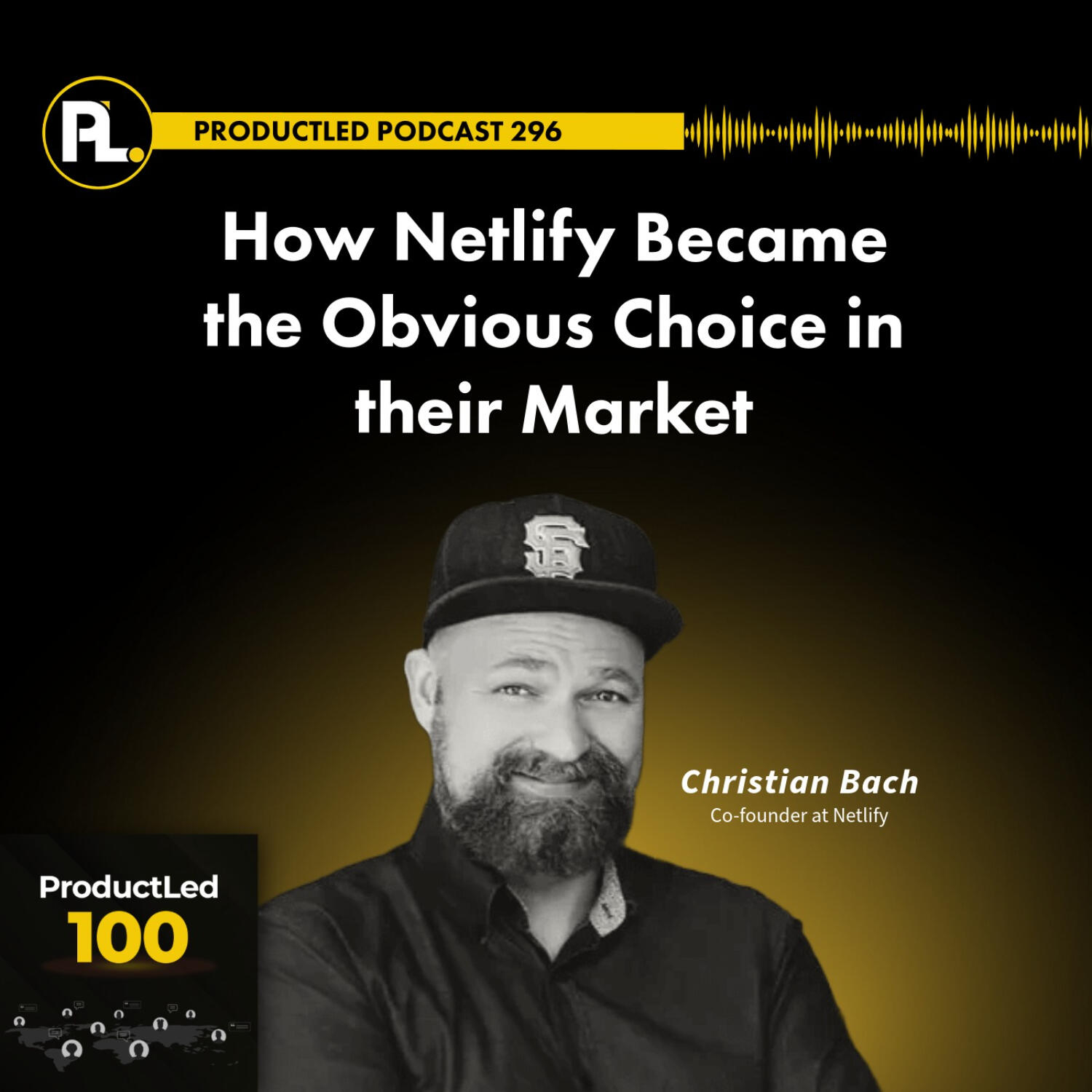
Hello, everybody. Welcome to another episode on the product led podcast. Today we have a amazing episode with Chris, who was the founder of netlify. And so netlify is one of the major players in, in the development ecosystem and one of the things that they have done just a fantastic job on is really designing a business that is the obvious choice in their market. And so what you're going to learn this episode is really how to create a compelling world view of a very unique perspective on the market where you see it happening and really execute ruthlessly to actually make it happen. And so in this episode you'll learn just how to do that. And I'm here with my co host, Esbend, who is our entrepreneur, entrepreneur in residence at Product led. And you're going to learn a ton in this episode. So let's get into it. Cool. Well, we're pumped to go through this. Esme's been telling me a lot of stuff about where you've been doing it, Netlify. And then what are you mainly focused on these days?
- [01:43]
Christian Bach
Netlify was sort of trying to enable a new architecture for the web where we would go away from the monolithic applications which were sort of leading the web into a bit of a dead end. So just distributing the runtime. Right. But that was. So it was enabling a new architecture. But of course, in the beginning, you know, things like E commerce and all those things didn't exist for anything else. Right. It didn't, you know, it only existed in monolithic versions. So you couldn't really build anything with netlify for enterprises. Right. In the beginning it was more sort of for blocks or every. Anything else was very self architected. So we were very dependent on ecosystem to grow up around us. And so I was leaning into that heavily. Right. And also both as an angel investor, as an advisor, as a, you know, a board member in some companies. And, and so when I stepped out of netlify for my full time role, you know, I still sit on the board. Right. But then I, you know, I was involved like 60 companies. Right. And also some nonprofit work and so on. So I was just doing more of that and then I started getting itchy fingers last year and so now I'm involved in two other startups as a co founder as well.
- [02:44]
Bea Arthur
Nice. That's awesome. And I saw there, there's still stealth, both of them or.
- [02:49]
Christian Bach
Yeah. So one is a late stage, right, talent star which is all in one super app for football players in clubs and academies. So yeah, it's the first big sort of all in one platform for football, which is really interesting. And the other is it's a prediction company where we sort of essentially figured out a way to be much more accurate when it comes to complex predictions and sort of a building a whole company around that, which is also super interesting. So it's a AI research lab.
- [03:13]
Bea Arthur
Nice.
- [03:14]
Christian Bach
That's awesome.
- [03:14]
Bea Arthur
And is the predictive one, is that like a live website yet or where is that one?
- [03:19]
Christian Bach
Ptl.in so there's a very basic website up there, but still in, in stealth. And also just from from our own point of view, like sort of this is not a product per se, that's sort of a software as a service offering. Right. It's more something we do use ourself both in the world of finance and in other applications. It's, it's a very different play than netlify for example, which is all about build something and then let as many developers as possible use it to build whenever they want it. Right. So. So it's a very, very different play. Cool.
- [03:49]
Bea Arthur
And so most of the people that are going to listen to this are what I would call like productbed founders. They built a very like product LED company and they're looking to scale it up a lot faster than usual. So what would be like maybe your one or two things where you would say like absolutely, this is like my masterclass for product LED founders. Like what would kind of stand out to you? It's like this is maybe it's ecosystem play, how that works for you or is there something else where you feel like, hey, this is really what I would love to dive in here and
- [04:18]
Christian Bach
tish in the beginning, you know, something like that is like it's a decision that should be made from. Not because, hey, I want to build for this group more. Sort of like this is, I'm trying to solve this problem, this is my solution. Who does it cater? Like so in netlify's case, for example, right. You couldn't really do it any other way because as I said, we were building out a new architecture for the web, right? Or supporting that. Right. And so we build a platform that would do all the workflows and hosting and all these things, right? But there weren't a lot of microservices yet or headless services like content management and commerce and so on there. So we needed developers to come and use this, play around with it. We need an ecosystem of other services to start catering, you know, the headless CMSS and the, and commerce solutions and all the other things, right? And you know, we needed the API economy to grow and so on. So there was only a bottom up movement available to us, right? Because if we had tried to do it top down, there would have been no application for it. Right? And so necessity dictated that we said, hey, what we have to do is enable developers, show them that this is viable, make that workflow be their default choice and then create avenues where this workflow can be more and more relevant for larger and larger tasks, right? And whether it's architected by companies themselves from within or by, you know, just third party services being more and more available, more and more sophisticated. Right. Over time. And so I think for us that was the notion, right? Like that, that we needed this to be a bottom up adoption and then grow it from there. But I think other times you're like, hey, this should be plg, but you're actually building an enterprise offering, right? Or you're building something where the value is only apparent if it's adopted across an organization at scale, for example, right. And then, well, if you can't create a magic moment for the individual user, right. Without a lot of sophisticated understanding and usage upfront, like building a bunch of stuff, well then that's going to be really hard. Like I think like a baseline truth has to be, you have to be able to develop or deliver, sorry, a magic moment quite quickly, right? And so if you can't do that, then maybe you shouldn't do the plg. So I think like the first step here is to actually identify what is needed for the success of this, right? And predating that is what am I actually trying to solve for, right? So I think like those are the first things you have in place and then if you're like, okay, well this actually does need a bottom up saturation, then you could talk about what are the best practices in doing so. Right. But I think like sometimes I see companies when I speak to them, they are, you know, trying to find product market fit or doing it friends and family around or whatever it is when they're very early that are sort of skipping those steps, right. And just saying, hey, I want this motion because that's what I, that's what I did on my last job. Right. Without really thinking about whether it's a problem that will be solved that way very well or whether it's a product that will actually extend itself very well to that kind of adoption.
- [07:17]
Bea Arthur
It's such a good question, like the couple you had there, like what is required for success of this and what am I actually trying to solve for? And like how do I best solve it? Like, the example I usually share with founders is a lot simpler. It's like canva for instance. Like their big vision is like, how do you democratize design? And I'm like, I don't know any other remote possibility than product led growth and how you could execute on that. Now with netlify it's same thing. It's like, I don't know how else you could potentially do that. But there is also a big swath of companies where it's kind of like, well, we could do product led and we could do sales led and we probably should do both hybrid at some point. And so what would be your advice to those companies where it's like, you don't necessarily need the full entire organization bought into the product to make it successful, but you might need like a department or something like that to kind of make it work, but you kind of don't sit like black and white.
- [08:14]
Christian Bach
Well, I would say in, in those cases I think you have to choose, right? Because I think what I see sometimes is saying people, people will say that, well, at length, this has enterprise application, this has, you know, application for the individual, right? Like we could do both, we should do both. And that might be the case. But not at once, right. I think like, you know, it's hard, there's so many hours in the day in a startup. You have limited resources available to you. Right. And so I think if you're do both, you probably will do both like equally. Not well, you know, so I think like in that case you have to look at that and like if you really, if it is, I can't Think of, you know, there's plenty of examples. I can't think of any right now. Right. But if there is a place where you could really do one or the other, I think there's several ways of coming, trying to get at this. Right. Again, like one of the things is, for example, I was, you know, I sit with a company that's doing very sort of full stack, serverless. Right. And when they talk about the application of it, it is very much sort of within large operations that are using this at scale. That's where the value is. But the way the product is being used today is very much sort of like experimental. And you do a little thing here, a little thing there. Right. And so there's sort of a. The value add and the product adoption. Like there's a gap right now. And I think that's why there's sort of in between two chairs. Right. I was thinking, well, on one hand, the product discovery right now extends itself to the product like growth. It's more sort of an individual, they're more playing around. You might not have a big project in mind yet. On the other hand, the actual value of the product at Linked comes from full adoption inside the organization and less about, you know, right here now. And so how do you, how do you go and solve for that? Well, that has to be cohesive. Right. Like, so either you change the value add or you change the adoption method. Right. And you say, well, I can't change the value. That would be the product. Well, then you need to, to think about sort of how do you create a product that isn't just about sort of hobbyist discovery. Right. But has a more clear path to what's building enterprise, at least application. And I think like. And it could also be vice versa. Right. I think, I think the truth is that if you are, if you extend equally well to both sales that and product led, you should choose and you could also choose. But what's our DNA like if it's a bunch of founders and early engineers and so on that are in the company and they all sort of, hey, we're solving problems for developers. That's why we joined. This is fun. This is the language we speak. We understand, that's where we're from, that's whom we want to cater to. Well, that can give you the answer. Great. Well then make sure that your product experience supports it, but also that your value add for whoever needs the flexibility and will support it as well, you know, and create something cohesive might be
- [10:47]
Bea Arthur
of probably like the 10 to 20 conversations I've had with sales tool founders. They come to us at product led like we want to go product led and everything. And their DNA is just, you know, they live and breathe sales. They are their ideal customer and it's so hard for them to make it work because they just immediately think they're like the easy path is what I know. And then it's like, yeah, why, why switch? But there is a certain point though where it's like, should you change the DNA because your market might necessitate it? If everybody else is doing that approach, you can't differentiate. Which kind of gets me to. I was preparation for this as well. I was talking to one of my head of product buddies and he's like, you know, Netlify is just like, if you get into that space, they're the obvious choice in the market. Like they have just done a fantastic job positioning themselves and if you want to like do netlify does, it's like you just use them. There's no like really close alternatives as well. So I'm curious, how did you go about creating that category and really designing in a way where it's like you truly have become the obvious choice for people?
- [12:01]
Christian Bach
Well, I think like for us, what was very important and what I, it's probably the number one thing I feel is missing when I'm sort of involved with startups that go fundraiser and so on is that they don't spend enough time on context of their solution. So they're very quickly, you start with a problem, you figure out, hey, I want to build this. Or sometimes you even start with a solution, right. They rarely fare well, but, and then you're, you know, but otherwise let's say you started with a problem, you and you figured out the solution and then you're just heads down on the solution, right. And I think, you know, maintaining a focus on the problem you're solving for but also the contextual part of it is really important. So for netlify for example, right, our MVP was called Bit Balloon. It was a drag and drop interface where it's instantly take a website and sort of deployed it on a distributed cdn. So the CDN that was repurposed for small files so it would work for websites and not just media files, which was the case back then. But I think, and also for me to understand this because Matt was the, you know, very much the builder and, and, and, and the one that had the technical vision, you know, I had to, to, to wrap around this. And so I had a million Questions. And I did a lot of diligence and for me it was also sort of saying, okay, well the technicality aside of what's built here, what's the largest scope, right? Like, let's say that people are using this, what else will they be using? Okay, so what would the world look like if this was default, which it has today? Like there is no monolith, you know, back end building out the front end. Like, it doesn't matter if it's an agent doing this for you or if it's developers themselves. Like, this is just completely default architecture. And of course all these services did indeed become headless. And so we started mapping out a worldview and we spent a bunch of time on that of saying, okay, so this is where we think it'll actually end up. And then we reversed engineer it and said, so what can we provide, for example, in this that we can't provide? Also E commerce and content management and all these things. And that wouldn't really, that would be one product. It's not furthering an architecture, right? That would just be our own opinion beneath the code. So it would just be like, you know, who cares what, I don't know, Shopify or something, right? Like dust, right? Like it serves a function and if they have a smart CDN underneath it, great, right? Like as long as it's performant and it works, we're happy. Right? But that doesn't bring about necessarily an architectural shift for how everything else is built. And so what we found was at the end of the day was that the developer workflow, which was if you split something out from a monolith and you had sort of different moving parts where you can mix and match, how does that actually work? How do those things become aware of each other? How's it tie in together in build time and how is it distributed and how do you take advantages? So one thing is that it's decoupled, but another thing is that, that you actually take the theoretical advantage of much faster load times, a better security and so on, right? More scalability and you execute on them. So if you had all put it in a S3 bucket, for example, sure it would have been decoupled, but you wouldn't have been reaping a lot of the potential rewards, so it wouldn't have carried the same benefits and why would you then bother, right? And so I think for us it was sort of like, that's where we can come in and we can help with that, that we can control, that we can build, we can Build that workflow, sort of abstract away the hosting, do these things. So all you do is build up the website, choose your tools for that, and then when you're ready to deploy it, we'll take it from there. But that really came instead of saying that's what we want to build, how do we make sure that that fits? Then like, who should, like how do we create a surface area here that fits into the rest of the world? It was vice versa, sort of trying to figure out, okay, we're fundamentally talking about an architectural shift, how what else would need to be built and you know, spending a bunch of time on that and stuff. We knew that we weren't being going to be able to cater ourselves and then reverse engineering that worldview into what can we do to bring that along. And so that's how we ended up with what we wanted to build first. Right. And then as I said, a necessity of that became that this obviously had to be bottom up. There was no other way because we now were very acutely aware of all the other things that weren't built yet and had to be built by others. Right. So it was very easy to see because we took that approach, what would be missing and that would dictate our go to market as well. Right. So I felt like because we did in that way, we ended up making some product choices that also made us stand out. Right. And another thing is this notion of how do you tell the story because you have to go and, and raise money for a new type of platform in a category that doesn't really exist yet. Right. So sort of there's two moonshots in this. Right. And that can be a little difficult. And we did that by, by bootstrapping until we were serving like a quarter billion requests every month for like wework as a core capital and other companies out there. So we had some more proof in the pudding. But so that was one part of it, right. I think another part of it was also this notion of, of redefining the story. Right. So again you come and you tell. That can be investors, but it can also be employees, it can be your users. It could be a lot of different people. And of course different people have different stories they need to hear. Like if I have a site that's pre built and I need to distribute it, I just need the technicality of understanding, hey, if I push this to Netlify, this will happen and I'll get a URL and I'm done. Okay, so that's a small, narrow story because I have a certain problem, I'll be told. And if you tell me a big story up front, then you're not solving my immediate problem and then that's not gonna work. But still you have a larger story that, that you, you tell for example to investors. And I think in that case, if we had said we were a hosting company, that was a zero sum game already, right. That was a race towards the bottom. Like no one would touch us with a 10 foot pole, right? We're not like five years, we're 10 years late to the market for that. Right. At least. You know, and then if we had said like oh, we are cdci, they would say, well there's several other players. No one has really monetized it large scale yet. And you're already behind it. Us, you know, code, ship and circles. Yeah, and Travis and there's a bunch of those. Right. And so what we said was that because we had done this, we'd spent so much time seeing how the world would evolve and reverse engineering is what are the technical advancements that will lead to that. We sort of had a thesis on this is how the world will look and already does look. Right. And so we said, well, the use of get right, the use of, of, you know, the advancement of JavaScript, the browser that has gone from being a document deal to being a full fledged operating system. All these movements are part of a new way of building and that's where we sit and we're utilizing that. And then we can attach our ride to something that was going out of niche and into growth and growing very fast. And I think a lot of VCs for example, will look at market traction and your traction. And so instead of saying we're part of the hosting thing that was a zero sum game and fully matured and not in growth anymore. Right. Where you would have to do the uphill climb of taking market away from someone that's extremely well capitalized and established already. We could say no, we're part of this new thing over here. Right. And I think that would have been a lot harder to do if I had just focused on our own solution. The only reason we were able to tell that story and get away with it and convince others to join us. And I mean not just join the company, but join the sort of the, this, you know, furthering this new architecture was because we had spent all that time not on our product or solution, but on sort of what's the end goal of, of this architecture. Right. And who else is going to be part of it and what are the patterns that are going to emerge from it? And so I think that was really, really key.
- [19:38]
Bea Arthur
Well, there's, there's a lot there. There's the, the first part, the big context, understanding your, your big vision. Then there is the getting proof to. Before you get the investments again, like some really good case studies stories out of the hut. And then I think the next step there was like, really including a lot of other people in there and always redefining your story, the small one of like what you're immediately going to get, the big, big story of like the bigger vision. But there's a lot there as far as what could have gone wrong. So why do you think you were successful when it came to going through all those things? Because I could have seen like every one of those levels could have just been like, hey, that didn't work out, we didn't tell our story, right? Boom, you don't get the capital.
- [20:21]
Christian Bach
I think like all of these things have broken down. Right, of course. And there was a bunch of that work that, that, that happened before we even started. Right. So you don't take on all the risk at once. Right. Like, I did a lot of that job while I was still previously engaged. Right. And so I think there's the risk management of that. But, but then there's also just, I mean, it becomes almost a very sort of, more sort of a human consideration, right. Of making sure that this is a worthwhile mission. Right. I was working in the agencies before this and I saw the issues of lack of scalability and security concerns and so on. Right. I had very real conversations with companies. I mean, it seems like a such a distant past, but it's only like a decade or so ago that, that I was talking to these companies about sort of, hey, well, we even need websites. Won't it just be Facebook, Instant Pages or Apple's, you know, app store, you know, native apps running there? Like, is the web even gonna be like a relevant standard and so on. Right. And, and that was because it was running into, to, to the issues around scalability, security, performance as well. And so it felt like, hey, this is super worthwhile. Right. Number two is I was doing this with my mate from back in high school. I was in the, you know, you know, San Francisco adventure as a Dane coming over here, like, so there was a lot of this where I felt like, well, it's not about the pot of gold that's, you know, potential at the end of the rainbow. It's also just because it's A fun journey, right? Like, I don't want to be doing anything else. This is fun. I'm learning a ton of stuff every day, which for me is super important. And you know, even if we go bankrupt tomorrow, it was, I would still feel it was worth it because it was, you know, it was such a great experience and it felt like we were doing something really worthwhile. And then I think the third part of this is you don't know, right? Yes, it can go wrong. I mean, there's a reason why it's sort of a, you know, high stake, hybrid ward kind of thing, right, with startups, right? Like it's, you can, as a founder, you know, make it out with, with a lot more money than you would in. In with had you just con, you know, continued your normal career somewhere else, right? But then again, there's also a much greater chance that you'll fall on your ass, right? Like, there's a reason why most startups don't make it, and that is because it's not just one thing you have to be good at. When I talk to companies like this, you know, there's a difference. You know, you start maybe having a really good insight and very often now space is a good technical insight, but that doesn't make a product and a product doesn't make a business and a business doesn't make a scalable business, right? And so there's a ton of steps here that all have to go right before you really hit it out of the park. And that's true, right? And so like at the end of it, part of the answer is that you don't know. Like there is no way of fully guarding yourself against failure up front. Like there is a bunch of those where you just have to say, yeah, we hit it cleanly out of the park for the first three hits, but we just couldn't get it across the line, right? And you see it all the time. Like, I think we could spend the rest of the episode here just talking about all the wonderful products that for whatever reason went away. We're like, how could. Like, it was so good, it had a great UI and I loved it and I used it all the time. Like, I don't understand why they didn't have takeoff, right? It could be founder dispute, so it could just be like there wasn't a good enough commercial fit or it could be a lot of different things, right? So, yeah, just because you get the basics right doesn't mean that you necessarily will have a successful business. And you have to, I Think. Just accept that. Right. And then, of course, the fourth and final part is what we call, I would guess, pivoting. Right. But just be super aware of it will be unreasonable, hard, and you'll feel like you're hitting your head against the wall. And a lot of people will tell you that's not the right way. And often that's an indicator that you're onto something that you should keep trying. At the same time, you also have to be super willing to completely adapt and learn at, like, a really record pace. Right. Because you have to constantly feel, oh, shit, that was this. This door is going to just remain locked. We were wrong. Our assumptions were true. Let's go over here instead. Right. And sometimes you'll do it in good time, sometimes you'll do it in not in good time. And hopefully when you don't do it in good time, the company has enough traction elsewhere to survive that. Right. I mean, we made plenty of mistakes in that. I've made mistakes in everything I've been involved in. Because that's how it is. Right. Also lucky to have gotten it right a few times. Right. I guess that's just how it is.
- [24:23]
Esben Andersen
Well, I think you're also underestimating yourself a bit here. Right. I think there is a lot of things that you have done exceptionally well. I think you were part of this paradigm change, but you also helped create that paradigm change. Right. You pushed that for that paradigm change to happen. And then I think you had a unique insight to where the world was going because maybe especially because of Matt. Maybe. But also you knew how developers think and where developers are going. Right. You were your own customers, you can say, which I think is always brilliant when you can be your own customer at use of work. We. We also used our own product.
- [25:01]
Christian Bach
Right.
- [25:02]
Esben Andersen
And it's so much easier to build for yourself than it is to build for others. So I think you were positioned in a good way. But I think one question I have is also. And it kind of goes hand in hand with you talking about going buttons up. That's again, knowing your audience. Right. But what do you think? You kind of did exceptionally well with developers. What were some other things that you did that kind of resulted in you becoming the tool of choice for this new era?
- [25:30]
Christian Bach
Well, I think, like, one thing, as I said before, was spending all that time unreal. It was a whole year, really sort of figuring out, where is the world going? Right. Well, like, you know, this adoption of Git rather than FTP. Right. Access. Right. Which has changed overnight. Right. And you Know the maturing of JavaScript and all these things. What does it actually mean? How is it going to work together, what's going to happen and so on. Right? So really spending a bunch of time on trying to understand that and then understand how we fit in. So that was one part of it, I think another part of it, what we did was understanding that it was a category play. Right? And so we talked like we coined the term jamstack and we did that like it was JavaScript API mockup originally. Right. But on purpose we didn't call it anything with netlify because we were two Danish dudes, right? Like, who would know? Like, sure, Mean Stack with Mongo and so on. Right. And the original Lamp stack had Linus and Apache and so. Right. But, but like in our case we figured like, no, this has to be more generic, like JJAX or something, right? It has to be something where I think we were good at thinking about a category play as constantly checking ourselves as what's in it for everybody else, right? So it doesn't just become a marketing tool because we were actually dependent on a category being created. It wasn't just something of, hey, wouldn't it be cool to sit in the middle of this? And then whenever people talk about this, they'll necessarily talk about us because we're closely linked to it. That wasn't the motivation. The motivation really was to say all these things of saying, hey, I'm using a site generator, you know, and I'm using git and I'm using, you know, an ADN where I can distribute my site across multiple points of presence. And, and all these best practices, they're part of something, right? And that, no, that something needs a name because otherwise people will sit silo and saying, hey, I'm building over here. Like for example, there were like, you know, these early sort of headless CMSs out there and they were just thinking about, well, the reason it has to be headless is because you have multiple users, so to speak. Right? I have a mobile app that wants to use it, I have a website that wants to use it and so on. Right. But they weren't really seeing themselves as part of this new paradigm, right? So we had to make them aware that no, no, you are part of the story, right? And we wanted them to want to talk about this in this way because as a joint movement, we could create enough waves and enough attention. Right? So I think making sure that we talked about the category in a way where it was obvious value adding to other players in the ecosystem was a big part of it. And I think we got that right.
- [27:55]
Esben Andersen
Chris, how did you get it right? What did you do? How did you fuel this?
- [27:59]
Christian Bach
So one of them was, as I said, talk about this in a way where very often when I talk about category creation, it's more a product. When I meet someone, they'll explain to me at the end of it, that's a product. And so if they want to talk about that as a category, it just becomes a marketing gimmick. So no category has more players in it than you. Right. Otherwise, there's not a point to it. Like, why even talk about it as a category? Right? Just do your own thing. Right? No category has to be something that also carries a lot of others, you know, with them. And there has to be a notion and a reason of talking about it in a new way. Right. And I think that was a good insight that we had there. And our execution of talking about this as this new wave versus the old monolithic apps. It wasn't really netlify versus that. It was all of us that was in this category versus something that was obviously leading the web into trouble. Right. I think we got that right. You know, and so we were making sure that we were appealing to that constantly rather than just being pushing netlify. And it's a hard choice because you're technically carrying two brands and you have very limited resources in the beginning and you had limited bandwidth, and you also have, like, you know, not that many people you get in front of. Right. In the very beginning. So talking about two things can confuse things and dilute your efforts. And, you know, to get Escape Velocity some, very often it's not a good idea. But in our case, we felt like, well, this is necessary. Right? So I think understanding that first just realizing that that was the case and then executing on it in a way where we kept thinking about what's in it for everyone else, rather than just, you know, milking our own agenda or pushing, you know, our product. Even though, of course, if you were a subscriber to Jamstack, you would also subscribe to our approach. For example, the notion of saying, don't just use Amazon S3, but use something that's actually made to distribute small files and so on. Right. Which is what netlify was providing. I think that was one thing we got right. I think the next thing we got right was when you do a category, if you're successful, it will need resources. Right? So if you look@staticgen.com, which was the largest, you know, public directory of site generators in the world. Headlesscms.org, jans.org, all those kinds of things were things that was very easy for us to make, but it also put us in front of a great audience. So the early movers here, the choir, so to speak, the early adopters, they were often the authors of JavaScript frameworks and site generators. And so by creating a popular directory like that, they would then do a push, a pull request to sort of add them to our site. And that gave us access to. Oh, that's the developer maintaining it. Let me go and talk to them. We had something to talk about. So we got in front of a lot of the right maintainers and developers and open source people and got on their radar. So they started using us for the right projects that then we could use both to further the category and saying, hey, look at this cool stuff we can do. But also just create good connections for netlify. Right? And it was great for our employer brand. We, we found some really good people to join our cause that way, right? So I think we got that right as well. We also did guerrilla things like, you know, adding deploy to netlify buttons for all the read free readme files for open source projects and made it free. And I think it still is for open source projects, right? It always has been. And so we became sort of really, there was a time where we were sort of growing exponentially fast for, for these sites running on netlify, right? And remember before you had to sort of pull down and build it and upload it and check your staging environment, it's the same as your production environment now when you push that was it like we would take it, build it, run it for you automatically. It was just like deploy previews or something. It's just something we invented like today's. That's how it works. But back then it was, it was like more than half of our support tickets were actually people saying, hey, I, you know, I was thinking, but nothing happens, right? And we're like, no, scroll down, see that link? That's your URL. You're done, right? Because you are just expecting extra steps in this. But so that made us showcase the product and seeing how easy it was, it was really just a click. All those other things have been abstracted away. Like the ease of use was crazy. So it was a great story to showcase netlify, even though it's a simple one. But it also brought us in front of just the right developers and I think that's something like if you want to do product like growth, people think about, well, this will be so great for this developer that doesn't know anything or come from WordPress or whatever. Right? But you have to understand that they'll get there. They're not first adopters, they're not early movers, right? So if you try to get them to unbox board too early, you'll just have no success. They don't see enough reason for moving. You haven't filled in the gaps for them. You're just going to be wasting your breath. Right? But so we were very sort of aware of what are the developers that we need to adopt this way of building and adopt netlify first and then they carry others with them and then carries other with them and so on and so forth. Right? So just like our, you know, way into enterprises using us was the same way, bottom up, the, the developer saturation was this, it was the same play, right. And I think. So that was one thing we got right as well.
- [33:04]
Bea Arthur
How did you focus in on those people? Because that's super interesting. There's like the Jeffrey A. Moore's technology curve where it's like early adopters, early majority, and they're so different.
- [33:16]
Christian Bach
So for me it was like, it was very like once we had done this notion of saying, hey, we, we, we, we build out the worldview of where it's going to end up or where we think it'll end up, where we're aiming for it, right. We reversed engineering into what we are playing. We knew it was plt. And I said, okay, so. And we knew that if you're using Netlify, you're also using Git, GitHub for example, right. And you're also using, you know, a site generator and there's a few other things you will. And then I said, okay, so when this is the case, who are the 20 most influential people? And we add a piece of paper. And I asked Matt, like, I really need you to tell me. And some of them were, you know, Tom Preston, the founder of GitHub and others were just, you know, advocates. They were out talking about this new way of building and they were super excited and they saw all the benefits that we did as well. They might be working at an agency, right. We had some that actually joined our company later on, Right. But they had to be the choir, they had to be the people that really got it. And there's two parts of this, right? One is that when you do a bottom up, you can't go to an enterprise and get a design partner, because that's not the point. Right. So you need these developers to be your design partners, essentially. And so the ones that really got it right, they natively got it in our opinion. They are the ones that should think what we were doing was a good idea. And so it helped us with product fit and validation. It helped us actually with some great angels and even some employees, team members, at length. Right. And but it also those. That was the original 20. Right. And saying, okay, so in their network and in their network. And you go in concentric circles on that. Right. But really spending, I mean, it was a piece of paper with 20 names on it. That's how small we started for something that today has, you know, we're talking with AI agents saying that there's a, what, more than a billion potential developers now. Right. So you could see how the concentric circles have just moved on. And some of the close concentric circles had very much been technology enabled, like the last step of agent. Right. But nevertheless the concentric circles out from this original call, in my opinion. Right. And so I think really spending time on identifying those really helped us as well.
- [35:19]
Bea Arthur
I love that, especially getting specific about like the first 20 and really going after like the top people that everybody else would respect and look up to. Because then if you can get those people on board, you're right. It unpacks the rest of the people a lot easier. But one thing I'd love to hear your take on right now, especially with just how fast everything is changing with AI, is you mentioned, like, you spent about a year understanding, like, okay, what is our worldview? What do we have a lot of conviction? Where is our vision as far as, like, where do we see the market going and everything else? What would be your advice to some other founder in this current age where it's like, hey, things are moving super fast. Like, I feel like it's kind of changed a little bit where the speed of everything is much faster. So it's like, what do you think is going to happen in five years? I honestly don't know. So it's like the timelines are collapsing quite a bit. So I'm curious if you change your approach or you maybe validate a bit differently because, yeah, things are moving at blazing fast speed now.
- [36:20]
Christian Bach
Yeah. So I mean, like the first thing is trying to understand what you think will happen before you think about how do I cater this. Right. Again, I would start with sort of. So let's say in our space right there's an old saying that, you know, some two hearted things in computer science is caching, validation and naming things. Right. And the reason you say cash validation is because everyone needs to see the same thing. Right. So that's why it's important. And so if it's important, that's why you'll attach something like that kind of significance to it. But what I mean is that as much as that's the case, 100% of the Fortune 500 companies have personalization, right. 40% of them don't use it at all. Personalization is kind of hard. You'll often just spend the time on just doing the update of the, you know, above the fold in three weeks anyway. Right. And so you, you'll see that many of those enterprises for a hundred thousand visitors, they're serving something like three different versions. Right. And, and it's very limited actually. Right. But it's also, if you go to say, well if I go to Verizon and you go to Verizon, it's important that we see the same thing. Right. Like that would almost be set up a requirement. It's broken if it isn't. That's how we traditionally think of it. But if you ask me to pitch netlify and you ask Matt, you'll get two different versions and you're very comfortable with that. Right. Like you totally appreciate that it's the same company, but it's just two different people will have two different ways of telling the story.
- [37:39]
Bea Arthur
Especially if you're not talking to a developer, you're like, here's what it is, it's a little longer.
- [37:43]
Christian Bach
But yes, the main difference in that is that the latter is conversational and that's where I think the web is going to go. So I'm just taking this in a sample, so bear with me. Right. But that's how it start. And so what I think is going to happen is that we already have these agents that are building these things out. They're going to become much more autonomous. Right. I think you're going to have these like today you have design systems and guides and so on that might be PDFs, so they may be interactive, but they're, you know, on a virtual or physical shelf. Right. Collecting dust a little off and. Right. And they're more sort of like, hey, we can't use, you know, you have to have this contrast. If you saw a logo and you like, it's just a set of rules like that, some templates attached to it. Right. But I think that the modern ones are going to be the guidelines of an elastic brand, right? So as an LLM that's going to be executing this or an agent that's going to be executing this, and you sort of saying, well, we exist from here to here, right? And then I think that these sites that are now being generated, they'll be generated much more on the fly. And that goes back to my, it fits with my basic observation and these things have to fit together, right? So my basic observation is that every evolution of technology has always led to more in our world, right? You know, like the, you know, 25 years ago or something like that, 35% of engineers knew machine code. Now it's like way less than zero point something, right? But there's not like there's less developers, right? That abstraction just led to more, right? And now with ages, you just have more people that can potentially do this, right? And so if you sit with the marketing department, you're saying, well, will they all be abstracted away? Well, maybe they, you know, those 10, 15 people did 13 digital executions a year last year, and then this year it'll be a hundred. And in the future, at some point it'll just be almost endless because they'll be generated on the file. So then Notion will say, instead of building this thing out myself, what I am doing is making sure that our digital representation of our brand is always on point to personalize as much as possible. Let's take a look. Gucci, for example, right? So like Gucci, you could say what up there to me and you can say, hey, Ms. Dalloway to someone else, right? Oh, Mrs. But, but regardless of how much you personalize it, if it's not exclusive, the brand promise, it goes away, right? We all know that if you look at the materials and the time spent on making that bag, it doesn't justify the, you know, the, the price tag, right? The price tag is the exclusivity in the brand, right? So that has to be mirrored in whatever digital experience you're giving. And so those are the things that can change, but other things can morph around it. And this is the experience I'm trying to say, right? So that would be my worldview. I think that's the world we're going to go into. It's going to be AI generated, it's going to be generated by the fly and there's going to be much less, you know, someone sitting, catering the individual experience, right? That's going to be much, much more dynamic, right? And so the human efforts are going to be around the parameters of this experience rather than the experience in itself. So I think that's one thing. Now if, if I think how do I translate that into technological evolution of where we are today? Well, there has to be some distributed offline capabilities for this to be fast enough and meaningful enough. Okay, so there's what about offline databases and what about, you know, distributed LLM functionality and stuff like that. So that might govern where I would look for what I would lean into, right. As, as far as I'm figuring out where should I, how should I cater something in this space? As you said, the parameters are changing. Am I building the right thing? So this is just an example of how I think about it. But within the world of netlify, I would start by thinking about what's going to happen. What's the likely evolution? Does that fit my overall understanding of how things evolved over the last 30 years in my world? Right. And if yes, okay, what does that translate to in and then what does that actually translate into for what needs to be built and how and who's using it and so on. And not until then would I start thinking about what do I need, what can I contribute, right. And then I already have a lot of my answers into also exactly who's going to be using it and if they use that today, how would they use it tomorrow and so on. Right. So, so I like this, this big picture and reverse engineer.
- [41:47]
Esben Andersen
It's really awesome way to look at things. Chris. I think you're already at the next stage, right? Like because there's already been a paradigm change with Claude Code Curse and all these companies that have basically expanded the developer pool or you can sometimes not even call them developers. They're more like now you're just a product manager or whoever who's coding, right? So you're already looking what's going to happen next, right? And one thing I think was interesting is you at Netify, you are very much targeting developers. And you can say the new paradigm, they're very much targeting, targeting wannabe developers or people who couldn't be a developer before, or developers who wanna work faster. But in this new paradigm, is it even people we're gonna target or is it agents?
- [42:34]
Christian Bach
So I think it's agents, right? So it depends on where you're in value chain. Right? But from netlify's point of view, right, it was a few years ago that we sort of, okay, we could see in our, in our numbers that even though it was still a very small single digit percentage, it was the Evolution of those numbers were pointing one way only, right? And everything else mirrored that. Again, it's not a single observation. It's like, what else do you see, right? And if you follow it like Yonini, like if you follow along, like every week, there's groundbreaking steps within this, right? Like, it's just happening so fast. If you think of this, right, it would last three years. The evolution is insane, right? And so there will be no reason to think that that's not going to keep happening. So no matter where we looked, it was like, hey, this is all going to be agentic. Now, netlify has always been the Switzerland, right? So rather than us having our own agent and saying, hey, this is how it should be done, or in before it would be our own, you know, psych generator or something like that, we were much more sort of focused on how do we cater many. And so we started building out already years ago, saying, we believe that we have to. We, you know, we came from a place of developer experience and now we have to have a strong focus on agent experience. And so where we came up with Jamstack before Matt came up with agent experience as the new thing. And I think that's very true, right, because you have these powerful agents, but they consist in. Whenever it's built for anything real in larger context, right? Like it's part of a much more complex system where you have all kinds of authentications and all these APIs and all these other services, you know, running, and you have your own production and staging environments and all these other things. It's not just about creating, let's say, the website. It's very much also how does it run in a viable way together with all the other things that are. And some of those things are very legacy and some are not and so on, right? Like, do you need to isolate it and only use it for something small? And. And of course, that's how it starts, right? But as it's, you know, as you can build more and more sophisticated things, and you want to build more sophisticated things because you're doing this with a lot less, you know, human resources involved, right? So you can get to market more, cost efficiently and much faster. It really matters to cater that agent. So the agent caters you or the user, but the. But you have to cater the agent by providing really good infrastructure, right, that can automate the interface with all those things that we just talked about. And that became netlify's next goal, right, of saying, if that's the new user, right? So agent Experience wasn't really talked of yet, but we could see it coming around the corner, right? And so now I think netlify is becoming much more of a default for anyone building these kinds of agents because they sort of know that that's what netlify would care, right? That was the evolution that was super necessary for us. It's tough, right, because when you take that, you reset the clock to some extent. Like imagine we came from this place where all you could build with us was blocks, right? Unless you self architected everything else and then you start having some headless CMSs, but only for sort of like, you know, basic usage. And then, and then, and then, and then, and then we ended up when you could build anything, right. Because this was the default. And then by catering agents again you started, okay, now we have a focus on making them, you know, these, I would almost say toy productions, right? Mickey Mouse productions, successful, right. But there's no money in that. And we know that there's no money in that, right? But we have to trust that it'll come just like we did the first time around. So we sort of press the reset button saying we believe that this will become everything and so we have to go full in on catering it. And I think that, you know, I haven't been, you know, in the company for a year to an hour, sit on the board still, right. But I think the companies and the team has really executed wonderfully well to this new mission. It's incredible to see. And now the user base is also, after 10 years, I think it was worth 5 million users and then in the last year doubled to 10 million, right. And it's adding 30,000 users a day, right. It's really, really exploding. So it's great to see. And this was a story of enablement and so I feel like it's just the next part of that story, right? And so yeah, you're enabling agents, but those agents are enabling someone else, right. And you know, it's just like saying we were enabling developers. Yeah. But the cool part about that is that there's also users of those sites. You know, at the end of the day it's catering a lot more people, right. But I feel like it's just stepping up in that value chain and the level of abstraction.
- [46:51]
Esben Andersen
It's definitely you having again or netlify as a company having a unique, more technical insight than the current world, right? Because you can, you can build ChatGPT wrapper or whatever app today, right? Like everybody could do that. But you are looking at the next stage. And, and that's a technical insight that not many have. And, and that's how you build groundbreaking companies, right? I think one other question related to that, maybe going beyond netlify is your angel investments. So you invested in a lot of cool companies, bold new being one of them, right. Which is part of the current paradigm. How do you think about all this when you're investing? Could be interesting to hear.
- [47:27]
Christian Bach
My angel investment started very targeted, right? Like, so it wasn't because I had access to a ton of capital and I just wanted to, you know, pay forward. It was also because I needed an ecosystem to be played out. Like, if we had every single site that could be on netlify unneedlified when we started, it still wouldn't have been a very big business. So we needed the ecosystem to evolve, as I said. And so we spent a ton of time on that. Right. And so part of it is preaching about the category, another part of it is actively helping out companies that are, you know, founders that are thinking, maybe I should build something here. Like, absolutely, you should. Like, let's talk, right? Like, we can show you what we think that's needed. This is what our customers are saying. This is the numbers, like, anything we could do to help. And that led to a lot of advisory reports, but it also led to a bunch of angel investments. But it was very targeted, right? So my angel investments were very much around building bridges to the ecosystem and furthering the ecosystem them around netlify, around this new way of building this new architecture. And then at length it started sort of evolving a little bit from that, right. I started, you know, every time you were back in Europe, you always asked, like, why couldn't you build netlify in Europe? Why did you have to leave Denmark? And I was like, well, you know, the capital is less risk adverse and there's a bunch of other things, so the density of talent and so on and so forth. But I also thought, like, hey, what can you, like, what can I do about it? Like, you know, how can I pay forward? And so I ended up sort of stepping into some advisory roles from, from a. For a few, you know, on the entrepreneurship part of a few universities, for example, right. I started just meeting in, in that context, founders of companies outside of web technology and the jamstack and so on. And that's where I sort of was in the beginning. I think, what the freak do I know about batteries, right? You know, no help. But then you realize that, hey, you know, maybe they have great technical insights but they're not translating into a product or they don't know how to get investors on board, right? They don't speak the language or they know how to look, or they don't know how to build an organization or an employer brand or any of the many other things that you need to be successful. And so for me, it was also the notion of sort of realizing that, hey, I can actually maybe help some of these companies, even though they're not in great technology. And it was more fun for me because it wasn't a place where I felt so saturated. There was a lot of that where, you know, if you know something really, really well, you could very quickly sort of skim. Okay, this is, you know, who knows, right? It's early, but it seems to be a viable enough technical approach to the solution. It's a little unique, right? And then you just look at the founders and think like, you know, well, they have the necessary attraction or do I want to support this or whatever. But, but in, in, in these new cases, I was like, learning so much, right? And it was so much fun. And I felt, well, it's like paying for an education. So for me, angel investment today is also both about, you know, hey, maybe this goes big. I'd love to have a, you know, ticket there, right? It can be about paying it forward, but it's also like paying for that education. It's so much fun to learn something. However, the flip side of that is, of course, diligence, right? Like in life science, for example, I have one or two investments, and I just have to admit I like, you know, you can come like, hey, this is fantastic. Revolutionize, like, cancer detection. Like, that's, that sounds great. I have no idea, like, how any of this work. You know, it sounds great, right? But that's all I could say. And I don't know who to ask, right? So I think, like, there's natural limits on how broad you can go. But yeah, my, my Indian investments was very, very targeted effort about staying close to the ecosystem, pushing it forward, and it sort of graduated from there to take on some other disciplines, and then it sort of narrowed down a little bit again because I felt like I can't just due diligence on, on all kinds of disciplines. It has to be like a little more targeted. That. So, yeah, that's the, that's my angel story.
- [51:00]
Bea Arthur
And I, I bet your, like, worldview exercise that you did at netlify as well came in very handy for the investments too, because there is a lot of just, okay, do they have that story? Do they have that definition? Is this a category builder or is this more of a ecosystem player that might have like a limited upside but still be a very solid investment too? So yeah, curious if that, that helped your investments at all or where you kind of go into that.
- [51:26]
Christian Bach
Yeah, 100%. Right. Because that helped having built the company and other companies, right. The more experience you have, the more you just able to peek around corners, right? Saying hey, I know you're going to run into this in two minutes. Are you aware of it? And if I tell you and we jump on a follow up con, have you incorporated that into your world understanding or not? Right. Because I think that's one thing for founders. I've met some VCs that say, I'm not sure if they can lead a series C company. Like who cares? The pre seed company, that's all you need to think about. Can they manage that? Right? Because then the notion is that you grow, right? And then once you reach another stage, you sort of acquire the skills you have and, and the people and so on. Right? To be able to, to take on that challenge and that challenge and that challenge, right. It's not the notion that you have to be able to do everything up front. And so for me, one thing I really look for is like how are founders able to incorporate new knowledge, right. And, and so knowing more about the challenges that I, that I think that they are going to run into and, and, and so on, that helps me ask those questions. And if they don't, then feed them something and then come back and see in round two, did they incorporate that or not, right? Like are they, are they adapting quick enough? I mean like we're just talking about one tangent out of a thousand, right? But that's this. Yeah, I do feel like all my
- [52:40]
Bea Arthur
experiences is helpful maybe last question, just since I'm more curious. But this is more of a personal one. But how do you approach to learning? Because you mentioned like when I invest, like that's my education. Either I learn or I lose money. We're both hopefully. Well, hopefully you win and definitely will. But curious, how do you accelerate that learning and what does your like learning approach look like?
- [53:02]
Christian Bach
My learning approach is like you have to be comfortable asking stupid questions of questions that you feel is stupid. Right. Because if you're like, what was it David Ogley, like a famous ad guy that once said, like, you know, you establish yourself as in, in some way and then you just surround yourself with people that are smarter than you are. Right? And I think that goes in general, like, so if you're hiring people, hire people that are smarter than you are, right. And be like, don't be afraid of that. Right. Don't feel like, you know, you're going to be challenged in an uncomfortable way. Because you should be challenged in an uncomfortable way. They should be smarter than you, right? Absolutely. And, and it's the same goes here, right? So if you're out talking to these companies as an angel investor or, or anything really. Right. Like, feel free to ask the question. You don't know the answer. Ask. Right. And you sometimes it'll feel a little like I'm so smart and I feel I should know that. But if you don't, you don't. Right? And so very often by asking those questions, I'll, I'll have a follow up question and follow up question and I'll take them somewhere where they get a perspective on whatever it was that they hadn't thought about before. And so very often I feel like I've added a lot of value or what they tell me that I've done added a lot of value. Right. But it started by me asking a very sort of mundane question. And obviously when you're one guy and you're going as broad as I am, there's a ton of stuff I don't know, Right. Even if I was doing more narrow, there's a ton of stuff I don't know. Right. But like, you know, I think that to me is important, right. Like you can't learn if you're more sort of afraid of looking like, like how you come across than learning. Right. So actual prioritizing learning means that, that if that's the most important, of course you'll ask the question rather than keep it to yourself. So I think like, there's a little bit. I'm not very raised. It might be the wrong word, right. But that notion of allowing yourself and putting yourself out there and asking these kinds of questions I think is really important. And I often see it like there's also times where it's really like you've seen this thing, right? You know, that this person doesn't know, right. Because how could they? And then you can you get the sense that they're like not asking because. Or they're just like nodding along, right. You know, they don't know they should be asking this question that tells you a lot about them. Like they're saying, hey, if we're working together, I can't, you know, they might pretend they know something because they thought they should. Like if, for example, if someone that works for you, I've had that many times, right, where I'm like, oh, now I'm worried about this thing that needs to get done. Right. But if you just told me, you know what, I don't know, but I know exactly how I'm going to go and find out. I'm going to ask this person, this person. I'll get you. I'll keep you in the loop. Fantastic. I trust you. You'll figure it out and if you don't, you'll tell me, right? So like, I think it's underestimated the notion of it's not that you shouldn't do your homework, right. And just bother people all the time, but it's just there to ask dumb questions and very often you'll find out they weren't that dumb.
- [55:46]
Bea Arthur
Oh, for sure. This has been awesome, Chris. I really enjoyed this and going through how you, you designed a category and that became the, the obvious choice in your market as well, which is amazing. Now you're up to two new companies, co founders on both of them. Where can people find out more about you?
- [56:01]
Christian Bach
I don't post that much on social, I feel like these days also because right now these are stealth. Right. There's not a lot to, for me to talk about. But yeah, I'm on LinkedIn and you find me there. Christian, I think Chris put in there as well back and ptl.ink is the site for Reasoning Startup Research Lab and TalentStar IO is the other one. Right. So, so yeah, you know we're hiring in both places so always interested in speaking to great engineers and great product people. And I, you know, I'm still active in the advisory and any investment but right now my plate is a little full so I'm not taking on as much as I used to. But, but it's still, still going awesome.
- [56:38]
Bea Arthur
Well, thank you so much for coming on. This has been a blast and excited to share this episode with others to help them build their own category and really lean into that worldview and be a little more opinionated and then have the conviction and commitments actually follow through. So thanks so much for coming on.
- [56:53]
Christian Bach
Thanks for having me. It was fun.
- [56:55]
Esben Andersen
Thanks Chris.
- [56:59]
Bea Arthur
And to wrap things up, thank you everybody for listening to this version of the product led podcast. Make sure to rate review this on wherever you listen to podcasts, whether it's Apple, Google, you name it, Spotify. I'm going to read every single one of those reviews and that's how I know how to improve this. Also, if you want to stay in contact with Bean and learn what is going on in the world of plg and every single week get the best actionable deep dives on product led growth. Make sure to head on over to product led.com forward/newsletter I am personally writing each of these deep dives every single week and you're going to get a ton of so make sure to head on over there to productled.com forward slash newsletter.