← Provoked with Darryl Cooper and Scott Horton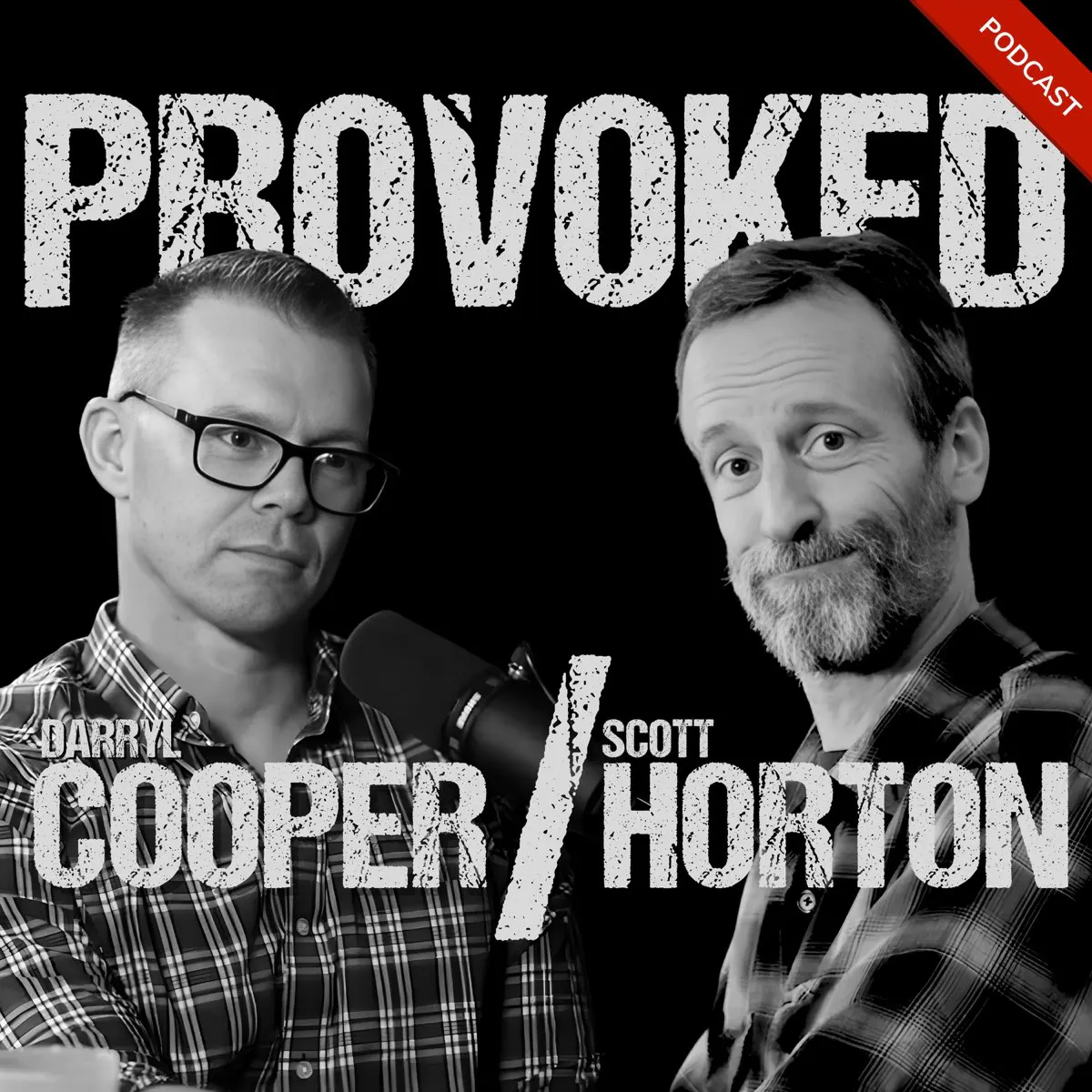
Provoked with Darryl Cooper and Scott Horton
EP:1 “Everyone starts as a 3-Year old.” How ordinary people become capable of atrocities.
01:06:31
Loading summary
Transcript48 lines
- [00:00]
Scott Horton
Sa. All right, y'. All. Welcome to Provoked with me, Scott Horton and my good friend and co host, Daryl Cooper. How you doing, Daryl?
- [00:43]
Daryl Cooper
Doing great, man. This is going to be fun. I'm dressed to the nines, thematically. I got my Pentagon sweatshirt that you can only get from the gym inside the Pentagon. So I'm ready to go.
- [00:54]
Scott Horton
Very nice. Yes. I'll be representing the forces of freedom and you'll be representing the military and this.
- [01:02]
Daryl Cooper
Yeah, okay.
- [01:04]
Scott Horton
No, happy to do this. For those who don't know me, I'm the director of the Libertarian Institute and editorial director of Antiwar.com and I've done 6,000 interviews on my other show and wrote some books and things. And this guy is my favorite podcaster, of course. He is the host of the Martyr Maid podcast. Tell us more about you, Darrell.
- [01:25]
Daryl Cooper
I make the Martyr Maid podcast. I've got another podcast that we haven't done much of lately because we live in different places now, but with my buddy Jocko Will called unraveling. I did 20 years in the Department of Defense and active duty military working in air and ballistic missile defense as an engineer. Got done with that 2021 when the podcasting thing kind of took off and I had to make a decision. And so I've been doing that full time ever since and just happy to be here with one of my heroes, Scott Horton. Man, let's go.
- [01:59]
Scott Horton
All right, you're a hero. And then I'm here with the most important historian in America.
- [02:05]
Daryl Cooper
That's what somebody. Yeah, somebody famous said that. I think, I think it was the number one cable news show host in the country who said that. So it's got to be true.
- [02:15]
Scott Horton
Yeah, absolutely right. I'll buy it. No, look, and I have listened to, I'm going to say a solid majority of, of the long form podcast stuff you done. I heard all the stuff about the miners in West Virginia. I heard all of Blacks and Juice, which was fantastic. The Unhumans about the communists in the east there. And of course.
- [02:36]
Daryl Cooper
Wait, wait, wait. It's called the Anti Humans is Posobix book. They titled it after he stole my podcast for his book. But.
- [02:48]
Scott Horton
Well, at least he's popularizing anti communism.
- [02:51]
Daryl Cooper
There you go.
- [02:52]
Scott Horton
And then of course, Fear and Loathing, which is your. Your best known work, which. Can we just talk about that for a minute? Can you explain first, I'll just give strangers a thumbnail sketch of what is Fear and Loathing in the New Jerusalem? And where did you come up with the idea to do this? And. And how did you do such a lengthy and exquisite job of telling that story? Man, it's so widely regarded, well regarded by such a wide number of critics from all over the place. For such good reason, of course.
- [03:22]
Daryl Cooper
Yeah, I appreciate that. You know, I really, really tried hard to, to be careful and really take account of, of everybody's perspective in the story when I did that series. You know, I, it originated because I grew up in America watching American TV and news and everything else, and I had a basic American's understanding of the Israel Palestine conflict. And it's been popularized more, you know, recently as people have been on social media and You've had the 2014 and the most recent dust ups in Gaza and everything. But you, you go back to say, 2010, 2005, 2010, unless you were like an activist in that scene. People had a very, very, very surface level understanding of, of what that conflict was about. And I was one of those people for, for a long time. And so I started learning a little bit about it. Read like a basic book that was, it was just from. It was a book by Tom Segev. It wasn't some, you know, Palestinian activist, just an Israeli new historian. And there was a lot of stuff in there that really kind of surprised me about how the whole thing originated. You know, like the whole story from 1948 to the present day is a complicated and kind of different story. But up to the 1948 War of Independence for Israel, it's a lot of stuff in there that just Fox News had never told me, you know what I mean? So I started reading more and more, and pretty soon I was just talking to my friends about this all the time. And they were kind of interested in it, but they didn't want to hear about it as much as I wanted to talk about it. And so one of them said, dude, why don't you start a podcast? And so I said, all right, I'll start a podcast. And I never really expected anybody to really listen to it. That's the dead truth. I really didn't. I was really just doing it kind of as an outlet, but at the same time, I was aware of the fact that, you know, I was dealing with a conflict that a lot of people are very passionate about, including people that I know. You know, in my. For my job as a DoD engineer, I went to Israel a lot. I probably visited 10 years from 2009-19, maybe 12 to 15 times for probably six to eight months total. I worked with a lot of their Ministry of Defense engineers, a lot of their IDF personnel, mostly on air and ballistic missile platforms. And so got to know a lot of those people that I'm still friends with many of them. And so, and I, and I know a lot of Palestinians, mainly from the community that was in Orange county in Los Angeles, but then kind of expanded out from there. And once I got more familiar with them, you know, when I would go visit Israel, I would go meet some of my friends, families in the west bank in Jordan, when I would go over there for work. And so I've got friends on both sides of the conflict. And I really, really, really tried hard to humanize both sides and just to try to get everybody to see that, you know, there can be good versus evil actors in individual incidents. You know, you go, you go to the MI massacre and there's good and evil people in that story. But if you want to look at like all the soldiers in the Vietnam War in general, it's just like these are humans, man, and everybody's kind of caught up in it and responding, you know, to the situations they find themselves in according to, you know, the information and habits that they've got, you know, available to them at the time. And, you know, I tried to do that and I, and I think I did a pretty good job. And everybody seems to, for the most part, agree with that. You know, I've gotten an equal amount of love and hate from people on both sides of the issue. You know, I've gotten a lot of people from the Israeli side who have. I've gotten an email from an active duty IDF soldier who's, you know, stationed in the west bank who told me that he listened to that podcast and it changed the way that he behaved toward the Palestinians that he interacted with every day. I've gotten emails from, you know, Arabs, including Palestinians, who told me that it made them more sympathetic to the situation that the Jews were fleeing from in Europe when they came to Palestine. Because both sides, they don't hear the other side of the story very often. It's very similar, except probably even more extreme as like, the politics in the US where, you know, you talk to a Democrat or a leftist sometimes and you try to explain to them, like the libertarian position or the Republican or conservative position, and you realize very quickly that they've never even heard it before. Like, they've just, they've heard like, caricature, demonized versions of it. And then it's the same on the other side. You go to a Fox News boomer and try to explain to them, you know, Something from the other side, it's the same thing. They just. They've just never heard it or been exposed to it. And so I tried to package the whole story in a way that would allow people from all sides to sort of swallow the pill, you know, make it something that they could actually stomach as they were taking it down. And I was just very, very aware of that. And so, yeah, I'm happy with the way it came out. There are some things when I look back, like, stylistically, because it was my first series that, like, if you listen to, like, my first maybe episode or two, I'm just, like, literally doing an impression of Dan Carlin, like, not on purpose, like, but it's just how it came out because he was my favorite, you know, history podcaster and everything. And I kind of figured out my own style as time went on. But. But yeah, I worked hard on that series, man. I probably read just for that series. I. I read. And this is again, just up to 1948, so didn't deal with anything that's happened since the foundation of the state of Israel. I read all, like, of probably 80 to 90 books. I read parts of another 200, and I read probably 1500 to 2000, like, academic papers, diaries, just articles from, you know, going way back to those days and more recently. So, I mean, I really poured my soul into that and tried to be compassionate to everybody, you know, including the people that at first glance, like, strike me as monsters, you know, that's something that's sort of become a theme of the podcast. So.
- [09:30]
Scott Horton
Yeah, well, okay, so a couple of things there. I mean, first of all, like, even the New York Times, they did their profile of you and they are basically fair to you and said that. And fairly reviewed Fear and Loathing and said, like, the guy, you know, clearly is trying to be as fair as he can and doing this story and all of that, where they could have just been taking swipes at you and trying to reinforce their narrative there. There's enough there for even a Times writer to like, I guess, is what I'm trying to say. And then. But something else that I. I'm pretty sure they bring up in that piece or. Or at least was in your. One of your answers to them was about how. And this is kind of a running theme through not all, but many of your podcasts is that. And I guess this goes into your new one that you're working on telling World War II from the German's point of view. Oh, boy. Where essentially, I think you said what you're really interested in is where people go wrong, where you have this devotion to an idea and where it goes crazy. The Jim Jones situation down in Guyana is a big one. But there's always you, you always talk about everybody's a three year old at some point and then somehow things go haywire and so that's what's really interesting. And then also like, how do other people let things go so far and all of that, you know, and that's always very interesting to me. So, yeah, talk a little bit about that aspect. You're kind of leading right up to that anyway.
- [10:52]
Daryl Cooper
And, and also just how, you know, so that's like looking at it on the individual and maybe psychological level, but then also the, the way that, like the social forces that, that seem to just. No matter what system you've got in place, no matter what set of ideas you got in place, we have this, we have this tendency to allow the worst 5% on either side of any conflict to drag everybody else down to their level. And it's really hard not to do that. And you really have to be conscious about refusing to do it or else it'll just happen on its own, you know. But I think my outlook on it really just came from probably just the way I grew up. You know, I grew up like in big city California ghettos for the most part, moving around all the time, just very poor, around a lot of, you know, criminals and just sort of narrative wells and their children were my friends. And so I got to know like a lot of people who, you know, I knew them in elementary school, I knew them in middle school, knew him in high school. Great dudes, you know, really good dudes who were not deficient in any way that I'm, you know, that I could like, boast of being superior to them. And they were smart guys, they were good hearted guys. And a lot of those, A lot of those guys I grew up with, they ended up by the time they were 20, 25 years old, you know, already way down a path that, that was leading them to destruction. And so seeing people that, you know, that, that started out in the same place I was and just really kind of realizing and being sort of trying to be humble about the fact that it wasn't anything special about me or anything really special that I, that I, that I did over the years, that allowed me to sort of be directed onto a, you know, more productive path a lot. Just a huge part of it was just pure luck, you know, like I have a, I had a coach or A teacher that just happened to take an interest at a critical time where I might have gone this way or that way and he kept me this way. And you know, there are a few times where, you know, I could have gotten in trouble with the law very justly. Like they would have been perfectly just to like really go hard on me. But they just let me off. And if that hadn't happened, who knows, you know, just a million different little things that if they had gone another way, my whole life could have gone a completely different direction. And it just made me sympathetic to people who, who do end up in those places. You know, the example I use, like when you talk about the three, everybody being a three year old is somebody like Uday Hussein is like, it doesn't matter who you're talking about, Pol Pot, Hitler, whatever. You know, at a certain point everybody was just a 3 year old kid who didn't know that Saddam Hussein was his father, didn't know that he was going to be dragged into this life, didn't choose that. When he was like in the, you know, waiting in line up in, you know, in the spirit world for his body or anything, you know, he didn't choose that. We're all thrown into this world and for most of us, you know, not, not everybody, but like for most of us and certainly me, you know, we're like, it's not till we're like maybe 25 or something that we really kind of wake up and look around and be like, oh yeah, I've got a. I gotta start making decisions about like where I'm going in life and what's going on and who I am. Like that stuff happens late and by the time it does happen, you know, we're so. There's so much momentum built up behind us, like in our individual lives, cultural momentum, just all of these things that, you know, our room for maneuver is really like contained within some pretty narrow boundaries. You know, that's why we have things like, you know, we have certain institutions in our society that allow you to make like serious big changes and nobody really asks questions about it, like religious conversion or if you go to rehab or something. Everybody kind of understands and allows that you're going to go through that and come out a completely different personality than they were before because it's really hard to do that. You can't just show up to work one day and you're just a completely different person. Everybody's going to think you're crazy. That's just not how, how people work as social animals and so, you know, for the most part, we're very, very, very contained in terms of our. Our options in life, our ability to maneuver, and we just follow that momentum and make what adjustments we can. And, you know, humans, as you. You know, as you see, we can end up. You can end up as an Aztec priest, you know, pulling people's hearts out and kicking them down the steps of your temple. You can end up as a, you know, a Vermont liberal, you know, runs an ice cream company or something, or we can go all different directions, you know, and that's what really interests me is, like, you know, everybody starts out as a little kid, and then you're thrown into this buzzsaw that we call, you know, the world in our lives, and people come out in all different shapes and sizes and heading all the. In all different directions. And so, you know, I did an episode on the My Lai massacre speaking of that. And what really fascinated me about that.
- [16:02]
Scott Horton
Is for people not familiar there.
- [16:04]
Daryl Cooper
Yeah. And what really fascinated me most about that story as I was going through it is how, you know that. That that attack only happened about three or four months into that company's tour into Vietnam. And when those guys got there, all their letters home are like, you know, these people are great. You know, you should see the Vietnamese kids. They're so cute. Like, we love going out and giving them candy. And you should see their faces and everything. And then these same guys, three or four months later, you know, after watching a bunch of their buddies get blown to pieces by landmines and just going through that. The stress and pressure of that war. You know, you got these guys just massacring women and children, raping women, doing all these terrible things. And it's like, you know, it's not as if you just rounded up all of the psychopaths in the US army and threw them into one unit. And then this happened. It was like, no, these are normal guys from Iowa and Nebraska and whatever who went over there. And. And this is. This is what they turned into in a few months. And, like, that's the fascinating thing to me, you know, because that's the thing that we all know we have to try to avoid, but we really. You got to burn calories to avoid that when you're put. Especially when you're put into really high pressure, you know, violent situations, like.
- [17:17]
Scott Horton
And Rich, you know, part of that was the guy. I'm sorry, I'm forgetting his name now, but the helicopter pilot went and hovered between the men and the victims and forced them to stop yeah, he made the choice in the moment to actually do the exact opposite thing as them and not go along with that.
- [17:33]
Daryl Cooper
He drew down on him. He was ready to fire on American soldiers. You know, they didn't stop.
- [17:38]
Scott Horton
And let me ask you about in, in Palestine and I think this kind of underlies a lot of the storytelling and fear and loathing and, and I think in a lot of your analysis that I've seen of the situation since then too, is it your feeling that, like, it really doesn't have to be this way or, or like what you're saying here about how narrow these constraints are of reality, that these choices are made in Zionism necessarily had to lead to what they're doing now and just trying to finish off the complete annihilation of the Palestinian people or at least the removal of them from what's left of Palestine. Because I thought, at least, I don't know what the hell I think now, but I thought for a very long time, I think I learned this from you, that David Ben Gurion said, give up the west bank in Gaza. We don't want to take that territory because it comes with all these people. We don't want, and we don't want to do that. And so from Israel's own perspective, even it was self destructive to do that. And it seems like if they had just gone along with their promises and given up the west bank and Gaza and East Jerusalem, let the Palestinians have a prosperous and independent state, even on the 22%, Arafat was willing to accept it. Right. So it just seems like there's an alternate universe there. If you go on a skew to a tangent on the timeline where maybe things could have been a lot better, maybe even still could be a lot better. And I, I guess to me, like, that's kind of a big part of the frustration, right, Is like, geez, if you guys would just lighten up a little bit, things could be a lot better here.
- [19:10]
Daryl Cooper
And it just, yeah, people will say it's utopian a little bit, you know, as if you're telling prisoners in a, in a penitentiary, like, you know, if you guys were actually all just really nice to each other, then you've got free room and board. You got like, they open doors for you, they give you your meals, you can go out and exercise and play basketball. You guys, this is like, people pay to go on these kind of vacations. You guys just have to be nice to each other. But that's just obviously not how it works. You know, I mean, the thing is like in the Israeli Palestinian conflict, there have been like, these inflection points, you know, where things have sort of have sort of shifted and I mean, pretty consistently in a negative direction where, you know, if you look at something like before the 67 war, right, you have, like, the whole kind of thinking was that the Arab. The secular Arab dictatorships, you know, Nasser and the Syrians and Iraqis, the Baathists and everything, that they were going to liberate the Palestinians, that's where they derived a lot of their legitimacy from, was they were going to liberate the Palestinians. And that was sort of. The Palestinians went along with that. That's whatever. You know, that's what most of the Palestinians who were in the camps and everything at the time were, were. Were kind of of hoping for. The 67 war happens, and the Arab armies just get obliterated by Israel and nobody knows quite what to do. Very demoralizing. But, you know, Arafat and the couple people who were surrounding him, one of his. One of his closest allies and confidants was a Palestinian, but he had spent a few years over fighting in the Algerian war against the French. And that war kind of taught the Palestinians a really, really stupid lesson, you know, because they looked at that. I mean, you. Whether you. Whether you agree with the Algerian independence cause or not, if you just look at the tactics they used, it was the stuff that we all deplore and, you know, in Palestine, So just rank terrorism. I mean, just random murders, brutalizing people on the streets, you know, when they had the opportunity. And eventually the French got tired of it, the French political system broke down with regard to that issue, and the French went back home. And so you're in. You know, you get up to after the 67 war, and the Palestinians are kind of casting around for, like, what do we do now? The Arab armies are not going to help us. And there's this one example, and there really was only one example of an Arab country throwing off the yoke of their colonizers, and that was Algeria. And so they adopted that strategy without really taking into account the fact that the French could go back to France, but the Israelis are not going back to Poland and Germany. They don't have a place to retreat to, you know, and they don't have a home country like in Europe or something where you can affect the. The political dynamics there. And they call everybody back home. There's nowhere to go. And so they, you know, what it becomes after a while is just an escalating cycle of terrorism and reprisal on both sides until you get to the point of like the late 1970s where I mean people don't even remember this now, but you go back to like the, even up to the early 70s, you would have murders and stuff. And a lot of that was like, you know, somebody, some, some group of Arabs who had been thrown out of a village and were living in a cinder block, you know, shanty in, in a refugee camp in Gaza, eating UN meal, you know, bagged meals and stuff, they decided to go back to their village and burn down all the houses of the, of the Israelis who were living in them now, you know, because that's the house they grew up in. And you might not be able to get your grandma her house back, but you can go burn that house down. And so stuff like that would happen. But if you look at like all the early operations of even Arafat and his people, they were targeting like some infrastructure, but a lot of military targets, things like that. And as you get up into the late 70s, you start to get like the, like the Nharia attack, the highway massacre. And you start to get these things that are just kind of what we've become used to seeing now, just these Michael Myers kind of serial killer massacres of family. Just, you know, do whatever damage you possibly can to the, you know, to the other side. Not even really with a, a strategy or a hope that this is going to change their minds or anything just because they killed six of your relatives. And so let's, let's go. You know, I mean, that's where things got by then. And if you go all the way up, really Even until the 1990s when Netanyahu took over, over. And Netanyahu is a real, I mean he's a major, major part of why this went wrong. You know, even when you had just genuine terrorists running the Israeli government, guys like Yitzhak Shamir Menachem Begin, I mean these are guys who led organizations that carried out My Lai Massacre like things in the, you know, in 1947 and 48, like massacring whole villages of people even when you had people like them in charge. The Israelis would not respond to a Palestinian attack with a full on military response. They would assassinate people, they would go do precision targeted killings for the most part, things like that. When Netanyahu came in, he really expanded this out to if there's a Palestinian terrorist attack from Gaza, we're going to kill 2500 people, wound 15,000 and Level A third of the city. You know, that was sort of a shift that came under him. And now it's just kind of, you know, looked at as like the normal way to operate, you know, and, you know, you wonder and you, you kind of hope against hope that Israeli society can recover from the Netanyahu years. But I'm not encouraged by, you know, I, like, I noticed that my first visit over there for work was in 2009. And back then all, I mean, well, you had like cast lead and stuff, various things going on back then. But even then, the only thing that any of the mod guys or the IDF guys that I'd work with wanted to talk about was the 2006 Lebanon War, because they all. It was the first time that Israel had really ever been seriously challenged in the field by an Arab military force. And you know, because Hezbollah, you know, look, they're limited in their capabilities, but I mean, they're one of the best. They were one of the best light infantry outfits in the Middle east, you know, probably next to maybe Turkey and, and, and Israel, probably probably the best, you know, and so the Israelis really struggled there. And one of the things that they would talk about is the people that I, that I, that I know over there at the time was that their real fear is not that Hezbollah is going to overrun Israel and, you know, conquer it and take it over and put all the Israelis in camps. Their real fear was that, you know, there are a lot of Israeli, if you ever go over to Israel, like, there's parts of it that are really cool. Like, you know, Jerusalem has the old cities really cool, and Tel Aviv has like some really nice, like, awesome parts of it and everything. But you go to a lot of the play a lot of the country and it's, I mean, it's not like, I want to say it's like run down or ghetto or whatever, but I mean, you don't go there and think like, oh, this is like a super rich country of like, you know, a prosperous first world country. I mean, it is, it is that, but like, it's not like, like living in Beverly Hills or even like, you know, another place in Los Angeles for the most part. And so there's a lot of people over there who, even without all the wars and conflict and stuff, you know, if their cousin in New York or London says, hey, I've got a job for you, they're, they're looking to leave, like, they'll take that offer. And I know there's a lot of Israeli Americans who left just for that reason, you know, that it was just, they just didn't want to be there. And so if you remove that, that sense of military invincibility that the Israelis always had up until that 06 war, really their fear was, you know, a few more people than usual might decide to take that job in New York. And once that starts to accelerate, you start to get a, you know, the demographics start to shift a little bit faster and it becomes this accelerating kind of self reinforcing cycle. And then the Zionist project is over, just kind of of its own, you know, just kind of collapses under its own weight. Not because the country was destroyed and the IDF was defeated, but just because the demographics are shifting because of the choices Israeli citizens themselves are making. That was the real fear. And as you, as I went back year after year during the 2010s, man, they're like, you could just see it like every time I would go back, you come back and the people I would talk to and it wouldn't just be like MOD and IDF guys, you know, I really made a point wherever I would travel for work, to talk to the waiters and waitresses a lot, talk to the cab drivers, the hotel, you know, just really get a sense of like, what people? How. Just get a sense of the people. And you really noticed like the sense of paranoia, the sense of real hardcore hostility toward, I mean, not just the rest of the world in general, especially the Palestinians obviously, but this siege mentality, like really setting in. And by the time I, the last time I went there in 2019, I mean, it was, it was, it was at a place where it's really hard to, it's really hard to imagine, you know, without a sort of Martin Luther King kind of figure or something coming and really having the moral weight in Israeli society to kind of move things back on track. It's really hard to imagine it happening organically. But again, you know, all you can do is hope. And, and I know a lot of Israelis who, you know, are, are good people. It's, you know, Israel is one of the, it's, it's one of the biggest, like contra, like, it's just a contradiction of a country because you go there and a lot of these Israelis, these are humane people who, you know, they participate in organizations that provide aid to people who suffer, like, from natural disasters and catastrophes all over the world. They donate to like liberal causes and they're, they're genuine, genuinely humanitarian people who think that Gaza should be leveled and all of the Palestinians should be driven out and who cares what happens to them? And you're just like, how Does. How does this. How does this happen? And, you know, you just realize that it happens because this is. This is what happens when you have two people that are locked into a cycle of conflict for several decades. You know, I mean, it's just what happens. Israel is a small country. If you're over there, like, people think of, like, okay, yeah, it was a terrorist attack in, you know, October 7, 2023. It was horrible. It was awful. But, like, you know, 13, 1400 people. I mean, you know, is this, like. Is a terrorist attack a bad one? But, like, this wasn't like, they nuked Tel Aviv or something. But you really got to remember, like, October 7th for the Israelis wasn't like, 911 for Americans. It was like, 911 for people who live in Manhattan. You know, it was so close to home, and it was. It's such a small country and a tightly knit country that, like, everybody knows somebody, at least knows somebody who was affected by, you know, the conflict in a very serious way in the last, say, 10, 15 years. And the Palestinians, obviously, it's that on steroids, you know, everybody knows 10 people who were killed, you know, in the rounds of conflict over the years. And so, you know, one of the hard things about it is I'm very, like. I don't. I don't like to, you know, if I'm talking to, like, an American Zionist or an American Palestinian activist or something, I don't mind kind of going hard on them a bit. But when I'm talking to Israelis and Palestinians themselves, like, people who live over there, I really like, and I don't always succeed in this, but I really try to, like, avoid, like, getting into lecture mode with them, because what do I know about watching my daughter get pulled out of a pile of rubble or, you know, being on a bus that gets blown up by a suicide bomb? I don't know anything about that. And if it was me, you know, knowing how I react to, like, much, much smaller things than that, like, I. I'd probably be a crazy person, too.
- [31:42]
Scott Horton
Well, now I think it, like, so zooming out, though, from your position that you are in, looking at it from where you are, do you know enough about the troubles in Northern Ireland that you could kind of make a comparison there? Because that sure seemed like an intractable thing. And all of a sudden, the Irish are willing to accept this British colony on their northern shore after all, huh?
- [32:01]
Daryl Cooper
Yeah. Yeah. Look at, I mean, like, the Balkans. Same thing. You have these places where, you know, not that long ago, I mean, I think the Balkans are even like maybe a, maybe a better example than the Irish because, I mean, at least in the 70s, you know, the Irish were like, the conflict had not devolved to a point where like, random Irish people were just, if they came across, you know, an English mother with her three kids, that they were gonna kill all, you know, four of them. Like, it hadn't gotten to that point over in the Balkans. Like things were down to that level almost. You know, if you were on the other side, like you were not treated or looked at like a human being. I mean, it was, there was a lot of hatred baked in there, you know, from a long time. And you go over there now and it's like, it's not like things are perfect and like without the EU and NATO and everything else around, like, if all those things evaporated, there might be a potential for problems again. But you go over there now and you're like, man, it is really hard to see these people doing those kind of things, you know, and that was not that long ago. Yeah, and sometimes I had a Serb.
- [33:08]
Scott Horton
Say to me on Twitter that, like, yeah, that's exactly right. Like, look, I could wake up in the morning and go get revenge for what happened to my brother back then, but instead I'm going to go to work. But yeah, you know, these things can change.
- [33:22]
Daryl Cooper
The hard part about it though is like, you know, it can't change as long as Israel has this sort of expansionist, you know, vision of, of, of revising the Middle Eastern order and expanding their borders through military force. You know, and because like the, you know, the problem here is like you go to the Balkans and you had at various times one side victimizing the other and then it would switch up and there's like centuries really of like built up animosity there. Whereas this is a situation where this is a one sided beatdown that's been going on by the Zionists against the Palestinians for almost 100 years. Or really probably I would say it started in the, in the 1920s, like really getting serious. So for 100 years it's been a one sided beatdown. And you know, the Israelis with, with very brief exceptions, you know, maybe Rabin in the 90s. And even the brief exceptions are, are there's asterisks next to them. You know, they have never treated the Palestinians with any kind of justice and they've never, they've never treated like their, their, their demands in, in really good faith. I mean, because at the end of the day there's, there is this messianic component to it that has only grown over the years. And, and you know, until the Israeli, I mean, until the Israelis are ready to, to give that up, and I don't think that's going to happen. Then, you know, this, this conflict is intractable. I mean, you've got, what is it, like a million settlers in the west bank now and these people are heavily armed, like religious fanatics that the IDF itself probably couldn't make leave, you know, if they really wanted to. If they, you know, it just, these people are entrenched in there now. And you know, I think everybody kind of understands now that the two state solution was, you know, that was there were some people like Rabin and others who did probably take it seriously, but that for a lot of people it was, it was sort of this fig leaf that, that, that allowed the Israelis to ward off accusations of running an apartheid state. You know, I mean, because once you take away the idea that they're, you know, yes, they're, we're occupying them now and yes, they're stateless people, all this kind of stuff now, but that's because we're in this sort of transition stage to eventually figuring out this, this two state solution or whatever, then you sort of, you know, people say, okay, yeah, they accept it a little bit, but once it becomes clear that like, no, this is a permanent arrangement and these people are subjects of the Israeli empire, which is really what it is, you know, then you are running an apartheid state. You know, you are the government of these people that have no civil or political rights. And you know, look, there are, there are countries around the world that have populations that are treated that way. Although, you know, I mean, people talk about like the Kurds in Turkey or something and there's certainly problems there. But you know, the A Kurd can take an A Turk to court and win the, win the case if they're right. I mean, there's like, they're still citizens of Turkey and you know, at least officially and you know, they, they have the rights of other, of other citizens of the country. The Palestinians don't have any of that. They're not even second class. I mean, they're subjects, you know, they're military subjects. And that's just, you know, the thing that I, the thing that I've tried to really get across to like people I know who are like very set in the Zionist perspective is, you know, especially since the, the Gaza assault, you know, began in 23. So like, you know, we have, we have to destroy Hamas, right? That's what they'll say. And it's like, well, okay, Hamas. Like, if you have a people under military occupation, there's going to be some people who really don't like that. And of those people, there's going to be some people who are prepared to do something about it. You can call that group of people Hamas, you can call them Islamic Jihad, you can call them the plo, whatever you want. Like, it doesn't matter. There's always going to be a portion of an occupied population that is going to be ready to fight, to throw you out. And that's not going to change until the occupation ends. And, you know, Netanyahu maybe understands that a little bit. And that's why they're doing what they're doing now. You know, trying to go for the final solution in Gaza.
- [37:53]
Scott Horton
I mean, and this is what was so obvious in Vietnam and in Afghanistan, is that counterinsurgency doesn't work. And if you look, and I have a bit about this in my book on Afghanistan, if you look at the places where they say it did work, it did not either. Like, they cite Malaysia, but that was just a giant ethnic cleansing campaign where the British got rid of all their enemies. Now they're gone. That's not what they said. That they're going to somehow pacify these people and make them accept their occupation, make them accept their foreign overlords as their true security force, as opposed to their own husbands and sons and brothers and. Give me a break, man. The whole thing is completely crazy. And so. Or just beat them as, as we've seen in the case of the Palestinians, just beat them enough that they'll finally just lay down and give in or something. But that doesn't work either. It's just like the CIA torturers. They're trying to replicate the learned helplessness that they get when they torture a dog. But it doesn't really work with a person. It's not really the same thing, but.
- [38:51]
Daryl Cooper
It'S, you know, especially not a group of people. And honestly, like, the Jews should know this better than just about anybody. You know, one of the things that you see come up again and again in the writings of the early Zionists, you know, the people who were getting the movement going. A huge impetus for that was during the pogroms that took place in the late 19th century in the Russian Empire. The. Again, this is like, you can just, if you humanize these people and just think about, put yourself in their shoes a little bit. A lot of these early Zionists were kids when those things were going on. They weren't the grown ups, you know, because the grown ups were 60 years old when you know, the real migration started happening after the first World War. The ones who started coming over, a lot of them were kids and they watched their fathers cowering in the closet while their mother was raped and killed. You know, they watched their parents kind of bow and scrape because they were, you know, the Jewish population of this village was afraid of, you know, incurring the wrath of the surrounding people, you know, as all this stuff was going on. And that just built up a huge amount of resentment. And you see this, like in their writings, like to the point where they're resentful toward their own parents even for being so submissive. I mean, you even saw this from a lot of the Zionists. They would talk like this after the second world War, you know, talking about how the Jews submissiveness, which is totally ridiculous, like, you know, to begin with, like, you know, sometimes you're just caught. There's nowhere, there's there you have no play. But like where they were sort of personally outraged and ashamed by what they saw as the submissiveness of the Jews as they went into the camps. And it's like when you have that kind of thing, then you know, the cycle really does become generational because the kids see their parents and like, even if you do cow their parents and you do get them to like into that learned helplessness state, that's just gonna piss the kids off for the next generation. Yeah, I mean, it's one of the reasons you saw like this is maybe a little bit of a, of a diversion, but it's the same dynamic that you saw in, like after the great migration of African Americans out of the rural south up into the northern and western cities. You know, you had this like, starting in about like the late 50s, early 60s, just the, the level of violence and, and sort of radical political assertiveness really started going through the roof. And a big part of that was that was when the first generation of kids from the great Migration who grew up in New York, in Chicago, were coming of age in 20, 21 years old, their parents came up there, lived there for 20 years, and they. Crime rates didn't really explode or anything. Like none of this stuff really happened because these people had lived the first 40 years of their life in Alabama under Jim Crow and like they had, they had that sort of learned helplessness to a degree, but the kids grew up watching that and they were like, hell no. You know, and they went full on in the other direction. I mean, James Baldwin talks about this, like, very directly, watching his father just, you know, get spoken to in a disrespectful way and just. Just holding it down and not responding, because where he came from, you know, responding was not the play, you know, and so that builds up resentment, like, intergenerationally. And so. Yeah, you're right.
- [42:14]
Scott Horton
Speaking of which. Cause I mentioned at the beginning of the show. Yeah. And you do that great podcast, Blacks and Jews, little bit of a provocative title, but it's such a great study of the great Migration and the aftermath and all of that. And of course, there's nothing mean about that title. It's just what the thing is about. It's great and everyone will love it. It's. It's such. It's worth everybody's time. Now, we got to change some subjects here, too, though, because not all the way away from Israel, of course, but we have a time limit here. We got to respect. So people want to hear the whole thing. We got to talk about what's going on with Iran still speaking of Israel and, you know, in this case especially, their influence in the United States and what's all happened with this recent war. As it stands, it looks like it's over for now, although we don't know what the aftermath will be. I guess, obviously, some major questions include whether Iran is going to continue with their civilian program and or even break out toward a nuclear weapon as a consequence of the attack, or whether I think this is at least within the realm of possibility, although I don't think it's probably likely that maybe they are just whooped here and they lost enough that they're going to have to move forward without even a latent deterrent at all. And possibly, you know, Donald Trump was talking about, he wants to get along with Iran now, and he says he doesn't even think we need a nuclear deal because nuclear nothing. So you guys give in and I'll let you, I guess, is basically his thing. He had tweeted unconditional surrender, but apparently, you know, drop that. They're not overthrowing the supreme leader. But I'm very curious to know, like, what you think about the whole war and the aftermath and the rest of.
- [43:58]
Daryl Cooper
It here, Daryl, What I wonder is if Iran is going to come out of this. Like, a lot of people have been talking like this just will prove to them, you know, the hard liners. Liners are going to take over now. And this just proves to them that they need a nuclear weapon. Like, if they weren't sure before if they were just using it as a sort of bargaining chip and latent deterrent before. Now they know they have to get one. I think there's at least an equal chance that, that they'll take the opposite lesson from this, which is, look, if you look at the way this whole thing unfolded, right, it started out that first night when Israel launched their sneak attack. You know, the, you saw the stories, I'm sure that came out recently about how right before the attacks and then in the hours, you know, of chaos sort of afterwards is Iranian generals and scientists and everything are getting assassinated and there's broken down communications and command and control system so nobody knows what's going on. It's just chaos. And the Israeli intelligence was calling up senior Iranian officials and generals and stuff and threatening to murder their wives and children unless they made a recording denouncing the government and saying that they surrendered and encouraging other people to do it. When you see that part of the story come to light, what you realize is this was, it was a novel way to do it. It was a new sort of kind of evil genius like way to do it. But this was in a regime change operation. From the beginning. Israel didn't even hit Iran's above ground nuclear sites until way later, like into, into the conflict. They didn't start out doing that. This was not about their nuclear program. This was an attempt to start a revolution and change the regime. Like, you know, really, like on that first night, really. And what became clear immediately is that Netanyahu did not have a plan B if that did not work, like if the Iranian regime was able to reconstitute itself and then start shooting back, that they didn't have a plan B for that. And it became very obvious because what happened after that first initial attack is the Israelis just started blowing up everything they could. You know, just sort of taking out prisons and police stations and just blowing up everything that they could. Because now we're in it, maybe we can shock and awe them, you know, into, into capitulating or just break down their civil society enough that things erupt maybe. But it became clear very quickly that, you know, the Iranian just not even the regime like that Iranian society was not going to break down like that, you know, that they enough of the people at least rallied around the flag and were ready to fight so that, you know, the Israelis were sitting there listening to Iranian generals, even as their two predecessors have both been killed in the last week and a half, still going on TV and saying that they're Prepared, preparing for a war that's going to last a few years. And so Netanyahu found himself in this situation where, you know, the Iranian. The coup attempt didn't work. The missiles are now raining down and becoming more effective as time was going on, and he didn't have a way to stop those missiles from coming in. And the Israelis did a lot more damage to Iranian, you know, installations and equipment and people, I'm sure, than the Iranians did in the opposite direction. But, you know, we talked about Vietnam earlier. If that was how you won a war, then we would have won Vietnam, we would have won Afghanistan. You know, that's not, that's not how you win a war. And the, you know, Israelis are talking about this, by the way, now that this whole thing is starting to die down. They're starting to, like they say very directly that, you know, Netanyahu jumped into this adventure with no real exit strategy or plan if the initial volley didn't work. And so, you know, everybody criticizes Trump and like, maybe I'm being too generous here, but, you know, I understand from like, the anti war perspective and the people who are real, who voted for him for that reason, you know, you know, they really want to get on Trump's case for involving us in this thing at all. And I totally understand that. But I also think people should take into account that if we didn't get involved and do what we did, Iran and Israel would still be shooting at each other today and Israel would be running real low on interceptor missiles. And their, their air defense systems were already showing signs of leakage. And those crazy assholes, dude, if, like, there's no telling what they would do. Like, they're not, they are absolutely not above using nuclear weapons if they feel like they're.
- [48:46]
Scott Horton
Although, look, Trump could have picked up the phone and called the truce without sending in his own bombers first.
- [48:54]
Daryl Cooper
I don't know if anybody would have listened to him.
- [48:56]
Scott Horton
Yeah, no, I think any American president can order the prime minister of Israel to heal if he has to. Reagan found that out with Begin before and even apparently said, oh, wow, I didn't know I could do that. But he ordered Begin to stop bombing Beirut, and He did in 15 minutes. You know, so. And in this case, Trump said, turn those planes around. I said, and they did. It came to that, and they turned their planes around.
- [49:19]
Daryl Cooper
So, but I mean, I think hitting those nuclear sites, and especially with Trump being so insistent from the very beginning, long before any credible battle damage assessments could have been formulated, you know, those things takes Take weeks, usually. And that's like, if we're. That's. If we're assessing damage from, you know, munitions that we use all the time, Tomahawk missiles and stuff, it still takes weeks for the DoD to formulate battle damage assessments and finalize them. So if you're talking about weapons that have never been used in this way in combat before, like the. Like the mops, underground facilities, like, a lot of that is just. There's a lot of guessing going on. But Trump, you know, has been insistent to the point of, like, getting into fights with Fox News reporters who are questioning whether the whole job has been completed, that, no, it was completely obliterated. Because saying that is sort of our way out of this. You know, it's our way to be like, all right, we won. We did the whole thing, you know, that we've been talking about. We stopped their nuclear program, and now the thing's over. And, you know, the way that it ended kind of gave everybody, all three parties, the ability to go home and tell their people, you know, we won, congratulations.
- [50:31]
Scott Horton
I mean, we're gonna have a whole new week next week when we find out whether they're beating their chest and still spinning centrifuges and whether this actually really accomplished anything. I think probably the most important thing was they destroyed Isfahan, which was the conversion facility, where they changed the metal to gas and back again, where without that, you know, you can enrich and you can't really do much with your enriched gas, that of whatever you'd already converted and all that. They need a new facility there. So I guess that was my interpretation of Trump's crowing, was that the Air Force had told him, look, if we hit. And whatever CIA had said, if you. If we destroy all of this, that will amount to a victory. And the Air Force said, well, if you let us hit these things, we'll get them for you, boss. And then he said, well, did you get them? And they said, yes, we sure did. We hit everything we were dropping bombs at, and we're confident that we got him. And that was good enough for him, I assume, is more or less what went on there. And then I wonder if that's right. I think it might be right that they could have degraded the uranium program enough that they're confident that at least they can go into the talk saying, look, man, don't even restart it, because I'll just bomb it again, so just forget it. Your bluff is called, essentially. And after all, you know, they had their latent nuclear deterrent, their Bluff is called. So now they can either race for a nuke or not. Their medium range missile deterrent. Bluff was called there. You gonna try to sink our Navy, our 5th Fleet at Bahrain, and destroy our air base and Central Command in Qatar and kill our army in Kuwait, or are you not gonna do that? And the Ayatollah wouldn't dare do that, and did not dare to do that. And as Trump said, warned the United States, hey, I'm about to fire some missiles in a symbolic show, so please shoot them down. Which was very nice of him to do, and really puts the lie to the idea of what an insane maniac this guy is and how he'd nuke Israel off the face of the earth at his first opportunity if he could. And the rest of that, too. But I think much is unresolved and unknown as far. First of all, what. All damage was done. Hirsch is saying that they knew they couldn't get all the centrifuges at Fordo, but they weren't trying to. They were just trying to collapse all the tunnels in and out of it and all the air shafts and the rest. I know that the Iranians were actually, like, you know, filling the tunnels, the, the entrances with rock in the first place I think to defend them.
- [53:01]
Daryl Cooper
I mean, people are looking for, like, a reason for optimism. I think it's.
- [53:05]
Scott Horton
Oh, let me add one more thing, which is David Albright at isis, which is, you know, not the Islamic State, but just. He's a nuke wonk. He has commercial satellite pictures. And he and his guys did a pretty deep analysis of, like, you know, a first run through kind of Isfahan. There's quite a bit there. And it seems. I mean, and their conclusion is like, this is pretty devastating damage. It's enough for Trump to come to the Ayatollah and probably and tell him, look, man, don't even try it anymore. Your bluff is called. And I called it. And so now come to heal. I don't know whether. And I don't know, I'm speculating here. I hope everybody understands. I'm just saying what we don't know. I saw, you know, I mentioned that Seymour Hirsch report on the Sagar and Crystal show breaking points this morning. And I saw some of the comments say, he's wrong. It was the Iranians that filled up the tunnels. Like, well, look, I'm not wrong, because what I said was that was what Seymour Hersh reported. That's a fact. And what Seymour Hersh reported was that the Americans wanted to bomb all the tunnels and all the vents and everything, they could try to just collapse everything so anyone down there would be buried alive and anyone on the outside wouldn't be able to ever get in there again. I'm not saying I know that that's my own battle damage assessment. I'm telling you that's what some of the reporting was. And it sounds credible to me at least that that would have been their strategy, that, look, our bunker busters can't just dig a tunnel straight down through all this rock, but we can essentially collapse any way in or out and so that we'll have to settle for that. And that at least seemed plausible to me. And after all, the US Air Force can bring a lot of firepower to bear if it comes down to it.
- [54:48]
Daryl Cooper
And yeah, I mean, look, again, I don't, I just, I don't really think that this was really about the nuclear program. You know, just, again, I base that on the fact that the Israelis didn't bother hitting those sites, even the above ground ones, until near the end of the whole process, for the most part. I mean, I think that the ending the nuclear program was our way of extricating Israel from a situation that they'd gotten themselves into and didn't know how to get out of. You know, because let me ask you.
- [55:19]
Scott Horton
This, because this goes to how the war actually even started too. And I've heard you say this before, and I'm not too sure what sounds right to me without being able to really know which is whether Trump and Netanyahu really launched this war together or whether Netanyahu did like David Wormser and Dick Cheney were threatening in 2007. They did an end run around the president and really forced him into this by launching the war and dragging him along. And I've heard you express pretty firm opinions about this.
- [55:47]
Daryl Cooper
So let's, well, let me, let me put it this way. Like, part of, part of the firmness of my opinions is talking to a couple people that I know who I've known for decades, good friends who are, you know, they're, they're, they're straight with me about things who work at the Pentagon at levels, you know, they're not four star generals, but they're people who interact daily with them and, and have a sense at least of what the general vibe is at, like that first and second layer of command in the Pentagon. And, and they've sort of provided some, again, not based on any kind of classified information or secret info or anything, but confirmation that that's what a lot of the People at their level, at least in the Pentagon future think happened now as, I mean, and it's really hard because Trump's messaging on this was so erratic and all over the place that, you know, it's hard to figure out exactly what was going on. But you know, what, it seems to me happened, you know, if you look at this like the Israeli attack, just all the different aspects of it, the infiltrators in Iran, you know, who were launching the drones from inside the country, calling the generals, you know, and the government officials threatening their families on their cell phones, things like that. I mean, you're talking about like Israel really shot its shot with this, with this war. I mean, this was years of built up intelligence assets that got burned. This was years of preparation of things that they've been holding in reserve for just this moment. And you know, I think that maybe, like, I don't think Trump, I just don't buy. And I, and I, you know, like Tucker told me just very directly that the, the whole thing about, you know, Trump knowing this all along and he was using negotiations just as kind of COVID to lull them into a false sense of security. So that, that, that's not, that, that's not what happened. Like, that's just, it's just not from.
- [57:49]
Scott Horton
The Israelis by way of Barack.
- [57:51]
Daryl Cooper
Right. Yeah, yeah, exactly. And you know, the, the story that I'm hearing from people who are much closer to, to all of it than I am is that Trump was trying to negotiate in good faith and he was essentially confronted with a fait accompli from Netanyahu. And you know, Trump, I mean, his, his real foreign policy agenda is to finally carry out it's, you know, probably, we'll talk about this on a future episode, but I think it's probably way too late now, but is to finally actually carry out this pivot to Asia that's been talked about for 15 years now, 20 years. And to do that, you know, you've got to establish some kind of regional order in the Middle east that allows us to sort of step away and divert from, you know, divert ourselves away from it. And so he told, you know, he told Israel, like, look, you've got this, this fancy grand plan where you're going to try to, you know, blow up the Iranian government with, you know, threats to officials and all this different kind of stuff that happened on like the first night there. Iran is never going to be, they've never been this week. They're probably never going to be this week again with Hezbollah and Hamas Pretty much crushed. Syria crushed. This is probably the best shot you're going to get. Go ahead and take it. But once that didn't work, and the Israelis and Iranians were just sitting there firing missiles at each other's population centers, you know, neither of the countries, Israel and Iran, I think they. They were both in a situation where they didn't actually want to continue this, but neither of them could back down. It was just politically impossible for either side to back down. And they sort of needed the United States to come in as a deus ex machina, you know, come in from the outside and sort of hit the reset button on the whole thing and separate the two fighters.
- [59:41]
Scott Horton
Well, let's hope it holds, man. I mean, we have a ceasefire right now.
- [59:44]
Daryl Cooper
I was going to say earlier, like, the. Like, the one reason for optimism, if you're looking for it, is that reason for hope, at least, is that now both sides, like, you know, wars happen a lot of times throughout history because both sides either over or underestimate their own or the other side's capabilities, stability, or willingness to fight. You know, and if you think that the Iranian government just, I mean, look at, like, Hitler, when he invaded the Soviet Union, you know, went in there thinking, oh, it's a. It's a ramshackle shack and all you have to do is kick the door down and the whole structural collapse. And, you know, the Israelis now know that that's not true with Iran. You know, they're not going to just collapse because you give them a little shove. But the Iranians know, too, that the Israelis, they hit hard, man. Like, they're. They. They can. They can really, really hurt you if it comes down to it. And so if you have two people, you know, two kids in the schoolyard who it's been building up for years, they want to fight each other, you know, now one of them knows that the other one has a knockout punch, and the other one knows that the other one can take a punch. And so maybe, you know, they're going to be a little bit more reluctant to get into that situation again. That's the reason for hope, if you're looking for a sliver of it, I think.
- [61:00]
Scott Horton
Yeah. All right, enough of that. Let's talk about you and me. This is our first episode of our great new show, Provoked. I didn't name it that. Daryl chose the name, obviously, that's the name of my book. But it works on so many levels. I think we're going to have a great time. I'm. I could interview you every week on my show anyway. So that's what this is going to be and it's going to be awesome. I'm already enjoying the hell out. I'm sure everybody else is really going to get a kick out of it. I am also sort of restarting my regular interview show, which has been not quite on hiatus, but on a bit of a back burner here as I take care of some other projects. But that is all at Scott Horton show and this show is going to be on YouTube, I think @ Provoked Show. Provoked show will be the web address. We already got that domain and so we'll get all that going and you'll be able to find it at the institute and links from scothorton.org and the rest. My substack is scotthortonshow.com which has all my interviews, but also has the chapters of the audiobook of Provoked that I'm doing. I've got Clinton and Bush done for or Bush and Clinton, I mean done for you there. I'm working on W. Bush now. And then one last thing before I turn it over. You, Darrell here is the Scott Horton Academy. For all you libertarians out there, you're all very familiar with the great Tom woods and his Liberty Classroom where he built me my own liberty Classroom. It's called the Scott Horton Academy of Foreign Policy and Freedom. And it's me and a bunch of other real greats like Jim Bovard, Ramsey Barood, William Bupert, C.J. kilmer and a bunch of other real great guys doing full courses, you know, eight, ten hour courses and more, walking you through, you know, all kinds of, you know me through my latest books, but then all kinds of great historical and especially foreign policy related subject matter for you there. And that's coming out here in the coming weeks. And you can find out all about that@scotthortonacademy.com and sign up for the email list there and you'll be the first to know when we go live. And then so now please tell us all about the Martyr Maid podcast, how everyone can sign up for it, where they can follow you on X and when your new episode you expect to come out. You've done your prologue, but we're still waiting for the official first episode of your new podcast on the Second World War. Correct?
- [63:23]
Daryl Cooper
Correct. Yeah, I'm almost there. I'm done. I'm done with my reading. I'm writing it all up and getting it ready now. So yeah, it's the Martyr Maid podcast. That's my long form history podcast that focuses on all kinds of topics like Scott was talking about earlier. I got a long series on the Jonestown cult. I've got one on the Israel Palestine conflict and kind of everything in between. These are, you know, these are, these are the Israel Palestine series I think is about 28 hours. Some of the episodes are 4, 5, 6 hours long long. So it's a long form podcast that, you know, you really got to kind of be prepared to dig in for really like kind of informal audiobooks and a lot of the time so you can find that on itunes or Spotify or whatever. Although ever since I put that first World War II episode on Spotify, they've been taking down a few of my episodes. So I got to work on that. But you can find them on YouTube as well, YouTube Music or wherever they put their podcasts or on my website. You can get them. I've also got a substack with all of my episodes there as well as I think probably a couple hundred now just essays and interviews. Other podcasts that I do just exclusively for the subscribers can find me on X at Martyrmaid. That's M A R T Y R M A D E Martyr Made. But be warned, you know, my podcast is where I really take my time and go slow and try to look at all sides of an issue. And you know, Twitter X is the place I go to vent my spleen and have some fun starting fights. So just be prepared for that. It's not for everybody, but that's where you can find me. So I promised everybody, if you are like me and I was tuning into this show, I would be tuning into it to listen to Scott speak. And so next time, only drink one of these before the show and not be so caffeinated and let him get a word in.
- [65:22]
Scott Horton
Oh man. No, I. Look, I am an interview show. People only interview me sometimes. But I'm here to hear it from you, man. So I've had a great time. This is our first episode of Provoked in the can there. I'm very proud of it. I think we did a great job. And we're going to be doing this, what, twice a week, I think here to start, maybe once a week. Twice a week. We're still working. We'll figure that out and. But we'll be around and. And we've got our great producer Chris that we've poached. I mean he still gets to keep him too, but we're borrowing from the great Justin Politano, which means that we'll be distributed on all of your favorite Internet ecosystems up there. You'll be able to find this here show and home base will be provoked show. So thank you very much, Daryl, and we'll talk to you next week.
- [66:14]
Daryl Cooper
Can't wait.