Podcast
Psychofarm Podcast
Hosted by Psychiatry, Skepticism, and Integration. · EN
PsychoFarm Podcast is a deep dive into the intersection of psychiatry, psychopharmacology, and the evolving understanding of mental health. Hosted by 2 psychiatrists, the podcast explores complex topics such as diagnosing mood and personality disorders, the role of medications in treatment, and the challenges of psychiatric training. Each episode breaks down the clinical insights and philosophical debates surrounding mental health care, providing both practitioners and curious listeners with thoughtful analysis, expert opinions, and practical advice.
psychofarm.substack.com
psychofarm.substack.com
33episodes
Episodes
Newest firstAll episodes
Tips to Avoid Burnout in Psychiatry (Outpatient, mostly)
Mar 2400:55:25Summary readyIn this episode, Dr. Fu and Dr. Malzberg share practical systems for time protection: start on time, end on time, finish documentation inside the visit, and use tools like AI scribes and quiet typing gear. They also lay out clear messaging rules so emails, texts, and forms do not become off-the-clock clinical care, plus the value of emergency slots. The deeper work is emotional: process the job with mentors or supervision, know your limits, and build a real life outside medicine so you can stay effective for the long game. This is a public episode. If you would like to discuss this with other subscribers or get access to bonus episodes, visit psychofarm.substack.com
Summary
CPTSD vs BPD: How to Think About the Difference and What to Do About It
Mar 1000:56:14Summary readyIn this episode, Dr. Malzberg and Dr. Fu tackle one of psychiatry’s hottest diagnostic debates: complex PTSD versus borderline personality disorder. They walk through the DSM-5 and ICD-11 definitional differences, the historical roots of the C-PTSD concept in Judith Herman’s work, and the real clinical distinctions clinicians can use to differentiate the two. More than a theoretical argument, the conversation zeroes in on how to communicate these diagnoses to patients, why BPD stigma drives some of the debate, and what therapies fit each presentation… from DBT and mentalization-based therapy to EMDR and trauma-focused approaches. This is a public episode. If you would like to discuss this with other subscribers or get access to bonus episodes, visit psychofarm.substack.com
Summary
Detecting Subtle Signs of Psychosis: Assessment of Voices, Delusions, and Psychosis
Feb 2400:35:02Summary readySubtle psychosis can be missed when you rely on checklists or slip into an interrogator stance. We break down a clinician-friendly approach to detecting psychosis early: use countertransference as a signal, mirror emotion without agreeing with delusions, and clarify the patient’s narrative without derailing it. You’ll also get an OLDCARTS-style framework for taking a voice-hearing history (onset, location, duration, character, and more), plus practical alliance moves for paranoia. We close with how to bridge the treatment gap once you’re seeing the pattern clearly. This is a public episode. If you would like to discuss this with other subscribers or get access to bonus episodes, visit psychofarm.substack.com
Summary
How to Diagnose Bipolar Disorder: The Interview Framework That Beats Screening Questions
Feb 1000:54:58Summary readyBipolar diagnosis is tricky without labs, so this episode lays out a practical, semi-structured interview you can use in real clinics. We start with what many clinicians skip: a medication and substance timeline, plus medical causes, before jumping into mood symptoms. Then we map major depressive episodes, screen for hypomania with narrative follow-ups, and compare behavior to baseline instead of trusting yes/no answers. Along the way we cover classic pitfalls and mimics, including PTSD insomnia, borderline traits, psychosis-related agitation, and ADHD mislabeling. Finally, we talk about when tools like the MDQ or Rapid Mood Screener help, and why collateral history can change the case. This is a public episode. If you would like to discuss this with other subscribers or get access to bonus episodes, visit psychofarm.substack.com
Summary
What Makes a Belief a Delusion? Delusions, Thought Disorder, the TALD Scale
Jan 2700:45:55Tap to summarizeHow do you actually evaluate a “delusion” in the room, especially when the belief could be plausible, culturally reinforced, or tied to mood or substances? In this episode, we break down a practical approach to psychosis language, why “fixed false belief” is often insufficient, and the interview questions that help clarify origin, certainty, flexibility, and function. We also use the TALD framework to expand beyond the usual linear vs circumstantial vs tangential model of thought disorder, then apply everything to a case vignette where a single supplement becomes the explanation for an entire life collapse. Educational and clinically focused.TALD: https://ars.els-cdn.com/content/image/1-s2.0-S0920996414005933-mmc1.docxUnderstanding Delusions Paper: https://journals.lww.com/inpj/fulltext/2009/18010/understanding_delusions.2.aspx This is a public episode. If you would like to discuss this with other subscribers or get access to bonus episodes, visit psychofarm.substack.com
Transcribe →
What is Psychosis? Look at the DSM, Common Mimics, and a Framework for the Differential
Jan 1301:00:18Tap to summarizeWhat does “psychosis” actually mean, and how do clinicians recognize it in practice? In this episode, we define psychosis as a syndrome (not a single diagnosis) and walk through the core symptom domains: delusions, hallucinations, disorganized thinking/speech, disorganized behavior, and negative symptoms. We focus on the differential diagnosis, including how to distinguish schizophrenia-spectrum and schizoaffective disorders from mood disorders with psychotic features, trauma-related phenomena, borderline personality disorder, neurodevelopmental presentations (including autism spectrum traits), and substance-induced psychosis. We share red flags that can be easy to miss, like new-onset suspiciousness, functional decline, social withdrawal, and subtle thought disorganization, and we emphasize the value of collateral history and longitudinal follow-up. We close with treatment implications: when antipsychotics are helpful, why risks and benefits need to be individualized, and when psychotherapy and supportive interventions are the better first move. Educational disclaimer: This episode is for educational purposes only and is not medical advice. This is a public episode. If you would like to discuss this with other subscribers or get access to bonus episodes, visit psychofarm.substack.com
Transcribe →
Top 10 Things to Know About Clozapine
Dec 2900:45:22Tap to summarizeIn this episode, we outline the top 10 things clinicians need to know before prescribing clozapine. Aimed at psychiatrists and trainees, we cover when to use Clozaril. for treatment-resistant schizophrenia and highlight unique benefits like reducing suicidal behavior and aggression. We also discuss why this gold-standard treatment remains underused and review the monitoring protocols. Crucial safety considerations are addressed, including how to watch for neutropenia and constipation. Tune in for practical tips on clozapine titration, side effect management, and best practices to ensure safe and effective use of this life-changing medication. This is a public episode. If you would like to discuss this with other subscribers or get access to bonus episodes, visit psychofarm.substack.com
Transcribe →
Disability Claims 101 for Psychiatrists: Programs, Pitfalls, and Practical Steps
Dec 901:08:31Tap to summarizeToday we tackle a nerve-wracking topic for many clinicians: psychiatric disability assessments and paperwork. We break down everything from FMLA leave and short-term disability to Social Security benefits, explaining how to evaluate mental health impairments and fill out disability forms ethically. They discuss how to handle patient requests for time off work, balance treatment with recovery, and even touch on ADA accommodations like emotional support animals. Without the jargon, they share tips to avoid pitfalls and personal biases, helping you feel more confident in this tricky area. It’s a practical guide to navigating the gray areas of disability claims in mental health care. This is a public episode. If you would like to discuss this with other subscribers or get access to bonus episodes, visit psychofarm.substack.com
Transcribe →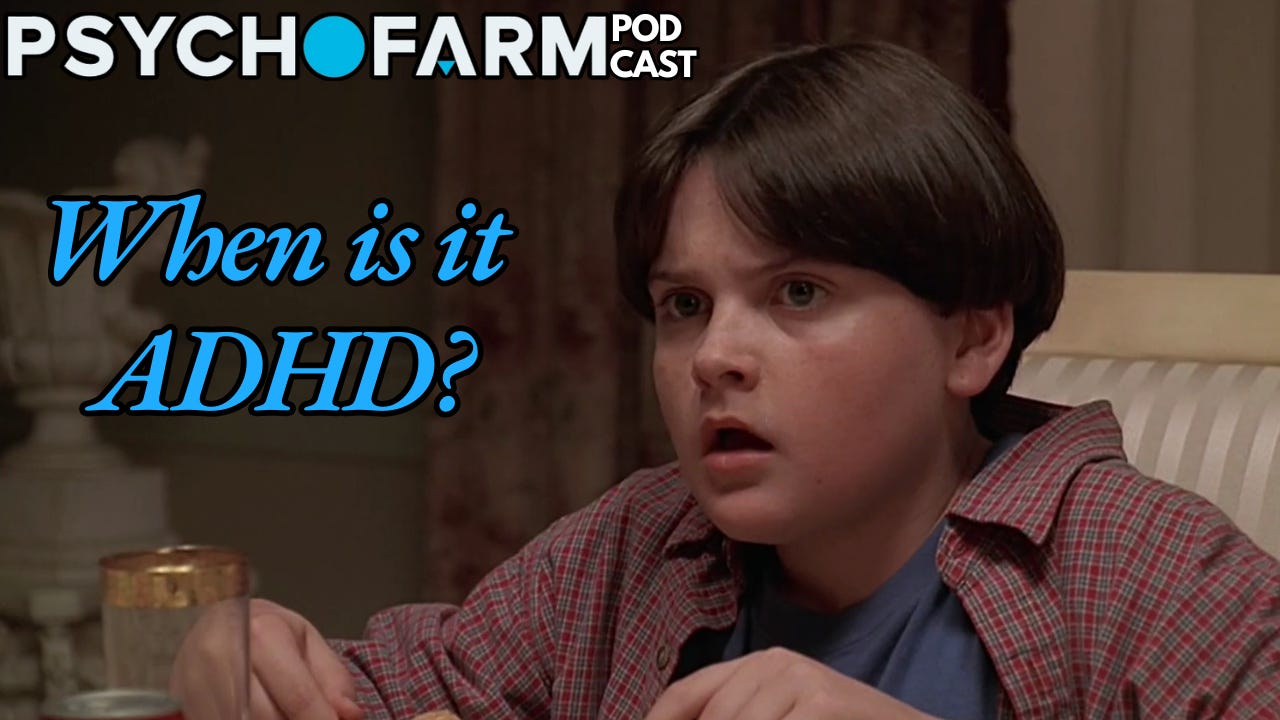
How to Decide When ADHD Is Actually ADHD
Nov 2500:56:20Tap to summarizeMany adults who struggle with concentration, disorganization, or procrastination wonder if they have ADHD. But when is it ADHD, and how can you suss this out? In this episode, two psychiatrists explore a nuanced case of possible ADHD to demonstrate why diagnosis isn’t always straightforward. They discuss how personal history, childhood environment, mood swings, and even personality traits can all cloud the clinical picture. Listeners will learn how a comprehensive evaluation is done, what other conditions can mimic ADHD, and which practical strategies (like structured routines or therapy) can help improve focus. We emphasize careful assessment and a holistic approach to treating attention difficulties. This is a public episode. If you would like to discuss this with other subscribers or get access to bonus episodes, visit psychofarm.substack.com
Transcribe →
Why the Therapeutic Alliance Matters in Psychiatry: Recognizing and Repairing Ruptures with Dr. Catherine Eubanks
Nov 1100:55:17Tap to summarizeDr. Catherine Eubanks, PhD joins us to unpack the therapeutic alliance in everyday practice: how to spot withdrawal and confrontation ruptures, why Bordin’s goals–tasks–bond still predicts outcomes, and how metacommunication jump starts repair. We translate research into concrete moves you can use in brief psychiatric visits, psychotherapy, and supervision. We discuss telehealth, boundaries, and measuring ruptures with the 3RS system. Clinicians, trainees, and curious listeners will leave with a clearer lens and usable language for repair that strengthens trust and improves care across settings.Upcoming WorkshopAlliance Rupture Repair with Dr. J. Christopher Muran & Dr. Catherine EubanksWhen: Thursday, November 13 (1:00–4:00 PM EST)Where: Virtual via ZoomCost: $60 CE | $50 General | Students 50% off (code: STU)CEs: APA for psychologists; NYSED for LCAT, LCSW, and clinical psychologistsDescription:A 3-hour transtheoretical workshop on recognizing and repairing alliance ruptures. Includes didactics, video analysis, and skills training to improve repair strategies and strengthen therapeutic effectiveness.Register: https://www.eventbrite.com/e/alliance-rupture-repair-3-ces-tickets-1797546502979?aff=oddtdtcreatorRecommended Books & VideosTherapist Performance Under Pressure: Negotiating Emotion, Difference, and Ruptureby Catherine Eubanks & J. Christopher Muranhttps://www.apa.org/pubs/books/therapist-performance-under-pressureRupture and Repair in Psychotherapy: A Critical Process for Changeedited by J. Christopher Muran, Catherine Eubanks, & Lisa Wallner Samstaghttps://www.apa.org/pubs/books/rupture-repair-psychotherapyVideo: Rupture and Repair in Psychotherapyhttps://www.apa.org/pubs/videos/rupture-repair-psychotherapyAlliance-Focused Training: An Evidence-Based Guide to Negotiating Ruptures in Therapyby J. Christopher Muran, Catherine Eubanks, Lisa Wallner Samstag, & James Macdonaldhttps://www.apa.org/pubs/books/alliance-focused-trainingaVideo: Using Alliance-Focused Traininghttps://www.apa.org/pubs/videos/using-alliance-focused-training This is a public episode. If you would like to discuss this with other subscribers or get access to bonus episodes, visit psychofarm.substack.com
Transcribe →