
Podcast
Pure Digital Passion with Moses Kemibaro
Hosted by Moses Kemibaro · EN
This is pure digital passion, the podcast of Moses Kemibaro, one of Kenya's and Africa's leading digital marketers, techbloggers, and technology analysts. Join me for insightful interviews and commentaries on all things digital from across the African continent on a myriad of compelling topics and themes. I share Africa's stories of pure digital passion!
44episodes
Episodes
Newest firstAll episodes
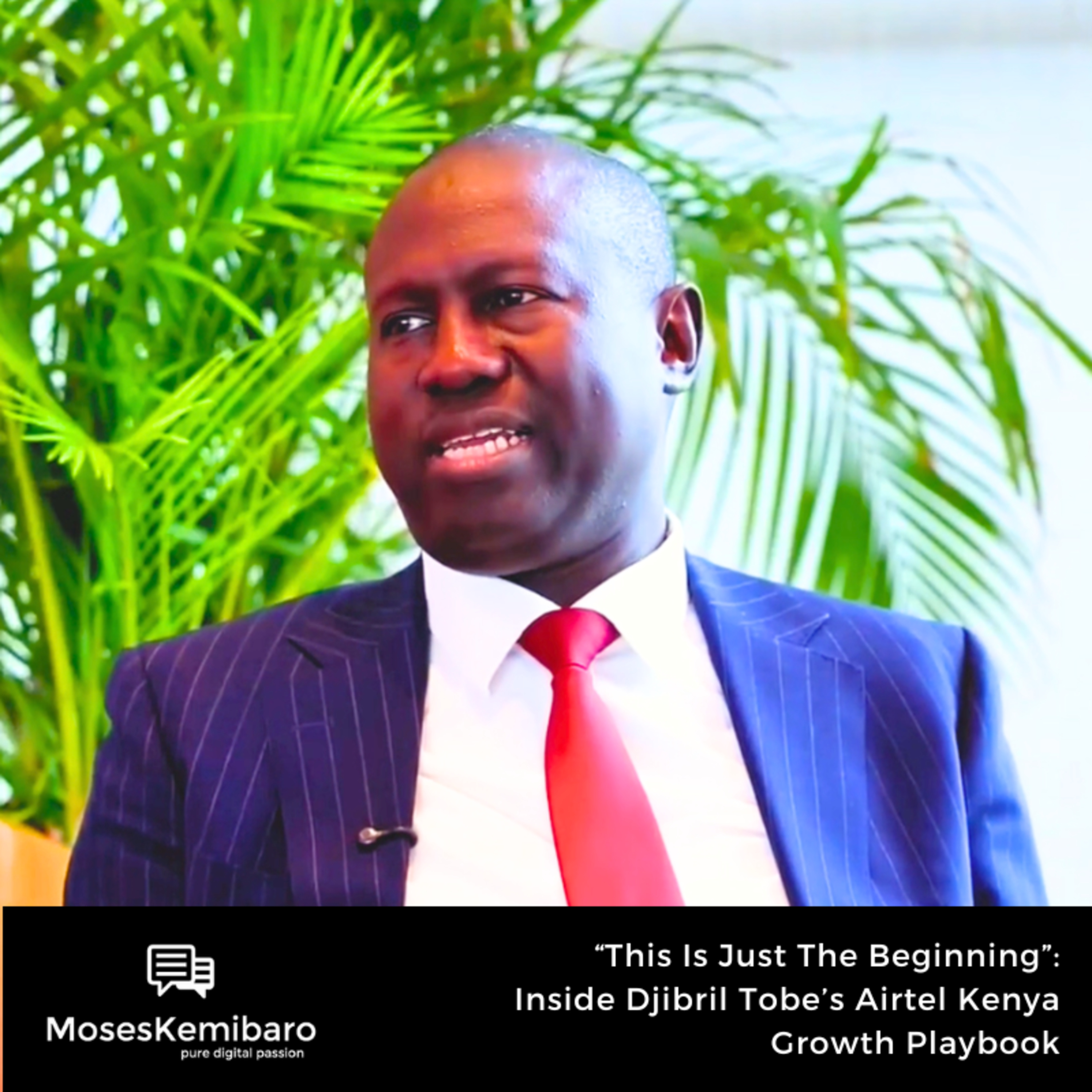
Episode 193 - “This Is Just The Beginning”: Inside Djibril Tobe’s Airtel Kenya Growth Playbook
1w ago00:27:49Tap to summarizeAirtel Kenya is entering a new chapter under Managing Director Djibril Tobe.In this special episode of the Pure Digital Passion Podcast, I sit down with Djibril shortly after Airtel Money launched Bizna Wallet and the “Si Ni Mi Nakushow” 50% cashback campaign earlier this week. The conversation moves beyond the product announcements to examine Airtel Kenya’s wider growth strategy across mobile money, customer experience, digital self-service, broadband, satellite connectivity and data-centre infrastructure.Djibril reflects on his first month in Kenya after more than two decades building businesses across African markets. He explains why he is giving himself time to listen and learn, what has impressed him about Kenya’s technology-driven economy and what customers are demanding from Airtel.We discuss the strong momentum he inherits: Airtel Kenya’s expansion from 16 million to more than 24 million customers, over 2,000 additional network sites and Airtel Money’s growth from roughly 2% to 11% market share.A major opportunity lies within Airtel’s existing base. Djibril estimates that around 14 million Airtel connectivity customers are not yet using Airtel Money and explains how Bizna Wallet, real-cash Rudishiwa rewards and “Si Ni Mi Nakushow” are intended to encourage Kenyans to carry two mobile-money wallets as readily as they carry two SIM cards.We also explore:✅ Why the My Airtel App could become Airtel’s digital front door✅ Digital self-service and reducing customer pain points✅ Cross-border Airtel Money transfers✅ API integrations for developers, startups and fintechs✅ Airtel’s broadband journey from indoor routers to outdoor units and fibre✅ Direct-to-Cell connectivity with SpaceX, subject to approval✅ The 44MW Nxtra hyperscale data centre at Tatu City✅ Cloud, AI, enterprise workloads and data sovereignty✅ Djibril’s priorities for innovation, execution and customer experienceCHAPTERS00:00 — Introduction01:13 — Djibril Tobe’s first impressions of Kenya05:21 — Airtel Kenya’s growth and his leadership priorities07:03 — The 14M-customer Airtel Money opportunity08:13 — Bizna Wallet and 50% cashback09:10 — The “Si Ni Mi Nakushow” campaign12:56 — Why the My Airtel App matters16:58 — Cross-border Airtel Money transfers19:06 — Broadband: indoor units, outdoor units and fibre20:32 — Direct-to-Cell connectivity with SpaceX23:25 — Nxtra, cloud infrastructure and data sovereignty26:47 — Closing thoughts and what comes nextThe Pure Digital Passion Podcast explores the people, organizations, technologies and ideas shaping digital transformation, business, marketing and innovation across Kenya and Africa.Subscribe for more conversations with African technology leaders, entrepreneurs, executives, policymakers and innovators.#AirtelKenya #AirtelMoney #DjibrilTobe #PureDigitalPassion #Telecommunications #Fintech #DigitalTransformation #Broadband #SpaceX #Nxtra #Kenya #Africa
Transcribe →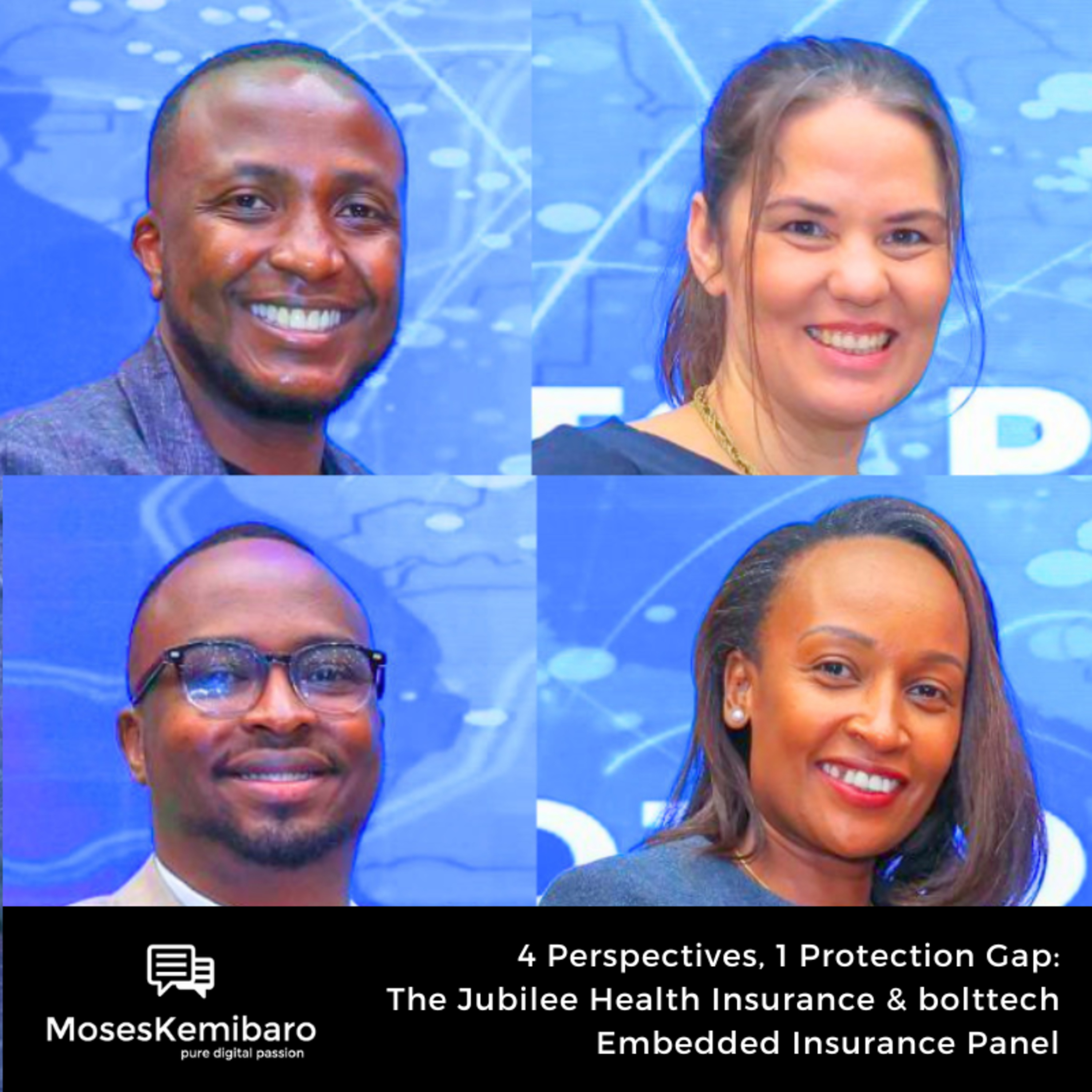
Episode 192 - 4 Perspectives, 1 Protection Gap: The Jubilee Health Insurance & bolttech Embedded Insurance Panel
3w ago00:39:08Tap to summarizeThis video captures the full "Connected to Protect" discussion panel on how health insurance can become more accessible, relevant and useful within the everyday lives of Kenyan and East African consumers.I moderated the panel during the launch of the strategic partnership between Jubilee Health Insurance and global insurtech bolttech last week. While the partnership provided the setting, the conversation went much wider: healthcare costs, fraud and extra billing, product relevance, customer segmentation, flexible payments, trusted distribution, asset financing, consumer education and claims.The panel brought together four distinct perspectives:Njeri Jomo - CEO and Principal Officer, Jubilee Health InsuranceBente Krogmann Osore - General Manager, Africa, bolttechBryan Nyutu - Principal Officer and Insurance Portfolio Lead, Safaricom PLCKen Gitonga - Group Head of Technical Product, Watu CreditModerator: Moses KemibaroKey areas discussed:Why reducing healthcare fraud, waste, abuse and unnecessary billing is essential to affordabilityWhy protection must reach the right customer at the right momentHow embedded insurance differs from placing an existing policy inside an appWhat Safaricom has learnt from Tuunza Mapato and Tuunza SimuWhy data, customer segmentation and payment frequency shape insurance uptakeHow health protection can safeguard the livelihoods of Watu's asset-financing customersWhy hospital cash should not be confused with comprehensive medical coverWhy technology alone cannot compensate for an unclear strategy or the wrong partnersHow insurance can become a reward that strengthens engagement and loyaltyWhy transparency, voluntary participation and a dependable claims experience are fundamental to trustTimestamps00:00 Introduction00:12 The biggest friction between customers and useful health protection00:37 Jubilee Health: using AI to reduce fraud, waste, abuse and extra billing02:34 bolttech: making insurance relevant and timely04:28 How embedded insurance changes Jubilee Health's approach07:58 Safaricom's lessons from Tuunza Mapato and Tuunza Simu12:24 Watu: protecting livelihoods within the asset-financing journey14:35 When customers experience the real value of insurance16:17 Why Kenya needs fully fledged micro-medical cover19:12 Audience questions begin21:10 Technology is an enabler - why the right partners matter25:21 Bridging consumer and product-segmentation gaps27:47 Human-centred design for mass-market insurance31:46 Insurance as a reward and engagement tool33:41 Medical borrowing, community fundraising and catastrophic health expenditure37:20 Health and device protection for young daily earners38:51 Closing#ConnectedToProtect #EmbeddedInsurance #HealthInsurance #Insurance #FinancialInclusion #Kenya #EastAfrica #Africa
Transcribe →
Episode 191 - Fixing The Nation On Ride Hailing Minimum Fares, Driver Welfare, & Passenger Affordability In Kenya
3w ago00:44:00Tap to summarizeIn this episode of NTV Kenya's Fixing The Nation, I joined Mariam Bishar, Eric Latiff and Fellaris Wambui to unpack Kenya’s growing debate around minimum fares for ride hailing.The discussion was focussed on the Business Daily's headline on Uber and Bolt drivers potentially getting more power in how fares are set, as well as broader proposed reforms that could bring ride-hailing platforms under greater regulatory scrutiny.We discussed what this means for drivers, passengers, platforms, businesses, regulators, competition policy, and Kenya’s wider gig economy.At the heart of the conversation was one question:How does Kenya improve driver earnings without pricing passengers out of digital mobility or weakening the ecosystem that makes ride-hailing possible?Timestamps00:00 – Introduction: Business Daily headline and the digital taxi fare debate01:20 – Moses Kemibaro joins Fixing The Nation02:30 – How ride-hailing platforms work and why the issue matters03:32 – From traditional taxis to digital ride-hailing in Kenya05:38 – Market scale: drivers, users, rides and the gig economy06:52 – Owner-drivers versus rental drivers08:13 – Are driver complaints justified?10:26 – Understanding the 18% commission discussion11:57 – Platform value: marketplace, trust, safety and digital payments13:40 – Tanzania as a cautionary case14:28 – Passenger affordability and price sensitivity16:34 – Why smart regulation must balance all stakeholders18:14 – Where did the “doubling fares” idea come from?20:18 – Viewer comments and subscription model proposals21:01 – Competition risks if pricing is over-regulated22:21 – Price elasticity: what happens if fares double?24:08 – Passenger willingness-to-pay thought experiment26:11 – Draft minimum compensation rules and the missing passenger voice29:20 – Driver welfare, classification and platform responsibility30:22 – Financing, insurance and formalizing the gig economy33:05 – The platform as a marketplace creator35:08 – Kenya’s ride-hailing market versus Nigeria and South Africa37:19 – Could electric mobility reduce driver operating costs?38:49 – Higher fares and higher consumer expectations40:13 – Viewer comments on commissions and platform costs42:53 – Final thoughts: broader consultation and a balanced way forwardKey ThemesMinimum fares versus minimum driver earningsDriver welfare and platform workPassenger affordabilityCommission transparencyOwner-driver versus rental-driver economicsCompetition and platform regulationSmart regulation for Kenya’s gig economyThe long-term future of ride-hailing in Kenya#FixingTheNation #NTVKenya #NationFM #RideHailing #DigitalTaxis #GigEconomy #Kenya #PublicPolicy #FutureOfWork #DigitalEconomy
Transcribe →
Episode 190 - WhatsApp Usernames, Privacy, Fraud & Digital Identity: An Interview with the BBC's Nkechi Onyinyechi Ogbonna on the Focus on Africa Podcast
4w ago00:10:59Tap to summarizeWhatsApp is preparing to introduce usernames that will allow people to communicate without publicly sharing their phone numbers.The feature could deliver a meaningful privacy improvement, particularly in group conversations, business interactions and chats with people who have only recently met. However, it has also raised questions about impersonation, phishing, financial fraud, mobile-money security and whether accounts involved in criminal activity will remain traceable.On the 15th July 2026, I joined Nkechi Onyinyechi Ogbonna on BBC World Service’s Focus on Africa to discuss WhatsApp’s forthcoming username feature.The programme also featured Somalia’s State Minister of Communications and Technology, Hon. Ahmed Osman Diiriye, who explained why his government wants Meta to provide stronger assurances around fraud, mobile-money security and digital traceability.The discussion examines why Somalia wants Meta to demonstrate “proof of traceability,” the concerns India has raised and the protections WhatsApp says it is building into the feature.It also explains:The difference between reserving and activating a usernameHow usernames differ from display namesWhy users will still need telephone numbersHow optional username keys will workWhy WhatsApp will not offer a public username directoryHow usernames could protect people in group chatsWhat the feature means for creators and businessesThe risks of lookalike usernames and impersonationWhy mobile-money markets require additional safeguardsHow digital literacy can help users identify scamsChapters00:00 — Introduction to WhatsApp usernames00:55 — Somalia’s security and accountability concerns01:53 — Consultations between Somalia and Meta02:16 — Is there evidence that usernames will increasefraud?03:22 — “We want proof of traceability”04:27 — Meta explains its proposed safeguards05:19 — Why WhatsApp is separating identity from phone numbers06:26 — How usernames will change one-to-one and group communication07:11 — Impersonation, financial fraud and mobile-money risks09:02 — Digital literacy and practical user protection10:50 — Conclusion
Transcribe →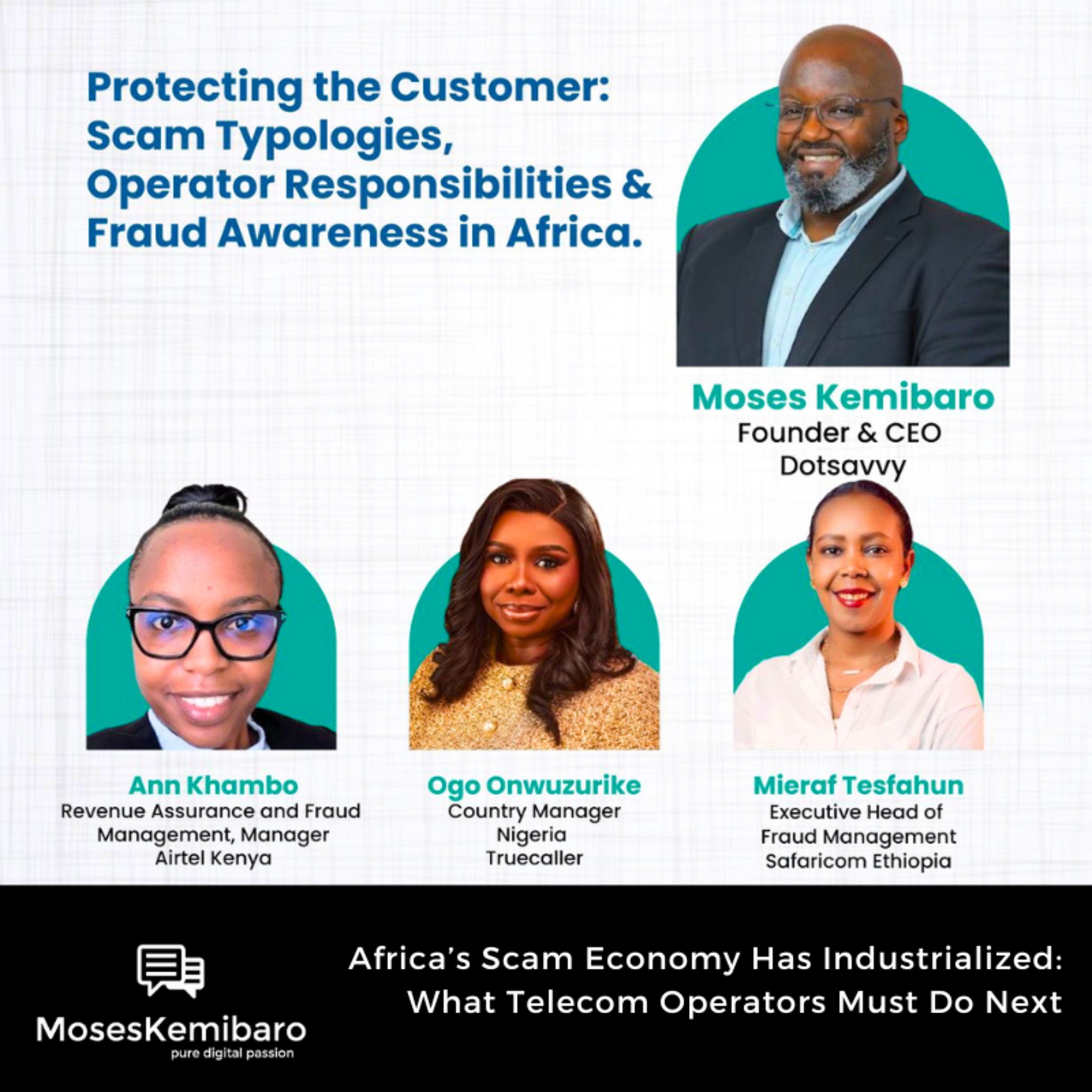
Episode 189 - Africa’s Scam Economy Has Industrialized: What Telecom Operators Must Do Next
Jul 1400:31:00Tap to summarizeAfrica’s scam economy is becoming more organised, automated and sophisticated.What was once the occasional fraudulent SMS has evolved into smishing, vishing, identity theft, business impersonation, SIM-swap-enabled account takeovers, AI-generated identity documents and deepfake voice calls.I moderated a discussion recorded at the TARS 2026 Telecom Africa Revenue Assurance & Fraud Management Summit in Nairobi, Kenya, on the 13th May 2026 titled:Protecting the Customer: Scam Typologies, Operator Responsibilities & Fraud Awareness in AfricaThe panel brought together:Ann Khambo - Revenue Assurance and Fraud Management Manager, Airtel Money, Airtel KenyaOgochukwu (Ogo) Onwuzurike - Country Manager, Nigeria, TruecallerMieraf T. Birhane - Executive Head of Fraud Management, Safaricom Telecommunications EthiopiaThe discussion examines how customer-facing fraud is changing across African telecom and mobile-money markets, why social engineering remains such an effective attack vector, and why operators can no longer regard themselves as neutral pipes when their networks, brands and identity systems are being exploited.Mieraf shares insights from Ethiopia’s evolving fraud landscape, including smishing, account takeover, subscription fraud and commission-related abuse. She also describes a striking case in which fraudsters used makeup and physical impersonation to attempt fraudulent SIM swaps—an incident detected because the agent involved had received practical fraud training.Ann explores identity theft, including situations where innocent customers may not know their photographs or personal information have been used to register SIM cards or commit fraud. She also explains why GSM and mobile-money fraud must be analyzed together using KYC, voice, SMS, location, SIM, device and transaction data.Ogo introduces the “machine era of spam and fraud.” According to the figures shared during the panel, Truecaller intercepted approximately 68 billion spam and fraud calls in 2025, compared with approximately 37.8 billion in 2021. She explains how AI and automation are helping fraudsters scale while excessive calls and messages from legitimate organisations are also eroding trust in phone-based communication.Key Themes:Smishing, vishing and social engineeringIdentity theft and fraudulent SIM registrationSIM-swap-enabled account takeoverBusiness impersonation and investment scamsReal-time detection, analytics and machine learningInternal fraud and insider riskAnti-fraud by designOperator responsibility and customer protectionCross-industry collaborationTime Stamps 00:00 Intro music00:12 Africa’s scam operations have industrialised04:09 What keeps fraud leaders awake at night?04:44 Ethiopia’s evolving fraud landscape08:43 Identity theft and the innocent customer10:54 The human factor in customer-facing fraud11:24 Why operators must take greater responsibility13:43 The machine era of spam and fraud18:05 AI call scanning and verified business communication19:40 Smishing and sophisticated account takeover in Ethiopia23:21 Data-driven controls for mobile-money fraud24:05 Connecting GSM and mobile-money fraud27:52 Business impersonation, investment scams and credibility engineering30:49 Outro musicThe central takeaway is that customer-facing fraud is no longer only a fraud-management or revenue-assurance issue. It is a customer-experience, brand-trust, financial-inclusion and digital-economy issue.Protecting customers requires shared responsibility across telecom operators, mobile-money providers, banks, fintechs, platforms, regulators, agents, employees and customers.
Transcribe →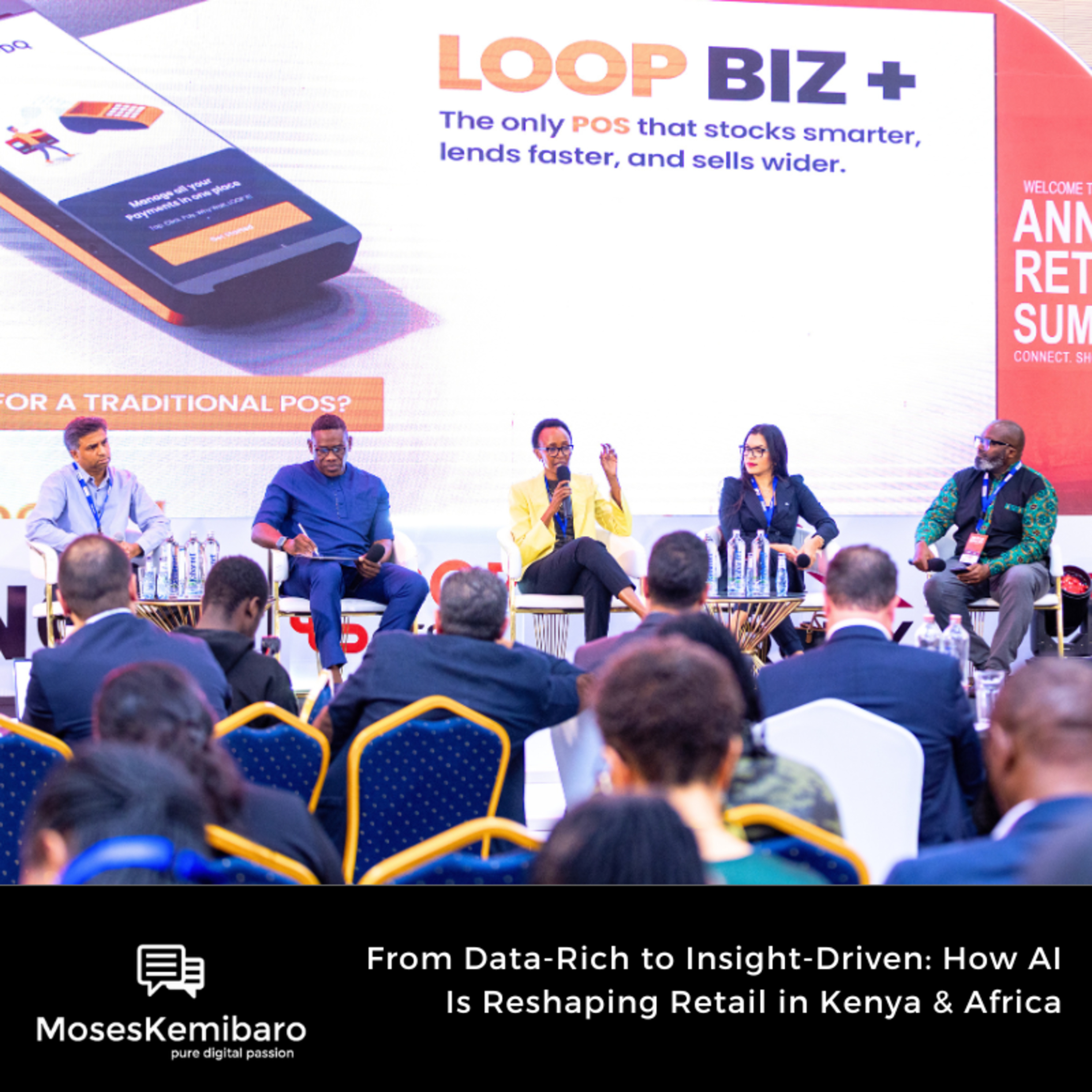
Episode 188 - From Data-Rich to Insight-Driven: How AI Is Reshaping Retail in Kenya & Africa
Jul 1300:57:52Tap to summarizeKenyan and African retailers generate enormous volumes of information through point-of-sale systems, inventory platforms, loyalty programmes, e-commerce, mobile applications, social commerce, delivery platforms and digital payments.However, much of that data remains fragmented, underused and disconnected from everyday business decisions.In this special episode of the Pure Digital Passion Podcast, I moderate a discussion from the RETRAK Retail Summit 2026 titled:Smarter Retail: Turning Data, AI and Insights into Competitive AdvantageThe session took place on Thursday, 14 May 2026, at the Sarit Expo Centre in Nairobi and brought together four experts representing retail entrepreneurship, digital payments, financial-services platforms and retail technology, as follows: Judy Waruiru - Regional Managing Director, Network InternationalSonal Haria - Co-Founder and CEO, Canvas Cosmetics, Co-Founder, CB Consulting & Media GroupEric Muriuki - Group Director, Digital Business, CEO, LOOP DFS, NCBA GroupSiddesh Narkar - Head of Product, CompulynxTopics CoveredWhy many retailers are data-rich but insight-poorThe importance of connecting fragmented customer dataBuilding a unified view across stores, websites, apps and paymentsWhy data readiness must come before AI readinessUsing data to improve product development, pricing and assortmentHow Canvas Cosmetics used customer insights to guide product developmentUsing payments data to understand churn, market movements and fraudAI-supported replenishment, stock management and pricingHow AI can improve sales productivity and outreachBalancing personalisation with customer privacy and trustPrivacy-by-design approaches to retail dataHow AI agents may soon shop and pay on behalf of consumersPractical AI actions retailers can take during the next 12 monthsKey MessageRetailers do not need to begin with an expensive, enterprise-wide AI programme.They should begin by digitizing operations, organising existing information, selecting one or two commercially important problems, measuring the results and building from the small wins.AI can analyze more information and provide options faster, but human judgement remains essential.Chapters00:00 Introduction to the RETRAK panel00:44 The state of retail in Kenya and Africa07:07 Sonal Haria on combining data with human judgement09:20 Judy Waruiru on fragmented customer data10:43 Eric Muriuki on data readiness and AI15:50 Siddesh Narkar on clean and usable retail data17:32 How Canvas Cosmetics used data for product development21:12 Payments data, customer journeys, churn and fraud26:39 AI as an intelligent wrapper around the business33:53 Audience questions begin34:36 Preparing and labelling business data for AI38:25 AI-generated cosmetic formulations and human oversight39:44 Understanding wider market and industry trends40:48 Using payments data for retail-market intelligence42:07 Turning financial-service providers into insight partners44:59 How AI improved sales productivity and outreach46:33 AI personalization, privacy and customer trust49:15 Cloud and on-premise AI deployment50:08 Agentic commerce and the machine as the next customer53:27 One action retailers should take in the next 12 months57:42 Closing remarksThe Pure Digital Passion Podcast explores the people, organizations, technologies and ideas shaping digital transformation, marketing, media, innovation and business across Kenya and Africa.Subscribe for more conversations with African technology leaders, entrepreneurs, executives, policymakers and innovators.#Retail #RetailTechnology #ArtificialIntelligence #AI #DataAnalytics #DigitalTransformation #Payments #Fintech #CustomerExperience #Kenya #Africa #PureDigitalPassion
Transcribe →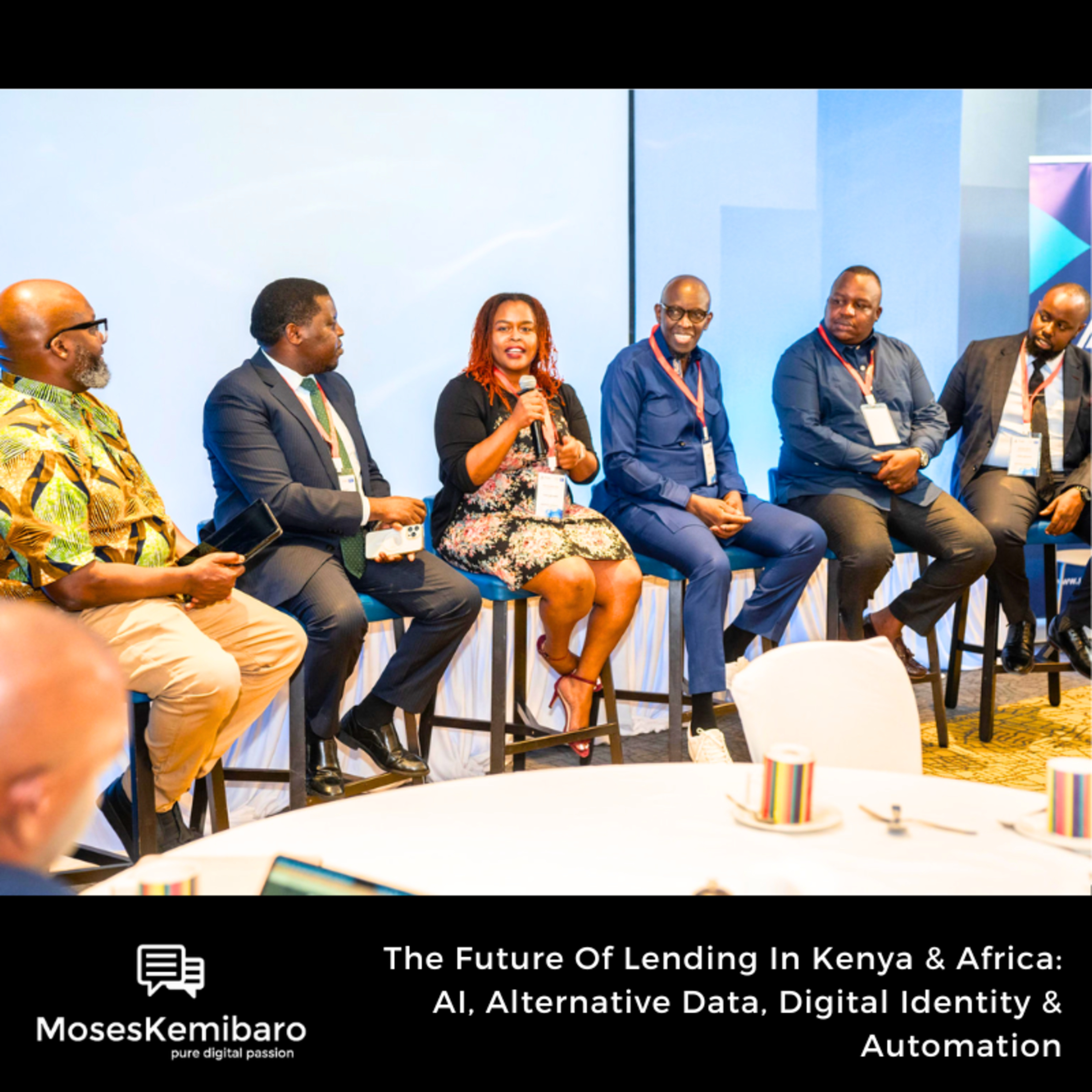
Episode 187 - The Future Of Lending In Kenya & Africa: AI, Alternative Data, Digital Identity & Automation
Jul 1300:47:42Tap to summarizeWhat does a truly future-ready African lender look like?Is it enough to launch a mobile application, automate loan approvals or introduce artificial intelligence into the credit-scoring process?Or does meaningful digital transformation require lenders to rethink the entire customer journey—from acquisition, onboarding and identity verification through credit decisioning, disbursement, repayment and collections?In this panel discussion I moderated a practical and thought-provoking conversation on the future of lending in Kenya and Africa.The discussion was recorded during The Future of Lending: Loan Origination, E-Sign & AI, held on the 29th of May 2026 at Park Inn by Radisson in Westlands, Nairobi.The event was co-hosted by Presta Technologies, Zoho and the Digital Financial Services Association of Kenya.PanelistsKris Senanu: Executive Chairman, Smith & Berkeley LLCKevin Mutiso: CEO, OYE and Chairman, Digital Financial Services Association of Kenya (DFSAK) Winnie Chira: Founder and CEO, Identify AfricaVictor Kiplagat: CEO and Co-Founder, Spin Mobile LLCKenneth Mantu: Group CEO, The Adaptis GroupKey Topics CoveredWhy many African lenders still operate through fragmented platformsThe difference between having digital channels and having a genuinely digital lending operationWhy reliable data matters more than institutional gut instinctHow incomplete information can cause both financial exclusion and over-indebtednessDigital identity, stolen documents, deepfakes and onboarding fraudRisk-based KYC and creating seamless journeys for genuine customersHow alternative data can improve decisions for thin-file borrowersMobile-money transactions and behavioural credit indicatorsWhy correlations in lending data must be interpreted responsiblyEmbedded finance and the importance of loan purposeWhy borrowers value speed, convenience and certaintyThe local shopkeeper as an overlooked source of informal credit intelligenceThe role of automation in removing repetitive manual workWhy change management is critical to successful technology adoptionPractical AI integrations in lendingAnomaly detection, model monitoring and human oversightWhat lenders should prioritize over the next twelve monthsChapters00:00 Unified Lending Platforms, Market Readiness & Credit Infrastructure01:33 Data Integrity & Why Analytics Can Challenge Gut Instinct03:25 Building Sustainable Lending Businesses Through Data05:22 Lending Silos, Manual Workflows & Kenya’s Mortgage Gap07:51 Deepfakes, Stolen IDs & Risk-Based KYC08:48 Customer Acquisition, Fragmented Data & Over-Indebtedness12:26 Digitising Lending Without Overwhelming the Organisation15:01 Speed, Paperwork & the Signs of an Outdated Lender17:47 Don’t Give a Human a Robot’s Job18:08 Alternative Data, Mobile Money & Credit Scoring20:16 Tithing, Loan Stacking, Betting & Affordability Signals22:49 Audience Question-and-Answer Session Begins24:14 Scoring Thin-File Customers Using Feature Phones25:23 Embedded Finance, Loan Purpose, Speed & Convenience28:59 Why the Shopkeeper May Be Africa’s Largest Lender31:20 Can Lifestyle Patterns Predict Borrower Behaviour?31:54 Alternative Data for Collections, Skip Tracing & Product Development34:02 Questions on Scoring Bias, Fraud & Regulatory Complexity35:42 Industry Collaboration Against Fraud40:12 KYC, SIM-Swap Checks, Identity Matching & Document Verification43:04 The One Change Every Lender Should Make43:27 Unified Platforms & the End of Lending Silos44:12 Intelligent Automation Driven by Data44:22 Digitisation & Real-Time Management Visibility44:36 Integrating AI Into Existing Lending Systems45:29 Anomaly Detection, AI Monitoring & Human Oversight47:03 Final Takeaways: Data, Technology & People
Transcribe →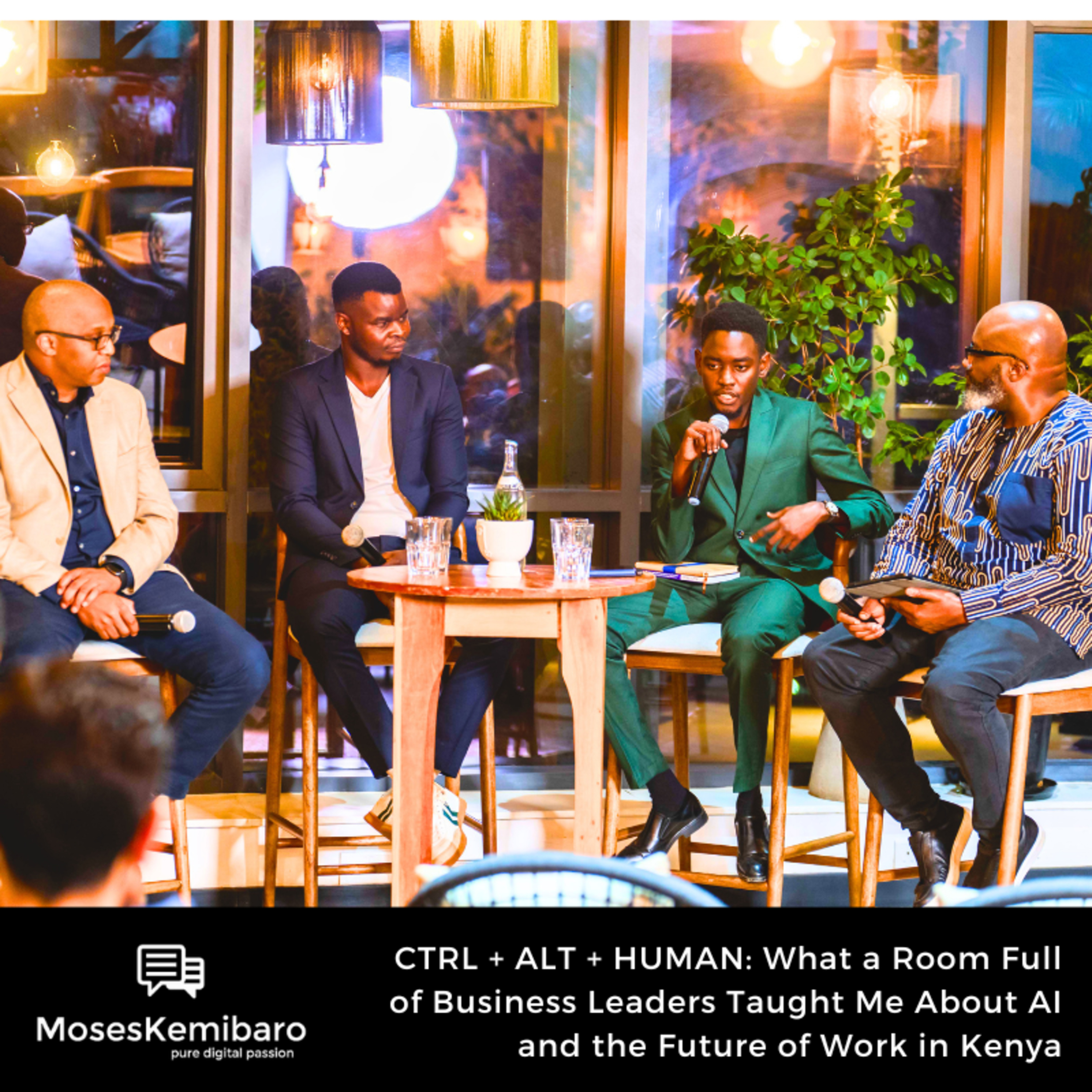
Episode 186 - CTRL + ALT + HUMAN: What a Room Full of Business Leaders Taught Me About AI and the Future of Work in Kenya & Beyond
Jul 1200:54:58Tap to summarizeWhat happens to the humans when the machines can increasingly do the work? Recorded live at the Ikigai Industry Nights event in Nairobi on the 2nd July 2026, this special episode of the Pure Digital Passion Podcast brings you the complete CTRL + ALT + HUMAN panel — as moderated by me (Moses Kemibaro), with Shikoli Makatiani (co-founder & CTO, Akili AI), Victor Ambuyo (Head of Growth, Madavi) and Marvin Oyoo (Management Systems Consultant, Panoramic Synergy) as my panelists. From Shikoli’s 10/90 rule and the loan-intake process that was 90% broken, to Victor’s anatomy of the failed rollout (‘a people problem wearing a technology costume’) and the fluency answer to the jobs question, to Marvin’s reality gap, ‘that’s not a strategy — that’s a subscription’, human–AI synergy and a council of AIs checking each other — plus lamplighters, coexistence, tea-buying drones, ATM forensics and a physics exam passed with an AI tutor. This is practical AI, Kenyan edition: no hype, real examples, honest answers. Recorded before a packed live audience.Take the free Akili Snapshot and find out what AI is doing with your data — in 15 minutes: assured.akili-ai.com Timestamps00:00 Welcome · why this conversation, why now — ChatGPT’s 100M users in two months vs Spotify’s eight years · meet the panel03:33 Opening round: what the AI hype gets most wrong — and the one shift every organisation must make in 12–18 months05:25 Victor: the hype is about tools — the gap is the organisations and people meant to use them06:27 Marvin: AI replaces repeatable tasks, not people — the leadership-readiness question08:58 Shikoli: ‘Only 10% of the work is AI’ · the loan-intake story · automating decisions, not just processes12:52 What’s production-ready in Kenya today vs what’s still a demo17:05 Victor’s anatomy of a failed rollout: the event, the subscriptions, the 20% — ‘a people problem wearing a technology costume’21:15 Marvin: the reality gap, live — ‘AI is fun until the real work starts’; the SLM/LLM show of hands; using 5% of what you pay for23:32 ‘That’s not a strategy — that’s a subscription’ · AI is everyone’s responsibility, not an IT project · the sensitive-data warning25:38 The jobs question I: Victor on judgement, pattern machines, Kenya’s trust economy — and fluency: ‘it’s someone more fluent with AI who takes your job’31:06 The jobs question II: Shikoli — lamplighters, the work that disappears · the hospital insurance example · the red line on human life (‘…I’ll eat the leaf’)35:16 From collaboration to coexistence — the Ethan Mollick frame35:58 Marvin: human–AI synergy — the human checker, hallucinations and data poisoning · the SOC alert-fatigue example40:47 Transparency, consent and bias · why a 50-page policy defeats a model · the ‘AI council’ — models judging models, a human above them44:06 Audience Q&A45:39 Shikoli: AI’s sleeping superpower — vision: tea drones buying crop months before auction · 300 ATM videos in minutes49:46 First principles: AI as thought partner, feedback and tutor — the physics exam · organisations = workflows = tasks53:30 Final round + the parting shot: the solopreneur billion-dollar company · close
Transcribe →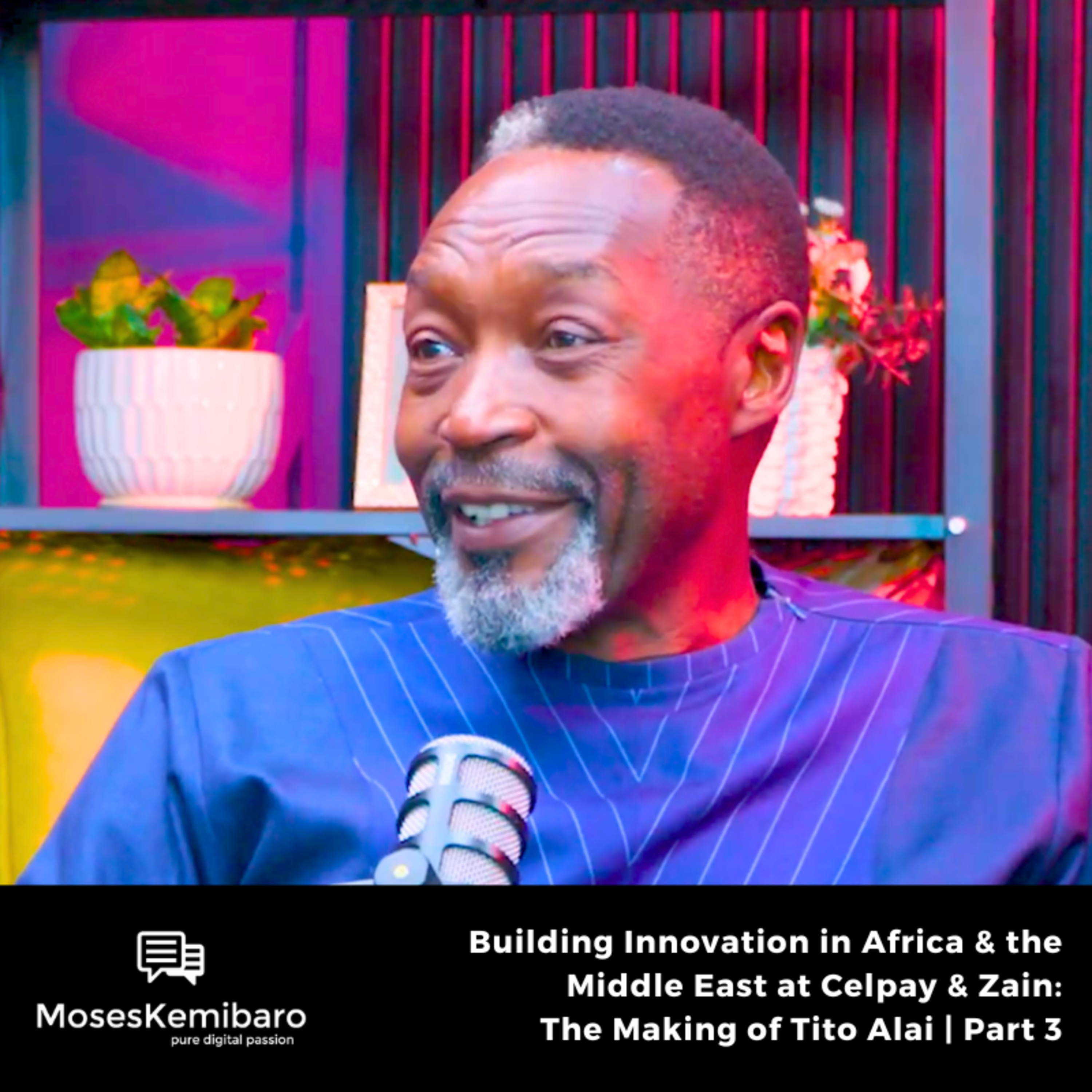
Episode 185 - Building Innovation in Africa & the Middle East at Celpay & Zain: The Making of Tito Alai | Part 3
Jul 1100:57:53Tap to summarizeThe final part of my three-part conversation with Tito Alai begins with one of the most important and least widely understood stories in African technology: the origins of Celpay.According to Tito’s first-hand account, Celtel’s mobile-money journey began with market research in Zambia. The company noticed that airtime purchased in one city was often activated in another. People were already finding ways to support relatives, employees and business partners remotely.Me2U made it possible to transfer airtime directly from one user to another.The next insight was even more significant. Recipients were sometimes exchanging that airtime for cash or goods. In a hyperinflationary environment with limited access to conventional banking and card infrastructure, airtime had become a proxy for money.Tito explains how Celtel attempted to formalise that behaviour through Celpay and why the company eventually sold the business to focus resources on the rapid expansion of its core telecommunications network.The episode then moves into Celtel’s entry into Kenya and Nigeria, including the complexities of growing through acquisition rather than building every operation from the ground up.The second half of the conversation explores Celtel’s acquisition by MTC of Kuwait and the creation of Zain.Tito was asked to take on integrated commercial leadership across the Middle East and Africa. The group had strong operations but lacked one coherent identity. Celtel had powerful African brand equity, but simply exporting that identity into the Middle East would have required diluting what made it meaningful.The solution was to create a new brand.Tito takes us inside the process that produced Zain, from hundreds of possible names to market research, executive choice, visual identity and rollout across countries with very different histories and existing brands.We also discuss his work after Zain through Mimi Africa, his time at Afreximbank during the COVID-19 period and his current conviction that secure digital identities, digital signatures and certification will be essential to Africa’s economic integration.This final episode brings the entire series together: consumer insight, innovation, global brand strategy, African institutional agency and the importance of telling our own stories.Time Stamps00:00 Welcome to Part 3 and the Celpay question00:47 Why Celtel looked beyond tariff plans for innovation02:06 The Zambia market insight behind remote airtime transfer04:39 How Me2U was created05:46 When airtime became a proxy for money07:26 Hyperinflation and the need to move value08:30 Consumers had already invented the workaround09:10 Formalizing cash-in and cash-out10:29 The hidden cost of being a first mover12:43 Why Celtel narrowed its strategic focus14:08 Selling Celpay and funding expansion15:53 Entering Nigeria and Kenya through acquisition17:25 The Kencell acquisition story23:13 Celtel’s acquisition by MTC of Kuwait28:18 Integrating commercial leadership across the Middle East and Africa32:14 Creating the Zain brand from scratch39:10 Moving Celtel’s brand equity into Zain41:18 Mimi Africa and new ventures46:15 Afreximbank and telling African institutional stories48:38 Digital identity, certification and the future of African integration53:24 Closing reflections on a three-part career journey
Transcribe →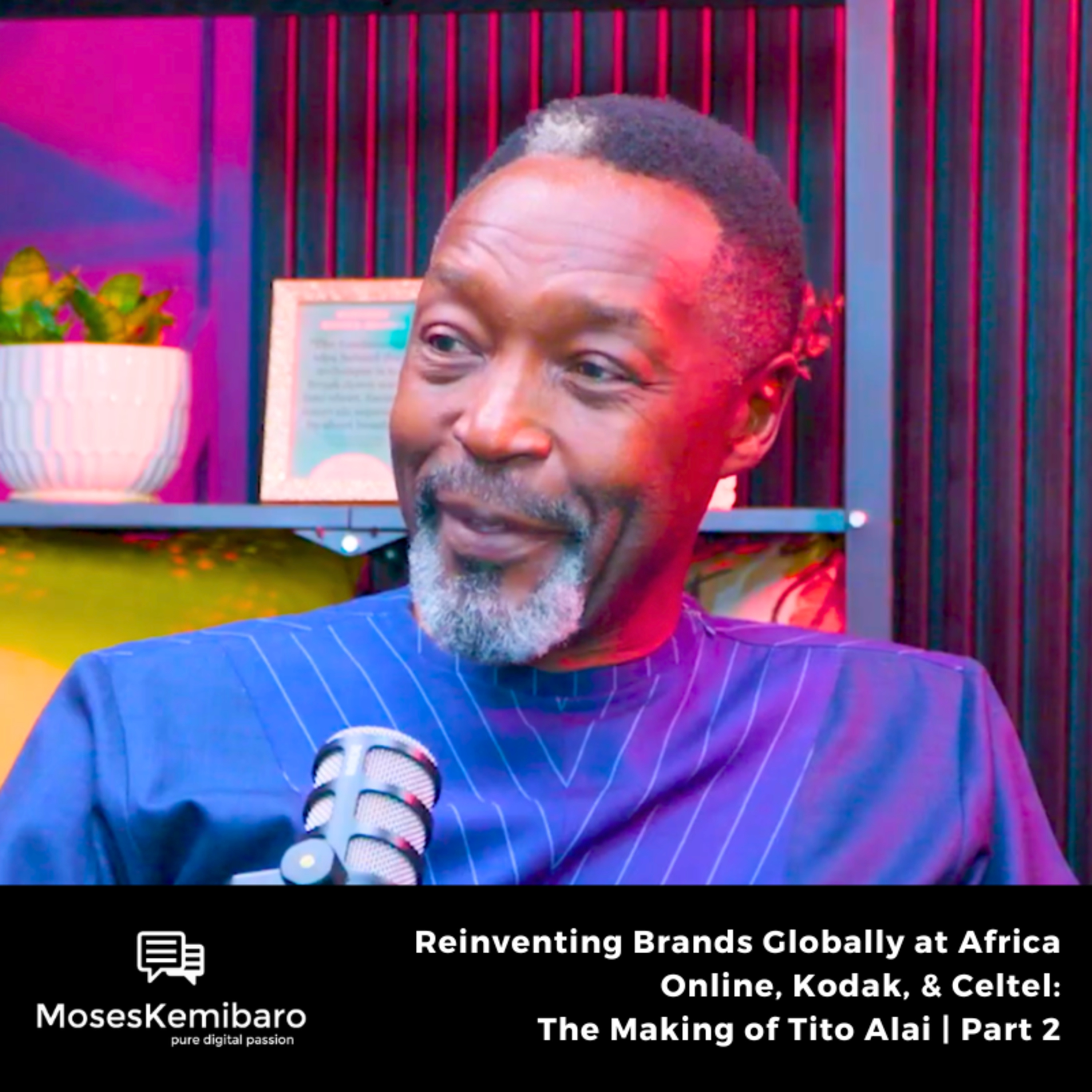
Episode 184 - Reinventing Brands Globally at Africa Online, Kodak, & Celtel: The Making of Tito Alai | Part 2
Jul 1101:00:36Tap to summarizePart 1 of my conversation with Tito Alai ended just as he was leaving Unilever and joining Africa Online.Part 2 begins at that exact inflection point.After almost a decade in one of the world’s most sophisticated consumer-goods organizations, Tito deliberately moved into a young African internet business because he wanted a genuinely new learning curve.Africa Online was scaling across several markets at a time when the internet itself was still unfamiliar to most consumers and organisations on the continent. Tito explains what it meant to take the consumer understanding, organizational discipline and brand-management principles he had learned at Unilever and apply them inside a startup environment.The conversation has special personal resonance for me because Africa Online is also where I began my career. We revisit the company’s “My World, My Provider” era, the need to create consistency across countries and the importance of presenting one coherent narrative to customers, employees and investors.Tito then takes us into Eastman Kodak. He first managed consumer imaging across roughly 90 countries covering Africa, the Middle East and Central Europe before being appointed to lead the film category across Western Europe.His assignment was simple to describe but difficult to execute: find growth in a mature category. Tito explains why that meant taking market share from competitors—and how Kodak was already confronting the early strategic challenge of digital photography.The final chapter introduces Mo Ibrahim and the vision that became Celtel. Tito describes joining a group that believed Africans deserved mobile technology as good as anything available elsewhere, and we begin exploring how the company developed market-specific innovations rather than treating Africa as an afterthought.The discussion includes the origins of Me2U and Celpay, as well as the commercial problem that eventually produced One Network: why should crossing an African border suddenly make a phone call dramatically more expensive?This is a conversation about reinvention, disruption, storytelling and the power of building from the realities of the consumer.Time Stamps00:00 Welcome back and where Part 1 ended01:29 Leaving Unilever and joining Africa Online04:43 Why Tito deliberately chose a startup and a new industry12:18 What Unilever experience brought to Africa Online16:13 How do you market the internet before people understand it?17:28 Unifying Africa Online across multiple countries19:34 The big idea, the investor narrative and the IPO22:54 The dot-com bust and the realities of family and travel24:14 Joining Kodak across Africa, the Middle East and Central Europe25:38 Growing a mature Western European market28:10 Kodak, film and the early digital disruption32:00 Mo Ibrahim’s vision for African mobile telecommunications34:34 Joining Mobile Systems International and building Celtel39:27 The commercial growth of Celtel43:49 Me2U and Tito’s account of Celpay’s early mobile money story50:45 Why African consumers were paying so much to roam54:28 How One Network emerged59:28 Why the story needed a third episode
Transcribe →