
Podcast
Pure Digital Passion with Moses Kemibaro
Hosted by Moses Kemibaro · EN
This is pure digital passion, the podcast of Moses Kemibaro, one of Kenya's and Africa's leading digital marketers, techbloggers, and technology analysts. Join me for insightful interviews and commentaries on all things digital from across the African continent on a myriad of compelling topics and themes. I share Africa's stories of pure digital passion!
44episodes
Episodes
Newest firstAll episodes
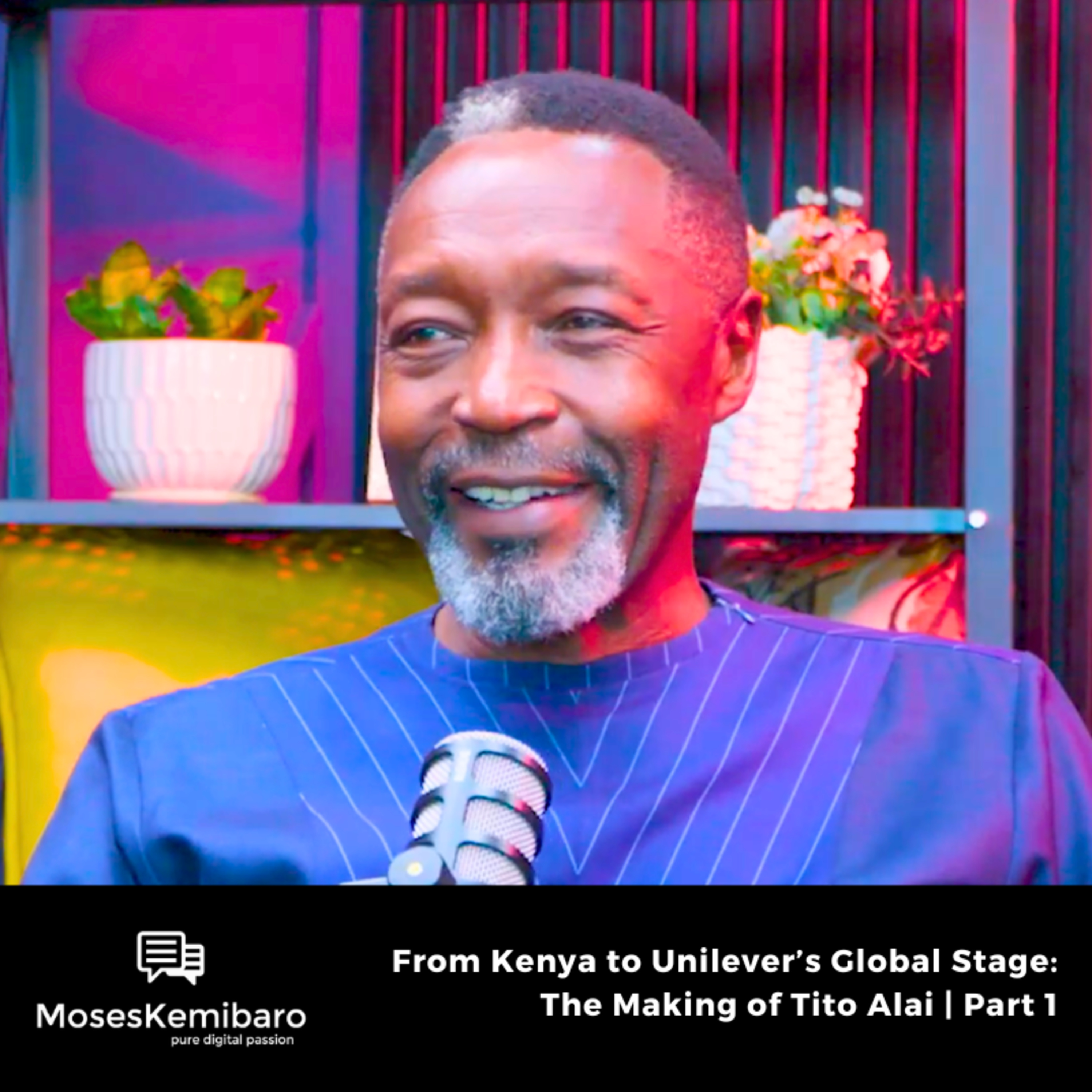
Episode 183 - From Kenya to Unilever’s Global Stage: The Making of Tito Alai | Part 1
Jul 1100:58:47Tap to summarizeI had initially planned to record one Pure Digital Passion Podcast conversation with Tito Alai. We ended up recording three.By the end of this first session, we had only managed to cover Tito’s early life, education, rise through East African Industries—now Unilever—and his move to London for international strategic responsibilities.We had not yet reached Africa Online, Kodak, Celtel, Celpay, One Network, Zain, Mimi Africa, Afreximbank or his current work around African digital identities.That is the scale of Tito’s story.In Part 1, we begin in Kirinyaga, where Tito was born while his father, then a District Commissioner, was away responding to a rogue-elephant incident. We move to his childhood on a farm in Muhoroni, boarding school from the age of six and his years at Lenana School, where he embraced academics, sport, leadership and extracurricular life.Tito explains why he chose humanities despite excelling in mathematics and the sciences, how the death of his father changed the period immediately before university, and why he briefly dropped out of the University of Nairobi because he felt insufficiently challenged.The second half of the conversation traces his entry into Unilever’s graduate-management program. He recalls choosing East African Industries over Coca-Cola, beginning in field sales, learning how products actually moved through the market and later becoming a brand manager responsible for outcomes without having direct authority over the people needed to deliver them.We also unpack the extraordinary moment when an informal-looking trip to London turned out to be an interview for an international role. At just 29, Tito moved to London and began coordinating strategic work across Latin America before taking on wider regional and global responsibilities.This episode is about much more than one person’s early career. It is about how curiosity, responsibility, consumer understanding and a willingness to keep learning can transform the direction of a life.Time Stamps00:00 Introduction to Tito Alai and the three-part story04:38 Why the conversation had to begin with his formative years5:26 Born in Kirinyaga and the story behind his African name07:02 Farm life, boarding school and early independence08:02 Lenana School and the value of trying everything09:34 Choosing humanities despite excelling in science12:23 Losing his father and taking on family responsibility13:31 University of Nairobi and the transition into commerce17:05 Why Tito briefly dropped out of university19:24 How Unilever’s graduate programme found him24:37 Choosing Unilever over Coca-Cola25:12 Mentorship and management training at East African Industries26:22 Learning the market through field sales29:31 Brand management: responsibility without authority34:00 The unexpected London opportunity39:44 Moving to London at 2940:04 Latin America and the shock of global scale47:47 Leaving Unilever to pursue a new learning curve56:45 Why one podcast became a three-part series
Transcribe →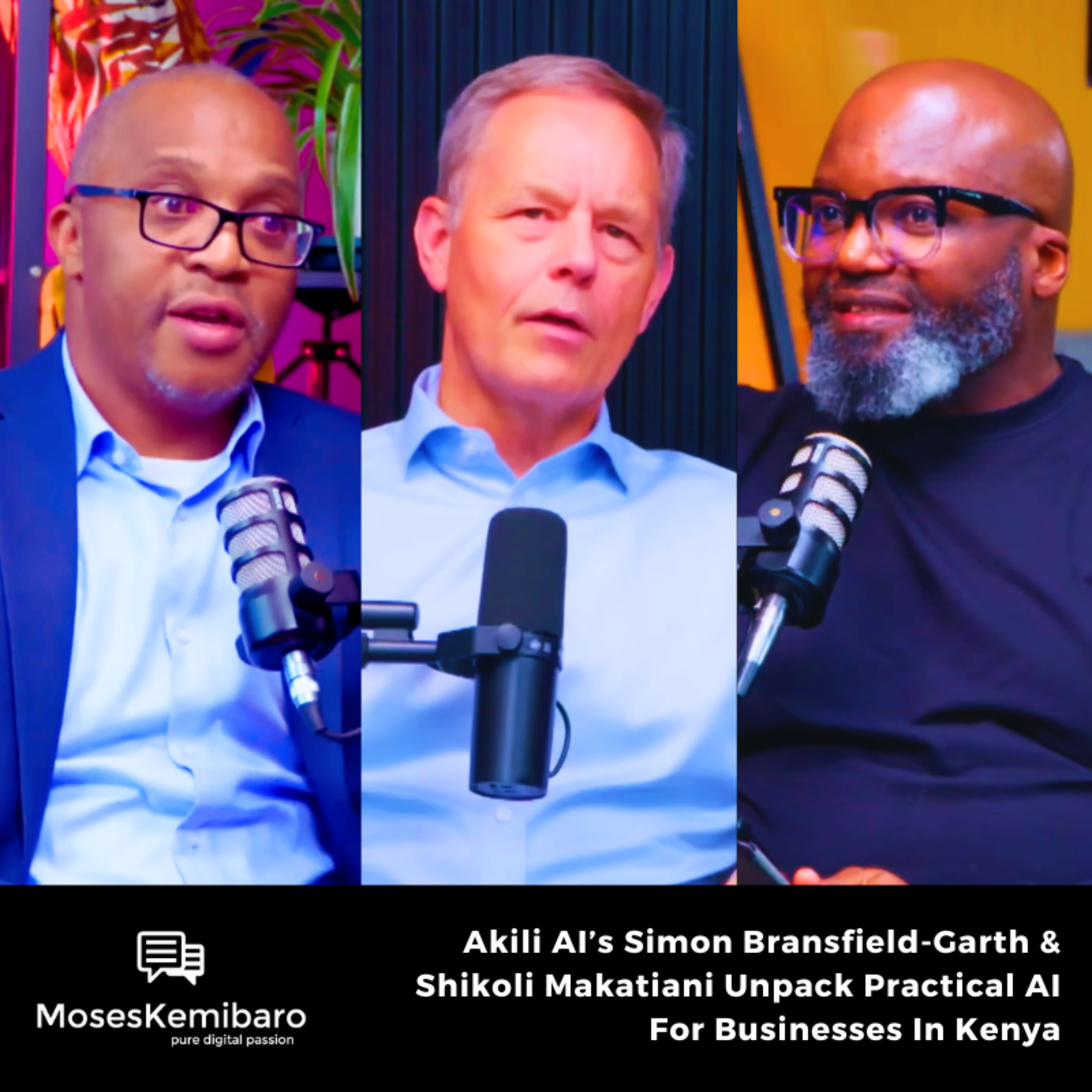
Episode 182 - Akili AI’s Simon Bransfield-Garth & Shikoli Makatiani Unpack Practical AI For Businesses In Kenya
Jul 600:56:12Tap to summarizeIn this follow-up episode of the Pure Digital Passion Podcast, I sit down again with Simon Bransfield-Garth, Founder & CEO of Akili AI, this time joined by Shikoli Makatiani, CTO and technical lead at Akili AI.Our first conversation with Simon explored his remarkable journey from working on artificial neural networks at Cambridge in the mid-1980s, to Symbian, mobile security, off-grid solar in Africa, and eventually the founding of Akili AI.This second conversation moves from vision to deployment.We discuss what it really takes to put AI to work inside Kenyan financial services organizations, including banks, cooperatives, microfinance institutions, customer service teams, and regulated business workflows.This is a deeply practical conversation about shadow AI, agentic systems, AI governance, AI readiness, AI risk registers, pain owners, MVP-first deployment, staff training, and why Kenyan and African organizations need to focus less on AI hype and more on measurable business outcomes.Key themes covered:Why many organizations are already using AI even when leadership thinks they are notWhat “shadow AI” means and why it creates governance and risk exposureWhy AI is not just another digital transformation tool but a decision-layer technologyHow Akili AI identifies practical business pain points before deploying AIWhy “pain owners” are critical to successful AI projectsHow agentic AI differs from chatbots in financial services workflowsWhy AI governance, guardrails, human oversight, and staff training matterHow Akili Snapshot, Akili Assured, and Akili Passport help organizations manage AI readiness and responsibilityWhy “good enough is good enough” when selecting AI models for practical African use casesWhat CEOs, CTOs, CIOs, founders, and risk leaders should do nextTimestamps:00:00 Introduction and episode context01:29 Shadow AI and why unmanaged AI is already inside organizations03:04 Why the value is not in the AI model but in what you build around it04:43 Shikoli on practical AI deployment in Kenyan organizations06:48 Why AI operates at the decision layer of the business08:35 Moving from AI strategy to solving real business problems10:57 Why AI projects are different from ERP-style implementations12:32 Business cases, experimentation, and managing the risk of failure14:05 Why Akili AI prefers MVP-first deployment over big-bang transformation16:55 Reinventing business processes from the bottom up17:58 Building credibility through incremental AI wins19:07 Why Shikoli starts by asking: “Show me the pain owner”20:46 Customer service pain points, 72-hour response times, and 8,000 calls23:59 Moving from first AI projects to third and fourth deployments25:42 Managing scope creep in AI projects28:50 What agentic AI really means31:32 How AI agents can operate in microfinance and cooperative workflows34:33 Guardrails, human oversight, and safety in regulated financial services36:16 Reducing cognitive load for employees and customer service teams37:22 Akili Snapshot and what it reveals about AI readiness40:40 Akili Assured, AI governance, and Akili Passport training42:56 Real-world shadow AI risks inside banking environments45:52 Frontier models, sovereign AI, and why not every use case needs the biggest model48:08 Token maxing, cost control, and African AI pragmatism52:02 Advice for CEOs: start now, assess readiness, solve practical problems53:08 Advice for CTOs, CIOs, and founders on practical AI use cases55:19 Closing thoughts on responsible and practical AI deployment
Transcribe →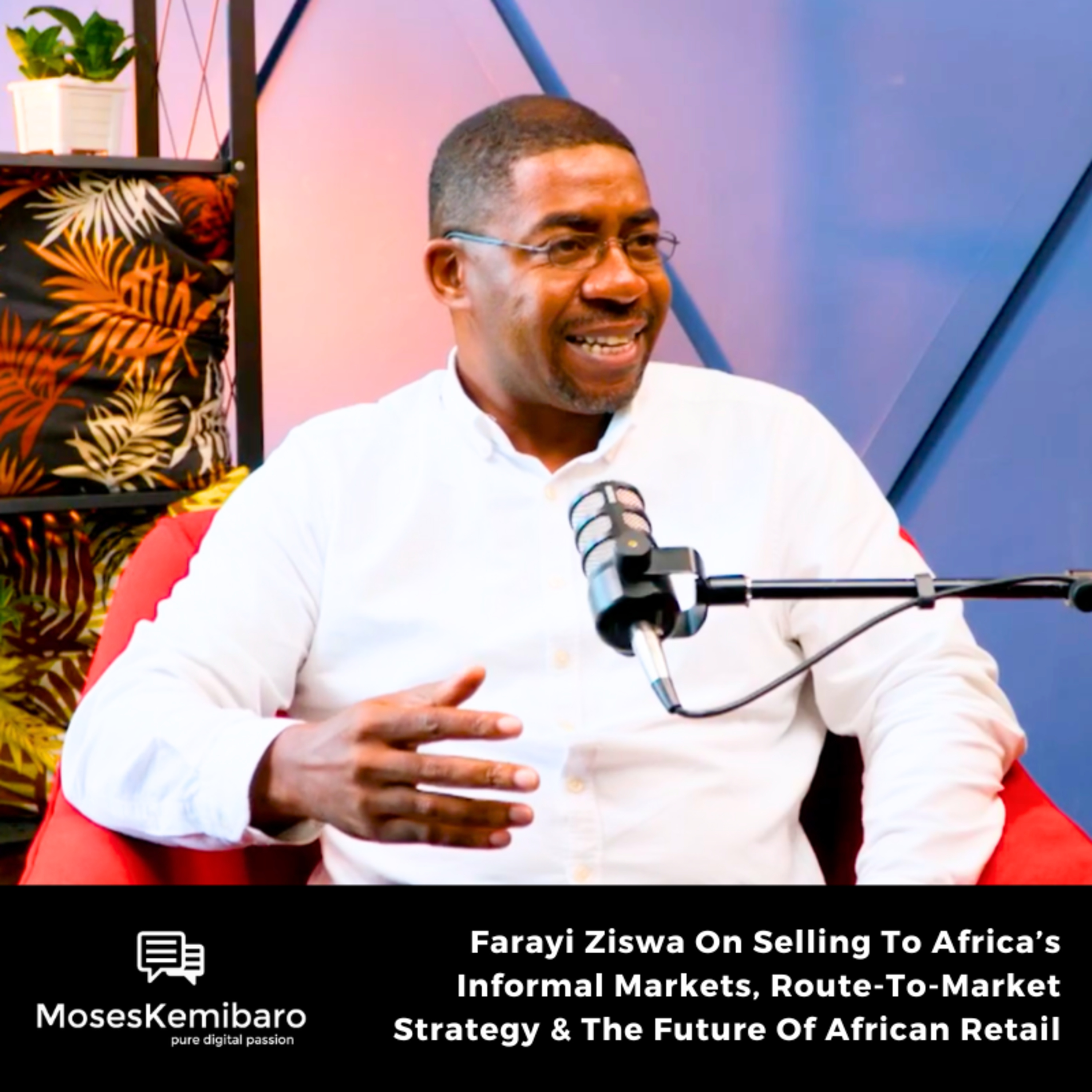
Episode 181 - Farayi Ziswa On Selling To Africa’s Informal Markets, Route-To-Market Strategy & The Future Of African Retail
Jun 2901:09:29Tap to summarizeIn this episode of the Pure Digital Passion Podcast, I had an in-depth conversation with Farayi Ziswa, Founder & Executive Director of BTL Consulting Ltd, Co-Founder of Mapepa Karatasi, Founder & Executive Coach at Inheritege Coaches, and author of Selling to Informal Markets.This is a deep and practical conversation about how African commerce actually works on the ground.Farayi shares his journey from growing up around a family farm in Zimbabwe, studying business and finance at the University of Hull, joining Unilever’s UK International Management Trainee programme, and becoming National Sales Manager for Unilever South-East Africa, to later working across African Sun Hotels, SPAR Zimbabwe, SIT Distribution in Dubai and the GCC, BTL Consulting, Copia Global, Farm Shop, Mapepa Karatasi, and Inheritege Coaches.The conversation explores why Africa’s informal markets are so often misunderstood, why sales and route-to-market execution deserve more respect, and how mobile technology, field intelligence, data, and modern sales systems can help corporates, entrepreneurs, and distributors serve informal retail markets more effectively.Farayi also discusses his book, Selling to Informal Markets, which provides a practical blueprint for corporates, entrepreneurs, sales professionals, and training institutions looking to successfully sell to Africa’s informal retailers.In This Episode, We Discuss:Farayi’s early life in Zimbabwe and his exposure to commerce through the family farmStudying business accounting and financial management at the University of HullLessons from Unilever’s UK International Management Trainee programmeWhy sales is one of the most strategic disciplines in businessWhat corporates misunderstand about Africa’s informal marketsHow BTL Consulting helps FMCG companies reach informal retailersThe role of mobile technology and real-time reporting in field salesLessons from Copia Global and Farm ShopServing small-scale farmers as customers, not statisticsWhy informal markets should be respected as sophisticated commercial systems\Farayi’s book, Selling to Informal MarketsThe future of route-to-market, informal retail, and African commerceAbout Farayi ZiswaFarayi Ziswa is a Zimbabwean-born business strategist, sales transformation leader, entrepreneur, executive coach, and author. He is the Founder & Executive Director of BTL Consulting Ltd, a regional advisory and execution firm focused on helping FMCG companies make their products more available in Africa’s informal markets using mobile technology and modern sales strategy.He is also Co-Founder of Mapepa Karatasi in Tanzania, Founder & Executive Coach at Inheritege Coaches, and author of Selling to Informal Markets. His career spans Unilever, African Sun Hotels, SPAR Zimbabwe, SIT Distribution in Dubai and the GCC, Copia Global, Farm Shop, and multiple advisory and board roles across Africa.Chapters02:30 Introducing Farayi Ziswa and his career journey05:45 Growing up in Zimbabwe and learning commerce early11:20 Moving to the UK and studying at the University of Hull16:40 Joining Unilever and learning sales discipline23:30 Why sales is the first line of business performance29:10 SPAR Zimbabwe and seeing retail from the other side35:00 Dubai, the GCC, and pioneering mobile real-time reporting42:15 Founding BTL Consulting and serving informal markets50:30 What corporates misunderstand about informal retail58:45 Mobile technology, data, and field intelligence1:06:30 Copia Global and the realities of serving mass markets1:14:00 Farm Shop and working with small-scale farmers1:22:20 Mapepa Karatasi, Inheritege Coaches, and the next chapter1:29:00 Selling to Informal Markets and why the book matters1:35:00 Final reflections and how to connect with FarayiBuy Selling to Informal Markets:https://www.amazon.com/SELLING-INFORMAL-MARKETS-CORPORATE-SUCCESSFULLY/dp/1779286457
Transcribe →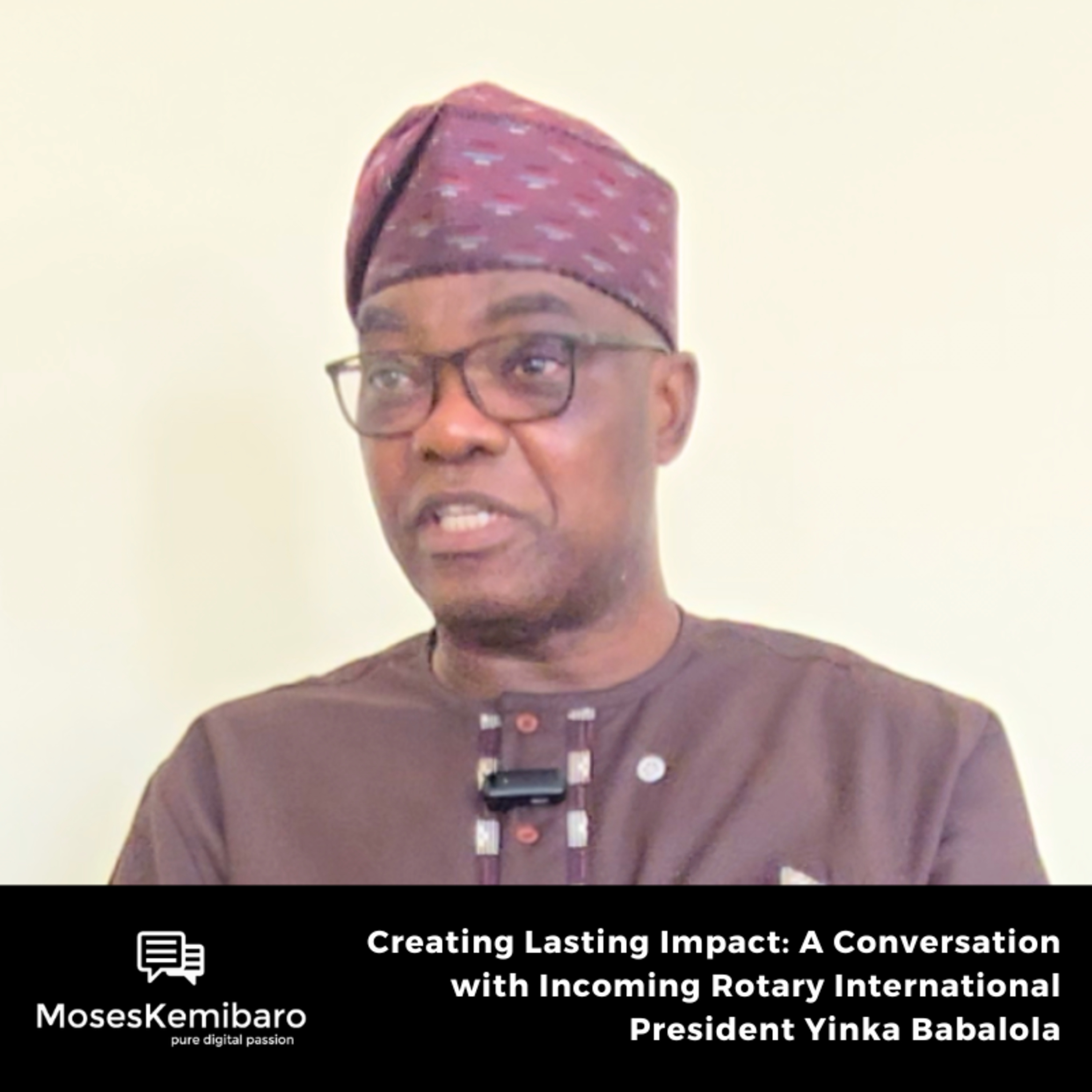
Episode 180 - Creating Lasting Impact: A Conversation with Incoming Rotary International President Yinka Babalola
Jun 800:35:29Tap to summarizeIn this conversation recorded during the Rotary Zone 22 Regional Team Learning Seminar in Diani, Kenya, a few weeks ago, I sat down with Rotary International President-Elect Olayinka Hakeem Babalola for a deep and timely discussion about Rotary, leadership, emotional reconnection, impact, and Africa’s role in the organization’s future.For those who may not know Rotary closely, Rotary International is a global network of community leaders and professionals who volunteer their skills and resources to solve social issues. With about 1.2 million members in more than 45,000 clubs across over 200 countries, Rotary and its charitable arm, The Rotary Foundation, have invested billions of dollars into sustainable, community-driven humanitarian projects. Founded in Chicago in 1905 by Paul Harris, Rotary’s mission is to bring together business and professional leaders to provide humanitarian service, promote high ethical standards, and advance goodwill and peace around the world.In our conversation, Yinka shares how his Rotary journey began as a Rotaractor in Nigeria, why Rotary must move beyond transactional membership to emotional connection, and why the real measure of service is lasting impact. We also explore Rotary’s polio eradication legacy, the importance of storytelling in attracting new members, and why Africa’s youth, energy, and urgent development needs make it central to Rotary’s next chapter.This conversation feels especially timely as Yinka is installed in about week at the Rotary International Convention today in Taipei, Taiwan, as Rotary International’s second ever President from Africa, marking a historic moment for Rotary in Africa and globally.If you care about leadership, service, community impact, and how large organizations stay relevant in changing times, this is a conversation worth your time.Chapters00:00 Introduction01:05 What Rotary is and why this moment matters02:10 Yinka’s Rotary journey from Rotaract to Rotary International President-Elect05:10 Emotional reconnection to Rotary08:10 Change versus lasting impact11:10 Rotary’s polio eradication legacy14:10 Africa’s role in Rotary’s future18:10 Membership, inclusion, and growth22:10 Leadership, relevance, and what comes next25:00 Closing reflections
Transcribe →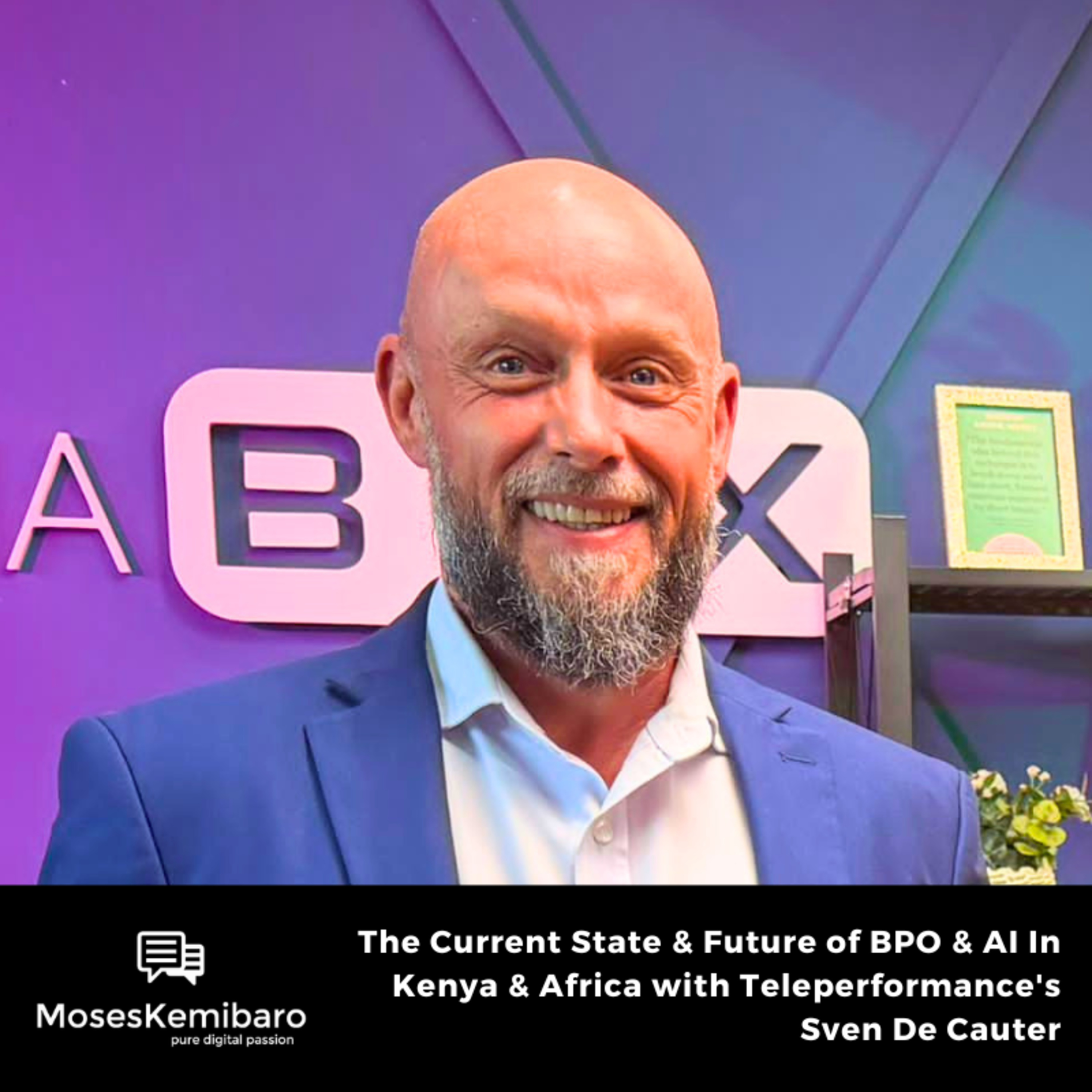
Episode 179 - The Current State & Future of BPO & AI In Kenya & Africa with Teleperformance's Sven De Cauter
May 3100:56:45Tap to summarizeIn this recent episode of the Pure Digital Passion Podcast, I sat down with Sven De Cauter, CEO of Teleperformance (TP) Kenya and Nigeria, for a revealing conversation about the growth of one of Kenya’s most remarkable digital business services operations. From 60 employees in 2020 to over 2,500 today, TP Kenya has become a significant case study in what is possible when global scale meets local talent, operational discipline, and long-term ambition.Sven shares his journey from Belgium to the UK, Tanzania, Barcelona, and eventually Nairobi, where he came in to help build a business that now serves clients across 170 markets and 21 languages. We discuss why Kenya was chosen, what he learned from TP’s Barcelona multilingual hub, why Mombasa became part of the company’s footprint, and how AI is reshaping the future of customer service and BPO.This conversation goes beyond headcount and office locations. We also talk about impact sourcing, youth employment, infrastructure, GDPR adequacy, the EU-Kenya Digital Dialogue, and what Kenya must do if it wants to become a serious global destination for digital business services. Sven is candid about both the opportunities and the gaps, and his perspective is especially valuable because it comes from someone who has built across markets and understands what scale really requires.Chapters0:00 Introduction and why this conversation matters2:19 Sven’s background and the road to Nairobi6:16 What TP is and how it evolved globally8:01 Why Kenya, and how the move happened10:52 Why Kenya’s talent pipeline matters13:26 Soft skills, onboarding, and customer service readiness15:17 The growth story from 60 to 2,500 employees19:55 Why Mombasa became part of the operation23:17 Why Two Rivers and TRIFIC made strategic sense28:14 AI, emotional intelligence, and the future of BPO31:07 Green energy, GDPR, and Kenya’s competitive edge33:56 The 10,000-jobs ambition35:26 Kenya, Nigeria, Rwanda, and the pan-African view39:01 Infrastructure, latency, and cost42:32 Kenya’s culture of learning and adaptability48:58 Changing lives through impact sourcing51:15 Advice for young people entering the industry55:55 Closing remarks and where to find TP
Transcribe →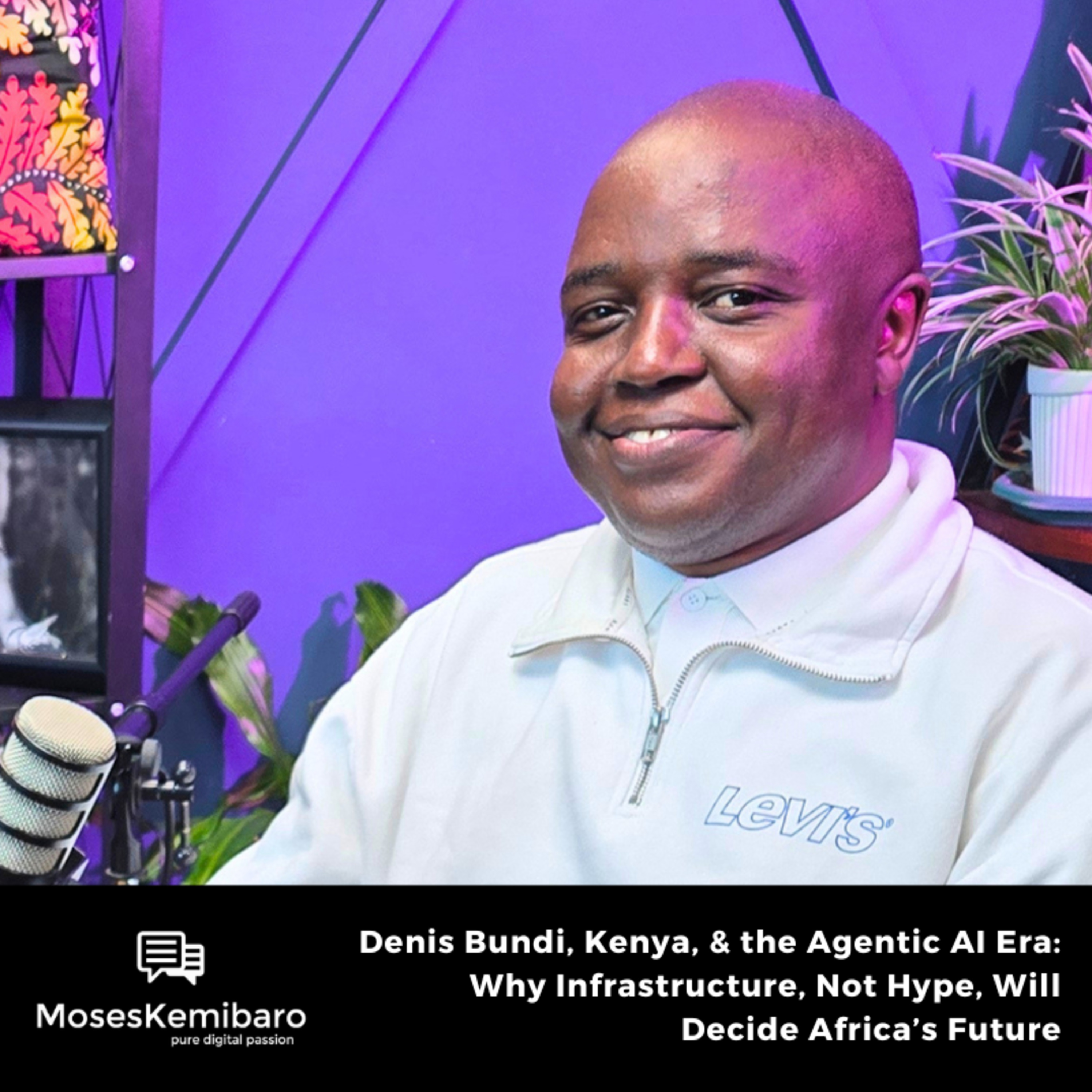
Episode 178 - Denis Bundi, Kenya, & the Agentic AI Era: Why Infrastructure, Not Hype, Will Decide Africa’s Future
May 3101:03:28Tap to summarizeIn this episode of the Pure Digital Passion Podcast, I sat down with Denis Bundi, a Kenyan-born AI-Native business builder, engineer, and founder of Agentyc, DBX Engine, and ClawFolks, to unpack an extraordinary journey from Nairobi to Houston, Rice University, Texas Instruments, Google, Microsoft, and finally back home to Kenya. We talk about the evolution of computing, the rise of agentic AI, why infrastructure matters more than hype, and what Kenya and Africa must do to avoid being left behind in the next era of technology.Denis also shares practical lessons from building at the frontier of AI, from working on enterprise systems and cloud partnerships to now helping teams deploy AI agents that can check inboxes, calendars, CRMs, and Slack, and take action on behalf of users. This is a conversation about systems thinking, engineering quality, entrepreneurship, and the urgent need for Africa to build, not just consume, the future of AI.Chapters0:00 Intro and why this conversation matters2:37 Denis Bundi’s background and journey from Kenya to the US9:34 Rice University, engineering rigor, and early career foundations12:31 Texas Instruments and the hardware/software mindset21:29 BMC, Google Cloud, and the move into customer-facing roles35:00 Returning to Kenya and building for the agentic era42:21 Agentic, DBX Engine, and ClawFolks50:55 Why AI could reshape labor and productivity57:30 Advice for young people in Kenya and Africa1:01:00 Closing reflections and where to find Denis’ work
Transcribe →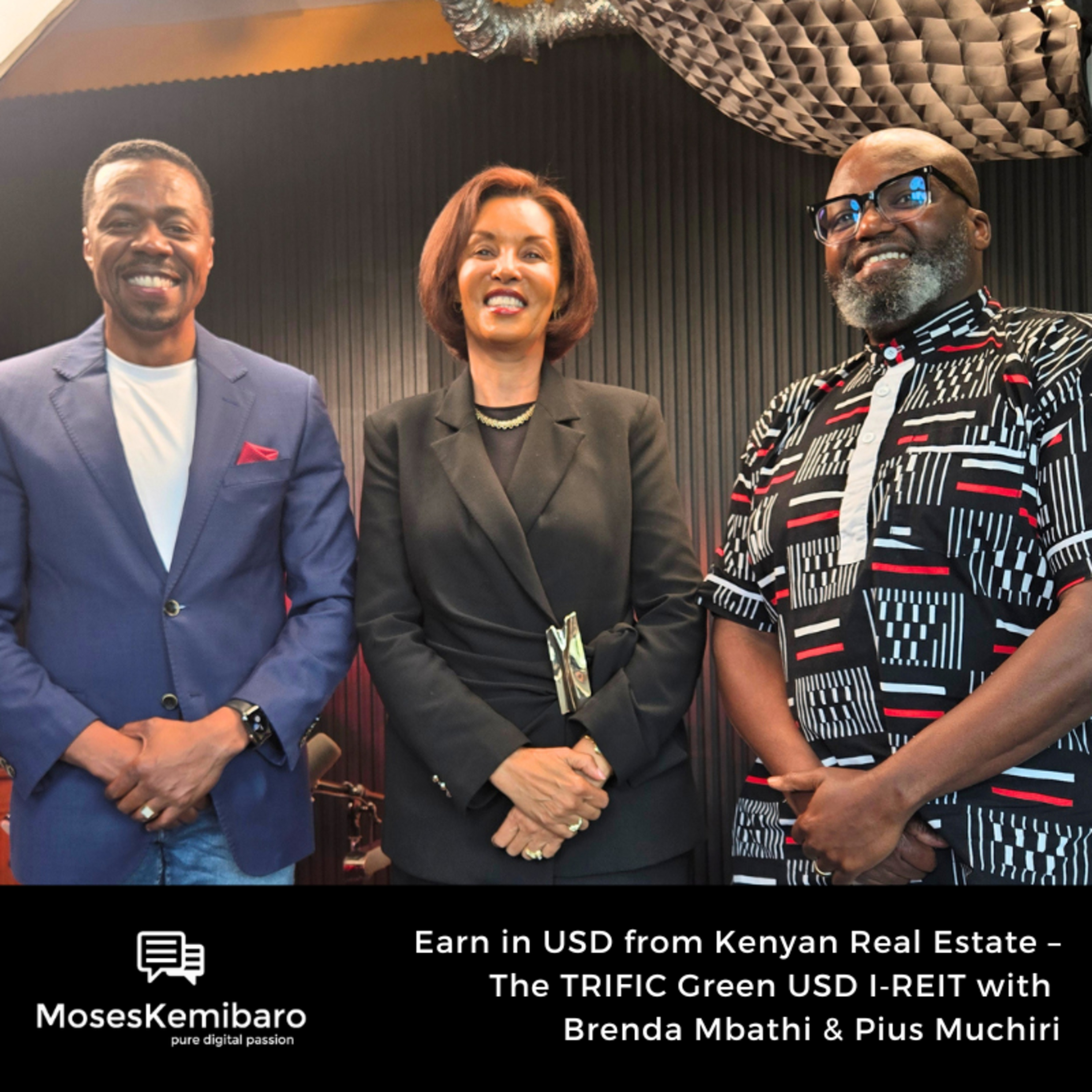
Episode 177 - Earn in USD from Kenyan Real Estate – The TRIFIC Green USD I‑REIT with Brenda Mbathi & Pius Muchiri
May 2800:52:54Tap to summarizeKenyans have always loved real estate – from shambas and plots to townhouses and apartments. But the classic model is capital‑intensive, illiquid, and almost always shilling‑denominated. In this episode of the Pure Digital Passion Podcast, we unpack a very different way to own prime Nairobi commercial real estate and earn in US dollars.The TRIFIC Green USD I‑REIT is an income‑generating Real Estate Investment Trust anchored by the TRIFIC North Tower – an EDGE‑certified Grade A office building located inside a private Special Economic Zone within the wider Two Rivers ecosystem. It is authorized by the Capital Markets Authority as an Income REIT, targeting an 8% annual net yield in USD, paid twice a year, with a minimum entry of just USD 1,000. The unrestricted offer is open to both institutional and retail investors – including the Kenyan Diaspora and chamas – and closes on 12th June 2026.To unpack what this actually means, I’m was joined by:Brenda Mbathi – CEO, TRIFIC SEZ (Two Rivers International Finance & Innovation Centre), which hosts the TRIFIC North Tower inside Kenya’s only private, services‑focused Special Economic Zone.Pius Muchiri – CEO, Nabo Capital, the REIT Manager behind the TRIFIC Green USD I‑REIT, describing the vehicle as a “regulated chama” that lets Kenyans pool resources to own institutional‑grade assets.We dig into:What a REIT actually is, in Kenyan termsWhy the TRIFIC North Tower is fully let, dollar‑denominated, and green‑certifiedHow the 8% targeted USD yield is constructedWhy Centum, TRIFIC, Nabo, NCBA, and a long list of institutional partners matter for governance, transparency, and investor protectionHow retail investors, Diaspora, institutions, and chamas can practically apply – and what happens after the 12th June 2026 closing dateIf you’ve ever looked at a big commercial building in Nairobi and thought, “I wish I could own a piece of that,” this is one of the rare moments when that statement is literally true. The bell is expected to ring on the Nairobi Securities Exchange on 23rd June 2026 – but the application window is now just about two weeks away from closing.Key linksTRIFIC Green USD I‑REIT information & prospectus: https://trific.co.ke/i-reitOnline application portal (C&R Group): https://trific.candr.africa/Timestamps00:00 – Intro: Why Kenyans love real estate – and why this conversation is different02:00 – What is TRIFIC and what is a REIT? Brenda and Pius explain in Kenyan language07:30 – From plots to a “regulated chama”: How the TRIFIC Green USD I‑REIT works13:00 – Why traditional property is capital‑intensive and illiquid – and how a listed REIT changes that18:30 – Inside TRIFIC SEZ: tenants, incentives, and why everything is dollar‑denominated25:00 – The TRIFIC North Tower: Grade A, fully let, EDGE‑certified, and sitting inside the Two Rivers ecosystem31:00 – Following the cash flows: how the target 8% USD yield is built – and why the sponsor supports the first two years38:00 – What this means for retail investors, Diaspora, institutions, and chamas44:00 – Governance, “regulated chama” vs informal chama, and why structure matters51:00 – How to apply: brokers, C&R online portal, Safaricom Zidii Trader, and what happens if it’s oversubscribed56:00 – Timeline: 12 June closing, 15–19 June allocations and CDS credits, 23 June expected NSE listing59:00 – Final thoughts: why this moment matters for Kenya’s services economy – and why the deadline countsIf this episode helps you think differently about how to earn in hard currency from Kenya’s professional services economy, share it with someone in your personal, chama, or Diaspora circle and visit the links above before 12th June 2026.
Transcribe →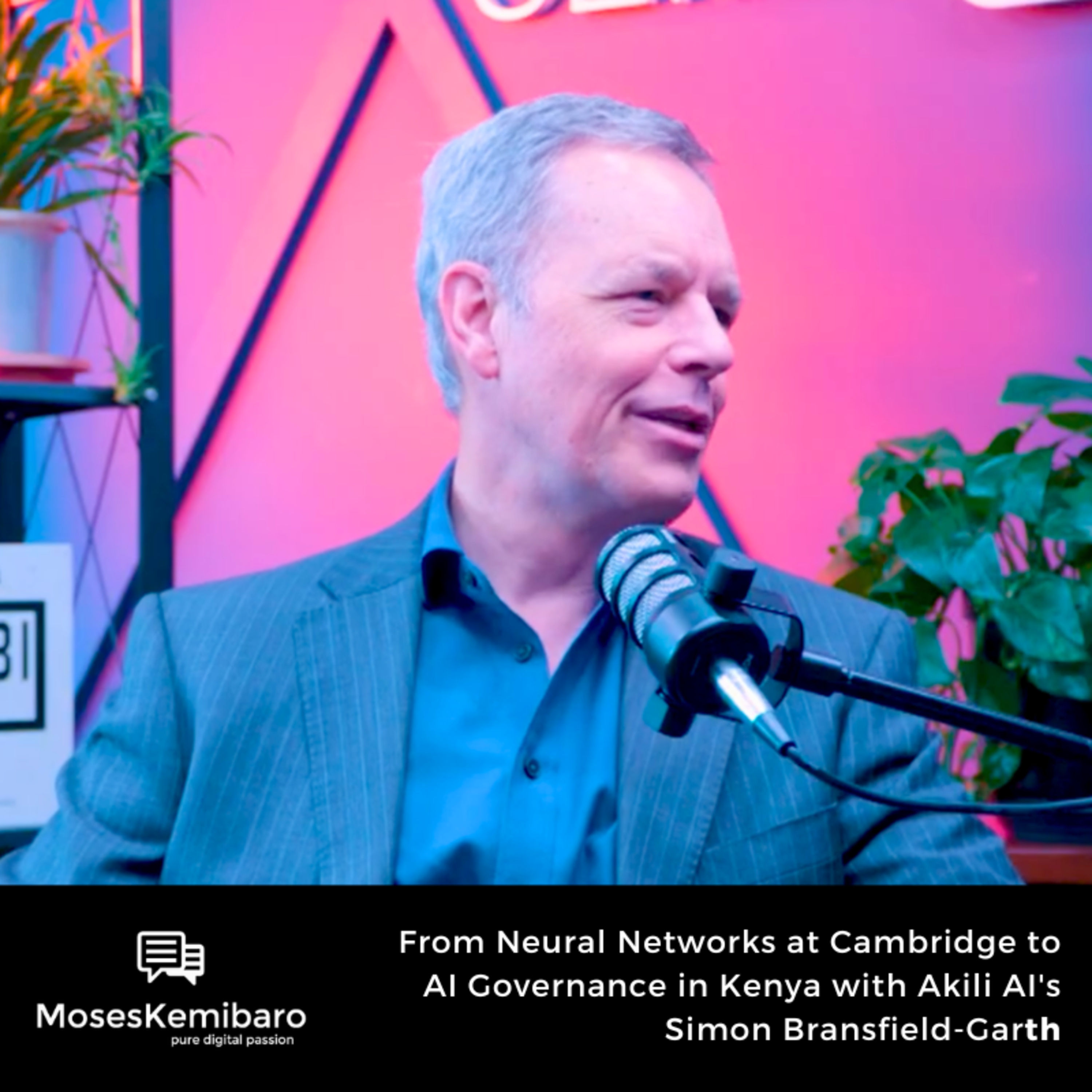
Episode 176 - From Neural Networks at Cambridge to AI Governance in Kenya with Akili AI's Simon Bransfield-Garth
May 800:56:36Tap to summarizeSimon Bransfield-Garth was writing his doctoral research on artificial neural networks at Cambridge in 1985 — forty years before most people had heard of AI. In this episode, he traces that journey through Myriad Solutions (a vector processor company that preceded the GPU era), Symbian (the smartphone OS that defined the pre-iPhone world), Cellcrypt (mobile voice security for governments worldwide), and Azuri Technologies (pay-as-you-go solar for 250,000+ households across nine African markets) — and explains how all of it led him to found Akili AI in 2024.We discuss: why 42% of Kenyan internet users use ChatGPT but most Kenyan boards think they have zero AI in their business; what Akili Snapshot reveals when you run it on a typical EastAfrican financial institution; how Akili AI took a loan processing workflow from two weeks to five minutes; and why Simon believes the biggest risk for Africa is not adopting AI too fast — it is adopting it too slowly.CHAPTERS00:00 Introduction03:10 Simon's early career — Cambridge, neural networks, Myriad Solutions08:35 The Symbian years and the lesson of a platform that missed the shift12:53 Cellcrypt and the intersection of security and AI15:36 Azuri Technologies and a decade of building in Africa19:34 Why Akili AI focuses on financial services21:22 AI adoption in Kenya — the consumer/corporate gap27:51 The three things AI actually is — and why governance is the hard part31:45 Introducing Akili Snapshot and Akili Assured42:24 What boards do not know about their own AI exposure46:16 Two scenarios for AI in Africa over the next decade49:18 Advice for corporate leadership, startups and the general public55:04 Where to find Akili AI and take the free Snapshot assessment LINKSAkili AI website: https://akili-ai.comFree Akili Snapshot assessment: https://assured.akili-ai.com Simon Bransfield-Garth on LinkedIn: linkedin.com/in/simonbransfieldgarth
Transcribe →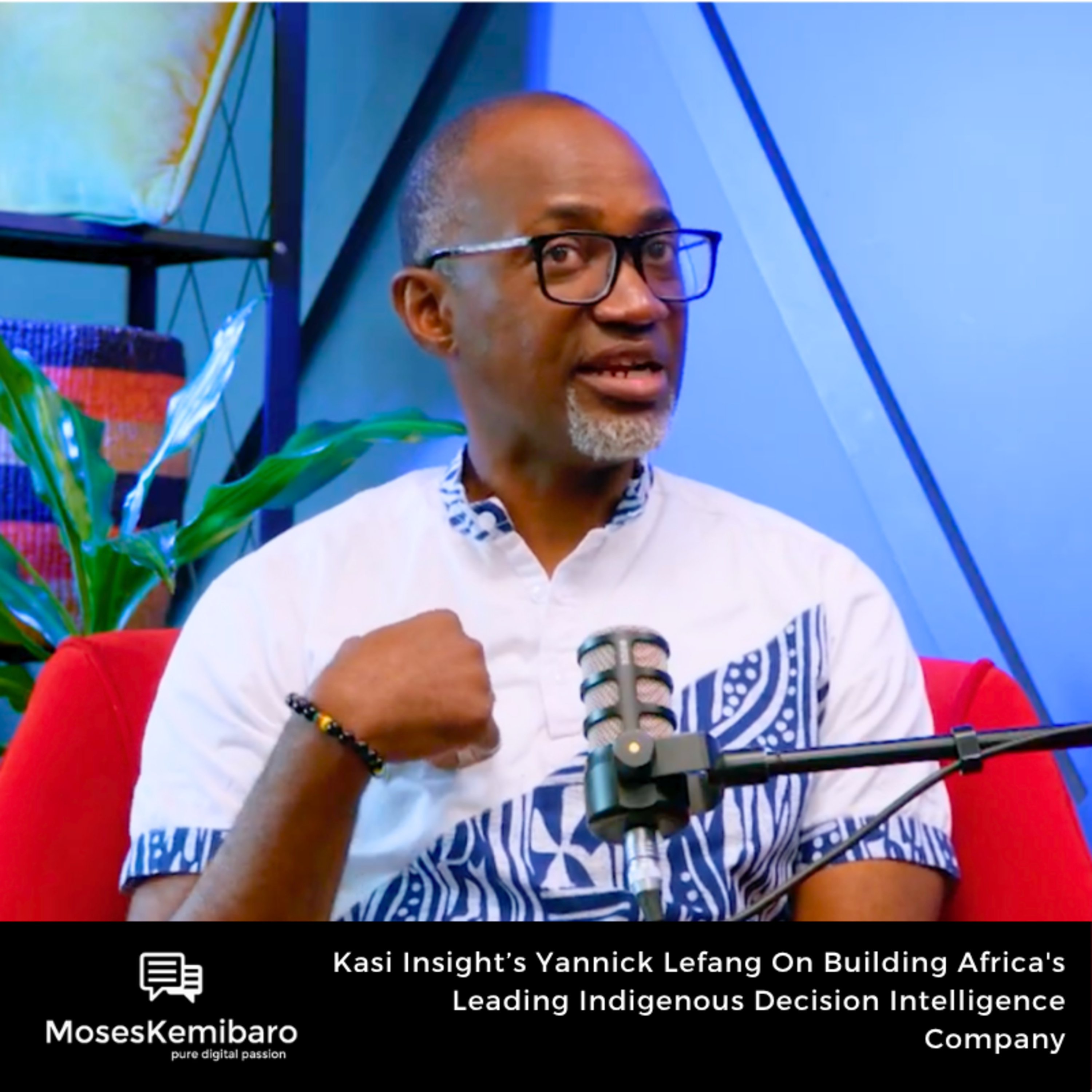
Episode 175: Kasi Insight’s Yannick Lefang On Building Africa's Leading Indigenous Decision Intelligence Company
Mar 2701:12:50Tap to summarizeIn this episode of the Pure Digital Passion Podcast, I sit down with Yannick Lefang — Founder & CEO of Kasi Insight, Africa's leading decision intelligence company — for one of the most intellectually rich conversations I've had on this podcast.Yannick's path to founding Kasi is unlike almost any other founder story in the African technology biased ecosystem. Born in France, raised in Cameroon, trained as an electrical engineer at the University of Ottawa (cum laude), he spent over a decade in financial risk management at TD Bank in Toronto — before joining the International Finance Corporation to advise African banks on risk frameworks across East, Southern, and West Africa. That experience revealed a data gap no one had filled: Africa had no reliable, high-frequency, pan-continental consumer intelligence platform. So in 2017, he built one.Today, Kasi Insight tracks consumer sentiment, economic signals, brand performance, and retail dynamics across 21 African markets — conducting 120,000+ interviews annually and generating 80 million data points. Their Kasi Index of Consumer Sentiment is distributed on Bloomberg and Refinitiv.We cover his entire journey — from his grandfather's entrepreneurship lessons in Cameroon, to the Nortel collapse, the Lehman Brothers crisis at TD Bank, the Kasi founding story, and what it actually takes to build Africa's consumer data infrastructure from the ground up:00:00 — Introduction & background: Who is Yannick Lefang?03:33 — Growing up in Cameroon: the grandfather who shaped an entrepreneur10:00 — From medical school expulsion in Benin to engineering in Canada18:36 — Cultural shock: arriving in Ottawa from Cameroon in January20:44 — The collaboration lesson that turned his academic career around24:41 — Career journey: Nortel, E*TRADE, and moving to Toronto's financial industry30:00 — Inside TD Bank: market risk, capital markets, and the 2008 financial crisis33:00 — Two weeks into a new TD role — and into the middle of a Lehman Brothers write-down35:00 — The mentor question that started everything: "If you had a magic stick..."36:17 — The inflation basket that didn't work, and the pivot to survey data37:33 — Why Kenya (not Cameroon): the lunch conversation that changed the company38:51 — The founding logic: Africa was making decisions without a feedback loop44:57 — The moat: why 9 years of primary data cannot be bought at any price47:35 — From data company to market research company to decision intelligence company52:23 — Building the infrastructure: 1,500+ ground-level researchers, country by country54:33 — Why Kasi built its own platform (Tableau was $2,999 per user)55:18 — Who the clients are: Bloomberg, Reuters, African banks, FMCGs, NGOs56:49 — Kasi tracked COVID in Africa before the WHO declared a pandemic1:00:14 — What separates Kasi from traditional research companies1:03:44 — The vision: becoming the Bloomberg of Africa1:06:50 — Advice for young Africans: work ethic, challenging the status quo, and the informal market1:10:48 — Closing reflections
Transcribe →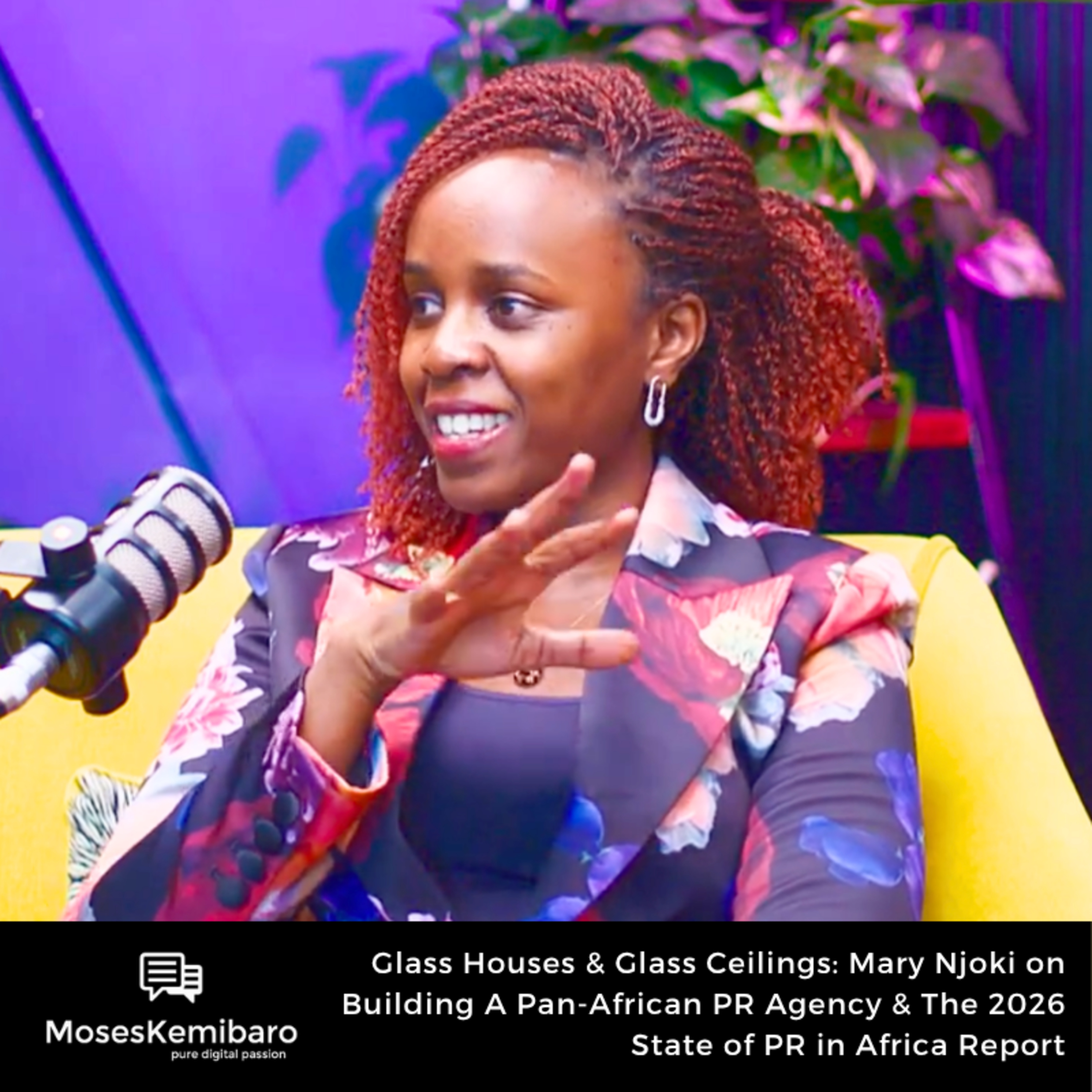
Episode 174: Glass Houses & Glass Ceilings: Mary Njoki on Building A PR Agency & The State of PR in Africa Report
Mar 2601:00:09Tap to summarize81% of African PR professionals are using AI — but are they using it right? Mary Njoki breaks it down. In this episode of the Pure Digital Passion podcast, I sit down with Mary Njoki — Founder & CEO of Glass House PR — for a wide-ranging, hour-long conversation covering her founder journey, the story behind the 2026 State of PR in Africa Report, and what the findings really mean for the industry. Mary founded Glass House PR in 2012 at 23 years old, starting with a modem, a laptop, and a free website template. She finished high school at 16, discovered PR through volunteer work at a Nairobi youth community, and spent the first two years doing pro bono work before landing Facebook as a client in year three. Thirteen years later, Glass House PR is one of Africa's leading Pan-African communications agencies — and a couple of weeks ago released the 2026 State of PR in Africa Report, the most comprehensive and current examination of the African PR industry to date. We cover: The real story behind the 81.5% AI adoption figure (it's about depth, not just usage)The shift from SEO to GEO and why organizations with content cultures win the AI eraThe human premium and what it takes to direct AI rather than be directed by itThe Gen Z opportunity, algorithm volatility and the case for owned mediaAI governance as self-governance, and why Africa's most urgent AI challenge is training LLMs on African data. Time Stamps00:15 Introduction and guest welcome 02:07 Why "Glass House PR"? The meaning behind the name 02:34 From computer science dreams to PR: the unconventional path 03:30 Finishing high school at 16 and starting a company at 23 04:25 K Crew and the volunteer moment when PR clicked 05:46 Building Glass House PR with a modem and a laptop 06:39 Two years of pro bono work and the early conviction 09:40 Building a Pan-African footprint 10:00 Facebook in year three: the validation moment 12:10 Before Facebook, there was Google — and a near miss 13:54 Introducing the 2026 State of PR in Africa Report 14:29 The Turkey summit that triggered the whole initiative 16:41 The methodology: 54 agencies, 16 countries, 80 students 17:09 Why 16 countries? Mary wanted 54. 18:15 How the AI and digital-first theme emerged from last year's findings 20:34 Producing Pan-African findings across radically different markets 21:34 The most surprising finding: 81% using AI — but at a basic level 24:47 From SEO to GEO: optimising for AI citations, not search clicks 27:11 Why the future belongs to content creators, not advertisers 27:58 PR budgets rising from 2027 — because of thought leadership content 28:18 74.1% say AI enhances vs 42.5% of Gen Z say it reduces authenticity 31:31 "How do you become the human agent?" 32:00 The 10,000 hours argument: AI amplifies mastery 33:52 Gen Z: microwave generation or untapped opportunity? 34:42 "They just need direction" — Mary on developing Gen Z talent 35:48 Legacy practitioners and the fear that Gen Z is "cheating" 36:13 Finding 7: the generational platform split 36:39 Algorithm volatility, TikTok's Africa problem, and rented land 38:40 Traditional PR agencies and the digital-first reckoning 39:38 The client who still wants to see a newspaper photo 40:55 Trust metrics vs vanity metrics and the Kenyan media landscape 44:42 AI governance: self-governance before external policy 46:35 AI sameness and the value of original human creativity 48:10 "The authenticity that comes with originality can never be replaced" 49:04 Training LLMs on African data: owning the narrative at algorithm level 51:12 Global South amplifying humans vs Global North replacing them 52:40 It's not about AI leadership — it's about use case studies 53:24 Advice for young Kenyans and Africans entering PR in the AI era 54:49 AI proficiency: the new "do you have computer packages?" 56:27 The question nobody asks — and why tech and PR have always been one
Transcribe →