Podcast
Purpose Under Pressure
Hosted by Bryan Lefelhoc · EN
Purpose Under Pressure is a podcast about developing Sales and Leadership Success…on Purpose and under Pressure. Each week we'll air short monologue's with strategies, analogies and stories meant to inspire sales, marketing and business professionals. We'll also feature weekly high-impact interviews with Sandler sales trainers, and long form interviews with business leaders who have been there and done that, under pressure.
Purpose Under Pressure is brought to you by The Ruby Group/Sandler Training in Akron and in Columbus, Ohio, Jacksonville, Florida and Capital Region, NY. Visit https://www.therubygroup.sandler.com/ for more information.
45episodes
Episodes
Newest firstAll episodes

Wake Up Your Dormant CRM, On Purpose with Victoria Wojnicz
5d ago00:15:26Tap to summarizeHidden inside most CRMs are former customers, stalled opportunities, and forgotten conversations that could become tomorrow's easiest wins. Instead of treating a CRM like a digital filing cabinet, businesses can turn it into a strategic revenue tool by focusing on quality, intentional follow-up, and the customers who already know and trust themIn this episode of Purpose Under Pressure, host Bryan Lefelhoc, founder of Bryan Media Strategies, welcomes Victoria Wojnicz, Director of Revenue Operations at Sandler by the Ruby Group, to discuss how organizations can generate more revenue without simply buying more leads. Drawing on her background in sales, operations, CRM management, and revenue strategy, Victoria explains why process, discipline, and intentional CRM management often outperform endless prospecting.Victoria explains how dormant accounts, past customers, and "no for now" prospects frequently represent overlooked opportunities. Rather than conducting a massive cleanup for its own sake, she recommends building a strategy around ideal client profiles, segmenting contacts intelligently, maintaining updated decision-maker information, and giving every worthwhile relationship a future next step.Purpose Under Pressure is brought to you in partnership with Sandler by the Ruby Group, serving sales professionals and sales organizations nationwide from their locations in Akron and Columbus, Ohio, in Capital Region, New York, and in Jacksonville, FloridaKey Takeaways:— Your CRM should be treated as a revenue strategy, not simply a contact database.— Former customers and dormant opportunities are often easier to win back than finding brand-new prospects.— "No for now" rarely means "no forever," making scheduled follow-up an essential sales habit.— CRM cleanup should focus on strengthening your ideal client profile rather than simply reducing the number of records.— Sales teams should be able to clearly identify exactly who their ideal customer is before worrying about prospect volume.— Segmenting contacts with searchable, meaningful data makes outreach more relevant and productive.— The best sales process combines intentional strategy, disciplined CRM management, and consistent follow-up—not just more activity.——————-Helpful Links:Victoria Wojnicz, Sandler by the Ruby Group: https://go.sandler.com/therubygroup/Bryan Lefelhoc, Owner, Bryan Media Strategies: https://www.bryanmediastrategies.com/
Transcribe →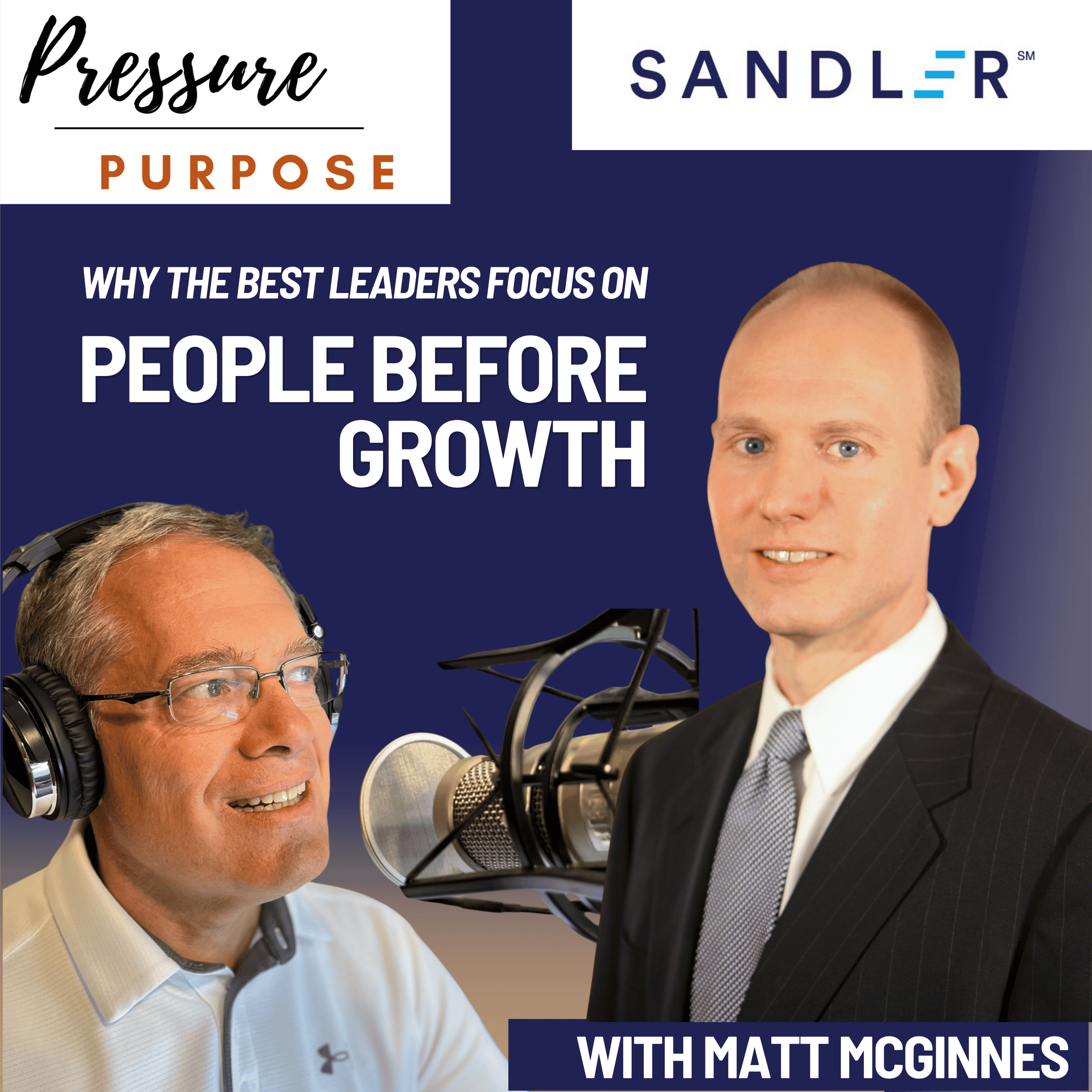
Focus on People Over Growth, On Purpose, with Matt McGinnes
1w ago00:29:22Tap to summarizeSuccess and growth don’t just happen without going after new opportunities. But, it’s just asd important to maximize the opportunities you already have. Organizations that last for decades are built on trust, intentional leadership, and a culture where people work together instead of simply working harder. Building something that lasts provides all the success your organization can handle. In this episode of Purpose Under Pressure, host Bryan Lefelhoc, founder of Bryan Media Strategies, welcomes Matt McGinnes, President and CEO of Cypress Companies, to discuss culture and it’s impact on sustainable growth. Matt explains how Cypress has built a family of manufacturing companies by creating shared leadership, encouraging collaboration, and helping each business retain its own identity while benefiting from a common culture and framework for success.Matt shares practical lessons from leading through COVID, integrating acquired companies, rebuilding struggling teams, and creating cultures where vulnerability and trust allow better decisions to happen. He explains why leaders must often earn trust first, why accountability strengthens culture rather than weakens it, and why the hardest leadership decisions are often measured in years instead of quarters.Purpose Under Pressure is brought to you in partnership with Sandler by the Ruby Group, serving sales professionals and sales organizations nationwide from their locations in Akron and Columbus, Ohio, in Capital Region, New York, and in Jacksonville, FloridaKey Takeaways:— Sustainable growth begins with purpose, not pressure to simply get bigger.— Strong cultures are built through trust, vulnerability, and consistent follow-through.— Great leaders create clear expectations while allowing teams the freedom to determine how to achieve them.— Shared language and common frameworks help separate organizations collaborate more effectively.— Long-term thinking allows better decisions than focusing only on short-term financial results.— Listening and following up on what you hear is one of the fastest ways to build trust.— The strongest organizations grow by investing in their people first and their business second.——————-Helpful Links:Matt McGinnes, President/CEO at Cyprus Companies: www.cypresscompanies.comSandler by the Ruby Group: https://go.sandler.com/therubygroup/Bryan Lefelhoc, Owner, Bryan Media Strategies: https://www.bryanmediastrategies.com/
Transcribe →
Redefining Lead Generation
1w ago00:08:37Tap to summarizeWhat are businesses and salespeople doing to get new leads? They buy lists, chase cold prospects, launch new campaigns, and pressure marketing to deliver fresh names. Meanwhile, the people who already know, trust, and have done business with them are often left untouched. Perhaps ignored. That is a tremendous opportunity for lead generation that too many of us are forgetting. In this episode of Purpose Under Pressure, host Bryan Lefelhoc, founder of Bryan Media Strategies, argues that sales professionals should redefine what a "lead" really is and spend more time cultivating current customers, former prospects, and existing relationships before chasing complete strangers.Existing customers change, grow, launch new initiatives, and know other people who could become great clients. Former prospects who once said no may have entirely different circumstances today. Yet many sales organizations continue rewarding cold outreach while neglecting the relationships they've already invested years building.Purpose Under Pressure is brought to you in partnership with Sandler by the Ruby Group, serving sales professionals and sales organizations nationwide from their locations in Akron and Columbus, Ohio, in Capital Region, New York, and in Jacksonville, FloridaKey Takeaways:— Redefine what a "lead" means by focusing on opportunities that already exist within your current relationships.— Existing customers often represent the easiest and most profitable path to additional business.— Former prospects who once declined your offer deserve another conversation because circumstances change.— Customer referrals become much more likely when you actively maintain relationships instead of disappearing after the sale.— Sales teams often prioritize urgency over value by chasing cold prospects while ignoring loyal customers.— Rewarding existing customers builds loyalty and is typically far less expensive than acquiring new ones.— Your CRM should be viewed as a revenue-generation tool filled with untapped opportunities, not just a database.——————-Helpful Links:Sandler by the Ruby Group: https://go.sandler.com/therubygroup/Bryan Lefelhoc, Owner, Bryan Media Strategies: https://www.bryanmediastrategies.com/
Transcribe →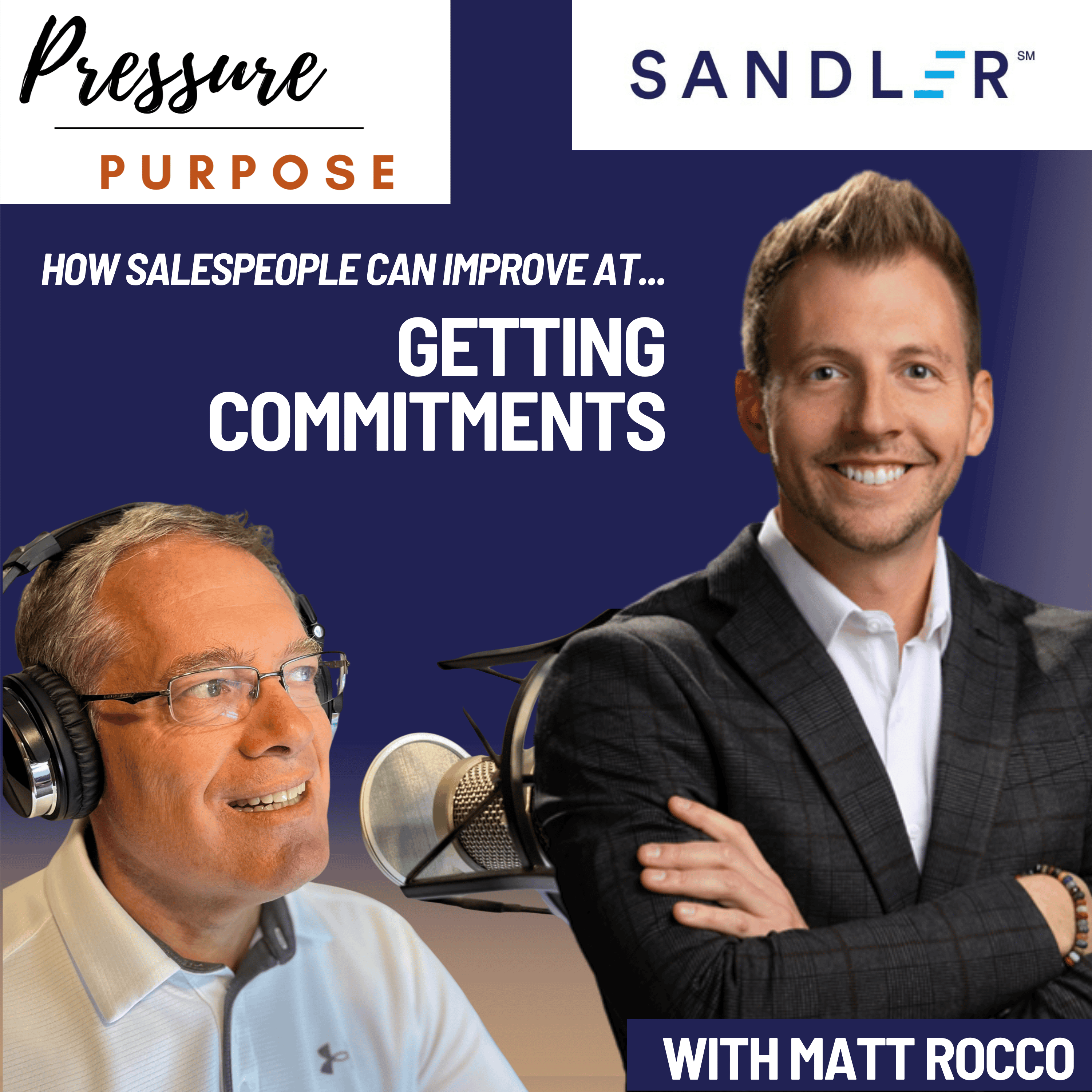
Helping Sellers Get Better at Asking for and Getting Commitments, Under Pressure with Matt Rocco
2w ago00:16:35Tap to summarizeThe meeting feels great. The conversation flows. The prospect is smiling, nodding, asking questions, and even talking about what comes next. You leave convinced you've got a deal...until the phone never rings, the email goes unanswered, and what felt like a "yes" quietly becomes nothing at all.In this episode of Purpose Under Pressure, host Bryan Lefelhoc, founder of Bryan Media Strategies, talks with Matt Rocco of Sandler by the Ruby Group about the trouble with asking for commitments. Specifically, why interest and commitment are two very different things, why so many salespeople mistake one for the other, and how to confidently move a conversation forward without becoming the pushy salesperson nobody wants to be.Here are practical strategies for recognizing genuine buying signals, uncovering hesitation before it turns into a stalled opportunity, and earning the right to ask for meaningful commitments. The conversation is about creating clarity for both the buyer and the seller. That way, both of you know what happens next.Purpose Under Pressure is brought to you in partnership with Sandler by the Ruby Group, serving sales professionals and sales organizations nationwide from their locations in Akron and Columbus, Ohio, in Capital Region, New York, and in Jacksonville, FloridaKey Takeaways:— Interest is encouraging, but commitment is what actually moves a sales opportunity forward.— Great salespeople don't fear asking for the next step because they're focused on serving, not persuading.— A vague ending to a meeting usually creates confusion instead of momentum.— Hesitation should be explored, not ignored, because it often reveals the real obstacle.— You should know exactly what commitment you're looking for before every sales conversation begins.— The right to ask for commitment is earned through thoughtful discovery and genuine understanding.— Hearing "no" sooner often creates more success than chasing a deal that was never going to happen.——————-Helpful Links:Matt Rocco, Sandler by the Ruby Group: https://go.sandler.com/therubygroup/Bryan Lefelhoc, Owner, Bryan Media Strategies: https://www.bryanmediastrategies.com/
Transcribe →
Are You Wimping Out When it Comes to Asking for Commitments?
2w ago00:08:50Tap to summarizeProfessional sellers and new sellers all seem to struggle when it comes time to ask for a commitment. They succumb to the pressure. That’s where confidence often gives way to hesitation. That hesitation creates a different kind of pressure for everyone involved.In this episode of Purpose Under Pressure, host Bryan Lefelhoc, founder of Bryan Media Strategies, pushes back on the idea that asking for the next step is somehow pushy. Instead, he explains why failing to ask actually leaves customers carrying more uncertainty than they should.Bryan explores the three pressures that cause salespeople to back away when it matters most: the fear of appearing pushy, the discomfort of discussing money, and the possibility of hearing "no." Rather than avoiding those moments, he encourages listeners to see them as opportunities to serve the customer better by providing clarity, direction, and confidence throughout the buying process.It turns out that asking for clear commitments doesn't create pressure. It releases the valve.Purpose Under Pressure is brought to you in partnership with Sandler by the Ruby Group, serving sales professionals and sales organizations nationwide from their locations in Akron and Columbus, Ohio, in Capital Region, New York, and in Jacksonville, FloridaKey Takeaways:— Avoiding a commitment simply shifts pressure onto the buyer.— Customers appreciate clear next steps because uncertainty creates stress and delays decisions.— Asking for a commitment is about guiding the buying process to the next logical step.— Conversations about money become easier when they're addressed honestly instead of postponed.— Hearing "no" is often more valuable than living with endless uncertainty.— Every sales call should end with a specific, agreed-upon action instead of vague promises to reconnect.— The best salespeople earn trust by leading confidently through uncomfortable conversations.——————-Helpful Links:Sandler by the Ruby Group: https://go.sandler.com/therubygroup/Bryan Lefelhoc, Owner, Bryan Media Strategies: https://www.bryanmediastrategies.com/
Transcribe →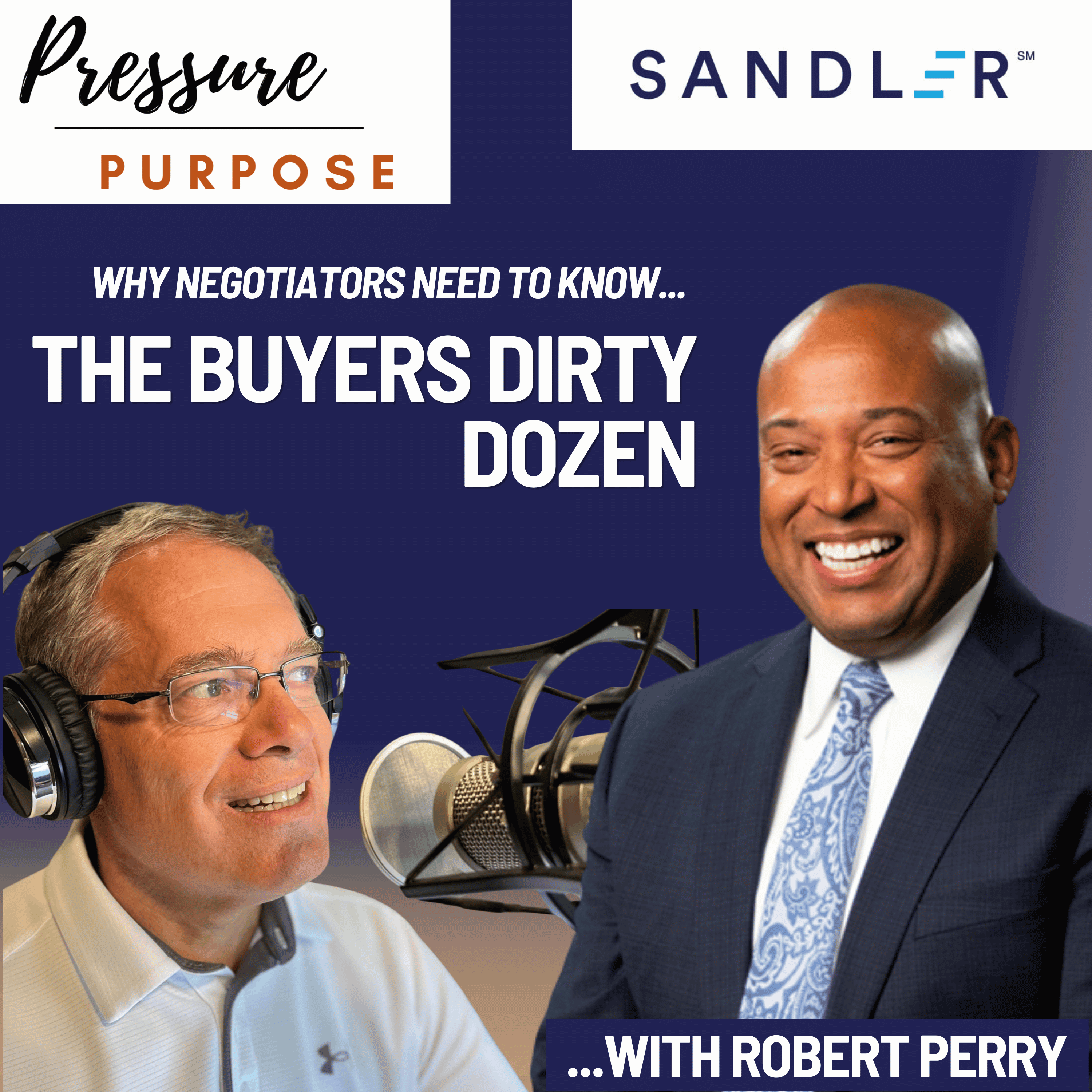
Why Negotiators Need to Know the Buyers Dirty Dozen, Under Pressure with Robert Perry
3w ago00:17:05Tap to summarizeThe best negotiators are the ones who know what's coming before it ever happens. Most buyers use the same handful of “gambits” over and over again, yet too many salespeople walk into negotiations hoping they'll hold their own in the moment. Hope isn't a strategy. Preparation is. When you know the patterns, you stop reacting under pressure and start responding with confidence.In this episode of Purpose Under Pressure, host Bryan Lefelhoc, founder of Bryan Media Strategies, welcomes Robert Perry, trainer and partner with Sandler by the Ruby Group, to unpack "The Buyer's Dirty Dozen”, twelve common negotiation tactics buyers use to gain an advantage.Robert shares practical countermeasures for familiar buyer statements like "Your competitor is cheaper" or "Give me a discount and I'll send you more business." Rather than relying on scripted responses, he emphasizes understanding buyer pain, building muscle memory through role play, trusting a proven sales process, and maintaining the confidence to reset a conversation when momentum shifts.Purpose Under Pressure is brought to you in partnership with Sandler by the Ruby Group, serving sales professionals and sales organizations nationwide from their locations in Akron and Columbus, Ohio, in Capital Region, New York, and in Jacksonville, FloridaKey Takeaways:—Most buyer negotiation tactics are predictable, making preparation far more valuable than quick thinking.—Price objections become easier to navigate when the conversation stays focused on solving meaningful business problems instead of defending cost.—Promises of future business should be tied to measurable commitments rather than accepted at face value.—Role-playing uncomfortable negotiation scenarios builds the muscle memory needed to perform confidently under pressure.—When a negotiation starts going sideways, returning to a proven sales process is the fastest way to regain control.—Admitting you missed a step and restarting the conversation can strengthen credibility instead of weakening it.—A full sales pipeline creates the confidence to negotiate from a position of strength rather than fear of losing the opportunity.——————-Helpful Links:Robert Perry, Sandler by the Ruby Group: https://go.sandler.com/therubygroup/Bryan Lefelhoc, Owner, Bryan Media Strategies: https://www.bryanmediastrategies.com/
Transcribe →
How Leaders Can Unleash Passion That Drives Results, On Purpose with John Zielinski
3w ago00:37:01Tap to summarizeSales success isn't built on clever closing techniques or perfectly timed presentations. More often, it's the result of small disciplines repeated over years—staying curious, asking better questions, refusing to quit too soon, and finding ways to improve just a little every day.In this episode of Purpose Under Pressure, host Bryan Lefelhoc, founder of Bryan Media Strategies, welcomes John Zielinski, President and CEO of Universal Polymer & Rubber, for a conversation about passion. In sales this shows up in how he approaches customers, why nurturing relationships consistently outperforms pressure tactics, and how a mindset of continuous improvement has helped both his sales career and his company thrive.John shares stories that illustrate the persistence required to earn trust, including making 37 calls before landing a major automotive account and writing a handwritten letter to Walmart's CEO that ultimately opened doors few salespeople ever even get to touch. The moral of this story is simple: Ask one more question, make one more call, and become just a little better than yesterday.Purpose Under Pressure is brought to you in partnership with Sandler by the Ruby Group, serving sales professionals and sales organizations nationwide from their locations in Akron and Columbus, Ohio, in Capital Region, New York, and in Jacksonville, FloridaKey Takeaways:— Persistence creates opportunities that most people never experience because they stop too soon.— The best sales conversations begin with curiosity and thoughtful questions, not persuasive pitches.— A healthy sales pipeline requires constant attention, even when business is booming.— Continuous improvement happens through small, consistent changes that compound over time.— Great sales leaders coach through questions, helping people discover better paths instead of simply giving directions.— Technology and AI should strengthen human decision-making. But we can’t allow them to replace it.— Competing with yesterday's version of yourself is a more sustainable path to success than constantly measuring yourself against everyone else.——————-Helpful Links:John Zielinski, President and CEO at Universal Polymer & Rubber: www.UniversalPolymer.comSandler by the Ruby Group: https://go.sandler.com/therubygroup/Bryan Lefelhoc, Owner, Bryan Media Strategies: https://www.bryanmediastrategies.com/
Transcribe →
Mastering the Unnatural Art of Win/Win Negotiations
3w ago00:09:30Tap to summarizeIn life, it’s natural for someone to win, and someone to lose. Most salespeople think a successful negotiation means getting the better end of the deal. But what if that mindset is actually creating problems that won't show up until months later? The strongest negotiations are won when both sides walk away knowing they both end up winning.In this episode of Purpose Under Pressure, host Bryan Lefelhoc, founder of Bryan Media Strategies, explores one of Stephen Covey's most challenging principles: Think Win-Win. While the idea sounds simple, it's anything but natural, especially in sales.Learn more about finding creative solutions, why buyers who never negotiate can actually become your biggest future headaches, and how today's negotiations shape tomorrow's relationships.Purpose Under Pressure is brought to you in partnership with Sandler by the Ruby Group, serving sales professionals and sales organizations nationwide from their locations in Akron and Columbus, Ohio, in Capital Region, New York, and in Jacksonville, FloridaKey Takeaways:— Win-Win isn't the natural outcome of a negotiation. Win/Win requires intentional effort.— Creating a Win-Win agreement is the salesperson's responsibility, not the buyer's.— Protect your position while looking for creative ways to increase value for the buyer.— A buyer who never pushes back may create bigger problems after the sale.— Winning at the buyer's expense often leads to damaged relationships and future concessions.— Sometimes "No Deal" is the most successful outcome for everyone involved.— Great negotiations strengthen long-term trust instead of simply closing today's sale.——————-Helpful Links:Sandler by the Ruby Group: https://go.sandler.com/therubygroup/Bryan Lefelhoc, Owner, Bryan Media Strategies: https://www.bryanmediastrategies.com/
Transcribe →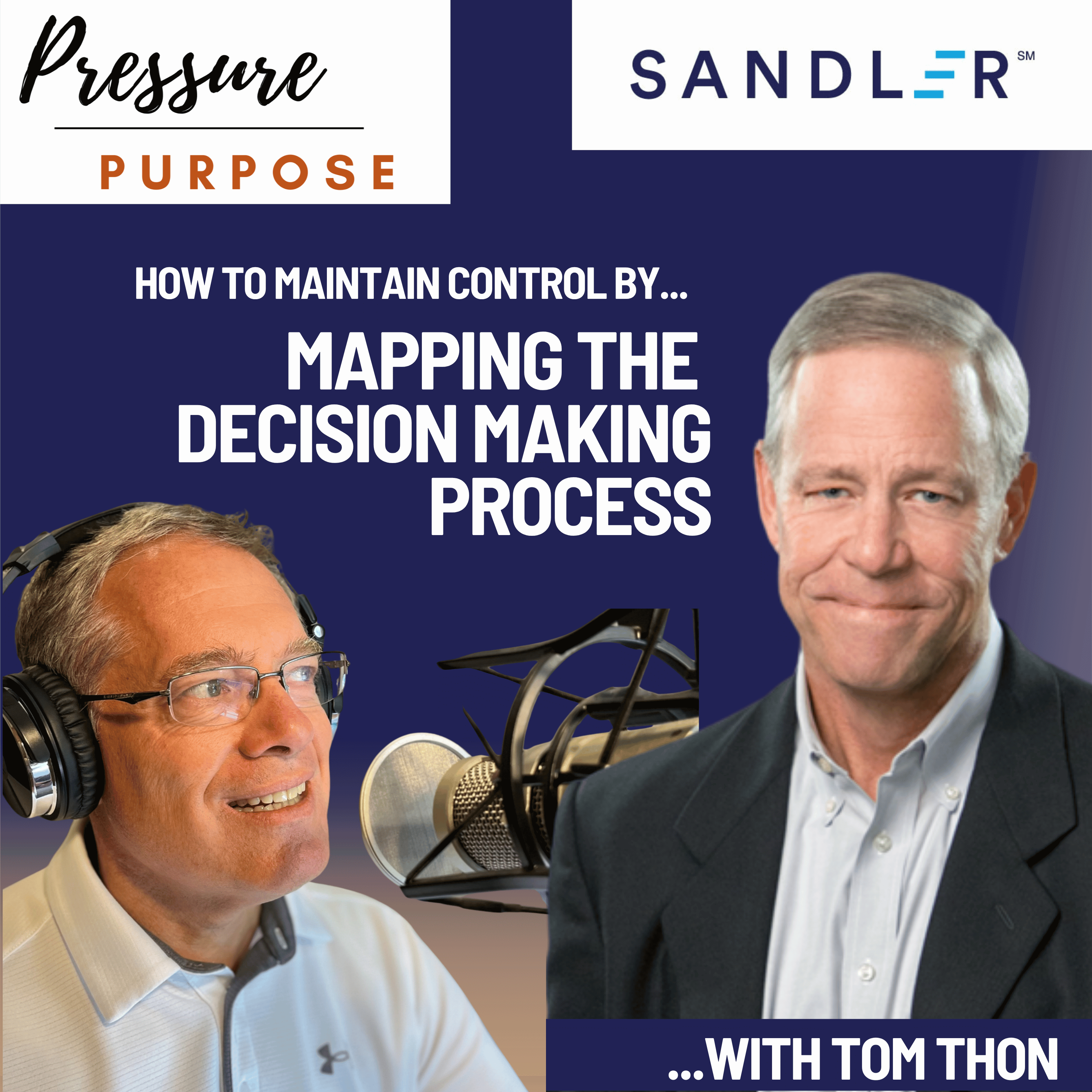
How to Maintain Control by Mapping the Decision Process, On Purpose with Tom Thon
4w ago00:13:27Tap to summarizeThe buying process is complex. If you think it is finished once they've answered the questions and delivered their proposal. In reality, that's when the prospect's internal selling process begins. Your contact now has to explain, defend, and justify your solution to people you've never met. If you don't understand how those decisions get made, you're leaving the outcome to chance.In this episode of Purpose Under Pressure, host Bryan Lefelhoc, founder of Bryan Media Strategies, welcomes Tom Thon, Partner and Trainer at Sandler by the Ruby Group to talk about understanding and mapping out the buying process and the key players involved with making the decisions.Tom shares practical strategies for identifying decision-makers without offending your contact, explains the difference between demand creation and demand fulfillment sales, and offers simple but powerful questions that reveal who influences a purchasePurpose Under Pressure is brought to you in partnership with Sandler by the Ruby Group, serving sales professionals and sales organizations nationwide from their locations in Akron and Columbus, Ohio, in Capital Region, New York, and in Jacksonville, FloridaKey Takeaways:— Your presentation is usually the beginning of your prospect's internal selling process.— The person you're meeting with is frequently gathering information for someone else, making it essential to understand who really makes the final decision.— Asking, "How does your company go about making these types of decisions?" opens the door to valuable insights without creating pressure.— Great salespeople protect the prospect's "okayness" by respecting their role while still uncovering who else is involved.— Understanding whether you're in a demand creation or demand fulfillment sale changes the questions you should ask.— Moving from vendor to trusted advisor requires patience, curiosity, and a genuine desire to understand how your customer buys.— A great question to ask your contact if not the decision maker: "Other than yourself, who will be involved in making this decision?"——————-Helpful Links:Tom Thon, Sandler by the Ruby Group: https://go.sandler.com/therubygroup/Bryan Lefelhoc, Owner, Bryan Media Strategies: https://www.bryanmediastrategies.com/
Transcribe →
Why Salespeople Need to Understand the 7 Stages of Making a Decision
4w ago00:09:14Tap to summarizeWaiting for the decision to be made? Keep checking your email, because while you wait for an answer, an entire decision-making process is unfolding behind the scenes. The salespeople who understand what's really happening and have a plan to remain a part of that process are the ones who consistently win more business.In this episode of Purpose Under Pressure, host Bryan Lefelhoc, founder of Bryan Media Strategies, walks through the seven stages of the buyer's decision-making process. Rather than viewing buying as a straight line from need to purchase, Bryan explains why every buying decision is actually a cycle that moves through Trigger, Desire, Back Burner, Renewal, Reality, Decision, and Cold Feet.The sellers who continue to provide value, remain visible, and reconnect at the right moments are the ones most likely to win the business, whether it's the first opportunity or the next time the buying cycle begins.Purpose Under Pressure is brought to you in partnership with Sandler by the Ruby Group, serving sales professionals and sales organizations nationwide from their locations in Akron and Columbus, Ohio, in Capital Region, New York, and in Jacksonville, FloridaKey Takeaways:— Buying decisions happen in never ending circles. They aren’t linear, with a beginning and an end.— While you’re waiting on a decision, life is happening to your buyer.— Silence rarely means the buyer has stopped deciding. — The Back Burner is where many sales opportunities are won or lost.— Your job is to stay present through every stage of the buyer's journey.— A "no" today doesn't mean the desire has disappeared.— Great salespeople create opportunities AND they remain part of the decision-making process.——————-Helpful Links:Sandler by the Ruby Group: https://go.sandler.com/therubygroup/Bryan Lefelhoc, Owner, Bryan Media Strategies: https://www.bryanmediastrategies.com/
Transcribe →