← Pursuit of Wellness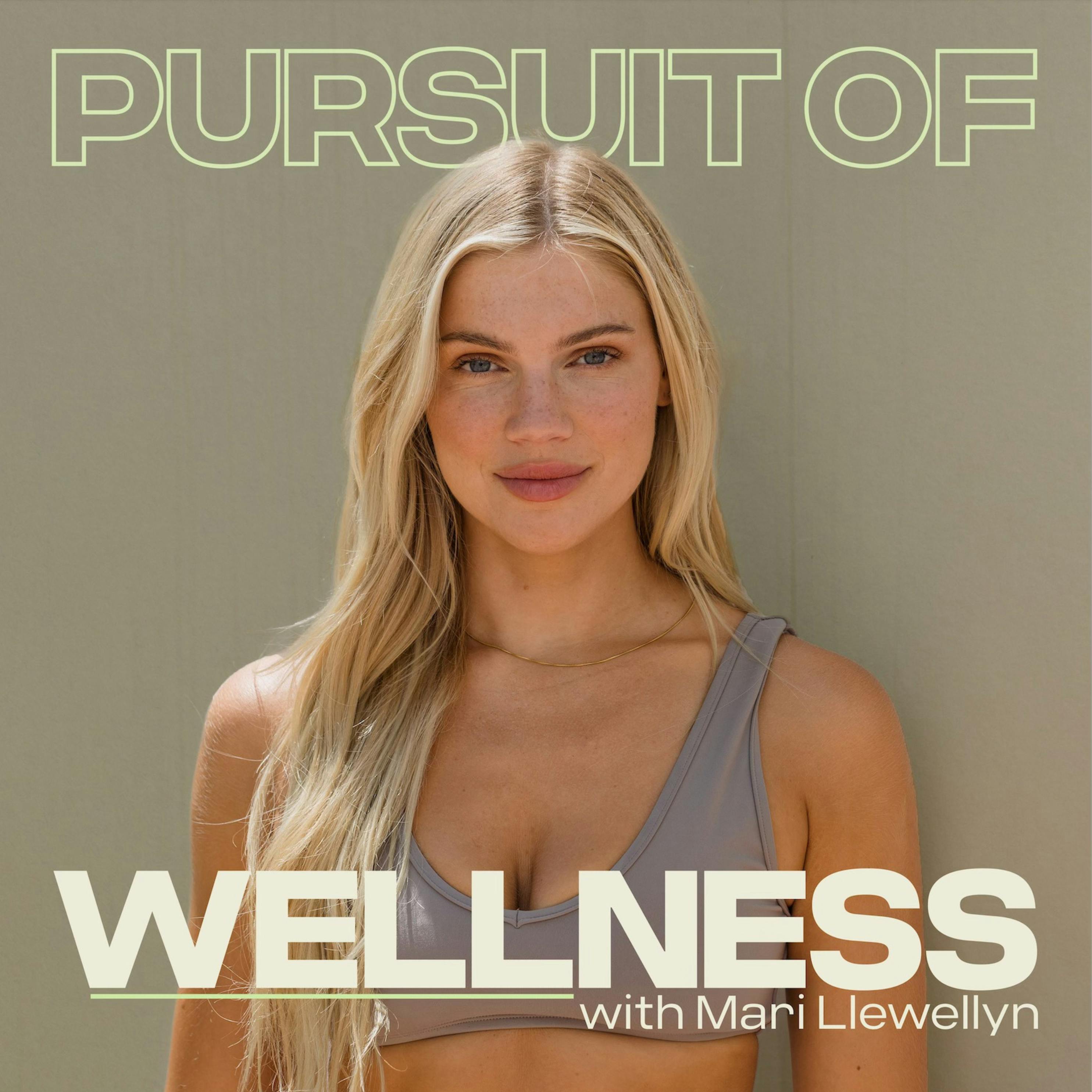
Pursuit of Wellness
Kendall Toole: Leaving Peloton, Fighting for Mental Health, and Starting Fresh
00:57:12
Loading summary
Transcript336 lines
- [00:00]
A
When you understand that all of your setbacks, all of your trials, all of your fights, they are the formative pieces and pillars of who you're meant to be, you realize, like, okay, give me another. Like, I know it's tough, but I know I'm going to get through this, too. And I know I'm going to. This is. This is for my benefit.
- [00:17]
B
This is the Pursuit of Wellness podcast, and I'm your host, Mari Llewellyn. What is up, guys? Welcome back to the Pursuit of Wellness podcast. Today we have a very special special guest, Kendall Tool. You may remember her from Peloton. You guys may have taken rides with her, but now she's on her own journey, and she sat down with me today to tell us all about it. Kendall is such a warm, energetic person. She brought so much light into the studio, and we really dove deep on her journey to where she is now and what she plans on doing next. We explore her fitness journey from her start as a child actor and becoming a peloton instructor. We also dive into her experience with ocd, which I found really interesting and could relate to a lot. The challenges of drinking culture in college, how she's navigated, negative self talk. And she also opens up about facing imposter syndrome, which for someone who appears to be so confident and energetic, I think it's nice to hear the behind the scenes of everyone facing imposter syndrome. She also dives really deep on a personal mental health journey she went through, which I really appreciated her vulnerability, and I know so many of you are going to relate in so many ways. Her story is one of resilience, transformation, and redefining wellness. It's a conversation you don't want to miss. I think you guys are going to feel really empowered and motivated after this chat with Kendall. So without further ado, let's hop right in. Kendall, welcome to the show.
- [01:48]
A
Thank you for having me. I'm so excited.
- [01:50]
B
Your energy is so good.
- [01:51]
A
Oh, thank you. Ditto. We walked in and immediately met, and I'm like, oh, I love her.
- [01:55]
B
I was like, you're like, yeah, you're cute. I like you. You are an inspiration to so many. I have mentioned that you're coming on the show to a few people, fee included, her mom included, and everyone's like, oh, my God, I love Kendall. Like, you have had such a big impact on people. It's really incredible. You're everyone's favorite Peloton instructor. You're very motivational. I've been watching your clips on TikTok and I'm fired up from it, even though I've never done peloton in my life. You're also a mental health advocate. You're a podcast host. I'm so excited. I feel like you and I have a lot of overlap.
- [02:28]
A
Yeah.
- [02:28]
B
Especially with mental health. So we're going to get there. I'd love to start all the way at the beginning. How did you find fitness? Like, how did you get here?
- [02:38]
A
Yeah. So I think what's fun, first off, thank you for having me. I'm so excited. It's very rare that you meet, I think, women in fitness and women who are entrepreneurs. And I hate to say this about the wellness community, but unfortunately, it's very unwell a lot of the time. Yeah. Right. You're like. You're like, oh, we front this, but we feel this. Noted. But it just. It's so nice when you're around another woman who is so supportive and so positive and you just feel that good energy. We talked briefly about both living in LA for a little bit, where the very transactional environment oftentimes, and so it's just very refreshing. Whenever I can be and sit with a woman that I'm like, oh, I know. I feel safe. She gets it. We get each other. There's support there.
- [03:16]
B
We need a club.
- [03:17]
A
Yes.
- [03:17]
B
Like, we need a club. Like, Cali should be in the club. Yes.
- [03:20]
A
Cali's totally in the club. Yeah. Melissa, would you be in the club? She has been the nicest woman to me. I have not met her. I'm going to be on her podcast soon.
- [03:27]
B
Is she not an angel?
- [03:28]
A
I am floored because for somebody, again, another woman who's super successful in wellness and fitness, usually by leaving and moving on from peloton, starting a new chapter, unfortunately, other one will be like, ooh, competition, here they come. Absolutely not. She has been writing me messages of positivity. Like, I'm just so proud of you. I can't wait to see what you do. If I can help in any way, I want to just, like, literally hug her.
- [03:51]
B
And you're going on her show.
- [03:52]
A
Yeah. I can't wait.
- [03:53]
B
When I met her in person, I wasn't sure what to expect because I had the same fee. I was like, she seemed. Seems amazing.
- [03:58]
A
Yeah.
- [03:58]
B
Walked in the room, like, I swear there was like a breeze in her hair and her smile, and I was like, oh, my God, she's a life living angel. Like, amazing. Makes you feel so warm and welcome and just. I want to be her when I'm older.
- [04:10]
A
Yeah.
- [04:10]
B
So.
- [04:10]
A
Well, and I think that's what's beautiful, is like, when you can get. I. I'm right there with you. We need to build a club and be like, yes, Verified, verified, verified. Good vibes, nice women, support each other. It does exist. It's out there, it's out there, it's.
- [04:22]
B
Out there, but it's hard to find.
- [04:23]
A
It is, it is. So starting with the fitness journey. Yeah, Fitness was kind of always a part of my life, but it was an escape for me. So in college, when my mental health was going really down the tubes, granted, I had grown up. I was diagnosed with OCD when I was 11. So I had already had kind of some touch points and trigger points going to therapy. Working through that in college, I think was a culmination of so much. I was a kid actor and I thought my career was going to take off.
- [04:51]
B
I didn't know that.
- [04:52]
A
I don't really talk about it that much. Wait, a total failed kid actor. And I like saying, because I think that's important, because everything I thought, the shows I thought I was going to be on, I grew up around the Nickelodeon and Disney kids. In hindsight, thank God, because some of those sets, what I'm finding out now, it breaks my heart.
- [05:09]
B
Dodged a bullet.
- [05:10]
A
Completely dodged. And I fell in love with storytelling. I fell in love with seeing I got to experience the industry and kind of be outside the fishbowl because I never really made it in there. And it was such a wonderful distance to be at because I could learn the pitfalls, I could keep enough space, but I could fall in love with storytelling because I knew I loved that so much. So anyway, in college, thought the acting career was going to go. Was in a project. It was supposed to be at Sundance, it was at Berlin, and then it all kind of went haywire and I had this identity crisis going on where I thought, oh, man, all these things I've worked for my whole life I'm not living up to. Meanwhile, I'm at usc, I'm in the film program, I'm a cheerleader. Like, I was like, woohoo. From the exterior, I looked like everything was great. And interior, the color was draining out of the day. I just wasn't living. I was living for the mask of what the world wanted to perceive me as and what I felt like I had to perform as. And so fitness was. I remember working out at the gym where I lived, and I would just go down there for like an hour and I put in music and I'd just go on the treadmill. Or then I'd go and I'd watch YouTube videos, like the early days of, like, Kayla and the Tone It Up Girls and all that. I was like, they were blogilates, like Cassie Ho. All of them were my angels. And I was just like, listen to what they would do. And I started falling in love with fitness. And then I had a mentor who's a film director who I met in one of my film classes. And he's like, you have a lot going on. And I'm like, that's one way of putting it. Yeah. I was like, oh, you sense my intensity and my anxiety, the chaos, the full tornado that is myself and still there. And he's like, come to my boxing gym. So he owned a boxing gym in Santa Monica. And I would go. I was petrified. And then sure enough, I got on the mitts for the first time. And the second that that glove hit that mitt and it cracked and it just sounded literally like a lightning strike. It was just like in my veins. It was beautiful. I was like, I have power. Like, I have personal power. I need to do this all the time. So that led to boxing and I'm going to speed up through this work. Had my mental health moment my senior year that I've talked about. Really dark night, awful. Got through that, went into therapy. Worked for a very well known, very well known social media platform right out of college. Not the best work environment. A little toxic. And fitness was. Where was my escape. So I would start posting my, like, working out in the gym, start videotaping myself. And then I built an Instagram kind of around it. Started working for Rumble Boxing and was one of their founding trainers. Yep. And then peloton slid into my dms and that was five and a half years ago. And I got the job and moved. And then life changed.
- [07:49]
B
Your life completely changed?
- [07:50]
A
Yeah, completely changed.
- [07:52]
B
If you don't mind, I want to touch on the OCD piece.
- [07:54]
A
Yeah, let's go.
- [07:55]
B
So I've shared this with my audience, but I have a very obsessive personality and I was recently diagnosed with ocd.
- [08:03]
A
Really?
- [08:04]
B
Not in the way. So I heard you talking about yours and I think you mentioned counting steps. You didn't want to be barefoot, right?
- [08:11]
A
Yes. Yep.
- [08:12]
B
Okay. So mine's a bit more about decision making and this is kind of layered. Do you still struggle with OCD or was it more so when you were a child?
- [08:22]
A
It evolves, is what I can say. And I think that's what's interesting when women are talking about mental health and how we're getting diagnosed at different times in our journeys because traditionally, women are really good at fronting. We know how to mask, we know how to kind of manipulate ourselves depending on the space to fit what we know the world wants us to be.
- [08:40]
B
Yeah.
- [08:40]
A
So with mental health diagnoses, it can be really tough and difficult to. To get diagnosed at the proper timing. So with ocd, for me, it started and it manifested as overthinking, not being able to get out of these thought spirals. And then it would be rituals so that I could feel like I could control things. So I hated being barefoot as a kid. I had to wear socks everywhere. I had a certain bedtime routine. Bless my mom. She had to like, mummify me into my bed is what we called it. I had to be, like, swaddled. It was a whole thing. And then now, as an adult, I find my challenge with ocd, it's more of the thought patterns.
- [09:12]
B
Yeah.
- [09:13]
A
It's more getting stuck in a rut and overthinking something and trying to mitigate risk. And what if this, then that, then this, then that. And then it also can come up in negative thought spirals where I can get very short fused. So when I have too much stimulus or too much stimuli and I'm thinking of all of the outcomes, then it's like I snap. Or I'm like, ugh, like, bless my boyfriend's in the corner. And he's seen it a few times, like when traveling and what stressing and. And when you get overwhelmed by things.
- [09:41]
B
I relate to that a lot. Yeah, Like, I really relate to that a lot. And it's amazing that you're talking about it, honestly, because I don't think I hear other people discuss it. And I also agree with you as women. I. So I was diagnosed with borderline personality disorder in college. And similar to you, I think college is a really tough environment.
- [10:00]
A
Yes.
- [10:01]
B
I don't think people talk enough about the drinking culture. Was that a big thing for you?
- [10:06]
A
Yes. And it was so interesting because I really didn't drink until college. And I always struggled to fit this mold of. Okay, I went to usc. It's like total tailgate school. You go out, you. I was in a sorority for all the year. I wasn't a good sorority sister. I'm sorry to everybody. I dropped after a year. It was not you, it was me. I can. I totally own that.
- [10:27]
B
They're listening, like, where'd you go?
- [10:29]
A
Like, what happened to you? But I still have two of my best girlfriends from the story Sorority. So it all worked out great. But I really struggled. Yeah. With the drinking culture. With pre gaming, before you go somewhere, throwing back shots and when you're anxious. I'm sorry, you have tummy issues. Like, there's no two ways about it. And alcohol is the worst thing. It kills your good gut bacteria. So your gut microbiome is totally off. I know. Obviously, you know this very well with Bloom and everything you've created. And it just. Yeah. The drinking culture, I think, really added a layer of instability to my life, particularly in college.
- [10:59]
B
Yeah. I feel like none of us knew how to drink properly. I mean, I was blacking out all the time.
- [11:05]
A
Yeah. All my time. AMFs. Did you ever have one of those?
- [11:07]
B
What's AMF?
- [11:08]
A
Oh, God. I will never. I will never. It was a USC staple. It is a drink that is blue.
- [11:13]
B
Oh, no. Oh, no. Yeah. What does AMF stand for?
- [11:17]
A
Okay. Can I cuss? Because.
- [11:18]
B
Yeah, please.
- [11:18]
A
Okay, perfect. It stands for Adios, motherfucker.
- [11:23]
B
I was going to guess, like, us some. I don't know. I don't know.
- [11:26]
A
Yeah. So it was Adios, motherfucker, because you were going to be blacked out by the time you even got three sips into it. It was terrible. It had. I think it had gin, rum. It was like mix. You mixed alcohol in the drink. I don't know how it's.
- [11:38]
B
I want to throw up.
- [11:39]
A
It's disgusting. Like, I was in college at the era of Four Loko.
- [11:42]
B
Yes. And it was like, oh, they taste like feet. Yes, they taste like feet.
- [11:45]
A
And then every. But still, everyone was pounding them. It was like such a normal thing to do.
- [11:50]
B
I know.
- [11:50]
A
And then it was also scary because then you realize, like, these situations that. That you and your girlfriends can get in, and then the guilt and shame monster that comes up the next day.
- [11:58]
B
That was the worst thing.
- [12:00]
A
Yes.
- [12:00]
B
Especially I think, if you have an obsessive personality. It's like, what did I do? What did I do?
- [12:04]
A
Why am I. And then it turns into, why am I a terrible human? I don't deserve this. And it roots these really, really dark, negative thoughts into your person, where you start believing it. You believe that you're not a value. You believe that you are filled with shame and you don't deserve to have nice things or to build the life that you want.
- [12:21]
B
Yeah.
- [12:21]
A
Giving yourself grace becomes very difficult. And I think alcohol is a. It's kind of like a Shoots and Ladders. It's kind of like a speed warp into feeling terrible about yourself.
- [12:36]
B
I recently did a full overhaul of my daily products. When I was starting to really focus on fertility and hormone health, I realized that there are so many products in our everyday life that have toxins in them. And I think one product we tend to skip over is our toothpaste. We swallow 5 to 7% of our toothpaste every single time we brush, which is an entire blob every seven days. Most commercial toothpastes are filled with harsh chemicals, artificial flavors, and preservatives, not things you want to be putting in your mouth, let alone eating. And I recently switched to Bite. They make dry toothpaste tablets made with clean ingredients that are sulfate free, palm oil free, and glycerin free. They're also so convenient. I love traveling with them. You just pop a bit in your mouth, chew it up, start brushing, and it will turn into the paste you're used to. With no plastic tube or messy paste, it's so easy to use. And they also come in these really cute refillable glass jars. They send refills in compostable pouches so they're better for our bodies and the earth. Which means no more plastic tubes. Bite is offering our listeners 20% off your first order. Go to try bite.com pow or use code pow at checkout to claim this deal. That's T R Y b I t e.com/pow. You guys know I drink a ton of water every day, but it's so important to think about the quality of the water we're drinking. And that's why I use Aquatru. Having it safe, clean water is the last thing you want to worry about. But unfortunately, according to extensive research by the Environmental Working Group, 3 out of 4 homes in America have harmful contaminants in its tap water. I want to make sure I'm safe and healthy. My pets are safe and healthy. Aquatru is the best system to use. It has a four stage reverse osmosis purification process, and their countertop purifiers work with no installation or plumbing. It removes 15 times more contaminants than the ordinary pitcher filters that are specifically designed to compact chemicals like PFAS in your water supply. PFAS are found in 45% of US tap water. And I'm so grateful that Aquatru is certified to remove these contaminants. They have water purifiers to fit every home. Greg and I have the under the sink option, which is so nice we don't even have to think about it. And I know that my pets and my husband are getting clean water best of all the water tastes fantastic and you don't have to worry about PFAS or other harmful contaminants. PFAS over time can lead to adverse health effects like cancer, endocrine system disruption, liver toxicity. And this is why I'm so glad Aquatru removes PFAS. Aquatru comes with a 30 day money back guarantee and even makes a great gift. Today my listeners receive 20 off any Aquatry water purifier. Just go to aquatru.com pow that's a Q U a T R U.com forward slash P O W and automatically receive 20 off any Aqua tree water purifier. That's 20 off any Aqua tree water purififier when you go to aquatru.com Pow so well said. I really look back and I'm like, I know I was struggling with a mental illness, but was I making it 10 times worse? You know? And I think for anyone listening who maybe is in college just to think about that, I really wonder if the drinking culture is different now.
- [16:02]
A
I've heard that. So I think the sober curious movement is huge, particularly with college kids.
- [16:06]
B
Wow.
- [16:07]
A
And I love Gen Z for this because I think they've seen the byproducts of alcohol. I think we kind of sit in this in between era where drinking was such the norm and that's what everybody did and you did it underage and that was, you know, you go on party and I wonder if it's partly Covid and being under lockdown. I wonder if it's just also, you know, Gen Z has this level of awareness and this, this kind of self possessed energy that I admire so much. And there, if it's not good for them in their, their life, they're not going to do it. They don't opt into anything they don't want to do, which I'm like, gosh, I wish I was that bold when I was 20. That would have saved me so many annoying conversations. But good on y'all that you're doing it.
- [16:44]
B
Oh no, I did whatever anyone told me to do when I was that age for sure.
- [16:47]
A
Yes, please. Of course, yes.
- [16:49]
B
Oh yeah.
- [16:49]
A
Interning. Oh my God. Interning. Like in the film industry.
- [16:52]
B
I was shaking on my internships.
- [16:54]
A
Shaking and then crying in the bathroom.
- [16:56]
B
Same.
- [16:57]
A
Ah, it was so traumatic.
- [16:59]
B
It was. They talk about mental health issues like I don't know about you, but in college I did not talk about mental health issues.
- [17:05]
A
Yep. Well, I hid actually. So that really dark night that I had in college where I was Moments away from. Completely. And I don't mean to talk about this so casually, but I think I've discussed it so much and it'll be. Ironically, it'll be nine years in November since that night.
- [17:20]
B
No, please talk about it. I get pretty dark on here, so you can go wherever you.
- [17:25]
A
I'm the same way. I don't know how to have a shallow conversation. I feel like I talk with. Even on the way here, I'm like, oh, tell me about this. What's going on? Oh, this is your business. How are you building it? Like, fully in everyone's business? But, yeah, so it was leading up, it was my senior year of college. I think there was this identity and this time clock. And I think if anyone's listening, that's in college. The one thing I would implore is that you don't have to have it all figured out. And it's all going to change in a wonderful way as you get deeper into your 20s and you graduate, that you don't have to have the plan set. And I was so worried about graduating and not having completed this identity of who I was supposed to be by the time I graduated usc. And I was coming to terms with the fact that what I wanted to build for myself just wasn't going to happen the way that I planned. Beautiful. Now looking back, and I'm like, oh, my gosh, thank goodness that it didn't happen to the way that I wanted it to, because now I have something to say. Like, I can have a platform and I can talk about mental health, and this is what I want to do and this is how I should be pouring into people, otherwise it's pointless. But that night in November, I. It was just leading up. I just. The color was completely gone. I just felt numb. And I think back to that, to her and to that girl who still is in me. And I realize, like, just. I feel so. I feel so sad for her because there was all this beauty around her. But at that point, I couldn't accept it. I didn't feel. I think I didn't feel worthy of it. I think there was a lot of shame and insecurity that was there, too, because I knew how good I had it, but I couldn't enjoy it. And I just felt like, what's wrong with me? What's wrong with my programming? That. That this is how I feel, or I feel nothing. And so, yeah, I spoke to my mom a few hours earlier. I lived at this really beautiful apartment complex very close to usc. And I would often Go up on the roof and just kind of reflect and get away from my roommates. I had a roommate who was not very clean, so that didn't help either. Girls and hair, you guys. Girls and hair.
- [19:20]
B
It's disgusting.
- [19:22]
A
And. Yeah, so that night, went up onto the rooftop and. And it just. I think I got to a place where I just was thinking this was just. I'm tired of feeling nothing. And had my phone on silent. There was like a guard gate, like kind of this gate around the edge and climbed over that and thought about it. Had this out of body experience. And I can't even describe it as anything other than that. It was the most color I'd felt ever in, like, probably the last three years. And it was kind of like Christmas caroling into my future of, like, what would happen, what would become of my parents, of my brother, all of that. And sure enough, the second I had that, it kind of took my breath away. And I look and I see from the corner of my eye, my phone's lit up. And I look over and then it lights up again. And I'm like, what? Ugh. Like, kind of annoyed. I'm like, what's going on? Climb back over the fence. Look at my phone. My mom was calling me. She called me 15, I think almost 16 times. And I picked up on that last ring. She just knew. Like, talk about maternal instinct. It was unbelievable. And I hadn't talked to her for hours. And she's like, what's wrong? And I was just like, can you come pick me up? And I did not share how close I was in that moment with my parents for probably three years because I had so much shame about it.
- [20:38]
B
Yeah.
- [20:39]
A
You know, and you have shame. I think a lot of us have periods of life where suicidal ideation is a part of it. And it's. The more I've talked about the story very publicly, the more people will send a DM or I'll meet in person, if I'm lucky to meet them in person, and we'll share this. And I'm always so floored by the fact so many of us have this either season or a long season, and we don't talk about it. And we all are kind of scared and we shake when we discuss that we thought about this, doing something to ourselves that we're not proud of. But there's such a freedom in understanding that, getting through that, it's such a win and being able to speak about it, that's how you heal it. I really think the only way through it Is to walk and talk about it when you're ready. And understand, like, that vulnerability is such a superpower. Because then everything else unlocks. It's like all the pressure gets, like, released out of the pressure cooker.
- [21:35]
B
And it can become your purpose in life too. It does?
- [21:37]
A
Yeah. Because there's so many of us, Especially after Covid. Like, I feel so much for any kid that was in school or in any, like, any, like, formative growth time or brain development time when you're in high school or college or whatnot. Because you felt so isolated. And then all you have is the vocal track in your own head feeding you the same things. There's no other external stimuli to pull you out of it. So of course you're going to have negative thoughts about yourself. Of course things are going to feel dark and empty. And finding a way through that and understanding you're not alone in that I think is so important.
- [22:11]
B
I applaud you for sharing that story. I know you've shared it a bunch, but I think sharing it again and again and again is so important because I do think it's a really scary thing to talk about.
- [22:23]
A
Yeah.
- [22:24]
B
And just hearing it from someone like you, who is so bubbly and outgoing and kind of known for your big personality. And you're also known for serving others. Like, you're known for lifting other people up. So to hear that someone like you has gone through that is really powerful and honestly makes me feel more seen too. I know I had my super dark days. And sharing those days are. I've. I've gotten a little bit used to sharing it over and over again. And sometimes I'm like, do people even want to hear this anymore? But I. I do think it's so powerful and important from that moment getting to peloton and kind of becoming this, like, household name, like, very well known. How did you build your confidence to the point where you were able to do that?
- [23:11]
A
Thank you for that question. Because no one has ever asked that.
- [23:15]
B
Really?
- [23:15]
A
No. Which is really interesting. And I think there's this idea of when somebody reaches a point of success. I'm sure you get the same thing too. When people look at and they give you your resume of all the wonderful things that you've done and have built and whatnot. There's this other story to it. There's the personal journey that a lot of people just don't consider. And it's not in a bad way. I don't think. As a society, we're taught to look at the journey of somebody we look at the accomplishments and we think, oh, they just woke up one day and it happened.
- [23:42]
B
Yeah.
- [23:43]
A
You know, and I'm like, wouldn't it be damn nice? I would love it if that were the case. But it's not. And especially when you come from any type of dark mental health chapter, or even just a darker chapter for your personal confidence, like building up to something where then you're on a platform and you have the success, but now you have the noise of a lot of people telling you who you are, who you aren't, what's good about you, what's terrible about you. On a concept, constant stream. It can be a lot. And I actually really struggled with feeling okay in the role at Peloton, and I'm actually very happy for that struggle. And here's why. Like, I was going through the training process, Cody Rigsby slid into my DMs and said, hey, do you want to audition for Peloton? All I knew was, I'm broke af, like, totally broke. I was living in. In Laurel Canyon in my friend's quote unquote basement. It was not a basement. Like, it was probably six feet tall. And I'm a nugget. So, like, I could fit in there. I had a hot plate, like a little plug in stovetop. I had a microwave and I had a mini fridge. It was like a college dorm. But I loved that little nook. It was the best because I could get to work very quickly. I had like 800 to my name. And that was on a good day where I'm like, oh, okay, if I go to Trader Joe's, I can only spend 57 to 75. Maybe I'll get the nice stuff, whatever. So I was living like that, and I was proud of what I did. And I love teaching people at Rumble and I love the emotional connection, but I knew I needed to get back to New York. I just felt like I need to be in that place. I don't know why. I just need to go to new work. And so when this opportunity came through from Cody, I was like, I'm going to do everything in my power to try to figure it out. I have never taught a cycling class in my life at that point.
- [25:16]
B
Wow.
- [25:16]
A
I've taken three. I might have fibbed a little bit and said, yeah, I've taught a couple classes.
- [25:23]
B
Everyone fluffs the resume. Come on.
- [25:25]
A
You know, if you're not fluffing your resume, what are you doing?
- [25:28]
B
You don't really want it, then.
- [25:29]
A
No, exactly. If you're not like, you know, plusing up a little bit. We all do it. It's fine. Like, you got to fake it. So you become it.
- [25:35]
B
You're like pro cycler, Tour de France.
- [25:37]
A
Exactly. Don't Google it. But, like, now, today, I can make, like, an AI photo and just like, hi, I put me on a bike. You on the bike next to so and so. But yeah. So in the process of training for. So I got the job and I moved to New York sight unseen. No money, no ask.
- [25:54]
B
One question.
- [25:55]
A
Yeah.
- [25:55]
B
What does the audition look like?
- [25:57]
A
Oh, my gosh. Okay. It was nerve wracking.
- [25:59]
B
Are you, like, on a bike yelling, yeah, you are.
- [26:01]
A
You're. You're in the studio with the eight cameras, teaching.
- [26:04]
B
There's eight cameras?
- [26:05]
A
There's eight cameras.
- [26:06]
B
Why? To get every angle.
- [26:09]
A
Let me tell you something. Yes. So if you're, like, on your period or bloated or whatnot, you just feel like, oh, my gosh, if something goes wrong, if, like, if something leaks or, like, everyone's going to know. Everyone's going to know. Yeah.
- [26:19]
B
Like, even going to the gym with your period is scary. Like, oh, yeah, Cameras.
- [26:23]
A
Eight cameras. And, like, and they all have little red lights. So you feel like we did our own makeup.
- [26:29]
B
Okay.
- [26:29]
A
Which if you go back, bless. If you all want to laugh, and I'm totally fine with it. Laugh at my expense. Always. My first, like, probably six months to a year of classes. My makeup was so janky. It was so bad. Someone told me a red lip pops on camera. I am not a red lip girl.
- [26:46]
B
You did a red lip.
- [26:47]
A
I did a red lip. And the red lip was also on the teeth.
- [26:50]
B
But maybe that's the reason you, like, you know, you really stood out.
- [26:55]
A
It was so hideous. We couldn't not watch. No. I mean, maybe that could have been an anger, which is great, but I think that was a lot of it. Right? So I was taking advice from a lot of people from how they thought I should show up for the platform. And what's incredible about Peloton was I got this job. But imposter syndrome was so true and so real for me. I didn't feel like I deserved it. I knew that I hadn't taught a cycling class before. I was at this company with all of these incredible instructors and larger than life personalities, and they have brands and brand deals and they're New Yorkers. And so it took quite some time. In fact, during the training process, a week before my premiere ride, Cody pulled me aside and he's like, hey, boo. And I was like, yeah. And he goes, I'm gonna be honest with you. I need you to get it together.
- [27:46]
B
I don't know about you guys, but I am so looking forward to the fall weather. It's already getting colder here in Austin in the mornings and I'm just so excited to be drinking hot drinks and wearing cozy sweaters. Specifically the sweaters from Quint. They are known for their Mongolian cashmere sweaters from $50. All quint items are priced 50 to 80% less than similar brands. That includes beautiful leather jackets, cotton cardigans, soft denim and so much more. They partner directly with top factories and cutting out the cost of the middleman that passes the savings on to us. Plus they only work with factories that use safe, ethical and responsible manufacturing practices and of course premium fabrics and finishes for that luxury feel in every piece. I am personally absolutely loving the Mongolian cashmere crew neck in the gray color. It is so chic it can go over the shoulders. You can wear it on a colder day and it just looks perfect. Get cozy in Quintess high quality wardrobe essentials. Go to quince.com powder for free shipping on your order and 365 day returns. That's Q U I N C E.com pow to get free shipping and 365 day returns. Quince.com pow I have had so many ups and downs in my skin journey. It's taken me a very long time to find a skincare brand I trust and that's where Clear Stem comes in. It is the first skincare line that combines all three categories, anti acne, anti aging and clean, meaning free of hormone disruptors and pore clogging fillers. I feel like I can really trust this brand. I absolutely love the gentle cleanser. I love the lip balm, I love the body lotion. I use the hair care. It is like one of the only brands I truly trust to not break me out. Plus I know that Danielle and Kaylee, the founders, have had acne themselves, so they really understand what ingredients need to be in there and what shouldn't be. Plus they have an acne lab test on the website that helps thousands of people get to the root cause of their acne through comprehensive lab testing and lifestyle based recommendations, which I think is such a key to solving any skin problem. Visit Clear stemskincare.com and use code POW at checkout for 20% off your first purchase. Again, that's code POW POW for 20% off your first purchase at Clear stemskincare.com.
- [30:14]
A
He said you're kind of on the line right now. You know, we haven't loved everything in training. I know you're working really hard, but you need to snap out of it and snap into why we hired you. We hired you to be you. We didn't hire you to be anybody else. We hired you to be you. So go back to California for a couple days, spend time with your family, come back and then make sure you're ready. We're going to do like two run throughs, two, like, dress rehearsals, and then it's your premiere ride. So you need to nail those dress rehearsals. So essentially he was telling me, like, if I don't get it together, I'm not going to have the job.
- [30:46]
B
Kind of love the advice, though, of being you.
- [30:48]
A
Yes. It was really lovely. And I think he was so kind how he told that to me because I think he could see how much I was struggling.
- [30:55]
B
Yeah.
- [30:55]
A
And couldn't figure it out and just felt like I didn't belong. And something happened. I went to California. I was like, I'm, you know, I'm sick and tired. I'm sick and tired of putting on a mask.
- [31:04]
B
Yeah.
- [31:04]
A
Like, I'm just going to whatever. And the dress rehearsals went decent. My premiere ride. I don't know what happened. The lights came on. Thank God maybe for growing up in Los Angeles and growing up as an actor and, like, as a kid. Because I do know when. When the camera's on, you go. Like, that was a muscle that I had. And so camera was on. All the instructors were in the front row. It was nerve wracking as hell. And I was like, let's just go. And that went really, really well. My Instagram immediately, like, went from. I think I had like 60, 000 people follow me in a day. Like, it overheated. My phone overheated from the notifications because I was a nut. And I didn't turn my notifications off because I didn't think that was gonna happen. Yeah, it was overwhelming.
- [31:42]
B
Wow.
- [31:43]
A
Beautiful. Overwhelming. And then the work began. And then it was just like, keep trying. Keep trying to figure it out. And then Covid hit. We did not have. I wasn't able to teach in studio because we were. New York was completely shut down. I'm in a studio apartment. Every three minutes there was a siren because it was the epicenter of the pandemic in the U.S. i was there too.
- [32:01]
B
I was in Brooklyn.
- [32:02]
A
Were you really? Yeah.
- [32:03]
B
It was crazy. Did you clap out the window every day?
- [32:05]
A
Yes. Oh, my gosh. I know. With the clap and the bells and I would yell. And that was like the one time everybody had like a release.
- [32:10]
B
It was kind of cute.
- [32:11]
A
It was. It was a beautiful moment for New Yorkers to come together in that. But yeah, then also you'd go to the bodega. And I remember one time I went around the corner just to get, I don't know, like, almond milk or something. And bless. This man was in like a scuba suit. No, full sc, like, mask. He had like a. An air tank.
- [32:28]
B
People got really wild in the city.
- [32:30]
A
Yes.
- [32:30]
B
Really? People were screaming at each other. I got screamed out at one point because I like, took it off for two seconds.
- [32:35]
A
Oh, I know. Or like, God forbid, I tried to run down the west side highway, like, with enough space around me, but I'm like, I can't breathe with a mask on. But I had to get out.
- [32:42]
B
Yeah.
- [32:42]
A
So I took it down for two seconds. This woman, I will tell you, 10 years of pent up rage was. Was unleashed on me. And she's like, how, dude, you're gonna murder you murderer. And I'm like, no, not murdering anybody. I just trying to breathe out my nose.
- [32:56]
B
I know the city was rough.
- [32:57]
A
It was rough.
- [32:58]
B
But didn't Peloton really blow up during COVID Yes.
- [33:02]
A
So that was the interesting duality of that. So for three months I wasn't able to teach because I lived in a 400, 500 square foot place there. Where are you going to put a camera for me to teach from home? There's no way. So I had three months just kind of like hunkering down, not leaving. I got a dog, thank God. So we did that together. And then I started teaching again. And I would say, like about three weeks into teaching, back at the studio, because we were considered whatever it was from the government that we were like an essential business.
- [33:28]
B
Yeah.
- [33:29]
A
Thank you, New York State. Because I think that's why Peloton did as well as it did, because we were able to go back and create content. And I remember I was sitting on this green couch that I got. So I love that you have green couches in here.
- [33:39]
B
We love green here.
- [33:40]
A
Oh, my gosh, Love green. And the green couch that I had was the first thing I bought in New York. And I had it on a vision board two years before. And I was like, I just want, like, a green velvet couch. It's all I want. So the first thing I bought was that before I bought a bed, I slept on that for a couple of weeks. And so I was sitting on the green couch and I just went on Instagram Live. And I don't know what it was, but I think I was tired of fronting. I knew I was getting feedback from the community, like, oh, your life is so great. It's so this. You're the bubbly California girl. And I was like, you know what, guys? I'm just gonna be honest. We're all at home. We're all dealing with this. I was like, I have anxiety and depression, and here's. Here's the story. And I just started talking, and then people were like, wait, what? And so I started really leaning into it because I was sick of hiding it. I didn't want to ask work for permission. I don't know if they were necessarily the happiest about me, just, like, up and talking about my mental health. But at that point, I was like, this is my story. Yeah, it's my truth. Like, I'm not going to not share that. And then that became the whole crux of everything. And then a year later, I really pushed to try to produce Mental health awareness day content. And that worked. Those classes, every year, they were always. Every quarter, they were in my top three. Three rides. Most taken rides. No. It was unbelievable how many people took.
- [34:52]
B
Them in that type of class.
- [34:54]
A
Yeah.
- [34:55]
B
Are you kind of, like, giving advice, motivating, uplifting? Is that. I've never done a peloton class. Is that it?
- [35:03]
A
It's very different. So it was. I'm really grateful that. That it worked and they said yes to this. So my whole thought process was, I want it to be a physical representation of what the experience of going through a mental health battle is for that first one.
- [35:17]
B
Yeah.
- [35:18]
A
And I pride myself on the fact I never stop on the bike. I would never. Some instructors, which is totally fine, they like to stop and motivate. I just. I need a motor. I have too much energy. I can't coach two people virtually and not feel what they're feeling in their bodies. If I'm going to do it, if I'm going to ask you to do it, I'm going to do it. So I was like, okay, if I'm going to stop, this is the one time I'm going to stop. So I built up this really, really heavy hill. And I like, to the point it was impossible. And I was talking about how that's how going through a mental health battle and not taking care of yourself and not going and seeking help and keeping it inside, that's how that feels like. You keep getting just barraged with more weight, with more resistance, and then I Had everybody stop. And like, I get emotional even talking about it because it was that moment of like, okay, this is what you're doing. Considering quitting.
- [36:03]
B
Yeah.
- [36:03]
A
And giving up on yourself.
- [36:04]
B
Yeah.
- [36:05]
A
And there was still so much more time left. And then I. The music turned all that. This is where I thank God for going to film school and loving storytelling and. And building those narrative arcs. And yeah, it was just like my love letter to people who have. Are going through anything because I knew how much all of us were struggling. And finally I was like, wait, are we allowed to talk about it now? Like, we've all had this crazy life experience that is making us go internal and take stock of what we're going through. And that class did so incredibly well. And then that became programming for all the rest of the years and it expanded with other instructors. It was awesome.
- [36:38]
B
And is that, you think, a big reason why you became one of the most popular instructors? Because you kind of had this niche.
- [36:46]
A
I think it was. I think, yeah, I think it was that and the honesty of it.
- [36:49]
B
And people felt connected to you. Probably.
- [36:51]
A
Yeah. I think that's. I think the biggest thing where just being. I hate. I mean, it's. The word is used so much now, but I really think being authentic and just like, yeah, this is me. This is what you're gonna get. I'm some people's total cup of tea. Some people hate me. And I get it. It's fine. I can.
- [37:07]
B
I can't imagine why. But anyway, it's fine.
- [37:11]
A
I mean, I'll send you. They do. They're very well verbed and well versed on. On all the ways in which people hate me too.
- [37:16]
B
It's fine.
- [37:17]
A
Oh, I know. Is it funny? I'm like, I'm okay. You're like, you're welcome to. I'm not trying. I don't hate you.
- [37:22]
B
Yeah.
- [37:22]
A
I'd give you a hug probably if I saw you. So, like, feel free. But. But yeah, I think it was that. And then also, like, just the playfulness. Like, I love. I was such, like a weird little misfit kid. I loved my pop punk. I love my rock music. I started teaching metal rides because I'm like, why not? It'll be crazy. And yeah, I think it's that. And then also what helped and thank you, TikTok and Virality. But people would have leaderboard names.
- [37:44]
B
I watched all of them.
- [37:45]
A
Oh, my God, Aren't they great?
- [37:47]
B
They're fantastic.
- [37:48]
A
I got got all the time.
- [37:49]
B
I was cross my. One of my favorites, though was when you Were like, tell telling them to put, like, focus on their glute muscles. And you're like, put it in the butt. And you're like, I literally, like, watched your face and you were like, yep.
- [38:00]
A
I was like, oh, my God. Oh, my God. Oh, my God. And that was. It was like the first or second. I was so again hyped up on caffeine. I had, like, two cold brews because it was our first time having people back in studio. So I had been coaching two cameras and the voices in my head for, like a year, and then all of a sudden I'm like, oh, people. So, like, you know, the add in me is like, oh, my God. Yay. And I think I was so overwhelmed with the energy of the room and just being excited to be back with people. Yeah. And then I said that, and then it went totally viral to the point my poor brother went to work and he goes, oh, your sister's the booty girl. And he goes, oh, my God, Kenny. He's like, kenny, I'm so upset. And he's, like, so out of the public eye.
- [38:34]
B
He's like, you ruined my life.
- [38:35]
A
He's like, I love you, but I so hate you for that. He goes, but wait, that is funny. It was the name of our family group chat for a little while. No, it was Put it in the Butt.
- [38:41]
B
And what was the other name that kind of went viral? It was like saggy balls or something.
- [38:46]
A
Oh, Droopy Balls.
- [38:47]
B
Droopy Balls. That was a good one.
- [38:49]
A
Oh, Drew.
- [38:49]
B
Yeah.
- [38:50]
A
So it was written out. Drew, D, R, E, W, underscore, P, E, A, underscore, B, A, W, L, S. Stop. So Drew pee balls. And I was like, no.
- [39:03]
B
Yeah. So. So he would.
- [39:05]
A
Jablomi was good too.
- [39:06]
B
Yeah, that's a good one. Yep. I went on Tick Tock because I wanted to search you and, like, see.
- [39:11]
A
Yeah.
- [39:11]
B
First of all, your music choices are incredible.
- [39:13]
A
Thank you.
- [39:13]
B
Incredible.
- [39:14]
A
Like, you take pride in that. Thank you.
- [39:15]
B
I feel like you create, like, a cinematic experience, and then you're, like, motivating, and it's a whole thing. And as someone who. I lost a lot of weight. Like, I lost 90 pounds back in 2017. And I know back then I needed someone to yell at me.
- [39:29]
A
Yeah.
- [39:29]
B
Because getting in the gym was really hard for me. And I can imagine someone getting on their bike and needing, like, you kind of need someone to yell at you.
- [39:37]
A
You need. Exactly. And I think there's something. It's. There's a difference between a coach and someone who's abusive like you're definitely not abusive. Yeah, no, I'm not. Well, take a metal ride, you'll think otherwise, which is fine. Some people really like that. They like the masochist kind of energy. So I'm like, okay, I'll give that to you on occasion. But I think with a. With a really good coach, it's. I'm pushing you because I know you're capable.
- [39:59]
B
Yeah.
- [39:59]
A
I'm pushing you because I want you to know what you can do within yourself. And that was always the goal. Right. Like, I want to help facilitate someone understanding their own power.
- [40:08]
B
Yeah.
- [40:09]
A
And I think, again, when we go through things in our lives where we essentially rendered ourselves powerless and we know what that feels like, and that girl will always be a part of us. I just always think back to her, and I'm like, gosh, what could I have told her then? And then I see that, and, like, I get emotional about it, but, like, I see it in other people. And that's where I get really motivated. Like, okay, what I'm building, what I'm doing next, and, like, what I learned from Peloton I'm so grateful for is if I can be a piece of someone understanding their own power, I believe that's my job. Like, I will cheer you on, I will hype you up. I will motivate you. But I just want you to see what I see in you and, like, what you're capable of. Because I think if people understood their value and if they understood just how powerful they were, we'd be so much better off as a society.
- [40:55]
B
Yeah.
- [40:56]
A
Because. I'm sorry, when you're empowered, you don't. You don't. On other people. You don't critique them or say hateful things. You really walk in that energy of, oh, my gosh, I know my value and I see theirs, and I want to create something special.
- [41:08]
B
It's like you're talking to the old you.
- [41:10]
A
Yeah.
- [41:10]
B
And everyone else. And that's why. That's why having an experience like you had can really change everything, and it gives you such a different perspective, and I think it allows us to, like, really find true purpose in life. Like, I think your pain is your purpose. I really do.
- [41:25]
A
Completely. Yeah. And I think that's it, too. When you're going through those times, it seems so dark and so unending and that there's no, what's the move? Where do I go? Is it always going to be like this? And it's not. Like everything passes.
- [41:37]
B
Yeah.
- [41:37]
A
The really good moments, the really fun stuff that passes and you look back as a beautiful memory. The really difficult stuff. You look back and thank God. I think part of the human condition psychologically is like, we don't remember just how intense it was. I think there's like this little. They've done some studies on it, but we do kind of look back on everything with rose colored glasses.
- [41:55]
B
Yeah.
- [41:56]
A
Which I think is wonderful. And it's a great little, like, you know, genetic plus that I think we all have. But it is. When you understand that all of your setbacks, all of your trials, all of your fights, they are the formative pieces and pillars of who you're meant to be, you realize, like, okay, give me another. Like, I know it's tough, but I know I'm gonna get through this too. And I know I'm gonna. This is. This is for my benefit.
- [42:19]
B
Talk to us about leaving Peloton.
- [42:22]
A
Yeah.
- [42:22]
B
How did you come to that decision? Is it scary?
- [42:26]
A
Yes, absolutely frightening. A lot of it. A lot of it came down to there was an opportunity to renegotiate contracts. We, myself and all my teammates were. My contract was running up, and there was a lot of thought process that went into it. Like, I Deeply, deeply, I'm grateful and love so much the community and the people I've gotten to spend so much time with over the last five years. But I think, too, you can get to a point in your life, in your career, where you kind of outgrow that shell. You get to a point where, like, the shoes don't quite fit or the style is not quite for you anymore. And so much of what I feel called and impassioned to do was to lean even more into the mental health community, was to really, you know, stand on business and put my money where my mouth was. Like. Like, I can only reach so many people if they have a peloton. I am bold and gonna take a big swing and wanna reach people far beyond that. So it's like, okay, at a certain point, I could stay with this really lovely, fantastic, comfortable job that pays me a wonderful amount, that is safe, or I could trust that this itch and this also discomfort, like, New York is not my city. I respect it. It's a great city. I don't wanna live there forever. I'm more chill. I need calm. My brain is New Yorky enough. Like, I need something to counteract it.
- [43:43]
B
Yeah.
- [43:44]
A
And I got to the point, I'm like, I don't see myself staying in this spot. It was just, quite frankly, time for me to move on. And there were conversations that were had. I talked to them about, you know, maybe doing less time and trying to find, you know, I'm like, I'll take a pay cut, I'll do this. But, you know, that wasn't exactly in line with what they wanted me to do. And I understand that. And so it just was time for me to say, you know, what if there is not a solution here that is making me, my heart feel excited and feels like it's in alignment with what I want to build in the world and what I feel called and compelled to do, then I have to trust that that means it's time to move on.
- [44:20]
B
Yeah.
- [44:21]
A
And I'm going to go step out on my own. And I'm not going to, you know, I don't. I didn't take a severance. Like, it was literally like, great, we're done. I don't know where my next paycheck is going to come from, but I'm going to bet on me and I'm going to build it. And I'm really excited. And even just two months, like, the freedom with which I can move and the things that I can start to build and the conversations that I'm having and what I'm working on, that'll launch next year, like, it's eye opening and beautiful.
- [44:48]
B
I think it's a really good example for people too, because I think there is this kind of fear around the word quitting.
- [44:55]
A
Yeah.
- [44:55]
B
But there is a time where quitting is healthy and necessary or I wouldn't even call it quitting. It was just like, it's evolving and growing.
- [45:03]
A
Exactly.
- [45:03]
B
And I do think sometimes with the Internet, especially if you're the content creator, there's this fear around leaving your brand or like, you know, or like, does.
- [45:13]
A
My value go down? And I've had these thoughts, like, the second I left, I was like, is my social media going to go down? Like, are people going to be like, oh, my God, no, I only liked you as this. And I'll be honest, like, confirmation bias is real. If you have that fearful thought, you're going to get a DM or someone's going to be in your comments, they're going to say exactly that.
- [45:29]
B
Yeah.
- [45:29]
A
But then at the same time, I got so many messages of people being like, wherever you go, we're going to follow, we're going to support, we're going to lean into it because we know what you stand on and we're excited to see where you can take that further.
- [45:40]
B
Yeah.
- [45:40]
A
So I think at the end of the day, if I'm going to go into this realm of being really honest and really open and really authentic, and that's. I know what works. And I also know, and I believe that's what I'm supposed to do. Why would I not do it now? Why would I not triple double down on everything that I'd already learned in the process while being at Peloton?
- [45:59]
B
I think you're capitalizing on what you've learned and everything, how you've grown. And when I watch you, I see someone with such a fantastic personality. So much to share and say, like, you should go do your own thing. In my head, I mean, yeah, no shade. Peloton. I hope you're not listening.
- [46:16]
A
No, no, no, I'm sure they are. I will bet they probably are. And all. All good and well, guys, everything's positive as we love you. No, no, hate. All is good. But heart, heart, heart. But I think that. And I have to say too, like, I so look up to women like yourself, and I see people who have bet on them and bet on your own business and knew that, okay, someone can put me in this bucket. And in this. I think people like to do that with women in particular, especially in the fitness and wellness industry. Yeah, it's like, stay in your lane, keep it in the gym, Keep it on the bike. And they, like, love to chirp these. These little really contained statements that are like, I like you when I can put you where I want you. And it's like, guess what? I am a woman. I am a human being, and I have multiple sides to who I am. And you don't get to determine that for me. Yes, no one gets determined that for me but me and you determine that for you. So when I see what you've built and then building this incredible brand that I'm like, oh, my God. There's like a movement behind it, and it's getting people excited about taking care of their bodies and understanding what they need for their gut microbiome and wanting to fuel their life in a really positive and empowering way. And then it's also community. And I'm like, wow, okay, she did it. Why could I think I couldn't do it?
- [47:35]
B
Of course, dude, you got this. It's going to be so cool. It's going to be so cool.
- [47:38]
A
Thank you. But I think that. Thank you for that because we need to see these stories. And I thought it was so cool how I've bought into Bloom because I was like, oh, I know everything you're doing. I've watched you build this company.
- [47:50]
B
Thank you.
- [47:51]
A
Like, I've seen that. And so it's like watching you're just cheering on your friend and I'm like, I didn't know you until we got to do this. I'm like, oh, my God, wait. I'm so excited. It's really great. And I think we're at a space in the world finally. And I'm really stoked about this, where we can watch women build these incredible brands and businesses and we are going to be supportive. It's not. Oh, how dare she. What? You know. Oh, she thinks she can. Yeah, she can. Yeah, she does think she can. And she's doing it. So next.
- [48:19]
B
I heard a stat the other day that I think there's more new female entrepreneurs than male.
- [48:24]
A
Would not be surprised at all.
- [48:25]
B
And we're kind of crushing.
- [48:27]
A
Yeah.
- [48:27]
B
Like, I think we're making more money than the men.
- [48:30]
A
Not surprised. I think there's also more women going and getting a higher degree in college. I think it was like 60, 40 was a split recently in the U.S. stop. Yeah. Pretty wild.
- [48:39]
B
I think 98% of my listeners are women, so we're great. We're in safe Tory.
- [48:44]
A
And to the 2% gentleman, what's up? We're so sorry, but we appreciate your listening.
- [48:48]
B
Yeah, we hope you're crushing, too. Yeah, like just slightly less, though.
- [48:52]
A
Just a hair. Just 2% less.
- [48:54]
B
No, but I think community is the core of building, brand building, anything. And you, you have that, and you have such a, like, mission and story. I can't wait to see what you do, truly.
- [49:06]
A
Oh, thank you.
- [49:07]
B
It's going to be incredible.
- [49:08]
A
There's some fitness, there's some consumer product, and then I'm really excited, too. I'll. I'll be talking about this soon, but I'm finishing up, up on a mental health fund. Oh, I love that. So really, everything that I build or do or speaking engagements or merch or anything like that, a portion will go towards this fund. And then we'll allocate those funds out to non profits who are doing boots on the ground work and all different facets of mental health. And then the goal is within the next two years to start a scholarship as well.
- [49:34]
B
Wow. Okay. You got to share that with me because I will. I'll share it with the audience.
- [49:38]
A
Thank you so much.
- [49:38]
B
Amazing.
- [49:39]
A
Yeah.
- [49:39]
B
I know you have a little breathing exercise you like.
- [49:42]
A
I do.
- [49:43]
B
Is it the Huberman one? Yes, the breathing. Okay. Can you tell us what it is?
- [49:47]
A
Yes. Okay. So thank you. Dr. Huberman learned so much from you literally was like, slay. Slay. Also was like, oh, I should never drink alcohol because of that, that alcohol episode. Yeah, literally. I was like, oh, my gosh, the gray matter in my brain is shrinking. Yeah, it's fantastic.
- [50:02]
B
I think that was like a huge reason for the sober curious movement.
- [50:05]
A
I think so too. I really do think he's been a big part of that awareness because it was again, when you science back these conversations.
- [50:13]
B
Yeah.
- [50:13]
A
And then honestly, you know, nothing against Huberman, but sometimes I can't listen to a two hour episode.
- [50:18]
B
It's a lot.
- [50:19]
A
It's a lot.
- [50:19]
B
It's a lot.
- [50:20]
A
I need. I need pictures.
- [50:21]
B
I like the clips.
- [50:22]
A
The clips are perfect. That's where I get it. And I'm like, oh, you got it downloaded? Or like, I'm like, can I put it in AI and get like a clip notes version? I think someone did it. There was some girl on TikTok. She's like, I watched this Superman up or I listened to the whole thing and here's the Cliff Notes. I'm like, like, my girl.
- [50:34]
B
The girly's like simplifying everything. I love it. Yeah.
- [50:37]
A
She's like, here's the notes.
- [50:38]
B
I think I've played it on like two acts before and just been like, oh, my God, no.
- [50:41]
A
Yeah. And then you're like, wait, too many.
- [50:42]
B
But he's amazing.
- [50:43]
A
Yeah, he's. He's brilliant.
- [50:44]
B
You know, he's like six foot plus.
- [50:46]
A
Is he really?
- [50:46]
B
I think so. Someone saw him in Austin once and told me he's like really tall and like a little intimidating in person.
- [50:53]
A
Yeah, he kind of looks like a.
- [50:54]
B
Security guard or like a rock star kind of.
- [50:57]
A
Yeah, he's got. I know. Go figure it. I'm like neuroscientist rock star.
- [51:00]
B
No, he's taller. Such a, like, juxtaposition to me.
- [51:02]
A
Yeah.
- [51:03]
B
But like, in a really cool way.
- [51:04]
A
It's people like that fascinate me.
- [51:06]
B
I know.
- [51:06]
A
I love. I'm like, oh, I can't put you in a box. This is so fun.
- [51:09]
B
I know.
- [51:09]
A
I don't know what we're gonna get.
- [51:10]
B
I know.
- [51:11]
A
True, true, true. But so, yes, it's. It's Huberman's psych. Physiological sigh. Okay, so what it is, is you inhale for four. You inhale again, fill your lungs. One Mississippi, two Mississippi, three Mississippi, four. Hold one. One, two, three, four, five, six, seven. Slow exhale, audible. One, two, three, four, five, six, seven, eight. And you repeat.
- [51:42]
B
I've done this before and it works.
- [51:44]
A
It is unbelievable. So this was game changing. And I started doing it at the top of my peloton classes. And then when we get into the flat road in the middle, when I'm giving everybody a break, because a huge thing about having anxiety or anything, when you're having an emotional response, we hold our breath.
- [52:00]
B
Yeah.
- [52:00]
A
Because we're in fight or flight. Right. We base, we are like ready for impact. So we're waiting for the saber tooth tiger to run out and we're like, oh, my God, here we go. So we stop breathing. The coolest thing about that physiological sigh is that it acts as like a hard reset on your body so your nervous system comes back down. You're not in fight or flight anymore. You can actively find a way just to relax in. In. And so I found too, I was like, wait a second. If that works for, you know, psychosomatic, of course it's also going to work in relaxing your body. So if I'm trying to get somebody from a higher heart rate. So if they're in like, if people know their zones, if they're in like, you know, zone four, zone five, because we just came out of a really intense hiit push. And then I give them this breathing technique. We're going to get them back down to like zone two and a space where, okay, now our bodies can calm and relax. Because I also want to provide somebody a functional workout where they're not in oxidative stress the entire time, where they're not completely gassed. And then they're like, why do I feel worse after the workout than better? And it's like, no, you have to have the balance of both. And I think for so much of my fitness career and everything I've learned, we overdo it rather than understanding. Truly, the balance is that high intensity work with proper rest, with proper relaxation, with proper sleep, with proper fuel changes everything.
- [53:14]
B
I also just love that method for like before a hard conversation or if you're like having a little panic attack or whatever it may be. I think it's really useful and no one can even really tell you're doing it.
- [53:24]
A
Yeah.
- [53:24]
B
Like you could just sort of like turn away or go to the bathroom or something.
- [53:26]
A
Yep.
- [53:27]
B
And it's very effective.
- [53:28]
A
It is, it is. And that's what's great, is like you have that tool everywhere you go. Yeah. Your breath is truly your grounding force. There's that another thing I love to do. If you're about, like in a high stress meeting or I do this for zoom calls. I learned this. Thank you, therapist. I love to put like My bag, which is usually much larger than the one I brought today and heavy. But you put your bag on top of your feet.
- [53:49]
B
Oh.
- [53:50]
A
So it's like kind of like a weighted blanket for your feet. You can also use a weighted blanket. It creates a sensation of grounding. So when you feel really heady and really overwhelmed or there's too much stimulus or I, you know, oh, I feel like I'm on the verge. Grounding your feet is so helpful, love.
- [54:05]
B
Yeah. Anything that, like, brings you back into your body is so, so helpful. Yep. So it's time for the question I ask every guest.
- [54:12]
A
Yes.
- [54:12]
B
I have to say, I stopped doing this for a little bit and everyone got really mad at me. I thought no one liked it, but apparently everyone's really mad, so I'm bringing it back.
- [54:20]
A
Perfect.
- [54:20]
B
What does wellness mean to you?
- [54:25]
A
It's changed my definition of wellness, I think, in a beautiful way.
- [54:29]
B
Yeah.
- [54:29]
A
I think it changes depending on my season, and I. I hope it continues to change as I age, because I think it will. At this stage in my life, wellness means honoring my body, forgiving my brain, and walking through the world as authentically and as human as I possibly can. Yeah.
- [54:53]
B
That's, like, one of the best answers we've ever had.
- [54:55]
A
Oh, thank you.
- [54:56]
B
Slay. No, I love that.
- [54:58]
A
Usually really trying to be thoughtful with it.
- [54:59]
B
I'm like, no, you killed it. It's kind of a broad question and difficult to answer. And I think that was beautiful.
- [55:05]
A
Well, wellness, I think a lot of people fall into this trap of thinking it's. It's the physical or perfection, too. Yes. It's. It's having, you know, everything in a line and everything works great. And it's like, no, no. Wellness is messy.
- [55:17]
B
Yeah.
- [55:18]
A
Like, it's full 360. It's okay. Understanding there's good and bad mental health days, and some days you're great at doing the gratitude journal, and other days it goes by the wayside, and we're not going to shame ourselves about it. It's also what you put in your body. It's also, you know, how you treat other people.
- [55:31]
B
Yeah.
- [55:31]
A
I think that's a lot of. We forget to. Especially as divisive and as, like, biting as the world is right now, because there's a lot of fear. Having the conversation with the barista or the Uber driver.
- [55:41]
B
Yeah.
- [55:41]
A
That you're never going to meet again. But you know what? You're both existing in the world at this very moment. That is being well. Being well is understanding that, like, you see the value in somebody else's life just as much as you see yours.
- [55:51]
B
Yeah.
- [55:52]
A
And it's so helpful because you just feel more connected that way.
- [55:55]
B
Beautiful. Kendall, where can everyone find you online?
- [55:58]
A
They can find me. It's very easy now.
- [56:00]
B
It's just.
- [56:00]
A
It's my Instagram, my TikTok are @Kendall Tool. And then the podcast that I'm doing is called at Wholeheartedly Pod. And then. Yeah, stay tuned. There's some really. I can't wait. There's so much I'm announcing very soon. So we'll. We'll stay updated.
- [56:13]
B
So excited. Thank you so much.
- [56:15]
A
Thank you. You're the best. Woohoo.
- [56:17]
B
Thanks for joining us on the Pursuit of Wellness podcast to support this show. Please rate and review and share with your loved ones. If you want to be reminded of new episodes, click the subscribe button on your preferred podcast or video player. You can sign up for my newsletter to receive my favorites@marin.com it will be linked in the Show Notes. This is a Wellness Loud production produced by Drake Peterson, Fiona Attucks and Kelly Kyle. This show is edited by Mike Fry and our video is recorded by Luis Vargas. You can also watch the full video of each episode on our YouTube channel at Mari Fitness. Love you POW girls and POW boys. See you next time. The content of this show is for educational and informational purposes only. It is not a substitute for individual medical and mental health advice and does not constitute a provider patient relationship. As always, talk to your doctor or health team.