
Podcast
Radio Lento podcast
Hosted by Hugh Huddy · EN
Surround yourself with somewhere else. Captured quiet from natural places. Put the ”outside on” with headphones. Find us on Bluesky @RadioLento. Support the podcast on Ko-fi.
26episodes
Episodes
Newest firstAll episodes

289 Dawn birds of rural Shropshire
Jan 701:15:24Tap to summarizeWelcome back to Radio Lento and a new year of captured quiet from natural places. It's so good you are here. To open 2026 we're heading back to rural Shropshire which we visited last year thanks to a listener recommendation. We found so many perfect places on this trip in May. Remember almost every Lento soundscape is made when there's nobody about, not even us. What you hear is a fully authentic passage of time recorded in high definition spatial sound, ideal for headphone or Airpod listening. Each recording is captured using a one-shot true-timeline method and through the same device, the Lento box, which we also call our sound camera. Our aim is to capture long-form sound images that let you engage as directly as possible with the landscape, so it speaks for itself, without us or anybody else to get in the way. And wildlife does sound better when there are no people about. The exact location of the Lento box on this recording is Poles Coppice, a nature reserve surrounded by farmland and grassy moors. We gave it #LentoApproved status. It's spring. Weather conditions are fair. Wind very light, just 2 to 3 knots, with occasional gusts of 10 to 15 knots. Wind gusts can often be heard sweeping through the oak trees, from left to right of scene. When this happens you really get a sense of the physical space around you (especially if you are listening on headphones or Airpods). * This passage of time begins with the last few fragile moments of night quiet. Then the very first bird of the new day begins to sing. Gradually, as time passes and the sky grows in luminosity, more birds start to sing. After about 15 minutes the dawn chorus is underway. It continues over the full 75 minutes of this episode segment, shifting and changing in pace and intensity. It's subtle and interesting how the changes blend into one another, and happen almost like movements of a symphony, though we aren't that keen on imposing human ideas onto the patterns of nature. We can't talk to birds and ask them what they are singing and why, but we can apply our human ability to bear witness to this amazing phenomenon without interfering or disturbing it.
Transcribe →
288 Tidal estuary at night (sleep safe with plane at 23m)
Dec 1300:30:04Tap to summarizeTied to a railing, the Lento box records alone. It's about two in the morning along the river bank east of Burnham-on-Crouch in Essex. Wind is blowing inland from the east, light, gusting to moderate. Sky dark, and heavy with cloud. Huge rainclouds are approaching, currently located out over the North Sea. When they arrive this whole area will be subjected to long periods of persistent, often squally rain, lasting well into the next day. For now though the Lento box is dry. Its microphones capturing just the sound of the incoming tide as it steadily advances up the seawall. Angled directly towards Wallasea Island, the expanse of estuary water between the seawall and the opposite bank of the River Crouch can be heard as a wide and spatial backdrop. Throughout this 30 minute passage of nocturnal time, the way the water plays along the seawall constantly develops and evolves. Sometimes individual waves form into resonant airpockets, producing fleetingly melodic notes. Wave energies surge and dissipate, surge and dissipate, edging closer and closer to the microphones on the rising tide. What's consistent is the timbre of the water as it washes over the rippled ridges of the seawall. To us silvery. Each individual wave captured in sharp spatial detail that you can experience in full using headphones or AirPods. At twenty three minutes an aircraft approaches from the east and passes over Wallasea Island. From left to right of scene. Reveals across the empty void of the sky how human activity can still be heard over this otherwise wild and empty landscape. * This sound photograph of the tidal River Crouch comes from a twelve hour non-stop overnight recording we made back in August 2021. For more sections of time from this same location please browse the Lento archive.
Transcribe →
287 Dusk on Boggle Hole beach - North Yorkshire coast
Dec 200:45:07Tap to summarizeThe still luminous sky above the sheer rock cliffs was turning an even deeper shade of blue, as we stepped down onto the wet sand of the beach at Boggle Hole. For a moment we just had to stand. Take it all in. Wide stretches of undulating sand. Half submerged boulders like sleeping elephants. Towering rock faces so vertical and so angled that they catch and reflect every breaking wave, every calling bird, every clack of a dislodged stone, back into your ears, so you hear them for a second time. The tide's been receding for several hours. We turn right, and walk to find a good spot to record. We follow the band of newly exposed sand along the tidal zone, dodging pools of stranded water. See sea birds swooping, then landing, momentarily. Snatch up a morsel. Then they're up and flying again. Herring gulls circle high overhead. Black headed gulls pass like projectiles, screeching for the empty air in front of them to get out of the way. Their bold cries caught, and reflected, by the plummeting cliffs of sheer vertical rock. This we know, we hear, we see, we feel, is a rarified place. A landscape of exceptional quality. It doesn't matter how many hundreds of miles we have to go to find places like this, it's always worth it. Environments where extreme quiet and extreme spatialness coexist, together, for hours. Undisturbed. Uninterrupted. Unspoiled. We found a spot, then left the Lento box on a tripod to record the scene alone, in the gathering dark. * We made this recording, or more accurately we took this sound photograph of Boggle Hole beach one evening last August whilst staying at the Youth Hostel. It's one of the most spatial sound captures we've made this year. Listen with headphones in a quiet place, and let yourself settle into the passage of time, to let your ears adjust and get the full spatial effect.
Transcribe →
286 Night crickets of the Kent coast (long sleep safe + some soft overflying planes)
Nov 1601:31:30Tap to summarizeCapturing the sound-feel of real night quiet is special. It requires a lot of time and a location where quiet naturally occurs in more than just a fleeting way. Quiet is not silence. Silence is the absence of sound, whereas quiet happens when everything in the landscape is still audible. Just softer, and slower. Night brings quiet to natural and edgeland places. It enables us to better hear an environment's true spatialness and blend of sound signatures. By tying the Lento box to a tree looking down over the Warren on the Kent coast and exposing the microphones for over 50 hours non-stop, long periods of naturally occurring quiet were captured that serve as a true impression of this place. In this 90-minute passage of time taken from the dead of night on the second day of the recording, the sea can be heard distantly crashing onto the beach at the foot of the Warren. It surges and retreats, in slow unfurling rhythms. Close to the microphones, in the leaf litter around the tree, crickets call to each other in regular patterns, like naturally occurring clocks. Banks of wind blow in from time to time, gently ruffling leaves from left to right of scene. Sounds of indistinct origin sometimes echo across the valley, revealing the true width and depth of the space and far cries of seagulls, high flying in the vastness of the night sky. Of course this is England, and only a short distance from France. The headlights of French cars are sometimes visible from this very point. The Strait of Dover is one of the busiest shipping lanes in the world, and a flight path runs directly over this area. Despite these mechanisms of human life, the planes that do overfly during this passage of time are quite gentle in the way they traverse the sky. It is the night quiet, and the sea, and the crickets that speak for themselves, and mean we just have to share this recording so everyone can be a sound-witness to the quiet of this place. * We made this recording back in August 2024. We didn't actually intend to leave the Lento box out recording for so long (into a third day) but we're glad we did.
Transcribe →
285 Late October on Chesil Beach (sleep safe)
Oct 3100:31:55Tap to summarizeThe making of this high-definition sound photograph of Chesil Beach began thanks to the number 1 bus from Weymouth to Portland. As we stepped aboard, the sky felt low. Folded and layered with grey October cloud. Rain was in the forecast so we'd taken raincoats. After twenty minutes and the final stretch across the exposed coastal road, the bus pulled into our stop. On the way the views of Portland had struck an impressive sight, pointed bravely out to sea. It felt blowy off the bus as it always does here, but no rain, yet. We crossed the road, then up and over the largest shingle berm of any coastal area we know. Dropping down more berms, scrunching over more acres of perfectly rounded pebbles, we and the Lento box finally arrived at the shoreline. Here is a soundscape that's beyond description. It takes a few minutes to acclimatise. Aural textures and flows wash around and through us, folding and layering like the clouds above. We'd forgotten how everything about this place engages the senses. Redefines what's normal. Resizes us into what we are. Tiny individuals, standing upon billions of even tinier stones. The rain never came. Instead windows of blue opened and closed between the folds above. As the mics captured the scene The onshore breeze remained steady, letting the Lento box record every spatial and textural detail of the Chesil waves, only light winds buffeting. The sea glowed turquois blue against the ruffled grey sky. Each rolling wave then turned pure white, as it broke over the beach of rich brown pebbles. The shore here stretches as far as the eye can see. To left of scene. To right of scene. Turquois. White. Brown. A unique place, with a unique soundscape, crystal clear, free of interfering noise thanks to the giant shingle berm. * We made this on-location recording on Chesil Beach in Dorset just after 1pm on Wednesday this week. Special thanks to our friends and Lento supporters who live in Weymouth. They gave us a lovely welcome and a warm tea stop on our travels to make this recording. We feel it's one of the best sound captures we've made so far of Chesil Beach. further segments to follow in future episodes from this same location.
Transcribe →
284 The wind of Long Mynd
Oct 2100:31:56Tap to summarizeReaching the top of Long Mynd in rural Shropshire requires a good steady climb. The rocky footpath winds up and up, and so must you, if you want to get to the top. Most people do, as much for that sense of physical achievement gained over an hour or two, as the views. 360 degree panoramic views of all that makes this whole area so special. But before you get to those views, there are many other fascinating sights to be had on the way up. And not only for the eyes. Long Mynd is both a wild place and an area only lightly impacted by overflights. Once you are within the dramatic contours of this ancient landscape it is likely you'll encounter periods of near pristine quiet. Pristine quiet activates something fascinating in us, something we normally can't engage. Heightened aural awareness. Heightened aural awareness lets us fully connect with the landscape via our sense of hearing. Hearing is a kind of touch sense. While we can feel the wind as it buffits against our faces and bodies, we are thanks to the wind, able to perceive trees and grasses even though they may be a hundred yards away. Wind presses through their physical shapes and structures producing sound vibrations that then physically land on our eardrums. It's like we are touching them, even though they are beyond the reach of our hands. The higher you go up Long Mynd, the more you and the landscape are exposed to the elements. The wind surges stronger and stronger. Where the narrow and very steep footpath threads along the edge of rocks and a plummeting drop, the wind cannot be ignored. It is physical, and it is enlivening. It enlivens us, and it enlivens the trees and grasses. the birds. The hardy sheep as they graze the upland pasture. The tiny grasshoppers and crickets, only heard when the wind drops. * We made this recording up on Long Mynd back in August. It's perhaps our most precipitous recording location so far! We carefully attached the box to a dramatic hawthorn tree overhanging one of the many sheer drops, just off the footpath. Hikers can be heard passing up and down the stony path. Right of scene the wild landscape slopes steeply up. Left of scene slopes steeply down into the valley below. Centre scene are trees on the opposite side of the cleft. Sheep graze on steep ground below the tree for a while, and a raven or large crow briefly passes. We think there's a stonechat there too. It's very difficult to capture sound landscapes in the face of such powerful wind gusts, but the wind really is the very essence of this wild place, and so we've made an extra effort to sonically balance the hugely varying loudness levels in this recording and share what we hope is a listenable sound view of Long Mynd in beautiful Shropshire.
Transcribe →
256 Gulls and emptiness along the Creel Path
Feb 7, 202500:54:08Tap to summarize(Hello! We're a different type of podcast. If you're new to us, before you listen, here's a few tips about getting the most out of listening to Radio Lento.) The Creel Path, used by generations of fisherman to get from Coldingham to the coastal fishing village of St Abbs in the far south east of Scotland, is a thousand years old. It crosses an exposed coastal landscape, with rough pastures lying either side. Over the last century the addition of a telegraph wire, strung out along timber poles, may be one of the only significant changes to have been made to this narrow stony path. The Lento box is tied to a squat broad leaved tree along the path. It's facing east into a wide open field, and beyond that is the sea. Mid left of scene about a third of a mile away, a sense of the waves can be heard rushing into the harbour of St Abbs. To right of scene fields stretch inland with distant sheep and late season lambs. As time passes the engine of a fishing boat softly thrums the air. Gulls almost constantly wheel and circle across the emptiness of the sky. A quiet sky, free of human-made noise. A sky sounding like it must have always sounded, over centuries. * This sound capture is from an overnight recording we made in the summer of 2022 when we last visited St Abbs. This section follows on from the nocturnal scene captured in episode 208. Now morning has broken, and the gusting wind that swept over the path in the night hours has settled. Gentler gusts occasionally blow through the tree, revealing its presence to the listener. Rain clouds are coming, but for now the air sounds bright and clear.
Transcribe →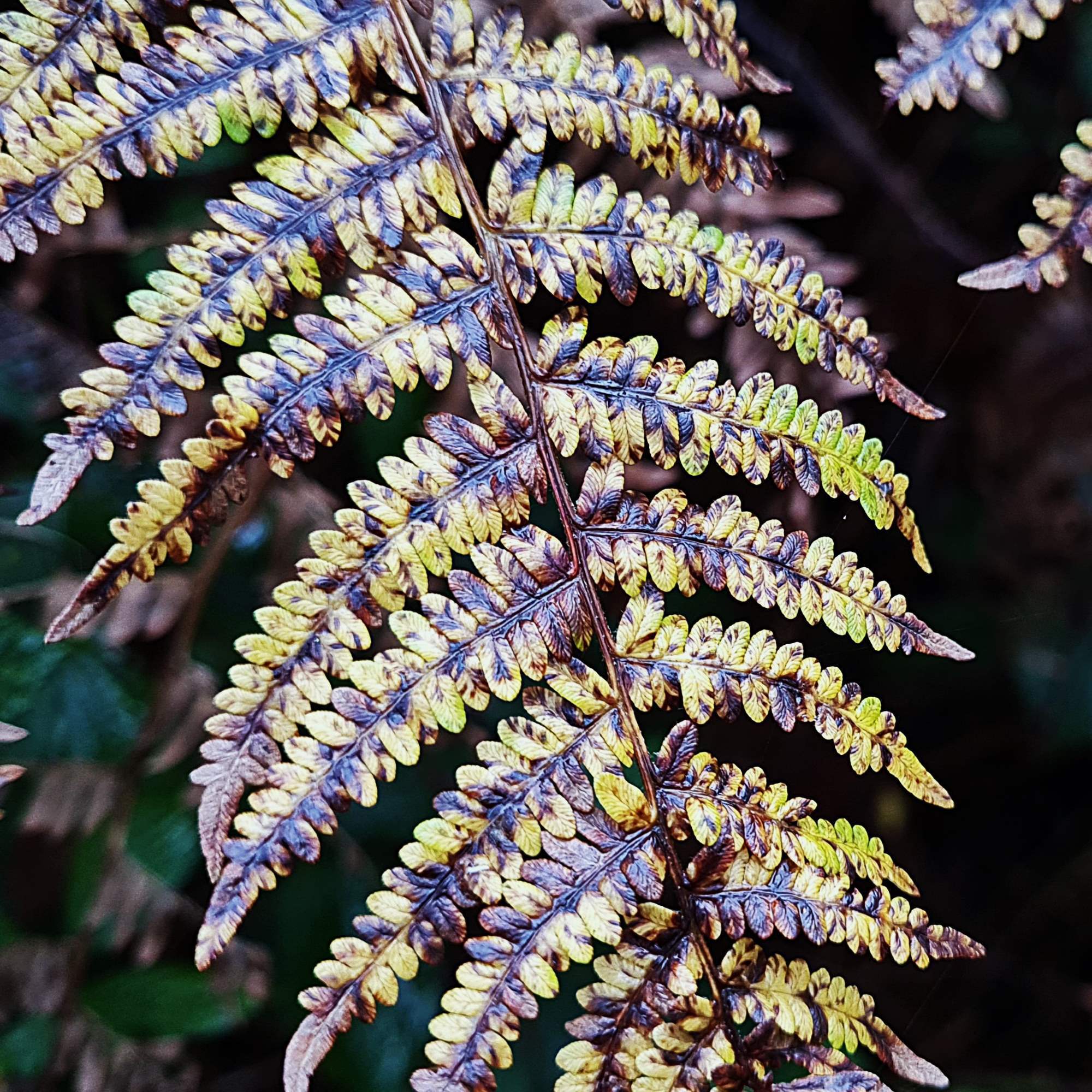
255 Quantocks trees in late October air (night and sleep safe)
Jan 31, 202501:03:28Tap to summarizeA wide open landscape, under a dark October sky. Remote. Naturally quiet. Witnessed from behind a lone cottage hidden between tall graceful trees. It's just rained. Drips are falling from the old slate roof into an overfilled drain. Time passes. Somewhere far off, mid-right of scene, an owl hoots. It's call, carried on the wind from rolling fields below. These late season leaves, so present in their rustlings, have seen the whole year through. They're soon to drop. Join the soft damp ground, and turn, slowly, to soil. For now though, while they wait for the weather to brittle them dry, their last job is to give voice to the ever-changing wind. The Lento box listens, takes in the scene, beneath the trees, on a garden table made of iron. The table is surrounded with ornate iron chairs. We have left it to record all night while we are asleep. To capture the aural essences of this Quantocks landscape, as time passes, with nobody around. * The first segment of this overnight capture is available in episode 245. Thanks for listening and if you are a new subscriber, welcome! Find out more about the podcast and how we make the recordings at radiolento.org and if you would like to become a supporter Radio Lento is on Kofi.
Transcribe →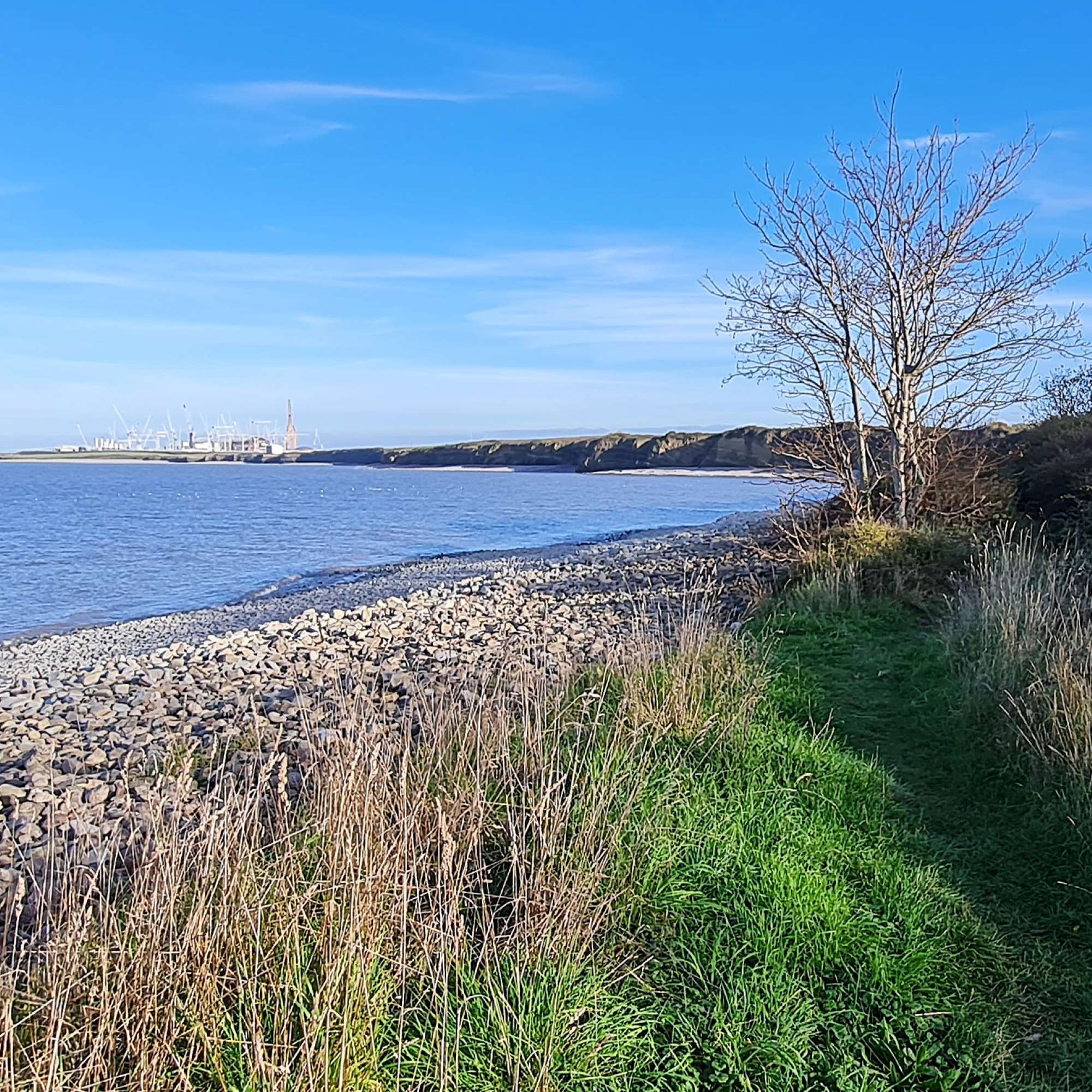
254 Waves of West Somerset (sleep safe)
Jan 24, 202500:30:53Tap to summarizeFollow the path with the sea on your left side, until you reach the trees. It's only a small outcrop, just beyond the banks of tangled shrubbery and before you get to the location of a 19th century harbour of Lilstock in West Somerset, now long-gone. Step off the path. Lean against one of the smooth bark trees, the one closest to where the pebbles start. And listen. We captured this aural scene one afternoon last October. It was an almost breezeless day. Bright, and clear. The conditions produced a pristine sound landscape. So crisp you can hear in full detail the movement of the longshore drift. Gentle waves, gambling over rocks and pebbles, from left to right of scene. A few robins sing from the shrubs nearby. A low hum mid-left of scene undulates from time to time, a marine vessel, moored off the coast. Ahead is the open water of the Bristol channel. To right of scene the landmass of Wales stretching away to the West, and the setting sun. It felt like a landscape at rest, under an almost quiet sky. * This recording is the second segment of an 80 minute take, with the Lento box tied to a tree facing out towards the shoreline about 30 yards in front. The first segment can be heard in episode 244 'Rocky West Somerset beach'.
Transcribe →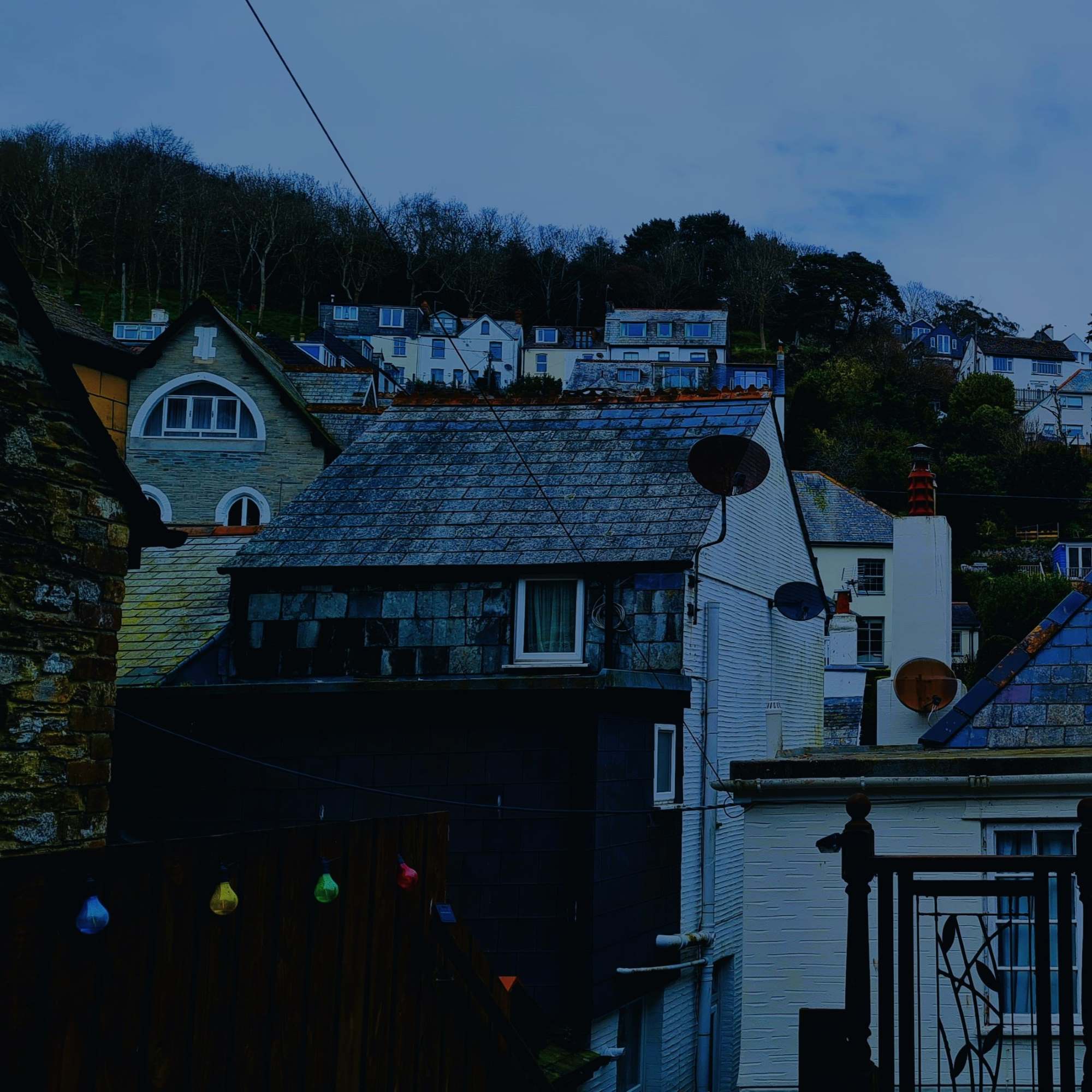
253 Quiet night sky - Looe in Cornwall (sleep safe)
Jan 16, 202501:01:05Tap to summarizeQuiet sky. This is how one sounds. Above Looe, on the Cornish coast. Thousands of cubic miles of empty air. No planes. No cars. No lorries to throw up their noise as they haul loads along dark country roads. Just gusts, and sea breezes. And a fleeting low whistle from a high chimney pot. Many steep tiled rooves, catching, and reflecting, and handing on their view of this sky's whisping sussurations. Roof, to roof, to roof, to microphone. To ear. To mind. To sleep. At first you may sense there is nothing to hear in this long-form night recording, and it is, as an audio recording, sparse. Or maybe not sparse, because the more you listen, the more you tune into the way the rooves catch and reflect the sound of the sky, the more your definition of what sound is shifts. People talking, and planes flying, and cars whining, and music playing, and things banging are of course what we are used to hearing everyday, and in the night too. But layered behind, usually far too soft to notice, is a whole world of different sounds. Sounds that are more like textures, and fabrics, and reflections, and perhaps shadows. We believe listening to these sounds, in the right setting, can help bring about a state of mind we think of as vigilant restfulness, where you feel aware of the environment, yet part asleep at the same time. This hour of captured night quiet is how Looe sounded, a few hours before dawn, back in April last year. The sea is near, and is subtly contributing to the background of this place. The sound-scene is rich with many other textural and fabric-like sounds. We left the Lento box to witness time passing through the night, on some wooden decking, surrounded by shrubs, a loose tarpaulin, and the peaceful atmosphere of a Cornish coastal town as it sleeps under a quiet, wide open sky. * Looe is one of the locations we have found with a very quiet sky. Having said this, towards the end of this recording, there is a plane vaguely audible, somewhere far away. We decided despite this we would go ahead anyway and share the segment because compared to much of the rest of the UK where we have recorded, this hour from Looe does convey a palpable sound-feel of being under a genuinely quiet sky. To us quiet skies are of equal importance as dark skies. The latter is much more talked about than the former, but we hope to do what we can to change this.
Transcribe →