← Razib Khan's Unsupervised Learning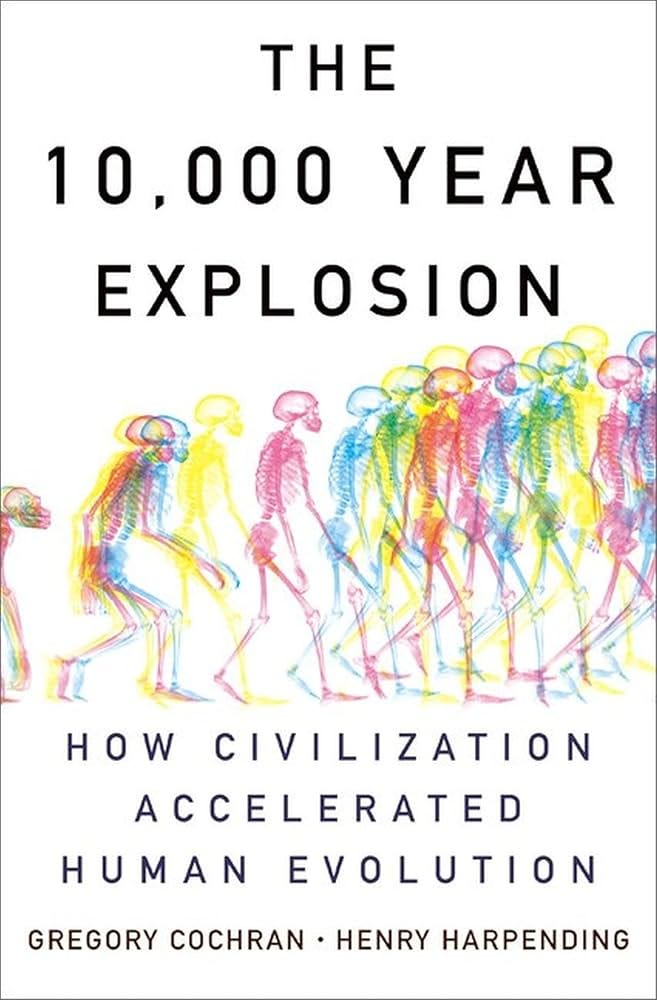
Loading summary
Transcript76 lines
- [00:00]
A
This podcast is brought to you by the Albany Public Library main branch in the generosity of listeners like you. What is a podcast? God, Daddy, these people talk as much as you do. Razeeb Khan's Unsupervised Learning.
- [00:29]
B
Hey everybody, it's Razeeb with the Unsupervised Learning podcast. And I'm here today with a very special guest, Dr. Gregory Cochran. He has, well, he has a Twitter and he has a blog, West Hunt. And today we are going to be talking about, well, natural selection in western Eurasia. Natural selection of the genome. We will be talking first. Well we're talking simultaneously but really first we'll talk about Ali Akbari's paper. Ancient DNA reveals Pervasive Directional selection across Western Eurasia. We'll talk about that but we are going to go back and this is a topic that I actually wanted to talk to Greg about. For a couple years now we've talked about this. I do a retrospective on 10,000 year explosion, his book that he, that he wrote in 2009 published in 2009. You know, obviously the ideas are a little older and he co wrote it with the late Henry Harpending and it also integrates some of his, Greg's ideas that were articulated in the paper with John Hawks about accelerating evolution. What year was that paper again? 2007 I think you've been you know, on this recent acceleration of human adaptive evolution with Hawks, Wang, Cochrane and Moises. That was. Yes, that was 2007 in PNAS. So anyway, that's the context, I guess we should just start. So the, the Reich lab paper, uh, you know I've done a podcast about it and uh, by the time this is published or posted, uh, you will have read my piece of the free, free uh, press, uh, about the paper. Although uh, know you're going to hear a lot more technical detail in this conversation than in that piece because you know the audience is different. Anyway, so. Ancient DNA re reveals Pervasive Directional Selection across Western Eurasia. Published 4-15-2026. As most of you know this has been a paper that was in the works for eight years and you know it's something we knew the Reich lab was going to do because of, you know there was when you download their data you, you sign an agreement that you don't you know, publish original stuff on selection. So they were clearly doing that. So it's the outcome of that made a huge press splash even though the preprint been out for a couple of years. You know this has been a conference presentations also for years you know, I heard about this paper from people in Rasmus Nielsen's lab in 2020. Not the paper, but the research. And at that point they were already, they were already joking that it was, you know, they've been hearing about it for a couple years. So, yeah, that makes sense because I think Akbari said eight years have been working on it. So two years in, people are making fun of it for being late. And now it's 2026, obviously, you know, six years after that. So it's finally out. And, you know, it's. It's a pretty good paper. It's pretty comprehensive, you know, introduces new methods and all that stuff. So I've been talking about this, you know, I think you guys have heard my piece. Greg. Well, you, both, you and John Hawks actually have been talking about this. And like, I will probably link to, you know, maybe I'll talk to John separately, but I'll link to his essay or his post on his substack. But tell me what you think, how you feeling about this paper? And then in the context of like the work that it didn't or did cite, also, I should say the guest on this podcast, David Pfer, who has a substack that I've linked to and I think many of you have read, has also been complaining that they did not cite prior work. They not cite his work, his work with Emil Kierkegaard and others on directional selection using somewhat different methods, you know, coarser, less robust methods. But whatever it is what it is. So there's that kind of media, scientific ethics controversy that's going on. So with that, Greg, take it away.
- [04:26]
C
It's definitely an interesting paper, but I think one of the interesting points is that there were other ways of knowing some of the conclusions, which is one reason I came to somewhat similar conclusions quite a while ago. And those ways seem to be invisible to a lot of people in human genetics.
- [04:52]
B
Well, I mean, so what do you mean? What sort of ways are you talking about? I mean, I kind of know, but like, let's articulate for the listener. Well,
- [05:00]
C
here's a particular example. You know, maybe the strongest selection they found was, was basically a lot of selection on pathogen defenses in this paper. Things like think of it as some are specific things against specific infectious diseases, probably, but others, you would say sort of a general upregulation of the immune system, making things, you know, turning the volume up on immune defenses. And I would say that it was possible to know that that had happened in places like Europe some time ago. Let's say 50 years at least. It was easy to know that. But I don't think most people in human genetics did know it.
- [05:56]
D
Yeah, yeah, yeah.
- [05:57]
B
Well, so the context is, I think, with human genetics, we're talking about this. A lot of people in human genetics, they. They come out of medical genetics and, you know, they're studying probands and, you know, they're studying pedigrees. They're not thinking about selection. They're thinking about how do you identify a genetic locus for a disease. So that is if you go to the American Society of Human Genetics meetings. American Society, Human genetics is half MDs, half geneticists. So, you know, the medical aspect of genetics is really, really dominant in human genetics historically. And the evolutionary aspect has not been as dominant. Evolutionary geneticists have tended to work in Drosophila and stuff like that. So Drosophilo geneticists or animal breeders, you know, agricultural geneticists, quantitative geneticists, they also understand selection. Right. But human geneticists tend not to.
- [06:38]
C
You know, that's certainly part of it. But part of what I'm talking about is something you would have thought the medical types would know. Like a simple example, like when the Spaniards show up in the New World, in Indians start dying like flies. Diseases that were, let's say, serious in Europe become much more. Are much more serious and much more deadly in affecting people in the Americas and in other isolated populations. And that isn't a secret. And it's kind of a medical story, but apparently nobody knew it, or at least the people involved in this sort of thing didn't know it. And I don't think could make them know it. It's a strange story, but, you know, it's spectacular. I mean, it shows up as a historical factor, but they act as if it is not true. I mean, to the point where if you have a certain place in medicine where people are taking account of some such difference, you know, they're all people trying to make sure you don't.
- [07:49]
D
Yeah, yeah, yeah.
- [07:51]
B
So there's medicine, you know, human genetics. Like, you know, people are. Are ignoring this stuff. So, I mean, obviously. Well, someone like Nick Patterson, I'm just. We're just gonna name some people, you know, so the authors, you know, Aliak Barry, Annabelle Perry, Alice Barton, Mohammed Reza Karimajad, Stephen Gazal, Zhang Lee. Yeah. Ting Zhang, Alyssa Mitnick Patterson, Matthew Ma, Zheng Zhao, Al Price, Eric Lander, Ron Panosi, Nadine Roland. So Malik and David Reich. I mean, Nick Patterson knows about selection, right? I mean, so it's like there are people in this list we know know about selection, though. But, but in terms of like the literature review and the introduction, it's very, it's very genomics focused, it's very paleogenomic focused. It's basically, how can paleogenomics tell us about selection? If this was. I know if Ali Akbar is going to write a book, which I don't think he is, but if he was going to write a book though, I don't think he would write it just about this paper. Right. Like, he would, he would, it would be a more thorough introduction.
- [08:49]
C
I don't know, I haven't met the guy. I'd like to sometime. I mean, I've talked to some of these other people. Not to that, not to Alec Berry. I think that it's as if, you know, there's just whole areas of relevant knowledge that are never referred to. Never. Well, for example, like they use PRS scores for, say, iq, but they never use iq except in that sense. I mean, there are. People have actually given IQ tests to people. We kind of had to do that in order to get things like PRS scores, but everything in that kind of work has been really energetically ignored. The scores that people actually get in different parts of the world, things like that. The only thing I've ever seen anybody do in this kind of genetics is deny that it exists.
- [09:58]
D
Yeah, yeah.
- [09:58]
B
So PRS polygenic risk score. And just to be clear, that basically means that, you know, you look at the genes and you tote up what the predicted phenotype is based just on the genes instead of like measuring them. Right. And so they're getting pr.
- [10:12]
D
Yeah, yeah.
- [10:12]
C
Of course, somebody had to have done lots of tests and then do statistical checks to see how the genes affected those test results. I mean, you know, here we have PRS scores, but there are no IQ tests or there are no test results. And if they exist, they have to be ignored. I mean, completely.
- [10:33]
D
Yeah, yeah.
- [10:35]
C
It's weird, but I mean, to the extent that how much of the things that are their results, and I'm not talking about genetic details because for the most part we did not know those, although we know a few of them perhaps, but the general trends were already known or they, if you thought about it for, oh, you know, like three minutes, you would have come to a similar conclusion on a lot of it. I think that's interesting. I don't think it's the only interesting question, but I think it's interesting to me.
- [11:12]
B
Yeah. I mean, so what do you think real quickly? You know, some people like Sasha Gusev and earlier Graham Coop, back when the preprint was new, you know, have talked about they don't believe in the robustness of the methods to control for, you know, various things. What do you think about that? Like in terms of population structure or
- [11:28]
C
whatever, those two guys, and have them teach an AP calculus course to some pure blooded Australian aborigines.
- [11:41]
B
All right, there we go.
- [11:42]
C
For the next five years.
- [11:45]
D
Yeah, yeah.
- [11:45]
B
Okay, that's, that's fair enough. Okay. All right. So, you know, what do you think about, you know, David's complaints that they just did? They're not citing people. I mean, I think you have that complaint too, so probably to some extent, I don't know,
- [12:03]
C
you know, in a better world, people might cite things. It's up to them. I don't expect much. Yeah, yeah, I could go on, but I don't expect much. I also know that they are sort of to some extent, navigating, you know, political currents and so forth. And, you know, and I naturally, I, I, that's just the most fascinating and wonderful thing to me in the world. And I certainly spend all my time trying to think of how to do similar things. Not, I mean, it's probably necessary if you want to run a big lab and get money. But it ends up with you saying things like, well, I am paraphrasing. Check me for accuracy in Reich's book when he was talking about, well, you know, we're going to find that populations are different even in things like psychological stuff, and it's foolish to pretend that isn't so, but they'll probably be the opposite differences of what we think.
- [13:04]
D
Yeah, yeah.
- [13:04]
B
You're not.
- [13:05]
C
What he said. Right?
- [13:07]
D
Yeah, yeah.
- [13:08]
C
Well, that's bullshit. And as such, it sort of offends me. By the way, will there be surprises? Oh, yeah. But will we end up that, like, if group X consistently shows a certain difference that, you know, detailed genetic investigation will show, it's really in the opposite direction? We, well, it hasn't happened yet and it's inherently kind of improbable. But, you know, when you deliberately lie, that's kind of gonna be an improbable statement. And of course, that was a deliberate lie on Reich's part. I understand, I think, I understand why, but I think there's no other way to characterize it.
- [13:53]
B
Okay.
- [13:54]
D
Yeah, yeah.
- [13:55]
B
I mean, what do you think?
- [13:57]
C
How likely is it gonna be that, you know, the people with the greatest genetic potential for height are, let's say, the pygmies?
- [14:05]
D
Yeah, yeah.
- [14:06]
C
I don't think so.
- [14:09]
B
Well, okay, so with pygmies, you know, with the height stuff, though, at least, like, I mean, that is like, resolved in terms of, like, the more, you know, there have been admixture analyses where, like, the more pygmy ancestry someone has, the shorter they are, you know, like with Bantu ancestry.
- [14:22]
C
Because there is.
- [14:23]
B
Yeah, yeah, there is a mixture.
- [14:25]
C
Yeah, sure.
- [14:25]
B
So you, so you're explicitly correcting for. I mean, it's basically like, you know. Yeah, so we know the pygmies are short because some people have. Some people have like, said stupid things like, oh, the pygmies are short because they're, you know, oppressed. Like, I don't know, there have been anthropologists that have said things like that, oh, they're short because, you know, they're marginalized. Well, no, no, it's the pygmies that have. That are taller, have more Bantu ancestry and vice versa. Right.
- [14:48]
C
And so admixture studies are a way to look at some of these differences that doesn't have. In which you don't have the same concerns about portability of PRS scores and so forth. And they're fairly often done for medical purposes and they're occasionally done for forbidden purposes. But when they do, they all come up with the answer that, oh, yeah, well, you know, you're between these two groups and the closer you are to one in your admixture, on the whole, the closer you are to the phenotype. So, yeah, I mean, and a fair amount is known about that, but, you know, I don't get the impression that that's ever mentioned in any of this sort of work either. Yeah, but it's, it's simpler to do than to do, you know, the various sorts of corrections and check, you know, trying to look. Look for selection itself and not, you know, not admixtures of different groups. Although those differences too were generated by selection because, you know, essentially everybody outside of Africa has common ancestry, generally no later than about 50,000 years ago.
- [16:04]
D
Yeah, yeah, that would be the latest.
- [16:07]
C
And sometimes a lot more recently. So, for example, one of the players in this study, one of the groups. We have basically three groups making up the ancestors of Europe. We have the early farmers from the Middle east, eef, we have the steppe peoples, the Indo Europeans. But before that we had hunter gatherers occupying Europe. But those hunter gatherers are not people who have been in Europe for 50,000 or 40 or 30,000 years. They're largely descended from groups in probably Anatolia, more like, you know, 15,000 years ago. Not, you Know, a major source. So, for example, the time to the last common ancestry of the hunter gatherers and the farmers coming in is not a really long time. I mean, they seem to have common roots maybe 6,000 years earlier, something like that.
- [17:13]
D
Yeah.
- [17:15]
C
So it's interesting. Why are they different?
- [17:18]
B
Yeah, well, I mean, one, well, one thing we know is that the farmers have basal Eurasian.
- [17:24]
C
Right, True.
- [17:27]
B
Yeah. Which, which, the Mesolithic. Mesolithic populations, they had. They didn't have it. Or they had it much lower levels, if they had it. Right. So that, that is interesting. But basically the, the Mesolithic. So the Villabrina cluster that you're talking about, the Villa Bruno cluster, seems to have emerged from the Balkans, slash Anatolia at some point in the Pleistocene, at some point after the last glacial maximum. So there were people, you know, in that region that didn't have basal Eurasian, but there were other people in Anatolia that there, the. There's a, There's a sample out of the Caucasus like 30,000 years ago or something like 20, or maybe like 20 some thousand years ago, I think is what it's called. The paper. There's a preprint. The paper never got published. It was basically all the, all the info and the data was just moved into other papers. But it shows that that individual had basal Eurasian ancestry, you know, 25, 30,000 years ago in the Middle East. So, you know, they were, it seems like they were absorbed earlier in an Apache way into different populations. But. Yeah, so, I mean, these are the European populations that you have. I think one of the fascinating things and I haven't gotten into this is, you know, they partitioned. They partitioned. The results also in some of their charts between Mesolithic foragers, Neolithic farmers and Yamnaya stepped pastoralists. And then you. So you see sometimes, for example, with, well, like intelligence, it goes up with the Neolithic and then it drops back with the Yamnaya before going back up.
- [18:50]
C
Right, right. And what I think is going on, although I think, yeah, I think I'd put it as a pretty likely explanation, is that a lot of this has to do with how long you've been farming now with the EEF coming in. They had already been farming for a while before they were farmers when they came to Europe, but they had been farming for several thousand years before that in the Middle East. Not enormous, less than 10, but perhaps as much as four or five thousand years in the beginnings of farming. Whereas, for example, it looks a lot like the Indo Europeans were pretty close to, you Know, they really had probably not done more than about, you know, very small amount of farming. They're basically a bunch of hunter gatherers and fishermen, more specifically, that ended up becoming pastoralists.
- [19:54]
D
Yeah, yeah.
- [19:55]
C
Which is, by the way, somehow, I think it's somehow an easier thing for people to switch to.
- [20:01]
B
Yeah, this was true with Australian aborigines. You know, they, you know, they got involved with like, becoming shepherds pretty easily.
- [20:08]
C
I would say something like that was probably true of the Turks and Mongols as well.
- [20:12]
D
Yeah.
- [20:13]
C
That they went straight from, perhaps from, from being hunters to, to being herdsmen.
- [20:22]
B
Yeah, well, I mean, they went from hunters to herdsmen. They also, like, had like a, they had some millet farming going on. But, but what we know about, like the Mongols, like Genghis Khan, you know, his, his life, you know, there was a period where he was a forager, you know, that they used to call. You know, they used to call, I think the Merkids tribe did a lot of foraging. They call them rat eaters, partly just because, like, you know, they hunted so many, I guess, rodents, I don't know. But yeah, so, I mean, so that's, that's definitely, like, interesting to see in the data, and I think, like you would have anticipated. Let's, let's, let's actually, like, I want to ask you real quick, and then we'll go, we'll go to 10,000 a year because we could. I want to talk about it chapter by chapter. They're not that many chapters, but, you know, so we got like seven chapters. So David Peer's complaints. Like what? You know, I know that you said that you don't, you know, like, people don't cite. That just happens. Like, do you think he's got some legitimate complaints?
- [21:12]
C
People don't cite. But I mean, in some areas you don't have the political. Oh, we don't want to cite those naughty people problems, although there's more to it than that because, you know, for example, when Hawkes and I wrote that paper saying that it was very likely that we had mixed with Neanderthals and some of the alleles would probably be advantageous and would have been selected, we got very few sites from people you would have thought would have. I think there is, and I don't think that one was politically very sensitive. Yeah, I think there's just a lot of people who don't cite if you're not part of the right club or. Well, and there's other things which are sort of alien to me, but they're probably the way things are, which is in biology, most of biology, predictions of things are not considered, like, even meaningful.
- [22:16]
D
Yeah,
- [22:18]
C
it's very much different. And by the way, I will say clearly, better, not just different. Biology tends to not much believe in theory, even when it has a correct theory, which is it's a mistake. There's not much positive to be said about it, but they don't. So maybe that's part of it. Maybe a theoretical prediction isn't considered. I mean, I don't think it's considered to be anything at all. I certainly have had certain people say, well, yeah, you predicted X and it was true, and you predicted Y and it was true, and you predicted Z and it was true. But those are all just coincidences.
- [23:08]
B
So I guess the first thing I want to talk about is chapter two, the Neanderthal Within. And this came out in 2009. I don't know if you could have timed it better because the Neanderthal introgression admixture paper, I think it was in Science, came out in the spring of 2010, which basically established to, you know, there were still people that were talking about ancient population structure and other things, but basically established to most people's certainty that there was Neanderthal admixture. You had been writing, actually, you, you had been writing and talking about this along with John for actually many years before 2009. You know, you wrote about years.
- [23:51]
C
I mean.
- [23:51]
D
Yeah, yeah.
- [23:52]
C
Probably no more than 10. Less. A little less than 10.
- [23:57]
D
Yeah, yeah, something like that.
- [24:00]
C
But I'm not. I mean, we were not the only people who ever said that it was likely. There was certainly a current of thought going back a long time saying probably would have happened, although there were probably more people. Certainly the majority of people in human genetics said the opposite. But, but we weren't the first people to ever say it.
- [24:22]
D
Yeah, yeah, that's fair.
- [24:24]
B
So let's talk about, like. So this is a prediction. This is a prediction that was like, confirmed almost immediately, like, pretty soon afterwards with. So the key, I will say is there were people like, you know, Jeff Wall, others, you know, besides your group, besides you and John and Henry Harpending, who had written about this sort of stuff and the likelihood using genomic data. But, but. And I think Magnus Nordberg showed how the early mitochondrial work that showed Neanderthals were an out group could not actually refute the proposition of admixture because, you know, it's a single locus and all these things. You're. You're expecting a certain level of drift. But There's a lot of theoretical reasons why, you know, admixture was possible. And I want to reiterate for the listener, the reason that we know that it or we think it likely happened is, well, we actually got that Neanderthal genome, and it turns out, you know, Eurasians or non Africans, their genome resembles Neanderthals more than Africans. Genomes resemble Neanderthals. And like, you know, one of the number one ways that that could be is they got Neanderthal ancestry. About a couple of percent. A couple of percent. Although,
- [25:33]
C
like Patterson's calculations, it was only about 40 standard deviations more likely. But go ahead. Yeah. That there had been such admixture into people outside Africa. Yeah, that was a fun moment. I can tell you one fun thing that happened in 2010. There was a conference in Albuquerque, which is one of the very few types of conferences I go to, and not even then half the time, but John and I were there and there were people. It started leaking because there were people reviewing the paper. This was slightly before the publication in Nature, and it's fair to say we were enjoying ourselves.
- [26:22]
B
Yeah, yeah, I will say. Okay. So, you know, and this was the one that a lot. But a lot of people also did say that of the various things that you're saying in 10,000 year explosion, this was the one that got like the most ascent, though, in terms of like. Yeah, that's, that's, that's quite likely. Right.
- [26:38]
C
Well, had it already been done in terms of people saying it was likely? I mean, they, A lot of people said it was likely after they already knew it had happened. That's good, actually.
- [26:49]
D
Yeah.
- [26:49]
C
But I know the general sorts of things that people in human genetics were saying, and they were kind, you know, who mostly did not think it. And I thought they were rather silly, but I could expand on that a little bit. I can also tell you why we thought it was clear that it was extremely likely it would have happened. And it wasn't that complicated an argument. I mean, basically, I would say the key part was saying that we have a lot of information on how long two mammal populations need to split before typically you start having serious fertility problems. Sister species that had a common ancestry X ago. How big does X have to be before, you know, before it's fairly difficult to have offspring? And the answer, I mean, and this is something that. It varies. I mean, there's some animals that will surprise you. You know, they separated longer than you think. But let's. It's about, roughly speaking, 2 million years and it was pretty clear that Neanderthals had not, you know, from the fossil record that Neanderthals had not split that long ago. More like, you know, 600,000, 800,000, something like that.
- [28:12]
D
Yeah.
- [28:13]
C
So I said, what are the odds that there'll be mutual fertility? And they said, I don't know, 90%. Very likely. Then there were the funny parts of it, since I saw various people say, humans wouldn't have done anything that disgusting. I love those people. I would like to hear them talk more because they're funny. So there were people saying, well, Neanderthals looked too different and they were weird, so people wouldn't have had sex with them. And I remember thinking, you don't get out much, do you?
- [28:49]
D
Yeah.
- [28:50]
C
You've never been in a bar at 1 o' clock in the morning. You've never even been drunk. So I thought those people were fun. I mean, there are other people who had various comments such as, well, I remember a certain Nobel Prize winner who was saying, well, even if there was a little bit of admixture, it probably wouldn't have been genetically significant. That was Svanti Paabo. But that's because that was wrong. But that's because he doesn't know any population genetics at all. Even if you had a 1% admixture, that gives enormous numbers of opportunities for favorable. That means many copies of each favorable gene have been injected into the other group. There's a fair chance, if they really are favorable, they have a reasonable chance of spreading. A computable chance. This was something figured out by Haldane. It's sort of like Haldane back in 1927. It's kind of like. It's very similar to the chance of a favorable new mutation happening spontaneously.