
Podcast
RCC Sermons
Hosted by Rockland Community Church · EN
Featuring sermons from Rockland Community Church in North Scituate, RI
41episodes
Episodes
Newest firstAll episodes

We Depend on God - Pastor Tom Loghry
4d agoTap to summarizeWe Depend on God - Pastor Tom Loghry Rockland Community Church Download In Psalm 110 we find that We are not the builders, watchmen, or givers of life — God is. All our labor and striving for security is in vain apart from Him, but when we trust in God and offer our efforts to Him in prayer, He provides protection, rest, and every good gift — including children — as expressions of His sovereign care and love..Listen on Spotify Listen/Download on iTunesWatch on YouTubeTranscript: Unless the Lord builds the house, the builders labor in vain. Unless the Lord watches over the city, the guard stands, watch it in vain. In vain you rise early and stay up late, toiling for food to eat- for he grants sleep to those he loves. Children are a heritage from the Lord, offspring a reward from him. Like arrows in the hands of a warrior are children born in one's youth. Blessed is the man whose quiver is full of them. They will not be put to shame when they contend with their opponents in court.A trip to the store can be an invitation to become a Jedi. That's at least what children and their dads, too, sometimes make of it. Approaching the sliding doors of the establish, establishment, we are invited to wield our powers, motioning our hands to make them open at our command. It's good to find fun in the mundane things of life.Of course, we know that the doors will not open if the motor operating the doors is broken. The doors also won't open if the power is out and there's no backup generator. We can wave our hands all we want, but they won't budge.It's a reality that gives us a good analogy of our action in relation to God's action. Yes, we are invited to act, to move forward, to motion our hands - but the effective power does not reside in us. We look and depend entirely upon God.Psalm 127 reminds us of this reality. It is a song of ascents, a song sung as pilgrims made their way to the temple in Jerusalem. And as they are going, as they are ascending to Mount Zion, they are singing a song that reminds them why they seek God. It reminds them why they didn't just stay home. They had plenty of work to take care of back at home. Who would watch their property while they were gone? This psalm is their answer. It is a psalm written by King Solomon, a man who wielded great wealth, resources, and power during his reign. But he began his rule by praying that God would give him wisdom, and we see that wisdom manifest in this psalm.So we look first at verse one here in Psalm 127. "Song of Ascents. Of Solomon. Unless the Lord builds the house, the builders labor in vain. Unless the Lord watches over the city, the guards stand watch in vain"When we're thinking about building here, we should not limit ourselves to thinking of literal construction, like a lift back there. As human beings, we build all sorts of things. Yes, we build buildings, we build careers, we build lives. It's in our nature as human beings to build. But as we've gone about our projects, It's not the case that we're always so faithful in looking to God and doing those things that we pursue with our hands and with our minds. We're not always looking to, to God in these things. Instead, we sometimes follow a pattern that we see emerge at the very beginning in Genesis 11 when the humans at that time gathered together rather than spreading across the face of, face of the earth as God had called them to do, gathered themselves together in one city in order to build the Tower of Babel, that they might make heaven and earth meet by means of this tower. It was a plan that was, went against God's will, and so their plan came to nothing. Their language was confused and in the end, the human beings were indeed scattered across the face of the earth.We think also of the example of a man like King Nebuchadnezzar, king of the Babylonians, king of an empire, who had conquered the people of Judah, had destroyed Jerusalem and brought those people into exile, and who came to know the one true God because of that, because of the ministry of the prophet Daniel. And in Daniel 4, we see God warn King Nebuchadnezzar, saying that he's going to fall prey to his hubris, to his pride, and that he's going to be cursed as a result. And in fact, that does indeed come to pass because Nebuchadnezzar was a prideful man. In Daniel 4:29-30, it says that, "As the king was walking on the roof of the royal palace in Babylon, he said, 'Is not this the great Babylon I have built as the royal residence by my mighty power and for the glory of my majesty?'" And when he said that, he became cursed so that he had the mind of a cow, and he grazed from the fields for seven years before he, the sanity of his mind was restored.We think about the nation of Israel itself, of how this people were brought into existence from nothing, more or less. You had Abram and, Abram and Sarah, this couple who were old, who had no children, but it was God who gave them a child and brought forth a nation, and then redeemed their children from slavery in Egypt. Israel did not make anything of itself. It's only God who made them.When we think of ourselves today, we fall prey to forgetting how it is that God who is the one who has raised us up. We fall prey to the pride of Nebuchadnezzar, the pride that leads us to really idolize ourselves, to say we're the ones on whom the future depends, as though our fate depends upon us. Well, apart from God, we certainly seal our fate, because apart from God, our way only leads to death.When God sends His Son into the world, in Christ's incarnation, when the Son of God becomes a human being, what God exposes once and for all is our utter need for Him, that the only way we could be saved is by God coming to us Himself. We cannot build what only He can provide. We cannot bring about the salvation for ourselves that He can only give.And even once we are saved, once we've put our faith in Christ and we are now members of the Kingdom of God, the work that we are invited into in that kingdom is a work that does not succeed by our own strength. It is something that only proceeds by the power of God. The Apostle Paul in 1 Corinthians 3:6-9, reflecting on his work and a fellow worker, Apollos, he says, "I planted the seed, Apollos watered it, but God has been making it grow. So neither the one who plants nor the one who waters is anything, but only God who makes things grow. The one who plants and the one who waters have one purpose, and they will each be awarded according to their own labor. For we are co-workers in God's service; you are God's field, God's building." So yes, we are invited into the work, but we should never forget, this is God's doing. This is God's building, God's construction.And then of course, this applies to us individually as well. We are called to trust in the Lord with all our hearts and to not lean on our own understanding, so that it would be God who would make our paths straight. When we think about our life in Christ, we have to confess that it's not us to whom credit should be given for the life that we now live, but rather, as Paul says in Galatians 2:20, "I have been crucified with Christ, and I no longer live, but Christ lives in me. The life I now live in, in the body, I live by faith in the Son of God, who loved me and gave himself for me." It is only God who builds. If we build without God, it all comes to ruin.And by the same token, here in verse one, Unless the Lord watches over the city, the guards stand watch in vain. We have to remember that security is not found in ourselves. Safety, we cannot bring ourselves perfect safety.I think as you look around us, you'll find that we live in a very fearful society, and there is a danger in that, a very practical sort of danger in the immediate. Because when we no longer trust in God to watch over us, to guard us, then we need to find some other sense of security. And in trying to find some perfect sense of security, it's inevitable that we'll surrender liberty. It's no, it seems to be no accident that in societies in which faith in God is surrendered, more and more power is given to governments, because government must strive to emulate the power of God, and it's a terrible thing. Our lives become much smaller.When we look to the nation of Israel, we notice that it is not God who forgot Israel when they fell prey to their enemies. They fell prey to their enemies because they forgot God. And rather than looking to God, they decided, "Oh, we're gonna try to make deals with our neighbors. We're gonna look to Egypt. We're gonna look to these other powers, the Babylonians, to try to sure up ourselves, have a sense of safety rather than just depending upon God." You and I must remember that God does not forget us. Christ will not abandon us. And if we forget Him, it's only at our own loss.Now, this does not mean that we should be careless. We...
Transcribe →The Promised Priest King - Pastor Tom Loghry
2w agoTap to summarizeThe Promised Priest King - Pastor Tom Loghry Rockland Community Church Download Psalm 110 reveals that the promised Messiah is both a divine King and an eternal Priest in the order of Melchizedek—uniting two roles Israel had always kept separate—and this union is fulfilled only in Jesus Christ, who is fully God and fully man. Because Christ reigns as our victorious King and intercedes forever as our perfect Priest, believers can live with confident joy and courage, secure that their ultimate acceptance before God and future victory over evil are guaranteed in Him..Listen on Spotify Listen/Download on iTunesWatch on YouTubeTranscript: Let us pray as we come before God's wordDear Father, as we come before your word this morning as found in Psalm 110, we pray that you would impress upon us the wonderful truth that you have promised a king, and that you have given us this king in the person of your Son, Jesus Christ. Father, may, may you fill us with awe and wonder at this wonderful reality, and shape our hearts to live in light of it.We ask this in the name of Jesus Christ, our Lord. Amen. You may be seated.We try to make the best of things. We look for a good job, we try to take care of our family, our friends. We try to make the best of things. But there's a lot outside of our control. Some things depend on those in the halls of government. And of course, the trouble is, is that every political regime seems chronically flawed in one way or another. And that leads some of us to despair of even thinking about politics at all. We just try to get by. It leads others of us towards activism, maybe even aspiring to political leadership ourselves, thinking maybe we, we can be the ones that fix this. But what everyone can agree on is that things should be better, and we need a perfected governance.Now, as Americans, we are averse to turning to kings, but this is only because we are aware of their poor historical track record. If we could be certain of a good king, in particular a king whose rule would never end, that would never need to be replaced, potentially with a bad one, a king who could actually secure justice, peace, and prosperity, then who wouldn't go for such a king?Our political frustration has been shared by human beings throughout history, we want better presidents, governors, et cetera, senators, et cetera, our ancestors wanted a better king. Superficial differences that point to a common desire for a truly virtuous leader who will put our troubles to rest.It is right for us to be frustrated. It is right for us to desire some final fix that will set things right. We often resign ourselves to disappointment and cynicism as time wears on, and that's what makes the claims of the Bible so astounding. The hope of Scripture is the hope of restoration. God does not set before us a vision of retreat, a dream of evacuating to lollipop cloud land. God promises conquest, victory by the appearance of the one true king here on Earth, the king who will make things right.You see, the Psalms contain not only words of praise, but they also contain words of prophecy, and that's precisely what we find here in Psalm 110. We find King David writing as a prophet. And what he has to say is astonishing because it goes against everything we'd expect a king to say. And so we turn to Psalm 110, and we look just at verse one. We're gonna, there's only seven verses here, so we're just gonna go pretty much verse by verse.It starts, it says, "Of David, a Psalm. The Lord says to my Lord, 'Sit at my right hand until I make your enemies a footstool for your feet.'" Now, again, David is functioning here in the role of a prophet, but he is king. And so we have to keep the identity of who Jesus, of, of who David is in mind here as we're reading this psalm. So he says, "The Lord." And whenever you see in the Bible where it says Lord in all caps, it's not to emphasize it. It's supposed to give you a clue as to what the original word is in Hebrew. When you see the word Lord in all caps, it means Yahweh. We're talking about the personal name of God here. When you see lord in lowercase, it's using it more generically, in the term Adonai. You could, you also say king. And this is applied both to God and to human beings. This psalm has been characterized as a psalm of enthronement, and it was likely used whenever they were introducing a new king upon the throne.And it's interesting how even the layout of the Temple Mount kind of reflects what David is imagining here of a king being seated at the right hand of, of God. Because we see, this is what they believe it probably looked like. You have the temple here. You can imagine the Ark of the Covenant here, and what do you see down to the right but the palace? You see a throne room down here at God's right hand. That was the place where the king sat. But of course, as we're looking at this psalm, we're expecting something a bit more than just any old king. This is a, a king of a different order. It's not David, of course, 'cause David's talking about someone else other than himself.There's a Messianic expectation here, and, and again, for those unfamiliar, the word Messiah just means anointed one, so it's talking about a promised king to come. And by the time we get to the time of Jesus, there's been many kings, many sons of David who have fallen short of all this expectation. And in the course of Jesus' ministry, people begin to pick up on the fact that Jesus seems to be implying that He is this Messiah.And in fact, Jesus is a son of, of David. He is in, of the line and lineage of David. And so we see Jesus raise this topic in Matthew 22, verses 41 through 46, and He actually refers directly to this psalm, to Psalm 110. So it says there, he's with the Pharisees. It says, "While the Pharisees were gathered together, Jesus asked them, 'What do you think about the Messiah?Whose son is he?' 'The son of David,' they replied. He said to them, 'How is it then that David, speaking by the Spirit, calls him Lord?' For he says, 'The Lord said to my Lord, sit at my right hand until I put your enemies under your feet.' If then David calls him Lord, how can he be his son?' No one could say a word in reply, and from that day on, no one dared to ask him any more questions."Do you see the point that Jesus is, is making here? It's interesting. He, he starts with a very obvious question, whose son is, is the Messiah? And they said, "Oh, oh, the son of David." I mean, that's like asking, where do the Patriots play? In New England. It's, like, obvious. Are you even asking us this, Jesus? Because he's setting them up. He's setting them up. Okay, so the Messiah is the son of David. Well, how is it then that David would call one of his sons his Lord? Now, we live in different times where maybe we would imagine some weird situation where a father might call his son Lord, but I think we can still get the sense of how that's a little weird. It'd be a little weird if I called my son my Lord, even once he was fully grown. I, I'm sure a few of us would kind of balk at that. Even us as children, we'd be uncomfortable with our parents referring to us in that sort of way.So what is Jesus implying here? He's implying that there's something more about this Messiah than they might have supposed, that if this Messiah is, in fact, greater than even his father, David, perhaps he's divine. In fact, the Son of God. And so then to connect the dots, if Jesus has been implying that he's the Messiah, and he's saying the Messiah is even greater than David and is divine, then what is he saying about himself? He's claiming divinity for himself. And that's why they're, they, everyone became very uncomfortable, and they didn't wanna ask any more questions. And he had asked them a tough question too, and they're like, "He asks questions we don't know how to answer."Now, when we're looking at Psalm 110, you might wonder, though, you know, in talking about Lord, is, is this really a separate thing from Yahweh, or, or could that be a, a term that applies to God? And I already started off saying it, it can, but it just, it's worth demonstrating. I'm not gonna read every single verse here, but you can see them behind me, that in various places, we see these two terms used b- side by side.We see the personal name for God, Yahweh, all caps LORD, and then it also speaks about that God of Israel, Yahweh, and the lowercase lord, Adonai. So just using the first one as an example. "For the LORD your God is God of gods and Lord of lords." And so there's nothing here that would preclude us from coming to this position of saying that this Lord that David is referring to is, in fact, divine.And of course, the whole rest of the testimony of scripture might lead us to this conclusion, and we're gonna see more evidence here as we move forward, pa...
Transcribe →Our Hope in Christ - Guest Preacher Corey Salisbury
3w agoTap to summarizeOur Hope in Christ - Corey Salisbury Rockland Community Church Download In Psalm 90, Moses describes God’s power and eternal nature. In Christ, we have the ability to be reconciled and saved from His wrath..Listen on Spotify Listen/Download on iTunesWatch on YouTubeTranscript: Let us pray. Dear Father, as we come before your word this morning, we pray that you would open our ears to hear it, that we might be drawn to look to you as our God, as our one and only Savior.Father, we pray that you would work through our brother Corey as he brings your word to us, that you would fill him with the Holy Spirit and use him to speak every word that you would will him to speak to us this day. Father, we pray that you'd be glorified in all these things. We ask this in the name of Christ our Lord. Amen. You may be seated. All right. Welcome our, our brother Corey Salisbury here. Very glad to have him here this morning from Christian Hill Church.All right. Rockland Community Church, how are you doing this morning? We're doing well this morning. Awesome. All right. Well, to introduce myself, my name's Corey Salisbury. I come from Christian Hill Community Church in West Warwick. And I just wanna say, this is an amazing opportunity that the local churches can come together and just have such an opportunity as this. So I just wanna express my gratitude for you guys welcoming me in here, express my gratitude for my family back there who came. Thank you, guys. All right. So, yeah, I just wanna begin with a, a, a word of prayer, if that isn't too redundant, before I get into this. So, Father God, we just thank you that your church is just, shown through these local expressions, Lord.And we're just so thankful for the unity of that. That's under your direction, under your sovereignty, God. We just bow before you, and we just say thank you so much, that it's such a great opportunity to just be in your word today. So I just pray that as we go into your word, that we would just be convicted where we need to be convicted, encouraged where we need to be encouraged. But Lord, let your glory be made known to us today. In Jesus' name, amen.All right. We live in a world that is consumed by death. We are surrounded with the reality of decay. The news that we read about is full of it. The media that we consume is stung by it. It pervades our very subconsciousness, and it is a problem. You may not even be aware of it, but right now, your body is fighting against death. Several systems in your body are all working together to make sure that your nerves are traveling, your blood is flowing, your food is digesting, and your waste is excreted. If your body gets too cold or too hot, your body will instantly, recognize the imbalance, and it'll send receptors up to the brain, where the brain will either constrict or dilate your blood vessels, which will either cause your muscles to contract spontaneously or your sweat glands to start excreting fluids.In other words, we shiver when we get cold, and we sweat when we get hot. But why do we work so hard for all this? Why does our body work so hard in order to stop the inevitable? Medicine has advanced, and life expectancy has risen exponentially just in the past few decades, and yet we will still all face death.Why do we try to swim in a sea that is surrounded by crashing waves? As humans, we are aware of our own demise, and we can choose to live in either one of two ways of life. We can either choose to live in fear or we can choose to live in hope. Naturally, we're afraid of the unknown of death. There's no proof of what happens after, so we tend to just avoid the question.We just avoid the idea of it as we live in fear. But what I wanna focus on today is the aspect of living in hope. You see, the hope of life after death is found in almost every major religion, each with their own differing questions. Mankind tries to seek to answer two questions: Why are we here now, and where are we going to go after?Now, like I said, there's differing answers from all these different people. Some will say that martyrdom is the way to go. Others will say ascetic practices will remove us from all earthly pleasures and lead us to an afterlife separate from it. But with so many people saying so many things, where can we really turn our hope?Who has the final authority for it? Well, if we need an answer to the question of death, we should probably go to the book of life. So today, we're gonna look at Psalm 90. So flip with me there to Psalm 90.Psalms are in the middle of the Bible, so I'm sure if you just crack that Bible right in the middle, you should be able to find it there. And once we get to Psalm 90, I just wanna provide some context for the Psalm. So when you get to the Psalm, you'll notice that at the top of the superscript, it says that this, this Psalm is attributed as a prayer of Moses, the man of God.Now, whether or not Moses himself authored and penned down this Psalm himself when he was still alive, or if someone wrote this Psalm long after he was alive and wrote it in his honor, is still a question that's debated today. But what we can definitely know is that Moses was a man who was well acquainted with the idea of death, especially death under the wrath of God.In the span of just 40 years, Moses witnessed the deaths of every firstborn in Egypt, the armies of Pharaoh, the kings of enemy nations, several groups of apostate Jews that were led by several different rebels, his sister Miriam, his brother Aaron, and finally himself. If any one person were to write a Psalm about death, it would definitely be Moses.So let's read Psalm 90 and see what Moses has to say. Lord, you have been our dwelling place throughout all generations. Before the mountains were born or you brought forth the whole world, from everlasting to everlasting you are God. You turn people back to dust, saying, "Return to dust, you mortals." A thousand years in your sight are like a day that has just gone by, or like a watch in the night.Yet you sweep people away in the sleep of death-- they are like the new grass of the morning: In the morning it springs up new, but by evening it is dry and withered. We are consumed by your anger and terrified by your indignation. You've set our iniquities before you, our secret sins in the light of your presence. All our days pass away under your wrath; we finish our years with a moan. Our days may come to 70 years, or 80, if our strength endures; yet the best of them are but trouble and sorrow, for they quickly pass away, and we fly away. If only we knew the power of your anger! Your wrath is as great as the fear that is your due. Teach us to number our days that we may gain a heart of wisdom. Relent, Lord! How long will it be? Have compassion on your servants. Satisfy us in the morning with your unfailing love, that we may sing for joy and be glad all our days. Make us glad for as many days as you have afflicted us, for as many years as we have seen trouble. May your deeds be shown to your servants, your splendor to their children. May the favor of the Lord our God rest on us; establish the work of our hands for us-- yes, establish the work of our hands.So from the start, you'll notice that Moses kind of pushes his focus away from the topic here. He doesn't really focus on death, which is interesting for the Psalms because most of the time Psalms will begin with a lament or a cry for help from their trials to God.But rather than Moses focusing on the death that surrounds him, Moses focuses his eyes on the God that surrounds his entire situation. Moses puts his eyes to the God of life in the midst of death. In a world full of death, this is what we ought to do. We ought to seek life through it. We're so easily distracted with all the pain and suffering that death can bring.Now, does that mean we shouldn't grieve? No, absolutely not. That's a terrible thing to preach. Grieving is a natural process that our body goes through in order to experience the full weight, the full burden of death. But we can't just simply wallow in our hurt and wallow in our pain. We need to surrender that to God's living nature.And we hear about God's living nature as Moses describes God as a dwelling place for all, throughout all generations. Now, the idea of dwelling place is probably familiar with some of you. Pastor Tom just preached on Psalm 84 last week, and Psalm 84 says, "Better is one day in Your courts than a thousand elsewhere."So we, we understand God's dwelling place to be a place of glory, a place of wonder. But rather than having courts in his time, Moses was not familiar with the temple mount that was set in Jerusalem. There was no set place or set dwelling place of God. But Moses was more familiar with the tabernacle. The tabernacle was almost like a predecessor to the tem...
Transcribe →Seeking God's Presence - Pastor Tom Loghry
4w agoTap to summarizeSeeking God's Presence - Pastor Tom Loghry Rockland Community Church Download We long to spend time with those we love - do we place the same significance on seeking God’s presence?.Listen on Spotify Listen/Download on iTunesWatch on YouTubeTranscript: A letter from a friend is nice, but a visit is better. FaceTime and Zoom can help families connect across continents, but the best video quality cannot replace a loved one's embrace. We long to be together with those we love. We will pay an expensive price to get on a plane to be reunited, if only for a brief time. And so with that in mind, here is a question for you. Do we desire God's presence even as much as we desire the presence of family and friends? Is the desire for God's presence our deepest desire in life? We're going to contemplate this today in Psalm 84. In this psalm, the sons of Korah express their deep longing for God's presence.Now, I wanna remind you, last summer we dipped into the Psalms, and we're dipping into the Psalms again here this summer, that Psalms were used for worship. Most of them were written by King David. This psalm, however, is written by the sons of Korah, and they wrote 11 of the Psalms. And as songs, they were put to music. One of the terms here that is strange to us, it says, "According to Gittith," would've been the instructed musical style in which it was to be played. But we don't know what that means. We don't have the notation so that we could play it as it was in that time in our own. But these sons of Korah were part of the tribe of Levi and served in the temple.Now, there's something very interesting about these sons of Korah, though, because their family history has a, has a, has a big skeleton in it. Some of you might be familiar with Korah's rebellion. This, this was a rebellion on the part of their ancestor, Korah, who was of the tribe of Levi, during the time of the exodus as they're approaching the promised land. Now, Korah, unlike other members of the tribe, the Aaronites, who were given the privilege and responsibility of serving as priests in the temple, Korah was there to basically give hands-on service, to help carry things, to help set up the tabernacle, to transport it from one place to another. It turns out, though, that Korah wasn't very pleased with that service, and he was jealous. He was jealous of, of Moses and of Aaron, and he wanted their position, their stature, their glory for himself. And the, in response, God brings judgment upon them. But it's interesting because we have this showdown between Korah, and there are some Reubenites. There was 250 leaders in the community who joined with him in this rebellion.And Moses addresses Korah in Numbers 16, verses 8 through 9. He says, "Now listen, you Levites! Isn't it enough for you that the God of Israel has separated you from the rest of the Israelite community and brought you near himself to do work at the Lord's tabernacle and to stand before the community and minister to them?"You see, Korah was showing a lot of ingratitude, ungratitude for the privilege that he had been given, because unlike the rest of the tribes of Israel, he was constantly ministering in the presence of God. Yes, not as closely as the priests, but nonetheless, it was a great privilege. And yet he was entirely ungrateful and desiring for something more for himself.These sons of Korah, however are not like their predecessor. He was consumed by fire. He and most of his household were destroyed, but there was a line preserved. In this later generation, we're talking about a few hundred years later now, they are, they are serving as doorkeepers in the temple, as its custodians and as, as singers in the temple. This is how they have their hand here in the Psalms. They're musicians. And as they're serving in the temple, they're reveling in this great privilege that they have. So they start off in verse one. They say, "How lovely is your dwelling place, Lord Almighty." How lovely is your dwelling place. Now, what does this mean when we're talking about God's dwelling place?We're gonna spend a little time on here. I promise you the rest of the psalm isn't gonna take as much time, but we need to first understand what we're talking about when we're talking about God's dwelling place. What we're talking about is God's presence with his people. Now, we can say that God is omnipresent, that is that he's present everywhere. You cannot run away from God as, as Jonah tried to do. In Psalm 139:7, David says, "Where can I go from your Spirit? Where can I flee from your presence?" And so that's true, but there is also a sense in which God makes Himself especially present with His people. And there's a true sense in which we've lost the greater presence of God because that sort of presence, that sort of relationship with God that we enjoyed in Eden has been lost. Adam and Eve were dismissed from God's presence. They were cast out of the garden. And it's interesting, though, that we see that through the people of Israel, God is calling a people for himself, and he's making himself present with them. It's by his presence that he brings them out of Egypt, and when they sin against him, they're very afraid of God removing his presence among them.And when you see the camp of Israel organized when they set up camp, what we find is the tabernacle in the center of the camp, God in the midst of his people. So yes, God was making himself present among the people of Israel in the tabernacle, and ultimately looking forward to the temple that would be constructed in the land of Israel.In Deuteronomy 16:11, it anticipates this, and it says, "And rejoice before the Lord your God at the place he will choose as a dwelling for his name-- you, your sons and daughters, your male and female servants, the Levites in your towns, and the foreigners, the fatherless and the widows living among you." So God was making himself present in his temple, and we, and we see this idea captured in the dedication of the temple in 2 Chronicles 6:18-21. And we have this interesting tension here because not only here is it recognized, but elsewhere in the Old Testament God's dwelling, true dwelling place is heaven, and yet he's making his dwelling place in some way here in his temple. Solomon, in, in dedicating the temple says, "But will God really dwell on earth with humans? The heavens, even the highest heavens, cannot contain you. How much less this temple I have built! Yet, Lord my God, give attention to your servant's prayer and his plea for mercy. Hear the cry and the prayer that your servant is praying in your presence. May your eyes be open toward this temple day and night, this place of which you said you would put your name there. May you hear the prayer your servant prays towards this place. Hear the supplications of your servant and of your people Israel when they pray toward this place. Hear from heaven, your dwelling place; and when you hear, forgive."So we see both heaven as God's dwelling place, but him, himself, God making his, himself present here in this temple also so that his people may come before him and pray to him even from afar, praying towards the temple, which is, it seems like a strange concept to us, but it was this idea that the people were seeking the presence of God. And so you have to have this in mind if you're gonna understand the richness of this Psalm, that there's a very true sense here of the presence of God. It's not a mere building. It's a place in which God has made himself especially present. And yet we know that there is no longer a temple today, which may lead us to wonder, has God removed his presence from Earth? When we look at the testimony of the New Testament, we see that's not the case at all. Jesus, in his earthly ministry, anticipated and actually brought about this situation in which we would no longer have need for an earthly temple that preceded him and that was around at his own time.In talking to the woman at the well, the Samaritan woman, many of you will be familiar with this, in John 4:23-24. He tells her, "Yet a time is coming, and has now come, when the true worshipers will worship the Father in the Spirit and in truth, for they are the kind of worshipers the Father seeks. God is spirit, and His worshipers must worship in the Spirit and in truth." And the reason why he was saying this to the Samaritan woman is 'cause there was this debate as to whether worship should be taking place in Jerusalem, as the Jews believed, or on Mount Gerizim, as the Samaritans believed. And Jesus is saying it's not gonna be fixed in one location. But do not misunderstand. This does not mean that our experience of coming before God's presence is necessarily spaceless. It's not spaceless. We hear Jesus tell his disciples in Matthew 18, verses 18 through 20 this. He's talking about situations in which his believers have to correct those that have fallen into sin, but it has a broader impl...
Transcribe →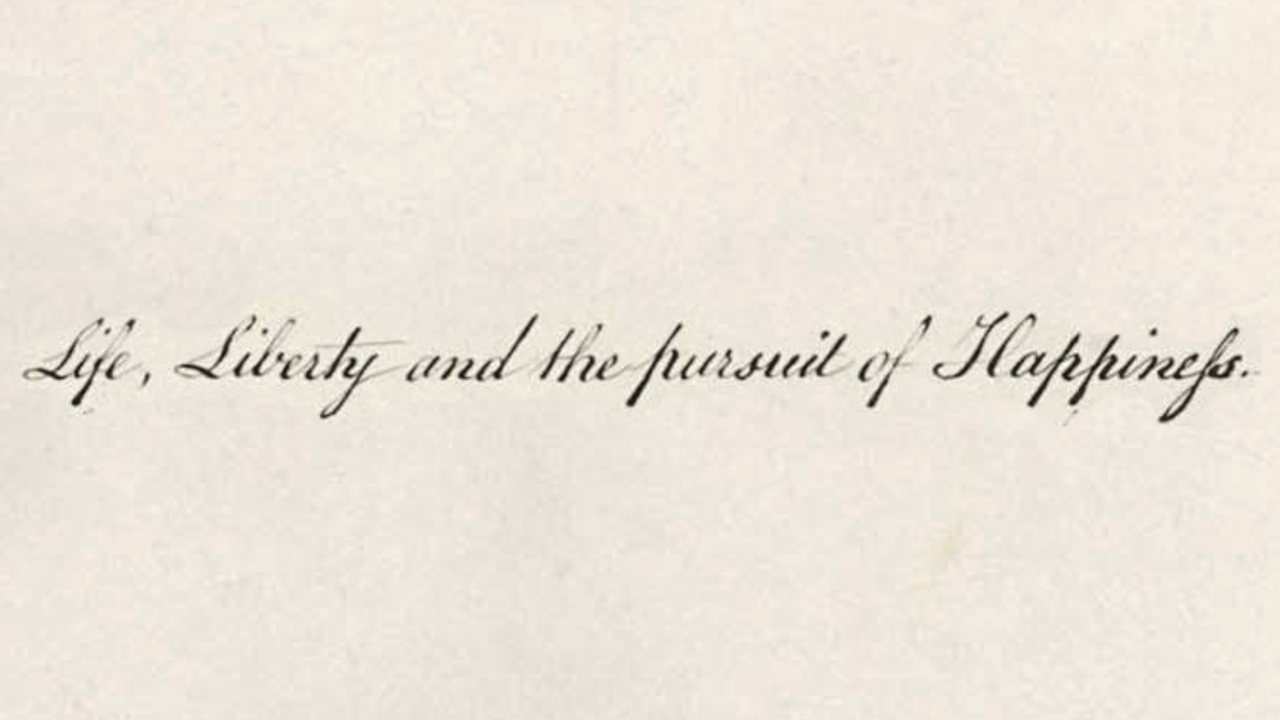
True Freedom - Pastor Tom Loghry
Jul 14Tap to summarizeTrue Freedom - Pastor Tom Loghry Rockland Community Church Download True freedom is found in Christ as we have been liberated from the power of sin, being born again by the Spirit..Listen on Spotify Listen/Download on iTunesWatch on YouTubeTranscript: To the Jews who had, to the Jews who had believed him, Jesus said, "If you hold my teachings and you are really disciples, then you will know the truth, and the truth, and the truth will set you free. They answered him, "We are Abraham's descendants and have never been slaves of anyone. How can you say that we shall be set free?" Jesus replied, "Very truly I tell you, everyone who sins is a slave to the sin. Now a slave has no permanent place in the family, but a son belongs to it forever. So if the Son sets you free, then you will be free indeed."Let us pray as we come before God's word.Dear Father, as we come before the scriptures this morning, as we hear again the message of the gospel, that good news which is ours in Jesus Christ, we pray, Father, that you would remind us as we've put faith in Him of the liberty that we've received from sin. And that, Father, if we have not yet put our trust in Christ, that you'd open our eyes to see and our ears to hear the sweet freedom that you offer to all those who would turn to Him.We ask this in the name of Jesus Christ, our Lord. Amen. You may be seated.In celebrating the birth of this nation, we also celebrate those truths which inspired its conception. We celebrate those truths that are articulated in our declaration of principles, where it says, "We hold these truths to be self-evident, that all men are created equal, that they are endowed by their Creator with certain unalienable rights, that among these are life, liberty, and the pursuit of happiness."For the sake of justice, for the sake of our common good, it is right that we uphold these rights of life, liberty, and the pursuit of happiness. This means that we should strive to protect every human life, every innocent human life, even including those who have done wrong things, but who do not deserve to be punished with death by any human authority. That means that we should strive to protect the liberty of every human being in accordance with the liberty that God has given to each one of us, as long as exercising that liberty does not trample the rights of others or injure the common good of society. It means that our government should do nothing which would unreasonably hamper a person from building a life in which they can thrive and flourish. We do not close these doors in America. Our doors are open to life, liberty, and the pursuit of happiness.But while America is a land of opportunity, it is not a land that promises to deliver a complete fulfillment of these goods. Life as we know it is protected. But in the end, we all die. Our political liberty is secure. We are not prevented from choosing to do anything that is within the bounds of justice and liberty, but we are not ensured that we can do everything that we might desire to do. I might aspire to have a career in the NFL, but just because I might desire to be a football player doesn't mean that I will be playing anytime soon in the league. But more importantly, just because I might desire to become a better person, a truly virtuous person who walks in God's ways, and while I'm left at liberty to pursue such a life, I'm not ensured that I will in fact become that sort of person. Rather, again and again, life shows how we are captive to sin. I can pursue happiness in America, but can I actually obtain true and lasting happiness? Something more than a half loaf, can I actually get for myself full and everlasting joy? America is a land of opportunity, but in itself, it cannot give us that kind of happiness.True life, true liberty, true happiness is only found in Christ. And I could spend quite a bit of time this morning fleshing out each one of those goods. But I want to center in on liberty because I do think that true life and true happiness hinge very much on us obtaining true liberty. We're gonna anchor ourselves this morning in John 8:31-36. And in this passage, Jesus is engaging with those people who have believed that He's the Messiah, and yet we see them grappling with embracing the full teaching of Christ. They are eager for a Messiah who can free them from Roman rule. They do not yet perceive how their captivity goes beyond that empire. They have not yet the, grasped the depth of their slavery to sin. So Jesus, in speaking to them, says, once again in verse 31, "To the Jews who had believed Him, Jesus said, 'If you hold to my teaching, you are really my disciples. Then you will know the truth, and the truth will set you free.' They answered Him, 'We are Abraham's descendants and have never been slaves of anyone. How can you say we shall be set free?' Jesus replied, 'Very truly I tell you, everyone who sins is a slave to sin. Now a slave has no permanent place in the family, but a son belongs to it forever. So if the Son sets you free, you will be free indeed.'"Jesus' audience is pretty sharp here, because they pick up on the fact that what Jesus is basically implying in saying that they can be set free is that they are slaves. And the freedom that he is offering to them he says comes when they truly believe in him, when they embrace his teachings. Now, his teachings actually include believing in Jesus. If we were to survey through the Gospel of John, both before and after, we hear Jesus fill out his teaching in various ways, and it all centers on the, his own person. It centers on himself. John 5:24 says, "Very truly I tell you, whoever hears my word and believes him who sent me has eternal life and will not be judged but has crossed over from death to life."In John 6:29, he says, "The work of God is this to believe in the one he has sent." In verse 35 of that chapter, he says, "I am the bread of life. Whoever comes to me will never go hungry, and whoever believes in me will never be thirsty." Then later on in John 14:6, he says, "I am the way and the truth and the life. No one comes to the Father except through me." So what Jesus is offering to them is not so much a philosophy, even while Jesus has many good teachings. What Jesus is really offering them is himself, that he is the one who can save them, that he is, in fact, the savior of the world. And what they're really reckoning here with is, what does that mean?Because at this time, the Jewish people were subjugated by the Roman Empire. And when the Jewish people were looking towards the hope of a Messiah, they were really very often looking towards the hope of one who would bring political liberation. And while certainly Jesus is going to bring political liberation, and Christ is going to return and rule as king on earth, he's a savior in a much deeper sense than politics. Now, this comes to a head because they take exception to this implication that Jesus has made that they are, they are slaves. They say, "We're Abraham's descendants and have never been slaves of anyone. How can you say that we shall be set free?" Now truth be told, they are kind of slaves because, once again, they're subjugated to the Roman Empire, and they might wanna be freed from them, but they wouldn't be willing to accept the status of a slave because they wouldn't want to think of themselves in that way.And we can understand that. This is a, a sort of pride that every human being has possessed. You think it, it's funny, there was a song written in England in 1740 called Rule Britannia, maybe some of you are familiar with it, and one of the lines goes, "Rule Britannia! Britannia, rule the waves; Britons never shall be slaves." So they wrote that song in 1740. Well, if you're singing that song, not gonna be surprised if your British colonists across the sea are gonna say, "Oh, I, I'm not really content with the situation of paying these taxes without representation, and we're not going to be slaves," and so they rebel. So it's just in the human spirit.We don't like to think of ourselves as being a slave. We want to think we're free, that we're independent, that we make our own choices for ourselves. And while we can secure a measure of political liberty, when we examine our lives more closely, we see that in fact we're enslaved in, in many ways. We see this most vividly often in the cases of those that have struggled with drug addiction, substance addiction. You know that you don't want to be dependent on those substances, and yet you're drawn to go back to them again and again. We see this in all kinds of ways, not just drugs, though. We see it in our, how we're given over to lust, how we're given over to greed, how we're given over to our anger, our pride. And even while we maybe are able to deal with one thing, so maybe you deal with your lust and you set that aside, what you'll find is the further along that you go in following Jesus, he uncover...
Transcribe →
We Seek the Better Country - Pastor Tom Loghry
Jul 3Tap to summarizeWe Seek the Better Country - Pastor Tom Loghry Rockland Community Church Download Christians are ultimately citizens of a better, heavenly country promised by God, not any earthly nation—so while we love and serve where we live, our deepest hope and allegiance belong to Christ's coming kingdom..Listen on Spotify Listen/Download on iTunesWatch on YouTubeTranscript: All these people were still living by faith when they died. They did not receive the things promised; they only saw them and welcomed them from a distance, admitting that they were foreigners and strangers on Earth. People who say such things show that they are looking for a country of their own. If they had been thinking of the country they had left, they would have had opportunity to return. Instead, they were longing for a better country-- a heavenly one. Therefore God is not ashamed to be called their God, for He has prepared a city for them.Let us pray as we come before God's Word.Dear Father, as we come before your word this morning, as we hear the testimony of the faith of those that have gone before us, we pray that the Holy Spirit would work within us so that we might share in their faith, so that we may share in their hope, and persevere in the way that they too have persevered.We ask this in the name of Jesus Christ, our Lord. Amen. You may be seated.As most everyone knows, the United States has been playing host for many of the games of the 2026 FIFA World Cup. Playing host has not only brought foreign teams, but also their fans to our shores. So if you've been on social media at all, you know that many of these fans have been struck with awe by the many good things our country has to offer. Air conditioning, free refills, large portion sizes, and yes, also the friendly qualities of the American people, too. Amidst all the negativity that pours forth from our regular news cycle, these anecdotes remind us of how blessed we are to live in a country like the United States. Any time that I've gone overseas, I've always returned with a renewed sense of gratitude for being able to call this place my home.In celebrating the 250th anniversary of this country's founding, we are reminded of our family histories and how we got to be in this country and call ourselves citizens of these United States. In my own case, a man named William Loghry and his wife, Nancy Purdy, emigrated from Northern Ireland to Pennsylvania in the mid-1700s. The family later moved to upstate New York, then Illinois, then South Dakota for several generations, until my grandfather bounced off the West Coast and sunk down his roots here in New England. That story, and the story of all who made their way in this country, is a story of pioneering. It's a story of seeking a better life, of seeking a better country, even long after our ancestors first arrived here.Even if you have lived in one place for generations, there's a certain restlessness in our bones that seeks a better situation. We might call it especially American, but we could also just call it simply human. From one country to another, we all yearn for a better world. Some have believed we can perfect this world, and this belief has inspired some people to lead political revolutions in pursuit of utopia. To their credit, I don't think the American founders envisioned a utopia. They were not naive- they understood our sinful, selfish condition, which led them to desire an entire system of checks and balances. It's not the most efficient system of, of power. Monarchy, the rule of a king, is most efficient. But they set aside that vision of a perfect efficiency because they understood the reality of human brokenness, of corruption, a reality which extends to all earthly kings. They understood that even at our best, we cannot produce utopia. But we could have an improved political arrangement in the meantime.But if we're honest with ourselves, our spirits sink at the thought of resigning ourselves to relative improvement, marginal gains, and temporary successes. That desire for something more abides within us. And so the question returns: Will the satisfaction of our desires come from ourselves or come from beyond ourselves? Both the Bible and our own experience teach us that it's foolish to trust in ourselves because we are, in fact, the problem. It begins with us. Instead, the Bible turns our gaze to God as the one who can save us from ourselves. The words of promise, spoken by the prophet Micah in Micah 4, resonate with us.In that chapter, he talks about how all people are gonna be streaming to the mountain of God, streaming to God's presence. Of how swords are going to be beaten to plowshares, and spears are gonna be turned into pruning hooks, that there's going to be a real peace, a lasting peace. In Micah 4:4, he says, "Everyone will sit under their own vine and under their own fig tree, and no one will make them afraid, for the Lord Almighty has spoken."When we hear those words, there's something that resounds deep within us because we want that peace for ourselves. We want that better country. And we are not the first to desire it. And this takes us to our central passage this morning, Hebrews 11:13-16. Hebrews 11 is the New Testament's iconic passage about faith, in which the writer of Hebrews does a roll call of all the great figures of faith that are set before us in the Old Testament. He takes their example as being instructive for us. Verses 13 through 16 especially draw from the example of Abraham, Sarah, Isaac, and Jacob. I'm gonna read those verses once again for us. Hebrews 11:13-16. "All these people were still living by faith when they died. They did not receive the things promised; they only saw them and welcomed them from a distance, admitting that they were foreigners and strangers on earth. People who say such things show that they are looking for a country of their own. If they had been thinking of the country they had left, they would have had opportunity to return. Instead, they were longing for a better country—a heavenly one. Therefore God is not ashamed to be called their God, for he has prepared a city for them."To grasp the full import of what is being said here in these verses, we have to remember the general story of, of these patriarchs, of Abraham and Sarah, of Isaac and Jacob. We recall that God called Abraham out of his homeland, out of the city of Haran, with the promise that he would inherit a land for himself, that he would become a great nation, that through him the whole world would be blessed. And this is a promise that belonged not only to him, but to his family. It was a promise given to Sarah, and it was given to Isaac and to Jacob, his son and his, and his grandson. But when he was first called, Abraham and Sarah didn't have any children of their own. They were called to set forth in faith, and in time, the promised son, Isaac, was born to them.But still they did not see all that God had promised to them. They were never able to permanently settle into the land. Their family was not as countless as the stars or the sand on the seashore. They still seemed quite small in the world. And ultimately, Jacob finds himself outside the land of Canaan, outside the land of promise, in the land of Egypt, and that's where he, he dies. And so God had given these, them these promises, and yet they had not been able to see them come to pass. But they were content to persevere. They were content to continue traveling onward as nomads in this world because they were looking forward to the fulfillment of God's promise, even if they would not see it in their immediate lifetime.And in fact, what the writer of Hebrews here is saying is that they were actually longing for a better country than even that which their immediate descendants would eventually inherit in the land of Canaan. Verse 16 says, "Instead, they were longing for a better country, a heavenly one. Therefore, God is not ashamed to be called their God, for he has prepared a city for them." What they were desiring was nothing that they could construct themselves. It was nothing that they nor their descendants could bring about by the dint of their own efforts, by their own strength. It was something that could only be God-given, a heavenly country, a city prepared by God Himself. And we see Jesus speak in a similar manner in John 14, verses two through three, of this promised city of the, which is to come. Very often when we think about what is the hope of the Christian, we think in terms of us dying and going to heaven. But this is not the vision that is set forth in scripture. Rather, it is a vision of this city which is to come. And we see Jesus actually speaking along these lines, even though we, we so often easily miss it in this passage.In John 14, verses two through three, he says, "My Father's house has many rooms. If that were not so, would I have told you, you that...
Transcribe →
The Gospel for All People- Pastor Tom Loghry
Jun 27Tap to summarizeThe Gospel for All People - Pastor Tom Loghry Rockland Community Church Download Paul's story ends unfinished because the gospel mission he carried—God bringing salvation to all nations, Jew and Gentile alike—didn't end with him. It continues today through us, as the Holy Spirit empowers Christ's people to boldly carry the good news of forgiveness and new life to the whole world until Christ returns..Listen on Spotify Listen/Download on iTunesWatch on YouTubeTranscript: The story of America is bigger than any one single person. Of course, it, it's very difficult for us to imagine us getting very far if our president, our first president, wasn't George Washington-- he was a great man of virtue and leadership. But we know that there was others besides him. We think of Thomas Jefferson, Benjamin Franklin, John Adams, and all sorts of other political and military leaders who were the midwives of this nation. But however brilliant and courageous they might be, it could not have gotten very far without the common men and women that are too often forgotten.Our nation is one that has been built by masses of people whose stories go untold. In those early days, people from so many different Western European nations, African men, women, and children brought to these shores against their will, and Native Americans who wrestled to find their place in an increasingly crowded land. All of them Americans-- Americans who built this country and made it what it is today. And with each decade, with each generation, more and more are added from every corner of the globe, building a nation bound not by blood but by creed-- bound by the belief that all men are created equal, that they are endowed by their creator with certain unalienable rights, that among these are life, liberty, and the pursuit of happiness.I've said it before and I'll say it again, a nation like ours is a product, is an effect of the Christian faith. There is no America if there is no Jesus Christ. This country is a mere shadow of a better vision yet. In Jesus, we are given a vision of a kingdom filled with people of every nation, tribe, and tongue. Many peoples who are made one in Jesus Christ, a body formed not merely by a common creed, but by his shed blood-- a holy nation set apart for God, rebels redeemed to become the sons and daughters of God. The story of God's saving work, the story of redemption begins with Israel, it begins with the Jewish people, but it goes further yet. All of Paul's ministry, as we've been shown it here in the Book of Acts, has been attesting to this reality and now, in closing, Luke reminds us of God's worldwide saving purpose by giving us an account of Paul's encounter with the Jewish leaders in Rome. Paul is under house arrest, he's awaiting trial before the emperor, but Luke believes this is the final episode that we need to hear before he closes his account.So we pick up in Acts 28 and verse 17. Luke tells us, "Three days later he called together the local Jewish leaders. When they had assembled, Paul said to them: 'My brothers, although I have done nothing against our people or against the customs of our ancestors, I was arrested in Jerusalem and handed over to the Romans. They examined me and wanted to release me, because I was not guilty of any crime deserving death. The Jews objected, so I was compelled to make an appeal to Caesar. I certainly did not intend to bring any charge against my own people. For this reason I have asked to see you and talk with you. It is because of the hope of Israel that I am bound with these chains.'They replied, 'We have not received any letters from Judea concerning you, and none of our people who have come from there have reported, has reported or said anything bad about you. But we want to hear what your views are, for we know that people everywhere are talking against this sect.'"So in verses 17 through 20, Paul explains to these Jewish leaders that he's innocent, that they haven't been able to make any charges stick against him. But because of continued objections by the Jewish leaders in Israel, he was compelled to appeal to Caesar. Now, his purpose in appealing to Caesar wasn't to bring counter-charges, wasn't in order to make trouble for his own people, 'cause Paul is a Jew himself. It was only so that he could clear his name. It was only so that he would not fall into their hands, 'cause they were designing to actually kill him. Now, in coming together with these Jewish leaders, his purpose is that he wants to kind of clear the air with them. He wants them to understand the reason why he's actually been imprisoned is because of his faith, which is in continuity with the Jewish faith.Jesus is actually the fulfillment of, of Jewish hope. He says, "Because of the hope of the, it's because of the hope of Israel that I am bound with this chain." Now, when we look to the Old Testament, we could look to a variety of passages, but we see the indication of this being the hope of Israel. In Isaiah 26:19, it is foretold, "But your dead will live, Lord; their bodies will rise." And it says, "The earth will give birth to her dead." And then we see in Isaiah 53:11 how, of the suffering servant, it says that he's gonna suffer, he is gonna die, but it says after he has suffered, he will see the light of life. All this points to Jesus, the one who suffered and died on the cross, and yet saw the light of life, revealing the hope of resurrection to the world.Now in response, the Jewish leaders say, "Well, we haven't actually heard anything bad about you. We haven't gotten any letters from Judea saying watch out for this guy, nor have any of the people that have come back from Judea to Rome had anything bad to say against you." That being said, they have heard about this sect, this group of Christians, and they know that there's been some, some rumors that they're a bad, they're a bad sort. And so they, they wanna hear more about what Paul has to say for himself and for the Christians. They're open-minded enough to hear what Paul has to say. And so Luke tells us in verse 23, "They arranged to meet Paul on a certain day, and came in even larger numbers to the place where he was staying. He witnessed to them from morning till evening, explaining about the Kingdom of God, and from the Law of Moses and from the prophets he tried to persuade them about Jesus. Some were convinced by what he said, but others would not believe.They disagreed among themselves and began to leave after Paul had made this final statement: 'The Holy Spirit spoke the truth to your ancestors when he said through Isaiah the prophet: "Go to this people and say, you will be ever hearing but never understanding; you will be ever seeing but never perceiving." For this people's heart has become calloused; they hardly hear with their ears, and they have closed their eyes. Otherwise, they might see with their eyes, hear with their ears, understand with their hearts and turn, and I would heal them.' Therefore I want you to know that God's salvation has been sent to the Gentiles, and they will listen!"And then in verse 29, you'll find a note in some of your Bibles that some manuscripts include here, "After he had said this, the Jews left, arguing vigorously among themselves." Newer translations leave out this verse because it's not, it, it doesn't appear in the earliest manuscripts. And it says, "For two whole years Paul stayed there in his own rented house and welcomed all who came to see him. He proclaimed the Kingdom of God and taught about the Lord Jesus Christ-- with all boldness and without hindrance!"So going back to verses 23 and 24, the Jewish leaders and more of the Jews come and meet with Paul on a certain day in his house where he's staying, and Paul spends the entire day, morning to evening, explaining the Kingdom of God to them, explaining how Jesus is the Messiah, how he fulfills the promises that have been revealed in the law and the prophets. Imagine spending a whole day going through the scriptures with the Apostle Paul.He's very desirous that these leaders, that his people would embrace their Messiah. Now we can imagine that, in reasoning with them, that he may have used some of the passages I, I referred to earlier, Isaiah 53, Isaiah 26. But I wanted to walk you through a couple passages that perhaps he would've used so that you're able to kind of understand the case that is set before us based on the Old Testament testimony that Jesus is in fact the promised Messiah, that he is in fact the Son of God sent to us.And so, many of you got handouts when you came in, but if you didn't get one, you might wanna write down these, these passages so you can kinda have a little stepping stone here. There's many more stones yet that point to Christ, but these are some helpful stepping stones that demonstrate the truth of who Christ is.So we look at, for instance, let's start in, ...
Transcribe →Victory Amid Hardship - Pastor Tom Loghry
Jun 19Tap to summarizeVictory Amid Hardship - Pastor Tom Loghry Rockland Community Church Download God continues to work in the midst of Paul’s imprisonment and hardship, revealing the power of Christ though his ministry to the people of Malta and the favor and welcome he receives in Rome. We can expect this same God-given victory in our own hardship..Listen on Spotify Listen/Download on iTunesWatch on YouTubeTranscript: Last Saturday marked the 122nd anniversary of D-Day. On June 6th, 1944, the Allied Forces during World War II performed a successful amphibious assault on the beaches of Normandy, establishing a beachhead which would eventually lead them to Berlin. It was a decisive day in the war, a brilliant victory, and yet the war was not yet won. It would still take nearly a year before the war in Europe would end. Many more battles, many more lives lost. Setbacks, but also victories, and then the war would come to an end.We see the very same sort of thing in the case of Jesus. There has been a war between heaven and Earth, between the Kingdom of God and the kingdom of Satan. It's a war in which we as humans have willingly pledged our fealty to the devil, joining him in his rebellion, deciding that we would rather be our own gods rather than submitting to our Creator and living in harmony with him. And as a consequence of our rebellion, we have been given over to our brokenness. We suffer the consequences of the evil that we have embraced. We have been separated from the giver of life, and so we die.But God has not given up on us. God has never intended to allow evil to win the day. And so God sent His Son into the world to destroy the works of the devil, to redeem us from our sin. Those three days, those three days in which Christ died, lay in the grave, and then rose from the dead, mark an occasion of victory even greater than that of D-Day. It is the turning point of our world. Jesus Christ has changed the course of human history. It's a reality that no one can deny, even those who would deny that He is in fact the Son of God, the Messiah of the world. Christ has changed things without a doubt.However, while absolutely decisive, decisive, this does not mean that there are no more battles. It does not mean that the war has come to an end. We still face hardships, we still suffer setbacks, but we do also see victories as we await the appearance of the final victory, which will be revealed at Christ's return. In today's passage, here in Acts 27 through, and, and into Acts 28, we are reminded of the victories that come in the midst of hardship as we read about the hardships that Paul himself suffered. These victories come not by our strength, but by the power of Christ, who is with us. We find in Paul a picture of the Christian life as it is lived in the present age.Now, if you were with us last week, you'll recall that Paul is being transferred to Rome from Caesarea, which was in Israel, and that he was being transferred to face trial before Caesar. And so he is on a voyage as one who is a prisoner. In the midst of their journey, the ship was caught up in a nor'easter. The ship was being torn apart by hurricane force winds. And yet, in the midst of the storm, Paul was assured by God that he and all those on the boat would survive because God's plan was that Paul would stand before Caesar. And so now as Paul has led his fellow travelers to share in this basic faith in God's deliverance, so now we see the fulfillment of God's word.Their time on the ship has come to an end. And so picking up in verse 39 of Acts 27, we read, "When daylight came, they did not recognize the land, but they saw a bay with a sandy beach, where they decided to run the ship aground if they could. Cutting loose the anchors, they left them in the sea and at the same time untied the ropes that held the rudders. Then they hoisted the foresail to the wind and made for the beach. But the ship struck a sandbar and ran aground. The bow stuck fast and would not move, and the stern was broken to pieces by the pounding of the surf.The soldiers planned to kill the prisoners to prevent any of them from swimming away and escaping. But the centurion wanted to spare Paul's life and kept them from carrying out their plan. He ordered those who could swim to jump overboard first and get to land. The rest were to get there on planks or on other pieces of the ship. In this way everyone reached land safely."So they finally have sight of land, certainly a sight that must have brought them great relief, hope that they might not drown, an assurance that they could, in fact, live to see another day. And so the ship turns its direction towards this island. It, they, they make way by putting down the sail, the foresail, which would have been this sail right up here in the front that we see, and they basically let loose, they get rid of anchors. They're just going all in. They just wanna bring the beach all, the, the boat all the way to the shore, all the way to the beach. Now, just to orient you to where they are, they're going to the island of Malta, and, in fact, there's a tradition as to where they actually landed. It's called St. Paul's Bay, which is here. Now, as they're going along towards the beach, however, they strike a sandbar. They get stuck, and the waves start crashing against the ship and just starts breaking it apart, and so it's time to abandon ship. Now, that sounds all right, except the soldiers want to kill the prisoners.Now, we might ask, "Well, why do they want to kill the prisoners?" The reason is, is because they are responsible for the prisoners, and they're concerned, "Well, if these prisoners escaped, it's gonna be our head. We're gonna be held responsible." And so just as it seems that Paul is escaping from death, again, the threat of being killed and not making it to Rome leaps up before him. But God is going to be good to his promise, because the centurion, Julius, orders his soldiers not to kill the prisoners. Instead, everyone is to make their way to shore. And so we see by God's providence how the life of Paul and all those on the ship is preserved just as he had promised.Turning to chapter 28, Luke continues the story now on the dry ground of Malta. "Once on, safely on shore, we found out that the island was called Malta. The islanders showed us unusual kindness. They built a fire and welcomed us all because it was raining and cold. Paul gathered a pile of brushwood and, as he put it on the fire, a viper, driven out by the heat, fastened itself on his hand. When the islanders saw the snake hanging from his hand, they said to each other, 'This man must be a murderer; for though he escaped from the sea, the goddess Justice has not allowed him to live.'But Paul shook the snake off into the fire and suffered no ill effects. The people expected him to swell up or suddenly fall dead; but after waiting a long time and seeing nothing unusual happen to him, they changed their minds and said he was a god."So they're on the island of Malta, and the people here show incredible kindness to these people that are shipwrecked. Now, people who lived on islands in the Mediterranean at this time weren't necessarily considered to be the most cultured people. They would have maybe been considered as sort of barbarians. And yet the virtue that they display here is profound, as being the sort that anyone of high Greek virtue would display in these circumstances. Once again, we see God's mercies at, at play here for the sake of Paul and all those who are with him.They build a fire for them. It's a kind of miserable scene. It's raining. It's cold. Remember, they had been in a storm, so this is why they're crashing on this island. And as they're trying to build this fire, Paul decides to give a hand. He's not above trying to do some work to try to help out, and so he's gathering brushwood, he's, he's throwing it on the fire. And while he's doing that, lo and behold, a viper leaps out of the fire, because it's getting so hot, and bites him.Now, you gotta look at this and you just think, oh, this is just Paul's luck. He just goes from one thing to the next, escapes from the sea, now he gets bit by a snake. And, and it seems once again, oh, maybe Paul's gonna die. Maybe he's not going to make it to Rome. And in fact, the people of Malta assume that this must be a sign of God's curse against Paul. They know that he's a prisoner, and so when they see the snake bite him, they, they figure, "Well, this guy must be a really bad guy that he came out all this way, he escapes from the ocean, and yet he's gonna get bit by a poisonous snake here." And so they say the goddess Justice has not allowed him to live.Now, Justice was actually personified in a god, an, an, as a goddess known as Dike, a daughter of Zeus. And so quite literally, Justice is not allowing Paul to escape in the eyes of these citizens of Malta. Now, ...
Transcribe →Cut the Lifeboat - Pastor Tom Loghry
Jun 12Tap to summarizeAwaiting True Justice - Pastor Tom Loghry Rockland Community Church Download Paul’s journey to Rome lands in turbulent seas, which lead the crew of his ship to toss all equipment and goods overboard. They trusted his word that life would be preserved; will we hold fast, trusting God at his word?.Listen on Spotify Listen/Download on iTunesWatch on YouTubeTranscript: When neither sun nor stars appeared for many days and the storm continued raging, we finally gave up all hope of being saved. After they had gone a long time without food, Paul stood up before them and said: "Men, you should have taken my advice not to sail from Crete; then you would, then you would have spared yourselves this damage and loss. But now I urge you to keep up your courage, because not one of you will be lost; only the ship will be destroyed. Last night, an angel of the God to whom I belong and whom I, I serve stood beside me and said, 'Do not be afraid, Paul. You must stand trial before Caesar; and God has graciously given you the lives of all who sail with you.' So keep up your courage, men, for I have faith in God that it will happen just as he told me. Nevertheless, we must run aground on some island." Acts 27:20-26.Let us pray as we come before God's word. Dear Father, we pray that as we hear the testimony of Paul's journey to Rome across the sea, that you would minister to us by his example.That by the work of the Holy Spirit, you would create in us the same sort of faith that we see on display in him. We ask this in the name of Jesus Christ, our Lord. Amen. You may be seated.With temperatures rising, we are entering into the season of amusement parks. Most of us have been to one at some time or another in our life, and some of us are bigger fans of them than, than others. I have to say for myself that I'm not really the biggest fan of riding on roller coasters, though I do enjoy some water rides. Perhaps some of you enjoy floating on the lazy river, that tranquil ride on a tube that just coasts along a man-made waterway at a leisurely pace. The water is shallow and usually warm, and apart from possibly some sprays of water, there's nothing that would disturb your peace too greatly.Other rides, however, have us on the edge of our seats, thrilling us with seeming danger. Perhaps some of you have taken a ride on the swinging pirate ship, a ride like the one pictured behind me. My wife hates this ride. I've always liked the concept of the ride, I like the idea of getting on a ship, and it's kind of like a pirate, you know, being in the middle of a storm. But it can be a stomach-turning experience. When the ride is swinging at its greatest height, you might be attempted to abandon ship, to get off the thing. But as with any of these thrilling rides, that would be the most dangerous thing that you could do. Because while the ride might scare you more than you could have anticipated, in the moment, the safest thing that you can do is to be still, to hold fast. Because you know that those who have designed the ride have ensured that it's safe enough to welcome you and all others to ride on it. The best thing that you can do is to take them at their word, that it's gonna be all right. The worst thing that you could do would be to try to take matters into your own hands.Now, outside of the amusement park, we of course face dangers that have not been contrived by human design to merely offer you a thrilling ride. We encounter real risk, the greatest risk of all being death. We encounter dangers that are beyond our control. And this raises the question of what will we do in such circumstances? It raises the question of who or what we will trust, when in the midst of such calamity, we hear the Word of God telling us to be still and to trust in Him. The Apostle Paul and his companions find themselves in just this kind of situation as he is being transported from Caesarea to Rome to stand trial before Caesar. And we're going to pick up the narrative now here in Acts 27, and it's worth noting that Luke, the author of Acts, includes himself in this journey as he refers to Paul and his party as we. So picking up in verse one of chapter 27, we read, "When it was decided that we would sail for Italy, Paul and some other prisoners were handed over to a centurion named Julius, who belonged to the Imperial Regiment. We boarded a ship from Adramyttium about to sail for ports along the coast of the province of Asia, and we put out to sea. Aristarchus, a Macedonian from Thessalonica, was with us. The next day we landed at Sidon; and Julius, in kindness to Paul, allowed him to go to his friends so that they might provide for his needs.From there, we put out to sea again and passed the lee of Cyprus because the winds were against us. When we had sailed across the open sea off the coast of Cilicia and Pamphylia, we landed at Myra in Lycia. There the centurion found an Alexandrian ship sailing for Italy and put us on board. We made slow headway for many days and had difficulty arriving off Cnidus. When the wind did not allow us to hold our course, we sailed to the lee of Crete, opposite Salmone. We moved along the coast with difficulty and came to a place called Fair Havens near the town of Lasea."So Paul is sailing to Italy. He's on a trip to Italy as a prisoner because he appealed to Caesar concerning his case. And you'll recall that the reason why he's imprisoned in the first place is because the Jews have made accusations against Paul that he's causing trouble. He's a troublemaker. He's part of this, this Nazarene sect. Of course, the Roman authorities, as they've assessed Paul, have said this is just a religious matter among the Jews, 'cause Paul's a Jew himself, was brought up as a Pharisee. But because the Roman governors were trying to pay favors to the Jewish authorities, Paul was compelled to appeal to Caesar. And in fact, this was God's purpose all along, that he would be taken to Italy to stand before Caesar himself The journey, though, to Caesar is no small feat. It includes much danger, and it's danger that becomes realized as Paul proceeds.He's entrusted into the care of Julius, who is a, a centurion, says that he's part of the Imperial Regiment. Perhaps he was a member of the Praetorian Guard, so very upper echelon military officer. And as they proceed, Paul, and apparently along with Luke, another of their companions joins them named Aristarchus. You'll recall that he appeared in Ephesus. It seems that this is the same Aristarchus, because when there was controversy there with Paul, Aristarchus was one of the ones that got dragged into the theater there in Ephesus before a very enraged mob. And so you have Paul, some of his companions, you've got other prisoners, soldiers, and they're gaining passage to Italy on apparently merchant ships. They're catching a ride. While he's in Sidon, Julius allows Paul to see some of his friends. And so we can see that Julius seemed to have some affection towards Paul, perhaps. He's kind enough to let him see his friends so that they can help take care of his needs.Now, if you're trying to envision what this journey would have looked like, he's starting from Caesarea down here in Israel. He jumps up to Sidon, and they're working their way up around here because they're trying to get to Italy, to Rome. Now, when they're in Myra, they get on a new ship, and this is a merchant ship that is going from Alexandria to Italy, and it's carrying grain. And this makes a whole lot of sense because Egypt was basically the breadbasket of the empire.And if you're wondering maybe what this ship would have looked like, it more than likely was a ship known as the Corbida. It would range in its size, but these types of ships could carry up to 400 passengers and could carry up to 1300 tons of, of cargo. So, kind of the mules of the empire bringing goods back and forth.Now they experienced some slow headway as, as they went along, and these ships in particular could be vulnerable to winds that were not going in their favor because there's just those kind of perpendicular sails, and so it was very difficult to sail into the wind. And so if you had winds that were going over 17 miles an hour, you were gonna have a tough time having things going your way.As they're coming nearby to Fair Havens, they begin to reckon that things are going against them. They need to make a decision as to whether they're going to cease their journey or they're going to continue forward. So we continue on in verse nine. It says, "Much time had been lost, and sailing had already become dangerous because by now it was after the Day of Atonement. So Paul warned them, 'Men, I can see that our voyage is going to be disastrous and bring great loss to ship and cargo, and to our own lives also.' But the centurion, instead of listening to what Paul said, followed the advice of the pilot and of the owner of the ship. Since the harbo...
Transcribe →The True and Reasonable Gospel - Pastor Tom Loghry
Jun 6Tap to summarizeThe True and Reasonable Gospel - Pastor Tom Loghry Rockland Community Church Download Under trial, Paul accounts for his life and message, revealing the Gospel can stand before any authority..Listen on Spotify Listen/Download on iTunesWatch on YouTubeTranscript: I want to start our time in God's word this morning with a question. And it may seem like a strange question or, if you're able to understand it, sometimes I don't always phrase questions in the most clear way, but if you do understand it, a question perhaps with an obvious answer. But I will ask it and explain what I'm getting at. The question is this: Can the gospel message hold its own in all places? Can the gospel message hold its own in all places?In other words, can we expect the gospel message to hold up in all situations, or are there situations where we shouldn't bother serious people with its message? Now, of course, our instinct in this immediate moment might be, "Of course, we take the gospel to all people and places." But I suspect that we actually tend to live our lives in line with the expectations of our society.In polite society, we distinguish between the public sphere and the private sphere. When we think about presenting the gospel, we usually envision doing so in churches or in homes or across tables in coffee shops. We don't usually imagine venturing to articulate the gospel in the halls of government, in civic spaces, perhaps also in academic spaces. "That's religion," they say in response, as a sort of final sentence-- indoctrinating everyone in our society under the notion that religious truth cannot be taken seriously. The serious stuff is scientific papers, sociological studies, legislation, and other such sources of truth. Yes, those sources can contain truth, but they are not the final word. And while living in a diverse society like ours does compel us to think how we will live well together in trying to find common ground, I do think that generations of American Christians have too quickly complied with the notion that the gospel must be fenced off from serious, adult conversation. That the gospel might be a personal truth, but not a public truth that can stand in court.Today's passage reminds us that the gospel is without limits. It is not embarrassed in front of politicians. If you were with us last week, you'll recall that Paul has been imprisoned in Caesarea In Herod's palace, now occupied by the Roman authorities. He's been a prisoner there now for two years under Governor Felix, who knew Paul was innocent of any wrongdoing but was hoping to gain a bribe from him for his release. Two years, in which Paul lived out the words he would later write the Philippians from Rome. Last week, I incorrectly implied that he had already written to them. Those words in which he says, "For it has been granted to you on behalf of Christ not only to believe in him, but also to suffer for him." Paul's not just talk. He actually lives out his message. This is Paul's own story. But now a new governor has been appointed named Porcius Festus. And we pick up the narrative now in Acts 25.And just to kind of prepare you, we're gonna read a lot of scripture this morning. My commentary on the scripture is not gonna match the amount of scripture we read because it's a lot of narrative, it doesn't need to be all explained, and so you should pay close attention as we read the word, as you always should. Picking up in Acts 25. Three days after arriving in the province, Festus went up from Caesarea to Jerusalem, where the chief priests and the Jewish leaders appeared before him and presented the charges against Paul. They requested Festus, as a favor to them, to have Paul transferred to Jerusalem, for they were preparing an ambush to kill him along the way. Festus answered, Paul is being held at Caesarea, and I myself am going there soon. Let some of your leaders come with me, and if the man has done anything wrong, they can press charges against him there.After spending eight or ten days with them, Festus went down to Caesarea. The next day he convened the court and ordered that Paul be brought before him. When Paul came in, the Jews who had come down from Jerusalem stood around him. They brought many serious charges against him, but they could not prove them. Then Paul made his defense. I have done nothing wrong against the Jewish law or against the temple or against Caesar.Festus, wishing to do the Jews a favor, said to Paul, Are you willing to go up to Jerusalem and stand trial before me there on these charges? Paul answered, I am now standing before Caesar's court, where I ought to be tried. I have not done any wrong to the Jews, as you yourself know very well. If, however, I am guilty of doing anything deserving death, I do not refuse to die. But if the charges brought against me by these Jews are not true, no one has the right to hand me over to them. I appeal to Caesar. After Festus had conferred with his counsel, he declared, You have appealed to Caesar. To Caesar you will go.So we have this new figure entering into the scene, this governor named Porcius Festus. He would've served around the year 59 or 60 AD, so that's kind of where we are in the timeline here. And Festus, apparently early on when he had become governor, went up to Jerusalem, and there, even two years later, the high priests, these religious leaders, were still gunning for Paul. They wanted to take him down. They wanted him to be killed. It wasn't enough that he was out of the way. He, they wanted him dead. And they weren't necessarily trusting that they would get the ruling they wanted from Festus, and so they had conspired that, well, maybe if we can just get Paul on his way here, we can kill him along the way.You'll recall this is how Paul ended up in Caesarea in the first place, because there was a plot to murder him, and at that time, Claudius Lysias sent him to Caesarea so that he might be safe, kept safe, because Paul is a Roman citizen. He is due a just trial. And so Festus tells them, "No, we're not doing that. But if you want to come to Caesarea, we can, I will consider your case," because he's a new governor. He's not aware of all of the, the details here. And so they return to Caesarea. I shared some pictures last week of what that probably looked like, the man-made port they had there, and then also that's Herod's palace down there. And so that's where Festus would've held court.Now, when the Jews arrive there, who are bringing these charges against Paul, they surround him and make all sorts of accusations. But once again, they're not able to prove anything against him. It's the same old story. And as a new governor, Festus is interested in trying to be on good terms with the Jewish people, and so he thinks, "Well, maybe I can send him back to them in Jerusalem." But Paul challenges on that because of his Roman citizenship. He reasons with him, you know, "Isn't this good enough? You're basically the governor. You, you're the representative of Caesar's court, and I haven't done anything wrong." Now, Paul is quite bold here. He, I mean, this, this man holds his life in his hands. He says, "If I've done anything wrong, kill me," basically. But he's so confident in his innocence, in the case that he's made, that he persists in saying, "No, I'm not going there." And instead what he does is he appeals to Caesar.Now, the appeal procedure here would've meant that Paul is literally going to be sent to Rome, in which he will appear before the emperor Nero, and that he would decide his fate. And so Festus agrees. He says, "Okay, you've appealed to Caesar. To Caesar you will go."But that's not where the story ends. Paul is going to have more to say to Festus and to also two other authorities which now enter the scene. Continuing on in verse 13, we read, "A few days later King Agrippa and Bernice arrived at Caesarea to pay their respects to Festus. Since they were spending many days there, Festus discussed Paul's case with the king. He said, 'There is a man here whom Felix left as a prisoner. When I went to Jerusalem, the chief priests and the elders of the Jews brought charges against him and asked that he be condemned. I told them that it is not the Roman custom to hand over anyone before they have faced their accusers and have had an opportunity to defend themselves against the charges.When they came here with me, I did not delay the case, but convened the court the next day and ordered the man to be brought in. When his accusers got up to speak, they did not charge him with any of the crimes I had expected. Instead, they had some point of dispute with him about their own religion and about a dead man named Jesus whom Paul claimed was alive.I was at a loss how to investigate such matters, so I asked if he'd be willing to go to Jerusalem and stand trial there on these charges. But when Paul made his app...
Transcribe →