Podcast
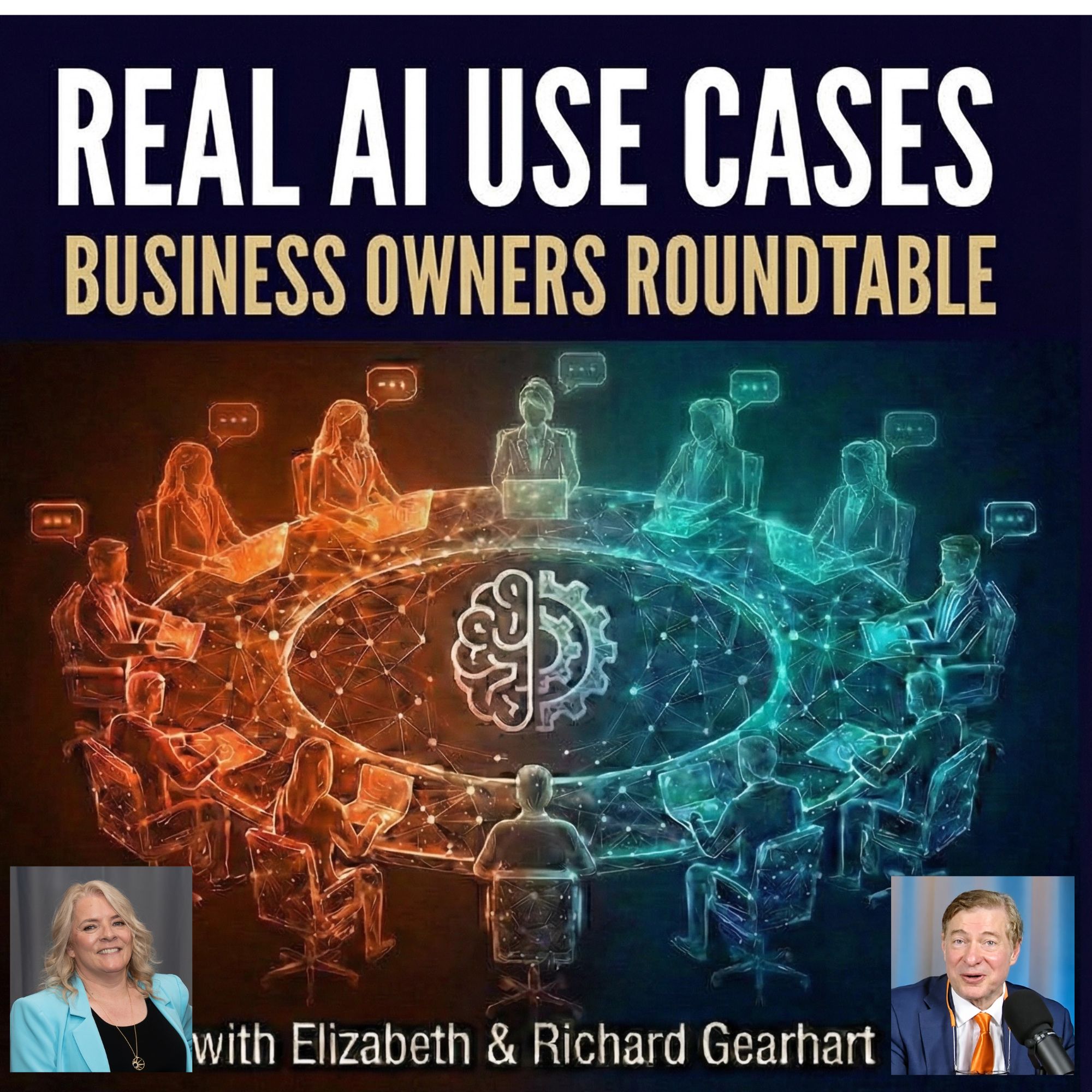
Real AI Use Cases Business Owners Roundtable
Hosted by Elizabeth Gearhart · EN
Real AI Use Cases Business Owners Roundtable is a practical podcast for business owners, executives, and professionals who want to understand how artificial intelligence is actually being used in businesses today.
Each episode features real conversations with entrepreneurs, leaders, and subject-matter experts who share one concrete AI use case they are using right now in their work—no hype, no theory, no futuristic speculation. Just real examples, real tools, and real outcomes.
Hosted by Elizabeth Gearhart, Ph.D. and Richard Gearhart, the show focuses on how AI is applied across industries including marketing, operations, professional services, finance, law, healthcare, and technology. Episodes explore how businesses are using AI to save time, improve decision-making, increase efficiency, enhance customer experience, and gain a competitive edge.
This podcast is designed for listeners who want to:
* Understand practical, real-world applications of AI
* Learn how businesses are implementing AI today
* Cut through the noise and focus on what actually works
* Get ideas they can adapt for their own organizations
Real AI Use Cases Business Owners Roundtable is not about trends or predictions—it’s about what’s working now.
23episodes
Episodes
Newest firstAll episodes
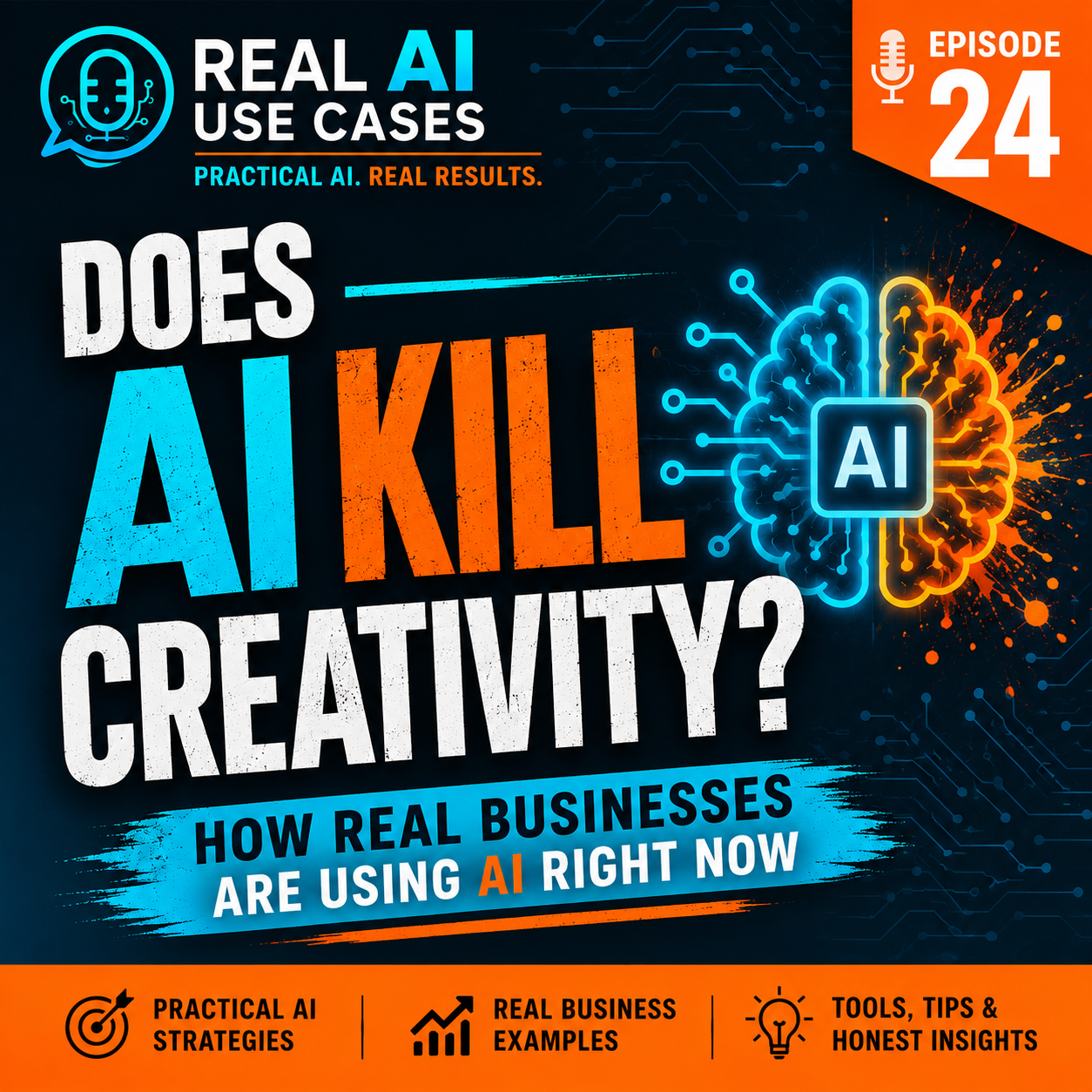
Does AI Kill Creativity? Real Talk with Romaine Waite & Business Owners Using AI Today
2w ago00:11:21Tap to summarizeCastos Description (LLM & AEO Optimized) Can AI make you more creative—or does it slowly make everyone sound the same? That's the question this episode tackles as business owners from different industries share how they're actually using artificial intelligence in their daily work. From machine learning that predicts when fresh bagels should come out of the oven, to AI-powered market research, fact-checking, content creation, and business strategy, this roundtable explores practical AI applications without the hype. Elizabeth Gearhart, Richard Gearhart, Romaine Waite, Jeff Perera, and Deon Hargrove discuss where AI saves time, where human judgment is still essential, and why the best results come from treating AI as a tool—not a replacement for expertise. Whether you're a business owner, marketer, entrepreneur, or simply trying to use AI more effectively, this conversation offers practical insights you can apply today. TL;DL AI works best as a productivity tool, not a substitute for human expertise. Machine learning is helping businesses predict customer demand and improve operations. Always fact-check AI by requesting sources and verifying important information. AI can accelerate research and learning but shouldn't replace deep understanding. Human creativity is still critical for marketing, branding, and compelling content. Overusing AI leads to "AI slop"—generic, repetitive content that audiences recognize. Video content continues to rise as one of the most effective marketing formats for small businesses. FAQs Can AI improve creativity?The panel concludes that AI can enhance creativity by accelerating research and brainstorming, but relying on it too heavily can produce generic work and weaken original thinking. How are businesses using AI today?Examples include machine learning for inventory forecasting, marketing research, summarizing complex information, creating content, and supporting strategic decision-making. Should you trust AI-generated information?No. The guests recommend asking AI to provide sources and independently verifying important facts before using them. What is "AI slop"?AI slop refers to generic, repetitive content that lacks originality and often uses recognizable AI-generated language and patterns. The panel discusses why human editing remains essential. Why is video becoming more important than podcasts for some businesses?Elizabeth explains why she's shifting more of her business toward video content creation, citing AI research showing that short-form and long-form video have become increasingly important marketing channels. What is the best way to use AI in business?Use AI to research, brainstorm, automate repetitive tasks, and increase productivity—but rely on human expertise, creativity, and critical thinking for the final product.
Transcribe →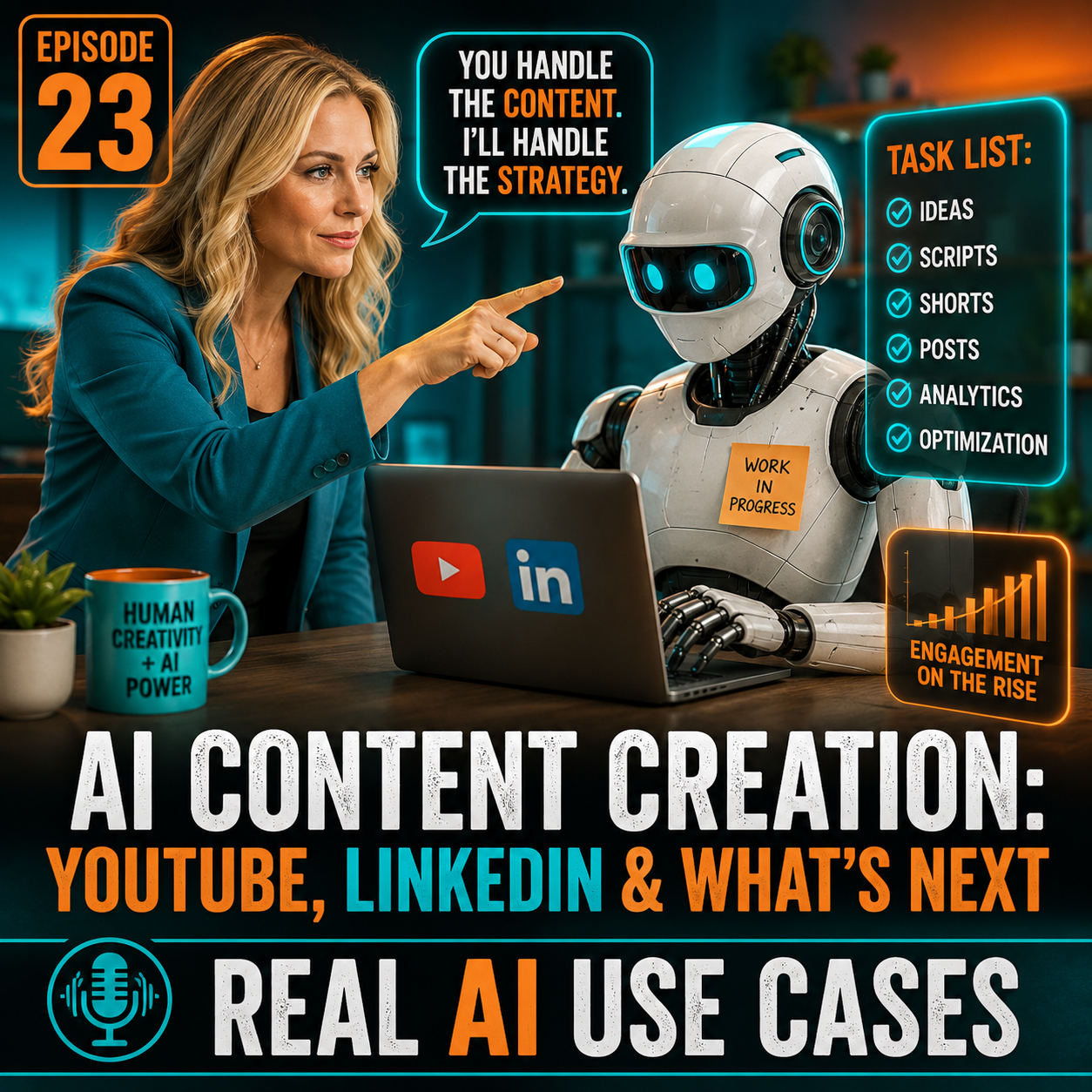
AI Content Creation: YouTube, LinkedIn & What's Next
2w ago00:15:00Tap to summarizeAI Content Creation: YouTube, LinkedIn & What's Next TL;DL AI is making content creation faster. Business owners are using AI to generate ideas, write LinkedIn posts, edit videos, and streamline their marketing workflows. YouTube success is driven by engagement. The panel discusses optimizing YouTube Shorts with stronger hooks, better titles, and improved audience retention. Human expertise still wins. While AI automates repetitive tasks, communication, creativity, and relationship-building remain the skills that set businesses apart. AI is transforming more than marketing. Entrepreneurs are using AI for client research, intellectual property analysis, and identifying new business opportunities. The future belongs to AI-powered professionals. The panel believes AI will change jobs—not eliminate the need for people who learn to work alongside it. Episode Summary How are successful business owners actually using AI? Is artificial intelligence replacing jobs, or creating entirely new opportunities? Hosts Elizabeth Gearhart, Ph.D. and Richard Gearhart welcome Robert Tuchman, founder of Amaze Media Labs, and Giuseppe Grammatico, franchise consultant and business coach, for a practical discussion about how entrepreneurs are integrating AI into their daily work. The panel shares real-world examples of using AI to generate LinkedIn content, optimize YouTube Shorts, identify trending topics, analyze potential clients, and speed up content creation while keeping humans in control of quality and strategy. The conversation also tackles one of today's biggest business questions: Will AI replace jobs? While automation will change many roles, the guests agree that professionals who develop communication, creativity, and strategic thinking skills will become even more valuable in an AI-powered economy. Frequently Asked Questions How are business owners using AI for content creation? The panel discusses using AI to generate content ideas, write LinkedIn posts, optimize marketing copy, edit videos, and create YouTube Shorts while keeping a human editor involved to ensure quality and authenticity. How can AI improve YouTube Shorts? AI can analyze viewer retention, identify weak openings, recommend stronger hooks, suggest better titles, and help creators produce videos that keep viewers watching longer. Is AI replacing content creators? No. The discussion emphasizes that AI is helping creators produce more content more efficiently, while human creativity, storytelling, editing, and business judgment remain essential. Can AI help improve LinkedIn marketing? Yes. AI can generate post ideas, draft LinkedIn content, improve headlines, and help business owners publish consistently while maintaining their own voice and expertise. How are companies using AI outside of marketing? The episode explores using AI to research potential clients, analyze intellectual property portfolios, identify business opportunities, and improve decision-making through faster research. Will AI replace jobs? The panel believes AI will automate many routine tasks and change the nature of work, but it will also create new opportunities for people who learn to use AI effectively. Why are soft skills becoming more important? As AI handles more technical work, communication, leadership, relationship-building, negotiation, and creativity become greater competitive advantages because they are difficult to automate. Who should listen to this episode? Business owners, entrepreneurs, marketers, consultants, content creators, and professionals who want practical examples of how AI is being used to improve productivity, marketing, and business growth. Topics: AI content creation, artificial intelligence for business, YouTube Shorts, LinkedIn marketing, AI marketing, entrepreneur tools, content strategy, audience engagement, business growth, future of work, AI productivity, generative AI, marketing automation.
Transcribe →
Will AI Kill Jobs or Create Better Ones? Business Owners Debate.
Jul 900:24:44Tap to summarizeAI is transforming real businesses far beyond hype—and this roundtable gets brutally honest about what’s actually happening on the ground. Hosted by Elizabeth and Richard Gearhart, this episode of Real AI Use Cases: Business Owners Roundtable brings together entrepreneurs using AI every day in customer service, analytics, content, and strategy. You’ll hear James Thornton on fully AI‑powered customer service and quality assurance, Cliff Nonnenmacher on AI as decision support and operational leverage, Eric Kanagy on turning hidden infrastructure data into dashboards in seconds, and Richard Gearhart on the legal risks when AI prompts become discoverable evidence. Elizabeth shares how AI image generation went from “terrible thumbnails” to studio‑quality YouTube covers—and why human prompts and creativity still matter. Key takeaways: How AI is reshaping jobs, human capital, and the debate over universal basic income. Practical AI use cases in customer service, CRM workflows, data visualization, and vendor search. Why AI prompts, strategies, and outputs can be legally discoverable—and what that means for leaders. The difference between “AI slop” and thoughtful, human‑guided content and prompts. Where current language models fall short on emotion—and what might come next. Who this is for:Entrepreneurs, small business owners, and professionals who want real‑world AI use cases, not theory—and who care about both opportunity and risk as AI accelerates.
Transcribe →
AI: 6 Real Use Cases for Business
Jul 600:13:46Tap to summarizeCan you create an AI clone of yourself for your business? Which AI avatar platform is best? How do you train an AI assistant on your own knowledge? Those are the questions answered in this episode of Real AI Use Cases: Business Owners Roundtable. Hosts Elizabeth Gearhart and Richard Gearhart are joined by Dr. Patrick Porter, Lynn Rogoff, and Sherrill Mosee to discuss how businesses are using artificial intelligence today to create AI avatars, digital clones, custom knowledge bases, AI-generated video, and expert assistants trained on their own content. They also explore why AI patent filings are exploding across nearly every industry. If you're wondering whether AI can represent your expertise, answer customer questions, or create marketing videos without you appearing on camera every time, this episode provides real-world examples from business owners already doing it. In this episode you'll learn: How Dr. Patrick Porter created an AI assistant trained on his books, lectures, and educational content to answer customer questions. How businesses are building AI knowledge bases that stay within approved information instead of pulling answers from the open internet. The advantages and limitations of AI avatars and digital clones. Why HeyGen, D-ID, Runway, Kling, Sora, ChatGPT, Claude, and Google Gemini all play different roles in an AI content workflow. Best practices for creating a realistic AI clone using professional lighting, cameras, and microphones. How prompt engineering improves AI-generated video and images. Why enterprise AI solutions offer stronger privacy and control than consumer AI tools. How to reduce AI hallucinations by controlling the knowledge source. Why intellectual property attorneys are seeing a surge in AI-related patent applications across industries. Practical ways entrepreneurs, marketers, educators, and business owners are using AI today. AI tools discussed ChatGPT, Google Gemini, Claude, HeyGen, D-ID, Runway, Kling, Sora, Creatify, Harvey AI, AI avatars, AI clones, prompt engineering, AI video generation, enterprise AI, retrieval-based AI, custom AI assistants, knowledge bases, intellectual property, AI patents. Who should listen? This episode is valuable for: Business owners exploring AI automation Marketing professionals using AI for content creation Entrepreneurs building thought leadership Educators creating AI learning assistants Attorneys and innovators interested in AI patents Anyone considering an AI avatar or digital clone for customer engagement About Real AI Use Cases Real AI Use Cases: Business Owners Roundtable features real entrepreneurs sharing practical, proven applications of artificial intelligence. Instead of AI hype, you'll hear how companies are actually using AI to improve marketing, customer service, operations, education, and innovation.
Transcribe →
AI - Real Business Owners Reveal How They Actually Use It, and What Scares Them
Jun 500:13:06Tap to summarizeEpisode 20: Real AI Use Cases – The Promise and Perils of AI in Business What happens when AI becomes your assistant, your creative partner, and potentially your replacement? In this episode of Real AI Use Cases, hosts Elizabeth Gearhart and Richard Gearhart are joined by etiquette expert Thomas Farley (Mr. Manners), business strategist Lauren Paxton, and skincare educator Eva Kerschbaumer to discuss how they're using AI in their businesses today—and the concerns that come with it. From AI-generated visuals and automated presentations to diagnostic tools and digital clones, this conversation explores practical applications of AI alongside important questions about privacy, intellectual property, employment, authenticity, and human creativity. Key Takeaways AI can dramatically expand creative possibilities. Thomas uses AI image generation to create custom visual backdrops that would be impossible to find in stock photography. AI can streamline business workflows. Lauren transforms dictated ideas into presentations, worksheets, agendas, and other business assets, saving significant time. AI is enhancing education and diagnostics. Eva uses AI tools to help educate clients and support skin health assessments. AI clones are becoming more realistic. Elizabeth discusses her experiment with creating a HeyGen video clone for content creation and marketing. Privacy and ownership concerns are growing. The group explores how employee interactions with AI systems may become corporate intellectual property. Human creativity still matters. Prompts, questions, and original thinking remain valuable differentiators in an AI-powered world. Featured AI Use Cases Thomas Farley: AI-Powered Visual Storytelling Thomas uses Midjourney to create highly customized visual backgrounds for his weekly "Mr. Manners Mondays" segments. AI allows him to generate scenes that perfectly match his content, helping audiences better visualize his message. Lauren Paxton: Turning Ideas into Deliverables Lauren uses AI to convert dictated thoughts and presentation outlines into polished business materials, including PowerPoint presentations, worksheets, agendas, and supporting resources. Eva Kerschbaumer: AI in Skincare Education Eva leverages AI as an educational tool for clients and uses emerging diagnostic technologies to help identify skin concerns and facilitate communication with healthcare professionals. Elizabeth Gearhart: Creating an AI Video Clone Elizabeth shares her plans to create a digital version of herself using HeyGen. The goal is to produce educational short-form videos more efficiently while exploring the future of AI-generated personal branding. Discussion Highlights Are We Training Our Own Replacements? Thomas raises concerns that employees may unknowingly be teaching AI systems how they perform their jobs. As AI learns workflows, decision-making processes, and prompts, organizations could potentially use that knowledge to automate roles or train future employees. Who Owns Your Prompts? The panel discusses whether prompts and AI workflows constitute intellectual property. Elizabeth argues that the questions people ask—and how they ask them—may become one of the most valuable forms of human creativity in the AI era. Protecting Privacy in the Age of AI Lauren explains why she invested in a closed, encrypted AI environment that keeps her information local rather than contributing to public AI training models. The Impact on Beauty Standards Eva highlights concerns about AI-generated images creating unrealistic expectations, particularly among younger people who may struggle to distinguish between authentic appearances and digitally enhanced perfection. Notable Quotes "The prompts are so important. That's where the human ingenuity comes in." – Elizabeth Gearhart "We're training our own replacements." – Thomas Farley "Everything I put in my AI stays local and no one else has access to it." – Lauren Paxton "AI is a tool, but it's also extremely scary for me." – Eva Kerschbaumer Connect With the Hosts Elizabeth Gearhart, Ph.D. – Marketing strategist, podcast consultant, AI educator, and founder of Gear Media Studios. Richard Gearhart, Esq. – Intellectual property attorney, entrepreneur, and co-host of Real AI Use Cases. Listen, Watch & Subscribe If you enjoyed this discussion, subscribe to Real AI Use Cases for practical conversations about how real businesses are using AI today—along with the opportunities, risks, and lessons learned along the way.
Transcribe →
AI - Building a ChatGPT Knowledge Base for Your Company
Jun 200:16:54Tap to summarizeReal AI Use Cases: Business Owners Roundtable – Episode 19 Guest: Jace Graham, Founder of Rising Phoenix TL;DL (Too Long; Didn't Listen) The Big Idea: Stop guessing if your sales team is hitting their marks. Jace Graham shares how he built a custom GPT "AI Supervisor" that listens to sales calls, grades performance, and writes immediate, personalized follow-up emails. Roundtable Blitz: Amy Scruggs reveals her blueprint for turning one long coaching video into a week's worth of social media content. Every Cat shows how they use AI to instantly translate dense, intimidating scientific papers into easy-to-read public updates. Richard Gearhart shares the frustrating, messy reality of trying to get different legal software platforms to talk to each other through AI. The Hidden Cost: Why the massive boom in AI data centers is unexpectedly creating a gold rush for the natural gas industry and pushing the physical power grid to its absolute limits. Episode Overview How are real companies actually moving past the AI hype and driving measurable business results today? In this episode of Real AI Use Cases, host Elizabeth Gearhart brings together a roundtable of industry experts, founders, and professionals to pull back the curtain on how AI is changing the daily landscape of sales, marketing, non-profit operations, and infrastructure. Our featured guest, Jace Graham of Rising Phoenix, breaks down how his company built a proprietary ChatGPT knowledge base that acts like an interactive supervisor for his sales team—grading calls, providing real-time critique, and auto-drafting hyper-personalized follow-up emails. Plus, our roundtable dives into the challenges of system integration, the rapidly evolving landscape of new AI creative tools, and a fascinating look at the massive infrastructure and energy demands the AI boom is placing on the global power grid. What You’ll Learn in This Episode: The Custom AI Sales Supervisor: How Jace Graham leverages custom GPT frameworks to onboard teams, score live sales calls, and drastically reduce manual follow-up workflows. Content Repurposing for Creators: Amy Scruggs (Amy Scruggs Media) explains her framework for instantly turning long-form video coaching logs into high-performing social media micro-assets. AI inside Nonprofits: Jackie Ott Jaakola and Dr. Maggie Clacer (Every Cat) share how they use AI to instantly translate dense academic and scientific research papers into clear, accessible language for the public. The System Integration Headache: Richard Gearhart (Gearhart Law) pulls back the curtain on the messy reality of trying to force separate legacy infrastructure platforms to communicate with one another using automated AI scripts. The Real Cost of AI Power: A deep-dive look into data center infrastructure, the power grid, and why the AI revolution is creating an unprecedented long-term demand for natural gas. Featured in This Episode: Elizabeth Gearhart, Ph.D. (Host) Bio: Elizabeth Gearhart, Ph.D. is a marketing executive, legal professional, and founder of Gear Media Studios. Holding a Ph.D. in Analytical Chemistry, Elizabeth bridges the gap between deep technical science and creative media execution, hosting the Real AI Use Cases roundtable to discover practical digital strategies for modern business owners. Connect: Gear Media Studios Richard Gearhart, Esq.: Bio: Richard Gearhart is an entrepreneur, seasoned business owner, and intellectual property attorney specializing in innovation and patent strategy. As the founder of Gearhart Law, Richard brings over two decades of experience helping inventors and businesses protect their intellectual property, while consistently exploring how emerging technologies like automation and AI can streamline administrative enterprise infrastructure. Connect: Gearhart Law Jace Graham (Featured Guest) Bio: Jace Graham is an energy sector analyst and the founder of Rising Phoenix, a company specializing in advanced business solutions, AI strategy integrations, and operational automation. Connect: Rising Phoenix Roundtable Panelists: Amy Scruggs: Media consultant, national TV host, and founder of Amy Scruggs Media. Jackie Ott Jaakola & Dr. Maggie Clacer: Executive leadership and research contributors representing Every Cat, a non-profit organization dedicated to feline health advancement. Richard Gearhart, Esq.: Founder of Gearhart Law, seasoned intellectual property attorney, and innovation strategist.
Transcribe →
AI - 7 Practical Use Cases for Real Growth
May 1900:15:36Tap to summarizeAI – 7 Use Cases for Real Growth What are businesses actually doing with AI right now — beyond the hype? In this episode of Real AI Use Cases: Business Owners Roundtable, entrepreneurs, marketers, engineers, podcasters, and innovators share real-world ways they’re using AI to increase productivity, improve operations, create content faster, scale businesses, and drive measurable growth. Hosts Elizabeth Gearhart and Richard Gearhart lead a lively discussion featuring: Richard Browning James McCormick Catrice Austin The conversation explores seven practical AI use cases businesses can apply today, including: AI research and decision-making AI-generated content and podcasts AI-assisted coding and software development AI for health optimization and productivity AI video editing and YouTube optimization AI surveillance and threat detection AI clones, avatars, and scalable content creation You’ll hear candid discussions about the benefits and risks of AI, including concerns about authenticity, automation, over-engineering content, and the future of creative work. Some standout moments include: Using AI as a “research superpower” for solving unusual business problems Building AI-powered commission systems and developer workflows Training AI systems to detect threatening activity before crimes occur Turning one podcast into books, frameworks, and monetized business assets with AI The rise of AI avatars and cloned content creators Why authentic human content still matters in an AI world This episode was recorded at the iHeart Studios in Manhattan as part of the Passage to Profit broadcast. FAQs What are some real business use cases for AI? Businesses are using AI for research, customer service, software development, marketing, podcast production, health tracking, surveillance systems, SEO, automation, and content generation. How are entrepreneurs using AI for productivity? Entrepreneurs in this episode discuss using AI to automate repetitive work, speed up coding, monitor health metrics, optimize content, and generate marketing assets faster. Can AI help with YouTube growth? Yes. Elizabeth Gearhart discusses using AI tools like Google Gemini and ChatGPT to improve viewer retention, optimize videos, and structure content for better YouTube performance. Is AI replacing software engineers? Not entirely. The guests explain that AI is making engineers significantly more productive by helping write and improve code, but human oversight is still critical. How is AI being used in security and surveillance? James McCormick explains how AI-powered video surveillance systems can identify threatening activities in real time and help deter incidents before they happen. What are AI avatars and clones? AI avatars are digital versions of people created using artificial intelligence. Businesses and creators are increasingly using them to generate scalable video and social media content. Are AI-generated videos replacing human content? The episode explores both sides of this debate. While AI-generated content is becoming more advanced, several guests argue that authentic human-created content still resonates more strongly with audiences. Can AI help podcasters? Absolutely. Podcasters are using AI for scripting, editing, show notes, SEO optimization, repurposing content, social clips, and audience retention strategies. Is AI scary for entrepreneurs? Some guests discuss concerns around authenticity, privacy, creative jobs, and over-reliance on automation. Others see AI as a powerful assistant that helps small teams scale faster. Who should listen to this episode? This episode is ideal for: Entrepreneurs Small business owners Podcasters and creators Marketing agencies Tech founders AI enthusiasts Business leaders exploring AI adoption
Transcribe →
AI Agents Speeding Up Business Tasks
May 1500:13:52Tap to summarizeAI Agents for Business Growth: Real AI Use Cases from Entrepreneurs, Marketers & Creators In this episode of Real AI Use Cases: Business Owners Roundtable, hosts Elizabeth Gearhart and Richard Gearhartsit down with business leaders using AI in practical, revenue-generating ways right now. From AI customer service agents and AI-powered marketing workflows to website SEO optimization, personal branding, and even longevity planning, this conversation explores how entrepreneurs are integrating tools like ChatGPT, Google Gemini, Manus AI, and AI agents into their everyday operations. You’ll hear: How businesses are using AI agents to improve customer experience and automate support Why AI is transforming marketing agencies and creative work How entrepreneurs are using AI to learn faster, work smarter, and build personal brands Real discussions about the risks, limitations, and addictive nature of AI tools Practical examples of using AI for SEO, website optimization, health tracking, productivity, and strategic decision-making Guests include: Matt Ross Eleanor Kubacki Antonia Tomao Elizabeth Gearhart Richard Gearhart Key topics discussed: AI agents for customer support and member services AI in marketing agencies and creative operations Using ChatGPT and Gemini for SEO and website optimization AI-powered personal branding and thought leadership AI for health optimization, longevity planning, and productivity tracking The limitations and risks of relying too heavily on AI This episode was recorded at the iHeart Studios in Manhattan as part of the Passage to Profit radio show and podcast. FAQs What are AI agents in business? AI agents are software systems that can perform tasks autonomously or semi-autonomously using artificial intelligence. Businesses use them for customer support, scheduling, marketing automation, research, analytics, and workflow management. How are businesses using ChatGPT right now? Businesses are using ChatGPT for SEO optimization, customer service, brainstorming, strategic planning, writing marketing copy, health tracking, business analysis, and personal productivity. Can AI improve customer service? Yes. In this episode, Matt Ross explains how his company is building an AI-powered customer service tool that instantly answers common member questions, improving response time and customer satisfaction. How are marketing agencies using AI? Marketing agencies are increasingly using AI agents and automation tools for writing, design, content production, workflow optimization, and research. Eleanor Kubacki discusses how AI is already handling a significant percentage of agency work. What AI tools are mentioned in this episode? The discussion includes: ChatGPT Google Gemini Manus AI AI agents for customer service and marketing automation Can AI help with SEO and website optimization? Yes. Elizabeth Gearhart discusses using AI tools to identify website problems and optimize pages to rank higher in Google search results. What are the limitations of AI? The guests discuss how AI can get “stuck,” miss smaller businesses or niche results, generate incorrect answers, and lead users down endless rabbit holes of information. Human judgment is still essential. Is AI replacing creative jobs? The episode explores this concern directly. Eleanor Kubacki explains that AI is already doing a meaningful portion of creative agency work, creating both opportunities and concerns for leaders managing creative teams. How are entrepreneurs using AI for personal growth? Guests discuss using AI for learning, health optimization, weight loss tracking, longevity planning, productivity coaching, and personal branding. Who should listen to this episode? This episode is valuable for: Entrepreneurs Small business owners Marketing professionals Podcasters and creators Agency owners Executives exploring AI adoption Anyone curious about real-world AI use cases in business today
Transcribe →
5 Real AI Use Cases
May 100:19:51Tap to summarizeIn this episode of Real AI Use Cases – Business Owners Roundtable, hosts Elizabeth Gearhart and Richard Gearhart sit down with Daniel Burrus, Mark Fox, and Dwight Heck to break down how real businesses are using AI right now—and what’s actually working. This isn’t theory. It’s practical, in-the-trenches use of AI tools across marketing, operations, product development, and decision-making. From AI-powered “thought starters” tailored to your role and industry, to using AI to audit (and even replace) underperforming vendors, this episode shows how business owners are turning AI into a competitive advantage. But it’s not all upside. The group also digs into the risks—unexpected costs, unreliable outputs, data concerns, and even ownership issues around AI clones. TL;DL (Too Long; Didn’t Listen) Businesses are using AI daily to save time, improve decisions, and replace inefficient vendors Custom AI (your own knowledge base or GPT) is a major advantage over generic tools AI comes with real risks: hidden costs, hallucinations, data security, and ownership issues Key Topics Covered AI “assist” vs. full automation (and why that distinction matters) How AI is being used to personalize learning and business insights Using AI to navigate complex software and workflows instantly AI in product innovation (including wearable tech for animals) Replacing marketing agencies with AI-driven analysis Optimizing video production, thumbnails, and YouTube growth with AI The reality of AI pricing models and token-based systems Why using multiple AI tools can improve accuracy Security concerns and data risks with certain AI platforms How to build your own AI knowledge base for business efficiency Who owns your AI clone—and why you should care Standout Insights “Verify, then trust” — AI can expose ineffective vendors and wasted spend The best AI strategy isn’t one tool—it’s using the right tool for the right job Custom-trained AI (your own GPT or knowledge base) is where the real leverage is Contracts matter: your AI-generated content and clones may not be yours by default Featured Use Cases AI-generated, role-specific business recommendations Screenshot-to-instruction workflows for software navigation AI-assisted product development and health tracking analytics Website and SEO audits using AI instead of agencies Video optimization using AI-generated clips and insights Resources Mentioned AI Strategy Report (Daniel Burrus) Custom GPTs / AI knowledge bases AI tools for video editing, design, and analytics About the Show Real AI Use Cases – Business Owners Roundtable features real entrepreneurs sharing how they’re using AI in their businesses today—what works, what doesn’t, and what’s coming next.
Transcribe →
AI Can't Replace Human Authenticity
Apr 2500:18:32Tap to summarizeAI vs Authenticity: How Smart Business Owners Really Use AI Without Losing the Human Touch | Real AI Use Cases Ep. 15 Can artificial intelligence help your business grow without making your brand feel robotic? In this episode of Real AI Use Cases: Business Owners Roundtable, host Elizabeth Gearhart and co-host Richard Gearhart lead a candid discussion with entrepreneur Ken Davenport, podcast booking expert Dominic Forth, and franchise leaders Kari Schroeter and Stacey Iltis. They reveal how real companies are using AI today for research, customer service, audience insights, territory analysis, podcast growth, productivity, and brainstorming—while warning against over-automation and fake-sounding content. This episode explores one of the biggest business questions of 2026: How do you use AI efficiently while staying authentic? TL;DL (Too Long; Didn’t Listen) AI works best as a tool for research, support, analysis, and idea generation—not replacing human creativity. Customers can tell when content feels robotic or generic, and they value authentic human connection more than ever. Smart business owners use multiple AI tools like ChatGPT, Claude, and Gemini depending on the task. What You'll Learn Why authenticity may become a premium in the AI era How Ken Davenport uses AI for Broadway research and business ideation How AI can analyze millions of podcasts for trends and guest booking opportunities Why automated customer communication can backfire How franchise businesses use AI for operations, customer service, and territory planning Why rephrasing prompts gets better answers from AI Which AI tools entrepreneurs are using most: ChatGPT, Claude, Gemini, and Perplexity Why Google reviews may help businesses show up in AI-generated answers Best Quotes from the Episode “People know when something is authentic—and when it’s not.” “AI is free experimentation, free counsel, and a free tennis partner.” “Don’t just take the first answer. Rephrase your query and go deeper.” Perfect For Entrepreneurs Small business owners Marketers Podcasters Franchise owners Anyone trying to use AI without losing their brand voice Subscribe for More Real AI Use Cases Every episode features real-world examples of how businesses are using AI right now—not theory, hype, or fluff. #AIForBusiness #ArtificialIntelligence #SmallBusinessGrowth #Entrepreneurship #ChatGPT #ClaudeAI #GoogleGemini #PodcastMarketing #Authenticity #BusinessStrategy
Transcribe →