Loading summary
Transcript88 lines
- [00:02]
Acast Host
Acast powers the world's best podcasts. Here's a show that we recommend.
- [00:10]
Nikayla Matthews Akome
If you've ever dreamed of quitting your job to take your side hustle full time, listen up. This is Nikayla Matthews Akome, host of Side Hustle Pro, a podcast that helps you build and grow from passion project to profitable business. Every week you'll hear from guests just like you who wanted to start a business on the side. If you can't run a side hustle, you can't run a business.
- [00:29]
LinkedIn User / Side Hustle Pro Listener
They share real tips and so I started connecting, connecting with all these people on LinkedIn and I saw target supplier diversity was having office hours Real advice.
- [00:37]
Depop Advertiser
Procrastination is the easiest form of resistance
- [00:41]
Nikayla Matthews Akome
and the actual strategies they use to turn their side hustle into their main hustle. Getting back in touch with your tangible cash and sitting down and learning to give your money a job like it changes something. Check outside Hustle Pro every week on your favorite podcast app and YouTube.
- [01:00]
Acast Host
Acast helps creators launch, grow and monetize their podcasts everywhere.
- [01:06]
AT&T Business Advertiser
Acast.com There's a turning point in every business where you stop just surviving and start building. I've seen it happen late at night when you are hunched over a table surrounded by plans and old coffee cups and you have the moment of realization. This isn't just a project anymore, it's life's work. In that exact moment, you realize your connectivity isn't just a utility, it's your most important infrastructure. You can't let a shaky signal be the thing that holds a dream like that back. AT&T business is a reliable provider for small business owners. For Small Business Month, we celebrate small businesses by helping them run better. This means reliable uptime, easy switching, smart Communications powered by AT&T Business Built to Work. Get AT&T business@business.att.com.
- [01:59]
Narrator Ian Glenn
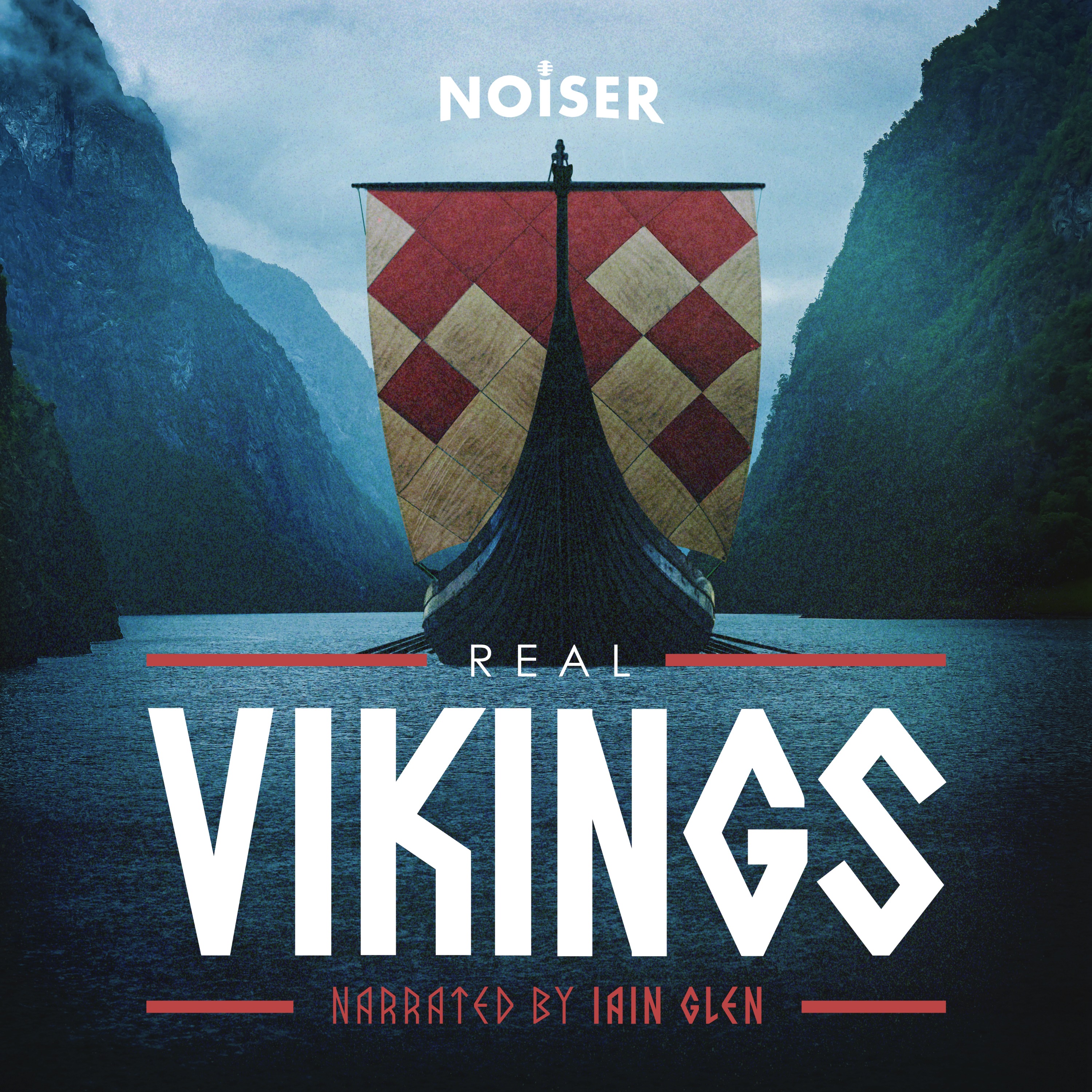
It's summer, 10:38. We're in Sicily, beneath the city walls of Syracuse. Amid the stifling heat and incessant flies, a band of warriors sneaks up, climbing round the rocks and scrub swords and shields at the ready. They are members of an elite fighting unit, the Varangian Guard, the finest shock troops in the known world. Personal hit squad of the Byzantine emperor Michael iv. And they are poised to storm the citadel of Sicily's Muslim emir, dislodging the unsuspecting Saracens from their stronghold in the middle of the Mediterranean. Command of the Varangians goes to an immense figure, not just by reputation, but in literal stature, some say 7ft tall, hailing from Far away Norway. He is the great, great grandson of the legendary Viking king, Harald Fairhair. Not that his men know it, for this soldier has never revealed his true identity to them. He is Harald Sigurdsson, though history will record him by his nickname, Harald Hadrada. The presence of Norsemen in the Mediterranean is not a recent development, as we know from previous episodes. But neither the pagan Vikings of old nor the Christian ones of new have been able to establish a toehold in the Islamic caliphate. Until now. The word Hadrada means hard ruler, a reputation Harold won't acquire till much later. But with a surfeit of Haralds in this episode, be warned, it's a useful means of distinguishing him. He will acquire other epithets. The thunderbolt of the north, for instance, though some prefer another, more poignant one. The last Viking for Harald Hardrada, though he doesn't know it yet, is going to have a significant role in a watershed moment in history. Far from the bit part that is often assigned, that year will be 1066, and it will mark arguably the end of the Viking age. I'm Ian Glenn and from the Noiser Podcast Network. This is part 10, the final chapter of Real Vikings. By the mid 11th century, as we had left it in the previous episode, England is effectively a Scandinavian realm. It has had two recent Danish kings, Sven Forkbeard and Cnut. Before that came the Danelaw. With half of England assigned as a de facto Norse province. English society has been heavily influenced. As a consequence, its people and its culture, especially in the north, are a fusion Anglo Norse. Under Cnut, England has become the jewel in the crown of a vast North Sea empire. The most populous and wealthiest of his domains, Dr. Pragyavora.
- [05:45]
Historian / Expert Commentator
In becoming King of England, Cnut forms a link between Scandinavia and England. And it's a formal political dynastic link that hasn't existed before. We've had cultural ties before, we've had migration and assimilation, but this is the kind of knitting together of dynasties that we haven't seen.
- [06:12]
Narrator Ian Glenn
The downside for Canute is that as King of England, Denmark and Norway, he has had to spread himself thin for a while. Canute delegates rule of Norway to his common law English wife, Elf Gifou. She had governed alongside their son, another Sweyn. Meanwhile, Arthur Canute, from the king's official marriage to Queen Emma, is regent of Denmark. It has left things balanced precariously with regard to the empire's succession. Emma, if you recall, is now Queen of England for a second time. She's been married previously to the late Anglo Saxon King Aethelred. The two sons they had together are currently holed up in Emma's native Normandy, out of harm's way.
- [07:00]
Historian / Expert Commentator
So Emma herself is of Scandinavian extraction and married to both an Anglo Saxon king of England as well as a Scandinavian king of England. And so her offspring, who are part of all of the political goings on, are also partly English and partly Scandinavian.
- [07:22]
Narrator Ian Glenn
Throw in the exiled sons of the deposed English king, Edmund Ironside, who have ended up in Hungary, and things are going to get messy. Not least because there is another ambitious player on the scene. Earl Godwin of Wessex, an Englishman who has enhanced his credentials through marriage to a Danish noblewoman, a descendant of Sven Forkbeard.
- [07:47]
Historian / Expert Commentator
One of the things that Canute does is he reorganizes the way in which England itself is carved out. So one of the biggest and most powerful lords that is created is Godwyn. He is from an unknown family. Before Canute raises him to power and Godwyn becomes one of Canute's most important and most trusted advisors.
- [08:20]
Narrator Ian Glenn
In the King's frequent absences, it's Godwin, his right hand man, who effectively runs the country. With Godwin's own sons put in charge of the key earldoms, he has turned governance of England into a family business. When Cnut dies in November 1035, age 41, his eldest sons are the obvious candidates to replace him. But which one? Elf Khufu's firstborn, Sweyn, has died in battle. So next in line, Harald steps forward with the backing of the northern earls. Harald's case is strong, though with Aemma, the official queen, it is her son, Arthur Canute who is the choice of the southern Wessex establishment. He is the one who prevails only when it comes to the appointed hour. Arthur Canute is stuck in Denmark, putting down a Norwegian uprising. It is here, as is assumed, that Harald acquires his nickname, Harald Harefoot. In Harthacnut's absence, he legs it to Winchester to claim the throne for himself. Fearing a power vacuum, the Council of Elders, the Witan has little choice but to go along with him. And so Harald Harefoot, half Danish, half Saxon, becomes King Harold I of England. Or does he? Notably, when anointed by the Archbishop of Canterbury, none of the official regalia, the crown, the scepter is used, a suggestion that he is merely a caretaker. Though as time wears on, and with Harthacnut still a no show, the tougher it becomes for Harefoot's opponents to oust him. Chief among those enemies, the Machiavellian Queen Emma
- [10:22]
Historian / Expert Commentator
she's clearly involved in 11th century English politics. She's also one of the most visually represented early medieval queens, so the fact that she shows up as much as she does reflects just how powerful and important she was. Emma is a formidable character.
- [10:43]
Narrator Ian Glenn
With Hartha Canute out of the picture, Emma is still determined to maintain her family's power. So she switches her allegiance back to her earlier sons with Ethelred, a surprise move, given that she had effectively disowned them. In response to her invitation, a letter purportedly bearing her seal. Princes Edward and Alfred, now of age, duly set sail from Normandy, ready to advance their claim. They choose to arrive separately. With the political situation on a knife edge, they have good cause. Sensing he is about to walk into a trap, Edward, the oldest, hangs a U turn at Southampton and heads straight back across the Channel. His brother Alfred is not so lucky. Ambushed on the south coast by Earl Godwin's men, he is dragged away to have his eyes put out with red hot pokers. There is a convention that a blind man cannot be king, though he will die days later from his injuries. With Emma fleeing to Flanders, her part in proceedings never entirely clear, Harold Harfoot's reign seems secure. But it will be a brief tenure. After four years, he dies unexpectedly, aged just 24. Arthur Canute is a contender once again. The only way Arthur Canute can leave to take up the kingship of England is to make a lasting peace in Scandinavia. It comes by way of a pact with his rival, King Magnus of Norway, in a winner takes all arrangement. The proposed deal goes like Arthur Canute and Magnus will live in peaceful coexistence. But should either king die, the other will inherit the sum total of their realms. Free to cross the North Sea, Arthur Cnut becomes the third official member of the Jelling dynasty to be king of all England and Denmark. Disgusted at Harald Herefoot's attack on his half brother Alfred, his first act is to have Herefoot's body dug up, decapitated and thrown in the sewage of the Thames. It will be recovered later by some fishermen who see to its reburial in The Church of St. Clement on Fleet street, henceforth known as St. Clement Danes. Deploying the defence that he was just following orders in the attack on Alfred, Earl Godwin is fortunate to escape a similar fate. But in another twist, Arthur Canute's reign proves even shorter than his predecessors. Just two years later, in Lambeth, while giving a speech at a wedding, he suddenly drops dead, possibly from a stroke. There is a suggestion. Hafa Canute knew his Days were numbered. Childless, he had been making contingency plans. It is the surviving half brother across the Channel who is his nominated successor. And thus Edward, son of Aethelred, after 25 years in Normandy, is recalled to become King of England. The House of Wessex is back. Scandinavian rule is over. There has been some reinvention of Edward. Painted as a pious man, he will later be canonized, dubbed the Confessor. This image will be enhanced by his commissioning of a new cathedral, an abbey to the west of the city of London, a Westminster. But if England thinks it has a bona fide English king again, that's also overstating the case. With a half Norman, half Danish mother in Emma, and having spent most of his life in Normandy, the French speaking Edouard is in reality another outsider. With Earl Godwin having killed his brother most brutally, you would imagine clemency to be in short supply. But Godwin is the Teflon Don. Without him, the King is powerless. Further insinuating himself into the royal household, Godwin foists upon Edward a bride, his very own daughter Edith. It is a smart move. Godwin is now the King's father in law, directly plugged into the royal bloodline. For when the King has a son, only Edward never does. The growing tension will culminate in a Godwin led insurrection with Saxon nobles rejecting Edward's perceived Normanization of the English church. It will lead in 10:51 to Godwin's banishment from the kingdom along with his sons. Though after a year sailing up and down the Channel, raiding the English coast, the boys will be back. No one dares resist Professor Levi Roach.
- [16:03]
Historian / Expert Commentator
And in the end we end up with kind of a herald as the power behind the throne. And Edward to my mind, pretty much put in his place as a monarch.
- [16:13]
Narrator Ian Glenn
No matter. In their absence, King Edward has been scheming both to ensure the royal succession and to lock the GodWins out. In 1051, during the GodWins exile, Edward is visited by a relative from back home, a 21 year old first cousin once removed, another of Emma's bloodline. And Edward is said to have pledged the crown to him. That boy's name is William. With his father and mother unmarried, he is nicknamed unflatteringly the Bastard. But it makes little difference to his rank. Since the age of seven, William the Bastard has been Duke of Normandy. And there is a certain stubbornness about him enough to suggest that he's not going to let this proposal slide. For William is the great, great, great grandson of the famous Viking leader Rollo. It's 1064 were on a desolate foreign shore. An English nobleman has washed up on the rocks. His ship has gone down with all hands. Arrested by soldiers, the man is informed that the place where he is beached is Normandy. On what business did he end up here? Fearing he might be an enemy spy, he is dragged off to court, where he must plead his credentials before Duke William. At William's court, the man reveals that he was on his way to Scandinavia to conduct some diplomatic business on behalf of the English crown. For he is no mere sailor. Since the death of his father in 1054, he has taken over the family firm. He is now Earl of Wessex, none other than Harold Godwinson, son of Godwin. And he can also count on royal connections. His sister is Queen of England. Apologizing for their heavy handedness, William explains that he has to be careful. Normandy has been riven by power struggles, but William is a good soldier and a clever leader, it would seem. Slowly, he has united his realm. Come, stay a while, William offers to Harold. He will show him. With just six years age difference between them, Harold is 42, William 36. The two men hit it off. In fact, they get on so well that Earl Godwinson is permitted to accompany William in a campaign against the Upper Tea Bretons. In return for William's generosity through this lengthy stay, Harold has a parting gift for his host. Well, what exactly happens here depends on what you read. According to Norman sources, though countered by the Anglo Saxon Chronicle, Harold endorses William's claim to the English throne. He swears it upon holy relics, an oath before God. Edward the Confessor falls into a coma and dies on January 2, 1066. With no successor named officially, the contenders again start jostling William of Normandy, who now claims to have been promised the English crown not once but twice. The Saxon noble Edgar, Edgar the Atheling, or eligible Prince, grandson of Edmund Ironside. The dying king intriguingly had whisked him back from Hungary. And now, in a surprise move, a third candidate declares Harold Godwinson himself, throwing a spanner in everyone's works. Godwinson insists that on his deathbed, the King, his brother in law, had revoked all previous pledges and offered the throne to him. Ah, and there's someone else. Slogging his way up a hillside in Sicily, where we left him at the beginning of this episode, Harald Hardrada cannot possibly envisage the way things are going to pan out. But he is a man for whom life is one big adventure. Born in 1015 in rural Norway, he had fought as a teenager alongside half brother Olaf the Stout, the ex king of Norway, the future patron saint seeking to reclaim his crown. Olaf, by the way, as a warlord in Cnut's army, was the one who burnt down London Bridge. Things did not go well initially, but it was never going to dent Harold's ego. Lars Branworth.
- [21:22]
Historian / Expert Commentator
He's present with his half brother at the battle of Stiklislad when King Olaf is killed. He's hiding under a group of corpses as the enemy soldiers are kind of dispatching the wounded. He drags himself out of there, composes a poem saying I'll be back. Essentially my name will be great.
- [21:38]
Narrator Ian Glenn
The Viking terminator will seek his fortune in the East. He heads across the Baltic to Staraya Ladoga, the bustling gateway to the Russian interior. Traveling down the waterways, Hardrada will pitch up in the territory of the Kievan Rus and become a guest at the palace of King Yaroslav. He is betrothed in a political engagement to the king's daughter Elisif. He's assured of her hand once she comes of age, but only if he can prove himself both in battle and in wealth. And thus Harald follows the well worn path of a Viking warrior. Erend, heading for the golden domes of Constantinople. There he will go incognito and become a soldier of fortune, working his way on merit into the Varangian guard. It will take Harald Hadrada 15 years to amass sufficient riches, during which time he won. Will fight battles against nomads in Central Asia, take on Arab corsairs in the Aegean. In addition to his campaigning in Sicily, in the Middle East, Harold will visit Jerusalem. He will stand guard over the Holy Sepulchre and swim in the River Jordan.
- [23:01]
Historian / Expert Commentator
He goes to Sicily, to North Africa, Asia Minor. He takes a bath in one of the fountains of Jerusalem. He then sails west and supposedly sees Greenland. He's baptized in Rouen,
- [23:18]
Narrator Ian Glenn
with something of a rockstar reputation. There are also plenty of groupies. An affair with a married Byzantine noblewoman, possibly even the empress herself, will see him thrown in prison, followed by a dramatic escape and returned to Kyiv. There, with his Kyivan princess, now legitimate, and with Harald toting battle scars alongside bags of gold, he can formally take her hand. Professor Steffen Brink.
- [23:51]
Historian / Expert Commentator
So a Viking man equaled a warrior. And no one epitomizes this ethos more than Harald Hardrada. When he left Constantinople, he had assembled a huge fortune. You needed this kind of wealth to be able to build up your power base.
- [24:12]
Narrator Ian Glenn
Dr. Eleanor Barraclough.
- [24:14]
Historian / Expert Commentator
Harald often gets pinned up as a poster child for the end of the Viking age. And when we think of the typical characteristics of the Viking age, so things like raiding and warfare and runes and travel and trade and skaldic verse and international settlement. Harald has all of this. He's a really incredible character.
- [24:41]
Narrator Ian Glenn
Though no sooner has he reappeared in Kyiv than word reaches him that Norway is in turmoil. Canute has died. Half English nephew Magnus, son of Olaf, is the new Norwegian king. But the situation would seem to be fluid. And so Harald Hardrada boards his longship the Serpent, and heads north. For Magnus. His uncle's return is welcome. Harald brings charisma, military experience and much needed cash. So much so that he's willing to share the crown with him, though in typical fashion, Magnus falls ill and dies. In 1047, Harald Hardrada becomes the outright king of Norway, ruling as Harald iii. It's an anti climax. After a decade and a half of swashbuckling, Harald compensates by taking it out on his citizens. It is where he gets the nickname hard ruler. 50 years old now, he yearns for just one final adventure, one last hurrah. And it is in January 1066, with the arrival of a ship from the west, that the opportunity presents itself. News that English monarch Edward has died does not seem of immediate importance, nor the fact that a certain Earl Harold Godwinson has cajoled the Saxon nobles into appointing him the new King of England. More intriguing is the fact that this news is delivered by an emissary of one Tostig Godwinson, the new king's very own brother. The siblings have fallen out in spectacular fashion. Tostig has been deposed as the Earl of Northumbria. Having failed to incite the Danes to invade and overthrow brother Harold, Tostig is turning instead to to Norway. And with a sweetener. Remember the treaty that had been signed? He asks. The one between Magnus and Arthur Canute. Arthur Canute pre deceased Magnus. Thus, Hadrada has inherited both Magnus and Hatha, Canute's possessions. By that logic, it is also the case that it is he, Harold Hadrada, who was the rightful heir to the North Sea Empire. Norway, Denmark and England.
- [27:10]
Historian / Expert Commentator
Harald wanted to be King of Denmark and in the long term probably sought to restore Canute the Great's North Sea empire in its entirety. However, that did not succeed and accepting he could not conquer Denmark, Harald switched attention to England.
- [27:31]
He eventually gets bored, you know, and goes out as the Vikings should, invading England.
- [27:41]
Narrator Ian Glenn
In the fjords on the quiet, Harald Hardrada starts assembling a huge invasion fleet. The Decision of the Witan to back Harold Godwinson, who will rule as Harold II of England, is not a unanimous one. The return of Edgar Aetheling has certainly muddied the waters. But English kings were elected, not there, by divine right. While convention dictates the eldest son will inherit the crown, the lack of a clearly designated heir leaves things wide open. The Saxon elders take stock. There have been three Viking kings this century. They figure, for if you count Harold Harefoot, it has caused no end of turmoil. Throw in Edward the Confessor, ostensibly Norman, and the country has been under foreign dominance for the best part of 70 years. A likely challenge from Duke William poses the possibility of yet more overseas vassalage. This is no time for weak leadership. Better the devil you know. Harold Godwinson ticks all the boxes. He is English, well, half English, a proven soldier, and he has the running of the country down to a T. He is too, the brother of Queen Edith, so part of the royal family.
- [29:05]
Historian / Expert Commentator
And it's in this context that Harold Godwinson has himself elected and crowned. But it is quite clearly a coup of some description. So he seems to be elected and consecrated king on the same day, possibly at the same ceremony, at the same mass as the Requiem and of the funeral of Edward the Confessor, which is really undue haste.
- [29:32]
Narrator Ian Glenn
Across the channel, news of Harold's accession is greeted with howls of outrage by William. Treated as an act of betrayal. He too begins assembling a massive invasion force. The three way tussle is on.
- [29:48]
Historian / Expert Commentator
So in terms of that, that then creates this situation to which William says, what? No, no, not so fast, I've got my claim. And Harald Hardrada equally says, well, you know the rules of Norway and Denmark have often ruled England might makes right try to say no to me in 8,000 men.
- [30:13]
Depop Advertiser
This episode is presented by Depop. We all have pieces in our closet that deserve a second life. That jacket you loved for a season, someone out there is literally searching for it. And that's why I love Depop. It's a fashion resale app where your personal taste actually has value. Selling is quick, simple and genuinely worth it. You can list an item in just a few taps on Depop. Just snap a photo and their AI powered listings fill in the details. Plus make money easily. With no selling fees on Depop, no seller fees means what you earn is yours. Even selling one item is a win. So if you've been thinking about clearing out your closet, this is your sign. Download the Depop app and list your first item today.
- [30:55]
Hayden (Fantasy Fangirls Podcast Producer)
Howdy. Howdy ho and welcome to Fantasy Fan Fellas. I'm Hayden, producer of the Fantasy Fangirls podcast and your resident lover of all things Sanderson.
- [31:02]
Stephen (Fantasy Fangirls Co-host)
And I'm Stephen, your bookish Internet goofball. But you can call me the Smash
- [31:06]
Hayden (Fantasy Fangirls Podcast Producer)
Daddy and we are currently deep diving Brandon Sanderson's fantasy epic Mistborn. But here's the catch. Steven here has not read Mistborn before.
- [31:15]
Stephen (Fantasy Fangirls Co-host)
That's right.
- [31:16]
Historian / Expert Commentator
Hei hei.
- [31:16]
Stephen (Fantasy Fangirls Co-host)
So each week you'll get my unfiltered raw reactions to every single chapter.
- [31:20]
Hayden (Fantasy Fangirls Podcast Producer)
And along the way we'll do character deep dives, magic explainers, and Steven will even try to guess what's next. Spoiler alert. He'll be wrong.
- [31:27]
Stephen (Fantasy Fangirls Co-host)
News flash. I'm never wrong. Episodes come out every Wednesday, and you can find Fantasy Fanfellas wherever you get your podcasts.
- [31:34]
Pura Advertiser
Open the door to Spring with Pura Refresh every room with transportive fragrances like soft florals and clean, energetic citrus. Get started with a free Pura 4 diffuser when you subscribe to 2 cents monthly for six months. Shop now at pura.com.
- [31:58]
Narrator Ian Glenn
At nearly 70 meters long, the Bayer Tapestry is a remarkable work of embroidery. It depicts the events of 1066 from a Norman perspective. It was likely commissioned by Duke William's half brother, Bishop Odo. As the tapestry shows, the spring of that year is a whirl of shipbuilding and preparation, the better to transport 10,000 Normans, their horses, arms and equipment across the English Channel. Harold Godwinson, in readiness and yet unaware of the Norwegian threat, raises an army and stations it on the Isle of Wight off the south coast. With bad weather throughout the summer, however, the Norman fleet can never put to sea. Maybe Halley's Comet, which appeared in the skies over Easter, was a good omen for England after all. Going into September, William's ships sit at the mouth of the Somme river while his men kick their heels, waiting in vain for favorable conditions. On September 8, knowing that no fool would attempt a crossing in the squalls of autumn, and with many of his own troops obliged to return to help with the harvest, Harold Godwinson stands his men down. A Norseman of the old school, Harald Hadrada needs no such thing as favorable conditions. For the sons of men who navigated the ice floes all the way to Canada, launching longboats into the North Sea in September is child's play. Around 300 Norwegian vessels slide into the water, carrying at least 8,000 warriors
- [33:50]
Nikayla Matthews Akome
by
- [33:50]
Narrator Ian Glenn
the middle of the month, having stopped en route in the Northern Isles, Harald Hardrada is glimpsing the rugged coastline of Northumbria, the old Viking playground. When his longships enter the mouth of the Tyne, it must seem like a throwback, not just for the older locals who can remember the raids of Sweyn Forkbeard, but to the beginning of the Viking era itself. Just up the coast lies Lindisfarne. It was here, nearly 300 years earlier, that the Vikings first hacked their way ashore with little resistance. Encountered. Harald Hadrada uses the rivers of the Humber estuary to navigate inland and get within proximity of his target, Jorvik, York, capital of the north, the second most important city in England. Faced with the flustered earls of Northumbria and Mercia, who hastily muster the militia, Hardrada's men sweep all before. On September 20, at Fulford on the River Ouse, just south of York, he wins a stunning victory. His men, with their long hair and battle axes, smash their way through the local militia like a blast from the past. Harald Hardrada has judged things well. The north, he knows, with its Viking heritage, remains scornful of southern Wessex rule. There's a lot of sympathy, and there are others eager to join the pylon, itching to settle old scores. Tostig has arrived with a contingent of Flemish mercenaries, and he can call on the support he boasts of King Malcolm III of Scotland. Howald. Hardrada's numbers swell to around 12,000. On September 24th, Hardrada enters York. Job done, his troops begin to celebrate. The ale flows down. In London, completely blindsided, a panicked Harold Godwinson throws together a patchwork army and yomts north. It will have to cover over 200 miles of difficult terrain and at lightning speed, should it wish to see off the Norwegian threat. But Godwinson's troops move at an incredible lick, 35 miles per day through forests and swamps and along crumbling Roman roads. In four days, the English army is at Tadcaster, within reach of the enemy. And with some stunning intelligence received, Hardrada has released half of his army. They have sailed back towards the coast, ready for their next move. There, on the longboat, sits not just his army supplies, but most of its armor. The Norwegian king, meanwhile, has ventured off to transfer hostages. Harold Godwinson is a good strategist. He has proved it in campaigns against the Welsh and the Scots, capitalizing on the Norwegian split forces. And with the added incentive of putting one over on his brother Tostig, he will cut off Hadrada's control contingent before they can ship out. There's a pinch point on the River Derwent, just east of the city an old roman crossing.
- [37:31]
Historian / Expert Commentator
On 24 September 1066, Harald and Tostig and their army had a decisive victory which led York to surrender to their forces. But the next day they had heard that the Anglo Saxon king Harold Godwinson had had arrived at Stamford Bridge.
- [37:56]
Narrator Ian Glenn
Today, the Battle of Stamford Bridge is marked by an unassuming monument, a rock with a plaque attached. It sits at the end of a cul de sac on a housing estate, a tract of 1970s semis, all paved driveways, satellite dishes and a row of pull down garages. The course of the river has shifted over time, but beyond the estate, the flat, unremarkable landscape is probably little changed. It seems a curiously sedate scene for a showdown of such bloody intensity. For the Battle of Stamford Bridge is one of absolute slaughter. To achieve any kind of success till reinforcements arrive, Harald Hadrada's men must put up a valiant stand. But without its armor limited in weaponry, not to mention hungover, the odds are against it. The King of Norway has been ambushed. On the morning of September 25, according to chronicler Snorri Sturluson, before battle commences, an English rider cast banters out for a parley with Hadrada and Tostig. He proposes a deal to Tostig. Withdraw his army and he can have back his old earldom, Northumbria. And what can you offer my king? Asks Tostig, meaning Hardrada, comes the reply. Seven feet of English ground, meaning a grand. Later, reports claim it was Harold Godwinson himself who was the messenger. Approaching in disguise, needing to withdraw eastwards, the Norwegians must retreat over the old wooden bridge. But it means that they can be kettled penned in. Despite a protective shield wall and the withstanding of attack after attack, the Norwegians and their allies are no match for the English. The heroic rear guard, according to legend, is mounted by a lone Norse warrior who stands on the bridge swinging his axe, taking down 40 Englishmen single handedly. But even he in the end is overwhelmed. An English soldier floats underneath on a barrel and impales the warrior on his spear thrust up through the slacks. In the battle, Tostic is killed, and crucially, so is Harold Hardrada. Felled with an arrow to the throat, King Harold Godwinson gives clemency. So comprehensive has been the routing of the Norwegians that the survivors are permitted to take to their ships. Only 24 vessels are needed to spirit the survivors away. Out of the 300 plus that had landed just days before, the Norse threat
- [40:59]
Historian / Expert Commentator
has been seen off and Harold Godwinson is back in Control of the entirety of England
- [41:10]
Narrator Ian Glenn
kingdom secure. The epochal battle for its soul seemingly won. Godwinson's men do exactly as Hadrada had done, take to York for some rest and recuperation. The revelry will be short lived. Only two days later, a rider arrives from down south bearing some astonishing, unthinkable news. William of Normandy, defying certainty that a channel crossing was no longer possible, has begun landing his army on the shingle of Pevensey, Sussex. Famously, after marching his men north and fighting one epic battle, Harold Godwinson will have to Repeat the trick. A 240 mile about face, he musters his exhausted soldiers and begins the long slog south. But the Normans, he will find, are a different proposition. William is an experienced general. He has assembled an alliance of troops not just from Normandy, but from all over northern France. He is well equipped with archers. He has a new weapon to deploy the crossbow. And his battlefield tactics are based, unlike the English, on the use of cavalry. And there is something else that William has on his side. God. William's mission to take the throne of England comes with papal blessing. The banner of Rome flies prominently. Oaths sworn on holy relics are not to be broken. For William, invading England is a big risk. It is a rich and powerful state with an efficient military setup. Normandy is of junior ranking. He will beat Harold Godwinson. He determines by drawing him towards him. Fighting the battle on his terms. Near the coastal town of Hastings, he builds a makeshift wooden fortress from which his men will range out to harass the local population. It is the bait to reel Harold Godwinson in.
- [43:23]
Historian / Expert Commentator
He's missed most of the campaign he sees, and that's why he needs this decisive battle, because it's September, the weather is getting worse. I mean, we know what the weather's like in England at that time of year. It's not going to get better for armies and over winter he's going to start starving. His army needs a decisive victory. He needs to win a big, big battle and ideally kill or capture Harold.
- [43:51]
Narrator Ian Glenn
On October 14, as the Normans wait, English troops start appearing through the woodlands. They establish themselves on nearby Senlac Hill at present day Battle East Sussex. With a half mile shield wall in place, they have the upper ground and strategic advantage. But it is an army running on empty. The Battle of Hastings is an astonishing confrontation, one that lasts all day long. But eventually, the Normans prevail. By evening, William's cavalry is chopping down the English stragglers. There is no question of Harold Godwinson being allowed to live either, this battle must have a definitive outcome. And so Harold, King of England, will die alongside his brothers Geith and Leofwine, all directly targeted, no quarter given. In a simplistic interpretation of the Bayeux Tapestry, King Harald is killed with an arrow in his eye, one of thousands dying under an archery blizzard. It is something backed up by some contemporary sources. There is also a suggestion that he is butchered by William's knights, maybe even by William personally. What is never in doubt is that the carnage is on a biblical scale, a landscape of corpses, guts and limbs, around 4,000 English and 2,000 Normans lying dead. It is one of the interpretations of the origin of the name Senlac, the hill the English had mustered on Saint Lac, the Lake of Blood. On receiving the news of Harold's death, a king of just 10 months, the Saxon nobles rushed to appoint Edgar Eetheling, still a teenager, in his place. But he is unable to press his claim. After a scorched earth blitzkrieg through southern England, William moves on to London. He will be crowned in Westminster Abbey on Christmas Day.
- [46:25]
Historian / Expert Commentator
William the Conqueror may try to dress his claim up in much more genteel terms, as I'm a second cousin of the Confessor, but he is also just a thug with a big army. So realistically, in 1066 we have three thugs with big armies claiming it. Neither, I suspect, deep down, are nice human beings. If there's anybody we should be feeling sympathetic for, it's Edgar the Atheling, who've been promised the throne, almost certainly been brought over to England. With the prospects of it, who's just a bit too young and loses out completely.
- [46:58]
Narrator Ian Glenn
The history of England will be indelibly altered, not just in language, culture and architecture, but but in its governance. It will take around six years for William to fully subdue the country. The Norman yoke will weigh heavily. It will include a tantamount genocide, the Harrying of the north, in which three quarters of the northern English population is killed or displaced. With it, England's old Viking heartlands are laid waste and William's new assets will be be inventoried in a ledger. The Doomsday Book. The old earls will be replaced by a Norman nobility, a class of barons. England's land will be concentrated in the hands of just a few favorites who will watch over it from massive castles, a formidable fighting machine. The Normans will go on to write their own history, conquering Sicily, becoming a dominant force in the Crusades and eventually invading Ireland too. Harold Hardrada, Harold Godwinson, William the Bastard In a turf war between a Viking, a half Viking and a Viking descendant, a Northman of some sort was always going to win. It is the demise of Harald Hardrada that is often cited symbolically as the end of the Viking era.
- [48:32]
Historian / Expert Commentator
Few figures personify our idea of the Viking Age so completely as Harald Hardrada. As a result of that, his death is sometimes seen as the end point of the Viking Age. But that's a really tricky thing because, of course, that's from a very Anglocentric perspective. Perspective. And the whole point of the Viking Age is that it was chronologically very long, but also geographically absolutely vast, spreading at its height from contact with the edge of North America all the way to the Byzantine empire and Baghdad.
- [49:04]
1066 is generally seen as the end of the Viking Age in Britain. But the interlinking between British Britain and Scandinavia, from sort of the lowest levels of power to the highest levels, was so complete and so complex that pretty much all of the key players of these momentous events in 1066 had some sort of Scandinavian background. So whether we can really, in real terms, talk about an end to the Viking Age is perhaps a little bit questionable.
- [49:40]
Narrator Ian Glenn
Professor Davide Zori.
- [49:43]
Historian / Expert Commentator
Sometimes the date given for the end of the Viking Age is 1066, tied, of course, to the historical Norman Conquest. But when that was accomplished from Normandy, descendants of Rollo and Scandinavian men who got on ships that, if you look at the Bayou tapestry, look a lot like the Viking ships of the Viking Age.
- [50:10]
Narrator Ian Glenn
What we do see is a reorientation of English politics. It is no longer a realm reaching across the North Sea, but one facing south, to be governed by a Francophile, francophone aristocracy.
- [50:26]
Historian / Expert Commentator
But of course, in 1066, no one knows it's going to be lasting. And William's greatest threat throughout the remainder of his reign, actually in isn't English rebels. The threat is from Denmark. And what keeps William awake at night is the threat of the Danish king. And indeed, there is eventually an invasion attempted which isn't successful. Naturally. The Danes, right up until about 1100, have ambitions and realistic ambitions on England.
- [50:53]
Narrator Ian Glenn
A Danish army backing Edgar Aeling will take York in 1069. Continuing the attacks, the Norwegian King Magnus Barelegs will raid places like Dublin, Anglesey and the Isle of man into the 12th century.
- [51:09]
Historian / Expert Commentator
But it's a closing and narrowing window, if you will, of opportunity. So in that sense, I think it goes out with a splutter of the Viking Age, not with a bang. There's not this moment at Stamford Bridge or Hastings that spells the end, actually. The scale slowly decreases and eventually the Scandinavians become a part of mainstream European culture.
- [51:30]
And by the time we reach 1100, I would say we are in a different society in Scandinavia. So I would put the end of the Viking Age at 1100, when Scandinavian kings are Christian, when they're raising taxes on their population rather than trying to convince them to get on to open ships and go raiding and trading and settling, and they really become part of Western Christendom in a way that they weren't before
- [52:01]
Narrator Ian Glenn
in the British or Anglo Celtic Isles. Shetland and Orkney will persist under Scandinavian control. It is not until 1472 that they are ceded to the Scottish crown in lieu of a wedding dowry for his daughter, the King of Denmark, Norway hands them over the Northern Isles. Localized Norse language Norn will not die out until around 1850.
- [52:38]
Verizon Advertiser
Hey honey, it's Mom. Did you know if we switch to Verizon, we can get four phones for $0 plus four lines for $25 a line? Call me back me again. That's just $100 a month for four lines on unlimited welcome plus four phones. No trade in needed. Call me. It's Mom. America's Best Network Verizon. That's the one we're talking about.
- [52:58]
Narrator Ian Glenn
I'll send you text America's Best network based on RootMetric's best overall mobile network performance US second half 2025 four new lines and a limited welcome and autopay. See verizon.com for details.
- [53:10]
Acast Host
Acast powers the World's Best Podcasts Here's a show that we recommend.
- [53:19]
Jameela Jamil
What if you laughed all through your commute? Or if you heard the funniest story while at the gym? Well, now you can. I'm Jameela Jamil and guests on my new podcast Wrong Turns share their most mortifying and hilarious disaster stories. I'm talking people like Mae Martin, Bob the Drag Queen, Catherine Ryan, Jake Johnson, Margaret Cho, Simon Pegg, Penn Badgley, and so many more. So listen wherever you get your podcast Wrong Turns where dignity goes to die.
- [53:49]
Acast Host
ACAST helps creators launch, grow and monetize their podcasts everywhere.
- [53:54]
Depop Advertiser
Acast.com this episode is presented by Depop. We all have pieces in our closet that deserve a second life. That jacket you loved for a season. Someone out there is literally searching for it. And that's why I love depop. It's a fashion resale app where your personal taste actually has value. Selling is quick, simple, and genuinely worth it. You can list an item in just a few taps on Depop. Just snap a photo and their AI powered Listings fill in the details. Plus make money easily. With no selling fees on Depop, no seller fees means what you earn is yours. Even selling one item is a win. So if you've been thinking about clearing out your closet, this is your sign. Download the Depop app and list your first item today.
- [54:42]
Narrator Ian Glenn
Unlike the Greeks or the Romans, history has never fully given the Vikings their due. It is only relatively recently that we have come to appreciate, to embrace the scale of their achievements. The annual Aphelia Festival in Shetland, for example, with its burning of a longship, is just part of a growing pageantry. There's a burgeoning revivalist movement as communities across the Northern hemisphere, once touched by a Norse presence, come to celebrate a Viking heritage that had for so long been scorned. From the giant longships preserved at Osberg and Roskild, did the excavations of York to L' Ans, or meadows in Newfoundland, now a World Heritage Site. Modern archaeology and scientific advances give fresh insight into the craftsmanship and societies of the old Nordic world. In language, in place names, in family names. Even our days of the week, the Vikings walk with us still. And in popular culture, the Norsemen, once the hooligans of the high seas, are now its heroes.
- [56:03]
Historian / Expert Commentator
The interest for Vikings kicked off in Victorian England and then it spread, and we have it in Germany in the 19th century and the Wagner operas. And this fascinating for this world and especially this mythology. And then of course, this warrior aspect to the Vikings was emphasized and misused in Germany by the Nazis, which led to a situation where Viking studies got a bad reputation. But after the Second World War, we had a settlement of this legacy. And in especially the 1960s, there was this trend of change, changing the view of the Vikings from these brute warriors to the rather peaceful trading Scandinavian who went abroad as explorers. The truth is, of course, somewhere in between. But the legacy has just exploded in the last 30, 40 years in the public culture with this fascination for this old Norse mythology and this warrior ethos which has led to all these films, TV series, etc.
- [57:21]
I think the legacy of the Viking age is one really of Europe transformed, but also interconnected in new ways. Those kinds of trade links and that kind of wide networks. So these closer links between the British Isles and Scandinavia, closer ties between Scandinavia, the Baltic, through to the Dnieper river, to Ukraine, Russia through to the Mediterranean and so on.
- [57:49]
They settled the North Atlantic Islands, the Faroes, Iceland, Greenland. These are big land masses that were not inhabited by humans. And it's a really testament to their exploration capacity that this was accomplished during the Viking Age. And in fact, Iceland today is still a flourishing Scandinavian population that charts its origins in this golden age to the Viking Age. Britain was a series of kingdoms before the Vikings get there. So the one unified England, you could say, came out of the crucible of the Viking age, the Vikings. Viking bases in Ireland that link Ireland into the northern arc of trade that leads all the way over to the Caspian Sea and the Black Sea. Those towns grew up during the Viking Age.
- [58:42]
Narrator Ian Glenn
Professor Elizabeth Rowe.
- [58:45]
Professor Davide Zori
So the Vikings settled in Normandy. Normandy gives us William the Conqueror. William the Conqueror changes English and British history. So that's a huge line of impact right there. We can also see the Vikings and Scandinavian traders settling in what's now western Russia and Ukraine. Kyiv was the center of power for that part of the world, for this combined Norse and Slavic culture. Kyiv was the center of power long before St. Petersburg was founded, much less Moscow. And so Russian attempts to control Ukraine. This goes absolutely back to what Vikings were doing in that part of the world.
- [59:30]
Historian / Expert Commentator
There's something really romantic about the Vikings. It's a world that is lost. These are the great rags to riches stories of medieval Europe. I mean, you literally have people starting life as 13 year olds, going to war without any prospects and no land and no money and no hope, and then ending life as a king. And so there's something inspiring about these people as well. They're so pragmatic and they are so strong that I think people are drawn to that.
- [60:01]
They embodied this very human drive to explore the unknown, to go where others haven't gone before.
- [60:09]
Narrator Ian Glenn
Dr. William
- [60:12]
Dr. William
to me, it's discovery, it's geographical discovery, it's also personal discovery. And I think that there's so much to see and think about in the Viking period that relates to our modern times, you know, to our exploration of the universe and things that are coming on ahead of us. They were remarkable people, brave and ingenious.
- [60:50]
Narrator Ian Glenn
It's July 20, 1976, 11:53am, Coordinated Universal Time. We're at the cry Sea Planitia, Greek for golden plane, on the surface of Mars, a planet that has been untouched for 4.5 billion years. In a blaze of retrorockets, a small mechanical craft descends. It's a lander dispatched from a parent orbiter, and it swings into position under a retarding parachute, falling softly with the reduced gravity into the Martian dirt. Pretty shortly, it will begin transmitting the first images of the Red Planet back to Earth. The craft was meant to land on July 4, timed for the American bicentennial. But after 140 million miles, 11 months in space, and some tricky terrain to navigate, that was wishful thinking by the White House. Instead, Mission Control has done the next best thing, putting the lander down on the seventh anniversary of the first moon landing. The lander will soldier on for six years or 2,245 Martian solar days, sending back vital scientific data, paving the way for future missions into the great unknown. When it came to naming this craft, NASA had to find something appropriate, something that conjured not just a staggering feat of engineering and navigation, but conveyed a certain doggedness, a devil may care attitude in hurling itself out into the void. What better word than Viking or Viking 1 to be precise. For like those long ships of old, another one is always on its way. Thanks for listening to Real Vikings. I hope you enjoyed the show. Now you've finished Discover your next immersive history podcast@www.noiza.com, the home of the Noiser Podcast Network. That's www.noiza.com.
- [63:56]
Acast Host
ACAST powers the world's best podcasts. Here's a show that we recommend
- [64:04]
Nikayla Matthews Akome
if you've ever dreamed of quitting your job to take your side hustle full time, listen up. This is Nikayla Matthews Akome, host of side Hustle Pro, a podcast that helps you build and grow from passion project to profitable business. Every week you'll hear from guests just like you who wanted to start a business on the side. If you can't run a side hustle, you can't run a business.
- [64:24]
LinkedIn User / Side Hustle Pro Listener
They share real tips and so I started connecting with all these people on LinkedIn and I saw Target supplier diversity was having office hours.
- [64:30]
Nikayla Matthews Akome
Real advice.
- [64:31]
Depop Advertiser
Procrastination is the easiest form of resistance
- [64:35]
Nikayla Matthews Akome
and the actual strategies they use to turn their side hustle into their main hustle. Getting back in touch with your tangible cash and sitting down and learning to give your money a job like it changes something. Check outside Hustle Pro every week on your favorite podcast app and YouTube.
- [64:54]
Acast Host
Acast helps creators launch, grow and monetize their podcasts everywhere.
- [65:00]
Depop Advertiser
Acast.com this episode is presented by Depop. We all have pieces in our closet that deserve a second life. That jacket you loved for a season. Someone out there is literally searching for it. And that's why I love Depop. It's a fashion resale app where your personal taste actually has value. Selling is quick, simple and genuinely worth it. You can list an item in just a few taps on Depop, just snap a photo and their AI powered listings fill in the details. Plus make money easily. With no selling fees on Depop, no seller fees means what you earn is yours. Even selling one item is a win. So if you've been thinking about clearing out your closet, this is your sign. Download the Depop app and list your first item today.