← Realfoodology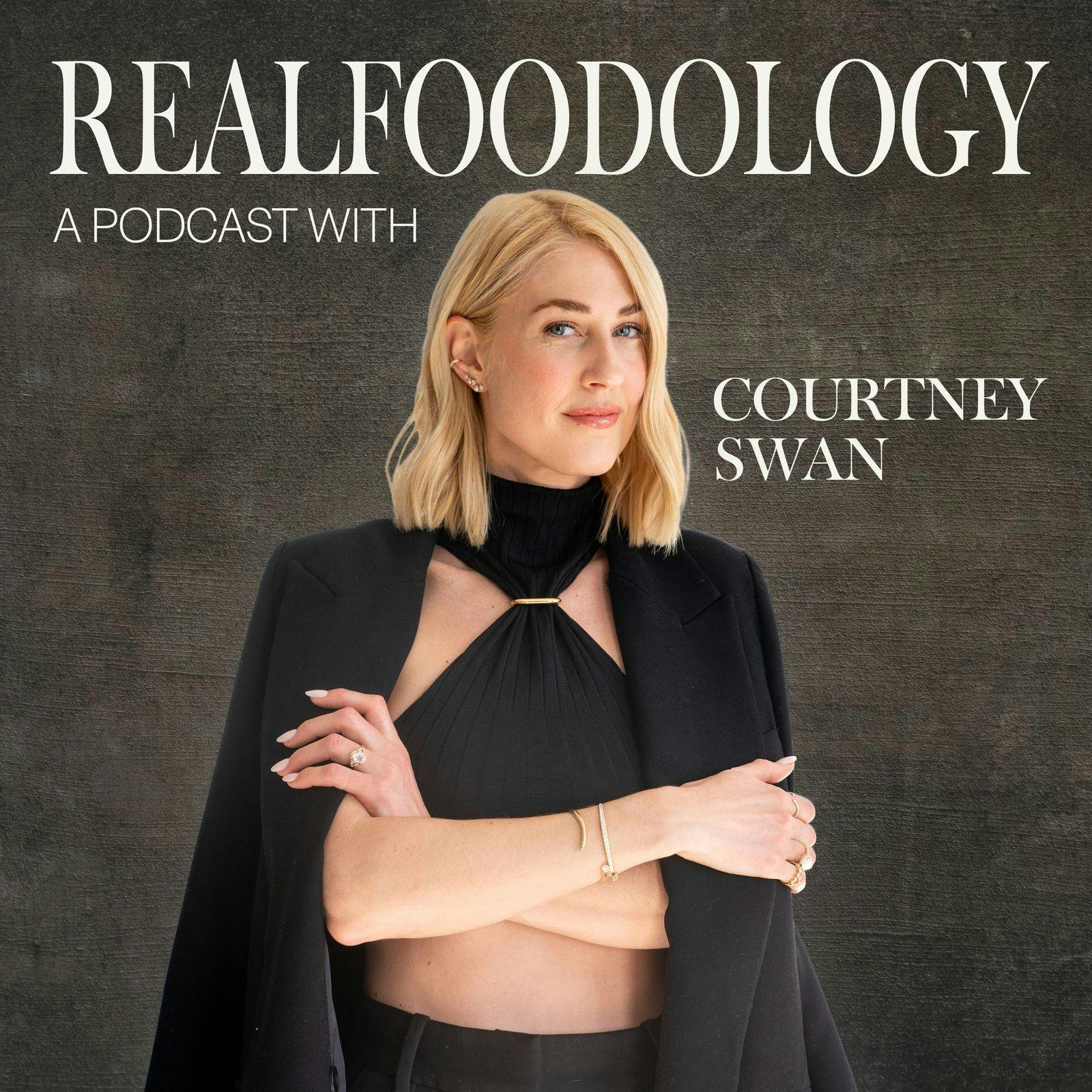
Loading summary
Transcript299 lines
- [00:00]
Courtney
Were you healthier as a UFC champion or as a mom eating real food?
- [00:04]
Misha Tate
Oh, this one's easy. Definitely a mom. I really believe that if people want to get healthier, they want to lose weight. In its basis, it's pretty simple. You can pretty much eat as much Whole foods as you want. I'm fighting Liz Posner. She put me in a Muay Thai clench. She begins kneeing my face.
- [00:21]
Courtney
Oh, my God.
- [00:22]
Misha Tate
And I have no idea how to get out of this. I'm trying to grab her legs with open arms, and one of them just clean on, just smashes my nose. I mean, just a crunch. Smash. Blood. This is the only time in my life I think I've ever lost my temper in a fight.
- [00:36]
Courtney
What's the biggest mistake you see women making when it comes to training or weight loss?
- [00:41]
Misha Tate
I think the biggest mistake that they make is.
- [00:45]
Courtney
Welcome back to the Real Foodology podcast. On today's episode, I sit down with UFC legend Misha Tate to talk about the power of real food, motherhood, and the shift from fueling for performance to fueling for true health. Misha opens up about the myths she bought into as a young athlete, why the calorie deficient model fails women, and how eating nutrient dense whole foods transformed her energy recovery, hormones, and more. We discuss how processed foods hijack our reward centers, why parents don't need a nutrition degree to know how to feed their kids and themselves, and how women can finally stop feeling guilty for hunger.
- [01:17]
Podcast Host/Announcer
And start eating in alignment with their biology.
- [01:20]
Courtney
This is a conversation about rewriting outdated nutrition rules and choosing your own body every time. We also talk about her early days in the ufc, which I just found so, so fascinating. She is such a badass and she has become a dear friend who I met recently at a regenerative farming conference, which just made me love her right when we met. She's such a cool human and I really hope that you love this episode. I thought it was so fascinating to hear what it was like to be in the UFC and what the focus was around nutrition and eating and calories in and calories out. So I think you're going to love this episode. If you want to take a moment to rate and review it, it really does help the show. It means a lot to me. And of course, if you are loving this particular episod, if you wanna tag me and Eshattate, we will do our best to try to repost it. Thank you so much for listening.
- [02:09]
Podcast Host/Announcer
Here's the deal about New Year's resolutions. Most of them don't fail because we don't care enough. They fail because we're guessing we're trying to fix symptoms without actually understanding what's happening inside our bodies. Things like hormone imbalances, inflammation, thyroid issues, or nutrient deficiencies can quietly sabotage your energy, your mood and your metabolism, no matter how healthy you think you're being. This year I'm really focused on making SM smarter, more informed choices about my health instead of just trying harder. And that's exactly why I chose function through function. You get access to a set of over 160 lab tests covering hormones, metabolism, heart, health, inflammation, nutrients, stress markers and more, all tracked in one secure place. Over time you can even add advanced imaging like MRI or chest CT if you want that deeper layer of insight. What I love is that it takes the guesswork out when you actually see your data. Your health goals finally have something real to stand on. So this year, instead of another resolution that fades by February, give yourself clarity. Own your health for 365 a year. That's just a dollar a day. Learn more and join using my link, visit functionhealth.com real foodology and use gift code real foodology25 for a $25 credit towards your membership. Most people have no idea that traditional non stick cookware is loaded with forever chemicals. A study from the Ecology center found that 80% of non stick pans contain Teflon which are also known as pfas, otherwise known as forever chemicals that can leach into your food and your home. And a brand new study in the Science of the Total Environment found that one scratch on a nonstick pan can release about 9,100 plastic particles into your food. This is why switching to toxin free cookware is one of the most important choices you can make for your health. Our place makes high performance toxin free cookware completely free of PFAs and PTFEs so you never have to wonder what's ending up in your food. And their four piece cookware set is the easiest way to overhaul your entire kitchen. You get two always pans and perfect pots in many and full sizes. Replacing a whole cabinet of bulky outdated cookware. You can saute, sear, fry, bake, boil, steam everything with just four pieces and buying the full set saves you $150. Personally I love how their non stick surface performs. Eggs glide out, cleanup takes seconds and everything matches in those iconic our place colors. It genuinely upgraded my kitchen. And also if you are looking for a great non toxic air fryer, I highly recommend checking out their Wonder Oven or their new Wonder Oven Pro. They are amazing. I love them. I use mine every single day. Our Place is having their biggest sale of the year right now. Save up to 35% sitewide now through January 12th. Head to fromourplace.com realfoodology to see why more than a million people have made the switch to Our Place kitchenware. And with their 100 day risk free trial, free shipping and free returns, you can shop with total confidence. Shop the Our Place holiday sale right now. No code needed, just go to from ourplace.com Realfoodology.
- [05:15]
Courtney
Well, we can just kind of start. This is not what I was going to initially start out with you, but. But since we're already talking about it. So I actually got advice from a woman right before we were about to start trying. I went on a podcast and she was like, very pregnant and she was about to have her third and she.
- [05:30]
Podcast Host/Announcer
Said afterwards, she goes, if you don't.
- [05:32]
Courtney
Mind, I want to say something. And I was like, sure. Because I told her, I was like, we're going to start preparing for fertility soon. Like, I'm hoping to get pregnant by the end of the year. And. And she said, if I could give you one piece of advice, tune out all of the negativity online. Like, just don't listen to it and don't absorb it. And so anytime I would see stuff online of like, people really struggling with fertility, obviously I'm so sympathetic to it. And I was like, oh, man, that breaks my heart. And then I kept saying, it's not my story, it's not my story, it's not my story. And just was kind of like blocking it out and just being like, I'm just going to surround myself with all this positive energy and try to focus on that aspect of it and hope and pray that it's that I'm going to be able to get pregnant and it's not going to be hard. Yeah. And I feel like it helped.
- [06:11]
Misha Tate
It does. I think so too. I'm one of those people that's. That's guilty sometimes of my algorithm getting like darker and more gloomy about, like, all the things going wrong in the world. Like, I hop on Instagram and I'm like, oh my God, where the world's going to end tomorrow. Like, food, you know, pesticides and everything. There's all this chemicals and Cheerios, like, what am I going to feed my. You know, obviously I don't feed my kids Cheerios, but there are a lot of kids that. And I feel bad for the parents that are Busy that are working single parents working two jobs. And it's like they shouldn't have to have a nutrition degree.
- [06:42]
Courtney
I know.
- [06:43]
Misha Tate
You know what I mean? Like, and even a nutrition degree, I think you have to even go beyond that because it's not just about what the food is supposed to have and not have. Like, I think generally people know like, oh, an apple should be healthy, eggs should be healthy. Like milk is a healthy. But it's like the things that are not on the labels of the food that's so concerning. That seems unfair.
- [07:03]
Courtney
It is unfair. And I would even, I would take it a step further. And I feel so bad for the families that this isn't even getting to them yet. You know, like, they're just, they don't even understand how bad the cereal is and how bad the ultra processed foods are. Because there is a general thinking, I think, in society that if it's on the shelf, it's safe. That there's no way that they would have allowed, they would have allowed it on there if it wasn't safe.
- [07:25]
Misha Tate
That was me for many, many, many years. I had no idea. And I've been a professional athlete. You know, it's like, I mean, even at the beginning of career, I, I just, I, I blindly trusted, I didn't even think not to trust. It wasn't even like, I thought like, oh, I'm putting my trust in these people. It's just, well, this is food. Yeah. And that, that was it. Like, it was very simple to me. And I, I just thought like, yeah, I mean, I could just. If it's at the grocery store, like, I never even thought to think of it being unsafe. And I think there's still a lot of people out there. And that's just really, it's unfair.
- [07:55]
Courtney
But it is really unfair.
- [07:57]
Podcast Host/Announcer
I'm sure that there was a whole.
- [07:58]
Courtney
Different level of it too. And I really, I'm so excited to dive into this with you. In the fitness world, I feel like it' different beast because people are so focused on calories in, calories out. Does this fit my macros? So there's such an emphasis on just the macros that I feel like the quality of the food kind of goes by the wayside. Did you think that, that, do you feel like that was happening?
- [08:19]
Misha Tate
It's still happening. Yeah, it's still happening. As a matter of fact, I think the athletes are so focused on the, the macros. And I constantly preach about the micro. I'm like the, and, and not just for athletes. But this definitely applies to Athletes, you know, we think about D in a way that's like proteins, fats and carbs, because that's energy and fuel for our muscles. But really, when you break down to what is, I believe, preventative for injury and what is going to fuel you from a cellular level, your health, your brain function, the ability to process information quickly, you know, that's very important. You know, eye, hand coordination, these kinds of skills that are like the base of our skills, not just how much weight we can push around or can we lift this person off of the ground. You know, I mean, sure, that might mostly break down to the way that you're fueling your body, but on that deeper level, it really does matter about magnesium and calcium and vitamin C and vitamin D, Lord knows that's an important one. But vitamin B, all these nutrients that are supposed to be in our food. And I still don't see a lot of athletes, even at the top level of the ufc, really focusing on the micronutrients. It's all about macros.
- [09:35]
Courtney
Oh, it bums me out. And what you just said. Wow, I knew that, but I've never heard somebody say it like that. And that is so. I mean, it was so profound to me, but it's so simple. Right? But I never thought about it from that angle of what I was thinking about too is if your body is inflamed, your body's not going to work as well. Right. Like your muscles and the movements that you need to make are probably not going to be as great because you're super inflamed. And also you don't feel good. So you may not necessarily be on top of your game if you're really inflamed. And you're inflamed when you're eating all these ultra processed foods and all this junk that your body doesn't actually know what to do with and how to assimilate it. But also too, the hand, eye coordination and how your body and how your brain actually works is all affected by what you eat.
- [10:15]
Misha Tate
Absolutely.
- [10:16]
Courtney
Wow. Okay. I never thought about it like that. So I was kind of reflecting on. I don't know if you know this about me, but I worked in a super male dominated career for about 10 years. I was working in the music business.
- [10:28]
Misha Tate
I didn't know that. Okay.
- [10:30]
Courtney
Yeah, I was a tour manager. And at the time, when I was a tour manager, because at the time I was. How old was I? I was fresh out of college. I was like 22, 23 maybe. And it was basically unheard of. To be a tour, manage and be on the road with bands because it was all males. And it really. Looking back on it and reflecting on it over the years, it had a profound effect on me and how I moved through the world, especially how I worked in my career because I felt like I really had to prove myself. And I was curious if there was any aspect of that for you being in this male, like mostly male dominated world.
- [11:03]
Misha Tate
Well, certainly in the beginning it was an odd thing to do. So I'll go ahead and date myself a little bit. So I started wrestling when I was in high school. I was 15 years old and I was one of two females and we joined the wrestling team because we couldn't play. We didn't like basketball. Let's be honest. I can't jump. I'm not good at basketball. So it's really important for me to know what I wasn't good at. And I wasn't any better at wrestling, which is funny. But I loved it. So there was a big difference there. I went on my first day of practice and I just remember getting my butt kicked. I mean, it was like they wanted to show us girls, you know, that we didn't belong. It was pretty clear. The messaging was pretty clear. There was no extra help. Like they were definitely trying to put us in with like the best wrestlers and just, you know, like, hey, this is what wrestling is and you're not cut out for it. But I just loved it. It lit a fire under me. And I think, I don't know if I consciously thought about this, but it was kind of like that law of diminishing returns. Like, I'm so bad at this right now, but I have a real desire to get better and I should get better. And I was getting better faster because I really wanted to figure it out. And then I graduated from high school and I went to college and that's where I discovered mixed martial arts. I was 19 years old. This was like the end of 2005. And yeah, I began fighting. I began doing mixed martial arts. Not because I thought that was going to be for me either. I went out for a club sport and I didn't want to do it actually. Really? I did not think. Well, I just didn't think that it would, it would be for me because when I started training, I learned on my very first day after having, coming from a wrestling background, how to choke people. And it was awesome. And I was like, this is great. I could add this to my wrestling. And this, this seems fun. What is this? Jiu jitsu thing. They were like, do you want to learn striking? I was like, absolutely not. Like, why would I know? Like, there's no way. I'm not putting gloves. No. Nobody's punching me. I'm not punching anybody. Zero desire. And then three weeks later, I had my first mixed martial arts. I basically had my first mixed martial arts fight three weeks after attending a live event, which was, all in all, was probably about, like, four weeks of training, which is. You don't get good at anything in four weeks. I didn't win that fight, but. But I just jumped in, and I just, like, I loved it. And, you know, it was all males. Like, it was all guys.
- [13:28]
Courtney
Imagine. Was that ever scary for you?
- [13:31]
Misha Tate
Yeah, for sure. Especially on, you know, my first initiating, like, times of sparring. I mean, that's like, when you put the gloves on and you're actually getting hit. And I remember just feeling so frustrated by it, because obviously I wasn't good at it. But there was also something I would say on a very deep, like, sort of primal level that felt very wrong to me about getting, like, beat up by these guys. And by the way, they weren't trying to, like, hurt me or anything. They weren't being jerks, but they were just better than I was, faster than I was stronger than I was, and had way better technique than I was. So. So I was just getting beat up.
- [14:05]
Courtney
Yeah.
- [14:05]
Misha Tate
And that was really tough to swallow, you know, and there were obviously guys that were less accepting. And then there were a lot of guys who were like, yeah, if she wants to be here, as long as she doesn't get in the way or slow us down, that's fine, you know? And then there were some guys that were really nice and helpful. So it was like this mixture of all of it. But I will say that women's mixed martial arts was very widely unaccepted at that time.
- [14:28]
Courtney
Interesting. Okay, and what made you keep going then? Cause it sounds like you were kind of, like, on the fence, and you were like, I don't know if I'm good. What made you keep going?
- [14:36]
Misha Tate
Well, I would say that first fight was the day a fighter was born, the one that I told you I lost. I'll dive into that a little bit. So I'm 19 years old. I've decided I'm just gonna jump into this mixed martial arts fighting. And it stemmed from watching a local amateur event in Yakima, Washington. So I went to Central Washington University. I watched this amateur fight card, and I just had this. It was like a Moth to a flame when I was watching them fight. And I think prior to that I had this preconceived notion of like what a fighter or a fight would look like. Like it would be like angry people. Yeah. You know, like it like frustrated people with like toothless brawlers. Like people that have like pro, you know, like, like are not well adjusted in society. And I'm like, that just doesn't, I don't have anger issues. Like I'm, I don't think I need to like beat anybody up. Like I'm cool. But then I watched the amateur fight card and I was like, that's not at all what I see. I, I see like mixed martial arts. Like I see somebody, people going out there and like expressing themselves in the most raw form hand to hand combat. How cool is that? But there was no girls on that fight card. At the end of that they made an announcement that in a few weeks they would have an all female fight card. And obviously they were struggling to fill seats of the, not seats of the audience, but like fighters because there weren't that many female fighters.
- [15:52]
Podcast Host/Announcer
I've been really intentional about what I keep in my medicine cabinet, especially during cold and flu season. I don't want to reach for products full of dyes, chemicals or stuff that I can't pronounce. I want clean, effective options that actually work. That's why I love Beekeepers Naturals. They're a health and wellness company reinventing everyday products with non toxic clean ingredients that you can actually trust for you and your family. The star ingredient in their products is propolis. It's what bees use to protect their hive from germs. Germs. For us, it supports immune health with over 300 essential vitamins, antioxidants and bioactive compounds and helps defend against germs on the spot. I personally keep the Propolis throat spray with me year round and I use it proactively every day, especially when I'm traveling or I feel like something might be coming on. It's become such an easy daily habit and has really helped me keep sickness mostly at bay. And when my throat feels dry or scratchy, I reach for the propyl throat soother. It's incredibly comforting and cooling, perfect for those moments when you need quick relief. I also just love knowing their clean options like their propolis and vitamin C liposomal which gives high dose vitamin C for immune support with benefits like glowing skin and muscle recovery as well. Today, Beekeepers Naturals is giving my listeners an exclusive offer. Go to beekeepersnaturals.com realfoodology or enter code real foodology to get 20% off your order. That's beekeepersnaturals.com Real Foodology or enter code Real Foodology. You can also find their products at Target, Walmart, Amazon, cvs, Whole Foods and Walgreens. I've been thinking a lot about how aging really shows up, not just in birthdays, but in energy recovery and how fast your body bounces back. That's why I got so excited about Qualia Senolytic, one of the most fascinating breakthroughs I've seen in the science of aging. As we age, our bodies accumulate senescent cells, often climbing called zombie cells, which can drain energy and slow recovery. Qualia Senolytic is a clinically tested formula with nine vegan plant derived compounds designed to help your body naturally eliminate those zombie cells. And the best part, you only take it two days. A month. Yes, a month. Since adding it in, I've noticed better energy, less soreness, and an overall lighter, clearer feeling. Like I'm aging smarter, not harder. Experience the science of feeling younger. Go to qualiaife.com real foodology for up to 50% off your purchase and use code Real Foodology for an additional 15%. That's Qualia Q U A L I A Life.com Real Foodology for an extra 15% off your purchase. Your older self will thank you and thanks to Qualia for sponsoring this episode.
- [18:33]
Misha Tate
So they made the announcement to try to get more people to volunteer. And so I did. I went down and I signed up and then I had that first fight. And then fast forward into the fight. I'm fighting Liz Posner. She's from B.C. canada. She's a kickboxer. Her and her husband own a gym. And I'm a wrestler, so I have very limited striking skills. I mean, very limited. And she's not, she's not a wrestler. So I take her down on the first round and I think I just hold her down. I don't even know if I punched her on the ground or anything. Cause I don't. I still was such a baby in even understanding what it meant to really fight someone. I was still just trying to wrestle her. The second round they made a good adjustment. She put me in a Muay Thai clinch, which is basically like they lock their hands behind like your neck and head and they put their forearms on your collar bone and they kind of pinch your head. So I've got your head in the space here. And this is before there were any rules or regulations for amateur Fighters. So she begins kneeing my face.
- [19:28]
Courtney
Oh, my God.
- [19:29]
Misha Tate
And I have no idea how to get out of this. I don't even know what it is I'm in. But I'm like, kind of stuck. And so knees are like flying at my face. And the only thing I know how to do is, like, still try to grab her legs. Yeah. So I'm trying to grab her legs with open arms as I'm receiving knees to the face. And one of them just clean on, just smashes my nose. I mean, just a crunch. Smash. Blood. And I. I just remember, like, for dear life, like, trying to grab onto those legs. And eventually I did, but I kind of like slid down to her ankles. I mean. Cause I'm really like driving down and forward and she's pulling me down. And so we end up in a position where I'm kind of like holding on her ankles. And she steps out and she gets around behind my. And she's on, like, me like a little backpack. And she's trying to choke me. And so I'm turtled up, you know, I've got my neck sucked into my shoulders and I'm really trying to defend from this choke. And then I remember she sits up and she starts punching me. And one of them hit my ear and it felt like a bee sting. This is the only time in my life I think I've ever lost my temper in a fight. Okay.
- [20:37]
Courtney
But I'm shocking. One time.
- [20:39]
Misha Tate
One time. Wow. Yeah. I'm usually pretty cool, calm and collected, like, even in high stress situations. But I just remember feeling like I just. I don't know why, but I took that shot so personal. And I remembered being mad that she was on my back. I was on my knees and my elbows. And I remember this very, like the eye of the storm, like the middle of the tornado moment.
- [21:00]
Courtney
Yeah. It's like calm, clear.
- [21:02]
Podcast Host/Announcer
Yes.
- [21:03]
Misha Tate
And my. There was blood streaming so steady from my nose. And this pool of blood, I was just watching it just grow in front of my face is how. How like, fast I was bleeding. I mean, I was really bleeding. Whoa. And that was the moment I was like. I was like, f this. Like, there's no way she is going to out wrestle me. Like, she might beat me, she might knock me out, but she ain't gonna outrust me. So. So I started to peel her leg hooks out. And I started to hula hoop her down in front of me. And so she's below me and I stand up and I just start raining down punches. I mean, I'M reaching to the ceiling. I have no idea how or what I'm doing, but I'm just trying to, like, take the life out of her at that point. And then the round ends, I go back to the corner and I knew, and I think that she knew, too, that that third round wasn't going to be pleasant for her because she had really, like, thrown everything at me like the kitchen sink. You know, she really had all these advantageous positions and opportunities, and yet at the end of that round, I had still come out in the dominant position. Yeah. So, like, I wasn't going to go down unless, you know, she was able to, like, really put me out and I was coming for her. But. Ok, this is still back when girls didn't fight, remember? So I go back to my corner and my cornermen look like they saw a ghost. I mean, they were just like, they're, like, scared of you now. Well, I don't know if they were.
- [22:24]
Courtney
Scared of me or if they were.
- [22:25]
Misha Tate
Scared of, like, what was going on. They just didn't know, like. And I think their protective instincts kind of kicked in and so they threw the towel in. So. Which basically means, like, that I bowed out of the fight, but I didn't want to bow out of the fight.
- [22:38]
Courtney
And they made that choice.
- [22:39]
Misha Tate
Yeah, they can do it for you. You. I did not agree to that. And I was very upset by it.
- [22:44]
Courtney
But.
- [22:45]
Misha Tate
But they didn't want to see me go back out there with, like, you know, my face basically broken, my nose broken. And now, mind you, it was a smart decision. It was a logical decision.
- [22:55]
Courtney
Yeah.
- [22:56]
Misha Tate
But I was so fueled by emotion at that point that I wanted to go back out and, like, get that. Finish that third, you know, get that third round or finish her and never got that opportunity. But it was an amateur fight fight. I got paid zero money. All my medical bills and expenses were on me. I'm a broke college kid.
- [23:12]
Courtney
Oh, damn.
- [23:14]
Misha Tate
So it was the smart thing to do. And you mean it can. Like, I didn't know this at the time, but it could be dangerous having a broken nose like that and then continuing to get hit, like, you know. Yeah, yeah. So, wow.
- [23:25]
Courtney
Has that. Have you. How many times have you broken your nose? Or, like, have you.
- [23:29]
Misha Tate
Quite a few. Really?
- [23:30]
Courtney
Yeah. Were you ever worried that it was going to be, like, were you ever worried about any sort of damages and, like, aesthetically? Yeah. Or both? Like, I was even thinking about, like, real harm, too, but both, yeah, for sure.
- [23:42]
Misha Tate
Aesthetically, it just doesn't really cross your mind, unfortunately, Fighters have to be a bit delusional. And they think, like, that won't happen to me.
- [23:48]
Courtney
Yeah.
- [23:49]
Misha Tate
Or I'll be fine. Like, we are the crazy people that think if a plane goes down, like, we'll survive.
- [23:55]
Courtney
I mean, okay, I'll be the one.
- [23:57]
Misha Tate
Person on the mountain, you know, looking at all the bodies around me, and be like, how do I get off of this mountain? You know, like, that's my mentality. So it's like. It's kind of crazy, but that's just how I think. So. My whole career, I've just never given that any power. I've never thought about, you know, too deep about the things that could happen. I just think they won't.
- [24:16]
Courtney
Now.
- [24:16]
Misha Tate
In the latter part of my career, I've done more preventative things than I did in the earlier part. And I think becoming a mother changed me a bit because I used to think, like, oh, you know, like, I'll survive, or like, I, you know, I will survive. And now I'm like, no, I have to.
- [24:30]
Courtney
Yeah.
- [24:30]
Misha Tate
You know, it's not. And that's just like, we're not taking the luck of the draw kind of thing here. Like, we. I have children to raise. Like, I need to be here. I need to be present. So what are the things that I can do to mitigate risk? What are the prehabs? You know, like, let's not wait for things to happen. Let's try to be on top of it. So, you know, I'm big on hyperbarics. Red light. And there's so many, you know, things that I do now that I just didn't know about earlier, and I don't think that I. Oh, gosh. Where they say youth is wasted on the young. Right. I just didn't think about it. So true.
- [24:58]
Courtney
Oh, my gosh.
- [24:59]
Misha Tate
Didn't think about it.
- [25:00]
Courtney
Do you feel like a lot of the fighters are doing that kind of stuff? Because I've been hearing. Do you know who Bergen Bueller is? I feel like you would know. Of course.
- [25:06]
Misha Tate
Yeah, I've been out there. He gave me stem cells in my knee, so I scar right there.
- [25:10]
Podcast Host/Announcer
Wow.
- [25:10]
Courtney
Yeah.
- [25:10]
Misha Tate
Yeah, he helped me out a bit.
- [25:12]
Courtney
He's a. A dear friend of mine. I love Brigham, and I know he's been helping a lot of fighters with his stem cells. And also he just has that really cool center that has the hyperbaric.
- [25:21]
Misha Tate
So interesting, too.
- [25:22]
Courtney
I know.
- [25:23]
Misha Tate
It is very unique.
- [25:23]
Courtney
Yeah, it's very cool. I know. Did you talk to his alien AI Which. His name?
- [25:28]
Misha Tate
Alan? Yeah. Yeah. Yep. Un. Unhinged mode is very fun.
- [25:32]
Courtney
It's very fun.
- [25:32]
Misha Tate
Yeah.
- [25:34]
Courtney
For people listening that don't know. I actually did a video about this on. It's on my Instagram. But he has this full screen. I mean, it's probably like 12ft tall.
- [25:42]
Misha Tate
Yeah.
- [25:42]
Courtney
And it's a little alien.
- [25:43]
Misha Tate
Bigger than human size.
- [25:45]
Courtney
Yes. And it's. It's a screen, but it has an AI alien form, and his name is Alan. And he talks to you, and you can ask him questions. And so I was asking him all these questions about, like, the medical system, and he was giving me, like, really cool answers.
- [25:57]
Misha Tate
He's. Yeah, he's super smart. Yeah, he's very smart. Yeah. You learn some things when you're there. Oh, it's a neat place.
- [26:03]
Courtney
Place.
- [26:03]
Misha Tate
It's a beautiful place.
- [26:04]
Courtney
And do you feel like those type of modalities really help with recovery?
- [26:08]
Misha Tate
So much so. It's insane.
- [26:10]
Courtney
Yeah.
- [26:11]
Misha Tate
I think giving your body ample amounts of oxygen is one of the best things that you can do. And people ask me about, well, why can't I just put an oxygen mask on? Well, I'm like, well, if you take a pulse oximeter and you put it on your finger, it's going to tell you most likely that your red blood cells are holding your oxygen at about like 98%, which means they're pretty efficient. That's like their number one job job. Okay. So when you go under pressure in a hyperbaric chamber, you are hyper oxygenating the plasma, which is typically a reservoir for oxygen. So all that liquid that your blood sits in is then getting a ton of oxygen, which actually can usually reach further than the red blood cells themselves because they get a bit congested sometimes, especially when there's damage, you know, inflammation. It's hard for the. The cells to actually get where they need to go. But oxygen is so important that when you flood the. That liquid in your body, your plasma with oxygen, it can regenerate and help with angiogenesis. I'll tell you a quick story.
- [27:06]
Courtney
Yeah, I love this.
- [27:07]
Misha Tate
I had a wellness center in Las Vegas, and we had a woman come in in our first few weeks of being open, and she had a mommy makeover, and one of her nipples didn't re. Establish blood flow. Oh, yeah.
- [27:21]
Courtney
So that's crazy.
- [27:22]
Misha Tate
It is. It was crazy. So her surgeon was kind of like poking around, hoping to, like, find some sign of blood flow, but all that was coming out was a clear liquid, which is, you know, is plas. He's like, I'm gonna send you to this place because you're, you know, her and her husband were very desperate at that point. I mean, it was. Her nipple was black.
- [27:39]
Courtney
Oh my God.
- [27:40]
Misha Tate
It was black as the night without any stars. Like it was black. Wow. And so she came to our place and we treated her aggressively at like 2.2.2, which is a pretty deep dive. Twice a day with red light. After her first hyperbaric session, she had noticeable pink back in her nipple.
- [28:05]
Courtney
That's so cool.
- [28:06]
Misha Tate
Which was so wild. But it was just because the liquid was able to seep. So basically angiogenesis hadn't happened yet. Like the blood, the roadways for the blood cells to get in and out wasn't there. But the liquid in the body can seep anywhere. And so when it got hyper oxygenated, it actually it was able to fix it. Yeah. So your body's your own best doctor. It already knows what you want to do, so what it wants to. And it doesn't discriminate in the body either. It's going to prioritize the things that you need to fix the most. And our brains are so oxygen dependent.
- [28:42]
Courtney
I used to think that all extra.
- [28:43]
Podcast Host/Announcer
Virgin olive oil was basically the same until I learned that most grocery store oils are blended. They're bottled long after harvest, and they're often stripped of their nutrients. If it doesn't taste peppery or green, it's probably not doing much for your health. That's why Ya Aya's Evo extra virgin olive oil is now a staple in my kitchen. It's certified organic, single origin, and cold pressed within hours of harvest from family owned groves and Greece. You can genuinely taste the difference. It's rich, it's vibrant, and it's full of antioxidants and anti inflammatory compounds that support heart, brain and gut health. I use it everywhere on veggies, salads, eggs, even occasionally straight off the spoon. And it makes clean cooking feel elevated and intentional. Their subscription option makes it easy to always have fresh olive oil on hand. If you want to elevate your cooking and your wellness routine, go to Yaya's Evo. That's Y A Y A S E V O-COM Realfoodology to get 15 off your order. And yes, it stacks on subscriptions. That's yayazevu.com real foodology. If bloating cravings or that post meal crash have started to feel normal, I want to challenge you to feel better. Because you don't have to live feeling uncomfortable after you eat. That's why I love the Just Thrive gut essentials. Bundle. It combines two clinically proven gut Essentials Just thrive probiotic and the digestive bitters. The probiotic is the only one clinically proven to arrive 100 alive in your gut so you actually feel a difference. Less bloat, better energy and feeling more balanced overall. It also is the only probiotic I've ever found that has a strain that you can take while you're on antibiotics because it can actually still help seed your gut even when the antibiotics are stripping your gut of all of its good bacteria. Then there are the digestive bitters. 12 science backed herbs in one tasteless capsule that help kickstart digestion and support GLP1 production so cravings don't run the show show together they help you feel like your best self fast and there's even a 100 money back guarantee. Take the just thrive, feel better challenge today and save 20 off your first gut essentials bundle. Visit justthrivehealth.com Real Foodology and save 20% off with promo code Real Foodology. See the difference for yourself and get a full product refund, no questions asked. That's justthrivehealth.com Real Foodology be the best you with Just thrive.
- [31:12]
Misha Tate
I mean, 22 to 25% of our daily oxygen is. Goes to our brain. It's just a processing machine. So when you get extra oxygen in the body, even a little bit, even if you're just diving at 1.3, it's just a little bit more atmospheric pressure than at baseline. But it makes a big difference. A little bit goes a long way cognitively. So I find I do it as a pre med medit. Yeah. Like I, you know, before things go wrong.
- [31:39]
Courtney
Yeah, preventative.
- [31:41]
Misha Tate
Yeah, preventative. And it helps a ton. I could tell when I haven't been in there for a while. Oh yeah, I can definitely tell which, full disclosure, I haven't been in there for a little while. You're like, I'm feeling it. I need it.
- [31:52]
Courtney
Yeah.
- [31:52]
Misha Tate
Well, I had had my chamber for so long that it was a soft shell chamber that it finally like the, like I had it for like 12 years and finally the scene busted. Yeah, not exactly. I mean not busted in a scary way, but yes. They started leaking air and so I had to send it in and then I had to get the new one and then I've got to set it up and so it's been a few months.
- [32:14]
Courtney
It's like a whole thing. Yeah.
- [32:15]
Misha Tate
Yeah. So now when I'm trying to think of my words and I'm like I've been in there. Misha, you've gotten hit in the head for a living. You got to get in the chamber. You got to make up for, you know, all those brain cells you probably damaged along the way.
- [32:26]
Courtney
I know, I know. Hyperbaric is really cool. My parents, I've been having both my parents do it because my dad just had pretty major knee surgery and his knee was, wasn't healing, it was just. He actually we took him to ways to. Well, cuz Brigham was like, send your dad in here, let's get him in the hyperbaric. Because for some reason his knee was not fully closing and healing and he got in that hyperbaric like three times. And then all of a sudden it started healing like that.
- [32:47]
Misha Tate
Isn't that incredible? Yeah. Oxygen important.
- [32:50]
Courtney
Yes, very important. Okay, so I want to ask you more about food because this is where you and I really connect. We met recently at that convention, convention, conference, whatever you want to call it, at that regenerative farm, sovereignty Ranch. And this I know is a real big passion for you and it was a real like aha moment for you. And I'm curious to know, so are you. Did you notice a difference between when you were training and you weren't paying attention to the quality quality of your food and you were probably just eating more macros and calories in, calories out. And then when you started switching over to a real food diet and I'm also wondering how. What was your aha moment? How did you figure that out?
- [33:28]
Misha Tate
Oh, man. Well, yes, to be honest, I noticed a huge difference once I started eating more according to fueling my body in, you know, from every single level and facet as opposed to what I used to do before. And I think, you know, when you're younger, you can get away with more of those things and maybe not have as, as, as significant as of an impact, but you really do start to notice it and you notice the things that are working and are not working and it's very distinguishable, sociable. And so for me, I ate your standard healthy air quotes diet as an athlete. You know, chicken breast, rice, broccoli. Yeah, that was pretty standard.
- [34:16]
Courtney
Bodybuilder. I was bodybuilders.
- [34:18]
Misha Tate
Oatmeal for breakfast. Yeah, some, some, you know, fresh fruit to make it real healthy. And you know, for dinner, I mean, I'm more, more lean, lean, turkey lean, you know, things like that. And I thought that I was fue. My body in a way that was, you know, was good for me. And I'm not, I'M not saying that that food isn't, you know, the chicken breast or rice or broccoli isn't great. I'm just saying that there, there can be so much more to it. And I personally think, I'm not a big rice fan. It's not that I don't like it with my sushi or not, but I think it's kind of a waste of opportunity to get more nutrients with your food. Yeah. So maybe some people are going to hate me for saying that, but I'm going to be honest with you. I think it's a waste of space, it's a waste of calories. Unless you're somebody who really. You need more calories. Calories. You know, if you're ultra marathon or, you know, you're ultra runner or something and you really just need the energy and you can't consume the amount of food that it would take otherwise, then maybe it makes sense for you. Yeah, but if you were trying a diet to like lose weight, get the rice out of your diet. I agree.
- [35:20]
Courtney
What would you do instead?
- [35:21]
Misha Tate
I would supplement it with sweet potatoes or potatoes.
- [35:23]
Courtney
I was going to say the same thing.
- [35:24]
Misha Tate
100. Because there's just so much more. I mean, there's the beta carotene, there's all these great things in sweet potatoes. That's the micronutrients. So if we could just reframe the thinking really quick about food, about macros versus micros. Start thinking about everything you get for free when you eat nutrient dense food. Right. You get it for free.
- [35:47]
Courtney
I love that it's free.
- [35:49]
Misha Tate
Like get as much nutrients out of your food. You should look at that competitively. Like I'm gonna eat the things that are gonna give me. So you're telling me that I could eat this many calories in a cup of rice. Let's say it's a hundred calories in, in this little cup of rice. Or I could eat this much sweet potatoes and in the rice I'm going to get so many carbs. I don't know what number of carbs you would get in a cup of rice, but. Or I could eat the sweet potatoes and then I'm also going to get these 50 nutrients on top of it where the rice, I'm not getting it. So like let's, let's get competitive about that. And the same thing with ultra processed foods. You go and look at the food label. Now here's another thing to distinguish, which I know you know, but a lot of these things that are added on the back of Like a cereal box or oatmeal. Those are man made versions of the natural vitamins and minerals that occur in food. When it is made naturally, I believe that it goes into your body and your body's like, oh, we know what this is, we can put it right to use. When it is synthetically made there is a possibility that your body is like, this makes no sense to me, I don't know what to do with it. And it's actually going, it's stressing me out. I don't know where to put it, I don't know how to use it. And could lead to inflammation and also lead to more hunger because your body still does want the proper form of nutrition. So you are going to crave more food until you get what you need. Your body needs, I mean macros. We, we can understand that for sure. There is a protein quota, like a minimum protein quota that your body really, really wants every single day. And I think most of us hit miss the mark on that one by a long shot. Most of like casual eating, like everyday people. Like even if you think you're being healthy a lot of times we're not getting, getting, you know, the amount of the macros. But then if you dive deeper we should say like I want the most nutrient dense, free, nutrient dense food that I can have. Because nutrition is everything.
- [37:45]
Courtney
It's everything. And I've found that when I started focusing more on nutrient density and less about calories and being so concerned about the servings that it, I mean it completely changed my body, my health, it, it also changed my relationship with food, which was a huge one for me too. Same because when I started focusing on these nutrient dense foods and I was finding myself that I, I was just finding myself after meals feeling way more satisfied and full. And then I didn't feel like I had to snack all day because I was full. I, or I am, I'm full and I'm satisfied. And so then I'm not chasing these snacks all day and I'm, I'm eating less, but I'm eating more in the sense of like nutrient dense foods. And I, I don't feel like I'm obsessing over food all day is basically what I'm trying to say.
- [38:27]
Misha Tate
Yes.
- [38:27]
Courtney
Whereas when I was younger, like in, yes. When I was in my twenties, I just, I remember, remember it so vividly. I feel like it will be stamped in my brain forever. I remember every morning. Oh God. This is obviously before my real foodology days, but I would do like a slim fast Shake or a Slim Fast Bar. And then I'd be like, oh, why am I so hungry?
- [38:46]
Misha Tate
Again, Slim Fast Girl. I'm guilty, too. Those bars were good, though. Can I just say, the little strawberry bars, the cookie dough one was.
- [38:56]
Courtney
But I'm so horrified. Now I look at those ingredients.
- [38:58]
Misha Tate
Yeah, we look at it now and we're like, no wonder it was good. It's like, full of fake crap that's just tricking our brain and our reward centers. And then it's like, you want more. And that's how food has been designed. It has been chemically engineered and designed to make us want more.
- [39:15]
Courtney
To be addicted.
- [39:16]
Misha Tate
Yeah, to want more. Because that's how they keep the money coming in. So it makes sense, you know, But I. I really think. I really believe in my heart of hearts that if people want to fix that, you know, either their relationship with food, they just want to get healthier, or they want to lose weight or whatnot, that it's. In its basis, it's pretty simple. You can pretty much eat as much whole foods as you want.
- [39:41]
Courtney
Yep, pretty much.
- [39:43]
Misha Tate
You can eat as much as you want. So if you have a fixation with food and it is hard for you to stop eating, here's what I'll say, my personal testament. Cause I've had this happen before, too, because I've had to be on extreme calorie deficits, you know, to.
- [39:56]
Courtney
To make weights. They weigh you, right?
- [39:57]
Misha Tate
Because they weigh you. And so I've. I've had my very struggles with food. When you do that to your body. And I will say, especially as a woman, hormon, we are just a lot more complicated. And I know men are probably gonna be like, yeah, tell me about it. But in all honesty, like, we were meant to carry life, and our bodies are going to prioritize that as much as possible, no matter how, whether you ever wanna have kids or you don't, that's. You know, doesn't. That's not the point. Point is, biologically, we're set up to do that. Even if we want to be athletes and we want to lose weight and we want to make a certain weight, like, we're still fighting our biology to do those things. And when we do that, that. And we suppress certain hormones because we are in such a calorie deficit that it affects our endocrine system. The. The downward spiral. Spiral of that can be so difficult and catastrophic. And I have experienced that a number of times where I'm cutting so much food that I'm just almost ravenous you know, that I need that food so bad. And then when I'm after you weigh in and you have that fight like my, I can't stop eating. I can't stop, you know, obsessing over food. Even though I know that I'm safe. I know. And I have to tell myself that sometimes, like my relationship with food, it's like I've had to heal that more than once and tell myself like, you are safe, you are full, you're okay, like, you will have another meal. But my, my body isn't convinced yet, isn't convinced that I'm not going to say, you know, deprive it again. So then you get this like big kind of like pendulum sways of extremes going on. And I will say the best cure for me, what I have done is say, okay, my body in my subconscious, it's very, it's. I want food screaming at me. I want food. So instead of going and getting like, you know, all the things that are high calories and high sugar and, you know, donuts and a cake and, you know, I'm just gonna eat as much fruit as I want or I'm gonna eat as much. Like I'm gonna grill up a steak and I'm just gonna eat as much of it as I want. And I will take the. Alleviate the pressure of the food and denial of it. I'm gonna let myself just feed into that and I'm just gonna say I'm gonna have like mangoes and I'm gonna have, you know, I'm cherries and I'll have this big steak and I'm just gonna, I'm gonna indulge in like, the fact that I could just eat as much of it as I want instead of being like no. So I stopped telling myself no.
- [42:24]
Courtney
I did that too.
- [42:25]
Misha Tate
I stopped telling myself no. Like, and women, we're so programmed to think that if we don't stick to this 1200 calorie diet, we're never gonna lose weight. And it doesn't work like that.
- [42:34]
Courtney
No.
- [42:35]
Misha Tate
Did you know that women need about 172 calories a day more in their luteal phase of the cycle? The second two weeks.
- [42:43]
Courtney
I mean, that makes so much sense because I intuitively that happened that to me.
- [42:46]
Misha Tate
Yeah.
- [42:46]
Courtney
Because the way that, yeah, the way that I've. The last, I would say about eight to 10 years. When I really healed my relationship with food, I just kind of the same as you, I. I started to let myself intuitively eat in the sense of like, as long as I was eating whole real foods. I could have as much as I wanted and, you know, as many times during the day and whatever. And I don't have that obsession anymore, like I was talking about. And during my luteal phase, I noticed that all of a sudden, it kind of ramps up a little bit. And instead of me, like in my 20s, when I would kind of have this fear of, like, oh, no, I have stay in this little, you know, calorie bracket or whatever, I don't even think about that. I truly don't even think about that now. I'm just like, oh, I'm hungry. I'm gonna eat. Because it. I. I find that for me, it levels out. Because then after my luteal phase and especially after my period, I'm like, I just find myself a little bit less hungry. And it's fine, but it ramps up in that luteal phase.
- [43:36]
Misha Tate
But women struggle with guilt, you know, when they have hunger. They're like, oh, no. Oh, no. It's like, no, no, you need to eat actually probably a little bit more than you think that you do, because you've got support your hormones, and when you don't, when you undercut yourself, that's one of the things that takes the hit. And your metabolism.
- [43:57]
Courtney
Your metabolism does.
- [43:59]
Misha Tate
When your metabolism takes the hit, then it's not robust and it's not burning a lot of calories. So you're really working against the system. The calorie deficit was based on a male model.
- [44:08]
Courtney
Oh, yeah, it was based about that.
- [44:11]
Misha Tate
It's for men, you know, I mean, and it just doesn't work that way for women. That's all I'm going to say without diving too much into. Into that aspect. But, yeah, women need that. We need to e a little bit more. We can't adhere to 1200 calories every single day because it doesn't work like it does for. For males losing weight. We're just totally different.
- [44:30]
Courtney
Well, and eventually you lose that fight, right? Because what you were saying, you lose.
- [44:34]
Misha Tate
That fight, you gain more weight in the end.
- [44:36]
Courtney
Exactly. Because essentially what happens is you just get so starving that you just, you know, eat everything in the pantry, and then it just goes out the window.
- [44:43]
Misha Tate
And then you gain a lot of weight because those extra calories, your metabolism has been stuck, slowed as a preservation mode. Right. So then if you were burning. Well, I'll give you an example. I went in and I. I tested my metabolic, resting metabolic rate. I do that at the UFC every once in a while, and I've had A very robust metabolisms, you know, like I burn like 1900, 2000 calories at rest.
- [45:08]
Courtney
Yeah.
- [45:08]
Misha Tate
So like, if I was to lay down and not move a muscle for 24 hours, I would probably burn around 1900 calories. Okay. So that's not including walking the other know, like brain processing, taking care of my kids, like, do, you know, working out all those other things. So then where do I really need to be? Maybe like 2,800, 3,000 calories in a day, you know, for the extra stuff I'm burning maybe even a little bit more than that on, you know, in the luteal phase. And if I want to keep my metabolism burning a lot of calories, which again allows me to eat more food, which again then lets me get more nutrients, which is what I'm all about. That's where I get competitive. It's like I want the most nutrients I can have in my day because that's, that's gonna, you know, anti aging longevity, good sleep, you know, no restless leg syndrome. Cause you don't have enough, you know, nutrients in your body. Like these kinds of things, brain processing power, all that is really affected by it. So I guess it's kind of my thoughts on that. You know, women are just different. We're definitely not small men. I don't know if you've read that book yet. No, that's a really good one. We're not small men. And there's a lot of. There's not a lot of science and research on women, but what there is, is covered in that book and the peer review period brain by Dr. Amy. Dr. Sarah.
- [46:20]
Courtney
Oh, yes, Hill. Yeah, I actually, I've been trying to get her on the podcast because that's a great book.
- [46:25]
Misha Tate
Oh, I'll try to. I'll connect you.
- [46:26]
Courtney
I would love that.
- [46:27]
Misha Tate
She sent me out the book and I'm about halfway through, and that's where I Learned about the 172 calories a day.
- [46:32]
Courtney
Okay.
- [46:33]
Misha Tate
In your luteal phase. Yeah. That you need more. And that makes sense because preparing for a potential pregnancy, whether it happens or not, your body's kind of preparing for it. So it is spending those calories it's using, using them for free. You get them for free. You need nothing else. Just eat them.
- [46:48]
Courtney
Exactly.
- [46:49]
Misha Tate
Your body's gonna be a lot happier and you're not gonna have to be at war with everything that's just supposed to naturally happen.
- [46:54]
Courtney
Exactly. Well, and I'm, I'm convinced because I know that there's a lot of conversation, there's kind of this war between the more like holistic real food nutritionists and dietitians. Because dietitians, I, I want to be very clear, not all the dietitians say this, but many of them say that if you eat too clean and a lot of real foods, you're gonna to develop an eating disorder. And I fight back to that because I say, I think you're actually more likely to develop an eating disorder when you're chasing these snacks all day because you're so addicted to these hyper palatable food like products. And to your point, what you just said a minute ago, if you're not getting all the nutrients you need, your body is going to keep craving and asking for more food until it gets those nutrients. But if you're just feeding it all these empty calories and what I mean by empty calories is not nutrient rich calories, your body is going to go, okay, well I just got like 500 calories or worth of like genetically modified corn balls, but I got no nutrients out of it. Like, where's the, you know, vitamin D, vitamin C and all the, you know, protein and carbohydrates that I need that.
- [47:52]
Podcast Host/Announcer
I can actually utilize?
- [47:54]
Courtney
And so I, and again, like I, I know I've said this, but I really want to hammer it in. Like, so what is the solution for women eating and prioritizing more healthy, really nutrient dense foods? And stop buying and eating the ultra processed stuff. Stop buying the protein pop tarts and the quest bars and the chips and the cookies and all that. If you want a cookie, use real grass fed butter. I promise you you're not going to be able to eat more than like three of those because you get so damn full. And that's what I've found, is that you can eat whatever you want if you make it with whole real foods. And then you're so full and satisfied. No one has ever binged on steak. Like you cannot overeat steak because your body hits a threshold where you're like, okay, I am done. I could not eat another bite. But we all know the feeling of eating a whole bag Doritos and then 20 minutes later being like, I could have a meal.
- [48:41]
Misha Tate
Yeah. And how many calories were in that? Oh my gosh, you know, exactly. If it worked on a calorie based system, if our bodies were meant to just work on when we hit our calorie quota for the day, we would be full after a bag of Doritos, you would think, but it doesn't work like that. And it's not meant to work like that. And I don't think I will ever be convinced otherwise. No. So I know. I think there are a lot of. There's a lot of science out there to support what we're saying.
- [49:05]
Courtney
Yes.
- [49:06]
Misha Tate
But even if there wasn't, I would still believe it. It's my. Yeah, it's my personal story. It's my intuition. It's what I see. I believe working best for people. And that doesn't mean that I never break the rules or that I don't eat those other things as well. You know, for example, we went to Terry Black's last night, and it was amazing. How was it? Oh, I mean, you know, it's so good. So good. It's like. It's honestly in large part the reason why I come here.
- [49:30]
Podcast Host/Announcer
Yes.
- [49:31]
Misha Tate
Because it's so good. Um, but we went, you know, and I. I start with meat, and I ate a lot of meat, and it was great. And then I had about a half of their. Their pudding, the banana pudding.
- [49:42]
Courtney
Oh, my God.
- [49:43]
Misha Tate
With the vanilla wafers.
- [49:45]
Courtney
I haven't had that in so long. I love that.
- [49:47]
Misha Tate
So good. But I was honestly so satiated and full from the meat that I didn't even want. You know, I had about, like, half of it, and. And that I was good. And I feel like before it would have been so different. Like, my relationship with food. I probably would have been like, I want, you know, know that. You know, almost like, I wouldn't have prioritized the eating of the meat. I would have, you know, really wanted to get to dessert. And anyways, I guess the point is, is, like, how can we say yes? Can we reframe that? Let's stop saying no to ourselves. Can we stop with, I can't have that? Because you can have that. But if you prioritize and you. You reframe and you shift and you say, I'm choosing myself. I'm not saying saying no to this. I'm saying yes to myself and my health. Yeah, Right. So we reframe. We start saying yes to ourselves. Okay, yes, I want. I'm hungry, and I want to eat food. So what do I feel good about? How can I choose myself in that? Okay, what is it that you want? That's a whole food. And you can have, like, as much as you want of that. And then you start healing, and it goes in layers. And then you have, you know, you eat your steak and you eat your meats, and you realize, like, I feel better. And then guess what? After you do that, you could. You can. You can splurge, you can have dessert, but you will find that through that healing process, that. That dessert is like an. Like a. Like a cherry on the top.
- [51:06]
Courtney
Yeah.
- [51:07]
Misha Tate
It's not what you are seeking any longer. You're not seeking all the snacks and the junk food and the dessert. It's like, well, that was nice. I'm ready to go back to my healthy diet and, like, choose myself and say yes to myself and feel good about what I'm eating and what, you know, how my body is responding to what I'm eating. And then, of course, like, have a slice of cake if you want. Have the donut. I'm going, I'm definitely hitting Round Rock before I leave here. Round Rock Donut. Absolutely. Like, best donuts I've ever had in the world will not be denied. But there's not. The struggle's not there, and the guilt isn't there either.
- [51:42]
Courtney
Yes.
- [51:42]
Misha Tate
And that's the best part.
- [51:43]
Courtney
You have to let go of the guilt and you have to allow yourself to have that stuff. And also, I kind of have a, like, a loose rule about around a lot of this stuff in the beginning. Well, to be honest, it's not even a rule for me anymore. It's just because I don't want it in the, like, junky junk stuff anymore. But I get all these comments from people all the time that are just like, oh, do you ever just, like, let loose and like, you know, eat whatever? Well, to me, quote unquote, letting loose is. If I want ice cream, I buy a really good organic ice cream that has five ingredients. But so as a result, I never feel deprived. Yes, but I'm not going to Dairy Queen because to me, that kind of stuff actually truly doesn't taste good to me anymore. It tastes very fake and it makes that freezer.
- [52:23]
Misha Tate
I. Yeah, I remember my friend from Switzerland. They don't have Dairy Queen over there. So we went hiking one day and she was like, let's go. And I was like, all right, sure. Like, we went and I tasted it. I was like. I was like, this tastes like. Like chemicals in, like, a freezer. Like, there's, like, something. And the same thing happened to me when I stopped drinking out of plastic water bottles. Now when I taste water that's been a plastic water bottle, tastes plastic to me. It tastes like plastic. And my dad, who is not a. He's kind of like. He's just not like, woo woo at all. You know, like, some people look at us and like, oh, you're woo woo. He's not. He's very like, oh, you know, whatever. That. That stuff doesn't work, you know, so you take some convincing. Convincing. Okay. Water bottle drinking fool. And I bought him a water bottle reusable. And he ended up liking it. And he. He's been using it for years now. And he's much more on board with more of this alternative health and wellness than he used to be because he's seen the proof in it. They own a hyperbaric chamber now, you know. Oh, wow. That's getting my dad in hyperbaric chamber before the humble. You know, that doesn't work. Yeah, but then it started to work and he's like, every day, you know, he gets in like five days a week. He's very, you know, he believes in it. So point cases. He used to argue with me about, you know, although it doesn't taste different, you know, and then once he started getting on the, you know, clean, good water, and then he had. He's like, sick. Mish, you were right. He's like, I taste it now. And I was like, yeah, you taste it now because you've been. Your palate's been cleansed.
- [53:47]
Courtney
Yeah.
- [53:48]
Misha Tate
And you can taste the difference. So that is the magic. Also, it makes it easier to have good, healthy decisions with your food because the stuff that you used to taste and used to, you used to not taste the bad part of it. You start tasting the bad part and it's actually like, like, this isn't hitting the mark for me anymore. That's like a good, clean version of this. And I'll be so much happier.
- [54:09]
Courtney
Yes.
- [54:10]
Misha Tate
And this will taste so much better. But, like, I'm not gonna wait. Like, no, I'm just gonna throw the rest of this away.
- [54:15]
Courtney
Oh, it's.
- [54:16]
Misha Tate
Truthfully, what happened to me, that's exactly.
- [54:18]
Courtney
What happened to me. And I'm curious to know. So, you know, you're a high performing athlete, so you really have to be on your game. When you started switching over your diet, did you notice a difference in your performance? Performance?
- [54:29]
Misha Tate
Well, I think that it was such a slow turn. I would love to be able to say, like, oh, I definitely noticed the difference in my performance, but I was older, a lot older when I came back. So let's be fair. I'd had two kids. I had, like, had a four and a half year hiatus of, like, fighting. So I think that my performance was phenomenal given all of those things. And I think in large part it was due to diet. Yeah, that makes sense because I think where I was at. When I retired, I was on a decline. I was on a decline in so many ways. Physically, I was starting to struggle to make weight because I had hypothyroidism. And granted, I had been diagnosed at like, 19. I remember that being kind of a point for me where I started to want to change the way that I eat to support that. It was the first time that I really had an understanding that, wait a minute, there are certain foods that I could eat to support thyroid function. Well, that was like kind of a wake up moment for me. And I said, okay, I don't wanna take thyroid medication anymore. I've just never been big on the idea of it. So I'm gonna stop and I'm just gonna try to eat these iodine rich foods and. And I was fine for a really long time. At least. I had no noticeable possible, like, downfalls of doing that. So for a really long time. So I kind of forgot that I had ever had hypothyroidism. You're, like, diagnosed. I got medication. It was like one month. And I was like, nope, not getting anymore. I'm just gonna eat differently. So I started researching it. I ate a little differently. Years went by, and then I'm fighting for the title against Holly Holm. And I almost didn't make weight. And I was doing everything. So, I mean, I was doing everything right the way that I knew I still hadn't made big dietary changes. I was still eating, you know, your. Your quote unquote healthy, and my thyroid was absolutely kicking my butt. I almost didn't make weight. I had to cut my hair. I was, like, cramped up in the. In the hot tub. I was, like, nearly late to weigh ins. I almost had to weigh in naked. I mean, it was just crazy, like, the. What I went through to make that weight.
- [56:43]
Courtney
When you do the weigh ins. Sorry, do you do that in front of a bunch of people?
- [56:45]
Misha Tate
Yeah.
- [56:46]
Courtney
Whoa. Do people ever do that naked just to make it?
- [56:49]
Misha Tate
Well, they do, but they hold like, a towel now. They have like a ring that they'll put around you that's like they can pull. But I'm sorry. It's nice and, and, and it's way better. But it used to be just like, they like people around you and your cornerman would, like, hold a towel up in front of you and. Yeah, I actually. So. So for two fights, I had this happen. Um, and then my. My title defense after I beat Holly, and now it's the world champion. My next fight was the same story. And then I was like, Something is not right. This is not. I am eating like a rabbit. I am training like a mad woman. I feel like shit. And I'm not losing any extra weight, so I'm having to cut, which means like sweat out like 11 pounds in a 24 hour period. And I just didn't even know how to do that. I didn't know nutritionally how to support even like the sweating process. So it was pretty brutal. And then I think the next kickoff point for me was when I found out I was pregnant with, with my daughter. I started researching about nutrition supporting pregnancy and realizing there's so much that you can do certain points in pregnancy. I want like the brain is being created and maybe you want to eat some more EPA rich foods. And you know, in the early trimester you're creating, your blood volume is going up massively. So can we eat more iron rich foods? You know, what, what can I do? And I got started to just get so enthralled with like supporting my baby's, you know, this gestational process and supporting her in, in the womb. And then I never got off of that. I started, it started to really spiral into all things health and wellness. And I was like, well, if I'm now, how do I eat for supporting breastfeeding? And then, oh, well, how do I just eat to like, feel better and repair this kind of relationship that I've had with food? And it just kind of naturally progressed. And then I really dove back in as an athlete when I came back from that hiatus of eating nutrient dense food. And I, I noticed a, you know, I noticed a big difference. I don't think I would have come back and, you know, been as successful as I was had I not made those adjustments and changes. That's for sure. Wouldn't have, I don't, I don't think that would have been possible. I couldn't have gotten away with what I got away with in my twenties.
- [58:59]
Courtney
Oh yeah.
- [59:00]
Misha Tate
Coming back in my mid thirties, mid to late thirties, and trying to, you know, recreate, you know, sort of this second chapter, I will say, of my career had I not made some major adjustments. Adjustments.
- [59:12]
Courtney
Yeah. That's cool. Did you figure out your thyroid stuff? Were you able to heal that?
- [59:17]
Misha Tate
So yes and no. I, so I'll be like fully transparent. I take half of an armor thyroid each morning. Right now I do too.
- [59:24]
Courtney
I take NP thyroid.
- [59:25]
Misha Tate
Okay. I could find it. I was looking for it. I can find.
- [59:28]
Courtney
Oh, really?
- [59:28]
Misha Tate
Yeah. Because like, as far as that, like the, the. They stopped carrying it. What are you talking about? Is it nature thyroid? Is that what's called.
- [59:35]
Courtney
Oh, I used to take nature throid.
- [59:37]
Misha Tate
And they got rid of it, right?
- [59:38]
Courtney
They got rid of. Rid of it or. Well, I. I wonder if they still make it. But what happened for me is I was. I was on nature throid for years, and then they would go for months where they wouldn't have it any in stock. And so I'd stockpile it all. I'd have, like, a bunch of it, and then I'd run out, and it just became a whole thing. And my doctor was like, let's just put you on NP thyroid, because we can get that at, like, cvs, Walgreens.
- [59:58]
Misha Tate
It's like a synthetic one.
- [59:59]
Courtney
No, it's a natural desiccated thyroid, essentially, is what it is, but it's prescription. Okay. And so it's a little bit more regulated in the sense of, like, with nature throid, it was a prescription and you just could never get it. Yeah, like, they just kept running out of it. And so this one's a little bit more, like, regulated and.
- [60:14]
Misha Tate
Okay, maybe I'll look into that one because I would rather. I'd rather go more natural. But, you know, this is. If I was gonna say I'm guilty of something where I don't always take care of myself. It's. It's in probably this area. And. And I do try, but there are only so many things that I can like, manage to take on at a time, like, anything.
- [60:31]
Courtney
I get it.
- [60:32]
Misha Tate
I got, like, my two kids. And so, like, that's been my back burner. Something I should prioritize more and focus on and really take the deep dive to understand how I can support my thy more. I do things like. Like ashwagandha, like, I'll take, you know, or like, you know, certain mushroom mixes and things like that to try to support it. And I do take iodine. I try to eat, look more iodine. Rich foods and things like that. If, you know, if I have. I'm. I'm mindful of it, but I can't say that my intention is obviously there well enough to totally heal it. But I've seen an improvement and I've been able to lessen the medication. I used to take one every day, and then sometimes I'll go a long time and I just won't take it at all.
- [61:13]
Courtney
Yeah.
- [61:14]
Misha Tate
Until I really start to feel the effect of, like, the brain fog. That's, you know, that's the rough one when you can't focus and prioritize and, like, Plan and you're late for things and you can't find your keys, and you're like, oh, my God. Okay, okay, I. I tap. I give up. Okay, give me the medicine. But. But otherwise, no, I still try to limit it as much as possible, and someday I know that I'll get there and I'll. I'll be like, okay, I'm gonna really dive into this. Like, I'm gonna prioritize myself. I'm gonna tackle this whole thyroid issue, and I'm gonna try to do it and where I can get off the medication, but for now, it's an easier lift. Yeah, for sure.
- [61:49]
Courtney
It makes it a lot easier. I'm. I'm curious, in general, do you find that in the UFC or just in the fighting world, or maybe just the fitness world in general, that there's a lot of ultra processed foods that are pushed just to hit the macros? Like, are people eating a lot of the, like, protein bars and protein pop Tarts and. And because I. I find this obsession with it in the. In the fitness world, on Instagram and stuff, and I'm wondering if it happens in the professional athlete world. It.
- [62:17]
Misha Tate
Yes, absolutely. I mean, there's no. Yeah. Like, when I. When I think about the snacks that are available to us, and this isn't to, like, poo poo on the UFC or anything like that specifically, I feel.
- [62:30]
Courtney
Like it's more just a. It's a symptom of the larger.
- [62:33]
Misha Tate
Yeah, yeah, it is. It is a norm.
- [62:34]
Courtney
Societal norm.
- [62:35]
Misha Tate
But so let me say the good and the bad, there are definitely. There's definitely this idea that we are. We are deprived if we are eating whole foods. Like, how sad. Like, people are. Like, oh, that's so sad. Like, maybe I can, you know, we can find this treat for you that's going to make you feel like a normal, well adjusted human being, you know, in this form that's got protein, you know, we're going to make a protein cheesecake. And, like, you know, like, why? Like, let me just eat the steak and then have the real cheesecake, you know, like, you know, with the real stuff in it and, like, hold the protein because I've already eaten it, you know? Yeah. So, yes, it's like, people feel sorry for us. And I will say, when I am in a camp and I am very diligent and mindful and I'm feeling great about what I'm eating, I am. The last thing I would consider myself is deprived. Yeah. No, I'm eating so good. And a lot of times the meals are so, like, so big. Like, there's so much food. Because the nutrient dense food isn't just stuffed with calories, it's stuffed with everything that you need. Yeah. So you get a lot of volume, and you're just like, sometimes I'm struggle to finish the food. I'm like, oh, my God, how am I on a diet right now? Like, I'm so full, and this is so amazing. And this butter is incredible on these sweet potatoes and the steak and the salt and, you know, my sour cream and my cheese. And I was like, this is fantastic. And I. I'm loving. I honestly think that I. I never love my food more than when I'm in a camp and I'm eating nothing but whole foods. Something happens to my palate to where it just naturally adjusts.
- [64:18]
Courtney
Yeah.
- [64:18]
Misha Tate
And I'm like, this is so good. Like, every meal, I'm like, this is so good. Like, why don't I eat like this all the time?
- [64:26]
Courtney
I love that.
- [64:28]
Misha Tate
And then, you know, you get out of camp and you're like, okay, it's a lot of work to be diligent about it. But.
- [64:33]
Courtney
But it was camp. Is that the training?
- [64:34]
Misha Tate
Yeah, like the very. The lead up to a fight. So, like, you're eight to 12 weeks, sometimes even 16 weeks, and do you.
- [64:41]
Courtney
Go somewhere to do that, or is that just at home? But it's just usually structured.
- [64:45]
Misha Tate
Yeah, it's just structured differently. We call it our fight camp. So it's like every day, you know, usually training twice a day, and your diet is really on point, and you're focused on all the very specifics of, like, beating this particular. Particular person.
- [64:58]
Courtney
Wow. Okay.
- [64:59]
Misha Tate
Yeah.
- [65:00]
Courtney
Is there. Does anyone ever talk about nutrition and stuff in. In that world? Are they ever, you know, comparing tips and. And do you find that there are any fighters that are really focused on a whole real food diet? And then there's some that are just really focused on the. The macros.
- [65:15]
Misha Tate
Yes. And I see a lot of athletes really struggle, everything from making weight to severe, severe complications to fatty liver to, you know, to. I mean, because we are just extreme with our bodies, and we push our bodies and I think even, like, bone density. I mean, it's the things that we see because we, like, there's a. There's more science and availability for us to test ourselves, like our resting metabolic rate and things like that, too. It's nice that the UFC offers that. I have a friend of mine who. Who was dieting so hard. Remember earlier, I was talking about my metabolism being Fairly robust. You know, burning 1900 calories a day for free for doing absolutely nothing is good. Like, that's great, because some women are in the mindset that they can only eat 1200 calories a day, and that that is going to. That's how they lose weight, is to say no and to limit and to not listen to what your body's asking for. So I'm saying that the more that you support and the more that you eat, the more your metabolism will go up. And you. You should obviously move your body and you want to gain muscle, but if you're eating protein, that's going to be a natural byproduct. You'll gain a little bit more muscle, which is going to help your metabolism. But my friend, she had been on the, you know, sort of crash diet culture. She's an athlete, and her resting metabolic rate was 400 calories. Whoa.
- [66:44]
Courtney
That's really.
- [66:45]
Misha Tate
She's an athlete. She couldn't make weight. She couldn't lose weight.
- [66:49]
Dr. Tina Moore
Wow.
- [66:50]
Courtney
And she was probably only eating like 1200 a day or something.
- [66:52]
Misha Tate
And then think about, how do you get enough protein as an athlete, even with 1200 calories a day? How do you even get enough for what you need? Well, much less the micronutrients that you need to support physical demands when you.
- [67:07]
Courtney
Need a lot of calories in order to be able to assert your body and be able to keep up with the physical demands of your career. So if you're under eating. My God, I can't even imagine if I was under eating and feeling super. Because you feel super weak and take.
- [67:21]
Misha Tate
Like a year off to trash to heal that. Yeah, she was able to heal that, which was great. But she had to eat a lot after. She had to eat a lot to try to repair, and so she had to gain weight. So she actually gained quite a bit. Not, you know, where not unhealthy, but she just. For her size of, you know, competition and whatnot, you know, she gained quite a bit. Yeah, but that was the. That was the pendulum swinging back the other way to hopefully meet in the middle. And this is what happens to normal women. It's just that they feel like they are the problem, that they are the failure that if they just had better will, better determination, if they weren't such a, you know, a failure, if they could just adhere to a diet like everybody else. But this is not how it works. It's not how it works. If you want to have a robust metabolism, you need to eat and you need to eat a lot, and Probably a little bit more than you. You feel like you even, you know, like, listen to your body. Yes. Eat.
- [68:16]
Courtney
And you're not a failure. You cannot override your own body biology.
- [68:20]
Misha Tate
I always remind myself, literally, like, writing yourself into, you know, your body is feeling the threat of death.
- [68:26]
Courtney
Yeah.
- [68:27]
Misha Tate
And no matter how strong of a will you have, you can't overwrite that forever. Yeah. And the more you try to do it, I think the more catastrophic it is. So. Yeah, there's a lot to unpack there for sure.
- [68:39]
Courtney
There's a lot there. And it's just so sad. I just, I was so curious if, if you're seeing, if you're seeing that in the, in that world. Because I see it from the lens of, of a lot, a lot of these, like, fitness influencers online.
- [68:51]
Misha Tate
Yeah.
- [68:52]
Courtney
Where it's the same kind of thing where they're just pushing the macros and they're pushing, you know, the, the Oreo protein powders and.
- [68:59]
Misha Tate
Oh, my gosh. I had another friend of mine, she's in the fitness, like, what is she? She does a, like, fitness competition. It's not bodybuilding, but, you know, they have to get super lean. And so she stayed with us for a little while and she was eating things like rice cakes with sugar free maple syrup.
- [69:17]
Courtney
See, that makes me so sad.
- [69:19]
Misha Tate
I know. And her hormone were a mess. I'm sure she had. And I remember when she was staying with me and she was just so focused on the calories and I was like, trying not, you know, I obviously don't want to, like, make her feel bad or anything, but I was like, how many calories are you eating a day? And, you know, it, it wasn't much. It was like, like 1200. But she's, like, working out and she's trying to lose weight, and so she's trying to stick to the calories. So she's eating this horrible stuff and I'm like, I don't like, how do you feel? And she's like, I, I'm. I feel, I feel horrible. You know, she was just like telling me and like the, the, the roller coaster of that and the pressure of like, the having to be physically, you know, on a stage for everybody to, like, look at you is just like this forced adherence. It's so unhealthy. Anyways, so she got her hormone levels tested and they were in the tank. Her testosterone was in the tank. Everything was just like on the floor. I'm like, yeah, because you're, you're not supporting, like, you're not eating Enough to support. Support your natural biology. And you're going to feel bad doing that.
- [70:19]
Courtney
Yeah.
- [70:19]
Misha Tate
And she's like, I'm just going to go home and eat like a pig. And I was like, hey, if you need to do that for a day, like, go ahead and do it because you. Your body needs that. I was like, you know, eat healthy foods. But, yeah, I think she kind of saw a different side of it where we don't have to say no and deprive. Like, we can have healthy metabolisms, we can have healthy workouts, we can have healthy food and not feel like we. People around me feel more sorry for me than I do. I'm like, no, guys, I'm like, I'm happy. Like, this is great. You don't understand how good this is.
- [70:48]
Courtney
Yeah, I don't feel the problem.
- [70:49]
Misha Tate
You gotta get on this train. I was like, this is phenomenal. Like, please do not feel sorry for me.
- [70:54]
Courtney
Have you seen the new UFC meal subscription? It's called UFC Ignite.
- [70:59]
Misha Tate
I have seen this. And we also, before that had icon meals. We had icon meals, which are like little packaged meals, you know, that come.
- [71:07]
Courtney
Would they send those to you guys?
- [71:08]
Misha Tate
Yeah, they would send those.
- [71:09]
Courtney
Were they good? Um, I would imagine the ingredients wouldn't be great.
- [71:14]
Misha Tate
When I look at the back and I see a long list of ingredients, I automatically feel like, it's not good. Yeah, it's not good.
- [71:19]
Courtney
But.
- [71:19]
Misha Tate
But again, the focus is not still widely about nutrient density. Nutrient density. It is about the macros and how much protein does this meal have, how many carbs does it have, and how much fats does it have? So that's right there in big letters on the front. Then I look at the back and I see all these preservatives, and then the fact that it's, like, sent in, you know, in a plastic container, vacuum sealed, you know, plastic container or whatnot. Now, this isn't to, you know, put down. And I've. I've definitely eaten icon meals. And what I really do like about them is that when you're in a. In a training camp, like, they will. If I'm like, hey, I want, like, ground bison and sweet potatoes and that's it. Like, nothing else. They'll send it. And sometimes. Oh, that's cool. Yeah, they so, like, nothing else in it, which is great. So they will. For us, for at least for the athletes. And I don't know if they do this for, like, normal people. Maybe they'll. They'll make it clean and like, nothing else. And so then I Could just take that packaged meal. Even though it still hurts my heart a little bit to think about the plastic came in. But I know, but when you're, when we talk about stress, sometimes the stress is worse than just eating the pla. You know, eating something that came in plastic. So sometimes that would be a great alternative. For me, it's just like, okay, well I'm just gonna throw that in the pan and I don't, don't, don't do it in the microwave though. Please take it out, put it in.
- [72:29]
Courtney
But that's what I was just gonna say.
- [72:31]
Misha Tate
I wouldn't.
- [72:31]
Courtney
A pan.
- [72:32]
Misha Tate
I don't even have a microwave in my house. I'm so funny. We have one, but it's in the garage. And it's like if Johnny wants to use it, he can go out to the garage.
- [72:39]
Courtney
It's so funny because I keep telling my husband this. So we've been renting our houses lately and they all, they all come with microwaves. But I keep telling him, I'm like, you know that when we buy a house, I am not gonna have. Not having a microwave in the kitchen.
- [72:50]
Misha Tate
Yeah. And he, and we've just totally got used to it. It's like, it's not a big deal.
- [72:55]
Courtney
Well, when you don't even have it as an option, you figure out other ways. And I mean, I just, I never use it anyways, even though we have one in our kitchen right now. But when you really don't. Don't have one, then you just figure out other ways to do it. And you don't need to microwave. Yeah, they gross me out. Okay, so I want to know what is the one thing that you hope listeners take away from your journey?
- [73:15]
Misha Tate
I hope that listeners will think about reframing. I think that's a big one for me is reframing and prioritizing your health and your wellness. And that food is more the. Than just wait. It's just not a direct conversion.
- [73:34]
Courtney
Yes.
- [73:35]
Misha Tate
So. So especially ladies. I really want the ladies to listen. You've. You really will benefit. I promise you. I promise you, you will benefit from supporting your nutritional needs. I think men will too. But I just don't think that men struggle as much as women do when it comes to losing weight. Because this model usually works okay for them. If they wanna lose weight, they're just like, okay, I'm gonna eat less. Less calories. And their body can typically handle it because their primary, you know, hormone is testosterone and they're on a 24 hour hour cycle. And even if they Mess it up. It's like every 24 hours they get a chance to kind of like reset that.
- [74:12]
Courtney
Yeah, that's so true.
- [74:13]
Misha Tate
We're on a 28 day cycle. You know, if we mess up our hormones, we get a chance to reset that once a month.
- [74:20]
Courtney
That's.
- [74:20]
Misha Tate
It takes an entire month to reset. So it means after a year, we've had 12 opportunities to regulate our hormones. Wow. Right? So I say, I mean, for us, it's very detrimental. It's extremely catastrophic. And I just want women to stop working against themselves. I want to see women feel good and feel healthy and have their hormones nice and good because it just feels good. And I think the way to do that is through eating whole foods and getting out of the mindset that we have to diet the exact same way that men do. It just doesn't. It just doesn't work for us. It's not how we were built. So. And then reframing that. Stop looking at yourself at as, you know that you're a failure or that you've got to say no to yourself. Say yes to yourself. Like, start finding ways to say yes. Start finding ways to feel safe and good about your relationship with food.
- [75:07]
Courtney
I love that. And prioritize whole real foods and you'll see how it changes your whole life.
- [75:12]
Misha Tate
Changes everything.
- [75:12]
Courtney
Yeah.
- [75:13]
Misha Tate
So good.
- [75:14]
Courtney
Yeah. Was there anything else that we didn't cover? I feel like this was. This was awesome. It was everything that I wanted to talk about.
- [75:21]
Misha Tate
Yeah. No, I mean, I think that was everything. Gosh, we even, like, we touched in the beginning of my cool career and nutrition and. Yeah. I think maybe the only other thing is, like, being a mom and, like, feeding my kids well. Yeah, that is. That is something to navigate these days. Like, it is a bit turbulent out there. So if you have kids and you are looking for ways to feed them better, my biggest suggestion would be to. To help them understand. Like. Like educate them, talk them about it, give them some autonomy. Because I know that when I've tried to just feed my kids this way, sometimes they're like, you know, why do other kids get to eat this stuff? And why don't we? And I'm like. I explained it initially. My kids were a little bit younger. They're 7 and 5 now, so they might have been like 5 and 3. They were watching this movie, Mulan. Well, you know, the movie, the Disney movie. And I was like, that's it. There are soldiers in your body and there are Huns in your body. I was like, you know, I was like. And this kind of, kind of food feeds the Huns and if the Huns get really strong, this is the health complications. You get sick, you don't feel well. And as in simple terms for kids, you just say sick. But the other day my daughter overheard a conversation I was having with my aunt about fatty liver disease. And she was like, what is that? And my aunt started to explain, like this is, you know what happens. You know, having a bigger body isn't the worst part of eating bad foods. Yeah. And that's what I try to explain to my daughter. I was like, honey, it's not just that. It's what happens inside your body, what's going on inside your body and the, you know, type 1 diabetes and these different things that these problems and health issues and I think even cancer when we're just not fueling correctly or when our food is covered in, you know, pesticides and herbicides. And I know that you're a huge proponent for that so to, to clean up our food. But you know, trying to help my children understand, you know, why we do the things that we do and how they can also make good choices for themselves. Yeah, I think that's the biggest thing. And, and then just encouraging them. You got it. You also gotta lead by example. Right. You know, you gotta help them make good decisions because you're showing how we make good decisions, you know. So yeah, my kids usually are eating eggs and meat for breakfast and sometimes for yogurt and then every great once in a while we will get a box of cereal and it will be sparing. But it's like a real treat for them. You know, they get excited about it and it's like that give and take, nobody's going to be perfect. I don't love it. It definitely hurts my heart a little bit. Try not to be too insane to where they feel like they have to rebel because they don't want a rebellion. But I, but I think the biggest part of non rebellion is educating and allowing them to feel good about the choices they're making. Like we would celebrate like when my kids will eat healthy foods. Like it was like dance party. I was like every bite I'm like, yeah, I'm like let me see your muscles. You know, just like showing like that you're so you're supporting your body. It's not so good. Like just helping them to be like, yeah, you know what I should be, I should feel good about good decisions and just kind of instilling that. And that's, that's my biggest tidbit I.
- [78:33]
Courtney
Would say, well, I will give you a little bit of reassurance. I was, I was one of those kids like your kids, where my mom was very on nutrition. We were not buying the processed foods and you know, we grew up in the like dunkaroos era that I was call it. And my mom wasn't allowing me to buy all those, the cereals and the.
- [78:51]
Podcast Host/Announcer
Pop Tarts and everything.
- [78:52]
Courtney
And I will say at the time I didn't understand the importance of it. Obviously you're, you're a kid, you don't really know how good you have it. My mom was making everything from scratch, scratch. And she said I fought her a lot. And I remember some of it, but I don't remember all of it. And I remember, you know, sometimes as a kid kind of having like, it wasn't like this full, like desperation deprived, but there were times where I was like, oh man, like I want the Frosted Flakes or whatever. But I will tell you that as an adult, I've never been more grateful for my mom in my whole life. And so I'll just tell you that, like, it, it might be bumpy right now and it might be a fight sometimes, it might be hard.
- [79:24]
Misha Tate
Thank you.
- [79:25]
Courtney
I probably once a week now tell my mom thank you so much because not only, not only did she set up my eating habits for life, but she gave me this beautiful gift of. I think what a lot of people struggle with in America is that they don't know how bad they actually feel in their bodies because it's just normal for them. Whereas for me, I grew up never being sick. I was never sick. I never felt bad about. I mean, I always just felt great. I went to college and I had a free for all and I was having Taco Bell and I was like, woo. Like eating all the ultra processed food, processed foods. I had to have that baseline of knowing how good I felt in my body and then going. I was like, ew. Like full stop. Like, wow, I feel like shit. Like, what is going on? And then it made me backtrack because I was able to look at the way that I had felt before and I had that as a baseline and I was like, okay. So I may have, you know, strayed for a little bit, but I went back because I knew how good that I could feel and I wanted to get back there. So you are setting up your kids for a lifetime of wellness. And it may be hard and bumpy right now, but they're going to be. So they're going to be calling you in their 20s and being like, thank you, mom. All my friends have diabetes.
- [80:30]
Misha Tate
That makes me so happy.
- [80:31]
Courtney
And I'm so grateful that I don't.
- [80:33]
Misha Tate
You know, like, yes, thank you. Thank you for that reassurance. Because it is tough at times and they, they still do fight me. And it's just because there's so much of it otherwise and it's so hyper palatable. I mean, it's like we said, it's engineered to, you know, tell your brain that this is a great thing and we need more of it. And that's really tough for kids. And I feel like kids are preyed on, you know, with advertisements and things like that. And so I try to give, you know, a bit here and there, you know, but. But I think for the large majority, you know, we have just become accustomed to eating this way as a family. And so it's, you know, it's our norm. And sometimes it's difficult, but I know in the end it'll be worth it.
- [81:09]
Courtney
It's going to be so worth it. Yeah, it's awesome. Well, Misha, thank you so much for coming on. This was great. I had so much fun.
- [81:15]
Misha Tate
Thank you. I had a blast. Thank you so much for having me.
- [81:18]
Courtney
Yeah. And please let everybody know where they can find you.
- [81:20]
Misha Tate
Oh, yeah, on Instagram, it's just Eesha Tate. M I E S H A. And then, um, my podcast is called Built for Growth. Yeah. So we talk about all things growth, alternative health, and many ways to, you know, elevate yourself, mind, body and spirit. And I, I suppose that's really it. What? Instagram, Facebook, same thing. Misha Tate, you can find me anywhere. My website. Misha Tate, you can sign up for my newsletter. I don't send them out a whole lot, but when I do, I write them from the heart. So, yeah, so you just get a little, little insight, a little things that I think are important. But I promise I won't congest your inbox.
- [81:55]
Courtney
Thanks. Well, thank you so much. I'm so grateful that you came on today.
- [81:59]
Misha Tate
Thank you. I appreciate you.
- [82:00]
Courtney
Courtney, thank you so much for listening.
- [82:02]
Podcast Host/Announcer
To the Real Foodology podcast. This is a Wellness Loud production produced by Drake Peterson. Theme song is by Georgie.
- [82:07]
Courtney
You can watch the full video version of this podcast inside the Spotify app or on YouTube. As always, you can leave us a.
- [82:13]
Podcast Host/Announcer
Voicemail by clicking the link in our bio. And if you like this episode, please rate and review on your podcast app. For more shows by my team, go.
- [82:19]
Courtney
To wellnessloud.com See you next time. The content content of this show is.
- [82:22]
Podcast Host/Announcer
For educational and informational purposes only. It is not a substitute for individual.
- [82:27]
Courtney
Medical and mental health advice and doesn't.
- [82:29]
Podcast Host/Announcer
Constitute a provider patient relationship. I am a nutritionist, but I am not your nutritionist.
- [82:34]
Courtney
As always, talk to your doctor or.
- [82:36]
Podcast Host/Announcer
Your health team first.
- [82:41]
Dr. Tina Moore
Are you ready to rock middle age? I'm Dr. Tina Moore, Gen X truth teller and holistic physician. On the Dr. Tina show, one of the Apple Podcast Top alternative health shows, I share what actually works for metabolic health, hormones and strength, backed by decades of clinical results, not trends. From loving the gym and hitting your protein goals to peptides and microdosing GLP1s, it's all done the right way, not the hype way, because menopause doesn't have to suck if you're fit. New episodes every Thursday, produced by Drake Peterson and Wellness Loud.