← Redwood Bureau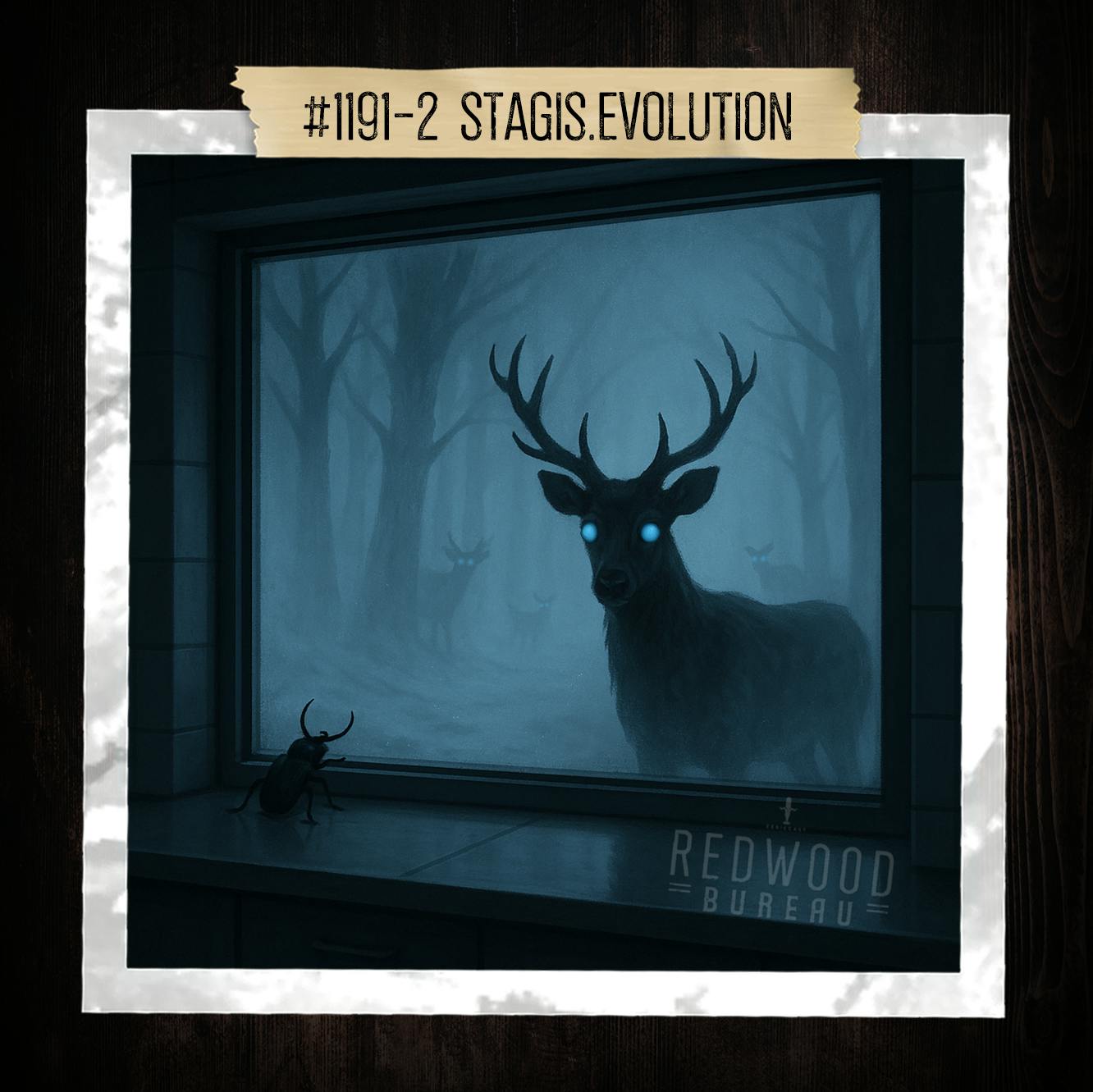
Redwood Bureau
"STAGIS_EVOLUTION" - Redwood Bureau Phenomenon #1991-2
00:54:50
The Bureau said it couldn’t survive in humans. The Bureau was wrong. Stagis has adapted. And now it’s learning how to stay.
Loading summary
Transcript12 lines
- [00:00]
Marisol Gutierrez
Breaking up is never easy, but saying goodbye to your old clunky work tools, well, that's easy. Just repeat after me. It's not me, it's definitely you, you rigid, unfriendly software. It's time to freshen things up with Monday.com the first work platform you'll love to use. With stunning dashboards, customizable templates and built in AI that actually works. Switching to a new work platform has never felt this good, so move on.
- [00:28]
Ian Roark
To Monday.com Mochi Health is a long term weight loss solution personalized to fit your unique needs and goals. Meet one on one with board certified obesity doctors and registered dietitians who are on a mission to listen. Eligible patients can Access custom formulated GLP1 medications at an affordable set price and get them delivered to their home each month. No insurance required. FSA and HSA accepted. With 24. 7 customer service available, Mochi Health is here to partner with you on your journey to a healthier life. Take the free quiz@joinmochi.com and use code AUDIO40 at checkout for $40 off your first month of membership. That's join mochi.com.
- [01:20]
Agent Conroy
Beware the Redwood Bureau, a secret organization which captures and researches creatures and objects that defy explanation. Their reckless procedures have led to countless innocent lives lost. I am Agent Conroy. I worked for the Redwood Bureau, but I have escaped them to leak their reports to the unsuspecting public. You have the right to know. Have you ever heard of a parasite overriding a host's escape instincts so completely, so precisely that it becomes impossible to tell where the animal ends and the infection begins? That's not a science fiction question. That's biology. Parasitoid wasps do it to cockroaches. Hairworms do it to crickets. And something else. RBP1991 designations. Stagus does it to mammals. Large ones, ones we know well, ones we eat, photograph and stop our cars for on dark roads. Three years ago I leaked what would become one of the most widely circulated and least believed case files in Redwood Bureau History Report 1991. A rural man in Ohio documented in disturbing detail what it felt like to witness a herd of deer devolve into something coordinated and then turn on him. He described parasites, beetles moving under skin, reconfiguring muscle, hollowing out hosts while leaving them upright and moving. Within six months of that incident, similar signs began appearing. Not in clusters, not enough to sound alarms, but just enough to form a pattern. Disoriented deer herds, hollowed out raccoons animal control officers disappearing near rural waterways. All written off as mundane incidents, never traced, never connected. The Bureau's official stance is that stagus is self limiting, that its reproductive model burns out rapidly and can't be maintained in colder climates. That human infection is terminal within hours. But I've seen the internal memos. I've seen the footage they buried from containment zones they later incinerated. Stagus isn't a parasite. It's a colony. And it's evolving. The Bureau quietly shut down three unrelated wildlife research contracts in the year following the initial incident. All three projects had reported unexplained increases in subdermal beetle populations within regional deer, along with degraded tissue samples that continued pulsing hours after death. None of these teams were seen again. And then, for nearly two years, nothing. No reports, no research projects, no containment sites. Until Ian Roark, a lab tech in a university biology department. No history of mental illness, no red flags. And according to digital logs recovered from the facility's server, the first known case of long term survivability following stagus exposure. I don't know how long they kept him alive. What I do know, what you're about to hear, is that Ian wasn't the only one in that building. And the casualties surrounding this case extend beyond the stagus infection. I recovered these files myself. What you're about to hear is the most complete record we have of how exactly the stagus problem is out there as I speak. Propagating. This isn't just a containment failure. This is a shift in the Stagis life cycle.
- [05:39]
Marisol Gutierrez
The day it started, snow had barely begun to gather along the edges of the parking lot behind the Life Sciences building. Everything was gray sky, concrete, glass. The kind of cold. It didn't feel dramatic or cinematic, just quietly cruel. My Shift started at 7:30am But I was always in. By 6, winter break had drained the campus of people and I liked it that way. No students wandering in looking for extra credit, no TAs asking to borrow keycards. Just me, the hum of the fluorescents and whatever backlog the university's biology department had decided to dump on my table. I'd been at Westville University for five years, two as a student, three as a tech. I wasn't on track for anything better. Not yet, anyways. I helped maintain cadaver integrity, documented incoming specimens and prepared tissues for dissection. The work was repetitive, sure, but there was something simple about it. You couldn't fake a muscle cross section. You couldn't pretend a liver didn't rot Biology was consistent in a world where people weren't. A sudden loud noise rang out, startling me. The loading bay buzzer. I wasn't expecting any deliveries, certainly not a full body specimen. But when I opened the rear dock, a state park truck idled on the ramp, exhaust pluming into the frozen air. The driver was a squat man in his 50s, with wind chaffed skin and a Forest service patch on his shoulder. You the guy who logs wildlife remains? He asked, already lowering the tailgate. Depends on what you're dropping off, Buck, he grunted. Large. Came off the ridge last night and got nailed by a snowplow. Clean break in the spine, mostly intact. Was told to bring it to the university for the anatomy program. I stared at the tarp draped shape in the back of his truck. It looked heavy. The outline of antlers poked beneath the tarp, rigid and wide. I didn't say anything right away. He took my silence for disapproval. If you don't want it, say so. I got a full day ahead of me. Something in the air was sour in a different way, like mildew trapped inside drywall or stagnant water beneath rotting leaves. I nodded slowly. Okay, sure. But only if he helped me bring it in. With its help, I wheeled the gurney to the loading dock and secured the carcass. The man gave me his contact info on a wrinkled field tag, then left without another word. I rolled the deer into the specimen lab, locking the door behind me. The specimen was enormous, at least £200, maybe more. Its legs were tucked tightly beneath the torso, like it had collapsed mid leap. The antlers were impressive, wide and symmetrical. It had the classic winter coat, thick pale brown fur tipped with white. But up close the details didn't track. There were no abrasions, no road rash, no bone protrusions. The spine was allegedly broken, but the body lay in a near pristine curl, like it had lain down willingly and died without a struggle. Even its eyes, milky and unfocused, were unsettling. They hadn't clouded like most post mortem deer I'd seen. There was something glassy about them, like they were seeing something just behind me. I tried to ignore it, but the sensation of being watched clung to me. As I prepared my instruments. I peeled back the hide from the underbelly, working slowly, careful not to damage any useful tissue. My scalpel caught on something almost immediately. I leaned closer. Beneath the dermal layer, a thin webbing stretched across the interior muscle wall. Not fascia, not fat. It looked like silk. It was matte, fibrous, organic, like spiderweb layered with connective tissue. I cut deeper, more of it. The deeper I went, the more I found the webbing wasn't wrapped around anything. It was more like part of the structure. A chill crept up my spine. I'd worked on animals with internal infections before, fungal blooms, bacterial rot, but nothing like this. This wasn't decay. This was architecture. I set the scalpel down and leaned in closer, gently parting the fibrous material with forceps. A faint glimmer caught the light. Something was embedded in the muscle wall, an oval, shiny and black. I carefully cut around it, exposing a hard shell the size of a walnut. As I teased it loose, it popped free with a wet snap, landing with a clink on the tray below. It was a beetle or something close, with a wet black carapace. Spined legs tucked tight. Horned crest like a stag beetle. But its underbelly was wrong. Soft, membranous, with thread like tendrils clinging to the tissue I'd pulled it from. Its eyes were dull and glassy. Not compound, not insectoid, more human. Almost the same hazy color my father had in his cataracts. Milky and pale. It didn't move, didn't twitch. It was dead. But when I leaned closer, a thin string of mucus trailed from its open mouth, connecting to the tray. Still wet. The silence in the lab was suddenly very loud. The only sound was the low hum of refrigeration units, the whisper of air from the vents. But the atmosphere had shifted. Everything felt still, like the room itself was holding its breath. I stared for a long time before I did what I was there to do. I began cataloguing. The autopsy dragged well into the early afternoon, and I hadn't taken a break. Not for food, not even for coffee. I was truly captivated. The deer lay open like an invitation on the steel table, its body cavity yawning wide under the surgical lights. It should have had some kind of smell, but the interior remained oddly clean, mostly bloodless. Even that same fibrous webbing I had discovered near the surface extended through almost every layer, wrapped delicately around organs interwoven with connective tissue, even fused onto portions of the spinal sheath. It reminded me of mold colonies growing on damp insulation. Except it wasn't mold. It was organic material. I collected several of the bugs for later testing. Each one I extracted felt like pulling loose a socketed puzzle piece. Some were slick and fresh, others looked brittle, their exoskeletons dulled by age or desiccation. I labeled them, sealed them in ethanol, and stored them in a steel specimen locker. But I couldn't shake this weird sensation, almost like an unease, but more anxiety driven. When I cut deeper near the diaphragm, my blade snagged again. This time it wasn't webbing. It was something harder, a bulge of semi translucent tissue. At first glance I thought it might be a fluid pocket or a malformed lymph node, but when I palpated it with gloved fingers, the mass gave slightly and squirmed. Not like decay gases shifting tissue, like something alive inside. I hesitated, then made a small incision. The pod ruptured with a soft tear and released a gush of milky fluid. Within seconds, dozens of underdeveloped beetle larva spilled out onto the tray and floor. They were stark white, translucent in places, their soft bodies glistening. Some curled reflexively in the cold air. Others spasmed violently, instinct driving them to crawl. With frantic, uncoordinated movements, one of them launched. It hit my forearm bare, just above the glove line. Before I could react, I felt the sting. A hot, searing needle of pain shot into my skin. It was so sharp and so sudden, I didn't even shout. I just reacted. My other hand came down like a hammer, smacking the spot with a wet slap. I stumbled back, knocking over the tray stand, which crashed at the floor and sent scalpels and metal tools scattering. A small, deep red welt was already forming where it had landed. Blood welled on the surface and I instinctively wiped at it with the back of my glove, scanning the floor for the larva. Nothing. Just a few twitching bodies near the drain. I must have smashed it. Served the nasty little thing right. I spent the rest of the day cleaning up and cataloging the deer part to be used by the university. The sun was already setting by the time I got home, but I was starting to feel off. My throat was sore, the kind of dryness that creeps in during winter nights when the air is sharp and every breath feels filtered through frost. My jaw ached, too, like I'd spent the whole day clenching it. When I pressed on the sides of my neck, there was a dull, reactive soreness, probably lymph nodes, probably just stress and an oncoming cold and bad posture. But my back molars ached horribly. I stood in front of the mirror in the bathroom, peeling my mouth open, wide open with a tongue depressor and pen light. My gums were pale. My teeth felt red, loose, not wobbly, just wrong. Kind of like the first day after I'd gotten my braces off. I poked my tongue around and stopped when I felt something hard just beneath the surface near the frenulum. Something foreign. I leaned closer, angled the light, and saw a black speck, maybe the size of a sesame seed, lodged between the base of my tongue and the floor of my mouth. I gagged. With shaking fingers, I gripped the tip of it using the corner of a paper towel and held fast for a moment, then pulled free. It was hard, rigid. A fragment of one of those insects. Maybe a leg or something else. I swear I felt it move between my fingers before I flushed it. I brushed my teeth and my mouth until my gums bled. I couldn't get the image of that thing in my mouth out of my mind. It made me feel even more sick. Sleep came fitfully that night and the next day. The lab felt darker. The fluorescence still buzzed above, but the corners seemed further away, more distant. I kept hearing things, tiny things. Ticks, scratches, the soft crunch of something dry behind the baseboards. Once I thought I saw movement under the lab table, but when I bent down, nothing was there except a long smear of blood I hadn't noticed before. When a staff member walked by around noon, I flinched so hard I nearly dropped a microscope slide. He didn't say anything, just gave me a look. Not judgmental, more wary than anything. I couldn't blame him. My hands were shaking. My mouth was dry. My voice sounded like it belonged to someone else. I snapped at him when he stopped to ask me if I was okay. It wasn't that I yelled at him. My tone was just too sharp. It came out that way before I even thought about it. He left without saying another word. The nosebleed hit around 3:45pm One moment I was logging sample tags, the next my upper lip felt hot and wet. I grabbed a tissue and tilted my head back, pinching the bridge. But something was wrong. I held the tissue under the light. I must have been hallucinating. Deep red streaks writhed and shimmered within it. Not like clotting, like motion, like bacteria filmed under a microscope. Microscopic threads undulated through the blood, pulling away from one another before merging back together. I dropped the tissue in the sink and watched the blood swirl down the drain. The remainder of the workday passed in a haze. The bugs, the deer, the plunging temperatures outside. Everything felt like it was pressing inward. At five o' clock sharp, the building emptied out. Even a H vac seemed to throttle back, leaving only a plush hum and the rasp of my own nervous breathing. I walked the building's perimeter, locking doors, shutting off equipment. When I returned to the lab, I put all the disposables in the biohazard bin. The welt on my arm was no longer angry red, but a deep blue, like a bruise, but more defined. I dug at it with my other thumb, absentmindedly, and felt something shift under the skin. Not a splinter, not fluid. Something else. I bit my cheek and tried to let it go before cleaning every surface in the lab with double the amount of bleach. By the time I left the building, it was well after six, my feet crunching perfect footprints in the fresh layer of snow. I walked past the library with its windows bright and full of activity toward the faculty parking lot. The wind cut right through my jacket. I felt freezing, but I kept my chin tucked, my pace steady. If I was sick, I'd power through it. That's what people did. My mom used to say that every fever broke eventually, one way or the other. When I finally reached my apartment, my head pounded and the inside of my cheeks felt raw from biting them. The building's hallway was silent. I fished my keys out, dropping them, and cursed, feeling the rage and frustration burn unexpectedly bright. I jammed the key into the lock, then fell into the door, nearly toppling over. Inside, the air was stale and hot. I stripped off my jacket, kicked off my wet boots, and went immediately to the bathroom, flicking on the sickly overhead light. I don't know what I expected to see blood in between my teeth, maybe another speck under my tongue, but everything looked mostly unchanged except for the bruise, spreading wider now, like a flower blooming under the skin. I ran the tap and splashed cold water over my face, trying to shock myself back into a sense of normalcy. I watched the water bead and run off my cheeks in the mirror, and then the faintest movement, barely a shimmer, just behind my reflection. I spun, but the hallway was empty. For a moment I had the thought I was losing it. This thought calmed me in a weird way. If this was all in my head, fever related hallucinations and disorientation, I could deal with that. When I finally collapsed onto my bed, the exhaustion hit in full. My last thought was of the beetle, shiny and still on the tray, eyes vacant.
- [26:50]
Agent Conroy
Warning signal interruption detected.
- [26:56]
Narrator
Hunted by Skinwalker Sweating Darn near to death the ticks are eating you before the monsters do. It's summer, alright, but you don't have to be haunted by your phone bill too. So switch to Mint Mobile and live life without worrying about your wallet. Get the coverage and speed you're used to for way less money. Mint Mobile sent me a SIM card to try out. Just to see if it really does beat the heat. And it absolutely does. Setting it up was quick and easy. Reception and data speeds were good or even better than my previous provider, and it's much less painful on my bank account. All plans come with high speed data and unlimited talk and text delivered on the nation's largest 5G network. Use your own phone with any Mint Mobile plan and bring your phone number along with all your existing contacts. Ditch overpriced Wireless and get three months of unlimited service from Mint Mobile for $15 a month this year. Skip breaking a sweat and breaking the bank. Get this new customer offer and your 3 month unlimited wireless plan for just 15 bucks a month@mintmobile.com Ericast that's mintmobile.com Ericast upfront payment of $45 required, equivalent to 15 bucks a month limited time new customer offer for first 3 months only. Speeds may slow above 35gb on unlimited plan. Taxes and fees extra. See Mint Mobile for details.
- [28:20]
Ian Roark
With the Venmo Debit card, you can Venmo everything. Your favorite band's merch. You can Venmo this or their next show, you can Venmo that. Visit Venmo Me Debit to learn more. The Venmo MasterCard is issued by the Bancorp bank and a pursuant to license by Mastercard International Incorporated Card may be used everywhere. MasterCard is accepted. Venmo purchase restrictions apply.
- [28:36]
Marisol Gutierrez
Are you ready to dairy free your mind this summer? Melt away your dairy free expectations with so delicious dairy free frozen desserts. Enjoy mind blowing flavors like salted caramel cluster chocolate cookies and cream cookie dough and more.
- [28:47]
Agent Conroy
More.
- [28:47]
Marisol Gutierrez
For over 35 years so delicious has been cranking up the flavor with show stopping products that are 100% dairy free, certified vegan by Vegan Action and are so unbelievably creamy your taste buds will do a double take. Dairy free your mind. Visit sodeliciousdairyfree.com/connectance restored. I woke at 3am with a taste in my mouth like old rusty metal. Staggering to the bathroom, I turned on the light and examined my aching arm. The bruise had given way to an open blister. I ran a finger over it and felt a sharp sudden pain as if something had pricked me from the inside out. I pressed the towel to it hard and tried not to think of the deer or the bugs or any of it. I went back to bed and lay absolutely still until the world tipped over into mourning. I dreamed of the deer standing upright in the snow, watching the forest with unblinking glassy eyes. I went to it, lay down beside its beaten body and let it open me up from throat to pelvis, delicate as a seed pod. I woke with the dawn, mouth dry, body aching. When I dressed, I made sure to choose a shirt that covered my arms, already thinking of the things I needed to get done. But then I noticed the lumps. They hadn't been there the night before, I was sure of it. They rose beneath the skin along the right side of my rib cage, no bigger than frozen peas, hard and unyielding when I pressed them. I stood in front of the mirror for nearly an hour that morning, trying to convince myself they were just muscle knots or cysts, but the skin dimpling around them made that hard to believe. By the end of the week, there were five. Time had slipped, slipped into an indistinguishable haze for me. I stopped keeping track of the days by then, as each one bled into the next with a monotonous predictability. My routine had become a blur of steel tables, harsh lights, and the unrelenting presence of that dear corpse. Hours seemed to stretch and fold in on themselves until I barely remembered driving to the lab anymore. I'd wake up at my desk with my coat still zipped, my mouth dry and metallic fingers twitching from some unseen exertion. I remembered putting it away day after day, but somehow the deer remained, sprawled across the dissection table as it had since day one, though it felt somehow less dead each time I looked at it. Morning turned to afternoon, afternoon to night, with only the darkening windows. Dark mark the passage of time. That deep itch settled in shortly after the fifth lump formed. It began at the small of my back and crawled upward in waves, like fire ants under my skin. It wasn't just irritation. It was movement, like something alive tracing the path of my spine from within, dragging sharp limbs across nerves that had never been touched before. No cream helped, no scratching soothed. Days turned into nights filled with restless, itching agony. All I could do was bear it in silence, jaw clenched, trying not to cry out while undergraduates passed by the hallway doors, oblivious to my struggle. When it was at its worst, the pain struck like a lightning bolt. One minute I'd be logging tissue samples, and the next I was doubled over at the sink, gripping the metal basin so hard I bruised the skin of my hands. My back arched involuntarily, muscles convulsing as if trying to expel something I hadn't eaten. And the smell. God, the smell. At first it was just a background detail, a trace scent, musky and Strange. Like wet fur left too long in a warm room. I assumed it came from the deer, from whatever rot hadn't yet presented visibly. But the smell grew stronger with each passing day. It clung to my clothes, embedded itself in the fibers of my hair, curled into the corners of the lab. No matter how often I scrubbed the room, it never faded. And worse than that, I started to like it. One morning, I caught myself breathing it in long, measured inhalations, like someone taking in the scent of fresh baked bread. My nostrils flared, my chest swelled, and for a moment I felt comforted, like the presence behind the odor wasn't threatening but familiar. The moment I realized what I was doing, I reeled back and vomited into the trash can, retching so hard I tasted blood. But even then, some part of me wanted to go back to it, to lean over the body and breathe it in. That part only got louder. Time began to blur even further. I'd sit down to catalog notes and find myself waking up three hours later with my face pressed against a table, entire pages filled with my handwriting. Except I didn't remember writing it. Frantic, repetitive phrases looped over and over, drawings I couldn't decipher, sentences cut off mid thought, as if the author had been distracted by something more urgent. Most of it was entirely illegible. They dig with folded arms. Not me. Not me. Not me. I burned those pages, but new ones kept appearing. The clock became useless. Time slipped through my fingers like sand. I'd blink and find the day gone. One moment I was sealing a vial, and the next I was standing at the far end of the hallway with no memory of having walked there, my gloves soaked and once leave wet with something dark. I came too, standing over the deer carcass. My hand was resting on its chest. I was humming. Later, I awoke slumped in the prep room chair, the front of my lab coat soaked in dark fluid. My jaw ached. My fingernails were cracked and caked with dark tissue. The carcass lay in the same position it always had, except the chest cavity had been widened, almost clawed open. Not cleanly with tools, with hands. My hands. That night I pulled off my shirt in front of the sink and finally saw what I had been too afraid to look for. My skin was stretched tight across my upper back, the veins around my shoulders bulging, webbed with tension. Beneath the skin, nodules pulsed slowly. The tension texture reminded me of the silk layers I'd cut through in the deer. I stood frozen, mouth open, heart in my throat. Each breath drew the skin tighter across my shoulders, revealing more of their shapes. One of the nodules twitched. It shifted upward, gliding just under the surface, sending a ripple that moved from the base of my spine to my neck. It reached the base of my skull, paused, then turned. The skin of my throat stretched from within. I felt it slide beneath my jaw, tracing the nerve bundle there, nestling somewhere deep beneath the hinge of my mouth. I reached up, hand trembling. I didn't scream. I couldn't. I only felt the world closing in around me, the darkness taking over. I don't remember going back to work. I don't remember falling. I remember the table, the tray, the sound of my own heartbeat slamming against my eardrums. But not the moment I lost my legs. Not the pain, not the panic. Just a long, aching numbness and the realization that I couldn't stand up anymore. I woke up choking on the taste of my own blood. The air felt thick, wet with humidity that shouldn't exist inside a lab this sterile. When I opened my eyes, the lights overhead were flickering. My limbs refused to respond. My head lolled to one side, jaw half locked from some internal pressure I couldn't name. I was splayed out in the rear of the lab, my body half propped against the back wall, legs twisted beneath me in a shape that should have hurt more than it did. Something snapped low in my spine, the kind of pain that forces your vision to white out for a moment, then pulse back in waves of nausea. My back was soaked in something sticky and warm, and I could feel small movements beneath my skin, dozens of them. They were crawling through me. When I screamed, it came out broken, not just because of pain and panic, but because something in my throat caught the air. Wrong. My vocal cords pulled tight in spasms. My scream sputtered into a wet cloud. Gag. Then silence. Every inch of my body burned. The nerves in my arms were live wires twitching under skin. It felt too tight. I couldn't lift them. The flesh in my thighs was crisscrossed with ruptures. Not slashes or gashes, but holes, soft, wet divots in the skin where something had tunneled through. I could see movement just beneath the surface. My arms were worse. The biceps and forearms looked deflated, partially chewed through, muscle seared and eaten away. I tried to lift my hand, but there was no connection. It felt like it simply wasn't there. My chest rose and fell in ragged, shallow heaves. Each breath whistled through a gap in my ribs where the flesh had been eaten away. Something had tunneled through there, too. I could feel the air flowing in, funneled down into Places that were not meant to feel air. They were inside me. I could feel them everywhere. Something crawled up the inside of my thigh. Slow, deliberate. I could feel each of its legs pinch into the soft tissue as it ascended. A large one, maybe the size of a mouse, pushed against the underside of my left shoulder blade, creating a bulge that skittered forward and vanished behind my collarbone. I could feel its legs tapping across the inside of my body. Another emerged from the back of my thigh, slipping free of a puckered wound with a wet pop. It paused in my peripheral vision, grooming its antennae with precise movements, then climbed over my hip and vanished beneath my ribs. I wasn't screaming. I couldn't. I couldn't cry either. My tear ducts had crusted over. My mouth trembled, but only because another twitch had fired through my face. My lips moved without instruction. My jaw opened wider than it should have. Slowly, and from somewhere deep inside, deep beneath the root of my tongue, I felt something shift forward. A beetle emerged. It didn't leap or scurry. It climbed from within me. Its carapace glistened, not with mucus, but with blood. My blood. It moved with purpose across my cheek, pausing at the bridge of my nose, and waited. I could see its antenna waving gently. It wasn't afraid. It was inspecting me. Time didn't make sense anymore. It didn't pass. It came and went in waves. Sometimes I saw the lab clearly. The overhead fluorescent lights sputtering, casting the room in epileptic flashes. Other times I saw only darkness. But I could hear things. Legs brushing against the tile, the click of small jaws, the gentle wet sound of something burrowing. One of the larger beetles emerged from my abdomen, pulling itself slowly through a ribbed slot, mandibles twitching. It turned and nestled itself between the skin of my belly and the floor. Another followed, then three more, each one carrying something with them. Threads, silk, fragments of tissue. They were building. I tried to speak. The words never made it to my lips. I could only thank them. Please. Please. Please. Nothing answered. I began to lose the sense of what my body was. The edges were fading. My skin had become porous. Boundaries no longer meant anything. At some point, a minute or an eternity later, I felt it. A shift inside my chest, just behind the sternum. Something unfurling, something bigger. I could feel it pressing up against my lungs, sliding through the cavities that used to hold breath, laughter and voice. It pushed into the back of my tongue and rolled forward beneath my teeth, staring into the world from inside my mouth. I couldn't climb close. It couldn't Bite down. I could only watch. Watch the lab, watch the hatchlings, watch the deer gather around. And they all watched.
- [49:32]
Agent Conroy
The Bureau had no interest in what was left of Ian Rourke. They didn't even care that he could still think, still feel. They only wanted what was growing inside him. When containment teams finally moved on the university, it had already been five days since Marisol Gutierrez's disappearance. The building had no security pings, no digital logins, no answered phone calls. What tipped the Bureau off wasn't an emergency call. It was a missed data sync from the biology department server. Someone outside the Bureau flagged it. Someone who won't ever know what they stepped into. And for some reason, the Bureau's systems picked this up. By the time agents arrived, the structure was overly warm, but showed no human movement on thermal scans. Heat scans showed nothing as the building was at 110 degrees Fahrenheit. They sealed the west wing, rerouted traffic, wiped every connected system, and enacted a full sterilization protocol. Everyone inside was marked lost to incident. At least six additional staff were never accounted for. Four students with late access logs, and of course, Marisol Gutierrez, the fill in night janitor. The official report stated that there was an electrical fire, toxic chemical and heat damage, a complete teardown and rebuild scheduled immediately. Within a month, the site was completely scrubbed and reopened. You can walk through the halls now and you'd never even know what happened. But here's what the Bureau didn't release. One agent's helmet cam footage was attached to the protected file. Audio corrupted but visuals intact. What it shows is the interior of Lab C2. Ian was still breathing. His body had been hollowed and stretched, limbs frayed, torso distended, chest cavity filled with layered, fleshy growths. Beetles moved in and out of him in cycles, Some no bigger than a flea, some larger than any previously cataloged. One looked out directly from a hole in his ribs. Its eyes were blue. A week later, Bureau labs tagged the material recovered from his remains as queen substrate 1H1 internal memo, buried almost immediately after the incident outlined new insights into stagis colony behavior. The queen isn't just a breeder. She's a biological anchor, A node through which the entire swarm maintains coordination. Without proximity to her, the beetles lose organization. The deer scatter and die. The entire colony breaks down. They've been surviving in mostly deer for decades, barely struggling through cold seasons. Limited by short lifespans, erratic movement and low internal temperatures. Most colonies fail before the queen could reach reproductive bloom. But what they did to Ian was something new. They modified his behavior, altered the lab environment, and used him to create conditions they hadn't achieved in past generations. He was the most successful human they'd ever had. The Bureau is not hunting stagus colonies. They're tracking growth sites, watching, compiling data. They want to use it to let it develop naturally while observing and making sure it doesn't bloom beyond their control. We already know how this story goes, and if you're wondering whether it's still spreading, if you're safe, ask yourself this how far do you think the Redwood Bureau will let it spread before they act? And when they do? Has anything I've ever shown you suggested they care who gets caught in the crossfire?
- [53:46]
Ian Roark
Shop the Sherwin Williams July summer sale and get 30% off paints and stains July 18th through the 28th, with prices starting at $34.29. It's the perfect time to transform your space with color. Whether you're looking to revamp your interior or exterior, we have you covered with bold hues, soothing neutrals and everything in between. Visit your neighborhood Sherwin Williams store or shop the sale online. Delivery available on qualifying orders. Click the banner to learn more. Retail sales only some exclusions apply. See STORE for details.