
Podcast
ReGeneration Church
Hosted by ReGeneration Church · EN
This podcast features the Sunday morning teachings of Pastor Matt Valencia from ReGeneration Church in Scotts Valley, California.
ReGeneration Church exists to cultivate a community of disciples who respond to the Gospel by growing in relationship with Jesus and intervening for Him.
29episodes
Episodes
Newest firstAll episodes
Acts 10:1-48, "The Gospel Breaks Barriers"
3w ago01:01:20Tap to summarizeCornelius, a Roman centurion who fears God, receives a vision instructing him to send for Peter. Peter, meanwhile, sees a vision of unclean animals and hears a voice telling him not to call anything impure that God has made. When Peter arrives at Cornelius's house, he declares that God shows no favoritism, and while he is still speaking, the Holy Spirit falls on the Gentiles present, astonishing the Jewish believers. Peter then orders that they be baptized, welcoming this Gentile household fully into the faith. Where in your own life might you be drawing lines between "us" and "them" that God is asking you to erase?
Transcribe →
Acts 9:26-43, "God is Always, Already Working"
4w ago00:39:30Tap to summarizeBarnabas vouches for the newly converted Saul, and the wary Jerusalem believers receive him before sending him off to years of quiet waiting in Tarsus. The church enjoys peace and grows, and Peter travels on to Lydda, where he speaks healing over the paralyzed Aeneas, then to Joppa, where he calls Tabitha back to life. In both accounts, the breakthrough moment sits atop groundwork already laid before anyone arrived on the scene. Where might God already be at work in a season of your life that feels more like waiting than progress?
Transcribe →
Acts 9:1-25, "A Personal Encounter With Jesus"
Jul 1200:57:20Tap to summarizeSaul storms toward Damascus breathing threats against believers, when a blinding light drops him to the ground and a voice asks why he is causing harm. Trembling and now blind, he is led by the hand into the city, where he waits three days without sight or food. Ananias, though afraid, obeys a call to visit Saul, lays hands on him, and watches scales fall from his eyes as his sight is restored. Saul is baptized, regains his strength, and soon preaches in the same synagogues he once threatened, escaping the city by night when his former allies turn against him. Is there anyone in your life who you have written off as unreachable?
Transcribe →
Acts 8:26-40, "The Spirit, The Word, & God's Heart"
Jul 501:02:51Tap to summarizeAn angel directs Philip to a desert road, where he meets an Ethiopian official reading Isaiah and unable to grasp its meaning. Philip explains that the passage points to Jesus, and the official asks to be baptized right away at the roadside. Philip baptizes him, then is suddenly taken elsewhere, while the official continues on his way rejoicing. How willing are you to go where you don't know the outcome?
Transcribe →
Acts 8:1-25, "Scattered & Empowered by the Spirit"
Jun 2801:02:50Tap to summarizeAfter Stephen's death, persecution breaks out and believers flee Jerusalem into the surrounding regions, with Philip carrying the gospel into Samaria. There, his preaching, healings, and exorcisms draw large crowds, and even Simon the sorcerer believes and is baptized alongside many others. When Peter and John arrive and pray for the new believers, the Holy Spirit falls on them. Simon tries to purchase that power, only to be sharply rebuked by Peter. The apostles preach the gospel in still more Samaritan villages before returning to Jerusalem. What does authentic transformation look like versus performance?
Transcribe →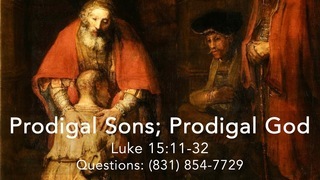
Luke 15:11-32, "Prodigal Sons; Prodigal God"
Jun 2100:57:10Tap to summarizeA man's younger son demands his share of the inheritance, leaves home, and squanders it on reckless living until he is destitute and reduced to feeding pigs. Hungry and ashamed, he decides to return home and ask his father to take him back as a servant. But his father sees him from a distance, runs to embrace him, and restores him fully as a son, throwing a feast in his honor. The older son, who stayed and worked faithfully, refuses to join, angry that his wayward brother is welcomed back so easily. The father gently reminds him that everything he has is still his, urging him to share in the joy. Are you lost far from home, or lost while staying put?
Transcribe →
Acts 7:1-43, "Jesus is Better"
Jun 1400:55:10Tap to summarizeStephen retells Israel's history before the high priest, showing how God consistently worked outside every structure his accusers consider sacred—beyond the land, the temple, the familiar. From Abraham to Joseph to Moses, God's presence moves freely while the people repeatedly anchor themselves to lesser, visible substitutes. The golden calf stands as the starkest image of a people settling for something they can control when the greater reality proves too demanding. What are you settling for that may be keeping you from something greater?
Transcribe →
Acts 6:1-15, "Preserving Unity & Multiplying Disciples"
Jun 700:53:55Tap to summarizeAs the church grows, a complaint arises over the neglect of Hellenistic widows in the daily food distribution. The apostles call the community together, proposing that seven Spirit-filled men be appointed to handle this need so they can remain devoted to prayer and the word. The community agrees, selects seven, and the apostles commission them with prayer and the laying on of hands. As the word of God continues to spread, disciples began to multiply greatly. In our lives today, what would happen if we stopped trying to do everything ourselves and started trusting others?
Transcribe →
Acts 4:32-5:42, "Obeying God vs the Fear of Man"
May 3100:52:39Tap to summarizeAnanias and Sapphira secretly hold back part of their offering while claiming to give the full amount, and both fall dead when confronted. The apostles fill Jerusalem with their teaching, drawing such crowds that the high priest has them arrested and jailed, only for an angel to release them and send them straight back to the temple to keep speaking. Dragged before the council again and flogged, Peter and the apostles answer that they must obey God rather than men. They leave rejoicing, and day after day they do not stop teaching in the temple and in homes. When pressure increases, do your convictions sharpen or soften?
Transcribe →
Acts 4:1-31, "We Can't Keep Silent!"
May 2400:58:50Tap to summarizeAfter healing a lame man and preaching in the temple, Peter and John are arrested and brought before the Sanhedrin, who demand they stop speaking in Jesus' name. Peter, filled with the Holy Spirit, boldly declares that salvation is found in no one else—not even under threat of punishment will he be silenced. The council, unable to deny the miracle, releases them with warnings, but Peter and John insist they cannot stop speaking of what they have seen and heard. Reunited with their companions, they pray for boldness, and the room shakes as the Holy Spirit fills them all and they continue proclaiming the Word. What does the gap between what you believe privately and what you say publicly reveal about you?
Transcribe →