← Relatable with Allie Beth Stuckey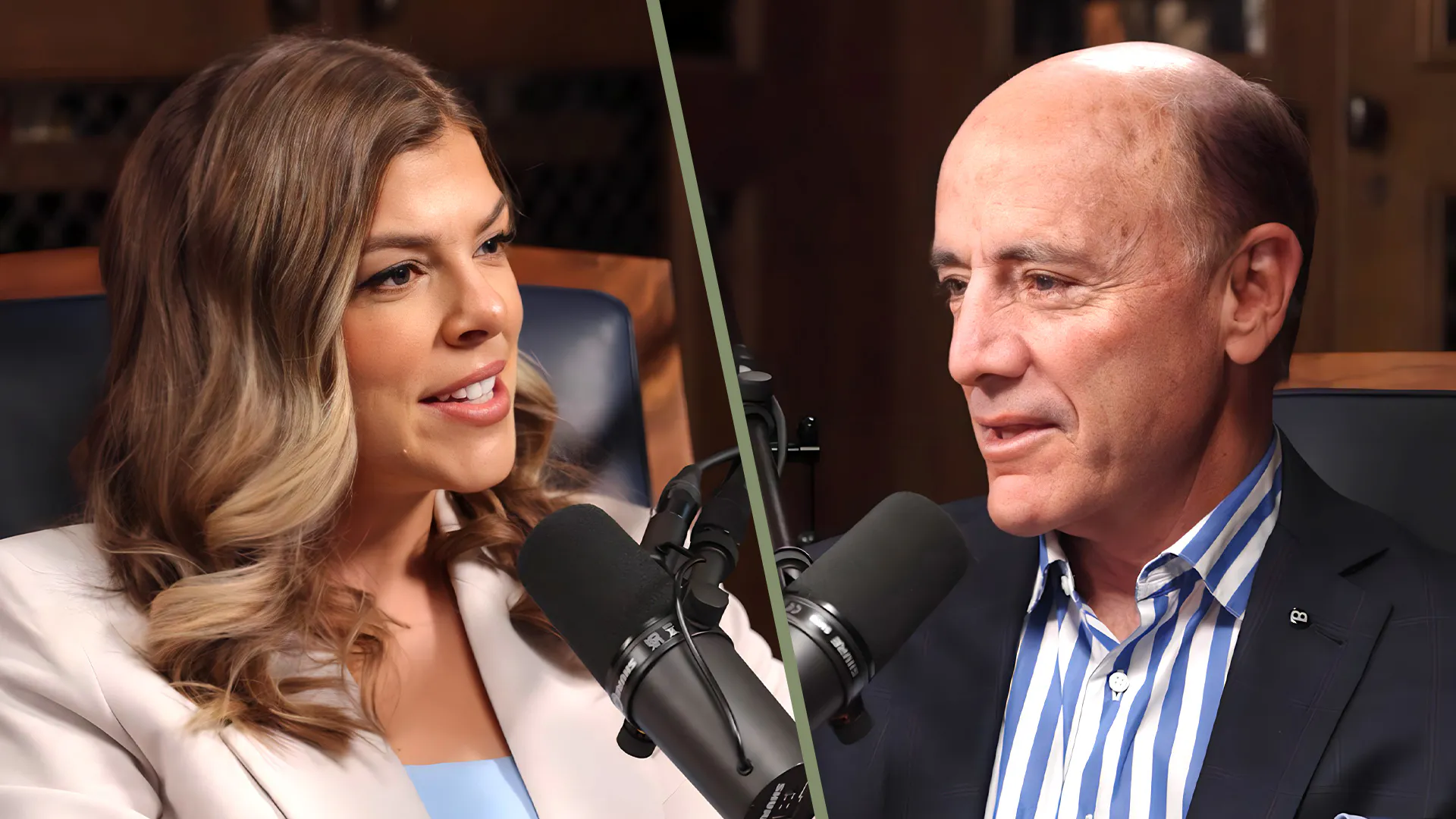
Relatable with Allie Beth Stuckey
Ep 1342 | New Study: America is Biblically Illiterate. Here’s How to Change That | Carlos Campo
00:43:00
Loading summary
Transcript98 lines
- [00:01]
A
Is the Bible actually reliable or is it just a compilation of curated texts from fallible men over the years who may have had their own motives? Why does what we think about the reliability of scripture matter? Why does biblical literacy matter, not just for the church, but for the future of our country? We are going to be talking about this and so much more in a fascinating discussion with the CEO of the Museum of the Bible, Carlos Campo. Today he's also going to take us around the museum just a little bit to look at the earliest archeological evidence for for the existence of the early church. I learned so much from this conversation. You're going to too. You're going to love this episode of Theology Monday. It's brought to you by our friends at the Last Stand. It's going to be an epic pro life conference in Denver, Colorado, June 5th through 6th. The Last Stand. I will be there. Seth Gruber will be there. My friend Frank Turek will also be there. So many more speakers. Go to thelastand.com get your tickets today. Use code ALI for a discount thelaststand.com code Ally. Mr. Campo, thanks so much for joining me. Can you just tell the audience where we are? This is not my typical set, if they haven't noticed.
- [01:17]
B
Well, we're at the library at the Museum of the Bible here in Washington,
- [01:20]
A
D.C. and what is contained in this library?
- [01:24]
B
You know, you wouldn't be surprised to know lots of biblical books and studies. We could fill many, many museums with the books written about the Word of Go. So we have some of those here and we use this for meetings like this, podcasts and other activities.
- [01:39]
A
Tell me about. I know this is a big question that we could talk about for hours, but tell me about the Museum of the Bible just starting with why it was created and opened back in 2017.
- [01:50]
B
It was created because we wanted a place that tried to tell the story and convey the kaleidoscopic power of the Bible. You know we.
- [01:58]
A
Kaleidoscopic power of the Bible. Can you break that down? I love that description. Sure.
- [02:02]
B
Well, you know, I think so often people think the Bible is a lens that makes people myopic. But we believe the opposite, that it begins to open up the kaleidoscopic of the non contingent being that it purports to talk about. So that's one of the things we love about telling people about the Bible and saying come and see. We're a come and see kind of a place. So we wanted to do it with excellence. And that's one of the things that you can see the building itself has won many architectural awards. But the main thing is we believe that the Bible is a durable book, that it has shaped human lives throughout pretty much civilization through written history. So let's tell the story. We tell the staff every day. We attempt the impossible because you can't do it fully. But in the trying, it's been extraordinary.
- [02:49]
A
I first came to the Museum of the Bible, I believe, the month that it opened back in 2017. This is before I had kids. And a lot has changed in my life, but a lot has changed here, too. It was incredible when it first opened. But you guys have added a lot in the past nine years.
- [03:03]
B
We have, you know, like any place, we want to continuously improve, but we're sitting at a time where we literally have in the museum today the Dead Sea Scrolls. I mean, that in and of itself is extraordinary. And some of the earliest documents, of course, that relate to Scripture ever found. We also have the mosaic tile floor, the first Christian worship space ever discovered. And those two elements join, you know, so many other things, and including things like immersive experiences and historical texts, because we do try to look at many different approaches to tell this story.
- [03:40]
A
Tell me what we're looking at.
- [03:42]
B
We're looking at the mosaic floor of what experts are calling the earliest Christian worship space ever discovered.
- [03:49]
A
Wow.
- [03:49]
B
We've kind of entitled it the Megiddo Mosaic because that's where it was found. But it's really an incredible artifact.
- [03:55]
A
And where's Megiddo?
- [03:56]
B
Megiddo's in Israel. It's in the Jezreel Valley. A lot of your listeners might know it kind of the Armageddon connection. So that's where Megiddo is. It's not generally a tourist destination, but we're so incredibly grateful that this was found there.
- [04:10]
A
And when was this uncovered?
- [04:12]
B
Not long ago, about 20 years ago. In a prison. So in an active prison. So incredible. But when you move dirt in Israel, you have to call the experts in. They were called in, and this is
- [04:21]
A
what they found, and they uncovered all of this. How long did it take them?
- [04:25]
B
You know, it took a while. The entire excavation took weeks. And the reality is, because it's a working prison, you can imagine this was the last thing they thought they would find. But now that prison is actually being evacuated, they're building a new prison to make that site a heritage site. Wow.
- [04:42]
A
And what does this say?
- [04:43]
B
Well, there are three Greek inscriptions, and it says so much. I mean, do you have two hours to go?
- [04:48]
A
I know we could talk about this for two hours.
- [04:50]
B
In essence, it tells us the name of the person who paid for it. His name was Giannis. He was a centurion. He's also called our brother, which could be our brother in faith. That's what we think, could also been our brother in war. It tells us also the name of the person who laid the tiles. And that's really rare to have both a person of note and the tile layer in the same sentence. It also tells us of five women, four whose names are here, and all we read is the word remember, and we think they were likely early Christian martyrs. And then a fifth woman who paid for what is called the memorial table. And. But she also makes this extraordinary declaration because she says that she's dedicating that to God, Jesus Christ. All these are in Greek, but this reference to the deity of Christ is the earliest form in archeology ever discovered.
- [05:37]
A
Well, that answers my next question, which was going to be, how do we know that this was a Christian place of worship? But it's because it says so.
- [05:44]
B
It says so. I mean, it's funny, I hear the folks who discovered this, the archaeologists who are Israeli found it and said, oh, and these Christians see that the word Jesus is in this floor. They're going, they're going to be all over it.
- [05:56]
A
Yes. I really can't decide which exhibit is my favorite. And I don't think I've seen all of them. You said that it takes 98 hour days to get through every exhibit, and that's probably not even including reading every single description and really interacting with every single artifact that I think, I don't know, that might take years.
- [06:17]
B
It's true. It's one of the things that people say is I have to come back. Just couldn't get to it all. And so we, the average guest stays for four hours and it's, it's not enough, but it, it is one of those places we hope you can come back to time and time again, like any great museum, and find something else that inspires you.
- [06:35]
A
What really just blows me away is when I look at the exhibit, it's such a large exhibit of all the different translations and some of the earliest manuscripts that we have of, for example, first Peter of Jonah, we're talking early centuries after the church was established, the congruence between those earliest translations and then the Bible that we have today. So this is from the book of Jonah.
- [07:03]
B
Right. It's amazing because it's from a folio that's called the Crosby Scorian Codex, which is just Another word for a book, really.
- [07:10]
A
Okay.
- [07:10]
B
But it's not just from Jonah. What we're looking at is the earliest copy of Jonah ever found. Wow. And so one of the things that you might know, but a lot of folks didn't know initially was the connection between Jonah and Easter, you know, the three days in the belly of the fish. Right. It makes sense. And so making that connection, this entire folio kind of is an Easter celebration and Jonah being just a part of it.
- [07:33]
A
And tell us what a folio is. You said it's just like a book.
- [07:35]
B
It is. I mean, codex is really the name for a book. Remembering the earliest things you would find would be scrolls. But when you wanted something more portable, you began working with what we would call as a codex, or the plural codices. But I think what's extraordinary about this text, I mean, here we are even in this low light. This is a text that tells the story of an ancient culture that is already making the connection between this Nazarene we know as Jesus and the Hebrew scriptures.
- [08:06]
A
And how old is this?
- [08:07]
B
This is third century, so they dated at about 250, but it's the earliest Jonah yet to be found.
- [08:14]
A
And we have something from one Peter as well.
- [08:15]
B
Right, Peter. And I love telling people that it's so early that the text doesn't say First Peter at all. It's just a letter of Peter. You know, later we define it as First Peter, but again, it's found in that same grouping. The earliest text related to Peter, this disciple that we've come to know so well. And yet to think that we have this text in the museum is just extraordinary.
- [08:38]
A
And this is the section of what we call One Peter where he encourages everyone to act humbly, tells them to respect their elders. And so we just read this and we matched it to the Bible and we said, oh, my goodness, this is one of the first copies.
- [08:51]
B
It's incredible. Incredibly consonant. And it's one of the things that we try to show at the museum. It's one of the myths that is often purported about scripture and that it's not reliable. Texts like this show. It's not only reliable, but we can take it back to some really early days.
- [09:07]
A
That is something that you hear a lot, that a bunch of men put this together in the, I don't know, 19th century to try to push their agenda. But that's just factually inaccurate.
- [09:17]
B
It is. And it's one of the things we welcome people to do, is to really dig deeper. The creation of the Bible wasn't a Phone game. It wasn't like that at all. And so very carefully copied. First an oral translation, right? An oral tradition and then a written one that is quite clear and really profound.
- [09:34]
A
Amazing.
- [09:35]
B
Yeah. Love it.
- [09:41]
A
Okay, y', all, Father's Day is coming up, which means you need to give your father, your father in law, your husband, the gift of good ranchers. Who doesn't want all American meat and in their freezer at all times? You should go ahead and subscribe. Don't just get the box of meat once. That's great, but you want to be able to rely on that subscription, not have to think about going to the grocery store and the quality of meat there, whether it's really from cattle in the US or not, because most of the beef here is actually from abroad. You want to make sure that you are voting with your dollar that you are supporting American farms and ranches, especially in America's 250th year. It's just a patriotic thing to do to make sure you're buying from an family owned. They love God, they love farmers and ranchers, and to make sure that you are supporting this American industry which really has been the backbone of the American economy for so many centuries now. It's just a win all around. Plus, this is a truly thoughtful, unique gift to give the father in your life that they're going to love and use for years to come. Go to goodranchers.com, use code ally. When you do, you will save $40 plus you'll save $100 on your first three orders. When you subscribe, go to good ranchers.com Alli code Ali good ranchers.com Alli Code Ali.
- [11:06]
B
I just saw an interview between Tom Holland and Peter Williams, you know, and Tom Holland, who wrote Dominion, an incredible book, right, you know, the text, but he said, you know, let's just compare Muhammad's earliest writings, right, to the text that we currently have. They're about a 200 year separation. So one of the extraordinary things about the New Testament, you know, we're talking about 50 years, is what most scholars would say, maybe even a little bit less that distance, as it were, matters. And so that's one of the many reasons why we think this text is so reliable. But there are many others as well.
- [11:41]
A
And gosh, the diligence of the human beings that have taken pains to translate the Bible. Like, you know, I even think about Martin Luther and his dedication that, you know, according to God's sovereignty coincided with the invention of the printing press and skyrocketing literacy rates. But since then, the normal average human beings who have just said, it is so important for me to translate God's word into this language, into unwritten languages, that just, that just strikes me as something that has to be spirit empowered because according to our own flesh, like we just want to do what we want to do and we want to take shortcuts. That, to me, is evidence enough that the Holy Spirit is in this process.
- [12:26]
B
I am with you. I mean, what motivates a person to do anything, right, but to translate scripture and to learn to read? Matter of fact, you've touched upon it. But you know, Elipeth, the. If you just check literacy rates, take that trending across time and across culture, almost always it's driven by one thing, and that's because people wanted to read the scriptures. And yes, Luther and others, you know, there were many who gave their lives literally knew that simply by translating the scriptures, they were in defiance of the church. And some of them were martyred as a result. But they knew that their higher calling was to make the word of God accessible to all mankind. So how exciting.
- [13:06]
A
There have been attempts throughout history for people to say this book shouldn't be in the canon, or this book should be in the canon, or to try to translate in accordance with their own ideology or their own whim. But the fact of the matter is, is that those efforts have not succeeded. And that's one reason we can trust the trustworthiness of the biblical canon we have today.
- [13:27]
B
Yes, it's one of the things that we spoke of just before we came on air, and that is people should dig into it. This idea that, oh, you don't want to look behind the curtain. That's not true of the Bible. Look behind the curtain, dig into it, and you're going to find that the way the canon was formed, the Bible that we have today, its reliability, the care that people took in both the oral transmission and then the written, was extraordinary. It's going to boost and strengthen your faith.
- [13:53]
A
Just even the sheer fact that if men wanted to write a book, they wouldn't have written a book that makes them look so bad. You know, over and over again we see the failures and the foibles of God's people and their rebellion. And if this were just a book written by people who wanted to tell the history of a particular group, they wouldn't include all of this stuff that proves that it's really God who's powerful and people who time and time again, we sin, we fail, we do really embarrassing, humiliating Deceitful things. If someone were to conspire together to try to build a man made ideology just for power, it wouldn't have been the Bible.
- [14:34]
B
Oh my goodness, you're so right. I mean it's true, but it's one of the reasons I'm so proud to say I'm a person of this faith because it doesn't try to hide our past. It doesn't try to say, look, we, we serve only perfect people. I mean when a heel catcher, truly a deceiver, becomes, you know, one of the patriarchs of the faith, that tells you we're all human and despite our sin, God loves us and he has a story of reconciliation to tell us.
- [15:02]
A
And do you have non Christians? I don't know if you have this data, but do you have non Christians who come through the museum and are interested in the history of the Bible?
- [15:09]
B
We do actually. I just, I met not long ago a woman from France whose English was better than my French. But we spoke for just a moment and she said, you know what, this book in my own country is something there, it's not studied in depth and certainly there's no place like this in France. So I came because I wanted to know more. And Ellie Beth, I encountered her again about three hours later and she was just bubbling with excitement. She said, I need to study this book more. I've been so impressed by the way this place lays out the Bible and I want to know more. So we know that many, many come with that same idea. And there are skeptics who come, who come to say, you know what, this, this has got to be wrong. So let me just take a few hours and prove that to be true. So we love it, we invite all people to come.
- [15:53]
A
That's another beautiful thing about Christianity is that it invites the skeptics like poke and prod and ask and dig in and we'll dig in with you. We might not have all the answers, but God does. And that is one distinction between occults and Christianity is that we, I mean we have the God whose, one of his names is Logos, he is the source of logic. So we're like, you can't out reason him. Come on, let's ask some questions and figure this out.
- [16:19]
B
Yes, it's always frustrating to hear somebody talk about blind faith. And I know what they mean when they say that, but faith isn't that. It isn't, it is durable. And I think that's one of the things. And even with answers, I think we do have all the answers now. All the answers are not satisfying. I think that is true. Right. So let me give you an answer. You want to know why do humans suffer? Why did God create things that are bad? You know, all the things that have been eternal questions. We have answers. Of course, theologians have answers. Are they all satisfying? No, of course not. Can we fully explain what the virgin birth is all about? We can tell you what the Word says, but we do have answers. They may not all be satisfying, but when you put it all together, Elie Beth, I think this is the thing for me. What is the theory of everything? What does hold it together? What is this idea of the universal? I think that's one of the things about Scripture. It begins in the beginning, and then it talks about a potential apocalypse that really ends life as we know it and transmutes it into something else. I don't know any other text that does it with this kind of power and truth.
- [17:24]
A
Yeah, that story that you told of the woman from France, like, it's so beautiful, but at the same time, it's very sad.
- [17:30]
B
I agree.
- [17:31]
A
Because whether or not someone is a Christian or whether or not they go to a Christian school, I had the blessing of being able to go to a Christian school where we talked about the gospel and learn scripture outright. But so many people that don't have that education are not told about the Bible at all. Even from the perspective of, hey, this is a really important book in the shaping of Western civilization and our country. Like, you really can't understand the history of America or even our most popular literature in Western civilization without understanding the Bible because there are so many references to Scripture in these documents. And so I'm worried about what theological illiteracy and biblical illiteracy means for historic cultural literacy, of course, what it means for morality. But even just being able to orient ourselves as part of Western civilization and
- [18:22]
B
Americans, oh, my goodness, you open up these Pandora's boxes of topics. But you're so right. You know, I taught English for many, many years, and that was the same kind of thing, because I'm in a class and I'm teaching, let's just say, Hamlet, right? So you teach Hamlet, and one of his lines is that there is a special providence in the fall of a sparrow. Well, you're a Bible reader. You know what Hamlet's referencing there. And Shakespeare thought all of his audience members, no matter what their training or background was, they knew what Hamlet was referencing there. Now, the average student that I had in my class said, what's he talking about? What is what providence fall of a sparrow. So now you almost have to go back and teach biblical literacy to place that in context. But that's one of many examples.
- [19:10]
A
Next sponsor is Legacy Box. This is such a unique service and I love it. I have so many pictures, memories in my home. My mom does too and she's done a really good job of organizing them. But it's so important to make sure that you're not just organizing your pictures in home videos, but that you're actually digitizing them. I mean, this is how you're going to be able to guarantee that you can pass down these pictures and everything that you have taken such good care of for so many years to your kids and to your grandkids. This would be a great gift, not just for yourself, but also your mom, your grandmother. It is so hard to keep track of all of these pictures. I know. My mom even has pictures from my grandparents day. And so you just want to make sure that you have them forever, that you can preserve them in their best form. That's what Legacy Box does. They send you a cardboard box. You put in all of the pictures, the videos that you want to digitize, you send it to them and they send you back the digital file as well as the hard copies of all of your, of all of your stuff. And so then you have it forever. So if you go to legacybox.com and you use my code ali or use my link legacybox.com Alli you get 60 off. That's an incredible deal going on just right now. Legacybox.com Ally for 60 off. And what do you think the reason is for? Yes, of course, you know, and we could re litigate all of this, the decision to remove prayer from schools and Bible reading from schools. But again, you would think that teachers of history and teachers of American civilization would want to give a holistic view of what led the founders and what forged Western civilization. But there's almost like a fear or a disdain. And I think that is a really big disservice to students.
- [21:05]
B
Agreed. I mean, one of the things I often encourage people to do is to go back and read the transcripts from the dissenting judges. Actually the judges that carried the day, the Supreme Court judges who took prayer and Bible reading. Remember, this wasn't just prayer. They read scripture every single day. That was what happened in public schools. But even those judges that said they felt it was unconstitutional, they said Bible reading should take place daily, shouldn't happen here. But they all, to a person, were lauding the power of scripture. So how quickly we have changed in our appreciation of scripture and its power to transform an individual life, marriage, community, nation. It was lost so quickly and I'm hopeful that we can regain that.
- [21:54]
A
I'm curious your perspective on our founding. This is another big debate. I saw someone the other day, this was actually legislated leader who said Christianity had nothing to do with America's founding. In fact, Thomas Jefferson referenced the Quran. I mean, not to mention that referencing something isn't putting it in our founding documents. But is that true what we hear, that all of the founders were just deists, that they didn't really have any faith imbued in our founding documents?
- [22:21]
B
Well, as you might imagine here at the museum, we've been thinking about this a lot, especially with this year, and we are doing an exhibit on the founding of America and the role of the Bible. And can we say that every founder was an orthodox Christian? No. And we wouldn't say that. See, we have a mandate, unlike other places, that we have to tell the story fully and faithfully. But if we could only exhume the bodies of these men and talk to them again. I don't think we can even fully understand how the Bible was truly part of the air that they breathed. And so that's one of the things we're trying to show. And even as we look at the different versions of the Declaration, right, this was a text they worked on together and that they added the word creator with a capital C. That in and of itself tells us perhaps in many ways all we need to know. And one of the things we have done is we've taken the language and bent it a bit and we say that we hold these truths are not self evident. They are not. I mean, my father was born in Cuba. Go there, Elie Beth, and see if they are evident, those truths evident there that all men are created equal. I mean all of those truths we think have their roots primarily in Scripture. Was the Bible the only influence for those men? No, we wouldn't argue that. Was it the primary one? We think so, but we'll hold that loosely and see what people judge for themselves.
- [23:42]
A
Yeah, you're so right that we are certainly seeing that it's not general common revelation that gives people the understanding of innate rights, the right to life and liberty. That is actually more the special revelation that you only understand if you understand Scripture. And whether or not Thomas Jefferson really believed in the Gospel, I think no one really knows, or at least I don't really know. But I think that's such a good point that it was so ubiquitous in their culture that they, that was one fault that they had, that they just didn't realize how special and unique it was, that it was the principles not just of the imago dei, but of the gospel that said, okay, everyone's equally dead and sin apart from Christ, everyone can be equally made alive in Christ. That filled them with this really radical and revolutionary idea that your rights don't come from a monarch, they don't come from a dictator, they come from you being a human being. And that's a little bit of a shame. But of course I think through the Holy Spirit they did put some of those principles into our founding, which is amazing, no question.
- [24:47]
B
It's to me, when you talk about are we an exceptional nation, just look, look across the globe for our constitution. Even 250 years doesn't sound that long. And a lot of historians talk about that. We're still in our infancy and they're right. But that document has been durable and I believe that it's the biblical principles that undergird it that make it such a durable text.
- [25:08]
A
Yeah, I happen to have this quote from John Adams that I read the other day where he said the general principles on which the fathers achieved independence were the general principles of Christianity as eternal and immutable as the existence and attributes of God. So I don't think anyone who studies the founding of our country could say, well yeah, they were just kind of agnostic, they had a relativistic moral worldview. That's clearly not true. And I think everyone in America loves the fruits of this worldview. And they think that, they kind of think like, you know, that they're self evident that yeah, of course we believe in not murdering and not stealing because that, that's bad, because it harms people. But if you dig a little bit deeper and say, why is that your property? Why is it wrong to harm someone? Why is it wrong to abuse someone? Why is it wrong to murder someone? Where does that right come from? And who gets to decide if they want to take it away? That's, I think, where the agnostic or atheistic worldview really falls apart. When you keep asking why.
- [26:13]
B
Well, you're touching on something that I don't think we understand the gravity of not not knowing these things and what it means for a culture. And I mean this very seriously. You know, I, I believe that what, what we're talking about is not just kind of important, it is the bedrock of what makes for a great civilization. And if you were to be that person in the street, Honestly, it depresses me. People laugh about these things. But when someone's got a microphone, says, hey, you know, name a country that starts with you, and they say Yugoslavia and they're sitting in the United States, and you think to yourself, oh, that's a funny thing. It's not funny to me. And that's just one example. But if you don't understand what makes for a great nation, what are the things that you will include and disclude in your family, in your nation? What are the things you would say this far, but no further? What is it that defines you as an American if you think it's just individual? Oh, just up to you. It's your truth. And all of these kinds of things, we will allow our nation to slip away. And what we would say is the true community of Americans. And what are the things that we hold together and say, no, this is who we are, are, and we won't relinquish them? I don't think this is a small matter. And I think it's really important that we hold on to them with the tenacity of our founders.
- [27:24]
A
Yeah, it is interesting. As we've gotten theologically dumber, we've also gotten just intellectually dumber.
- [27:31]
B
Yes.
- [27:31]
A
And those two things seem somehow to go hand in hand.
- [27:35]
B
Unfortunately, it's true. I know we spoke a bit about Socrates saying he was the smartest man on earth because he knew nothing. But Socrates didn't sit in his ignorance. You know, he made it clear that his life's journey was to continue to ask questions and continue to learn. And I hope that more and more young people and people of all ages will take seriously the incredible gift of intellect that God has given us and reason. Right. If we are made in his image, it can't be the way that we look. It must be the way that we behave. It must be the way that we think, the way we rationalize something deeper, even beyond the matter that we see every day. And so it's what God calls us to. So I hope people will take it seriously.
- [28:19]
A
We love every Life diapers and wipes in our home. And I love their Changing Lives club. So when you subscribe, you get that box of diapers, wipes, or pull ups to your front door every month. It makes your life easier. And they work great, great products and all of that. But when you subscribe, they will donate a month's supply of these diapers, diapers and wipes to a local pregnancy center or to a church that are helping pregnant moms in crisis. So when you partner with EveryLife, you are also saving lives. You are making it easier for moms who don't have a lot to be able to choose life for their child. You're not going to find that with these other diaper companies. Unfortunately, a lot of these big diaper companies, even the clean brands, I mean they play dirty. They are donating your dollars to Planned Parenthood and pro abortion politicians. We don't want to be a part of that. So go ahead and make the switch to EveryLife. We've been using their diapers for, gosh, probably two years now. Love them. They really work. Clean materials and all that good stuff. Go to everylife.com use code ALI10. You'll get 10% off your order. Everylife.com code ALI10. There is some bad news according to the according to data. And there's some good news too. There's some hopeful news. There's a study by Ligonier Ministries. Every few years they ask American professing Christians what they believe about theology or what they believe about God. And it's really stunning how many people just kind of who call themselves Christians just kind of don't know the basics of Christianity. 64%, according to Ligonier, believe that everyone is born innocent. 53% agree that most people are good by nature. 53% believe that the Holy Spirit is some kind of force rather than a personal being. 54% Christian said Christians should not allow their religious beliefs to influence their political decisions at all. And so there's a lot of confusion. I think it comes from just not reading the Bible, maybe not being plugged into a local church, not having wiser people disciple us that we don't even realize sometimes as Christians, how infused our worldview is with secular ways of thinking even about the triune God himself, which is troubling.
- [30:39]
B
You are so right. I know that it's one of the things that we've lost is sort of an awe for the things of God. And the early church wasn't that way. And I hope we can return to that. When we think that, you know, we know that people who were novitiates of sorts, they were seekers, they would spend a year or more in study. You know, Constantine himself was buried in his baptismal clothes. A lot of Christians don't know that he had been a Christian for a long time. But you see, you didn't walk into baptism mindlessly. Matter of fact, there was a tradition that lingered for many, many years that any sin that you committed after baptism was Far worse because you understood the gravity of what Jesus, death and resurrection really meant. And so when were baptized into faith, any sin that you took on had to be graver. And so that's just one example. To think you had to study for years to have the honor to call yourself a little Christ or a Christian. And today we have lost that and I hope we can regain it. And some of these statistics can be a little bit disheartening.
- [31:42]
A
Yes. But there are some encouraging things. According to Barna, weekly Bible reading among US adults has climbed to 42%. This is up 12 points. 12 points is a lot. That's a lot after a 15 year low in 2024. So just one year, 12 point climb. Nearly half of Gen Z and millennials now engage in scripture weekly Millennials, that's my Generation, saw a 16% increase in weekly Bible readers from 2024 to 2025. Now Gen X, millennials and Gen Z all lag behind in their belief that the Bible is totally accurate. And so it's interesting, if you look at baby boomers and even the silent generation, more of them will say, yeah, the Bible is totally accurate, but I don't read it every week. But then you have the skeptics and the millennials in Gen Z and Gen X who aren't totally sure if it's reliable, but apparently they're reading it more like, what do we make of this? And I really don't know the answer.
- [32:39]
B
Well, you know, I, I do think this idea that we're in a post truth society is, is one of the biggest lies that's been purported to the mass audience. And here's why. It can't be true. It can't be true. There's something deep within us that wants to know, what do you mean, is this true or not true? A search for truth is deep within the heart of every human being. That's what I believe. And that's why I think people are coming back to scripture. They've seen the other faux gods, they've seen these things purport to be great truth. And could scripture be telling me something that I really need to know? And so I'm encouraged by this. I really think look at Bible sales. Bible sales in five years have more than doubled. And these are print Bibles when most people have them on their phones. So I do think that we're up to something here, that people are up to something. I hope that it is good for the museum here of the Bible where people will come here and also dig deeper into what this book's all about, but I am encouraged. I think faith, if you look at it through a long lens, is cyclical. You know, it's one of the things that scripture tells us is people Wayne wax and wane in terms of their own belief in God. And I think that's what we're seeing is the pendulum is swinging back and it's an exciting day, I think.
- [33:54]
A
Yeah. Another reason I think that this museum is so important is actually because of the, the increase on the reliance of AI artificial intelligence. I think that is also driving a hunger for what is old, what is true, what is real, what is reliable, because it's really hard to tell between what is artificial and what is organic. I would consider myself Internet savvy and still on the young side of things. I get duped by things online and then also I just see the outsource of our own intelligence and our own efforts to AI. We don't want to research anymore. We don't want to ask questions, we don't want to write. Speech is. We don't want to dig into things. So we just allow ChatGPT or Grok to do that. And you know, there's going to be a contingency of society that goes there and just wants the convenience of that. And then there's going to be another group, I think, who is like, okay, I don't want to outsource part of like the imago de to a robot. I want what is real, what is true. And that is one of the things that you get here. You get real human intelligence, human diligence, Holy spirit empowered congruence throughout history and that it's like, it's very, very refreshing to walk through here and just remember that there's something both very natural about the Bible and very supernatural.
- [35:18]
B
I appreciate the way you put that, you know, to us we are trying to convey the hope that is part of scripture. You know, very often people see the Bible as a book of thou shalt not right. It's the thing that's trying to dictate the way life should be. But I think you point to a passage in scripture that to me is one of the most striking. And it's really where John the Baptist, Jesus own cousin, has come to this low point where he has his people go to Jesus and ask the question, are you the one? Are you the one? I think it's one of the questions that resounds through the ages and even in the hallways of this place. We want people to ask that question. Is there a central figure in the Bible. And what I love is we believe that Jesus was not just man, he's God. So he's the omniscient God. And instead of berating his cousin or giving him all of these reasons, he just says to the people who have come, go tell John the things that you've seen. He doesn't try to make a case for himself. He just says, you reason it out and see for yourself. And then goes on actually to berate a generation that wants to be amused. And I'll just say this, Ellie Beth, that a great museum, and we hope to be that a great museum, is literally the opposite of what our culture has traded inspiration for. Museums are places of inspiration. Now we fill ourselves with amusement. We've taken that word a right, so that. That's against. Right. So we now are filled with amusement, which is literally emptiness. It's the most vacuousness.
- [36:47]
A
I've never thought. Sorry to interrupt you, but I've never thought of the word amusement like that. Like without musing, without thinking.
- [36:55]
B
Right. Without inspiration. I mean, the muses, at their very root, that's what they were intended to do, right? Provide inspiration for all humankind. And now, too often, we conflate the word mausoleum. I think with museum. It's not a place where old things come to die. It's a place where things, as you said, that are unchanging, that are evergreen, that are powerful, that have a story to tell, that are infused with the spirit and a power that goes beyond the artifact or the thing itself, that make you. That make you literally say the word God, that. I know some people would take offense to even say the word, but it's. It's an exclamation. It's a prayer. It's that there must be something beyond me because I've never seen anything like this or felt anything like this. That. Because this has inspired me to believe there's something beyond myself.
- [37:46]
A
If you're a business owner and you want to know how to use AI as a tool to maximize your time, to make processes more efficient, to make things more accurate in your business, then you need to check out NetSuite by Oracle. This is the number one AI Cloud ERP trusted by over 43,000 businesses. It's a unified suite that brings your financials, inventory, commerce, HR and CRM into a single source of truth. This is connected data that makes your life life easier and your business more efficient, delivers actionable insights, helps you cut costs and make fast AI powered decisions with confidence. From software and IT services to Healthcare equipment, manufacturing, financial services, many other amazing American industries. NetSuite delivers a customized solution for your business. If your revenues are at least in the seven figures, then you can get their free business guide, demystifying AI at netsuite.com ally the guide is free to you at netsuite.com alli. Okay, this might be a tough question, but if a family is listening to this and they're like, okay, I'm game. I'm coming to Washington, D.C. and I want to take a tour. And they only have one day, what would you recommend they start with? I'm sure it depends on the age and all different. All different things. But let's just assume they've got middle school kids and they want to come see the museum of the Bible. What's the schedule for the day?
- [39:19]
B
Great. Well, here you are. Now, I am choosing between my children because we have a floor that's dedicated to the impact of the Bible, one that's dedicated to its history, one that's dedicated to its narrative. And that's probably where I would take the kids is to the narrative part. Because not only will they walk through a village that has living history interpreters that won't know what an iPhone is, but you'll also see what it might have been like in Jesus day. So that's one, because you also get to walk through the Red Sea and see the burning bush. And so it's very interactive. And kids love that third floor. So that that might be the first place to go. But we also have a children's experience for the younger kids as well.
- [39:56]
A
My kids love that.
- [39:57]
B
Do they love that one?
- [39:57]
A
Oh, yeah, they loved it. It really is so fun. So if you do have little kids, there are things for little kids, I will say some of the interactive, immersion, immersive experiences, they're intense because the Bible is intense. And so there's some discretion there for the little, little ones. But especially as you get older, like, those immersive experiences are really cool.
- [40:16]
B
It's true. We even have a ride that folks get on. You get a little wet, very little wet, but you get a little wet and get to see what many people don't know. And that is that scripture is truly embedded right here in Washington, D.C. so you get to take a flight around Washington and find these places, including in the Washington Monument, that have scriptures or references to God in them.
- [40:35]
A
Okay. Would this summer be an especially good time to come? Because it's the 250th.
- [40:40]
B
Oh, my goodness. The whole town is red, white and blue. So if you have any hint of patriotism in you, it's the right time to come and try not to be overwhelmed, not just with the Museum of the Bible, but with everything. It's so much. But this really is. They're expecting over 30 million visitors to these.
- [40:56]
A
30 million?
- [40:56]
B
I know.
- [40:56]
A
I thought you were going to say 30,000, but 40 million sounds right. It's just crazy.
- [41:00]
B
Isn't that crazy? So it's an exciting time. I mean, there's so much planned. If you think, you know, you probably don't. So go on the White House website, go on the website for the Smithsonians, go on our website and see all the events that are planned, because it's going to be an extraordinary summer here in D.C. amazing.
- [41:18]
A
Well, thank you so much. And I really do genuinely just encourage everyone to come here. I've gotten to come a few times, and. And every time I learn something new. So thank you so much for all you do and how seriously you take this role and most of all, seriously how seriously you take the word of God. So thank you so much.
- [41:35]
B
Thank you, too. Appreciate you and how you are standing strong for what you believe. But also, you know, you're a little bit provocative, which I like as well. You're willing to, you know, push a little bit because you know that the word is durable and hard conversations are ones we have to have. So thank you for your work.
- [41:52]
A
The truth can be provocative.
- [41:55]
B
Sure can.
- [41:56]
A
Thank you.
- [41:56]
B
Thanks.