
Podcast
Renegade Marketers Unite
Hosted by Drew Neisser · EN
Renegade Marketers Unite focuses on marketing innovators, uncovering the how, what and why behind their on-going success. Award-winning marketer, author, and entrepreneur Drew Neisser keeps these conversations interesting and inspiring, wrapping up each episode with on-the-spot analysis and insights for big marketers and those that want to be. For more information visit http://DrewNeisser.com/podcast
42episodes
Episodes
Newest firstAll episodes

519: The ICP Blueprint
May 2200:49:15Tap to summarizeIf your ICP (Ideal Customer Profile) is still built on broad categories, instinct, and a little wishful thinking, it may be more aspirational than operational. An ICP like that leaves too much room for interpretation. Marketing, sales, and ops start working from different definitions of the right account, and the business keeps chasing customers that look right on paper but don't behave like winners. In this episode, Drew talks with Drake Lenhan, Sitecore's Sr. Director, Global Market Intelligence & Portfolio Strategy, about what it takes to turn ICP into a source of focus that the whole business can work from. Drake walks through the progression from validating where you actually win to building a scoring model, securing cross-functional buy-in, and creating a system that stays steady as the market shifts. What You'll Learn: How to spot gaps between assumed fit and actual fit How to turn raw account traits into a practical ranking system Why use case fit matters as much as segment fit How to keep ICP from going stale after launch If you're a B2B CMO ready to revisit your ICP with win data, sharper focus, and stronger cross-functional alignment, this episode gives you the blueprint. For full show notes and transcripts, visit https://renegademarketing.com/podcasts/ To learn more about CMO Huddles, visit https://cmohuddles.com/
Transcribe →
518: The True AI-Driven Leader
May 1500:54:36Tap to summarizeThe AI conversation gets tactical fast. Tools. Prompts. Speed. Output. Helpful, yes. But that barely scratches the surface. Geoff Woods is looking past the tool and straight at the leader holding it. In the right hands, AI becomes a force multiplier for strategic thinking, stronger decision-making, and a completely different idea of what's possible at the top. In this episode, Drew sits down with Geoff, the author of The AI-Driven Leader to talk about what it actually means to own this moment as a leader. The best ones are using AI to think bigger, move their organizations faster, and build in ways that simply weren't possible before. Three Leadership Mistakes with AI: Treating AI like an IT job Using AI on low-value work Treating AI like an answer machine What You'll Learn: How Geoff's CRIT Framework turns AI into a stronger thought partner Why AI's first answer should be treated as a draft How to find the AI use cases that matter most What it takes to make AI a standard in the company If you're a B2B CMO looking to become a more effective AI-driven leader, this episode is worth your time! For full show notes and transcripts, visit https://renegademarketing.com/podcasts/ To learn more about CMO Huddles, visit https://cmohuddles.com/
Transcribe →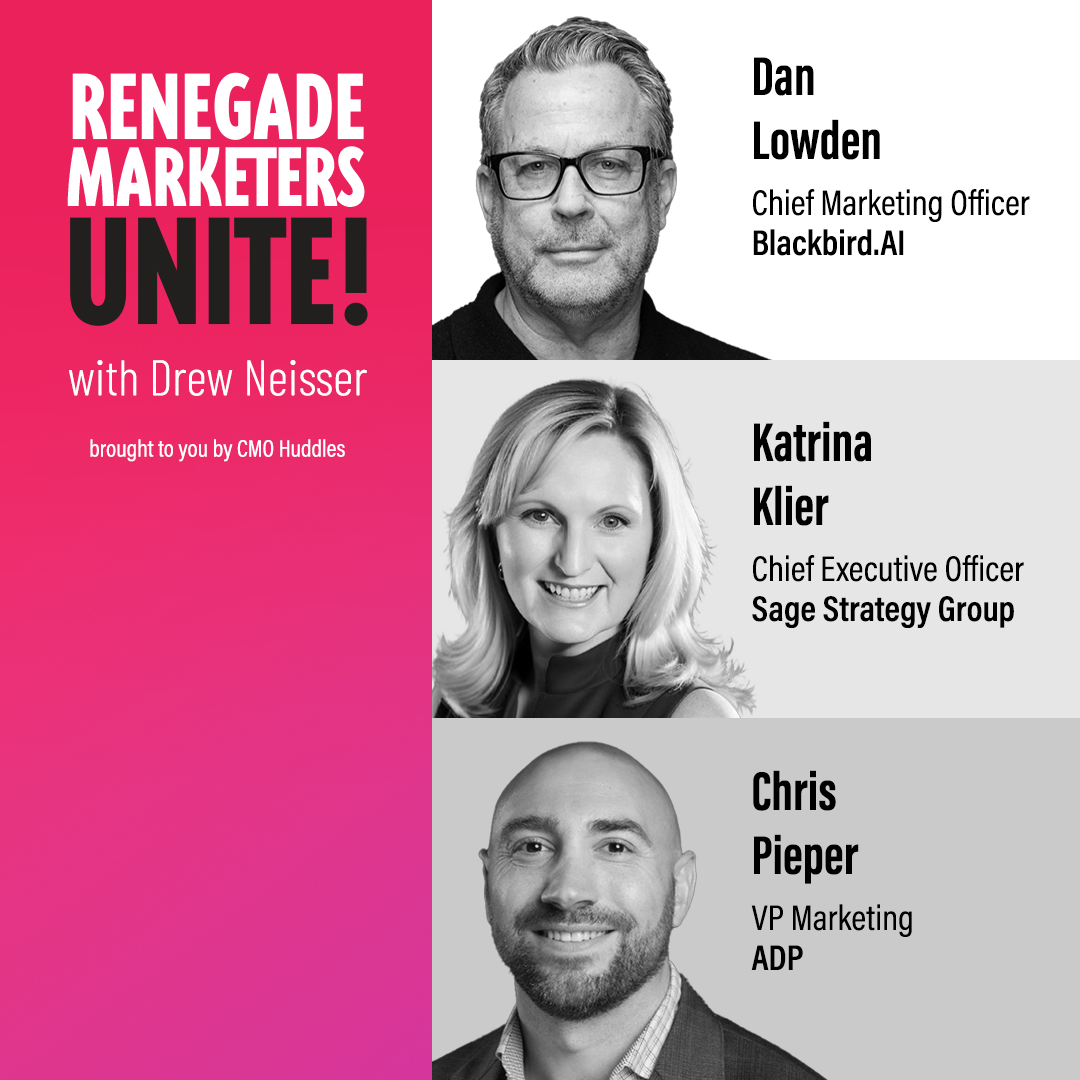
517: The New CMO Superpower: System Design
May 800:49:57Tap to summarizeWe've spent a long time glorifying the "hero leader." The sharpest thinker. The one with all the answers. The person everyone turns to when it's time to make the call. But constant change is pushing a different kind of leader to the forefront. The system designer. A leader who puts more energy into workflows, decision paths, and team rhythm so fewer hard calls boomerang back to them. In this episode, Drew talks with Dan Lowden (Blackbird.AI), Katrina Klier (Sage Strategy Group), and Chris Pieper (ADP) about why this new model of leadership matters now. With AI reshaping marketing and the pace only getting faster, teams need more than a smart CMO in the middle of everything. They need a way of operating that can keep up. In this episode: Dan shares how his team turns expert insight into a steady stream of high-value content, helping a five-person team operate at scale. Katrina breaks down how leaders now need to think across people, tech, and AI while building systems that keep learning and improvement in motion. Chris explains how operating rhythms, sprint structures, and team health checks make strong execution more repeatable. Plus: How better operating rhythms turn learning into a team advantage Where AI should augment the system How to spot work that still depends too heavily on the leader If you're a B2B CMO whose marketing team still depends too heavily on your decisions, this episode will help you rethink leadership, system design, and how to build a team that scales. For full show notes and transcripts, visit https://renegademarketing.com/podcasts/ To learn more about CMO Huddles, visit https://cmohuddles.com/
Transcribe →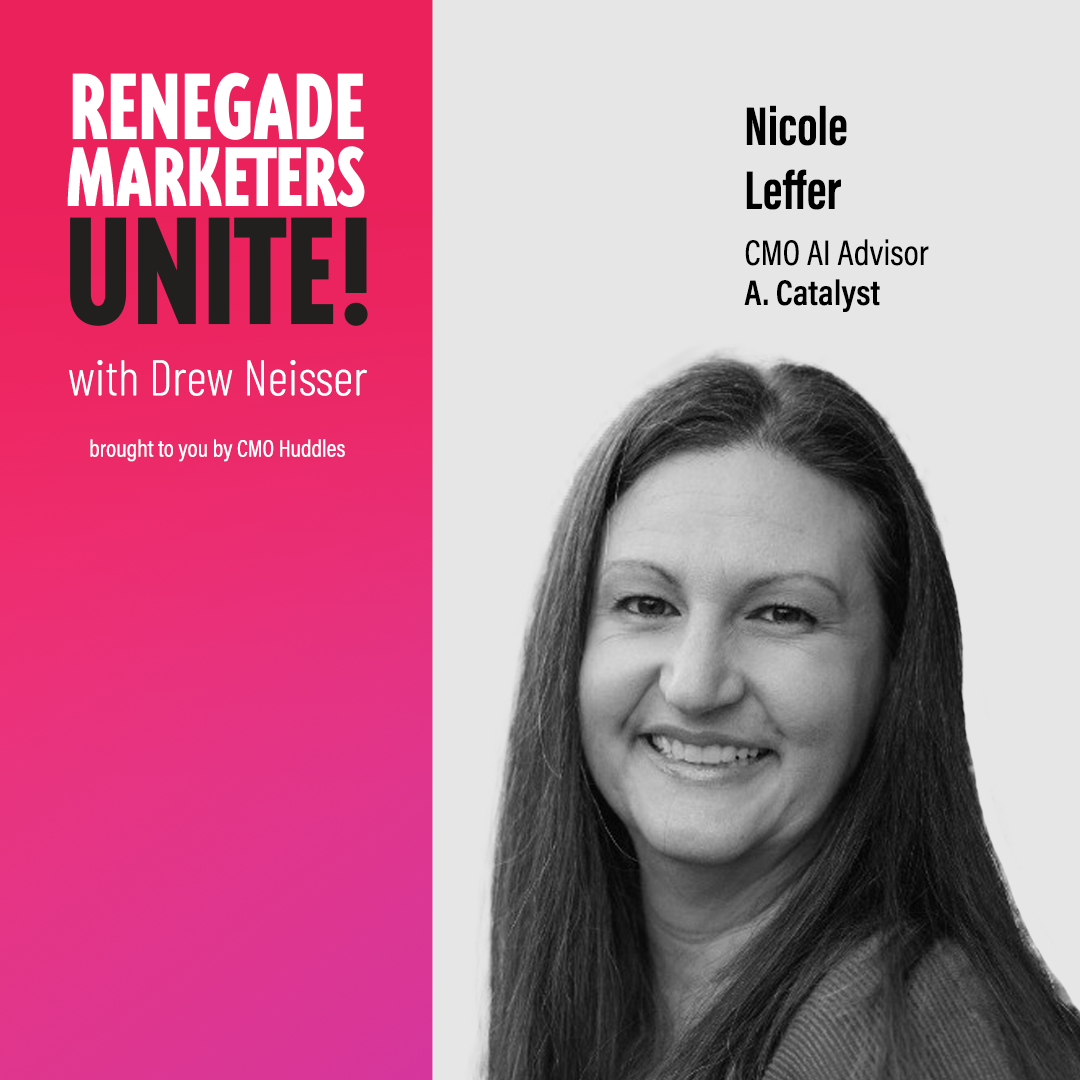
516: From AI Curiosity to Capability
May 100:53:06Tap to summarizeMarketing teams don't need more AI tools. They need better habits around the ones they already have. Experimentation got marketing teams started, but it won't take them very far on its own. The payoff starts when teams stop treating AI like a side experiment and start using it in ways they can repeat and build on. In this episode, Drew Neisser talks with Nicole Leffer, one of the most practical voices in B2B AI adoption, about what it takes to make AI use more consistent and scalable. After working with more than 100 companies, Nicole has a clear view of what separates teams that stay stuck in trial mode from teams that build a repeatable advantage. Three AI Mistakes Marketers Make: Relying on back-and-forth prompting instead of building reusable workflows Underestimating what their core AI tool can already do Falling for hype cycles and constantly switching platforms In This Episode: How to build workflows that save real time The hidden cost of tool sprawl Where AI security risks are showing up now How to build AI capability across the team If you're a B2B CMO working to build stronger AI habits across your team, this episode will give you plenty to work with! For full show notes and transcripts, visit https://renegademarketing.com/podcasts/ To learn more about CMO Huddles, visit https://cmohuddles.com/
Transcribe →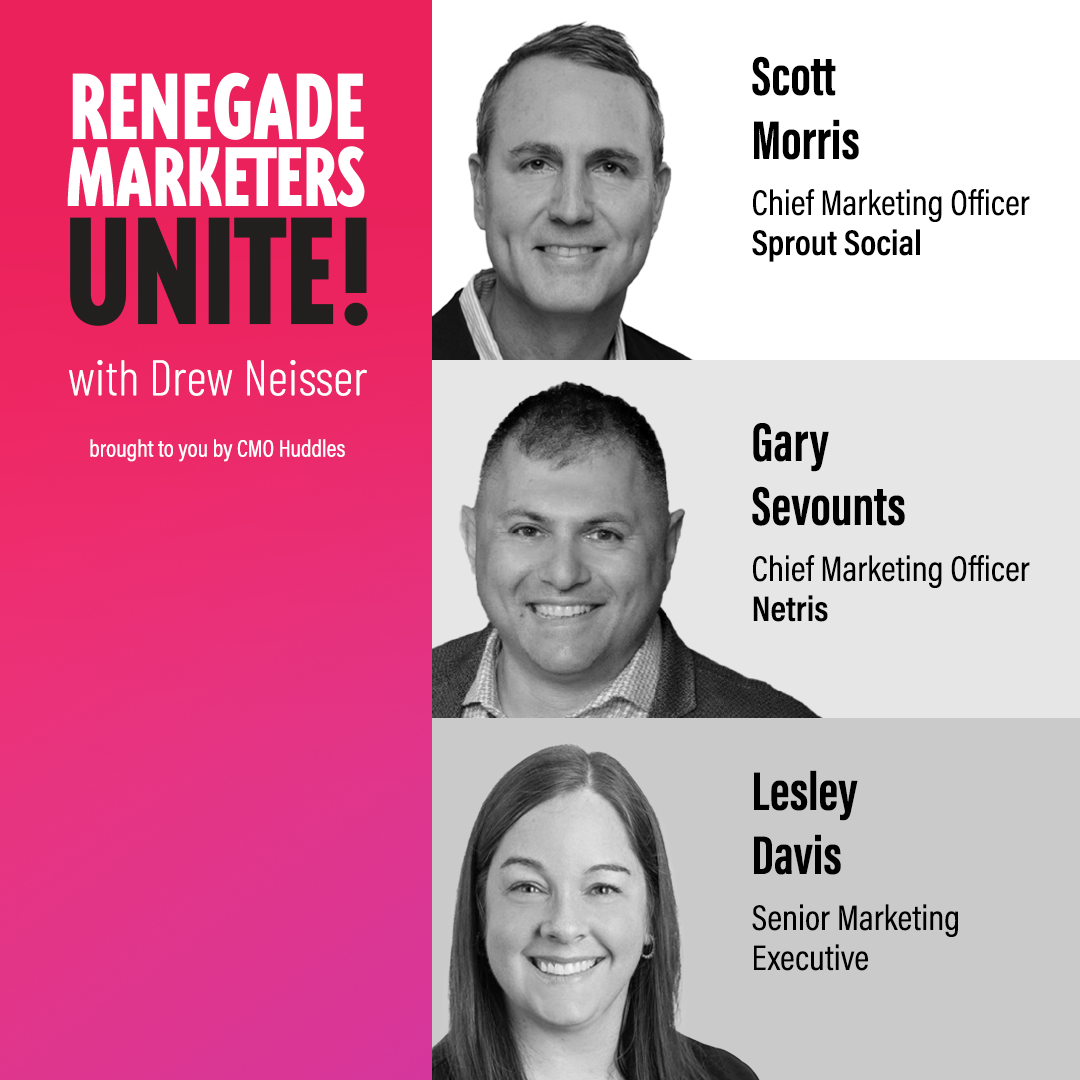
515: Differentiate or Die: Winning in a Sea of Sameness
Apr 2400:49:06Tap to summarizeIf your brand sounds like everyone else's, you're not competing. You're interchangeable. Claims like "customer-centric," "trusted partner," and "AI-powered" don't do much when buyers hear them everywhere. True differentiation is bold, precise, and hard to confuse with the rest of the category. In this episode, Drew Neisser brings together Scott Morris (Sprout Social), Gary Sevounts (Netris), and Lesley Davis to explore what real differentiation requires in B2B. They get into how companies clarify their story, align internally, and carry that differentiation from product to pitch to customer experience. In this episode: Scott explains why strong positioning only works when the product actually delivers on the promise, and how Sprout is building its brand around "social intelligence for breakthrough brands" Gary shares how a shift from selling "just another fraud tool" to an "identity trust network" transformed growth, increased deal size, and helped drive a major acquisition Lesley breaks down how differentiation shows up in a services business, especially in RFP-driven categories, where the real win comes from understanding the problem behind the problem Plus: Why pipeline without differentiation leads to smaller deals How strong positioning starts with customer frustrations The difference between bold positioning and empty promises Why differentiation only works when the whole company reinforces it If you're a B2B CMO trying to differentiate your business and make your brand impossible to ignore, this one's worth your time! For full show notes and transcripts, visit https://renegademarketing.com/podcasts/ To learn more about CMO Huddles, visit https://cmohuddles.com/
Transcribe →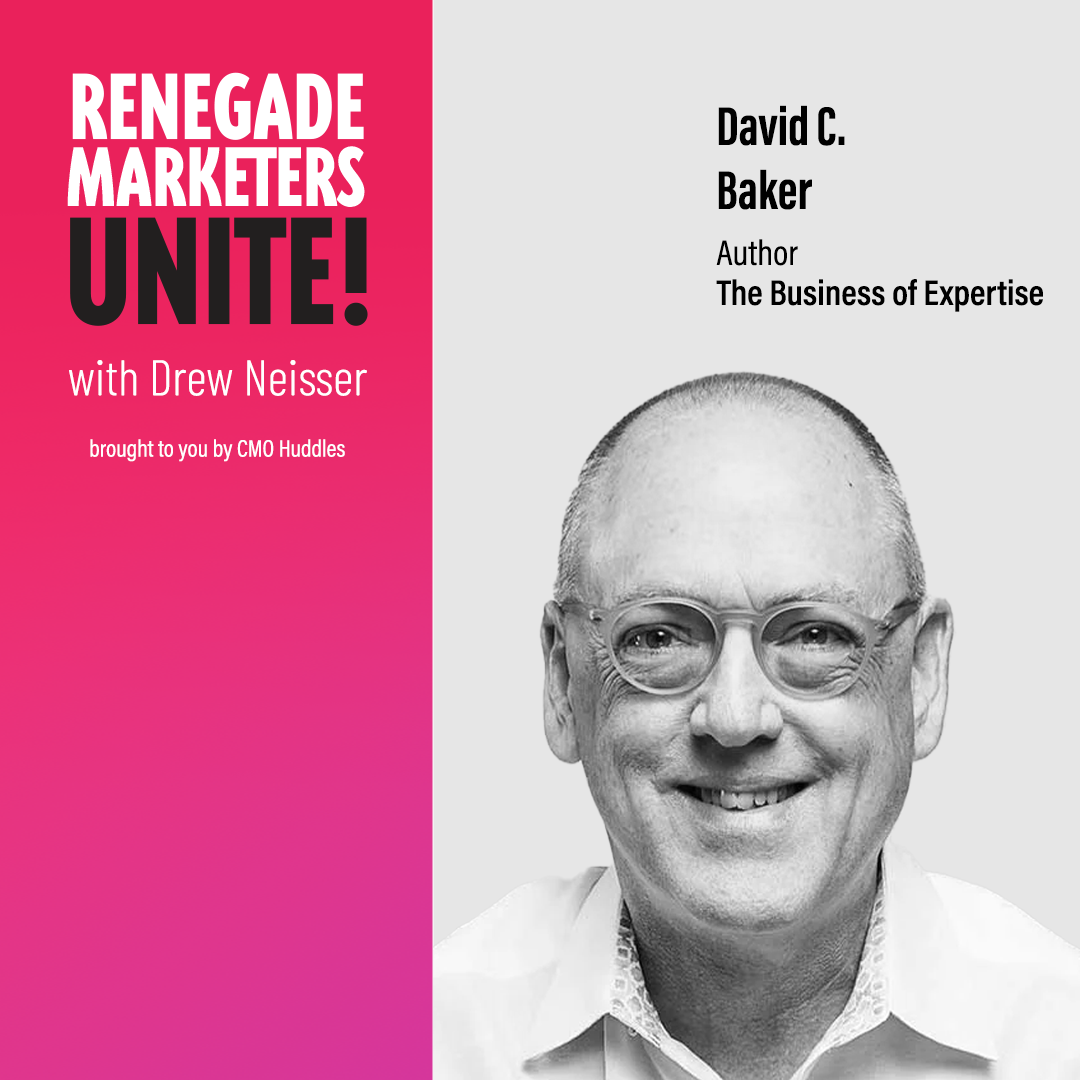
514: The Business of Expertise: Why Positioning Beats Talent Every Time
Apr 1700:48:56Tap to summarizeMost marketers believe great work leads to great business. David C. Baker would disagree. In this episode, Drew Neisser sits down with The Business of Expertise author to unpack what really separates thriving expert firms from struggling ones. From positioning and pricing power to the myths of growth and creativity, this is a candid, no-BS look at what it actually takes to build a successful expertise-based business. If you're a B2B CMO trying to sharpen your company's positioning (and prove marketing's impact on the business), this one will hit home. Key Mistakes: Staying a generalist instead of narrowing your positioning Assuming talent or creativity alone will drive success Chasing growth without understanding the tradeoffs What You'll Learn: Why saying no is the real starting point for positioning and pricing power How to tell if you're acting like an expert or just an order taker Why most firms overestimate creativity and underestimate discipline What AI is actually changing—and what it's not How to build demand so you're not forced to take every client One idea to stick with: If clients can easily compare you to alternatives, you're not positioned. If you want to go deeper, David shares more at punctuation.com—but fair warning, he might tell you to stop reading business books altogether. For full show notes and transcripts, visit https://renegademarketing.com/podcasts/ To learn more about CMO Huddles, visit https://cmohuddles.com/
Transcribe →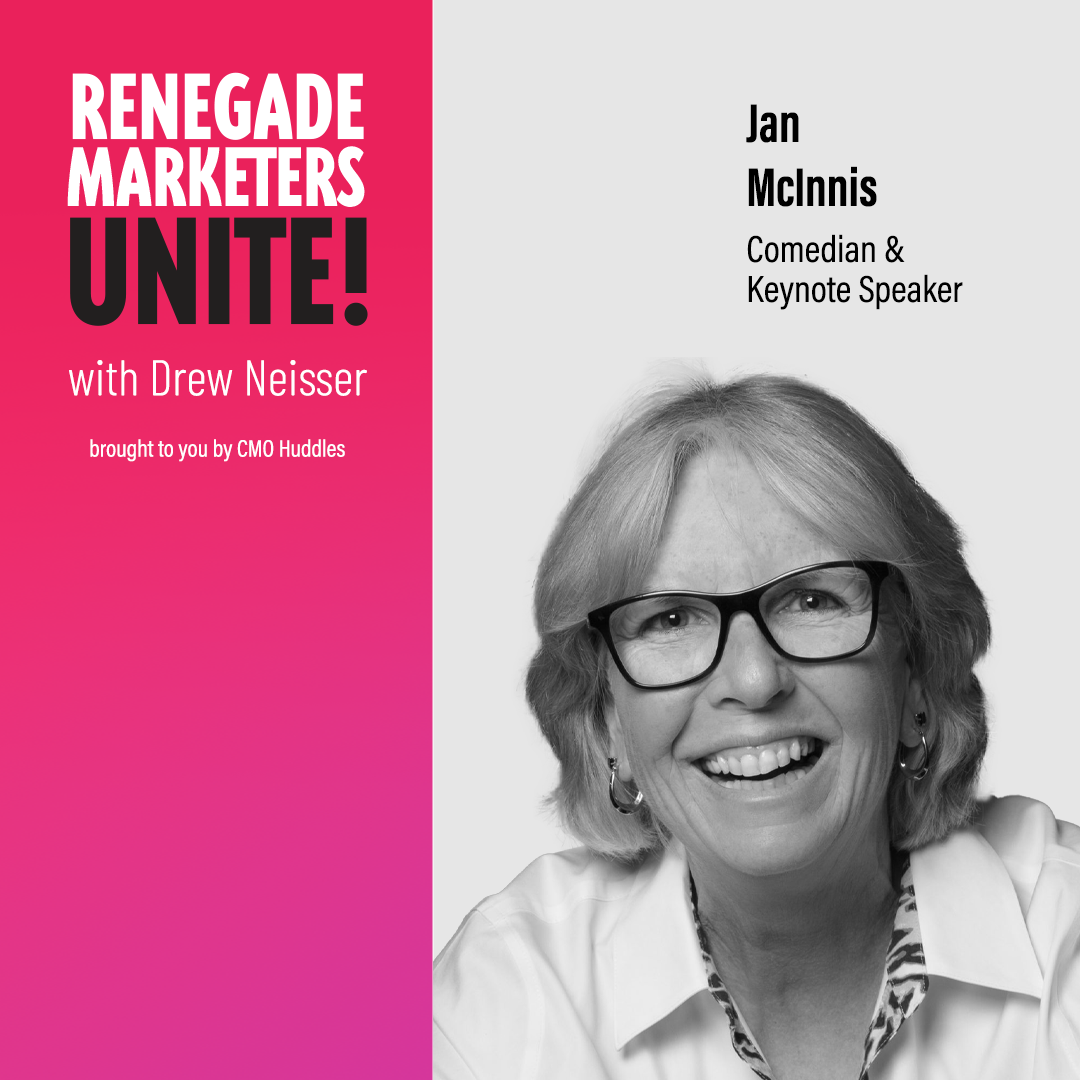
513: Humor as a Leadership Tool
Apr 1000:46:58Tap to summarizeDo humor and serious leadership belong in the same room? Most leaders default to staying "professional" and miss one of the simplest ways to build connection and improve communication. In this episode of Renegade Marketers Unite, Drew Neisser talks with Jan McInnis about how leaders can use humor effectively—without telling jokes or trying to be someone they're not. The conversation reframes humor from something perceived as risky to something practical: A tool leaders can use to make teams more comfortable, conversations more effective, and workplaces a little more human. What You'll Learn: Why humor can make leaders more human and approachable Why humor makes leaders more approachable How humor can acknowledge tension without derailing the moment When humor helps, and when it can backfire How small moments of levity can improve communication across teams The takeaway: Humor isn't about being funny. It's about being human. If your meetings feel a little too stiff—or your communication isn't landing the way it should—this episode offers a simple place to start. For full show notes and transcripts, visit https://renegademarketing.com/podcasts/ To learn more about CMO Huddles, visit https://cmohuddles.com/
Transcribe →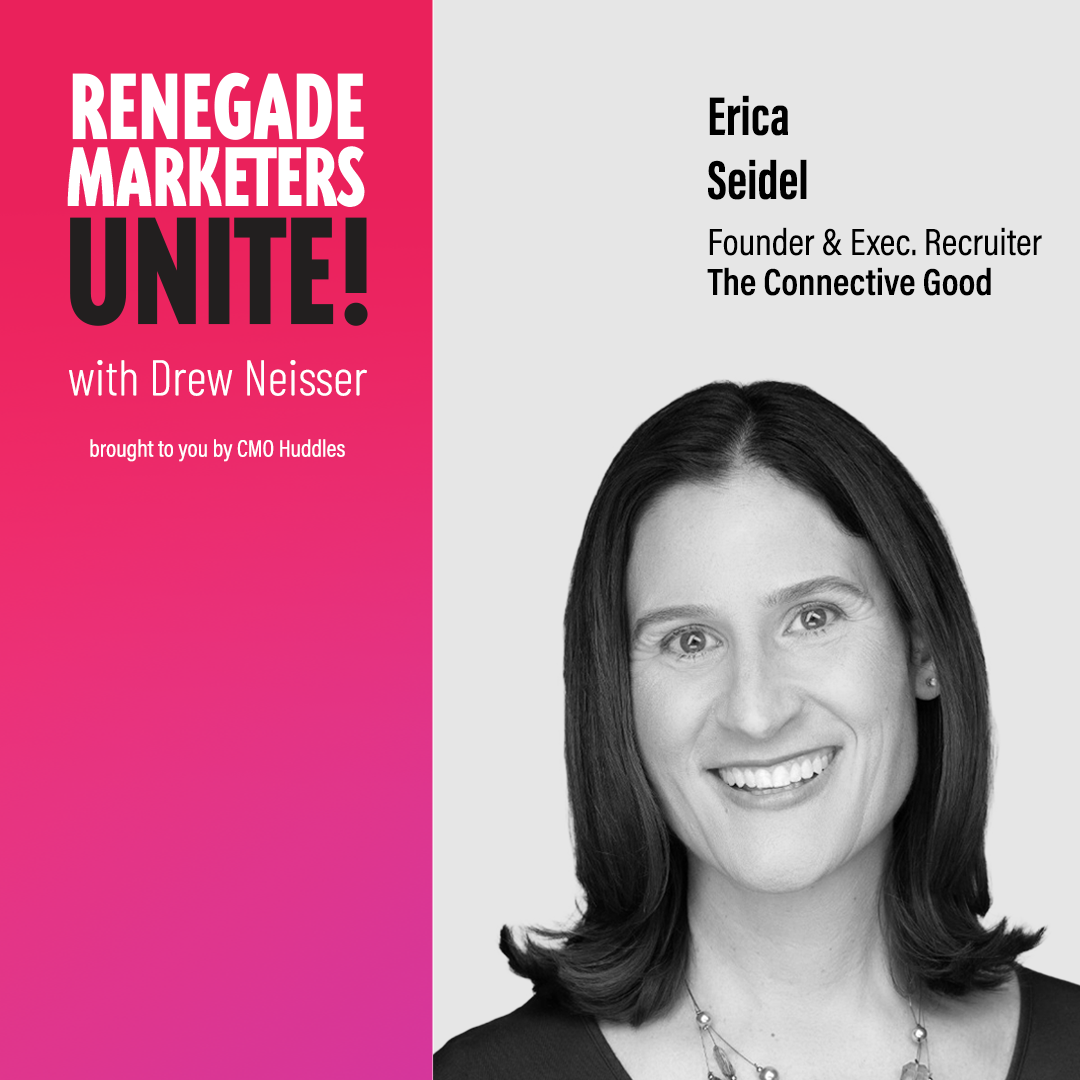
512: Finding and Winning Your Next CMO Role
Apr 300:47:59Tap to summarizeA tough CMO job search can mess with your confidence fast. The search runs longer than expected. A role looks right on paper, then gets murkier as the conversations unfold. The company says it wants growth, but the real issue may be churn, product, or a CEO still figuring out what kind of marketing leader the business needs. That's what makes this market hard. You are not only trying to tell a strong story about yourself. You are also trying to judge whether the opportunity in front of you is one you can win in. Executive recruiter Erica Seidel, founder of The Connective Good, has a front-row seat to how CMO hiring is working right now. In her conversation with Drew, she gets into what CEOs say they want versus what they are really hiring for, how to frame your story when growth is hard to prove, and how to spot the signals that a role may be shakier than it first appears. What You'll Take Away: Why every hire is a set of tradeoffs and how to position yourself What CEOs mean when they ask for a "growth partner" Why business context matters as much as headline results How AI fluency is showing up in CMO hiring How to shape your story before others define your narrative Signals to Read: If the role is built for growth or cleanup What a CEO's reaction to pushback reveals If the job spec reflects reality or an "11 out of 10" wish list If the company can make tradeoffs How culture and pace show up before day one If your CMO job search has you questioning your story, your fit, or your instincts, this episode will help you get more confident on all three. For full show notes and transcripts, visit https://renegademarketing.com/podcasts/ To learn more about CMO Huddles, visit https://cmohuddles.com/
Transcribe →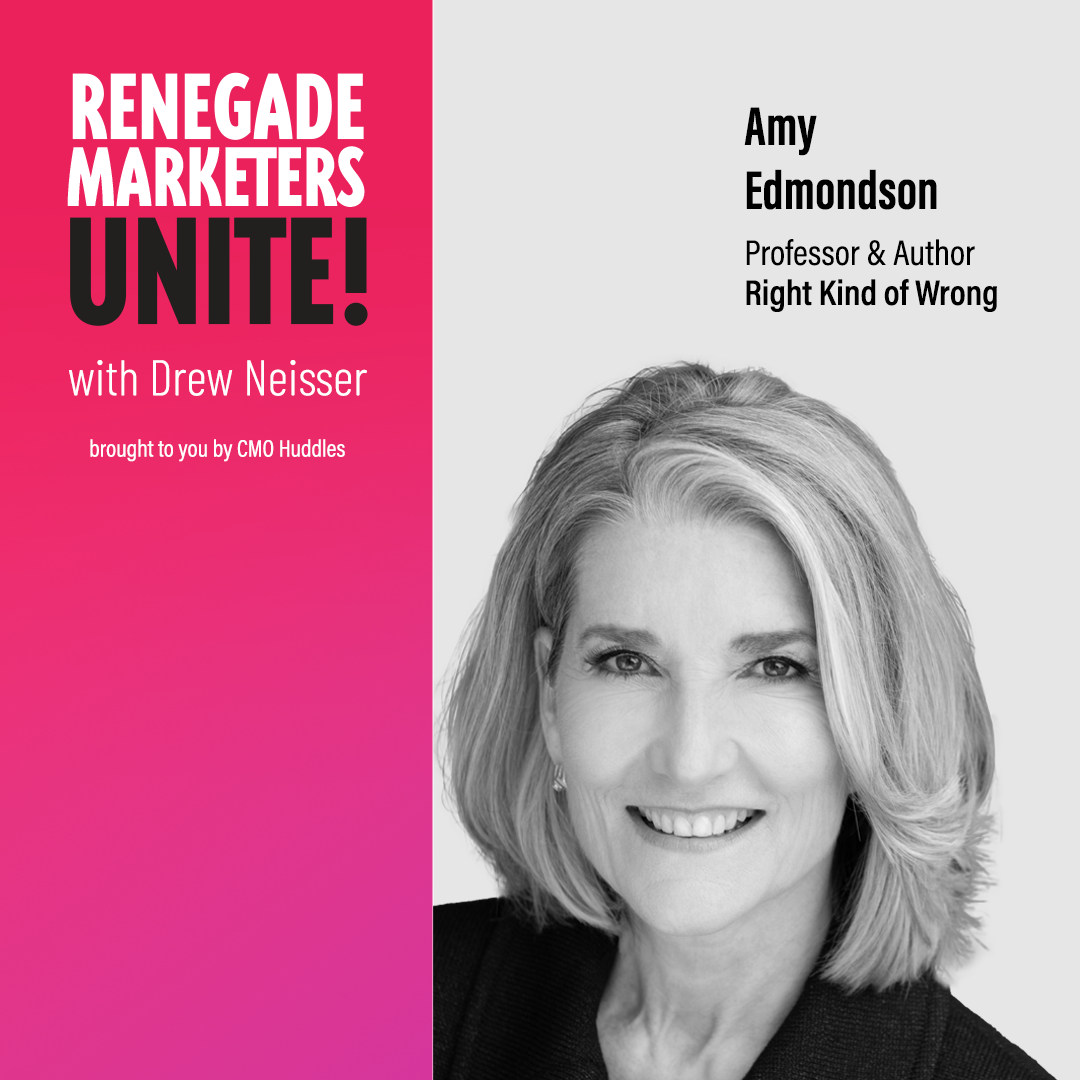
511: Failing Well Beats Playing It Safe
Mar 2700:51:20Tap to summarizeToo many companies treat every failure the same. That makes people more cautious, more guarded, and less willing to take the smart risks innovation requires. Amy Edmondson argues that not all failures deserve the same label. Some are preventable. Some come with complexity. Then there is intelligent failure, the kind that comes with thoughtful experimentation in new territory and produces the learning that moves innovation forward. In this episode, Drew Neisser brings in Harvard Business School professor Amy Edmondson, author of Right Kind of Wrong, to look at what leaders need to do if they want teams experimenting and learning in unfamiliar territory. For Amy, that starts with a clear goal, a bet no bigger than necessary, and the kind of questions that create enough psychological safety for people to share what they're seeing early. So even when the result falls short, the learning is still useful. What You'll Take Away: The difference between preventable, complex, and intelligent failure Why intelligent failure belongs in new territory What makes an experiment smart, small, and worth running Why high achievers often need a better frame for failure How playing not to lose distorts innovation What This Asks of Leaders: Stop treating every miss as proof someone messed up Make the goal clear before the experiment starts Keep the bet no bigger than necessary Ask questions that invite candor instead of caution If your team needs a smarter way to think about failure, risk, and learning, this one is worth a listen. For full show notes and transcripts, visit https://renegademarketing.com/podcasts/ To learn more about CMO Huddles, visit https://cmohuddles.com/
Transcribe →
510: AEO, SEO, and the New Fight to Shape the Answer
Mar 2000:27:42Tap to summarizeSearch is starting to behave differently. More buyers are asking AI tools direct questions, getting synthesized answers, and making decisions without following the old click path. That creates a new challenge for marketers. Content now has to be structured to show up in the answer. In this "Drew-on-Drew" episode, host Drew Neisser pulls together what surfaced in recent CMO Huddles Strategy Labs around Answer Engine Optimization (AEO) and focuses on the questions marketing teams are already starting to wrestle with. Which buyer questions should be turned into structured Q&A first? Which strong existing pages are worth updating before you create anything new? And does this sit with SEO, or is AEO becoming part of a broader content conversation? If you've been hearing more about AEO and trying to figure out what deserves attention now, give this one a listen. Drew lays out what's changing, what teams should look at first, and how to get moving! Where To Start: Identify the buyer questions already shaping search behavior Turn those questions into structured Q&A on pages that already perform Add schema before you spend on anything more elaborate Let SEO lead the first pass, then expand if the test shows promise What You'll Take Away: Which questions belong on your site first, including comparisons, "best tool for X," and "how does this work?" Why this is still early, and why benchmarking now matters Why your SEO team can likely own AEO too How to start with strong existing pages instead of building from scratch For full show notes and transcripts, visit https://renegademarketing.com/podcasts/ To learn more about CMO Huddles, visit https://cmohuddles.com/
Transcribe →