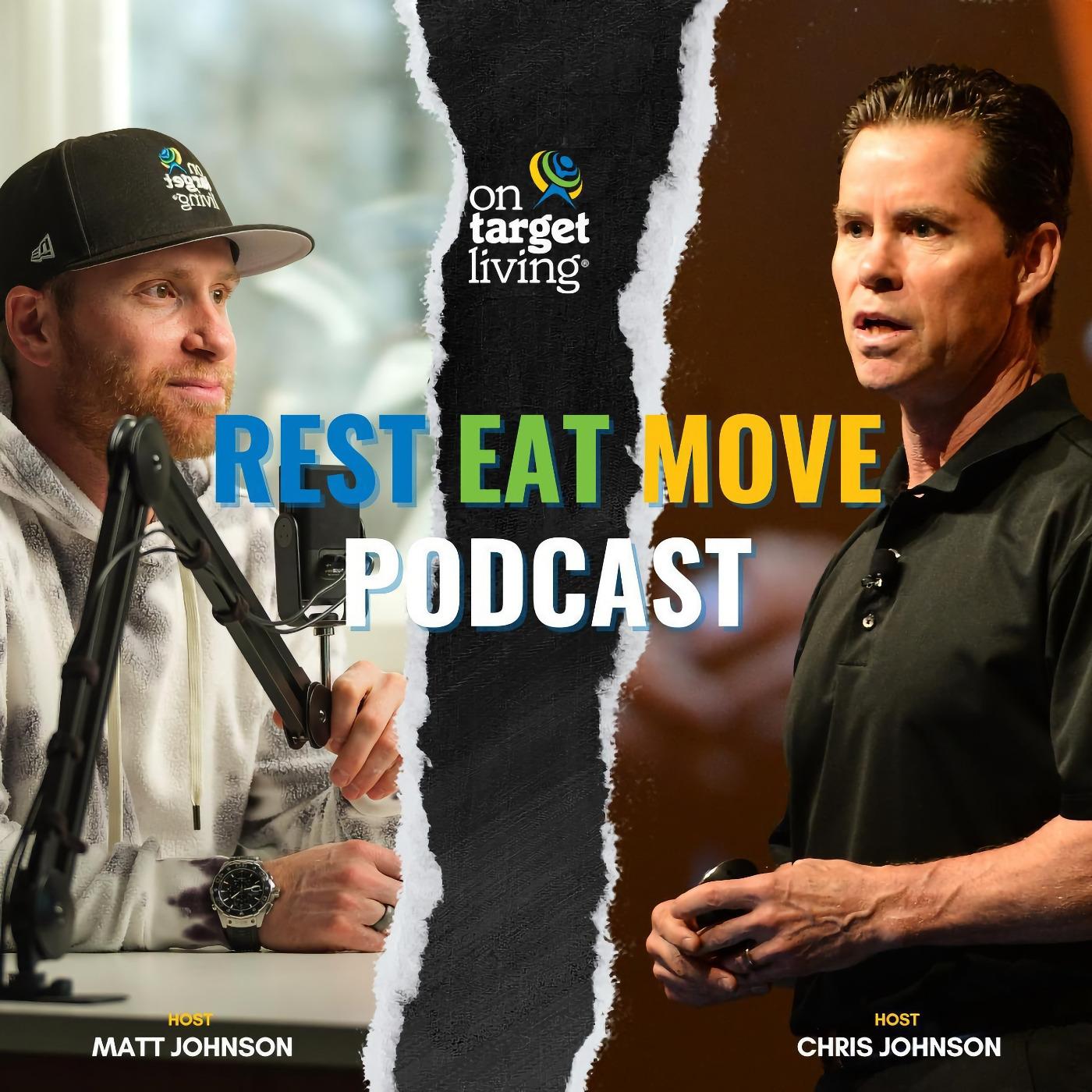
Podcast
REST | EAT | MOVE
Hosted by Matt and Chris Johnson · EN
Your health is your #1 asset. Are you investing in this every day? In this podcast we will guide you along your journey to create a balanced healthy lifestyle allowing you to do and give more in your life and career. As the leading authority on small steps to healthy living, On Target Living has created a lifestyle that not only helps you have better health, but allows you to perform at your best. You will never think about your health & performance the same way again.
www.ontargetliving.com
38episodes
Episodes
Newest firstAll episodes
305. Physical Therapy Isn’t Just for Injuries
Mar 2401:04:06Tap to summarizeIn this episode of Rest, Eat, Move, Jill returns as a guest to expand on her previous conversation, diving into why physical therapy isn’t just for injury recovery—but a critical tool for prevention, performance, and long-term health optimization. She highlights that over 60% of people who could benefit from physical therapy never receive it, often due to gaps in the healthcare system and lack of proactive evaluation. The discussion explores how posture, movement patterns, sleep, nutrition, and mindset all influence pain, inflammation, and recovery. Together, they challenge traditional healthcare models, emphasizing patient advocacy, holistic care, and outcome-based treatment over insurance-driven decisions—reframing physical therapy as a key component of a high-performing lifestyle, not just a reactive solution.#physicaltherapy #healthoptimization #injuryprevention #mobilitymatters #longevityhealth
Transcribe →304. Human Capacity Explained: How to Increase Your Energy, Focus, and Performance
Mar 1700:17:12Tap to summarizeIn this episode, Matt explores the powerful concept of human capacity—our ability to do more, have more, and give more by expanding the mental, physical, and emotional resources we bring to life and work. Drawing from the first chapter of the book Capacity, the conversation challenges the modern belief that productivity comes from doing more with less. Instead, it reveals how distractions, declining health, and rising demands are shrinking our capacity to perform. Through stories, real-world examples, and practical insights, the episode highlights why health, energy, focus, and growth mindset are the true foundations of sustainable success, leadership, and personal fulfillment.#HumanCapacity#PeakPerformance#LeadershipDevelopment#EnergyManagement#GrowthMindset
Transcribe →303. Stress Is Destroying Your Hormones
Mar 1000:54:01Tap to summarizeThe podcast discusses how hormones function as a complex “orchestra” within the endocrine system, regulating processes like metabolism, sleep, mood, digestion, and reproduction. The speakers emphasize that chronic stress is the primary driver of hormonal imbalance today. While the body is designed to handle short bursts of stress, constant stress keeps hormones like cortisol elevated, which suppresses growth and sex hormones such as testosterone and disrupts overall balance. This can lead to symptoms like poor sleep, fatigue, weight gain, inflammation, and chronic disease. They caution against relying solely on hormone replacement therapy or trendy treatments without addressing root causes, noting that hormones are interconnected and influenced by factors like cholesterol, gut health, and lifestyle. Instead, they stress foundational habits—managing stress through rest and recovery, improving nutrition and gut health, and incorporating regular movement, especially strength training—as the most effective ways to support healthy hormone function and long-term well-being.#hormonehealth #stressmanagement #testosterone #healthpodcast #longevity
Transcribe →302. Stillness Is a Superpower
Mar 400:44:04Tap to summarizeIn Episode 302, the conversation shifts from fitness tactics to something deeper: the battle between time and space. While most high performers obsess over productivity, optimization, and even hormone replacement therapy, this episode argues that the missing link in health — especially hormonal health — isn’t more effort. It’s recovery. Drawing on experiences coaching executives, entrepreneurs, and peak performers (including a talk at MIT), the hosts explore how chronic busyness, digital overload, and the inability to tolerate stillness are disrupting the nervous system and driving issues like anxiety, poor sleep, gut dysfunction, and hormone imbalance. They break down the power of micro, medium, and macro breaks — from 60-second breathing resets to digital detox weekends — and explain why intentional rest must be planned with the same intensity as work. Using metaphors like the catapult (you must pull back to launch forward) and the “space between the notes” that makes music meaningful, this episode challenges listeners to rethink productivity. The real edge isn’t doing more — it’s creating space. Rest first. Then eat. Then move.#PeakPerformance#StressRecovery#Biohacking#MentalResilience#ExecutiveHealth
Transcribe →301. The Role of Physical Therapy in Your Healthcare Team
Feb 2401:04:16Tap to summarizeIn this powerful conversation, Jill shares how fracturing her ankle during her college basketball career shifted her path from veterinary medicine to becoming a leader in physical therapy and founder of a four-clinic practice in Michigan. She challenges the outdated belief that physical therapy is only for injuries, positioning it instead as a proactive, performance-driven, and preventative cornerstone of healthcare. The discussion explores direct access laws in Michigan, the limitations of insurance-driven care, and why physical therapists should be musculoskeletal “quarterbacks” for long-term wellness. Jill dives deep into neuro pain science, explaining how pain is processed in the brain, why tissue healing doesn’t always equal pain relief, and how belief, mindset, and emotional processing impact recovery. The conversation expands into posture dysfunction from modern sitting habits, stabilizing the neck and spine, inflammation, omega balance, nutrition as a foundation for healing, and the future of collaborative, experience-driven healthcare. Ultimately, this episode reframes physical therapy as a powerful preventative tool, blending science, mindset, nutrition, and human connection to optimize performance and longevity.#MusculoskeletalHealth#RehabToPerformance#HealthOptimization#Longevity#FunctionalWellness
Transcribe →300. The Foundation First: Know Your Numbers, Change Your Health
Feb 1801:03:29Tap to summarizeIn this dynamic family-led episode, the team from On Target Living—twin siblings Matt Johnson and Kristen Brogan, alongside their father Chris Johnson—break down what it truly means to build a strong health foundation in a world overloaded with trends, supplements, AI-driven solutions, and quick fixes. Framed around the metaphor of building a house, they emphasize that real health starts with the basics: rest, real food, and movement. Kristen dives into women’s health, hormone replacement therapy, and the constant cycle of diet culture, challenging listeners to simplify and return to nutrient-dense whole foods like omega-3s and chlorophyll-rich greens instead of relying on isolated supplements or extreme diets. Chris then shifts the conversation to “knowing your numbers,” explaining how to decode bloodwork, understand cholesterol beyond fear-based messaging, assess real risk, and recognize the powerful role of stress, sleep, digestion, and inflammation in aging well. Together, the three reinforce one core message: you can’t shortcut thriving health. Sustainable vitality comes from intentional habits, listening to your body, and strengthening the foundation before adding “solar panels” like peptides or advanced interventions.#HealthPodcast #WellnessPodcast #HolisticHealth #HealthyLifestyle #Longevity
Transcribe →299. The Protein Paradox: Why More Isn’t Always Better
Feb 1100:23:38Tap to summarizeIn this episode of the Rest, Eat, Move podcast, Matt challenges the booming protein craze, arguing that protein—especially protein powder—has become the new ultra-processed food. While whole foods are widely promoted for health, he highlights a “protein paradox” where that philosophy is abandoned in favor of highly processed powders, bars, and clear protein drinks marketed as healthier simply because they’re high in protein. Matt explains how industrial processing strips protein of its original nutrients, increases acidity, and can negatively impact digestion, micronutrient intake, and nervous system balance over time. He contrasts this with whole foods, which naturally provide protein alongside essential vitamins, minerals, enzymes, and balance. Ultimately, he urges listeners to rely less on ultra-processed protein products, resist fear-based marketing, and return to common sense nutrition by eating a variety of real, minimally processed foods.#NutritionPodcast #ProteinMyths #RealFood #WellnessEducation
Transcribe →298. Anxiety: The Disease of Today—and How to Take Back Control
Feb 300:44:08Tap to summarizeIn this episode of the Rest, Eat, Move podcast, Matt explores anxiety as the defining “dis-ease” of modern life, reframing it as a natural stress response that becomes problematic when the nervous system is chronically out of balance. They break down the science of anxiety through the autonomic nervous system, explaining fight-or-flight versus rest-and-digest, and show how fear of the future—not the present moment—drives most anxious feelings. The conversation highlights why anxiety is rising, pointing to lack of self-awareness, constant stress exposure, screen time, loss of white space, poor sleep, nutrition, and insufficient movement. Rather than quick fixes or distractions, the episode emphasizes practical, foundational tools—especially breath control, sleep, nutrition, movement, and intentional breaks—to calm the nervous system, build resilience, and reclaim control over mental and physical health.
Transcribe →297. The Health Noise Is Out of Control
Jan 2801:01:41Tap to summarizeIn this episode, Matt and Chris cut through the overwhelming noise of modern health and wellness advice, reacting to viral clips and influencer trends around protein intake, diet soda, carbohydrates, genetics, hormones, weight loss drugs, and “quick-fix” biohacks. They argue that much of today’s nutrition and health messaging oversimplifies complex systems, promotes extremes, and fuels confusion—especially for younger audiences—while ignoring foundational principles like gut health, nervous system balance, movement, real food quality, and sustainable habits. Drawing on decades of experience, they challenge the idea that health outcomes are purely genetic or solvable by pills, powders, or prescriptions, emphasizing instead the power of lifestyle, environment, behavior, and belief. The episode ultimately reframes health as a long-term journey, encouraging listeners to stop dabbling, develop clarity, trust common sense, and focus on proven fundamentals that support both performance and well-being.
Transcribe →296. 5 Simple Habits to Reduce Inflammation and Improve Your Health
Jan 2100:17:22Tap to summarizeIn this episode of the Rest, Eat, Move podcast, Matt breaks down the often overcomplicated topic of inflammation, explaining that while acute inflammation is essential for healing, chronic inflammation—described as excessive, ongoing “heat” in the body—is at the root of nearly 90% of modern disease, including obesity, diabetes, cancer, hormonal imbalance, and mental health challenges. He emphasizes that food alone is not always the primary cause and highlights common symptoms such as skin issues, joint pain, digestive problems, low energy, weight gain, poor sleep, anxiety, and weakened immunity. Matt outlines five key contributors to chronic inflammation: unmanaged stress, insufficient sleep, a highly processed and acidic diet, omega-3 deficiency, and lack of daily movement (or over-exercising without recovery). Ultimately, he stresses that lowering inflammation requires a holistic, habit-based approach rather than quick fixes, empowering listeners to reclaim their health by addressing stress, sleep, nutrition, movement, and lifestyle balance.
Transcribe →