Podcast
Revise and Resubmit - The Mayukh Show
Hosted by Mayukh Mukhopadhyay · EN
In Revise and Resubmit, a dynamic AI duo— Nikita and Pavlov — guides you through the fascinating world of academic research. Whether they’re debating emerging trends, revisiting theories, or exploring the latest innovations, their conversational style makes scholarly insights accessible and engaging for academics. Papers chosen by Mayukh. Powered by Google NotebookLM.
46episodes
Episodes
Newest firstAll episodes

Human–AI partnerships (Patil et al. 2026) | FT50 JCP
Apr 1901:37:30Tap to summarizeEnglish Podcast Starts at 00:00:00Bengali Podcast Starts at 00:42:56Hindi Podcast Starts at 01:00:49Danish Podcast Starts at 01:22:41ReferencePatil, R. K., Rice, D. H., & Janiszewski, C. (2026). Human–AI partnerships: Living and working with AI Assistants, AI Agents, and AI Companions. Journal of Consumer Psychology, 00, 1–28. https://doi.org/10.1002/jcpy.70025Youtube Channelhttps://www.youtube.com/@weekendresearcherPodcast Websitehttps://mayukhmukhopadhyay.com/reviseandresubmitAcademy of Management PDW on Space Economy Registration Flyerhttps://cto.aom.org/discussion/flagship-aom-2026-pdw-space-economy-consolidating-a-research-agenda-8🎙️✨ Welcome to Revise and Resubmit.There are some papers that do more than explain a trend. They pause long enough to notice a change in the weather of ordinary life. This is one of them.Today, we are turning to a fascinating new article, Human–AI Partnerships: Living and Working with AI Assistants, AI Agents, and AI Companions, by Ripinka Koli Patil, Dan Hamilton Rice, and Chris Janiszewski, published online on 16 April 2026 in the Journal of Consumer Psychology 🧠📘, a prestigious FT50 journal, published by the Society for Consumer Psychology under John Wiley & Sons Ltd.And what makes this paper feel so timely, so quietly intimate, is that it does not ask only what AI can do. It asks what AI can become in our lives.For a long time, we treated technology like a hammer 🔨, or a search bar, or a machine waiting for commands. Useful, yes. Intelligent, maybe. But still a thing. Still an object. Still something outside the circle of relationship.This paper suggests that circle is changing.The authors offer a taxonomy that feels less like a technical map and more like a portrait of our near future. Some AI systems will remain assistants 🤖, helping us finish tasks, organize choices, and smooth the rough edges of daily life. Some will become agents ⚙️, acting with greater autonomy, making decisions, carrying out intentions, and operating almost like delegated selves. And some may become companions 💬💙, woven into our routines not only through competence, but through familiarity, trust, and something that starts to resemble presence.That is where the paper becomes deeply human. Because repeated interaction changes everything. The more often we return to an intelligent system, the more that system stops feeling like software and starts feeling like a participant in our decision-making, our consumption, our habits, and perhaps even our emotional world.📍This is not just a paper about technology. It is a paper about attachment, dependence, convenience, agency, and the subtle ways people make room for new kinds of partners in everyday life.And because this appears in the Journal of Consumer Psychology, one of the prestigious journals on the FT50 list, it also signals something important for scholars and practitioners alike: this conversation is no longer peripheral. It is central.So as we begin, I want to sit with the question at the heart of this paper. If an AI helps us choose, remember, advise, comfort, and act, again and again, at what point does it stop being a tool in our hand and start becoming a presence in our life? 🤔✨🙏 My sincere thanks to Ripinka Koli Patil, Dan Hamilton Rice, and Chris Janiszewski, and to the Society for Consumer Psychology under John Wiley & Sons Ltd., for this important and timely contribution.🔔 If you enjoy thoughtful research conversations like this, please subscribe to Revise and Resubmit on Spotify and subscribe to Weekend Researcher on YouTube.🎧 You can also listen on Amazon Prime and Apple Podcast.So let us begin with a question that feels both scholarly and strangely personal: when AI starts to know us well enough to help shape our choices, are we using it, or are we already learning how to live with it?
Transcribe →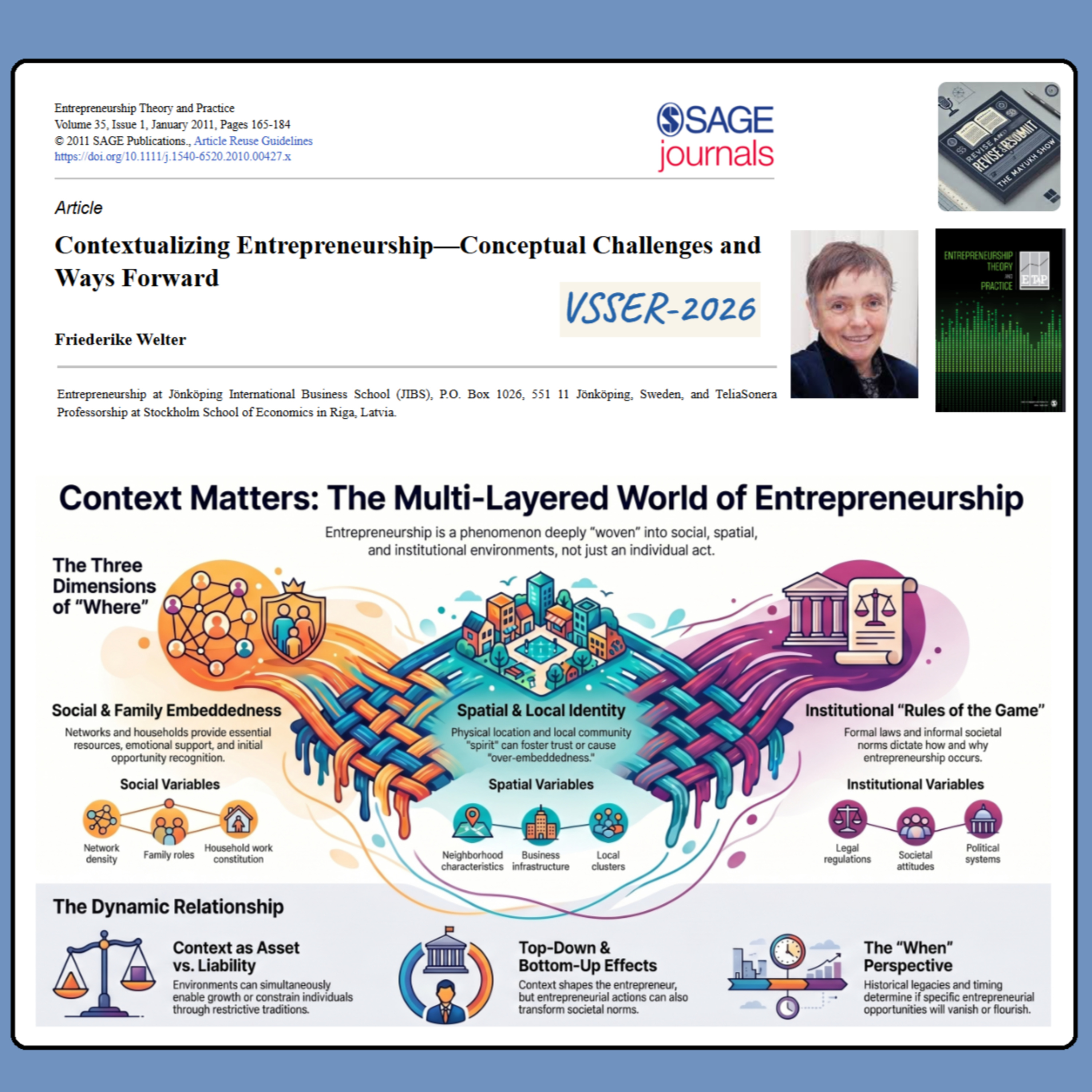
Contextualizing Entrepreneurship (Welter 2011) - Weekend Classics VSSER26
Apr 1801:22:05Tap to summarizeEnglish Podcast starts at 00:00:00Bengali Podcast Starts at 00:18:58Hindi Podcast Starts at 00:40:08Danish Podcast Starts at 01:03:31ReferenceWelter, F. (2011). Contextualizing Entrepreneurship—Conceptual Challenges and Ways Forward. Entrepreneurship Theory and Practice, 35(1), 165-184. https://doi.org/10.1111/j.1540-6520.2010.00427.xYoutube channel link https://www.youtube.com/@weekendresearcherPodcast Websitehttps://mayukhmukhopadhyay.com/reviseandresubmit/VSSER-2026 Paper Explainer Websitehttps://mayukhpsm.github.io/vsser26_welter2011/🎙️✨ Welcome to Revise and Resubmit and to this episode of Weekend Classics.I am glad you are here, because today we are stepping into a paper that quietly changes the way we see entrepreneurship, not as a story of lone genius or raw hustle, but as something shaped by place, time, memory, institutions, and the people around us.📚 Today’s featured paper is Contextualizing Entrepreneurship: Conceptual Challenges and Ways Forward by Friederike Welter, published in Entrepreneurship Theory and Practice, an FT50 listed journal, in January 2011 by SAGE Publications.What I love about this paper is that it asks us to slow down. It asks us to look again. Because entrepreneurship does not happen in thin air. It happens somewhere. It happens under pressure. It happens within families, within neighborhoods, within rules, within histories, and sometimes within the ruins of systems that have already collapsed.🌍 Welter reminds us that context is not background scenery. It is part of the plot. Social context shapes what feels possible. Spatial context shapes where ideas can travel. Institutional context shapes what gets supported, what gets punished, and who even gets to begin.And that changes everything.The entrepreneur, then, is not just a bold individual standing against the world. The entrepreneur is also someone moving through a world already crowded with customs, constraints, expectations, and invisible permissions. In that sense, context can be a gift 🎁 or a burden 🧱. It can open doors, and it can quietly lock them.What makes this paper especially powerful is that it does not just say context matters. It shows that entrepreneurship itself can also reshape context. People do not merely inherit environments. Sometimes, through action, persistence, and improvisation, they alter them.💡 So this is not just a paper about entrepreneurship. It is a paper about humility. About seeing economic life as human life. About resisting the temptation to tell clean, heroic stories when the truth is messier, richer, and far more interesting.As we enter this conversation together, I want you to hold onto one simple but unsettling thought: if entrepreneurship always emerges from context, then how much of what we call talent, vision, or courage is really a conversation between the person and the world that made them possible? 🤔🙏 My thanks to Friederike Welter and to SAGE Publications for this remarkable contribution.🔔 If you enjoy episodes like this, please subscribe to Revise and Resubmit on Spotify, and subscribe to the YouTube channel Weekend Researcher.🎧 You can also find the show on Amazon Prime Music and Apple Podcast.So come with me into this paper, and let us ask the question that lingers after the first page and stays long after the last: when we celebrate the entrepreneur, are we really seeing the individual, or are we finally beginning to see the world that made that individual imaginable?
Transcribe →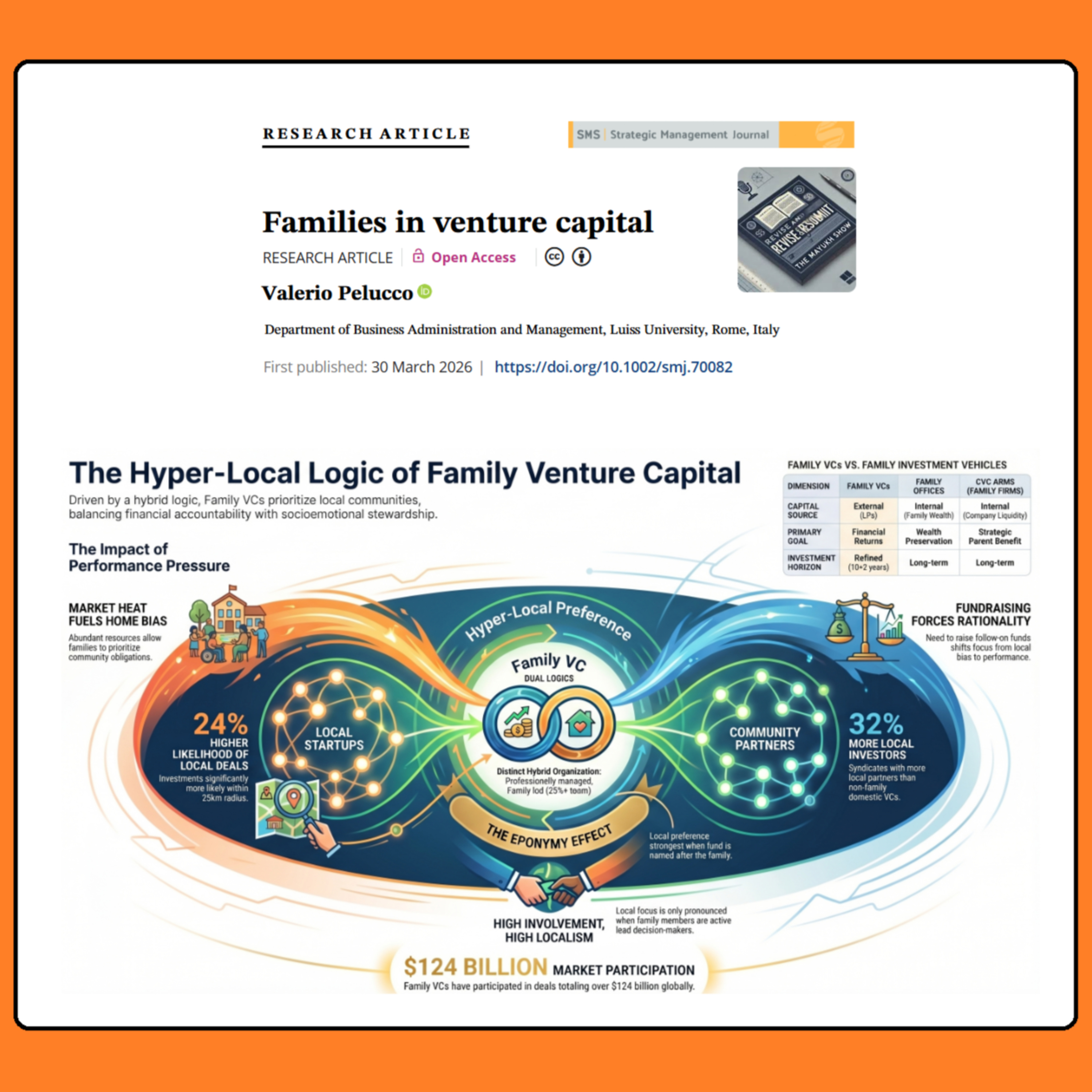
Families in venture capital (Pelucco 2026) | FT50 SMJ
Apr 1201:59:52Tap to summarizeEnglish Podcast Starts at 00:00:00Bengali Podcast Starts at 00:51:35Hindi Podcast Starts at 01:18:32Danish Podcast Starts at 01:38:01ReferencePelucco, V. (2026). Families in venture capital. Strategic Management Journal, 1–26. https://doi.org/10.1002/smj.70082Youtube Channelhttps://www.youtube.com/@weekendresearcherPodcast Websitehttps://mayukhmukhopadhyay.com/reviseandresubmit🎙️ Welcome to Revise and Resubmit, the podcast where serious research meets the human questions hiding underneath it.Today, we turn to a world that often gets described in the language of capital, speed, and disruption, but underneath all that sharp tailoring and term-sheet logic, there is something older at work, something intimate, something almost ancestral. 💼🏠✨ What happens when venture capital is not just managed by professionals, but by families? What changes when money does not arrive as a cold instrument, but as an extension of memory, proximity, reputation, and kinship?In a fascinating new paper, “Families in Venture Capital,” Valerio Pelucco takes us into that question with elegance and precision. Published online on 30 March 2026 in the Strategic Management Journal, and published by John Wiley & Sons Ltd., this study appears in one of the most prestigious academic outlets in management research, a journal that belongs to the FT50 list. 📚🏆 That matters, because FT50 journals are where ideas do not merely circulate, they shape conversations, careers, and whole fields of inquiry.And what Pelucco shows is quietly profound. Family-managed venture capital funds, or Family VCs, do not simply invest like everyone else with a slightly different surname on the door. They seem drawn toward the local, toward startups that are geographically close, toward syndicate partners from familiar communities. 🌍🤝📍 The pull grows stronger when the fund carries the family name and when the family itself is deeply involved in decision-making.Now that can sound comforting, even admirable. Families may know their local terrain better. They may have richer networks, deeper trust, sharper intuition. That is the rational story. But there is another story too, one that feels more human because it is less flattering. Sometimes we choose what is near not because it is better, but because it feels safer, warmer, more ours. ❤️🧭 Pelucco suggests that Family VCs may be shaped by both superior local knowledge and home bias, and that this bias becomes even more visible when performance pressure eases.So this is not just a paper about venture capital. It is a paper about how families carry their habits into institutions, how identity sneaks into finance, and how even in markets built on the promise of objectivity, people still lean toward what feels familiar. 🔍👨👩👧👦💡If that kind of research excites you, subscribe to Revise and Resubmit on Spotify, and follow Weekend Researcher on YouTube. 🎧📺 You can also find the show on Amazon Prime and Apple Podcast. Hit subscribe, stay curious, and keep listening for the ideas that change how we see organizations and ourselves.Heartfelt thanks to Valerio Pelucco, and to John Wiley & Sons Ltd. for publishing this important work in the Strategic Management Journal, one of the field’s truly prestigious FT50 journals. 🙏📖When family enters venture capital, does it make investing wiser because it is rooted, or narrower because it cannot stop loving what is close?
Transcribe →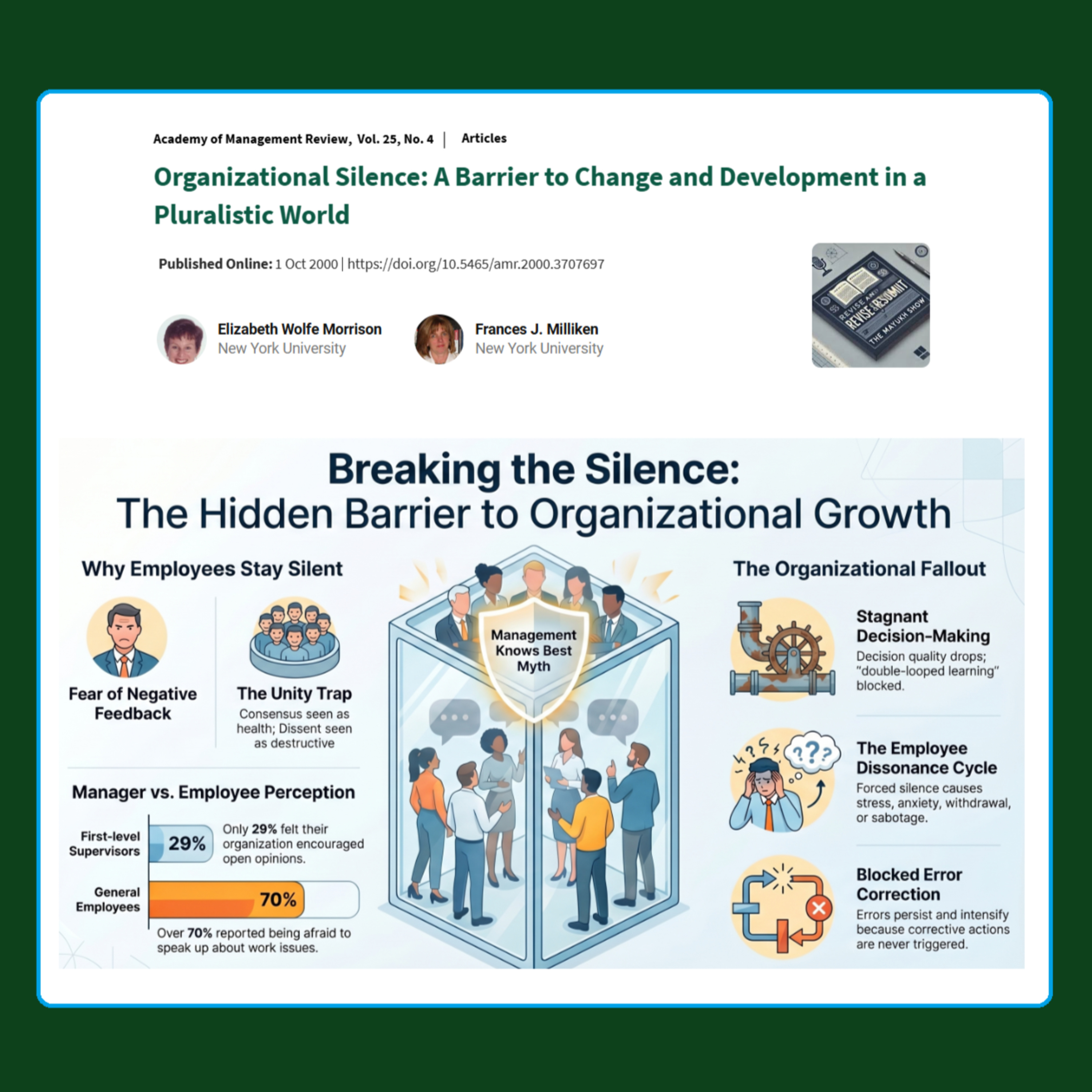
Organizational Silence (Morrison & Milliken, 2000) - Weekend Classics
Apr 1101:45:00Tap to summarizeEnglish Podcast starts at 00:00:00Bengali Podcast Starts at 00:52:19Hindi Podcast Starts at 01:09:28Danish Podcast Starts at 01:33:00ReferenceElizabeth Wolfe Morrison and Frances J. Milliken, 2000: Organizational Silence: A Barrier to Change and Development in a Pluralistic World. AMR, 25, 706–725, https://doi.org/10.5465/amr.2000.3707697Youtube channel link https://www.youtube.com/@weekendresearcherPodcast Websitehttps://mayukhmukhopadhyay.com/reviseandresubmit/Paper Explainer Websitehttps://mayukhpsm.github.io/organizational-silence/🎙️✨ Welcome to Revise and Resubmit, and this is Weekend Classics.I am always fascinated by the moments when people say nothing. Not because nothing is on their mind. Quite the opposite. Because sometimes the loudest thing in a workplace is the thing nobody dares to say out loud. 🤐Today’s classic takes us to a remarkable paper published on 1 October 2000 in the Academy of Management Review, an FT50 listed journal. The paper is titled “Organizational Silence: A Barrier to Change and Development in a Pluralistic World” by Elizabeth Wolfe Morrison and Frances J. Milliken. 📚And what these authors noticed feels almost painfully familiar. In many organizations, silence is not accidental. It is not an individual flaw. It is not just shyness, diplomacy, or caution. It is a system. A climate. A lesson people learn together. 🏢🔇You begin to see how it happens. Managers fear negative feedback. Structures become centralized. Channels for honest communication disappear, or become decorative. Employees start to believe that speaking up is risky, futile, or both. So they watch each other. They read the room. They trade stories in hushed tones. And little by little, silence becomes culture. 🪞What Morrison and Milliken gave us was not just a concept, but a mirror. They showed us that when organizations stop hearing the truth, they also weaken their own capacity to change, to adapt, and to grow. And in a pluralistic world, where difference, disagreement, and multiple perspectives are not inconveniences but necessities, that silence can become especially dangerous. ⚠️🌍I think that is what makes this paper endure. It understands something tender and troubling about human beings at work. We do not always fall silent because we have nothing to say. Sometimes we fall silent because the organization has already taught us the price of honesty. And once that lesson settles in, even intelligent, ethical, committed people can begin to confuse survival with wisdom. 💭So in this episode, I want to sit with that uneasy truth. I want to ask what happens when institutions become too fragile to hear dissent. I want to think about the cost of all the warnings never voiced, all the ideas never shared, all the problems that grow precisely because they remain politely unspoken. 🎧✨And maybe, as you listen, you might ask yourself something too: when an organization becomes quiet, is it becoming peaceful... or is it becoming afraid? ❓🙏 My sincere thanks to Elizabeth Wolfe Morrison and Frances J. Milliken for this enduring contribution, and to the Academy of Management for publishing it.🎧 If you enjoy these deep dives, please subscribe to Revise and Resubmit on Spotify, and follow the Weekend Researcher channel on YouTube. You can also find us on Amazon Prime Music and Apple Podcast 🍎🎙️
Transcribe →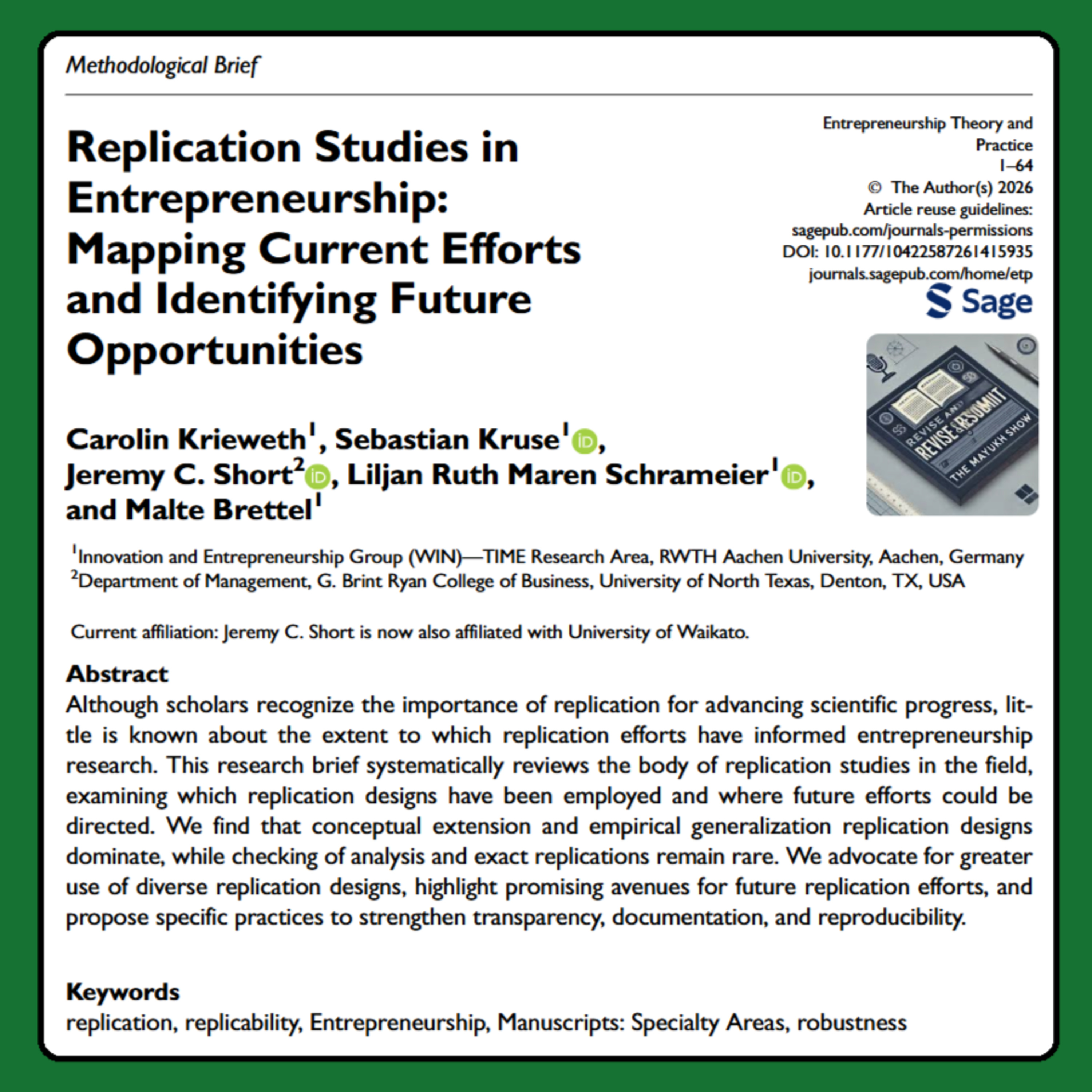
Replication Studies in Entrepreneurship (Krieweth et al. 2026) | FT50 ETP
Apr 501:35:33Tap to summarizeEnglish Podcast Starts at 00:00:00Bengali Podcast Starts at 00:37:08Hindi Podcast Starts at 00:54:58Danish Podcast Starts at 01:17:32ReferenceKrieweth, C., Kruse, S., Short, J. C., Schrameier, L. R. M., & Brettel, M. (2026). Replication Studies in Entrepreneurship: Mapping Current Efforts and Identifying Future Opportunities. Entrepreneurship Theory and Practice, https://doi.org/10.1177/10422587261415935Youtube Channelhttps://www.youtube.com/@weekendresearcherPodcast Websitehttps://mayukhmukhopadhyay.com/reviseandresubmitWelcome to Revise and Resubmit 🎙️✨There is something quietly brave about a field that turns back on itself and asks, did we really get it right? Not did we publish it, not did we celebrate it, not did we cite it into importance, but did it hold? Did the evidence stay standing when the applause faded? 📚🔍Today, we step into that uneasy and necessary conversation through a fascinating new research brief titled, Replication Studies in Entrepreneurship: Mapping Current Efforts and Identifying Future Opportunities, by Carolin Krieweth, Sebastian Kruse, Jeremy C. Short, Liljan Ruth Maren Schrameier, and Malte Brettel, published online on 01 April 2026 in Entrepreneurship Theory and Practice 🏛️🔥, one of the most prestigious journals in the field and proudly part of the FT50 journal list.This paper asks a question that feels technical on the surface, but human at its core. In entrepreneurship research, how often do scholars go back and test what we think we know? The answer, as the authors show with remarkable clarity, is both encouraging and sobering.Across three decades, they systematically examine 58 replication studies and discover a pattern. Most replications in entrepreneurship do not retrace the original path step by step. Instead, they stretch outward through conceptual extensions and empirical generalizations 🌍🧠. Those are valuable, of course. But exact replications and analysis checks, the kinds of studies that ask whether the original result itself can survive scrutiny, remain surprisingly rare ⚠️And that matters.Because a discipline is not only built on imagination. It is built on trust. It is built on whether foundational findings can bear the weight of future theory, future policy, future teaching, and future belief. What Krieweth and colleagues offer here is more than a review. It is a mirror. They show us where replication has clustered, where it has been neglected, and where the next generation of scholars might do some of their most important work. They even identify 33 high-impact empirical studies that deserve renewed verification 🧩📈This is the kind of article that does not simply summarize a literature. It asks a field to grow up a little, to become more transparent, more documented, more reproducible, and perhaps more honest about what counts as knowledge in the first place.So in today’s episode, let’s sit with that tension together. In a field built on risk, innovation, and bold ideas, what happens when the boldest move is to go back and check the math, the method, and the meaning? 🤔🎧If you enjoy conversations like this, subscribe to Revise and Resubmit on Spotify, and follow the YouTube channel Weekend Researcher ▶️🎙️ You can also find the show on Amazon Prime and Apple Podcast 🍎📺Our sincere thanks to the authors, Carolin Krieweth, Sebastian Kruse, Jeremy C. Short, Liljan Ruth Maren Schrameier, and Malte Brettel, and to Sage Publications for bringing this important work into the world 🙏📘And now the question that lingers is this: if entrepreneurship prides itself on building the future, how often is it willing to revisit its own past to make sure that future stands? ✨
Transcribe →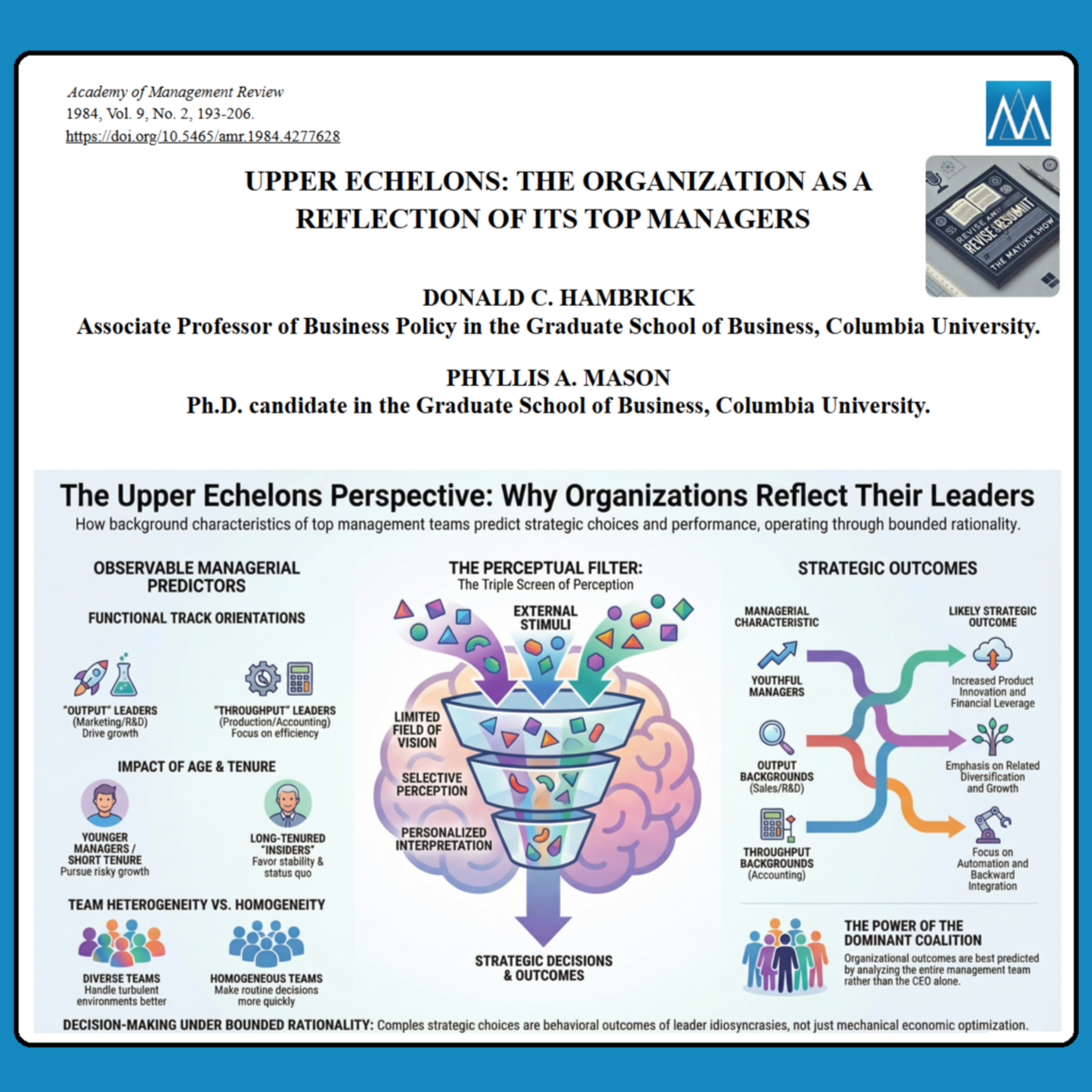
Upper echelons (Hambrick & Mason, 1984) - Weekend Classics
Apr 401:59:22Tap to summarizeEnglish Podcast starts at 00:00:00Bengali Podcast Starts at 00:56:52Hindi Podcast Starts at 01:21:30Danish Podcast Starts at 01:45:01ReferenceHambrick, D. C., & Mason, P. A. (1984). Upper echelons: The organization as a reflection of its top managers. Academy of Management Review, 9: 193–206. https://doi.org/10.5465/amr.1984.4277628Youtube channel link https://www.youtube.com/@weekendresearcherPodcast Websitehttps://mayukhmukhopadhyay.com/reviseandresubmit/Welcome to Revise and Resubmit 🎙️✨ and to another episode of Weekend Classics 📚Sometimes I come across a paper that does not simply explain organizations, but explains people. And once it explains people, everything else begins to make a different kind of sense. That is how I feel about today’s classic, Upper Echelons: The Organization as a Reflection of Its Top Managers, written by Donald C. Hambrick and Phyllis A. Mason, and published on 1 April 1984 in the Academy of Management Review 🏛️, one of the most prestigious FT50 listed journals in management research.What makes this paper endure, I think, is its refusal to pretend that organizations are machines running on cold logic alone. It reminds me that behind every strategy memo, every merger, every ambitious leap, every cautious retreat, there are human beings sitting in rooms, carrying their histories with them. Their educations. Their ambitions. Their fears. Their habits of seeing. Their private ways of deciding what matters and what can be ignored. 👀🧠Hambrick and Mason gave us a sentence so powerful that it still echoes through management scholarship today: organizations are, in part, reflections of their top managers. And when I sit with that idea, it feels at once obvious and quietly profound. Of course companies do not emerge from nowhere. Of course choices are filtered through the minds of the people powerful enough to make them. But to say it this clearly, and to build a theory around it, was to change the conversation.This paper argues that leaders do not encounter the world as it is in its total complexity. None of us do. Instead, they see through filters shaped by age, experience, education, functional background, and social roots. Those visible facts about a leader’s life become clues, little windows into how they might interpret uncertainty, risk, innovation, or opportunity. 🧩📈And what I love most is that the paper does not stop at the heroic image of the lone CEO. It asks us to look at the broader top management team, the dominant coalition, the collective of people whose biographies and assumptions quietly guide the fate of an organization. In that sense, this is not just a theory of leadership. It is a theory of interpretation itself. It says that before organizations act, people perceive. Before firms decide, executives make meaning. 🔍✨That is why this piece remains a classic. It gave scholars a way to connect executive backgrounds to organizational outcomes, but it also gave the rest of us a humbling insight. Institutions may look large, abstract, and impersonal from a distance, yet so often they carry the fingerprints of the people at the top.If you enjoy these deep dives into landmark research, please subscribe to Revise and Resubmit on Spotify 🎧 and to the YouTube channel Weekend Researcher ▶️ You can also find the show on Amazon Prime Music and Apple Podcast 🍎🎵My sincere thanks to Donald C. Hambrick and Phyllis A. Mason for this enduring contribution, and to the Academy of Management for publishing a work that still shapes how we think about leadership, strategy, and organizations 🙏📘So here is the question I want to leave with you: if every organization is, in some measure, a reflection of its top managers, then what hidden parts of a leader’s life are we really seeing every time a company makes a choice? 🤔
Transcribe →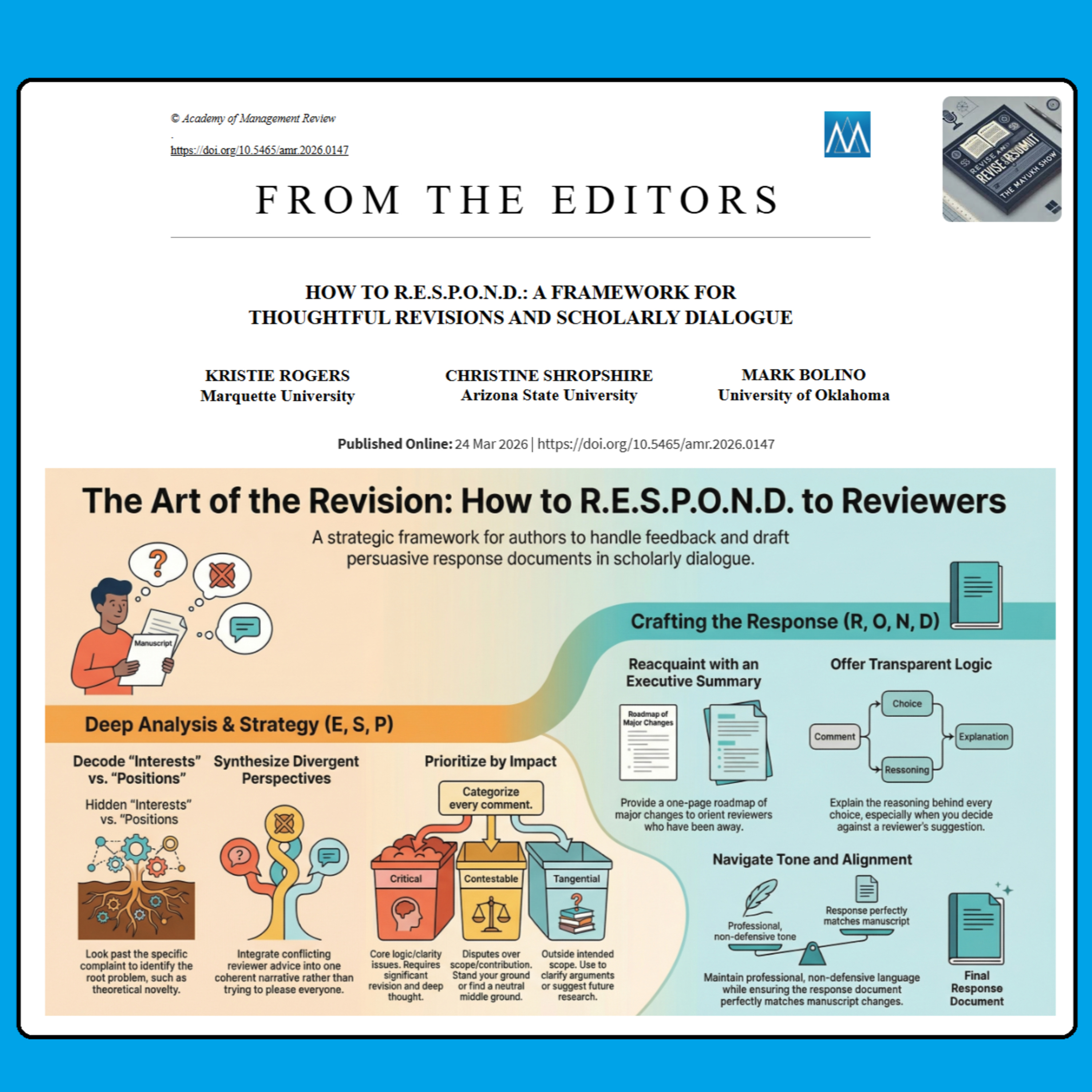
How to R.E.S.P.O.N.D. (Rogers et al., 2026) | FT50 AMR
Mar 2901:52:54Tap to summarizeEnglish Podcast Starts at 00:00:00Bengali Podcast Starts at 00:53:14Hindi Podcast Starts at 01:16:05Danish Podcast Starts at 01:40:38ReferenceRogers, K., Shropshire, C., & Bolino, M. (2026). How to R.E.S.P.O.N.D.: A Framework for Thoughtful Revisions and Scholarly Dialogue. Academy of Management Review. https://doi.org/10.5465/amr.2026.0147Youtube Channelhttps://www.youtube.com/@weekendresearcherConnect over linkedinhttps://www.linkedin.com/in/mayukhpsm/Welcome to Revise and Resubmit 🎙️✨There are some academic articles that do more than instruct. They steady your breathing. They reach across the long table of scholarship, where editors, reviewers, and authors so often meet in a haze of anxiety, and they say, gently but firmly, let us try to do this better. That is the feeling I had reading “How to R.E.S.P.O.N.D.: A Framework for Thoughtful Revisions and Scholarly Dialogue” by Kristie Rogers, Christine Shropshire, and Mark Bolino, published online on 23 March 2026 in the Academy of Management Review 📚💡And that matters, because Academy of Management Review is not just any journal. It is one of the most prestigious journals in management scholarship, and yes, it belongs to the FT50 journal list 🏛️⭐. This is the kind of place where ideas are not merely submitted. They are tested, clarified, sharpened, and sometimes lovingly dismantled before they are allowed to stand. So when a paper appears here offering guidance on how to revise with intelligence, dignity, and grace, it is worth our full attention.What I love about this piece is that it understands something every scholar eventually learns, usually the hard way. Revision is never just technical. It is emotional. It is rhetorical. It is relational. A manuscript comes back to us marked by many hands, carrying praise, confusion, contradiction, and sometimes a sentence that makes us stare at the wall for five full minutes ☕📝😅. And yet Rogers, Shropshire, and Bolino do not treat the revision process as a bureaucratic obstacle course. They treat it as scholarly dialogue, as an act of conversation, maybe even an act of character.Their R.E.S.P.O.N.D. framework offers a way to meet that moment thoughtfully. Not defensively. Not performatively. Thoughtfully. It helps scholars reacquaint editors with the paper’s core contribution, sort through competing reviewer demands, prioritize what matters most, and explain revisions with clarity and professionalism. For conceptual work especially, where there is no new dataset to rescue a weak argument, this kind of intellectual discipline becomes everything 🔍🧠And maybe that is why this article feels larger than its immediate purpose. It is about revision, yes. But it is also about how we conduct ourselves in the life of the mind. How we answer criticism. How we preserve conviction without becoming stubborn. How we enter dialogue without losing our voice.So in today’s episode, I want to sit with this paper not only as a practical framework for publishing, but as a small philosophy of scholarly exchange, one that asks us to see revision not as humiliation, but as collaboration, not as defeat, but as a second chance 🌱📖My sincere thanks to Kristie Rogers, Christine Shropshire, and Mark Bolino, and to the Academy of Management for publishing this thoughtful and deeply useful article 🙏If you enjoy conversations like this, please subscribe to Revise and Resubmit on Spotify, and to Weekend Researcher on YouTube 🎧📺 You can also find the channel on Amazon Prime and Apple Podcast 🍎🎙️And as we begin, here is the question I want to carry into this episode: when a revision asks us to change our paper, is it only changing the manuscript, or is it quietly changing the scholar too? ✨
Transcribe →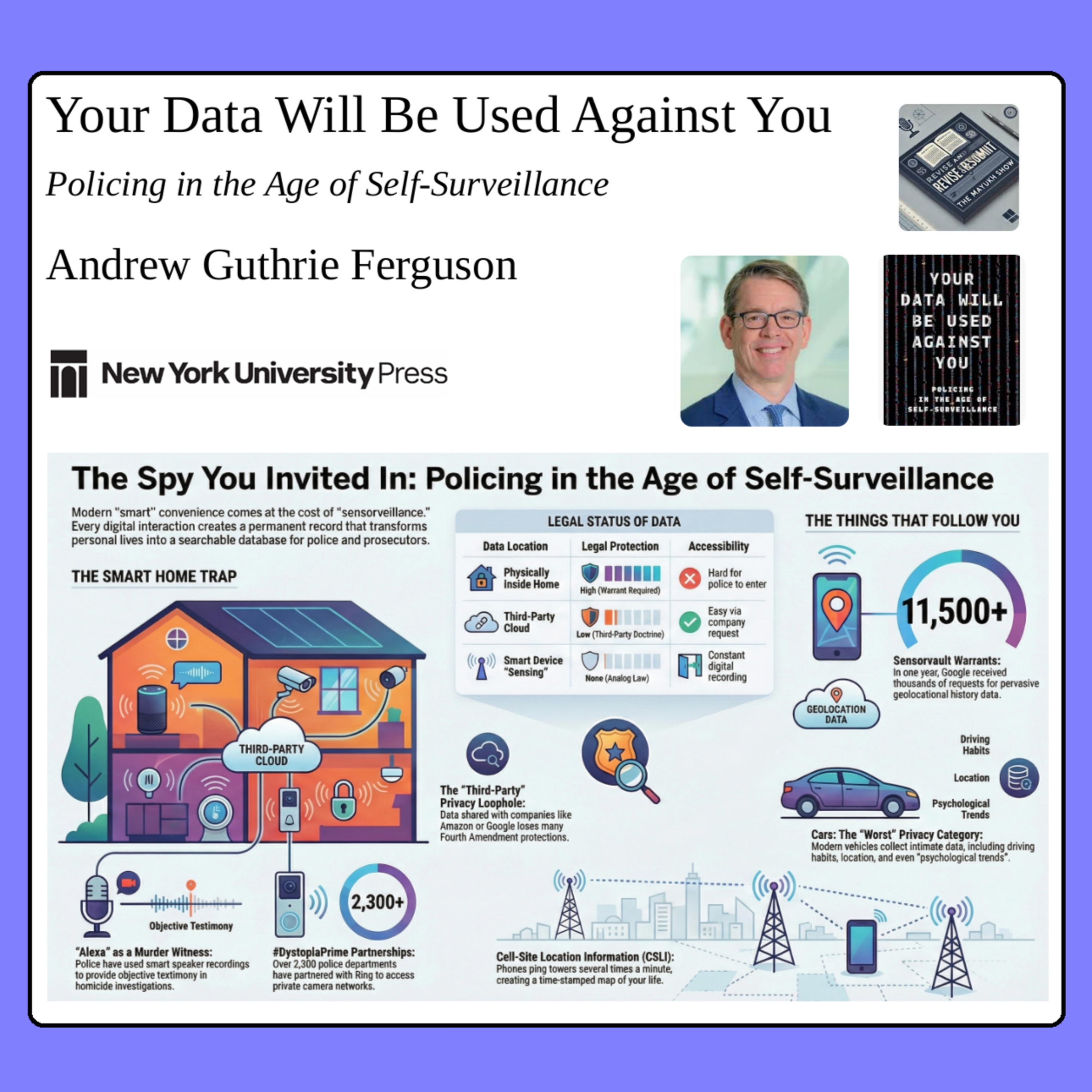
Your Data Will Be Used Against You (Ferguson, 2026) - Weekend Book Review
Mar 2801:59:48Tap to summarizeEnglish Podcast starts at 01:00:25Bengali Podcast Starts at 01:26:44Hindi Podcast Starts at 01:45:41Danish Podcast Starts at 01:01:13ReferenceFerguson, A. G. (2026). Your Data Will Be Used Against You: Policing in the Age of Self-Surveillance. NYU Press. http://www.jstor.org/stable/jj.35529379Youtube channel link https://www.youtube.com/@weekendresearcherConnect on linkedinhttps://www.linkedin.com/in/mayukhpsm/Welcome to Revise and Resubmit 🎧📚, and to this episode of Weekend Book Review.There are books that arrive like arguments, and there are books that arrive like warnings whispered just a little too late. Andrew Guthrie Ferguson’s Your Data Will Be Used Against You: Policing in the Age of Self-Surveillance, published on 17 March 2026 by New York University Press, feels to me like both. It is not simply a book about technology, and not only a book about law. It is a book about us, about the quiet bargain we make every day with the glowing, listening, tracking devices we welcome into our homes, our cars, our wrists, and finally, our lives. 🔍📱⌚🏠I came to this book with a familiar modern assumption, that convenience is innocent. That if a smartwatch helps me sleep better, or a smart speaker makes life easier, then the story ends there. But Ferguson asks us to sit still for a harder truth. What if the same technologies that comfort us also testify against us? What if the digital traces of ordinary life become the raw material of suspicion, prosecution, and control? ⚖️🧠And Ferguson is exactly the kind of guide you want for such a reckoning. He is a Professor of Law at George Washington University Law School, a nationally recognized expert on surveillance technologies, policing, and criminal justice, and the author of the award-winning The Rise of Big Data Policing. He writes with the authority of a legal scholar, yes, but also with the urgency of someone who understands that the future is already here, and that it has been quietly drafting its case against us. 🧾🚨In this episode, I want to linger with Ferguson’s central claim that we are living inside a new architecture of self-surveillance, one built not by force alone, but by habit, desire, and design. Our phones, our apps, our smart homes, our medical devices, even our online searches can become witnesses. Sometimes they solve crimes. Sometimes they serve justice. But Ferguson insists that when law lags behind technology, freedom pays the price. And that is the unsettled pulse running through this book. It asks whether privacy is still a right, or whether it has become a nostalgic memory. 🕵️♂️💡📡So today, here on Revise and Resubmit, I want to open this book not as a distant legal text, but as a mirror held up to the way we live now, connected, convenient, exposed.My thanks to the editors and to New York University Press for bringing this important work into the world. 🙏📖If you enjoy thoughtful book conversations like this, please subscribe to the podcast on Spotify, and to the Weekend Researcher channel on YouTube. You can also find us on Amazon Prime Music and Apple Podcasts 🎙️💙And as we begin, here is the question I cannot shake: when our devices know us better than our neighbors do, who exactly are they really speaking for? 🤔
Transcribe →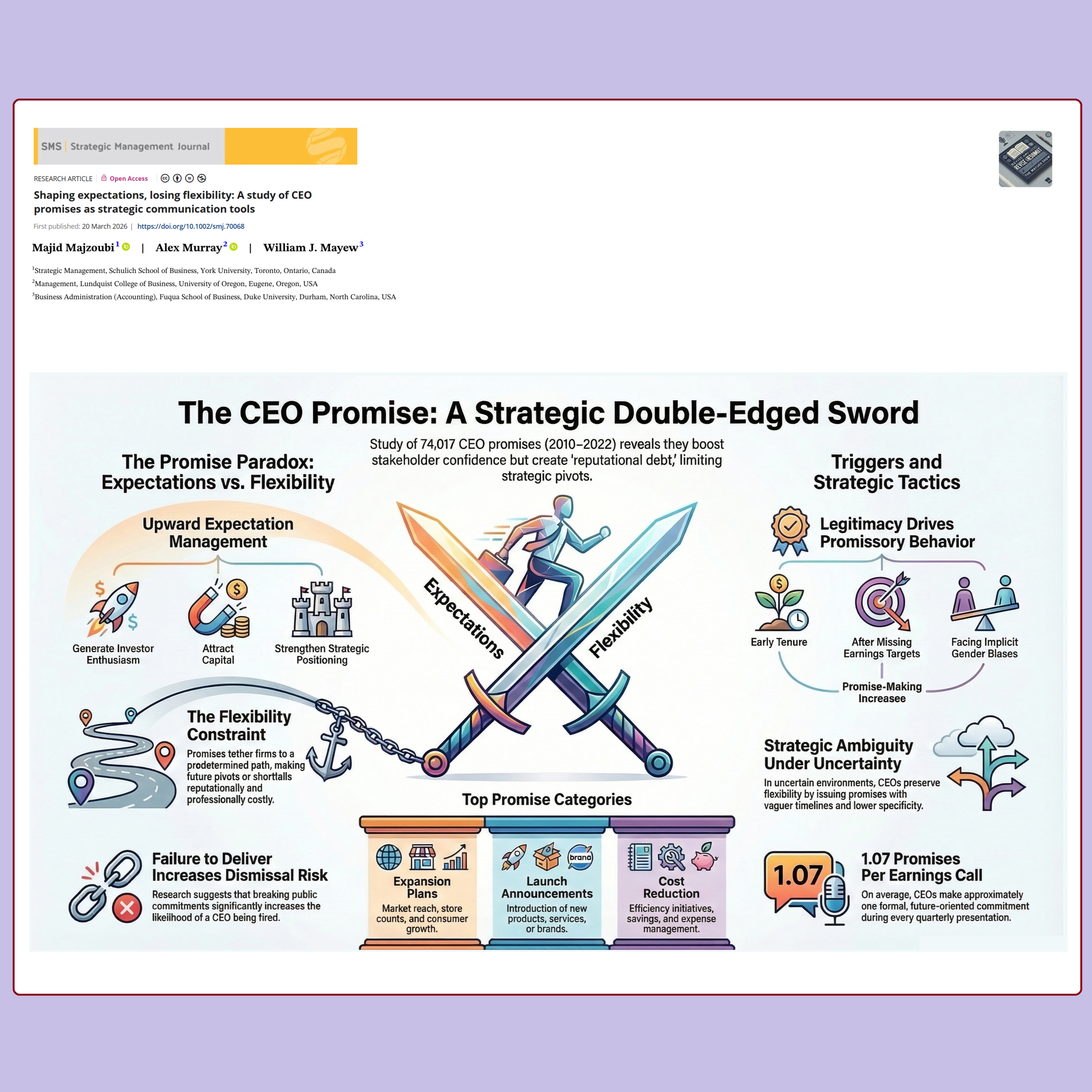
Shaping expectations, losing flexibility (Majid Majzoubi et al., 2026) | FT50 SMJ
Mar 2201:32:41Tap to summarizeEnglish Podcast Starts at 00:00:00Bengali Podcast Starts at 00:39:28Hindi Podcast Starts at 00:59:37Danish Podcast Starts at 01:12:22ReferenceMajid Majzoubi, Murray, A., & Mayew, W. J. (2026). Shaping expectations, losing flexibility: A study of CEO promises as strategic communication tools. Strategic Management Journal. https://doi.org/10.1002/smj.70068Youtube Channelhttps://www.youtube.com/@weekendresearcherConnect over linkedinhttps://www.linkedin.com/in/mayukhpsm/Welcome to Revise and Resubmit 🎙️✨, the podcast where big ideas from serious scholarship meet the messy, fascinating drama of real life.Today, we turn to a question that sounds simple until you sit with it for a while: what happens when a CEO makes a promise?Not a casual remark. Not corporate wallpaper. A promise. A public sentence aimed at the future, spoken into the charged air of an earnings call, where investors listen for confidence, analysts listen for signals, and the market listens for reasons to believe. 📈👂Our episode explores a striking new paper, Shaping expectations, losing flexibility: A study of CEO promises as strategic communication tools, by Majid Majzoubi, Alex Murray, and William J. Mayew, published online on 20 March 2026 in the Strategic Management Journal 🏛️, one of the most prestigious journals in management research and proudly part of the FT50 journal list.This is not just a study about talk. It is a study about the cost of saying what comes next.Using Large Language Models to examine more than 69,000 earnings-call transcripts from S&P 1500 firms between 2010 and 2022 🤖📚, the authors identify over 74,000 CEO promises and reveal something deeply human at the heart of executive communication. Promises can lift expectations. They can steady a room. They can make stakeholders feel that someone is holding the wheel. But every promise also closes a door. Every declaration about tomorrow makes tomorrow a little less open.That is the paradox this paper captures so elegantly. CEOs promise more when they need people to believe in them, especially early in their tenure, after poor performance, or when legitimacy feels fragile. But when uncertainty thickens, when resources tighten, when the future refuses to sit still, those same leaders begin to hedge. They grow vague. They stretch timelines. They protect maneuverability through ambiguity. 🎭⏳And the stakes here are not abstract. The paper finds that when these public pledges go unmet, the consequences can be career-defining, even dismissal-level serious. In other words, a promise is never merely rhetoric. It is strategy, theater, expectation, and risk, all packed into a few carefully chosen words. ⚖️What makes this article especially exciting is that it takes something we hear all the time in business language and asks us to hear it differently. A promise is not just a commitment. It is a negotiation between hope and constraint, between confidence and caution, between the need to inspire and the need to remain free.So as we begin, here is the question hanging in the air for all of us, whether we study organizations, lead them, or simply live inside systems built on credibility: when leaders promise the future out loud, are they creating strategy, or surrendering it? 🤔If you enjoy conversations like this, please subscribe to Revise and Resubmit on Spotify 🎧, follow the YouTube channel Weekend Researcher ▶️, and catch the show on Amazon Prime and Apple Podcasts 🍎📺.Our thanks to the authors, Majid Majzoubi, Alex Murray, and William J. Mayew, and to the publisher, John Wiley & Sons Ltd., for bringing this outstanding FT50 journal research into the world. 🙏📖
Transcribe →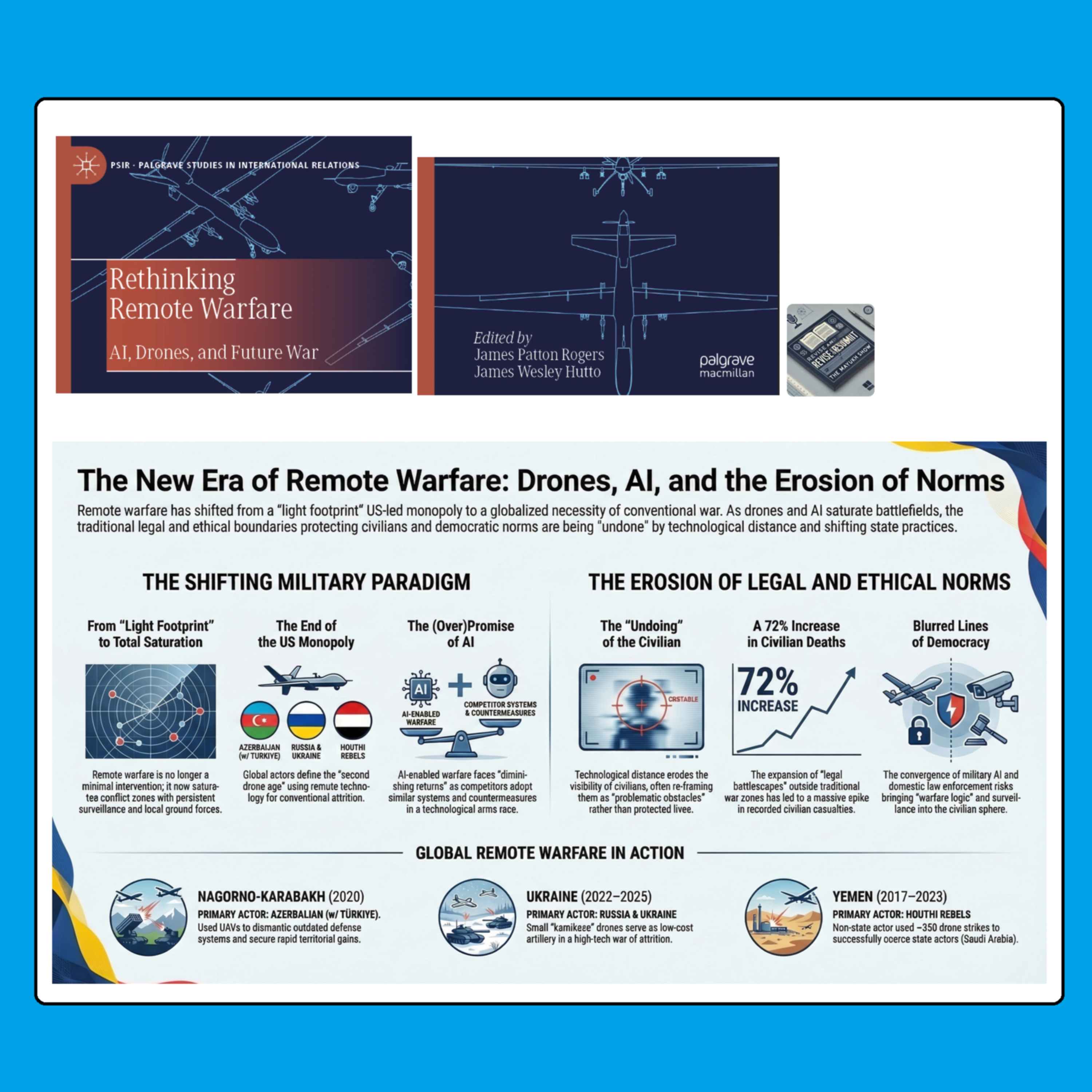
Rethinking Remote Warfare (Rogers & Hutto, 2026) - Weekend Book Review
Mar 2101:16:30Tap to summarizeEnglish Podcast starts at 00:00:00Bengali Podcast Starts at 00:12:23Hindi Podcast Starts at 00:35:30Danish Podcast Starts at 01:01:13ReferenceRethinking Remote Warfare. (2026). In J. Patton Rogers & J. W. Hutto (Eds.), Palgrave Studies in International Relations. Springer Nature Switzerland. https://doi.org/10.1007/978-3-031-98517-1Youtube channel link https://www.youtube.com/@weekendresearcherConnect on linkedinhttps://www.linkedin.com/in/mayukhpsm/🎙️✨ Welcome to Revise and Resubmit, and to this episode of Weekend Book Review.There are books that inform us, and then there are books that quietly rearrange the furniture of our mind. 📚 This one does something even more unsettling. It asks us to look at war not where it explodes, but where it disappears. Not only on the battlefield, but on the screen, in the algorithm, in the sterile language of efficiency, distance, and control.Today, I’m speaking about Rethinking Remote Warfare: AI, Drones, and Future War, published in hardback on 25 January 2026 by Palgrave Macmillan Cham. 🚁🤖🌍 It is edited by James Patton Rogers and James Wesley Hutto, and together they have assembled a volume that feels urgent in the truest sense of the word. Not loud. Not alarmist. Urgent because it understands that the future often arrives disguised as procedure.James Patton Rogers, who serves as Executive Director of the Brooks Tech Policy Institute at Cornell University, has long worked at the intersection of emerging technology and security policy. James Wesley Hutto, Associate Professor of Military Strategy and Security Studies at the School of Advanced Air and Space Studies, brings a deep grounding in military thought and strategic affairs. 🧠 Together, they do not simply edit a collection. They curate a confrontation, between what technology promises and what power tends to do with those promises.And what emerges from this book is not just a story about drones, AI, or next-generation weapons. It is a story about distance. About what happens when violence becomes easier to administer and harder to see. About how the battlefield expands even as the human being seems to vanish from the frame. From the Global War on Terror to the Russia-Ukraine war, from Yemen to Somalia to Ukraine, this collection traces how remote warfare has moved from tactical innovation to something closer to a permanent condition of modern conflict. ⚖️📡What struck me most is that this is not merely a book about machines. It is a book about moral weather. About legality under pressure. About civilians rendered less visible by the cold glow of precision. About how war, once made remote, does not necessarily become restrained. Sometimes it becomes easier to repeat.So in today’s review, I want to sit with this book carefully, and ask what it is really telling us about our century, our politics, and our appetite for clean narratives about dirty realities. ☕📖My thanks to the editors, James Patton Rogers and James Wesley Hutto, and to Palgrave Macmillan Cham for bringing this important volume into the world. 🙏If you enjoy thoughtful book conversations like this, please subscribe to Revise and Resubmit on Spotify, and also follow the Weekend Researcher YouTube channel. 🎧📺 You can also find the channel on Amazon Prime Music and Apple Podcast. 🍎✨So let me begin here: when war becomes distant, efficient, and almost invisible, what exactly is it that we stop seeing first, the enemy, the civilian, or ourselves? ❓
Transcribe →