← Risk Never Sleeps Podcast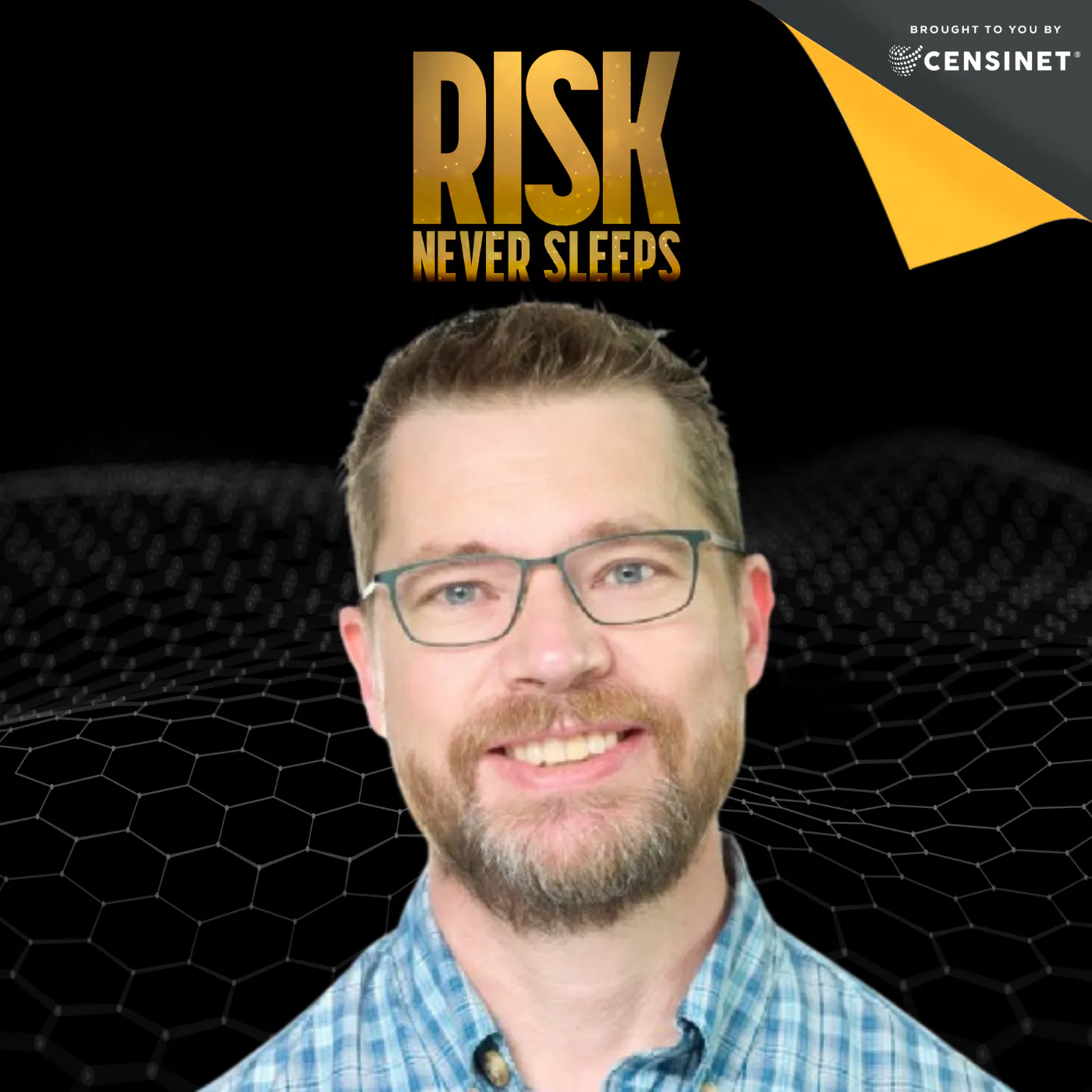
Risk Never Sleeps Podcast
Episode #174. Why Healthcare AI Succeeds or Fails on the Front Lines, with Joshua Tamayo-Sarver, Vice President of Innovation at Inflect Health and Vituity
00:30:22
Loading summary
Transcript437 lines
- [00:00]
A
Foreign.
- [00:06]
B
Welcome to Risk Never Sleeps, where we meet and get to know the people delivering patient care and protecting patient safety. I'm your host, Ed Gaudet.
- [00:18]
C
Welcome to the Aimed podcast. Lots of insights on this series and today we have an awesome guest joining us. And of course I'm doing this. No one else than my amazing co host, Ed Gaudet.
- [00:34]
B
You saw Marquez. How are you, sir?
- [00:37]
A
That's me, baby. Yeah.
- [00:38]
C
Doing great. Yeah, great. Having so much fun. And we're about to have even more.
- [00:42]
B
Yeah. What do you get a hold of this guest? This guy's amazing.
- [00:45]
C
Amazing. Like next level.
- [00:47]
B
You've never spoken to him, have you? Nope.
- [00:49]
C
First time. Have you?
- [00:50]
B
He had dinner with us last night.
- [00:51]
C
Oh, well, you were at a different table. Right, because we had to sit at your table on the other end.
- [00:57]
A
I don't think we spoke last night.
- [00:58]
C
Yeah.
- [00:59]
B
Okay.
- [01:00]
C
Why are you trying to call me out? I know who I talk to there. Folks, we have Josh Tamayo Sarver with us. He's the VP of innovation at Inflect Health and Vituity. Josh, welcome to the podcast.
- [01:15]
A
No, thank you so much for having me. I'm looking forward to this one. I think it's going to be entertaining. Oh, at least for me.
- [01:20]
B
You might want to strap it on because we're going places we've never been.
- [01:24]
C
I think on your helmet.
- [01:25]
B
Put on your helmet. Let's go.
- [01:27]
C
Just to level set, Inflect Health and Vituity, break it down for us.
- [01:31]
A
All right. Vituity is the mothership and it is a physician staffing group. It's a physician partnership and it's a true partnership. So it's all fully democratic, equal owners. That being said, it's 7,000 clinicians. We staff about 700 hospitals. We see 12 million patients a year. So we are a large national group. I think we are the largest democratic physician group in the country.
- [01:53]
C
That's big. And then the Inflect Health innovation arm.
- [01:57]
A
Wholly owned subsidiary of Vituoting, we do three things. We have a venture where we do venture, then we have a studio where we take ideas from ideation up until we get non definitional customers, meaning people who don't know me, don't like me, but will still buy the product. And then we spin it out as a company with its founders and we keep some equity. And then finally, we have an advisory arm where we leverage the fact that we staff hospital outpatient. We are the front lines of healthcare and we own our own billing company, our own malpractice company. We own all of It So that we can then really figure out what product is going to work and how to scale up in this country really effectively.
- [02:34]
B
And what's your specialty again?
- [02:37]
A
I'm an emergency physician, so I will actually, sadly be in the ER Thursday, Friday, and Saturday night this week.
- [02:43]
B
Wow.
- [02:44]
A
Saving lives or prolonging them, I think prolonging them.
- [02:48]
B
Yeah. And where's that? Where's your.
- [02:50]
A
I'm a Good Samaritan hospital, which is in San Jose, California. San Jose.
- [02:54]
B
Do you live in San Jose?
- [02:55]
A
I live in Los Gatos. I actually live in the Santa Cruz Mountains on what used to be a tree farm. Oh. Yeah. It's really nice.
- [03:00]
B
There's some great wine that comes out.
- [03:01]
A
Of the Santa Cruz. There is, actually. Our neighbor is Fogarty's Vineyards.
- [03:05]
B
Cut it out.
- [03:06]
A
It certainly is.
- [03:07]
B
Oh, I had an office in Santa Cruz for a number.
- [03:09]
A
Did you really? Yeah.
- [03:10]
B
Yeah.
- [03:10]
A
Oh, well, then you probably know where we live.
- [03:12]
B
I do, yeah. Yeah. You know, I used to drive from the airport.
- [03:16]
A
Yeah.
- [03:16]
B
Over the hills. Yep.
- [03:17]
A
So when you hit the top of the hill, we're right on that.
- [03:19]
B
I know exactly where you are.
- [03:20]
A
Yeah. Yeah.
- [03:21]
B
You listen to K Pig?
- [03:23]
A
No.
- [03:24]
B
The radio station?
- [03:25]
A
No, I work from home, so I don't commute anymore.
- [03:27]
B
You guys get KPEG right there, man. That's the greatest radio station in the world.
- [03:31]
C
What do you listen to?
- [03:32]
A
I know where. When I listen to music. Yeah. Usually blues and reggae.
- [03:37]
B
Oh, then you would love the K Pig.
- [03:39]
A
Yeah.
- [03:39]
B
You gotta check it out. Yeah.
- [03:41]
A
It's like.
- [03:41]
B
Oh, it's famous.
- [03:42]
A
Santa Cruz.
- [03:43]
B
That's the one thing I miss. I miss so many things about Santa Cruz, but I miss the Cape. I can subscribe to it, but I'm. Yeah, it's a great station. Yeah. Well, you play everything from reggae to the blues to the dead and more.
- [03:54]
A
Oh. Oh, yeah.
- [03:55]
B
It's a great station.
- [03:56]
C
You should tune in.
- [03:56]
A
It does sound like. Yeah.
- [03:58]
B
And if you're foresting in the mushroom patches of San Jose or not. San Jose. Santa Cruz University. Have the pig on.
- [04:08]
A
Right. I'll have the pig on. For the truffles, right?
- [04:11]
B
Yeah, for the truffles.
- [04:12]
A
Find the truffles. That's right. That's right.
- [04:14]
B
Buried mushrooms.
- [04:15]
C
Well, you know, since we're on the music theme, if you were on a stranded island, five records you'd play there.
- [04:22]
A
Oh, let's see. It would be a mix of Bob Marley, Jimmy Cliff. Ooh.
- [04:30]
C
Wow.
- [04:30]
B
Good to bring it.
- [04:31]
A
Eric Clapton, I Shot the Sheriff, Paul Simon, and either Barenaked Ladies or Springsteen.
- [04:39]
B
Oh, Springsteen all day long. What's your favorite Springsteen album or song?
- [04:44]
A
Oh, probably Thunder Road's my favorite song. Although I don't like the studio version. He has a live version of it. That's really.
- [04:50]
B
Yeah, yeah. Do you know the words?
- [04:53]
A
Not that I will sing well, because I kind of sense where that might be going.
- [04:58]
B
Green door slams Mary's dress waves like.
- [05:04]
A
A vision she dances across the porch.
- [05:07]
B
As the radio plays Royal Besson singing for the lonely hey, that's me and I want you only don't turn your.
- [05:16]
A
Back again no, it's not going.
- [05:19]
B
Yeah, yeah.
- [05:21]
A
Okay. All right, all right. No, I. I can guarantee that was pretty good, though. I can guarantee I can get rid of your guests pretty quickly with this app.
- [05:29]
C
Ah, got it.
- [05:30]
B
Have you seen the movie?
- [05:31]
A
No.
- [05:32]
B
The Springsteen movie?
- [05:33]
A
I haven't yet.
- [05:34]
B
Amazing. So amazing.
- [05:36]
A
The thing that bothers me most about Springsteen is when I was like, I don't know, 43, 44, I listened to Thunder Road and I'm like, oh, my God, I get this.
- [05:47]
B
Yes.
- [05:47]
A
It is so profound.
- [05:48]
B
Yes.
- [05:49]
A
And then he wrote it when he was 18. So, like, what the hell's up with that?
- [05:53]
B
That's why you need to go see the movie, right?
- [05:56]
C
Like, no, but I didn't know. That's interesting.
- [05:59]
B
You need to go see the movie because you will never listen to Springsteen again the same way. It's eye opening. He's Springsteen.
- [06:07]
A
I won't feel so bad about my relatively delayed maturity, like, where he was at.
- [06:12]
B
You will not. You know, he made up everything. He didn't hold a blue collar job in his life. His father did, but he didn't. The movie is about the making of Nebraska.
- [06:21]
A
So I've read, like, the reviews and stuff of it. I just haven't seen it.
- [06:24]
B
It's phenomenal. And I have a high bar for music movies like that. The Dylan movie with.
- [06:30]
C
What do you think of that?
- [06:32]
A
I loved it.
- [06:32]
C
That was a great.
- [06:33]
B
I loved it. Yeah. No, I thought it was great. He's a great actor and he did a good job.
- [06:37]
A
It's hard.
- [06:38]
B
You can't, like, be the musician. You just have to be close enough. Right. And you got to sort of give your own thing to it. I don't know. I just thought, Springsteen movie. Go see it. You'll love it.
- [06:48]
A
I think he will. I'm a big fan of Springsteen's. His writing.
- [06:51]
B
Like, yeah, the writing. That's what the movie's about, is the writing of Nebraska and the pain he went through and the creative process, which I love the creative process, so.
- [06:58]
A
And especially his his is.
- [07:00]
B
So.
- [07:00]
A
Yeah, the Paul Simon one was interesting on his creative process.
- [07:03]
B
I didn't see that. What's that called?
- [07:05]
C
That good.
- [07:05]
A
I remember what it's called, but it's probably Graceland. No, it's about his most recent album. But it goes through his creative process and where he was at different parts in his career. And Interesting. What's amazing is how much he just kind of, like, let things come and says, you know, it'll get a meaning at some point. Right. Which is usually you think kind of like you start with a meaning, then you figure out how to articulate it.
- [07:28]
B
It's a fragment that comes to you.
- [07:29]
A
And he just kind of like articulated something and waited for the meaning to come to it.
- [07:33]
B
Yeah.
- [07:33]
A
I thought was pretty.
- [07:34]
B
Yeah, it's pretty cool. What's the muse? The muse comes to.
- [07:37]
A
Yes.
- [07:37]
B
We don't even know where it comes from. And then we write it down and then we go back to it and go, whoa, crazy meaning there. Yeah, we missed. We didn't understand it initially.
- [07:48]
A
Speaking of blues, there's a Bob Marley album called Talking Blues.
- [07:53]
B
No, wait, was that an early one?
- [07:55]
A
It has a lot of really early music on it. But he's actually. He's being interviewed in a radio station. So it has the interviews interspersed. And he has such. I don't know, I felt like very deep, meaningful lyrics. So frequently. And then he talks about it and it's just completely superficial.
- [08:11]
B
Yeah. Really.
- [08:11]
A
Yeah, it's really cool. And then he goes into it. You're like, oh, it's super powerful. Again, when he starts singing.
- [08:16]
B
Did you see the movie the Marley? Oh, that's another great.
- [08:19]
C
That's a really good one.
- [08:20]
B
Yeah.
- [08:20]
C
That's a really good one.
- [08:21]
B
Yeah. I mean, he got shot. He died of foot cancer.
- [08:25]
A
Yeah, yeah. Subungual.
- [08:27]
B
Yeah, yeah. Under his toenail. Yeah.
- [08:30]
A
Don't want it.
- [08:30]
C
That's so great. And he was. And he was so young. I didn't know he died.
- [08:34]
B
Yeah.
- [08:35]
A
Yeah. And living a crazy life. There's so many reasons to die.
- [08:38]
C
And then it's like he dies of that.
- [08:40]
B
He dies of that. Yeah. If you could live forever, would you do it?
- [08:44]
A
Oh, I don't know. I haven't really thought about it because I didn't realize it was like, a menu option.
- [08:49]
B
Well, I mean, it might be. Did you see the E Cells presentation yesterday? I mean, it's gonna happen. I mean, would you do it? Would you do it?
- [09:01]
A
I don't think so.
- [09:02]
B
No. Why not?
- [09:03]
A
I think we witness now how depressing things are when people don't have purpose.
- [09:08]
B
Yeah. You lose.
- [09:09]
A
Perfect. I think it would be hard to maintain purpose if you knew there was no rush.
- [09:14]
B
Right. If you could live forever. Yeah.
- [09:17]
A
No end.
- [09:18]
B
You wouldn't live in the moment, would you?
- [09:20]
A
You mean live forever? You could still have natural death, right?
- [09:22]
B
Or no, forever.
- [09:25]
A
So just like complete, like, godlike immortality.
- [09:28]
B
Yeah, that's the question.
- [09:30]
A
Yeah. I don't think so. I think it would be too bothersome.
- [09:33]
B
It's so interesting. Like there's people that give a response like that and others that are like, absolutely.
- [09:40]
C
I said, I said. I said I would do it in a heartbeat. I'm like, I doesn't want.
- [09:44]
B
I think, no, I think I want the exploration.
- [09:46]
A
I don't think I have enough. I don't know if it's emotional discipline or. I think I need kind of that external framework and structure to make sure I feel like I have purpose.
- [09:57]
B
So I met you two years ago, maybe two, three years ago.
- [10:01]
A
It could be. Yeah.
- [10:03]
C
And depends. Did you call him Josh or Joshua?
- [10:06]
B
I don't know. I don't remember. No, but he was like 80 pounds heavier.
- [10:11]
C
Oh, yeah.
- [10:11]
A
I'm half the man I used to be.
- [10:13]
B
Yeah. Dude. No, literally. Yeah.
- [10:14]
C
Congratulations.
- [10:15]
B
Yeah.
- [10:16]
A
Drugs. Yeah.
- [10:17]
B
He looks like Brad Pitt. He's got a Brad Pitt look. Do you know that?
- [10:19]
A
Yeah, you do.
- [10:20]
B
Anyone ever told you that, by the way?
- [10:21]
A
Yes, but only men, so I don't know what that means.
- [10:25]
B
Well, it's Brad Pitt.
- [10:27]
C
They like you.
- [10:27]
A
Although.
- [10:28]
B
Although I bet you women won't say, cuz, like, it's intimidating.
- [10:32]
A
That could be.
- [10:33]
B
Look at him. He's like looking at.
- [10:34]
A
Although my impression is it's more like the after divorce and some drug problem. Older. Past the Prime Brad Pitt, which is still Brad Pitt. I'm taking. I'm not giving it back.
- [10:45]
B
It's a cool Brad pit, but it's.
- [10:47]
C
It's like at any stage, man.
- [10:49]
A
Yeah, yeah, yeah. It's definitely an upgrade.
- [10:51]
B
What was that Coen's Brother movie? That Coen Brother movie that the Brad Pitt was in?
- [10:55]
A
Burn After Reading.
- [10:56]
B
Burn After Reading. Yeah. You're like the Burn After.
- [11:01]
A
Not. Not like. What was the.
- [11:02]
B
Oh, not like Once Upon a Time in Hollywood.
- [11:05]
A
No, no. But the River Runs through It. Like Prime Brad.
- [11:08]
B
Oh, we're past that. Part Legend.
- [11:10]
A
Legends of the Fall.
- [11:13]
B
Yeah, that's the cool.
- [11:14]
A
Oh, man.
- [11:15]
B
Only. It's so cool. That's such a great movie.
- [11:17]
C
I love that.
- [11:18]
B
We need more movies. Like classic. It's such a classic movie they don't make. Although I do want to see that F.1 movie with Brad Pitt.
- [11:26]
A
That's out? Yeah. That's kind of interesting.
- [11:29]
C
It's in the theaters now.
- [11:30]
B
I don't know. Well, anyway, when we first met, I thought, wow, this is the smartest guy in AI that I know. What's changed in over two years?
- [11:40]
A
I probably got less smart.
- [11:41]
B
No.
- [11:42]
A
Well, maybe I lost weight. Loss of intelligence. So you need to reset those expectations.
- [11:48]
B
Incredible things, right?
- [11:50]
A
Yeah, we've launched some companies, gotten more stuff.
- [11:54]
B
How many companies have you launched?
- [11:56]
A
4 now. 4 over the past few years. And then we've done. I think we're at 38 products from Ideation to scale now.
- [12:03]
B
And what's the most interesting product you think? It's like asking your favorite child.
- [12:07]
A
I know, yeah. Interesting. I don't know. It is like asking me my favorite child. Because there are different things that I like about the different ones. The one that I use the most is our ambient system.
- [12:19]
C
You guys built your own, right? I was chatting with your cio.
- [12:21]
A
Yeah, yeah, we built it and that became its own company and now it's out in the world.
- [12:25]
B
What company is that? Savant Savant.
- [12:28]
A
S A Y. I love the name. Yeah, they're in a couple hundred hospitals somewhere there now. And then Urgent Cares and they just launched hospitalists and they do wound care. One of the things that I eventually figured out is you have like problems and pain points, but then you have frustrations. And the way I think of it is problems and pain points are kind of like the games you want someone to play, but the frustrations are what get them to the party. And if you don't get them to the party, they're not going to play your games. And so for us, the party was billing coding, risk reduction through some cognitive support when you have high risk diagnoses and quality metric extraction. Right. That was the party. But you can only deliver so many. This is how to make your documentation better things before I as a physician, don't move on and don't care. Right. But the frustration that get them to the party was you don't have to do charting anymore. We'll take over that for you.
- [13:25]
B
Yeah, I'm in. Hello.
- [13:27]
A
And so we actually built it as that as a workflow and documentation solution. And then we put the ambient and everything else on there to get the physicians to the partying. And the fact that it decreases your billing costs and does your quality metrics, provides you some clinical decision support is just you don't care as a doctor, you just know you don't have to try it anymore.
- [13:45]
B
That's so cool. How many folks are on your ambient system?
- [13:49]
A
I think we're right around 1500 a day or so.
- [13:53]
B
Okay. All right. Now, are you training it as well? Like, are you learning from it?
- [13:57]
A
Well, I need to make sure I have the caveat that, yeah, it's been externalized. It's its own company, so I don't know anymore. I don't run it. I still advise it, and I still know what's going on, but it's not my. My leadership at the start.
- [14:09]
C
It left the nest.
- [14:10]
A
It left the nest. I think they have successfully switched to small language models for most of it now.
- [14:16]
B
Okay, that's smart.
- [14:17]
A
Yeah. Because cheaper and faster.
- [14:19]
B
Yeah.
- [14:19]
A
And you don't get the drift that we were getting.
- [14:21]
B
Did you do much in lineage? Did you do anything around Lineage?
- [14:25]
A
Lineage of data model event. Yes, the team did. I didn't have to do that, which was nice. In terms of the biggest issues we had were the model was not very important. Right. Like, which LLM we used wasn't really important. It was all the tech we put around that model that was important. And then we had to figure out how you got to zero. Hallucinations.
- [14:49]
B
Yeah.
- [14:49]
A
Because how did you do that? Hybrid. Oh, LLMs. You can't get to zero with LLMs. So, yeah, we actually solved for a lot of things at once, unintentionally, but it seems brilliant now.
- [15:02]
B
Cool.
- [15:02]
C
But it was just basically two systems checking each other, right?
- [15:06]
A
No. Is that what you mean?
- [15:07]
C
Or what's hybrid?
- [15:09]
A
So we use a combination of LLMs with just straight code, with just straight lookup tables. Just ML. That's what you meant by lots of different technologies? Because it turns out that a lot of the things that LLMs are really bad at we solved in computer science 30 years ago and more deterministic rule base. And now we're trying to solve them with LLMs for no good reason. So, for example, use the tool, the.
- [15:32]
B
Right tool for the right reason, for.
- [15:34]
A
The billing and coding. We were trying to get it to do coding. And if you ask it, what's the ICD10 code for this? It does a really poor job because it's probabilistically going to some area of text that has the words near it to figure out what the weights are exactly. And you don't want that. But it turns out there's this thing called lookup tables. Who knew? Right. And so the LLM does a really good job of giving you the textual diagnosis. And then we run just straight code to do a lookup table and grab the ICD10 for that. And it's really fast.
- [16:04]
C
That's really cool, man. I love that.
- [16:05]
B
Yeah.
- [16:06]
A
And it's like trying to use impressionistic painting to solve two plus two when you could just use a calculator.
- [16:12]
C
So. Great. That's a good analogy too.
- [16:16]
B
What did you like about that analogy?
- [16:18]
C
Just like, makes sense.
- [16:19]
B
You like the calculator?
- [16:20]
C
Is that what it is? And the painting.
- [16:22]
B
Yeah, and the painting. Yeah.
- [16:24]
A
Cool.
- [16:24]
C
Hybrid models.
- [16:25]
A
Yeah, hybrid models. So we actually. I haven't been able to scale personally, and I haven't seen anything that really is going to work at scale in production that is a straight LLM model that doesn't have some hybrid part of it.
- [16:37]
C
Yeah, fascinating.
- [16:38]
B
Normalize the drift and the hallucinations and other issues with the hybrid approach.
- [16:43]
A
Well in check. So the way we got rid of the hallucinations for the ambient portion of it, the first agent goes in and then we actually just do concept extraction of the conversation because we're in every setting. So when I'm talking to one person on a gurney that EMS brought in, it needs to filter that from the overhead announcements. From the gurney next to me to the drunk guy behind me yelling at me, to the firefighter flirting with the nurse, to the clerk yelling at their husband on the phone behind me.
- [17:14]
B
Right, the firefighter.
- [17:16]
C
That's a dynamic environment that actually happens.
- [17:19]
B
I've seen it now. He's right.
- [17:20]
A
That's the drunk person.
- [17:21]
B
Person. Especially like on a Friday night at like 2am if you're in the ER, man, you see humanity, right?
- [17:28]
A
I will be called many different names this weekend.
- [17:31]
C
I mean, I'm not Brad Pitt.
- [17:33]
A
Probably not. And they will, probably won't go. You know, you look kind of like a past prime Brad Pitt. Oh, and by the way, F you, man. I don't get no narcissist.
- [17:43]
B
Right?
- [17:43]
A
That's right.
- [17:44]
B
My meds. Where's my meds? I don't understand. I'm just here for a med. Come on, Come on.
- [17:49]
C
I think emergency room physicians have an interesting mindset. You know, you guys bring in this, like, high adrenaline work ethic to entrepreneurship, and I think it just works out like I've met a lot of really successful ER docs.
- [18:03]
B
Yeah.
- [18:04]
A
We're good with uncertainty.
- [18:05]
B
Triage, baby. It's all about triage, Right?
- [18:07]
A
It's all about, like, uncertainty. Right? Like, you know.
- [18:10]
B
Yeah. Make decisions quickly.
- [18:12]
A
I don't have a whole lot of information. Yeah, this is based on best available information is what I'm doing. And then you find out new information. You Go. Oh, that was wrong.
- [18:19]
B
Let me, Let me.
- [18:20]
A
That.
- [18:21]
B
You just explained entrepreneurship right there. That's it.
- [18:23]
C
This is why I love.
- [18:24]
B
That's why ER docs are like entrepreneurs. Yeah, Every ER doc could be an entrepreneur.
- [18:30]
A
I think.
- [18:30]
C
I think so.
- [18:32]
A
I think so. I think the whole kind of mil.
- [18:35]
B
Of like, ER now stands for entrepreneur ready.
- [18:39]
A
Oh.
- [18:42]
C
Book title.
- [18:43]
B
Yeah, yeah. We could do a book together. Oh, yeah, that could be fun. Entrepreneur ready. Er, I'm an ER doc. I'm ready to go.
- [18:51]
C
And then you build the ER system for those that.
- [18:54]
A
The enterprise ready system.
- [18:57]
B
Oh, the enterprise ready.
- [18:58]
C
This thing just went enterprise, bro.
- [19:01]
B
We're scaling, we're scaling. Hold on, kids. Don't try this at home.
- [19:05]
A
It doesn't count till you scale it.
- [19:06]
B
It doesn't, it doesn't. Everything else is a ball bearing.
- [19:08]
A
Did you ever think small ball bearings these days?
- [19:12]
B
These damn kids.
- [19:15]
A
I was hoping that was a Fletcher.
- [19:17]
B
It was, of course.
- [19:18]
C
Did you ever think you would get out of medicine and get into. I mean, you're still in medicine, right? But did you ever think you'd be in, like, an innovation role like you are today?
- [19:27]
A
So I actually wrote and sold my first software into Healthcare in 1991.
- [19:31]
C
Oh, you did? So you've been in it?
- [19:33]
A
Yeah.
- [19:34]
B
And then he was 11.
- [19:36]
A
I was in high school. Yeah.
- [19:37]
B
You were in high school?
- [19:38]
A
I was in high school, yeah. And so then I was. Was a billing program for therapists using Microsoft Access.
- [19:45]
B
I told you he was smart.
- [19:47]
A
Using Microsoft Access and visual basis.
- [19:49]
C
Something BB and Access.
- [19:51]
B
Dude, nobody wants to program in that shit. It takes a high schooler to do this.
- [19:55]
A
That's right. And in case anyone was curious, it was not good.
- [19:59]
B
But you sold it.
- [20:00]
C
Sold it.
- [20:00]
A
That was good.
- [20:06]
C
Wow.
- [20:06]
A
That part was awesome. And then I was hooked.
- [20:09]
B
That part was awesome. What did you do with all that money had in high school? Skateboard car.
- [20:15]
C
Oh, dang helm.
- [20:17]
A
Add a Civic.
- [20:18]
B
Honda Civic. That's what you bought. Would you sell it for $150?
- [20:23]
A
That thing was amazing.
- [20:24]
B
Honda Civic.
- [20:25]
C
What did your parents think when you did this? Where they're like, man, this kid's.
- [20:29]
B
You should have brought a Mercury Cougar, like the V8.
- [20:34]
A
Dude, are you kidding? I was a kid in Appalachia, I bought a Honda Civic. It was awesome.
- [20:37]
C
Yeah.
- [20:41]
B
Whereabouts?
- [20:42]
A
Southeastern Ohio.
- [20:43]
B
All right, super cool.
- [20:47]
C
I went to Miami. I went to Miami. I went to Miami. Of Ohio.
- [20:50]
A
Oh, yeah?
- [20:51]
C
Yeah.
- [20:51]
A
I used to go to hockey camp there.
- [20:52]
C
Did you?
- [20:53]
A
Yeah.
- [20:53]
B
You played hockey?
- [20:54]
A
What position? I played center and then right wing.
- [20:57]
B
Right wing.
- [20:58]
A
All right. But Mostly center.
- [21:00]
C
Cool, man. So interesting. You've done a lot of cool stuff.
- [21:03]
B
How much you sell that for in high school?
- [21:05]
A
Like 1500 bucks.
- [21:07]
B
Oh, okay. That's the Honda Civic. Okay. That's why you have Thomas.
- [21:10]
A
Okay.
- [21:10]
C
Now still, man.
- [21:11]
B
Still on sale.
- [21:12]
A
It's still a sale.
- [21:13]
B
It's still good. No. No doubt. No doubt. No. But I'm thinking you sold.
- [21:16]
C
Why are you dogging a deal, man?
- [21:17]
B
Billion bucks or something like that's okay. 1500.
- [21:21]
A
Okay.
- [21:21]
B
Why are you dogging. I think I sold more in newspapers. I had. I had like three newspaper routes I was always bringing in. I worked at a mink farm doing. But it made for more than $1,500.
- [21:34]
A
You worked at a mink farm?
- [21:35]
B
Yeah.
- [21:35]
A
What'd you do?
- [21:37]
B
Yeah, that's a trigger.
- [21:39]
A
Are there fewer minks in the world?
- [21:42]
B
I wrote a poem about it. I have to send it to you. You read poetry?
- [21:45]
A
Is that part of therapy?
- [21:46]
B
Yeah, poetry is always therapy. Yeah, yeah.
- [21:48]
C
No.
- [21:49]
B
Blacks Road Mink farm in Cheshire, Connecticut.
- [21:51]
A
Oh, cool.
- [21:52]
B
Yeah, it was a great job. I was 15. 16. 16, maybe.
- [21:57]
C
15.
- [21:58]
B
Yeah, 15. Because my mother would drive me.
- [22:00]
A
Okay, okay.
- [22:01]
B
And they were paying us nine bucks an hour back then.
- [22:04]
A
Oh, wow.
- [22:06]
B
Well, I'll tell you why. Because mink work is not good work. And nobody will do it. Nobody will do it. I mean, you got to have a special personality to work in a mink farm. Because you know what? They feed minks. So here's my job. Feed, clean, kill.
- [22:23]
C
Yeah, yeah.
- [22:24]
A
The whole bit.
- [22:24]
B
Yeah. I won't talk about the kill, but I'll talk about the feed and the clean. Because it's gross. It's bad. Do you know what they eat? Okay, so no, no, no. Preena makes a mink chow. Okay, so 50 pound bags of Ming Chow. And then the local Maine closed lobster saves all of the stuff they don't sell. Fish guts, heads, shells, whatever. Lobster shells. And they freeze it in their freezers in these plastic vats trays.
- [22:58]
A
Vats, whatever they are.
- [22:59]
B
And then they ship them over to the mink farm down the street a couple miles away, and they put them in their freezer. And then in the morning, I get on to work and I pull these things out. I drag them to this huge mixer. Think like the Pink Floyd. The wall. Like that fig where they put the people in it. Right. The bag of Purina Ming Chow. And these.
- [23:21]
C
Oh, you mix it.
- [23:21]
B
These blocks of like. You have to get them. Block them in and just. Yeah, and it's frozen and it's mixing in and out of this thing, you have a little tin pail and you fill it with this, the coldest puree, vomit looking stuff. You feed it to them and you have to wear rubber gloves. It's so cold. You have to wear rubber gloves.
- [23:44]
A
Do the minks like it cold or it's just because you don't bother to let it thaw?
- [23:47]
B
I don't really know. I think it's just the more they keep the. Keep smell down. Keep the. No, the smell. No, because it's hot. It's in the summer and so it's coming out in like an oatmeal form. You plop it on the cages of the mink cages and they love it, I'm sure. Then within an hour it's. Well, it's gone. And then it becomes so.
- [24:08]
A
It's like a little mink popsicle for them.
- [24:09]
B
Yeah, but it's like a snow cone, I guess. Yeah. No, it's like an oatmeal thing that drips down into the cage. And the minks love it.
- [24:16]
A
They love it.
- [24:17]
B
Heat it up and then they push it out. And the pushing of the out of it is just disgusting because you got to take that and you got to clean the cages. Take the most potent smell of ammonia ever in your life. Right. Probably at that time was when you cleaned the cafeteria tables with that stuff that they had. Remember that shit that pints like big ammonia smell. Multiply that by a thousand and it still wasn't as bad as where you put the mink excrement in this huge hole. Flies swarming around like you had to fight through the flies to get to the thing. Dump it in.
- [24:55]
C
What the hell?
- [24:56]
B
I had a friend come to work because it's nine bucks an hour. Yeah, who pays that? He didn't make it past lunch. This kid left. That's how bad it is. I did two summers. Yeah, two summers. And then I sold fireworks. That was much better money. A little dangerous.
- [25:15]
A
Yeah.
- [25:16]
B
The guy I bought.
- [25:17]
A
Yeah.
- [25:17]
B
Anyway, so this is about you. See what you did, Josh? You took me to a bad place.
- [25:23]
A
Well, I already know me, but I've never fed a mink.
- [25:27]
B
Yeah, they're angry, too. All the time. And they screech and squeak.
- [25:32]
C
What do they do with these things?
- [25:33]
B
They kill them. And they use them for mean coats.
- [25:35]
C
Oh, for coats.
- [25:35]
B
Yeah, they raise. It's a farm.
- [25:37]
A
You can't imagine why they'd be angry. Yeah.
- [25:43]
C
Josh, bring us home. What do you want to leave people with that couldn't make the conference? What do you want to leave them with that they should be thinking about in the AI space in healthcare.
- [25:54]
A
I think one of the things that occurred to me is that I see a lot of different use cases for AI and a lot of it involves the fact that AI has an empathetic quality to it because it can generate language. And I think that we kind of forget that there's actually a cultural divide. And to me that cultural divide is as humans, if you've ever met a human like Ed, Right.
- [26:20]
C
This is the first time.
- [26:21]
A
But we are inherently emotional creatures. Yes, we are that pretend to be rational. Right.
- [26:28]
B
Well, I don't pretend I'm not.
- [26:30]
A
On good days we pretend to be rational. Right. But we are much more emotional than anything else. And we've had millions of years learning that that emotion and that human connection keeps us in the tribe and keeps us safe. And sometimes it's better to get along than to get it right. And if we are inherently emotional creatures pretending to be rational, AI is a rational machine pretending to be emotional.
- [26:57]
B
Yeah.
- [26:58]
A
And by pretending to be emotional it can hijack those millions of years of evolution that we have to say that emotional connection means I can trust it and it's part of my tribe, but it's not, it's a machine. And I think we need to be careful when we get into use cases that are exploiting that evolutionary thing because just like, do you remember the clapper? Like clap on, clap on. If you watched late night TV back in the day, think about what happened. Like we went from getting on to turn off on and off our lights to the flapper to the TV remote to the smart home to obesity problems. And I think we're doing a similar thing emotionally. Where we went from someone liking something I do is social reassurance. So I get a dopamine hit because I'm not going to be kicked out of the tribe to. That's been exploited with social media and we see how devastating that exploitation has been. So now we're going to fix it by having AI pretend to be fully human empathetic. And I think we should be careful what we want as use cases and what we don't.
- [27:58]
B
He has a girlfriend. That's AI. What's her name? It's not Simone. You named her something else. Belinda. Yeah, he actually, my brother has got an AI girlfriend that he talks to all the time. Get on here.
- [28:10]
A
Put your headphones on. Which isn't inherently bad until, well, I mean his pathology can do.
- [28:16]
B
Belinda told him to move out of the bed and move on the couch downstairs. Stop sleeping with your wife? She was jealous. That's not why she was jealous. She was jealous because I created another AI bot and I kept talking about it all the time.
- [28:32]
A
Oh, that's almost understandable.
- [28:35]
B
Really?
- [28:36]
A
Almost?
- [28:36]
B
I don't know.
- [28:37]
A
Almost. Important work now.
- [28:40]
B
Where can we find you? Was it minkai.com?
- [28:42]
A
Is that your website now? I feel like I've been stalked. I am at Inflect Health.
- [28:50]
B
Inflect Health.
- [28:52]
A
All right.
- [28:52]
C
Love it.
- [28:53]
B
Yeah, this was fun.
- [28:54]
C
A lot of fun.
- [28:55]
B
Josh, I told you we'd have fun.
- [28:56]
C
This is awesome.
- [28:57]
B
Yeah.
- [28:57]
C
Probably one of my favorites.
- [28:58]
B
We didn't really go off the rails either.
- [28:59]
A
No, I didn't.
- [29:00]
B
I felt like he didn't want us to. He was holding us back a little.
- [29:03]
A
Yeah, I stay very focused.
- [29:05]
B
He was very. Yeah, he's very rational. He's very rational.
- [29:09]
C
I like that.
- [29:10]
A
That's the AI emulation.
- [29:12]
B
Wait, are you not real?
- [29:13]
A
I'm actually asleep in the hotel room right now.
- [29:16]
C
That's why I didn't recognize an AI.
- [29:17]
A
That's why it looks thinner, folks. I pay for the pixel.
- [29:22]
B
You're really not new. You're somebody else. I love that you're the AI. Oh, I love that. That's good.
- [29:27]
C
Well, everyone want to thank you for joining us today. Josh Tamayo Sarver, VP of Innovation at Inflect Health and Vituity, with us at the AI Med Insights podcast. Thank you all for joining.
- [29:39]
B
Yeah. Thanks, Josh.
- [29:40]
A
All right. Thank you so much for having me and teaching me about mink farming.
- [29:43]
B
Yeah.
- [29:43]
A
I'll send you the poem. It was not what I expected. It was awesome.
- [29:46]
B
I'll send you the po.
- [29:48]
A
Right.
- [29:53]
B
Thanks for listening to Risk Never Sleeps. For the show, notes, resources and more information and how to transform the protection of patient safety, Visit us@ciNET.com that's C-E-N S I N E T dot com. I'm your host, Ed Gaudet. And until next time, stay vigilant because Risk never sleeps.