← Risk Never Sleeps Podcast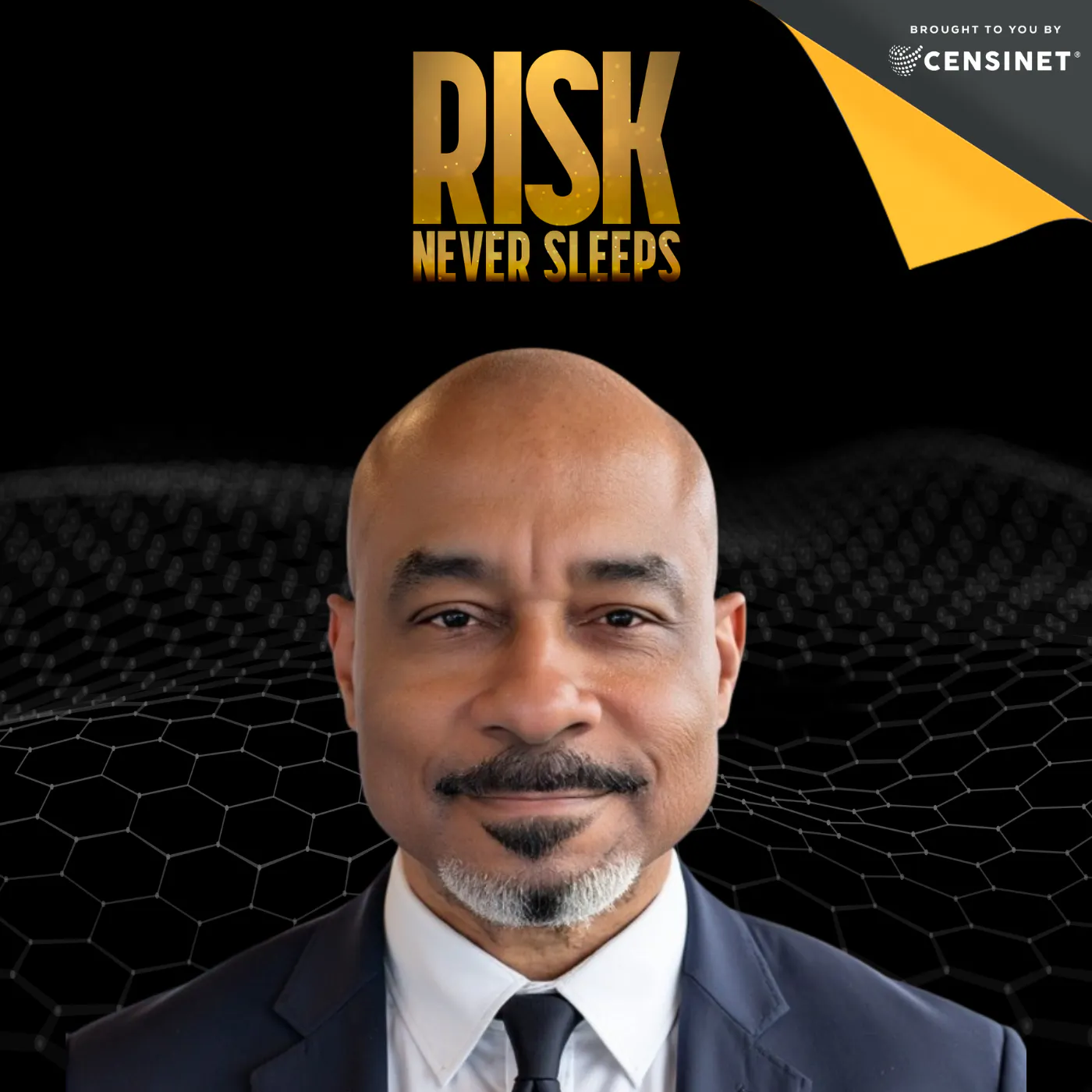
Risk Never Sleeps Podcast
Episode #193. You Bought the Tech. You Forgot the Leader, with M.K. Palmore, Founder and Principal Pdvisor at Apogee Global
00:34:44
Loading summary
Transcript116 lines
- [00:00]
A
Foreign.
- [00:06]
B
Welcome to Risk Never Sleeps, where we meet and get to know the people delivering patient care and protecting patient safety. I'm your host, Ed Gaudet. Welcome to the Risk Never Sleeps podcast in which we learn about the people that are on the front lines protecting patient safety and delivering patient care. I'm Ed Gaudette, the host of our program and today I'm pleased to be joined by MK Palmore. How are you, sir?
- [00:33]
A
I'm good. How are you, Rick?
- [00:35]
B
I'm good, I'm good. So, Ed, we're already starting off another one.
- [00:41]
A
Yeah, another one. We're going to have to fix this.
- [00:44]
B
I'm bringing that vibe to this podcast. All right, well, we're going to have fun. I can already feel the energy. It sounds good. So let's start off with maybe sharing a little bit about your current role, your company, on your organization.
- [01:00]
A
Yeah. So I'm the founder and principal advisor at Apogee Global rms. We are a small boutique enterprise risk firm dealing in cybersecurity and physical security risk, among other things. We have a couple additional service lines in the strategy and leader development space and also the talent acquisition space. I founded and created this firm following stints at Google Cloud and Palo Alto Networks and also an extensive career from my time in the U.S. government. And our focus is supporting small to medium sized businesses in the global public sector in the service lines that I identify because I feel that that space is in particular need of enterprise level experience and expertise, but not with the big four pricing and typically associated with that kind of advisory work.
- [01:45]
B
And so I assume you're less than the big four?
- [01:48]
A
Yeah, I would say less, but just as equipped and proficient.
- [01:51]
B
Value based pricing.
- [01:53]
A
There you go.
- [01:53]
B
I see your Navy, your shirt jacket there. Were you in the military?
- [01:57]
A
I was in the military. I'm a United States Marine. I get to wear that title for the rest of my life. And I'm a graduate of the U.S. naval Academy.
- [02:04]
B
Thank you for your. Yeah, I'm Army Field Artillery.
- [02:09]
A
Outstanding. Yeah, outstanding. Always great to meet another veteran.
- [02:14]
B
Yeah, you're a little more serious than I am. That's the Marine. My dad was a Marine, so he was always. He was always serious.
- [02:20]
A
So immediately you recognize it, right?
- [02:22]
B
I did, I did. I feel like I'm talking to my dad right now. Oh, I told you it was going to be fun. So what type of industries do you work with? VA at all or do you do any work with the va?
- [02:36]
A
Yeah. So I've narrowed down the industry preference to the technology space, financial services, healthcare and of course, all public sector entities. And I say of course because my deep experience in the public sector gives me, I think, a unique perspective, especially when I combine that with my commercial and enterprise experience. Gives me a unique perspective to go into those kinds of agencies and provide impactful insights and hopefully guidance around reshaping both transformation efforts, but also helping them right. Size their security efforts, which I find to be an interesting challenge among most SMBs and also public sector organizations.
- [03:13]
B
Yeah, you need a decoder ring to work in those sectors, I find.
- [03:19]
A
Yeah, it definitely takes a lot of experience, and I've been lucky enough through my experiences to be able to have those necessary snapshots to be able to provide impactful advice back to those kinds of organizations.
- [03:30]
B
Yeah. Really cool. And so. And how long you been at it?
- [03:33]
A
I just started this firm a little over a year ago. I was doing a little bit of moonlighting while I was at Google Cloud and ultimately decided to make the move after feeling like I wasn't putting enough time and effort into this advisory space, which is something that I always wanted to do. If you do something with, you know, half of an effort, typically you don't get the kinds of outcomes that you're looking for. So I decided I needed to go full time on this. Gotta go all in. Yeah, Gotta go all in. As I like to say, burn the ships at the shore, burn the boats and make an effort, and then you'll know whether or not you're actually capable of doing what you set out to do. Yeah.
- [04:11]
B
You can't go back if there are no boats to take you back.
- [04:13]
A
Yeah, yeah.
- [04:14]
B
Always fun. And now, is this your first entrepreneurial stent or have you done it is.
- [04:20]
A
And it's been and continues to be a learning experience and lots of extreme ups and downs.
- [04:26]
B
Oh, yeah. And it's called the Bipolar Express. That's the Bipolar Express. Here you can be on an extreme, like. And then five minutes later, you're like, on this complete low of all lows you've ever been on. It's incredible.
- [04:38]
A
All it takes is one email or one outreach from an employee to bring you back down to earth very, very quickly. That's right. Yeah. There's no book.
- [04:48]
B
They don't give you the playbook. There's no playbook that says.
- [04:51]
A
You know what's funny? I think there have been lots of books written about this, but you don't know it until you're living it. It's really one of those things you absolutely have to experience. And I feel like I'm earning my Bones, right now, I'm definitely getting the full brunt of the experience and experiencing that as another individual called the urgency of ownership, which is this idea that as the founder, everything ultimately rises and falls on your effort. I'm wearing, you know, six different hats. Everything from business development leader through the guy who's supposed to close all sales on the final call and doing a little bit of the delivery, which in and of itself, you know, because I want to do that and I want to learn what the pain points are and boy, are they painful. Because there's nothing like falling on your sword in front of a client and then recognizing, man, that's. I don't want that to happen again. So you take it and you put it in the experience, the learning bucket, and you hope that you've learned from it and you hope that you'll be able to scale and be able to, you know, do better the next go around.
- [05:50]
B
So a year into it, what was sort of the biggest aha or learning? That was a complete surprise to like, wow, I never thought this was going to happen.
- [05:58]
A
I knew it was going to be time consuming. I didn't know that I was going to feel the need as the founder to be doing this seven days a week. Like, there's no day of rest. I actually have to block out time during the weekends. Like I get about a four hour block on a Saturday where I just say I'm going to do something I want to do. And it never really amounts to much. It could be just working out going forward, eating or sleeping even. Or eating or sleeping. Right. It's never anything paramount, but it's just I have to disengage for about four or five hours. And then sure enough, I can't stay away from it. I pick up the laptop and there's something. Again, the list is unending.
- [06:35]
B
There's always something that needs to be done. I see it in your eyes. Nobody has eyes like a founder.
- [06:45]
A
Always something that needs to be done.
- [06:47]
B
Yeah. It isn't crazy. And it's like, wow, so many companies have been founded. You'd think there could just be a playbook I could pull off the shelf and give it to my employer. It just doesn't work that way.
- [06:57]
A
Yeah. I once heard a speaker or podcast or something indicate that being a founder is almost like insanity. Why would anyone choose to do it? But there are founders who've done it again and again. Right. Because they've seen success. But when you're in the throes, we're.
- [07:14]
B
Actually, we are insane.
- [07:15]
A
There is a little bit of the definition of insanity. Right. Doing the same thing over and over again, expecting different results. Again, it's those highs that you experience which give you some indication that, like, you're on the right path and like this is possible. If I could just string a couple of those wins together and in succession long enough to experience the joy of it, then I'll understand why people undergo this. But, you know, at the same time, I have a board in front of me that has the word gratitude on it. I always wanted to run my own business and I just have immense gratitude that I was even in the position to explore this as an option and to be able to say that I've done it right. Well, win or lose, I will be able to say at the end of this that I gave it a shot. Yeah, this was something I always wanted to do and I have no regrets in terms of the pathway I've outlined for myself.
- [08:06]
B
Well, odds are you're going to fail, which is awful to say. So I would always get back on the horse and do it again. Like, you almost have to do it a couple, assuming success, you're one of the few.
- [08:18]
A
Right.
- [08:19]
B
But even through the learnings of failure, you're going to get so much better at this and there's nothing like it out there. Like, you can do this and then try to go back to Google or some other large company and be like, they're so different. It's such a different experience.
- [08:31]
A
No, I can't even imagine, you know, when you've been in a position to make all of the critical decisions and, or weigh in and be able to be the one that says, hey, maybe I'm going to transfer this critical decision to someone else. When you've been in that spot, I can't imagine what it would feel like to go back to corporate and then be what I like to describe as a cog in the wheel. I don't care how high you are, if you get hired as a VP svp, you're still reporting someone. Yes. You're still reporting to someone. You may be making some great money, but you've got a boss. Even as the CEO, your boss is the board of directors. Right. So it's. I can't imagine going back, but I also understand you can't predict everything. So if I went back to corporate, it would really have to be an ideal situation. Yeah.
- [09:15]
B
So given in your unique guest, because you're going through it right now, in your early days, what have you done, like, differently from a value perspective or From a culture perspective, like, what are some of the things you're. Because I remember when I started this company, I'm like, okay, for the last 10 other companies, I want to do things differently here. And I kind of mapped out what that looked like. Are there things that you are exploring that are different or testing out?
- [09:38]
A
There are. And part of it is this idea. For me, leadership's at the core of all of this. These experiences. My experience in government, my experience in corporate has all been about taking away lessons in leadership. The examples that are set before me, how I've been led, how I've had the opportunity to lead. And part of this impetus around starting my own business was the idea that I wanted to create my own culture of leadership, which is people focused, taking their issues into account, not necessarily always thinking that the bottom line is absolutely the most important thing to business outcomes. And I want to create a small but robust team where leadership prevails. And leadership is really the beginning and end of all decision making, such that the experience that everyone walks away with, they feel like they've been taken care of. And I believe intimately that if you can create an environment where that is the sense that people will be overproductive for you at the end of the day.
- [10:38]
B
Yeah. A set of leaders that are entrepreneurial and feel ownership and accountability to the mission, to the vision. I love that. How's it going so far?
- [10:48]
A
No, I think that there are indications that that is indeed working. And again, this urgency of ownership is just. I want to prove all of them right. I've had people. It's interesting, when you're a founder, people come in. There's some people that want to do the job just for the money, and they're interested in the experience. And as long as they match the cultural fit that you're looking for, you bring them on board. There are others who buy into the vision immediately, and they're like, I just want to be a part of this, and they want to jump in. And so you get sort of this spectrum of individuals that you're dealing with. And to me, because there are folks that are buying into the vision, that to me, is a signal that I'm on the right track. I just have to prove all of them right ultimately by the business being successful so that we can all get those yielded dividends like revenue and profit sharing and all that kind of stuff that people ultimately are looking forward to. But I feel like I'm on the right track, for sure. You can never, never go wrong when leadership is the focus of what you are doing, something positive will come from that experience.
- [11:47]
B
Yeah, no, I agree. I think many people confuse management with leadership. And I always say to people, you can't manage people you can manage, inventory you can't manage. You have to lead people, you have to take them there. People want to be led if they feel like they're being managed. You're never going to get the best out of them. There's just going to be punching a clock.
- [12:05]
A
Yep, absolutely.
- [12:06]
B
Let's talk about your company and some of the services. Can we get into maybe some details about what you're providing and what that looks like for people?
- [12:13]
A
So three distinct service lines. One vertical is the cyber and physical security risk. I combine those because that is the bulk of my actual professional experience. Having been an FBI agent for 22 years, I had an opportunity to do everything across the board. I had an amazing career in the FBI. I'm one of the rare people who went through a 22 year experience, raised my hand multiple times to pivot within the context of that career and was able to get a ton of experiences, investigative experiences across counterterrorism, violent crimes, organized crime, public corruption. I had an opportunity to serve on two FBI SWAT teams, which gave me an intimate understanding of sort of the physical security realm, physical security risk associated with it. I then raised my hand in the middle of my career and said, hey, I want to be a cyber agent or cyber guy. The FBI threw a bunch of training at me and I got an opportunity to shift into cyber and I ultimately led one of the largest cybersecurity investigative teams for the FBI. So that vertical is a representation of the things that I did for 22 plus years as both an FBI agent and also an officer in the Marine. The second vertical, which is talent acquisition and executive search. I got very keen on the idea of bringing talent into the cybersecurity or technology space through my commercial experiences and basically witnessing what I think is a completely broken system within the technology space. I think people are hired and it's interesting, I have a use case dropped into my inbox this morning. People are hired with such fanfare and expectation of the outcomes that they're going to be able to produce and they leave about 18 months later. And from these executive roles, I mean, hired with a lot of, you know, so and so from Meta is coming over to run X, Y and Z and it's like, wow, it's like a punch in outer space. And then 18 months later they leave quietly, not having produced anything and not having accomplished what it was that they were hired to accomplish. So I kind of want to turn that model on its head. I want to put in front of some of these hiring places people who have a career of successes behind them. In other words, they've been successful at nearly everything they've done and maybe would not be your typical go to for these opportunities where they're bringing in again a new vp, new SVP into a particular technology role. This is an area where again, leadership. It strikes me as very, very odd that especially in the technology space, leadership is almost never taken into account. It's always someone's technical background or skills, assuming that they're going to be great leaders. And nothing could be further from the truth. I've seen deeply technically experienced individuals with zero leadership capabilities and it oftentimes shows itself in the quality of the works that their team produces and the undercurrent of employee dissatisfaction that typically exists in places like that. So talent acquisition and executive search, high priority focus. And again, I've had and continue to grow a very broad based network. I love the idea of being able to give people opportunities that they are deserving of, but really to put them in front of those opportunities. And then the third lane, what I call the foundational piece of strategy and leadership development. This is where I think the focus on leadership helps us provide what I call an ecosystem approach. We want to provide advisory services across people, process and technology. And I think the leadership development focus is something that's important. And I understand not every entity is going to take us up on the opportunity to provide strategy and leadership advice, but for the ones that do, and we can wrap ourselves completely, in other words, providing them technology solutions, potentially helping them identify long term executive folks to put into those roles and helping them develop their leadership teams. It's very much a whole, we used to call it a whole person approach in the military. It's very much that approach that was part of the impetus of me starting my own firm. And it's a tough sell, you know, because unfortunately in the business to business space, people look at vendors and advisory as a single entity. Like I'm going to go to apogee for just X, when in fact you might come to us for just X. But at the same time I'm going to tell you about what we're doing on the left and right lateral limits of that. And our hope is that you're going to be all in at some point. And I don't have any examples of that happening just yet, but I'm optimistic that I will within the next year?
- [16:40]
B
Yeah. You mean that?
- [16:41]
A
The whole thing? Yeah. I've had the piecemeal, but I'm waiting for that one use case where I can show that we came in and we provided attention along all.
- [16:51]
B
I love that balanced end to end approach because you're right, and I always talk about this with our team, but also our customers, is that if you're asking me for a tool, you've already failed. You don't know it, but you've already failed. If you're asking me to help you transform a problem you have with a tool, but also with your people and the process that's associated with that, and you're willing to actually flex across the board, we're going to find success. I know that. And that's the problem. Most people, like you said, they come to a vendor for a tool or for people or for process help, but they never think about it. Everyone talks about the holy trinity of people, process technology, but when it comes down to actually applying it, everyone forgets it. They always lose sight of that fact. So I love that. I love that you're bringing that to the table. So what are some of the biggest challenges you see with your customers today and what are some of the initiatives over the next two years you're helping them with?
- [17:48]
A
One of the things that I really want to help organizations with is the idea of. Right. Sizing and scaling a security effort. Part of the niche offering that we have is coming into specifically technology firms who my experience has been they could be generating revenue, in all likelihood are probably doing well from a technology standpoint. You know, they're honing their product and they're trying to mature their product to ensure that they're in the right spaces when we come in. They oftentimes don't even have a formal security apparatus. In fact, I'm still amazed after all of my experiences in Silicon Valley that identifying a chief information security officer still is not a priority for startups. It is. In fact, they will be operating for years without a chief information security officer. And you'll go into the organization and find that there's some lead engineer who's wearing the security hat. And they typically are well informed, well intentioned, but guess what, all of the things like governance, risk and compliance, all of the documentation, all of the things that ultimately you're going to need in order to break through that next level of operations, in order to identify to maybe your customers that your security is in fact where you claim it is, ultimately you're going to need a security leader in There. And I think that where I'd like to occupy the space is bridging that gap, helping them one identify that they're at the right stage where they need a security leader, helping them form the outlines of what a security apparatus might look like, maybe even inserting some interim personnel to help them. But my goal is not to stop. The Big four are famous for their services. Once they get you hooked, they want you hooked forever. That's not the model that I'm working on. I'd rather come in for a defined period of time, project and oriented based outcomes. When we've achieved those outcomes, my goal is to offload you to permanent people that we help you find. By the way, permanent people that can be a part of a permanent apparatus for you.
- [19:40]
B
I love that. And I love that you use the word outcomes. I'm always talking about. I'm surprised at how many people don't start there with outcome driven metrics.
- [19:47]
A
Right.
- [19:49]
B
Oh my God. Talk all day about this. All right, let's get personal. Can learn a little more about.
- [19:53]
A
Sure, you better.
- [19:54]
B
Okay, so if you could go back in time and tell your 20 year old self something, what would it be then?
- [20:01]
A
You're on the right path. I'm a pretty focused individual. I've spent my entire professional career planning my next step and then executing on that next step. There's nothing that I've done that hasn't come without intentionality. Literally from the start of my collegiate career all the way through my professional career, there have been next steps. And in those next steps I have identified, okay, here's what I need to do in order to get there. And then I go about the arduous task of putting in the work in order to do that. And I can document multiple examples of where that has happened. The most relevant to this conversation likely being like my pivot into cybersecurity, which I did while I was in the FBI. No indication from my past, other than having graduated from one of the U.S. service academies, that I had the intellectual ability to be able to do it. But I pivoted into it. I studied the right materials, I got the real world experience, the certification. I did all of that and did it in a manner that other people were astonished that I was able to do it in such a way. Again, intentional manner. I would get questions all the time. You know, this guy doesn't come from a technical background. How is he able to do that? Because I know how to study, I know how to put the work in. And then I had the benefit of Working for a premier law enforcement agency that's internationally known, that exposed me to everything that I could ask for and then some. And then to be able to take that experience and matriculate it into two Fortune 500 companies where I had the ability to serve as an executive and really get the kind of quick snapshot understanding of what's happening in the business market as it relates to cybersecurity. So my understanding of risk is broad. It's both broad and deep because I bring an experience from the US Government, which by all accounts, globally speaking, is one of the most informed agencies as it relates to cybersecurity matters globally and the risk associated with cybersecurity. And then again, I had the opportunity to work for two of the biggest names on the block, getting exposures in terms of understanding and then, you know, real client direct engagements. That allowed me to broaden my experience base. And, you know, in a lot of respects, it's unparalleled. There's not a ton of people in the market space that have the kind of experience that I do.
- [22:10]
B
All right, I got a name drop. Did you work with Phil Venables at Google?
- [22:13]
A
I worked for Phil Venables. I was part of the. He stood up a team called the Office of ciso, and I was one of the plank holders. I'm one of the first people who was hired by Google Cloud to work in that office.
- [22:23]
B
All right, I didn't know that. He's brilliant. I worked with him when he was at Goldman.
- [22:26]
A
He is.
- [22:27]
B
Yeah, he's one of the best. All right, second person. Do you know John Riggy? Did you ever work with my good friend John Riggy?
- [22:34]
A
Of course. I know John from my time in the FBI.
- [22:37]
B
I didn't know. I didn't know. Okay. All right. I just talked to him today and yesterday. Yeah, he's a fantastic human being and outstanding guy. We're on the same task groups, or he did. I know he did some of this organized crime and cyber, and we overlap.
- [22:51]
A
A little bit in the Bureau, which is why, again, I'm happy to have gotten to know him just a little bit. And actually, we've overlapped even more since we both retired from the FBI and occupy now this interesting space. He, of course, has been on the healthcare side of the house since retiring, and I've had the benefit, I think, of doing lots of different things. But, of course, healthcare is one of the focuses of Apogee, so it's an industry that I remain interested in supporting and helping.
- [23:14]
B
What's the riskiest thing you've ever done. This is the Risk Never Sleeps podcast. So I'm going to ask you that. I'm sure you've had a lot of risky things you've done.
- [23:21]
A
Yeah, so, I mean, I've led a career of risk related endeavors. Right. You could, you could pick the low hanging fruit. Right? I mean, my time as an officer in the US Marines, I signed up to be a Marine because I wanted to do the hard thing and experience it and be good at it. And I was, I was a good Marine officer and I decided to move on from that to go do another hard thing that's risk related in terms of being a federal law enforcement official and being a special agent in the FBI. It was like a movie. It was everything that people imagine it to be. You know, everything from executing federal search warrants. I like to tell folks I was a breacher on two FBI SWAT teams. So I'm the guy standing at the door with heavy stuff in my hands and my weapons being straddled by my side. Like, I'm not leading with my weapon. I got to get the door open so my team can get in the hotspot. Great experience in the FBI, leading at some of the highest levels and being exposed to some of the most dangerous and important cases in the technology space that the Bureau engaged in. And then I'm capping that all off with walking away from a. I did really well at Google. I was well respected. I think I still have a great reputation at Google. Maybe, you know, knock on wood, if I ever decide to go back. I could choose to go back, but I walked away from that with the intent on starting my own enterprise because again, intentionally, this is something I've always wanted to do. It's like jumping off a cliff, you know. You know, we talked about the highs and lows and stuff. Some of those low moments, I'd be lying if I didn't say, you know, I'm saying to myself, was I crazy to walk away from what I had at Google?
- [24:56]
B
Oh, I know. And even the low moments, though, I feel like it builds resiliency because it's like, whoa, I didn't know we could go this low. Like, this is pretty cool down here, but I want to go back up.
- [25:09]
A
I have said many a time that you learn infinitely more from your failures than you do your successes. The failures stick with you. They leave hard spots and calluses in your memory. And if you're smart, you retain those because you want to go back to them and surface the insights time and again. So you can try not to make the same mistakes over and over again. But there are some hard lessons, for sure. Yeah. Biggest pivot is starting my own business.
- [25:36]
B
Yeah, I love it. One decision that you made throughout your career or life that you wish you could take back.
- [25:43]
A
I don't have any decision I wish I could take back. No. Even if it didn't turn out exactly the way that I expected it to, it was a learning experience. And all of that has brought me to the person that I am today. I don't have any regrets.
- [25:55]
B
Now. There's often people will say that which I respect, but then if I push them a little bit, they'll say something like, I love this answer. Yeah, I put milk in a microwave once, and I probably shouldn't have done that.
- [26:08]
A
No, actually, I'll give you one if you want to press the issue. When I joined the FBI, I ended my association with the Marine Corps because at the time, the FBI was giving a message to its new special agents that they wanted you wholly to themselves. So there was a time period where they were telling people, get out of the reserves. Cut your ties with the military. We want you 100%, because if there's an incident that goes on, we can't have you getting called back and splitting your. They shouldn't have done that. In fact, it was a. Even conveying that message, I think was illegal at the time. Like, they should not have told us to do that. And I regret completely severing my ties with the Marines. I should have stayed in the reserves. It's interesting, you know, personality wise, and you picked this up even at the top of the. The Marines were a good fit for me. I should have maintained my connectivity to the reserves. I loved my association with the US Military. It's something that I wanted for myself from the time I was in elementary school. Even going to the Naval Academy was something I identified very early on. And my ties to the military, I feel like I maybe cut short without fully exploring what that could have evolved into.
- [27:18]
B
No, that's cool. I was forced into going because my father was like, you can't follow these guys around forever. Like, you need discipline, son.
- [27:28]
A
He was right.
- [27:29]
B
I didn't like it, but it was right. I probably wouldn't be here today if I didn't go in, but I, too, like you. I got out of the reserves, too, and I actually wish I'd stayed in a little longer because I was in the best shape of my life, and I had a great experience, and it really did save my life. And Change my life. Otherwise I was going down a bad path. Different path. Share one fun fact about you that most people don't know if you're comfortable doing that.
- [27:53]
A
Yeah, sure. No, the fun fact that I always like to convey is the fact that both my wife and I are retired FBI special agents. And so my children have had a very unique upbringing having two parents that are go getters out there in the federal law enforcement space. And although as I'm through the years, that became even more common to see other couples in the FBI. I'm very proud that the both of us were able to get through positively careers with the bureau and be positive contributors. And, you know, hopefully it's a signal to my kids, although it doesn't appear that any of them will choose a life of service. That signal to them that their parents come from pretty decent origin stories.
- [28:31]
B
That's great. That's terrific. All right. You're on a desert island. You can bring five records with you.
- [28:37]
A
What would they be?
- [28:37]
B
What's your musical taste?
- [28:39]
A
Dream of the Blue Turtles by Sting.
- [28:42]
B
Did not.
- [28:42]
A
Love Supreme. Love Supreme. John Coltrane.
- [28:45]
B
Coltrane, nice.
- [28:46]
A
Yep, Maybe. So there's a group called Snarky Puppy that I discovered in the past decade that is one of my favorite groups of all time.
- [28:56]
B
Look at your smile right now. No, when you say the word Snarky Puppy, I love that.
- [29:04]
A
What do they.
- [29:05]
B
What genre are they?
- [29:06]
A
They're a little bit of a fusion act. They're an ensemble group that was started at a college in Texas more than a decade ago. And they have some music that just really blows my mind. That's number three, probably Princess Purple Rain at number four. And then for number five, anything by Hans Zimmer.
- [29:23]
B
Hans Zimmer, Yeah.
- [29:25]
A
Oh, yeah. Music scores are huge and only have been since John Williams originally scored Star Wars. Star wars was like the first music score to really influence the industry. Hans Zimmer is the current basically version of John Williams. Except from my vantage point. I'm a huge Star wars fan, by the way. From my vantage point, he's like on another level. So. Gladiator soundtrack, that's Hans Zimmer. Batman, the Christopher Nolan Batman soundtrack is Hans Zimmerman. In fact, most of the Christopher Nolan movies, to include Inception, Hans Zimmer did the soundtrack for.
- [30:03]
B
Oh, that's. That's good stuff.
- [30:04]
A
Sherlock Holmes, you know, so the guy, Richie, Sherlock, he's across the board. And I had the benefit of seeing Hans Zimmer in concert almost a year ago here in the San Francisco Bay area, and it was by far the best concert that I've ever been to in my life. The man of Steel soundtrack is Hans Zimmer. The list goes on and on and on. He's a phenomenal. Phenomenal. The stuff that comes from his. I don't understand it. That people can, you know intently that people are operating on a different level. When you hear music, geniuses produce music.
- [30:37]
B
I'm not too proud to learn something today, mk, So I just want you to know that.
- [30:43]
A
Check out, you know. You know, you gotta go check out some Hans Zimmer because you probably already are a fan of something that he's made. The interstellar soundtrack. All of this is just.
- [30:54]
B
Yeah, that's great. All right.
- [30:55]
A
Yeah. He's unbelievable. Wow.
- [31:00]
B
This is a good day for the podcast.
- [31:03]
A
By the way.
- [31:04]
B
You answered that question probably better than most people. Oh, I don't know. I don't. Five records.
- [31:10]
A
I don't. It's so hard.
- [31:11]
B
So they go, like. They give me, like, best of, and I'm like, no, don't give me best of. Like.
- [31:16]
A
Well, you can't see because it's hidden behind my background is I have an acoustic drum set sitting behind me. I'm a hobbyist musician. Beautiful. And have been since I was a little boy. Me too. I'm a fan of music.
- [31:28]
B
Okay, Very good. Wow, that's awesome. Two more questions. We're almost there. All right. If you weren't doing this, what would you be doing? What's your hobby? Away from the 24. Seven day a week.
- [31:38]
A
Yeah. I mean, if I could somehow back in time and become a better drummer, maybe I'd be a live musician professionally. But I'm not good enough. I'm not good. Every time I see a drummer on the Internet and I see the skills that these folks have, I'm like, I'm envious of the amount of effort that they must have put into acquiring these skills. There's some phenomenal drummers out there.
- [32:03]
B
I assume you saw Whiplash, the movie.
- [32:05]
A
Of course. Yeah. Yeah.
- [32:06]
B
Pretty intense. I was a drummer, too, as a kid, and I got thrown out for causing trouble. That was after the trombone incident. I won't even tell you about that, but. Okay, that didn't go over too well either. All right, this is last question. What advice would you give to graduates that are coming out wanting to get into risk management, cybersecurity, start their own thing?
- [32:30]
A
Yeah. My advice is two things. I tell folks trying to break into the industry, especially the cybersecurity industry, look at the global public sector as a potential landing point. For your cyber security interests. Most people don't spend four years in college and say to themselves, hey, I'm going to go work for the city of X, Y and Z or the state soc in whatever state you happen to be living in. But I'll tell you that public sector entities, one need the talent. They almost always have job openings in the cyber security realm and they will teach you what you need to learn. And then once you've had even a small amount of exposure in the public sector space, you will set yourself up for eventual success in the commercial sector. Do it in that fashion. Go to the public sector first and then go commercial. Because once you've gone commercial, you will never want to go back for pay and all that kind of stuff. But the experience is unparalleled and you will benefit from it. The other thing I will advise people of is that the advisory space is fantastic because you get to see intentionally snapshots of other people's problems and you don't have to live them and breathe them day in and day out. You get to see what works, what doesn't work, and then make the best out of it, provide advice, and then move on to another project where you get a whole different snapshot. If you can get work in the advisory space, and that's either with the Big four or even the Tier two and three consulting firms, I would highly advise people to do that before committing to one of the big product in the cyber security space.
- [33:54]
B
Love it. This has been terrific. Thanks for joining the program today. Really appreciate it.
- [33:59]
A
This is a fun conversation.
- [34:00]
B
Yeah. This is Ed Gaudette from the Risk Never Sleeps podcast. If you're on the front lines protecting patient safety and delivering patient care, remember to stay vigilant because risk never sleeps. Thanks for listening to Risk Never Sleeps for the show, notes, resources and more information and how to transform the protection of patient safety, Visit us@SenseInet.com that's C E N S I N E T.com I'm your host, Ed Gaudet. And until next time, stay vigilant because Risk never sleeps.