← Risk Never Sleeps Podcast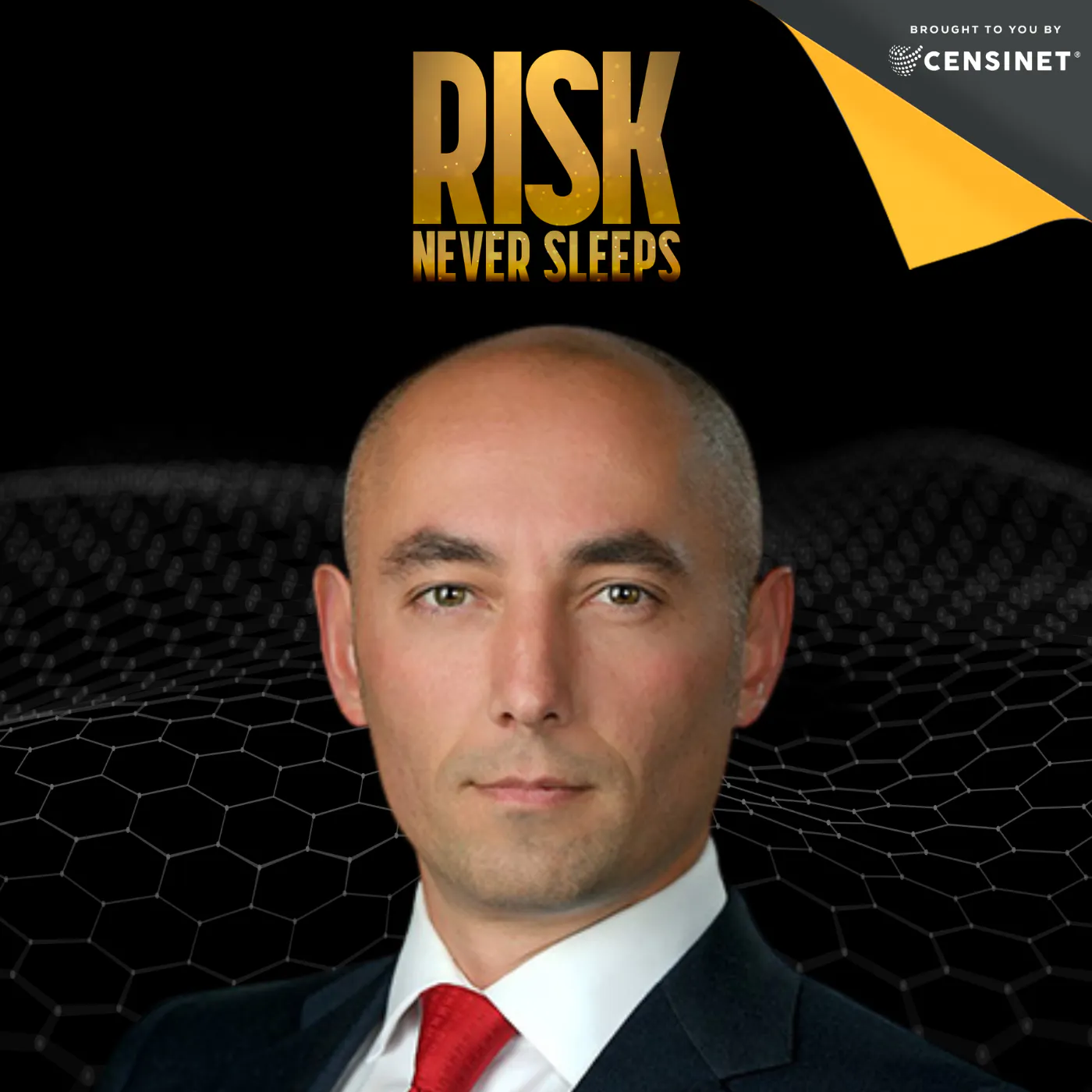
Risk Never Sleeps Podcast
Episode #198. AI Is Moving at Startup Speed. Enterprises Are Still in Approval Meetings, with Dennis Chornenky, Founder and CEO of Dome Labs AI
00:40:43
Loading summary
Transcript78 lines
- [00:00]
A
Foreign.
- [00:06]
B
Welcome to Risk Never Sleeps where we meet and get to know the people delivering patient care and protecting patient safety. I'm your host, Ed Gaudette. Welcome to the Risk Never Sleeps podcast in which we learn about the people that are on the front lines protecting patient safety and delivering patient care. I'm Ed Gaudette, host of the program and today I am pleased to be joined by Dennis Chornenky, the founder and CEO of DOM Labs AI. Welcome, Dennis.
- [00:35]
A
Thanks very much, Ed. It's a pleasure to be here with you today and look forward to the conversation.
- [00:41]
B
Yeah. And where are you based?
- [00:43]
A
I'm actually based in Minnesota, but I spend a lot of my time traveling. So I spend probably nearly half my time in kind of D.C. new York, also get out to Bay Area quite a bit and wherever else travels take me.
- [00:54]
B
Yeah, I think we're both traveling today. I'm in Vive, calling from a hotel room in la.
- [01:00]
A
Well, there you go. I'm in Austin at the moment, so there you go. Excellent.
- [01:04]
B
So let's start off with maybe sharing a little bit about your background, your current role and your organization with other listeners. Yeah.
- [01:11]
A
So I can probably take just a couple of quick minutes to describe how I got to where I am at the moment. So I started my career in finance actually. I was an investment banker and did some asset management as well. I ran kind of a small internal hedge fund for Morgan Stanley for some time and was quite good at it, enjoyed it, but ultimately wanted to do something a bit more entrepreneurial. And so I had a telehealth, AI driven telehealth and smart scheduling company out of Palo Alto for a few years, which was really interesting. And then I ended up kind of going back to graduate school and doing some more work and research in Boston around AI and strategy and technology and did a good deal of consulting for large technology companies, academic medical centers, med device companies, a few other kind of public entities as well and ultimately got an opportunity to work at the federal government at the White House as a senior advisor and a Presidential Innovation Fellow out of the White House Office Science Technology Policy, which and this was a nonpartisan, non political role. So I ended up doing kind of the last two years of the first Trump administration and first year of the Biden administration and had a portfolio of agencies I worked with focused on AI, AI policy, AI strategy, governance, helping helping them to develop their AI strategies, governance policies, adoption roadmaps, a group of portfolio of civilian agencies, DoD National Security Focus components as well. And then the pandemic hit and So I ended up doing quite a bit of pandemic response work. I'm also trained as an epidemiologist and have experience with infectious disease modeling. And because of the telehealth background as well, turned out that both of those skills were pretty useful. I wasn't expecting to use either of them, actually. I was really just kind of focused on AI and even helped manage a committee that produced the first executive order on using trustworthy AI in the federal government. But once the pandemic hit, my role took a pivot, I think, as did, you know, most people's across the federal government and nobody slept for the first four months. It was crazy time, obviously, very disorienting for all of society, for all of us. And because of that experience, because I, you know, knew the telehealth space really well, understood the policy aspects of it, but also had the epidemiological background, I ended up becoming, I think, an important part of formulating our telehealth strategy and executing it with the goal of making telehealth accessible to as many Americans as quickly as possible. So that whole experience brought me, I would say, back to the importance of technology enabled care. And so after leaving the government, I went to UnitedHealth Group, became their first chief AI officer. And then I wanted to do something a bit more entrepreneurial again. I think I got tired of being in very large organizations from the federal government, going to uhg, sure. And then I formed Dome Labs. Dome Labs AI, which started out more as a services business, but we've transitioned to being primarily a product company at this point. Focused on an AI, a governance control, cybersecurity platform for single enterprises, particularly large economic medical centers and federal agencies. So that's what I'm focused on now, is building out the business, working with our customers, helping them to solve their problems in this space, especially as everybody is accelerating their adoption of AI and needs better tools and more efficient processes for evaluating risk, clearing those applications through governance and then monitoring them once they're deployed and monitoring them for sunsetting as well when they're no longer producing value in various ways or becoming obsolete.
- [04:44]
B
Got it. And so you got an interesting background, diverse background going into the operator role. What were some of the initial things you saw that were surprising to you or becoming the entrepreneur that you are now on that journey? What were some of the surprises that you faced that you weren't expecting?
- [05:03]
A
I think one of the things for me that was surprising was how disorganized I think enterprises can be when it comes to thinking about new and emerging technologies. You know, there's a lot of perspective, a lot of conversation, a lot of interest, maybe some fomo, but really it's very difficult for large complex enterprises to actually get themselves coordinated to be able to meaningfully position to adopt technologies. You know, even just the procurement process, just getting a contract signed, even if you want to, can be very complicated. But then, you know, once you have it signed, actually translating the cost of that investment into value with, you know, integration into workflows and business enablement. Just how challenging all those steps were or are for large enterprises I think was a little bit surprising to me when I was younger and just, you know, kind of learning about the complexity of technology at enterprise deployment and execution level.
- [06:02]
B
Yeah, it's like an Olympic event, isn't it?
- [06:03]
A
I mean, well, it requires so much alignment from leadership, key stakeholders. And a lot of times, even if everybody wants to do it and agrees, there may not be clear mechanisms or processes, especially if something is new or if it's going to have an impact on operations and workflows that the organization is not used to absorbing or adapting to, can be really challenging. So I think, you know, one of the things that we see happening is, at least in healthcare and I think other industries, is organizations recognizing that they've got to shorten their acquisition cycles. If you're an academic medical center and you want to adopt and deploy an AI technology for care delivery, you really can't wait the usual 18, 24 months to get it deployed because by then very likely the underlying model is probably obsolete and perhaps all sorts of other factors are going to be out of the parameters that you were initially hoping for. So I think we're already, we are starting to see some changes in that regard. Same thing with the federal government. You know, I've seen some encouraging data that shows that with that downward pressure on acquisitions cycles and timelines, we are starting to see shorter timelines for organizations and they're actively trying to figure out how to get better at that. And same thing on the governance side. Even once you've kind of agreed that you're going to adopt a new application, you know, we're seeing averages of something like 48 months with large academic medical centers and kind of adjacent organizations for how long it's taking them to get applications through governance. And that doesn't make sense at all because you can have much more rigorous, robust processes that triage, you know, through low, medium and high risk applications. The majority of what we see going into portfolios, 6, 70% is low risk stuff and you know, those kinds of things shouldn't take more than a week or two to clear if you have a well organized process with the right authorities. And even the high risk stuff shouldn't take longer than a month. So that's kind of our focus, a big focus for our business is helping to shorten those clearance cycles for governance.
- [08:00]
B
Yeah, we find that the, the folks at the coal phase, sort of the downstream participants in the, in the process, tend to really affect the velocity at which you can, you can drive change in an organization. Can you talk a little bit about that, what you see there?
- [08:16]
A
I'm sorry, can you elaborate on that a little bit as far as that component?
- [08:19]
B
Yeah, yeah. So we often see, you know, the folks on the front that are doing the job, that are actually running the process, for example, as they're looking at the changes to their overall process and like you said, the requirement to speed things up. Right.
- [08:38]
A
Whether it be procurement, the governance process or.
- [08:41]
B
Yeah, yeah, yeah, absolutely, yeah. What do you see there and how do you help really those folks get their minds around the change?
- [08:50]
A
Yeah, it's a great question because it is a big challenge. The big picture there, what's happening with a lot of organizations, what we see is that they're taking slices of 8, 10 different organizational components that already exist and trying to put them together into some kind of comprehensive governance review process. And they are oftentimes achieving that goal. But you know, they've put these things together really quickly over the last year or two in most cases, but they're achieving it in a very inefficient way that processes, you end up with process that basically everybody hates. And you know, it's because you may have groups from it, legal compliance, quality, you know, data sharing, you know, stewardship and you know, cybersecurity. And you're trying to take slices of all these things and you're trying to figure out who are the people that have some kind of AI expertise or perspective and you're, you know, throwing them all together and you're trying to create some sort of stepped process. And a lot of times there's significant bottlenecks because of this. So what we try to do is help organizations understand that what's really happening here is you have role specific capacity gaps. What you really need, rather than, you know, slices of 12 different people trying to do a single job, is a person that's trained for that specific job. So, you know, we encourage organizations to develop roles like governance case managers or AI governance directors or AI cybersecurity directors, people that really have a deep specialization at the intersection of their current domain and AI and also thinking about career specific pathways as well. So, you know, rather than taking again, different, you know, people at different levels of the organization and trying to get them to support these processes, create career pathways for people from, you know, junior to senior levels that ultimately maybe go up to a chief AI officer or something like that. So you could have an AI Governance analyst, an AI Governance manager, an AI Governance director, an AI Governance regional vp, and then eventually up to a chief AI officer. Same thing with the cybersecurity track or an AI success track or AI portfolio management. You know, that, that looks at prioritization and strategic alignment and the ROI and cost and value components of AI applications. You know, right now, again, it's this hodgepodge of different people without the adequate training or expertise that get thrown into these processes. And, and they're very smart people. You know, they're doing a great job, but they're, they're not positioned for tremendously efficient success with, with the organization. And it's not necessarily, you know, anybody's fault. It's just, it's very early in the adoption days. And so I think we just don't have that institutional muscle or that institutional history for how to do this because it's new and it's a, it's a space that's multidimensional. AI is very multidimensional and so understanding how to organize those dimensions correctly is a challenge. And, and it moves so quickly. It iterates much more quickly than really any other space that we're used to. So all of those things present unique challenges and you know, that's where we, I think, try to come in and help provide perspective as well as tooling and a platform to better organize those processes.
- [11:49]
B
Do you see those roles at the peer level of IT subordinate or within risk and compliance, where do you see those roles evolving?
- [11:58]
A
Yeah, it's a great question. I'm curious too, what, what you're seeing and your thoughts because, you know, I know that's a discussion that's come up, I think at a lot of board levels and C suites. If you're going to have a chief AI officer, someone that's responsible for all this stuff, should they report to the CIO or maybe should they report to the CEO? There may be a lot of great innovative CIOs, but historically IT organizations are viewed as cost centers and not necessarily the innovation centers that they should be viewed at and how they should be run it. I Think in today's world probably has the most potential to innovate and create value for most enterprises. But because of its kind of historical positioning, it's still not quite treated that way. It's not treated that way from budget perspectives by, you know, the financial partners and CFOs. And it also goes to a conversation we often see about whether or not, you know, AI should be paid for out of operational budgets or treated as a capital expense. A lot of folks, you know, will, will say it should be treated as a capital expense. But it's not really the intention that determines whether something is treated as operating or CapEx. It's really more the structure of those payments, whether you own the product or, you know, it's on a, you know, on a multi year monthly license and a number of other things as well. So the conversation is really more, I think the proper way to look at it is not so much should it be operating versus CapEx, it's more even if it's operating. How do we create long term planning for those kinds of investments? With the right stakeholder alignment and you know, intentionality and commitment to those investments. But, and so all these things are kind of, you know, intertwined to an extent and interdependent. When going back to your original question of, you know, where should this stuff really sit, there is a view that, you know, maybe a chief officer should just report to the CEO, you know, and kind of be a dotted line into the CIO and you know, they work together perhaps because of some of the historical constraints around IT organizations and how they function. But I think at this point it's really enterprise dependent would sort of be my view if someone asks me. There's some IT organizations I think that are becoming very innovative and CIOs, they're doing a great job and it makes all the sense in the world for a chief AI officer to report to the cio. But others you look at and if someone were to ask me, I would say it is the last place where the chief AI officer should actually be. But I'm curious what you've been seeing on those.
- [14:22]
B
Yeah, no, I think you're right. It really depends on the enterprise at the scale. Right. So smaller enterprise, you know, smaller hospitals or health systems, they just don't have the level of resources or hierarchy, if you will, to support adding another top level role I think at this time. Right, right.
- [14:40]
A
Even just adding the role in the first place is that's right. For everybody currently in their maturity journey or their resource.
- [14:46]
B
Yeah. To make some Type of decision about some additional, you know, role that's there, replacing that role or upgrading that role or restructuring it in some way. And I just think, you know, they're dealing with some of the other, other things at this point that, you know, that's probably down on their list of priorities for larger organizations though, initially thought within the context of either GRC or just because they have a broad purview across the organization or it at some level. But now that, you know, over the last couple years I really have changed that to believe that that role, because of the technical requirements, should actually be peer to those other roles. And I also like this idea of case managers because those then can be attached at the business level, within the functional level. You know, you could have one for analytics, you could have one for clinical, you could have nursing, you could have. Each one of those groups could have a specific case manager based on the use cases that are supporting the organization, which I think was an interesting construct. But yeah, no, I think, you know, as you said, we're early, so it'll be interesting to see how these all evolve.
- [15:57]
A
Yeah, exactly. It's that type of experimentation and you know, trying things out and thinking about these different new roles that's really needed. You know, there's not necessarily a perfect solution at this stage because it's also evolving so quickly. But we've got to start evolving with it and you know, we've got to start recognizing that we do have significant gaps and the way to fill them isn't by slicing 12 different people into a single role. It's actually by defining and training that specific role and you know, even further creating career pathways for those people. So you establish long term institutional capacity.
- [16:28]
B
Yeah. And really it comes down to the argument of is AI an ingredient to something larger or is it something on its own? And I think that'll be the tension that we, the discussions we have over the next couple of years.
- [16:41]
A
Yeah, yeah, absolutely. And I mean, I think it's both. I think it's going to be, you know, an ingredient more and more. It's really going to be ubiquitous in pretty much all it. But the question of do you, you know, how do you govern that and what qualifies, you know, sort of what, what type of inclusion or exclusion criteria do you have for your governance? What type of AI rises to the level of governance and at what levels, you know, of, of oversight and, you know, evaluation and monitoring and all those things. Right. But in some other cases, AI is going to be the thing itself. You know, some very Powerful AI tool that's specifically designed to do specific things or even, you know, highly autonomous agents that are integrated into multiple systems and you know, are given a lot of capacity for, you know, for an action space and autonomous decisions. And a lot of it is really going to be how do we build the governance and the risk controls around that. What level of human involvement is required, you know, what level of changing permissions or installing new applications or you know, internal versus external communications and integrations do we allow based on, you know, the particular application that we're looking for? And in today's world, most agents are still essentially just glorified LLMs. But that's not always going to be the case. I think we're going to see more and more methodologies or you know, hybrid and ensemble methodologies where the agents are not necessarily just LLMs. LLMs may be, you know, just a small component kind of to your point, maybe just one of the ingredients in what an agent is really able to do. And we have a lot of other powerful methodologies. And that's the challenge in so many ways from a security standpoint also of as autonomy and capability increases, you know, so does, so does risk and so does the attack surface. And so how do we, you know, make sure that we're keeping up with what are the new risks introduced with each new capability that's, that's created and you know, that's, that's something we kind of have to do on the fly. You know, we can try to predict a little bit, but it's, it's pretty hard, you know, to say, you know, what's going to be the attack surface and the greatest vulnerabilities, you know, in AI five years from now even, you know, two years from now.
- [18:38]
B
Yeah, no, it's so interesting, you know, two points like we ran so fast and so hard eugenically. And then we, you know, we see a couple weeks ago, you know, the largest so far, the largest agenic event, ServiceNow event, you know, was identity access related. So it's like we go exactly 10 steps forward, five steps back. And so now we have to think about Agenic, the Agenic strategy in the context now of identity access management, which you know, is such a human oriented construct. And we have to completely change our approach and thinking and you know, as, as we're talking, I'm thinking about maybe even taking a different approach. Maybe technology infrastructure is sort of one bucket, one area and data like. Because right now we split, most organizations split infrastructure, cybersecurity and privacy as separate silos. But privacy really is about the data. And with AI, there's really those two vectors. You've got the infrastructure like you said, but then you have all the data aspects of it. And the data risks are very different than anything we've ever seen. You know, we didn't have concepts of drift, we didn't have the concept of
- [19:48]
A
hallucinization, hallucinations, organic poisoning and you know,
- [19:52]
B
data poisoning prior to AI. Right. So, so maybe there's a, maybe there's an opportunity to split it along that vector too. I don't know. What do you think?
- [19:59]
A
Yeah, I think it makes sense to structure approaches, guardrails, kind of constraint setting across those different dimensions, understanding them as different dimensions because they are in many ways. And, and you know, I often get into this conversation with people at least a little bit. I try not to go into it too deeply because data is always such a mess with organizations that, you know, especially now, some organizations are thinking, well, you know, should we have a chief AI and data officer, kind of like put data and AI under the same person? And personally I would never take that job because I don't want to have anything to do with the data side unless I really have to. You know, I often say data has a lot of different customers and AI is just one of those customers. You know, a lot of people want to just, just, they just want to look up a single data point, right? Or they want to run a very simple analysis or say very easy dashboard where there's no AI, just to see what the data says that they have, and that's totally fine. But of course, AI requires data in so many ways. And so we do have to work closely with the data folks. And a good chief data officer or somebody is someone that should understand how to position as much data as possible for AI applications and to be there, to be discoverable, to be accessible. And I think we're getting a lot of advances in security of data and cryptography and various methods. So we can now actually do training on data that's not exposed in the first place, that stays encrypted the whole time, you know, with confidential compute methodologies. And I think as that gets going more we'll see more data becoming accessible. But you know, I mean, sort of back to the original point, it's like the, you know, data governance has been around a lot longer than AI governance and it operates under a very different set of assumptions and I think objectives than AI governance often does, to your point. And so finding that intersection is an important challenge. It's a very interesting one. And to the point about security, there are clearly evolving concerns and considerations. The good thing, I think, about AI and even agents that we're seeing coming out of Claude, for example, essentially with demonstrating very meaningful persistent cybersecurity capabilities with vulnerability testing, you know, red teaming, you know, you can basically run an agent in the background that continuously or periodically automatically tests for vulnerabilities in new and existing applications. And so, you know, I guess the good thing is that as those threats evolve, thankfully, we can also use AI to help us address those threats, identify them, but also, you know, directly address them and mitigate them, at least to an extent. So I guess the bad thing about that is that it just makes everything more complicated. It's layers upon layers of complexity. So. Yeah, yeah.
- [22:45]
B
Well, I think you'll also get to a point, we'll get to a point where we create agents around. To your point about the human role of case manager, we create agents basically, that govern the other agents. Right. So you've got this level or layer of governance and security that is agenic, as well as, you know, those agents that are off doing things related to patient care delivery. And then we have to figure out where does a human intersect and where, you know, where do we keep the human in the loop? That'll be interesting to see what this looks like in 10 years.
- [23:19]
A
Oh, yeah. It's hard to imagine what it's going to look like.
- [23:21]
B
So it's hard to imagine for sure. I mean, you know, you're going to see. You're going to. I mean, you already see robots in hospitals already. I mean, I mean, the attending nurse, you know, could be a complete Borg taking your vitals, and we'll retain some
- [23:40]
A
human element where we need the human element, which is also an important conversation. Right. It's not just sort of, you know, like one dimension is how much where do we cede judgment to machines in what circumstances, but also where do we cede sort of human presence to machines. Right. And so, you know, those are all really important questions as well that I think we've all. We've all got to struggle with and tackle in the years ahead.
- [24:02]
B
The only good news is, I think, you know, as technologists, we know what this thing is really capable of and not capable of. So while the vision is exciting and, you know, there's still a long ways to go with accuracy and integrity of data and getting it right.
- [24:19]
A
Well, yeah, and to that point, I think what we get is we're getting into a situation where the capability of the Technology continues to grow at exponential levels in many ways, but our ability to actually deploy those technologies in secure ways that we're comfortable with are not moving at anywhere near that speed. So it's not this scenario where two years from now everything's going to be run by, you know, AGI, but it's more like, I think we'll get very uneven impact across industry, where those organizations that are able to figure out how to deploy these more advanced technologies, more autonomous technologies, will be seeing significant advantages from them in the years ahead. And that's going to create a bigger and bigger gap between them and those organizations that aren't so good at doing that or maybe aren't as well resourced. And so I think you'll see quite an uneven distribution of impact from this. The hope is that as we figure it out, even in some pockets, how to do this well, that knowledge and capability will transfer quickly or it will move upstream to the technology developers and it'll get built in to the applications so that, you know, five years from now, a rural hospital doesn't have to worry about doing governance at all because it's all fully baked into the applications in the first place. And when a technology vendor comes in and says, hey, we can help you deploy these things, you don't have to worry about all these complex levels of governance. But I don't think it's going to be that fast or that easy. You know, in most cases, you know, we do generally see in technology, when a new technology comes out, it's great, it's disruptive, but the burden, the governance burden is more on end users. But over time, that governance burden shifts upstream to the developers because they figure out that, hey, if we want to sell more of this stuff, we got to make it easier for people to buy it, especially in highly regulated sectors, we've got to build in the guardrails upstream. And so that does happen over time. But the other challenge there is that while it happens over time with applications that stay static, it can't happen over time as easily with applications that keep getting updated or keep evolving. You know, every time there's a new model or a new approach to doing things, you start that cycle all over again of the governance burden, starting downstream and having to take time, you know, to move upstream. So as we're doing that over and over, it's like, there's always going to be some governance burden on the end user. And this is why I think, you know, governance and proper, you know, cybersecurity controls are always going to be needed for organizations, especially if they want to adapt the newer, more cutting edge stuff.
- [26:43]
B
Yeah, I feel like Sisyphus rolling the AI Boulder uphill.
- [26:47]
A
Yeah, it's, there's definitely that. Yep. Yeah, that's a good way to represent that.
- [26:51]
B
All right, let's, let's switch a little and talk about you. If you weren't doing this job, what would you be doing? What are you most passionate about? What are your hobbies?
- [27:00]
A
You know, I, I'm so focused on work that I don't even think about that question enough. But thanks for asking. You know, I love, I love history. I love to travel. I would probably spend much more of my time traveling places around the world that have a lot of really interesting history and just enjoying that experience and sort of continuing to build out my own mental models of our history as a civilization, you know, as humanity and what that means for us as individuals. And, you know, I'm personally a very spiritual person, so I think a lot about how we interact with others. I think that's something that to me is more important than most other things, you know, about how people treat one another. And, you know, it's funny, like, Elon Musk talks about being concerned about where we live and, you know, wanting to go to Mars or now he's, you know, kind of downgraded that vision to the moon, even though even a year ago he was saying the moon is just a distraction. But, but I'm more concerned sort of with how we live and how we interact as a civilization. And so I think there are a lot of great opportunities with technology for us to help kind of rethink our institutions, how they're organized, you know, how people are treated within those, those institutions. But there's also, you know, of course, a lot of risks with technology as well. One of the reasons in the governance space is, is helping to ensure that we use these technologies in ways that are ethical and, you know, meaningful and actually help advance society and culture and in the right ways and, you know, helping to make some small contribution. I'd probably all spend a lot of time or more time, you know, reading just leisurely rather than, you know, reading news about AI. And it's like if I were to count the number of times every day I hear, you know, read, you know, hear or think of the, the word AI, you know, it's, it's nauseating. So, you know, exactly. More than anything, I'd love a break, you know, from all that.
- [28:47]
B
So what do you, what are you reading these days?
- [28:48]
A
What types of folks I tend to read. Yeah. Combination of professionally oriented material. Also a lot of policy news. You know, I think there's a lot of intersection on, you know, that's important with policy on technology. So definitely keep up with what's happening there. Not just domestically, but, you know, globally as well and you know, particularly in certain regions also. But then, you know, again, I like to read about history. I'm very interested in the world's different traditions and so when, you know, there's a new book that might come out on a particular topic or region that's of interest, I'll try to pick it up if I can find enough time to actually do some reading before bed or something.
- [29:26]
B
There are so many books out there. I have like five going at any one time. Drives my wife crazy.
- [29:32]
A
Well, yeah, I have a good size personal library at home and yeah, it also drives my wife crazy that, you know, like, I keep adding to it and it's not clear how many of these new books I'm reading. You know, it's like I get a few from Amazon, you know, almost every week mailed to me. She's like, there's no way you're reading all these. Absolutely. So, yeah. So where are we putting them?
- [29:50]
B
One day she said, she said the books are having babies, what's going on?
- [29:56]
A
Something like that. Exactly. And you know, I mean, she's largely right.
- [30:00]
B
So I. Yeah, yeah, I just, I mean, I have the Kindle, I travel with a Kindle, but I also bring physical books. I just love a physical book. I don't know something about it.
- [30:10]
A
I do, I'm the same. I almost always have a physical book or two. Yeah. Ideally small ones that fit into.
- [30:15]
B
Yeah.
- [30:15]
A
And you might carry on it easily. So. Yes.
- [30:19]
B
Oh, that's great. So if we go back in time and tell your 20 year old self something, what would it be?
- [30:25]
A
It's an interesting question. I, I try to live my life in a way where I feel like I, you know, I don't really regret anything. I just kind of accept the decisions and things that happened and certainly, you know, we make mistakes, we learn from them, we try to become better people. And you know, I also try to be somebody that accepts the things that life has put in front of me and, you know, not sort of second guessing those things are going, gosh, you know, I really wish if I could have just changed that one thing back then my life would be so much better, you know, kind of thing. It's. I think our job is to, you know, accept with humility the things that are put in front of us and to find the wisdom and meaning in those things for us. And that's our journey and that's who we are. But if I were to take a hypothetical on this, I might say that I would probably, I could have maybe benefited from a perspective about understanding optionality with different types of education. So, like, I started my undergrad at UC Berkeley doing computer science, and I thought it was great. I loved it. But the more I thought about a career in the future, my idea of computer science at the time was like, well, I don't want to sit in some basement coding for some big corporation my whole life. That doesn't sound very fun. And so I ended up switching my major at some point to political science and statistics, which still had some kind of technical element to it. But I think if I were to tell myself back then something useful, I would have said, hey, computer science actually gives you a ton of optionality. You don't have to be stuck in any basement. You can be an entrepreneur, you can build your own apps. There's so many different things you can do with that foundation. Again, I think I was just kind of feeding my intellectual curiosity at the time, and so I don't regret anything, but. But I think my views were maybe a little bit more narrow than, than they should have been. And even not just on computer science, but I think, you know, a lot of other kind of career pathways and things. But, you know, maybe that's just kind of experience and perspective that we build over time.
- [32:14]
B
So, yeah, you know, speaking of perspective, what. What's sort of the. The greatest lesson you've learned throughout your career?
- [32:20]
A
Yes, there are many and oftentimes painfully learned. One thing I learned, I would say about leadership in particular, is where I've been in a couple of situations where I had pretty strong convictions about a course of action. And I had a number of people, kind of key stakeholders that were also in alignment with that. But then there were some others that had a different view. But I knew that with a little bit more effort, I could have won over more of those people enough for the organization to take the course of action. I had strong convictions about, and I didn't kind of put in that extra effort to win over key stakeholders. And ultimately, I think on those situations, what I was concerned about did end up happening. And so I wish I had put in the extra effort because it would have been better for everybody. And so I think one of the lessons for me out of that was that when you have strong convictions about things you know, put in the extra effort, do your best. That doesn't mean, you know, you can't be wrong. It doesn't mean don't listen to other people, but it means take the extra time when you believe something is important to, you know, really do your best to get all the key stakeholders on board on a particular issue or direction and follow those convictions and you will generally see better outcomes.
- [33:37]
B
Yeah, that's great advice. I mean, you have to be a. A bit of a gladiator, emperor, politician, and poet all in one. Right, right. So. And you learn that later in life. Like, I. I've made so many of those mistakes as well, trying to. Can't you see? Why can't you all see this?
- [33:53]
A
Well, right. And organizations make that difficult to do that a lot of times to even get time with the right stakeholders. You know, at large organizations, people's time isn't split into, you know, 30 minute increments. It's, you know, split into 10 minute increments or, you know, five minute increments a lot of times. And there is an art to it, you know, because certainly, especially if you can get people to feel like, you know, they came to a conclusion on their own, it's much better than, you know, they ended up having to agree with someone else's idea.
- [34:18]
B
Yeah, exactly. Yeah. Well said. Well said. All right, so you're on a. You're on an island. It's your island. You can bring either five records or five movies with you. What would they be?
- [34:29]
A
Oh, man, I don't know. I have pretty broad interests and I'll maybe just talk in some general categories. I'd probably take some. Some 80s movies with me. You know, I might take a sampling of music from a few different decades, you know, I guess a few different genres, you know, might be some. And this is going back, you know, might be some Doors and Pink Floyd and, you know, things like that.
- [34:47]
B
Dude, I'll join your island.
- [34:52]
A
I was probably have some more modern things too, you know, kind of a mix. So.
- [34:55]
B
Yeah, I was a huge Doors fan growing up. It's how I got into writing and poetry. Jim Morrison and, you know.
- [35:01]
A
Yeah, he was a great poet, actually. Yeah.
- [35:03]
B
Oh, he's amazing.
- [35:03]
A
A lot of people. Yeah. Look at that side of himself.
- [35:05]
B
No books published and. No, he's really, really smart dude. And some people think he's still alive.
- [35:13]
A
Well, you know, he. He's alive and in some ways and
- [35:16]
B
all spiritually, he's alive. No, no doubt. All right. What advice would you have for folks that are Coming out of school and want to get into cyber, want to become an entrepreneur.
- [35:27]
A
Yeah, that's a really interesting question right now especially, I think more than ever, because AI and technology is really is starting to take over more junior to mid level roles. Even in organizations where traditionally we've thought it requires a lot of expertise and specialization like consulting, investment banking. A lot of what happens there is like spreadsheets and analysis and market research and you know, turns out, you know, LLM even a year ago could do that a lot better than most of the junior analysts coming in and much faster. You know, same thing with like graduate research for graduate students. You know, I've seen a lot of professors saying they've just stopped using graduates and researchers because why wait two weeks for something that's going to have all sorts of issues when, you know, I can iterate five times on this and you know, 20 minutes on my own kind of thing. Right. So, so how it does bring up the question of how do young people today build that junior to mid level experience so that they can get into more senior roles when those junior to mid level roles are being displaced by AI? You know, so, so I think it's really important for people, to the extent that they're comfortable with it and have the capacity to use AI as much as possible, to learn about how it works, what it doesn't do, in what areas is it really good, in what areas is it not so good? Where does it make sense to cede human judgment to AI, at least in some respects? And where doesn't it? And you know, and where is, where is a healthy combination of human and machine working together? And what does that look like? And to do that, you also as a human have to develop critical thinking skills. So it's really important for all of us to develop critical thinking, to understand that in any one situation there are probably multiple options. You know, maybe sometimes one is more obvious than others, or others are much more difficult, but nonetheless, understanding them and being able to evaluate them and the pros and cons of each option and understand there'll be multiple perspectives that may all more or less be correct. At the same time, there's no easy answer. And developing those skills, but then applying them to this question of where should we use AI and where shouldn't we? So I encourage young people to use it as much as possible in everything, just so that they start getting a sense of what it's good at and what it's not and how it works. Even if you're not a coder. You're not a technologist. Use it because you will nonetheless intuitively develop an understanding of, you know, where it's stronger, where it's weaker. And in a world that is going to be more and more dominated by AI or people who know how to use AI, you know, those skills are going to be really critical.
- [38:02]
B
Yeah. And learn it at a foundational level. Pull it apart. Like, you know, back in the day when we would pull apart PCs and laptops or build our own from the back of a Byte magazine. Right. Get your hands in there and figure it out. Last question. Risk Never Sleeps podcast. What's the riskiest thing you've ever done?
- [38:24]
A
The riskiest thing? Oh, gosh, I don't know. I feel like as an entrepreneur, you know, everything I do is risk, at least, you know, compared to other pathways I could have taken. Well, I think a lot of it. Yeah. Maybe just being willing to kind of bet everything on at least some modicum of entrepreneurial success, you know, giving up seniority in organizations, giving up equity, essentially being able to. Being willing to put yourself and your family through, you know, very difficult, you know, financial circumstances where, you know, you're just kind of barely living month to month kind of thing sometimes. And it's, you know, really important that, you know, you continue to meet certain milestones as an entrepreneur. I think that's really challenging for everybody, and exposing others to that kind of risk is. Is a difficult, you know, decision, and managing that is. Is hard. So, yeah, I've certainly had times in my life where those things, you know, were very much front and center, very difficult, very challenging. But you learn from it, and it. It certainly motivates you to. To keep working. It's. It's not one of those things where you can just get lazy and walk away. So.
- [39:29]
B
Yeah, no, it's so hard, especially with family, because they need to be participants in it as well. At some level. It's.
- [39:37]
A
Yeah, they need to appreciate what you're doing. They kind of need to believe in it and you. And, you know, and then they also need to feel like they're still taken care of and, you know, they're going to be okay and, you know, you're not gambling with their. With their lives kind of thing. So.
- [39:51]
B
Yeah, you're not on the craps table.
- [39:53]
A
Right, right.
- [39:55]
B
All right, well, Dennis, this has been incredible. Thank you so much for your time today.
- [39:59]
A
Thanks, Ed.
- [40:00]
B
Yeah, this is Ed Gaudette from the Risk Never Sleeps podcast. And if you're on the front lines protecting patient safety and delivering patient care, Remember to stay vigilant because Risk never sleeps. Thanks for listening to Risk Never Sleeps. For the show notes, resources and more information and how to transform the protection of patient safety. Visit us@SenseInet.com that's C E N S I N E T.com I'm your host, Ed Gaudet. And until next time, stay vigilant because Risk never sleeps.