← Risk Never Sleeps Podcast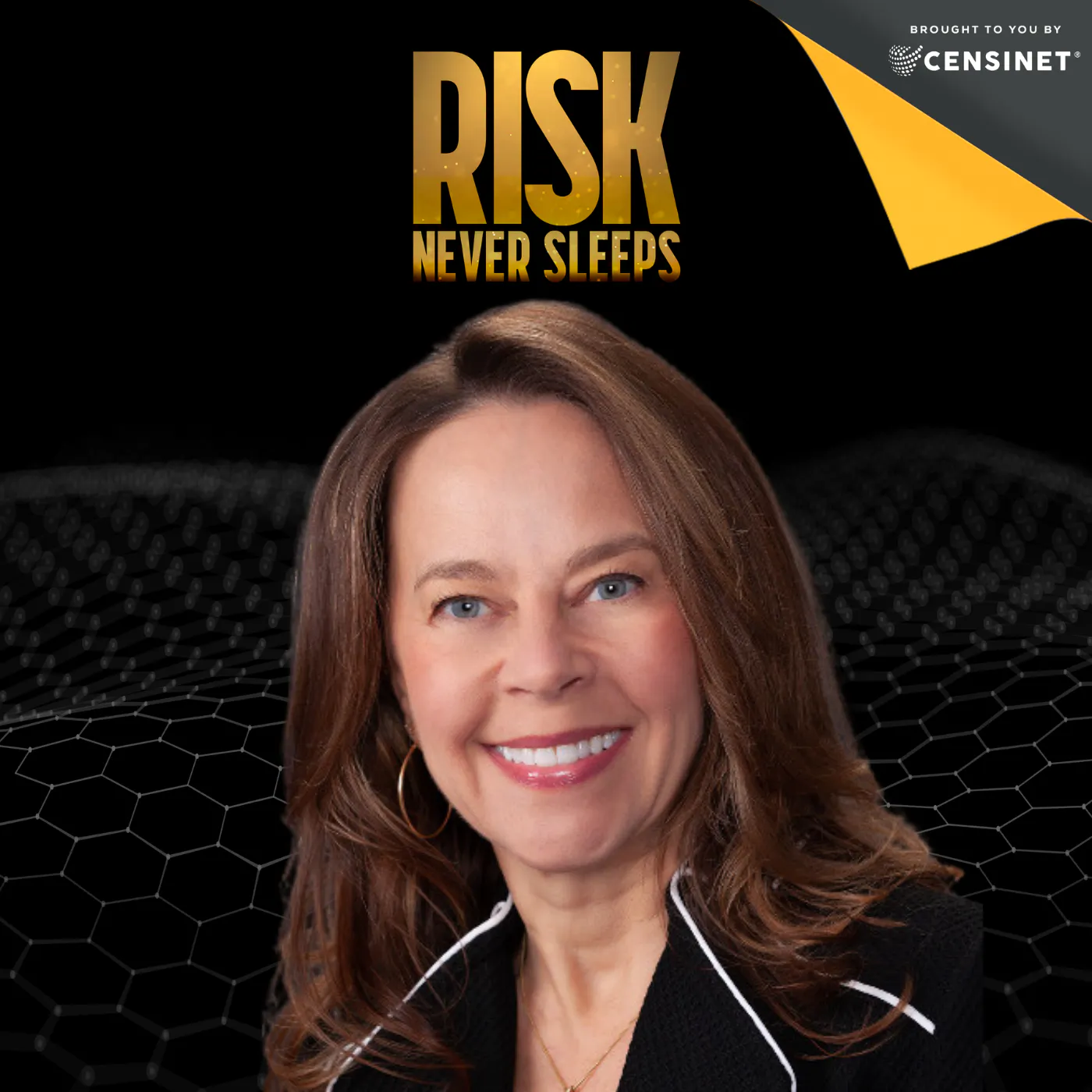
Risk Never Sleeps Podcast
Episode #199. Small Hospital, Big Tech: How Rural Health Is Quietly Winning with AI, with Linda Stevenson, Chief Operations and Chief Digital Information Officer at Fisher-Titus Health
00:18:49
Loading summary
Transcript256 lines
- [00:00]
A
Foreign. Welcome to Risk Never Sleeps, where we meet and get to know the people delivering patient care and protecting patient safety. I'm your host, Ed Gaudet. Welcome to the Risk Never Sleeps podcast in which we learn about the people that are on the front lines protecting patient safety and delivering patient care. I'm Ed Gaudette, the host of the program, and I'm live from Vive 2026 in Los Angeles with Linda Stevenson from Fisher Titus.
- [00:32]
B
Good morning.
- [00:33]
A
Good morning. Yeah, it's early. What time is it? Oh, it's nine o'. Clock.
- [00:38]
B
Not on the East Coast?
- [00:39]
A
Not on the east coast, exactly. You're up at 4am like us, probably.
- [00:43]
B
That's right.
- [00:43]
A
What'd you do last night? Have any fun?
- [00:45]
B
A lot of reception. Some. And bed and.
- [00:48]
A
Yeah. Did you go to the ServiceNow reception?
- [00:51]
B
No, no, I didn't. There's so many. I know, especially as a member of the board, I'm all over the place. Chime. Yeah.
- [00:56]
A
Yeah. What have you seen so far that's interest you or surprised you in any way, or.
- [01:02]
B
I don't think any surprises, but what interests me best is all the networking and the people coming together to just solve problems and generate ideas. And it's kind of like a little reunion. It is. Which I love.
- [01:12]
A
Yeah. It's like a high school reunion. You see old faces and old friends
- [01:16]
B
and those people you only see once a year at vive.
- [01:19]
A
Yeah. Or hims. You going to hims?
- [01:21]
B
I am not. Just too many conferences to fit them all in.
- [01:24]
A
Yeah. So for listeners that don't know, you share a little bit about yourself, your role and your organization.
- [01:30]
B
Sure. So I'm a CIO and now a COO at Fisher Titus Health.
- [01:35]
A
Congratulations.
- [01:35]
B
Thank you. Very excited about that. I think it's a natural transition happening with a lot of Seattle as well.
- [01:41]
A
When does that happen?
- [01:42]
B
Officially, March 1st, but I've been in transition through the month of February already. Yeah, that's great. Very excited. But Fisher Titus, for those who don't know, is a rural healthcare organization in northwest Ohio. We have about 100 beds, but we also have a lot of services all the way from birth, all the way to end of life, including nursing home, skilled nursing home health, all the things, including our own ems.
- [02:02]
A
Oh, wow.
- [02:03]
B
So we're very privileged to be the biggest employer in Huron county in Ohio, as well as obviously critical to the care of our patients in that area.
- [02:11]
A
So in your new role, as you look out a couple of years, what are some of your top initiatives?
- [02:15]
B
Strategically, we have two real initiatives we're focusing on this year margin, keeping the dollars where they need to be coming in and going out and market, really seeing how we can support the market in the area, whether that's additional services, growth, reaching out to the patients and all that, of course, involves a whole lot of things.
- [02:35]
A
New construction, new building.
- [02:37]
B
We have new construction going in right now, actually. Yes. We're building a new building out in Bellevue, Ohio. Okay. We have what we're a new model's health center. So in all the areas that we support, we're trying to do health centers which have not only physician services, but X ray and lab and rehab and all the things so the patients can get their care close to home.
- [02:54]
A
Nice. Does that expand your population, too? Well, that.
- [02:56]
B
That's hope. Yeah. Yes. Build it and they will come.
- [03:01]
A
That's right. Build it and they come. And remind me, Epic Shop.
- [03:05]
B
No, we are Oracle Health.
- [03:06]
A
Oracle Health.
- [03:07]
B
There are still some.
- [03:09]
A
Wow. You are the one.
- [03:10]
B
No, no, maybe the two. And, you know, it's frustrating to be in a conference so large and everyone assumes. Yeah, right. But there's some amazing Meditech hospitals. There's amazing. Or Oracle Health organizations, and we're doing great things with those systems.
- [03:27]
A
Yeah. How's the transition been from cer?
- [03:29]
B
Workful. It's been okay.
- [03:30]
A
Yeah.
- [03:31]
B
You know, I mean, there's been hiccups.
- [03:32]
A
Yeah.
- [03:33]
B
With any transition, it's mostly the administrative stuff getting, you know, new processes in place and even their own team figuring out what those processes are. So it slowed things down a bit. So for a while it was frustrating, but I think we turned a really good corner in about the last six months or so.
- [03:48]
A
Yeah.
- [03:49]
B
Where we're starting to see the outcome of all the engineers working behind the scenes that we didn't know were happening, bringing out some really cool stuff. And so that has been a big win.
- [03:58]
A
Okay. How are you thinking about AI? How are you thinking about applying it? Are you applying it already? Oh, yeah, yeah, absolutely.
- [04:05]
B
Yeah. We've been doing some AI stuff for years now, so it's not new to us how we're thinking about it. My view of the world. This is Linda's view of the world. AI is another tool. I've been in this industry a really long time. It'll be 40 years, actually, in January. This coming 40 years.
- [04:20]
A
Oh, wow. Okay.
- [04:21]
B
And so I've seen a million different things come and go. The trends come and go.
- [04:25]
A
Yeah.
- [04:26]
B
AI is now, I'm not saying it's a trend. It's day. But, like, I don't have an AI strategy I have a strategy and AI applies to that. And it's one of the things that will be part of the strategy in terms of governance. It's part of our normal governance. It goes through the same process with some additional.
- [04:41]
A
Oh, it does?
- [04:41]
B
Yes.
- [04:42]
A
Okay.
- [04:42]
B
So we haven't developed an AI governance.
- [04:44]
A
A lot of people are doing that.
- [04:46]
B
No. In my opinion, it needs to be discussed along with every other piece of software or. And tools or process that will change. So to have them separate, I think there'd be conversations that are missing.
- [04:58]
A
Exactly.
- [04:59]
B
So we have dovetailed all that into our normal governance process.
- [05:03]
A
Have you brought new people in, new roles or new functions into.
- [05:06]
B
No, because my team of 35 people is what it is.
- [05:09]
A
I love it. Yeah.
- [05:10]
B
We do everything with our 35 people. We don't do in house development of AI. We're mostly by partner with our external vendor partners. I think the work for us comes in with making sure that our foundation layers are good, your data is optimized, the quality of your data is good. Because if you're putting AI on top of garbage data, you're not going to get garbage outcomes. 100%. Yes.
- [05:33]
A
What advice do you have to other rural community hospitals that are struggling maybe to get some use cases in place or even create an AI governance group or bring it into their existing.
- [05:44]
B
Well, a couple of things. Network with people like me because I'm always willing to help and give you some ideas and tips to trick. Don't buy. Start from scratch if somebody else has done it. Right.
- [05:53]
A
Yeah.
- [05:54]
B
Chime has some really great AI like recommended resources, some white papers on things that they recommend. So that's a great resource. And I just say, remember, it's possible. Small organizations that have. I met with Scott McCuran yesterday from Southern Coos and he has a team of, I think four people and two informatics. So it's whole teams, critical access, six people. It's still possible.
- [06:17]
A
Yeah.
- [06:18]
B
You just got to get creative about how you approach it.
- [06:20]
A
Yeah.
- [06:21]
B
And maybe some creative networking and creative contracting.
- [06:25]
A
So where did you start? What are some of the core use cases that you began with?
- [06:29]
B
Our initial was almost five years ago. We started with the ambient scribe stuff.
- [06:33]
A
Okay.
- [06:34]
B
And we've been through three different iterations of vendors because as they come out, we keep evaluating. Is the one we have still the right one? Contracts a little shorter than they used to be on purpose.
- [06:44]
A
Yeah.
- [06:44]
B
And we continue to evolve. So. But from there we've really gone into anywhere where we can remove some of this repetitive work for our patient care for Example, our chronic care team or our, excuse me, utilization review team, they're scouring charts, reading every note, trying to understand what's going on with this patient. Well, AI can bring that stuff to them, prioritize the work. They can do the same work in like half the time. It's been great.
- [07:10]
A
Yeah. Which preserves that margin that you talked about earlier, right?
- [07:13]
B
Absolutely. Yeah.
- [07:14]
A
What are some of the use cases you'll be prioritizing over the next couple years?
- [07:19]
B
More focused going into the new year will be on rev cycle.
- [07:21]
A
Okay.
- [07:22]
B
You know, see where we can go with rev cycle. Rather than replace you layer on these amazing AIs over top to try and automate some of that process. So that is definitely one thing. And then obviously the holy grail, trying to get AI for nursing.
- [07:35]
A
Yeah. What does that look like in your mind?
- [07:37]
B
It's very different. So their documentation is very different than a doctor's. Not just a narrative. There's a unique specific information they put in the flow sheets. So it's going to change their workflow in that to take advantage of the AI for their work, they have to talk to the patient. So as they're with the patient in the room, it's your blood pressure is and your SpO2 is. And they speak it out loud, which will be very hard for them because they've never had to do that before and they're not used to that. However, what we're finding is the patients are getting more excited about it because now they feel more involved because they're hearing it and they're having this dialogue with the nurse during this process.
- [08:18]
A
Oh, interesting.
- [08:19]
B
Big cultural change, but I think a good one.
- [08:21]
A
Yeah. And does it free up the nurses to spend more time with the patients?
- [08:25]
B
That is the theory, yes. I'm praying that that's the case, you know, over time I'm sure that's gonna happen.
- [08:31]
A
Yeah. How did you get into healthcare?
- [08:34]
B
That's a funny story. I was in college and I knew I wanted to be in healthcare. I don't know why. Sometimes it's a divine thing.
- [08:42]
A
Yes, exactly.
- [08:43]
B
I didn't know how though. Like, I didn't know was it hr, was it management? You know, what was it? I got a useless degree in business management. Can't manage anything if you don't know anything. But I remember kind of was kind of bold when I was in college and I went and met with the president of a hospital in the local area where I lived. I love that he was so great to take a meeting with me and just said, tell Me how to get into healthcare. And, you know, gave me weird looks, of course, but he just said, you know, I start from the ground up. Okay. So I started as a biller. I started my first job as a biller and typing on a typewriter. UB82s for those in the audience who know what that is.
- [09:22]
A
Yeah.
- [09:23]
B
And then from there they saw this spark in me that I asked a whole lot of questions and oh, she'd be good for it. And here I am 40 years later.
- [09:31]
A
So how quickly did you go from billing to it?
- [09:34]
B
A year and a half maybe.
- [09:35]
A
Really?
- [09:37]
B
Yeah. As an analyst in the rev cycle. So I was always on the rev cycle side by learning how to install and train and do upgrades and all of that. From there I had this little epiphany where I was really good at organizing people. So project management became my thing and to this day I'm a project manager at heart. Moved into data and security for quite a while at the Cleveland Clinic. I was there on doing their data and security. Then I moved into the clinical side doing EMR implementations for the Cleveland Clinic.
- [10:05]
A
Born and raised in Ohio.
- [10:06]
B
Born and raised and always been in Ohio.
- [10:07]
A
What was the first hospital you worked at?
- [10:09]
B
Metro Health Medical Center.
- [10:10]
A
Still around?
- [10:11]
B
Yeah.
- [10:11]
A
Oh, yeah. Okay.
- [10:13]
B
I've been in almost every hospital in the Cleveland area. I've been blessed in that we have a ton of healthcare. I haven't had to move to do my job.
- [10:19]
A
That's incredible.
- [10:20]
B
Yeah.
- [10:21]
A
If you weren't doing your job, what would you be doing? What are you most passionate about? Hobbies or.
- [10:25]
B
I'm a yoga teacher.
- [10:26]
A
Oh.
- [10:27]
B
That's my thing.
- [10:27]
A
Yeah.
- [10:28]
B
Yeah. So I think it makes me calmer and more centered for the craziness that is it.
- [10:33]
A
Yeah. Are you doing yoga classes here? This.
- [10:36]
B
Not doing any at five. I have done some chime fall forum things like. But I have a yoga mat in my room and in between sessions I go out there and chill out a little bit. Yeah.
- [10:47]
A
Go back in time and see your 20 year old self. What would you tell her?
- [10:50]
B
Not to take things so seriously. Yeah. And just follow your passion.
- [10:55]
A
Yeah.
- [10:55]
B
You know, I've been lucky in that it has always found me, but I think people just are too serious. Have a little fun. And if you're not having fun and if you're not passionate about what you do, don't do it.
- [11:07]
A
Greatest leadership lesson.
- [11:09]
B
Oh, leadership is so hard.
- [11:11]
A
Yeah.
- [11:11]
B
If I had to pick up the greatest leadership lesson, it would be collaborate with people. It's hard to get to that because you feel like, you're always protecting your job or your role or your people, but the more you collaborate and network and just build relationships, you'll go farther, faster. And then your team also sees that and knows that, you know, they start building trust.
- [11:32]
A
Yeah. On the shoulders of giants, Right?
- [11:34]
B
Right.
- [11:34]
A
Yeah.
- [11:35]
B
Yeah.
- [11:35]
A
No, it's so incredible, and I think it's so important for people that are to really understand what that means, because, like you say, oftentimes we try to protect our. You know, and part of that's insecurity, because we don't know. And part of that is we don't have great mentors.
- [11:50]
B
Agree.
- [11:50]
A
Are you mentoring folks?
- [11:52]
B
I am. We have a couple of things. We have a formal mentoring program at Fisher Titus where I mentor other leaders. And it's really cool because they used to do it outside the IT space. Right now I'm mentoring a pharmacy leader. And in the past, I've mentored people in compliance or nursing or whatever. And it's so great to learn from them as much as they're learning from me. And then, of course, I mentor people through chime. I just was on the boot camp faculty this week, so just, you know, make building those relationships and mentoring those young people as they come up in their career.
- [12:21]
A
Yeah.
- [12:22]
B
And then a myriad of other people have come up across the time, and I mentor them as well.
- [12:27]
A
Travel? You like travel?
- [12:29]
B
I love to travel.
- [12:30]
A
I don't bring that up when you said, yeah, yoga, but travel, right?
- [12:34]
B
Well, a lot of times it's for yoga. I'll do a little yoga retreat in Greece or something. So. Yeah. Oh, yeah.
- [12:41]
A
Is that your favorite place to go?
- [12:42]
B
It's one of my top two. If I have this pick two that I loved, it would be Greece and then Banff up in Banff, Rockies. Oh, so gorgeous up there.
- [12:53]
A
There's.
- [12:53]
B
We're big hikers.
- [12:54]
A
So there's a show on. I don't know. It's like, maybe Netflix. The Heartland. Have you seen it?
- [13:01]
B
No, I haven't.
- [13:01]
A
I think it's. It's set in Banff. The Banff area.
- [13:04]
B
Okay.
- [13:04]
A
I've checked, like, horses. And yeah, it's interesting because the characters, you follow them throughout. I mean, this thing is, like, been running for, like, 20 years. You follow the characters through their evolution in different roles. They start off as children and then being parents.
- [13:21]
B
Oh, I love that. Yeah.
- [13:22]
A
My wife loves this show, so she. My daughters, they watch it religiously. It's kind of funny.
- [13:27]
B
Nice.
- [13:28]
A
So you're on a desert island. You can bring five records with you. What would they Be five albums. You probably know what an album. Most people don't know what albums are anymore.
- [13:37]
B
I have to. I'm one of those people. Has to explain it to people because. Yes. I just don't have some of the original.
- [13:43]
A
That's right. Yeah.
- [13:44]
B
Probably one of the Bruce Springsteen albums.
- [13:46]
A
Oh, nice.
- [13:47]
B
I'm a big fan of the Boss.
- [13:49]
A
Did you see the movie?
- [13:50]
B
I did. I did.
- [13:51]
A
I cried. I know. It was so sad.
- [13:53]
B
I had no idea about that part of his life.
- [13:56]
A
I did not know what to expect with the movie. And I was blown away.
- [14:00]
B
Yeah.
- [14:00]
A
I really love that movie.
- [14:01]
B
I know. Showed a depth of him that we didn't know about.
- [14:05]
A
Yeah. Yeah. Really, really interesting. Okay. Bruce.
- [14:09]
B
I'm a Leonard Skynyrd. No, I know.
- [14:12]
A
I'm all over the Chevy ss. Right. A Chevelle or something. When you. What kind of car did you have?
- [14:16]
B
My first car was a Dodge Aspen.
- [14:18]
A
Oh, Dodge Aspen. Okay.
- [14:20]
B
Exciting. It's red. No, we have red interior. Red interior. Yeah. Probably something by some kind of disco.
- [14:28]
A
Okay.
- [14:29]
B
Yeah. Because, you know, Donna Summer. That'd be great. Yeah, that'd be great. Dance, too. Yeah. And then probably some yoga music.
- [14:39]
A
What's yoga music?
- [14:40]
B
Oh, it's like chanting.
- [14:42]
A
Oh, okay.
- [14:42]
B
Yeah, chanting.
- [14:43]
A
Oh, like the massage music that they play when they go, I'm getting a massage.
- [14:46]
B
No, it's better than. It's way better than that. Yeah.
- [14:50]
A
I feel like I'm in Thailand, you know? What was that? White Lotus. Did you see the one?
- [14:54]
B
Oh, yes.
- [14:55]
A
Yeah.
- [14:56]
B
It's a cool show.
- [14:57]
A
It's weird. A little weird. Yeah.
- [14:59]
B
Yeah.
- [15:00]
A
Right.
- [15:01]
B
Okay. Yeah.
- [15:02]
A
Are you doing any adjunct professorship or teaching outside of just the faculty boot camp right now?
- [15:08]
B
It's something I really want to get into as I go on in my career. I think the more we move into our career, the more I like to share those leadership and my experience with other leaders coming up. So that's why I love the faculty piece so much. So that's on my radar.
- [15:23]
A
Okay. What advice would you give to students coming out of school that want to get into healthcare and it and be open?
- [15:30]
B
I think that you might have, as I did, a thought on where you should be or what kind of job you should have. But every single amazing opportunity that's come to me has been something unexpected. Okay, you're here on the rev cycle side now. Go work on clinical. I'm like, I don't know anything. Right. But take those opportunities. Say yes to as much as you can. And you never know where it's going to lead you.
- [15:54]
A
Risk Never Sleeps podcast. I have to ask you this question. What's the riskiest thing you've ever done?
- [15:59]
B
Hiked up to Angel's Landing in Zion. Yeah.
- [16:02]
A
So many people bring that up.
- [16:03]
B
Yeah.
- [16:04]
A
It was amazing, huh?
- [16:05]
B
It was one step at a time kind of situation.
- [16:08]
A
Did you go to Bryce?
- [16:10]
B
Yes.
- [16:10]
A
You did Bryce?
- [16:11]
B
Yeah. But that wasn't as scary.
- [16:12]
A
No. Yeah.
- [16:13]
B
Angel's Landing was scary.
- [16:14]
A
Yeah. Was that the toughest hike you've done?
- [16:17]
B
Not the longest, but probably the most difficult in terms of height, elevation.
- [16:21]
A
Yeah.
- [16:22]
B
Yeah.
- [16:22]
A
Do you ski?
- [16:23]
B
I do not. Oh, you don't have time for all
- [16:26]
A
this when I'm teaching jump on the
- [16:28]
B
plane, working and teaching yoga and everything else. And we hike, we kayak, yoga, and a lot of outdoor stuff, but I don't like to be cold.
- [16:35]
A
Yeah. What are you reading these days?
- [16:38]
B
Gosh, what did I just read? Mostly health stuff. I'm a big health nut.
- [16:42]
A
Really?
- [16:43]
B
So I usually read a lot about.
- [16:44]
A
No guilty pleasures. No.
- [16:46]
B
Like, sometimes I like to read historical fiction every now and then. Kristen Hannah is an amazing author and I've read some of her things. Which one of them's coming out as a movie? I'm excited.
- [16:54]
A
What movie?
- [16:55]
B
The Nightingale is coming out.
- [16:56]
A
Okay.
- [16:57]
B
Amazing book. And I'm really excited.
- [16:58]
A
What's it about?
- [17:00]
B
Two women who are in World War I time frame, and their sisters and what happens as they get separated during World War I. And it's that the characters that she builds are just. You're crying at the end. Right.
- [17:13]
A
And the book's called the Nightingale.
- [17:14]
B
The Nightingale.
- [17:15]
A
Oh, interesting.
- [17:16]
B
And actually, two sisters who are movie stars are playing the sisters in the vlog, so it should be really interesting.
- [17:23]
A
When do you head back?
- [17:24]
B
Wednesday.
- [17:25]
A
Wednesday, yeah.
- [17:26]
B
Really glad to go home.
- [17:27]
A
Me too.
- [17:27]
B
Yeah.
- [17:28]
A
You'll be here Saturday or Sunday?
- [17:29]
B
I've been here since Wednesday, so it'll be eight days. Well, boot camp and then board.
- [17:36]
A
Oh, that's right. I forget about the boot camp.
- [17:37]
B
Yeah.
- [17:38]
A
Yeah. Did you get out to see anything?
- [17:40]
B
No.
- [17:41]
A
No?
- [17:41]
B
No.
- [17:41]
A
You've been here the whole here the whole time?
- [17:43]
B
Yeah. I did have a really nice dinner one night.
- [17:46]
A
Oh, good.
- [17:47]
B
Little things like that.
- [17:48]
A
Where'd you go to dinner?
- [17:48]
B
Just plumbing's.
- [17:49]
A
Oh, funny.
- [17:50]
B
Around the corner. Dinner was fabulous. And sometimes just nice to sit down with good people and have great conversations.
- [17:55]
A
It really is. Yeah. Like you said, you see old faces and old friends and.
- [17:59]
B
Yes.
- [18:00]
A
It's a nice part of these.
- [18:01]
B
Absolutely. Absolutely.
- [18:03]
A
All right, well, thank you, Linda. Thanks for joining us.
- [18:05]
B
This is so great to talk to you.
- [18:07]
A
Yeah, likewise. Yeah. Ed Gaudette from the Risk Never Sleeps podcast. If you're on the front lines protecting patient safety and delivering patient care, remember to stay vigilant because risk never sleeps. Thanks for listening to Risk Never Sleeps. For the show notes, resources and more information and how to transform the protection of patient safety, Visit us@SenseInet.com that's C-E N S I N E T.com I'm your host, Ed Gaudet, and until next time, stay vigilant because Risk never sleeps.
- [18:46]
B
It.