← Risk Never Sleeps Podcast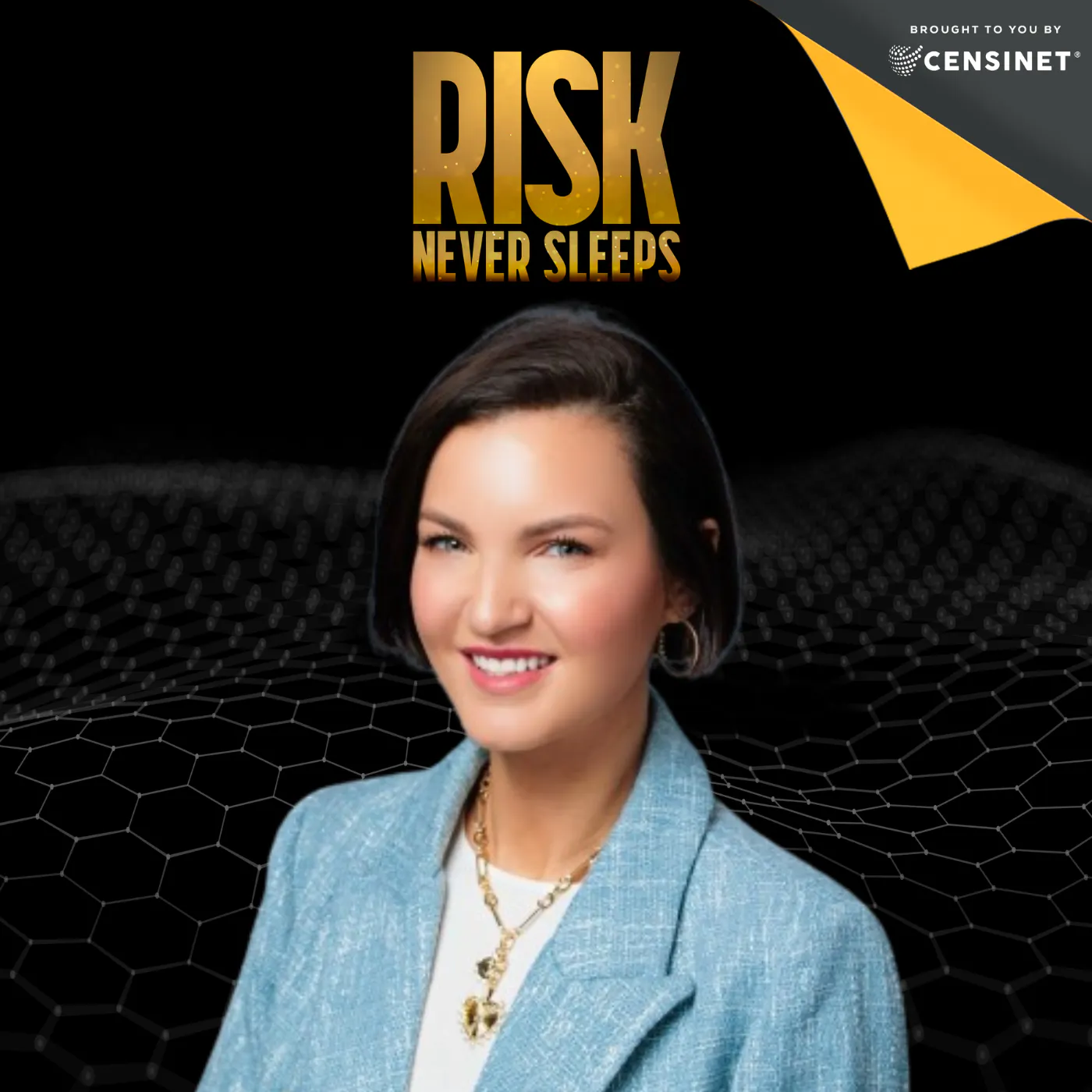
Risk Never Sleeps Podcast
Episode #202. AI Is Everywhere… So, Why Is Everyone Still Confused? with Cambrey Ware, Chief Commercial Officer at Censinet
00:24:01
Loading summary
Transcript156 lines
- [00:00]
A
Foreign.
- [00:06]
B
Welcome to Risk Never Sleeps, where we meet and get to know the people delivering patient care and protecting patient safety. I'm your host, Ed Gaudet.
- [00:18]
C
Welcome to the Risk Never Sleeps podcast in which we learn about the people that are on the front lines protecting patient safety and delivering patient care. I'm Ed Gaudette, the host of the program, and today I am pleased to be joined by my good friend and colleague, Cambry Ware of Senseinet. How are you?
- [00:36]
A
I'm good, Ed. Thanks for having me.
- [00:38]
C
This is crazy.
- [00:39]
A
I know. This is fun.
- [00:42]
C
Let's start off with sharing a little bit about yourself and your role and your organization for listeners.
- [00:48]
A
So, Cambri Ware. I'm the chief commercial officer at Cincinet. I oversee sales, marketing, customer success, strategic partnerships, and then, you know, any other extra assignments that you give to me
- [01:02]
C
on our ever growing that you give to me, actually.
- [01:04]
A
Yeah, that too. That too. Yeah. Oversee the commercial function of the organization.
- [01:09]
C
How's your week been at Vive?
- [01:11]
A
It's been good. Yeah, it's been really good. I'm exhausted. My back hurts, but it's good.
- [01:15]
C
Oh, is that what you're sitting that way is your back. Oh, I'm sorry.
- [01:19]
A
Oh, it's all right.
- [01:20]
C
We had fun, though. On Sunday, went to Paramount Studios, recording studios.
- [01:23]
A
That was a very cool experience. Yeah, I want to do something like that next year in Nashville. We.
- [01:28]
C
Yeah, we need to do something like that. That was so cool. And people I've met, people that were there that I didn't realize were there and were. They were. Oh, you were there. That was so great. Yeah.
- [01:37]
A
Did they remember your comment, your lyric suggestion?
- [01:40]
C
No, but I had to tell them. I said, oh, I'm the guy that said this. And he said, oh, yeah, you're that.
- [01:44]
A
Oh, you're the guy.
- [01:46]
C
Thanks for saying that. That guy. So a lot of talk of AI here, obviously. Any big takeaways for you?
- [01:56]
A
Yeah, I think I've been in a lot of the payer provider connect, one on one meetings. And the general takeaway is there's a lot of confusion about AI. There's a general consensus that everyone says they have AI, whether or not they actually do. So it's some debate around what actually is AI, how do we get our arms around it. And frankly, the health system executives I'm talking to are mixed in terms of whether or not they're really leaning in with AI or if they're sort of sitting back to see what happens really with everyone else before they dive in. A couple don't have, you know, AI governance in place? Not even thinking about it yet. And then others are trying to mature the programs that they have in place. It's a mixed bag for sure.
- [02:42]
C
Yeah. How did you get in healthcare?
- [02:46]
A
Wow. Well, my very first job out of college, I was selling for careerbuilder.com I
- [02:53]
C
did not know that.
- [02:54]
A
Yeah, that was my first builder. Yeah, it was my, my very first job out of college. They moved me to Nashville to work in their regional sales office in Nashville. There was about eight sellers and our sales leader and myself. I was the only female in the office. And right after I started working there, they divided the team across verticals. So it used to be just we went after any company that particular office at the time was chasing any logo inside the Fortune 1000 that was headquartered in Tennessee or North Carolina. Well, obviously a lot of those in Nashville or in the state of Tennessee are healthcare. So they started building out the healthcare vertical and I literally was just assigned to it.
- [03:38]
C
Oh.
- [03:39]
A
So I didn't seek it out. I just sort of landed there and really got exposure to selling what it was like to sell software to a health system. And then from there, actually one of my customers, Health Stream, I was selling to sort of HR leadership and some of the executive team there, they had just gotten some funding, they were getting ready to build out their sales team and they said, hey, we actually think you work for us. Yeah. And so the journey continued. So, yeah, I think just by way of being in technology in Nashville, there's obviously a huge hub there and they needed salespeople to focus on the industry and really learn the industry inside out. And I was lucky enough, frankly, or crazy enough to take that opportunity. I'm not sure which one yet, but I don't know if are smart, lucky or crazy. But here I am 20 something years later.
- [04:25]
C
What do you love about sales?
- [04:27]
A
Oh, gosh, I love winning. That's probably the number one thing.
- [04:31]
C
I remember asking that question.
- [04:33]
A
That's what you said. I, I love winning. I'm very competitive. I also, I'm a problem solver by nature. I think my brain thinks in terms of what's the problem and how do we fix it. And I really love building relationships. And so if I can build relationships with people, understand what their problems are, find a way to solve them and win. Yeah, that's sales for me. And I think that's why I've enjoyed it throughout my career and, you know, done pretty well.
- [05:01]
C
And you have. And in healthcare too, the relationships, yeah, I know they're stickier they're lasting. They're. They are deeper.
- [05:09]
A
Yeah. I think it's this we trauma bond a little bit.
- [05:12]
C
Yeah.
- [05:12]
A
Over the shared experience of living in. Yeah. And I think there's this sort of inside baseball to. Health care is really unique because we're all patients or friends of. Or family of at some point in our life, and we work in the business, so we sort of know both sides of it. And it's a unique perspective. And so I think that's a way that people can connect that work in health care, whether it's technology or working on the provider side. I think that's one of the reasons that the relationships are so strong and last so long. Because other industries don't have that. They really don't.
- [05:48]
C
Yeah. They like the shared vision.
- [05:50]
A
Yeah. They don't really have that same shared mission, I think. And, you know, healthcare is unique, but I think it's that shared sort of perspective and understanding and connection that we have with one another that makes those relationships so important to be successful in this space, but lasting as well.
- [06:05]
C
As you look out over the next couple years, what are some of your key initiatives? What keeps you up at night
- [06:12]
A
keeping you on track.
- [06:14]
C
Exactly.
- [06:14]
A
I'm kidding, but I'm not.
- [06:15]
C
No, you're not.
- [06:16]
A
I am, but I'm not. I, you know, I'm excited about what we're doing at Cincinnati, obviously, the opportunity to come in and rebuild a team, if you will, and take something that's been really successful and sort of take it to the next level. I'm really excited to do that. That doesn't keep me up at night necessarily. I think being able, sort of seeing what we're seeing in the market in terms of cyber security and AI and sort of where the market is headed and how they. The healthcare industry is typically really slow to embrace change and new innovation and new technology, and I think that's shifting a bit. So to get to be a part of that and sort of be on the leading edge of that in our specific niche is really exciting. I mean, I think what keeps me up at night is the factors out like that. We can't control. I can't control the M and A activity of what's happening in our space. I can't control the political environment. I can't control the regulatory environment. I have no control over that. So those are the things that worry me. But I'm driven by, okay, well, this is the situation we're in. How do we deal with it?
- [07:17]
C
What was something about sense in it that when you joined you were surprised?
- [07:22]
A
Oh, that's a great question. I was surprised at how much such a small team has been able to accomplish. I heard it over and over again in the interview process and our conversations that cincinnat punches above its weight class and, you know, to be totally frank, that just sort of felt like a tagline. And then when I got here, I realized, oh, wow, that's real. That was surprising to me. It's like I knew it in my head, but until I actually saw it, yeah. I didn't know if I really believed it. I think looking at the solution and looking at Cincinnati from the outside in was like, oh, it's a cyber security and healthcare. That's not really exciting. That's not sexy, you know. But now that I'm here and I see what we're doing and what we've been doing and sort of where the product is going and where the market is excited about what we're doing with product, I think the thing that's been really surprising coming, you know, a year later with the perspective I had at the beginning is like, this actually makes a huge impact.
- [08:20]
C
Yeah.
- [08:20]
A
This is a space that it's actually not that niche. And we've had a lot of conversations about elevating our reach and sort of elevating the message and the conversation. I think that's working and testing some of that messaging and some of my conversations this week, it's really landing in a way that has been surprising. I think the other thing that's been really surprising is how many health systems don't have a plan and don't have
- [08:44]
C
something in place that's like four generations old, right?
- [08:49]
A
That's right. They have something that's really old. But the number of people I've spoken to in the last couple of days with 20 some odd meetings, I talked to one health system that had a vendor in place that wasn't one of our customers. Every single person I spoke to, they're still using spreadsheets. It's a manual process. Laborious. It's tedious. So I think that's been something that's really surprising for me. We are helping people actually build and stand up programs where they don't exist already. That's. I wasn't expecting that.
- [09:17]
C
If you could do any other job outside of this or what are you most passionate about? Do you have any hobbies or what do you love to do when you're not working?
- [09:26]
A
Well, I love to travel. I really enjoy traveling. I think it's important to travel and get outside of your comfort zone and see the world if you can, if you have the means to do so. And I've been fortunate to be in a position where I can do that. I would love to be like a travel influencer or something. I think I'd be great at that. I would love for brands to pay me to travel to their hotel.
- [09:44]
C
You can't do it right now.
- [09:45]
A
No, I know, I know. I can't do that right now. I can't even moonlight. I don't have time to moonlight for that. I also, I mean, it's kind of weird and it sounds funny to admit, but when I was a kid, a teenager, even in college, I was always very interested in government and politics and just in the law. Like I don't know where that comes from, but it's something I've always been interested in. I went to college, got a degree in political science, pre law. I was going to law school until I interviewed with a sales leader@careerbuilder.com who said, you're a salesperson. Don't go to law school. What are you doing? So my husband and I joke that like law school is probably going to be on my radar one of these days. Like I don't think I'm done yet with school. I love it. I'm a nerd.
- [10:27]
C
Yeah.
- [10:27]
A
So maybe I'll do something like that when I retire, who knows?
- [10:30]
C
I like that. Yeah, I like that. Yeah.
- [10:32]
A
And I've always been told I'd be a great attorney, so.
- [10:34]
C
You would be a great attorney. Yeah. It's very similar to what you do.
- [10:37]
A
Yeah.
- [10:38]
C
You have to sell a jury or sell a corporation or sell on a
- [10:41]
A
problem that just a lot less schooling.
- [10:44]
C
I think you make more money too, but I don't know. Maybe not.
- [10:47]
A
No, I probably do now, but I don't know. Something, something to do with sort of that world is sort of always, I think something that's evaded me, that's just always been out there gnawing at me. So we'll see.
- [10:57]
C
You can go back in time and see your 20 year old self. What would you say to her?
- [11:01]
A
Oh gosh, I would tell her so much. I think I would tell her that she has a lot to be proud of and so much to look forward to. I think I would tell her to continue to just have an open mind and a positive attitude and outlook on life. And I think I would tell her that decisions that you make in your 20s, you can undo those later and you can correct course and you can change paths and that's okay. Like, you don't have to be perfect. I think that's what I would tell her. I think in terms of the career, I would tell her, like, listen to the people who are telling you you're a really good salesperson, because those people apparently were right. Stay the course and stay that path. I would tell her a lot, but I think the thing I'd tell her is, like, you have a lot to look forward to and life's going to be really fun.
- [11:44]
C
What's the riskiest thing you've ever done?
- [11:49]
A
I mean, the riskiest thing I've ever done? Yeah.
- [11:53]
C
Skydive?
- [11:54]
A
No.
- [11:54]
C
Bungee jump?
- [11:55]
A
No.
- [11:56]
C
Skateboard?
- [11:57]
A
I think. No. I mean, yeah. When I was a kid, in terms of something that's really adventurous, I. My husband and I were in the French Alps last fall. That sounds so snooty. Yeah, but we were. And we took the gondola ride all the way to the top of Mont Blanc, which is the tallest point in all of Europe. And I was. I basically had a panic attack on the. And it's on video, too, because I was filming the ride, and all of a sudden I start shaking and can hear me breathing heavily. And you can hear in the background, my husband, are you okay? What's going on? And I was like. And I say in the video, I'm so scared. And I'm just. I was terrified. Yeah, it was quite terrifying. So I'm scared of heights. And that was probably not the right thing for me to do when I'm terrified of heights, but I did it anyways. You know, it sounds so trivial, but once I got up there, I felt really proud of myself and accomplished. I didn't know when I got on that gondola, I was going to be so scared. I didn't know it was going to feel like accomplishment, but it was. When I got done, what was it like?
- [12:49]
C
Going down?
- [12:50]
A
Much better. I went and stood in the very front so I could see us going down. And it wasn't nearly as scary because I knew what to expect.
- [12:55]
C
Freak me out even more?
- [12:56]
A
No, I was okay. Hey. Because going up was so scary. And when we were going up, I was on the side facing the mountain, and I. All I could just visualize was just crashing into it.
- [13:05]
C
Yeah.
- [13:06]
A
That's never happened before on this thing, but it could. And all I was envisioning was, I'm going to be the one. It was absolutely beautiful and it was really fun. But that's probably the scariest, like, riskiest thing I've ever done.
- [13:16]
C
Greatest leadership lesson in life.
- [13:20]
A
Wow, that's a really good question. I think I've. In the last probably five or eight years of my career, I have much better examples of really good leaders. I've had some examples of what not to do and how not to be. Certainly, gosh. I think one of the lessons that it was actually a classmate of mine in when I went back to grad school 10, 11 years ago now, he was the CEO of a health system. And, you know, we were classmates and equals in that setting and then became friendly. And he was actually a customer of mine and became a mentor, still is to this day. And he really influenced me, especially as a salesperson and as a leader, to position yourself, like, find your voice in this market, if this is the market you want to stay in and look at opportunities and look at companies and solutions and whatever you're going to represent and make sure that it's something that's going to get someone like me to answer the phone. So he really encouraged me to think about opportunities. Not as a job or a paycheck, but if you really want to be, succeed and be somebody in this industry, go work for companies and take opportunities for yourself that are going to allow you to call CEOs, and they take your call because you are representing or offering something that really matters to them. And, you know, CEOs or CIOs are sort of the C suite inside of health systems. So I think from a career advice standpoint, that was really, really sound advice. Yeah, I wish I'd had that advice earlier in my career. And so I've tried to be really strategic and picky about what I've done since then. I think I have been, I think in terms of leadership, I had a sales leader mentor early in my career when I was working for a career builder. I mean, I was working my butt off, like cold calling and dialing for dollars. And, you know, I was driving all over the state and all over the city trying to meet with customers and sell, sell, sell. And I never, ever, ever took a breath. And she sat me one down one day and she said, cambry, at the end of the day, we are selling technology. This is not rocket science. This is not brain surgery. If you take a beat, no one's gonna die.
- [15:30]
C
It's great advice. Yeah. And I mean that the work will be here.
- [15:35]
A
It will be here. If you don't make that phone call tonight or you don't get back to that email today, it will be here tomorrow.
- [15:43]
C
Nice.
- [15:44]
A
And that just, I mean, I Still take that with me today. It wasn't specifically a leadership advice necessarily, but I've. I've used that in my career, and I. You know, I think the idea of work life balance is a misnomer because work is part of my life. It is a huge part of my life and everyone's. And I try to find those boundaries as best I can and stick to them, but, you know, if you're not happy at work and you don't enjoy the people you're working with and what you do, you're going to have a miserable life, honestly. So what are you doing? Doing? And when people complain about that, it's like, just go find something else then.
- [16:17]
C
Yeah. And your husband's in the industry, too.
- [16:19]
A
He is.
- [16:20]
C
What's that? Like?
- [16:21]
A
You're gonna get him on this podcast?
- [16:22]
C
I am.
- [16:24]
A
You know, it's really great because he understands what I do, I understand what he does. We don't have to explain it to each other. It doesn't always happen that we get to travel to conferences together, but this week has been a little bit unique. And when we go to hymns, it'll be the same way. We didn't plan for our booths to be across the aisle from each other, but there's just a perspective and an understanding that you don't. You know, not everyone gets to that in their marriage, and we're really, really fortunate.
- [16:47]
C
It's hard when. Yeah. When the spouse doesn't really understand what you do.
- [16:51]
A
And we can bounce off each other, too. Right. So I hear a lot of his conversations and he hears a lot of mine because we both work from home and we're both on zoom all day long, and we can help each other if, you know, I know what meetings he's having at this event. So it's like, hey, can I get in on that person? Can you give me an intro? And vice versa. We're always trying to sort of share insider tips with each other, but when I'm thinking about territories or comp plans for the salespeople, I run it by him, like, hey, would this incentivize you? Would this excite you? And, you know, he can. He's a really good pressure test for me. And he does the same, like, hey, I have a meeting with my chief revenue officer tomorrow. This is what I'm going to say. Like, what do you think? Here's how I'm thinking about that account. We bounce things off each other.
- [17:31]
C
That's cool.
- [17:32]
A
It's really cool, and it's really fun.
- [17:33]
C
Yeah.
- [17:33]
A
Yeah. We get Each other.
- [17:34]
C
Yeah. You're on an island alone. So he's not with you.
- [17:39]
A
Right.
- [17:39]
C
Bring five albums with you.
- [17:41]
A
Albums. Oh, gosh, this is hard.
- [17:44]
C
Well, it's really not for you.
- [17:46]
A
No, it is, because I'm a huge Swifty. I love Taylor Swift. She's my therapist. She's my best friend. No, she's not.
- [17:55]
C
But you should bring five albums, too.
- [17:56]
A
I can bring five Taylor albums, but I actually do like other music.
- [18:01]
C
I know.
- [18:04]
A
I actually do. We were talking about Green Day the other day.
- [18:07]
C
Yeah.
- [18:08]
A
Dookie by Green Day is one of my favorite albums of all time.
- [18:11]
C
Okay.
- [18:12]
A
I was in junior high school when it came out. Like, I love that album.
- [18:15]
C
So good.
- [18:16]
A
Smells Like Teen Spirit by Nirvana will always be one of my favorites.
- [18:20]
C
Nice. Good.
- [18:21]
A
There's a Tonic album. I can't think of the name of that album, but it's absolutely one of my favorites. Yeah. I mean, I was an adolescent in the 90s. I was a teenager in the 90s, so they say something about the music during your formative years, which sort of always stick with you. So I love that music. But also, gosh, the celebrity album by NSYNC was really life changing. I was 18 and a senior in high school and that was just like something for me. And then, of course, Read by Taylor Swift is my all time favorite album. It is the absolute favorite. I don't know, it's just. It's so good. I think it's quintessential Taylor Swift. People think of her and they think of Shake It Off. This is before that.
- [18:59]
C
Yeah.
- [19:00]
A
Yeah. I think the Rat album is incredible. I really love her new album. Life of a Showgirl is good. There are some bangers.
- [19:05]
C
Good. Yeah.
- [19:06]
A
Really, really good. It's happy, it's upbeat.
- [19:09]
C
Mixed reviews, too. I was curious about. Yeah, the reviews have been sort of, you know.
- [19:14]
A
Yeah. I mean, you know, we'll see what happens at the Grammys next year. I think that'll change. I have faith in my girl, but no, I do. I love a nice mix of music and it was fun. I was telling some friends about the event we went to on Sunday. In the photo of the artist in that building, I was the most excited about. Can you guess what it was?
- [19:35]
C
Two pack.
- [19:35]
A
I know it was Tupac. Was it? Yeah, it was, too. Oh, come on. Yeah. Yeah. So many legends have walked those halls and recorded.
- [19:42]
C
Yeah.
- [19:43]
A
In that space. And when I saw those photos of Tupac, I got very excited. A little sad, but also.
- [19:48]
C
Yeah, yeah.
- [19:49]
A
It was a big Tupac fan in the 90s, so. Yeah. And still am.
- [19:52]
C
Really.
- [19:53]
B
How about pigging?
- [19:54]
A
Oh, I love Biggie too. You know, they were buddies for a while.
- [19:56]
C
Yeah. Do you like the song Big Papa?
- [19:59]
A
Of course I do.
- [20:00]
C
I was singing that earlier with somebody.
- [20:02]
A
Let's not sing it now,
- [20:05]
B
we'll save
- [20:05]
C
it for the video.
- [20:06]
A
Oh, God, please.
- [20:09]
C
What advice would you give to someone coming out of school that wants to get into healthcare or sales?
- [20:14]
A
It's hard, it's not easy. You have to work really hard. I would tell people today especially, and I don't even know I would have known to give someone this advice a year ago. A lot of people are worried about AI replacing their jobs, especially in sales. I think the people who are going to sort of survive the AI, I don't think it's a wave, I think it's here to stay. I think the people who are going to thrive are the people who know how to work with AI.
- [20:37]
C
Yeah.
- [20:38]
A
So I have a 16 year old stepson and I'm really trying to encourage
- [20:42]
C
him to learn it.
- [20:44]
A
To learn it, think about it, understand how to give it prompts, take courses on that. Not necessarily know and learn how to build AI, but you gotta know how to work with it and use it so that you can stand out among a whole lot of talent that might have gotten left behind. So I think that's what I would tell people is learn how to leverage AI to your advantage. There's so many AI assistants for salespeople that are coming onto the market. There's all sorts of AI technology that could threaten the role unless you really know how to use it and embrace it to your advantage. I think in terms of healthcare, I think people who want to get into healthcare need to have a genuine perspective and position on why I asked this question when I interview candidates, why healthcare? And if they can't really specifically answer that question, I don't hire them.
- [21:34]
C
Yeah, it's got to be visceral. Like it's gonna.
- [21:36]
A
It has to be visceral. You have to be passionate about it and you know, at the end of the day it's a job, of course. But if you don't appreciate how unique and important this is industry is and if you don't frankly have a personal connection. Not everybody has a personal song story. Yeah, but if you can't relate some sort of personal connection to why you want to be a part of this industry, you will get eaten alive.
- [22:01]
C
Yeah.
- [22:01]
A
These executives will see straight through you.
- [22:03]
C
Not only that, it will kind of hurt your soul, I think because you won't be able to really understand and appreciate why others do it. So you'll feel left behind and that's right. Really feel like you fit and that's right.
- [22:14]
A
And I just, I think going back to the conversation around relationships that people have in this industry, I think that's one of the. You mentioned shared passion. I think that's one of the things. And I think if you don't have that passion, then you're also not going to have the curiosity to understand the industry and why does it work the way it does. And again, I think there's a level of sincerity that people can see through, because if we have shared passion around sort of the mission of healthcare and someone wants to be a part of the industry that doesn't have that, you can see through it and you understand they're not really that sincere and they're just not going to be as successful. So, again, I didn't set out to be in healthcare. I sort of. It happened to me. I feel like most people, that's probably the case unless you're a provider. I think that's in whatever industry people want to get into. If you want to be in healthcare specifically, like, you really got to understand your. You got to know your why, you got to be able to articulate your why and tell people. And if you can't do that, then what are you doing here?
- [23:10]
C
Well said, Cambry. Thanks for joining us.
- [23:12]
A
Thanks for having me. This is fun. You should do this more often.
- [23:15]
C
You can't. You can. You will.
- [23:16]
A
We could do an ERA series or something.
- [23:18]
C
There we go. And go Deaf and the Wrist Never Sleeps podcast for the front lines protecting patient safety and delivering patient care. Remember to stay vigilant because Risk never sleeps.
- [23:32]
B
Thanks for listening to Risk Never Sleeps. For the show, notes, resources and more information and how to transform the protection of patient safety, Visit us@ciNet.com that's C E N S I N E T. I'm your host, Ed Gaudet. And until next time, stay vigilant because Risk never sleeps.