← Risk Never Sleeps Podcast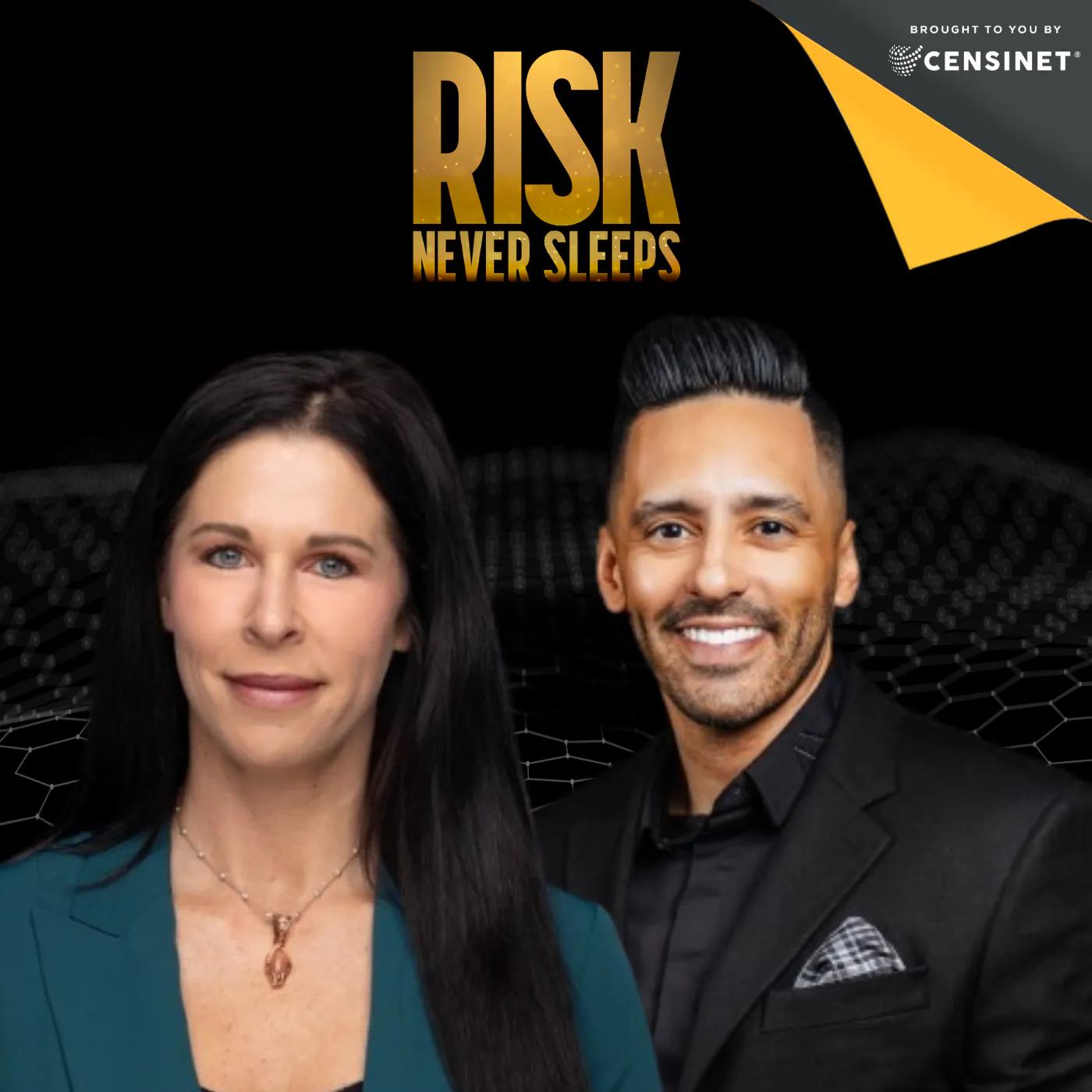
Risk Never Sleeps Podcast
Episode #213. The Myth of “Smart” Healthcare: Why People Still Matter Most, with Krista Arndt & Dan Spitzer
00:28:56
Loading summary
Transcript280 lines
- [00:00]
Krista Arndt
Foreign.
- [00:06]
Ed Gaudet
Welcome to Risk Never Sleeps, where we meet and get to know the people delivering patient care and protecting patient safety. I'm your host, Ed Gaudet. Welcome to the Risk Never Sleeps podcast in which we learn about the people that are on the front lines protecting patient safety and delivering patient care. We actually have both here in the audience, both roles. Right. The protector and the deliverer. You still practicing medicine? Apparently.
- [00:35]
Daniel Spitzer
They assigned me a PhD in an MD.
- [00:38]
Ed Gaudet
Oh, that's not.
- [00:39]
Daniel Spitzer
So I leveled up my Healthcare Information Security and Privacy Practitioner Daniel. Certification.
- [00:45]
Ed Gaudet
Pronounce your last name.
- [00:46]
Daniel Spitzer
Spitzer.
- [00:47]
Ed Gaudet
Spitzer.
- [00:48]
Daniel Spitzer
That's easy.
- [00:48]
Ed Gaudet
Oh, I thought there was an N in there from Sidereal.
- [00:50]
Daniel Spitzer
There is a PhD, though. There is a PhD.
- [00:54]
Krista Arndt
He's a doctor of nonsense. I believe him.
- [00:57]
Ed Gaudet
And that's Krista Arndt from St. Luke's University Health Network. University Health Network.
- [01:03]
Krista Arndt
Amazing place. And race car driver.
- [01:06]
Ed Gaudet
Race car driver. Questions in Pictionary. How was last night? You were out on the town. Dinner.
- [01:20]
Krista Arndt
Yeah. I want to say it was great. I'll tell you, this is my first time at Vive, and this is an innovation. Dinner was great. We actually ran into Carmelo Anthony. I don't think anybody really recognized him except for maybe you.
- [01:32]
Daniel Spitzer
Not until literally the elevator doors were shutting and I was like, that's Carmel.
- [01:37]
Krista Arndt
Well, he was really tall, so I assumed he played basketball.
- [01:39]
Daniel Spitzer
Now.
- [01:40]
Ed Gaudet
How tall?
- [01:41]
Daniel Spitzer
I think he's six, nine.
- [01:42]
Ed Gaudet
Nine.
- [01:43]
Krista Arndt
He made me look short and then I'm five nine.
- [01:45]
Ed Gaudet
Yeah, that's 60. Nine is tall.
- [01:46]
Daniel Spitzer
Yeah.
- [01:47]
Ed Gaudet
Yeah. Ever been on an elevator with a basketball team? Weird question. I have been.
- [01:53]
Daniel Spitzer
It's. I wasn't an elevator. So this is years ago. I worked at Kaiser Permanente in Oakland. North of Oakland. Bay area.
- [02:00]
Ed Gaudet
Oh, ok.
- [02:01]
Daniel Spitzer
So I was presenting to an offsite strategy meeting that we had at the Ritz Carlton over actually down south here. So I flew into Burbank, which is weird. Came over to the Ritz and then was walking down the hallway and I saw my entire favorite basketball team. Golden State Warriors.
- [02:18]
Ed Gaudet
Yeah.
- [02:18]
Daniel Spitzer
Walking right next to me. All of them. Like, all of them. There were 10 guys. They were all like two feet taller than me. But I'll never forget it. I was like, oh, there's Baron Davis, there's Monte Ellis. And then couple years later, they want to. Well, they didn't win anything. They had a really good season. That was it.
- [02:34]
Ed Gaudet
I was in an elevator with the San Antonio Spurs, I think the whole team, actually. And I realized it wouldn't do well in prison. Small space. So. All right, we're Going to do quick rounds of intros. Let's start with you.
- [02:50]
Krista Arndt
All right. My name is. What do you want to know?
- [02:53]
Ed Gaudet
You. You roll your organization, what you do?
- [02:55]
Krista Arndt
Oh, okay. I have a CVS receipt long of
- [02:59]
Daniel Spitzer
things like a 5 is wind. Yeah, I know exactly. Great.
- [03:02]
Ed Gaudet
We're going to have fun. We're just getting started.
- [03:04]
Krista Arndt
My name is Krista Arndt. I'm the Associate Chief Information security officer at St. Luke's University Health Network. So we are fully integrated health network. We have a medical school, nursing school, 16 campuses, just under 400 outpatient sites. I think we employ roughly 25,000 right now. Phenomenal.
- [03:24]
Ed Gaudet
Where?
- [03:24]
Krista Arndt
Out of Allentown?
- [03:25]
Ed Gaudet
Yeah.
- [03:26]
Krista Arndt
So I helped my ciso, who's amazing David, who pretty much built that program from scratch with our architect Dan, and I help him with strategy and then I make sure that I can operationalize it to not get in the way of their mission.
- [03:39]
Ed Gaudet
Excellent. Daniel.
- [03:41]
Daniel Spitzer
Daniel Spitzer talking. Doctor, apparently.
- [03:45]
Ed Gaudet
Doctor.
- [03:46]
Daniel Spitzer
Doctor. I am the SVP and GM at Sidearis. We are a end to end cybersecurity firm, really entrenched in healthcare, among other verticals, but especially healthcare, where we help customers like St. Luke's University Health Network and a bunch of others mature their security operations, help with the identity journey, and do a lot of fun stuff around. Purple teaming, red teaming, exposure management, and a bunch of other cool stuff.
- [04:13]
Ed Gaudet
You're doing a lot in the AI too?
- [04:15]
Daniel Spitzer
We are, actually. We just made an acquisition that's public now a few months ago, somebody called Lucidum that is really helping our customers understand and contextualize threats. And it's an AI based platform that is really, really cool. We're also leveraging AI in a very practical manner in terms of the buzzword agentic, but it's really neat.
- [04:38]
Krista Arndt
Non human.
- [04:41]
Daniel Spitzer
What?
- [04:42]
Krista Arndt
It's just non human.
- [04:43]
Daniel Spitzer
That's true.
- [04:44]
Ed Gaudet
Thank you.
- [04:45]
Daniel Spitzer
Yeah.
- [04:45]
Ed Gaudet
We're all going to be slaves to the machine, right?
- [04:48]
Krista Arndt
Machine? I don't care who you ask at St. Luke's they'll all agree they'll never replace people in healthcare. I will quote our amazing associate Chief Medical Information Officer Charlie Sonday, who gave a phenomenal speech in Philly last season explaining how the humanistic, I guess, part of healthcare is an asset and patient care. And I'll say this, you have to be very intentional about how you go about AI. If you thrive on human to human interaction, you always need, we call it human in the loop. You need that interaction action to truly treat patients. And you know, there are elements that AI can't detect about human interaction. That face to face. Really? Yeah, yeah, yeah.
- [05:28]
Ed Gaudet
We lose empathy, I think if we go 100 machines.
- [05:31]
Krista Arndt
Right.
- [05:32]
Ed Gaudet
And the Uber drivers do not like the Waymo cars, I'll tell you that much. Were you in a Waymo car?
- [05:37]
Daniel Spitzer
Talking about that? Yes.
- [05:38]
Ed Gaudet
Were you? Well, we were in one. And the Uber driver was very aggressive towards the Waymo car. Yeah. A little scary coming back from Little Tokyo yesterday.
- [05:48]
Krista Arndt
Yeah. I wrote in a Waymo back in Austin when I went to the Sailpoint Navigate conference for the first time and actually took a video. I sitting in the front seat and staring at an empty chair where a human is supposed to be definitely has a psychological effect on your trust. Hey, you know, is it going to slam on the brakes in time?
- [06:06]
Ed Gaudet
Yeah.
- [06:07]
Krista Arndt
Are those sensors going to fail?
- [06:09]
Ed Gaudet
Yeah. Scary.
- [06:11]
Daniel Spitzer
Wasn't it just in San Francisco where they had all the Waymos with their flashers on. Just didn't know what to do with the blackout.
- [06:18]
Ed Gaudet
Yeah.
- [06:19]
Daniel Spitzer
You know, I think it really highlights the fact that to your point, AI can only take it so far, still needs human intervention.
- [06:26]
Ed Gaudet
Yeah. This guy was screaming, kill the Waymos. Burn the Waymos.
- [06:30]
Daniel Spitzer
Oh, wow.
- [06:30]
Ed Gaudet
Yeah, it was a little scary.
- [06:32]
Krista Arndt
We offer therapy as part of our practice if he so needs it.
- [06:36]
Ed Gaudet
I have trauma from that experience.
- [06:38]
Krista Arndt
Lucky for you.
- [06:40]
Ed Gaudet
But afterwards we came back to the hotel and there was a Waymo waiting outside and there was a passenger. And we went up to the Waymo and I said, what's it doing? Just waiting here. And the gentleman said, oh, I'm. It's waiting for me. I can unlock it. See my initials up there on the street? All of a sudden it started going left him and he started chasing it down the street. It was. I wish I had my video on because I'm like, oh my God. It's like leaving him. He was waiting for a friend to come so that he could unlock the Waymo when they could get in. And then the Waymo just took off.
- [07:12]
Daniel Spitzer
That's amazing.
- [07:13]
Ed Gaudet
Anyway. Yeah. What's the most interesting thing you've seen so far over the last couple days?
- [07:19]
Daniel Spitzer
Krista, I'll let you go first. Let me think about something.
- [07:21]
Krista Arndt
So I'll tell you. I was here, I had the opportunity to present. So I know you don't have a lot of CISOs here. I know there are some. I've met a couple, but. So I felt a little bit out of my element. But then as a CISO, we try to think like CIOs and think like business practitioners. Okay, what can we do to make your life easier? Where is this technology going. So I think one of the things that really stood out to me with St. Luke's and especially us trying to cover underserved areas in rural communities is the presentation they did on digital health equity. So it's not a solution or an app that stood out to me. It's a mindset and a methodology.
- [07:59]
Ed Gaudet
Exactly. Yeah.
- [08:01]
Krista Arndt
And I think that's fascinating. And I have a takeaway. I actually discussed with my boss, my CISO over messenger, and we're going to address it when I get back to see if we can take everything one step further and make it easier for these folks to have parity when it comes to access and how you integrate education into that and gamify it and make it valuable to them to really reach those. So it helps the health system, but it helps the patient as well.
- [08:22]
Ed Gaudet
Daniel, how about you?
- [08:24]
Daniel Spitzer
You know, I'm going to borrow something that you said yesterday, and it's true. I've been to Vive most years. I think I. Last year, Nashville, where we got smitten out.
- [08:32]
Ed Gaudet
Yeah.
- [08:33]
Daniel Spitzer
Thankfully missed all that. I was there, but I left early before it all hit. I think the lack of strength that I'm seeing from the cyber community was a little interesting to me. I remember a few years ago it was named not the Cyber Zone, the Cyber Pavilion. Yeah. And it seemed to me there were just. There was a bigger presence. They were doing more things that were more intentional. With some of the security people, it was a bigger draw. I think that with the plethora of AI and how that has really change the landscape has kind of pushed security a little bit in the corner. Really physically, we're actually in the corner.
- [09:09]
Krista Arndt
But no one puts baby in the corner.
- [09:11]
Daniel Spitzer
No. So I would like to see that maybe change next year. I think there needs to be a little bit more intention on. I mean, we live and breathe cyber security, and so for us it's like, hey, where's everything at? And it was a little light.
- [09:27]
Krista Arndt
So I'm gonna follow up. This is a really good conversation because of the centric nature of particular event around AI innovation. And it really goes to a fight that I won't call it a fight. It's an obstacle that a lot of us have to overcome. St. Luke's is amazing when it comes to their support of our program and understanding it as a business driver, but still healthcare in general. And I hate generalizing, but seeing security as an impotence.
- [09:53]
Daniel Spitzer
Yeah.
- [09:53]
Krista Arndt
And I think a lot of that, it's not because it is, it's because of a Lack of understanding of what we do and how we have to continue to act as educators and push the narrative and get them to understand that we're here to be in the background and we're here to help enable. Yes, absolutely. There are things that can enable the business from a technology perspective that also adds security. And where does that fit into the business model?
- [10:17]
Ed Gaudet
You have to consider both. Right. Can't put patients at risk. You have to deliver care, but you also have to keep people safe. Right. Which is really important. Right. All right, let's get a chance to know you a little better. Rapid fire questions. You ready?
- [10:31]
Krista Arndt
No.
- [10:31]
Ed Gaudet
Riskiest thing you've ever done, Daniel?
- [10:34]
Daniel Spitzer
Bungee jump.
- [10:35]
Ed Gaudet
Really? Where?
- [10:36]
Daniel Spitzer
When I was a kid. Oh, I'll never do it again.
- [10:39]
Ed Gaudet
How close did you come to the ground?
- [10:41]
Daniel Spitzer
Close enough to where I won't do it again.
- [10:45]
Krista Arndt
Krista, you know my answer. It is F1 racing. I wish, sir. I do not have a wealthy family with $1 million to get into any F series to even remotely. They don't want me in an F1 car. That'd be scary. I go straight 495 through DC terrifies me. So lots of corners. Drag racing. So, I mean, I tell this story a lot, but it's my mistrust of even a phenomenal race car setup. So my husband and I build together. And so the riskiest thing I do, which is racing. And it's funny because when I worked in banking, one of the head of the PMO came up to me one day and was like, so tell me about yourself. Because I just started and I told him and he's like, you're like a walking irony. You are here to minimize risk, but you do very risky things.
- [11:37]
Ed Gaudet
Yeah.
- [11:37]
Krista Arndt
And I was like, yeah, I need to internalize that and you know, maybe get some therapy over it. But yeah, so I crashed. So the worst happened.
- [11:45]
Ed Gaudet
No broken bones or.
- [11:47]
Krista Arndt
No, thank God. Just a concussion. My back.
- [11:49]
Daniel Spitzer
Concussion, concussion.
- [11:53]
Krista Arndt
So the riskiest thing I do probably is put myself behind the wheel. And it's typically not you and your car. Look, there are always failures in system. Right. No matter how robust you try to make them. But I worry about also other drivers when you're going that fast. One misstep of another driver and they can come in your lane and you can be subject to crash.
- [12:11]
Ed Gaudet
So, yeah, sort of like cyber security. That is some ways.
- [12:15]
Krista Arndt
One misstep to talk about systemic risk. One misstep of a third party, a fourth party.
- [12:21]
Ed Gaudet
That's right.
- [12:22]
Daniel Spitzer
CPRM is right where I would think about that.
- [12:24]
Ed Gaudet
Yeah, exactly. Nice setup. You go back in time and tell your 20 year old self something, what would it be? Crystal start with you.
- [12:33]
Krista Arndt
I'm a huge proponent. I'm gonna get my feels now. I'm a huge proponent of women and cyber. I do a lot around it with WHIS and other organizations and I'll tell you so I was raised by my dad. My mom left when I was young and one of the things that I lacked he was an engineer. So it was natural to him to be like, oh yeah, you're take science, math, whatever. I'm glad he did that. But the feeling that I don't belong and the feeling that tech industry, it's very male dominant.
- [12:58]
Ed Gaudet
Yeah.
- [12:58]
Krista Arndt
Which is awesome. I cut my teeth in the DOD like I was surrounded by it, but just telling myself to stop having imposter syndrome. You're fine. You can't know everything. You're doing a great job. Just high five.
- [13:10]
Ed Gaudet
I hope my daughters are listening to that. Yeah, that's good.
- [13:13]
Krista Arndt
High five yourself every chance you get.
- [13:15]
Ed Gaudet
Yeah, it's hard.
- [13:16]
Daniel Spitzer
It is advice. I would say for me it would be ironically, take more risks. I think I took a bigger risk. As I was in my mid-30s, I co founded a security and compliance automation company and it was after I had already been safe in the corporate world. Yeah. So whenever you venture out into startup with a lot of unknowns and building something from scratch, it is scary. And so I think that if I develop some of those skill sets to absorb that risk and really calculate it early on, I probably would do things differently, more innovative things, you know, in my 20s versus 20 years later.
- [14:03]
Ed Gaudet
Yeah. One thing about you that's interesting that nobody knows. Daniel. Well, and we'll find out on the podcast now.
- [14:13]
Daniel Spitzer
Nobody knows. Yeah, I'm gonna go with my count of K, cuz.
- [14:18]
Ed Gaudet
Oh, see, there it is.
- [14:19]
Daniel Spitzer
People know that, but not everybody knows
- [14:21]
Ed Gaudet
how many kids I have.
- [14:22]
Daniel Spitzer
Eight children.
- [14:22]
Krista Arndt
What?
- [14:23]
Daniel Spitzer
Yeah. Yeah. Where's the mic? Can I drop the mic now? Y.
- [14:28]
Krista Arndt
He's physically creating his own company for the future.
- [14:31]
Ed Gaudet
Either that or how in the elevator.
- [14:37]
Krista Arndt
Dr. Spencer, you are not tall enough
- [14:39]
Daniel Spitzer
to create a basketball team. PhD. I can't shoot the rock. Well, so eight kids, how old? My oldest is 18. She just committed to Grand Canyon University where I actually serve on the technology advisory. Nice council.
- [14:54]
Ed Gaudet
Yeah.
- [14:54]
Daniel Spitzer
And my youngest is four months, so when leaving one's coming in.
- [14:59]
Ed Gaudet
Wait, you don't have a four month old.
- [15:01]
Daniel Spitzer
Yeah. What? I do.
- [15:03]
Ed Gaudet
What's the mix?
- [15:05]
Daniel Spitzer
Six girls and two boys.
- [15:07]
Ed Gaudet
So yeah, six girls. I have three Girls. And I feel like, whoa.
- [15:13]
Krista Arndt
I have one and I love her. She's an amazing child. And it's exhausting.
- [15:17]
Ed Gaudet
It's exhausting.
- [15:19]
Daniel Spitzer
Yes.
- [15:19]
Ed Gaudet
I feel like I have four wives at home, which is probably. Don't listen to that. We'll have to edit that out. Maybe. Don't laugh.
- [15:28]
Daniel Spitzer
Well, I only laugh because it resonates.
- [15:32]
Ed Gaudet
It's a scary laugh.
- [15:33]
Daniel Spitzer
That's what that little nervous laughter.
- [15:35]
Ed Gaudet
Oh, my gosh.
- [15:37]
Daniel Spitzer
Wow.
- [15:37]
Ed Gaudet
That's incredible. Well, yeah. Okay. One thing about you.
- [15:42]
Krista Arndt
Random love for super weird, random hobbies. On a whim. So.
- [15:48]
Ed Gaudet
Wow.
- [15:48]
Krista Arndt
I wrote a book in three months on a whim. Oh. It's called Permission to Be Real. It's just about bringing your authentic self and why you should not feel out of place even if you are not what you think the norm is. Because everybody views what the norm is differently and how it can actually add some positive. I love that. Yeah. Introspection, like, to a team and, you know, it's a. Diversity is what makes us go around in cyber security, which gives you different ideas. So I think that's cool. The hobby. So like that for me, I was like, oh, I want to do this, so I'm gonna go do it. And I did it. And apparently it doesn't entirely suck, the feedback I'm getting. Which is cool. I never did it to release it.
- [16:23]
Ed Gaudet
Yeah.
- [16:23]
Krista Arndt
And I like to take on weird, hot. Like, I decide one day I wanted to do ballet, so I tried ballet with my daughter. So I do that occasionally. Yeah. I'm as graceful as baby giraffe. And then archery. So I took up archery on a whim. I think that's interesting. I would never go hunting because I'm terrible.
- [16:40]
Daniel Spitzer
Yeah.
- [16:40]
Krista Arndt
At it. But again, it's. I enjoy.
- [16:42]
Ed Gaudet
We were in a cabin and there's a bow and an arrow. We're good, right?
- [16:45]
Krista Arndt
Yeah. It might not hit the target, but we'll try. I could smack someone.
- [16:49]
Ed Gaudet
Right? We're going to get food. We're going to rabbit or something.
- [16:51]
Krista Arndt
But I guess my love of being able to suck at something new and being okay. I love that cyber security and how perfect we feel like we have to be all the time.
- [17:00]
Ed Gaudet
Wow. Good answers.
- [17:02]
Daniel Spitzer
Therapeutic.
- [17:03]
Ed Gaudet
Sort of a follow on to that question. If you could do anything in the world, like assume your kids are all out. Graduated. They're having their own kids.
- [17:12]
Daniel Spitzer
I'm sorry.
- [17:13]
Ed Gaudet
And you're not doing.
- [17:14]
Daniel Spitzer
My wife and I are just dreaming about that day.
- [17:16]
Ed Gaudet
And you're not doing. You can do anything. What would you do?
- [17:20]
Daniel Spitzer
What are you most Passionate about investing and not in the sense of just being like a venture capital, but I think investing in our next generation. That's why I sit on actually shout out. I had a board meeting today with the AZ Cyber Council. Really cool program that is helping develop the next generation of talent in cybersecurity. And I love it. And to do something like full time would be amazing.
- [17:45]
Ed Gaudet
And what's that called?
- [17:46]
Daniel Spitzer
The AZ Cyber Initiative.
- [17:48]
Ed Gaudet
AZ Cyber, Yeah.
- [17:49]
Daniel Spitzer
We actually just branched out to be the national cyber initiative as well. So.
- [17:52]
Ed Gaudet
Nice you have a website. So we do, yeah. Okay, great.
- [17:54]
Daniel Spitzer
Both AZ Cyber and US Cyber Initiative.
- [17:57]
Ed Gaudet
Trista.
- [17:58]
Krista Arndt
I'll give you the answer I actually gave to our CIO when I was interviewing for this position. I love this because he asked me and I'm like, I have an answer for that. I would rescue dogs and we were just talking about this this morning, so I had a dear friend pass away. We got to know him through the racing world, but apparently up the east coast, like, he's really well known. I ran into someone at Titan 100 the other week who's like, oh, are you talking about so? And so I'm like, oh, how do you know him? Like, he did so much work for dog rescue. And I really had this idea off of that loss. It was such a huge hole that he filled in his area to intersect cybersecurity with animal rescue initiatives. But maybe enabling these people by teaching them technology that they have that they don't to buy, that would make their job easier or teaching them to be a little bit safer or even helping, like rural clinics. We do a lot of that in healthcare, so why doesn't that translate and resonate over to animals? I mean, so I, I gave this that's a great idea stat to Carter earlier when we were talking. And this is true. I just don't know the number right now. But what is the top thing that people pay money for they buy in the world right now, especially in the US specifically, is going to be pet stuff. Pet care, you know, bows.
- [19:08]
Ed Gaudet
Yeah.
- [19:09]
Krista Arndt
Food. Like food.
- [19:10]
Ed Gaudet
Yeah. Beds.
- [19:11]
Krista Arndt
People love their dogs and cats and
- [19:13]
Ed Gaudet
they do more than their people.
- [19:14]
Krista Arndt
Yep. Oh, yeah, Right. So why not help them?
- [19:18]
Ed Gaudet
Yeah.
- [19:19]
Krista Arndt
What they love.
- [19:19]
Ed Gaudet
Yeah. I love that idea and I think, like creating that connection with technology to understand, like, if you're adopting a dog for the first time and you're going through what are some of the challenges and you reach out and connect to other people. Is there anything like that?
- [19:34]
Krista Arndt
That's a good question.
- [19:35]
Ed Gaudet
Could be a business idea.
- [19:37]
Daniel Spitzer
I don't know.
- [19:38]
Krista Arndt
Where do we find the time?
- [19:40]
Daniel Spitzer
I know. We were just talking about tech. Where do we find the time?
- [19:42]
Ed Gaudet
Where do we find the time?
- [19:44]
Daniel Spitzer
Exactly.
- [19:44]
Ed Gaudet
No, good point. What advice would you have to people that are coming out of school that want to get into healthcare and maybe become an entrepreneur, start their own thing. Daniel.
- [19:54]
Daniel Spitzer
Oh, my first piece of advice, this is actually not just healthcare, but in general, building a business. Don't build it to raise capital and start getting funding. I think a lot of founders do that. I think if you learn how to build a business that serves customers well, you'll do well. And so I think that a lot of founders miss the customer value aspect.
- [20:18]
Ed Gaudet
Yeah. The purpose, why we're here. Exactly.
- [20:20]
Daniel Spitzer
You know, happy customers will keep buying what you're selling. Yeah. And they'll tell other customers about you as well. So it definitely resonates with healthcare. I mean, there's a lot of areas that you could go into, especially with the plethora, and use cases of AI. It's really interesting, actually, to see how AI has even morphed over the last couple years.
- [20:40]
Ed Gaudet
Yeah.
- [20:41]
Daniel Spitzer
Companies were created solely for, like, one small use case that GPTs now handles. And so it's. You have to really, you know, understand your customer needs and the problem.
- [20:54]
Krista Arndt
Yeah.
- [20:54]
Daniel Spitzer
And I think also a lot of founders miss that as well. It's. They'd like to create their own idea and then build it before they come, versus really having that product market fit and finding out, does this truly solve a problem and are you willing to pay for it and being open to
- [21:10]
Ed Gaudet
pivot if it doesn't.
- [21:11]
Daniel Spitzer
Absolutely. Right.
- [21:12]
Ed Gaudet
Which is really hard to do.
- [21:13]
Daniel Spitzer
I mean, a lot of pivoting happened post Covid after everything went, you know, virtual and digital house, and that created all these problems for us. On the cybersecurity side, it was interesting to see which company successfully pivoted and which ones just didn't.
- [21:26]
Ed Gaudet
Yeah.
- [21:27]
Daniel Spitzer
And they're not here anymore.
- [21:28]
Ed Gaudet
Yeah. I just.
- [21:29]
Krista Arndt
I want my mascot to be Ross from friends. When I hear you guys talking about pivoting, that is all I
- [21:37]
Daniel Spitzer
couch. Okay.
- [21:42]
Ed Gaudet
Okay. Question to you. You're delaying the answer.
- [21:46]
Krista Arndt
So there are a couple things, truthfully. And you can see I like to joke a lot what we do. So I'll answer two ways in cybersecurity. Specifically, add some levity to your day. It's okay. You just have to create those boundaries to know when you need to be serious and when you can let loose a little. It's a. A very stressful field. I know a lot of people right out of school want to get into it because they hear they make a lot of money. But the percentage of folks that I see really survive and thrive. There are people who do it for a couple years. And you're like, this is not for me. Because I didn't think it was going to be that difficult. And it's not always difficulty with the physical, like job aspect of it, but the cognitive load, I think is a lot and people don't account for. Which is why I started studying cyberpsychology, which is essentially how technology affects humans. Not really cyber related, but then I translate it to cyber. So the other thing, because you mentioned another book. God, I. There's someone who wrote a phenomenal book. I actually saw her speak. Dr. Mary Aiken. She's a consultant on all these big TV shows like CSI and all that.
- [22:50]
Daniel Spitzer
Yeah, yeah.
- [22:50]
Krista Arndt
She came out with a book and she actually created a cyberpsychology master's degree. What? And then connects it to cybersecurity.
- [22:58]
Ed Gaudet
So cool.
- [22:58]
Krista Arndt
Healthcare specifically, though, I think that's really important. Create connections. You covered mission. That is super important because healthcare in any capacity, no matter whether you're administrative or clinical, is not easy.
- [23:09]
Daniel Spitzer
Not one.
- [23:10]
Krista Arndt
But. And I really feel for. And the reason we're in it is we see how hard our clinical folks work just to, you know, you can affect someone's life so deeply if you make the wrong decision or, you know, if you're not there to support them. So I would say, you know, number one for me is create connections to make that easier for you to not only balance. I talk a lot about psychologically balance the load there that comes from patient care. My sister's a nurse and I hear a lot of stories. But the other thing is making connections to help you find your path. Healthcare is a very complex animal because humans are unpredictable and not everybody's diagnosis is even similar. Right?
- [23:50]
Ed Gaudet
Yeah.
- [23:51]
Krista Arndt
So making those connections to understand the processes, whether clinically or administratively, is really going to help you to thrive in healthcare and figure out what you want to do with yourself.
- [24:01]
Ed Gaudet
Yeah, yeah. Well said. You're on a desert island. You can bring five records with you.
- [24:06]
Daniel Spitzer
What would you bring? Records?
- [24:08]
Ed Gaudet
Yeah. Albums or movies, but I prefer records.
- [24:12]
Daniel Spitzer
Oh, I'll go movies.
- [24:13]
Ed Gaudet
Okay. You want to go movies? Okay. All right.
- [24:15]
Daniel Spitzer
We're just talking about this yesterday. You know what I'm gonna say? Meet the parents.
- [24:20]
Ed Gaudet
It's like, oh, my all time favorite.
- [24:22]
Krista Arndt
Is that why you work in healthcare?
- [24:25]
Daniel Spitzer
I'm not only a male nurse, I'm a male doctor. But it just, I could Watch it. It's a 20 year old movie now.
- [24:33]
Ed Gaudet
Yeah.
- [24:33]
Daniel Spitzer
Mind blowing.
- [24:34]
Ed Gaudet
Incredible.
- [24:34]
Daniel Spitzer
But going back, it's still funny. So you know, when you think about what you're going to keep doing on this desert island, it's got to work. It's got to make you laugh. I would pick that.
- [24:48]
Ed Gaudet
Okay, you got four more.
- [24:49]
Daniel Spitzer
Oh, gosh. That 20. Okay.
- [24:53]
Ed Gaudet
I'm always amazed at what brothers. How this. Oh, yeah. Brothers are soft stepbrothers. Yeah. You'll be laughing so much you'll miss the airplane overhead. To save you.
- [25:02]
Daniel Spitzer
I would throw step brothers in there for sure.
- [25:04]
Ed Gaudet
Step brothers is good.
- [25:05]
Daniel Spitzer
I'd say from. We pivoted. Think pivot. From movies. Any of the Foo Fighter albums. Oh, yeah.
- [25:14]
Ed Gaudet
The Pretender.
- [25:14]
Daniel Spitzer
Yeah. The Pretender is like one of my favorite albums of all time. So that's good.
- [25:19]
Ed Gaudet
Thought you're gonna say EDM or something crazy like that.
- [25:22]
Daniel Spitzer
No, I mean, I like all kinds of music, but I like to resonate with.
- [25:26]
Ed Gaudet
With the rock and roll. All right, good.
- [25:28]
Daniel Spitzer
With like the 90s rock.
- [25:30]
Ed Gaudet
Yeah. Oh, yeah. Like sound garden.
- [25:32]
Daniel Spitzer
Oh, Sound garden. Yeah, yeah.
- [25:35]
Ed Gaudet
Nirvana.
- [25:36]
Daniel Spitzer
Love Nirvana.
- [25:36]
Ed Gaudet
Yeah.
- [25:37]
Daniel Spitzer
I was just teaching my daughter it smells like teens for the first time. I'm like, you've never heard of this? And I was just like, she played guitar or. No, she sings, but she doesn't. She's not talented with instruments.
- [25:49]
Ed Gaudet
Okay.
- [25:49]
Daniel Spitzer
But I was like, oh, just listen to these lyrics. Listen. That's just such a great. So I actually pulled up the music video.
- [25:56]
Ed Gaudet
Yeah, that's a crazy. All those videos he did with crazy.
- [26:01]
Daniel Spitzer
No, she's 16, so she can take.
- [26:03]
Ed Gaudet
All right.
- [26:04]
Krista Arndt
I'm doing this in solidarity with my daughter and I'm not ashamed. Taylor Swift.
- [26:08]
Daniel Spitzer
Yeah.
- [26:09]
Krista Arndt
I love music. I think she's empowering.
- [26:11]
Ed Gaudet
And what a great lyricist.
- [26:13]
Krista Arndt
Like an amazing writer, a great business person.
- [26:15]
Ed Gaudet
Yeah, yeah.
- [26:16]
Krista Arndt
It's very talented. She understands it. It's gonna sound horrible. The. What is the new one? The K Pop Demon Hunters. So you. You bring the movie, right? But you get the music with it. I listen to it while I work out.
- [26:29]
Daniel Spitzer
And again, the music's incredible, isn't it? What is it? K Pop Demon Hunters. It's Hendrix. It's the.
- [26:37]
Ed Gaudet
The no list here.
- [26:39]
Krista Arndt
You are welcome. Yeah, you'll never get it out of your head.
- [26:42]
Daniel Spitzer
I don't know how you missed this one.
- [26:44]
Ed Gaudet
I dominated like all the charts.
- [26:48]
Daniel Spitzer
Phenomenal music. The music is so incredible. I heard it took like 10 years to make this.
- [26:53]
Krista Arndt
They're coming out with a new one. I want to say my daughter just asked. She's 6, like 20, 29 or something. It should be number two. 2020 got a couple years.
- [27:03]
Ed Gaudet
Do you know this? No, he doesn't know he's the music
- [27:07]
Krista Arndt
guy so he probably Landman the entire series.
- [27:12]
Ed Gaudet
He is a man his daughter and
- [27:14]
Krista Arndt
his wife but Ken does not I made a post about this while Tell me that doesn't resonate with you. So much of it. It's a really great and I'm like, this guy is living my life.
- [27:26]
Ed Gaudet
Yeah, he's really interest. He's an interesting cat.
- [27:30]
Krista Arndt
I'd like to thank David, my boss, for actually turning me on to that one. And now I can't put I can't wait for season three.
- [27:38]
Daniel Spitzer
Now this is where I'm having my head moment. I've never even heard of this Landman. Oh, no.
- [27:44]
Krista Arndt
Billy Bomb, sir, do not be an Ed. Okay, so you watch Huntrix K. Pop Demon Hunters. You watch Landman and I will argue until the death that that is one of the best series I've watched.
- [27:57]
Daniel Spitzer
You know, just saying.
- [27:58]
Ed Gaudet
Well, you've both been great. This is terrific. Any last minute thoughts or. We've covered so much.
- [28:06]
Krista Arndt
My, my brain capacity.
- [28:08]
Ed Gaudet
Stay safe, Cincinnati. All right, they had Goddard from the Risk Never Sleeps podcast. If you're on the front lines protecting patient safety and delivering patient care, remember to stay vigilant because Risk never sleeps.
- [28:23]
Krista Arndt
Foreign.
- [28:28]
Ed Gaudet
Thanks for listening to Risk Never Sleeps. For the show, notes, resources and more information and how to transform the protection of patient safety, Visit us@SenseInet.com that's C-E-N-S-I-N-E-T.com I'm your host, Ed Gaudet. And until next time, stay vigilant because Risk never sleeps.