← Risk Never Sleeps Podcast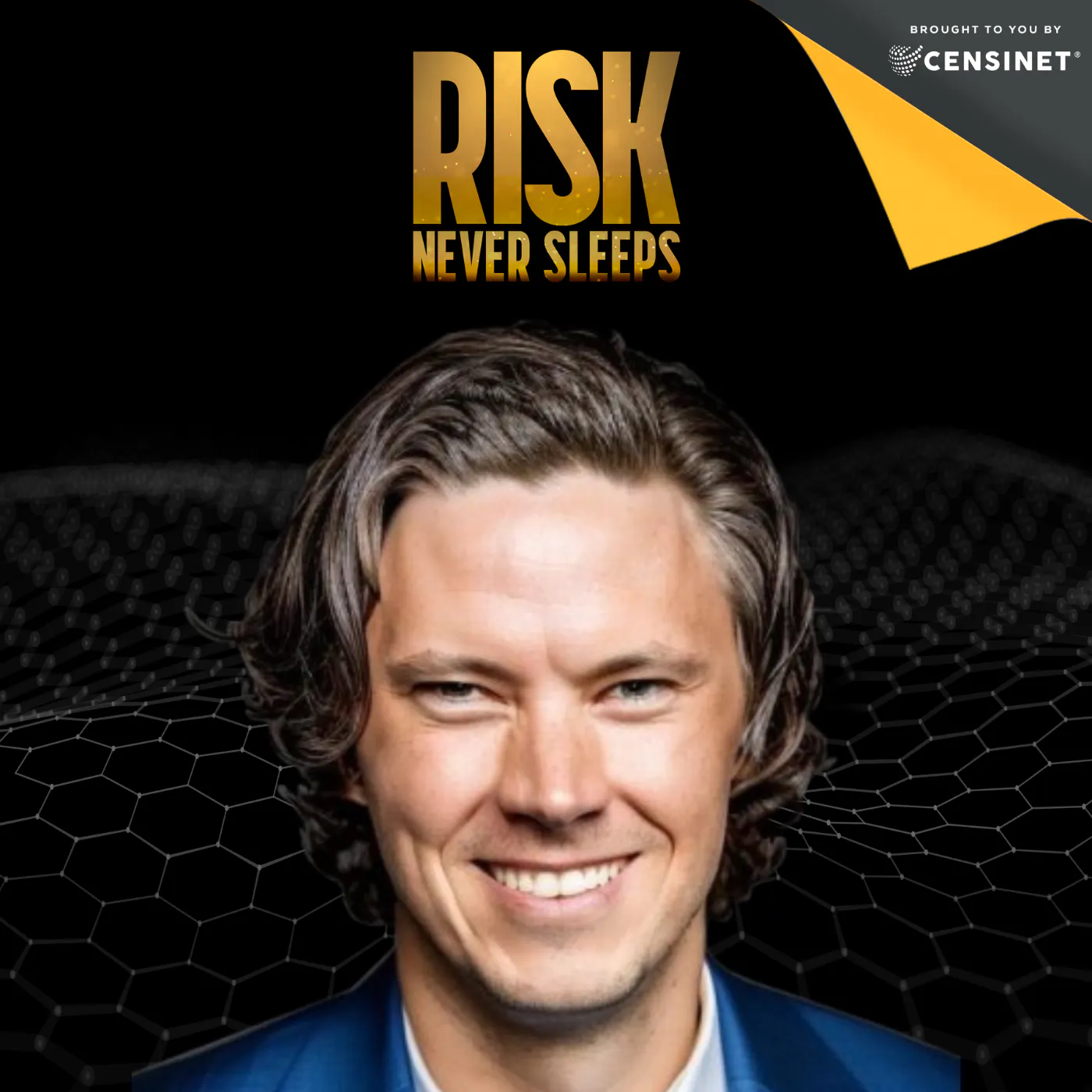
Risk Never Sleeps Podcast
Episode #222. Drowning in Data, Starving for Clarity, with Roelf Kuitse, Director of Customer Success and Experience at Censinet
00:19:31
Loading summary
Transcript286 lines
- [00:00]
A
Foreign. Welcome to Risk Never Sleeps, where we
- [00:08]
B
meet and get to know the people delivering patient care and protecting patient safety. I'm your host, Ed Gaudet.
- [00:18]
A
Welcome to the Risk Never Seems podcast in which we learn about the people that are on the front lines protecting patient safety and delivering patient care. I'm Ed Gaudet, the host of our program, and today I am graced with the presence of Ralph Coutts. Do I pronounce your last name correctly? Probably do not. What is it?
- [00:37]
C
No, it's Kautza.
- [00:39]
A
Kautza?
- [00:39]
C
Yep.
- [00:40]
A
How long have I known you?
- [00:42]
C
Oh, geez.
- [00:42]
A
A long time.
- [00:43]
C
Over 10 years at this point.
- [00:45]
A
Koutsa. I never knew that.
- [00:47]
C
That's all right.
- [00:47]
A
I mean, I don't even say Rolf correctly. I say Ralph usually.
- [00:51]
C
Yeah, I know, which is okay. I'm so awful. We've known each other long enough that you forgive me. Yeah, I totally forgive. And I know that you can't just. Just.
- [00:59]
A
I can't. I can't help myself.
- [01:01]
C
That's fine. You could be calling me cutesy.
- [01:04]
A
I would never do that.
- [01:05]
C
Yeah.
- [01:05]
A
Okay. Although you do have incredible hair.
- [01:07]
C
Well, thanks.
- [01:09]
A
I was just commenting on your hair earlier. God, I wish I had that hair. Maybe half of it even.
- [01:15]
C
Well, I mean, like the left half. I would think you just do a nice kind of comb over.
- [01:21]
A
And that suit you have on too. That's the sensitive blue that is.
- [01:24]
C
Yeah.
- [01:24]
A
All right, let's start off with sharing a little bit about your current role in your organization.
- [01:29]
C
Sure. So, heading up customer success at Sentinet. So all post sale teams report up to me. Helping our customers get maximum value out of the solution, helping them just redefine their TPRM workflows and thinking about how they really need to just focus in on those risks that really matter. Not like creating this ocean of risk that they're just going to drown in. Yeah.
- [01:53]
A
And so how do they do that?
- [01:54]
C
They do that through following. Kind of like we have the tools that they need in order to get to that risk. Right. Whether it be us ingesting their products and vendors and saying, hey, these are the ones that have the highest systemic risk, you should focus on those first. Then they use our built in questionnaires that have been curated with over 50 years of experience on our teams to know which questions to ask the vendors that can lead you to the corrective actions that you're going to need to take to follow up on. So, I mean, I think that they do it just by following the best practices. And we have been doing the Best practices for a long time now.
- [02:32]
A
It's been a long week, hasn't it?
- [02:33]
C
It has been a very long week. Oh my goodness.
- [02:35]
A
And you were on stage earlier. I saw you with a provider.
- [02:38]
C
Yeah, yeah. I was up there with Brian from Faith Regional and we were talking about our benchmarking study that we recently did and some of the preliminary findings. It was a great discussion. Took the whole time. Had some questions from the crowd.
- [02:51]
A
Any surprises on the data?
- [02:53]
C
No, I don't think so. You know what I like about the data is that it actually, I think gave people that confirmation as to what they already thought. They know that a lot of the things that came out of the data was around AI governance and the lack of maturity in AI governance and the data supports that. Right. So people were kind of nodding along and like, yeah, okay, this makes sense. You know, it wasn't just the spidey sense that was telling us we're doing something wrong. It's.
- [03:21]
A
We're not the only ones. Yeah, Behind. Like everyone's behind.
- [03:24]
C
Yeah, exactly.
- [03:25]
A
Yeah.
- [03:25]
C
Yeah.
- [03:26]
A
I guess reassuring in some ways.
- [03:28]
C
In some ways, yeah. But it's also, once you know that that really is the problem, then you can start working on a solution for it. Right?
- [03:34]
A
Yeah.
- [03:35]
C
So you can start thinking about how are we going to do this better now.
- [03:38]
A
You spent your career in healthcare.
- [03:41]
C
Yeah, the entire thing. I took one wandering year.
- [03:43]
A
Oh, what was that? Tell me what, the wandering year?
- [03:45]
C
Yeah, the one wandering year. I thought, you know what, I am hot stuff, stuff in this customer success market. And so I'm going to go and try a different space. So I joined a small mobile web app development company that did open source software development. And then I came running back. I was helping Popeyes sell chicken sandwiches and Seriously? Yeah, no, seriously. Like they were like, they'd like call us up and they're like, hey, people are getting shot because we don't have enough chicken sandwiches. And like, we need an app that tells people when we have enough chicken sandwiches at our locations. Can we use your stuff? And like, we're like, sure, yeah. And then. But it was at that moment that I was like, why am I helping people eat chicken sandwiches and not get shot? When I was in healthcare.
- [04:32]
A
Yeah, yeah, I'll get them when they're in the hospital.
- [04:35]
C
That's right. Yeah. I kind of wanted the aftermath, right? Yeah. Cardiac events and the gunshot ones.
- [04:41]
A
So customer success, is that where you started?
- [04:44]
C
No, I started more on the implementation side. Okay. So always been fascinated by technology, but my mom was a nurse, my dad was A cio. And so this combination of things. And so I loved being kind of an implementation consultant at first, teaching nurses. Like one of the first things I had to do was teach nurses how to use a computer.
- [05:06]
A
Yeah.
- [05:06]
C
How to use a mouse, how to use a keyboard. But then moved into more of an engineering role. More configuration.
- [05:12]
A
Yeah.
- [05:13]
C
Database, backend stuff. But then moved into customer success when SaaS really took over.
- [05:20]
A
Yeah.
- [05:20]
C
You know, mobile app development and that sort of thing.
- [05:23]
A
What was your first customer success job?
- [05:25]
C
My first customer success job. Wait, it's a stage question. This feels like it was with you, Ed.
- [05:31]
A
Oh, no.
- [05:33]
C
Who knew?
- [05:34]
A
You had no idea? I didn't actually.
- [05:35]
C
Yeah. So. No, it was because. It was because with Cortex at Improvado, we.
- [05:40]
A
Oh, no kidding, right?
- [05:41]
C
So we. Well, we started as like an implementation team. Yeah. And then I came to. To you and to Karina and to some other folks at Improvada, I said implementation services for a SaaS based solution. Makes no sense.
- [05:54]
A
Yeah.
- [05:54]
C
Because the standup is not hard, it's the adoption. And adoption is where. That's where you show the value in a SaaS based solution. So we created the first customer success. Org at Improvada and then we rolled that across the whole company and built that program there.
- [06:12]
A
We did, didn't we?
- [06:13]
C
Yeah, yeah.
- [06:14]
A
We're innovators.
- [06:14]
C
We are. You know what? That's what we do. We build.
- [06:16]
A
I forgot all about that.
- [06:18]
C
Yeah, we had that big workshop at the Memory. Yeah, we had all the stickies. Yeah. You know, Aaron Miri was there. I don't know.
- [06:26]
A
Yeah, that's right.
- [06:27]
C
Absolutely.
- [06:27]
A
That was good times.
- [06:28]
C
That was so much fun.
- [06:29]
A
Yeah.
- [06:29]
C
The first workshop I ever ran.
- [06:31]
A
Really?
- [06:31]
C
Yeah.
- [06:32]
A
You're. You're a natural at it.
- [06:34]
C
Hey, well, yeah. Yeah, a lot of googling. We didn't have chat GPT back then. I couldn't ask it. How do you do this?
- [06:42]
A
What was that acronym?
- [06:43]
C
Layer or land? The layer model.
- [06:45]
A
The layer.
- [06:45]
C
Land, adopt, expand, renew.
- [06:47]
A
Yeah, I remember that. I remember putting up there going, going, oh, framework guy. This guy's a framework guy.
- [06:51]
C
Yeah, exactly.
- [06:53]
A
You still use that model?
- [06:54]
C
I mean, it's kind of a principal model. I think you can break it out into different pieces.
- [06:59]
A
Yeah.
- [06:59]
C
But I. I mean, I think you. Any SaaS solution, it's all about getting the customer on board as fast as possible, getting that time to value, and then getting them adopting the solution.
- [07:08]
A
What excites you most about AI?
- [07:10]
C
I think for me, it can take away a lot of the mundane stuff. Like I love the idea of I can focus on the things that I really love doing and the things that I like to spend my brain power on. I always feel like, oh, I feel like I could automate this more with AI. I think as AI advances, being able to quickly get to those solutions. Because I think right now everybody says, oh, you can use AI for this, you can use AI for that. But then you get into it and it's like, okay, that's going to be a little bit more complicated than sure that it does all the things for you. But I really do think that we're getting to a point very quickly where it's just going to be able to automate just the things you don't want to have to do. So.
- [07:48]
A
Yeah. All right, you can go back in time and see your 20 year old self. What would you tell him? Let's see, we're off at 20.
- [07:57]
C
Yeah, me at 20. Let's see.
- [07:59]
A
Did your hair longer?
- [08:00]
C
No, it was a lot shorter.
- [08:01]
A
Was it? Oh, yeah, it's super short.
- [08:04]
C
Probably tell him to start growing out his hair.
- [08:07]
A
Okay.
- [08:10]
C
No, I mean, I think one thing.
- [08:11]
A
What are you, like Samson or something?
- [08:13]
C
Yeah, exactly. It gave me strength. No, I think it would be like, don't take life as seriously as you think you need to. Yeah, right. Like, I think there's just, you know, the survivability is a lot higher than you think it is. And I think that in my younger years I was chasing the like, the acceptance, the like, oh, does someone like that. I just did that.
- [08:34]
A
Or not.
- [08:35]
C
And it was really. It was more about like. No, you just, you don't have to do that. Yeah, Just stand up for what you think is right. And if someone tells you you're wrong, learn why.
- [08:42]
A
Yeah, I know a lot of people like that. They still do that. I'm just kidding. All right. It's been a long week.
- [08:53]
C
It has been a lot. Hey, let me ask you.
- [08:55]
A
Yeah, Ask me a question.
- [08:56]
C
Yeah, yeah. So I really want to know. I was thinking about this.
- [08:59]
A
Oh, you're going to turn the tables.
- [09:01]
C
I know I am. Yeah. I'm taking over. Okay. The Senseinet logo, where the heck did that come from?
- [09:06]
A
The logo?
- [09:07]
C
Yeah.
- [09:08]
A
In terms of what? The colors, the, like the little dots. Oh, the dots. Well, it was based on the network, so it's really just a representation of the network nodes, the connections, if you will, without being overly obvious. Obvious.
- [09:22]
C
And no lines.
- [09:24]
A
Yeah, no lines.
- [09:25]
C
Right.
- [09:25]
A
Yeah.
- [09:25]
C
Right.
- [09:25]
A
Yeah.
- [09:26]
C
I want to bet I told Paul that's what it was.
- [09:28]
A
What did he say?
- [09:30]
C
He said, I have no idea.
- [09:33]
A
Paul said that?
- [09:34]
C
Yeah, he said that.
- [09:35]
A
God. He's the guy building our products.
- [09:38]
C
I mean, I'm not saying that that influences his ability or changes his ability to build products.
- [09:42]
A
That's the same. That's good.
- [09:43]
C
He's not good at marketing.
- [09:47]
A
What's the riskiest thing you've ever done?
- [09:49]
C
Oh, I've done some risky things.
- [09:50]
A
All right.
- [09:51]
C
Okay. So skydiving was intense.
- [09:53]
A
Whoa. How many times?
- [09:55]
C
Just once.
- [09:56]
A
I'm done with this.
- [09:57]
C
I was like, ah, it was fun.
- [09:58]
A
Pretty intense.
- [09:59]
C
Yeah. I would do it again. Yeah, like, it was a lot of fun.
- [10:02]
A
Tandem.
- [10:03]
C
Yeah, yeah, yeah, yeah, yeah. It's very close to whatever his name was. But, you know, I. I like to scuba dive, so I've done some pretty.
- [10:10]
A
Yeah.
- [10:11]
C
So probably like pushing my air to like 100 psi, which is like, no more air.
- [10:18]
A
So how far down is that?
- [10:19]
C
I mean, deepest I've gone is like 1:35.
- [10:23]
A
You need enough air to come back. And you can't go up too fast.
- [10:26]
C
Correct. Yeah.
- [10:26]
A
You don't want the bends.
- [10:27]
C
That was the thing is, like, I. I one time, like, I was hunting lionfish on a wreck and my buddy disapp and I realized that I was like past my ndls and I was like, well, yeah, I don't know where he went. Like, so I started going. I did find him. He was up top. So he was like, I was running low on air and I couldn't find you. And I was like, oh, well, great. So, yeah, I mean, those. That's pretty risky. But that was fun. That was a lot of fun.
- [10:55]
A
Outside of your day job, what are you most passionate about? What would you be doing if you could do anything?
- [11:00]
C
That would be scuba diving. Yeah, yeah, absolutely.
- [11:02]
A
Really?
- [11:03]
C
Yeah. That's my passion.
- [11:04]
A
Why?
- [11:05]
C
I love being just under the water with a bunch of. It's like a different world. Yeah, right.
- [11:12]
A
You ever see a mori eel?
- [11:13]
C
Oh, yeah. You have eels? Yeah. I went. I took all three of my girls in a shark diving thing. We saw five different species of sharks.
- [11:20]
A
Tell me.
- [11:21]
C
Yeah, so we saw. We dove with great hammerheads. The 17 foot great hammerheads. We cage dove with bull sharks. Three bull sharks.
- [11:30]
A
They're aggressive.
- [11:31]
C
Yeah. That's why you're in the cage.
- [11:34]
A
Shark in the. You're in the cage.
- [11:36]
C
Yeah.
- [11:37]
A
Cage in the water.
- [11:37]
C
Right?
- [11:38]
A
Shark in the water.
- [11:39]
C
Exactly. Yeah. And they're throwing bait in from up top. Right. So the sharks are like really riled up.
- [11:44]
A
What?
- [11:45]
C
Yeah, I mean, I've dove with a lot of reef sharks. Black tips, nurse sharks are like puppies
- [11:50]
A
yeah, you know, nurse sharks.
- [11:51]
C
Nurse sharks, yeah. But yeah, I love doing that. And then I work with NOAA once a year. NOAA and Texas Wildlife foundation to remove lionfish from the flower gardens reefs in the Gulf of Mexico.
- [12:04]
A
I did not know that.
- [12:05]
C
Yeah, I work with a research team. I owed the second. Well, it's. I missed the world record for the largest lionfish ever caught by 4 millimeters.
- [12:15]
A
What is it about lionfish that we don't like?
- [12:17]
C
They're invasive. They eat every single good fish on a reef.
- [12:22]
A
Really?
- [12:22]
C
Every single line. It's just because they're hungry. Starving.
- [12:27]
A
Starving lionfish.
- [12:29]
C
Stupid lionfish. Yeah, they're.
- [12:31]
A
They're pretty fish.
- [12:32]
C
They're pretty. They have those like fins, those feathers that come off of them. Cool. But they're also delicious.
- [12:38]
A
Really?
- [12:39]
C
Yeah, yeah. Highly venomous, but they are. Oh really?
- [12:41]
A
They can bite you.
- [12:42]
C
They have these spines. Oh, this so. But if you cut all those off, they're good eating.
- [12:49]
A
Yeah. A good eating.
- [12:50]
C
Yeah. Now I'm hungry.
- [12:52]
A
You ever have blowfish?
- [12:54]
C
I have not had blowfish.
- [12:56]
A
What's the most exotic food you've ever eaten?
- [12:59]
C
Probably a chocolate covered grasshopper. Really?
- [13:04]
A
That's exotic.
- [13:05]
C
I mean kinda, right? It's not something you eat a lot, I guess.
- [13:08]
A
I don't know.
- [13:10]
C
I don't know. I mean I've had. I don't know is exotic more like your urchin. I've had urchin.
- [13:15]
A
I love sea urchins. You ever have it live?
- [13:18]
C
I haven't had it live uni.
- [13:19]
A
It's phenomenal.
- [13:20]
C
I haven't had life, but I've had it.
- [13:22]
A
If you can ever have it, get it. Yeah, it's amazing. You ever get that weird vibration on your tongue after eating uni?
- [13:27]
C
Never had that. I don't remember if I had that.
- [13:29]
A
If you had live, only you would know because it's.
- [13:33]
C
Well, next time I'm diving. I see urchins all the time. I'll just grab one.
- [13:36]
A
Yeah. Crack it open, crack it open, eat it, boom, you're there.
- [13:39]
C
Oh yeah.
- [13:41]
A
Just don't eat the blowfish alone. Yeah. Share a fun fact about you that nobody knows or not. Maybe not many people know. The reef thing, that was no reef thing was pretty cool.
- [13:52]
C
Yeah.
- [13:53]
A
But I'm gonna ask another one because you probably have another one.
- [13:55]
C
Didn't. Let's see. Does a lot of people not know
- [14:00]
A
you have to edit this Dead time out.
- [14:02]
C
I know, I'm sorry. I'm making it easy for you. Just look for the flat line.
- [14:07]
A
You have five children. I do not Have I always say five, though? Don't. I see you laugh.
- [14:12]
C
I have three children. I have three girls. They are all scuba diving certified since they were 10.
- [14:17]
A
No, see, that's a fun fact.
- [14:19]
C
That's a fun fact. Yeah. I mean, I drive a Corvette in the summer.
- [14:22]
A
You do?
- [14:23]
C
I do.
- [14:23]
A
Corvette summer is a great movie.
- [14:25]
C
I know. Yeah. And it's red and it's a convertible. What year? Well, it's one of the best years. Stingray. Well, no.
- [14:32]
A
Oh, I.
- [14:33]
C
Okay, those are a little slow. Hey, what. What year is. Hi. Mine's a 2004. Oh, so it's the last year of the C5.
- [14:41]
A
Oh, was that a V8? Huh? Does.
- [14:43]
C
Oh, yeah.
- [14:44]
A
Damn.
- [14:44]
C
Oh, yeah.
- [14:45]
A
That's a big engine for that car. Great car. All right. You're on a desert island. You could bring five records with you. What would they be?
- [14:53]
C
I knew you were gonna ask me this question.
- [14:55]
A
When you're ready, you're prepared. Look at him. He's pulling his notes up, folks.
- [14:58]
C
I mean, because, like, I knew you were gonna ask for albums, and I was like, you know what? I have a Spotify playlist, but I do have five albums. Okay, great. Don't worry. All right. Eve 6's Eve 6 album.
- [15:11]
A
Okay. Name a song off of that open road song. Oh, okay, good.
- [15:16]
C
Yeah.
- [15:16]
A
Not the most popular one, but.
- [15:18]
C
No, but I love that song because the first car I ever bought was a Saab 900 with my own money.
- [15:25]
A
Wow.
- [15:25]
C
I bought it. I got the guy down to $625.
- [15:29]
A
Still remember?
- [15:31]
C
Yeah. Because it was my money first. That was the most money I'd ever spent up until that point. Right. And my dad had to drive it home because of stick shift. Oh, right.
- [15:40]
A
Wise for you to buy a stick shift that you couldn't drive.
- [15:42]
C
But I thought it was cool. I thought, this is gonna be great. I'll learn, I'll learn. I'll just jump and I'll just go. But it had a broken side view mirror. And there's a lyric in that song that said, driving along with my broken side view mirror. And I was just like. It's just.
- [15:57]
A
Yeah.
- [15:58]
C
So that was my.
- [15:58]
A
It met you where you were in your journey.
- [16:00]
C
Yeah, that was my theme song. Love that car. Then blink 182, enema of the state.
- [16:04]
A
Oh, nice. Yeah.
- [16:06]
C
Then probably Evanescence Fallen soundtrack. You know, when I'm feeling down.
- [16:10]
A
Yeah, yeah, yeah.
- [16:12]
C
Then when you're feeling down, you'd put that on. It's kind of like.
- [16:15]
A
What, to feel even more down?
- [16:16]
C
Yeah, kind of just to be like,
- [16:18]
A
take it down to the bottom.
- [16:19]
C
Yeah. We're on a desert dessert.
- [16:21]
A
You read Albert Camus as well?
- [16:22]
C
Yeah. Just bury my head in the sand. Kafka Day, Eat a blowfish.
- [16:29]
A
Okay.
- [16:30]
C
What else hinder is extreme behavior.
- [16:32]
A
Okay.
- [16:33]
C
And then All American Rejects is Move along.
- [16:36]
A
Really?
- [16:36]
C
Yeah.
- [16:37]
A
All American Rejects.
- [16:38]
C
Yeah. I like that. I like. Do you know that album is a good album.
- [16:42]
A
You're an interesting guy, Ralph. Or Ralph, whatever. What advice would you have to someone coming out of school that wants to get into customer success or healthcare or.
- [16:55]
C
I t. I would tell them to someone who's, like, in school. I would love to get advice to someone who's in school because I think the thing that I learned the most from in school was participating in, like, an improv troupe and doing things on stage and, like, learning how to adapt to other people in a environment. Right.
- [17:20]
A
Embrace your dread.
- [17:21]
C
Yeah. I mean, it's like. Well, and you have to practice that act of empathy and being able to also take control of the conversation and that sort of thing. So if you're going to want to be in customer success, you have to know how to meet the person where they're at and then take them your direction.
- [17:42]
A
Yeah.
- [17:42]
C
Because if you just ride along with them, you're not driving any additional value. So I would say that that would probably be my advice. Like, you can take all the marketing classes, the finance classes, those things you want, but you have to learn how to adapt to other people.
- [17:58]
A
Yeah, I love that. So speaking of adapting to other people, how was this for you? What you expected?
- [18:05]
C
What, this podcast? Yeah. Like, sitting here? Yeah. I mean. Yeah.
- [18:09]
A
You don't seem nervous.
- [18:10]
C
No, I'm not nervous.
- [18:11]
A
You almost seem, like, distracted.
- [18:14]
C
Distracted?
- [18:15]
A
I'm just kidding. You know, other folks that were on here that preceded you were nervous.
- [18:24]
C
Oh, I'm not nervous.
- [18:26]
A
Yeah. Not the last person, but the two other people.
- [18:29]
C
I wouldn't expect the last person to have been nervous. If you said she was nervous, I
- [18:33]
A
would have said she was not nervous. No, I was nervous, actually. I was nervous.
- [18:40]
C
Oh, it's funny.
- [18:42]
A
What are you doing tonight?
- [18:43]
C
I don't know yet. I'm tired. But, yeah, I was going to see if we're going out or something.
- [18:47]
A
Yeah, we should grab dinner.
- [18:48]
C
Yeah, I would like that. Fun.
- [18:50]
A
Risk number Sleep's podcast. If you're on the front lines protecting patient safety and delivering patient care, remember to stay vigilant because risk never sleeps.
- [19:03]
B
Thanks for listening to Risk Never Sleeps for the show. Notes, resources and more information and how to transform the protection of patient safety. Visit us@SenseInet.com that's C-E N S I N E T dot com. I'm your host, Ed Gaudet. And until next time, stay vigilant because risk never sleeps.