Podcast
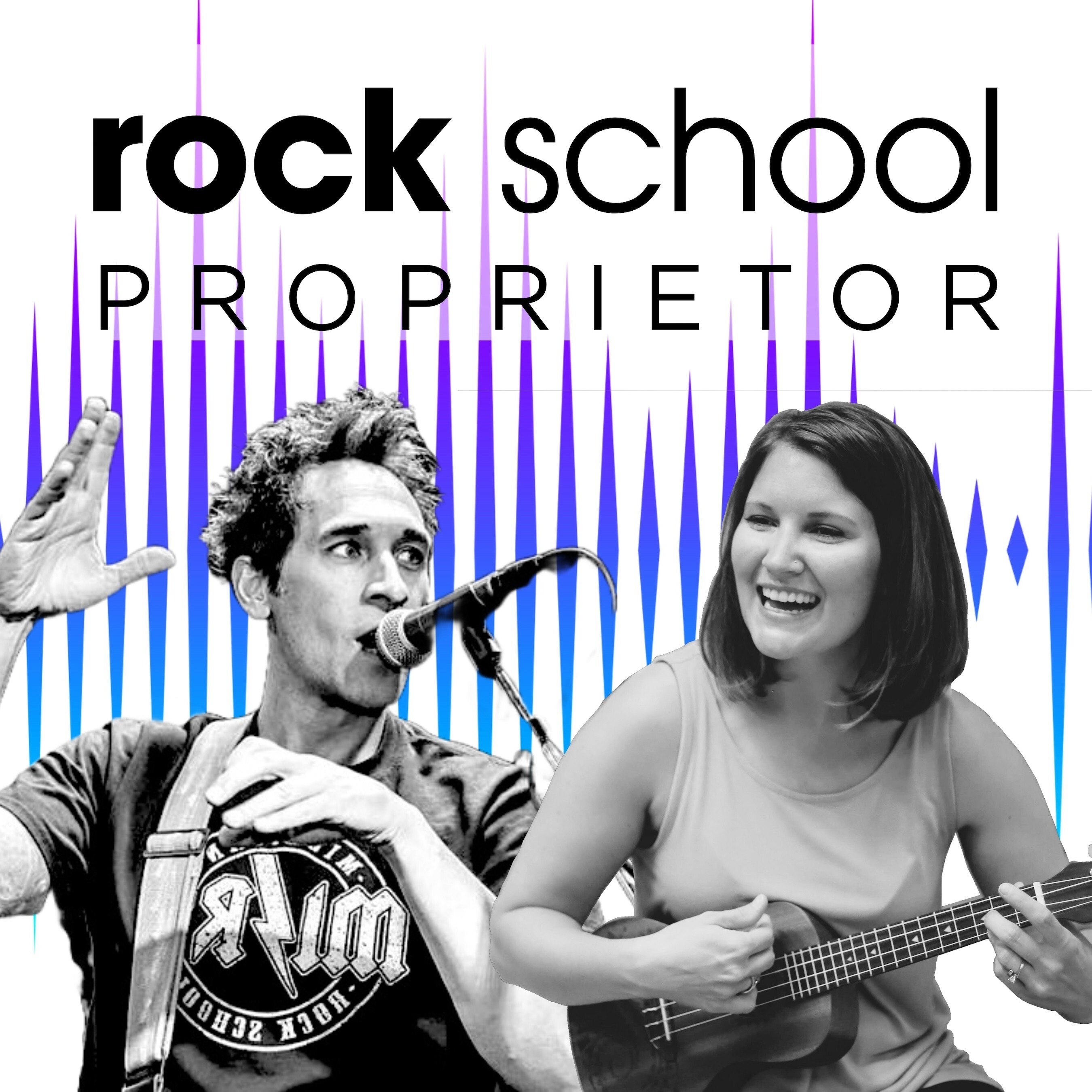
Rock School Proprietor Podcast
Hosted by John Kozicki · EN
Visit http://RockSchoolPropietor.com for FREE resources!
Teaching you the secrets of running a successful rock band program, or just how to create an inspiring community centered on making music in your music lesson business. Host John Kozicki played in punk rock bands and went to school for business, while co-host Mandy York studied vocal performance and sang classical music. With vastly different background, these friends both run successful music lessons businesses and decided to record their conversations. From philosophy and culture to teaching and business strategy, each week John and Mandy turn their experiences into practical advice you can use to improve your music lesson business.
31episodes
Episodes
Newest firstAll episodes
86: Jeff Homer | How to Sell Your Music School
Mar 1800:51:57Tap to summarizeThinking of selling your music school? Or maybe you'd just like to have that option someday? In this episode, John Kozicki (Michigan Rock School and RockSchoolProprietor.com) speaks with Jeff Homer, founder of Ensemble Performing Arts. Jeff's built a company that runs over 100 music schools, all through acquisitions from independent owners. In the conversation Jeff explains how to value a studio, find a buyer, and walks us through Ensemble’s acquisition process from letter of intent to integration, all while preserving each school's legacy and community ties. In this episode: Jeff's vision for Ensemble and how maintaining community ties within each of the schools under the Ensemble umbrella is key to success. Understanding where most music schools are already great, and how Ensemble "takes the baton" on back-end task like hiring, accounting, taxes, etc. Marketing and growth strategies that Ensemble uses that any school can apply today. What the acquisition process and exit planning look like when Ensemble purchases a music or performing arts school. Jeff also shares practical tips to make your studio attractive to buyers—clean financials, empowered staff, and smarter paid marketing—and outlines what sellers and staff can expect during and after the transition. Be sure to check out Part One of this conversation with Amie Nunez from Ensemble Performing Arts here -- 85: Amie Nunez | Building a Sellable Music School -------------------------------------------------- Your ratings and reviews on Apple Podcast and Spotify are always appreciated! Join our private Facebook group, "The Modern Music School," a community for like-minded professionals to connect and share insights. Looking for a simple and effective guitar curriculum that includes FREE instructor training and support? Consider John's book, Complete Guitar Strumming.
Transcribe →85: Amie Nunez | Building a Sellable Music School
Mar 1100:57:39Tap to summarizeIn this episode, John Kozicki (Michigan Rock School and RockSchoolProprietor.com) and Mandy York (Music Time of Milford) talk with Amy Nunez from Ensemble Performing Arts on how to make your music school both sustainable and saleable. This is part one of a two-part series with the team from Ensemble about what selling and purchasing a music school is like. Amie is a corporate development manager at Ensemble and shares her journey from music school owner to facilitating studio sales and exit strategies. As a former school owner herself now working for Ensemble Performing Arts she has a unique perspective. She explains valuation basics, what buyers look for, and simple steps (like a ‘vacation strategy’) to test and strengthen your team and systems. In this episode: Learn how developing a studio exit strategy and a focus on valuation can benefit your music school now, even if you never decide to sell. Amie explains key indicators and links between financial health and profitability of music schools How a 'vacation strategy' can work as a test-run for longer-term exit strategy. How the keys to building a scalable and sustainable business model give owners long-term options to sell, but also freedom and flexibility to be more fluid in the everyday operations now. Learn why reducing owner dependency, documenting systems, training instructors, and cleaning up finances are essential—not just for an eventual sale but for better day‑to‑day operations. In Part Two we speak with Jeff Homer, founder of Ensemble Performing Arts. -------------------------------------------------- Your ratings and reviews on Apple Podcast and Spotify are always appreciated! Join our private Facebook group, "The Modern Music School," a community for like-minded professionals to connect and share insights. Looking for a simple and effective guitar curriculum that includes FREE instructor training and support? Consider John's book, Complete Guitar Strumming.
Transcribe →84: Mindset & Habits - Productivity for Studio Owners
Mar 400:34:08Tap to summarizeIn this conversation, John Kozicki (Michigan Rock School and RockSchoolProprietor.com) and Mandy York (Music Time of Milford) explore the intricacies of productivity, focusing on the importance of mindset, planning, and routines. They discuss how self-accountability plays a crucial role in maintaining productivity without a traditional boss. The dialogue delves into personal strategies for effective time management, the impact of morning routines, and the challenges of transitioning between different roles in their professional lives. They also touch on the pitfalls of social media and procrastination, emphasizing the need for preparation and consistency in both personal and professional settings. In this episode: Self-accountability is essential for productivity without a boss. Mindset significantly influences daily productivity. Planning ahead can alleviate stress and enhance focus. Morning routines set the tone for a productive day. Avoiding social media can lead to greater presence and focus. Understanding personal productive times can optimize task management. Consistency can simplify decision-making and enhance energy levels. Procrastination often stems from fear of imperfection. The connection between mindset and physical activity, and how a clear mind can inspire creativity. -------------------------------------------------- Your ratings and reviews on Apple Podcast and Spotify are always appreciated! Join our private Facebook group, "The Modern Music School," a community for like-minded professionals to connect and share insights. Looking for a simple and effective guitar curriculum that includes FREE instructor training and support? Consider John's book, Complete Guitar Strumming.
Transcribe →83: Shana Pistilli | Embracing Neurodiversity in Music Education
Feb 2500:55:00Tap to summarizeIn this episode, John Kozicki (Michigan Rock School and RockSchoolProprietor.com) interviews Shana Pistilli, founder of the Rubato School of Music, discussing the importance of inclusion in music education, particularly for neurodiverse students. Shana shares her background in special education and autism studies, emphasizing the need for understanding and adapting teaching methods to meet the diverse needs of students. The conversation covers building relationships with parents, managing expectations, creating safe learning environments, and the role of community in fostering a supportive atmosphere for all students. Shayna also highlights the intersection of music education and therapy, providing insights and resources for educators looking to improve their practices. In this episode: Inclusion is essential in music education. Understanding neurodiversity enhances teaching effectiveness. Building relationships with parents fosters communication. Managing expectations is crucial for student success. Creating a safe environment encourages student expression. Community support enhances learning experiences. Integrating neurodiverse and neurotypical students enriches classes. Social interactions are vital for student development. Training for instructors is necessary for effective teaching. Music education can overlap with therapeutic practices. The episode offers practical tips for instructors and studio owners—how to start conversations with families, adapt lesson plans and group classes, support non-speaking students, and know when to collaborate with music therapists—so you can make your studio more welcoming and effective for every learner. ------------------------- Your ratings and reviews on Apple Podcast and Spotify are always appreciated! Join our private Facebook group, "The Modern Music School," a community for like-minded professionals to connect and share insights. Sign up for our email newsletter on the website, and visit the Resources section to get FREE guides to help grow your music school, improve retention, and more. Looking for a simple and effective guitar curriculum that includes FREE instructor training and support? Consider John's book, Complete Guitar Strumming.
Transcribe →82: Lessons Learned from Hiring Mistakes
Feb 1800:35:43Tap to summarizeIn this episode, John Kozicki (Michigan Rock School and RockSchoolProprietor.com) and Mandy York (Music Time of Milford) get real about the unexpected challenges of hiring instructors: the mistakes they made, the emotional weight of being responsible for others, and the mindset shift from solo teacher to leader. In this discussion: Hiring is a crucial aspect of running a small business, and clear expectations are essential for new hires How anticipating growth and can impact hiring, and planning ahead is vital for effective management. The responsibility of managing others can feel overwhelming, and how transitioning from teacher to manager requires a mindset shift. Creating a supportive environment fosters growth for instructors. Embracing leadership roles is necessary for business success. Building a great music school and studio business isn't just about how you teach. Supporting staff and making good hiring decision becomes equally important when you take on the role of studio owner. -------------------------------------------------- Your ratings and reviews on Apple Podcast and Spotify are always appreciated! Join our private Facebook group, "The Modern Music School," a community for like-minded professionals to connect and share insights. Looking for a simple and effective guitar curriculum that includes FREE instructor training and support? Consider John's book, Complete Guitar Strumming.
Transcribe →81: Melanie Bowes | KeyNotes & Teaching Music for Lifelong Impact
Feb 1100:46:12Tap to summarizeIn this episode, John Kozicki (Michigan Rock School and RockSchoolProprietor.com) speaks with Melanie Bowes, music educator and founder of the KeyNotes Music curriculum. John and Melanie discuss how children actually learn music and why so many traditional music education models don't quit hit the mark. Melanie shares what she has seen firsthand in classrooms, how curriculum design shapes student confidence, and why autonomy and context can contribute greatly to success in learning. They also explore the role of parents in a child’s musical development, why group classes can be more powerful than private lessons, and how a holistic approach creates deeper engagement that lasts well beyond exams or recital season. In this episode: Melanie emphasizes the importance of a holistic approach to music education. How KeyNotes was developed to address gaps in traditional music teaching methods. Parental involvement is crucial in a child's music education journey. Group classes foster collaboration and socialization among students. Autonomy in learning leads to greater engagement and success. How KeyNotes adapts to different age groups and learning needs. Communication and context in music are essential for effective learning. Group learning can be more impactful than one-on-one lessons. Creating a fun and engaging environment is key to student motivation. Music education should focus on enriching lives, not just passing exams. This conversation is a reminder that great music education starts with understanding the learner, not just delivering content. When curriculum is built around how students actually grow, when parents are treated as partners, and when learning happens in community, the results extend far beyond technique or assessment. Music becomes a shared language, a confidence builder, and a lifelong skill. That is the kind of work that sustains students, educators, and schools over the long haul. ------------------------- Your ratings and reviews on Apple Podcast and Spotify are always appreciated! Join our private Facebook group, "The Modern Music School," a community for like-minded professionals to connect and share insights. Sign up for our email newsletter on the website, and visit the Resources section to get FREE guides to help grow your music school, improve retention, and more. Looking for a simple and effective guitar curriculum that includes FREE instructor training and support? Consider John's book, Complete Guitar Strumming.
Transcribe →80: How Greg Hipskind Built a Lasting Music School Legacy
Feb 400:34:57Tap to summarizeIn this episode, John Kozicki (Michigan Rock School and RockSchoolProprietor.com) and Mandy York (Music Time of Milford) reflect on the recent passing of Greg Hipskind, founder of QC Rock Academy, and how his authenticity, dedication to teaching, and focus on community created an enduring legacy beyond running a business. This episode explores purpose-driven daily choices, the power of live music and student opportunities, and practical questions about preparing a music school to continue and serve its community without its founder. In this episode: Purpose-driven actions lead to a meaningful legacy. Creating a culture of impact requires dedication and authenticity. Leadership plays a crucial role in sustaining a school's mission. Engaging with the community enhances the music education experience. Advocating for music education fosters a supportive environment. Legacy is about more than business; it's about the impact on lives. If you've not listened to Episode 26: Greg Hipskind | Building a Rock Solid Culture, it is highly recommended as a companion to this episode. -------------------------------------------------- Your ratings and reviews on Apple Podcast and Spotify are always appreciated! Join our private Facebook group, "The Modern Music School," a community for like-minded professionals to connect and share insights. Looking for a simple and effective guitar curriculum that includes FREE instructor training and support? Consider John's book, Complete Guitar Strumming.
Transcribe →79: How Educating Parents Can Strengthen Your Music School
Jan 2800:36:46Tap to summarizeIn this episode, John Kozicki (Michigan Rock School and RockSchoolProprietor.com) and Mandy York (Music Time of Milford) discuss the importance of educating parents in music lessons. They explore various strategies for setting expectations, providing feedback, and reinforcing learning. The conversation emphasizes the need for effective communication with parents, the role of repetition in learning, and the balance between reading music and playing by ear. They also highlight the evolving nature of parent education and the significance of building confidence through group learning. Areas of focus: Educating parents is crucial for successful music lessons. Setting clear expectations helps align student and parent goals. Repetition aids in the retention of information for both kids and parents. Feedback and anecdotes can enhance parent engagement. Building confidence in students often comes from group learning experiences. Effective communication strategies are essential for parent education. Understanding progress in music can be challenging for parents. Balancing reading music and playing by ear is important for student development. Parent education strategies should evolve over time. Encouraging parents to let go of expectations can foster a better learning environment. Building a great music school and studio business happens when we focus our education on students and their parents. -------------------------------------------------- Your ratings and reviews on Apple Podcast and Spotify are always appreciated! Join our private Facebook group, "The Modern Music School," a community for like-minded professionals to connect and share insights. Looking for a simple and effective guitar curriculum that includes FREE instructor training and support? Consider John's book, Complete Guitar Strumming.
Transcribe →78: Sam Lellouche | Building Opus1 for Music School Management
Jan 2100:58:48Tap to summarizeIn this episode John Kozicki (Michigan Rock School and RockSchoolProprietor.com) speaks with Sam Lelouch, founder of lesson studio management software Opus1.io. Sam recounts how his frustrations with available tools turned into developing a studio management platform built to solve real music-school problems like scheduling, billing, makeups, communication and staff workflows. As co-owner of a music school with his wife, paired with his background in tech, Sam understands customer-driven product development, automation that reduces admin workload, and metrics that help schools scale profitably. In this episode: Opus1 started with a small music school and grew significantly. The software was developed to solve specific problems faced by music schools. Flexibility in scheduling and billing is crucial for customer retention. Customer feedback directly influences the development of new features for Opus1. The software aims to streamline operations and reduce administrative burdens. Data-driven decisions are essential for scaling a music school. The importance of having a supportive team and community in the music education sector. Opus1 offers a comprehensive solution for managing music schools. Investing in the right software can save time and increase profitability. This episode is packed with insights on customer-centric development, pricing strategies, and the key traits of successful music school owners. The conversation highlights the importance of flexibility, innovation, and understanding the unique needs of music education. From starting a music lesson business to growing and scaling your studio, this episode is filled with usable information! ------------------------- Your ratings and reviews on Apple Podcast and Spotify are always appreciated! Join our private Facebook group, "The Modern Music School," a community for like-minded professionals to connect and share insights. Sign up for our email newsletter on the website, and visit the Resources section to get FREE guides to help grow your music school, improve retention, and more. Looking for a simple and effective guitar curriculum that includes FREE instructor training and support? Consider John's book, Complete Guitar Strumming.
Transcribe →77: Lauren Bateman | The Grind Behind YouTube Success
Jan 1400:41:41Tap to summarizeOn this episode John Kozicki (Michigan Rock School and RockSchoolProprietor.com) and Mandy York (Music Time of Milford) talk with Lauren Bateman, a successful music educator and YouTube guitar teacher with over 600 thousand subscribers. They discuss the balance between running brick-and-mortar music schools and an online presence, the realities of achieving success on YouTube, and the importance of authenticity in content creation. Lauren shares insights on hiring, narrowing down niches, and navigating the challenges of algorithm changes. The conversation also touches on the role of AI in music education and the significance of coaching others in the industry. In this episode: How Lauren finds balance running two music schools and a successful YouTube channel. How balancing multiple business ventures requires effective time management and delegation. Lauren shares insight about on how YouTube success is not guaranteed and often takes years of consistent effort, and that authenticity is crucial for connecting with an audience on YouTube. Hiring instructors requires looking for animated and engaging personalities. Narrowing down a niche can help attract a specific audience. Post-COVID, online learning has become more accepted, but competition has increased. Diversifying platforms can protect against algorithm changes. AI is becoming a significant player in education, but human interaction remains valuable. Coaching others can be a fulfilling way to share knowledge and experience. From balancing her brick-and-mortar music schools to navigating the digital landscape, Lauren's journey is a testament to hard work and authenticity. Lauren shares a wealth of knowledge in this episode on growing a thriving music school and online community. Lauren's website: https://www.laurenbateman.com/ Lauren's YouTube: https://www.youtube.com/LaurenBateman ------------------------- Your ratings and reviews on Apple Podcast and Spotify are always appreciated! Join our private Facebook group, "The Modern Music School," a community for like-minded professionals to connect and share insights. Sign up for our email newsletter on the website, and visit the Resources section to get FREE guides to help grow your music school, improve retention, and more. Looking for a simple and effective guitar curriculum that includes FREE instructor training and support? Consider John's book, Complete Guitar Strumming.
Transcribe →