Loading summary
Transcript82 lines
- [00:00]
CJ
Before there were stock markets, there were ship captains. More specifically, there were ship captains asking rich people to fund their voyages. And in return you would get, I don't know, some spices, maybe some gold if the ship ever came back. Because the ship didn't always come back. In fact, many times the ship just fell off the side of the earth. Those are very much all or nothing propositions. There was no secondary market for your ownership and no way out once you were in. It was much more illiquid than venture capital. Today, our friends the Venetians tr to get even more organized around the 14th century, they were trading government debt on slates in the streets. You can think of it as Merchant of Venice. It may have been just chalk on sheetrock, but boy Shylock would get his pound of flesh.
- [00:45]
Ben Hillman
Yeah, I think your high school English teacher left that part out.
- [00:48]
CJ
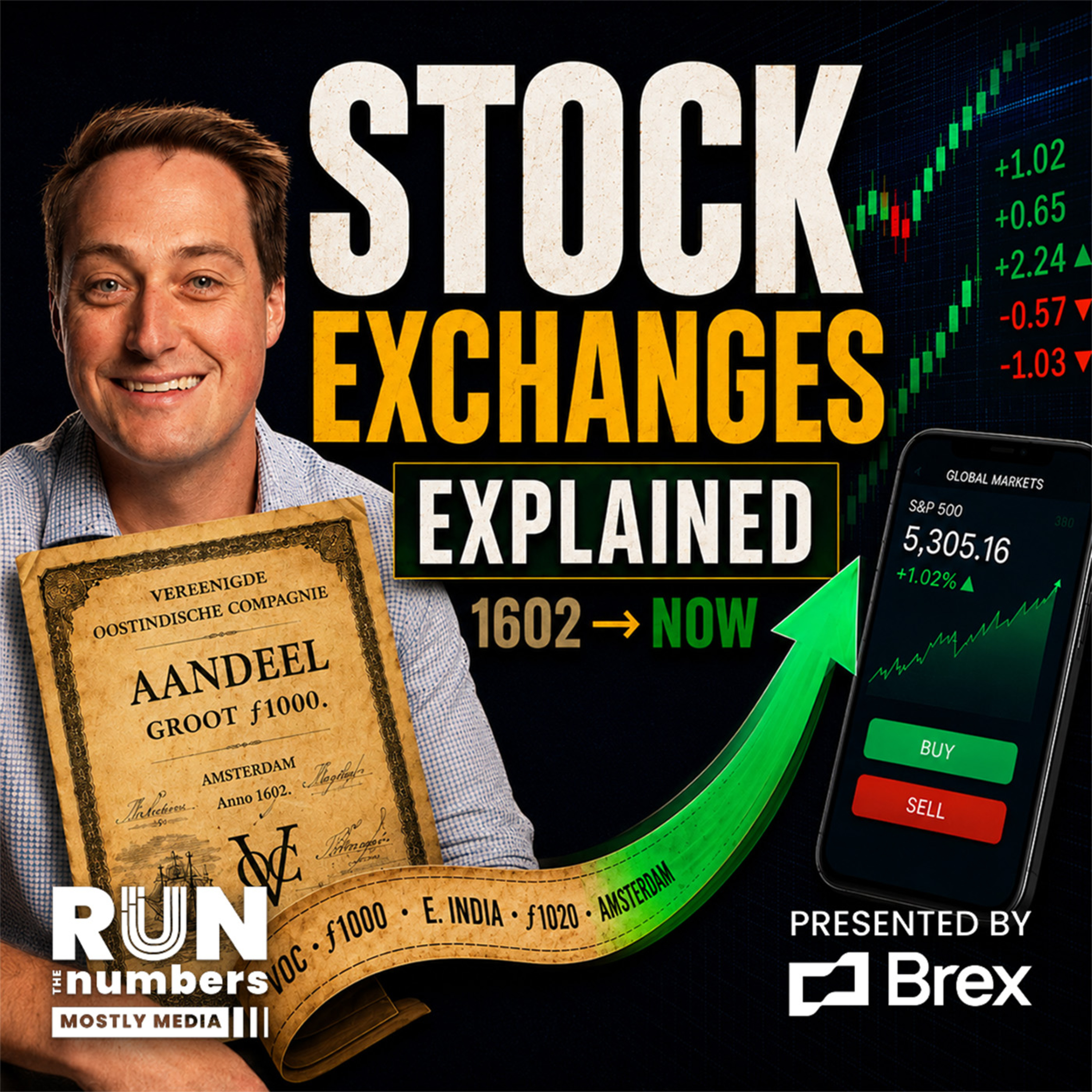
Then the Boris of Antwerp, which I learned today is a region of Belgium, built a family inn at the crossroads of Europe. This was back in 1531, where merchants traded promissory notes in bonds as they passed through the Fort Flemish countryside. Close, but footnotes being my middle name, I have to tell you that no actual corporate stock change hands. So we don't give them the trophy. Trophy goes to Amsterdam. 1602. First IPO boom. None other than the Dutch East India Company ticker voc. This isn't. This isn't stock trading information, but Dutch East India Company strong buy this quarter. So strong buy they held the first real IPO in history. Its charter did something new. It let all residents of these lands buy shares. Not just shares in a single voyage, but shares in the ongoing company itself. You weren't betting on one ship coming back. You were buying a fractional tradable claim on an entire enterprise. The word here is tradable. It's the part that really changed the game. Because you could sell your stake to someone else. You didn't have to hold until the ship came back or the captain drowned. And that made this a two sided market.
- [01:58]
Ben Hillman
The VOC itself was by any reasonable description the palantir of the 17th century.
- [02:03]
CJ
First company to ever issue public stock. Speculated on, wildly, heavily linked to the government somehow and everything, but nobody totally sure what it does. So yeah, Palantir or the Illuminati. And almost immediately, because humans are humans, the Amsterdam market developed futures, options and short selling. These are tools we still use today. Within a few decades of the first ipo, traders had invented most of the instruments that would eventually cause your favorite meme stock CEO to implode on a CNBC segment 400 years later. Half cash, half stock. I hear you. The speed of financial innovation and also destruction when there's money on the line is truly something. London formalized its stock exchange in 1773 after decades of traders just kind of hanging out in coffee houses doing deals. Stimulants and trading have gone together like peanut butter and jelly for hundreds of years. This explains a lot about both asset classes.
- [03:06]
Ben Hillman
Yeah, I mean we went from coffee houses to trading floors to guys in fleece vests staring at 12 different monitors. And the stimulants changed to Zins and Celsius. The chaos and short selling definitely did not.
- [03:19]
CJ
America was watching. Not to be outdone by its big brother in London, the Philadelphia Stock Exchange opened in 1790, the first of its kind in the new country. Then two years later, N.Y. the NYSE was founded under a buttonwood tree by 24 brokers signing the Buttonwood Agreement, a two sentence pact made outdoors near 68 Wall Street. This is where the Buttonwood Agreement was signed. Under a buttonwood tree. There are no trees anywhere. And they committed to trade only with each other at fixed commissions of 0.25%. Or as the experts like to say, 25 bips. Leonard Bleecker, a prominent merchant whose family name still graces Bleecker Street, New York was one of the 24. Alexander Hamilton's bank of New York was one of the first companies listed. Serious people doing serious things informally outside in the seriously bad northeast weather.
- [04:10]
Ben Hillman
So basically your typical Buffalo Bills tailgate,
- [04:14]
CJ
minus the folding tables. You see, the whole point was to move trading from the street into a private club. A club with fixed commissions, pre approved stocks and no outsiders. If you wanted to trade, you needed one of the approved brokers. An auctioneer would read off reputable stocks one by one. A small but big thing to call out this move. Trading from a side quest to a profession. Which sounds obvious now and wasn't at
- [04:37]
Ben Hillman
all then, by the way. Wall street has spent 230 years making that original deal worse for everyone that's not in the club.
- [04:44]
CJ
It's a big club and you ain't in it. Stocks at this point were for two types of people. Outright speculators and people trying to take control of a company. Kind of like that meme stock CEO. I don't understand your question. Not a lot of tertiary use cases. The market was small, the participants were wealthy. Then William Dewar showed up and reminded everyone of why we can't have nice things. Dewar was the former assistant secretary of the treasury friend of Alexander Hamilton, an architect of America's first major financial crash. And the winner goes to. He used massive loans and insider knowledge in a failed attempt to corner the market on US Debt, securities and bank stocks. This guy spread rumors of bank mergers and created a fake bank called, wait for it, the Million bank to manipulate prices.
- [05:32]
Ben Hillman
Yeah, that's definitely not a shady name at all for a bank.
- [05:35]
CJ
The market sold off 25%. Dewar ended up in debtors prison, which I thought was just something in the movies. And as Ron Burgundy would say in another movie, boy, that escalated quickly. By the way, the country had only been trading stocks for roughly three years. The Buttonwood Agreement was a direct response to this. The 24 brokers moved behind closed doors like we said, to make sure all traders were reputable. Unlike that guy Dewar. In 1817, they drafted a constitution. Rented indoor space at the Tontine Coffee House. We are not in front of the Tontine Coffee House. We're in front of a blue bottle. Which I'm pretty sure is a venture backed coffee chain. It wasn't officially named the New York stock exchange until 1863 after going by various names for nearly 100 years. Most people just called it the Board because prices were written on a board. Cue the Pusha T ballers. I put numbers on the boards. Damn. I've been waiting three years to get a Pusha T reference in there. Mission accomplished. The first 50 years of the New York Stock Exchange were mostly government bonds and bank stocks. It was a nice start. Then came the railroads and everything changed. When I ride the train, I think about depreciation and amortization. Because building a transcontinental rail network is not a mom and pop operation. You need capital at scale that local merchants and farmers simply cannot provide. Roughly 75% of railroad funding came from private loans and stock offerings rather than the government. The New York Stock Exchange became the mechanism that let American railroads tap. European investors, People who had never set foot in Ohio and were willing to fund a thousand miles of track through it. This required two things. A market liquid enough to make the investment feel reversible and an accounting language sophisticated enough to explain what they were buying.
- [07:19]
Ben Hillman
I think I get what you're saying. That railroads basically invented modern accounting.
- [07:24]
CJ
Yes. Depreciation existed because tracks and locomotives wore out over decades and someone had to account for that. Capex versus Opex existed because building a rail line and running one are fundamentally different financial activities. This is a good one. Cost per ton mile was invented as a metric, and I love metrics. It's especially the weird ones because investors needed a way to compare efficiency across routes. Necessity is the mother of all invention, including financial metrics. So in many ways, your month end close has a 19th century railroad to thank. This was the precursor to gap accounting as we know it. By 1860, US companies had laid more than 30,000 miles of traction.
- [08:03]
Narrator/Guest Voice
It reaches from the Twin cities of the North Star State to the Gulf ports of Houston, Texas City and Galveston of the Lone Star State, more than
- [08:11]
CJ
the rest of the world combined. Telegraph lines followed those tracks, letting news flash between financial hubs in real time, which meant you no longer needed a stock exchange in every city. The exchanges in Albany and Buffalo became redundant. Sorry, Buffalo.
- [08:24]
Ben Hillman
Thank God they still have their tailgates.
- [08:27]
CJ
Oh, fun side story. Jay Gould, one of the most famous bears of the era, was called the Mephistopheles of Wall Street. A really gloomy name and an even harder word to spell. He'd publish vicious rumors about companies and newspapers he owned to drive down their prices. Then he'd buy. This was one of the early examples of sellers weaponizing media to move markets. Not completely unrecognizable behavior by today's standards. So let's talk about information again. Charles Dow, financial journalist and first editor of the Wall Street Journal, launched the Dow Jones transportation average in 1884. He took nine railroad companies, added up their stock prices, divided by nine and presto. It was simple division. But that wasn't really the point. The point was to create an onboarding ramp for people who weren't familiar with individual stocks. Now they could speak more generally and get a litmus test on if the market was going up or down. It pulled a whole new swath of people into the mix. In 1896, Dow expanded the index into the Dow Jones Industrial Average. Twelve companies covering heavy industry, including sugar, tobacco and oil. General Electric was one of those originals.
- [09:33]
Narrator/Guest Voice
To new victories in General Electric's never ending quest for better ways of living.
- [09:38]
CJ
And Edward Jones lent his name to the whole thing despite reportedly playing no active role in creating it.
- [09:44]
Ben Hillman
Yeah, sounds just like a group project from seventh grade.
- [09:47]
CJ
Well, since I have the platform to say this, I want my group project Teammates from Ms. Blessington's 8th grade history class to be my pallbearers at my funeral someday so they can let me down just one more time. The second Industrial Revolution brought about the rest of the giants. We still recognize companies like Procter and Gamble, Pfizer, American Express, which by the way started as an express mail business before anyone thought to put it on plastic. The market was growing, the participants were multiplying, and the information the exchange was generating was becoming arguably just as valuable as the capital getting allocated. Hey, thanks for listening. We'll be right back after a word from our sponsors. SaaS and AI spend is heating up, and most finance and procurement teams are already searching for shade. Uber burned through its entire 2026 AI budget in four months. ServiceNow did the exact same thing. Your vendors are counting on you to sweat through your next renewal and pay more than you should. Cool down your SaaS and AI spend this summer with SpendHound. Through June 12, qualifying companies that sign up get $500 just for getting started. Teams using Spendown reduce software and AI spend by up to 30%, using real pricing benchmarks from over 1,200 companies across 10,000 AI and SaaS vendors. So when your next renewal hits, you're not taking the heat. You know exactly what fair pricing looks like and what you should negotiate for. SpendHound also includes on demand procurement experts who build negotiation strategies, review contracts, and ghostwrite emails on your behalf. That means you can stop getting burned by the tools you need and cut the ones that you don't before that auto renewal torches your budget. Rated number one on G2 in SaaS spend management, SpendHound is free forever. The team's up to 1,000 employees and only $10,000 per year for enterprise teams, with $150,000 in savings guaranteed. Don't let your vendors enjoy your summer budget more than you do. Sign up by June 12th and get $500. How's that for a hot deal? Go to spendhound.com cj that's spendhound.com cj the CFO role has evolved faster than the tools built to support it. Most finance teams are still running infrastructure designed for a job that no longer exists. The reporting, the reconciling, the close that bleeds into the next month or quarter. That's not finance. That's overhead with a really crappy title. And the cost isn't just your time. It's everything your best people aren't doing while they're buried in it. Agentic finance shouldn't multiply your output. It should eliminate the work that was never worth doing in the first place. And that's why I run mostly media on Brex, an intelligent finance platform with AI powered agents that capture expenses, automatically, enforce policy before the spend happens, and close your books in minutes instead of weeks. 35,000 companies like OpenAI, Coinbase, Anthropic, and DoorDash already run on Brexit. It's time to get Brex AF. Learn more@brex.com metrics I've seen a lot of FPA tools and Aleph is one of the few that gave me that aha moment within minutes I remember watching their founder shout out to Albert, connect my netsuite data and build me a full P and L live in minutes. Aleph is now trusted by hundreds of leading companies. I've had the CFOs from Turo 8, Sleep, Zapier and more on the pod and every one of them is a huge advocate. I also just published my second annual CFO Tech Stack Report. NLF has been on the podium both years, including a number one finish in the 50 to $100 million segment this year. Instead of being just another planning tool, they built a real enterprise grade data foundation for finance implemented at startup speed with AI native workflows woven into its DNA. All your systems erp, CRM, hrs, ats, product usage and more, powering one clean governed data layer that finance can actually trust. With AI moving as fast as it is, they're pushing even further. Mcp, custom AI chatbots, AI powered variance analysis and the list keeps growing. Try it with your own data@getaleft.com run that is G-E T A L E P H.com run tell them CJ sent
- [13:48]
Narrator/Guest Voice
you unethical it's illegal Something for the securities and Exchange Commission after World War
- [13:55]
CJ
I ended in victory, American families had disposable income and things just came kept getting better. The economy was humming. The new New York Stock Exchange building opened in 1920 with an enormous trading floor where each stock had its own designated post. You had steel companies at one, railroads at another, and specialists called auctioneers who controlled the bidding. You would see clerks shuffling trades via mnemonic tubes. Pneumatic Pneumonic Pneumonic Pneumatic num. There's a P in there. Ben, why is there a picture? What is it? Pneumatic via pneumatic tubes around this time, the radio arrived in living rooms across the country, which meant ordinary families could now tune in and hear how the Dow was performing. The market was no longer a club for rich people in lower Manhattan. It was becoming a conversation everyone could follow. What made this era different, though, was buying stock on credit. You could buy shares on 10% margin, meaning a $100 stock only acquired 10 bucks out of pocket, with the stock itself pledges collateral for the remaining 90 dingers. As it sounds, this was not a niche strategy for Sophisticated investors. It was how a huge swath of the American public participated in the longest bull market the country had seen. And it worked brilliantly right up until, well, wait for it, it didn't. In 1928, a stockbroker named Charles Merrill of Merrill lynch saw what was coming and urged his customers to get out of debt and sell at the highs. And nobody really wanted to hear it.
- [15:21]
Ben Hillman
Paper hands. Nobody ever wants to hear it. That guy at the top is always going to be the least popular person in the room. I mean, it's kind of like Michael burry, who predicted 12 of the last two recessions.
- [15:34]
CJ
Consumer spending on a few key categories started softening. Stocks began to fall. And then the margin calls went. Boom goes the dynamite. For those keeping score at home, when a stock drops far enough, it is no longer valuable enough to stop. Serve as collateral for the loan you use to buy it. You either put up cash to cover the difference or your account gets liquidated. And on October 24, 1929, a lot of accounts got liquidated. Then more the next day, then more after that. The imbalance between sellers and buyers was so severe, so many shares changing hands so fast, that the ticker tape fell four hours behind in real time. People were making sell decisions based on prices that literally no longer existed. Assumptions piled on top of assumptions, and the whole thing got worse.
- [16:18]
Ben Hillman
So it's kind of like the band I was in in fifth grade playing Led Zeppelin.
- [16:22]
CJ
Communication breakdown.
- [16:25]
Ben Hillman
Nobody actually knew what anything was worth in real time.
- [16:27]
CJ
Now, to be fair, stock markets didn't cause a depression on its own. The depression ran deeper. It was fed by distressed industries and collapse in consumer spending. But everyone blamed Wall street anyway, which, I mean, fair enough given the margin situation and all. So it brought Franklin Roosevelt to the table. And given the election cycle, this guy had something to prove. On his second day in office, he ordered the NYSE to close for a week. Then he pushed through a sweeping set of reforms.
- [16:54]
Narrator/Guest Voice
That night, the new president promptly breaks with tradition. He launches immediately on a program of legislation and reform. The new deal begins at once.
- [17:03]
CJ
Banks could no longer gamble on stocks. Brokers had to treat customer money with actual care. And any company hoping to offer stock to the public had to file formal reports with the government. People would now have far better information than they used to. Roosevelt created the securities and Exchange Commission to enforce the new rules. Otherwise known as the sec. And no, not where Alabama plays. Its first chairman was Joseph Kennedy, patriarch of the Kennedy family, which is either a brilliant choice or an extremely on brand. One to Depending on your read of the situation.
- [17:32]
Ben Hillman
So they appointed a guy who made his fortune doing exactly what the SEC was created to prevent, to run the sec. And it kind of worked. I mean, man, America is really something else. All of that just to stop Oklahoma.
- [17:46]
CJ
And boy, did he have a dreamy son. A wary public stayed away from the market for most of the 1930s and 40s, and the government funded World War II largely without it. When needed, it printed its own money and raised war bonds. The stock market, the great engine of the American capital formation, sat mostly idle while the country fought the biggest war in human history. It would come back, but it needed someone to bring it to the suburbs first.
- [18:11]
Ben Hillman
Yeah, like a Toyota Siona.
- [18:14]
CJ
The market came back in the 1950s, but it needed a push. Charles Merrill was that man. The same guy who warned his clients to sell before the crash. Came back after the war with a different idea. What if the stock market wasn't just for rich people? He opened brokerages in the suburbs and targeted the returning GI with a wife, three kids and a Chevy. He wanted those people to own their share of America. One of his signature moves was making research reports free. Which sounds obvious now and was considered borderline insane at the time. Here's what our company thinks. No charge. Because he realized that by educating people, he gained a group of new investors, which his firm benefited from.
- [18:50]
Ben Hillman
From.
- [18:51]
CJ
This was either altruistic or the best customer acquisition strategy of the 20th century. Probably both.
- [18:56]
Ben Hillman
Yeah, probably both. I mean, the best business moves always look like altruism until you check the revenue line. You know, you've got your free research reports, free shipping, free checking account. Someone is always making money on the free stuff.
- [19:09]
CJ
If it's free, you're the product, my friend. And it took until 1954 for the Dow to recover from its pre crash high of 325 years to get back to. Even so. Yeah, keep that in mind the next time someone tells you to just hold through the volatility. Also, Snowflake is still trading below its day one IPO price.
- [19:27]
Ben Hillman
I'm not better. You're better.
- [19:28]
CJ
Well, around the same time, a college professor named Harry Markowitz published a paper arguing that you should just buy multiple things and you'll do better. He called it diversification. He won the Nobel Prize in economics for it.
- [19:40]
Ben Hillman
The finance industry's ability to make simple ideas sound complicated and then give out the highest possible reward for them, uncomplicated them remains one of its most reliable features.
- [19:51]
CJ
Even what you just said was complicated.
- [19:54]
Ben Hillman
Yeah, it took me like seven Takes
- [19:56]
CJ
the rise of pension plans and mutual funds pushed daily trading volume to 11 million shares. Which sounds like a lot until you realize the entire back office was still running on paper. Like a lot of paper. Actual physical stock certificates changing hands, clerks balancing books by hand each night. A system straining at the seams. By the 1960s and by 1968, the paper crunch had become a full on crisis. The New York Stock Exchange. This blew my mind. Had to close on Wednesdays so the clerks could catch up. The information backbone of American capitalism was drowning in its own paperwork. Computers solved this kind of because through the 1970s and into the 1980s, computing infrastructure transformed a back office from a room full of exhausted clerks into something that could actually scale.
- [20:42]
Narrator/Guest Voice
The trade was recorded on a computer card and fed into a reader right at the trading post.
- [20:46]
CJ
It was faster, it was cleaner, much more reliable. And all the people who like to hug trees were no longer complaining about all the wasted paper. But then the snake ate its own tail.
- [20:56]
Ben Hillman
Now, this isn't just because I'm reading the script, but I think you're about to tell us about October 19, 1987.
- [21:03]
CJ
Well, the market had been declining for a few weeks heading into that Monday. The computers were pre programmed to sell automatically when prices hit predetermined levels. Which like is a perfectly sensible risk management strategy until everyone's computer does it simultaneously. One sell triggered another, which triggered another, which triggered another. And the next thing you know, The Dow dropped 23% in a day, still the largest single day percentage decline in its history. A hard lesson was learned. We had to install circuit breakers. Automatic pauses that interrupt the cascade before it becomes a catastrophe. We still use them to this day. And they were tripped multiple times at
- [21:40]
Ben Hillman
the start of COVID Hey, shout out to circuit breakers. Make sure you tip your local electrician.
- [21:45]
CJ
Hey, thanks for listening. We'll be right back after a word from our sponsors. Here's a growth tax that nobody talks about. Every new pricing model you ship creates a nightmare for your finance team. Usage based pricing. Now you're tracking usage against commitments, product bundles. Now you're untangling what to recognize and when for every line item. Mid cycle upgrades. Good luck. Manually reallocating revenue. The pricing strategies that drive growth are the same ones that break your finance process. Right? Rev turns that irony into a competitive advantage. Your product team can ship new pricing without asking finance for permission. And your sales team can close deals without worrying about downstream chaos. But I've seen too many companies where sales are celebrating a huge quarter while finance is still trying to figure out how to recognize half of it. It's actually me. So here's a good place to start. Right Rev built a free tool at calculator.wrightrev.com it scores your RevRec process, shows what's exposing you to risk, and tells you exactly where to focus before it bites you in the rear. Probably explains why your last close took so long. Check it out at calculator.rightrev.com all right, without the Boston accent calculator.wrightrev.com I got news for you. The ERP category is finally getting disrupted. And if you haven't heard of Rylit yet, please pay attention. It's the AI native ERP built specifically to replace netsuite, and it's already won over hundreds of finance teams. Their mission is to make these zero day close a reality. And they're actually doing it. We're talking teams closing the books at 1:35pm on the first day of the month. Companies like Windsurf, Mercor and hundreds of others run their entire finance stack on rillications, revenue recognition, close management, multi entity, native stripe and Salesforce integrations. Woo. Everything a scaling company needs. They've got 5.050 wow 5.0stars on G2. They're backed by A16Z and Sequoia. Heard of them and CPA LED implementations that get you live in 45 days. That is simply unheard of in the ERP space. If your books aren't running as fast as your business, check out Rillette. Book a demo@rit.com cj that is r I l l e t.com cj that's me maybe the first thought you had when you started a tech company wasn't about scenario modeling or Runway management or the fine print of an S1. I love a good S1. That's not where the magic happens. It's more fun to build something new, Design your quarter, zip or network with VCs. But what if you got your financials right early, long before your investors started asking? There's no limit to how far you can go and how many headaches you could stave off. Now that's where EY comes in. EY has been a part of Silicon Valley since, well, it was just a valley. And it's helped some of the most successful names in tech go from startup to exit to mega cap. You build the next big thing and with the teams across strategy, tax, audit and transactions, EY will help you build your next big thing right. Learn more@ey.com, that's ey.com. tech startups. Keep that in up until this point. You'll notice we've left out the other popular stock exchange in New York, the Nasdaq. It came about in 1971 and it was built on a premise of a pretty simple idea. What if you didn't need a physical trading floor to trade stocks? Instead of specialists congregating at posts and auctioneers reading off names, it was just a screen with two columns. People willing to buy at one price, people willing to sell at another. They built a linked network of brokerage houses worldwide with everyone seeing the same prices at the same time. And now it started with smaller, faster growing tech companies that the NYSE wasn't particularly interested in. Apple listed there in 1980, so did Microsoft and later Intel. The companies that would eventually become the most valuable on earth started on the exchange that the establishment did not take seriously.
- [25:41]
Ben Hillman
One man's trash is another man's apple.
- [25:44]
CJ
The 1990s were something else entirely other than my birth. The Internet arrived and with it came the reasonable observation that it was going to change everything. Followed by the slightly less reasonable conclusion that every company with a dot com in its name was therefore worth billions and billions of dollars, regardless of whether it made any money. Between 1995 and 2000, the Nasdaq rose 400%. Companies were going public with no revenue, burning cash at speeds that would make CFOs physically ill and getting rewarded for it. Pets.com raised 82 and a half million in an IPO in February 2000 and was out of business by November of the same year.
- [26:19]
Ben Hillman
9 months from IPO to gone. That's got to be some kind of speedrun record.
- [26:23]
CJ
The sock puppet they use in their super bowl ad cost more to produce than some of their quarterly revenues.
- [26:29]
Ben Hillman
Come on.
- [26:30]
CJ
Webvan raised 375 million. That is a lot of money to deliver groceries and manage to lose money on every single order while simultaneously building out a billion dollar warehouse infrastructure. The market was reflecting information about the world, but it was a mirror held up to a collective hallucination that we
- [26:47]
Ben Hillman
were all in on.
- [26:47]
CJ
The Nasdaq peaked in March of 2000 at 5048. By October 2002, it had fallen, oh my goodness, 78%. It would not recover to that peak for 15 years. Then 2008. How we got there was different, but the pattern was pretty similar. We had an asset class that was financialized beyond any connection to its underlying value. Credit made it easy to participate with money people didn't have and when the assumptions broke, the cascade was absolutely catastrophic. 1928 was both crying and laughing. As you saw in the movie, the big short. Housing prices were packaged into mortgage backed securities. Those securities had been rated AAA by agencies with catastrophic conflicts of interest. And the whole structure was built on the premise that American housing prices could not fall both nationally and simultaneously.
- [27:36]
Ben Hillman
Hell is a basement, I guess. And that basement is part of a house with an adjustable mortgage rate.
- [27:40]
Narrator/Guest Voice
Lehman, which has 25,000 employees, will be liquidated.
- [27:44]
CJ
Lehman Brothers filed for bankruptcy on September 15, 2008. It was the largest bankruptcy filing in U.S. history. The Dow lost more than 50% from peak to trough. The federal government intervened at a scale never seen since the Roosevelt era, backstopping banks, buying assets and cutting rates to essentially zero, where they would remain for years. Both crashes had the same underlying problem. The information the market was generating had become detached from reality. In 1999, the market was telling you Pets.com was a serious business. In 2007, it was telling you a mortgage backed security full of subprime loans was as safe as a Treasury bond. We learned once again that the exchange is only as good as the information flowing through it. And when the incentives are structured to produce bad info, the market prices that in and calls it a day. This is the the fifth time we've seen this movie and you sit on the edge of your seat and you yell at whichever character it is. Don't go into that woodshed. But they keep going in.
- [28:41]
Ben Hillman
The exchange doesn't have any opinions. It's just a scoreboard, baby.
- [28:45]
CJ
Cue to push a T again. Put numbers on the boards. For most of the market's history, participating in it required friction. You needed a broker, you needed a phone call, you needed a minimum account balance that excluded roughly everyone who wasn't already doing well financially. The commissions alone, 40 bucks, 50 bucks, sometimes more per trade, meant that casual investing wasn't really a thing. The market was open to the public in theory, but it was expensive and very exclusionary in practice.
- [29:12]
Ben Hillman
That's a distinction that matters a lot when you're tracking who is able to build wealth over time.
- [29:16]
CJ
I actually felt this firsthand during my first ever internship in 2010. I tried to day trade shares of WebMD with $500 in my brokerage account. She too lost on fees trying to day trade WebMD. I was selling at higher prices than I was buying at. The bad news was the commissions were more than $8 per trade. While I made a bit of money on the gross trades, I lost an aggregate on the net due to fees. Also doing research on the webmd stock convinced me I had cancer and it a serious case of lupus.
- [29:44]
Ben Hillman
I went in researching a sneeze and I came out with a will Robinhood
- [29:47]
CJ
launched in 2013 with zero commission trades and a smartphone interface that made buying a share of Apple feel like ordering a burrito in doordash sans the dasher feeds how to buy stocks while serving up a new look by 2021 it had 22 million funded accounts. The critics, and there were many, pointed out that gamifying investing for people with zero investing experience during a period of zero interest, interest rates and stimmy checks going out there, maybe not a pure public service. Looking back, both things were true. Democratizing access to markets is good. Wrapping that access in confetti, animations and GIFs every time you execute a trade is a different combo. The Gamestop episode in January of 2021 was the manifestation of that tension. A community of retail investors on Reddit coordinated to buy shares and options in a heavily shorted stock, forced a short squeeze that cost institutional hedge funds billions of dollars and briefly made a company that sells physical video games and strip malls the most talked about financial story in the world. Melvin Capital hedge fund lost 53% in a single month. The little guys beat the big guys using the same information infrastructure, the big guys built a true David and Goliath story. Then Robinhood halted trading and GameStop at the worst possible moment for retail investors and everyone remembered who actually owns the pipes.
- [31:00]
Ben Hillman
Hey, if it weren't for Vlad, I'd be a Gamestop millionaire.
- [31:03]
CJ
Crypto arrived with a bigger promise. What if you didn't need the pipes at all? The blockchain is a distributed immutable ledger. Wow, those are hard words. A record of transactions that nobody controls and everybody can verify. Which in theory removes the need for the centralized exchange entirely. No nyse, no nasdaq, no clearinghouse, no counterparty Risk baked into every transaction by virtue of the fact that you're trusting an institution institution to be there tomorrow. Bitcoin launched in 2009, one year after Lehman's demise. Which is either a coincidence or the most on brand origin story in financial history.
- [31:36]
Ben Hillman
Yeah, it makes you wonder if Satoshi worked at Lehman and then found himself with just a little bit of extra time on his hands.
- [31:41]
CJ
What crypto actually delivered was more complicated. While the technology worked, the ecosystem around it reproduced every pathology of traditional finance at roughly 10 times the speed. Insider trading, flight fraud, leverage, spectacular blow ups. A class of early participants who got extraordinarily rich. While retail investors bought in at the top and also the hawk to a girl had a coin. My hawk meme coin is live. FTX collapsed in 2022 with 8 billion in customer funds missing and its founder tweeting from his underwear in the Bahamas. The Venetian lenders of the 14th century would have recognized the basic shape of it immediately. And Shylock would have gotten his pound of frank flesh rather than sending SPF to Rikers. Today we have the clarity to see that there's limited utility in many of these coins and they are even less store of value than we thought.
- [32:29]
Ben Hillman
Mom, how do we get so rich? Oh honey. Your dad was an early investor in Fartcoin.
- [32:34]
CJ
Prediction markets are the latest iteration of the same underlying question the Amsterdam Stock Exchange was asking in 1602 can you build a mechanism that aggregates dispersed information and turns it into to a price? Polymarket and Calsheet let you bet on the outcomes of elections, economic data and world events. The prices they generate have, in several high profile cases, actually been better predictors than polls, expert forecasts or traditional media coverage. They've never gotten a Fed interest rate movement wrong. The stock market was always more than a place to store value and speculate on companies. It was, underneath everything else, an information machine. The capital flows are real, the wealth creation is real. The losses are very, very, very, very, very real. Also, ask me about my snowflake position anytime, but the reason the stock market matters, the reason it became the central nervous system of the global economy, is that it creates and distributes information about the world that cannot be generated any other way. When the NYSE auctioneer read off railroad stocks in 1850, he was generating a price that told nervous European investors whether to fund another thousand thousand miles of track to Virginia. When Charles Dow added up 12 industrial companies and divided by 12 in 1896, he was creating a number that gave everyone for the first time a shared read on whether things are generally getting better or worse within the American economic machine. When the NASDAQ screen replaced the trading floor in 1971, it wasn't just cheaper and faster. Every broker saw the same price at the same moment, which meant the information was the market, not just a byproduct of it. When we look back, every technological upgrade in the story, the telegraph, the ticker tape, the radio, the computer, the smartphone, it was all really an upgrade to the information infrastructure first and a trading mechanism second.
- [34:17]
Ben Hillman
It's a story about information, how it's created and how it's shared markets fail
- [34:22]
CJ
when the information they're generating stops reflecting reality. The 1929 crash wasn't caused by stocks being overvalued in some abstract sense. It was caused by a margin system that let people make bets that were disconnected from any underlying assessment of value, which meant prices were reflecting the availability of credit rather than the health of businesses. The dot com bubble wasn't caused by irrational people. It was caused by a market that had no good mechanism for pricing companies with no earnings history and a category that had never existed before. So it priced in pure narrative instead. And the 2008 crisis was caused by rating agencies systematically producing wrong info about about mortgage backed securities, which the market then faithfully priced as if it were right. Garbage in, garbage out, every time.
- [35:05]
Ben Hillman
Three crashes, trillions of dollars, millions of lives affected.
- [35:09]
CJ
And this is why the CFO's relationship to capital markets is more interesting than the job description implies. You are not just a person who accesses the market to raise money or manage your balance sheet. You're a participant in an information system. The numbers you report, the guidance you give, the narrative you construct around your business, or all of it, flows into a pricing mechanism that is constantly trying to make sense of the world. When you do that well, with specificity and honesty, in an attempt to help investors understand what is actually happening inside your business, you make the market a little more accurate. When you do it poorly or cynically, you contribute to the conditions that eventually produce the crashes.
- [35:45]
Ben Hillman
Yeah, no pressure though.
- [35:46]
CJ
The nobles and merchants buying VOC shares in Amsterdam in 1602 couldn't access the same information as the ship captains and company directors who were boots on the ground. There may as well have been mermaids at sea that pulled your boat off the edge of the earth. That asymmetry defined who built wealth and who didn't. For the next 300 years. Some of those families own the real estate around the New York Stock Exchange today. Dude, imagine being the second best stock exchange in the same street. I think it's a apartment complex. And the distance between then and now is a story that gaps slowly, unevenly, and still incompletely closing. Merrill taking his research to the suburbs. NASDAQ putting the same screen in front of every broker. Robinhood eliminating the $8 commission. Predict your markets now. Letting anyone in the world put money behind their read of a Fed decision or a Venezuelan government takeover and immediately seeing whether they were right or wrong. The markets, in many ways, have always been a bet on who has the better information. You or the person on the other side of that table. How you participate in creating that information is something to think about. The Numbers is a mostly media production, yelling and intro by Fat Joe. Artwork by Meg d'. Alessandro show is executive produced by Ben Hillman. Nothing said on this podcast is intended to be business or investment advice. It's the sole opinion of me, a guy who feeds his dog way too much ice cream and has a history of net operating losses. Lol. If you like this podcast, hit subscribe and give us five stars. It'll take like two seconds and our algorithm overlords love it. Drink water, call your mom and have a great day. Peace.