← Run the Numbers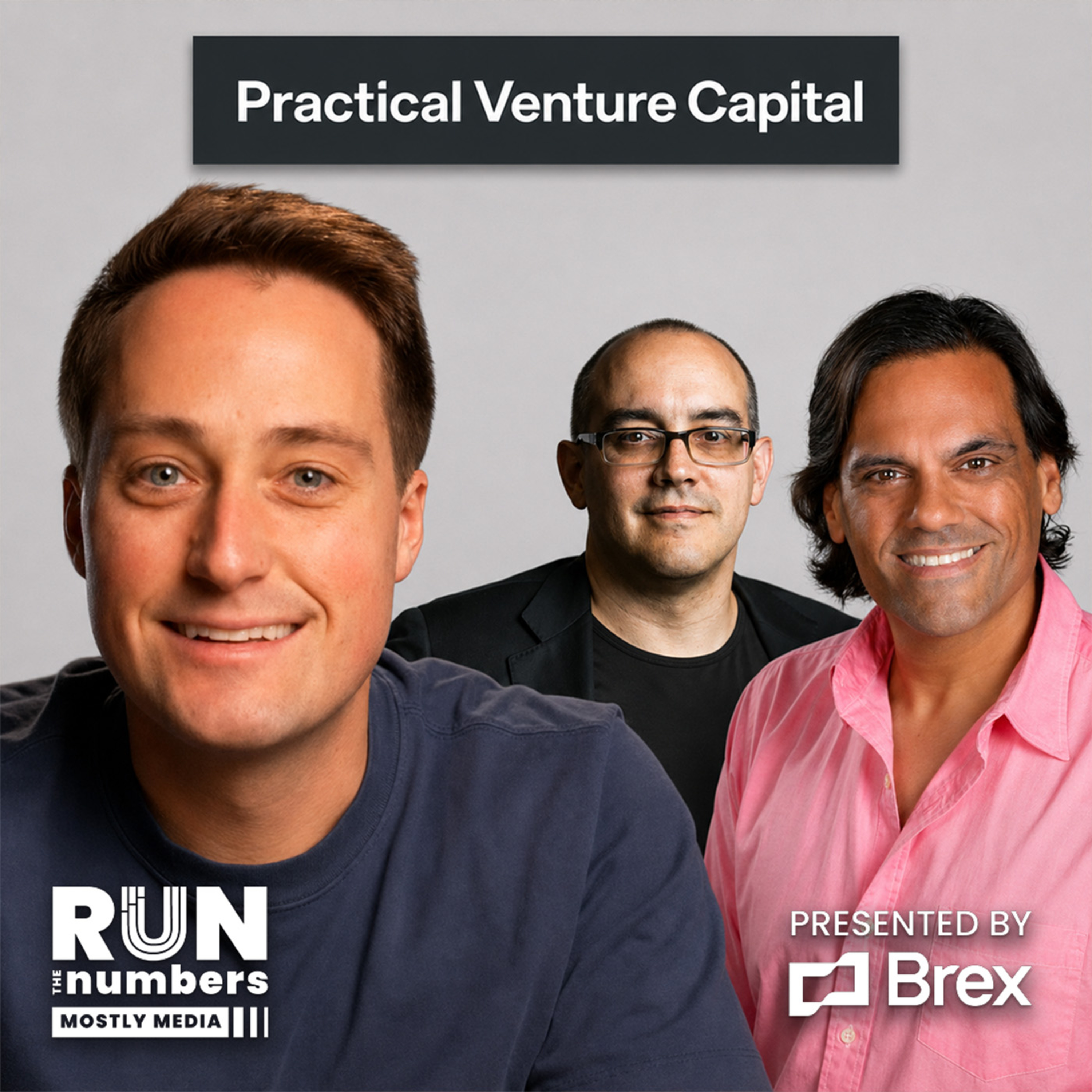
Run the Numbers
Dave McClure and Aman Verjee on Angel Investing at Scale, 500 Startups, and Practical VC
01:00:59
Loading summary
Transcript172 lines
- [00:00]
CJ
What do you think about the evolution of the accelerator ecosystem?
- [00:05]
Dave McClure
We were already doing 400 companies a year in 2014. At the time, people just thought was fucking insane. Like, that was just like a scale that nobody had ever done before. PayPal was a great place to sort of formulate your ideas, argue, present your ideas. I worked for David Sacks for a little bit, but I was there. And the red pen of David Sachs was a notorious thing inside the product groups where you would present something to him and he would, like, mark it up literally with a red pen.
- [00:32]
Iman Berjee
PayPal was founded in 1998, went public in 2002. That IPO was 800 million, if I remember right. I think would trade it up to a billion at the end of day one. Ebay bought for 1.5 billion. So PayPal's a $50 billion company today.
- [00:44]
CJ
You don't want to get into angel investing and make two investments.
- [00:47]
Host (CJ or another host)
30 would be better.
- [00:48]
Dave McClure
You know what the difference between a startup with a bunch of Stanford graduates and then fail after three years, and then this other startup run by a bunch of drug dealers? Nothing. They're both failures.
- [01:00]
CJ
Is this thing on
- [01:03]
Iman Berjee
yesterday's price is not today's price.
- [01:15]
CJ
Welcome back to Run the Numbers.
- [01:17]
Host (CJ or another host)
The show where I'm on Take two because I forgot what the show is called. My name is C.J. i'm a tech CFO, and I interview the best finance leaders in the world as well as the investors who fund them. This is a special one.
- [01:27]
CJ
There are three men in the booth I interviewed, Dave McClure and Iman Berjee.
- [01:32]
Host (CJ or another host)
They are both the managing partners and founders of Practical vc. But both of them before that were part of the PayPal mafia. Yes, they helped scale and sell PayPal to eBay, working for the likes of
- [01:43]
CJ
Peter Thiel, Elon Musk and David Sachs.
- [01:46]
Host (CJ or another host)
From 2008 to 2010, Dave was a VC at Founders Fund with Peter Thiel and Sean Parker. He made seed investments in 42 companies, resulting in five unicorns, four IPOs. And he led the seed round in credit karma. The 3 million portfolio that he managed there returned 200 million or 60x in 10 years.
- [02:04]
CJ
Arguably the best venture fund of all time.
- [02:07]
Host (CJ or another host)
That include Twilio, Sendgrid, Lyft, credit karma and life360.
- [02:11]
CJ
He takes us through the history of
- [02:14]
Host (CJ or another host)
starting that and what it's done within the tech ecosystem.
- [02:18]
CJ
Some of the companies it's invested in
- [02:19]
Host (CJ or another host)
and how it's changed the game when
- [02:21]
CJ
it comes to the volume of tracks. Incubators like Y Combinator and others are
- [02:25]
Host (CJ or another host)
writing we also talk about the history of the secondary market and how that
- [02:29]
CJ
is more so Dave and Iman have shifted from the earlier stage where you're
- [02:33]
Host (CJ or another host)
writing a ton of small checks to
- [02:35]
CJ
the later stage secondary buyout space where
- [02:37]
Host (CJ or another host)
they are taking stakes the second time
- [02:40]
CJ
around, as well as buying management stakes in VCs that have had funds that have aged a bit.
- [02:46]
Host (CJ or another host)
This is a fun one because it's not often you get to talk to
- [02:49]
CJ
someone who has both started something at
- [02:51]
Host (CJ or another host)
one end of the barbell and started something at the other, solving problems that
- [02:55]
CJ
they were uniquely qualified to fix.
- [02:57]
Host (CJ or another host)
So all this and much, much more coming up next. David Iman, thank you so much for
- [03:02]
CJ
joining me on the podcast.
- [03:03]
Dave McClure
Thanks for having us.
- [03:04]
Iman Berjee
Thanks for having us.
- [03:05]
CJ
So I had Iman on to talk about his book on financial bubbles and that was awesome. Because I'm such a history dork and I am terminally online, I'm always reading about tech and such. Dave, I've been following your blog 500
- [03:18]
Host (CJ or another host)
Hats, which has been around for at
- [03:20]
CJ
least I think going on two decades now.
- [03:22]
Dave McClure
I used to do a lot more writing, but I'm glad you read some of my old and busted blog posts.
- [03:27]
CJ
Well, maybe just to start there, because I now find myself in the business of creating content online. I started off with writing the newsletter, mostly metrics and I think you either die as a newsletter or live long enough to become a podcast. Can you just speak to maybe the power of distribution and what having that blog kind of provided for you in your career?
- [03:46]
Dave McClure
Originally I had a blogger blog and then I had a Typad blog and then I went to Medium. I started listening to people like Brad Feld and Fred Wilson. I guess when I first started it was more like writing about nerdy stuff. I'd been working at PayPal with Ahmad 25 years ago. My title was Director of Marketing. I actually changed that to Director of Geek Marketing. But I was doing developer platforms, evangelism, that kind of stuff for PayPal, basically telling people how to write like 10 lines of HTML to be able to accept credit card payments on their websites. So a lot of that outreach in folks that was originally developers, software developers and ebay merchants and other people selling stuff online. I gradually started talking more about tech topics and venture capital topics, which was my one of my passions. But I was kind of writing from an engineer founder, you know, a little bit from a marketing perspective. I guess there was an audience for that set of stuff. I don't know if you're a fan of techmeme, but I've pretty much been, you know, a regular reader of techmeme since the day it started. Used to hang out at Mike Arrington's office with Gabe Rivera and the people that started a lot of that stuff. So I got to actually talk to them. Long story short, I got on a path of kind of writing on a more regular basis. This was 2004, five, six maybe. Time frame, something like that. Talking about startup metrics for pirates. Eventually that kind of led to getting a job offer by Sean Parker from Founder Fund. That wasn't the only reason, but one of the reasons that I got that job and also got access to a fair amount of deal flow from people who would read my crazy shit.
- [05:17]
CJ
Well, what's wild about writing online? I feel like it's kind of the last true democracy where you can write yourself into any room. And don't get me wrong, I had a ton of imposter syndrome when I started writing online. Like, who am I to espouse these ideas? And people are also reading people like Bill Gurley.
- [05:32]
Host (CJ or another host)
I think the first thing I discovered
- [05:33]
CJ
was that I would have to jump up and down to get anybody to read it. I got my first CFO gig by. By writing online because someone was reading my substack. So there is a power in just putting your ideas out there, even maybe if you're just kind of workshopping it. Almost as like standup comedian does kind
- [05:49]
Dave McClure
of feel like when you're doing writing and speaking, in a lot of ways you're kind of like ab testing your thoughts and ideas to figure out, like, what do I actually believe and what do I want to say and how do I say that? Haven't been a standup comedian, but, you know, I've probably told a lot of really bad jokes. Dad jokes. I used to be deathly afraid of public speaking probably 25, 30 years ago, but I ended up just doing a lot of it. And eventually you get really comfortable with it.
- [06:15]
Iman Berjee
I've seen you do some amazing things in front of audiences of. Of hundreds. You've never, you, you never seem nervous to me.
- [06:21]
Dave McClure
Yeah. Cause I've like fucked it up a bunch of times in front of people. And you're like, well, can't be as bad as that. You bombed in front of hundreds of people in an audience before. Like, you kind of develop a fearlessness after a while. I do feel like that whole thing about writing and public speaking, like, what did you. You say write yourself into permission?
- [06:39]
Host (CJ or another host)
You can write yourself into any room.
- [06:40]
CJ
I feel like, because I've gotten people to Hop on the podcast. Like, you guys, who I'm like, I don't know if these people would have picked up my phone call, like, if I didn't have distribution. But it allows you to talk to people who can make you smarter.
- [06:50]
Dave McClure
I started doing user groups, gosh, when I came to the valley over 30, 35 years ago, and, you know, it was just like 30 people in a room. But because you had people in a room, you know, you could invite people to speak. You could. They would take your calls because they wanted, you know, to be in front of people. And you got trust from both sides. Like, the audience would trust that you would put, you know, interesting topics and people together. The speakers would say, okay, this random nerd is okay, cause he's putting me in front of front of people. It was a great way to build, you know, connections and credibility. And writing and speaking are just like amplified methods of that, you know, when I tell people about, like, getting into venture, I always say, like, you know, just start writing about a company you want to invest in. Write a fake deal memo about a company you want to invest in whether you have money or not. And people can see your thinking. It's pretty instructive, I think, for people to understand how you think when you write about, you know, topics and companies and people that you care about.
- [07:43]
CJ
Aman, you've written multiple books. You're pretty prolific yourself. How has content and writing and podcasting kind of changed your career?
- [07:51]
Iman Berjee
I love reading and writing from a real early age. At undergrad and university, I was the editor of the school newspaper.
- [07:59]
Host (CJ or another host)
So I just.
- [07:59]
Iman Berjee
I've always enjoyed that process of communication, the depth of understanding you get and the trading of ideas. Especially, as you guys are saying with good people, when you get the comments, the feedback, that always helps. I thought I might be a lawyer. At least I went to law school, and then I wrote legal briefs and thought this is the most boring, trite crap that, you know, that this is like, imagine Oscar Wilde, you know, doing this. And I fancied myself more of a Oscar Wilde than a copy editor. So eventually you sort of give that up when you get into. Into business. But at early PayPal, we were still very much a written culture. There were emails going back and forth, deal memos, you know, product specs. It all required the ability to turn a phrase. There was no way I was going to convince Dave McClure to. To build anything as I was able to convince him. Talk about the business case. Let's put it, you know, let's put it into into words and write it out and really think through the ideas, make sure it all it's grounded. And I'll give Dave a lot of credit. He's. He's also a very visual communicator, so he loves to incorporate images and so persuading a lot of product managers at early PayPal also required. How do you use, like, numbers and charts and graphs to make the point? Really simple for somebody who maybe has maybe long on product literacy, but not financial literacy. I also did and still do teach at a couple of business schools. And just the ability to communicate with some of the younger students requires the spoken word, but also the visuals. And then you got to capture their imagination and force them to read and write. So to me, it's just a part of communication. And I've always loved to do that in different ways and found that to be extraordinarily helpful in business. And I credit the training I got at PayPal, the training got at law school. Just making you a tight writer definitely made me a much stronger cfo, where you have to communicate with investors, constituents in and in and out of the company. You know, those are all tools in the toolkit for a good CFO.
- [09:43]
Dave McClure
I would echo what Imam was saying was PayPal was a great place to sort of like, formulate your ideas, argue, present your ideas, hone your ideas. It was a pretty interesting environment where, you know, anybody could put an idea out there. And often you'd get feedback from, you know, people at the top of the company. You'd also get harsh feedback if the idea sucked. So I worked for David Sachs for a little bit, but I was there. And the red pen of David Sacks was a notorious thing inside the product groups where, like, you would present something to him and he would, like, mark it up, like, literally with a red pen sometimes, like, take this out, take this out. Things like, it was like, get it as simple and straightforward as possible. I may disagree with Sachs on politics and things, but he's a brilliant thinker, brilliant writer. He actually wrote a screenplay for a movie. Thank you for smoking. That's won a bunch of awards. I don't know if everybody actually knows that.
- [10:36]
Iman Berjee
Wow.
- [10:36]
Host (CJ or another host)
Do you know that was a David
- [10:37]
Iman Berjee
Sacks movie that blew my mind when
- [10:39]
Dave McClure
I first started writing. It was like a ransom note. Like the. I would. I chose a very particular style of writing, which was a lot of color and bold words and different font styles. I kind of became notorious for that. In fact, when I. When I did Startup metrics for Pirates, I used to give that talk and I would try and make the slides as ugly as possible intentionally.
- [10:59]
CJ
They're a visual to see.
- [11:01]
Dave McClure
Designers would call me up and like, hey, can I help you make your slides, like, a little easier on the eyes or better? I was like, no, that's actually intentional. Intentional. That kind of became my calling card, was, you know, trying to be as different and unusual as possible. Something we really like about your blog and podcast is what we try to do with Trading Places is we make it, you know, fun and entertaining, but visually very different.
- [11:24]
CJ
You got to make an onboarding ramp for people to enjoy something. I've always said, like, to be overly academic when you explain something is just like, it's not somebody I'd probably want to have a beer with. It's not a great way to make a friend to try to clobber them with how smart you are. So I appreciate that about your podcast as well. You guys have some banter back and forth that it comes across that, you know, you're. But you're having fun. Hey, thanks for listening. We'll be right back after a word from our sponsors.
- [11:50]
Host (CJ or another host)
I got news for you. The ERP category is finally getting disrupted. And if you haven't heard of Rillet yet, please pay attention. It's the AI native ERP built specifically to replace netsuite. And it's already won over hundreds of finance teams. Their mission is to make these zero day close a reality. And they're actually doing it. We're talking teams closing the books at 1:35pm on the first day of the month. Companies like Windsurf, Mercor and hundreds of others run their entire finance stack on really revenue recognition, close management, multi entity, native stripe and Salesforce integrations. Woo. Everything a scaling company needs. They've got 5.0 star 50 wow 50 stars on G2. They're backed by A16Z and Sequoia.
- [12:31]
CJ
Heard of them.
- [12:32]
Host (CJ or another host)
And CPA led implementations that get you live in 45 days. That is simply unheard of in the ERP space. If your books aren't running as fast as your business, check out Rillet. Book a demo@rillet.com CJ that is R I L L E T.com CJ that's me. Everyone in finance is adopting AI right now.
- [12:53]
CJ
There's a problem because there are a dozen disconnected tools.
- [12:56]
Host (CJ or another host)
You got one for revenue, one for ap, one for close. And each one of these needs training and document and the expertise to run
- [13:03]
CJ
them lives in your team's heads, not your systems.
- [13:07]
Host (CJ or another host)
Maximore takes the opposite approach. One autonomous finance platform for the whole operation order to cash procure to pay the close cash management reporting running on a single unified finance context that pulls from your ERP billing banks, even email and Slack. Maximore runs on self learning agents that learn how your team already works. No prompts to write, no workflows to build, nothing to document. Every output is audit ready and when a call needs human judgment it escalates for review because the agents optimize, not just execute and your KPIs improve. I'm talking about DSO working capital cash conversion. In fact one PE back customer cut their close in half their audit findings from 7 to 0, back office cost down 70% and in six months no ERP ripple replace. You pay only for real outcomes, not seats. See it@Maxmore AI I.e. m a x I M O R A I. The CFO role has evolved faster than
- [14:05]
Iman Berjee
the tools built to support it.
- [14:07]
Host (CJ or another host)
Most finance teams are still running infrastructure designed for a job that no longer exists. The reporting, the reconciling, the close that bleeds into the next month or quarter. That's not finance. That's overhead with a really crappy title. And the cost isn't just your time, it's everything your best people aren't doing while they're buried in it. Agentic finance shouldn't multiply your output, it should eliminate the work that was never worth doing in the first place. That's why I run mostly media on Brex, an intelligent finance platform with AI powered agents that capture expenses automatically, enforce policy before the spend happens, and close your books in minutes instead of weeks. 35,000 companies like OpenAI, Coinbase, Anthropic and Doordash already run on Brex. It's time to get Brex AF. Learn more at brex.com metrics I want
- [15:00]
CJ
to set up some context here just around the post PayPal days because like you mentioned, Dave, you worked in marketing, then also product at PayPal. Aman, you were on the finance and FP and a side and your paths diverge for a bit. And Dave, before starting Practical VC with iMan, you founded 500 Startups, which is
- [15:20]
Host (CJ or another host)
like a household name for all the
- [15:21]
CJ
households who are obsessed with BC and tech. What was the original thesis behind it? Maybe part of that's in the name.
- [15:29]
Dave McClure
Yeah, I was just saying it's actually right there in the name. And I used to get laughed out of the room a lot of times when I said the name literally. People would laugh in my face when I said 500 startups. I think the thinking came out of the early days of my angel investing and then later when I worked at Founders Fund a little bit, I kind of started doing angel investing. The last few years I was at PayPal, we had made a little bit of money from the ipo. Folks like Peter and Reed were very active angel investors. A whole bunch of us at PayPal kind of followed in their footsteps and started doing angel investing really when we didn't know what the hell we were doing. I had a background in engineering and programming and then a little bit in marketing. So I kind of felt like had some, you know, insights that were interesting in that and that got me into some deal flow. I really did not know very much about investing or the structure of deals and certainly screwed up a lot of the early investments that I made. Gradually I started, you know, investing alongside some other, you know, really great people. Got to get into some deals with like Ron Conway and Josh Koppelman at First Round and Jeff Klevi and Aidan Senkit and some others. You know, you learn by doing in many cases. But my first 15, 20 investments, most of them failed. And even when I was working at Foundersfield, although I had a really, I ended up, you know, having a great portfolio that returned, you know, 60, 80x. I made a lot of investments that didn't work. And, and so my takeaway kind of from as a math background was, well, I need more shots on gold. And like, you know, you do see outliers, but you see them very infrequently. And so I kind of felt like most people's early stage portfolios were just really undersized. I'd started to see what Ron Conway was doing at SV angel and Josh Koppelman at first round and then Paul Graham at YC and later Naval at AngelList. And they all kind of independently came to this idea of doing lots of little bets. Part of that was also because the cost of computing and doing startups was coming down. And that happened with the advent of AWS and open source computing and just a lot of other, you know, models that happened between say, 2005-10 maybe. And so the cost of building startups was coming down. And so the ability to do small tickets into a large number of companies was actually, you know, a lot more doable than it had been ever in the past. So kind of all those things happened around the same time. And, you know, again we, we came up with a name. It's kind of funny actually. Keaton Schaub was actually a friend of mine who helped me come up With a name. I helped name his company, which was KissMetrics at the time. He helped name my company because I'd been doing 500 hats, but it really was just like, yeah, let's make a lot of bets. And you know, we know that only a few of them are going to get to the next level.
- [18:04]
CJ
How much did you look at the volume as a strategy game, as almost
- [18:09]
Host (CJ or another host)
experiments from one perspective, I'm like, oh,
- [18:11]
CJ
these are all companies and I guess
- [18:12]
Host (CJ or another host)
they are, but when you're starting out
- [18:14]
CJ
anything like, it's a pretty small experiment that you're on.
- [18:17]
Dave McClure
Well, I think the idea was, you know, if you're familiar with the term product market fit, which, you know, kind of got started around that day. There was a lot of us who were doing like metrics related sort of thinking. Eric Reese in particular, Steve Blank, Keaton Shaw, several others. We actually did a conference called Startonomics way back in the day, I think 2007 or 8 or something. I ended up teaching a class at Stanford. We taught a class on Facebook apps, which is kind of crazy strange also. But it was all about thinking about distribution and lots of experiments. But specifically we decided like, hey, we would make a lot of bets on companies and people pre product market fit. When we could see a little bit of the product and maybe some users and maybe some revenue, but often not, not much. And then if they got to sort of product market fit, evidence based on usage or retention or monetization or growth there in any one of those areas, then we would double down on it. And that was kind of the basic idea. Lots of little bets, probably a few of them will scale up and work and then we'll double down on those. And that was kind of the idea.
- [19:21]
CJ
I think it's really fascinating because it dovetails into what we'll talk about later on, portfolio construction and how it impacts how you think about making those bets. If you could just rattle off a couple of the names that were some of the more successful breakthroughs.
- [19:34]
Dave McClure
Twilio Lyft, which at the time was called Zimride, Sendgrid and Credit karma. And then Life360, which took a longer road to get there. Basically did about 40 investments when I was working with founders, funding about 2 million of their money and a little bit more from Excel because I had run the Facebook fund program for a little bit. But out of those 40 investments, we got four, eventually five unicorns. Kind of crazy returns. I invested about two and a half million and returned about 180 to 200 million. Okay. Just depending on the math took a long time. You didn't know at the beginning, but we kind of got lucky. That, you know, hit rate of 10% seed stage, the unicorns was pretty good. Over 100x returns on four of those 100x returns.
- [20:15]
CJ
This may be a weird question, but
- [20:16]
Host (CJ or another host)
is it kind of frustrating in the
- [20:18]
CJ
moment that the feedback loop is that long?
- [20:20]
Dave McClure
By the way, I don't think I'll ever be that good again. That was like a moment in time. I think the combination of being, you know, in that nuclear winter period, 2008-10 was when I made those investments. Working at FoundersFab, which had a great brand, a lot of visibility and just my access to a lot of nerds on the ground gave me a unique opportunity to Invest early. All four or five of those companies were done at valuations below 5 million. I think we got lucky and found some, you know, smart people in the right moment in time. But, but it did take for some of those investments, you know, over 10
- [20:51]
CJ
years, you were like a 12 year overnight success. It's like this silly drawing of this meme of all the people at the party and everybody's dancing. There's one guy in the corner with a drink, he's like, nobody knows I invested in Twilio in the stage. And everybody else is like, we don't care. It's like, well, you will someday.
- [21:04]
Dave McClure
Twilio in particular was just, you know, an amazing story because Jeff Lawson is and was a fantastic entrepreneur. I think he was working on nuclear fusion these days, but I remember distinctly multiple people referred me to Jeff because I'd been doing developer marketing at PayPal and he was working on developer APIs and evangelism. And I just thought, hey, I don't know shit about telephony. This isn't my gig. So I kind of like, I didn't take the meeting the first couple of times. And finally Mitch Kapoor, like, who I'd been wanting to get invested my fund, said, dave, take the meeting. And he didn't meet him before I joined Facebook. I think Jeff said on the first meeting with him, I fell asleep like three times for some reason. I'd been up all night the night before, but I literally fell asleep on him like during the meeting. But I gave him some feedback. And then the next day he had taken my advice and then did way more than what I had suggested in 24 hours. He turned around some deck or slide and made it like a whole bunch better. And I was like, wow, this guy's really, really sharp. I do remember like looking at like, I don't know, some hand drawings of some slides on my living room floor with my kids who I think at the time were probably like three or four years old. And Jeff, with two of his founders was there. And then later this company, it's like thousands of people and goes public. Ground floor opportunity to see what, you know, a world class entrepreneur looks like in the early days.
- [22:18]
Iman Berjee
There's a lesson there, I think when you asked a question about does it bother you it takes that long. Some people are in this for external validation like the money or the guy at the party, I guess with the meme, if that's what you're into, that's it's going to take a long time. I think what you just heard from Dave is the internal validation, the motivation of being with the founder, seeing how they think, how they work as the process. Right. The more you can take happiness in that and delight in that and see how stuff works and make things better, the better off you'll be in this business.
- [22:43]
Dave McClure
I like making money. I don't have any problem with that. There are faster and easier ways to make money than investing in early stage venture capital. We're still waiting for the Canva IPO. That's been almost 15 years since I made that investment. Codesk was also, you know, I think 14, 15 years ago. I certainly have perspective now having done a couple thousand investments. The ones that do, you know, win often take 10 years or more than 10 years.
- [23:07]
CJ
Hey, thanks for listening. We'll be right back after a word from our sponsors.
- [23:12]
Host (CJ or another host)
Today's episode is brought to you by anrock, the sales tax platform behind companies like Anthropic Notion and Vanta. Here's a fun way to totally ruin a Open a letter from a state you've never set foot in, telling you
- [23:25]
CJ
that you owe back taxes you didn't know existed.
- [23:28]
Host (CJ or another host)
Happen to me. Because the rules never stop moving. States are now racing to tax AI digital ads streaming. Really anything new and they're doing it faster than a spreadsheet can keep up. Anrock handles all of it. One platform that watches your exposure everywhere, automates compliance and flags risk before it turns into that nasty grammar. That's why thousands of finance leaders trust Anarch to stay ahead. Talk to an Anaroc sales tax expert for a personalized exposure estimate@anrok.com RTN that is a N-R-O-K.com RTN here's a growth tax that nobody talks about. Every new pricing model you ship creates a nightmare for your finance team. Usage based pricing. Now you're tracking usage against commitments product bundles. Now you're untangling what to recognize and when for every line item. Mid cycle upgrades.
- [24:20]
Iman Berjee
Good luck.
- [24:21]
Host (CJ or another host)
Manually reallocating revenue the pricing strategies that drive growth are the same ones that break your finance process. Right Rev turns that irony into a competitive advantage. Your product team can ship new pricing without asking finance for permission, and your sales team can close deals without worrying about downstream chaos. But I've seen too many companies where sales are celebrating a huge quarter while finance is still trying to figure out how to recognize half of it. It's actually amazing. So here's a good place to start. Right Rev built a free tool@calculator.wrightrev.com it scores your rev rec process, shows what's exposing you to risk and tells you exactly where to focus before it bites you in the rear. Probably explains why our last close took so long. Check it out at calculator.wrightrev.com alright, without the Boston accent. Calculator.wrightrev.com hey founders in finance folks. You know how early on everything is fast and scrappy and then suddenly equity gets messy, Spreadsheets break, grant docs pile up, lawyers are sending new forms and collecting fees. It all shows up right about when you're already swamped. Well, if managing your caps table feels like one more frustrating thing on a very long to do list, you need to know about pulley. Pulley makes equity management simple and stress free. You can issue Options, model dilution, complete 409As and more all in one place with support from real experts when you need it. So if you're raising, hiring or scaling, pulley keeps your cap table clean so you can stay focused on building, not wrangling spreadsheets. Learn more Request a demo@pulley.com mostlymetrics that is p u l l e y.com
- [25:57]
CJ
mostlymetrics something I'd be curious to get each of your perspectives on because it doesn't form the conversation of like the barbell of where you invest. And where you're investing now is what do you think about the evolution of the accelerator ecosystem, how many companies are being funded and also the check size. So maybe I can just start with you Dave.
- [26:17]
Dave McClure
I'll be very transparent that a lot of the ideas we had for 500 were copied directly from, you know, folks like PG@Y Combinator. Even before that, Bill Gross at Idealab was one of my heroes as well. But I really got to see up close. I got to invest in some of the YC companies, both when I was at Founders Fund and later at 500, got to see Techstars. When I got off the ground, got to see Seedcamp. I had always really wanted to be involved with that stuff. So when Bill Gross first got started with it in, I don't know, late 90s, early 2000s, and then when PG started YC in 2005, 6, I was like so pissed that I wasn't doing it. Like, I. I really wanted to be part of it. You guys may not remember the company. There's a company called startups.com that was started by Guy Kawasaki way back in the pre 90s. Tried to interview there. I got shut down. I didn't get the job. I was so crushed and disappointed that I didn't get the job. So it took me like 10 years to really break into venture. But I was really wanting to run the accelerator from the very beginning. A lot of people say, like, why did you leave Founders fund to start 500? The real reason was because they didn't. They didn't want to hire me because they didn't think I was that great an investor. You show that they did okay, I think all right. But like, really my style of investing and Peter's and Founders Fund were like pretty opposite ends of the spectrums. They're like, high conviction, big check story. And I was like, bet on a hundred companies, maybe three will work. It's kind of weird that I actually got the job at Founders Fund. I think it's cause Sean hired me. You know, I worked with Peter, the other folks at PayPal, but Sean was actually the person that hired me. But it was, you know, kind of coming from this perspective of let's do lots of experiments, right? And so the accelerator model, originally, I would say PG and YC were the ones who really popularized the ideas and concepts behind those. Those models. Paul's essays were like, you know, super relevant to everybody. I certainly, you know, read those all the time. And he had a very curated approach to sort of these. These folks that came out of initially MIT and Stanford, and they were doing small batches at the time. Like, I think the initial batch size of YC was only about 10 companies similar at Techstars. One of the things when we got started in 500 was I felt like clock speed was really important and batch size was really important, and I had to run faster than yc. You know, you're trying to beat someone, you know, or at least compete with them. And YC and techstars had Both started five years earlier, so we were way behind.
- [28:41]
CJ
We just wanted to get reps faster, right?
- [28:44]
Dave McClure
And I was like, okay, we have to run faster than they do. So we have to do batch sizes larger. We have to do something different because they already got started. So a lot of the investing globally was different and the emphasis on design and distribution were different. The emphasis on marketing was a little bit different. I was trying to do as many batches a year as we could. We tried to do three batches a year initially, and the timing wasn't working, the cutover wasn't working. And so we ended up doing two batches a year in two different locations, but overlapping them quarterly. So we were running four batches a year. When YC was running two batches a year, we were doing batch sizes of like 25 to 30 when they were typically doing 10 or 15. And then we also started doing seed investing through other networks of folks. So not just our accelerator. So we invested in YC companies, We invested in our own accelerator companies. We other seed companies. That's how we got into Canva also. And so it was all about like, scale as fast as possible and done globally as well. And even though, you know, YC eventually got to larger batch sizes, I think when Sam took over in 2014 was when they really started scaling up a little bit more. But we were already doing 400 companies a year in 2014. At the time, people just thought was fucking insane. Like, that was just like a scale for that nobody had ever done before. We didn't do all through accelerator, but we did 375 investments that one year. People just thought it was like psycho, you know. The really crazy thing was we had enough deal flow. We could have been doing a thousand investments a year because, like, we did a whole bunch in one quarter when we had more capital. And I was like, okay, I know we could do the pacing. I don't think people really thought about scale as a weapon as much at that point in startups. People thought it was already insane what YC had done other folks were doing. And then I took it to another level that people just thought was absolutely, like, stupid. I felt like that was the weapon was the scale. The pace, the geography was critical. And another thing we didn't realize when we first started was the PR hits were also like, that wasn't part of the strategy originally. Then I realized like, oh, shit, you could put $10 million to work in one company or $1 million checks into 10 companies, or a hundred checks of $100,000. And guess what? You get 100 PR hits. If you do that side of the check, doesn't matter, you still get the same PR hit for the most part. And so that was a unique sort of insight. Like, oh, we do lots of small deals, we get lots of pr, people think we're more important than we really are.
- [31:02]
CJ
That's a golden nugget. Aman, what do you think just watching and participating in the accelerator kind of come up. How has it changed? What do you like about it? What is it maybe getting around?
- [31:13]
Iman Berjee
Let me start with how it's changed. So when, when Dave started finding startups, that was what, in 2010? There were probably three or four of these tech generalists who were figuring it out. And we're able to attract really good companies. And idealab was Bill Gross and there
- [31:27]
Dave McClure
were a few others, angelpad, seedcamp and a few others. There wasn't like hundreds. There were like, you know, 10 or 15 or maybe you know, 20 that were at some level of scale. Now there's like probably thousands.
- [31:39]
CJ
I think my aunt's running an accelerator out of her backyard.
- [31:43]
Iman Berjee
My 15 year old daughter in Palo Alto is like, for a graduation project, I'm gonna start an accelerator. I'm starting a VC fund. You know, so it's, there's Alchemist and SOS V and there's Indie Bio and there's, you know, Berkeley's got one, Harvard's got one. If you go for their pre idea founders programs, we've invested in Ampler and you know, there's like South Park Commons and Mass Challenge and seedcamp and it goes on and on and on. So it's, it's a much capital factory.
- [32:07]
Dave McClure
And, and you know what, that's great. They should exist. There's nothing wrong with that at all
- [32:15]
Iman Berjee
because they're specializing, right?
- [32:16]
Dave McClure
Lots of small checks. I mean, you might argue there's too much money here in Silicon Valley, but there isn't too much money in, you know, a bunch of emerging markets around the world. Like there's a lot of places in the world with a lot of smart people that don't have millions of dollars of capital just sitting around. And like those accelerators that write 25, 50k checks, those are life changing amounts of money for people in emerging markets who've never had capital before. Like that's what's amazing about it is like not only can you do a hundred experiments, cj, but you can do a hundred experiments that change people's lives. Believe me, that was one of the things that like kind of blew me away about 500 because we did stuff in other markets. We invested probably in over 50, 60 countries around the world. People always say, like, 500 was kind of a cult. Like, yeah, it was a cult. Like, it really was. I don't think we understood, like, in the early days, like, how much impact we had. We went to like, Mexico or Brazil or India or other crazy places, Southeast Asia. There just wasn't many people from Silicon Valley going to those places. And so some, you know, idiot from Silicon Valley comes over there, writes 10 checks for a hundred K and they think like, oh my God. We're like, yeah, for a million bucks we can, you know, do a small experiment to open up a country. And like, literally they would roll out the red carpet for us. It was a little bit much at times, but they really changed how they thought about themselves.
- [33:34]
Iman Berjee
It is interesting that it's globalizing. The Valley probably is crowded, but there's Startup Chile and, you know, like micro capitals in la. I think being able to take some of the ways that startups are run, the best practices, how to do fundraising. I'm sure Dave's, you know, deck on how to, how to do an elevator pitch for startups has made it to 193 countries. Probably are reading it in 60 different languages now. And the ability to take that know how and take that experience and globalize it is something I think the ecosystem is doing really right. And I think the, the more you can be specialized and the more that you can actually bring people together with a certain industry or vertical focus to get them to share ideas, I think that works. I think that's. That works really well. And we've seen that replicated across a lot of these accelerator environments. So I think overall it's a very active ecosystem. There's. I don't know what the returns are like. Like, I actually don't know if you're to invest in accelerators. As an investor, YC is probably the best returning fund out there. But if we take out their, you know, their top eight or 10 companies. But if you remove OpenAI Stripe and Airbnb and DoorDash and Coinbase, like, how good is YC really?
- [34:34]
Dave McClure
That's not how to measure it. I mean, that's the point is that they wouldn't probably have gotten into those outliers unless they did a large number of companies. And now YC is doing at least 500 companies a year, probably closer to a thousand companies a year. Now they are doing quarterly batches and I think they're Drawing from people all over the world. So I think those ideas of scale and geography are now widely accepted. And people do believe that you can find talent anywhere on the planet. Just got to have an Internet connection and a little bit of capital to get started.
- [35:04]
CJ
Transitioning from 500 startups to secondaries, a practical VC, it may feel like from the outside, the absolute opposite end of the risk.
- [35:14]
Dave McClure
It is the absolute opposite end.
- [35:16]
Host (CJ or another host)
How do you get there?
- [35:17]
CJ
How did this happen?
- [35:18]
Dave McClure
I think it was just scratching our own itch. One of the things that I left 500 was we had started to like help get a bunch of new funds off the ground. One of the things that was also different about 500 was we, we started about 15, 20 small VC funds in different parts of the world and in different verticals. And we kind of almost started to be a fund of funds in a way. We kind of did that because we felt like there was local knowledge in a geography or specialized knowledge in a vertical. Japan and Korea and Mexico and the Middle east and all kinds of crazy places. We also did funds specifically in like fintech and in E commerce and mobile areas. What I kind of found was like, hey, if I wanted to help find great people and keep them under the tent, you had to give them, you know, something they could feel like they owned. And you know, otherwise people could have just. You'd leave and went out the door. And several people did start throwing funds out the door, but by kind of allowing people to take the 500 brand and modify it and, you know, tweak it for their geography or their vertical and really own some of the piece of their own, you know, fund, that was an interesting way to sort of scale up the operation. And so initially we were thinking we were going to do this big fund to fund platform, help people with, you know, capital, raise and deal modeling and portfolio models and all that stuff. And secondaries were one little piece of that to help with liquidity. But it turns out people didn't want to, you know, invest in fund of funds, at least at the time when I was trying to get it off the ground. I wanted to do 100 fund managers globally. And people thought that was a little insane, but they liked the secondary idea. And then I had been trying to sell a piece of my carry my first few funds at 500 and get some liquidity. And I went through the experience of trying to find a buyer and get deals done. It was real pain in the ass. Even though I had some great assets. And I was like, wow, okay, like, seems like all These funds, when they get to 7 to 10 years old, they start having, you know, concerns about liquidity and DPI and exits.
- [37:07]
CJ
I would have taken that slice if you're still selling it.
- [37:10]
Dave McClure
We feel like we have good psychology of people who want to sell because we've been that person. And so when I say scratch that itch, I was like, well, I want this liquidity solution for myself. You know, I was able to take about 9, $10 million off the table and buy a house and get a new company started. I wouldn't have been able to buy that house without having done the secondary market. I couldn't, you know, use those illiquid assets as, you know, collateral for getting a loan. And, you know, I think largely for a lot of people in the Valley, my guess is there's 100,000 people in the Bay Area who have between 1 to 10 million dollars of equity in a company. Only 10,000 of those people that have between 10 to 50 million, most of them can't get a loan to buy a home. Homes around here cost 2, 3, $5 million. You know, you probably have to put down a couple hundred thousand, maybe half a million or more. And you might be sitting on what looks like a big number illiquid assets. But most banks are not going to use that unless it's, you know, something very special like SpaceX or anthropic. Even a unicorn billion dollar company in illiquid assets is not a bankable asset for buying a home.
- [38:10]
CJ
Aman, what was the experience from your side that, that led you to say this was a really good idea?
- [38:15]
Iman Berjee
Recognizing that when this seed to series a investment like figureflow, the accelerators and that those funds took off around. It was like after that 2008, 2009 recession. So 2010 and beyond, those companies were just taking forever to get liquid in public. It wasn't true. Dave and I, as you know, we met at PayPal. PayPal was founded in 1998, went public in 2002, and that was with the big dot com crash in the middle
- [38:38]
Dave McClure
of it, right Valentine's Day 2002, I think.
- [38:41]
Iman Berjee
Was that a good party?
- [38:41]
Dave McClure
Oh, yeah, it was a fantastic party, but it was a very dirty party. Like, you saw Peter playing speed chess with 10 people at the same time, one of whom was Sachs. Sachs with his arms in the air and Peter with his look on his face and Chad throwing a football around in the parking lot. One of our attorneys was doing keg stands or something. It was, it was crazy day.
- [38:58]
Iman Berjee
Literally that IPO was 800 million, if I remember right, I think would trade it up to a billion. At the end of day one, eBay bots were 1.5 billion. So PayPal's a $50 billion company.
- [39:07]
CJ
Today.
- [39:08]
Iman Berjee
It's a 49 50th of all the value created by PayPal was in the public market, which means that people have liquidity. You can buy, you can sell. If you're an employee, you can take, you know, money off the table every quarter. Now it's all different. Like, now we're sitting on. I mean, Dave mentioned Canva. If that's our big winner. That's a. Call it a, you know, $40 billion company. Zero percent of all the wealth created at Canva has been in the public market. And maybe they go public and then it changes. But the best companies, whether it's Airbnb or Stripe or SpaceX or OpenAI and Anthropic, they're all staying private for a lot longer. They can raise money, so they're not capital constrained. They don't have to meet the, you know, filing requirements and the overhead that SOX compliance puts on you now. But as those windows open to from four years in the PayPal era to, like, 10 to 15, it just became obvious that LPs and early shareholders and employees need liquidity. So there's a big inactive market for it. The market's growing. This sort of happened in private equity before, you know, 2008. It began a bit earlier than that in the real estate market. So I was kind of familiar with a lot of secondary transactions. But I think as a former cfo, you begin to see the financial angles for why this is a viable market and growing and understand the need that LPs have. And then Dave said, people didn't want to invest into funds, but they liked the secondary angle because the time to liquidity is shorter. You can underwrite winners that are more visible. You jump into a fund that's five to seven years old, it has a. It has a better IRR profile because you've skipped the J curve. It feels like an idea that's good. That's time has come in venture because of the nature of these companies staying private longer. For me, that's when the light bulb went off. And so I left 500 startups to join Dave on this adventure.
- [40:39]
CJ
And maybe you can just quickly differentiate, for the benefit of users, the types of secondaries, because I think buying positions and funds is a whole different bag of burritos.
- [40:47]
Dave McClure
I'll just show this graphic because, again, visuals matter. One thing when People talk about secondary, they may mean a lot of different things. And so just to kind of get that really quickly, you know, primary capital, when you're raising around for a company or ipo, that money goes to the company secondary market, you're buying shares from existing shareholders, whether those are other investors or employees or founders. It's kind of like the used car market, but for startups and funds, I'm buying a pre owned startup. So when we look at the different types of secondaries, you know, direct secondary, we talk about buying shares in a company and fund secondary or strip sales. When we're buying a piece of a fund, there's even more different variations on that because we can talk about different structure and preference deals and terms. There might be forward contracts which are not exactly a purchase, they're an exchange of economic value in the future, but basically what most people are thinking about as secondary. Usually they're talking about buying shares in a single company, but again, you could also do a secondary transaction at the fund level. You could do a secondary transaction buying a piece of carry from a fund manager, which is a derivative interest. You could do a secondary deal that's got an upfront component and maybe a conditional payout component. We can do a forward contract. We can do structure of the deal where if it doesn't hit a particular target of 3x, we still ask them to set aside additional assets to get to that. There's all kinds of variations that you could do. You know, the general idea is getting liquidity, but the challenge is you don't often have as much transparency around the financials as you do in a primary round. And you also have more isolated sellers. So when you're doing a primary round or when you're doing a secondary offer called a tender, which is an organized process by the company, it's a little bit more of an auction process. There's, you know, a little bit more of competition for those shares or that price. But when you're doing an individual transaction with someone where there may not be a recent primary run that's happened, the financials may not be as easy to come by, or the seller might just have a complex asset or something that's not in huge demand, then it's an inefficient market for that seller. And oftentimes as a buyer, we can get, you know, a good deal. I'm sort of getting into a lot of different topics here, but one thing about secondary market, people seem to think it's really just about the most sexy names. The top five to 10 companies. That's probably over half the market volume of transactions. But there's literally hundreds of companies that you could buy secondary in and lots of, you know, fund interests as well, if you know where to look for them. And many of those are not in demand. It's much more of a buyer's market. So there's a lot of different things that people call secondary. It's all packaged under one sort of heading as if it's one thing. But I tell people there's as many different strategies in the secondary market as there are in the primary market. But with 1, 100, the number of firms competing for that business.
- [43:30]
CJ
Dave, I understand why an early stage employee would want to sell some of their shares. I mean, you know, the kids need shoes, they need a roof over their head. Why would someone who's a PE or VC fund owner want to sell a position in something that's working?
- [43:45]
Dave McClure
I guess usually liquidity is the reason for a lot of people, but there could be hedging strategies people have. If you have a big winner in your portfol, it might get to a very concentrated position where first made an investment in canva, you know, 13, 14 years ago, it was a hundred thousand dollar check out of a $45 million, you know, fund. So it was literally like 0.25% of our capital. Fast forward 12, 13, 14 years later, we had a position that was worth over $200 million on paper, which was over four times, five times, almost the size of, of the fund. So when that position starts getting to be 30, 40, 50, 60% of your portfolio, even if it's still rising in value and doing well, you start worrying about, well, what happens if something goes wrong? What happens if founders get hit by a truck? What happens if, you know, some AI platform comes out and disrupts them? You know, usually as an early stage manager, you're thinking about portfolio construction, what investments and companies you want to put money into. What's your strategy in deploying that capital and monitoring companies. You don't really think about the end game, which is, hey, if I actually do well, what happens? Well, power law takes over and probably one of your investments turns into most of the portfolio value. And it's still illiquid if you haven't done any partial secondary sales. And so you, you might want to start booking some of the unrecognized, unrealized value as DPI so that you can return money to your investors and potentially raise a new fund. And so managing the liquidity process in the end game it becomes a very important part of your, of your job function. But nobody ever tells you that when you're starting a fund, people talk about portfolio models and how do you win deals and how do you raise capital. They don't tell you, hey, you should think about managing DPI as a late stage fund manager for a fund that's 10 years old. That's never been part of the thesis, I guess up until the last few years. Now it's becoming a lot more of a conversation. And anybody wants to raise a new fund, first question you're going to get from LPs is, hey, show me your DPI in your earlier funds. There's a lot of other light things that happen. So, you know, buying a house, sending kids to college, death, divorce, retirement. For investors, they might want diversification after they've gotten some, you know, wins on the table. They might want partial liquidity in an asset. They maybe try to hedge their risk once they've kind of got a lot of money or a lot of gains. So there's a whole bunch of reasons why people might want partial or full liquidity. And it's not just because, you know, hey, the company's doing well or the company's not doing doing well.
- [46:15]
CJ
I think that is kind of a misnomer with secondaries. At least it was before the whole age of SpaceX and OpenAI forward contracts and secondaries.
- [46:23]
Host (CJ or another host)
It kind of had this reputation that
- [46:25]
CJ
it was for companies who weren't performing well.
- [46:28]
Dave McClure
Sometimes that is the case. So you got to be careful.
- [46:31]
Iman Berjee
That's not the only case though.
- [46:33]
Dave McClure
For a lot of reasons. People may want partial or full liquidity or diversification or rotating into some new assets. And I think people take notions of the public market where there is full transparency, there is a lot of liquidity and they try and think about private markets in the same way. When private markets don't operate in that same way, you don't have a lot of transparency. You don't always have a lot of competition for those assets.
- [46:57]
CJ
Correct me if I'm wrong, but the majority of the investments you make are in positions in other funds. So you're buying a basket of assets.
- [47:05]
Dave McClure
We do both. We do investments, direct secondary and fund secondary. We started off doing more in fund secondary because we thought that would be the most complicated thing to do and would be the least competitive thing. But we also found out, hey, if you go outside the top 20, 30 direct secondary names, there's a whole bunch of, you know, other opportunities out there that people, you know, don't really think about that. Could be really great. You know, wins. And again, I'll sort of do a little bit of storytelling here, but we call this sort of like Secret Stallions. Originally I was going to call this four horses of second secondary, and now it's five horses. So metaphor doesn't really continue, but that circle up on the top, right, private mag 7. When I originally did this slide, it was only 2 trillion in value. Now I think it's probably more like 4 or 5 trillion in value from those top seven companies. You're not getting any bargains in those deals. In fact, you're probably buying at a premium. You might not even be able to get any access unless you buy through, you know, some other SPV or structure. We can talk about that more. Even that second circle, the green one with premium decacorns, these are, you know, companies valued at over 10 billion or more. There's still, you know, usually a premium on those companies. A lot of hot AI names, hot defense tech names there. But after you get outside those top 30, 40, 50 names, there's less attention, less awareness for these other set of companies. And we think there might be a couple hundred, maybe up to 500 or more of these companies doing 50 to 100 million in revenue or more, probably valued somewhere between half a billion to 5 billion. And these are companies that are on a path to ipo, at least a likely path to exit. And strangely, there's just not very many buyers for those assets. Everybody's looking for those top two circles because those are the big fancy names that everybody talks about. And you can get some really good deals from people looking for liquidity in those. Again, you want to stay away from those other circles on the far left, which are we call busted unicorns. These are companies that might have raised too much money or been valued back in 20, 20, 21, ZIRP era, or these other companies called slow horses, where they're just not big enough or not growing fast enough. They're never going to get to a predictable exit. It's a little bit of the Goldilocks world trying to find companies that are right in that sweet spot, big enough to exit, growing fast enough, but not too small and not too overvalued.
- [49:16]
CJ
Aman, you'd brought up a term earlier, skipping the J curve. Would it be appropriate to say that all of these companies you're interested in have skipped the J curve?
- [49:24]
Iman Berjee
Yeah, I think most of them, the J curve is really more of a. It's more of a fund concept where typically what will Happen when you buy a, let's say a portfolio of 100 companies. They can correct me, Dave, if I'm wrong, but something like 35 to 40 of your seed stage bets at 500 would get to a series A. And that was a, that's a pretty good acceleration rate or a graduation rate. Those 40 become 20 at the Series B and then, you know, 10 at the C and beyond. And then you get the three or four winners. And each stage you're writing off losers, and then you're also pulling management fees and some of the expenses out of the fund. At the front end. Typically around year five or so, is when the, the winners are emerging. Now you get to know what the winners are. You've written off most of your losers, not, not all of them. But a good fund is doing that by about year five. And then the IRRs begin to look like what the winners look like. And assuming the, the power law is taken over. The power law is just a, it's a mathematical relationship that describes systems where there are outliers. Outliers are common and drive most of the value in the remaining portfolio. Then the IRRs begin to look like what the winners look like. And typically that means they're, they're accelerating between, let's say, year five and ten. So that seems like, you know, the spot where we would come in and buy a fund. If the fund has got companies that are zombies or what Dave calls busted unicorns or the, the four horsemen of the apocalypse metaphor, we have to go in and do the work ourselves. So we'll, we'll go and do a bottoms up on the, on the portfolio. We'll give credit for the companies we don't like or know or trust. Look, do a fair value of what's left. And so we're essentially bidding on portfolios that we think looks like the, the sweet spot of a venture fund, which is really when the winners are taken over, you're closer to liquidity. And that's the strategy. There may be some exceptions to that. If we see, you know, a fund that is, still has, still has depressed IRRs, but that we think has some hidden value, a company that maybe hasn't raised in five years, maybe because they're profitable, they haven't had to, I guess, a company in our, in our portfolio called Baby List, which is, let's call it 750 million in revenue, they are being carried on the books of the underlying fund at something like 1x revenues, maybe 1 1/2 times revenues, but they're profitable. They haven't raised in a long time, they haven't needed to access money, they just haven't had a priced round. And were they to, you know, exit to go public next year, that might be a very healthy markup, like more like two or three times revenues for a 40% grower. That's profitable in the E commerce category. So there may be exceptions to the rule, but generally we're looking for, you know, the, the skip the J curve effect with a little bit of hidden value in the portfolio.
- [51:44]
Host (CJ or another host)
If you think back to the 500
- [51:46]
CJ
startup biz, you're dealing with like literally zero information. Now you have more information, but I wouldn't always call it complete or very accurate. It's still private and there's a lot going on. How much of that is a feature versus a bug of the system?
- [52:00]
Dave McClure
I think if you're a buyer, it's a feature. If you're a seller, it might be a bug. One of the reasons that secondaries aren't done by everybody is it's very opaque market. You kind of need to be able to operate with imperfect information, both awareness of the company's being for sale, who the buyers or who the sellers are. It's not a very precise industry for a lot of reasons. People will shy away from buying assets if they can't get, you know, a perfect view or a solid view of the companies or the assets involved. But I would actually say that's why it's got so much opportunity as if you are able to operate in an imperfect world. And if you're able to do reasonably good due diligence and get access to the companies and hopefully be an accepted buyer, you can, you know, take advantage of the fact that there's limited competition for those assets and get some really great, great deals. Not always the case and certainly there is a lot of things that there is more competition for. But there's definitely an inefficient market due to the fact that a lot of company financials are, you know, held and also because a lot of the sellers are unknown, you may not know who's got assets for sale. You may not even be accepted as a buyer for those, for those assets by either the seller or the board who might need to approve or the GP of a fund who might need to approve. You know, one thing that's really interesting that we Learned from the 500 days is sometimes you can solve problems where there's a lack of information or lack of transparency with diversification. Right now this sounds a little weird. If you only do one deal and you don't know what's going on, you might not want to do that deal. But if you do 20 deals, 50 deals, you know, like, hey, this imperfection, this, this car that I'm buying, this used car might, you know, have been in an accident or might have had a blown transmission or something. It only happens like 5 to 7% of the time. You might not want to take that risk if you're only buying one car, but if you're buying a fleet of 50 cars, you're like, ah, sure, we'll have a few bummers in there, but generally the thesis will hold. I only know that there's like a 7% failure rate in that entire portfolio of cars. But I can get those cars for 30% cheaper because I'm buying unlimited information that other people can. Hey, that math works. That works great. That's a weird thing to say. Like with imperfect information, you lean into the asset. It's kind of like a skier going downhill. Like, you know, the faster you go, the actually more stable you can be.
- [54:13]
Iman Berjee
Until you hit the tree.
- [54:15]
Dave McClure
Yeah, until you, until you hit the tree. Right. So there is, there's of types of scenarios where that doesn't work.
- [54:19]
CJ
There is an analog to F1 racing there because you actually want to go faster in those cars because it causes more downforce and the tires stay on. It's kind of like you don't want to get into angel investing and make two investments. And the same thing with buying secondaries where there may be something messed up in it. You probably don't want to just do three. 30. 30 would be better.
- [54:37]
Dave McClure
I used to tell this story at 500 people thought I was in Sam's like, you know what the difference between a startup with a bunch of Stanford graduates who work on really hard problem and then fail after, after three years. And then this other startup where you give money to and it's run by a bunch of drug dealers who take your money and sell drugs on the street or buy a car or something with it. You know what the difference between those two is? Nothing. They're both failures. In reality, there is a little bit difference there, but actually the one with the drug dealers and people that buy cars, that failure happens faster. It's actually better because you're not spending as much time worrying about it. Again, that idea that you can use diversification as a way to solve problems when you have a lack of transparency information, it's, it's counterintuitive for a lot of folks who haven't thought about it that way.
- [55:19]
CJ
Are there any other landmines that you've. You've found along the way?
- [55:23]
Dave McClure
There's lots of landmines. Part of the story here about investing in these companies is you have to be comfortable with the uncomfortable. I don't know if there's specific stories that we can share about, you know, companies that didn't turn out to be, as we expected, for one reason or another, fraud.
- [55:38]
Iman Berjee
Where there was misrepresented financials. We've made a couple of mistakes where we thought we had an angle on the company and it turned out their revenues that were being leaked and stated and talked about weren't, shall we say, not GAAP revenues. And so when you looked at and redid the oh boy, that should not have invested in that company just based on those are the right metrics. And then the management team changes out and stuff like that.
- [55:57]
Dave McClure
There's a company we invested in where we thought we were getting the portfolio at a 50% discount. It was great. And then like three months later, three of the, all three of the founders left. I think the one that's really a big deal is like just what's the valuation policy of the company or the fund manager and can you trust them? Having been a venture capitalist for about 20 years or so, I think we're the least trustworthy people on the planet when it comes to valuations.
- [56:21]
Host (CJ or another host)
He said the quiet thing out loud, folks.
- [56:24]
Dave McClure
There's three different ways that VCs lie to you about their portfolio valuations. Like their winners are overmarked, their losers are not written off, and the residual value of whatever else is left is still an illiquid asset and it's not worth a dollar. It's worth whatever the discount to that dollar is for taking on that risk. In general, you should not believe most people's valuations, and particularly general partners are in the business of reporting more favorable valuations. And there's not really a lot of checks and balances on that. Although the funds are audited and people are supposed to mark to market, they're quick to market the markups. They're slow to mark the markdown.
- [57:00]
Iman Berjee
Yeah, yeah, I'd say the other one CJ used to remember in this market, and it's relevant with Anthropic. So we've had valuation issues, tech or management issues, but those are all the part of diligence and just moving fast. The other way to consider in the secondary now is if you're investing directly onto a company like Anthropic and you have the Shares, that's one thing. Increasingly these companies are very protective of their cap tables and so they're not letting their employees, early investors, get out. Now they'll do periodic tender offers. And so there are organized ways to get at anthropic shares. But if you're off cycle and you're getting it on the shares because of a special purpose vehicle, that SPV has gotten shares from an employee but the company hasn't authorized the transfer and the SPV doesn't actually have the shares. But it's a forward contract. Those things are very sketchy. So you could be in into a vehicle that has a forward contract or a pledge of shares, but now you've got counterparty risk. So the employee who sold the shares is like, I don't want to transfer the shares, I'm going to take my anthropic ipo, win and go to Bermuda. You will never collect on that contract. Right. I think this is a periodic thing that comes up from time to time. I wouldn't be surprised if in the next six months with anthropic and maybe SpaceX and a few others, there's some bad hackers out out there where you've, the people that thought they own shares in these companies don't actually own the shares. Luckily between Dave and I we have a accounting degree and a legal degree. We are a complementary team in the sense that we have forensic accounting and legal skills in our team and some, some in some, some skepticism around these contracts or some sophistication that so far six years in, we haven't had an issue with somebody making out a contract.
- [58:23]
Dave McClure
This is where we're supposed to say don't try this at foam hoax. We're experts.
- [58:26]
CJ
What's your read though on the rise of forward contracts? Because those are all over the place now.
- [58:30]
Iman Berjee
I think the thing to remember with the forward contract is there's a counterparty risk. So you're buying, you've got two risks now. You're buying shares of, let's call it anthropic. And the deal is, let's say I go to UCJ and I say, hey, I want those shares of Anthropic when you get them liquid and UCJ say, well I can't give them to you right now, but when I, when I get them free of lockup, I promise I'll give them to you. So the one risk that I'm taking as a buyer is I've got this anthropic work or not. The other risk I'm taking is a C.J. a good bet or not. And with every forward contract, they're not regulated. And so you're not dealing with an exchange. You're dealing with the counterparty. And you have to make sure the counterparty is good. So is C.J. good for his word? It's a forward contract written in a way that's enforceable in court. The court will give you specific performance if it can. Like, hey, C.J. you promised shares of anthropic. You got to give specific performance. If it can't, then they'll. They'll settle on an equitable remedy. And the equitable remedy might be you got to hand over cash because you don't have the shares, but you have something of equal value, call it cash or something else. And so those contracts ought to be enforceable if they are written the right way. I'm sure there are contracts out there that are not written the right way, that don't have this equitable remedy provision that aren't enforceable in court and that people are going to renege on. So that's why I think there's going to be some concerns here. But it's a useful tool to get liquidity. You just have to do it the right way and know what you're doing.
- [59:45]
Dave McClure
I do think we're going to see a growth of more structure and tools. So for many reasons, I think forward contracts can help solve a lot of problems. Where there's a restriction on transfer, where there's a desire to maintain, you know, QSPS treatments, where there's just the desire to avoid a taxable event, all those might be good scenarios to use. Forward contracts. There's some maybe sketchier reasons that shouldn't be used, but for many other asset classes, you see the use of forward contracts. It's not like an absolutely new innovation. It's just new to venture capital.
- [60:17]
CJ
Well, thank you both for joining the pod. Thank you both for being on the bleeding edge of both ends of the barbell here. I had a blast getting to hang with you both.
- [60:25]
Dave McClure
Absolutely super fun scenario.
- [60:28]
Iman Berjee
Thanks for the invite, cj. Appreciate it.
- [60:29]
Host (CJ or another host)
Run the Numbers is a mostly media production yelling an intro by Fat Joe. Artwork by Meg delesandro.
- [60:36]
CJ
Show is executive produced by Ben Hillman.
- [60:39]
Host (CJ or another host)
Nothing said on this podcast is intended
- [60:41]
CJ
to be business or investment advice. It's the sole opinion of me.
- [60:44]
Host (CJ or another host)
A guy who feeds his dog way too much ice cream and has a history of net operating losses.
- [60:48]
CJ
Lol.
- [60:49]
Host (CJ or another host)
If you like this podcast, hit subscribe
- [60:51]
CJ
and give us five stars.
- [60:52]
Host (CJ or another host)
It will take like two seconds. And our algorithm overlords love it.
- [60:56]
CJ
Drink water, call your mom, and have a great day.
- [60:58]
Dave McClure
Peace.