Loading summary
Transcript100 lines
- [00:00]
Host
Have you ever killed off a metric?
- [00:01]
Jason Lee
At FAIR, we have a weekly business review. There were 800 metrics in this review, like the slides and there's a scorecard that's a massive signal to noise challenge.
- [00:13]
Host
How do you think about ownership of metrics?
- [00:16]
Jason Lee
Every important business metric should have a business owner and then should have a financial or analytical owner.
- [00:24]
Host
It sounds like you're making a portfolio of risk adjusted bets.
- [00:27]
Jason Lee
Even looking at it from the core, emerging and then this experimental stuff, you know, these are long term bets. Not all of them will work out. The experiment is definitely an element of risk.
- [00:38]
Host
If you could tell your younger self something, knowing what you know today, what would you tell them?
- [00:42]
Jason Lee
There was this finance blog called Mergers and Inquisitions. Was like you start as an analyst in investment banking, then you go to business school and then there's this kind of linear progression to this concept of greatness. And the reality is like life doesn't work that way.
- [00:56]
Host
Is this thing on
- [01:00]
Jason Lee
Yesterday's price is not today's price.
- [01:11]
CJ
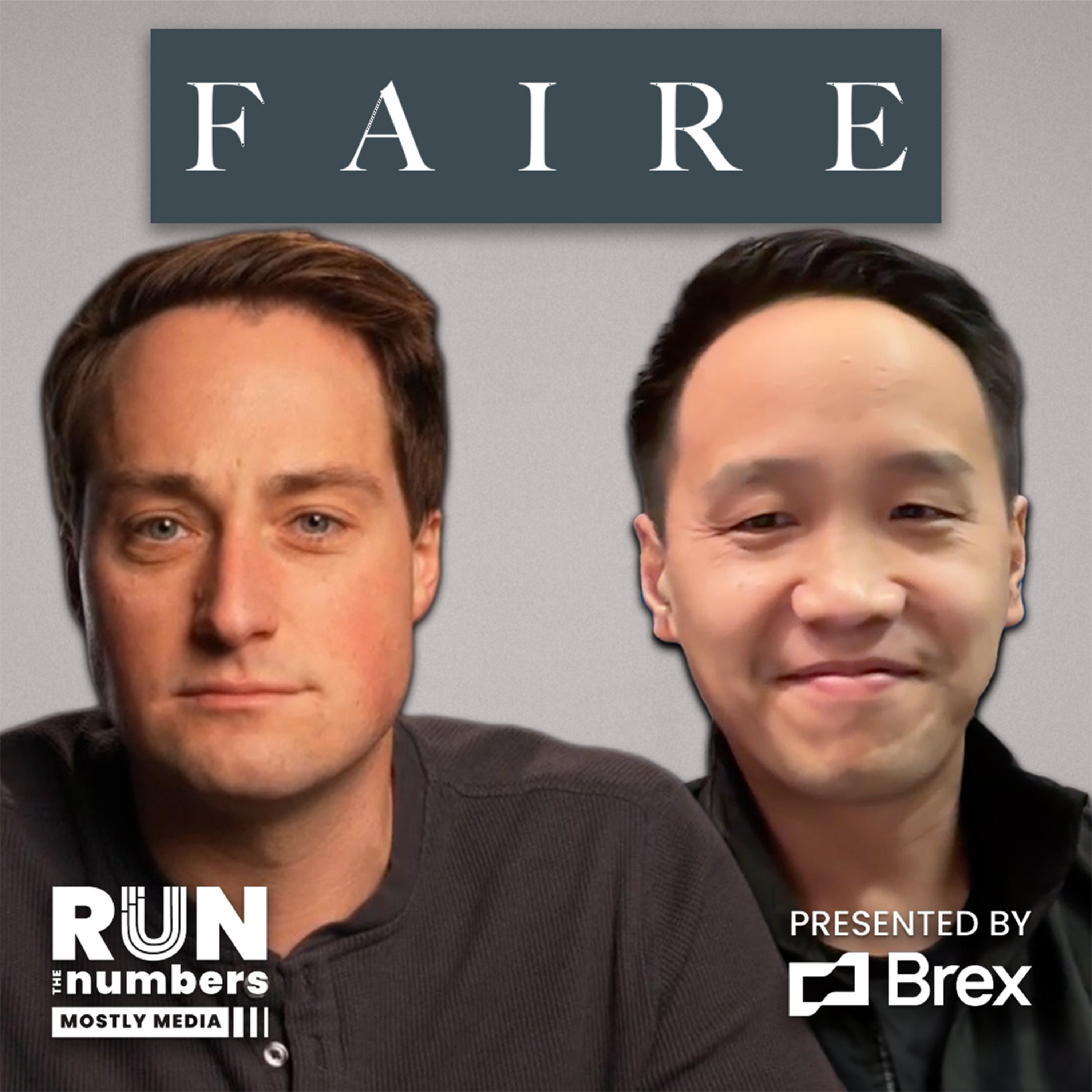
Welcome back to Run the Numbers. The show where I just ran up the stairs and I am really out of breath. The show where we talk with the world's top CFOs and finance leaders about how great companies are actually built. I'm cj, a tech CFO and my goal is to unpack the frameworks and operating principles that make you better at your job. On today's show, I'm speaking with Jason Lee. Jason is the CFO of Fair, one of the leading wholesale marketplaces connecting independent brands with local retailers. It's a company that sits at the intersection of marketplace dynamics and vertical software. This is like the secret sauce, baby. Before joining Fair, Jason spent more than a decade at Square, where he helped scale the business through hypergrowth. He led the IPO process and he ran investor relations. In this episode, we go deep on how Fair works, who it serves, how it makes money and the metrics to track in a marketplace. Business ROI as a decision making framework, what actually goes into it, how teams over rotate on certain components and why discipline isn't about saying no, but knowing where to say yes. Lessons from scaling Square, figuring out the right way to measure a complex payments business and what Jason learned working alongside Sarah fryer, name drop CFO of OpenAI high stakes finance moments, leading Square through its IPO, navigating pricing below the last private round and what that does to your mindset as a finance leader and employee. And finally resetting valuations proactively in the private markets and how to run tender offers if you like this show, please remember to like and subscribe. It'll help us with our algorithmic overlords. And hey, if you're looking to hire some finance and accounting talent, I would
- [02:43]
Host
really love to help you.
- [02:44]
CJ
I run a recruiting service that pairs you with thoughtful qualified candidates from our warm community of finance leaders, people who voluntarily debate ltv, DECA frameworks and tender mechanics on weekends. If that's of interest, shoot me an email@talentmostlymetrics.com and we can talk on to today's episode with Jason.
- [03:01]
Host
Jason, thank you so much for joining me on the podcast today.
- [03:04]
Jason Lee
Oh, thanks for having me.
- [03:05]
CJ
This will be fun to start off here.
- [03:07]
Host
Fair is a superstar in marketplace and vertical software circles, but not everyone may be as familiar with the company.
- [03:14]
CJ
I'm hoping you can just give us
- [03:16]
Host
the overview of who Fair serves and maybe how it makes money.
- [03:19]
Jason Lee
We are a technology platform for retail, wholesale. Now, like, what does that mean in like practical terms? We help independent retailers source and curate what to buy, then manage all of the workflows on buying. And so a little bit of background inventory or product is the retailer's single biggest investment. It's 50 to 70% of their spend or their budget. And like, when you actually think about it, buying the right products is arguably the single most important, mission critical job, right? A retailer buys the right products that actually sells through to her customers. They grow, they get revenue. And even though it's the most single most important job, the wholesale buying experience is super fragmented. It's very offline, right? Think of it as like it happens in trade shows. It happens with sales reps, with paper catalogs. There's emails, there's text messages, and so there's just a lot of guesswork and very little data. You know, there's like three kind of main premises is that we help retailers with one smarter discovery. You know, we have a network of brands, a network of products and brands and then we use AI, machine learning. You have our kind of online platform to help retailers find the relevant product. You know, a curated set of products for their store and for their taste, right? They're not buying pencils, they're buying something that's like meaningful and special and more curated. The second part of that is like the workflows, right? So like you and I, we go on Amazon, we go to like any kind of e commerce website. You buy something, you click, you check out, you're done. Wholesale ordering. You actually have to think about the ordering, the payments, the invoicing, the shipping, when is it coming and just there's so many more aspects about it. So we help bring all of that workflow into one place and make that as seamless as possible. So that 2 is workflows. And then the third part is buying power, right? The individual retailer lacks buying power. So we can use our data, our scale to enable either more benefits that they couldn't already get, right? So we give them things like net terms, we give them things like free returns, right, which big box retailers get, but the independents might not. And then because we can aggregate the buying power, how do we lower shipping costs, how do we lower product costs? And so we do all of that stuff to help solve this problem. And you have to take, you know, you have to solve all three of those problems to really, I think bring this to life. Today businesses run rating about over you know, $550 million of revenue. What's interesting is that the majority of that revenue is transaction based for us. So we earn a fee for every dollar that flows through our platform, right? We help retailers buy stuff and we earn, we take a fee on that part. But that revenue is highly recurring, right? So like why retailers come back to our platform again and again because a, they find great things, they need to restock those great things they find. And you see it in our retention metrics. We actually have, we have over 110% net dollar retention and actually over 95% gross dollar retention, right? So like you put those two things together, it's actually this like interesting concept where you have the stickiness and the mission critical aspect of a software platform but then you have this spend, expansion, power and network effects of a marketplace, right. And all to serve this huge problem. But in a way it's, we kind of bring together these elements. It makes for certainly a fun, fun time from a finance perspective.
- [06:52]
Host
What a beautiful business model. You're, you're a juggernaut when it comes to marketplaces. And like if you don't play in the retail space, you may have not have heard of you before, but I'm having this vision of somebody walking a trade, trade room floor going to this conference out in like, I don't know, Cincinnati and trying to figure out is this vendor legit or not, should I order from them or the process of getting something in the mail and taking that big leap of faith. So there's also like the validation portion, there's, there's the ability to feel secure and like what you're buying, it serves a huge need. And you can't have a store if you don't have stuff to sell, good stuff to sell.
- [07:28]
Jason Lee
You have to find good stuff to sell and like to differentiate yourself. You have to curate the things for your, like local customers and create in a way an experience for it. And it's just, it's wild that even today of how digital, how modern, like we consumer E commerce is just like it's a thing where it's all so normalized. Like online penetration of wholesale buying is still operating 20 years ago, right? So imagine 20 years ago, E commerce penetration for consumer E commerce is, you know, I think when you see a lot of the stats, like it's, you know, 20%, 25%, 30%, it's like, it's like very clearly taking over E commerce and wholesale is still single digits. There's so much benefits, so much value that we can do by bringing on more digital, more modern, more data to that, that whole experience.
- [08:16]
Host
You mentioned the cadence of transactions. So listeners will probably make fun of me because I say this all the time. There's a difference between recurring and reoccurring. So recurring is the same amount at the same time, like on every single time. So like my Netflix subscription is recurring. Then the reoccurring is. I use Uber very frequently. It's for different amounts because I go different distances. And it may be on a Tuesday versus a Thursday. And it sounds like from a surface level that, that you wouldn't be able to predict that. But when you zoom in on behavior and the job to be done, you actually do have a lot of predictability in that model.
- [08:55]
Jason Lee
It's a kind of byproduct of one. You know, we're B2B. There's like B2B versus B2C.
- [09:00]
CJ
Right.
- [09:01]
Jason Lee
And so in the B2B world, because we're addressing something that is mission critical and is the disproportionately biggest spend pool. Like it's buying inventory is way more spend than payroll, than marketing, than their staff, right? So it's the biggest surface area. It's the most important job. And so it is very much top of mind for our retailers. And so that's like kind of point one is like we, it's B2B. We address the most important part. And then I think fundamentally it's like you add enough value, right, that they just come back to you. It's super interesting to see the behaviors because there's certainly the like logical, business, rational aspect of it. The retailers want to go find great new things and so they come back to it. There's joy in finding and Sourcing products, like the owners. This is like an actual owner decision and some of them actually would describe it as is like yeah, it's like I'm like going to Instagram and I'm just like thinking and imagining the vision of my store. One of the interesting stats is that like the average retailer, you know, particularly for some of our like more tenured cohorts, they visit the platform at least or more than one time a day, right? So just like think about it like they're coming back either to find stuff, right, to browse, to get ideation or to like, you know, figure out the ordering when things are coming in, you know.
- [10:24]
Host
I spoke to Dave Yawn, founder and managing partner at Tidemark, and they focus on a lot of vertical software and he described to me that there are three different types of gravity. There's data gravity, like your ERP or even with fair, I'm sure you have order information that's critical, then you have your workflow gravity. So how do you do something day to day in order to stay in business? And then there's the account gravity which is the mind share of the owner of whatever business. And if you have that person like hearing what you said about person coming back to it every day, that makes it super sticky to have the decision maker in there every single day.
- [10:58]
Jason Lee
We've definitely taken a very distinctly end to end approach on the value props, right? Like we could have built a decent business by just attacking discovery, like help you find cool stuff. But if you actually like how do we actually solve the underlying root problems? And like that's where the workflow comes, that's where the buying power comes and that creates every incentive for people to like want to come back. It both engage and there's like so many ways that they're getting value. We have so much data on the individual retailer, what they buy, we're actually integrated with their point of sale so we can see the stuff that's actually selling through. And so that's like so much powerful. And then you get the network, the data of the network, right, of like what is going where, what profiles, like what attributes lead to these type of purchases or these assortments do well in this region. It then becomes an interesting like optimization of the network as well.
- [11:54]
Host
Hey, thanks for listening. We'll be right back after a word from our sponsors.
- [11:59]
CJ
You just launched your new AI product. The new pricing page looks great, I'm talking crisp, but behind it, last minute glued code, messy spreadsheets and running ad hoc queries to figure out what to bill customers get invoices they can't understand. Engineers are chasing billing bugs. Finance can't close the books. Well, with Metronome, you hand it all off to the real time billing infrastructure that just works. Reliable, flexible and built to grow with you. They turn raw usage events into accurate invoices, give customers bills they actually understand, and keep every team in sync in real time. Whether you're launching usage based pricing, managing enterprise contracts, or rolling out new AI services, Metronome does the heavy lifting so you can focus on your product, not your billing. That's why some of the fastest growing companies in the world like OpenAI and Anthropic, run their billing on metronome. Visit metronome.com to learn more. That's metronome.com Here's a growth tax Nobody talks About Every new monetization model you ship creates a nightmare for your finance team. Ad usage based pricing. Now you're tracking consumption against commitments. Launch product bundles. That's multiple performance obligations per contract. Offer mid cycle upgrades. Good luck reallocating revenue manually. But that's exactly where Right Rev shines. Right Rev is the revenue recognition engine built for companies that can't afford to let accounting slow down growth. When your Rev rack is automated, your product team can ship new pricing without asking finance for permission. And your sales team can close creative deals without worrying about downstream chaos. To get up on my CFO soapbox for a sec, I love talking about creative pricing models, hybrid pricing credits, tiered usage. But I've seen too many companies where the sales team is celebrating a huge quarter while finance is still trying to figure out how to recognize half of it. In a world where your pricing model might change three times next year, that flexibility is everything. If you want to scale your monetization without breaking your books, visit right rev.com that's right rev.com where modern monetization meets bulletproof accounting being a CFO, you know how much I love tools that actually
- [14:11]
Host
make the lives of accounting and finance folks easier.
- [14:14]
CJ
One of my favorite tools right now is Rillet, the AI native ERP going head to head with Netsuite. Yes, someone is finally doing it. I met Rillet two years ago when they were still still in stealth. Since then, they've absolutely taken the finance world by storm. Their mission is to make the zero day close a reality. And they're actually doing it. Customers are literally closing their books at 1:35pm on the first day of the month. They've got everything you need to scale your business. Complex revenue recognition, native Integrations, custom reporting, multi entity, close management and much more. They're only a few years in and are already supporting Nasdaq.
- [14:53]
Host
Publicly listed companies.
- [14:55]
CJ
Yes. Seriously, if you want to scale your business on an ERP that wasn't built in the 90s, you need to check out. Really book a demo@rillet.com cj oh cool, that's me. That's R-I L-L-E-T.com cj R-I L-L- E-T.com cj Tell him I sent you there.
- [15:18]
Host
So you mentioned the network and marketplaces are notorious for having lots and lots of inputs as well as output metrics. I'm curious Jason, how, how do you distinguish between those two types, input metrics and output metrics?
- [15:31]
Jason Lee
I think there's lots of way to kind of approach it. The way I kind of try to frame it to myself, and I do think this has been an evolution for me is that output metrics are like fundamentally they're outcomes and they're outcomes and that can exist at either the business level, the customer level, or in some respects like the feature and product level. Right. Input metrics in some respects are measurements of behaviors, of levers that drive those outcomes. And ideally again where you can control. I think in practice it's where it gets pretty tricky is that there can be multiple layers between the inputs and then the ultimate outcome.
- [16:12]
CJ
Right.
- [16:12]
Jason Lee
And so like revenue is a, the highest level business output and then it's a result of, you know, the next level of outputs, new customer acquisition, retention, monetization. And you know, you can have a whole bunch of other drivers. Then you like pick one of those new customer acquisition that is an output metric itself of the next layer of customers acquired. The average size, the average quality. And that's not even getting to segmenting it by different dimensions, right? Channels size of customers. And so then like I've always tried to kind of force myself to think about like, okay, let's be really clear about what's the business and or customer objective that we're trying to like measure? What is the outcome? What are we trying to accomplish? How does it matter for the business? Right. And then I think this is, I think in a good place where like finance plays a role around. Well, how does that ladder up and down, right. And how do you create that connective tissue? And I think the second thing is like this output and inputs, it's like really forcing you to think about do you have an understanding of the business equation? Right. And that the business equation of the components of the inputs that gets to the output. At the end of the day, you're hoping to pressure test, does these sets of actions that we can then measure actually create the output? Is it actually driving, you know, not just correlated by like actually causing that.
- [17:36]
Host
Can you say more about the business equation? I read a lot of newsletters. One that I love is Dan Hocken Myers, who I believe you work with. And he talks about this concept of how every business has essentially a formula, the business equation.
- [17:50]
Jason Lee
It's like, you know, trying to formulate away an understanding of like, how do you break it down into the components of the inputs, adding. And oftentimes it's like it kind of comes back to do you have the right components, do you have the right formula and does it actually cause the effect? Historically, so much of the formula was P times Q equals R, right price times quantity. That business equation is a reasonable business equation, but it actually isn't reasonable for all businesses. That's why for us, like, you know, you could create a very simplistic business equation of like, number of customers times revenue per customer equals your revenue. And that formula is flawed for some businesses, particularly for us where like, oh, we have a very wide distribution of customers. The average customer isn't really the average customer because there's a whole power law dynamic. And so thinking deeply about the business equation, I think is really important to really map. Do you have an understanding of like, what actions actually materially drive your business or the output metric? And so you have to think rigorously about it. You have to have the right feedback loop about it. And it's like not a static thing either. I think business equations need to evolve as the business evolves or the customer behavior evolves.
- [19:09]
Host
How do you think about ownership of metrics?
- [19:11]
Jason Lee
My core belief here is that metric ownership needs to be shared. It needs to be shared for it to be meaningful. It needs to be clearly defined roles. But every important business metric should have a business owner and then should have also a financial or analytical owner. You know, the finance of the analytical owner is make sure the metric is well defined, well understood, is actually useful and there's the right feedback loop. But the business owner equation is like, you need to have a business owner that can then think about, well, what is the learning and the action to go take that like drive activity, the right set of activity. So, you know, as part of that, like, I think I've been very particular about wanting to have an on the finest team of like having embedded finance partners throughout the org. I call it like many CFOs to then be close enough to the business or the product or the function to bring that financial context, but also to be better informed about a not only are the right metrics, but who is what is the right shared ownership there. But it only works too if like you can have too many metrics and then all of a sudden like there's no ownership and like you dilute yourself because there's just too many. You just have to be really deliberate about that.
- [20:29]
Host
I think the word shared is fairly nuanced because you could also take the position that if everybody owns a metric, then nobody truly owns it. To give you an example, let's say registrations say you're an inbound company. If everybody owns registrations, then it's going to be hard to impact any change. If you want to toggle something up or down within the org.
- [20:47]
Jason Lee
I think it was very particular that it's shared. But there is also very clear what I call dri directly responsible individuals. Right. And it's shared in that it's kind of the more important. Like there is a owner from an analytical, like an understanding from the technical aspect of it, the metric definition and then there's an owner from a business perspective. But it doesn't dilute the like the role I think that each plays. If you like really kind of come down to it. I do agree with your point that well, if you have too many people involved, it just dilutes the ownership and no one really feels responsible. So like you have to try to keep it as single threaded. There are some metrics where there is multiple contributors. You know, if you think about product and sales and marketing and at some point like you just have to acknowledge it's like yes, there are, there's multiple variables that contribute to this, but there is a theory from a business perspective that at least gets to ground truth and understanding at least can then push and figure out those dependencies and understands all of those relationships. This is also where I do think the finance and analytical partners kind of also can play a big role. But you need the business side to drive the like the actioning of it.
- [22:05]
Host
You mentioned making sure you don't have too many metrics, right? You can suffocate under the weight of tracking too many metrics. Have you ever killed off a metric at fair?
- [22:14]
Jason Lee
Nothing is free. It's like so easy to, to just say like, oh, there's no cost to this. I think one of the easiest mistakes for both finance teams, candidly finance teams and companies is just Continually adding metrics, right? Like at fair, we love data, we love data to inform. But there is a cost, right? There is a cost of adding. And I think that there is a cost of the desire to want to add more data, more dashboards, more everything, because you think it helps give you more information to make better decisions. But there is a point in a threshold where that more metrics, more data actually starts to create more noise relative to the insight. And so there's something I like ask myself, and I have kind of coined for myself is the signal to noise ratio. I'll give you kind of tangible example when I joined Fair. So one of the things, one of the practices and cadences that we have is we have a weekly business review. It's gone through a bunch of different evolutions, but a weekly business review. And one of the aspects of it is to review metrics. And I literally counted. This is a weekly meeting. To be clear, there were 800 metrics in this review, like the slides and there's a scorecard. And it's both in terms of like time series and then the number of metrics. And I think that level of detail, it comes from a good place. But if you could think about that's a massive signal to noise challenge, right? Particularly when you like really take it down to the individual. And so we made a very intentional decision of like, we gotta sharpen, right? We can ask this question on is it serving us in this moment on the right cadence? Should this be distributed to actually the true owner, like as a metric owner should be distributed and pushed out to those forums versus trying to see everything the way you could actually test it. Just like print the slide deck or print the dashboard and just see how physic how many pages it produces. And you're like, oh my God, you actually throw it out and you build it from scratch, right? Because then like if you start from that, then you like, you like incrementally go from here, which is like, okay, let's come back to like first principles of what is the business equation? What really matters? To look for this group of people and you kind of start to think about, hey, what are the tiering of business level metrics versus deeper down? Are they in the right forums? What should we actually be measuring on a weekly versus a quarterly versus monthly? What's a check metric or monitoring metric versus a true performance metric?
- [24:41]
Host
Man, you put me to shame. I was going to give an example that one time I went from having three retention metrics to 17 in my spreadsheet. But wow, that, that's a lot to track.
- [24:50]
Jason Lee
There is the capacity of the team. For some businesses, I think customer count metrics, I think you have to be really careful about, right. Things like active customers, I think for some businesses it makes sense. For other businesses, I actually don't think it makes sense. Right. And so for us, we monitor our kind of customer counts. They're helpful to understand reach and breadth. But we never really actually had that as a core performance metric for us because of our wide funnel, because of the power law dynamics. You know, when you actually think about it like how a lot of companies define active customer metrics, it's like one payment or one transaction or one thing over a 12 month period or one year period. And it's like pretty low bar for what is actually a customer. And I remember at Square, actually this is probably more square. Like we looked at the difference between like one order for the last year versus 10 orders in the last year, right. And there was a big change in customer count, but a very nominal difference in revenue and volume. It kind of reinforces like, gosh, like that's too low of a standard and like customer count is actually can be misleading if the weight of your business is distributed differently than the average.
- [26:05]
Host
Hey, thanks for listening. We'll be right back after a word from our sponsors.
- [26:10]
CJ
Ali and the team at Tabs are building something that directly addresses one of the biggest headaches I see finance teams deal with today. Pulling data from your erp, your CRM, your FPA tools and your usage systems and actually making it all work together. If you're running usage based pricing or complex contracts, you already know how this usually plays out. Contracts live in one system, usage data lives somewhere else. Billing happens in another tool. Revreck gets layered on top at month end and finance ends up just reconciling everything by hand to close the books. This is exactly the problem TABS was built to solve. TABS is an AI native revenue platform built for controllers and CFOs. It brings together data from your ERP, CRM and real product usage into a single system of record. From there, it automates billing, collections and revenue recognition without finance having to duct tape workflows together every month. If usage based revenue is core to your business, this is the future of how billing and Revrec get done. Go check them out@tabs.com run. That's tabs.com run. We've all been burned. We've all bought that enterprise planning tool that promised the world, only to realize six months later that we've basically taken on a second full time job just to keep the software running. I want to talk about a company that was built specifically to kill that cycle, Abacum. I actually remember my very first conversation with their founder and CEO Julio Martinez over three years ago. Back then they were just starting out in Spain. Fast forward to today. Julio moved the home base to NYC and they're the engine behind finance teams at Strava, Replit and JG Wentworth. ABCOM doesn't turn you into a software admin. The integrations are actually self service. You don't need a $300 an hour consultant to plug in your ERP or HRIs. And they're doing AI in a way that actually impacts the things FP and A teams are doing every day. Things like creating variance summaries, building formulas and modeling scenarios. If you're scaling fast and you're trying to avoid that legacy platform trap, Abacom is the move. They're building the future of our tech stack and they're doing it with a CFO's perspective. Go to Abacum AI to see it for yourself. That is Abacum AI. If you're paying for A level finance talent, they shouldn't be doing B level tasks. CFO time is expensive. Senior finance hires are wicked expensive. And yet in many companies, highly paid operators still spend hours reviewing expenses, chasing receipts and reconciling systems that should already be automated. That's where Brex comes in. Brex is an intelligent finance platform that combines corporate cards with built in expense management and AI agents that automate the repetitive work work finance teams usually handle manually. Transactions are categorized automatically, receipts are matched, policies are enforced in real time. Reconciliation just runs in the background. So instead of adding admin as you grow, you increase output per finance hire. Rex is already automating hundreds of thousands of hours of manual finance work every month across 35,000 companies including Anthropic, Coinbase and Doordash. If you want your finance team focused on performance instead of paperwork, check out brex.commetrics that is brex.commetrics.
- [29:26]
Host
jason, you mentioned that you think about the company having many CFOs dispersed throughout. Have you embedded any cadences at fair that help you plan and predict better?
- [29:36]
Jason Lee
We are big on planning. I would say like this is probably an area where I've tried to also iterate and evolve over time. The act of planning is actually probably arguably as valuable or more valuable than the actual plan itself. You know, as we're like, you know, building a bigger business, like don't get Me wrong. Forecast accuracy is super important. The plan is going to get things wrong, right? It's, you're going to have new information. And so I say that because you want to have the right cadences. Because part of the value of the plan is to understand what new information gets surfaced, what's different from the understanding of the company or of the team. And then you understand the ripple effects across the plan and across the different teams. And then you know how to adjust course. Then you can think about like okay, well what's the, what are the cadences? Like what do we got to do to kind of navigate that? So like many other companies, you start off with your annual plan, right? And that looks at the annual view and the intention there is to bring together the tops down strategy, top down company level objectives with bottoms up perspectives from the teams. And then you make explicit trade offs around priorities, make explicit assumptions, right? Informed assumptions about the model, the growth, you know, how investment plays out and that sets the direction. Then it's like okay, well what are your cadences throughout the year? And so then we have our quarterly planning checkpoints, right? Each quarter we're going to learn new things about the business, new things about the market, new things about our execution. And then it's about adjusting those assumptions, reallocating the investment and just making sure that we're staying close to the reality and versus being dogmatic about our annual plan. So that's kind of the quarterly cadences and then the last piece is then the like the right feedback loops for more real time visibility. We have daily dashboards. We have daily dashboards for the top KPIs kind of, we have the bi weekly reviews for deeper color. And then I do a monthly financial review at least for the monthly financial forum. It kind of comes back to that premise, right? Is like it's so easy in those monthly financial reviews actually to be just backwards looking up like what just happened and explain what happened. And that's it. You know, I actually just had mine today, actually my monthly financial review. And we've kind of evolved. The structure of that meeting is yes, we want to understand what happened, but what did we learn? What does this mean going forward? That's how I thought about call it the like broadest of cadences. And then to the like, you know, learning and iteration. And I think there's like different cadences, you know. And you know, it's being deliberate about what you do at those cadences. As you can imagine like trying to do everything daily, having too much stuff daily is then you have issues around signal to noise.
- [32:21]
Host
This is amazing. This is the inside baseball that people come to the podcast for, Jason. So to play it back, you have something on the calendar for discussion, a compelling event on a weekly basis, a bi weekly basis, a monthly basis, and a quarterly basis. And then you have the annual planning process too. At what point throughout that will you actually reallocate resources if need be? Can it happen at any point or is it on the calendar like quarterly? This is when we actually will start to toggle stuff.
- [32:52]
Jason Lee
If done well, if done right, you make the majority of your investment decision is part of the annual plan. But kind of the point like your annual plan is fundamentally it's going to get some stuff wrong and you need the agility and flexibility throughout the year. Now I think you can go to the other polar extreme and just say like, oh, we can reallocate in these like one off decisions. Well, the problem with one off decisions, if you did everything that way, is it's totally blind to other decisions that you're making. Right. And, and you have no relative understanding. Holistic understanding of like the relative importance and prioritization on the other side of the spectrum can be a, a challenge. And so what we try to do is we try to have the majority sit in the annual plan and the majority sit in the quarterly. Force ourselves to look at what are the 10 decisions that we have to make versus only focusing on the on, on the one. And we try to be disciplined about funneling those decisions that can afford to wait. Now, not all decisions can afford to wait. Right? And then, so then you have to like build the flexibility in your plan and the judgment around what are those exceptions where just like it's so clear and obvious, just go do it. Or of like, hey, there's this marketing spend that is so, so efficient, such high roi. You already have the RI construct that like we should always go after that. And then that means that you have your plan needs to count and give you the flexibility to do it. One of the things I've learned is like there is a people dynamics, you know, an org dynamics. And we'll say it is a lot harder to take money away from somebody than to give that.
- [34:31]
Host
Yeah, you said something so compelling around the dangers of making one off changes. Because you can run around thinking you're doing a service to the business by, oh, I'll change that, I'll change that. And you run around with your hair on fire and you think you're being efficient, but really you're making decisions in isolation. That take you away from those first principles.
- [34:49]
Jason Lee
A big thing that I've tried to press on for the company is around like return on investment and like you could focus so much on the individual decision. But I think I like from, from a CEO's perspective and from a CFO's perspective is like it's not just the individual decision, it's also the portfolio view. Too many one off decision means that you're just, you're very narrowly focused versus holistically focus and it's not just around the roi. Like that is a big part of it, but there is the like, hey, what are your broader principles and guardrails for your return investment across the portfolio? How do you think about long term, short term? How do you think about like execution capacity? It's not just dollars, there is a organizational execution capacity. And so zooming out the quarterly and annual level and even long term level forces you to like think more holistically about that and think about the portfolio versus just being stuck in the like one off this decision on its own without even consideration for all that other stuff.
- [35:50]
Host
It is a maturity thing you have to go through though to let some small fires burn so you can aggregate all the fires and say this is what we actually need to do.
- [36:00]
Jason Lee
I think what you can also do up ahead of time is set your frameworks so that it doesn't feel like every decision you have to like re litigate. Once you've set your framework up front, you kind of know going into the meeting that like hey, we should probably do this, our frameworks support it. And then so then, then you're like really then thinking more about the trade offs. And I do think part of the finance job is to build the framework, build the framework so that not just that it's like a thing that is operating at a castle tower, but you actually bring it closer to the like ground level, to the teams because then they can self serve and they can actually reason about it too.
- [36:40]
Host
I do want to dig into ROI as a framework. So if we were to give people an on ramp to understand this, can you break down the different elements of roi?
- [36:48]
Jason Lee
We could probably spend hours talking about roi. I mean roi, ltv, the cac, like the whole, the whole gamut, you learn new things about it. I actually just wrote an email to my team saying how our investment framework or ROI framework needs to evolve to like a V3 in this year because of some new learnings. Conceptually there's like two things. There's two things that I think are kind of Core premises that I have, which is ROI is like fundamentally are we getting disproportionate value relative to the cost and the effort that we're putting in to something? Then it's around like okay, well if we can consistently Invest at strong ROIs, right. Disproportionate value took the cost and we can then scale those investments, right? Scale sales, marketing scales, R and D to get that disproportionate impact, then you'd end up building a pretty valuable high impact, high growing business that can not only sustain itself but be truly profitable growth. Right? So it's like those are the two premises. Let's go to the next layer down, right? So then it's like okay, yeah, the, the element, what are the elements of ROI of return on investments? And so the return, you know, measuring the value you create for the business. I think there's probably an infinite amount of ways to define the R. Even before you talk about the R, make sure that you like actually can define an instrument. Basic things like revenue, contribution, profit. You can then define the return. But because you actually have the understanding there's. And then it, then it's really around. Okay, cool. Then put it, define it in a way that you can action on. Right. For sales and marketing, the like classic definition there is okay, the lifetime value of a customer ltv, you know, if we define it as a contribution profit for our customers over the life. When we bring someone on for R and D, you know, what we try to do our best on is okay, well what's the change in customer behavior? And does that customer behavior change? Can you reason or connect the dots on downstream on a buying volume increase that leads to a revenue increase and you can kind of reason about that. So that's like kind of the return. There's the investment part of this equation, right, which is like what is the cost, the effort required to generate that return? In some cases it's pretty clear cut, right? You know there's a, there's a media spend for a marketing campaign. The watch out is to make sure you're being very deliberate and clear about the holistic view. There's like the direct, the direct cost of something. But you know, for the marketing team there's the paid media spend, but there's the, the entire team and the systems and the tooling to enable the broader portfolio of marketing spend. But that's kind of what the concepts, right. Return on and then there's the investment piece. And then like looking at that formula, looking at the ratios that serve the Business in the right way. And then there's just like, how do you apply it?
- [39:39]
Host
What's evolved the most for you? The R portion or the I portion?
- [39:43]
Jason Lee
On the R part, the return part. Particularly as the business gets more scaled and more sophisticated and has a wider range of opportunities, no opportunity is the same. Right. So like you want to have one number and one benchmark for all investments. And like that's just not how the reality works. Right. There's short term, long term, there is investments that just show up in the P and L, but there's investments that require a cash investment. Right. So that shows up in a different way. And so there's like different, I think, ranges of investments that both have an impact on how you think about the R and measuring it the right way as well as the I. It's both. I think you kind of have to evolve and look at both. I think one of my biggest learning comes from this. How much time are you spending making the best individual decision versus the best portfolio decision? So much of your early time is focused on driving clarity of ROI for the individual decisions. So that every individual decision is good, meets the bar. I think the evolution is my job and CEOs job and the executive team's job is, well, how are investments distributed across the different types of investment? And I actually think one of the hardest things to do and under, I think under recognized is, is do you actually have the visibility of your investments and how it's distributed in the way that you make your investments? Right. So much of our financial systems are built around tracking investment at like the department level, all of the ways that might not actually be aligned with how you think about the investment decision. And so we've spent a lot of time trying to re a instrument and reason around what are the views that are helpful for us to understand the mix of our investments by R and D and sales and marketing. Like that's the obvious thing, but look even within that, by channel, by motion, by different product strategy initiatives and even things like core bets, core incremental, high confidence, core business emerging, and like longer term experimental. I think that is like one of the most important things to do, but one of the hardest things to do is to actually have that portfolio view. Aligning your investment framework, investment strategy with the actual business strategy. It's so easy to say, but it's actually really hard to do. And I would say like that's been one of the biggest evolutions, I would say in my time at fair, but then now we're thinking a lot More deliberately about the portfolio view and the mix and all the different ways that we want to understand it and then ultimately to get the right feedback loop around, how do we evolve it, how do we change it, what are we learning?
- [42:27]
Host
It sounds like you're making a portfolio of risk adjusted bets.
- [42:30]
Jason Lee
I wouldn't say it's purely on just accounting for risk. I think that is one element of it. Right. And I think risk or kind of level of confidence is certainly a factor in how you think about roi, right? Like the higher the risk or the lower the confidence, you should have more margin of error and have a higher ROI to compensate for that. But even if I think about the portfolio view, like even looking at it from the core emerging and then this experimental stuff, right, like the experiment is definitely an element of risk. You know, these are long term bets that not all of them will work out. And so you need a portfolio of them and, and that kind of, that's the risk element of that. But you need to think about the long term because it's also around like what is the scale of the opportunity of those experiences if it goes right. And like how do you find those asymmetric opportunities? So it's like risk adjusted, but also with an understanding of the upside opportunity, the TAM and like. And I think you need to have bets in each one of those categories because you know, if you really think about long term growth and long term growth beyond the next three years, the next five years, next ten years, and like every scaled business has had to make bets of like long term bets that have, you know, that have higher risk. But there's the asymmetric upside. And from a size perspective you've said
- [43:55]
Host
that discipline isn't about saying no, it's about knowing where yes matters most. I want to get into this because often on the podcast we talk about the art of saying no gracefully. I think there's also an art of saying yes to the right things. So can you expand upon that?
- [44:10]
Jason Lee
Both are important. Like if there was feedback to my team is like, yes, we need to learn how to be firmer about about things. But like what do I actually mean about that statement about, you know, discipline isn't about saying no necessarily, it's about saying yes. I kind of come back to clarity. What are the things to say yes to? Right. And what are the things that you say yes to over others? Because a big element of the job is the trade offs, right? There's finite dollars at a given point in time and there's finite execution capacity. And so It's a question around what do you say yes to so that your dollars and your mind share and your time is flowing to the highest impact areas. Kind of in the same way where like infinite amount of data can actually create a lot of noise, infinite amount of priorities and infinite amount of things to do actually can create execution challenges. I actually think constraints are quite powerful that like forces people to be much more clear and represent their conviction in something. And if you like don't have a constraint, it's actually pretty murky sometimes. And then in some cases also how do we want to sequence? Right? It's like yes, but yes at that point in time. The last thing I kind of say about this also is it's saying yes to the importance of value of efforts that drive to remove inefficiency. So much of like the effort, it kind of so much the natural inclination is to focus on the R and drive more growth, drive more growth. But there is also a lot of ROI around attacking inefficiency. Right. And you can easily create an ROI equation around what is the effort to drive to remove that inefficiency. And oh my, oh my God, there's like a 5x return in a very short amount of time. And what does that do? It actually either gives you more profits or allows you to reallocate to the highest leverage areas. Very recent topical area is probably relevant for a lot of folks, is like infra cloud AI spend in a world where it's just usage, it can balloon in your face super quickly. You know, there's all the usual stuff that you can do there. But you know, we had a kind of, a lot of dialogue with our technical teams around, well this needs to be part of an input and like are there things, actions that we're taking where it's disproportionate cost of return, but it's kind of buried. And so then the, there's disproportionate value for spending a little bit of time around finding that low hanging fruit. And so we gave them a mandate and I just like came out a monthly financial review and they're like, oh yeah, here are 10 things that we had 10 engineers spend a couple hours of their time and just boom, hundreds of thousand dollars of savings that we've gone to redeploy.
- [46:50]
Host
That's an awesome and clear framework. I want to transition with the time we have to some questions just around running your cap table and fundraising. And one thing that I observed was that FAIR actually went and proactively reset its valuation and you don't see many companies at all optimizing for clarity rather than the comfort in these situations. Can you take me through that thinking?
- [47:13]
Jason Lee
Like many other companies from ZIRP from 2021, like the fair's valuation peaked in 2022 at $12 billion. And then like, okay, well what was the backdrop of that time? You know, and I think a lot of people are familiar with it, which is like two things is one, market valuations, you know, came down meaningfully, right? Because like people understood like, okay, what was the true run rate? The trend lines of, you know, a bunch of these. Second point was the industry and our business and our understanding of the run rates and the growth rates of the business, business that normalized too. And then I actually say the third thing is like that was also a time we were overly aggressive on our investing. Higher too quickly, hire too like there's too many layers. So you had all of these things kind of coupled together during that time. We did a restructuring. There's certainly a cost side of that and there's also kind of an execution on that. Too many layers does slow the org down. And so we reorg, cut out layers and just be very deliberate about what is the right org design given the business, given the objectives, given, you know, and constraints to some degree. So there was kind of, we did the kind of a reorg and then on top of that, at the, at the same time, I wouldn't advise this to anybody, but it was the right decision for us was we also restructured valuation. We reset our valuation internally for issuing equity. We reset it from 12 to 5. It could have been very easy to kick the can down the road. And I think one of my learnings, and it was like very clear from. It was hard, but it was very clear both between feedback and the historical patterns. Which is if you're going to do this, do it right, you know, cut deeper, reset your valuation lower because then you can find your floor faster, right? It's painful. And then you can build from there, right? And then there's so much power to progress and momentum from there versus this drip effect of like you don't know where the bottom is. So then like everyone extrapolates to infinity and then all of a sudden they extrapolate to the floor. And it was pretty painful, but it was so much better because what you get is two things. You get clarity, find the floor build and there's like less ambiguity of like what you're trying to solve for in the future, right? Maximize long term growth with good roi that's like, okay, go. We don't like, we've already cut a lot of stuff out. You can just go now. We can figure out which heads to add on, back on. And then I do think it builds you trust, right, that like, hey, you made the right, you made the hard calls. You didn't kick that McCann down the road. You made the decision when you needed to make. And so I do think there was a level of trust.
- [49:57]
Host
I applaud you for doing it the right way and taking an aggressive approach and being proactive. Because there's nothing worse to employees and even to the outside world. If like you said, you can't find the floor, you need to reset it to a position where you can credibly build back. And there's nothing worse than a company that's going to do it, you know, half ass four different times. And people are like, well what's going on here? You got to build back.
- [50:21]
Jason Lee
A superpower at Fair has been we don't shy away from hard choices, we don't shy away from complexity. We implement, embrace complexity sometimes like it's an over strength but if it's in the interest of the customer, if it's in the interest of the business, we will embrace it. And I think, you know, that's, that's really what's allowed us to like attack these things head on.
- [50:42]
Host
And speaking of getting to the other side, congrats on running a successful tender offer. Maybe you can elaborate on what went down there.
- [50:48]
Jason Lee
In its simplest description, like what is a tender offer? It's a structured way to provide liquidity to your employees. But the reality is it's so much more than that.
- [50:57]
Host
I've helped run them before and I'm like, oh wow, we signed up to do a lot here.
- [51:01]
Jason Lee
We signed up to a lot. And like this, it's also the work ahead of it to set you up, right? Because yes, it's a liquidity for your employees, but there's actually a bunch of other things that you're trying to do, right? You have shareholders who buy into the company. So by in that respects, the insignificance of a tender is to set an external mark on the valuation. I think the two is like there is a signal of the tender or the secondary itself. We wanted to be very deliberate about who were we bringing on, right? Are they the right partners? Are they long term investors? And honestly, a little bit around there's the social proof to other investors of someone has underwritten, underwritten our business and the quality of the investor does matter. We brought on wcm. They're a public crossover based in Laguna beach. Probably not your typical location, but they have $100 billion of assets under management and they invest public privates and they have a great set of portfolio companies in there. We had an insider, Bailey Gifford, you know, they're a public fund. And I think why that matters, and it was a little bit surprising to me. I think, you know, in looking back now was I think when we announced it and I was at an investor conference like we were right after we announced it, it was almost as important, was not just, hey, you did a tender and oh, what's the valuation? But who was it with? Right. It wasn't an insider driven round that they could just, just because they wanted to get more equity, they could just assign a big value. It was quality investors who have, are investing at the rigor that we need at the next side doing deep diligence.
- [52:41]
Host
What you said too about signaling and back to the credibility piece, that you have amazing investors coming in who invest at the next stage of companies too, that you were able to check the boxes and pass with flying colors that yes, this business is great and they can also report in a way that's repeatable and clear.
- [53:00]
Jason Lee
We learned throughout the way around,
- [53:03]
Host
around,
- [53:04]
Jason Lee
how do we represent our business? How do we represent our business in a rigorous way, but in a way that's like a new investor could pick up the work for. A tender doesn't start at the tender. It actually starts years before, ideally or at least a year ahead of that. Because what do you have to do is you need to educate the investor. My first meeting with them was actually almost a year before and we actually had multiple meetings ahead of actually launching our tender. So that they had a, they had the conviction coming in and they like already knew us and they just added conviction. They had the pattern recognition on the quality of how we represented our business and the through line on like we do what we say and we like do more. And then I think the fun part of the tender too was like, you know, these are high stakes moments. So it kind of puts a little bit of test around. When they ask these diligence questions, they ask these in a deeper way. Are you thinking about your business in a way that's like, that's, that's deep and rigorous to then represent that. I would say I give a lot of credit to my strategic finance team because they actually had set a lot of the foundation even before I was here. We earned the credibility because the quality of the Work, the rigor, the understanding, the explanation, the translation of like this is how it should play out and it playing out that way of the inputs, the outputs, right. I think that was helpful signal for them and it kind of gave them a little bit of preview in terms of the culture of both the finance team, but also the company at large. And they spend a lot of time with our management team as well. And so that those are all I think important inputs for them.
- [54:42]
Host
And it goes back to the idea of building lines, not thoughts with investors. I really appreciate how you said that started years prior with being able to say, listen, this is what we're aiming for and not only doing that, but exceeding it.
- [54:54]
Jason Lee
You have a conversation with an investor in an IPO roadshow and they're like, oh, tell me about yourself, you have failed. Like that conversation is so unlikely to actually translate because like an investor is making a bet and they like need to due diligence. And so if you really want your put yourself in a position to have investors to have conviction, they have to have the pattern recognition of you as a business and then the leadership team too. And that is highly applicable. And it's kind of played out that way in the secondary for, you know, for us.
- [55:24]
Host
Jason, I'm going to take you into what we call our long ass lightning round. So the first question that I asked every successful finance leader is, what's an example of something you've screwed up on the job before?
- [55:34]
Jason Lee
I let the IPO process, right, And I was kind of sharing a little bit about that and it was unclear whether I should run the investor relations team. I had no business running the investor relations effort. Why? Like I knew everything about the business, but I am a introvert. My parents were like, you're a spokesperson. Like, how could you, Mr. Introvert be a spokesperson? And I remember my first meeting, it was in New York. It was actually the like the second day post going public. I worked on all the internal things, forecasting and health. I knew a cold, but I remember that meeting very vividly because I remember I was sweating under my palms. I was nervous. Like questions that would be a cakewalk around like, oh, why does risk loss matter in your business? How does it work? And I just all of a sudden I could, I was fumbling and it was almost one of those things where it's like the first fumble just creates the snowball on everything else. Your job is not just to know the substance, it is to bridge the last mile. And that is really important. And so I spent a lot of Time screwing up more times. But also, like, you just learn, you build the reps at it, and you kind of have to embrace, brace that a little bit. And I'm not sure if you call it a screw up, but I just remember it was a pretty vivid experience for me.
- [56:50]
Host
We've all had those. If you could tell your younger self something, knowing what you know today, what would you tell them?
- [56:54]
Jason Lee
I'm gonna steal a line from one of our board members, but I'm gonna morph it a little bit. Earn success. And I love it. It's supposed to be hard, but when you actually earn it, it feels like, true. Like you've like, really earned that success, particularly for finance careers, and I think myself was included, is like, you kind of have this like, linear view of success. You go to high school, you go to college. And then I remember, like, there was this finance blog called Mergers and Inquisitions, which was, you know, it was like, you start as an analyst in investment banking, then you go into associate as a, in a private equity fund or a hedge fund or some other growth fund. Then you go to business school, then you go to vp, and then there's this kind of linear progression to this concept of greatness. And the reality is, like, life doesn't work that way. And, like, I think you can. It's so easy just to want to believe that, but, like, it really doesn't look that way. And then, like, when I look back at my time at Square, looks up and to the right, right? Just this linear progression up and to the right. But then when you zoom in, there's like, there's peaks and valleys. And I think those peaks and valleys are actually kind of like the formative. You want to earn your success. It's not supposed to be linear. So embrace the peaks and valleys, I guess. Here's another quote for you. And it's like, actually comes from the former head of comms at Square. He said that if you're not scared, you're not learning. You learn the most when you're stretched and you're like, a little terrified, a little scared. Earn your success. Don't expect it to be linear. Don't run away from being scared.
- [58:22]
Host
Sage advice, more of a technical one. Can you take me through your finance software stack? What tools does your team use to get the job done?
- [58:28]
Jason Lee
You know, we have our netsuite as a system of record. And netsuite is. It's. It's netsuite. You know, I was like, and we have workday, we got workiva, we got Pigment for planning. So I wouldn't say it's like that interesting, but where I do like the natural energy right now and where our pushes around, like how do we apply AI? We were a big goose egg zero there. Like people may be using ChatGPT in their personal account, which is terrible. What struck me is like I went to like a CFO event. It was hosted actually by Sarah Fryer for CFOs and I saw that and I was like, holy shit, we are so behind this is the future. This is like bigger than Excel. What is for the analyst? And, and so since then we've done stuff like, hey, how do we experiment? How do we create hackathons, how do we set okrs? How do we have pilots, A fun example to share and you know, arguably where we're a little bit. I actually do think we're ahead here, which was on the strategic finance side. Like it's actually the place that like a lot of CFOs from what I understand, like they actually haven't put that much on the focus there. Like all the AI is around automating the repeatable stuff, the accounting stuff, and we're doing that too. But one of the things, the magical thing that's happened, we connected Claude to kind of our data warehouse. We know for all like our business data and a lot of our financial data took a snowflake, you know, through an mcp. That in itself doesn't solve anything. It then becomes like, what do you actually do with it? If I was to summarize what's happened, if you like you have the right person, you can bring down and dramatically lower the cost of analysis from like a day to five minutes. When you can bring down the cost of the analysis, you can actually ask deep and broad sets of questions and you can iterate on them so much faster for us was highly revant last year. Terrorists, tariffs blew up in everybody's face. And so if you know, the natural question for us was, well, how does this shift our business? How are customers reacting to it? How do we know if it's truly tariffs or some other dynamic? And I think historically it would have been really costly. The pressure is actually not on the like, can you actually have the technical abilities to query the question? It's how good can you structure the question?
- [60:39]
Host
Last one I got for you, more of a fun one. What's the craziest thing you've ever had someone try to expense?
- [60:44]
Jason Lee
I think I've gotten pretty lucky so far. But here's like two good stories for you the optics of it were so bad, and the logic behind it was so bad. This was like earlier days in Square, but I had discovered that we were spending over half a million dollars on these freshly squeezed coconut juice. It later became coconut juice plus, like, other vegetable juices.
- [61:08]
Host
How much?
- [61:09]
Jason Lee
Over half a million dollars. Part of it was like, hey, the office person wanted to be really responsive to, like, some off comment that some executive said. And it was more than all of the other drinks combined. The double kicker is that these juices expired every single day. So then you had some employees who thought they were doing a service to the company by saying, oh, these expire every day, so let me bring these home so they don't go to waste. And then the office person looks at the fridge and be like, oh, highly in demand. Let's stock up more. Yeah, it's like, harmless, but actually it quickly becomes not harmless and then, you know, becomes very unreasonable. So probably another one would be like, I think we had one town hall at Square where, like, we moved into our new office and we went from catering to, like, in kitchen, right? But, like, no one thought about the difference between Capex and opex. And so all of a sudden, this first town hall town hall was like, why is there oysters? Why is there king crab in here? And, like, the response was like, hey, this is within budget. We can do this. And I was like, oh, God, optics. Something is massively broken. And the optics were awful.
- [62:29]
Host
Both of those stories are hitters. Jason, this has been an absolute blast. Thank you so much for joining me today.
- [62:36]
Jason Lee
It was fun chatting through these and let's definitely do this again.
- [62:38]
CJ
Run the Numbers is a mostly media production. Yelling an intro by Fat Joe. Artwork by Meg d'. Alessandro.
- [62:45]
Host
Show is executive produced by Ben Hillman.
- [62:48]
CJ
Nothing said on this podcast is intended to be business or investment advice. It's the sole opinion of me. A guy who feeds his dog way too much ice cream and has a history of net operating losses.
- [62:57]
Host
Lol.
- [62:58]
CJ
If you like this podcast, hit subscribe
- [63:00]
Host
and give us five stars.
- [63:01]
CJ
It'll take like two seconds and our algorithm overlords love it. Drink water, call your mom, and have a great day.
- [63:07]
Jason Lee
Peace.