← Run the Numbers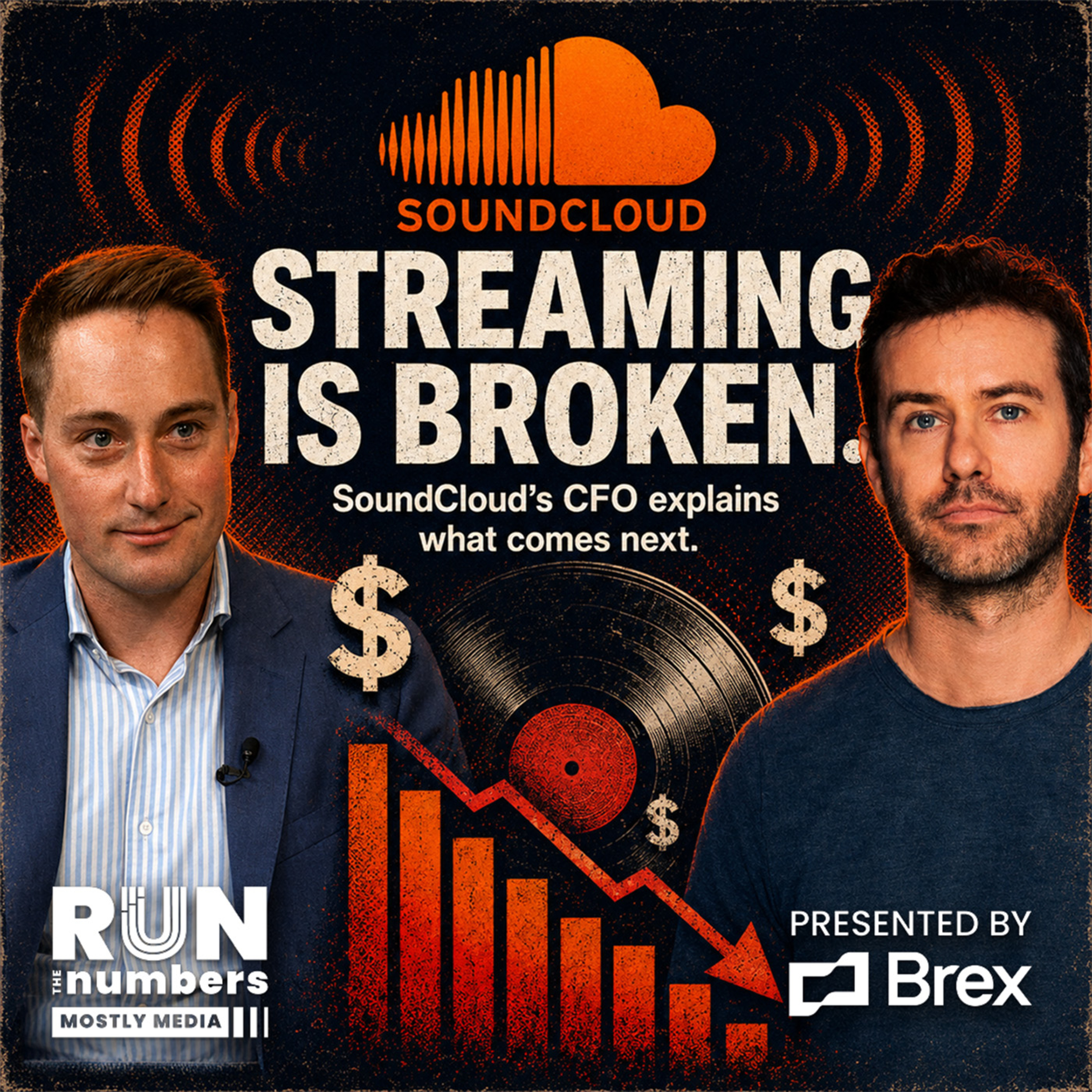
Loading summary
Transcript132 lines
- [00:00]
CJ
Daily active users versus monthly active users. Which one is more important to you?
- [00:05]
Dan Betts
I think of it as a funnel. Semi annual active users, quarterly active users, monthly active users, weekly active users, daily active users. We're not picking necessarily one to optimize for, but we do look closely at the ratios.
- [00:20]
CJ
How do you handle situations where performance may deviate from these normalized trends?
- [00:24]
Dan Betts
Not having as much of like a kind of rigid structure where you have finance people and product people? We still have those disciplines, but at more of a networked structure with a GM kind of at the helm.
- [00:37]
CJ
You threw this term at me. The final boss.
- [00:40]
Dan Betts
It is the indirect cash flow statement, and the way it was set up is almost like a matrix. There's rows and there's columns. It was really hard, but there was an incredible amount of pride and satisfaction that came with solving the puzzle.
- [00:57]
CJ
Is this thing on?
- [01:00]
Dan Betts
Yesterday's price is not today's price.
- [01:12]
Podcast Host/Narrator
Welcome back to Run the Numbers, a very special episode of Run the Numbers. We recorded at none other than the New York Stock Exchange. Yes, they let me in. I interviewed Dan Betts, CFO of SoundCloud, on the EVOL of the music industry. SoundCloud sits in the middle of 1 million fans and 9 million creators. It's essentially a marketplace business that's monetized through subscriptions. So Dan takes us into the mind of a CFO who's trying to balance liquidity on both sides. The metrics he looks at on a daily basis to keep the trains running on time and how often he reforecasts the business. Dan is also super passionate about the intersection of tops down and bottoms up. Forecasting and driving to an answer that department leaders feel like they own. It's not just being pushed onto them. And he's a master communicator. I think this is an underrated skill for a lot of finance people. He emphasizes you have to cater towards the audience you're presenting to know your customer and also just explain stuff to people in plain English. Nobody likes something who's going to church it up. As they say in Joe Dirt, don't
- [02:13]
Dan Betts
try and church it up, son.
- [02:14]
CJ
Don't you mean Joe Dirt?
- [02:16]
Podcast Host/Narrator
All this and much, much more.
- [02:17]
CJ
Dan, thank you for joining me on the Run the Numbers podcast at the New York Stock Exchange. Pretty cool, huh?
- [02:23]
Dan Betts
Yeah. Never been here. First time.
- [02:24]
CJ
It's quite the view for an office. I'm thinking about, like, they can make this box into a wework or something.
- [02:29]
Dan Betts
It's like a nice little aquarium.
- [02:30]
CJ
I want to do some quick hitters because this is a historical place. Me and you, we've had dinner together, and I think we found out pretty quickly that we're both business nerds. Do you remember the first stock you ever bought?
- [02:40]
Dan Betts
I remember as a little kid looking through, my dad would get the USA Today, and I would go to the finance section and, like, companies I knew I would, like, look at the stock ticker. But I was probably in my mid-20s when I had, you know, paid off some debt, had a little bit of money to invest, and I had read Ramit Sadie's the Financial Guru, his book, and I just followed his super boring advice and bought a Vanguard index fund, like, the cheapest thing I could buy that was like, balance. So it's not like, no flyer.
- [03:11]
CJ
You were diversified from the beginning, my friend.
- [03:13]
Dan Betts
Yeah.
- [03:13]
CJ
When you think back on IPOs, right? I think a lot of us have this picture of a company ringing the bell. You get the picture of the founder, the CFO on St. Is there one company or one moment that comes to mind? Like, oh, I. I remember that IPO.
- [03:26]
Dan Betts
I lived in Chicago from 2007 to 2014, and in, like, from, like, maybe, like, 08 to 2010, the darling startup of Chicago that everyone wanted to work for was Groupon.
- [03:41]
CJ
I knew you were gonna say Groupon. Yes.
- [03:43]
Dan Betts
I had an interview there to be the assistant to the controller. So I didn't interview the cfo, but I interviewed with the controller, the technical controller, because they were doing so many, like, acquisitions, and the purchase accounting was crazy. I thought I did really well in the interview. Like, I thought I absolutely crushed it. And I didn't get rejected. I got ghosted. I emailed, I called the recruiter. I just. I never heard from them. And then I found out later on that, like, a lot of people had gotten ghosted. They grew so fast.
- [04:10]
CJ
They might email you back today and be like, hey, by the way, you got the job.
- [04:14]
Dan Betts
I remember the weather that day. It was like a super cold February day in Chicago. I remember sitting in their lobby, like, manifesting like, this is the place that I'm gonna work now. I was devastated. If you think about their IPO, they IPO'd in either 2011 or 2012. I think they set it at, like, 20 bucks. A year later, it was three bucks. And so it's like an epic rise and fall. It kind of had everything. They had, like, voodoo accounting. And there was an SEC investigation. I would have been in that, implicated, potentially, maybe. Who knows? Depends how I would have acted if I gotten that job. You know, they had the Accounting issues.
- [04:52]
CJ
I think he dodged a bullet there, honest. Do you think the benefits of being a public company are the same? I think it's changed a lot in the last 30 years.
- [05:00]
Dan Betts
I think the benefits are what they used to be. Mostly because private capital markets have just expanded so much. So if your primary goal is to just get access to growth capital and you can do that without the whole rigmarole of and red tape of going public, why would you?
- [05:17]
CJ
There is an element though of the publicity of it all. I mean this is a pretty cool media setup. People get to know the company's name and I think like if your core infrastructure to a company, they probably want to know you're going concern and can see, get inside the books and feel good about it. So I don't know if it's the same or if it's just different being a public company these days.
- [05:35]
Dan Betts
I'm not sure I'm interested to see, you know, like 10 years from now are there, are there more or less. These trends have a way of kind of coming and going. Like you know, the SPAC thing was super hot, kind of fizzled out.
- [05:47]
CJ
I want to talk about SoundCloud in the music industry. I was incredibly pumped to have you here today because I've grown up a user of SoundCloud, a fan of a lot of the artists on the platform and I'm also just fascinated in the business model. How do you think about the evolution of the music industry?
- [06:03]
Dan Betts
So it was founded in 2007, it's been around 18 years. It was founded the same year as Spotify and the mission was to connect artists and fans directly through music. And 18 years later, SoundCloud today it's, it's really the only global two sided music platform that enables direct artists to fan discovery, engagement and monetization at scale. One of our credos is, you know, in a world where streaming alone, it doesn't sustain the vast majority of artists or it also doesn't really satisfy kind of super fans who really crave engagement. And it's more than just like there's a big difference between like we call passive music consumption, like the phone's in your pocket and like oh my gosh, like I love this. I want to like drop a comment on it. I'm going to get a message back from the artists. Been a lot of latent demand for that. And SoundCloud is very well situated now to capitalize on how the music industry is moving towards creator centric platforms, specifically platforms that facilitate really deep engagement, provide monetization opportunities beyond just streaming. So that's a bit kind of on the SoundCloud background. The question of the evolution of the music industry. To tell that story, you really kind of need to zoom out and look at what's happened in the music industry over maybe the past, like 25, 30 years. To me, that story, it's around three major shifts or kind of three distinct eras of the music industry. There's the physical era, the streaming era, and then kind of what we're in now, which is the creator platform era. Before streaming, the music industry largely orbited around the majority of content owners, the major labels and the publishers. They had tremendous amount of power. They controlled music recording, controlled manufacturing, they controlled marketing and distribution channels.
- [07:52]
CJ
It was vertically integrated in a lot of ways.
- [07:53]
Dan Betts
Yep. They had a ton of negotiating leverage over artists. Their business model, selling albums was a beautiful model for them. It was a bundle. You can think of it like, kind of the way that, like cable was.
- [08:06]
Podcast Host/Narrator
There's a bundle of songs in that way.
- [08:07]
Dan Betts
I mean, analogous to cable where, like, if you really needed ESPN, you had to buy like 150 channels. In the 90s, if you heard a song and you're like, I love that song so much, I need to be able to listen to that song whatever I want. You had to buy the whole album. The price of a CD maybe in the early 90s, was like 15, 17 bucks. Yeah, it's 30 bucks in today's dollars. So the margins were really good. In addition to vertically integrated, all the control that the majors had over kind of the whole ecosystem, negotiating leverage that they had over artists because they controlled access to the distribution channels in maybe the mid to late aughts. Streaming.
- [08:50]
CJ
What was the first major streaming platform?
- [08:52]
Dan Betts
I don't know if Spotify was technically the first one, but it was certainly the first one that gained popularity.
- [08:58]
CJ
Yeah, I think Pandora may have started earlier, but it was more like Ross Hanneman radio on Internet, more so than a streaming platform.
- [09:05]
Dan Betts
So when streaming came along, that. That completely changed the economics of music consumption. What used to be a great deal for content owners and not so great of a deal for the consumers. Digital streaming music consumption is an incredible deal for consumers. So you've got like maybe in today's dollars, 30 for an album versus, you know, 10, 11 bucks a month to listen to all the world's music for as much as you want. So it was kind of an unbundling of that old model. And over time, streaming scaled globally. You can look at the MAU for like, Spotify advertising Monetization improved. So the overall kind of digital revenue pie, like the amount of royalties earned from consumption digitally, that pie started to really grow to a size that could support the label ecosystem. I said it before, the fact remains that the vast majority of artists like thinking about everyone who's creating music. Streaming economics alone are not enough to support the vast majority of artists. And that reality has led to the era that we're entering now, which is the creator platform era. And that's about scaled platforms that connect fans and creators directly, which provides a foundation for a two sided marketplace. The barriers to making music and distributing music, they're lower than they've ever been. You used to have to like know how to read sheet music and know how to play an instrument and know somebody who could get you into a studio, probably have a relationship with a label to hook you up with the producer. Now artists can create independently, they can distribute globally, they can market through social platforms, they can monetize across multiple channels and they don't need a label to do it. So they can truly be independent. The trade off to that is the, you know, the supply of music, the amount of of tracks being released is exploding relative to what it used to be. And AI and generative AI tools like Suno Nudio play a part in that. The kind of pool is a little bit more crowded, so standing out maybe if you're an artist, maybe feels like it's a little bit harder. But in this moment, compared to the way things used to be, creators have more ownership, they have more leverage over their own destiny, they have more direct access than ever before really. That's what makes SoundCloud such an interesting business that's really well positioned for the moment that we're in now. We're a two sided platform that's built specifically for music, connecting creators and fans. On the fan side we monetize through subscriptions and ads. On the creator side, we monetize through tools, services and distribution. And strategically we. We think about the future value in music as increasingly being not just about passive consumption, but about connection and community and direct monetization.
- [11:41]
CJ
Hey, thanks for listening. We'll be right back after a word from our sponsors.
- [11:45]
Podcast Host/Narrator
I've seen a lot of FPA tools and a laugh is one of the few that gave me that aha moment. Within minutes I remember watching their founder shout out to Albert, connect my netsuite data and build me a full P L live in minutes. A LAF is now trusted by hundreds of leading companies. I've had the CFOs from Turo 8, Sleep, Zapier and more on the Pod and every one of them is a huge advocate. I also just published my second annual CFO Tech Stack Report and Aleph has been on the podium both years including a number one finish in the 50 to $100 million segment. This year, instead of being just another planning tool, they built a real enterprise grade data foundation for finance implemented at startup speed with AI native workflows woven into its DNA. All your systems erp, CRM, hris, ats, product usage and more, powering one clean governed data layer that finance can actually trust. With AI moving as fast as it is, they're pushing even further. Mcp, custom AI chatbots, AI powered variance analysis and the list keeps growing. Try it with your own data@getaleft.com run that is G E T A L E P H.com run tell them CJ sent you here's a growth tax that nobody talks about Every new pricing model you ship creates a nightmare for your finance team. Usage based pricing. Now you're tracking usage against commitments product bundles. Now you're untangling what to recognize and when for every line item. Mid cycle upgrades. Good luck. Manually reallocating revenue. The pricing strategies that drive growth are the same ones that break your finance process, Right Rev turns that irony into a competitive advantage. Your product team can ship new pricing without asking finance for permission, and your sales team can close deals without worrying about downstream chaos. But I've seen too many companies where sales are celebrating a huge quarter while finance is still trying to figure out how to recognize half of it. It's actually me. So here's a good place to start. Right Rev built a free tool@calculator.wrightrev.com it scores your RevRec process, shows what's exposing you to risk, and tells you exactly where to focus before it bites you in the rear. Probably explains why your last close took so long. Check it out at calculator.wrightrev.com, all right, without the Boston accent. Calculator.wrightrev.com I got news for you. The ERP category is finally getting disrupted. And if you haven't heard of Rillet yet, please pay attention. It's the AI native ERP built specifically to replace netsuite, and it's already won over hundreds of finance teams. Their mission is to make the zero day close a reality. And they're actually doing it. We're talking teams closing the books at 1:35pm on the first day of the month. Companies like Windsurf, Mercore and hundreds of others run their entire finance stack on really revenue recognition, close management, multi entity, native Stripe and Salesforce integrations.
- [14:31]
Dan Betts
Whoo.
- [14:31]
Podcast Host/Narrator
Everything a scaling company needs. They've got 5.050 wow,50 stars on G2. They're backed by A16Z and Sequoia. Heard of them. And CPA led implementations that get you live in 45 days. That is simply unheard of in the RP space. If your books aren't running as fast as your business, check out Rillet. Book a demo@r.com CJ that is R I L L E T.com CJ that's me.
- [15:00]
CJ
I've always thought about SoundCloud as the place you go to have a deeper relationship with whichever artists that you enjoy listening to. I think I heard you say passive before. If you think about some of these other platforms where you just have maybe headphones in your ear and you're doing work or something or you're in the car driving. But like if you're a true fan of somebody, you want to support them. And it seems like it's a model that aligns with the longer tale of artists who may not have the distribution of a drake.
- [15:25]
Dan Betts
We have 100 million active fans, 9 million creators. That's. That's a good foundation for. Yeah, it's a good foundation for two sided engagement. I think that's part of our uniqueness that we've operated at scale on both sides of the ecosystem, fans and creators. And it's, it's something that the other platforms touched on that they don't fully replicate. Maybe they do part of it, but they don't replicate what we do on both sides of the marketplace. Streaming services like Spotify or Apple Music, they have massive listener reach, but they have limited direct relationships with artists, labels and artist management companies. They have deep relationships with artists, but they don't have their own fan facing platform.
- [16:03]
CJ
We're on a podcast right now. We're going direct to people. There isn't, you know, a label in between us. I think it allows you to have a relationship that feels more organic with whoever's supporting you.
- [16:13]
Dan Betts
Yeah. You don't need to go through a distribution channel and be told by somebody else like what your fans and listeners think of you.
- [16:19]
CJ
Anecdotally, I've heard that touring plays a huge part in how artists make money today. Is that true?
- [16:24]
Dan Betts
Yeah, kind of going back to like the, the bundled business model being super high margin and now that the unit economics for what you can earn just from music consumption being less now than it was. But there are a lot more monetization opportunities. Like I'm sure a lot of your listeners have experienced that. People that like going to concerts, like it's pretty expensive to go to a concert, but the model and like maybe say the the 80s or even 90s was tour so you can sell out,
- [16:53]
CJ
so you can sell the album. Yeah. And now isn't it like sell the
- [16:55]
Dan Betts
music where it's like release music so you give people a reason to want to go see you tour and then the ticket prices are a lot higher than they used to be and that's where a lot of people still buy like, you know, merch.
- [17:07]
Podcast Host/Narrator
Yeah.
- [17:08]
CJ
It's interesting how you go through this bundling and unbundling in any sort of business mod model and then people identify different surface areas to monetize different marginal opportunities.
- [17:17]
Dan Betts
Yes.
- [17:17]
CJ
Dan walks into work CFO of SoundCloud what's the first metric you want to get a glimpse at?
- [17:23]
Dan Betts
One that I check in the morning, every day, even on weekends. There's an automated kind of dashboard that gets sent to pretty much everyone in the company and it is Net adds. So it is the day before. How many subscribers did we add? Fan paid subscriber or creator paid subscriber? I look at that first just to get a pulse check and then I will double click to see. There's three components of Net ads. There's a first time subscriber, there's a one back subscriber, somebody who maybe like subscribed a year ago and then it turned out and then they came back and then there's churn subscribers. So I just want to get a sense of like kind of how those are moving. There's a lot of engagement metrics like on the interactions between fans and creators and different ways to look at listening time. We keep a close eye on those. You know, they're primary signals of depth of usage. But I think about those kind of in the context of how they're trending over time. Not necessarily something that I'm reflexively checking every day, but Net ads, I check.
- [18:21]
CJ
This is a super nerdy question, but the net ads part, first of all, I think it's amazing because it allows you to just be in the rhythm of the business. Do different days traditionally have more net ads than others?
- [18:31]
Dan Betts
Weekends are better. One of our sweet spots are DJ sets. If they hadn't been on the platform in a while, the thing that got them back is a friend of theirs saying like they found this DJ set like I know you like a certain dj and I see that they dropped their last set from a Music Festival on SoundCloud. I'll send you a link to it. And that might be the thing that kind of gets you back.
- [18:53]
CJ
Daily active users versus monthly active users. Which one is more important to you?
- [18:58]
Dan Betts
I think of it as a funnel. Semiannual active users, quarterly active users, monthly active users, weekly active users, daily active users. We're not picking necessarily one to optimize for, but we do look closely kind of at the, at the ratios of those. What's fun is, you know, when we have like a go to market or some comms around, like a big product launch or a product feature is seeing which ones get inflected or not.
- [19:26]
CJ
So we were talking to Rama Khadkar, CFO of Notion, and what she was saying is that they've done campaigns in the past that you can't even predict how good they'll do. And they pop off like they did something where basically you could create your own, like, emoticon of your face within Notion and it went nuts. Like she didn't have that. In our forecasting model, I'm sure there are exogenous events that happen with artists with DJ sets with. I think we just had Coachella.
- [19:50]
Podcast Host/Narrator
Coachella that just happened.
- [19:51]
CJ
I'm sure there are things like that on the calendar that will happen that cause things to go up or down.
- [19:56]
Dan Betts
Yeah, you get, you get pops from viral moments. It's sad, but you get a. You get a pop if an artist passes away.
- [20:04]
CJ
I've been looking for a way to work Lil Peep into my podcast for years now, so rest in peace. Heard them first on SoundCloud. LTV. Lifetime value.
- [20:12]
Dan Betts
Yeah.
- [20:13]
CJ
Do you think about LTV on both sides of the platform?
- [20:15]
Dan Betts
You know, like all direct to consumer subscription businesses, we need to have a deep understanding of our sales funnel. All the way at the top of the funnel. Maybe like, you know, the very tip top could just be like impressions from a campaign app installs to they signed up to. They took a trial of, you know, a free trial to experience the benefits of being a paid subscriber. The interactions that they have on the homepage. What does, you know, week one retention, month one retention look like all the way down to kind of build your retention curves over a period of time. We're talking cohorts here. Yeah, we're talking cohorts. Optimizing those is the name of the game in any direct to consumer subscription business. We're refreshing them all the time, but we're really scrutinizing them on a monthly basis. And certainly anytime we're doing a reforecast or a budgeting season, we're deeply analyzing it from like a cohorted retention perspective. You know, if you want to hold a marketing team accountable for maybe something higher up in the funnel and the product team who's working on like how do we make the homepage and the discovery page more engaging and more personalized for people? You would expect maybe those product things to have an improvement on week one retention month one retention. Whereas maybe marketing is more about like, hey, let's, you know, get more people to have familiarity and exposure to the app.
- [21:38]
CJ
Hey, thanks for listening. We'll be right back after a word from our sponsors.
- [21:43]
Podcast Host/Narrator
Maybe the first thought you had when you started a tech company wasn't about scenario modeling or Runway management or the first fine print of an S1. I love a good S1. That's not where the magic happens. It's more fun to build something new, Design your quarter, zip or network with VCs. But what if you got your financials right early, long before your investors started asking for it? There's no limit to how far you can go and how many headaches you could stave off. Now that's where EY comes in. EY has been a part of Silicon Valley since, well, it was just a valley. And it's helped some of the most successful names in tech go from startup to exit to mega cap. You build the next big thing. And with the teams across strategy, tax, audit and transactions, EY will help you build your next big thing, right? Learn more@ey.com tech startups that's ey.com tech startups. Let me ask you something. If your board wants financials, would you be certain you're not wasting money on SaaS? Or if a major renewal hits, would you know if you're paying a fair price? Your vendors would. They see thousands of deals every year, but most finance and procurement teams see one deal at a time. That's a tough way to negotiate. SpendHound fixes that intelligence gap. It's one place to track all your software spend and gives you pricing benchmarks across more than 10,000 SaaS and AI vendors. And it's based on real spend data from over a thousand companies. SpendHound connects to your financial systems and shows every software dollar you're spending. Contracts, renewal dates, overlapping tools, nothing quietly auto renews, and you don't pay twice for duplicate tools. SpendHound is the number one rated SaaS. Spend management platform on G2. It's trusted by teams at ZoomInfo, Hootsuite and Kit. Free forever. Wow for SMB and only 10,000 per year for enterprise with 150,000 savings guaranteed. If you want to stop negotiating blind, go to spendhound.com cj that's spendhound.com cj trusted by over 1000 finance option procurement teams. The CFO role has evolved faster than the tools built to support it. Most finance teams are still running infrastructure designed for a job that no longer exists. The reporting, the reconciling, the close that bleeds into the next month or quarter. That's not finance. That's overhead with a really crappy title. And the cost isn't just your time, it's everything your best people aren't doing while they're behind. Agentic finance shouldn't multiply your output. It should eliminate the work that was never worth doing in the first place. That's why I run mostly media on Brex, an intelligent finance platform with AI powered agents that capture expenses, automatically, enforce policy before the spend happens, and close your books in minutes instead of weeks. 35,000 companies like OpenAI, Coinbase, Anthropic and Doordash already run on Brexit. It's time to get Brex af. Learn more at Brecht Stocks Metrics.
- [24:35]
CJ
You teed me up nicely because I do want to talk about your modeling philosophy. Yeah. Are you more of a bottoms up or tops down modeling kind of guy?
- [24:43]
Dan Betts
I like to do both. The key is when you do both at some point you need to reconcile them. Certainly when I'm doing budgeting and what will be like kind of the backup for my budget models that's all going to be bottoms up work. Unless maybe it's something exploratory like a new line of business or something like that where it's like you don't yet have the baseline trends that would be the input ingredients into the model.
- [25:07]
CJ
We were just talking about cohorts. I'm sure you get information from that for this.
- [25:10]
Dan Betts
Before I kind of do the formal budgeting which is going to have a lot of bottoms up work, I like to conduct some sort of strategic assessments and planning among leadership. GM's key functional leads across, you know, product and marketing on each business line. And that's to me where the top down planning can be useful because you don't need to bring everybody kind of into the models you like. Should be hiring good FPA and finance people and like trust the models. And I really want my GMs also to like have a deep understanding of the models and trust the models. Makes it easier to have them kind of hold people accountable. You know, after 1H results are in, you know, you have a good sense of like lagging indicators, how the business is performing in the first half of the year. You should have a good sense of how the year's gonna shape up and your kind of predictive indicators, an assessment on the effectiveness of your growth tactics. It's also a good time to kind of align with the check in with your, your board or your investors to make sure that you know, the management is aligned with the board on their expectations. You know, they may want maximum growth at all costs. They may want to see operating leverage sooner rather than later. So those kind of like top down assessments that kind of informs the top down target. And so say you maybe land at like we have to grow 25% next year. To me, bottoms up is then how you like validate that and you want to hold people accountable to it. I'm not telling GMs like, hey, you got to grow revenue 25%. Figure it out. That conversation to me, to make it productive and to hold people accountable and to have some discipline around it is hey, we've got our model. So maybe the model for net ads is atop a funnel and some sort of history and baseline trends of kind of how the funnel gets down to trial starts and trial conversions. Business like SoundCloud has been around for a while. So we have a good baseline on a lot of metrics. And in those strategic planning we're kind of talking about like, you know, these tactics seem to work. Maybe these ones aren't working as well. These are some of the new fresh tactics. You align those tactics with what you hope they should move, whether it's churn or something in the top of funnel. You then make assumptions on when you tune those and by how much and then trust the model that maybe spits out 25%. And I'm not focusing the people on the 25%, I'm focusing people on the inputs.
- [27:33]
CJ
So to you, is revenue an output or is an input?
- [27:35]
Dan Betts
Yeah, I think revenues and output. That's how I like to talk about it.
- [27:39]
CJ
So you're walking them through the levers to end up there.
- [27:42]
Dan Betts
Yeah, and walk them through the arithmetic.
- [27:43]
CJ
How do you handle situations where performance may deviate from these normalized trends? Because you have this baseline of data that goes all the way back to 2007, but then you're also tweaking the model along the way. To make sure that you're optimizing for both sides of, of this two sided business. What's your reaction when you have this forecast and something deviates?
- [28:02]
Dan Betts
I want to make sure that we have the infrastructure in place to actually get that feedback as close to real time as possible. So that you're not in May being like, oh shoot, we just caught that something in February started to deviate. Once you kind of have that infrastructure in place, the question is the information flow. What I like and what's been working really well for us is not having as much of like a kind of rigid structure where you have finance people and product people and data people. How do you think about it? People like we still have those disciplines but at kind of more of a networked structure with a GM kind of at the helm that GM needs to a have a really good understanding of the model and what assumptions kind of were tuned and what the expectations are kind of based on the baseline. When things do start to deviate, you have to really rely on their judgment to kind of know who to spin up. Because it may be like, hey, we did this big go to market and we didn't see it move these metrics. We need marketing to like deeper dive over here. It may be somebody who's super close to the app. User data, user experience, product data. I like that structure where you've kind of got a little bit more of a generalist who's at the helm and you know, in an ideal world kind of has a control panel where they're getting like either a green light or a red light that's going off. How often do you think a company
- [29:25]
CJ
should revisit or reset its plan?
- [29:28]
Dan Betts
You're always assessing, but you're not always changing. I like to be formal about doing a pulse check in kind of early or mid Q2, certainly the first quarter, maybe the first four, five months under the belt. You should have pretty good pulse on how you think if you're five months
- [29:43]
CJ
in, you should know what you're going to be at in six months.
- [29:46]
Dan Betts
You should have good indicators for how the year is going to play out. And so I'll usually do an updated reforecast at some point in Q2 and it may be we're just kind of holding to the budget. And then I like to kind of do that same pulse check again in Q3 kind of around in that time where you're doing like the strategic planning and then starting to get into budget mode. Because if you're doing the budget say in September, October I want to be really dialed in and buttoned up on how the year's gonna play out so that like on January 1st of the next year, I'm not like, oh, my budget was a little bit off on a run rate perspective.
- [30:23]
CJ
You threw this term at me, the final boss. I love this term. You got to walk me through it. What does it mean?
- [30:29]
Dan Betts
It is the indirect cash flow statement, which was an assignment that I got in 2007 at my first job at Deloitte, was auditing a very large real estate investment trust in Chicago. They were the second biggest owner and operator of malls. Maybe they still do, I don't know if they do, but they owned South Street Seaport, they owned Water Tower Place. I don't remember what their market cap was, but they were humongous. 10qs, 10ks. I was staffed on it year round. After my, like maybe six months of being on engagement, they gave me the cash flow statement to audit. This was 07. So this is like an Excel based work paper. It took two months maybe to audit. And the way it was set up was like a puzzle. It was really hard, but there was an incredible, incredible amount of pride and satisfaction that came with solving the puzzle. And it really kind of scratched the, like, nerd itch in me. When I was a sophomore in college and I had my first financial accounting class, I was just like, oh, like, I kind of like this. And the way it's set up is almost like a matrix. There's rows and there's columns and the rows are all the lines of a cash flow statement. So if it's an indirect cash flow statement, you're starting with net income and then your bridging down to cash flows. So your net income is everything that flows through equity. Then you have to assign or ascribe all the movements in the balance sheet to where they should sit in the cash flow statement. Whether it's an operating activity, a financing activity, an investing activity. There's nowhere to hide the Y axis. The rows are the lines of a cash flow statement. And then the columns are the changes in every single balance sheet account. And then the cells in between. It's almost like tic tac toe. You have to investigate, okay, deferred revenue moved from like X to Y. And there's a narrative that goes with that, like, oh, we sold more annual subscriptions than we burned off in deferred revenue. But sometimes, like for Maybe like a PP&E account or a Capex account, the whole change isn't all going to go into One row. So you really have to kind of. That's why I said there's nowhere. You said there's nowhere to hide. Like, you have to drill into it. You have to have a lot of conversations with the client and kind of figure out where everything. Slots in Enron didn't even want to
- [33:00]
CJ
have a balance sheet. So why is this so important to a business like yours? You don't have stuff that you can touch really in the real world, but I'm guessing it helps you get a grip on why things are moving.
- [33:10]
Dan Betts
I want the people that work on my team and the people that work for me to have a very high fluency in how they talk about the business. Especially in today's environment where even growth companies aren't being valued as much on, maybe for an AI company, but like, here's a super high revenue multiple. There's a huge focus on cash flows. And it's not uncommon for a company to have a pretty big difference between their cash flow and their net income or their ebitda.
- [33:35]
CJ
Their adjusted ebitda.
- [33:36]
Dan Betts
Or their adjusted ebitda. And so me as a cfo, if I'm sitting in the boardroom or talking to the investors, I need to be able to talk about how you bridge between those two numbers. Like, maybe they're close to each other, but maybe they're not. And if they're not, I need to be able to really tell that story and I need to know what I'm talking about and I need the people that work for me to. To know it too. And there's really just no better way than to actually get in there. When you do that work, the kind of magic of double entry accounting is what's at play. You have to kind of think almost like T accounts.
- [34:10]
CJ
I've been in a room too, where I was walking somebody on my board through what our EBITDA was, and I'm like, I'm just making it up, you know, and that'll get us to 11 2. And he's like, I have you at 14 4. And then I'm like, really? And so we were both talking about profitability, but different ways of looking at it, right? So I was talking about it from the operator's perspective, he was talking about it from the management perspective of what they were going to be able to pay dividends on. And then there could have been this third voice in the room, which would have been what the credit agreement would have said.
- [34:41]
Podcast Host/Narrator
It.
- [34:41]
CJ
It is. So all three can be true, but if you can't bridge between them. You may as well just stop talking at that point because nobody's going to agree. And you can be right, but. But actually wrong.
- [34:51]
Dan Betts
Yeah, it's like pro forma A, pro forma B, pro forma C. This one goes there, this one goes there. This one's for this purpose.
- [34:56]
CJ
To your point, like being able to walk through that, you know the business better than anybody else.
- [35:01]
Dan Betts
And I think for CFOs, the number one currency we have is credibility.
- [35:05]
CJ
Speaking of credibility, a lot of that comes down to communication. You've told me that you like to talk about things in plain English. I think we've lost that a bit in today's business environment, especially on LinkedIn.
- [35:16]
Dan Betts
Every post is like a poem.
- [35:18]
CJ
What's the best practice when you're speaking internally with your team? Talking in plain English. We tell people to slow down and like talk to me like I'm a five year old.
- [35:25]
Dan Betts
I tell people to slow down. I say pretend I have the intelligence of, of a dog. Try to avoid jargon, keep it nice and slow. Signal when you're going to move on to something. A big thing for me is the power of reps. It's a spectrum. Like coming onto this podcast, going into a board meeting, doing an all hands. Like those are things that have made me anxious and make me nervous. But the more reps you get doing something, then it becomes less of a big deal and you kind of get into this flow for someone else. Just having to lead the team meeting, maybe something that makes them a little bit nervous and so you need to give them those reps. And when people are nervous, I think they have a tendency to maybe talk really fast or if there's a little bit of insecurity or imposter syndrome at play, which I've certainly felt and experienced in my journey, there can be a tendency to over explain and, you know, nothing screams confidence more than like, well, you hired me for a reason, like I know this stuff so I'm not going to spend a lot of time proving that to you over and over again. I'm going to tell you what you need to know and if you want to know more, you can ask me.
- [36:33]
CJ
Brevity.
- [36:34]
Dan Betts
Yeah.
- [36:35]
CJ
Important skill.
- [36:36]
Dan Betts
Yes.
- [36:37]
CJ
As a cfo, you think shorter can be better?
- [36:40]
Dan Betts
I don't want to say shorter is better than longer. I think succinct and to the point. Continuing to sharpen your judgment on how should this subject matter be presented? It needs to be tailored to the audience. To some extent it does. It's almost like the more higher up that I'm presenting to the simpler I go. It's a little counterintuitive, but, I mean, if you think about somebody who's on a board, they're. They probably have like 10 or 12.
- [37:04]
Podcast Host/Narrator
They probably think five hours a year.
- [37:06]
Dan Betts
Yeah, maybe a little more than that. A little more. And, you know, I would much rather have them say, like, yeah, we got that. We can move on, or tell me more about that than to really just kind of get lost in what you're saying or glaze over. I appreciate it when people assume that I don't have much context and don't really know what they're talking about so they can walk me through and then I can maybe speed them up a little bit. I prefer that more than somebody who assumes I'm like, all the way here on the learning curve. Then they're starting on, like, second base. Dan, I'm going to take you into
- [37:37]
CJ
what we call our long ass lightning round. I ask every successful person who comes on the podcast, give me an example of something you've screwed up on the job before.
- [37:45]
Dan Betts
I worked in kitchens for a lot of years. I've been a dishwasher. I've been a line cook, the guy who runs the tickets. I've worked the grill, the fryer. I think it was still when I was a dishwasher, I hadn't, like, graduated to line cook yet. We would do these large banquet dinners that would have, like, a New York strip steak, a baked potato, and corn. You get the count for how many people you need to feed, and you always want to go over that a little bit. One of my jobs was to shuck all the corn. It may have been for, like, 150 people.
- [38:13]
CJ
It's a lot of shucking.
- [38:14]
Dan Betts
And I just completely spaced out and miscounted. And they're like, there were no controls in place. They were just relying on me saying that, like, we need 125 ears of corn. So there's 150 here. There's probably like 180% of the way through. Like, people kind of go through the line. And I was maybe 15 years old, and the chef just chewed me out.
- [38:36]
CJ
Do you remember the feeling at the time?
- [38:37]
Dan Betts
I felt really small.
- [38:39]
CJ
Yeah, I think we've been there. If you could tell your younger self something, knowing what you know today, what would you tell them?
- [38:44]
Dan Betts
Lean into discomfort, development, and growth. Things that we all kind of innately crave.
- [38:49]
CJ
They just.
- [38:50]
Dan Betts
They really can't happen unless you're willing to kind of go sidle up to your Comfort zone and then test the waters on the other side of it. Earlier in my career, I would. I would shy away from public speaking proactively being one of the more assertive voices in the room. That's not a way that I was wired as I kind of got further in my career. And then I'm working with really talented people. I've been lucky to have mentors who kind of instilled in me the mindset of practice reps. Doing it in a controlled environment. You just get little wins, and then all of a sudden, like a year or two goes by and you're like, oh, I'm, like, doing things now.
- [39:26]
CJ
I really like that example because I remember I was at PwC and the first public speaking I had to do was virtually leading people through a book club. But I was terrified to do it, and I was just filling the room with noise just because I was insecure about it. But I firmly believe that every part of growth is either on the other side of a phone call you don't want to make or a public speaking thing that's like, we're doing it live that you're afraid to do. But coming out the other side, it's like, okay, put that brick down.
- [39:54]
Dan Betts
Next.
- [39:54]
CJ
One last question I got for you. What's the craziest thing you've ever had someone try to expense?
- [39:58]
Dan Betts
I had someone expense a massage. They had a long flight to Japan, came off the plane with a stiff neck and didn't want to be, like, too stiff or rigid for the presentation.
- [40:11]
CJ
Dan, this has been an absolute blast.
- [40:13]
Dan Betts
Yeah, I had a really good joining me here.
- [40:14]
CJ
This means a lot.
- [40:15]
Dan Betts
Time flied. Yeah.
- [40:16]
CJ
Thanks for coming.
- [40:17]
Dan Betts
Cool.
- [40:17]
Podcast Host/Narrator
Run the Numbers is a mostly media production. Yelling an intro by Fat Joe. Artwork by Meg d'. Alessandro. Show is executive produced by Ben Hillman. Nothing said on this podcast is intended to be business or investment advice. It's the sole opinion of me, a guy who feeds his dog way too much ice cream and has a history of net operating losses.
- [40:36]
CJ
Lol.
- [40:37]
Podcast Host/Narrator
If you like this podcast, hit subscribe and give us five stars. It will take like two seconds and our algorithm overlords love it. Drink water, call your mom, and have a great day. Peace.