← Run the Numbers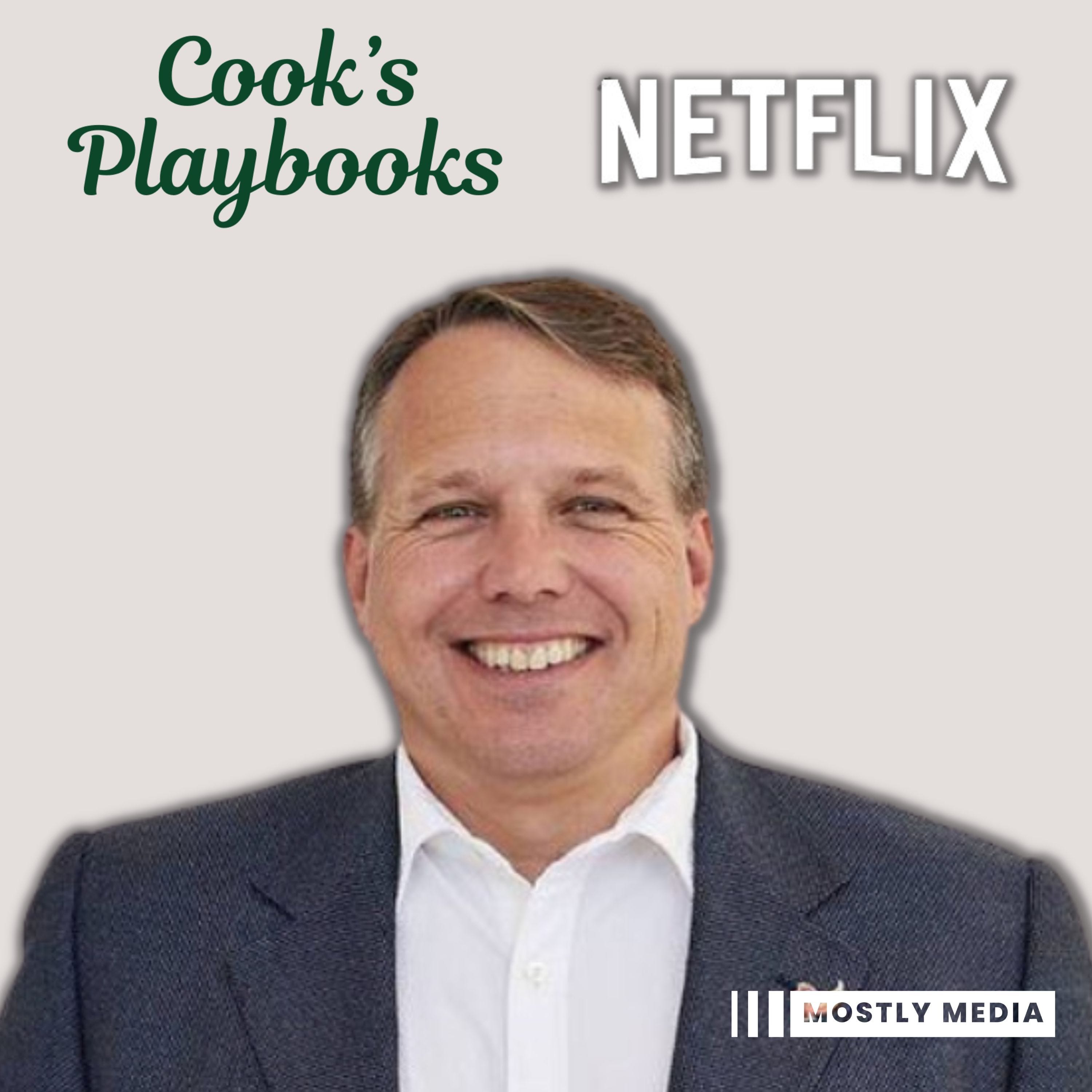
Run the Numbers
The Era of “I Need a COO and a CFO” Is Over: Jim Cook on the Next Evolution of the CFO
00:59:52
Loading summary
Transcript160 lines
- [00:00]
Jim Cook
I think the era of I need a COO and a CFO is over.
- [00:05]
CJ Singh
Say more. This is hot. Is this thing on?
- [00:11]
Jim Cook
Yesterday's price is not today's price.
- [00:23]
CJ Singh
Welcome back to another episode of Run the Numbers. Today we're making a bit of podcast history because for the third time, I'm sitting down with none other than Jim Cook, back by popular demand. Jim was my second ever guest when I launched the show. Now, nearly 150 episodes later, he's back, folks. First time we spoke, I had just landed my first CFO role and was figuring it out in real time. Fast forward to today. I've successfully taken a company to the finish line and that was exciting. So let's just say this conversation hit a little bit differently. Jim, of course, has had an incredible career. One of the co founders of Netflix, first 100 employees at Intuit, and CFO of Mozilla, he's seen it all. These days he's sharing his wisdom through Cook's playbooks on substack, helping finance leaders go beyond the numbers and build real influence. In this episode, we cover a ton how CFOs have evolved from scorekeepers to strategic operators, why transparency builds trust, and what the next evolution of the CFO role looks like. That's right, he takes us through the different epics of being a cfo. Spoiler alert. If you're not embracing AI, you may be left behind. So grab a coffee, buckle up and let's dive in. After a short word from our sponsors. Ready to plan confidently, close faster and report with accuracy. Here's what sets Planful apart. Imagine purpose built solutions for every department from FP&A to accounting, marketing to HR, all with built in financial intelligence. It's easy to implement Planful in just weeks with minimal IT involvement, enabling seamless collaboration across your organization's key financial workflows. Best of all, Planful grows with you. Its unmatched scalability ensures that no matter how fast your business expands, Planful can keep up. See why over 1500 customers worldwide choose Planful as their flexible, user friendly, end to end financial performance management platform. Visit planful.com metrics to see how you can elevate your team this year with Planful they will hook you up. It is planful.com metrics Tell them your boy CJ Singh planful.com metrics Listen, being a CFO, it's not always that glamorous. Sometimes I find myself watering the plants and taking out the garbage in the office. And you know the best CFOs I know are they're true business leaders. They know how to drive growth in heroic fashion. Unfortunately, the status quo of finance makes that really hard because day to day we're mostly up to our eyeballs in spreadsheets and receipts. Thankfully, there's a financial provider who has built a solution to match your ambition. Brex. Brex designed a modern corporate card and spend platform that controls spend proactively and automates tedious expense and accounting tasks. Brex frees up CFOs to focus on high impact projects that drive growth. You know, the shit that's actually worth your CFO time. So how does Brex work? You can embed your expense policy inside the corporate card to prevent out of policy spend before it happens. Receipts and memos are auto generated so you always have what you need to close the books fast. Managers get freed up from reviewing, you know, every possible expense under the sun because in policy, expenses are auto approved and AI AI will flag any exceptions. And all the while your expense detail is syncing with your ERP because Brexit integrates with almost all of them. I love that. From QuickBooks to NetSuite, it's your time to shine as the strategic growth driver you are. And Brex can make it easy. More than 30,000 companies like DoorDash, Coinbase and Seapeek use Brex to make every dollar and every minute count. Join them@brex.com metrics. That's brex.com metrics. Trust isn't earned, it's demanded. Whether you're a startup founder navigating your first audit or or a seasoned security professional scaling your GRC program, proving your commitment to security has never been more critical or complex. That's where Vanta comes in. Businesses use Vanta to establish trust by automating compliance needs across over 35 frameworks like SoC2 and ISO 27001. Centralized security workflows, complete questionnaires up to five times faster and proactively manage vendor risk. Vanta not only saves you time, it can also save you Money. A new IDC white paper found that Vanta customers achieve $535,000 per year in benefits and the platform pays for itself in just three months. Join over 9,000 global companies like Atlassian, CORA and Factory who use Vanta to manage risk, improve security in real time For a limited time, our audience gets $1,000 off Vanta at V-A-N-T a.com metrics. That's V A N-T a.com metrics for $1,000 off Jim, you're the only three time guest of Run the Numbers. Welcome back.
- [05:20]
Jim Cook
Thank you.
- [05:22]
CJ Singh
How's life these days?
- [05:23]
Jim Cook
Life is good. Life is good. Launched my cooks playbooks less than a year ago. Having fun doing that. Trying to create leveraging impact.
- [05:35]
CJ Singh
I love that you're on Substack now. I read it every night before I go to bed. I try to catch up on the latest recipes you're cooking up.
- [05:41]
Jim Cook
There you go. Well, I watched what Lenny was doing. I watched what you were doing, but mostly metrics and I'm a fast follower.
- [05:49]
CJ Singh
So the first time I ever had you on, you were actually my second guest ever. I think you're probably around 150th episode now. And so I just landed my first CFO gig. I was very nervous. This is like, it's probably only a couple months in now. Third time you're on the show. I've successfully sold the company, so look at that. I actually figured it out along the way.
- [06:14]
Jim Cook
Tell me more. You sold your company?
- [06:16]
CJ Singh
Yeah, we sold parts tech. So I joined two and a half years ago.
- [06:21]
Jim Cook
So what's that mean for you in terms of selling the company and what's that mean for your future?
- [06:25]
CJ Singh
It means my mortgage is a little bit lower, which is nice. Rate still sucks, but, you know, and then more importantly, it means I'm going all in on this content stuff, so I get to hang out with people like you more often.
- [06:37]
Jim Cook
So are you fully out now?
- [06:39]
CJ Singh
Yeah, so I'm in my last couple of days now where I just have to keep my phone on. Shorter transition period. I told them, like, I'm exhausted after this and you know how it is. Anyway, with one of those things like CFO or if there's a chief legal officer, you're usually the first one out the door. So it kind of makes sense for both parties.
- [07:00]
Jim Cook
Awesome, man. Congrats.
- [07:01]
CJ Singh
Thanks. It felt good to get one under my belt. I think I had a bit of imposter syndrome when I started the whole podcast and also the newsletter. To a certain extent, the newsletter was cool because it helped me get my first job and then the podcast. I mean, I'm talking to luminaries of the CFO space like you, and I wanted to make sure that I had a track record where I could show, like, listen, he drove the car from point A to point B successfully and didn't totally eff it up.
- [07:29]
Jim Cook
Well, I think a lot of people would say you're natural at this. I think I've said it in the past. I think this is your calling.
- [07:36]
CJ Singh
Well, thank you. I enjoy doing it. I enjoy having the conversations, and I enjoy learning. Because when I look at a career like yours, Netflix, Intuit, Mozilla, Firefox, they're just so many stories in there. And I can imagine at the time, a lot of the stuff you went through was either stressful or painful or exciting. And I get to unpack it all and be kind of like a tourist for all the stories.
- [08:01]
Jim Cook
Awesome. Yeah, that's exactly right. You'll eventually get to be my age, and you'll eventually have all these stories telling about this arcane thing you used to do called a podcast, which will all be, you know, gen AI generated. And you'll have your little avatar and you'll just be, you know, it won't be real, and you'll be a digital twin, but, you know, you'll be telling your grandchildren all these stories.
- [08:24]
CJ Singh
Yeah. And you've got a wealth of stories, which I guess it's just my job to tease them out of you these days.
- [08:30]
Jim Cook
Well, you know, there you go. I mean, the older you get, the more stories you have, hopefully, Right? Yeah.
- [08:36]
CJ Singh
What are some of the things you've been exploring lately, either with the clients you work with or what you've been writing about?
- [08:42]
Jim Cook
Been writing about. My most recent series is Leading with powerful questions. It's a common theme with my clients. It really talks about moving on from just a executive role, a CFO role, and more into creating influence and impact. And the way you do that is you don't tell, you ask questions, and you tease out and you get people to understand the financial world because of, I think of all of the executive functions, I think finance is the most opaque for every other executive. I think most executives can understand what sales and marketing does. I think most executives can understand what engineers even, they don't know how to code. But the language of finance is just something other executives rarely learn. And then that creates a barrier to a relationship, and relationships are the requirement for having influence.
- [09:39]
CJ Singh
Opaque is the perfect word to describe it. And what I've noticed, too, is people just kind of guess what you do all day, and they assume that a lot of what you're working on is either sensitive or confidential information. And then there's this whole overlay of, other than the CEO, the cfo, or the finance function interacts with the board the most. So it's kind of cloaked in this. I don't know. People are like, what's going on in there?
- [10:02]
Jim Cook
Yeah. So you ask what I'm working on with my clients, how to Be better storytellers, how to ask better questions, how to coach, not tell. How to open up the financial world and make it more transparent so they can be more effective.
- [10:17]
CJ Singh
And part of that transparency thing you taught me, Jim, is just like, treating people like adults.
- [10:23]
Jim Cook
Yeah, a lot of people say that. Right. I've written a lot about transparency, but more in the vein of how that creates trust. Without transparency, you really can't have trust. And if you think about that, in any walk of life, if you feel like someone's hiding the ball, do you trust them?
- [10:42]
CJ Singh
No.
- [10:43]
Jim Cook
Right. So here we have. We just come off. The last 30 seconds of conversation around finance is opaque, cloaked. Use the word cloaked. Okay, I'm not going to trust it then. So obviously, this gap then naturally appears. The more you can make it transparent, the more more you're trusted, the more they'll listen to you, the more influence you have, the more you can drive from the seat that we need to be driving from. So transparency, I think, is a key requirement for creating that foundation of trust, which is a key requirement for creating influence and impact. And so this is a foreign concept to CFOs, because they hear transparency, CEOs hear transparency, and their first reaction typically, is, my staff can't handle that. I can't tell them the truth. I can't be transparent. And it takes a little bit of maturity to understand that that is actually wrong.
- [11:41]
CJ Singh
And you alienate your staff by not trusting them. Like, it's like, oh, you can't handle the truth. What movie is that?
- [11:48]
Jim Cook
A Few Good Men.
- [11:49]
CJ Singh
A Few Good Men? Yeah.
- [11:50]
Jim Cook
Jack Nicholson.
- [11:51]
CJ Singh
What you do is you create more of a barrier in between. Like, you think you're protecting them, but you actually, you know, end up pissing them off because they feel like they're not under the tent.
- [11:59]
Jim Cook
Well, you know, we talked about that in, I think, my second episode.
- [12:03]
CJ Singh
Yeah.
- [12:04]
Jim Cook
One of my favorite frameworks. And this goes right to transparency. Tell people what you know, but specifically tell them what you don't know. How's that for being transparent? Right. A CFO saying, here's what we know, here's what we don't know, here's when we'll know. Oh, well, I'm inside that person's head all of a sudden with just a simple framework. You mean that CFO doesn't know everything? That CEO doesn't know everything? I thought they were. God, I thought they knew everything. Okay? They're just like me. They have doubts, they have fears. But here's what I know, and here's how we're going to get through it. This is leadership, right? Not trying to hide, not trying to fake it until you make it. Not trying to be an imposter. Just like, this is what we know. This is what I know. This is what I don't know. This is what I'm going to know. There's just little tips and tricks like this that can help with transparency.
- [12:56]
CJ Singh
Yeah, I think you laid that out well. And it's a very humanizing thing to admit when you don't know something and you're supposed to be at the top of the org.
- [13:06]
Jim Cook
Well, if you take that all the way to conclusion, not knowing something is called learning. Learning is the requirement for improving. And improving is the only way you get more successful tomorrow versus today. By definition, you need to actually not know something today so you can improve tomorrow. And admitting that gets the whole troops to follow you. Because now they're like, let's figure this out together.
- [13:33]
CJ Singh
Yeah. I think it's scary, though, to feel like you're the general on the battlefield and you're admitting to the troops you don't know something.
- [13:39]
Jim Cook
It is. This is, this is why it's a difficult concept. And yet the best leaders, if you want to read some books by General Powell, Joint Chief of Staff Powell, he talks about this. You know, some of the best military leaders talk about this. Not necessarily in the form of transparency, but. But yeah, that's the, that's the fallacy of leadership is, is this, this concept that is put upon all of us, that you're expected to know all the answers? That's why you're in the role.
- [14:12]
CJ Singh
Yeah, right.
- [14:13]
Jim Cook
I wrote a blog post a long time ago. Not a long time, less than a year. But one of my blog posts was 1 out of 15, not 15 to 1. And how Bill Campbell led through seeking the best, you know, best ideas win. Well, if the best ideas win, it means I don't have them. My team has them. I gotta extract those best ideas from my team. See, if I had all the answers. Why do I need my team?
- [14:36]
CJ Singh
Hey, thanks for listening. We'll be right back after a word from our sponsors. Here's a question. Do you feel like you're wasting time and energy on contract renewals or tracking shadow it spend or ooh, this is a bad one. Explaining rising software costs to the board. Truth is, traditional spend management is broken. That's where Tropic comes in. Tropic is an intelligent spend management solution that consolidates your spend data and processes into one unified offering, enabling insights and decisive action. It doesn't just show you where the problems are, it helps you solve them, from spotting hidden optimization opportunities like duplicative spend to automating those painful procurement workflows to give you the best market data that turns every vendor negotiation in your favor. I'm a Tropic customer myself. I've been using them for over a year and I love their price checks. They allow me to see if I'm getting a fair market deal instantly. And I'm proud to say that I am no longer using my email as our company's contract repository. I've got every document and renewal neatly organized in my Tropic portal. Isn't it time to turn spend management into your competitive advantage? Visit TropicApp IO MostlyMetrics see what's possible when intelligence drives your decisions. TropicApp IO MostlyMetrics does your revenue recognition process feel like a total guessing game? Step right up and pick a card. Any card. You're not alone. Revenue accounting is getting more complex, especially with subscription models, usage based billing and evolving compliance standards.
- [16:05]
Jim Cook
Woohoo.
- [16:06]
CJ Singh
Right Rev is here to help you gain control over your revenue accounting. Right Rev automates the revenue recognition process from end to end. Whether it's multi element arrangements, subscription renewals or complex usage based contracts, Right Rev takes care of it all. That means fewer spreadsheets, fewer errors and more time for your team to focus on on growth. Customers like Snowflake, wow, Logic Monitor and Epicore chose Right Rev to manage their high volume and complex revenue accounting. CFOs can see the bigger picture faster without being held up by their team's reporting nightmares. You know me, I'm a business model fanatic. And don't get me wrong, I love all the evolutions. We've got self serve revenue, usage based revenue and now even success based revenue. You name it. But that doesn't make it any easier for us being counters on the back end to keep score. Right Rev is like a cheat code for staying ahead of revenue complexities. So you're ready to transform your revenue accounting? Visit right rev.com to schedule a demo that's right rev.com and tell him your boy CJ sent right Rev Modern Revenue Recognition Simplified oh yeah, Jim, Bill Campbell is a bit of a legend. For the benefit of listeners, can you give like the 30 second background on him and what you've learned?
- [17:14]
Jim Cook
Yeah, I work for Bill. When I was between like 25 and 30 years old, he came to be the his first real CEO role was when he joined Intuit as CEO taking over for founder Scott Cook in 1994. And Scott turned over the reins to Bill. Bill started to become known, but Whitley wasn't known yet. They eventually wrote a book about him called the Trillion Dollar Coach that was in, you know, the early 2000s. And why did they call him the Trillion Dollar Coach? Well, because he was an old football coach. He was an old football coach from Columbia University who came out to Silicon Valley, started his career in Kodak and then get to Apple and Claris. But he really took off at Intuit in the early 90s. I happened to be there, happened to be working for him. He wasn't known as a coach back then, but eventually he got to coach. He was such a great leader of people, like a football team coach. He brought those same concepts to business. And he coached Jeff Bezos, he coached Steve Jobs, he coached Larry and Sergey of Google. He coached Ben Horowitz. He coached so many people that eventually he just became a legendary like. And he coached them in a way of people first, not even business first, just relationships first. So a lot of what I talk about I've learned directly from him. I would encourage everybody to read the book Trillion Dollar Coach, but he came at it from a people first mentality, not a business first mentality, because he understood that teams win, relationships win, and we can all figure stuff out. And the business part was easy, but you had to get everybody on the same team running the same place.
- [18:56]
CJ Singh
Yeah. Something that I've been reflecting on from the last run as a CFO over the last two and a half years I was there is how do you get to trust faster with certain people? Is it a function of time? Is it a function of, can you not speed it up? Is it a function of going through stuff together? Because I realized in retrospect, there were some people that I hit it off with really quick and we implicitly trusted each other within three months. And there were other people, like, I'm still not sure if we totally trust each other after that experience.
- [19:30]
Jim Cook
My answer to that question is it takes two to tango. Some people not really trust first until you burn them. Right. And so that's the quicker part. And some people require a lot more time. I've heard somebody define trust as consistency over time. You've never burned me. You've never talked behind my back. And others are like, I've heard other people. And there's just. It's just a different psychological profile. I trust you until you burn me. So that's what you're experiencing. But getting to that, if you Want to speed that up? Let's get back to transparency. You can't control the other side, but tell people who you are. Tell people how you were born, how you were raised, what your culture is. Don't care about how they're going to judge you. Just, you know, open your kimono about who you are and let them decide how fast they're going to trust you. So that's the way. That's the only way to speed it up. But you can't speed up people who require time.
- [20:33]
CJ Singh
As an executive, and this is a really weird way to word it, how much should you let your freak flag fly? And what I mean by that is like, being yourself and not trying to be like what you think an executive is like in a book or in a movie. Because while I don't think people should bring their whole self to work in the sense that, you know, C.J. having beers on Cape Cod with his buddies is a lot different than CJ the cfo, but there still are elements that I think can make me more liked amongst, like, colleagues.
- [21:04]
Jim Cook
Here's my answer. As you get older and progress and more mature in age, the word for what you just described is, you know, bringing your free flag or whatever. It's like, that's a polarization. But. But the word that everyone uses, or at least HR departments use, is authentic.
- [21:22]
CJ Singh
Yes, that's the buzzword.
- [21:24]
Jim Cook
That's the buzzword which is authentic. What's authentic mean? It means just being real. And if you think of your friends, your colleagues, your family, people gravitate, are magnetically attracted to people that are real, whatever you want to call that, and they are repelled against people that are fake. This is just a human condition. So it's not about flying a freak flag or any kind of pejorative word like that. It's about just being yourself, showing people who you are. That's part of transparency, right? Not thinking you have to play a role. The more you play a role of I have to be this or I have to be that, if that role is who you are, that's great. If the CEO or CFO role happens to align with, with the caricature of what that role is, that's great. But if you're faking it, because I think a CEO or CFO has to act this way, then you go slower. And then people realize, like, I just want you to talk to me like a real person. When you start faking it, you start using different language that you don't normally use, and then you get the feedback throughout Your career. This happened to me. I. I'm like, wow, you really showed up just like a normal person. I want you to show up more that way. People start telling you, I want you to show up more that way. I connected you with better that way. And you're like, oh, well, that's actually easier. It's not so hard. Being myself is a lot easier.
- [22:59]
CJ Singh
You have a better chance of being consistently your own self than consistently what you think you should be.
- [23:05]
Jim Cook
That is correct.
- [23:07]
CJ Singh
So the whole concept of fake it till you make it, do you think that's a dangerous tale to tell people who are rising in the C suite?
- [23:13]
Jim Cook
Yeah, I do. Let's reframe that. Let's reframe. Fake it till you make it. Because that's like, oh, I'm faking something until I make it. If you reframe that into, I'm a quick learner, I don't know what I'm being asked to do, but I am a warrior and I will figure it out through every tool. I'll talk to everyone. Is that faking it until you make it? No, that's called learning. See, fake it until you make it goes back to the. You're expected to know everything. And if you don't know anything, you're not supposed to ask for help. You're supposed to figure it out by yourself. Well, we already know that that doesn't work because the only way you learn something is by asking for help. But if I ask for help, I'm admitting that I don't know something. There's the paradox. You have to ask for help, and you cannot in any role be expected to know everything, especially in the CFO role. CFOs have to do strategy, they have to do leadership, they have to do decision making systems, they have to do safeguarding of assets, they have to do controller accounting, gap, CPA stuff, they have to do financial modeling. Who the hell is that unicorn? They have to do investment investor relations and be a good storyteller. There's nobody who's that unicorn.
- [24:36]
CJ Singh
Yeah.
- [24:37]
Jim Cook
So you're going to be good at some of those things and not good at other of those things. And when you're not good at some of those things, you have to ask for help. And asking for help is not faking it. It's actually growing. So I, you know, really want to encourage folks to just embrace learning. Ask for help.
- [24:55]
CJ Singh
Listening to you go through that, I think it's like, have confidence until you make it. Like, faking it connotes, like you said, like, you don't actually own something like you don't know it. But if you have confidence, then that can propel you to actually figure it out.
- [25:10]
Jim Cook
Think about the best people that you have ever worked for you or with you. And when someone says, I don't know how to do it, but I'll figure it out, let me, let me have it, Let me, let me tear myself, you love that person, Right? Right. It's confidence that you'll figure it out.
- [25:26]
CJ Singh
Jim, in your coaching practice and just observing, let's say, over the last 10 years, do you think that CFOs, do you think they're 10 years or longer or shorter than they used to be?
- [25:36]
Jim Cook
It's a great question. I think they're getting longer.
- [25:39]
CJ Singh
You think they're getting longer? All right, there we go.
- [25:42]
Jim Cook
Yeah, I think they're getting longer. For the people that misses going into kind of another thing that, that I love talking about is how the CFO role has progressed over at least my career.
- [25:55]
CJ Singh
Yeah. And that's what I want to get into.
- [25:57]
Jim Cook
But I'm starting to talk about the eras of a CFO and the different how CFOs were viewed. It kind of goes along with this conversation. And as you progress through those skill sets and those eras and I can go through what I think some of those errors are and the behaviors that were required and what people wanted and didn't want. If you can be a continuous learner and evolve your skill set, then your career gets longer. If you can't, and if you're stuck with just being the back office scorekeeper, you're really good with numbers, you close the books, you're a cpa. You know, you're not any forward thinking. You haven't progressed. Your career is going to be shorter because there's going to be someone better than you who can do that plus do the forecasting, and then there'll be somebody better than you could do that. Plus, plus the forecasting, the modeling, plus the investor relations. And why wouldn't a business replace you with somebody who does multiple things, not one thing? And then there's gonna be somebody better that does systems and brings AI into the equation, like why wouldn't I bring that and then do the best relations? Right. So if you think about this arc of being a continuous learner, confident that you can actually figure it out, are a leader of people, then you can have a really long career as a cfo. And people tap out along the way. They will tap out along the way, but some don't. Some just keep Rising because I had.
- [27:28]
CJ Singh
Anecdotally heard that it was one of the shortest tenured positions in the C suite. It was something around like it was under two years. I think on average that most CFOs lasted in a roll. Now, I don't know if that's just, you know, law of bad CFOs being out there and getting burnt out of roles or. I think it's a bias. It's biased.
- [27:51]
Jim Cook
I think it's a bias toward the role because I can apply that same tenure to CEOs. There's data. The average CEO, 10 years, two and a half years, but I'm not sure people have looked at that. The average employee tenure is two and a half years. How do I know? Look at the attrition rates. By 2019, the attrition rate was approaching 20%, maybe more. So, yeah, once upon a time, CFOs were thought of as bean counters, Right? Why? Because it was all about safeguarding of assets. It was all about compliance and control. It was all about being a data jockey. And that was great. It was. The CFOs came from the CPA world, the chief accounting officer world. You know, if you really want to go back, this is way before my day, but there was no such thing as Excel. It's like, really people listening, like, like, yeah, Excel really didn't come into practice until the early 90s.
- [28:53]
CJ Singh
Would you use an abacus?
- [28:55]
Jim Cook
Back in the 50s and 60s, they were using slide rules and abacus. Yeah, they were using slide rules and calculators.
- [29:00]
CJ Singh
That's mind blowing to me.
- [29:01]
Jim Cook
And you know what? That's where the term ledger comes from. You know what the ledger was?
- [29:08]
CJ Singh
A piece of paper.
- [29:10]
Jim Cook
Yeah, the counting was done on paper, in a book. Believe it or not, this is true. Until computers were developed, databases weren't developed. This is why CFOs were thought of as bean counters. Sales and marketing people, oh, they can do advertising and they can do visuals. And Hollywood was around since the 30s. They had the tools to do it. And so sales and marketing were viewed as creative engineers. You know, they, let's see. You know, computer operating systems kind of started developing in the 60s and 70s following the mainframe. And so operating systems like DOS engineers, you know, could actually latch onto that. What did finance people have? Paper and pencil. No such thing as Excel. So they were bean counter. They just had to make sure the books were closed, it was on time. And so this is the evolution of, of how CFOs were thought of. But what's really interesting to me is to correlate. And this applies not just to CFOs but to all other walks of life professions. I believe that technological capability, there's a clear correlation between technological capability and the evolution of the executive. That follows that. Technological capability and role. What I would maybe role capability. So as Excel came into being and the CFOs that succeeded adopted Excel and the ones that didn't, didn't. Doing the numbers became easier, presenting the numbers became easier. You had a tool to do it and then ERPs came into place and the CFOs had to evolve into Oracle and eventually, you know, and then, and then, and then netsuite and being good at that came into place. And so as it became easier to produce the numbers, then they were called upon. Well, now that you know the numbers and you're presenting them better and they're accurate, you're not doing it on paper, making mistakes. I need you to be my business partner, my decision making partner, since you know all the numbers. That was kind of the next era. And so technological capability leads the role capability in almost every function, but especially finance. But guess what, there's a lag. Technology capability comes first. And then humans learn slower than computers and so they have to figure out how to use Excel, figure out how to use ERPs, figure out how to use cloud. There's a lag in technological capability versus role progression. And I think that lags probably three to five years maybe getting quicker. But look at the technological capability that's progressed through since 1990. You've got the Internet, you've got the cloud, you've got mobile, you've got apps, you've got dashboards. Easy, easy to create dashboards, there were never dashboards. Excel was it. And so while the rest of our executive peers actually latched on to these, you know, BI business information, business analytic dashboards. And you saw them popping up in engineering, in sales and marketing, you saw them even popping up in HR. We failed. We as CFOs stuck to our Excel. There's still not that many financial dashboards because we've been lagging far behind the technological capability of bringing, visualizing data and storytelling the numbers. Am I making sense?
- [32:45]
CJ Singh
You are. And just to rehash it for listeners, what would you call that first era? Do you have a name for it?
- [32:51]
Jim Cook
Bean Counter era.
- [32:53]
CJ Singh
Cool.
- [32:54]
Jim Cook
Scorekeeper era. I'm a scorekeeper.
- [32:56]
CJ Singh
I like that. Scorekeeper.
- [32:57]
Jim Cook
Yeah, let's call it the Scorekeeper era. I'm just going to put the points in the board. It's all about Actuals, it's all about numbers are clean. But there was very little of forward guidance. And in fact, Wall street, if you think about it, well, for those who are around, Wall street actually incentivized your stock price was all based on your quarterly results and what your actuals were. In the 90s, there was no talk of future guidance. Very little. Your stock price was. Did you make your numbers? How good were you at forecasting? If you look today, the actuals for the quarter don't matter. It's all about forward guidance. Future guidance isn't that interesting. Like companies missed their numbers. But as long as the future guidance is great, stock price goes up after.
- [33:48]
CJ Singh
The conference call and companies beat and they get crushed.
- [33:51]
Jim Cook
The opposite also happens. I crush my numbers, my actuals. I beat what I told you, but I soften my future guidance. What happens to the stock price? It goes down even though I beat my actuals. If you step back and look at it, actuals don't matter as much anymore. The era of scorekeeping doesn't matter. I mean, it does, but it doesn't matter as much. Not nearly as much. So what does that mean? What that means is that you better be good at forecasting, you better be good at predicting and driving with metrics what the future is going to look like. You need to be a better storyteller of the future. And that requires a whole different skill set.
- [34:39]
CJ Singh
What era are we in now? Are we in the second era, third era?
- [34:43]
Jim Cook
Second era was what I call, I mean, this is just my personal experience, but I'm calling it the strategic partnership era. Maybe the strategic CFO area. That word didn't come in to play until around, as I recall, early 2000s, certainly after the dot com bust, right? It was like maybe 2000, maybe 2000. 3, 4, 5 feels right. The word you need to be a strategic CFO started popping up. That never appeared before 2005.
- [35:18]
CJ Singh
It's in every recruiter's LinkedIn DM now, Jim. They want a strategic CFO, but it.
- [35:24]
Jim Cook
Didn'T used to be. In fact, you couldn't become a CFO if you didn't have a CPA before 2005. Or you could, but it was rare. Strategic CFO is a whole different person. I need someone who can think alongside with my CEO at my board. I need someone who the quote. I need someone to not just produce the numbers, but to own the numbers. What does that mean? I need to know the unit economics of the business. I need to know. This is the era of unit economics. This is the era of do this, not that. This is the era of if, then, if you do this, I can predict what the numbers are going to be. We need to focus on these metrics, not that metrics, and improve the metrics. And the great CFOs that evolved from bean counter scorekeeper to that people became the consiglieres to their CEOs, became the only person in the org who could partner and make better decisions because everything connected to this giant database system of record where, you know, they could go talk to their sales and marketing and come to a sales and marketing executive like strategy or their engineering strategy. But there was no other place in the organization that brought it all together and made really holistic decisions than the cfo. And that was the strategic partnering era. I would say that lasted from say 2005 to 2015. There was a third era, and it came along with SAS, because what was going on, what was going on in those, in that strategic area era, because we were forecasting the future. It was all about revenue. It was all about growth. Wall street only talked about P Ls. Nobody was talking about balance sheets, cash flow statements. What were those? Investors never, analysts never wrote about cash flow statements or balance sheets. It was always about the P. And L was always about top line, bottom line. That's only one of three different models of a cfo. All of the other safeguarding of assets had gone by the wayside. Oh, cash flow, whatever. Maybe we bring free cash, balance sheet, you know, whatever. No one ever talked about those in conference calls until around 2015 when the subscription models really took hold and SaaS became a new language in finance and we had to develop new lingo. You and I have talked about this before of CAT customer acquisition cost and lifetime value. And we had to reframe how we forecasted the future in a subscription business where we're getting less money now, but more money over time in a more predictable way. And you know what SaaS economics are, you really step back and think about it. You're bringing back the cash flow part of the business. Because Wall street still will tell you that it's all about, well, really, it's a discounted cash flow to your future earnings. And we're valuing your stock price on. Eventually all things merge into one and we'll eventually value on stock price. Should we get ahead of ourselves or on earnings and how much your earnings and what the value of those future earnings are? Right? That is true. That's what Wall street should be doing. But we get ahead of ourselves. Growth, just look at the growth, look at the times, revenue multiples, blah, blah, blah, blah, blah. SAS brought back this concept of future cash flows in the form of lifetime value, in the form of customer acquisition cost. I find that very interesting. It was all about, this is what I'm going to call the operator CFO era. It was an era where you not only had to make sure the numbers were closed and scorekeep and that you can make better decisions, but now you've got to actually turn the dials. Not just tell someone else to turn the dials, but make clear recommendations on unit economics and turn the dials. If we do this, we need to fix our cac, we need to fix our ltv, we need to fix our cash burn multiple. You need to be in the business and we're still in this era. We're now coming out of this era. Right? But the last 10 years has been all about, in my opinion, partnering with your fellow executives to figure out what their metrics are, how they intersect with the overall financial business model, and how to make decisions with each of the executive partners as well as your cfo. And being the leader of the numbers of the metrics in each of the various parts of the business, bringing them all together and creating better decision making systems. As a true operator leader of the business, owning the business model. I'm ranting, I'm ranting. So I'll let you talk.
- [40:14]
CJ Singh
Sorry, no, this is what I wanted. I'm here to learn, just like everybody else listening and to tie it back to something that you said before, Jim, that the tech comes before the capabilities and basically the role that you get out of having those capabilities. We wouldn't be in that position to move through these eras if we weren't well positioned next to the numbers. Because no one's going to ask you for advice if you can't give them, hey, this is what we did historically. And then it allows you to progress to the next era where people are asking you to say, well, where is the puck going? So I find that part fascinating. And then I also think what's neat is like the CFO has become the owner of the operating plan. Before it was, the CFO was the owner of the historical numbers of what happened. But like the word operating plan implies that you're operating and actually in the business, not just looking in your rearview mirror. Perfect.
- [41:09]
Jim Cook
Perfect. So, you know, I've grown up through these eras and I've coached, I'm now coaching what is required. But I've come to this viewpoint CJ that there's going to be a next era. And people love to predict, you know, so if that's history, then predict for me what's going to happen next.
- [41:26]
CJ Singh
Well, I feel like there's a tech current underlying all of this, right?
- [41:31]
Jim Cook
Oh yeah, there is a tech current underlying all this. I'm biased. So let me lead with powerful questions and not tell you, but ask you and then we'll work on this.
- [41:41]
CJ Singh
Okay, let's do it.
- [41:42]
Jim Cook
If you believe that technology creates the next level of capability, and if you believe that you must evolve and learn faster and not lag and pick up that technology, then what is the technology of today? That is going to be the requirement for the CFO tomorrow. Let's call it 2030.
- [42:06]
CJ Singh
My guess would be it's using AI to forecast more reliably so you can have a better handle on your operating plan, which we just discussed.
- [42:14]
Jim Cook
And as the AI, the power of AI grows stronger and stronger and more powerful. Do more and more. What will it start doing for us that we had to focus on in the past?
- [42:26]
CJ Singh
That's what I'm trying to figure out. Like what am I not going to do anymore?
- [42:29]
Jim Cook
Well, that's the question. That's a great question. What will AI allow you to do that you're spending too much time on now? And you don't need to know the answer to that question, you simply need to keep asking that question. Because the human brain has a remarkable ability that when you ask it a question, even if you don't know the answer, it'll cogitate on it and it will eventually. This is how our human brains work. Be like, oh right. And that's how invention happens. So you don't know the answer. You just need to keep asking the question, what can I do for me, what can save time on? So this is why I'm writing about AI agents in my substack. It's outside of the CFO role or even leadership role, but agents, technology agents are going to start doing things for us. Let's just look at the last two releases over the last two weeks of OpenAI. In two weeks, maybe three, it's all new. OpenAI has released operator and Deep Research. What is Operator? I wrote about this in my substack. Operator is a really cool technology that uses an AI agent to nap to operate your browser. It's a web based browser based. That's all you need to know. It actually uses your keyboard without you using putting hands on the keyboard. It actually clicks your mouse with a prompt. You tell it what to do. You hook it up to a browser and anything you've otherwise done in a browser it will do for you while it shows you every click it makes. And I want to go buy a mountain bike, you know, I don't know which one. Research the top five mountain bike brands and tell me I'm this type of writer, which one I should do. If you did that today and we do that today, a browser would take you an hour. Open up 20 different tabs, curate those down to 10 different tabs, maybe put windows side by side, cut and pasting probably into some document so you can look at it and figure it out. This is how most of us work is how I work tomorrow. Operator. You ask it a prompt, that one prompt, it does all of those clicks and mouse clicks for you and brings you the answer and starts asking you questions. Which one of these would you like me to filter? This is all coming. So that is the capability of AI. Then what can you apply it to in finance?
- [45:07]
CJ Singh
You could apply it to a lot of things, especially around like travel, planning events, all this extra spend marketing, budget forecasting that.
- [45:17]
Jim Cook
Let's just go to the basics of the accountants closing our books for us and our accounting staffs.
- [45:22]
CJ Singh
I think we'll get down to a one day close within the next five years. Right.
- [45:26]
Jim Cook
And if we do that, doesn't that free us time to actually be better CFOs and really. And really step up into the, you know, decision making function, strategic function, all that stuff. So think about what our teams do today in getting bank statements and reconciling our bank statements. Oh man, the bank websites.
- [45:47]
CJ Singh
Yeah.
- [45:47]
Jim Cook
Download CSV files. They download the CSV files, they put them into pivot table. They put them into, you know, ledgers and reconcile them. Five Operator.
- [45:59]
CJ Singh
Can't.
- [45:59]
Jim Cook
That's just. Can I just ask the browser to do that for me? It's a set of repetitive strokes. All of a sudden your accountants are saving more time closing books. Yeah. So all that's coming.
- [46:08]
CJ Singh
What was the second release? Was it the researcher?
- [46:11]
Jim Cook
Yeah, Deep Research. Deep Research was released I think February 4th and they still haven't figured out. But it's. I pay attention when my network says wow, this is really amazing. When I see enough people saying wow, this is really amazing. You simply ask it to go research something that you don't know anything about, say you know, Alzheimer's. And you just, if you ask it better questions on write me a the state of the art of Alzheimer's today or you know, what drugs are coming or whatever. CJ produces a professional paper that would blow your mind. It goes out and literally takes 30 minutes. It will spin for 30 minutes. It will go out and get all the best information from all over the web and then summarize it for you in a professional presentation that you could actually give on stage or publish.
- [47:04]
CJ Singh
That's amazing. And when I was hearing about all the cool tasks that were being done and the research that was being executed, my mind went to I could figure out how to allocate resources more effectively by doing case studies on stocks and companies that have done a great job at it.
- [47:21]
Jim Cook
Sure. So I'm calling the next era the CFO architect era.
- [47:26]
CJ Singh
I think say more.
- [47:28]
Jim Cook
We're going to use all of the stuff that we've learned in the past on, not just scorekeeping, not just systems and then operating those systems and being the operator. But if you think about what an architect is, what's an architect of a house do? When you think of architect cj, what do you think of as when you're building that financial. That house? I'm going to call it finish house.
- [47:55]
CJ Singh
I think a measure twice, cut once and I'm not very handy. My father in law is a builder, but I look at him as the person who's going to tell me the best way to lay this out so I don't have to do it again and to make it look beautiful.
- [48:10]
Jim Cook
So think about what you're saying. Right. Are they actually pounding hammers and nails, keeping the score in the past?
- [48:17]
CJ Singh
No.
- [48:18]
Jim Cook
Are they actually. They're part designer, their part. This has worked better in the past. You don't want to put the kitchen here, you want to put it there. You want to put the bedroom here, not there, the walls. Right. The bedroom on this wall is near the road. You probably want to reinforce that with sound barriers. They take all of this information and design for you a better product because of all of their knowledge, all of their learning of success and failure. They're a curious learner and they're bringing in the best ideas. That's what a great architect is. Imagine being a cfo, financial architect of the business, where now you have time, because the books are closed faster, to really curate and bring the best of what I call the best of to the business of what to do and what not to do, using all of the tools of AI and just using the human plus AI interaction. You know, your human brain is going to be required because we're thinkers, we're creators. Right. I still can't create as much as Just cogitate. But now we're like, this is, you know, I just know this will work. I know that won't work. But we're going to be able to design much better business models much faster and being able to predict better success and avoid failure because we'll have space to think.
- [49:47]
CJ Singh
Jim, you mentioned before, one of the footfalls that CFOs made was not going along with the dashboard era. We stayed in our Excel spreadsheets, which kind of created a walled garden around what we knew and didn't allow us to be as transparent and collaborative. What's something we could potentially mess up in this era?
- [50:04]
Jim Cook
Not embracing AI and not embracing the next technological evolution and staying with the dashboards. See, we stayed with Excel. Now the best ones are moving into dashboards and we all have, we're all leading with dashboards and storytelling off those dashboards. But if we don't embrace the next AI and what it can do for us, we'll be stuck in the dashboard area. That's probably the footfall. It's natural and normal to do that. But let's think about, let's progress through the eras again and go back to the strategic CFO era and how that progressed into the operator CFO era. The examples that I think about are, wow, all of a sudden this thing called Rev Ops appeared. Revenue operations. All of a sudden, even our HR brethren, which were, which, you know, I love my HR teams, but they were, you know, they were viewed as further behind than CFOs once upon a time. Now they're ahead. But what did they do? They stopped branding themselves as HR. Human relations. Right. That's an old 50s term. What do they brand themselves as? The people team.
- [51:13]
CJ Singh
Yeah, people partners.
- [51:15]
Jim Cook
Brilliant. Right. We're going to rebrand ourselves and we're going to create this thing called People Ops. All of a sudden operations is being decentralized into all of these that finance really probably should have embraced but didn't. Right. What did IT do? It stopped becoming IT information technology. Right. And it became cloud ops, DevOps. And only very recently are people talking about FinOps. Right. We need to rebrand ourselves as the architects of the business.
- [51:48]
CJ Singh
This sounds like a bigger role that we're getting if we can do it right.
- [51:52]
Jim Cook
Always is. I mean, I think we progressed that the CFOs are the partners of the business, are really truly the only ones sitting in that unique intersection seat to really help make decisions.
- [52:04]
CJ Singh
Right.
- [52:04]
Jim Cook
I read an article from somebody published it. Might have been McKinsey, might have been PwC. I can't remember, but it surprised even me. I've been around a lot. But it said today 30% of all CEOs come from the CFO role. Surprised me.
- [52:18]
CJ Singh
No way.
- [52:19]
Jim Cook
Yeah. And they said 10 years ago that was. That number was 10%. Five years ago that number was 20%. Today it's 30% and growing. Why I gotta pull up this article? But it's because they're becoming partners of the CEO of the business, and they are the internal CEO of the business.
- [52:39]
CJ Singh
I feel like we're also seeing a lot more dual CFO coos.
- [52:43]
Jim Cook
Yes. I think the era of I need a COO and a CFO is over.
- [52:50]
CJ Singh
Say more. This is hot.
- [52:52]
Jim Cook
That was an era.
- [52:54]
CJ Singh
Yeah. An expensive error.
- [52:55]
Jim Cook
I need a chief operating officer in addition to my chief financial officer. But if you're really supposed to be an operator of the business and own the numbers, the question then is what? And you need to understand all aspects of all the operations and partner with your engineering team, your sales and marketing team, your customer service team, and understand the business on a detailed level, which we're good at. Then why do you need a coo? And the answer was, because a CFO doesn't have enough time to do all that or doesn't have the leadership capability to influence those people to make better decisions. But the great CFOs learn how to not only create time, build their departments, but also partner better. And you don't need a coo. You become effectively the COO cfo, what I call the internal CEO of the business.
- [53:53]
CJ Singh
Oh, that's really good.
- [53:55]
Jim Cook
Should be the external CEO of the business vision, you know, really driving the keep it on track North Star. But the CEO needs someone who's inside the business, who's taking that vision and driving the strategy to create the right org structures, to create the right execution, to hold people accountable alongside the CEO. That's what I call the internal CEO of the business, otherwise known as the COO/CO. I don't think there's any other executive function that can do that, nor do you want them doing that.
- [54:28]
CJ Singh
Historically, I think the argument was that the CFO has two vantage points. And at first they only owned one of them. It was looking backwards. Then the second one they got was looking forwards, but at like a 40,000 foot view. Then the argument was, well, the COO owns the ground game, right? Like their boots in the ground, they come down from 30,000ft to ground level. But I think with the technology we have now and the time that's freed up, and if you're actually partnering. Right. You can go between what has been called. When I interviewed Amanda Whalen from Klaviyo, she called it like a dolphin. Like, you go above the water and below the water. You can have both vantage points. And then if you do it right, you get better insights by connecting them.
- [55:10]
Jim Cook
If you just replay that last 45 second clip that you just summarized, you could actually overlay my errors because we're now finishing each other's sentences again. You actually said the same kind of thing in, you know, bookkeeping, scorekeeping.
- [55:25]
CJ Singh
Yeah.
- [55:26]
Jim Cook
Strategist, operator. Yeah, you get it. I think you're a good learner. You're hearing what I'm saying, and you've summarized it in your own words, which is great, but that's exactly right. We need to evolve to the next level of cfo, and let's call the CFO architect of the business.
- [55:42]
CJ Singh
More of a tactical question going forward, like, where will a CFO spend most of their time? Like, if you have those three vantage points, looking backwards, looking forwards, high level, and then being on the ground and operating, where is time best spent operating?
- [55:59]
Jim Cook
Okay, well, I think it's a blend between operator and deeply partnering with the business. And then from that learning, because you can't do it all. You just have to be the coach of the, you know, cto, be the coach of the sales and marketing organization and partner with them, and you're winning together. But then being able to storytell that to Wall street, to be able to storytell what you've learned as an operator to investors, to grow the business, you need a combination of operations plus storytelling, so you can influence not putting the wrong room back to the house metaphor in the wrong place, making sure the rooms are located in the right place and that the hallways make sense and you're not going through a maze that you know the lighting is right, that, you know it's comfortable, and it just feels better walking to that house. That's. That's a design architecture, both operator and visionary combination.
- [57:04]
CJ Singh
Well, Jim, to extend that metaphor, I think it's also the CFO's job to position what neighborhood you built the house in. Because, like, if you want a SaaS multiple versus a marketplace multiple.
- [57:14]
Jim Cook
Perfect.
- [57:15]
CJ Singh
Where do you want to live?
- [57:17]
Jim Cook
Perfect. Yeah, you're getting it. That's the next era.
- [57:20]
CJ Singh
It is a lot of responsibilities, though, because now we're talking about translating the macro to the micro. Right. Like, it's your job to tell the story, but also to bring the story back to the people inside the company.
- [57:31]
Jim Cook
And Simultaneously to translate the micro at the detailed operating level to the macro. Yeah, yeah, it's both. And that's. And that's what your dolphin metaphor was, right? Was flying high and flying low at the same time. Yeah, it's. It's a large calling. Like, it's not for the timid.
- [57:52]
CJ Singh
No. It's fun, though.
- [57:55]
Jim Cook
How fun? Yeah, for some of us, it's fun. Others aren't going to make it. Back to our earlier conversation and we'll tap out.
- [58:01]
CJ Singh
Jim, this has been a blast.
- [58:03]
Jim Cook
Oh, yeah.
- [58:03]
CJ Singh
Anything you want to plug before we go? What are you working on lately? Where can people find you?
- [58:08]
Jim Cook
I think I've plugged enough, but, you know, I'm writing now on Cook's Playbooks on Substack. Go find me on Substack. I've just launched my new website, www.benchboard.com. i finally brought it out of the dark ages and connected it all to Substack. And I'm on LinkedIn, so you'll find me in many of those places.
- [58:25]
CJ Singh
I always have to say, though, like, I really respect, like, the legends of the game that still like, operate off of, like a Yahoo email address or a Hotmail, or they have like, the worst website in the world. Like Paul Graham, like, the website says, this is not a secure website. Like, there is something admirable that you're being so important that you don't even change it.
- [58:43]
Jim Cook
Not for me. I love being at the top of the game and I know it makes me personally cringe. I'm a builder. I'm an entrepreneur at heart.
- [58:51]
CJ Singh
You're an architect, Jim.
- [58:52]
Jim Cook
For me not to walk the talk and be involved in AI and be trying to coach the latest and the greatest, even at my stage of my career, like, I just have to do that. That's just who I am.
- [59:03]
CJ Singh
And even when we text, you reply sometimes with images that you create on OpenAI, I'm like, holy shit, how do you create this so fast? So I look to you as. As the shepherd leading us into this next. This next era.
- [59:16]
Jim Cook
Nice. Thank you.
- [59:18]
CJ Singh
Run the Numbers is a mostly LLC production yelling an intro by Fat Joe, artwork by some AI thingamajig podcast and video editing is done by cleancast@cleancast IO. Nothing said on this podcast is intended to be business or investment advice. It's the sole opinion of me. A guy who feeds his dog too much ice cream and has a history of net operating losses. Lol. If you like this podcast, please hit subscribe. It would mean a lot to me. And Also check out mostlymetrics.com com that's my newsletter where I explore business models and financial metrics. Thanks for riding with me. Share this with your friends. Peace.